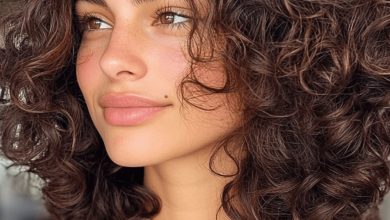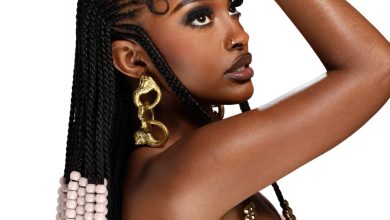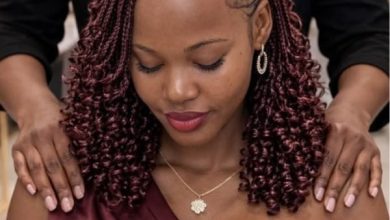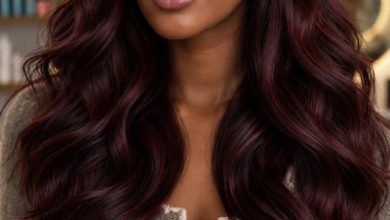
Balayage highlights are a hand-painted color technique that creates a soft, blended transition from a darker base to lighter ends, avoiding the harsh lines of traditional foils. This season, the shift is toward lived-in color with subtle face-framing brightness and a glossy natural texture, moving away from chunky, stripe-like highlights.
This collection of 21 Balayage Highlights ideas covers a range from low-upkeep caramel blends to high-contrast ash tones, suited for fine to thick hair and any length from collarbone to mid-back. It solves the common struggle of finding a highlight placement that flatters your cut and grows out gracefully without a stark root line.
Thick Mid-Back Layers With Warm Caramel Balayage
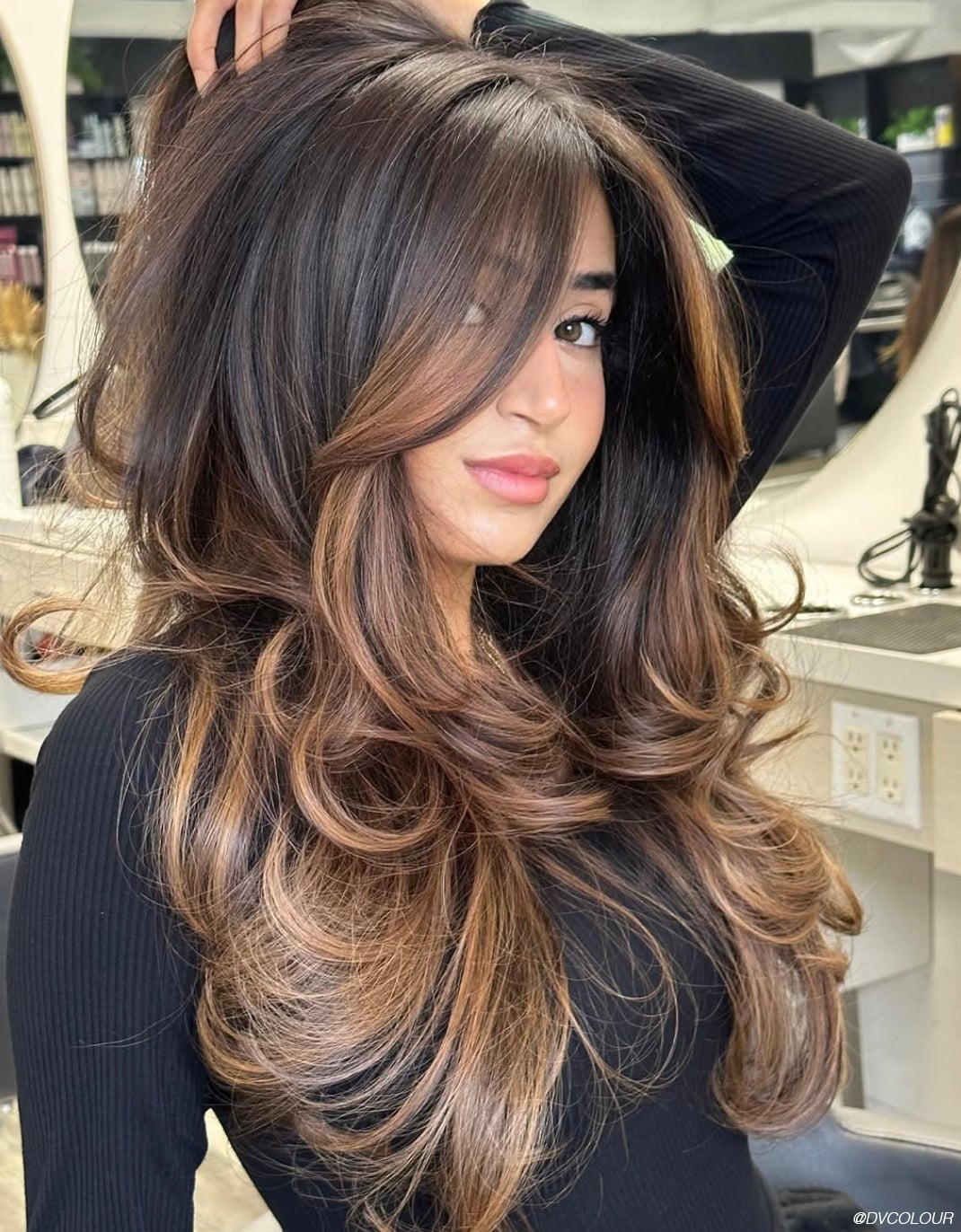
The design here hinges on contrast from a brunette base with thick, wavy texture lifted by warm caramel and blonde ribbons painted in a soft balayage technique that avoids a harsh root line. The curtain bangs and face-framing layers pull dimension forward. Ask your colorist for: mid-back balayage with warm caramel and blonde ribbons, soft curtain bangs. A large barrel curling iron helps recreate the voluminous blowout at home, and those layers need a trim every eight to ten weeks to keep the shape defined.
Collarbone Lob With Lighter Blonde Balayage
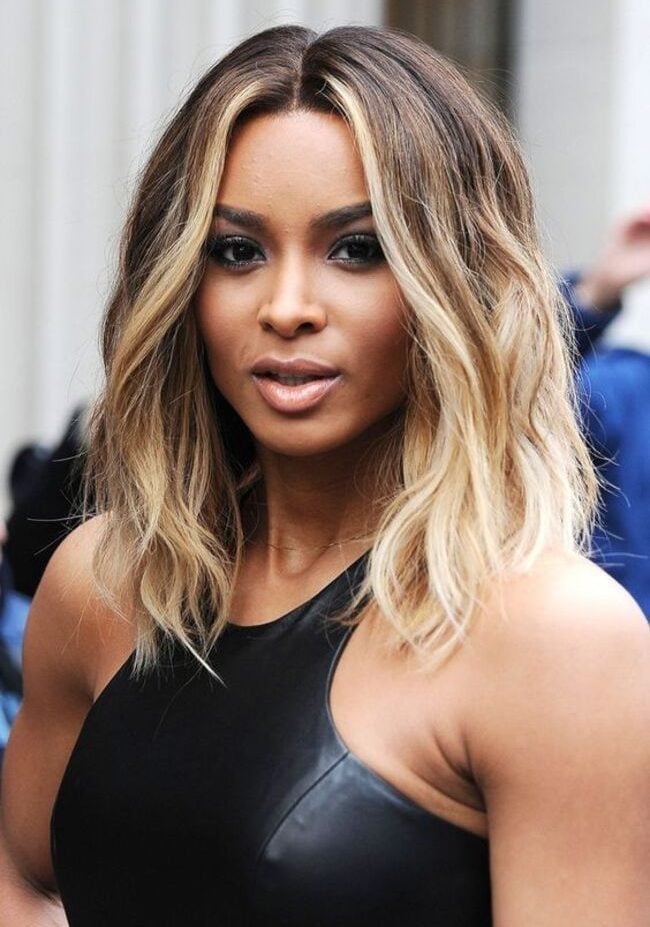
A lob with balayage works when the base is a dark blonde that lets lighter blonde highlights sit close to the root without a hard line. The collarbone length places the dimension where it shows, not halfway down your back. Curtain bangs soften round and heart faces, while the wavy blowout adds volume fine to medium densities need. Ask your colorist for: collarbone lob with dark blonde base and lighter blonde balayage, curtain bangs.
Mid-Back Dark Brown With Ash Blonde Balayage
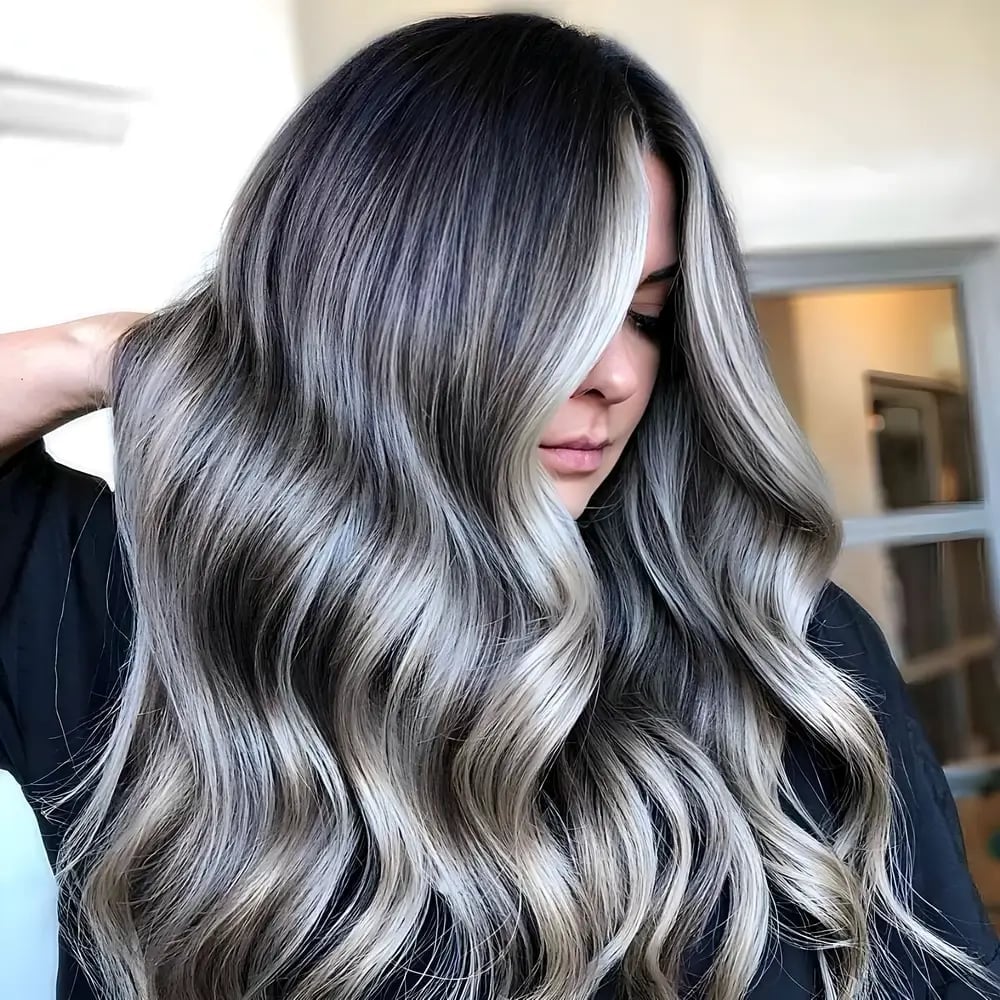
Warm caramel balayage gets all the love, but ash blonde on dark brown is the cooler cousin that knows how to make an entrance. The high-contrast lift from a dark brown base to bright ash pieces creates a graphic effect, especially where the face-framing bangs wrap around the jaw. That contrast comes with a catch: ash tones can turn brassy faster than warm ones, so a purple shampoo in the rotation is a must. Ask your colorist for: mid-back dark brown hair with high-contrast ash blonde balayage, face-framing bangs. A texturizing spray will help those thick, wavy layers hold their shape without looking stiff.
Collarbone Layers With Natural Blonde Balayage
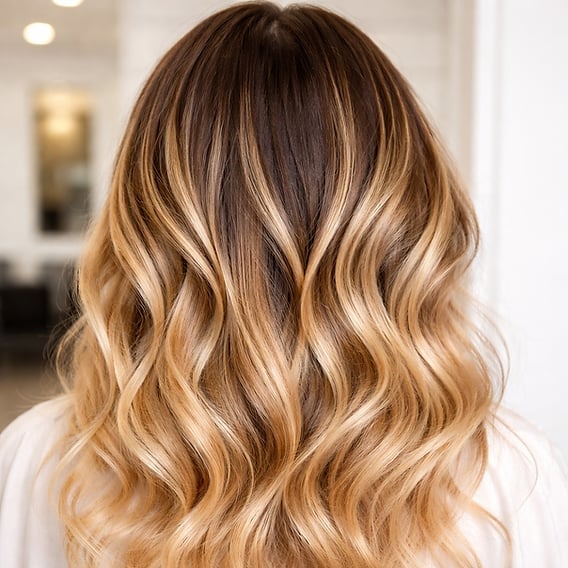
A medium brown base with finely blended blonde balayage that starts below the chin is the definition of a lived-in color. The collarbone layers keep it modern, while curtain bangs frame without commitment. When you sit in the chair, say exactly this: collarbone length layers, medium brown with natural blonde balayage, curtain bangs. A smoothing serum on the ends will keep the glossy finish intact, and the collarbone length needs a trim every six to eight weeks to maintain the bluntness.
Mid-Back Dark Brown With Sun-Kissed Blonde Balayage and Curtain Bangs
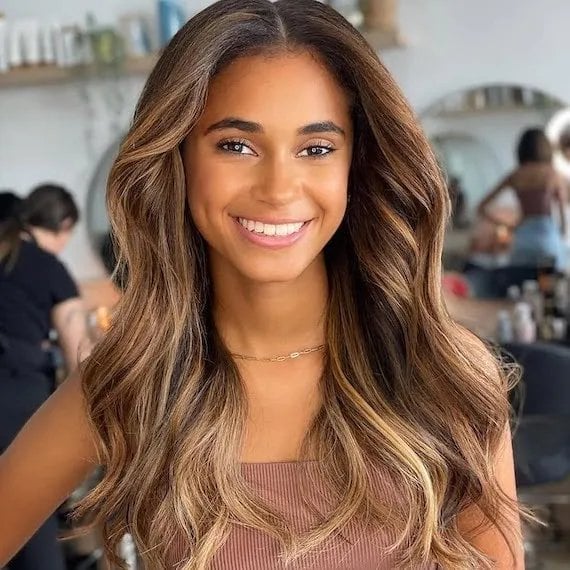
This is the color that looks like you spent a week on a coast, not an afternoon in a salon. The dark brown base stays deep at the root, while blonde balayage picks up from the mid-length to the ends for a graduated sun-kissed effect. Curtain bangs keep the front soft, making it a natural fit for a vacation or a long weekend where you want the hair to do the work. Ask your colorist for: mid-back dark brown hair with sun-kissed blonde balayage, soft curtain bangs. A salt spray will coax the loose waves into something that looks lived-in rather than styled.
Mid-Back Dark Brown With Face-Framing Balayage
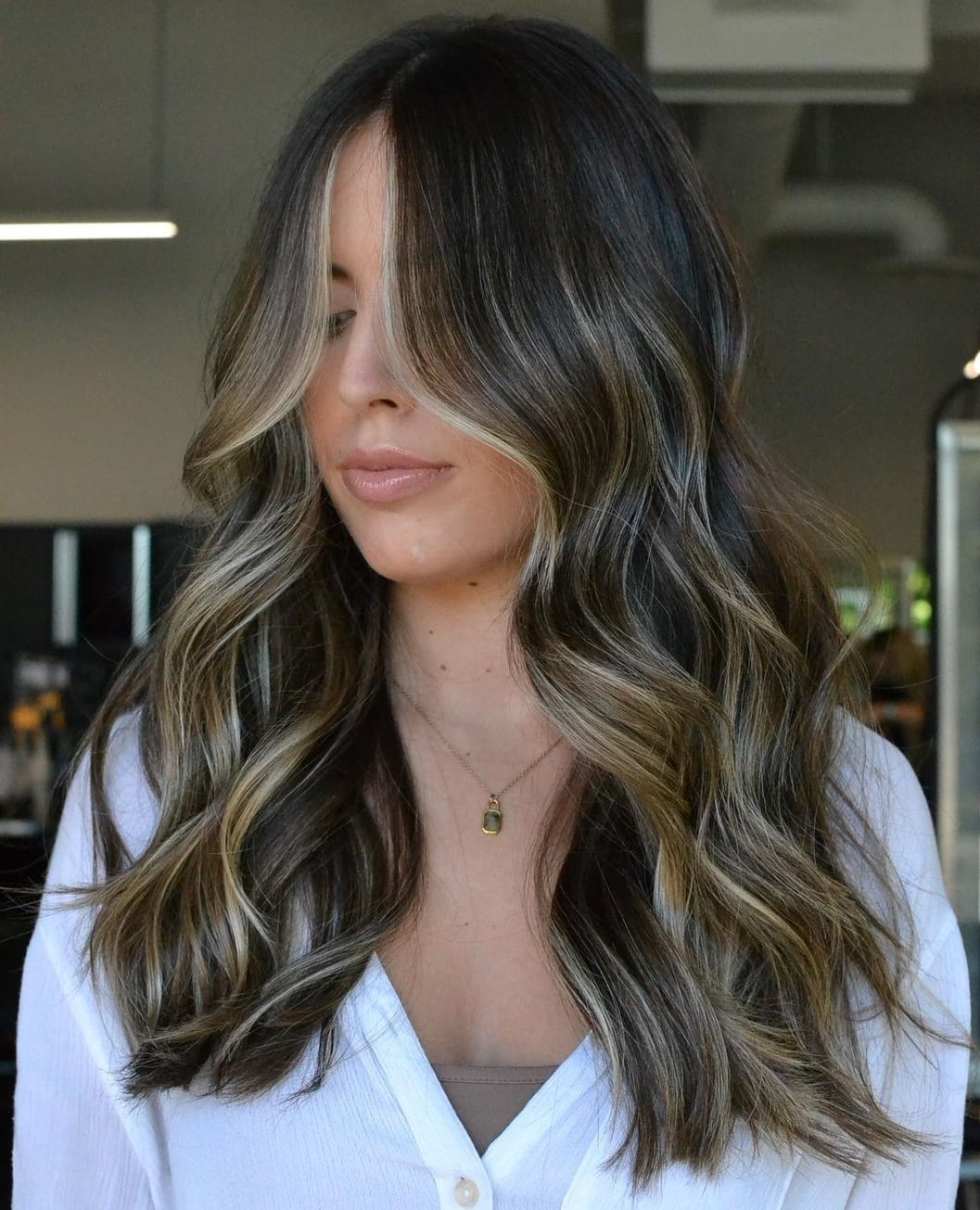
Face-framing balayage pieces are the low-maintenance answer to wanting lighter strands without committing to full highlights. The dark brown base keeps roots low-key, while blonde and caramel pieces wrap around the front to catch light at the jawline. Ask your colorist for: mid-back dark brown with blonde and caramel balayage, emphasis on face-framing. Medium-density wavy hair with long layers and a middle part supports this look well.
The real advantage is the grow-out. Because the color is concentrated around the face, the length stays dark and blends naturally for about eight weeks before you need a touch-up. Style with loose waves to let the face-framing pieces separate. A light trim on those front pieces every couple of months keeps them from looking scraggly between full cuts.
Collarbone Layers With Face-Framing Balayage
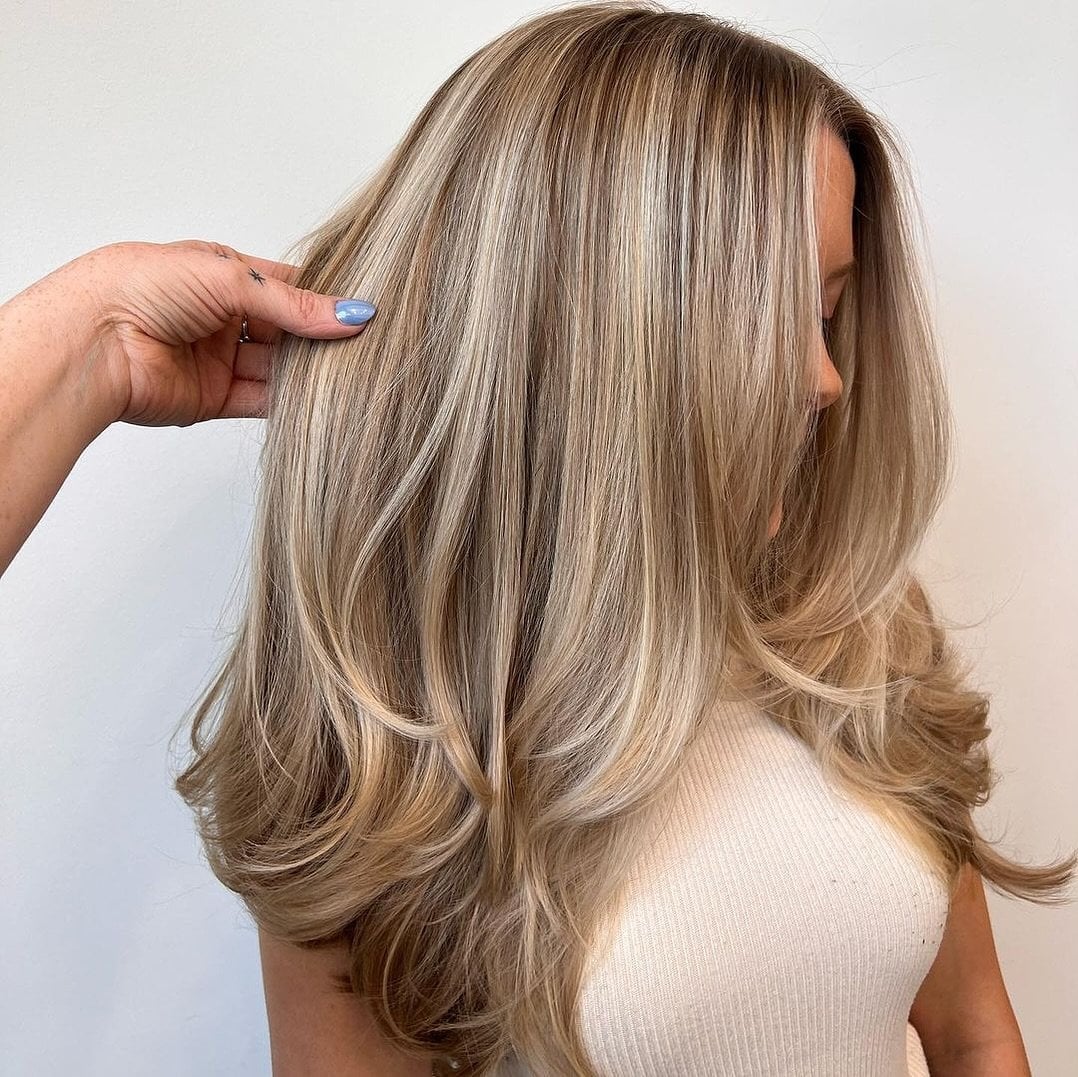
Can you get balayage on a collarbone cut without it looking like an afterthought? Yes, if the layers are built to show the color. This version starts with a dark brown base and adds blonde balayage that hits the ends and the face-framing bangs. The side view is where you see the movement: the lighter strands sit on the surface of thick, wavy layers. Ask your colorist for: collarbone layered cut, dark brown with blonde balayage, face-framing bangs. This is a salon-only job. The hand-painted placement needs a trained eye to keep the transition soft rather than striped. A DIY kit will not give you that blend.
Dark Brown Bob With Side-Swept Bangs and Balayage
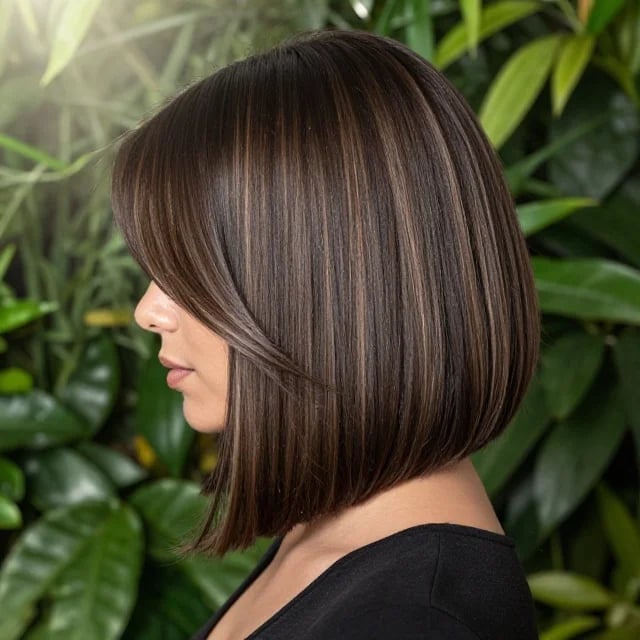
A bob with a side part and side-swept bangs is a geometric shape, and balayage adds dimension without fighting the line. The dark brown base keeps it grounded, while blonde and caramel highlights sit mostly on the surface and the ends. Ask your colorist for: dark brown bob with blonde and caramel balayage, side part, side-swept bangs. The drawback is the bob itself: a chin-length cut needs a trim every four to six weeks to hold the silhouette. If you prefer letting your hair grow between appointments, a longer cut is a better bet. For straight, thick hair, a flat iron keeps the sleek finish intact.
Mid-Back Dark Brown With High Contrast Ash Balayage and Curtain Bangs
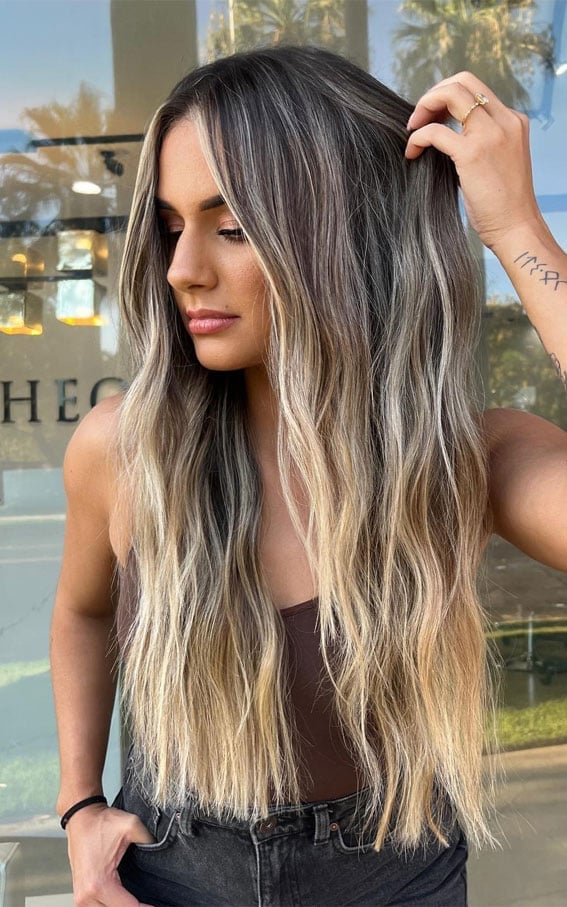
High contrast balayage is not a subtle whisper. The dark brown base sits deep, and the ash blonde pieces lift several levels above it, creating a deliberate separation. Curtain bangs and subtle layers keep the overall shape soft so the color does not read as harsh. Ask your colorist for: mid-back dark brown with high contrast ash blonde balayage, curtain bangs. The technique relies on keeping the lightener off the root by about an inch, then sweeping it through the ends. Thick, wavy texture helps the ash strands sit naturally without sinking into the base. Toning is not optional here. Ash shades need a purple shampoo every few washes to stay cool and avoid pulling brassy.
Mid-Back Ash Blonde With Lighter Ash Balayage
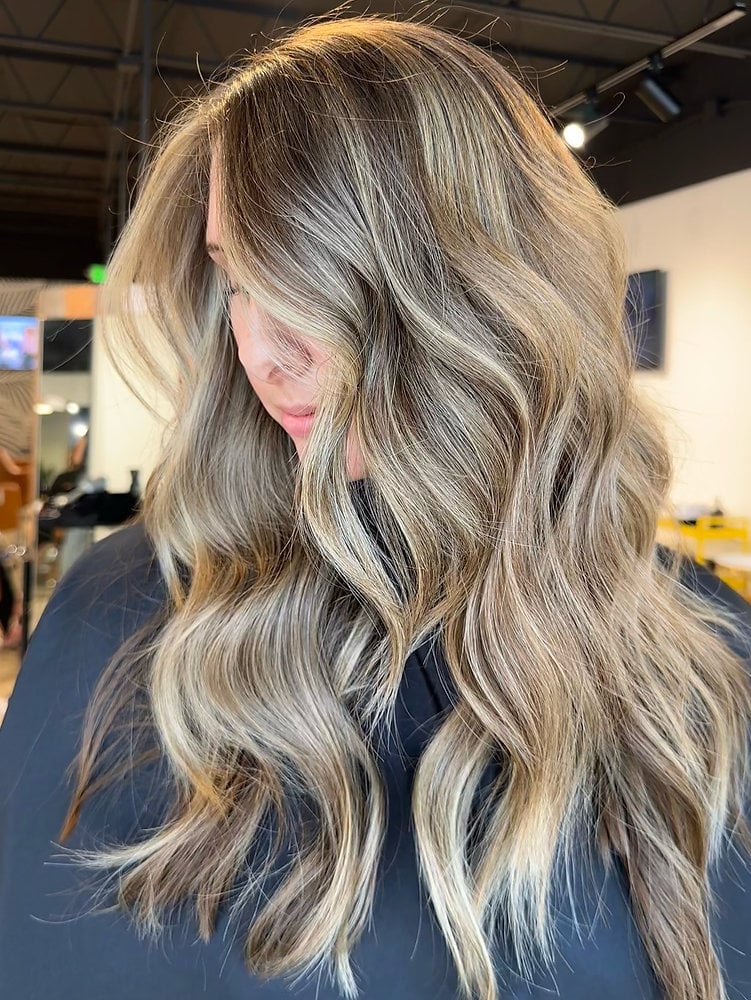
Who should get an ash-on-ash balayage? Anyone with a naturally cool or neutral base who wants dimension without warmth. The base is ash blonde, and the balayage lifts a shade or two lighter in the same cool family, so the effect is blended. Long layers and a middle part let the lighter pieces fall where they naturally would. Ask your colorist for: mid-back ash blonde with lighter ash blonde balayage, long layers. The gloss finish in this look comes from the technique, not a product. Because the base is already light, the grow-out is soft and low-contrast. A trim every eight to ten weeks keeps the ends healthy. Thick, wavy hair holds the shape best.
Mid-Back Ash Blonde With Sun-Kissed Balayage
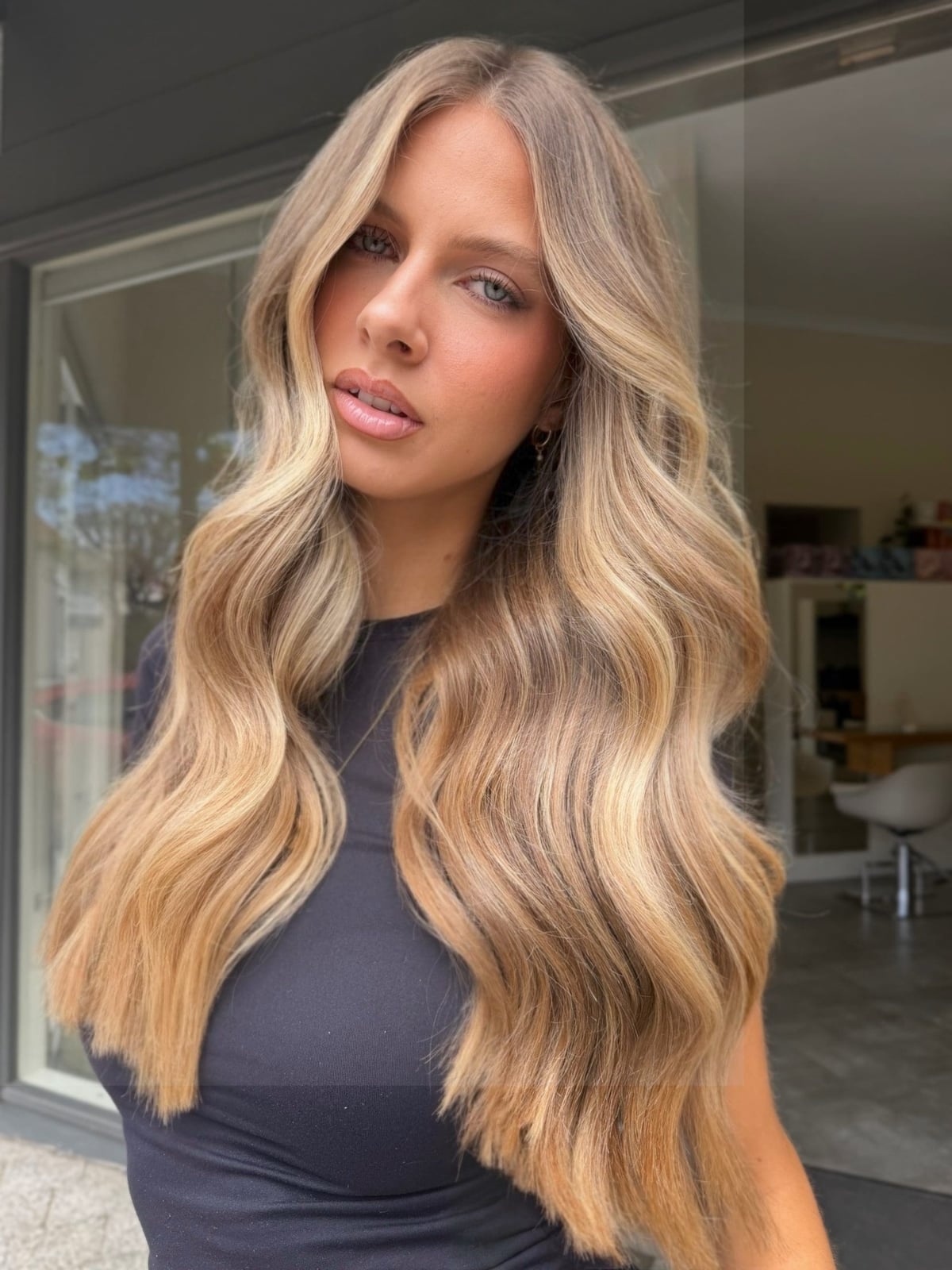
This is the balayage that finally makes ash blonde feel like a season, not a decision. The lighter pieces hit the mid-back waves like actual sun, not a bleach bowl. The side parting and soft layers keep the whole thing from reading as too precious.
It works best on thick, wavy hair that can hold the movement. The ash base cools the blonde down just enough that it doesn’t go brassy by week three. Ask your colorist for: mid-back ash blonde with lighter blonde sun-kissed balayage, soft layers. A trim every eight to ten weeks keeps the shape honest.
Mid-Back Dark Blonde With Platinum Balayage
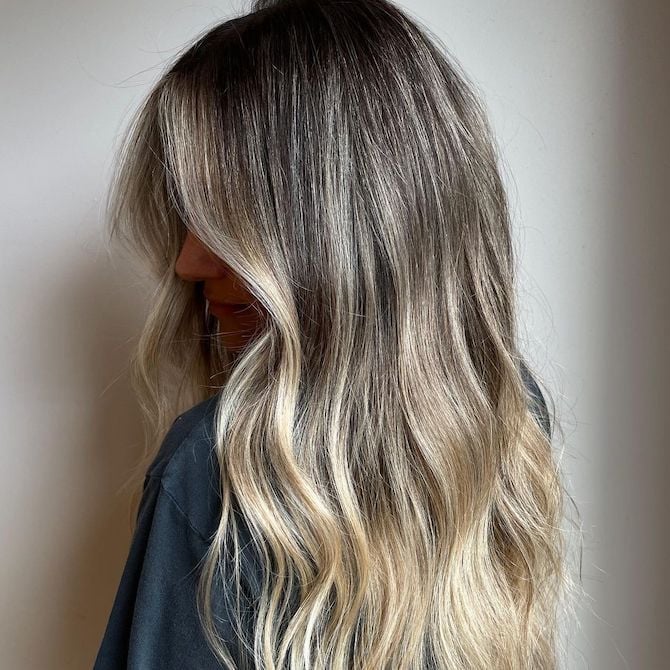
Platinum balayage versus a softer blonde tone comes down to how much attention you want to pay your colorist. This one goes bold: a dark blonde base with platinum pieces sweeping through long layers and a middle part. The contrast is deliberate, the grow-out is not. Ask your colorist for: mid-back dark blonde with platinum blonde balayage, long layers. Regular toning keeps the platinum from drifting yellow, and a trim every eight to ten weeks stops the layers from losing their shape.
Mid-Back Medium Brown With Seamless Blonde Balayage
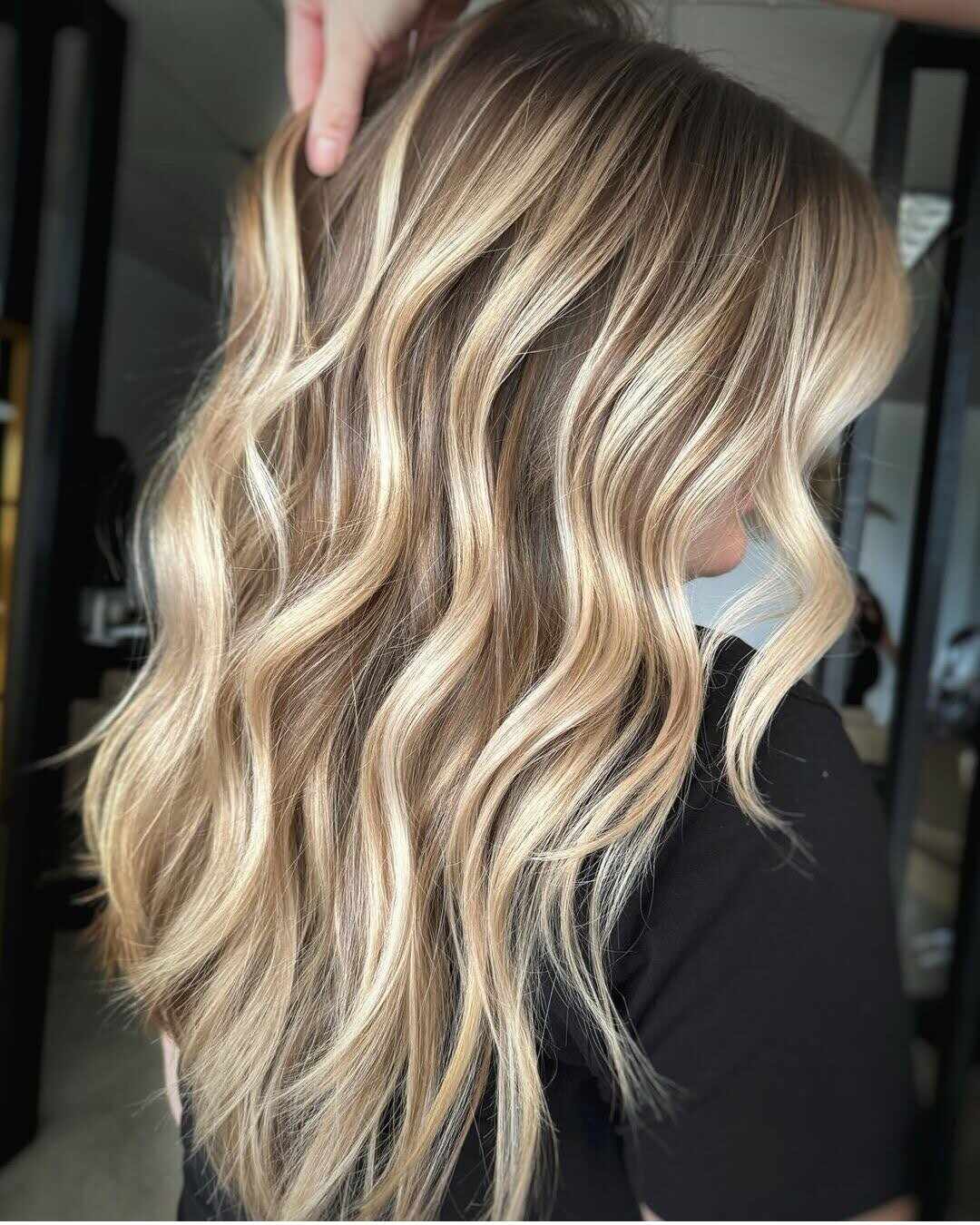
The trick to a seamless balayage is the transition. On this mid-back length, the medium brown base and blonde highlights meet somewhere in the middle, no hard lines, no obvious demarcation. The colorist paints the lighter sections closer to the ends and feathers them upward, so the root never looks neglected.
Long layers help the blend look natural, even in bright light. Thick, wavy hair carries the softness best. Ask your colorist for: mid-back medium brown with seamless blonde balayage, long layers. A trim every eight to ten weeks keeps the ends looking fresh, not tired.
Mid-Back Ash Brown With Cool Blonde Balayage and Long Layers
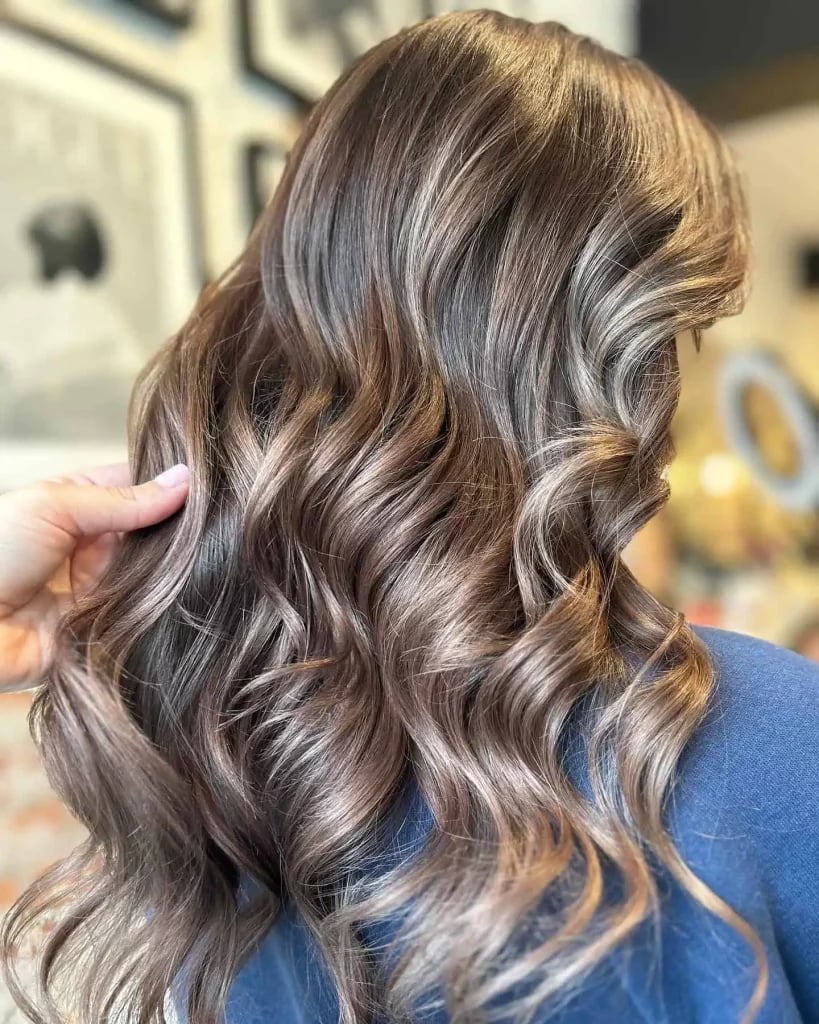
Cool tones behave differently than warm ones. They fade faster, grab onto brass if you let them, and show every skipped toning session. This ash brown base with cool blonde balayage is worth the discipline. The long layers and middle parting let the color move, and the thickness of the wavy texture gives the cool blonde somewhere to land.
Ask your colorist for: mid-back ash brown with cool blonde balayage, long layers. A purple shampoo every two or three washes keeps the cool from turning murky. Trim every eight to ten weeks, because long layers that get ragged look sad fast.
Mid-Back Dark Brown With Subtle Blonde Balayage, Close-Up Take
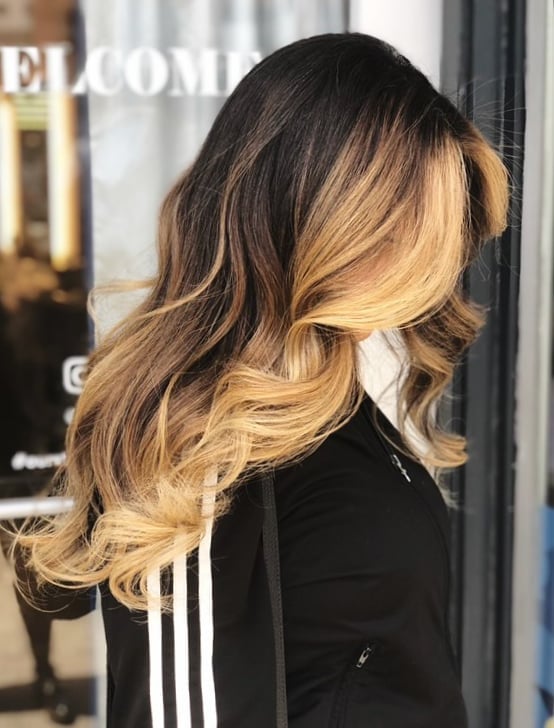
How do you ask for balayage that barely announces itself? Start with the words “subtle” and “blended” and don’t let the colorist talk you into more contrast than you want. This close-up shows a dark brown base with blonde balayage that reads more like a natural highlight than a technique. The layers and middle parting let the lighter pieces peek through without shouting. Ask your colorist for: mid-back dark brown with subtle blonde balayage, layers. A trim every eight to ten weeks is all it needs.
Mid-Back Dark Brown With Caramel Blonde Balayage and Wavy Blowout
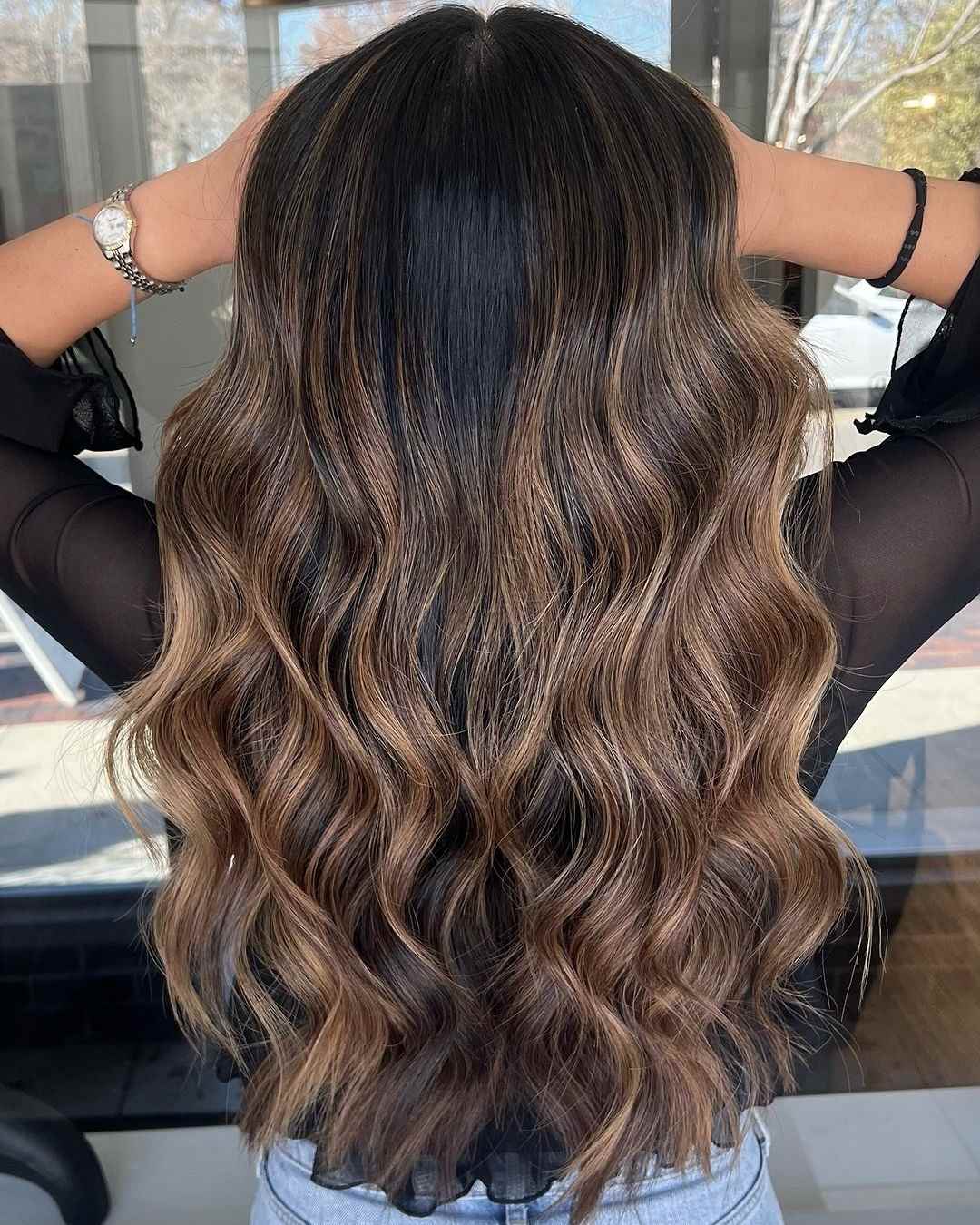
A dark brown base meeting caramel and blonde balayage is a color design that relies on a precise hand. The freehand painting needs to place the lighter pieces where they catch the wave, not just anywhere. Mid-back length and thick, wavy texture are the ideal starting point: layers give the balayage room to travel, and a middle parting keeps the transition visible from the back. This is not a color you approximate with a box.
Ask your colorist for: mid-back dark brown with caramel blonde balayage, layers. The blend requires a salon session: the caramel needs lifting past orange into a warm gold, and the blonde pieces need a separate tone to stop them reading as brassy. A stylist controls both with a bowl and a brush, not a foil packet. Plan for three hours in the chair and a trim every eight to ten weeks to keep the layers sharp.
Mid-Back Dark Brown With Caramel Balayage
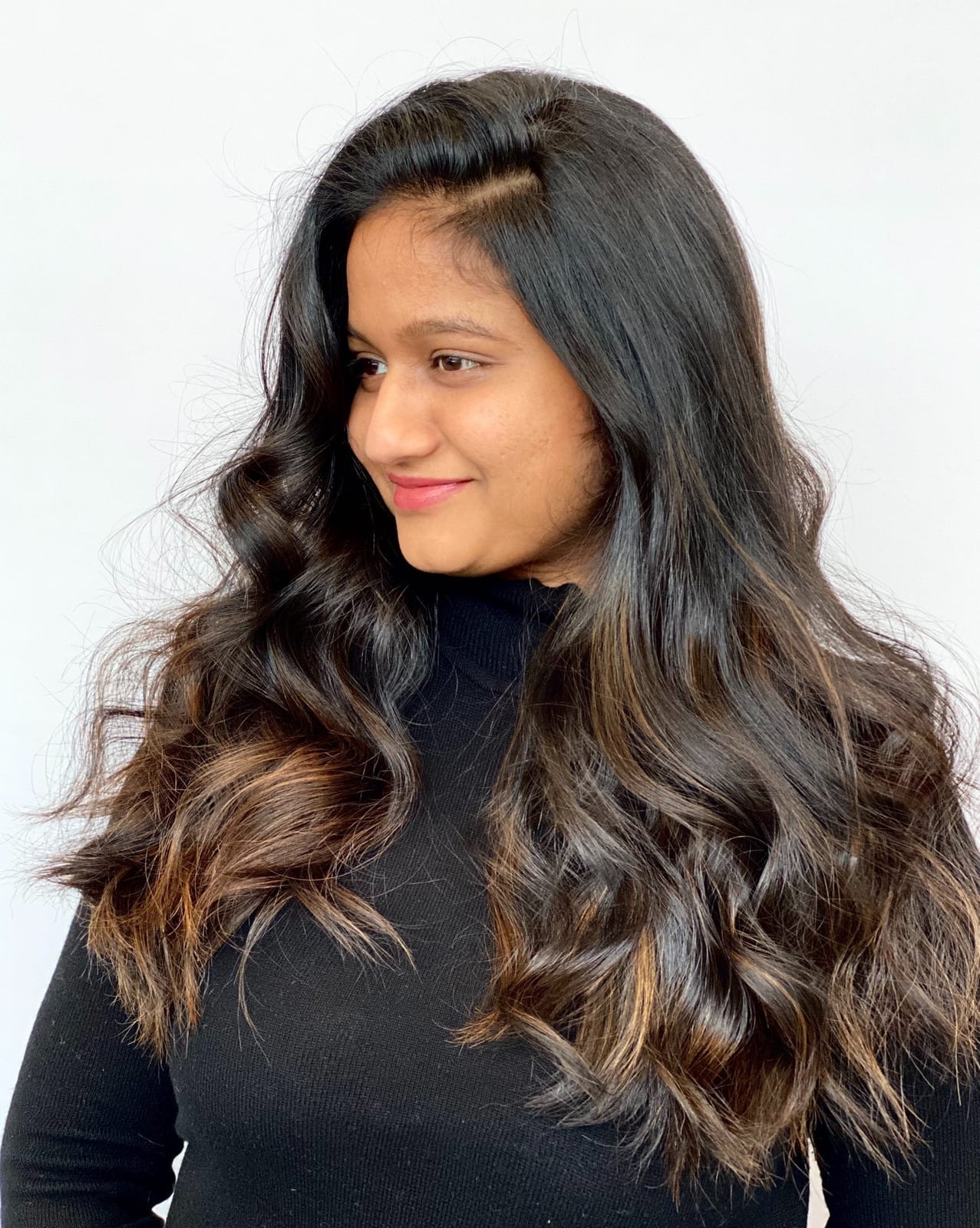
A dark brown base with caramel balayage is a low-contrast look with sun-warmed color that doesn’t look salon-bright. The caramel is painted onto mid-back length, thick, wavy hair in loose sections, so the lighter strands sit mostly on the surface and the under layers stay dark. The side view shows how the caramel wraps around the wave instead of sitting in a straight line.
Caramel tones fade faster than you expect. Warm pigments are the first to wash out, especially if you use hot tools or wash more than twice a week. A color-depositing conditioner in a honey shade can extend the life, but you will see the warmth dull by week four. Ask your colorist for: mid-back dark brown with caramel balayage, loose waves. A gloss treatment every six weeks keeps the caramel from drifting toward orange.
Mid-Back Honey Blonde Balayage With Face-Framing
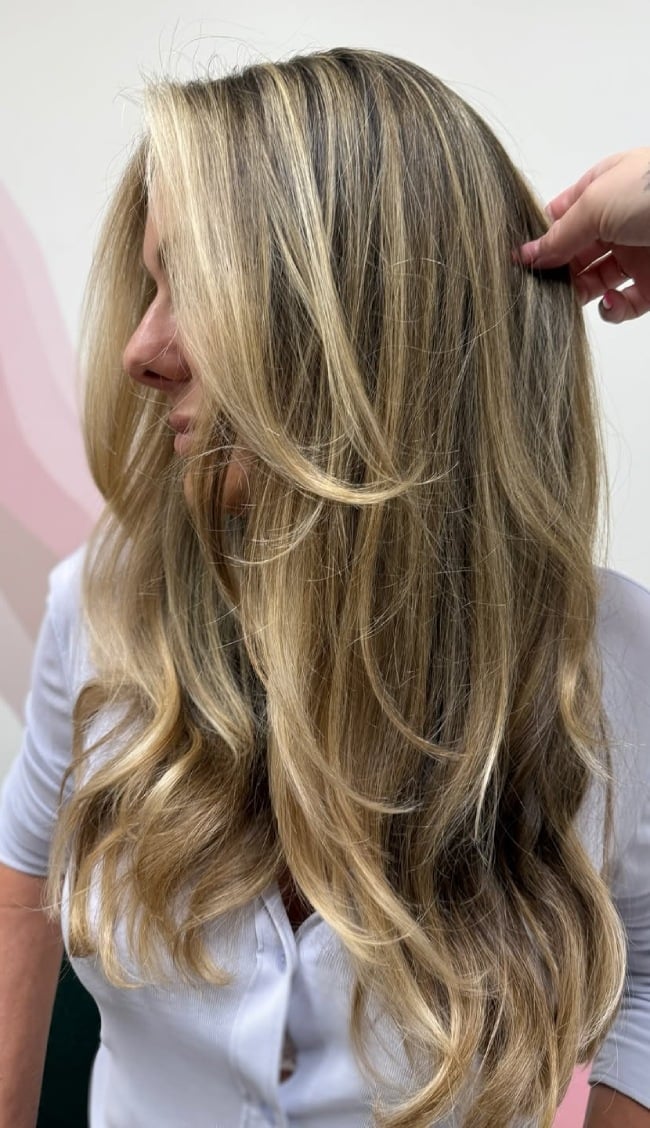
Does honey blonde balayage work for every base? It works best when the darker pieces are a medium brown or lighter, so the honey registers as a tonal shift rather than a separate color. On mid-back length, thick, wavy hair, the face-framing layers catch the honey highlights first, drawing attention to the front without needing full-head lightness. The side view shows the lighter blonde pieces woven through the darker base, creating dimension without high contrast. Ask your colorist for: mid-back hair with honey blonde balayage, face-framing layers. A middle parting keeps the framing pieces balanced. Trim the layers every eight to ten weeks so the face-framing does not lose its shape.
Mid-Back Dark Base With Soft Blonde Balayage
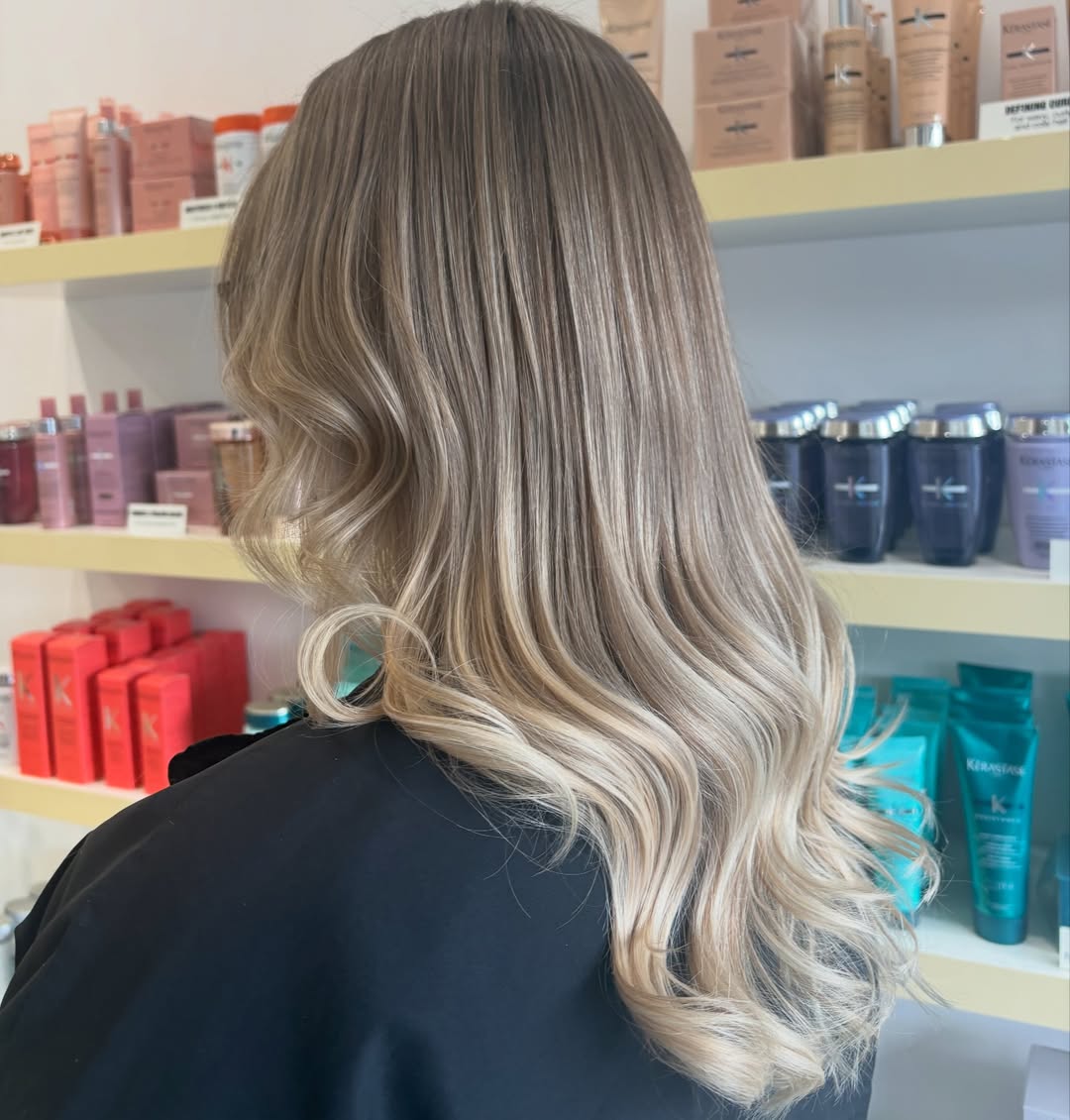
The technique behind soft blonde balayage on a dark base is freehand painting with a light hand. The colorist sweeps the lightener onto the ends, leaving the roots untouched and the transition blurred. On mid-back length, layered hair with medium density and a wavy texture, the blonde looks lived-in without a harsh line. The back view shows how the soft blend avoids a solid band of lightness.
Ask your colorist for: mid-back dark base with soft blonde balayage, layers. The subtlety means you skip the root shadow: the dark base grows in without a visible demarcation line for about six weeks. Toning is minimal since the blonde is kept soft. Trim the layers every eight to ten weeks to maintain the shape, and use a heat protectant before waving the ends.
Mid-Back Dark Brown With Ash Blonde Balayage, Office-Safe Version
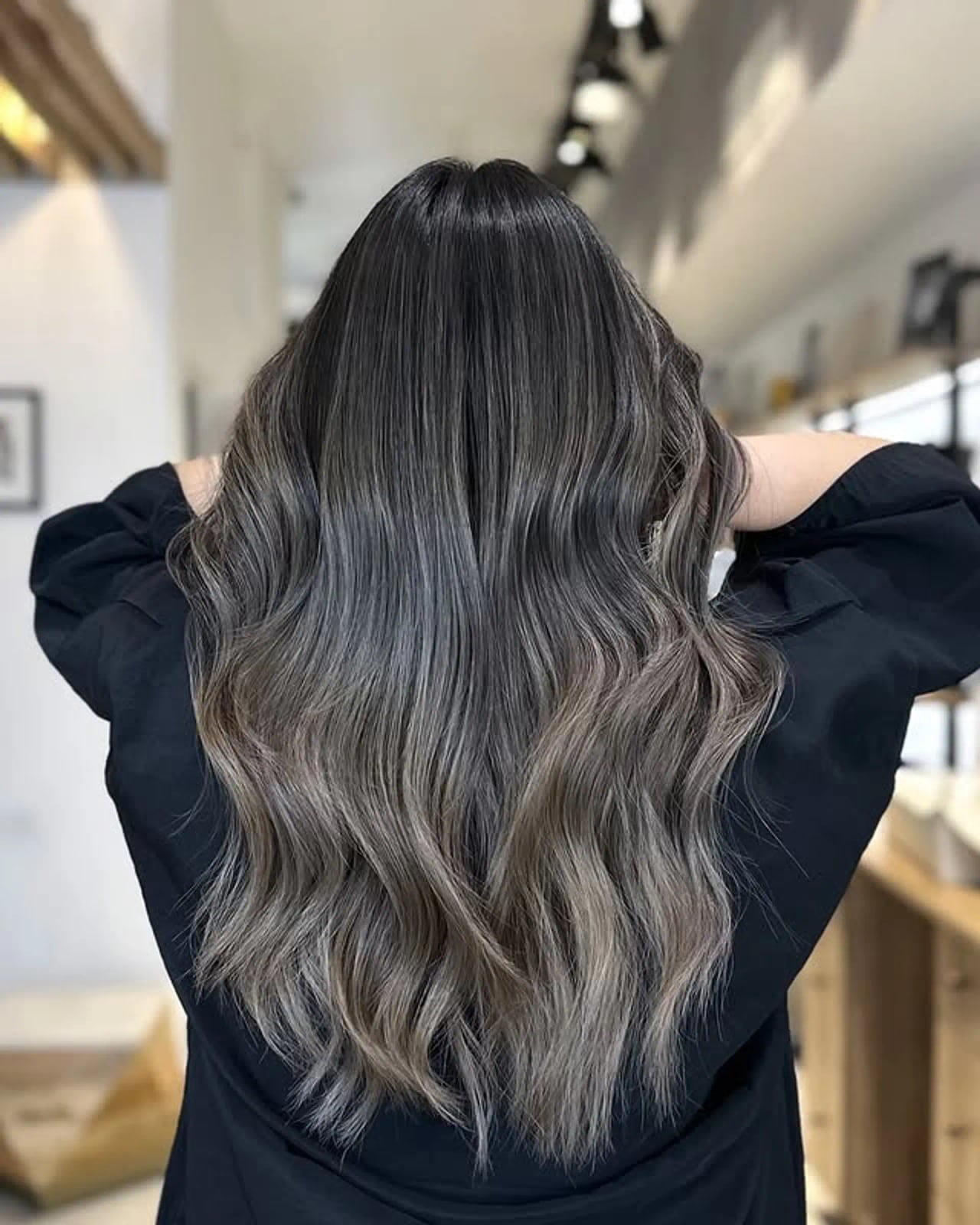
Ash blonde balayage on a dark brown base creates contrast. The ash tone sits cool against the warm brown, so the lighter pieces look deliberate. On mid-back length, thick, wavy hair with a middle parting, the back view shows the ash blonde strands dispersed through the wave, not clustered in one spot. The grow-out is gradual because the balayage starts below the root zone.
Ask your colorist for: mid-back dark brown with ash blonde balayage, wavy style. The upkeep is about a toning appointment every six to eight weeks: ash pigments fade toward greenish if left too long, and a purple shampoo once a week keeps them neutral. Trim the layers every eight to ten weeks. A heat protectant is necessary if you wave the hair, since ash blonde is more porous and prone to dryness.
Collarbone Dark Base With Warm Blonde Balayage
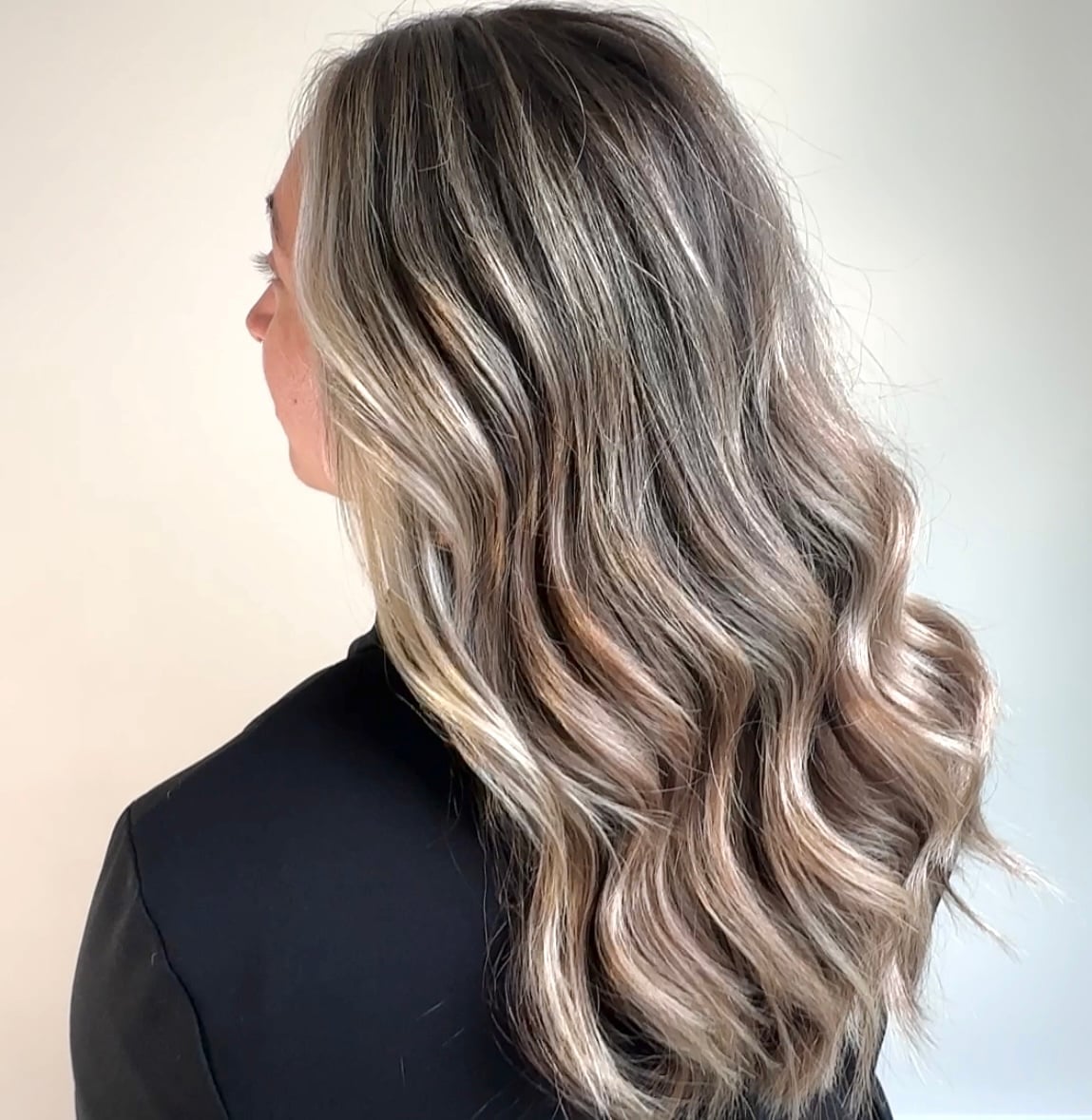
A collarbone-length cut with layers and a middle parting gets a dark base lifted by warm blonde balayage, the transition seamless enough that you can’t tell where one ends and the other begins. The medium-density wavy texture keeps the whole thing from looking too polished. This is the kind of warm blonde balayage collarbone length that slides into autumn without announcing itself. Ask your colorist for: collarbone length dark base with warm blonde balayage, layers. Layers soften the shape for most face shapes, and the warm tone buys you extra time between toning appointments. A trim every six to eight weeks keeps the collarbone line clean.
Final Thoughts
For a natural, low-maintenance look, opt for tones that are only a few shades lighter than your base. For a bolder statement, embrace high-contrast ash or platinum balayage, but be prepared for more frequent toning.
- Maintain balayage with toning glosses every 6-8 weeks to keep highlights bright.
- Use color-safe shampoo and conditioner to preserve the color’s vibrancy.
- Deep condition weekly to combat dryness and keep hair glossy.
- Trim ends every 8-10 weeks to maintain hair health and shape.
Balayage offers endless possibilities for personalized hair color.