Bantu knots are a protective style built from twisted sections of hair wound into flat coils against the scalp. The current wave favors glossy natural texture over poker-straight strands, so knots sit sleekly without a hint of crunch.
This collection of 21 looks spans low upkeep to high detail, from small structured knots to loose, wavy finishes. It suits every hair density and most face shapes, with options for fine hair that needs volume and thicker textures that hold shape well. Bantu Knots appear here in red, purple, burgundy, and classic black, with parting patterns, braids, beads, and defined edges to match your mood.
Vibrant Red Bantu Knots With Pink Highlights
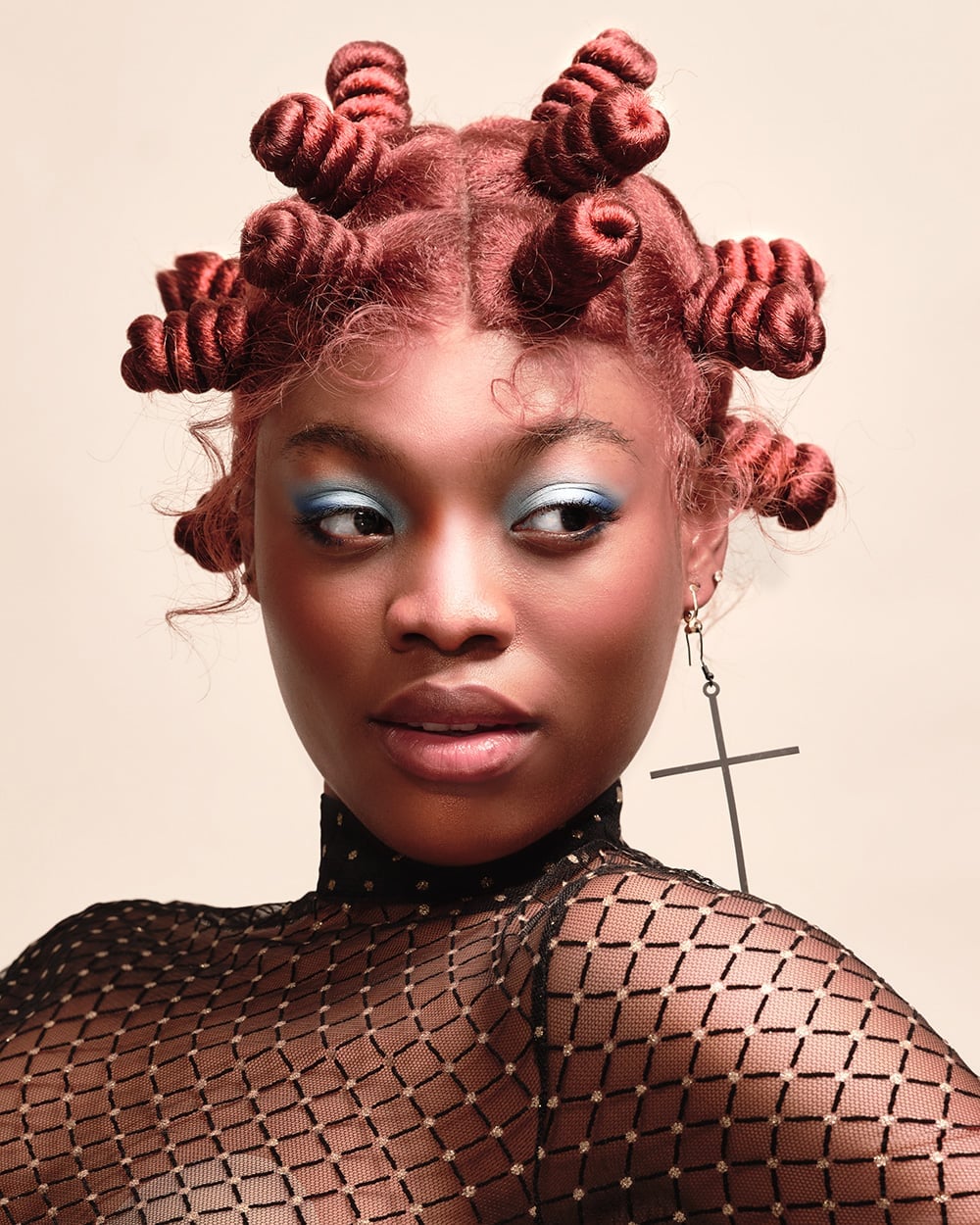
Each knot is a deliberate twist of coily, thick hair, wound tight against the scalp and left to set, with the vibrant red base and subtle pink highlights visible at every angle. The middle parting keeps the layout orderly, while loose tendrils around the face soften the geometry. This style suits those with thick, coily hair at mid-back length, and it flatters oval and heart-shaped faces. Ask your stylist for: bantu knots with vibrant red and pink highlights. Let the knots air dry completely before touching them, then re-knot any loose sections weekly to keep the shape sharp.
Polished Black Bantu Knots With Defined Baby Hairs
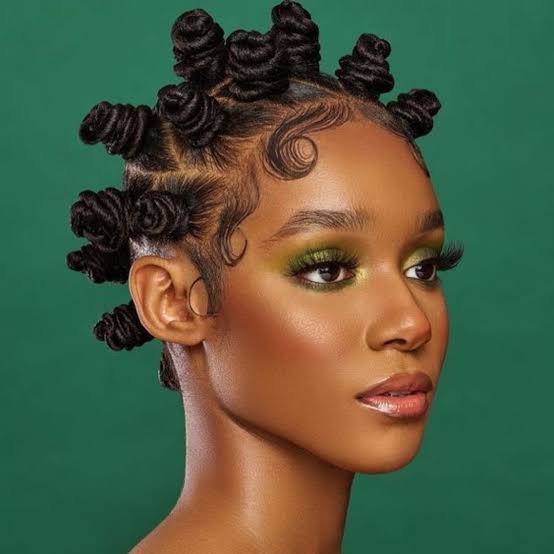
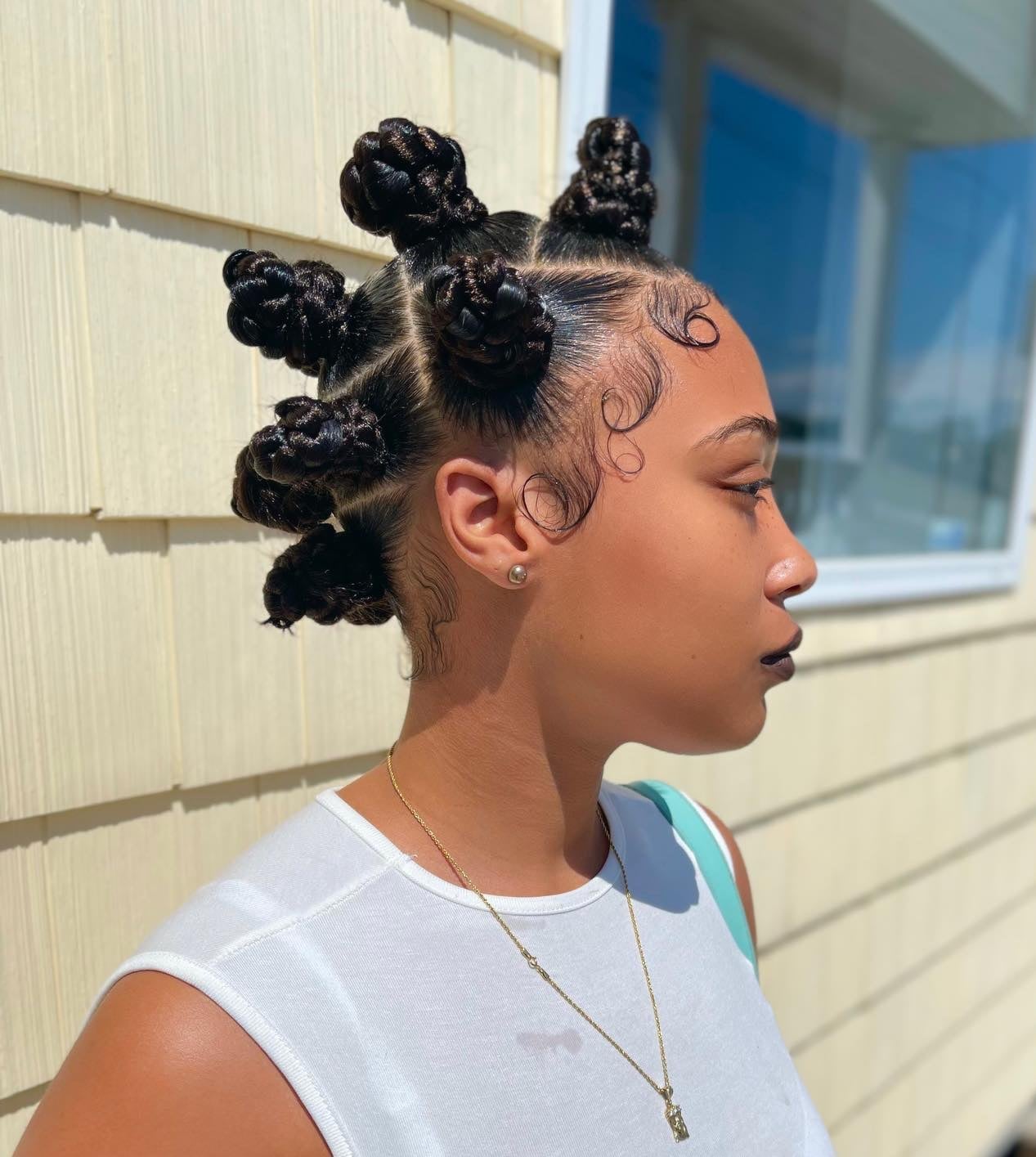
What if your hairline could look as intentional as the knots themselves? Here, thick, coily black hair is sectioned into neat bantu knots, and the baby hairs along the forehead are sculpted into defined swirls that anchor the whole look. The middle parting keeps it balanced, and the result is a style that reads as artful rather than fussy. It works on any length and the defined edges complement round and square faces. Ask your stylist for: bantu knots with sculpted baby hairs. Use a soft brush and edge control to reshape the baby hairs each morning, and re-knot any loose sections as needed.
Bold Purple And Black Bantu Knots
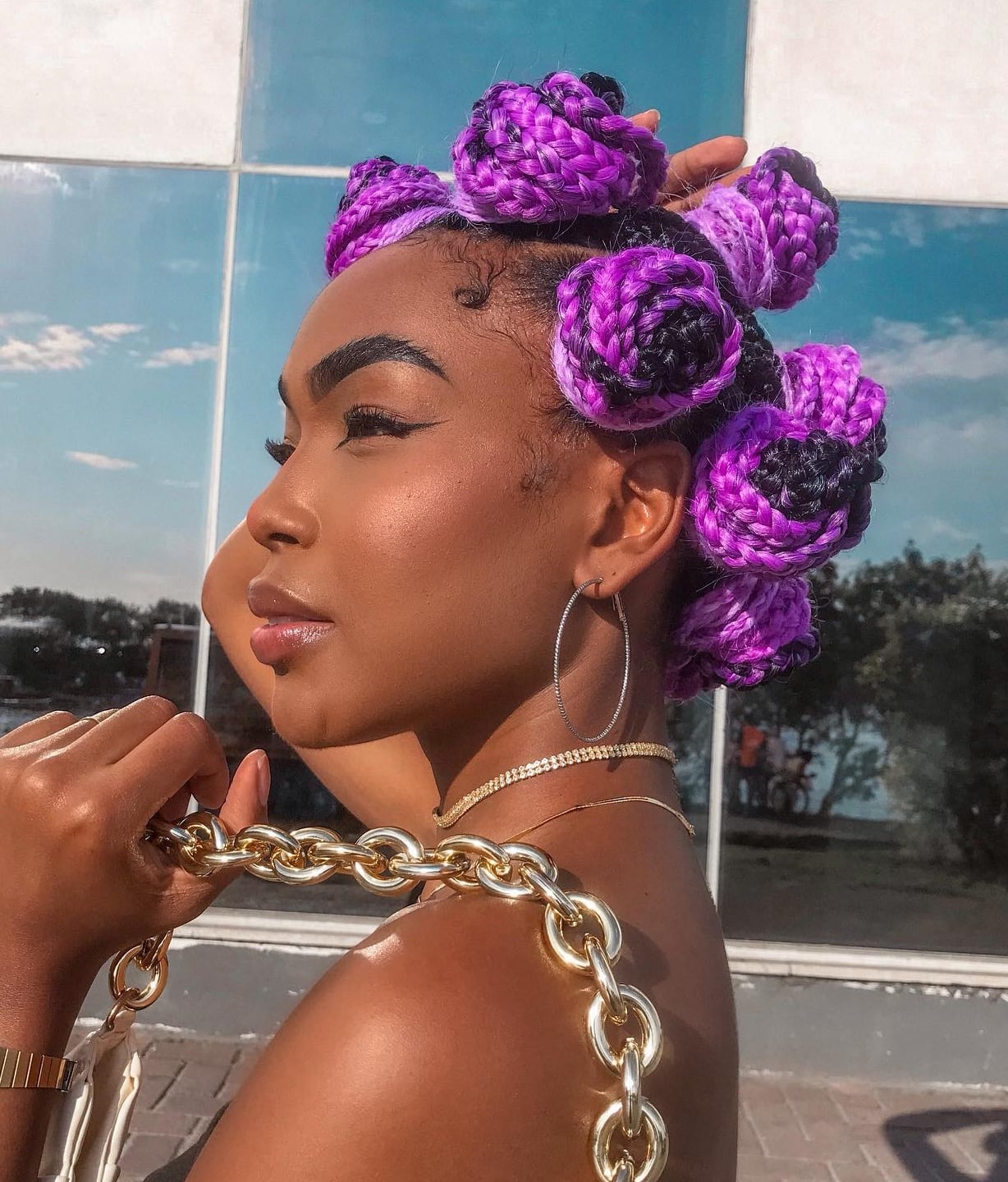
Compared with the understated burgundy or red versions, this purple and black pairing is the loudest way to wear bantu knots. The shoulder-length, coily, thick hair is sectioned with a clean side part, and the tightly wound knots alternate between deep black and saturated purple. The contrast makes the texture pop, and the side part balances a long or oval face. Ask your colorist for: bantu knots with purple and black color. Save this one for a bold statement event or a season when you want the hair to start the conversation.
Black Bantu Knots With Geometric Parting
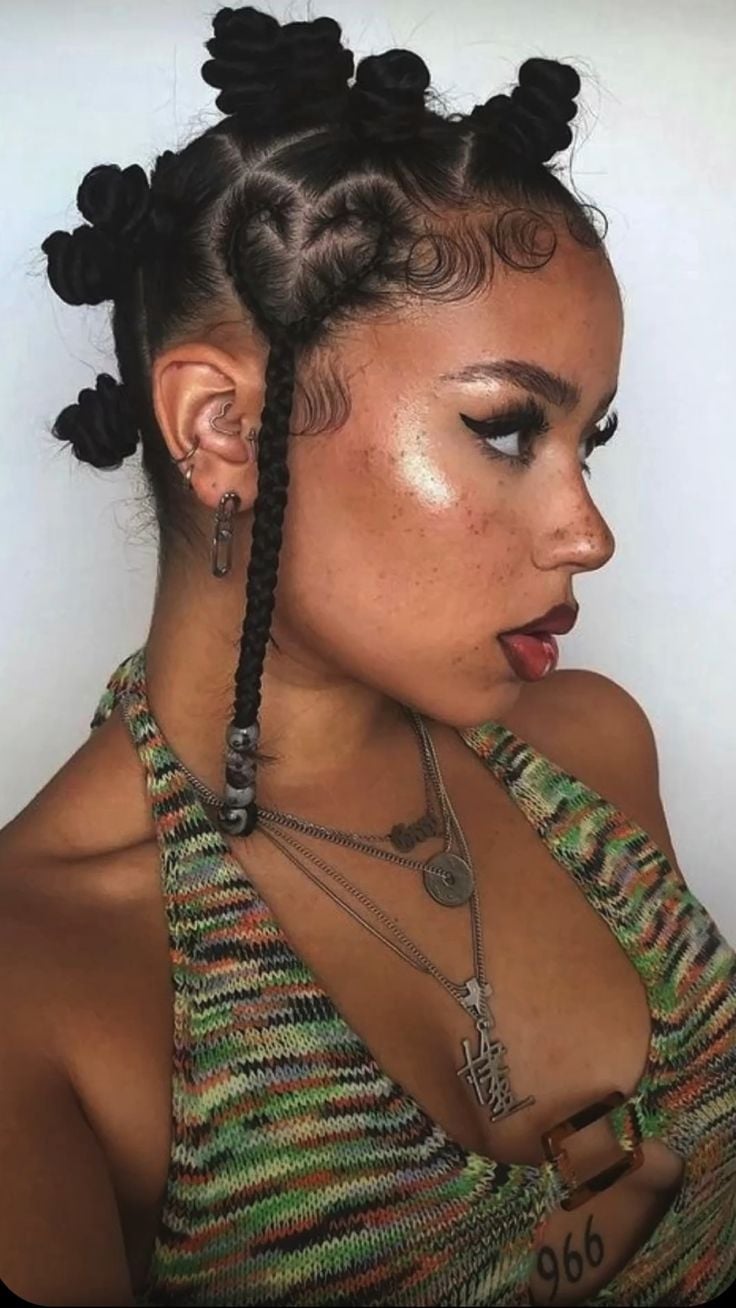
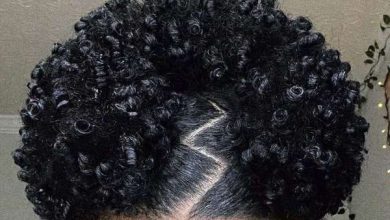
The design here is precise: a middle part that branches into clean geometric lines across the scalp, dividing the thick, coily black hair into neat sections for each knot. A single braided strand interrupts the pattern, adding a sculptural element. This is a style for those who like their hair to have an architectural quality, and it suits mid-back length hair best. Ask your stylist for: bantu knots with geometric parting and a braid. The parting lines need a light gel to stay sharp between washes. Re-knot every 7 to 10 days to keep the sections defined.
Dark Brown Bantu Knots With Burgundy Tint
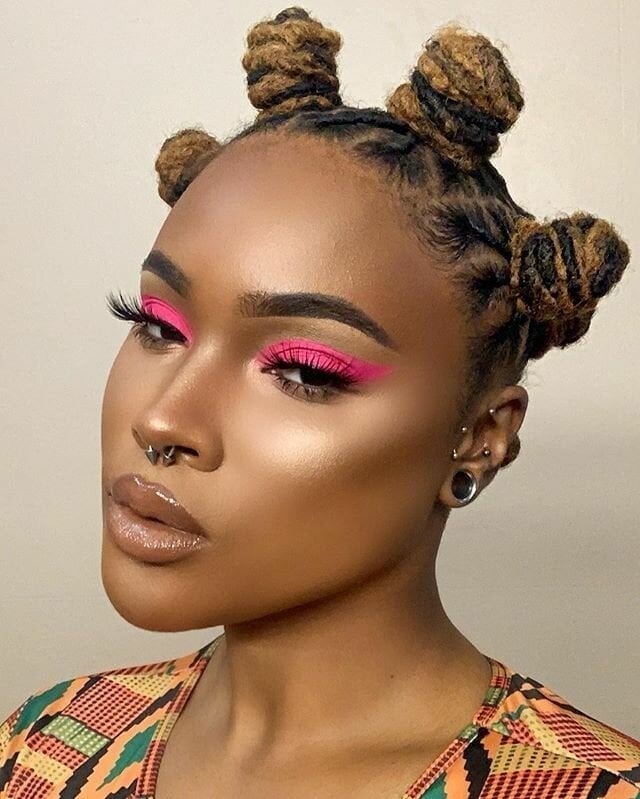
The burgundy tint here is subtle, warming the dark base just enough to add depth without demanding attention. The coily, thick hair is parted down the middle and formed into neat knots, with loose curly tendrils left out around the face to soften the silhouette. This subtle color choice works for daily wear and suits any length, while the tendrils round out square or round faces. Ask your colorist for: bantu knots with a subtle burgundy tint and face-framing tendrils. Use a color-safe shampoo and conditioner, and re-knot any loose sections weekly.
Neatly Formed Black Bantu Knots On Top
There is a right way and a wrong way to build bantu knots, and the right way starts with sectioning. Thick, coily hair at mid-back length gives you enough weight to keep the straight sections below hanging smooth, while the knots on top hold their shape for about a week before they need a re-twist. The most common mistake is twisting too loosely, which leaves the knots looking more like lumps than spirals. Ask your stylist for: bantu knots on top, rest of hair straight. A smoothing serum on the straight sections and a satin scarf at night will keep the two textures from fighting each other. This is one to leave to a professional. The tension and parting precision are hard to replicate at home.
Large Defined Black Bantu Knots
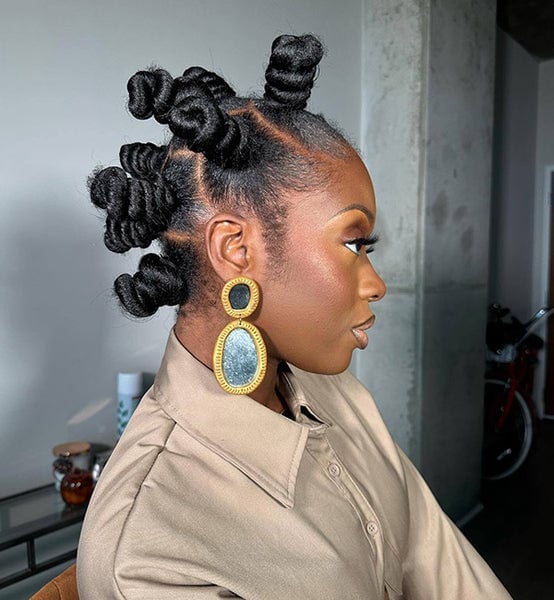
How do you tell a stylist you want knots that are big and deliberate without sounding like you are describing a vegetable? You say the words “large” and “well-defined” and trust that they know what you mean. On thick, coily hair, larger sections mean fewer knots overall, which cuts installation time but also means each knot has more weight and is more likely to unravel if the twist is not tight. This look suits oval and diamond face shapes best, since the volume at the crown adds width where a long face needs it. Ask your stylist for: large, well-defined bantu knots. Large knots look less intricate up close, so skip this if you want the fine detail of smaller sections.
Black Bantu Knots With Braids
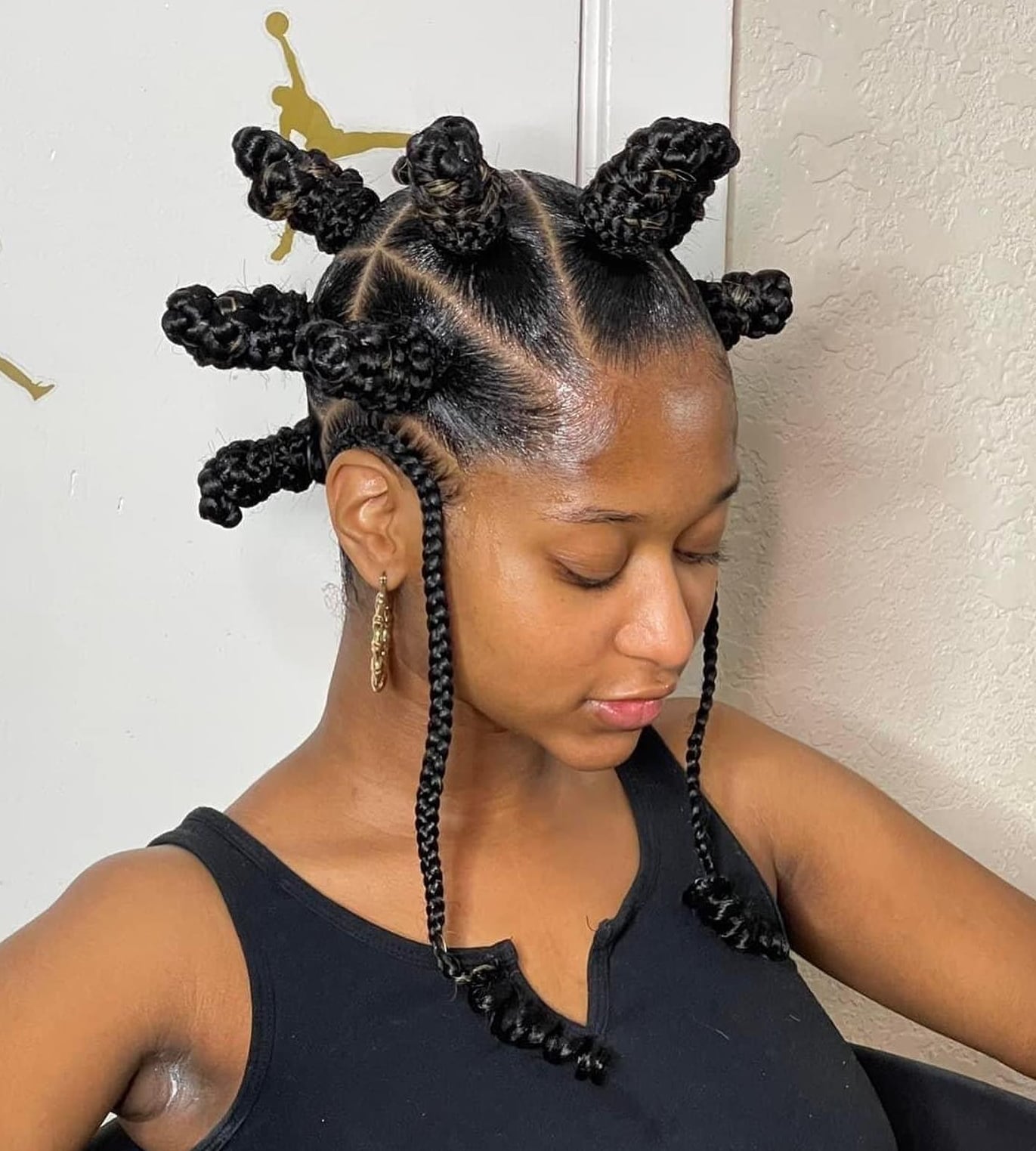
Bantu knots and braids share the same DNA, both start with a section of hair that is twisted or woven into a stable shape. Here, the braided sections run from the mid-back length down, while the knots sit at the root, which means the braids do most of the weight-bearing and the knots stay small and tidy. The middle parting keeps the pattern symmetrical, which helps when you are working on yourself in a bathroom mirror.
To get close at home, start with damp, detangled thick coily hair. Part a section from root to tip, braid it to the end, then coil the braided section up into a knot and secure the tip under the base. Work from the front to the back so you can see your part lines. Ask your stylist for: bantu knots with braided sections. A light oil on the braids every few days keeps the strands from frizzing against each other.
Uniform Dark Brown Bantu Knots
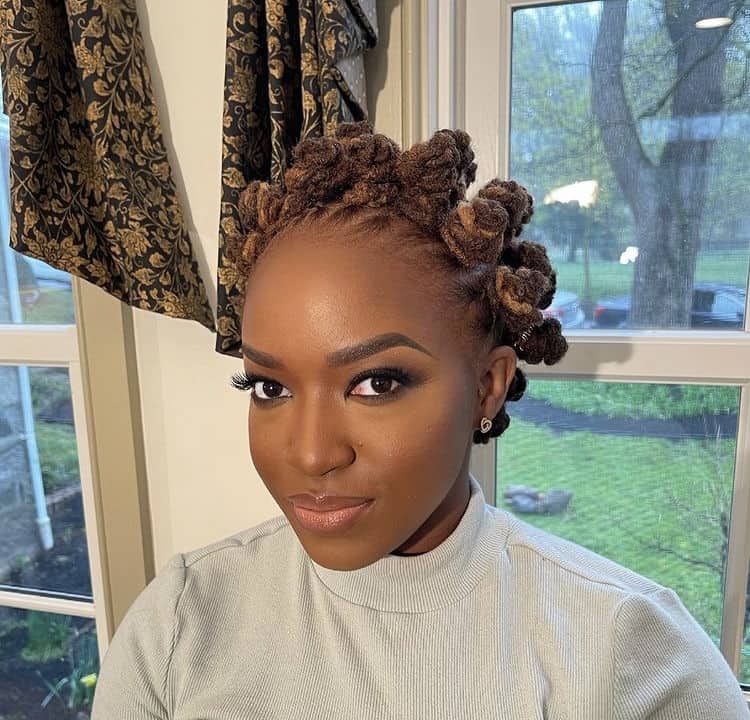
Who actually benefits from short, uniform bantu knots? Round and oval face shapes do, because the consistent knot size across the scalp creates a neat dome that does not add extra width at the sides. On thick, coily hair at short length, the knots sit closer to the scalp and feel lighter than longer versions, which is a relief during a humid afternoon. Ask your stylist for: uniform bantu knots on short hair. Even tension when twisting is the only thing standing between you and a lumpy result, so check each knot as you go. Re-twist any that soften after a few days, but the whole set usually holds for about a week and a half.
Perfectly Formed Black Bantu Knots
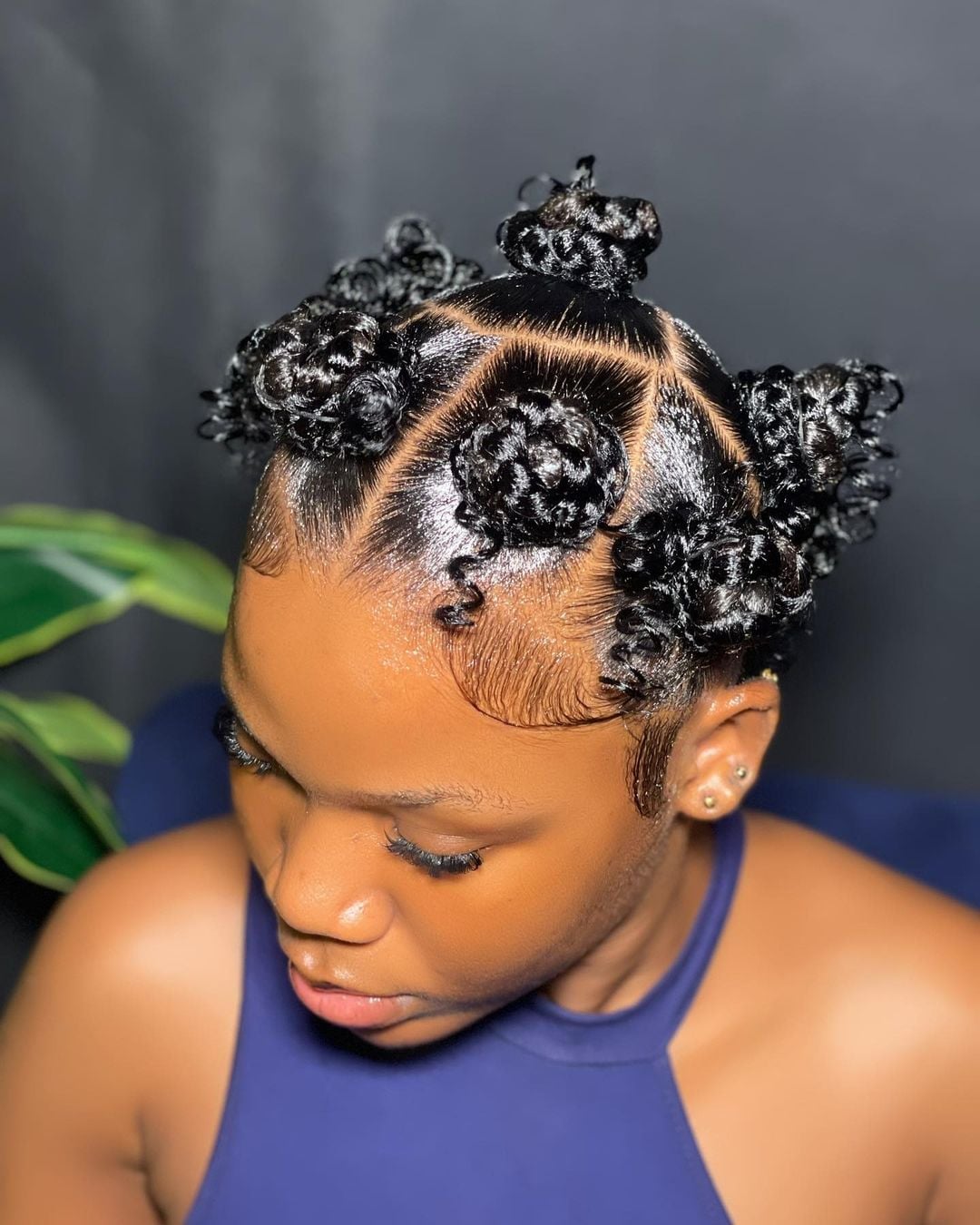
Perfectly formed bantu knots are not a happy accident. They require clean sections and consistent twisting pressure from the root to the tip. On shoulder-length, thick coily hair, the knots sit high enough to show the symmetrical pattern across the top, and the defined parting draws the eye to each individual spiral. Ask your stylist for: perfectly formed, symmetrical bantu knots. This is a salon-only request because the even tension and parting geometry are difficult to judge on your own head. The honest take: you will spend about two hours in the chair and another thirty minutes each week re-twisting the knots that soften near the hairline, which is a reasonable trade for a look that stays sharp for two weeks.
Precise Black Bantu Knots
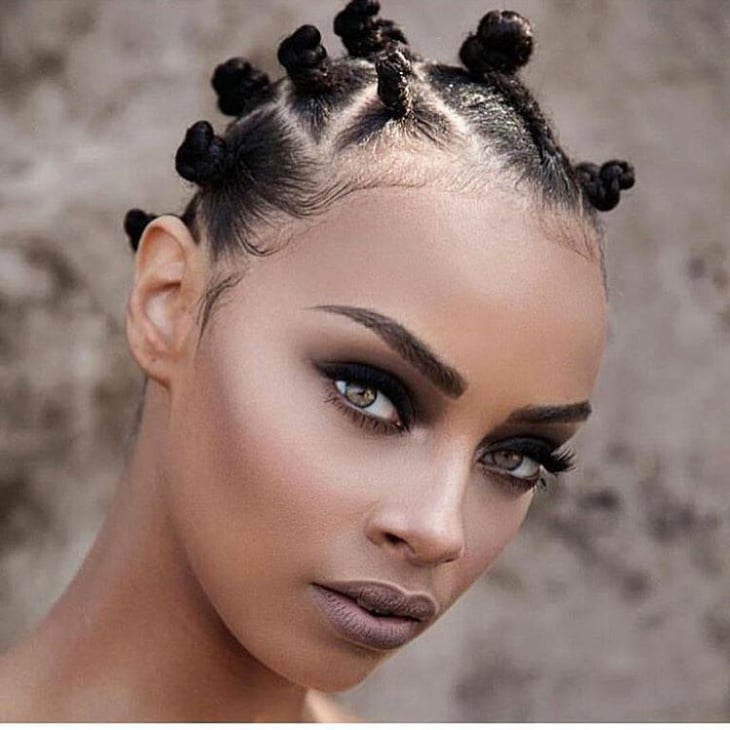
Clean lines of these knots make the scalp a visible part of the design. Thick, coily hair holds this shape best, and the precision complements angular faces by balancing sharper features. Ask your stylist for precisely styled bantu knots. Bold eye makeup fits naturally with this style, making it a good choice for evening events or portraits. A trim every eight weeks keeps the ends neat if you plan to wear the style repeatedly.
Small Structured Black Bantu Knots
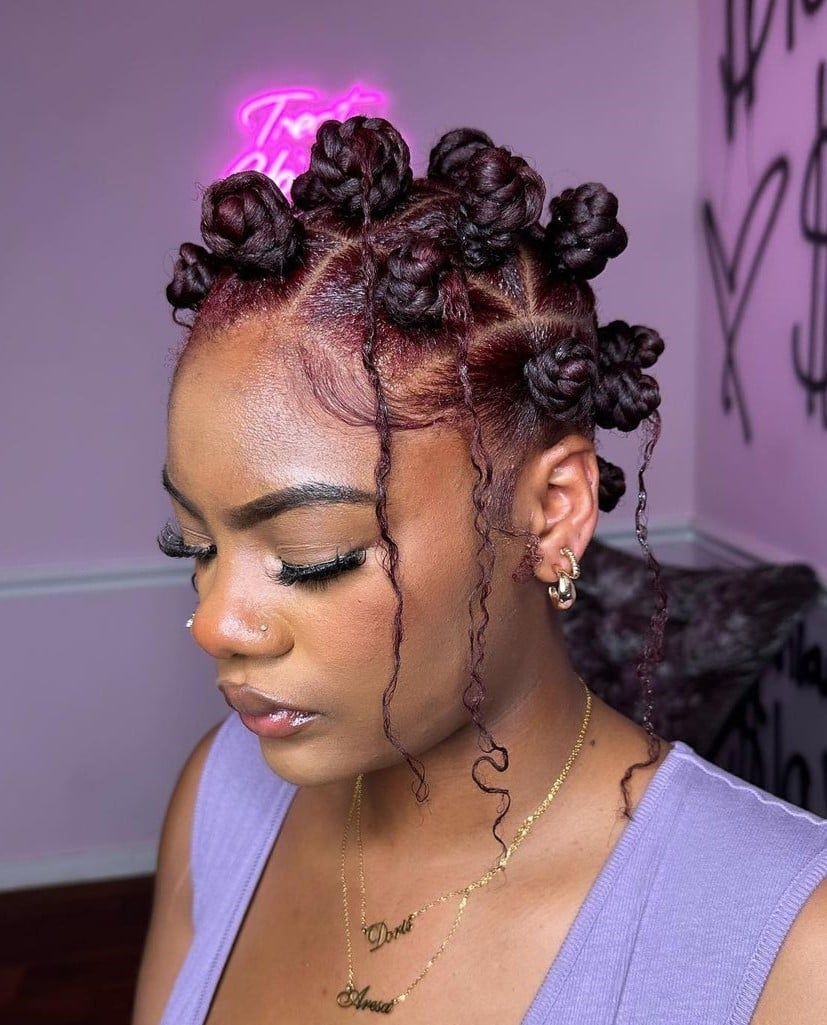
Small knots need uniform sectioning, so the stylist parts the hair into identical squares before twisting each one from root to tip. Thick, coily hair holds the structure without slipping, and the look suits round and oval faces because the vertical lines add length. Ask your stylist for small, uniformly structured bantu knots. Re-knot every 7 to 10 days to maintain the crisp shape, and wrap the edges at night to keep them from fraying.
Shoulder Length Black Wavy Bantu Knots
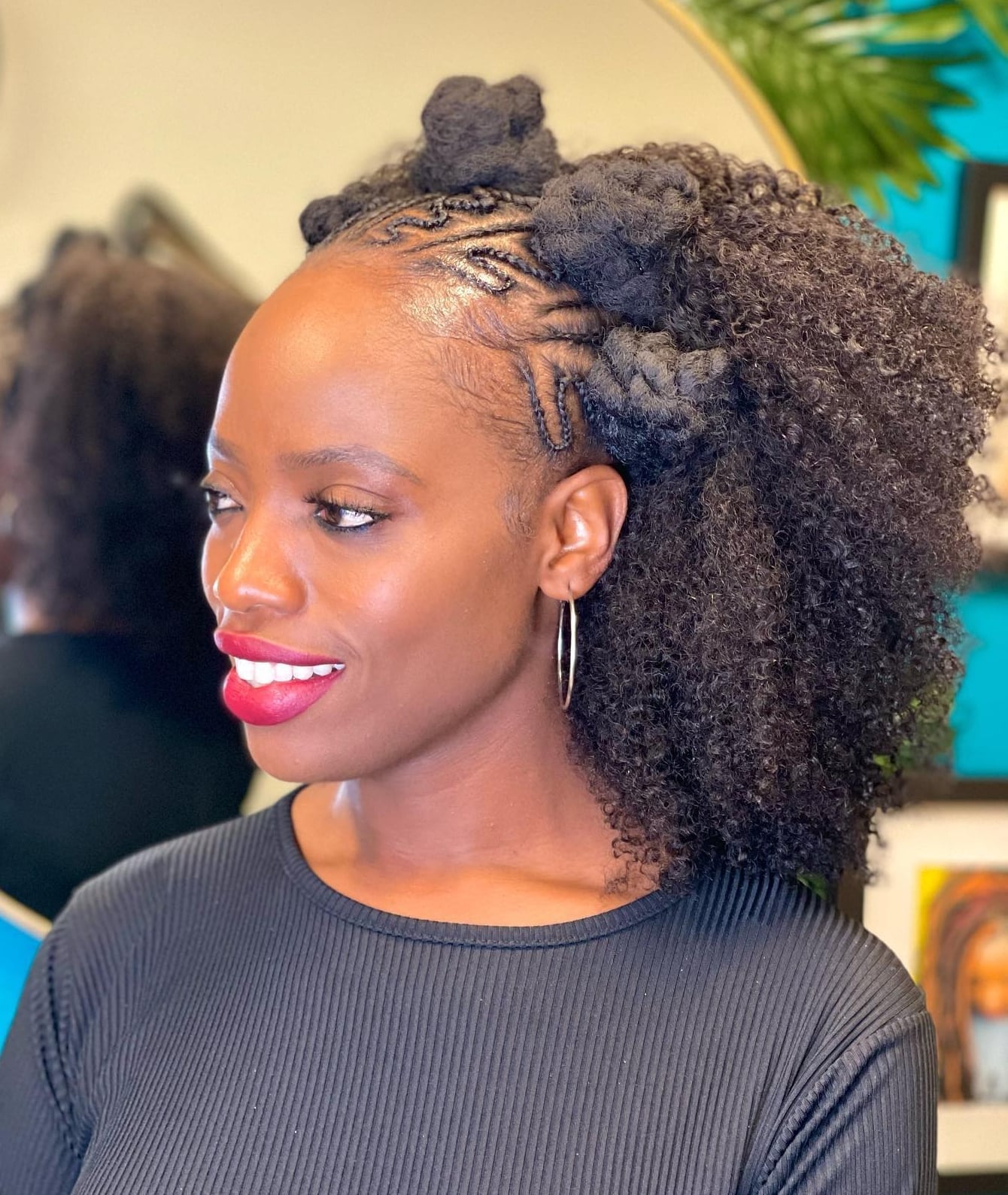
Shoulder length is the sweet spot for wavy hair in bantu knots, long enough to wrap into a solid knot but short enough that the knots stay light and don’t pull at the roots. Thick, wavy texture works well, and the style suits oval and heart faces because the volume sits high rather than wide. Ask your stylist for bantu knots on shoulder length wavy hair. The real drawback is that looser wave patterns may need a gel or mousse to hold the knot shape for more than a few days.
Black Bantu Knots With Clean Edges
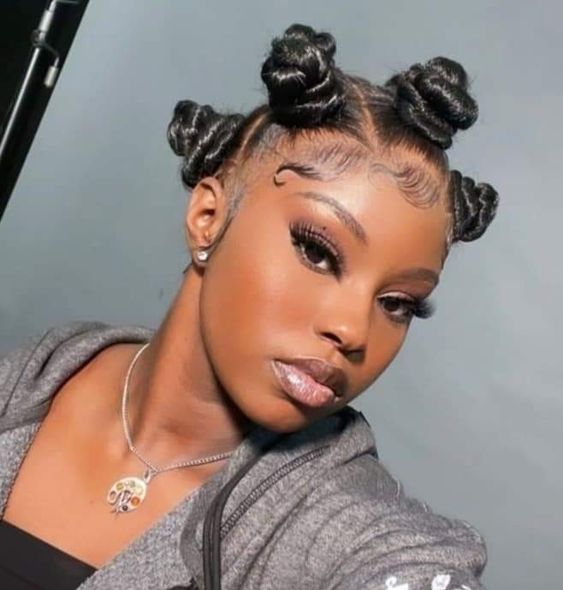
The most common mistake with bantu knots and defined edges is over-smoothing, which makes the hairline look stiff, not polished. Thick, coily hair takes edge control well, and the clean lines suit square and round faces because the sharp angles create contrast. Ask your stylist for bantu knots with clean, shaped edges. A soft brush and a water-based edge control product give a flexible hold, and the edges should be refreshed every two to three days, not touched constantly.
Bantu Knots With Decorative Beads
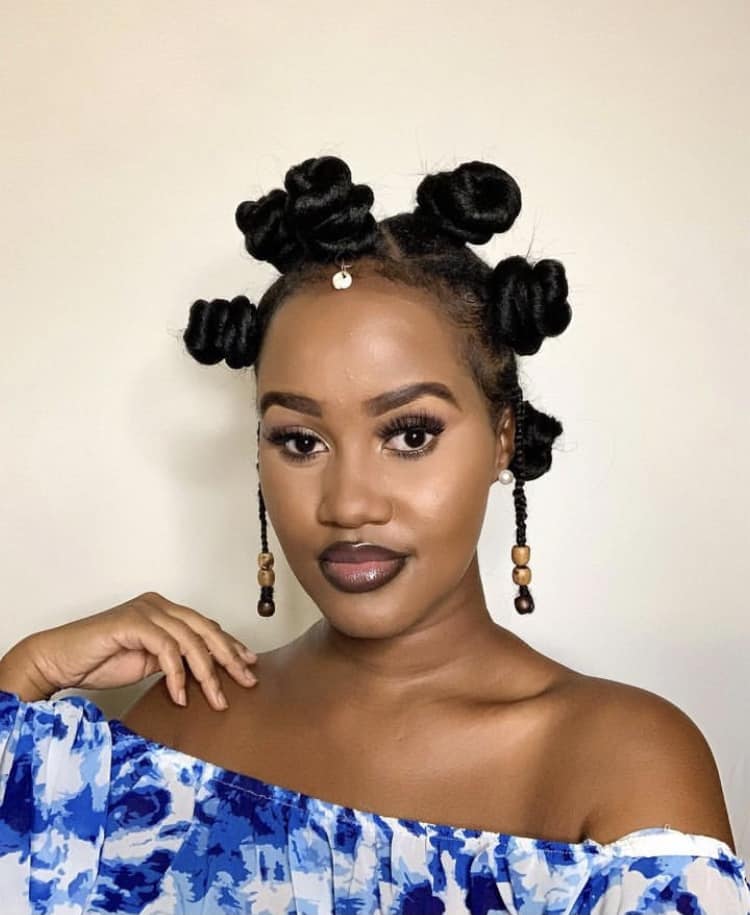
Wooden beads on a few knots turn a protective style into a clear choice for a celebration, a festival, or a summer event where hair is part of the statement. Thick, coily hair of any length can carry the weight of beads, and the symmetrical placement suits oval and heart faces by drawing the eye upward. Ask your stylist for bantu knots with decorative beads. Secure each bead with a small knot at the base of the hair to stop it from sliding off, and expect the beads to click softly when you move.
Small Bantu Knots With Loose Hair
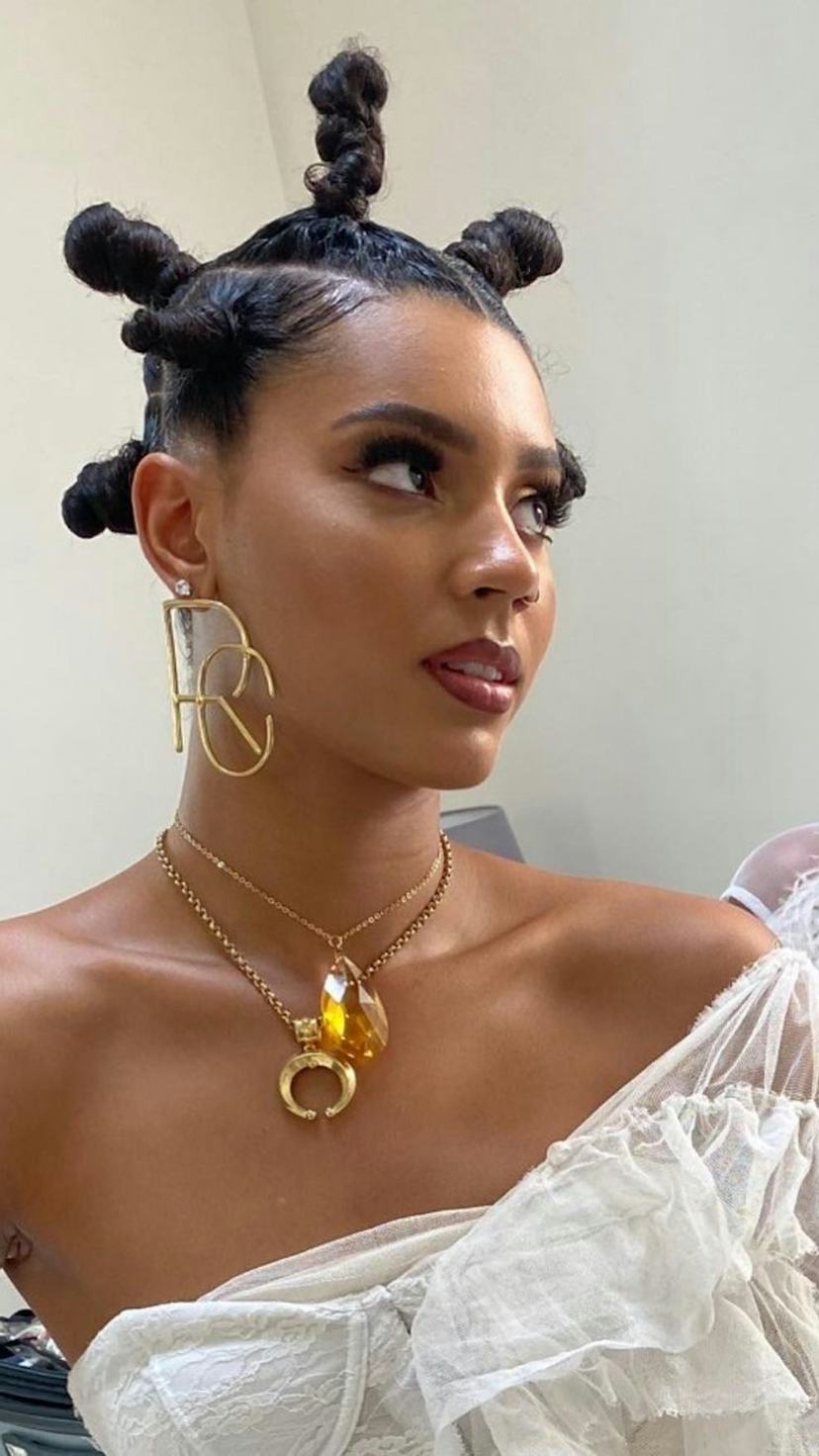
Multiple small bantu knots across the top leave the rest of your shoulder-length hair down, which makes this a half-up style that actually earns its keep. Thick, coily hair holds the knots well, and the loose section keeps the look from feeling heavy, suiting most face shapes. Ask your stylist for small bantu knots on top, rest of hair down. A shine serum on the loose hair tames frizz, and you will re-knot the top weekly to keep the shape crisp.
Vibrant Red Bantu Knots With Curls
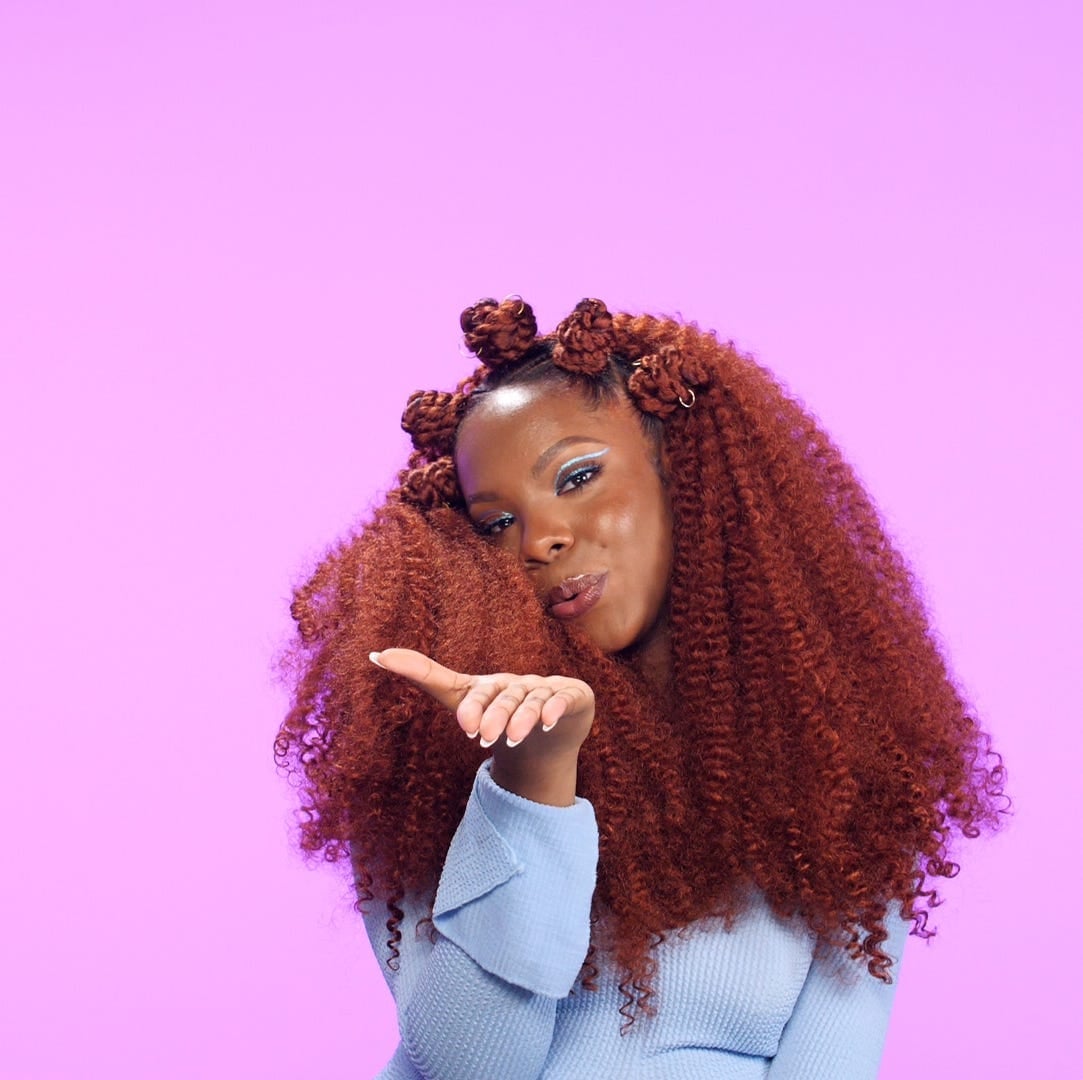
Where small bantu knots usually sit alone, this version pairs them with loose, voluminous curls, and the contrast is the whole point. The vibrant red color makes the knots pop, while the curls add movement that a fully knotted style simply does not have. It suits thick, coily hair at mid-back length, and it works well on oval and heart faces. Ask your stylist for small bantu knots with loose red curls. The styling steps are simple: define the curls with a cream, then set the knots. Use a curling cream on the loose sections, and re-knot the top weekly to maintain the pattern.
Black Bantu Knots With Heart Braid Pattern
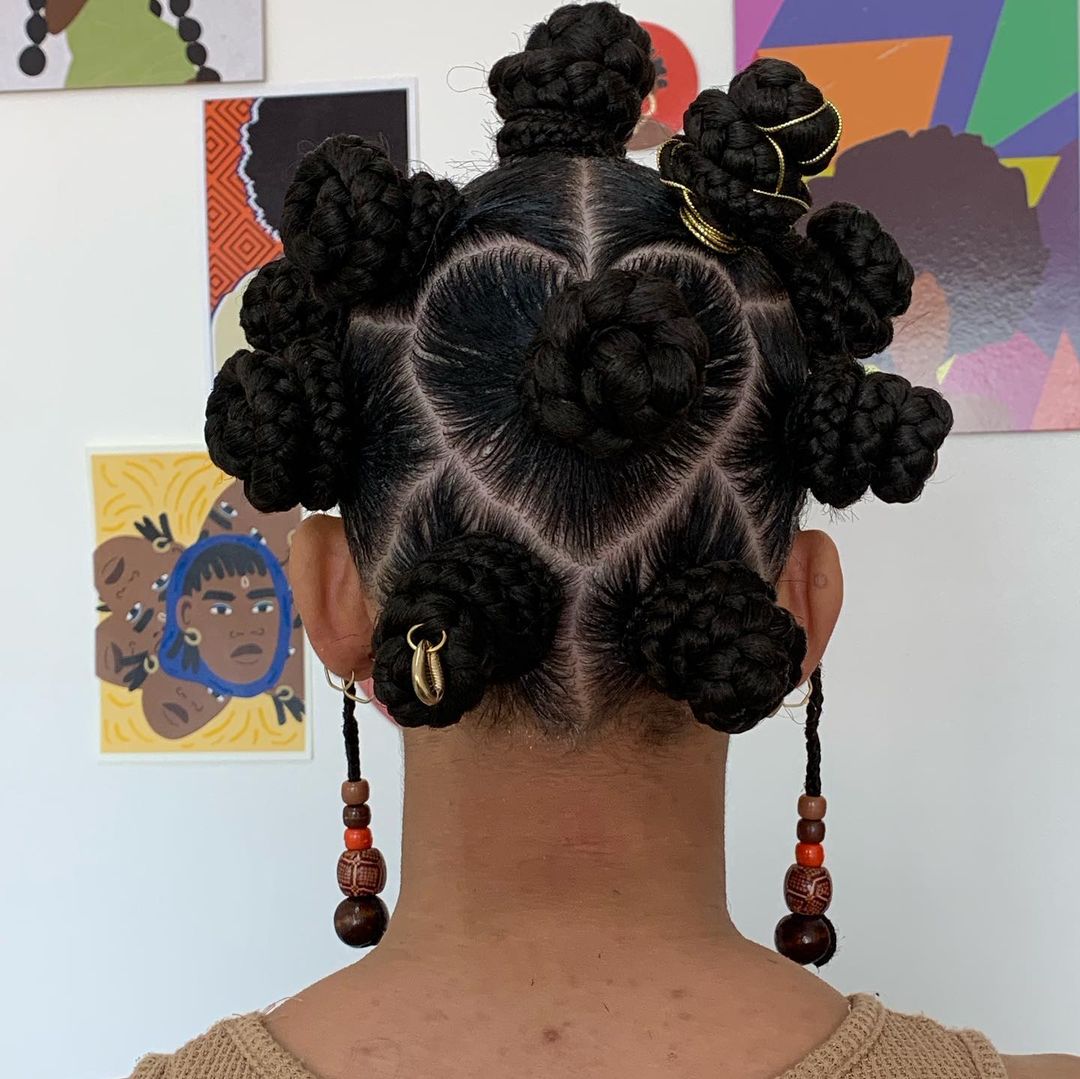
Can you actually braid a heart shape into your scalp at home? Technically yes, but it will take a mirror, patience, and a steady hand. The braids form the heart, and the bantu knots fill the rest, which means the parting has to be precise from the start. Thick, coily hair at short length holds the design best, and it suits most face shapes. Ask your stylist for bantu knots with a heart-shaped braid design. For a clean result, book a salon appointment; the geometric parting is not a DIY-friendly task.
Dark Brown Wavy Bantu Knots Side Part
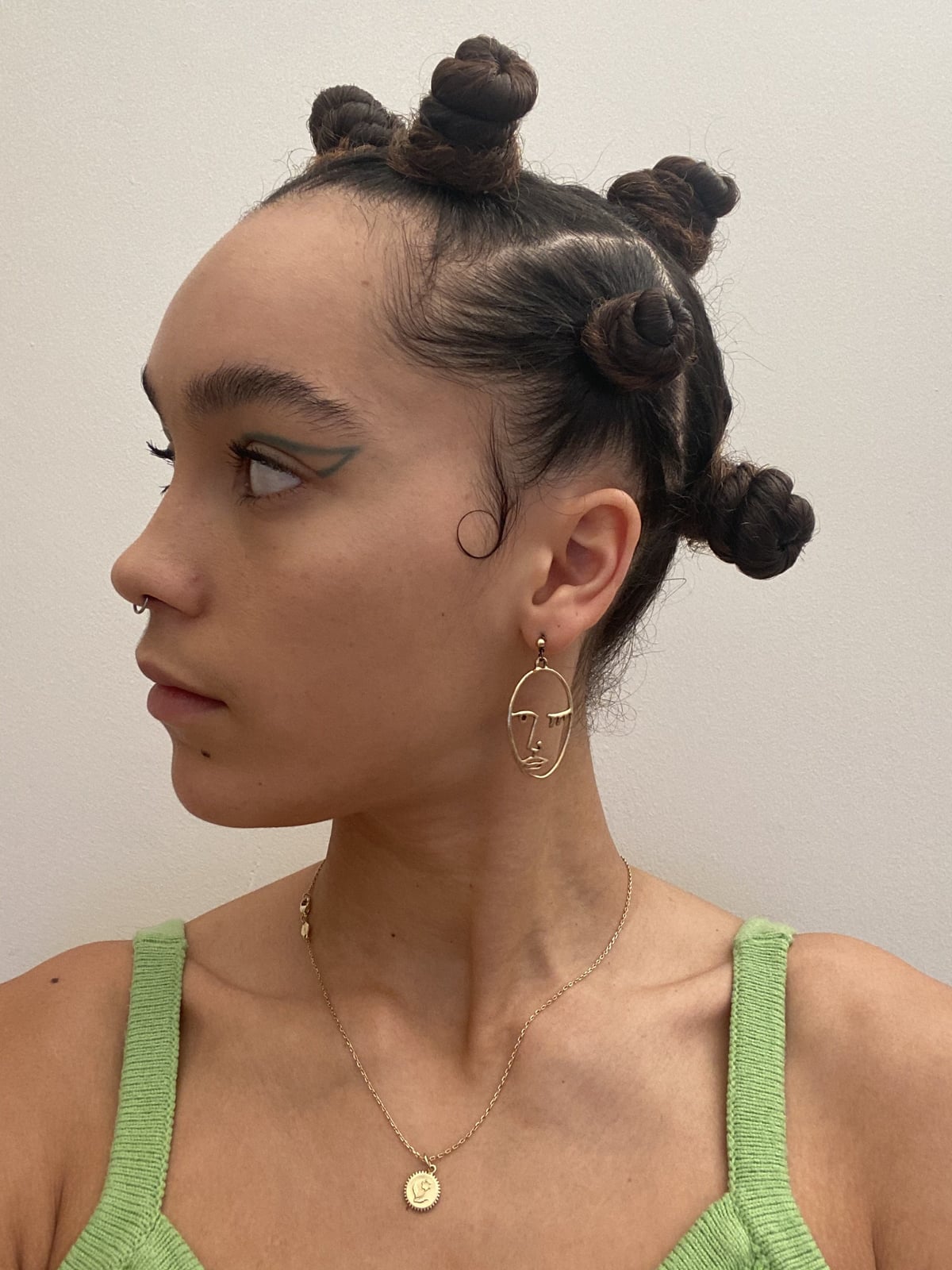
A side part changes the entire geometry of bantu knots, and here the dark brown, wavy texture makes the small knots look almost sculpted. The side parting breaks up the symmetry, so the intricate pattern feels modern and suits oval and long faces. Ask your stylist for small bantu knots with a side part. The one real drawback is that the side part can loosen the knots on the heavier side, so you will re-knot that side more often to keep the pattern defined.
Neatly Formed Black Bantu Knots On Top, Mid-Back
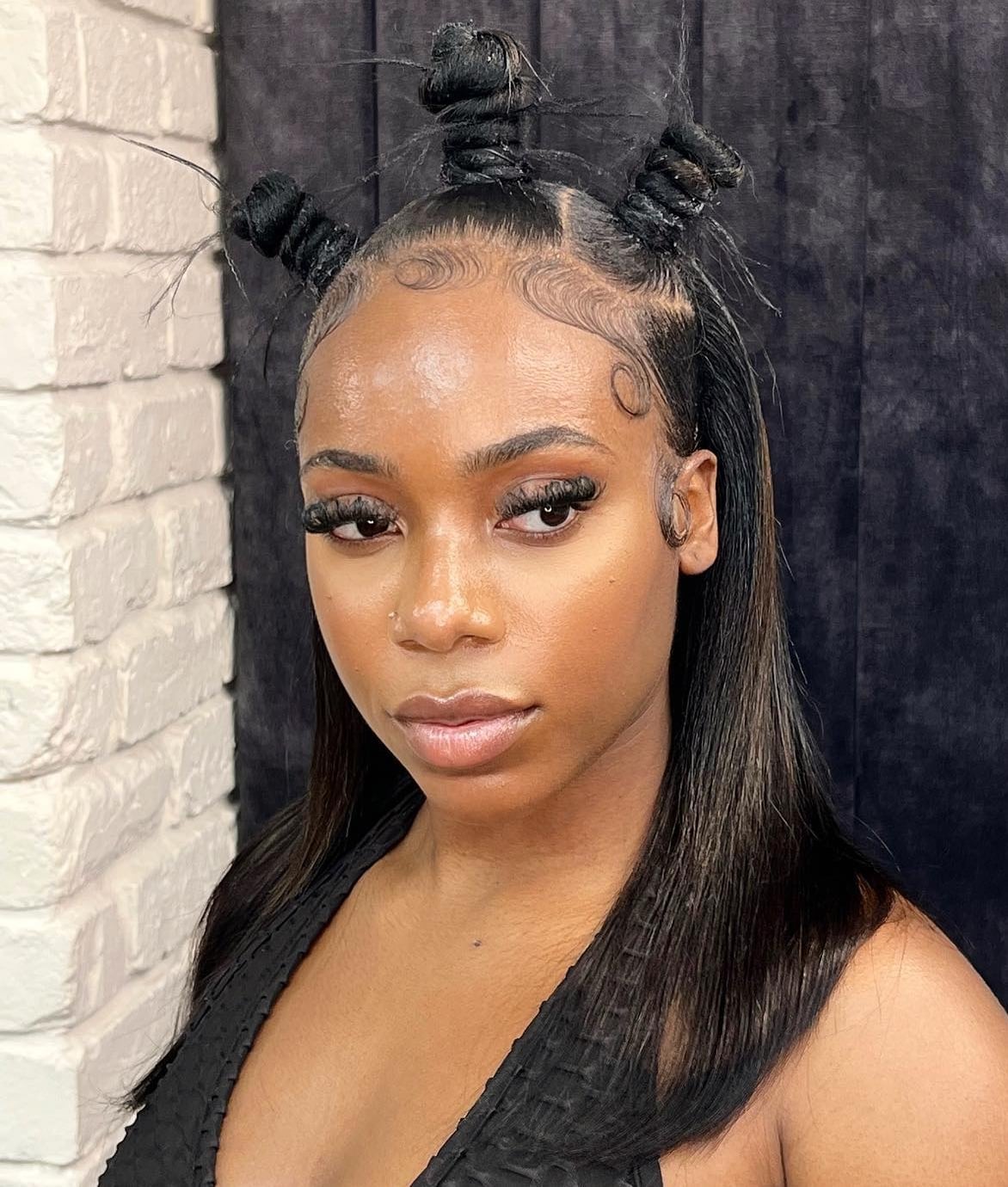
Neatly formed bantu knots on top with the hair straight down is a dual-texture style that looks like two looks in one. The knots are the focal point, and the straight sections below add length and contrast, making it a solid choice for thick, coily hair at mid-back length. Suiting most face shapes, it works because the parting is clean and the knots are uniform. Ask your stylist for neat bantu knots on top, rest of hair straight. The straight sections stay sleek, and you will re-knot the top weekly to maintain the shape.
Black Bantu Knots With Defined Edges
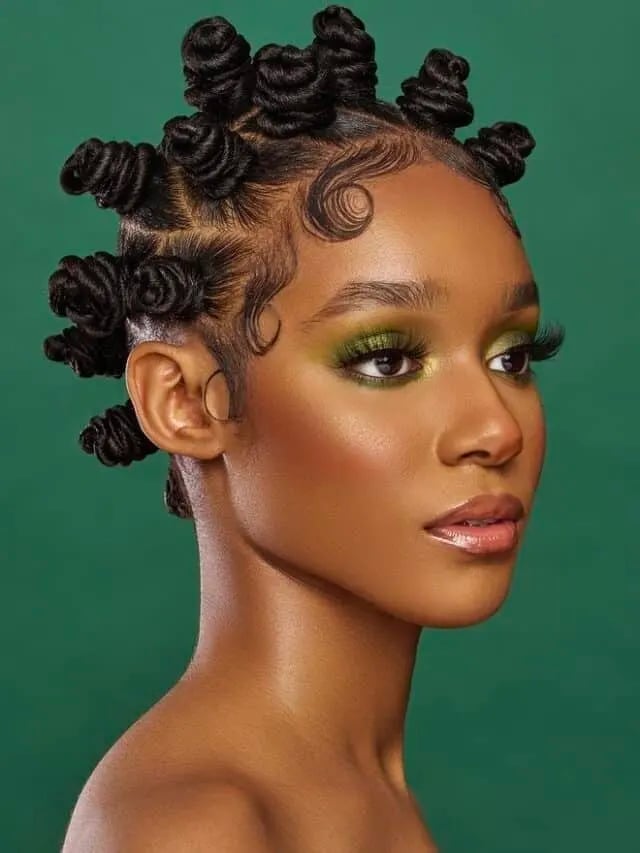
Thick, coily black hair is sectioned with a clean side parting, and every edge along the hairline is shaped with precision. This creates a sharp, sculpted silhouette that suits angular faces best. Ask your stylist for: bantu knots with defined edges, side parting. Defined edges demand daily attention with a strong hold gel and a fine-tooth comb, and knots will need re-rolling about every week to keep their structure intact.
Final Thoughts
For maximum definition and longevity, ensure hair is well-moisturized and detangled before starting. For those seeking a softer look, consider leaving a few tendrils out to frame the face.
- Maintain moisture with a leave-in conditioner and sealing oil.
- Wear a silk or satin bonnet or scarf at night to preserve the knots.
- Gently detangle with a wide-tooth comb or fingers when ready to take down.
- Re-twist or re-knot sections as needed to maintain shape between full installs.
Bantu knots are a versatile canvas for creativity and protection.