Braids are having a moment that blends precision with personality, moving beyond basic plaits into sculptural patterns and mixed textures. The shift is toward styles that feel both intricate and wearable, with lived-in color and glossy natural finishes leading the way.
This collection of 32 Braided Styles covers everything from scalp-focused cornrows to loose, wavy accents, so you can find the right balance of artistry and upkeep. Whether your hair is fine, thick, coily, or straight, there’s a braided look here that solves a common problem: styles that hold without pulling too tight, frizz that stays tamed, and ends that actually move.
Short Coily Hair Geometric Cornrows
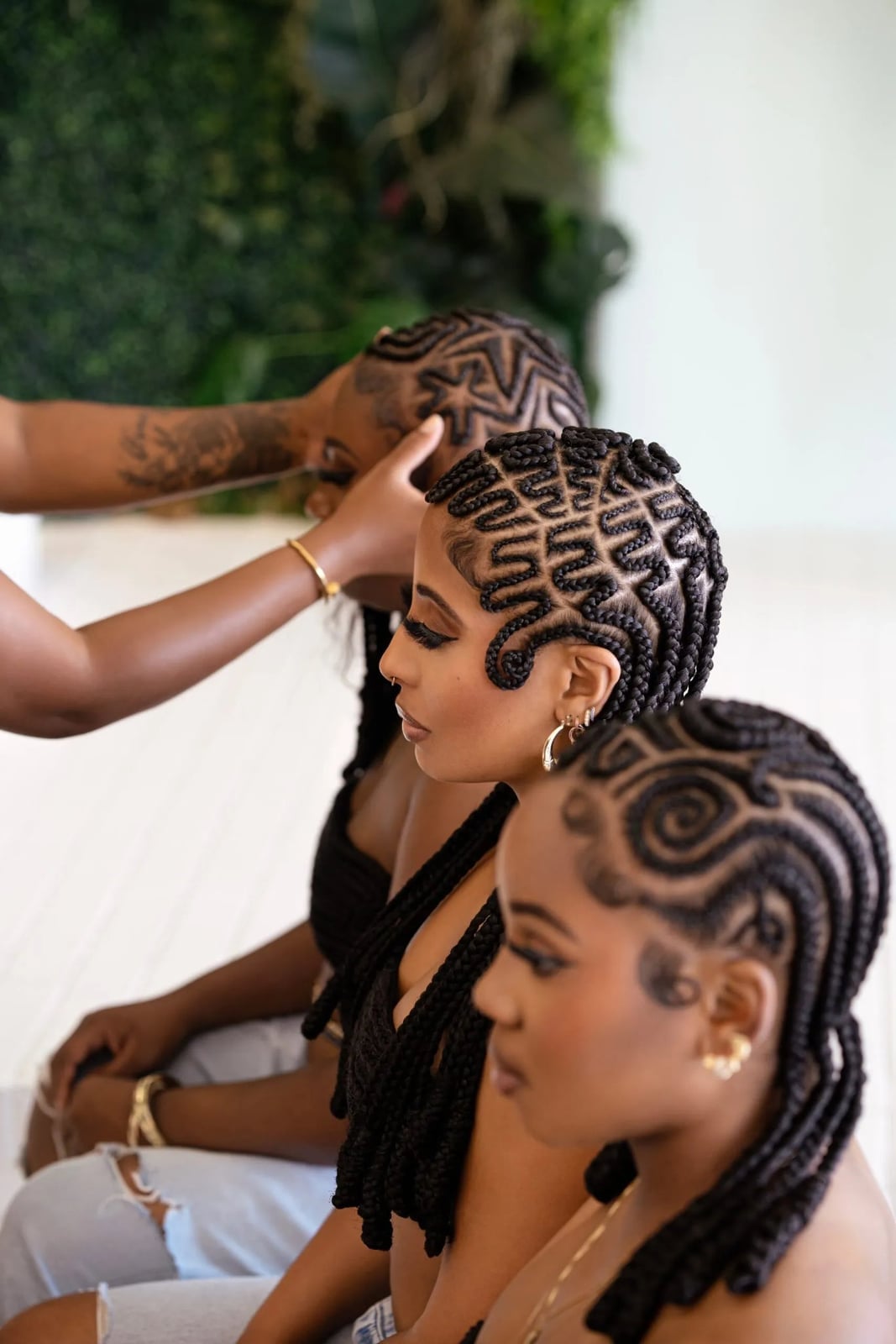
Those sharp lines along the hairline are the result of precise parting and tension, not luck. Short coily hair with medium density holds a geometric cornrow pattern best, since the texture grips the braid without slipping. Ask your stylist for: short geometric cornrows with defined hairline. A light-hold gel brushed along the edges each morning keeps the finish crisp, and you will want a touch-up every two to three weeks as new growth softens the lines.
Cornrows With a Heart Design Updo
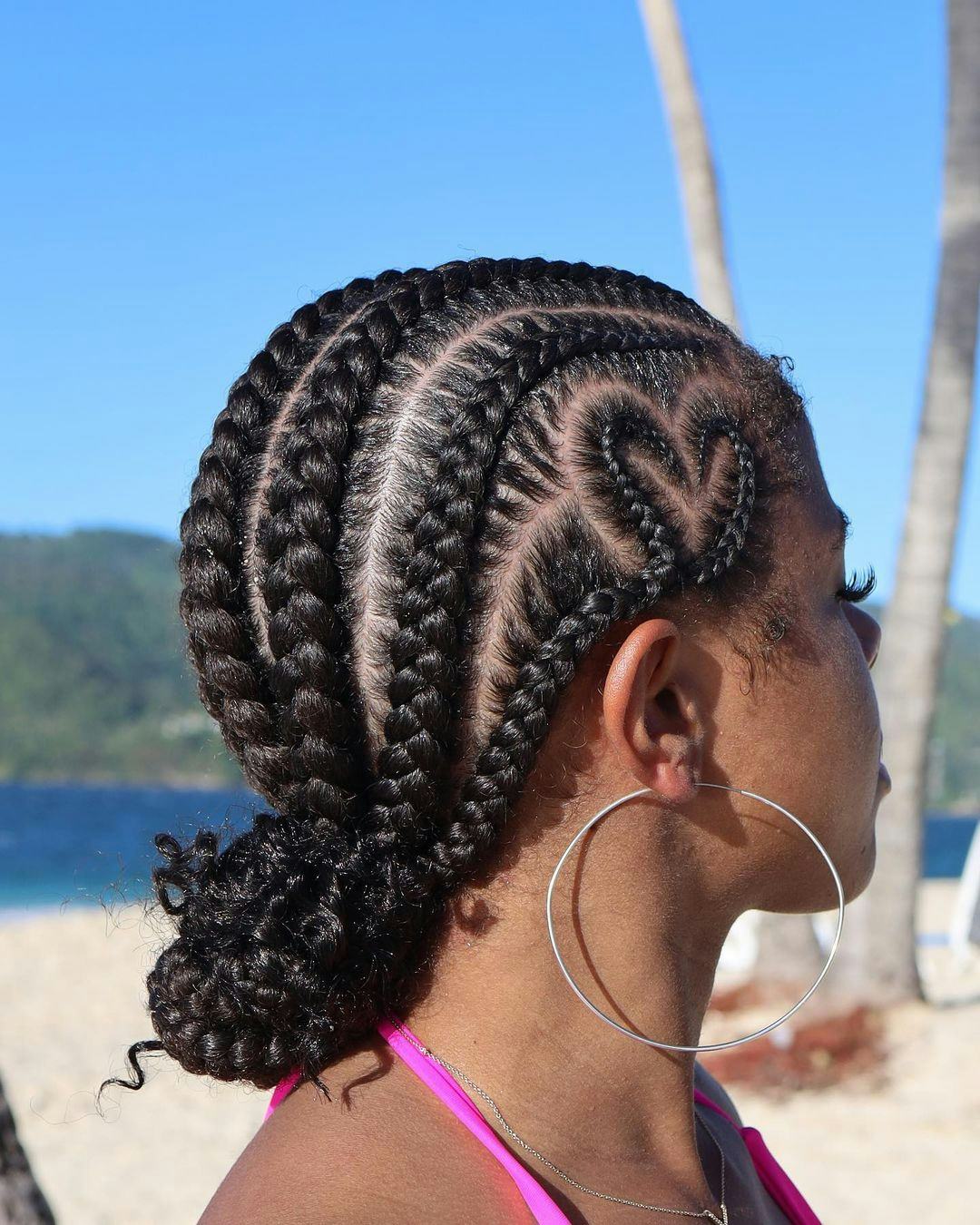
Can a braid pattern actually read as romantic? Yes, when a heart-shaped cornrow sits on one side and the rest feeds into a low bun with curly tendrils at the nape. This works best on coily hair that is at least mid-back length, because the bun needs heft to balance the detailed scalp work. Ask your stylist for: cornrows with a heart design and a low bun. It is a natural choice for a date night or a wedding where you want the braiding to do the talking rather than an accessory.
Braids Transitioning to Long Curly Extensions
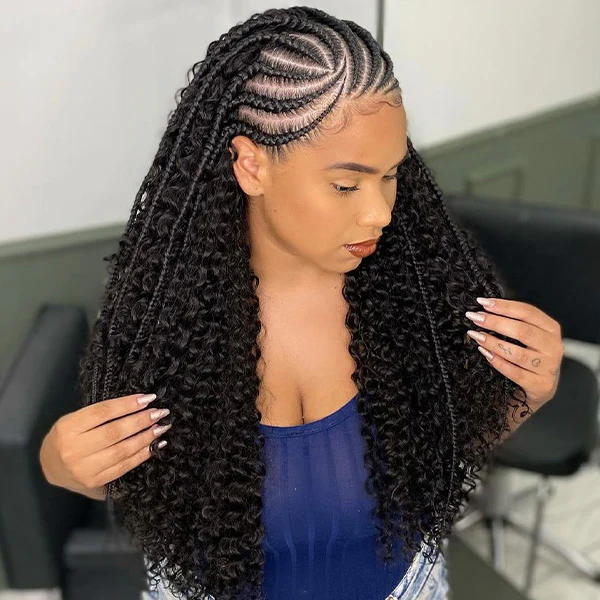
Straight extensions from root to tip are the obvious choice. This version does the opposite: neat braids on the top and sides stop abruptly, and long voluminous curly extensions take over from there. The contrast works best on thick coily or wavy hair that can support the weight of the added curls. Ask your stylist for: braided style with long voluminous curly extensions.
Use a wide-tooth comb on the curly sections only, never on the braids. The scalp braids will need refreshing every two weeks as the natural hair grows, but the extensions themselves hold their shape for several weeks with minimal effort.
Collarbone Lob With Delicate Braided Accents
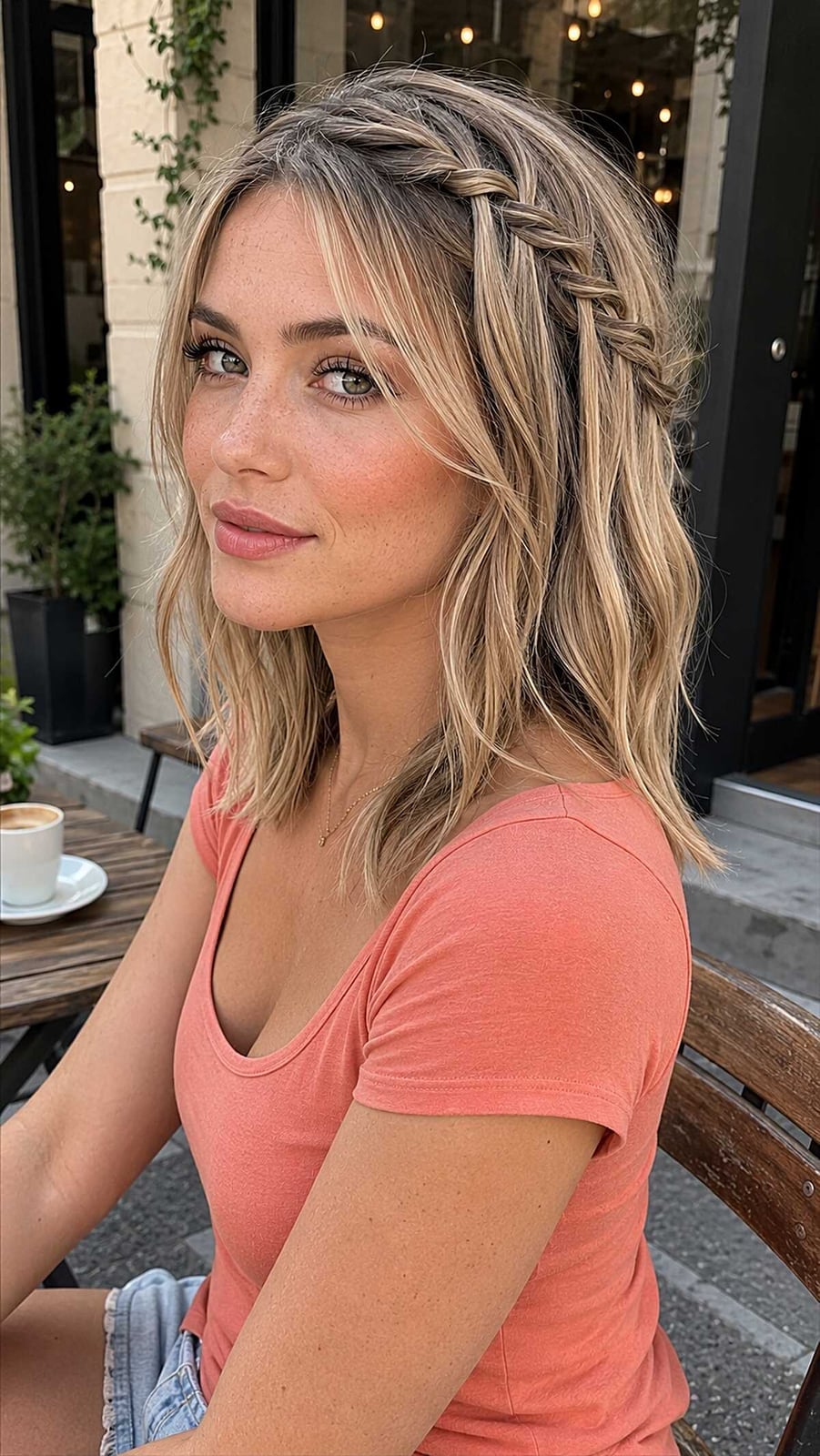
This is a lob that does not commit to being fully braided. The collarbone length stays wavy with a middle part, and small braids weave through the front sections and around the face-framing bangs. Ask your stylist for: collarbone lob with face-framing bangs and subtle braids. The braided accents are a DIY-friendly addition: you can create them yourself after a wash and redo them as needed. The ash blonde base with subtle highlights keeps the overall tone soft rather than stark.
Stitch Braids Updo With Loose Wavy Ends
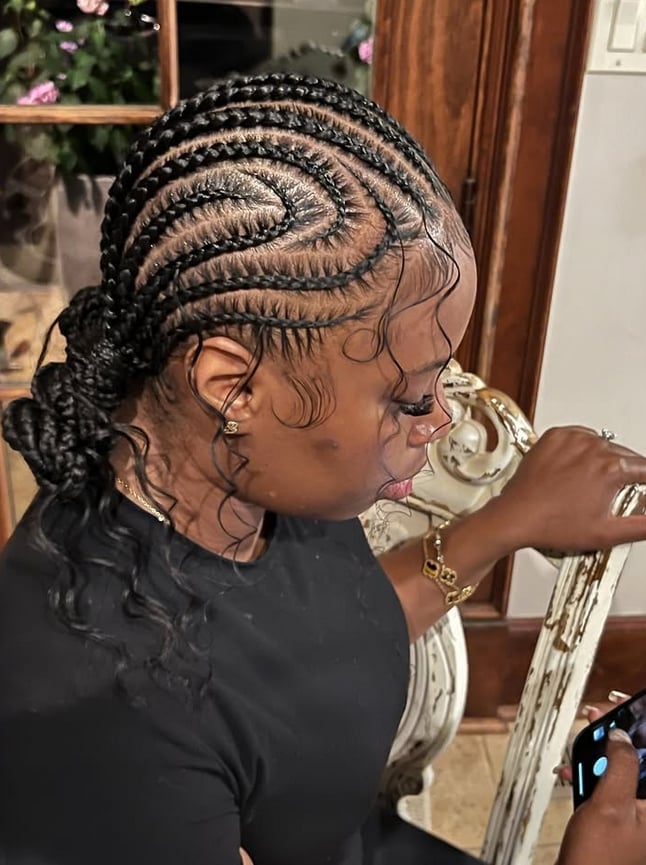
Stitch braids create a dense, uniform pattern on the scalp, but this style lets the ends escape. The braids lead into a low updo with loose wavy ends spilling out at the back, which prevents the whole look from feeling too rigid. Ask your stylist for: stitch braid updo with loose wavy ends. A flexible hold hairspray keeps the updo intact without making the loose ends stiff. The honest drawback is the take-down: each stitch braid has to be undone carefully to avoid tangling, so budget a solid hour for removal.
Braided Updo With Zig-Zag Parting
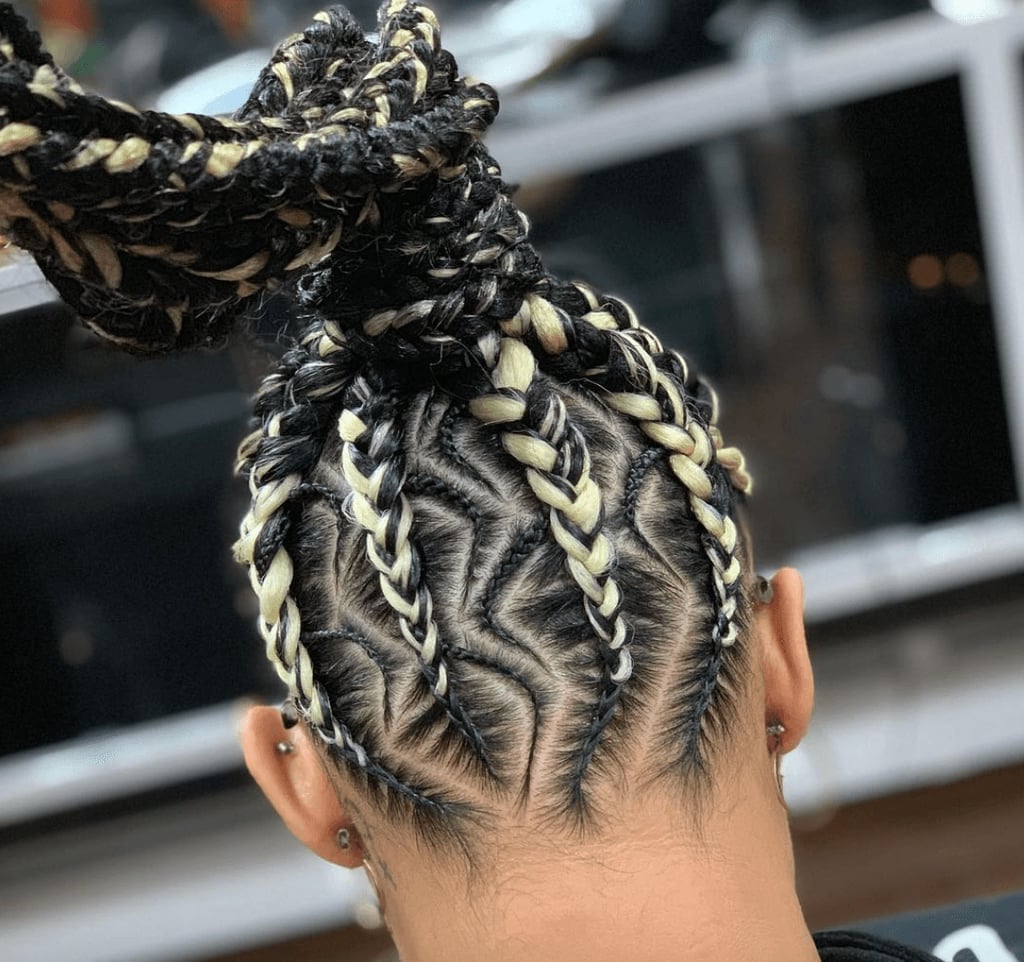
The zig-zag parting here isn’t decorative whimsy. It’s a structural choice that creates distinct color blocks of black and blonde. Each section is braided cleanly to the scalp, so the pattern reads clearly even from across a room. Thick, wavy hair at mid-back length has enough weight to hold the shape without slipping, and the contrast between the two shades makes the geometry pop. Ask your stylist for: braided updo with a zig-zag parting.
A smoothing serum patted over the finished bun keeps flyaways from blurring the lines. The braids themselves hold well for several days, but the scalp sections may need a touch-up after a week if you want to maintain that crisp, just-done look. This is precision work best left to a stylist, mapping out a zig-zag part on yourself is an exercise in frustration.
Feed-In Braids With Two-Tone Curly Ends
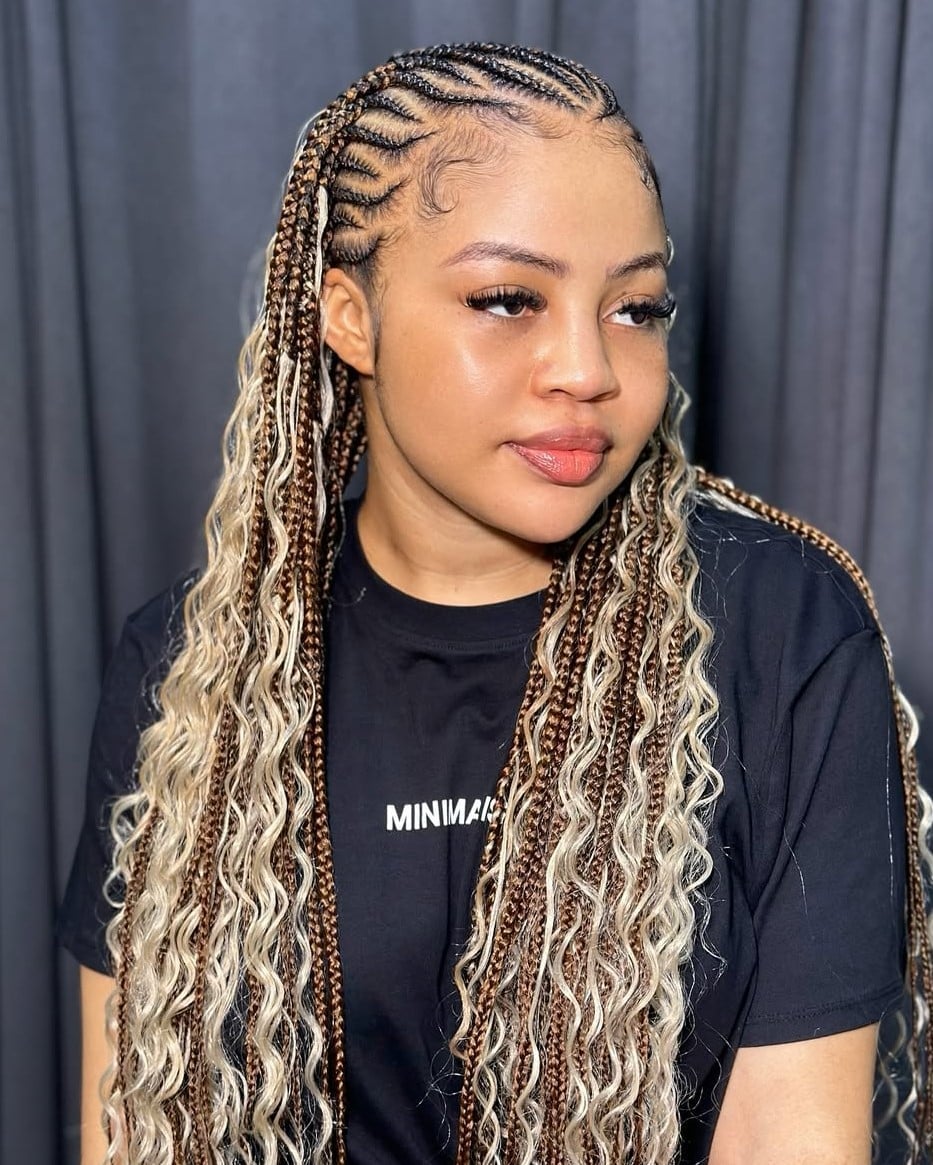
This design works because the color transition is deliberate: the black base keeps the scalp looking clean, while the blonde and brown curly ends add movement without competing for attention. The feed-in technique creates a smooth gradient from scalp to tip, so the braids lie flat where they need to and only expand into volume at the ends. Curly textures that can handle added length will get the most out of this style, straight hair lacks the body to carry the curl pattern convincingly. Ask your colorist for: feed-in braids with two-tone curly ends.
Mid-Back Box Braids With Wooden Beads
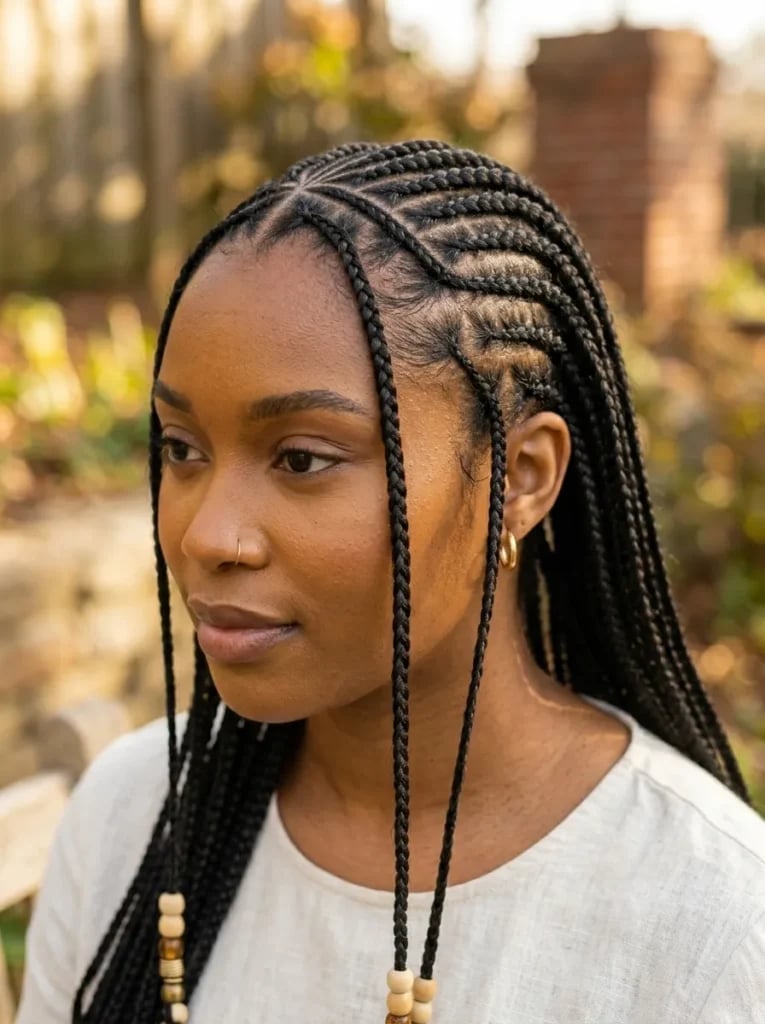
Can a single accessory change the entire feel of a braided style? The wooden beads here do exactly that, turning a straightforward box braid set into something that reads as intentional and personal. The beads are threaded onto random braids throughout the length, so they clink softly when you move, a small sensory detail that makes the style feel alive.
Start by having your stylist install thick, mid-back box braids with a clean middle part. Once the braids are sealed, thread the beads onto individual sections and knot the ends to keep them from sliding off. This is a salon job for the braids, but the bead placement is a satisfying at-home step you can adjust as you go. It is a summer or festival style by nature, though the beads work just as well for everyday wear if you choose a neutral wood tone.
Sleek High Braided Ponytail
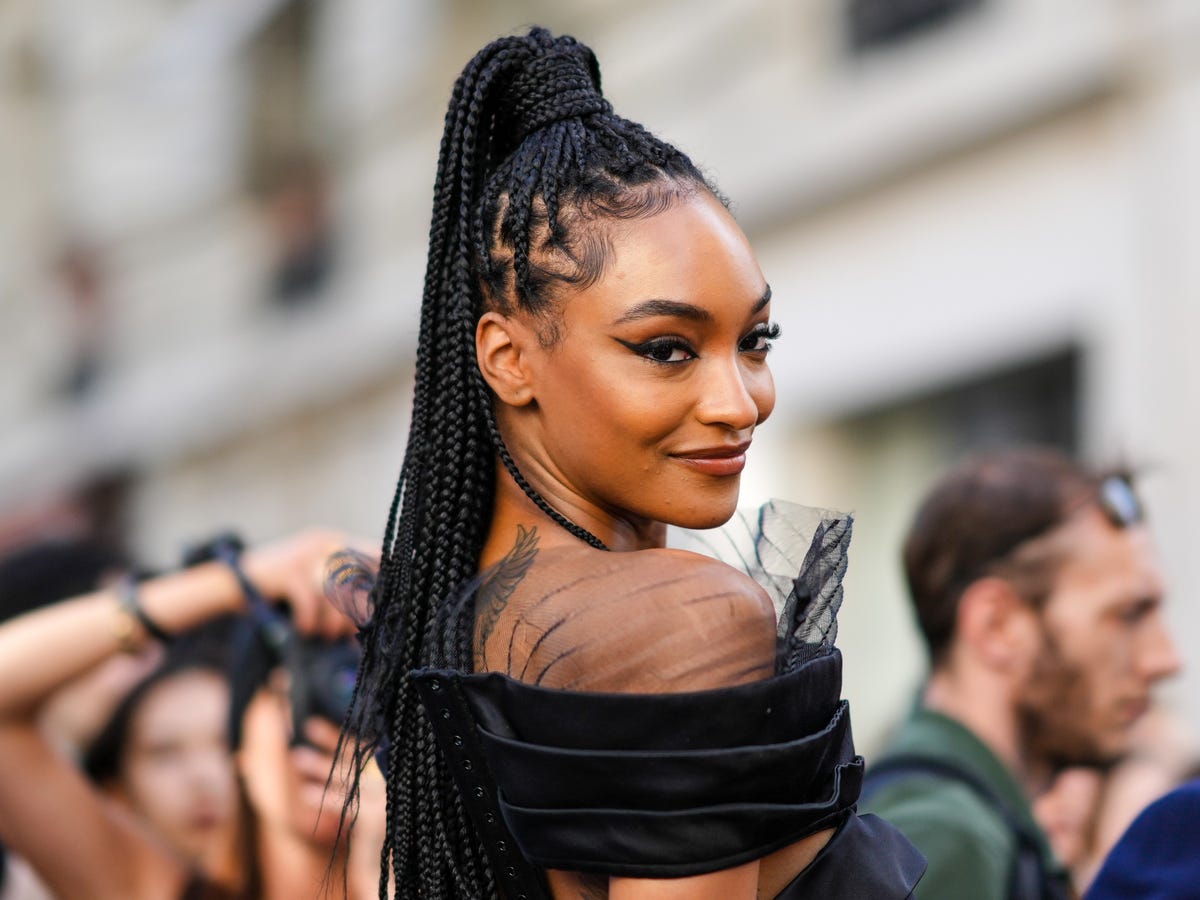
This is a ponytail that does not compromise on volume. The braid starts at the crown and incorporates the full thickness of the hair, so the ponytail is as substantial as the hair itself. Long, thick, straight black hair is the ideal canvas here, anything finer and the braid will look sparse. The baby hairs are swept into defined curls along the hairline, which softens what could otherwise be a severe silhouette. Ask your stylist for: sleek, high braided ponytail with styled baby hairs.
The honest drawback is the tension. A high ponytail pulled tight enough to stay sleek puts pressure on the hairline, so this is not an everyday style. Save it for an event where you need maximum impact for a few hours, then give your edges a break. A strong-hold hairspray and a boar bristle brush are the tools you need to smooth those baby hairs into place without constant re-spritzing.
Long Wavy Hair With Subtle Braids
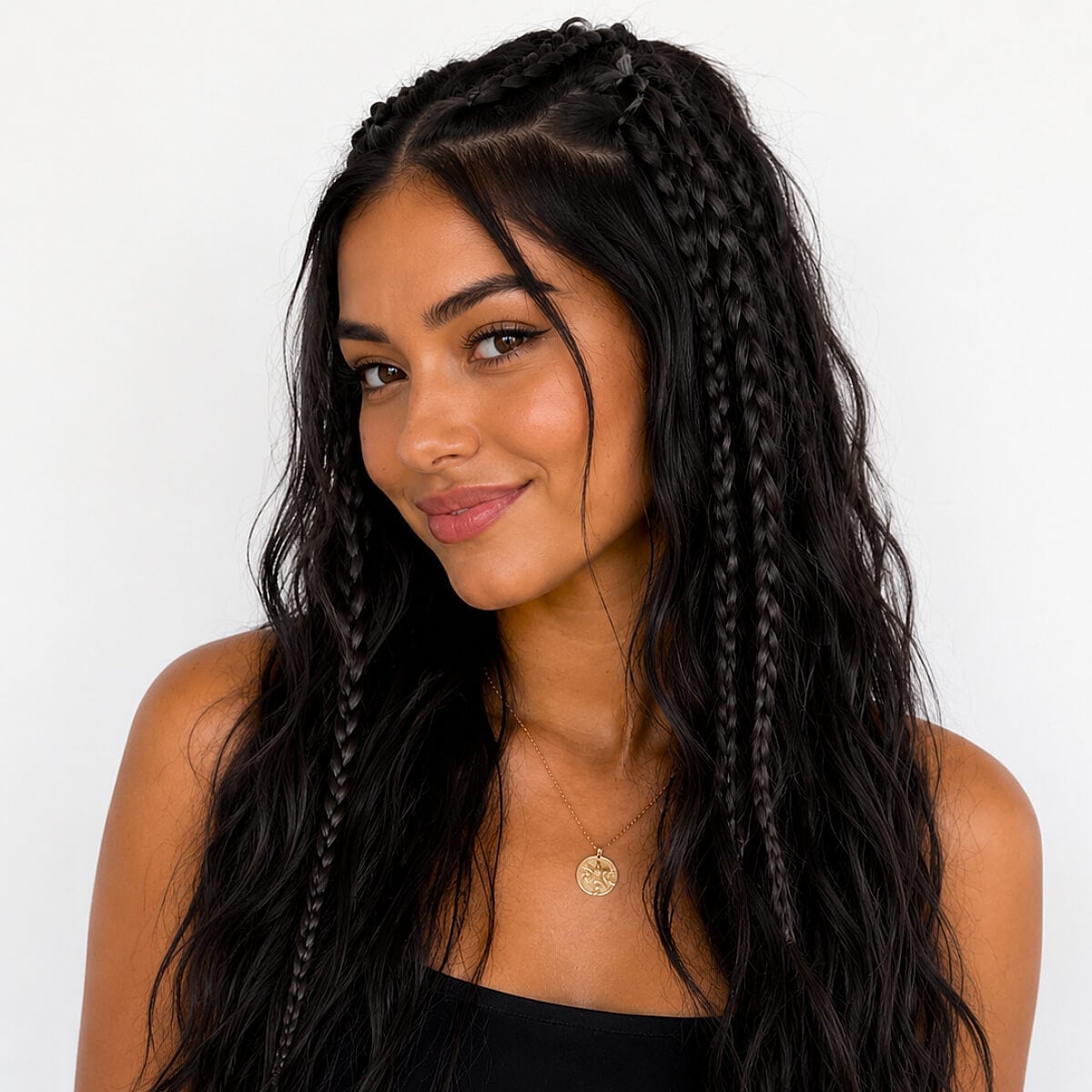
These braids are not meant to stand out. They are meant to add texture to the existing waves. Multiple small braids are woven into the loose, wavy length at irregular intervals, so the overall silhouette stays soft and free. This is a salon style in the sense that a stylist will place the braids strategically, but you can replicate the effect at home by braiding random sections of damp hair and letting them dry. The finish has a bohemian, casual look that holds for a day or two before the braids start to loosen. Ask your stylist for: long wavy hair with integrated small braids.
Mid-Back Braids With Geometric Patterns
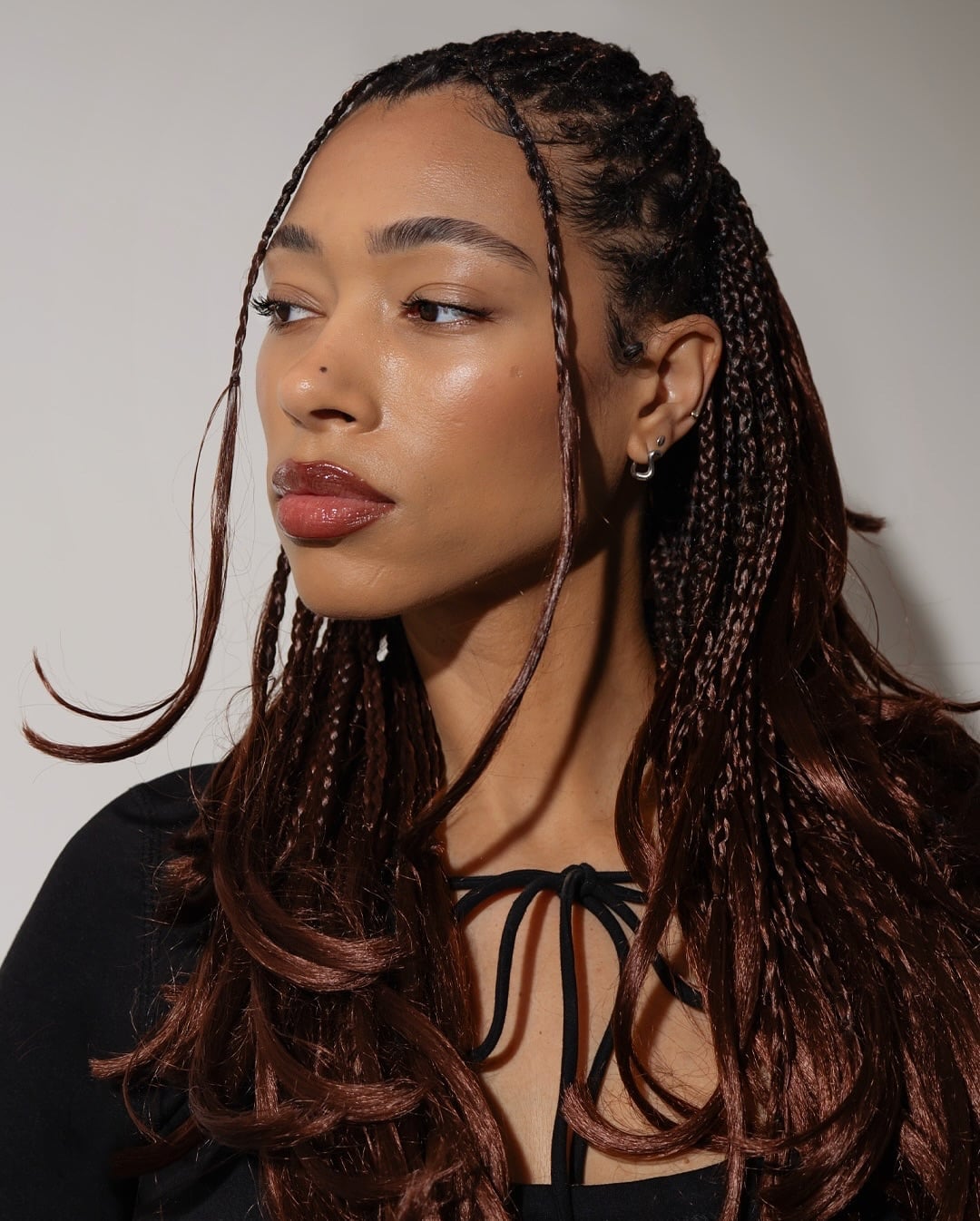
Precision is the name of the game here: each scalp braid is mapped to form a geometric pattern before the hair drops into longer, straight sections that land at mid-back. The middle part keeps the symmetry intact. Ask your stylist for: mid-back braids with geometric scalp patterns. A lightweight oil applied along the parts keeps the shine even, and a quick edge touch-up every few days maintains the clean lines. This is a salon-only undertaking, given the mapping required, but the result holds its shape for weeks with minimal fuss.
Box Braids With Geometric Front Cornrows
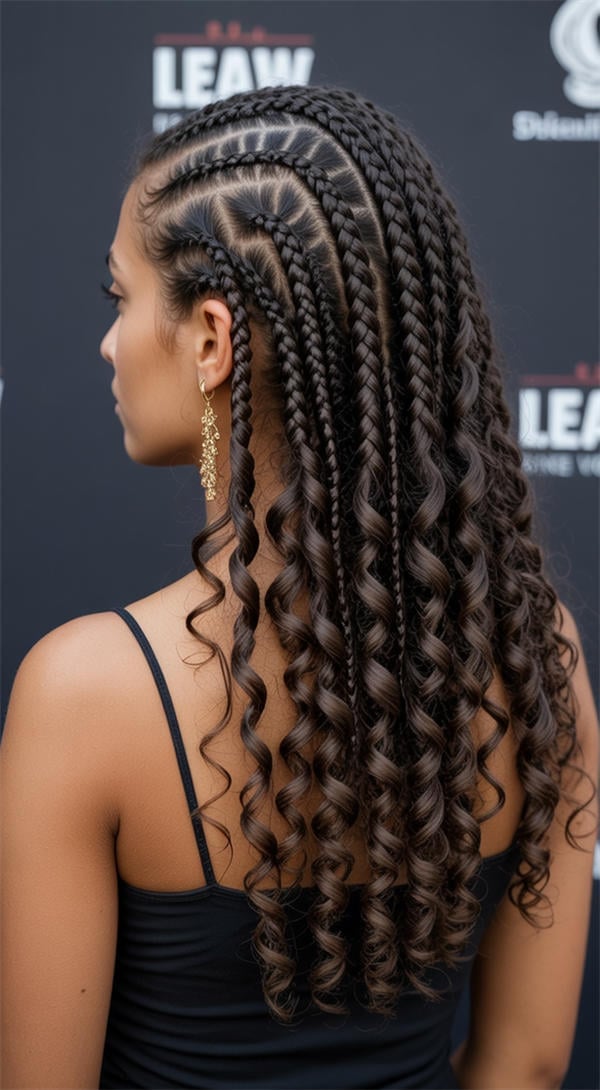
The front section is where this design earns its keep: geometric cornrows sit flat against the scalp, then transition into thick box braids that fall to mid-back. The contrast between the structured front and the loose, defined curly ends gives the style two distinct textures in one look. Dark brown hair keeps the pattern readable without competing color.
Ask your stylist for: box braids with geometric cornrows and curly ends. On the ends, a curl cream keeps definition from fading. The scalp cornrows benefit from a weekly moisture spritz to prevent dryness. Expect a full day in the chair, but the payoff is a style that looks deliberate from every angle.
Thick Large Straight Braids
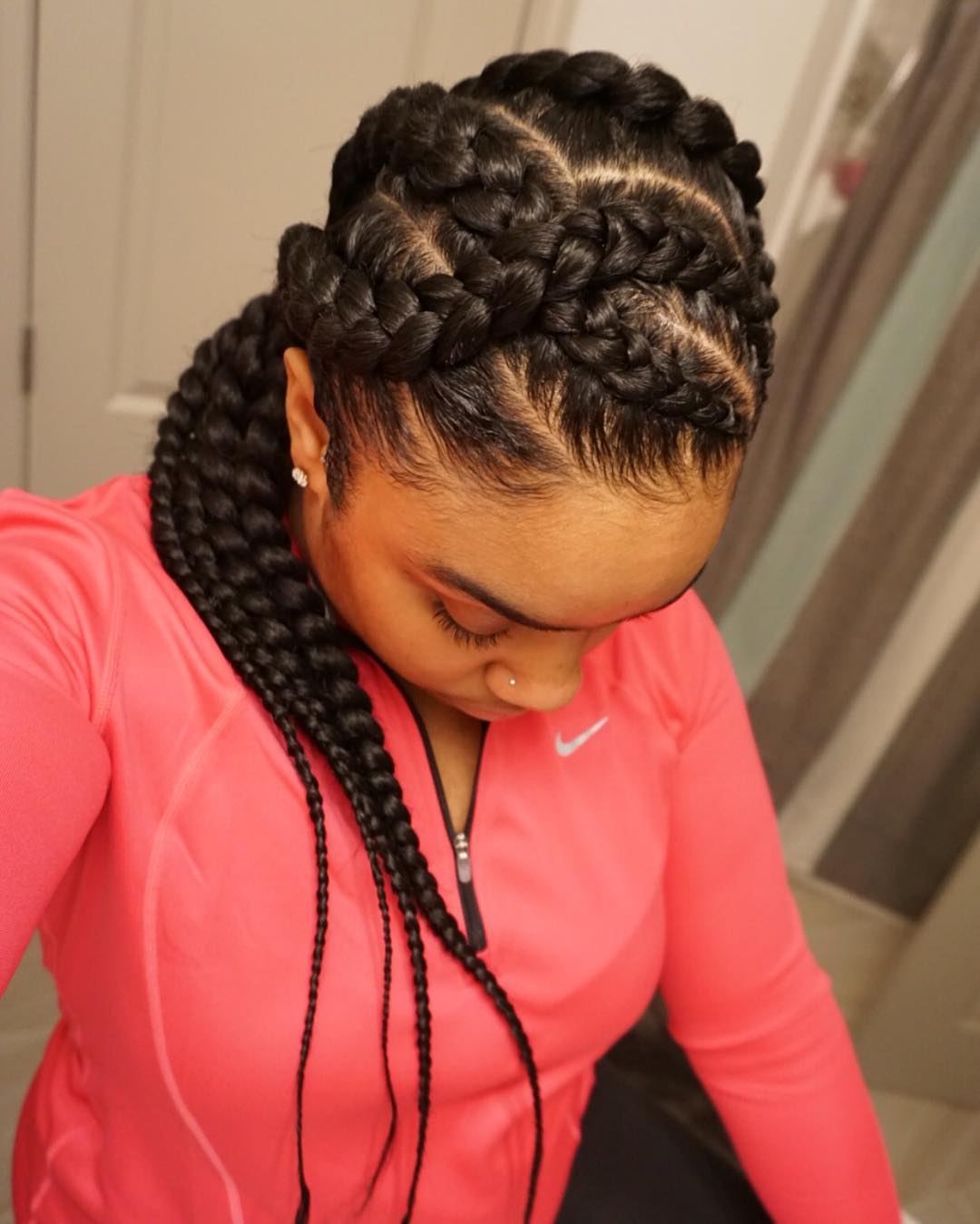
Want a braided style that doesn’t blend into the background? Ask your stylist for: thick, large straight braids with defined parts. The key is the size: each braid is substantial enough to be a single unit, and the middle part is razor-clean to emphasize the structure. This is a salon-only job, achieving uniform thickness across the whole head requires a skilled hand. The result is a bold, minimalist look that holds its shape without daily effort.
Braids With Curly Ends and Blonde Highlights
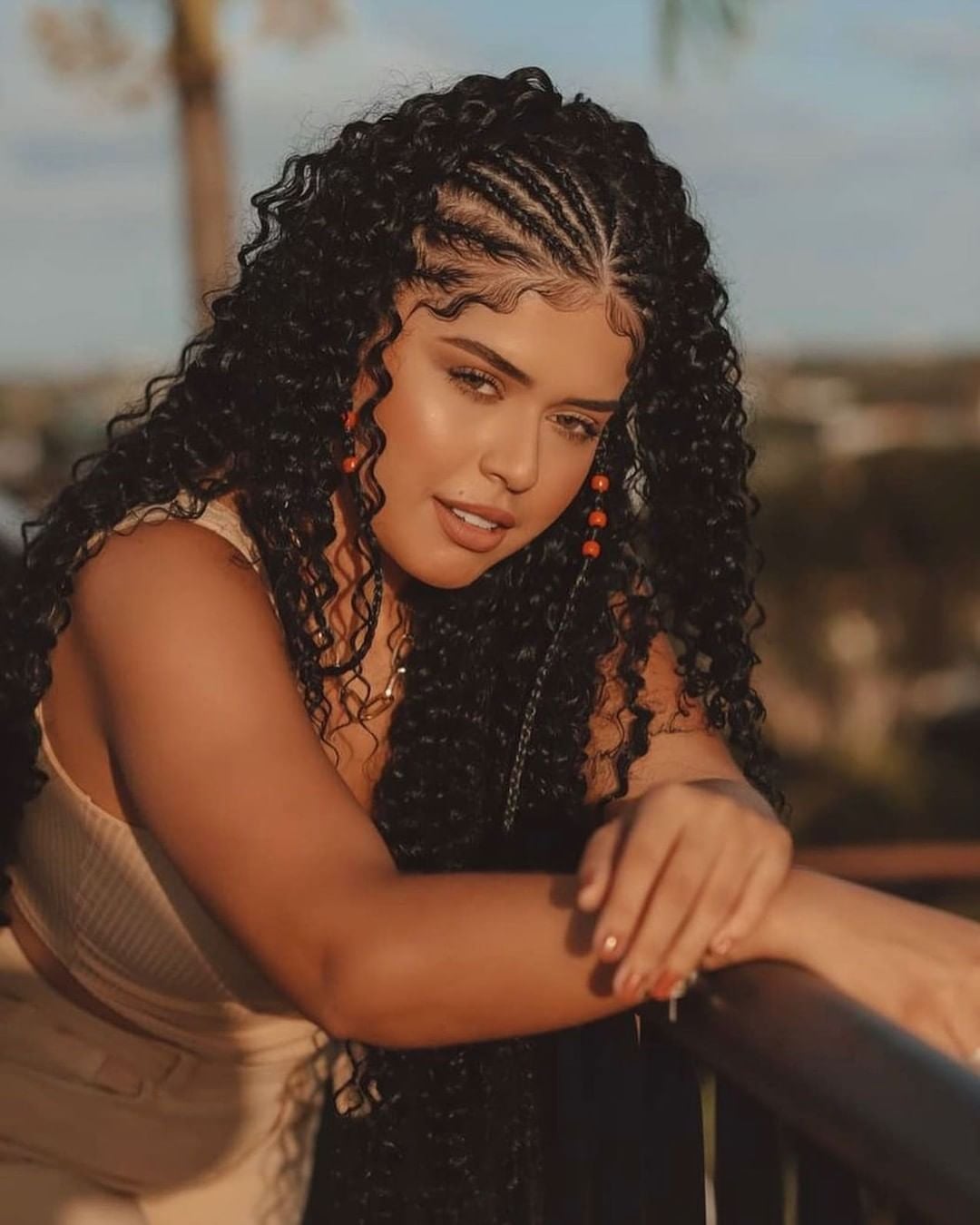
Braids at the crown give way to long, loose curly extensions, and the black base gets subtle blonde highlights woven through the curls. The middle part and face-framing tendrils soften the overall weight of the style. Ask your colorist for: braids with long curly ends and subtle blonde highlights.
Here is the reality check: maintaining the curl definition on the ends requires a curl refresher spray every few days, and the scalp braids will need re-doing at the three-week mark as new growth appears. The blonde highlights will also need a toning refresh every six to eight weeks to keep them from pulling warm. It is a high-maintenance look, but the dimensional contrast is hard to beat.
Shoulder-Length Box Braids With Wavy Ends
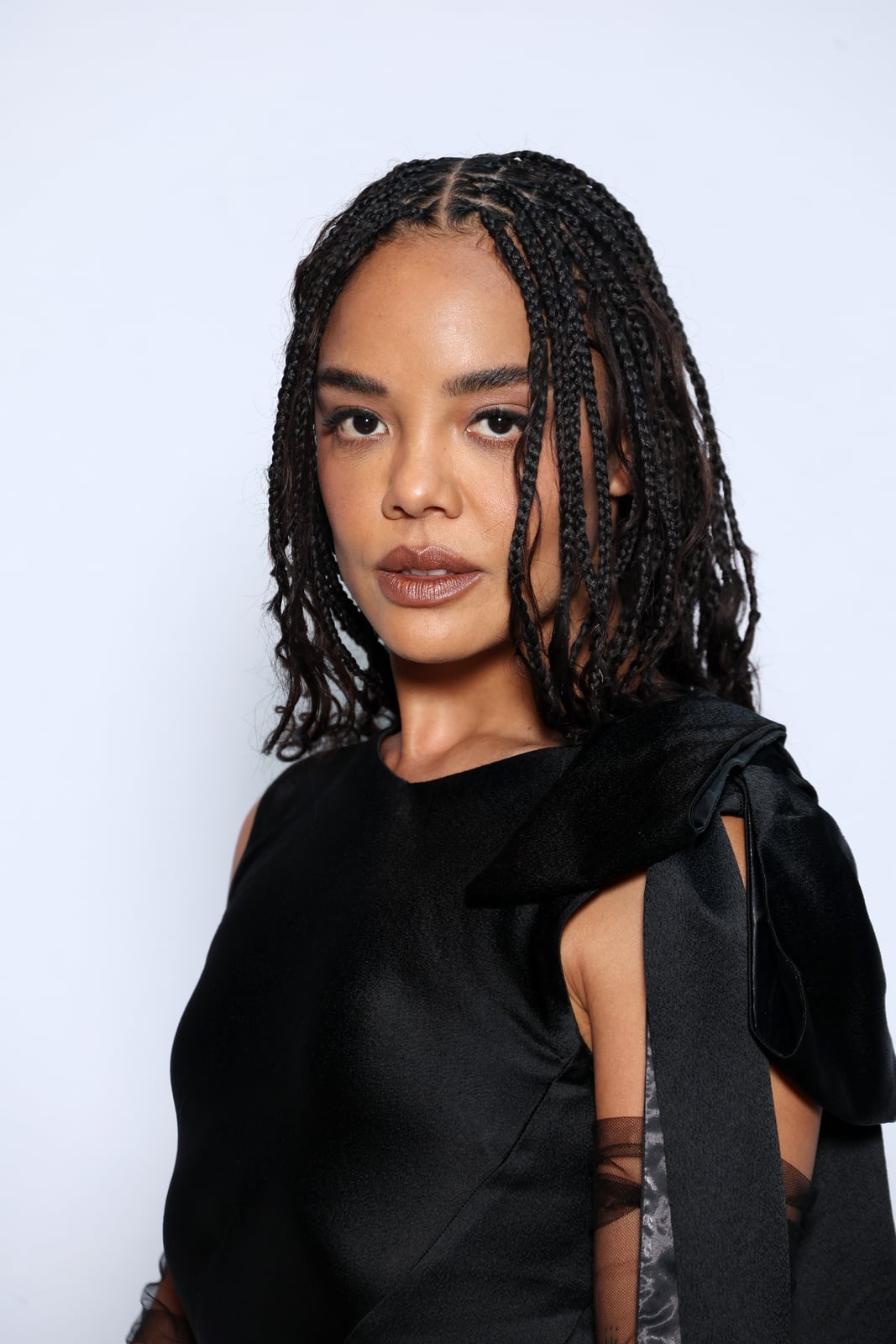
Shoulder-length box braids with wavy ends hit the sweet spot between short and long: enough length to style, not so much that they become heavy. The black hair and medium density keep the braids neat without looking sparse. Ask your stylist for: shoulder-length box braids with wavy ends. A light pomade on the wavy ends keeps them defined, and a trim every eight to ten weeks prevents fraying at the tips. This style suits coily textures especially well, as the natural grip helps the braids hold their shape.
Mid-Back Messy Braid With Face-Framing Strands
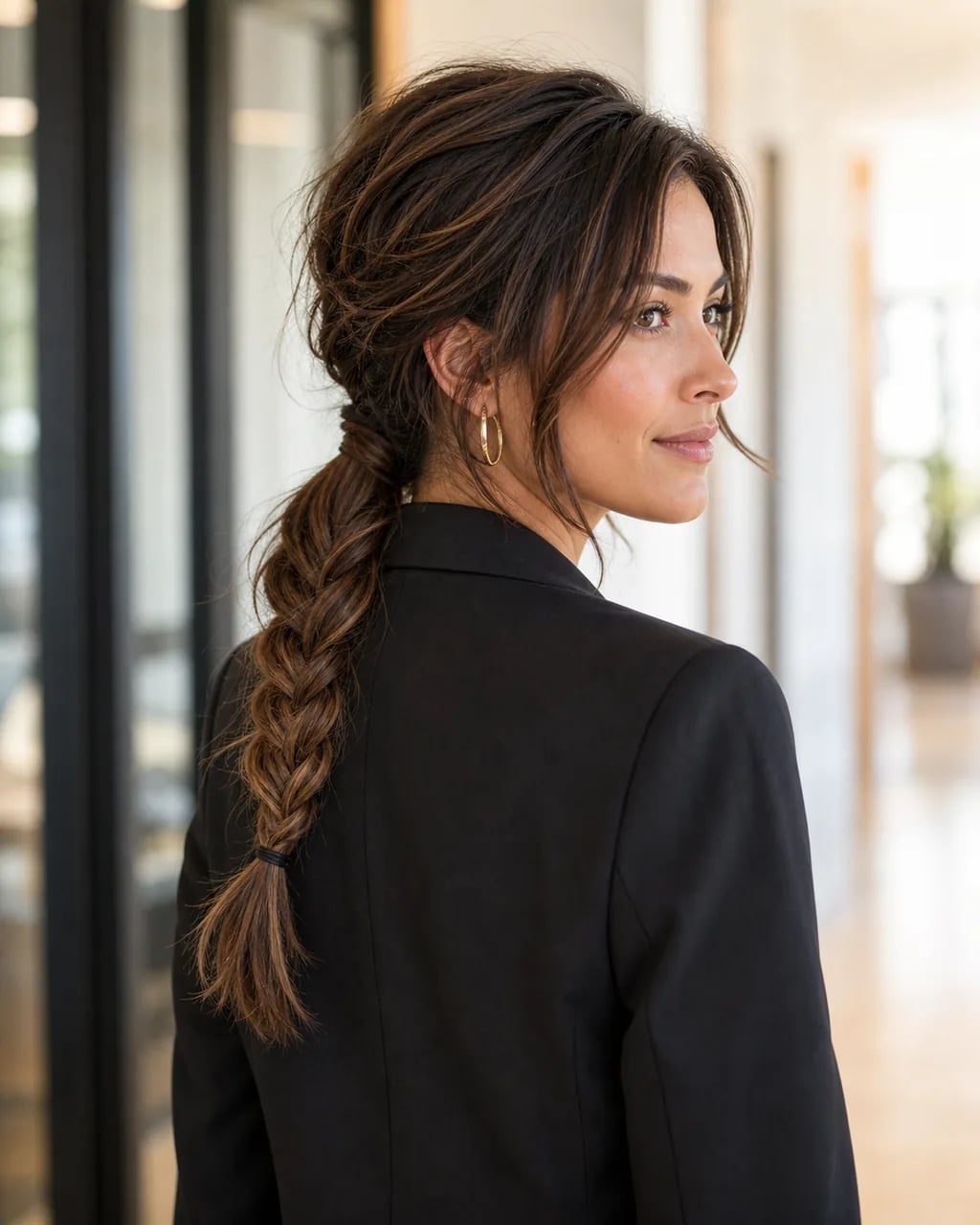
What if you could get that lived-in braid without trying to look like you tried? A loose, textured side braid in wavy, layered mid-back hair with brown base and lighter highlights gives exactly that. This style works best for medium to thick hair that already has some wave to it. Ask your stylist for: a loose, messy side braid with face-framing pieces. Pull out a few strands gently after braiding to soften the silhouette, and re-braid each morning to keep the shape from loosening too much. It is a natural fit for casual summer outings where polished is not the goal.
Shoulder-Length Double Dutch Braids
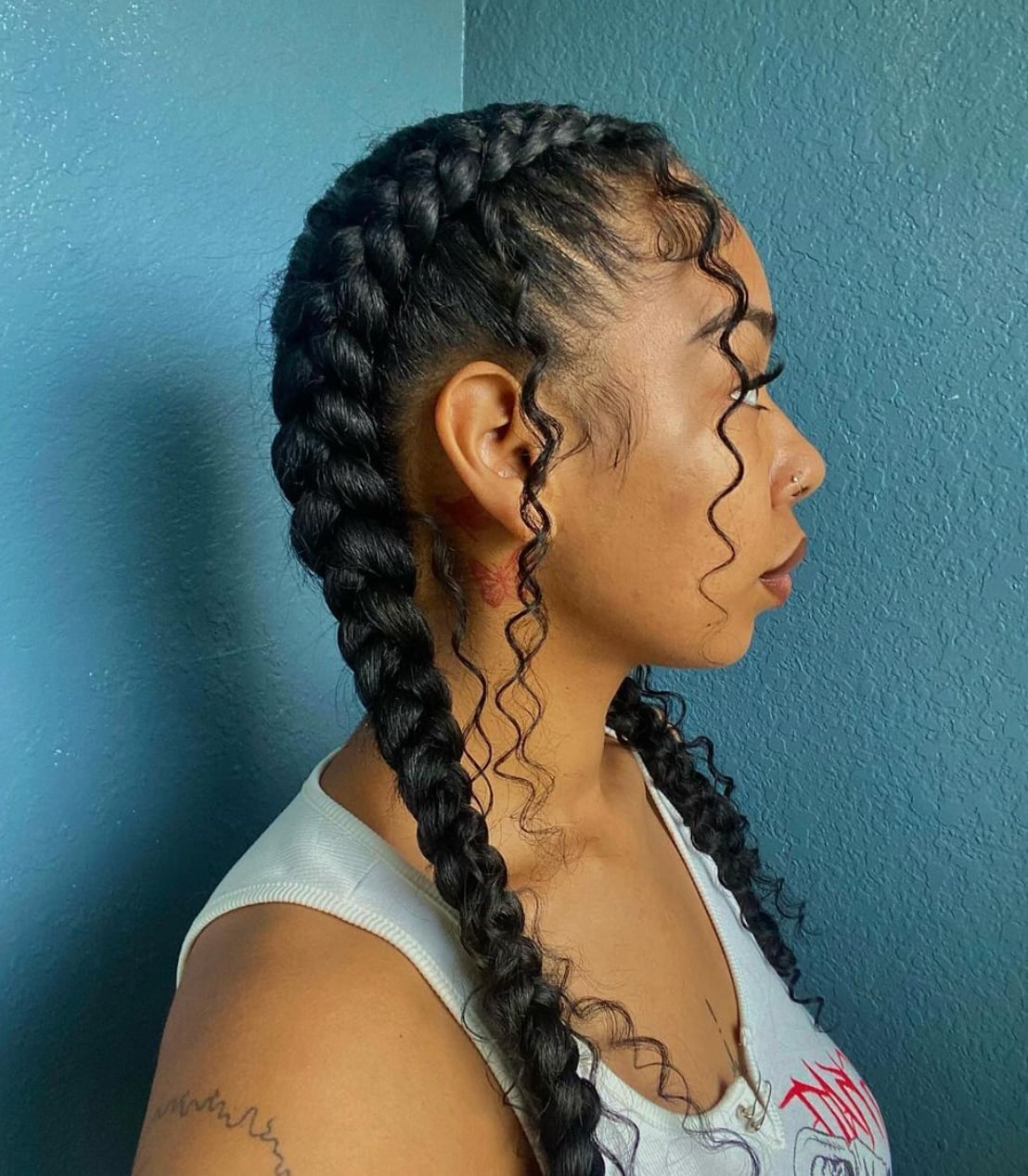
Two thick Dutch braids with a middle parting and shoulder-length finish rely on even tension for their clean look. The symmetry here is the point: each braid mirrors the other, and the loose curly tendrils left out at the temples keep it from feeling severe. Ask your stylist for: double Dutch braids with face-framing curls. The tendrils get definition from a texturizing spray, while the braided sections hold their structure for up to a week before needing a re-do. This is a structured style that still lets you move.
Mid-Back Large Braided Pigtails
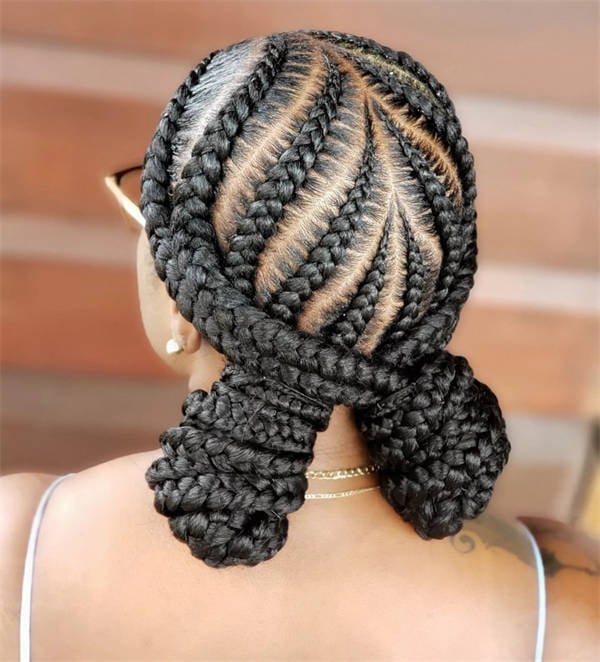
Large braided pigtails read differently than smaller braids: bolder, more deliberate, and frankly faster to install. Two thick sections start at the crown with a visible scalp pattern and extend to mid-back in dense black hair. Ask your stylist for: two large braided pigtails. This is a salon job for the scalp work and even tension. Compared to a single braid, pigtails give you more volume on each side and a playful silhouette that holds for two to three weeks with proper care at the roots.
Braided Ponytail With Loose Waves and Wispy Bangs
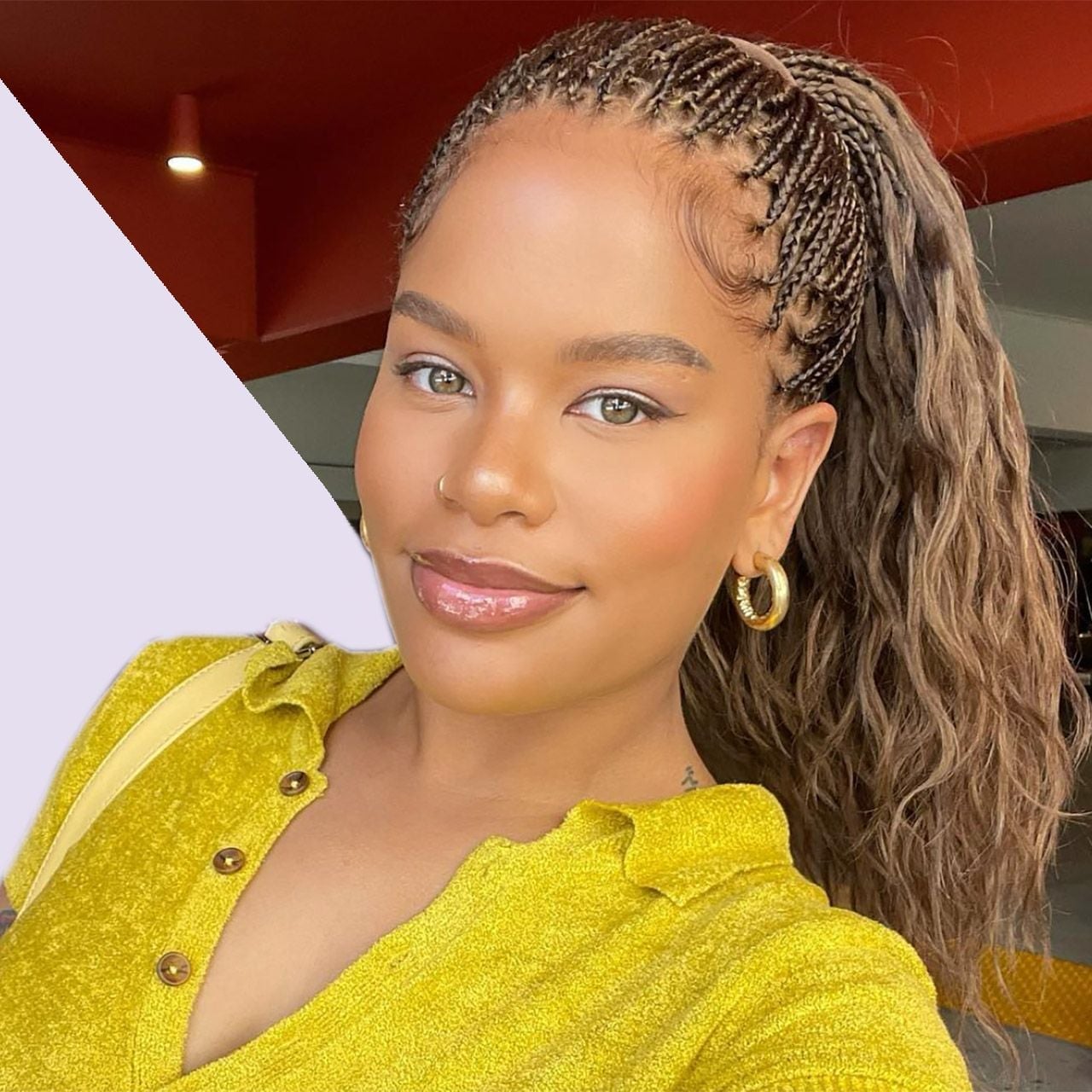
How do you wear braids without a full head of them? A high ponytail with micro braids leaves the mid-back length in soft waves, with wispy bangs and face-framing layers blending the two textures. The color is a light brown base with subtle blonde highlights. Ask your stylist for: a micro braided ponytail with loose waves and wispy bangs.
To build this, the braided section is created first at the crown, then the remaining hair is waved with a medium-barrel iron. A texturizing product on the waves and a smoothing balm on the braids keep each texture distinct. The micro braids hold for about a week; the waves need a quick refresh each morning. It is a two-in-one look that works for both day and evening.
Black Curly Braided Updo
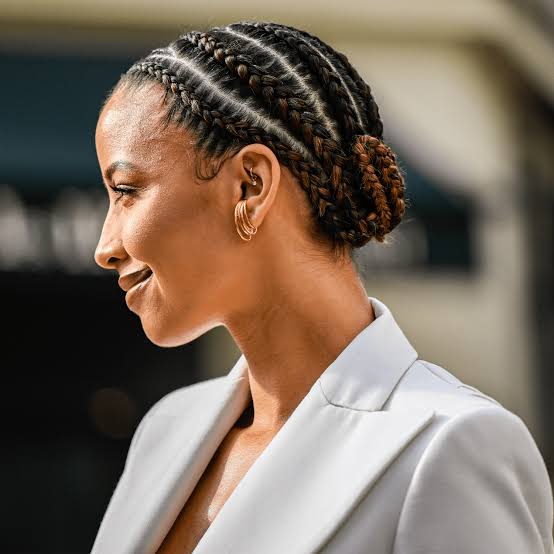
An intricate braided pattern on the scalp that sweeps into a low bun at the nape is a design that asks for precision. The black, curly hair is dense and glossy, with the braids following a clear, symmetrical arrangement before gathering into the bun. Ask your stylist for: an intricate braided updo for curly hair. This project takes several hours, but the payoff is a polished updo that stays put for formal events. Scalp tension needs monitoring: if it feels tight, say so during installation.
Braids With Voluminous Curly Extensions
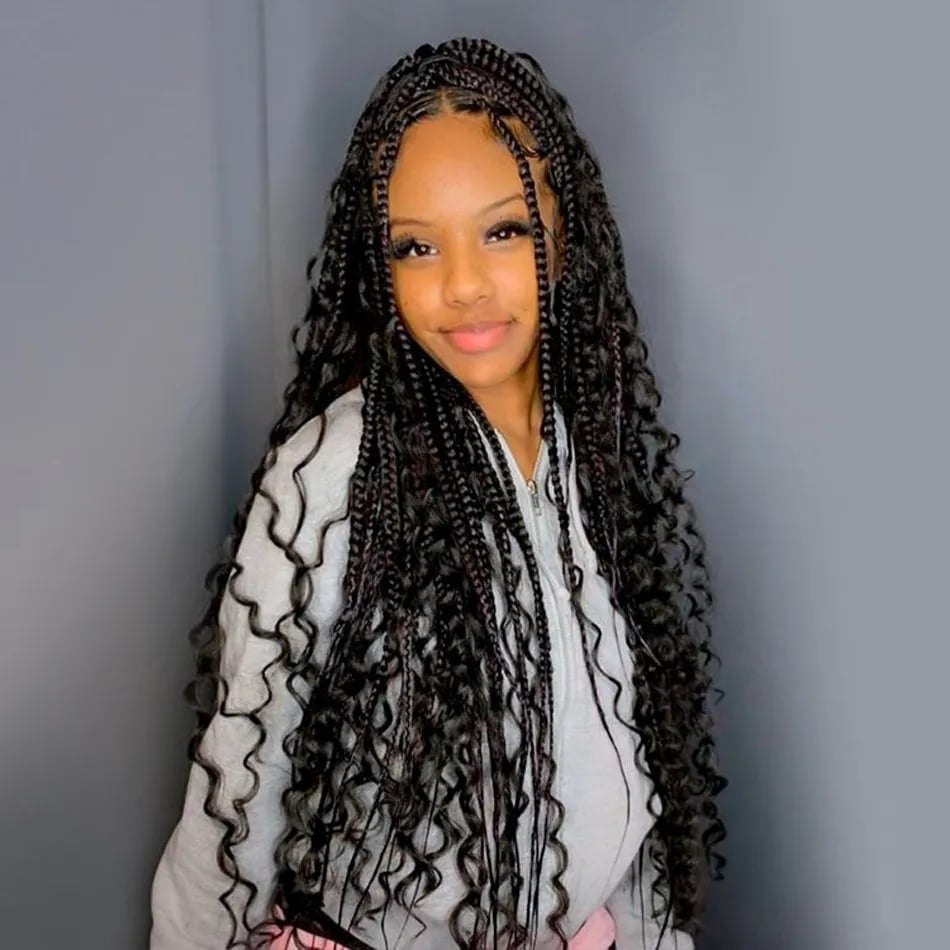
The design pairs neat braids on the top and sides with voluminous curly extensions that drop past the shoulders, a black, thick texture that looks polished. This works best for long, naturally curly hair that can handle the weight of added bulk. Ask your stylist for: braids with voluminous curly extensions.
The hold relies on the braids staying tight at the root. Gently separate the curls with your fingers every few days to keep volume from flattening, and moisturize the scalp regularly. Expect the extensions to hold their shape for about four to six weeks before frizz creeps in at the ends.
Blonde Fishtail Braids With Flowers
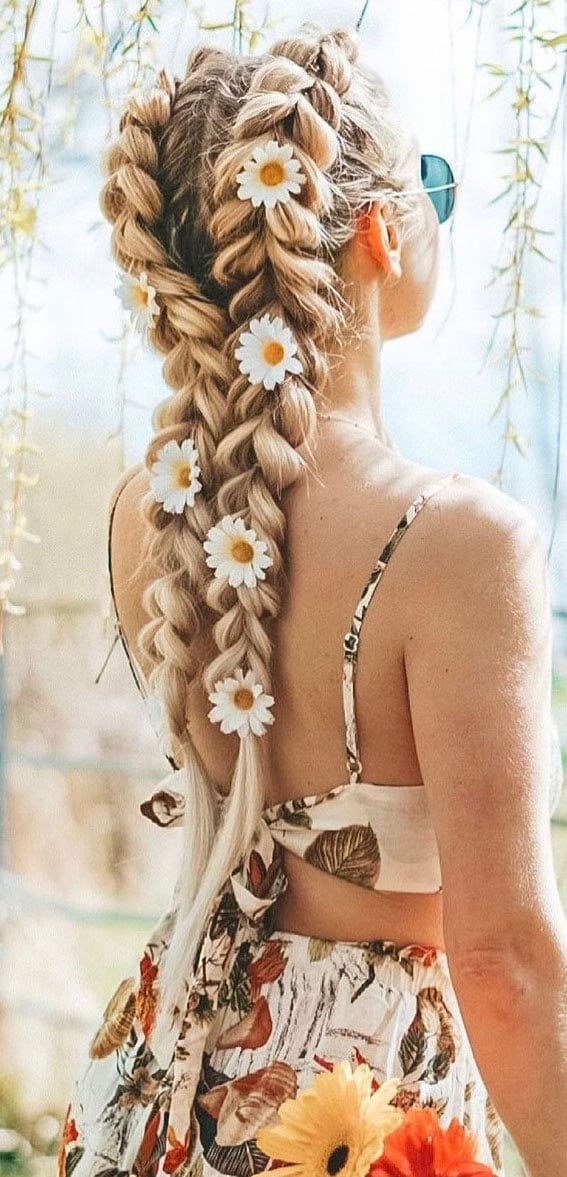
Two fishtail braids fall to mid-back from a middle part, the blonde wavy hair woven with white daisy flowers that sit along the length. The flowers are the anchor here, turning a standard braid into something that belongs at a garden party or a summer festival. The technique keeps the scalp comfortable and the pattern visible even from a distance. Ask your colorist for: two fishtail braids with floral accents.
Collarbone Micro Braids With Curly Ends
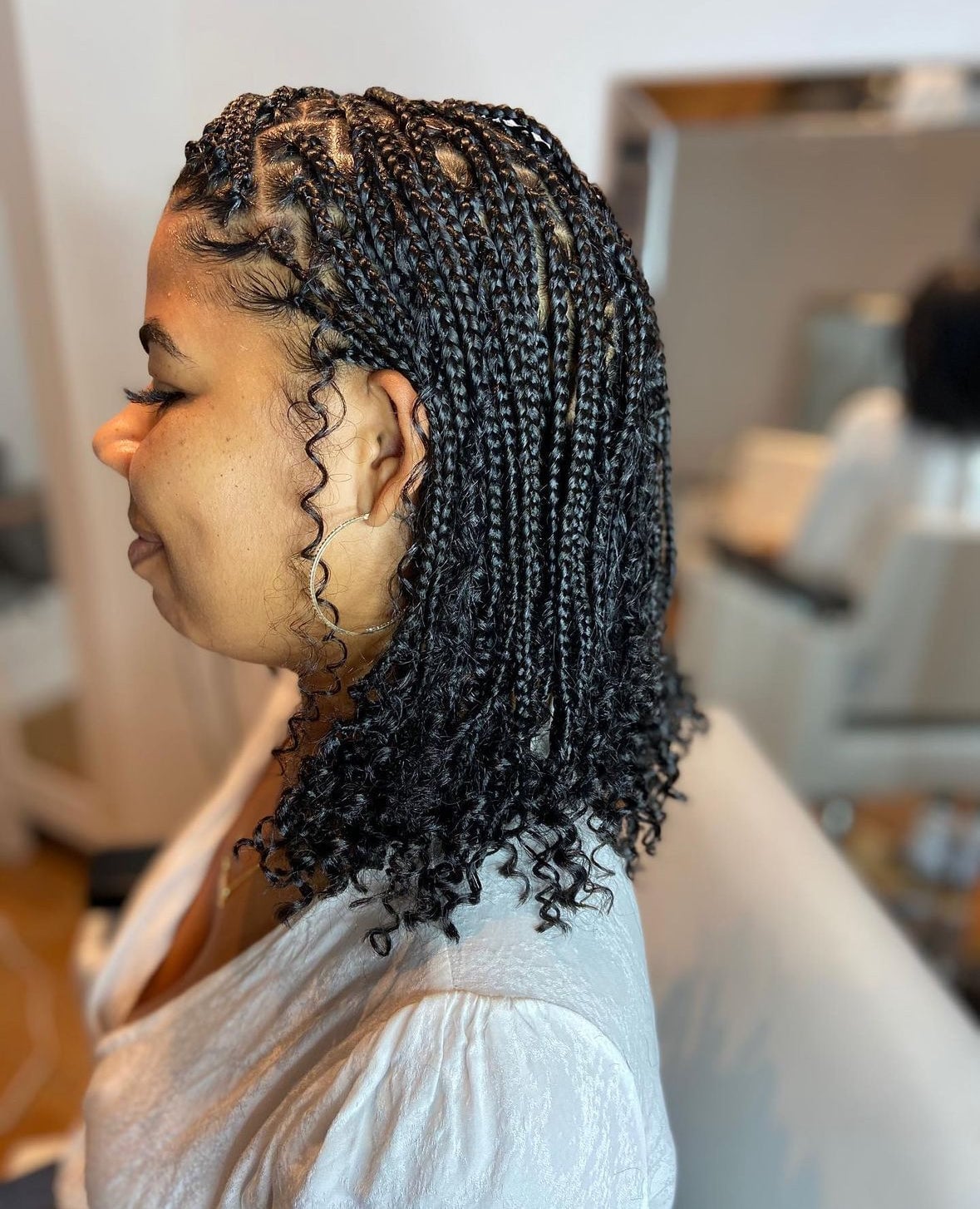
Wondering if micro braids work on fine hair? They do, because the small sections create the illusion of density without the weight of larger braids. This collarbone-length style leaves the ends curly and keeps baby hairs laid along the hairline for a polished finish. The drawback is installation time, which runs several hours. Ask your stylist for: collarbone micro braids with curly ends and baby hairs.
Shoulder Cornrows With Braided Ends
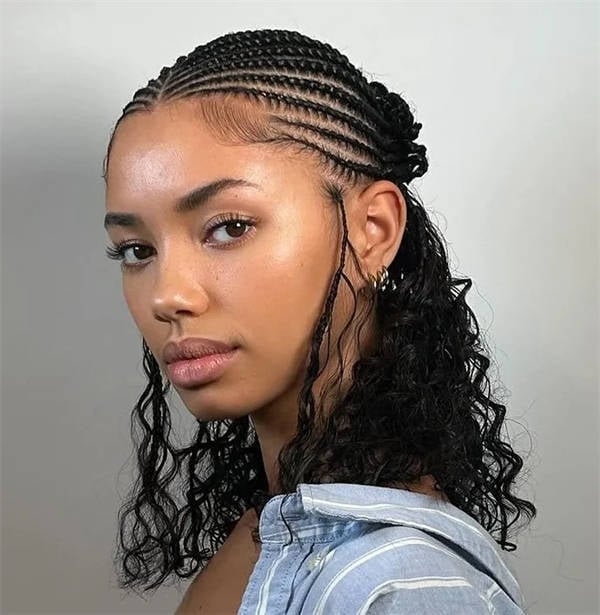
Where cornrows stay flat against the scalp and braids hang loose, this style splits the difference. Neat rows transition into shoulder-length braids on thick, coily black hair, giving you the clean scalp work of cornrows with the movement of longer ends. A side part keeps the pattern visible. Ask your stylist for: shoulder length cornrows with braided ends. Moisturize the scalp and braids twice a week, and touch up edges as needed.
Honey Blonde Braids With Loose Curls
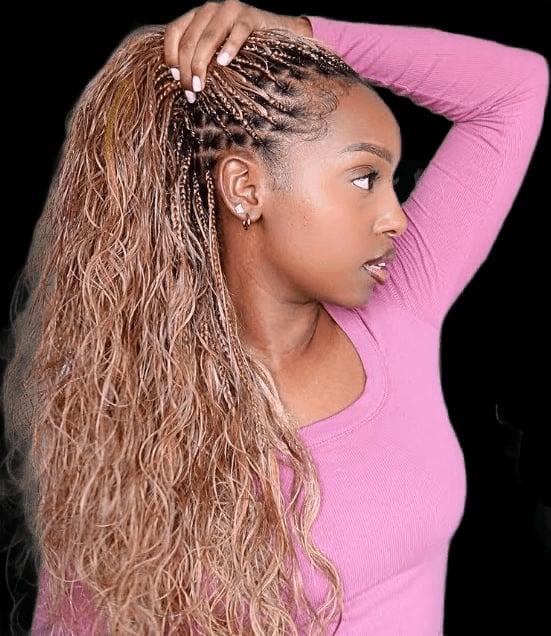
Intricate braids on the top and sides transition into voluminous loose curls that fall in a warm honey blonde shade, the middle part keeping the two textures balanced. The color is applied as a full base, so the braids and curls appear as one continuous tone. This style suits long, thick, wavy hair. Ask your colorist for: honey blonde braids with voluminous loose curls. Use a curl enhancer on the wavy sections to maintain definition, and plan for a scalp re-braid every three to four weeks.
Mid-Back Thick French Braid
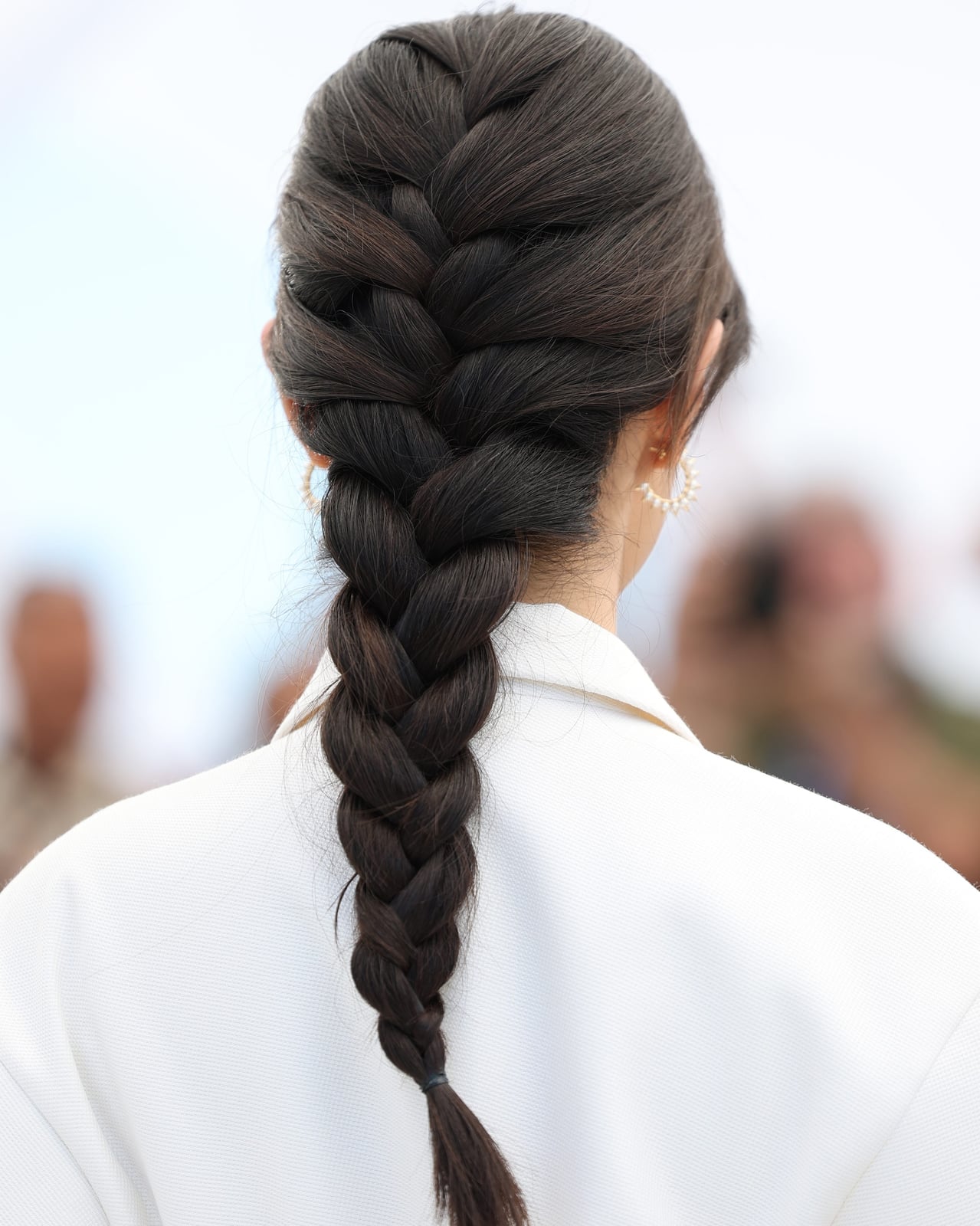
A single, thick French braid that runs down to mid-back is a study in controlled precision. It suits thick, straight hair of mid-back length that can handle the tension of a tight weave. Ask your stylist for: a thick, smooth French braid. Specify that you want the sections kept wide for that substantial look. A thinner braid on thick hair can feel underwhelming. Apply a smoothing serum before braiding to keep flyaways at bay. The one real drawback: a braid this dense takes time to redo, so it is a salon affair for most, not a quick morning refresh.
Long Black Box Braids
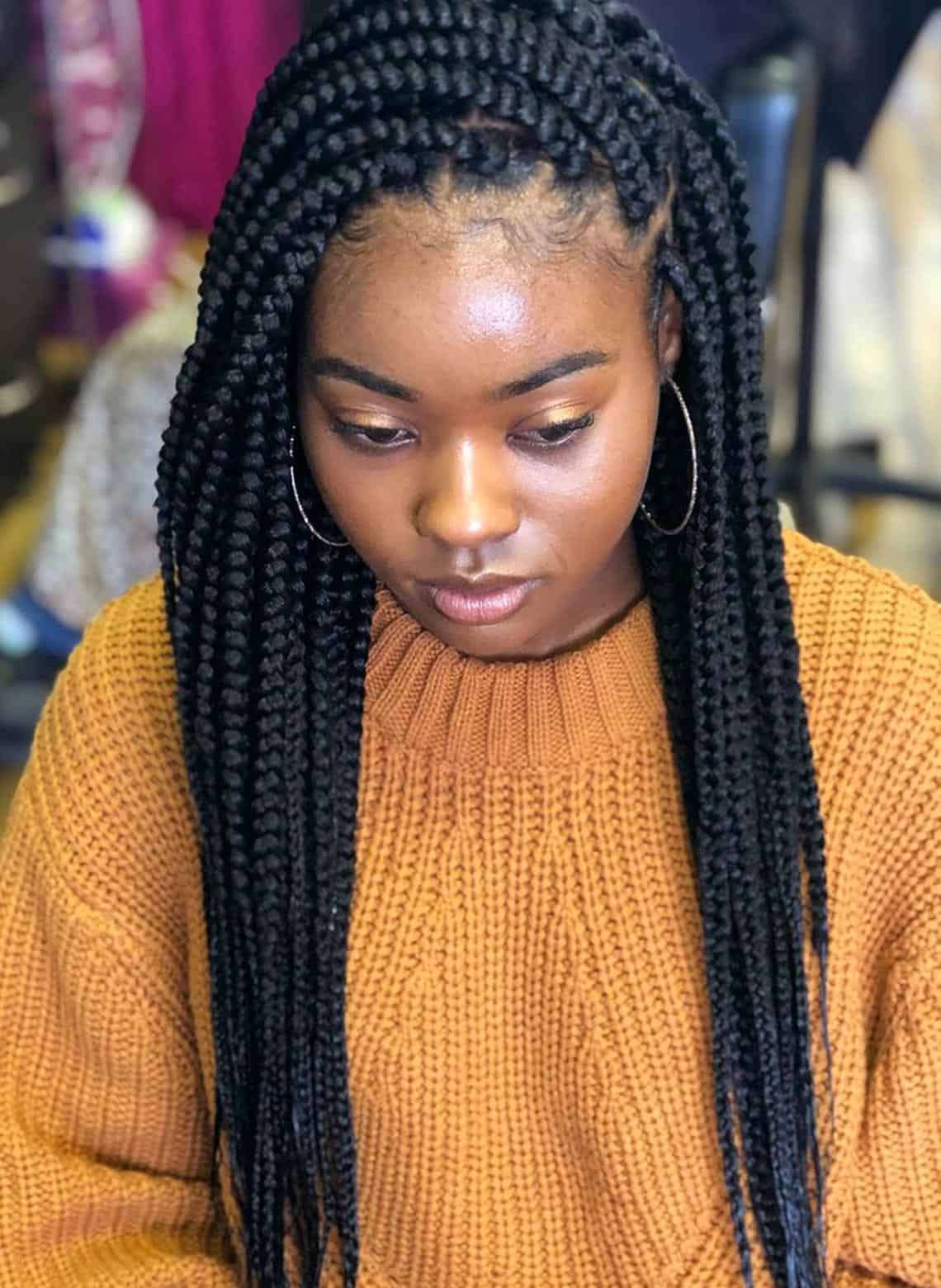
Long black box braids with a clean center part let the density and uniform thickness do all the talking. This style works best on straight or fine hair of mid-back length without pulling at the roots. The part stays sharp for about two weeks before new growth softens it.
Upkeep is straightforward: moisturize the scalp and the braids themselves every few days to prevent dryness, and trim the ends every 12 to 16 weeks to prevent fraying. The length means they’ll sway with movement, but they also require a bit of patience during washing and drying.
Beaded Box Braids With Two Buns
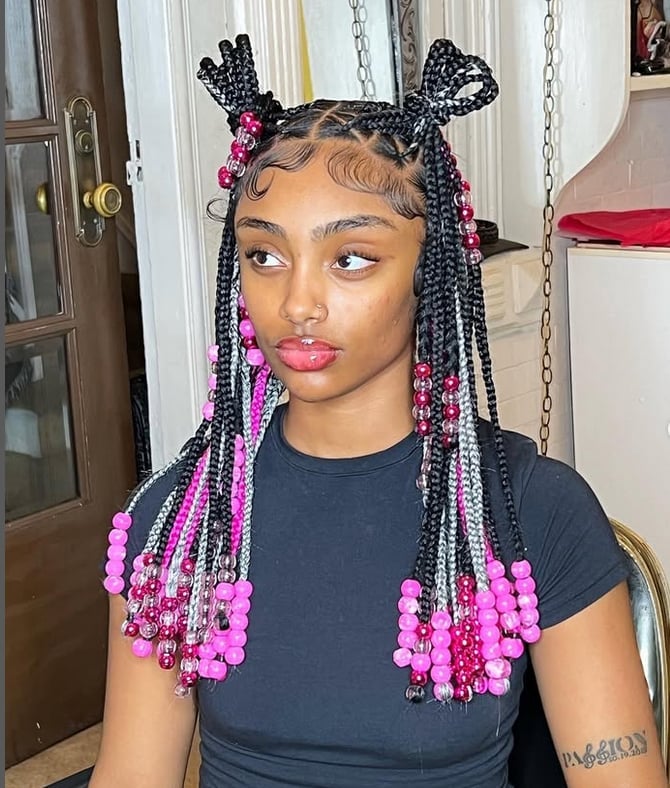
Can beads and buns coexist without looking like a craft project? Yes, when the braids are uniform and the buns are set high. This style features black box braids with pink and silver streaks, pulled into two buns with the rest falling long, and baby hairs laid down around the hairline. It suits straight, fine hair of mid-back length. Ask your stylist for: beaded box braids styled into two buns. The beads catch the light and the buns keep the hair off the neck, making this a natural choice for a summer festival or a birthday dinner where you want the hair to be part of the conversation.
Cornrows Into a Thick Braided Ponytail
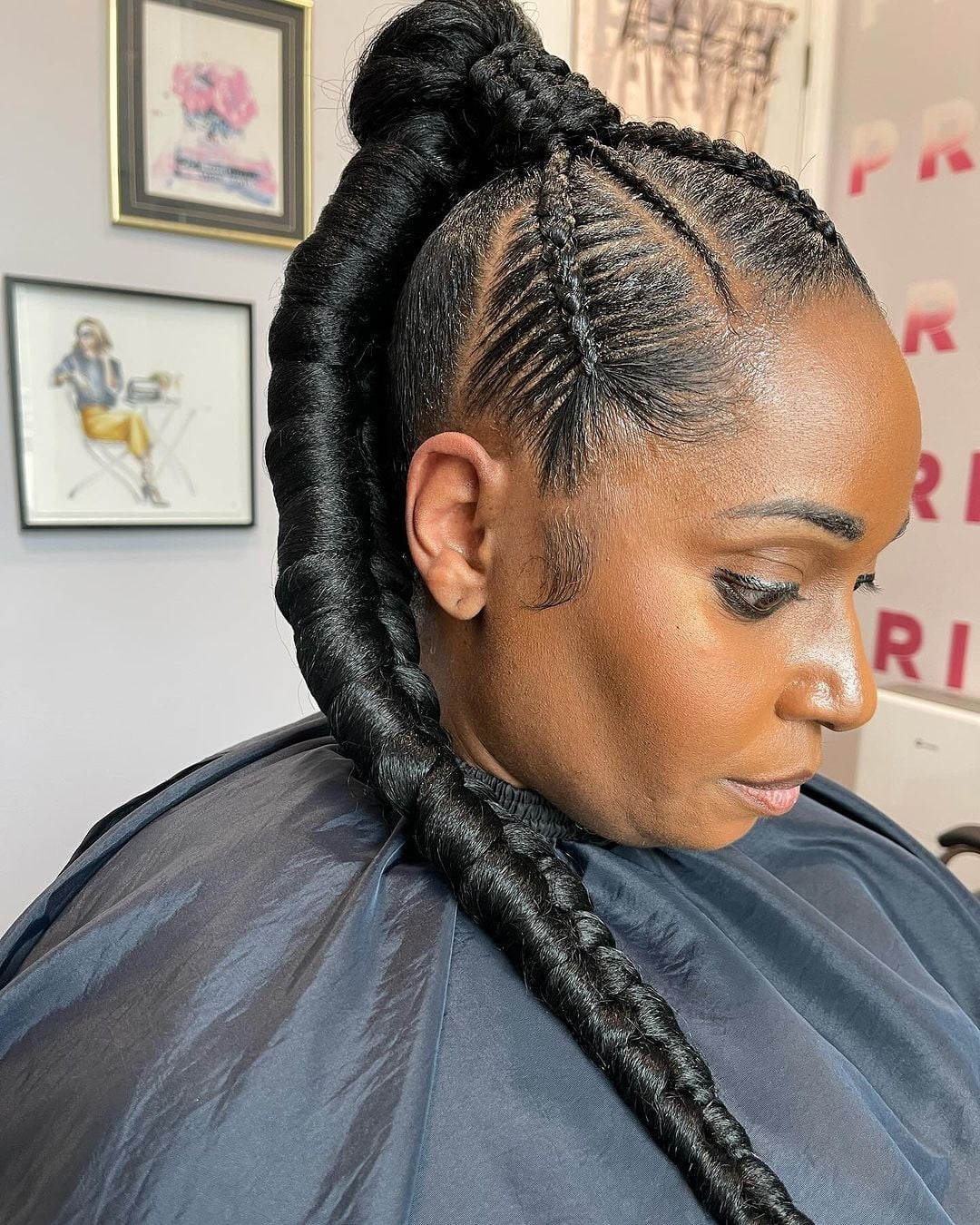
Intricate cornrows with a middle part sweep back into a single, thick braided ponytail that hits mid-back. The transition is what makes it work: the scalp braids stay flat and precise, while the ponytail braid has enough bulk to feel substantial. This suits thick, coily hair of mid-back length. Ask your stylist for: cornrows transitioning into a thick braided ponytail. The glossy finish on the ponytail comes from a lightweight serum applied after braiding, not from any heavy product. The middle part keeps the whole thing symmetrical.
Shoulder-Length Bob With Box Braids
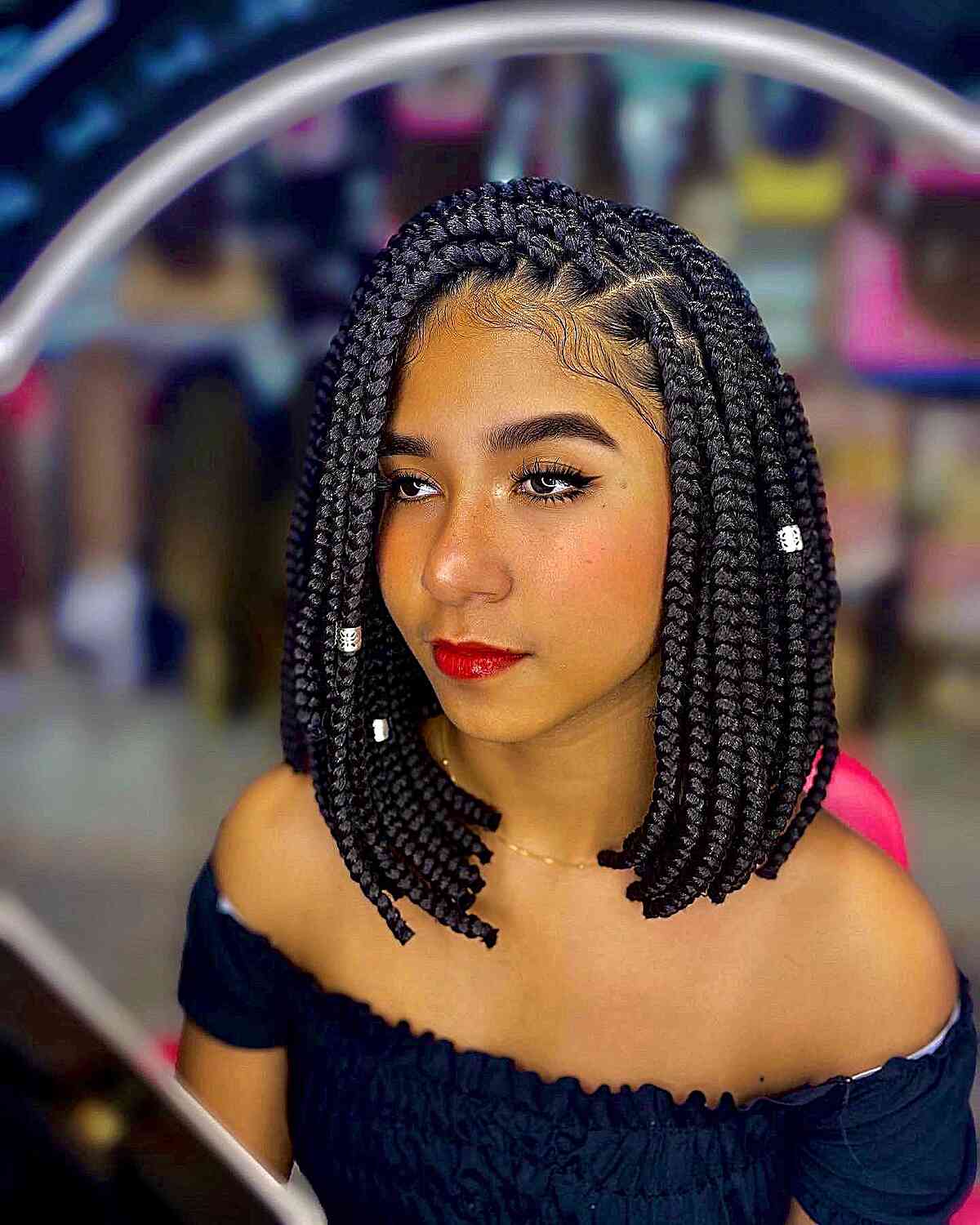
A shoulder-length bob gets a structural upgrade when it’s executed in box braids rather than natural hair. The middle part and straight fall keep it neat, and small silver beads add a point of interest without overwhelming the shape. This suits straight or fine hair of collarbone length. Ask your stylist for: a shoulder-length bob with box braids and silver beads. The bob cut means less braiding time than longer versions, but it still requires a salon visit. This is not a DIY weekend project. The beads need to be secured properly during installation, or they’ll slide off within a week.
Neatly Executed Parallel Cornrows
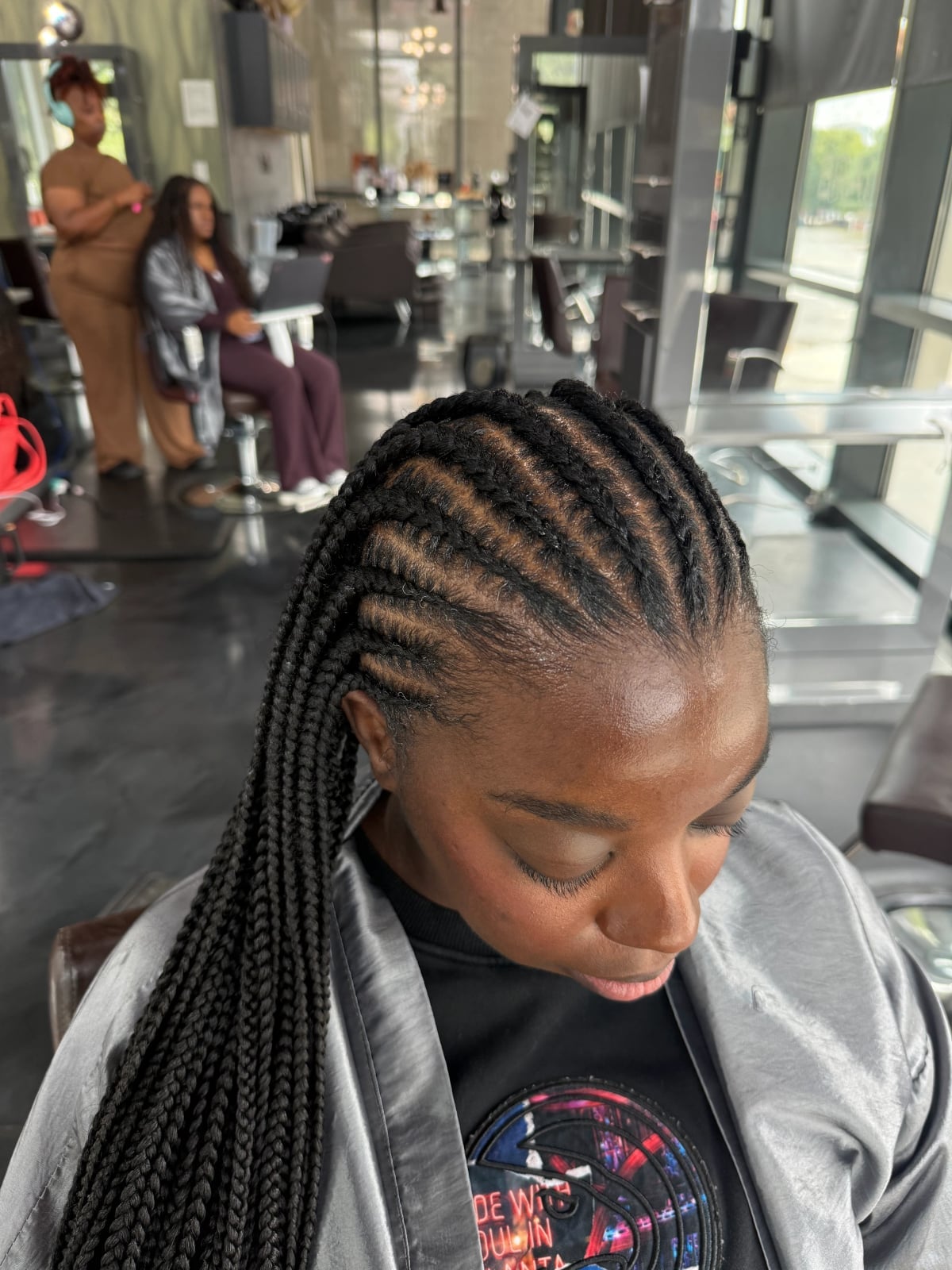
Precision is the whole point here: each cornrow runs in a clean, straight line parallel to the next, creating a grid-like pattern across the scalp. Straight hair types with medium to long lengths get the most defined result, since every row sits flat and uniform. Ask your stylist for: neat parallel cornrows. Apply a lightweight oil to the scalp and braids to keep the shine going, and touch up edges as needed between appointments.
Long Wavy Blonde Waterfall Braids
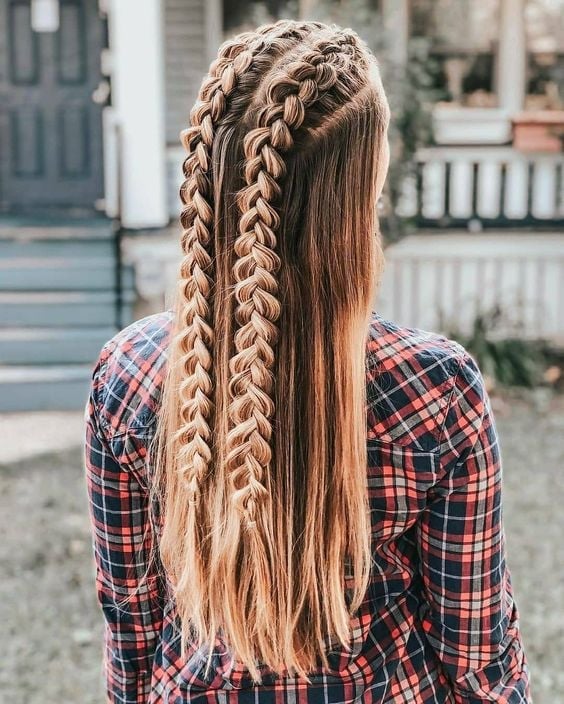
Want a braided style that moves like loose hair? Waterfall braids weave strands in and out so sections cascade down instead of staying locked in a plait. This version starts from a side parting on long, thick wavy blonde hair, with multiple braids running across the back for volume and flow. Ask your stylist for: long wavy blonde waterfall braids.
A texturizing spray helps define the waves and keeps the cascading effect visible for days. This is a salon project, not a DIY in fifteen minutes: expect a couple of hours in the chair. The real drawback is that the loose sections can tangle faster than a fully braided style, so gentle detangling is essential.
Final Thoughts
For natural hair textures, prioritize styles that allow for scalp health and moisture retention. For those seeking lower maintenance, consider styles with fewer intricate parts or opt for extensions that blend seamlessly. Braids offer endless creative possibilities for every hair type.
- Maintain braids with regular moisturizing sprays to prevent dryness.
- Protect braids from excessive friction by sleeping with a silk or satin scarf.
- For intricate styles, professional touch-ups are recommended every 4-6 weeks.
- Gently cleanse the scalp with a diluted shampoo or braid spray to avoid buildup.
- Avoid over-styling or pulling braids too tightly to prevent tension and breakage.