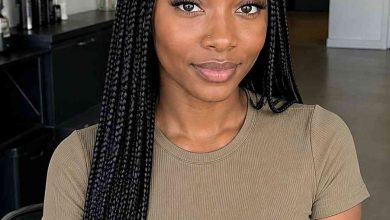
Braids on natural hair are a protective style that also allows for serious creativity, from sleek cornrows to chunky box braids. The current shift toward softer, lived-in finishes means more stylists are leaving ends loose or adding subtle highlights rather than going for a uniform, one-tone look.
This collection of 26 braid ideas covers the full spectrum: quick two-strand twists you can do yourself, mid-back cornrows that hold for weeks, and intricate micro braids best left to a pro. Whether your natural texture is fine or dense, there is a braid here that stays put without pulling at the scalp. For anyone who has watched a style go fuzzy by day three, these options actually hold their shape.
Long Box Braids with Amber Beads
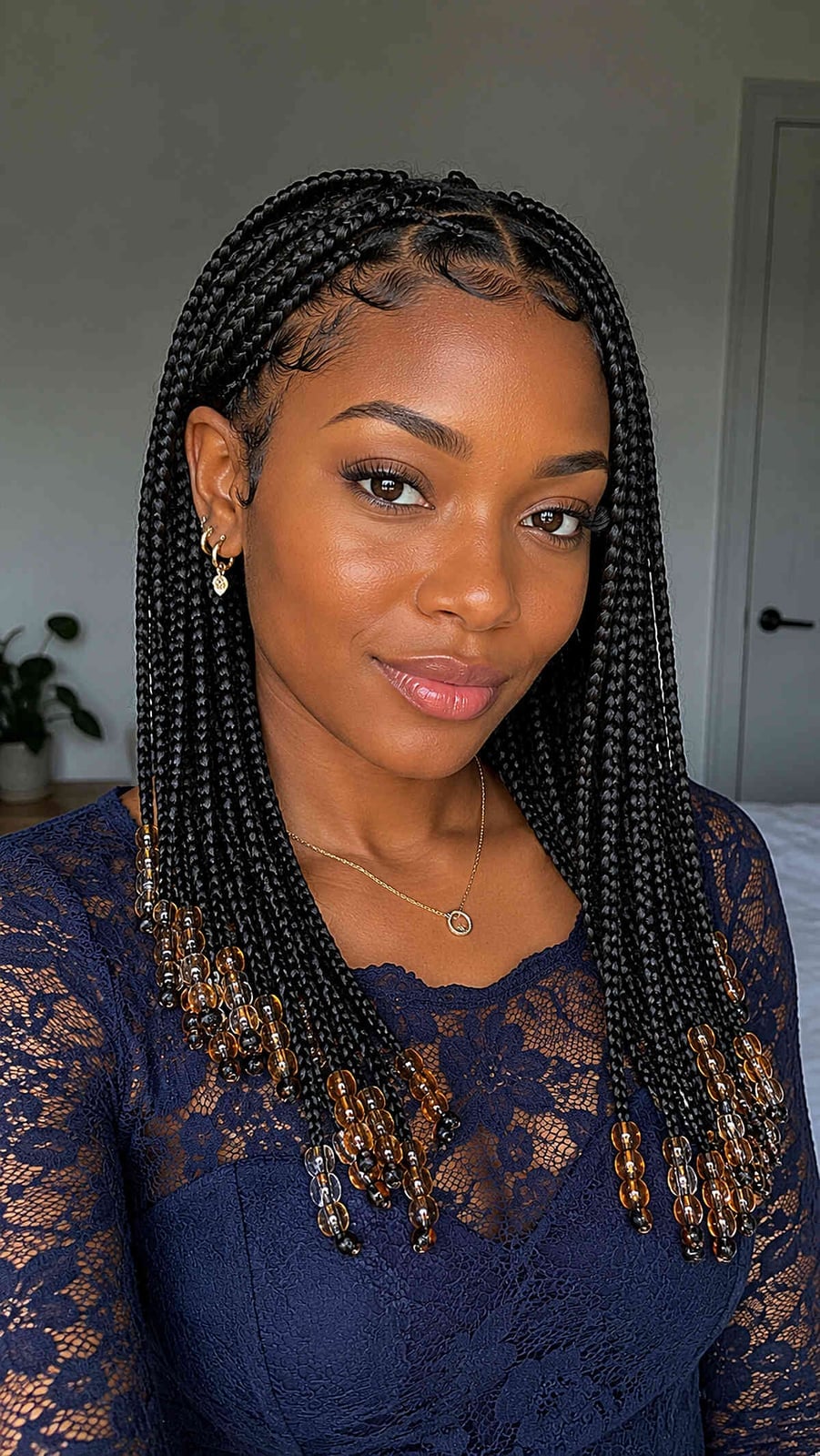
Thick, coily natural hair gets a decorative upgrade with these mid-back box braids, where amber beads add a bit of weight and rhythm to each section. This style works best on hair that is naturally thick and coily, starting at shoulder length, because the beads need something substantial to grip and won’t slip on finer textures. Ask your stylist for: long box braids with amber beads, mid-back length. A light sheen spray keeps the braids and scalp looking healthy, and trimming loose ends every three months prevents fraying at the tips.
Short Box Braids Bob
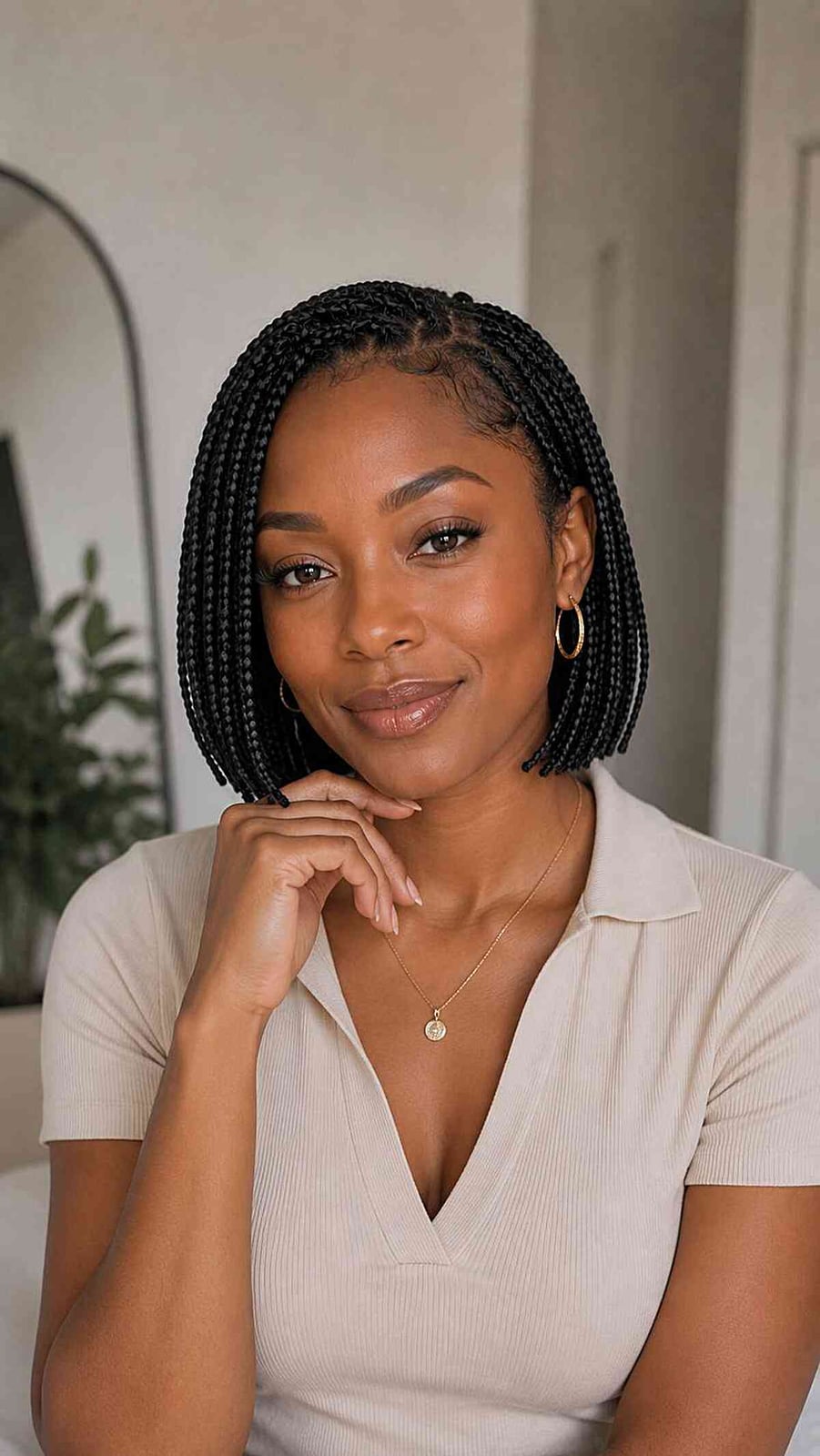
Can a box braid style actually look tailored? This chin-length bob proves yes, with a sharp, blunt baseline and a clean middle part that gives the braids a geometric finish. Ask your stylist for: chin length box braid bob, sharp baseline. Thick, straight natural hair of at least chin length takes the bob shape best, holding the line without too much bounce. A light mousse on the ends keeps them neat between trims.
Shoulder Length Passion Twists
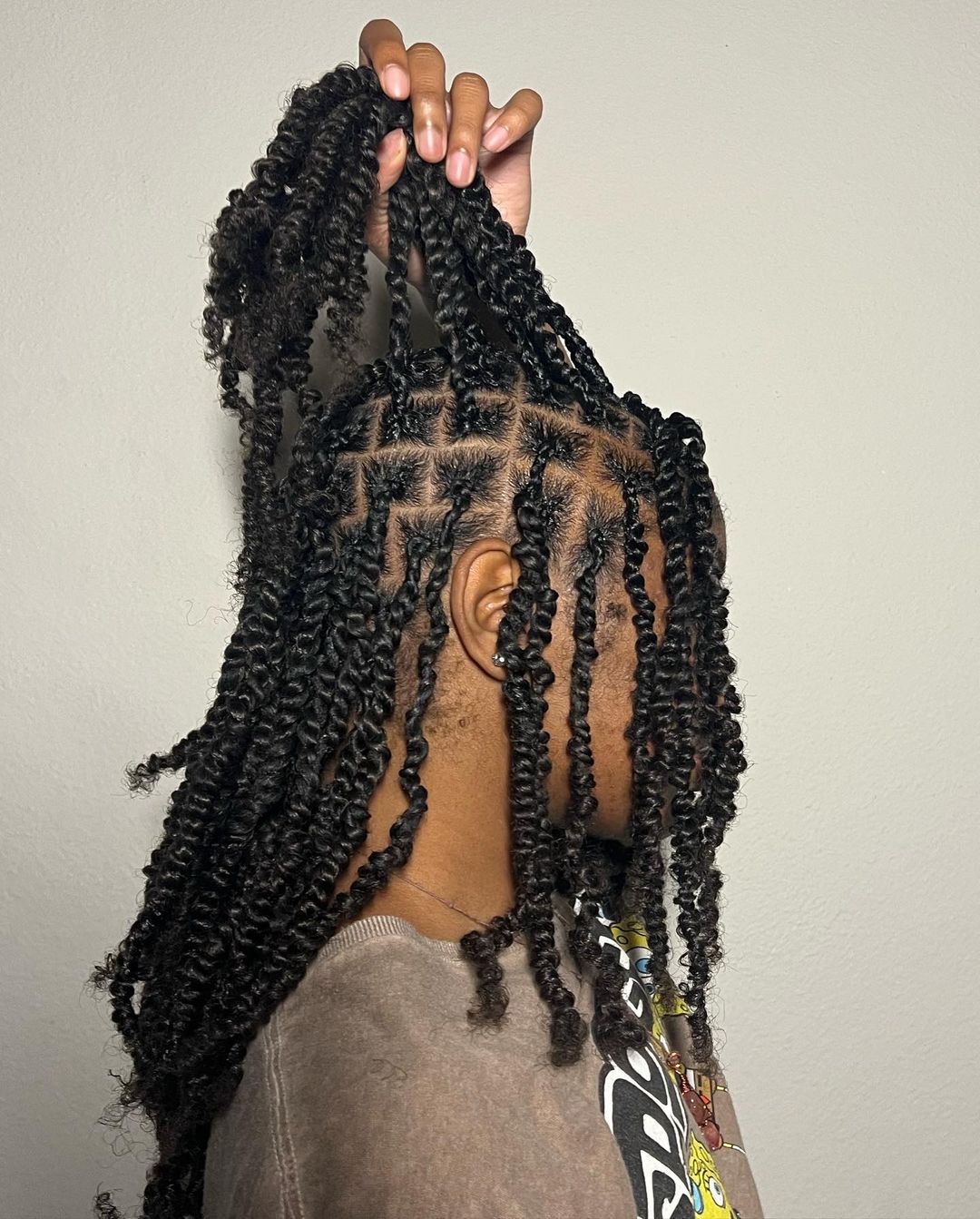
Passion twists are built by twisting pre-stretched hair around itself, creating that defined, curly texture that looks like it has a permanent wave. These shoulder-length individual twists in rich dark brown work on thick, naturally curly hair of at least the same length, and the middle part keeps the volume evenly distributed. Ask your stylist for: shoulder length passion twists, defined curls. A twist-and-curl cream at installation locks in the texture, and a water-based leave-in spray refreshes the shape between wears. This style travels well, holding its curl through a vacation or a humid week.
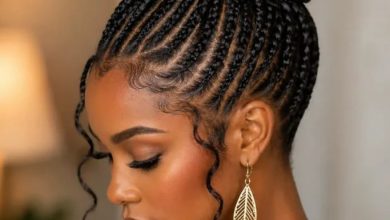
Braids Styled on Scalp
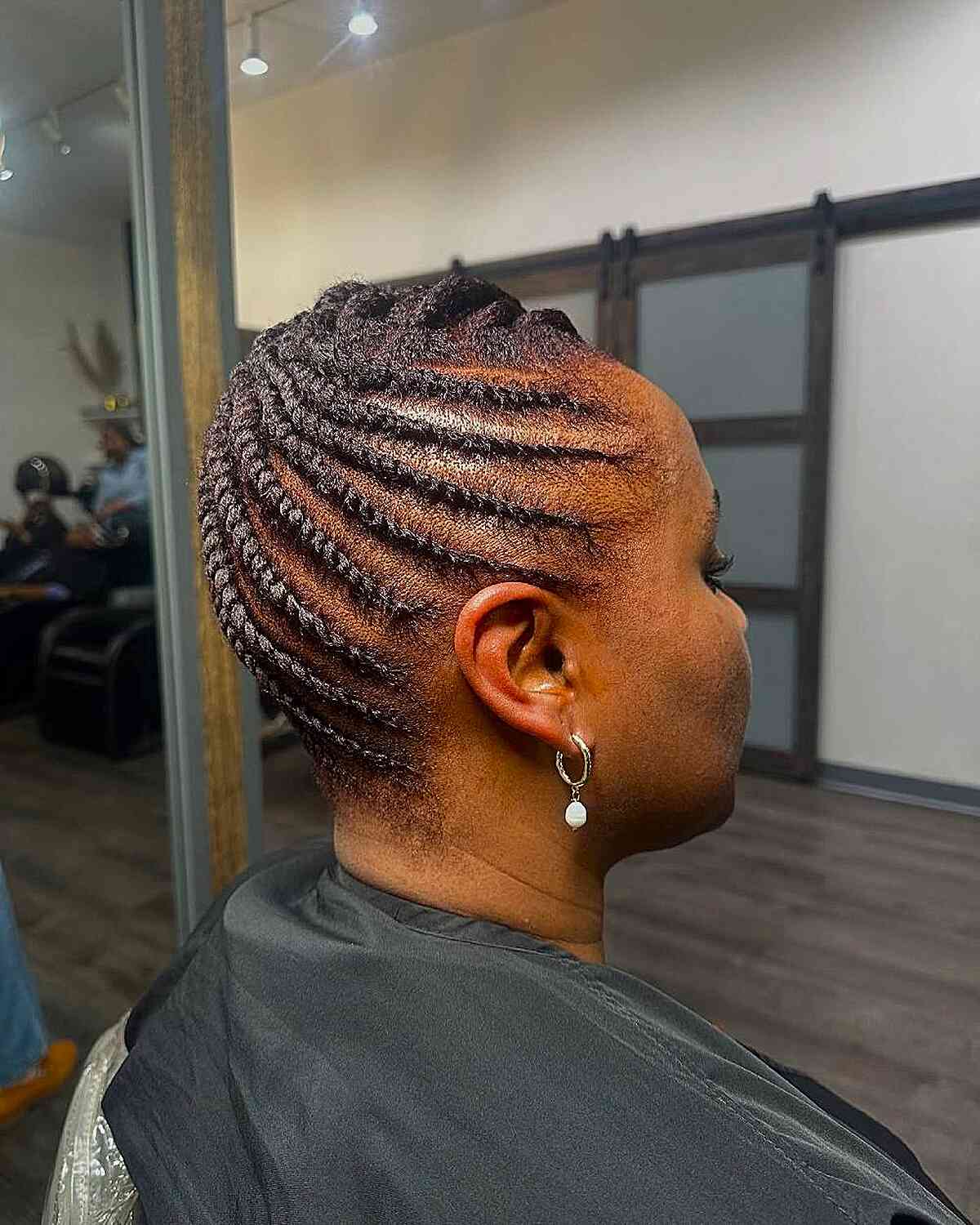
Scalp braids differ from loose braids in one key way: the tension is constant and the pattern is the point. These ear-length braids are woven tightly against the scalp in a swept-back design, with a twisted appearance that shows off the braiding technique. Ask your stylist for: braids styled on scalp, swept back pattern. Dense, coily natural hair of at least ear length holds the pattern best. This is a salon-only style; the precision required for neat, even rows is hard to replicate at home.
Crown Braid with Natural Texture
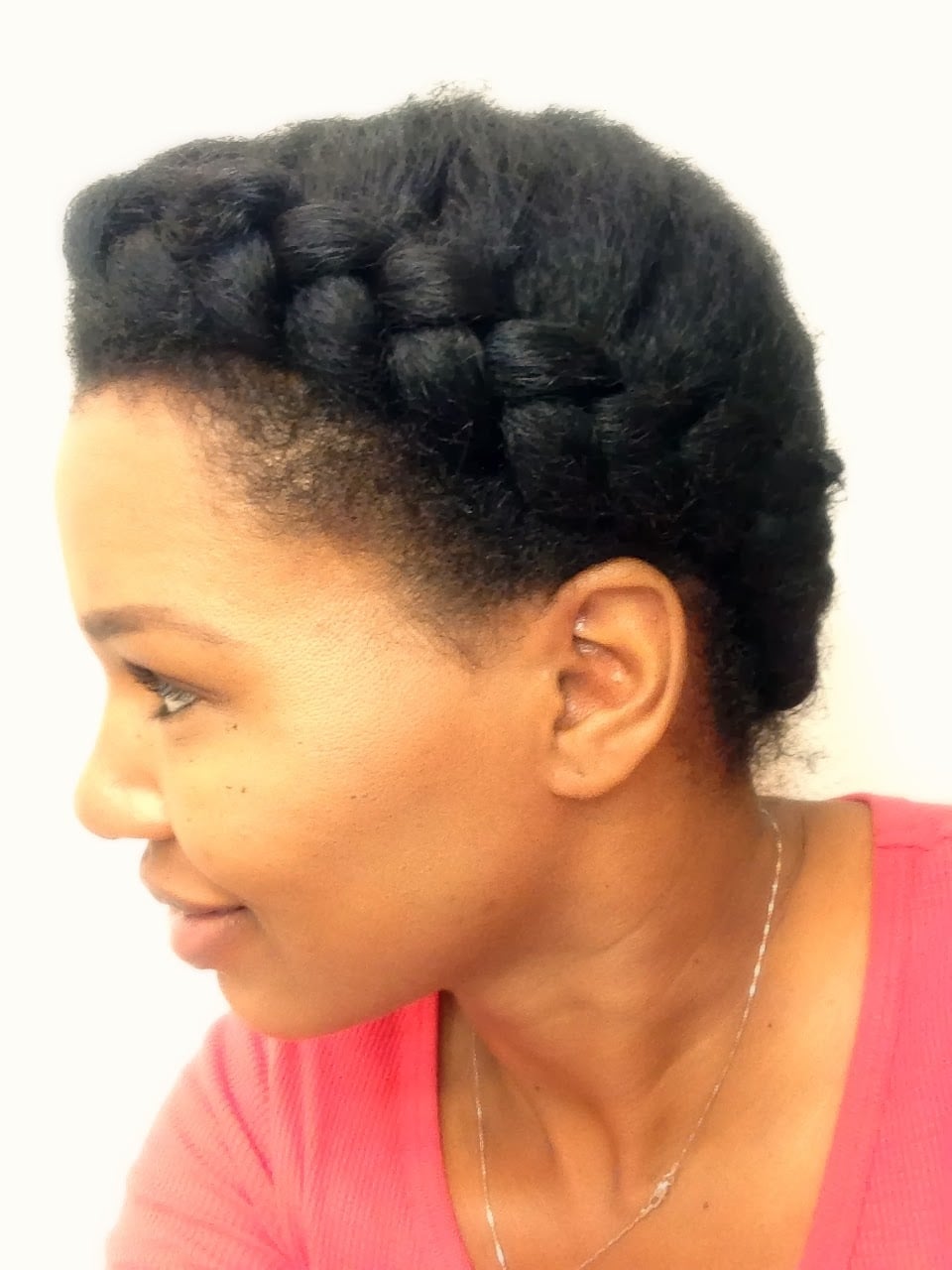
A crown braid wraps around the head like a halo, and on thick, coily hair at collarbone length, it has enough density to stay put without slipping. The center part keeps the braid balanced, while the natural coils around the edges add texture that softens the line. Ask your stylist for: thick crown braid, halo style. The braid sits securely for a full day, though loose tendrils at the temples may need a bobby pin after a few hours. A daily mist of water refreshes the curls around the braid and keeps the style from looking dusty.
Micro Braids with Curly Ends, Close-Up Take
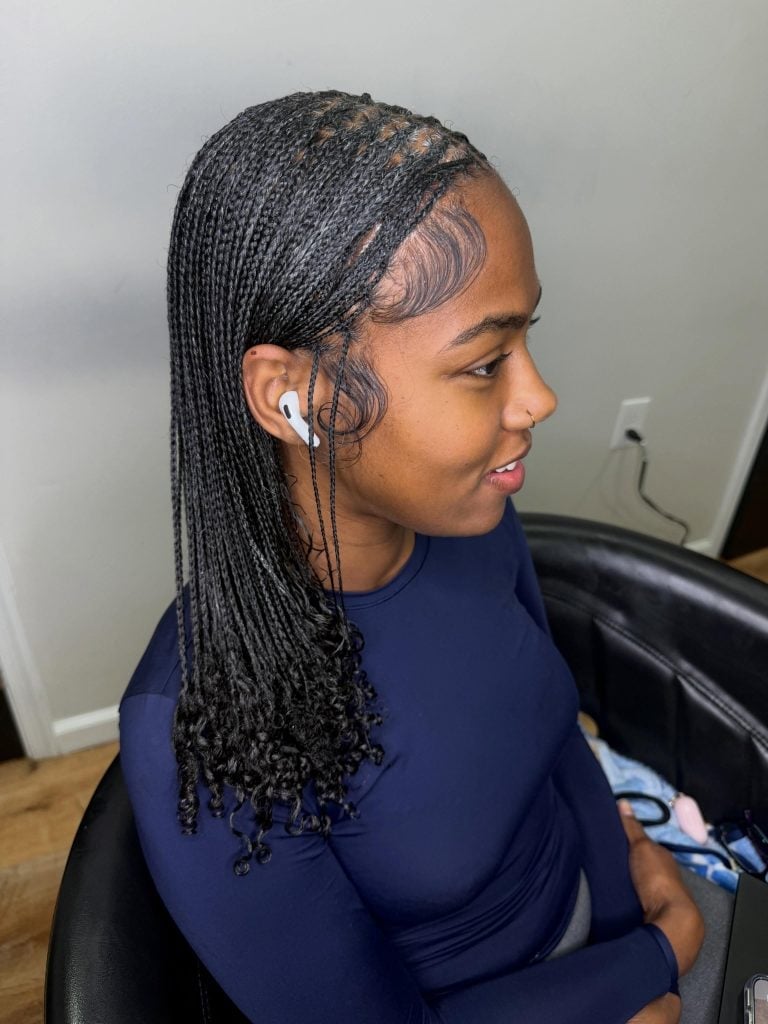
Fine, wavy hair can pull off micro braids, but it asks for patience in return. These collarbone-length braids in black are built with a middle parting, and the curly ends soften what would otherwise be a severe line. The wavy texture of the natural hair means the braids hug the scalp neatly, while the face-framing tendrils keep the style from looking too rigid. Ask your stylist for: collarbone micro braids, soft curly ends. The trade-off is real: the intricate detail takes hours to install and even more to maintain, since the fine texture can make the braids frizz at the root within a couple of weeks. A light serum on the curly ends keeps them defined, but you will be trimming stray hairs weekly to preserve the clean look.
Individual Braids with Natural Texture
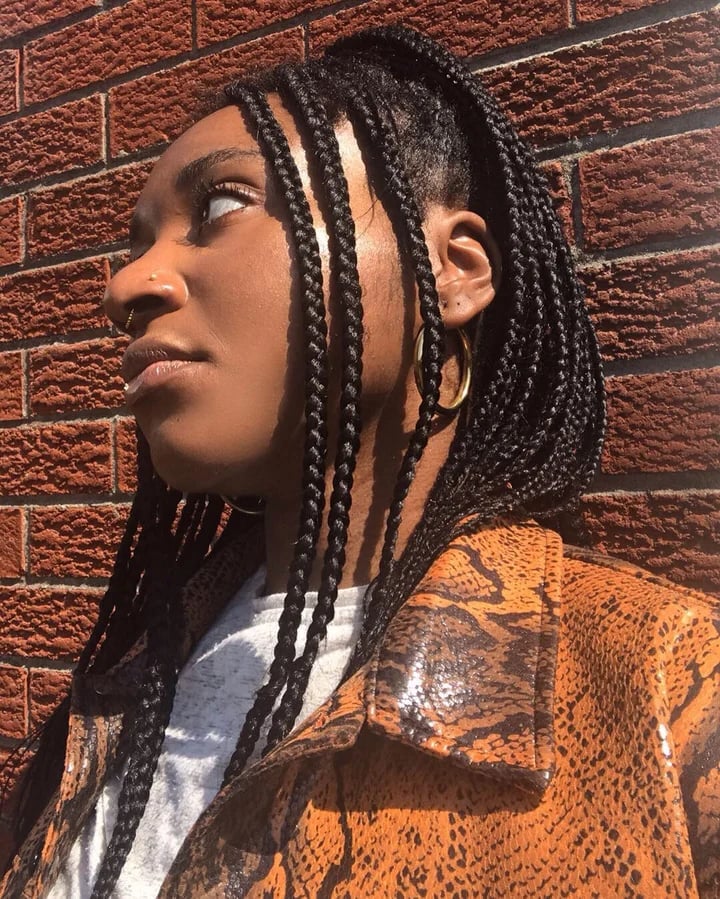
Can you get individual braids with natural texture to look this defined at home? Yes, if you set aside a full afternoon and work in sections. The shoulder length and thick, curly texture make each braid distinct, so the middle parting reads clearly. Ask your stylist for: shoulder length individual braids, natural curl definition. The key is to keep your own curl pattern visible between the braids, which means you should not pull too tightly at the root. Use a curl refresher spray daily to maintain the texture and prevent dryness. For a DIY braids on natural hair approach, part small squares, braid each one to the end, then dip the ends in hot water to seal. It is doable, but expect to spend several hours, and do not rush the parting.
Mid-Back Box Braids with Wavy Ends
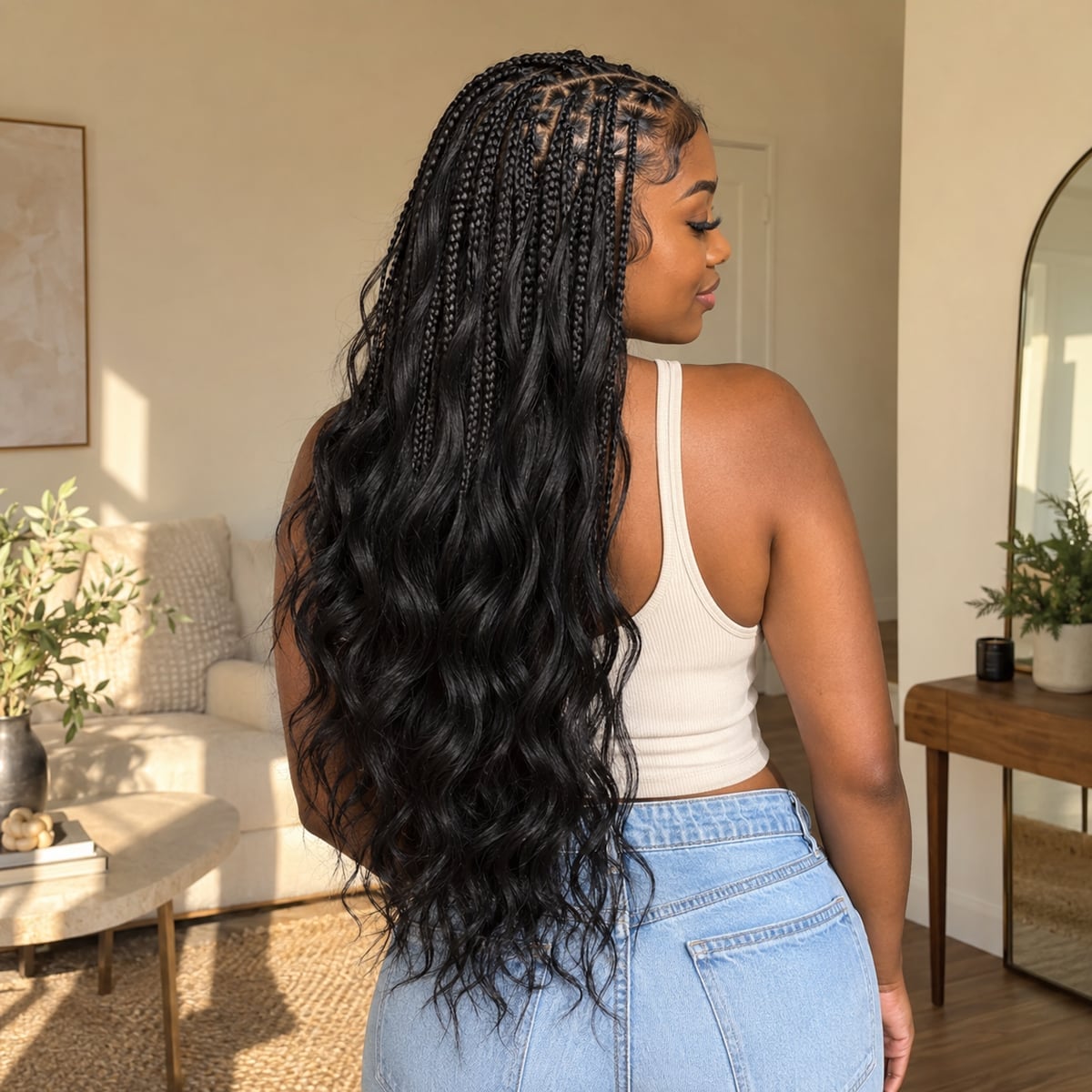
The design is a study in contrast: sleek, defined parts at the scalp that give way to a voluminous, flowing wave at the ends. These mid-back box braids carry a lot of length, and the wavy finish keeps them from looking heavy. The black color is deep and uniform, letting the texture do the talking. This is a warm-weather style, because the length keeps your neck covered but the waves allow air to move through. Ask your stylist for: mid-back box braids, long wavy ends. To keep the wave pattern alive, use a diffuser on low heat after washing, or let the braids air dry and scrunch gently. The hold is strong at the roots, but the ends will need attention to stay defined. Expect to refresh the ends every few weeks to avoid tangling.
Mid-Back Braids and Twists with Waves
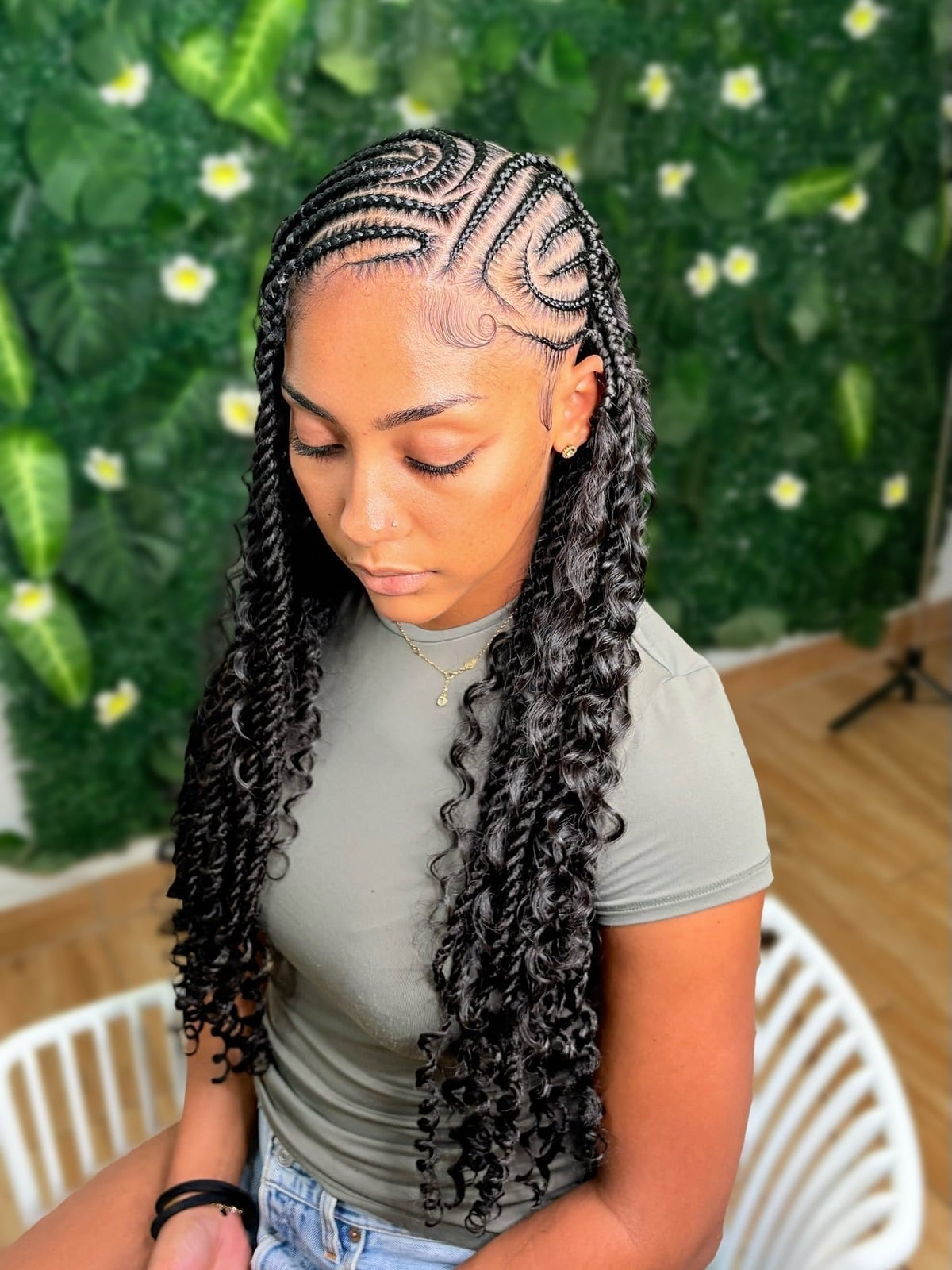
Mixing braids and twists in one style is a technical move that pays off in texture. The mid-back length gives you room to alternate between the two, and the black base with blonde highlights adds depth without a full color commitment. The ends are styled into loose waves and curls, which softens the overall silhouette. Ask your colorist for: blonde highlights, wavy ends. The highlights are woven in, not painted on, so they catch the light as the hair moves. To keep the wave pattern intact, apply a curl-defining cream to the ends and sleep on a satin scarf to preserve the shape overnight. The hold is solid, but the mix of textures means you will need to re-define the waves after washing. This is a salon build, not something to attempt in a hurry.
Collarbone Box Braids with Blonde Highlights
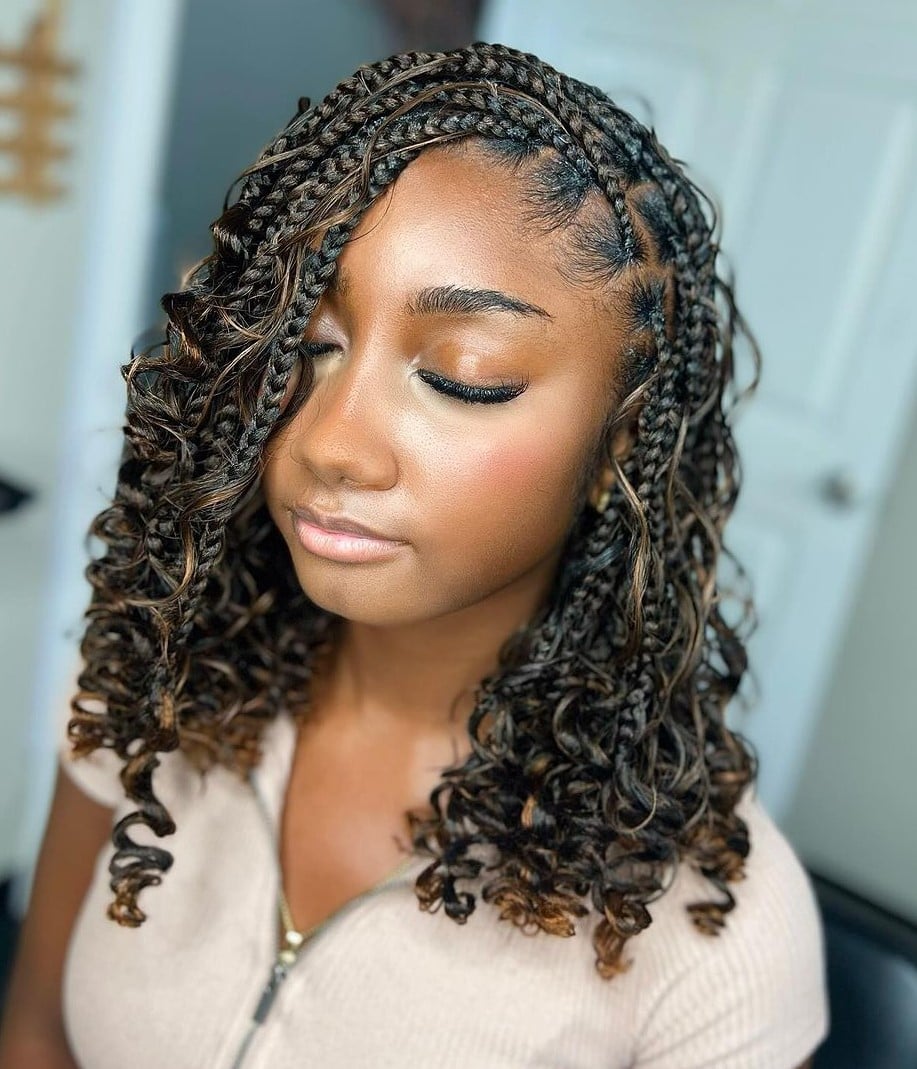
Wondering if collarbone box braids with blonde highlights will work for your face shape? The length falls right at the collarbone, which frames the jaw and elongates a round face, while the black and blonde contrast adds visual interest without overpowering. The curly ends give the style a softer finish, and the distinct middle part keeps it clean. Ask your colorist for: collarbone box braids, blonde highlights, curly ends. This is a versatile length for work or casual days, and the thick, wavy texture holds the braids well. To maintain the shape, use a light-hold spray on the curly ends and trim any stray hairs to keep the line crisp. The highlights will need a toning appointment every six to eight weeks to keep the blonde from turning brassy.
Collarbone Box Braids with Brown Highlights, Wavy
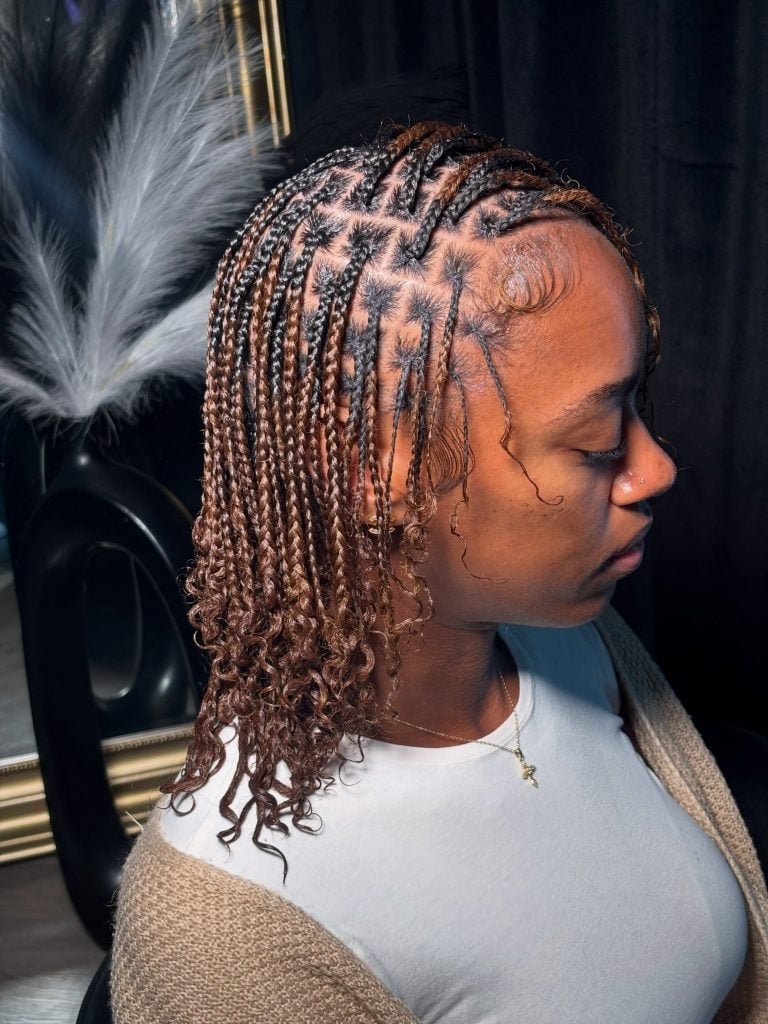
The geometric middle part is doing more work than you’d think: it turns a standard set of box braids into a pattern that reads as deliberate from every angle. These collarbone-length braids stay black at the root, then let subtle brown highlights catch the light through the wavy, thick lengths. The curly ends soften the whole thing, so the style lands somewhere between precise and relaxed.
This suits thick natural hair that already reaches the collarbone, since the braids add weight rather than length. Ask your stylist for: collarbone box braids, brown highlights, curly ends. A leave-in conditioner keeps those curled tips from frizzing, and a silk scarf at night preserves the shape so you can stretch each wear.
Shoulder Length Two Large Braids
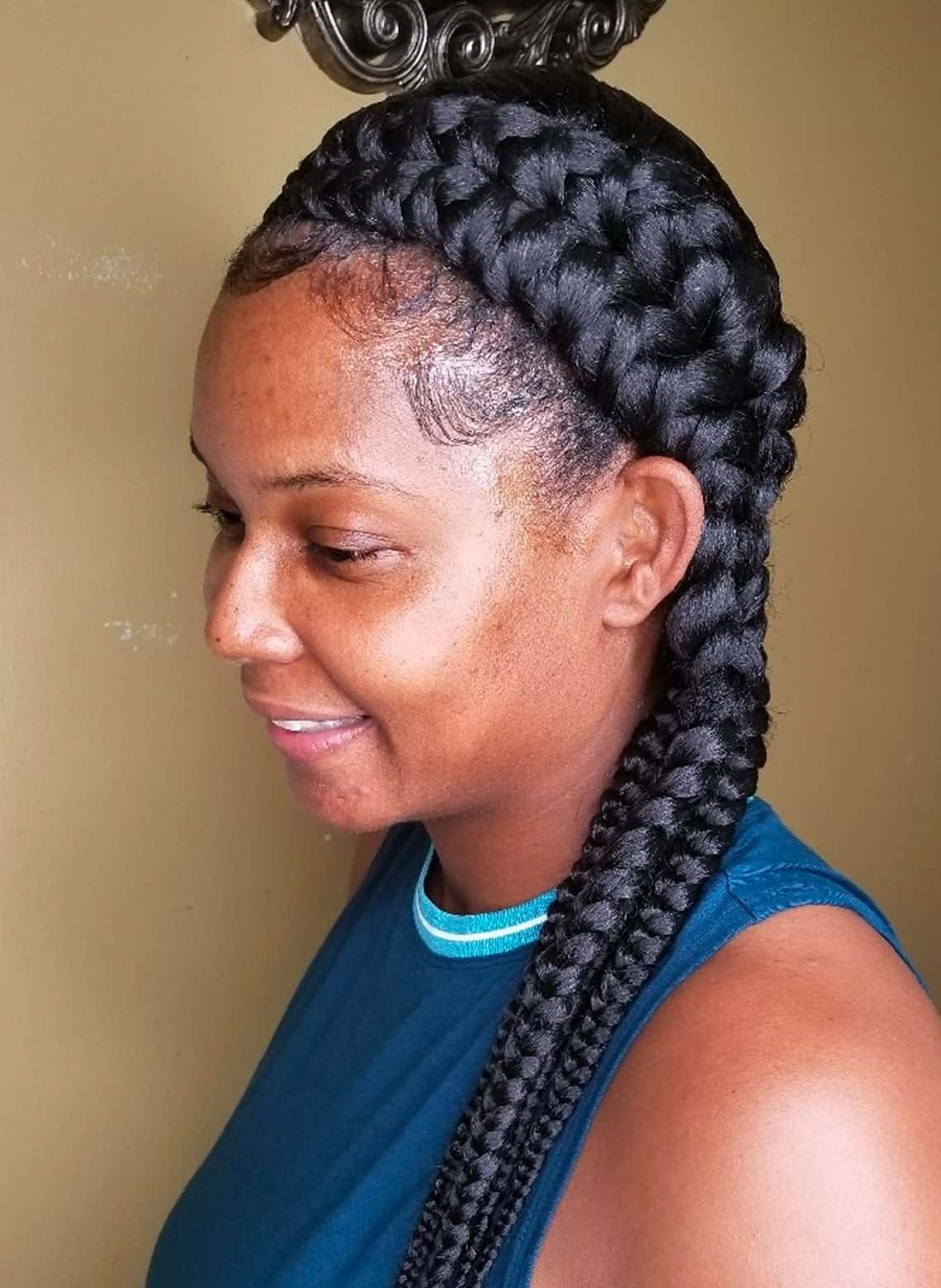
Two large braids beat a dozen small ones when you want the hair to read as one bold shape rather than a field of texture. The side part splits the wavy, thick hair into two substantial sections that land at the shoulder, each braid thick enough to hold its own weight. This is a salon job, not a quick DIY: getting the tension even across braids that large takes a practiced hand. Ask your stylist for: shoulder length two large braids, side part. If your hair is fine or thin, smaller braids will hold better and feel lighter.
Mid-Back Large Cornrow Braids With Straight Texture
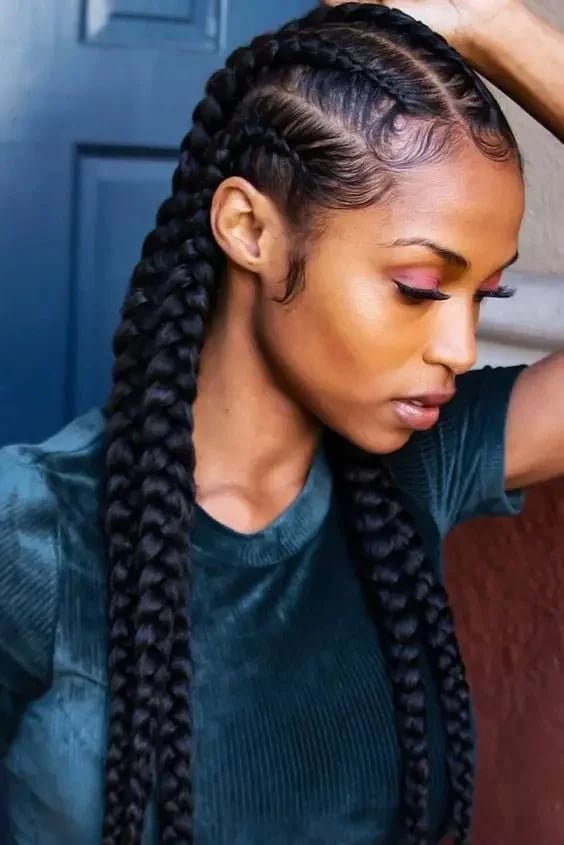
Large cornrow braids are built by taking wide sections of hair and braiding them in a continuous, raised line from the front hairline to the nape. Here, the sections are thick enough that each braid reads as a bold, sculptural band, and the side parting adds an asymmetrical balance to the scale. The straight, black texture keeps the surface sleek, so the eye follows the uniform ridges from root to the mid-back ends without interruption. Ask your stylist for: mid-back large cornrow braids, side part. This style suits thick, straight natural hair of at least shoulder length, because the weight of the braids needs density to hold the line. A scalp oil along the part line keeps the skin moisturized, and skipping heat styling preserves the smooth finish that makes the scale of each cornrow the point.
Shoulder Length Precise Cornrows
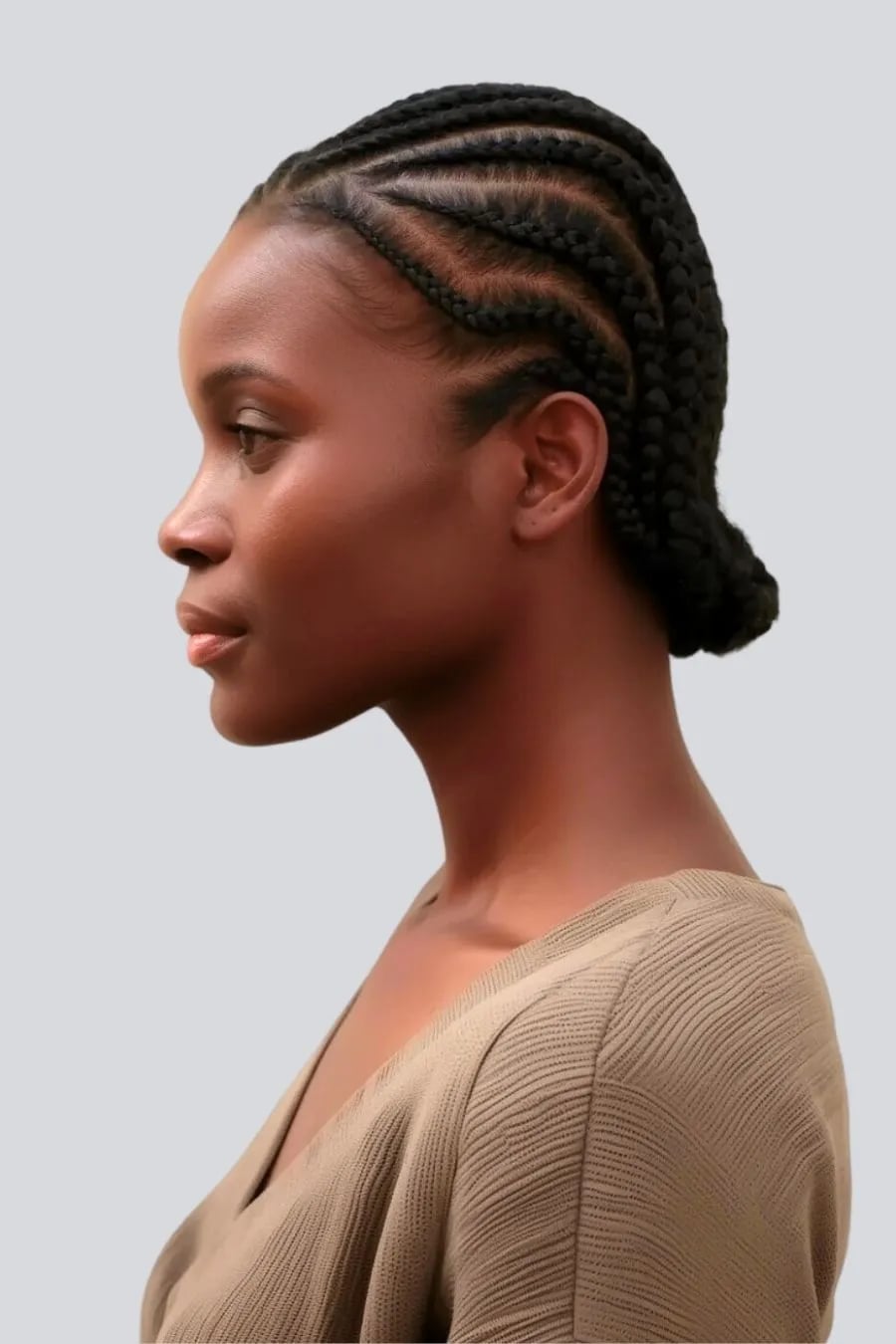
Wondering if cornrows will suit your face shape? The answer depends on the part. A clear middle part with tight, uniform rows draws the eye straight down, which elongates a round face and balances a longer one. These shoulder-length cornrows are woven from thick, coily hair, each row identical in size and tension, with the neat definition doing the heavy lifting. Ask your stylist for: shoulder length precise cornrows. The sleek finish holds for weeks, so you can skip daily styling. If you have fine hair, ask for smaller rows to avoid strain at the root.
Shoulder Cornrows with Gray Streaks
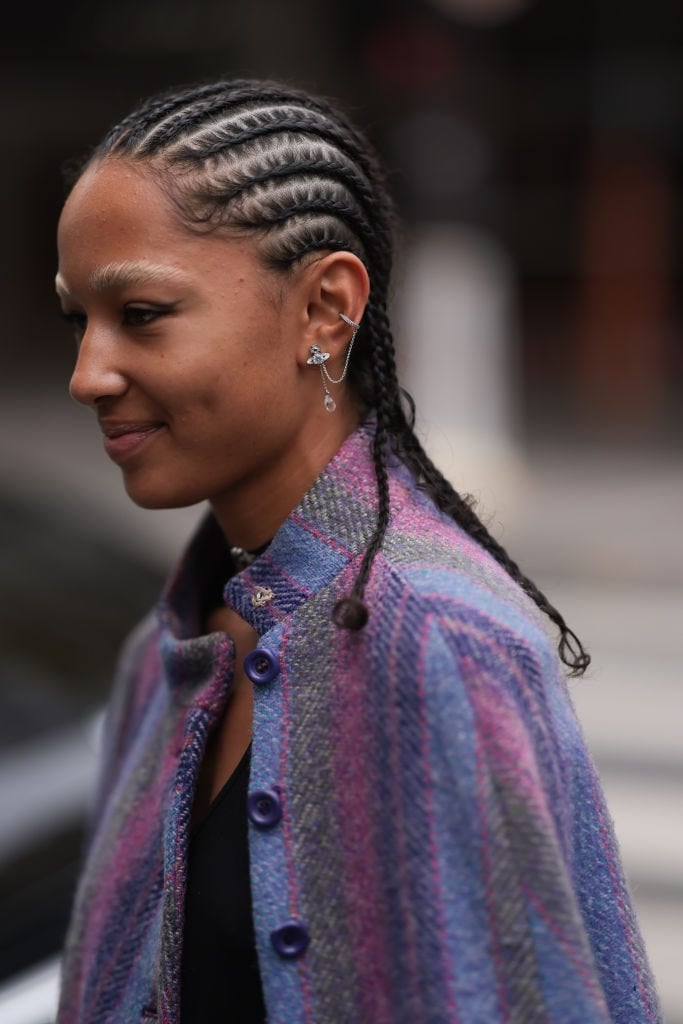
Gray streaks are the quiet rebel of the cornrow world: they add contrast without changing the silhouette. These black cornrows are woven tight against the scalp, with silver-gray threads running through the straight, thick hair to the shoulder. The middle part keeps the lines clean, so the streak reads as a deliberate accent, not an accident. This lands well in cooler months, when the cool-toned contrast fits the season. Ask your stylist for: shoulder length cornrows with gray streaks. A color-safe shampoo keeps the silver from dulling, and a regular scalp oil keeps the braids comfortable as they settle.
Mid-Back Cornrows with Beaded Details
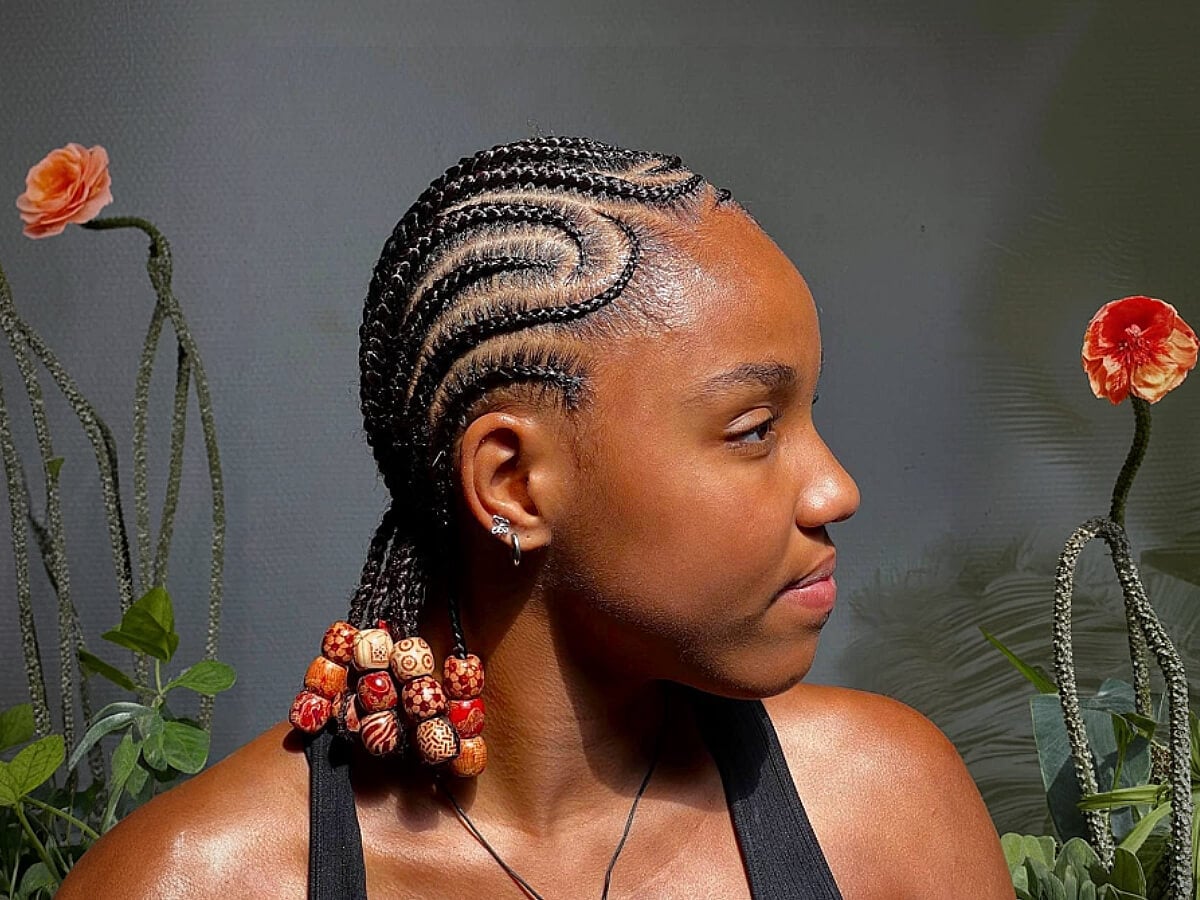
Beads add weight to cornrows, which changes how they move as the weeks go by. Those colorful wooden beads on thick, coily black hair pull each braid down slightly, so the mid-back length swings rather than floats. That heft also keeps the cornrows lying flat against the scalp, which is a win for a style that needs to hold its shape. Ask your stylist for: mid-back cornrows with colorful beads. The beads are the part that needs attention: check that each one is secure before you leave the chair, and avoid tugging on the braids near the beads when you style or sleep. A middle parting keeps the pattern symmetrical, and a scarf at night protects both the beads and the cornrows from friction. This is a salon-only build, given the detail work, but the payoff is a style that looks deliberate for weeks.
Mid-Back Cornrows to Box Braids with Beads
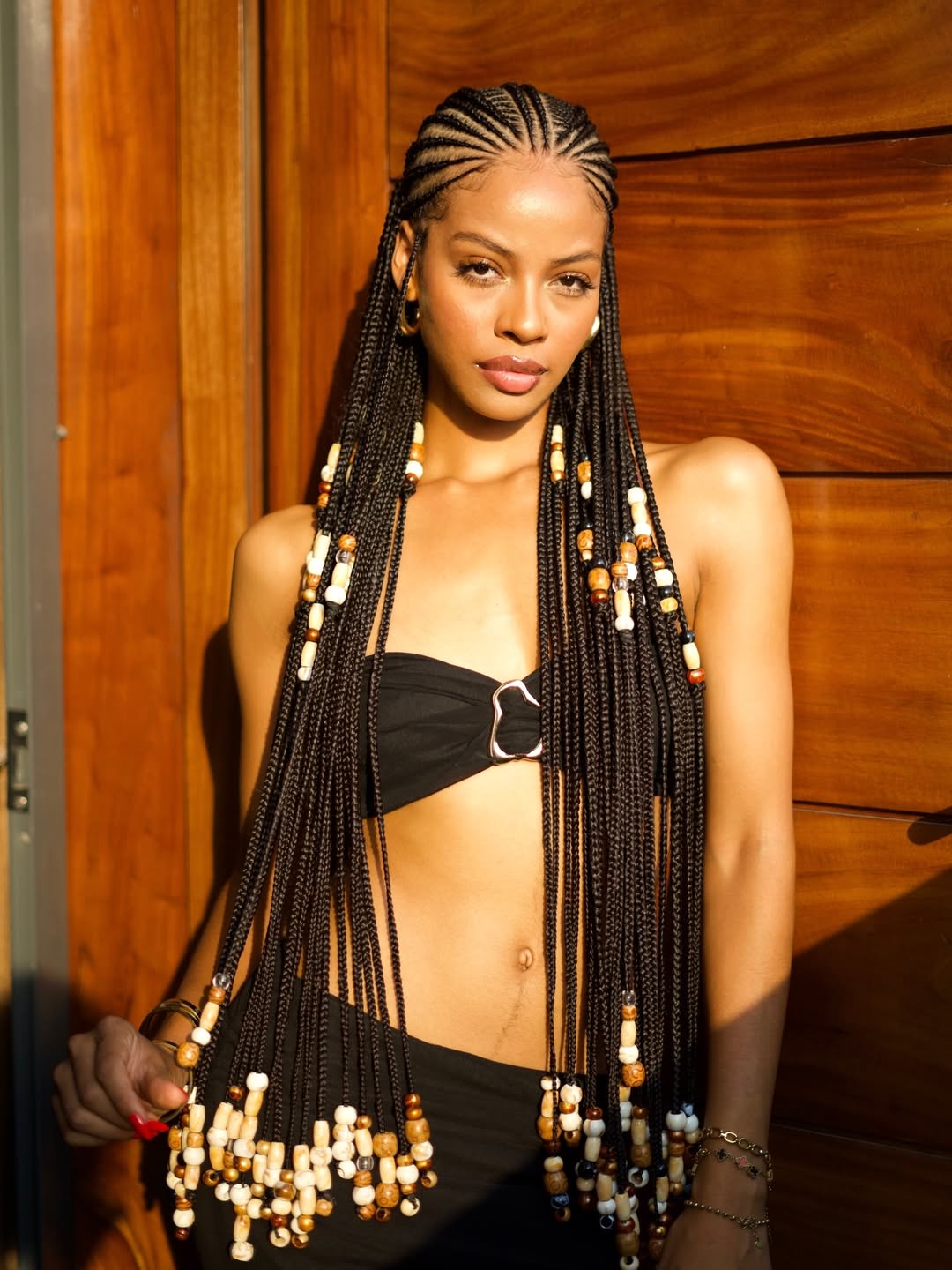
This one sits next to full cornrows, but it splits the difference: thin cornrows hug the scalp, then transition into individual box braids that fall past the shoulders. The middle parting and the mix of wooden and white beads give it a layered, intricate feel that plain box braids lack. The trade-off is time and skill. Ask your stylist for: mid-back cornrows into box braids with beads. The cornrow base alone is a commitment, and the transition point needs to be neat or it unravels fast. It suits thick, coily natural hair that is at least shoulder length, and it holds well if you keep the braid ends moisturized with a light leave-in conditioner. Sleep in a satin bonnet to keep the cornrows crisp at the scalp.
Mid-Back Cornrows in Chevron Pattern
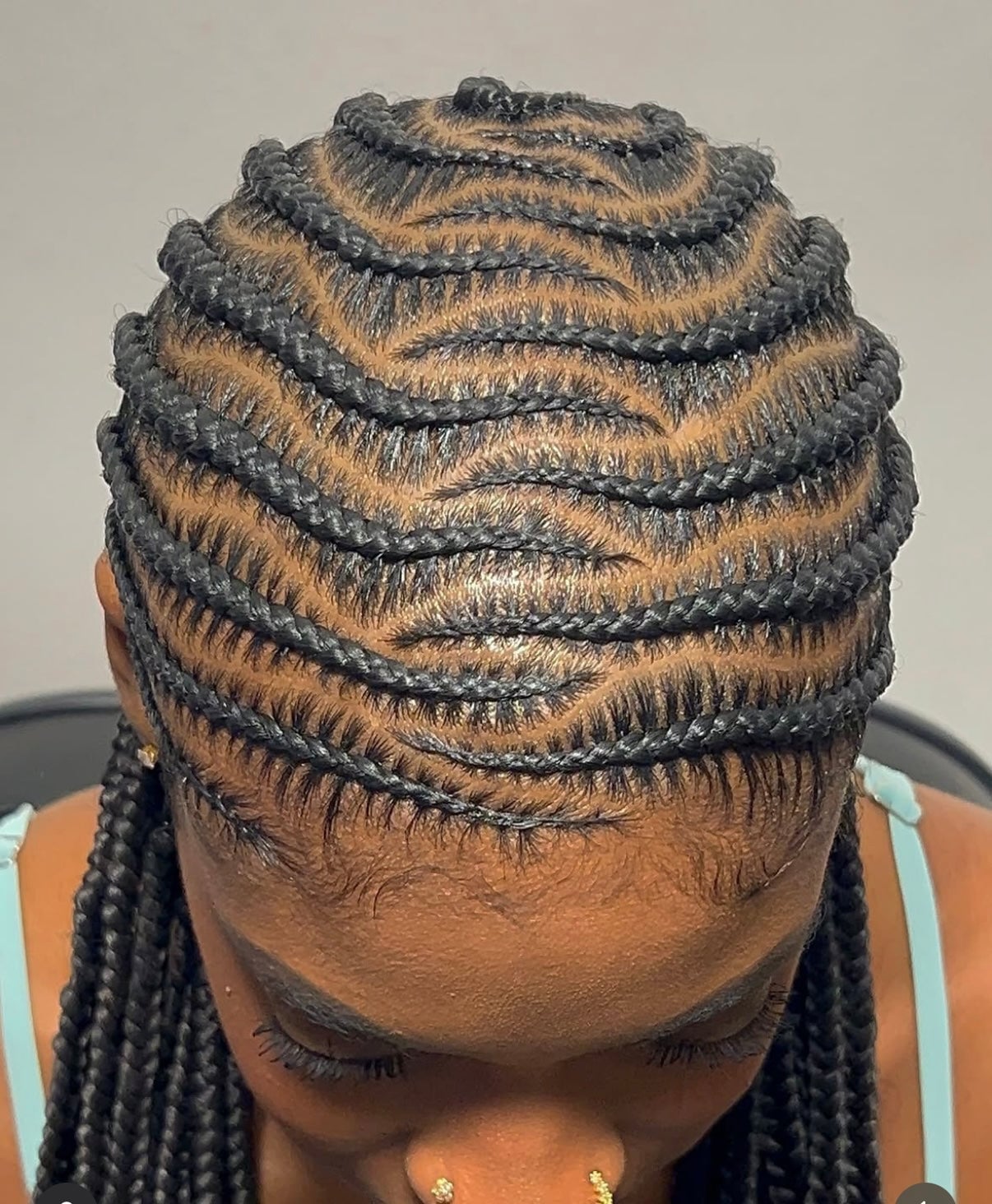
A chevron pattern in cornrows is built by angling each braid in a V-shape across the scalp, then letting the long, thick black braids fall past the shoulders. The top-down view shows the precision: every line meets cleanly, which is why this style reads as deliberate from the back. Ask your stylist for: mid-back cornrows with chevron pattern. It needs thick, straight natural hair at least shoulder length to carry the weight. Keep the scalp moisturized with a lightweight oil and avoid running your fingers through the pattern, since that disturbs the lines. This is a salon-only style; the geometry takes time to map out correctly.
Collarbone Braids with Loose Coils
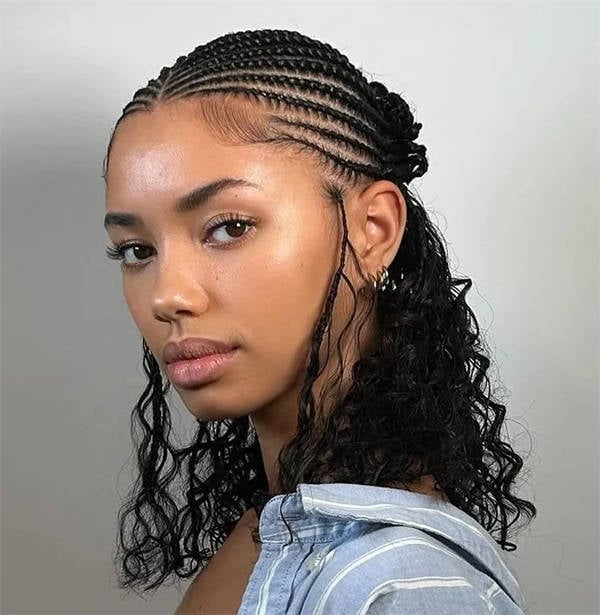
What if you want braids but not all braids? This style cornrows the hairline to the crown, then leaves the rest loose in defined coils that hit the collarbone. The middle part keeps it neat, and a few thin braids frame the face without committing to full coverage. Ask your stylist for: cornrows with loose coily ends to collarbone. It suits thick, coily natural hair that is at least collarbone length, and the loose ends are what make it work for round or oval face shapes, since the coils add volume at the jaw rather than pulling everything up. The trade-off is upkeep: the loose coils need a curl cream daily and a silk bonnet at night to stay defined, while the cornrowed crown stays put with minimal fuss.
Mid-Back Braids with Long Loose Curls
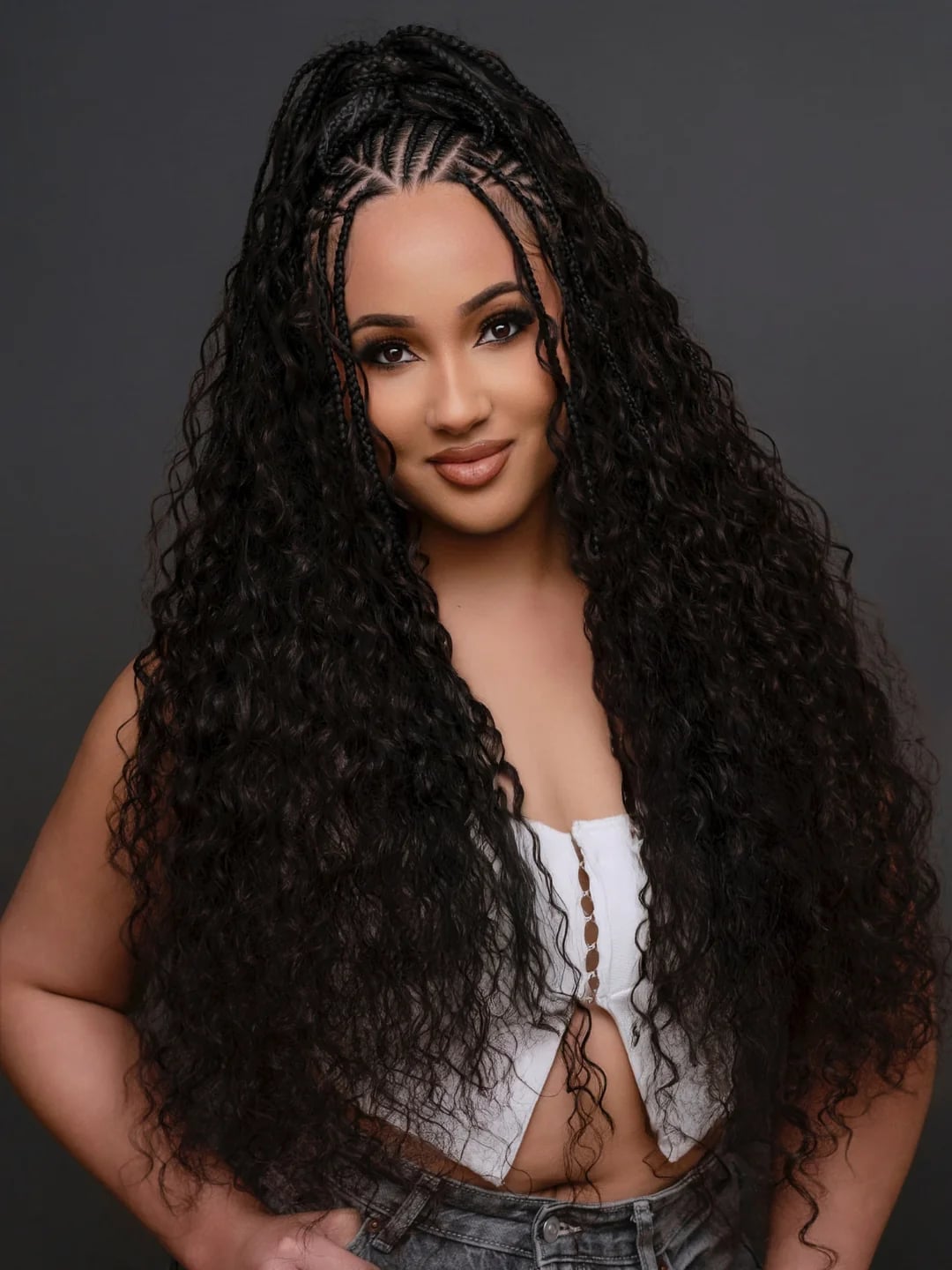
Braids at the crown with long, loose dark curls cascading to the mid-back is a different beast than braids alone. The contrast between the structured braids and the flowing texture is the whole point, and it reads as more dressed-up than a full braid-out. Ask your stylist for: braids with long loose curls, mid-back length. It needs thick, curly natural hair at least shoulder length to balance the two sections. This is a salon-only style, and it takes longer than plain braids because the curls have to be set and shaped after the braiding is done. It works for everyday wear, but it earns its keep for a night out. A leave-in spray refreshes the curls between washes, and keeping the braids at the crown moisturized is what stops them from looking dry.
Shoulder Box Braids with Blonde Highlights, Straight
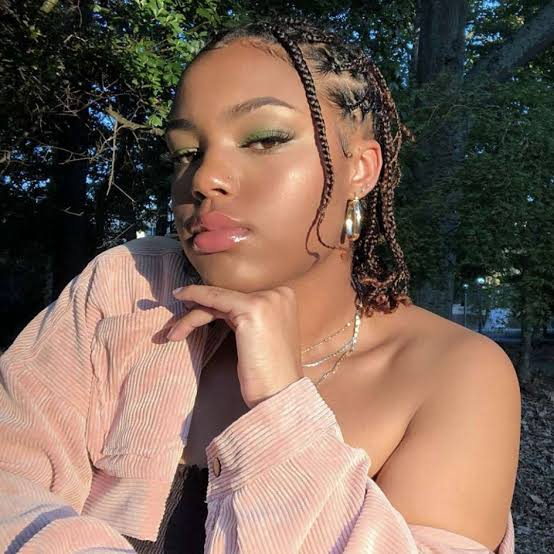
Shoulder-length box braids in black with blonde highlights create a dimension that shorter braids rarely get. The contrast is immediate: the blonde catches the light at the top and fades into the black ends, giving a graduated color effect that reads as intentional.
Thick, straight natural hair at least shoulder length works best for this style. Ask your stylist for: shoulder length box braids with blonde highlights. Apply a light serum to the braid ends to keep them smooth and trim any stray hairs weekly. The color shift means a toning session every four to six weeks to keep the blonde from pulling warm.
Mid-Back Box Braids with Blonde Highlights
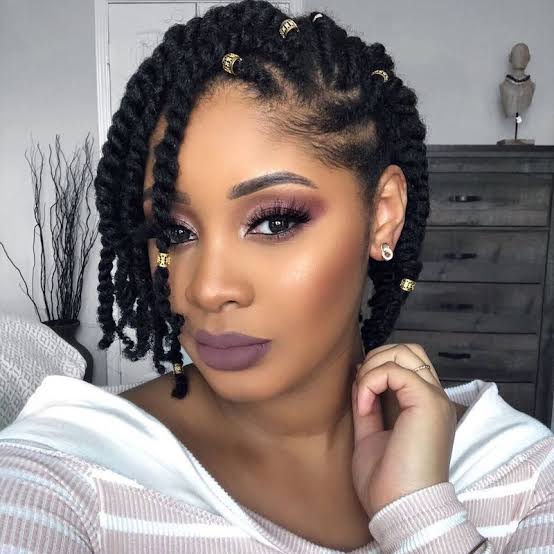
A practical rule for high-contrast highlights on long braids: the longer the hair, the more brassiness you will chase. Mid-back box braids in black with striking blonde highlights are a commitment to a weekly purple shampoo or a toning gloss every four weeks.
The payoff is the visual weight: the blonde reads as ribbon woven through the black, not a scattered highlight. Thick, straight natural hair of at least shoulder length can support the density needed here. Ask your colorist for: mid-back box braids with striking blonde highlights. The honest drawback is that the blonde sections will show fading and warmth faster than the black base. Skip this if you do not have time for regular toning.
Mid-Back Box Braids with Curly Texture
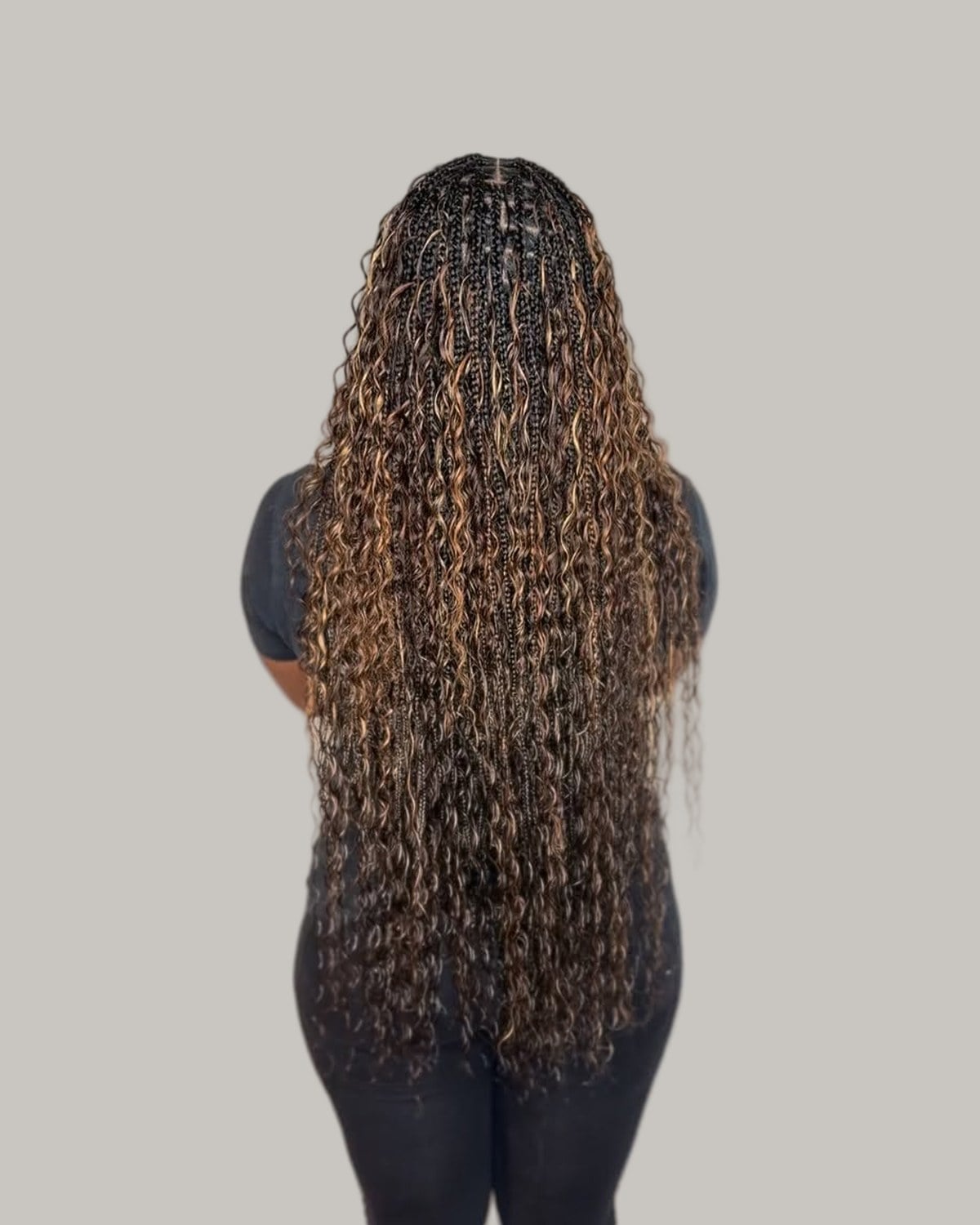
The curly texture on extremely long box braids changes how the blonde highlights read. Instead of a straight line of color, the curls scatter the light and create a broken, sequin-like effect across the mid-back length. The black and blonde mix looks like a metallic thread running through the braid.
This design works for thick, curly natural hair of at least shoulder length that can handle the weight of dense braids. Ask your stylist for: extremely long box braids, black and blonde mix, curly texture. The curl pattern is set during installation by twisting the added hair before braiding. It does not loosen over time, so the volume stays the same until removal.
Mid-Back Box Braids with Volume
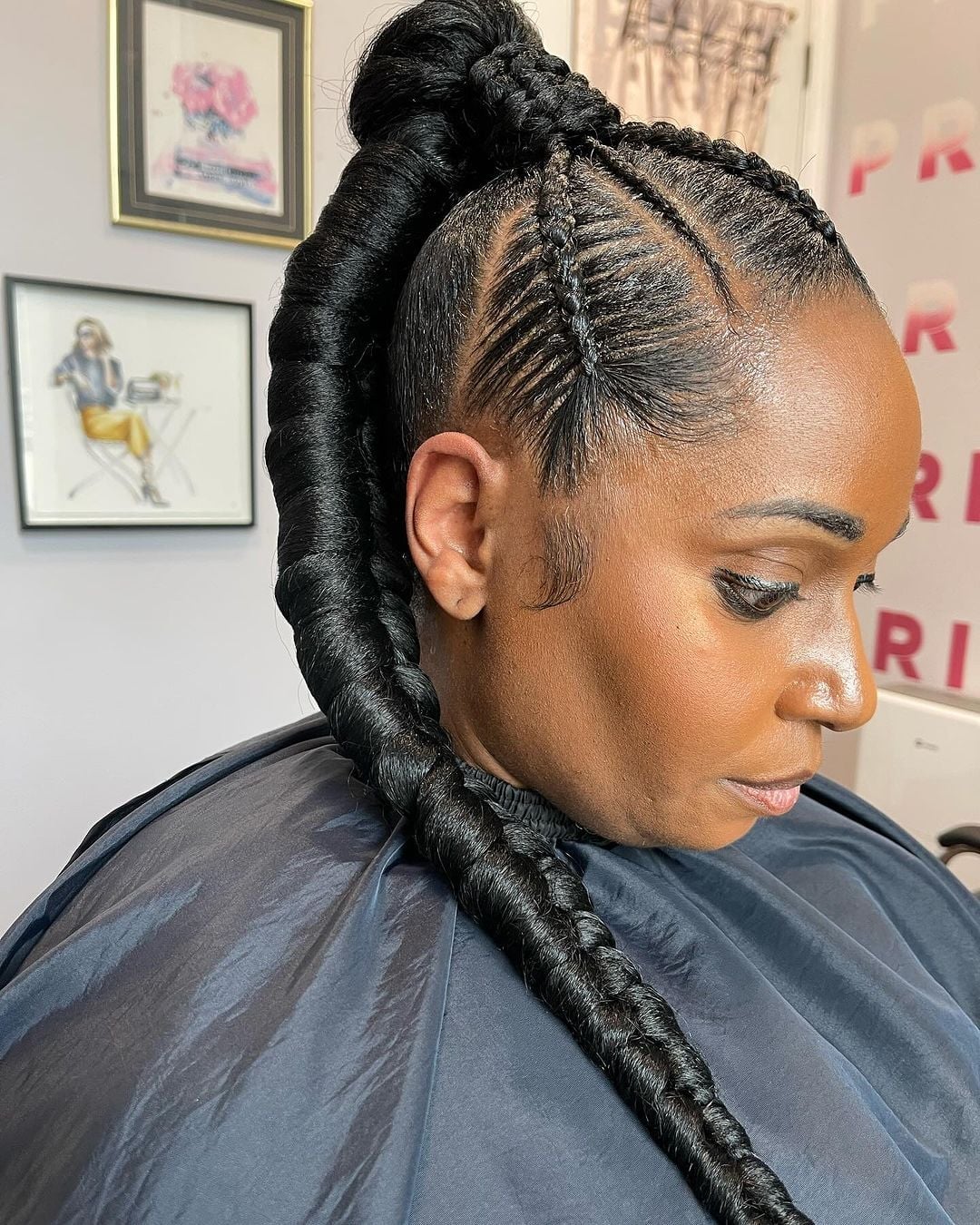
Does the volume outweigh the length, or the other way around? Here the curly texture and thick density make the volume the primary feature. Mid-back box braids in black, uniformly styled with a consistent curl, sit heavier than their straight counterparts. The middle parting and full back view confirm the even distribution.
Thick, curly natural hair of at least shoulder length that craves maximum body should consider this. Ask your stylist for: mid-back box braids, long with volume. The volume works best for round or oval face shapes because it adds height at the crown without widening the sides. It is a salon-only install that takes about four hours.
Mid-Back Flowing Box Braids, Black
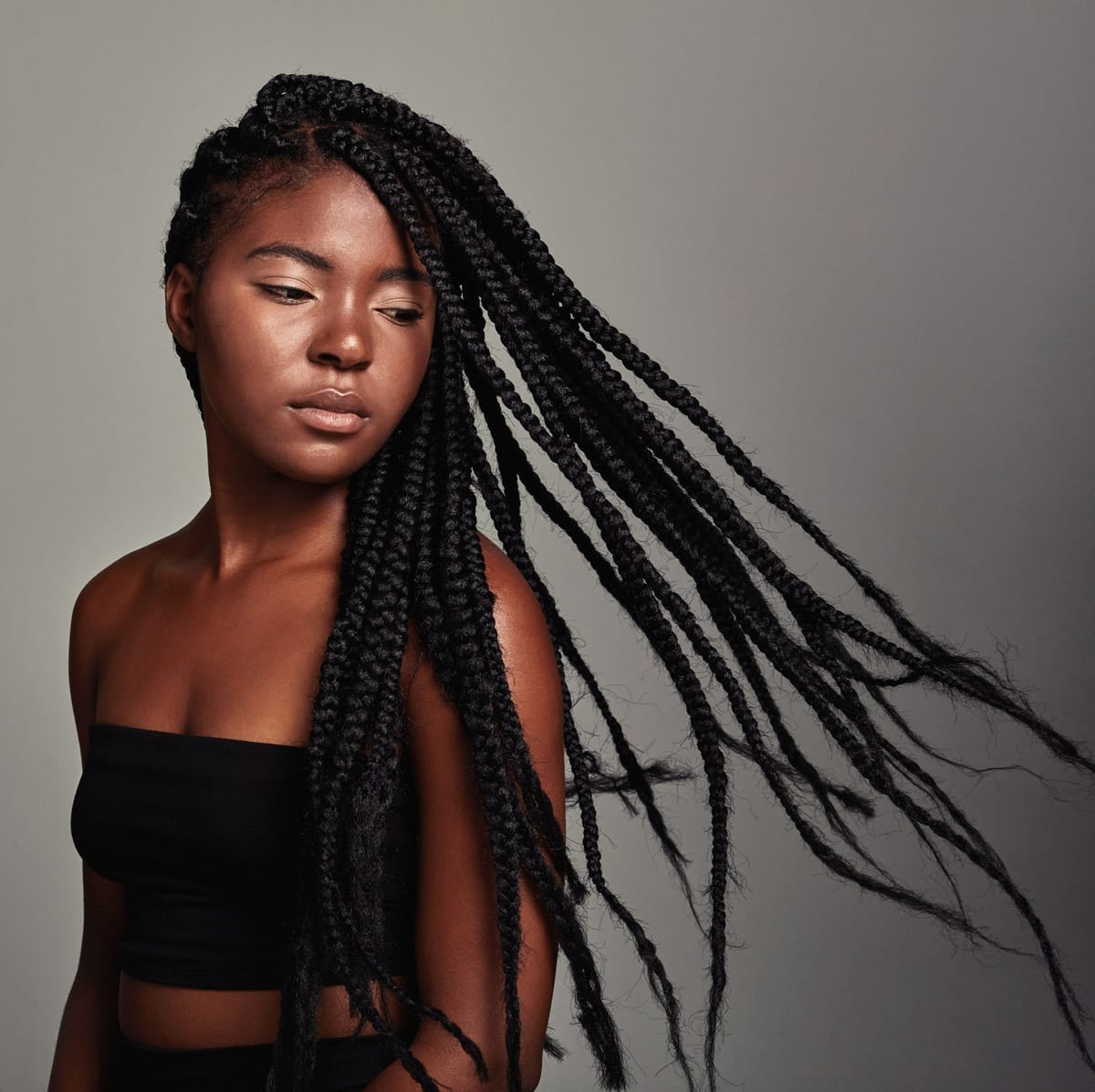
Long, thick black box braids that flow dynamically suggest movement even when still. The straight texture and mid-back length create a sleek silhouette that relies on the braids being uniform in width and tension. A middle parting keeps the fall even on both sides.
Thick, straight natural hair of at least shoulder length works well here. Ask your stylist for: mid-back flowing box braids. To maintain the flow at home: smooth a lightweight oil over each braid before bed to prevent friction; twist the ends with your fingers after washing to keep them neat; sleep with a satin scarf to reduce frizz. This is a salon style, but the daily upkeep takes under five minutes.
Micro Braids in Intricate Pattern
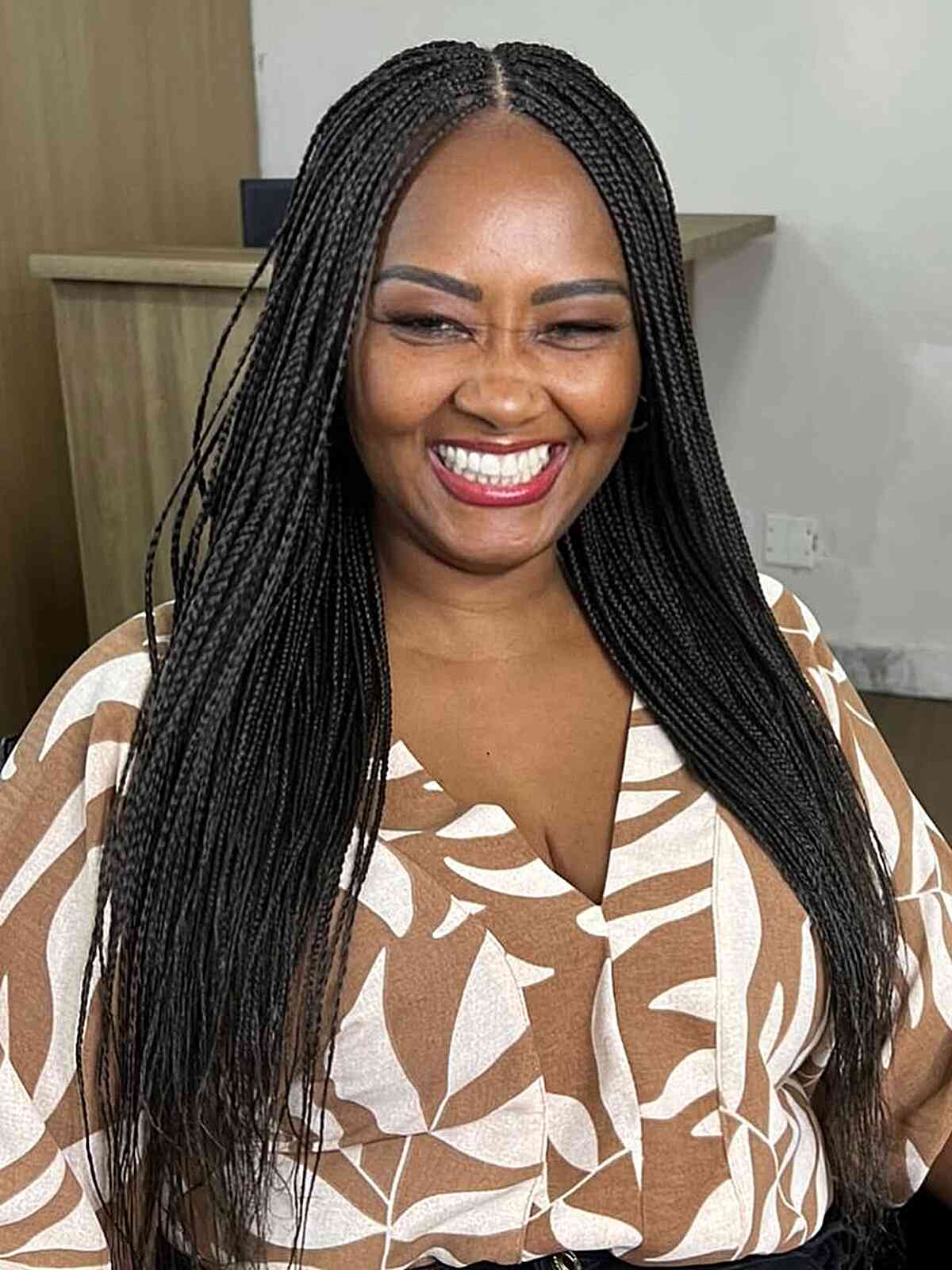
The scalp here isn’t just a starting point, it’s the canvas. These micro braids are densely packed into a detailed, flower-like pattern that takes serious skill to plan and execute, a far cry from a simple part-and-braid routine. On thick, wavy natural hair at least shoulder length, the design holds its shape for the long haul, but the daily reality is that the fine strands tangle easily, especially around the nape.
Ask your stylist for: micro braids in an intricate scalp pattern. A middle parting and black color keep the focus entirely on the texture and the geometry of the braided design. Wear and upkeep are a trade-off: a fine-tooth comb is your best friend for gently separating tendrils, and keeping the scalp clean and moisturized is non-negotiable. This is a salon-only commitment that demands patience on both sides of the chair.
Final Thoughts
For intricate cornrow patterns or micro braids, consult a professional stylist to ensure precise execution and scalp health. For simpler box braids or twists, DIY is possible with practice.
- Keep braids moisturized with a light oil or spray, focusing on the scalp and braid shafts.
- Wear a satin or silk bonnet or scarf to bed to protect braids from frizz and breakage.
- Gently wash braids every 2-3 weeks using a diluted shampoo, focusing on the scalp, and rinse thoroughly.
- Allow braids to air dry completely or use a low-heat setting on a blow dryer.
- Avoid excessive tension on the scalp to prevent traction alopecia; ensure braids are not too tight.
Embrace the artistry of braids for your natural hair.