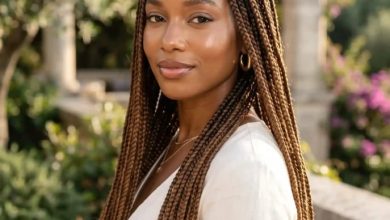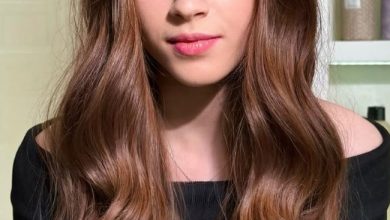
Braids worn toward the back have moved from a simple protective style into a canvas for scalp art and texture. In 2027, the focus is on clean parts, consistent tension, and patterns that draw the eye from the hairline to the nape.
This collection of 27 styles covers the range: from quick feed-in braids that take an hour to intricate stitch patterns that demand a full afternoon in the chair. It solves the problem of braids that feel flat or lack direction. Whether your hair is fine, dense, short, or long, Braids to the Back offers a look that holds its shape and shows off the detail.
Intricate Cornrows With Swirl Pattern
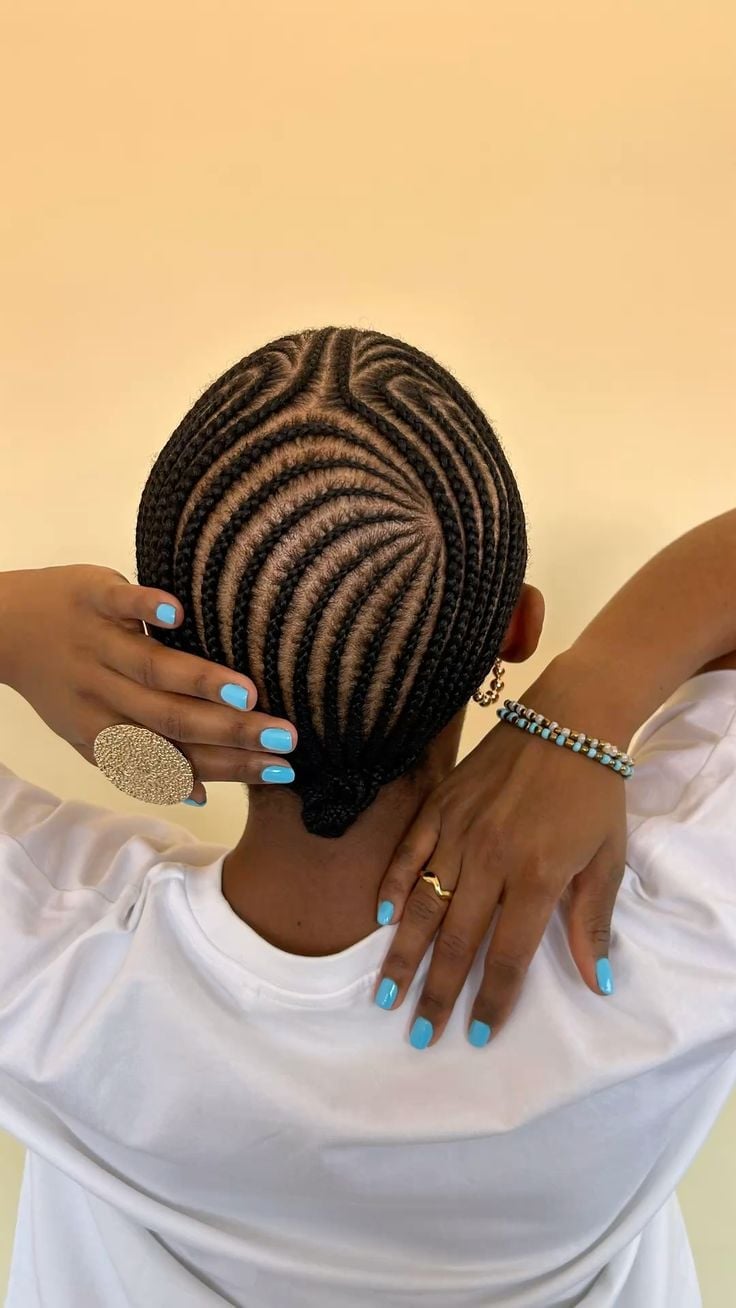
A swirl parting pattern that starts near the crown and curves outward demands a steady hand and a clear plan before the first section is even mapped. The braids follow the curve precisely, each row feeding into the next until the pattern resolves into straight shoulder-length cornrows. Thick, straight black hair holds the geometry best, and the middle parting keeps the design symmetrical from the back. Ask your stylist for: cornrows with a swirl pattern, shoulder length. The scalp definition is the whole point, so a light mist of water on the parts each morning keeps the lines sharp without disturbing the hold.
Classic Straight Back Cornrows
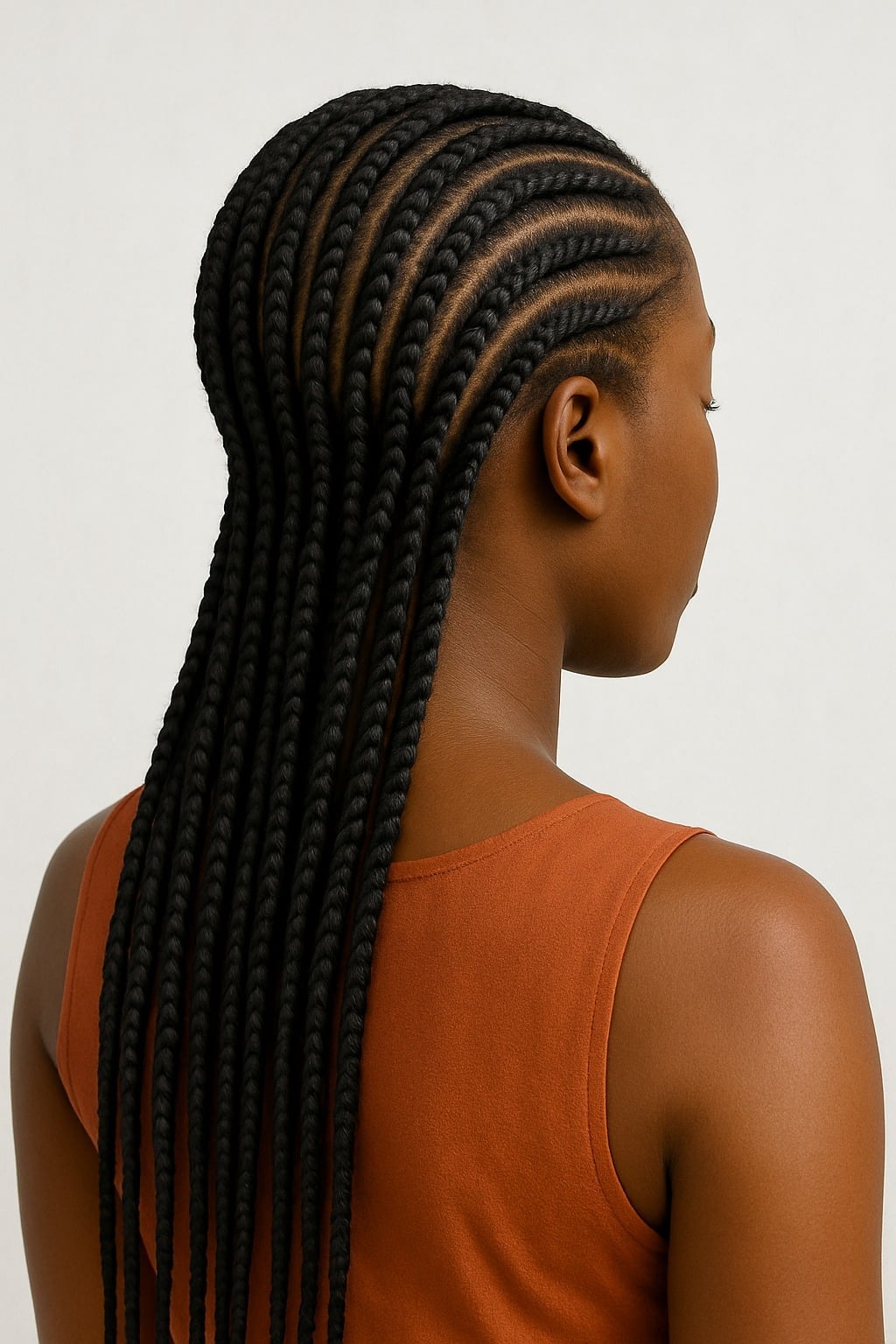
How do you tell a braider you want the neatest version of a classic? Start with the middle parting. From there, each section is pulled straight back in thick, even rows that run parallel all the way to the mid-back. The hair is black, straight and thick, which lets the braids sit flat and uniform without gaps. Ask your stylist for: classic straight back cornrows, mid-back length. A light oil on the scalp every few days keeps the skin from getting tight, and the hold stays solid for two to three weeks before the edges need a touch-up.
Precision Straight Back Braids
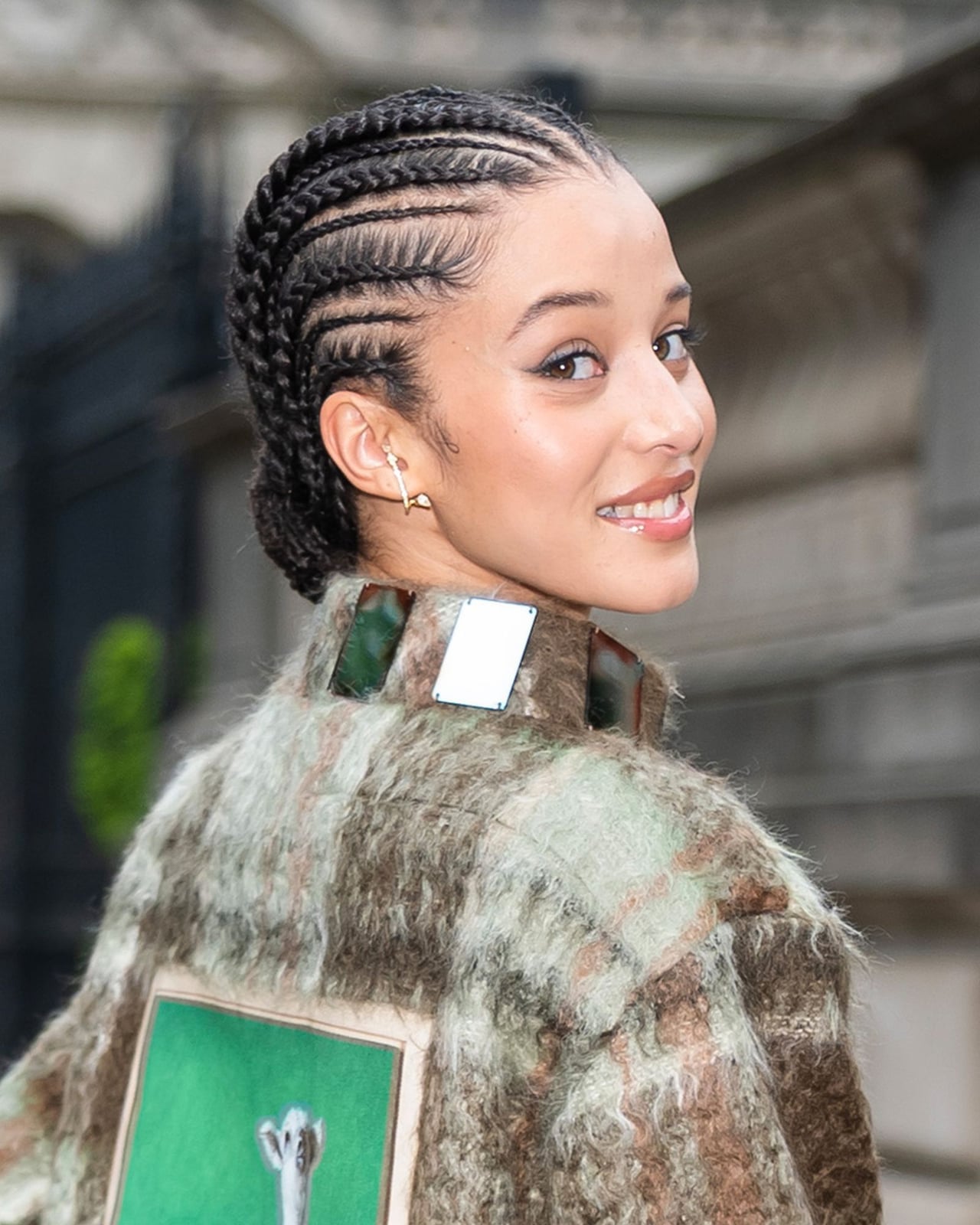
Black, thick, straight hair shows the level of detail in this style, and the back view reveals clean lines. Ask your stylist for: precision straight back braids, mid-back. A satin scarf at night preserves the sleekness, and the hold is firm enough to last through workouts without frizzing.
Intricate Cornrows With Dark Brown Base
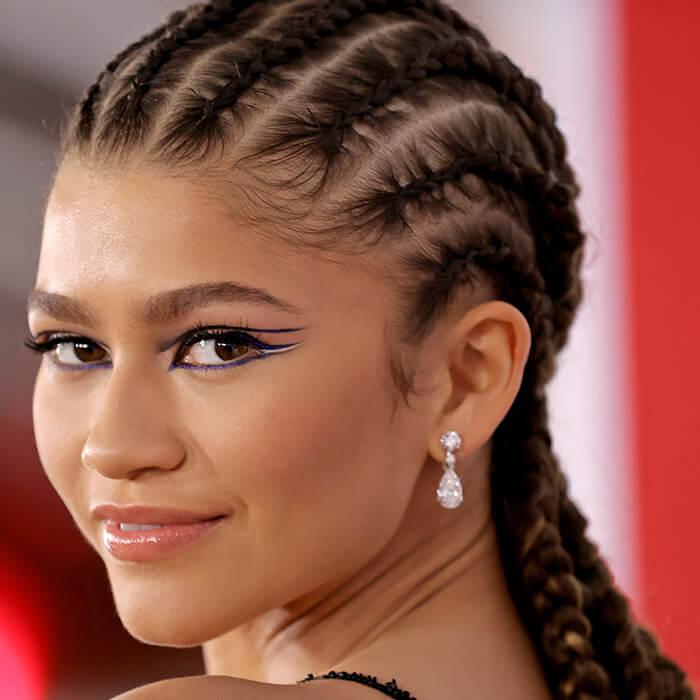
The geometric pattern here is woven tight against the scalp, each braid sitting flush with the next in dark brown hair that reads as almost black in low light. Thick, straight texture is what allows the parts to stay razor-thin and the rows to stack without lifting. This length hits mid-back, which gives the pattern room to breathe before the braids drop. Ask your stylist for: intricate cornrows down the back, dark brown. Anyone with fine or thin hair should know that the tension required for this level of detail can expose the scalp more than expected.
Cornrows With Purple Highlights
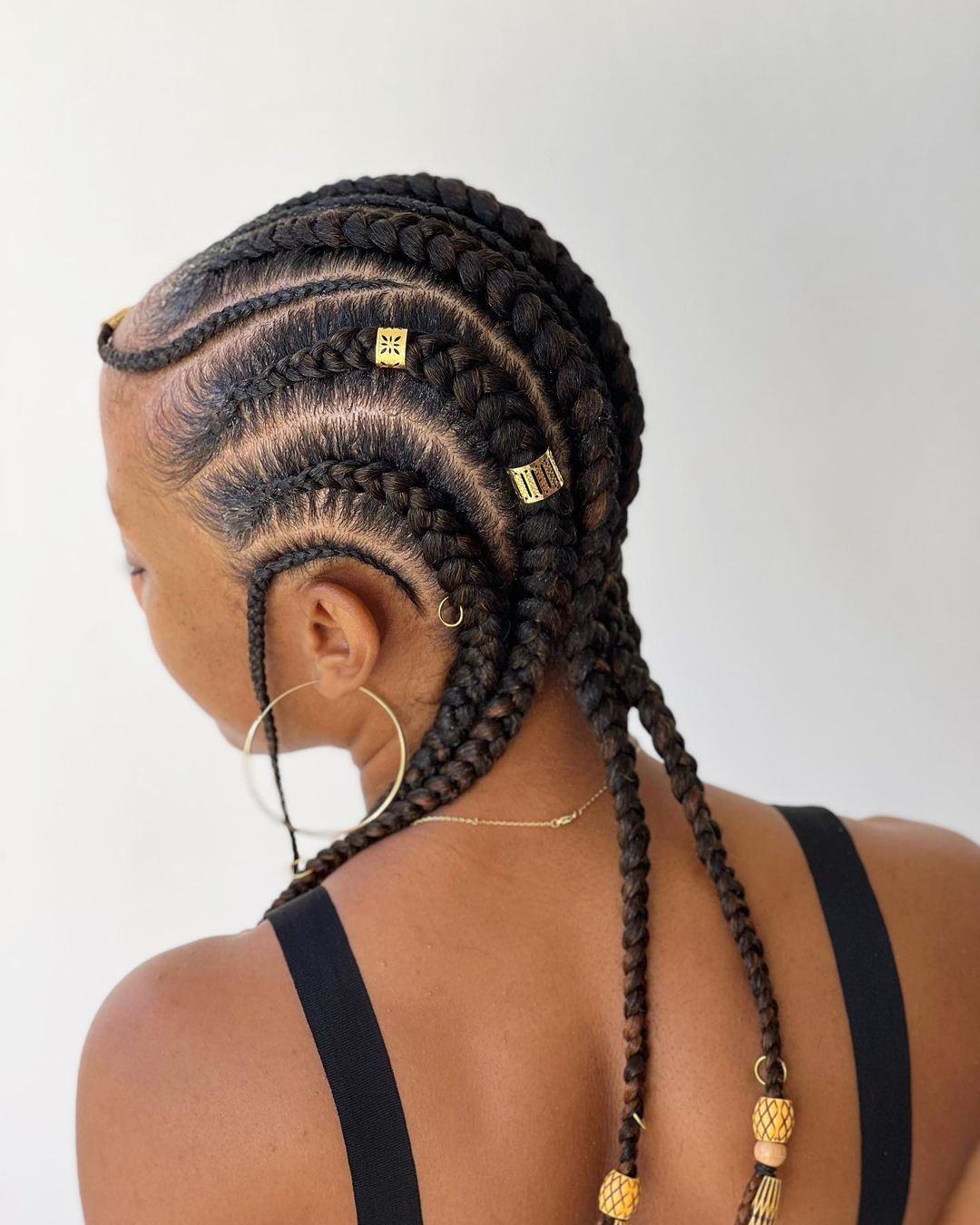
A black base with purple highlights threaded through straight-back cornrows adds color without committing to a full dye job. The braids run uniformly from the middle parting to the mid-back, and the purple shows up as thin, deliberate streaks rather than random pops. Thick, straight hair carries the color evenly. Ask your colorist for: straight back cornrows with purple highlights. Use a color-safe shampoo to keep the purple from fading into a muddy brown, and expect the hold to last about three weeks before the roots start to lift.
Feed-In Braids With Baby Hairs
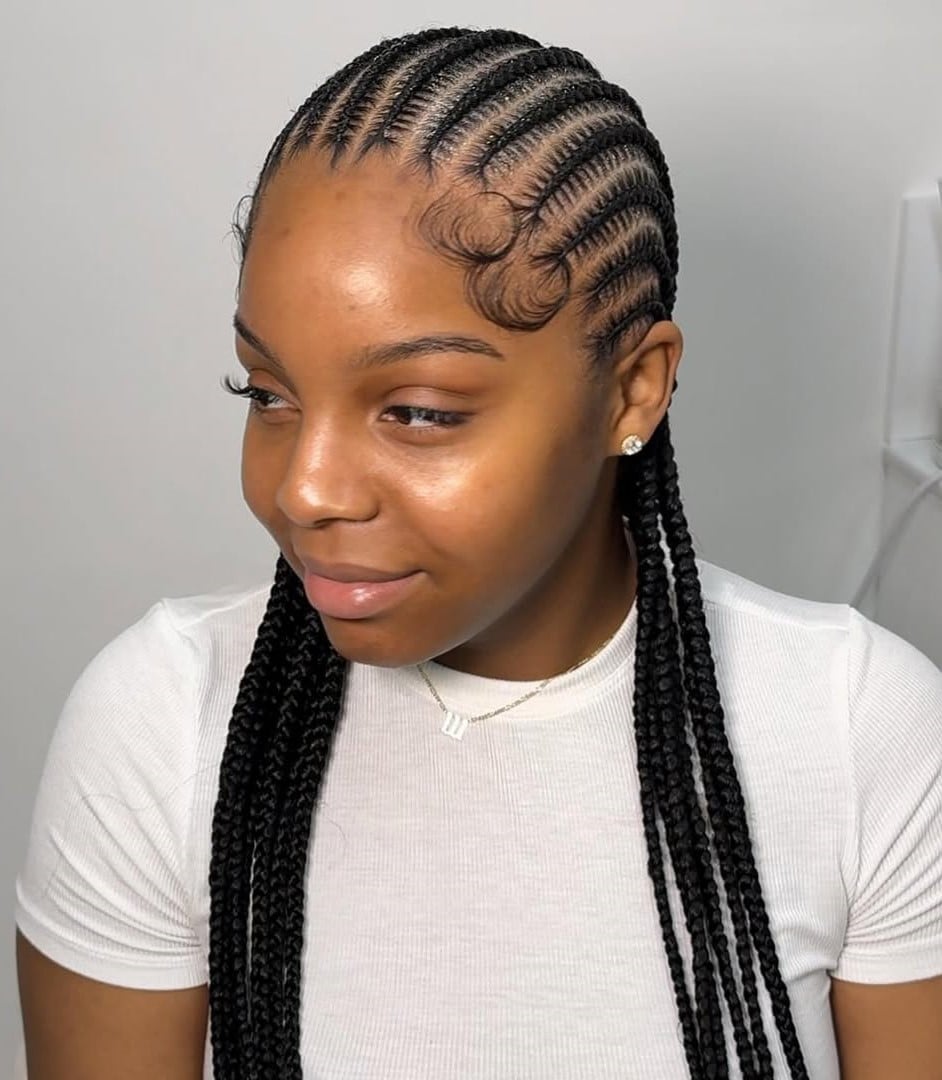
Feed-in braids use a technique that adds extension hair gradually, so the braid lies flat against the scalp instead of starting with a bulky knot. The defined baby hairs along the hairline are styled into soft swoops with a small brush and a light-hold gel, which keeps the look polished for a full day. The mid-back length and thick, straight texture hold the shape well for two to three weeks before a refresh is needed. Ask your stylist for: feed-in braids with defined baby hairs. A silk scarf at night keeps the baby hairs from going rogue.
Stitch Braids With Intricate Pattern
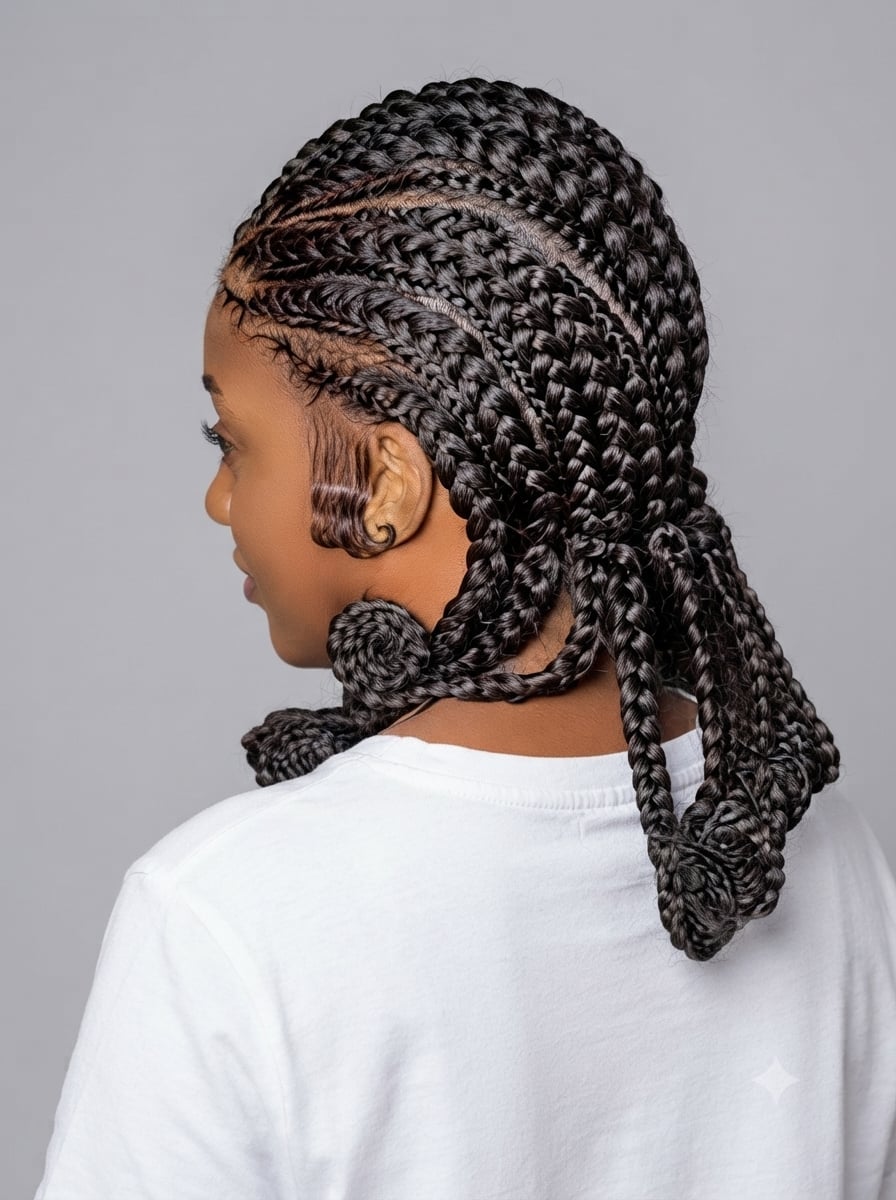
Stitch braids get their name from the tiny, even sections that mimic sewing stitches across the scalp. The precise pattern here uses a middle part and consistent part widths, which requires a steady hand and a clear plan before the first braid goes in. The dark, solid color keeps the focus on the geometry of the design rather than any color shifts. Ask your stylist for: stitch braids with a precise scalp pattern. The mid-back length gives the pattern room to breathe without competing with long extensions.
Parallel Cornrows With Glossy Finish
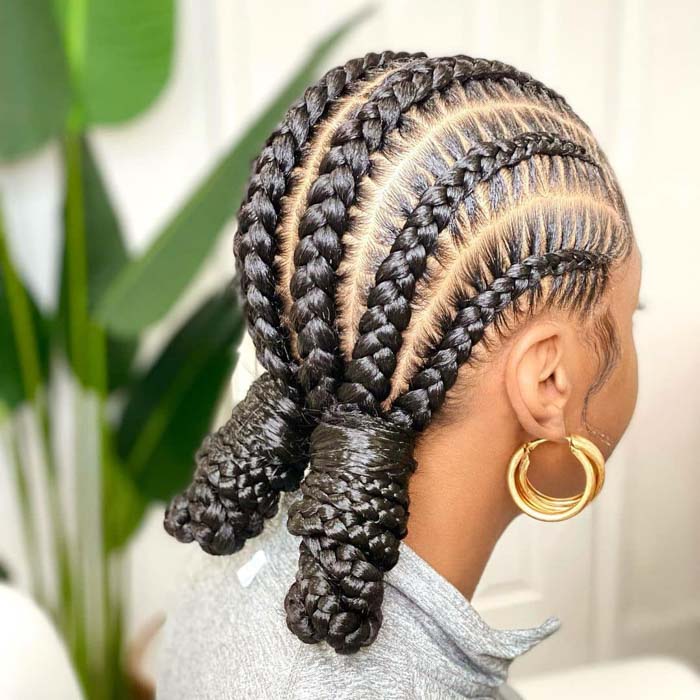
Parallel cornrows are the reliable cousin of more elaborate scalp patterns, but the glossy finish is where this version separates itself. A light-hold finishing spray with a subtle sheen creates that polished look without weighing the braids down. The gloss does not survive a humid afternoon, so a touch-up before an evening event is usually necessary. Thick, straight hair at mid-back length holds the parallel lines the cleanest. Ask your stylist for: parallel cornrows with a glossy finish. It is a sleek look that asks for a bit of maintenance in return.
Large Braided Sections With Color
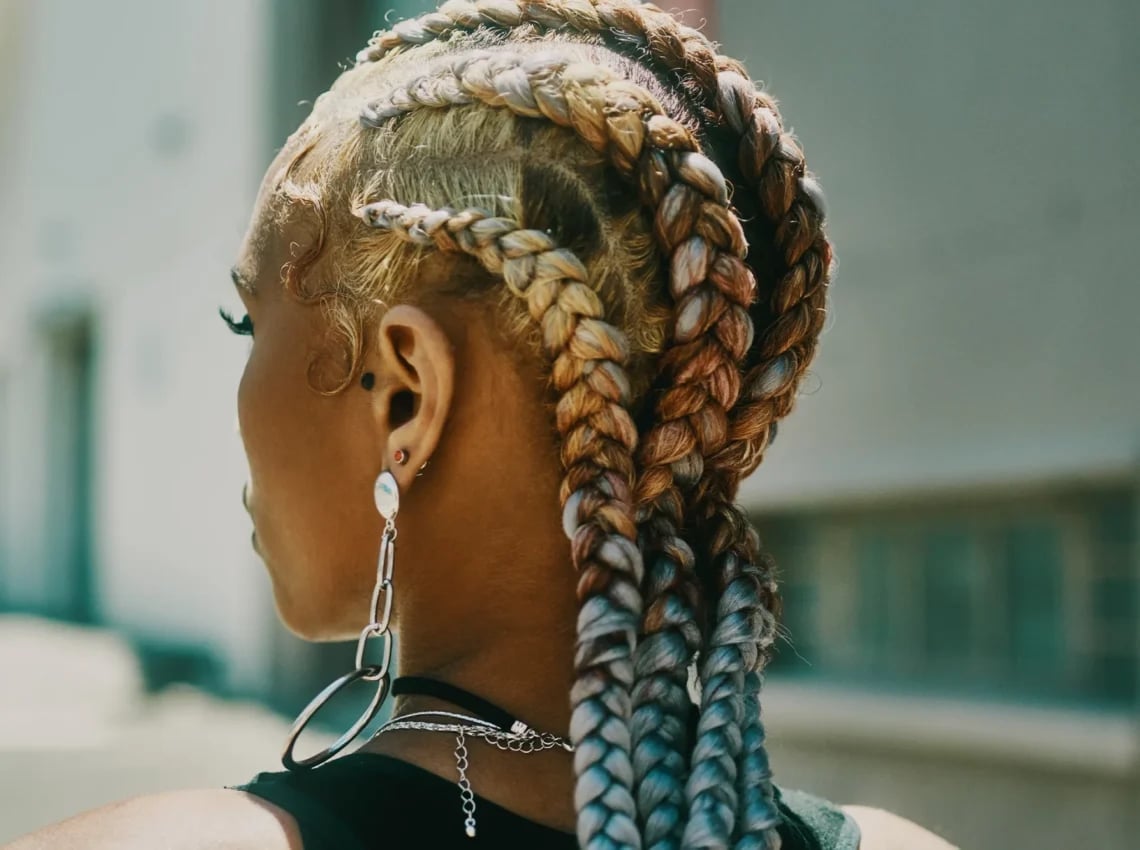
Can thick braids handle three tones without looking like a craft project? Yes, when the sections are large enough for each color to read clearly. The blonde, brown, and blue strands here are woven into chunky braids that fall to mid-back length, and the wavy texture softens the transition between shades. Naturally thick and wavy hair holds the bulk of large sections best, since fine hair can struggle to support them. Ask your colorist for: large braids with blonde, brown, and blue tones. The result is a style that reads as deliberate.
Cornrows With Caramel Highlights and Wavy Ends
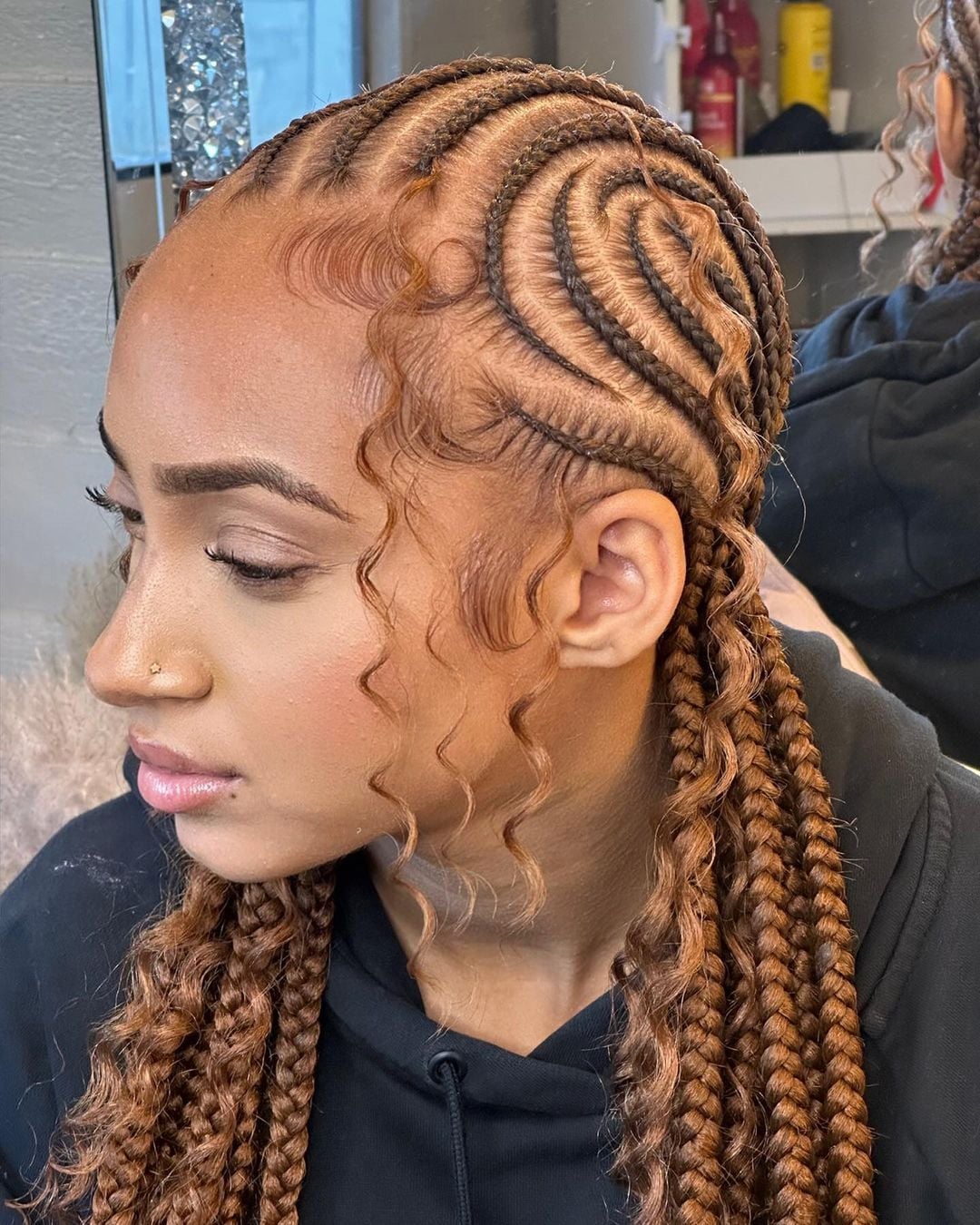
The intricate parting pattern in these cornrows is the kind of detail that separates a salon visit from a bathroom-mirror attempt. The dark brown base gets warmth from caramel-highlighted strands, and the wavy ends add movement without unraveling the braided structure. A curl-defining cream on the ends keeps the wave pattern consistent for a few days. Ask your stylist for: cornrows with caramel highlights and wavy ends. The face-framing tendrils soften the overall shape, and the mid-back length gives the waves room to fall naturally.
Stitch Braids With Blonde Highlights and Curls
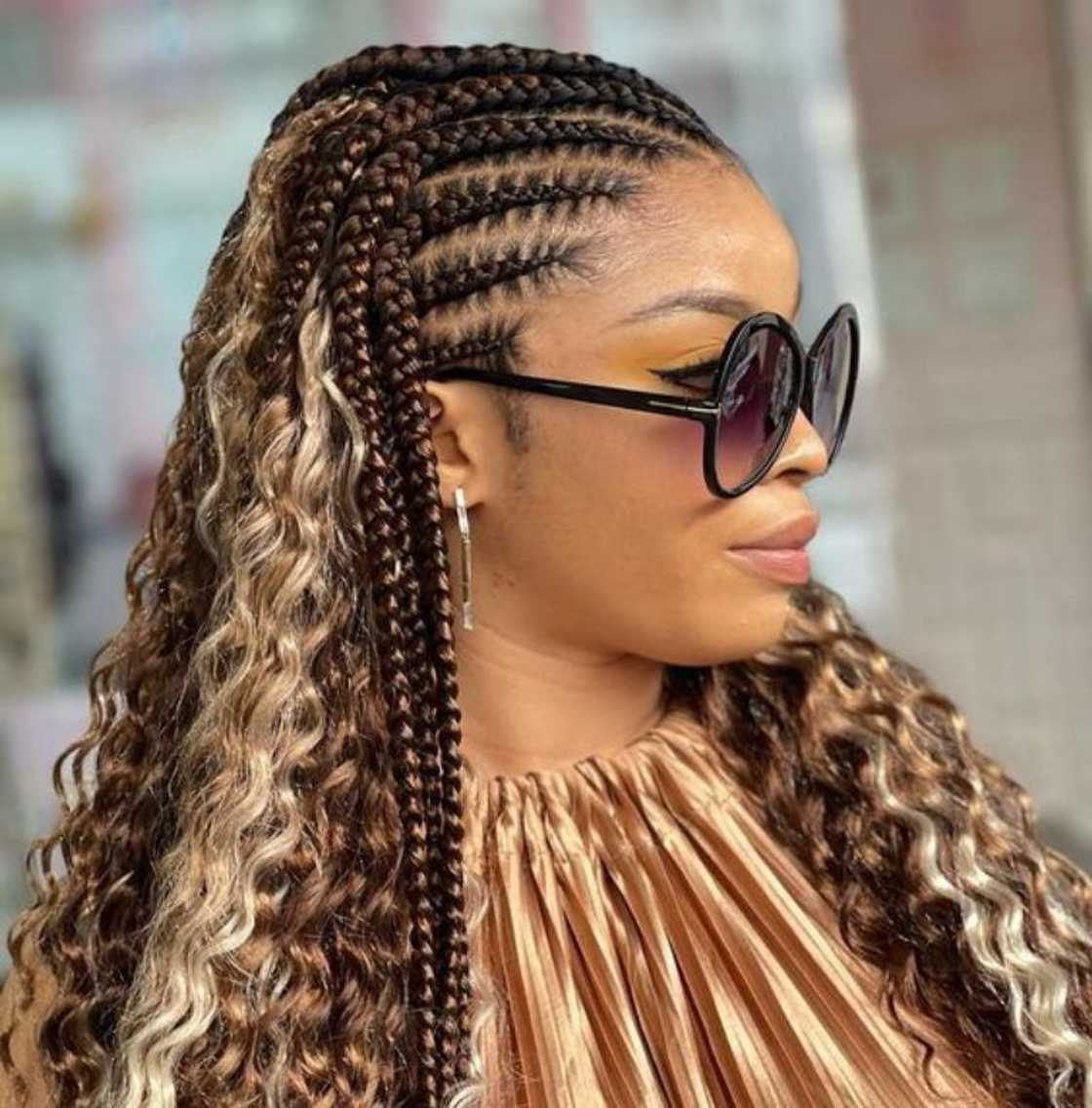
Two-tone stitch braids require a specific build order: the blonde extension is added at the root, then the braid is stitched over black hair for the rest of its length. Ask your stylist for: stitch braids with blonde highlights and curly ends. The contrast lands best on mid-back hair that can handle the weight of both color and curl. Straight hair at the scalp keeps the parting sharp, while the curly ends add movement where a uniform braid might feel heavy.
To refresh the curls, a light mist of water or a curl refresher spray is all it takes. The two-tone effect means root growth is less obvious than with solid color, so you can stretch the style a week or two longer between take-downs.
Stitch Braids With Heart Pattern and Curls
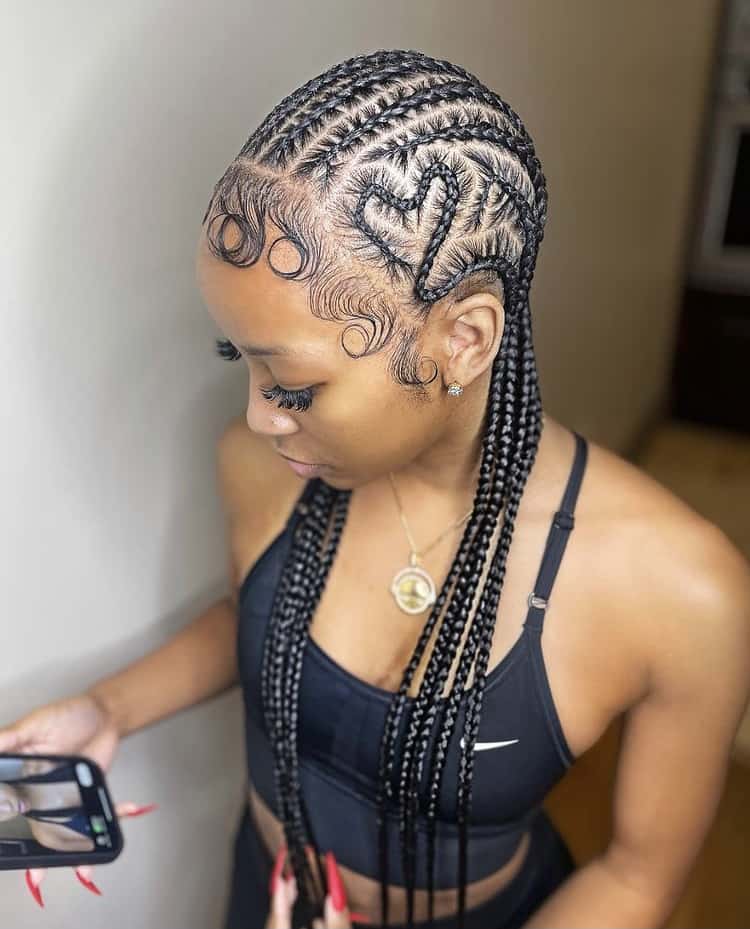
Can a scalp design really hold up past the first wash? With stitch braids, yes, because each part is sealed with a tight feed-in motion. The heart pattern sits at the crown, then the braids fall to mid-back and finish in loose curls. Ask your stylist for: stitch braids with a heart pattern and curly ends. It is a party-season request that works best on straight hair at the roots and medium-density texture through the length. The pattern stays visible for about two weeks before new growth softens the edges, so time it for the event, not the week after.
Cornrows With Clean Scalp Parting
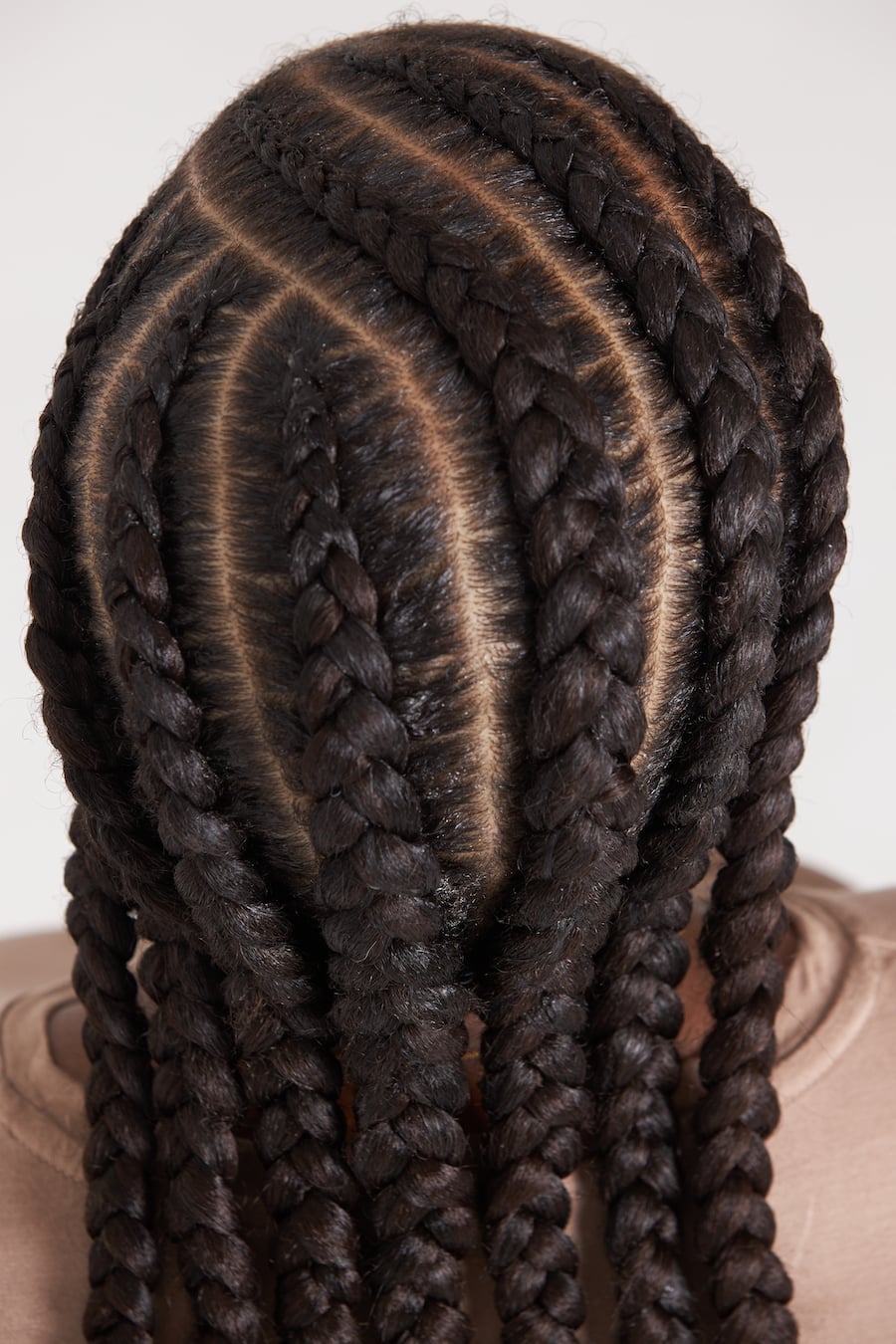
Clean scalp parting is a function of tension and section size, not just a neat comb. These cornrows are thick and dark brown, running in straight lines from front to mid-back. Ask your stylist for: cornrows with a clean, precise scalp parting.
The upkeep is simple but specific: a fine-tooth comb along the part lines every few days keeps the scalp visible and the rows distinct. A light oil on the scalp every other day prevents flaking, which shows up faster when parts are this exposed. The style holds its shape for about two weeks before a touch-up is needed.
Stitch Braids Styled to the Side
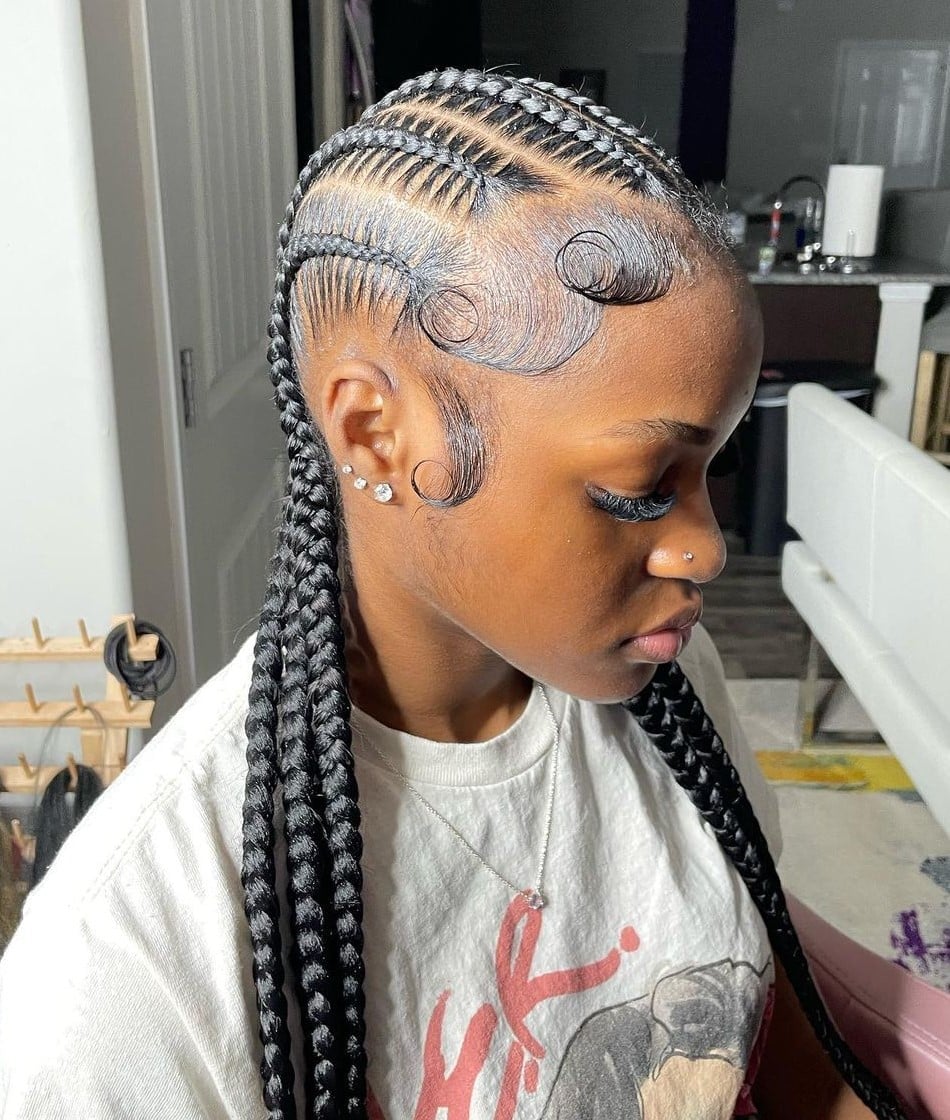
Stitch braids are usually symmetrical, but a side sweep changes the whole silhouette. The braids are stitched from a middle parting and then swept to one side, landing just at the shoulder. Ask your stylist for: stitch braids styled to the side, shoulder length. The asymmetry works best on straight hair that holds a clean part without slipping. A light serum on the braids keeps them shiny and tames the flyaways that appear around the ears within a few days.
Fishtail Braid With Loose Strands
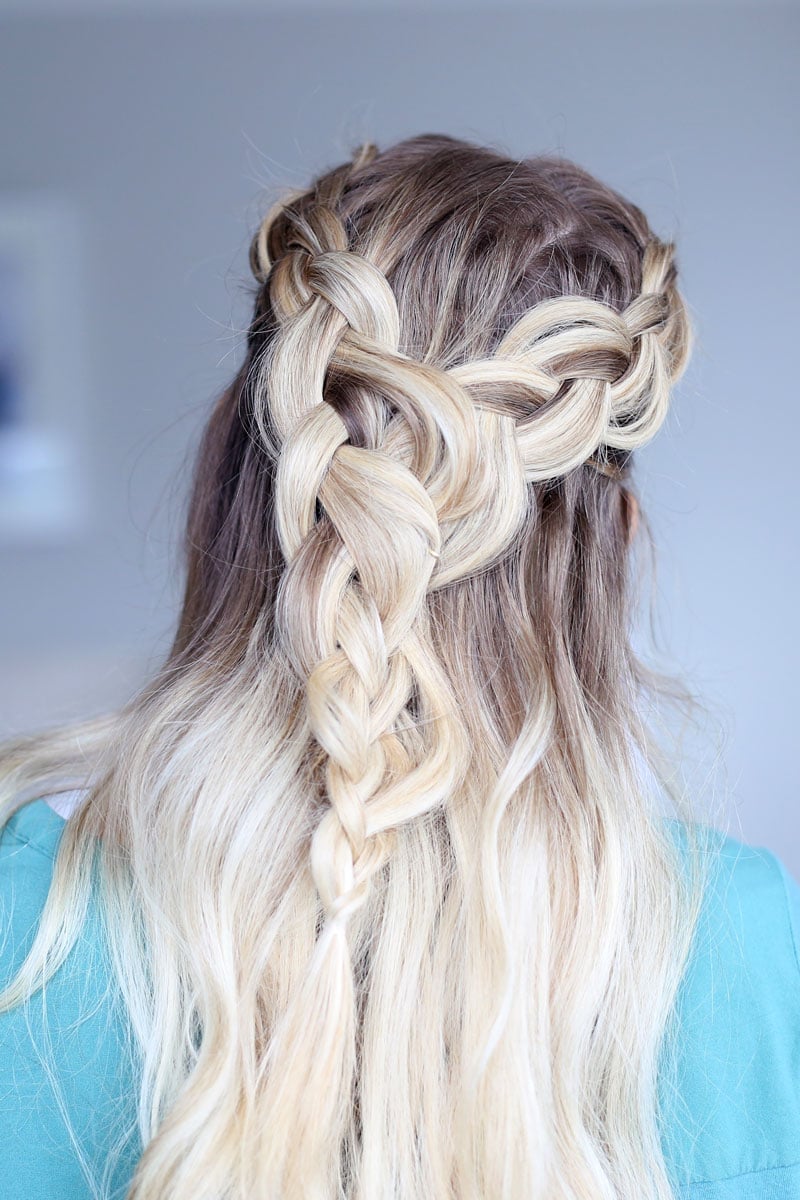
A fishtail braid is not a cornrow: it is a three-dimensional weave that relies on tension, not tightness. This one has blonde highlights over dark roots, with strands pulled out along the length for a softer silhouette. Ask your stylist for: fishtail braid with loose, softening strands. The trade-off is that those loose strands will frizz by day two in humidity, so this is a one-evening style unless you are ready to re-pull strands each morning. It suits wavy, medium-density hair of mid-back length that can hold the braid without slipping.
Long Braids With Looped Ends
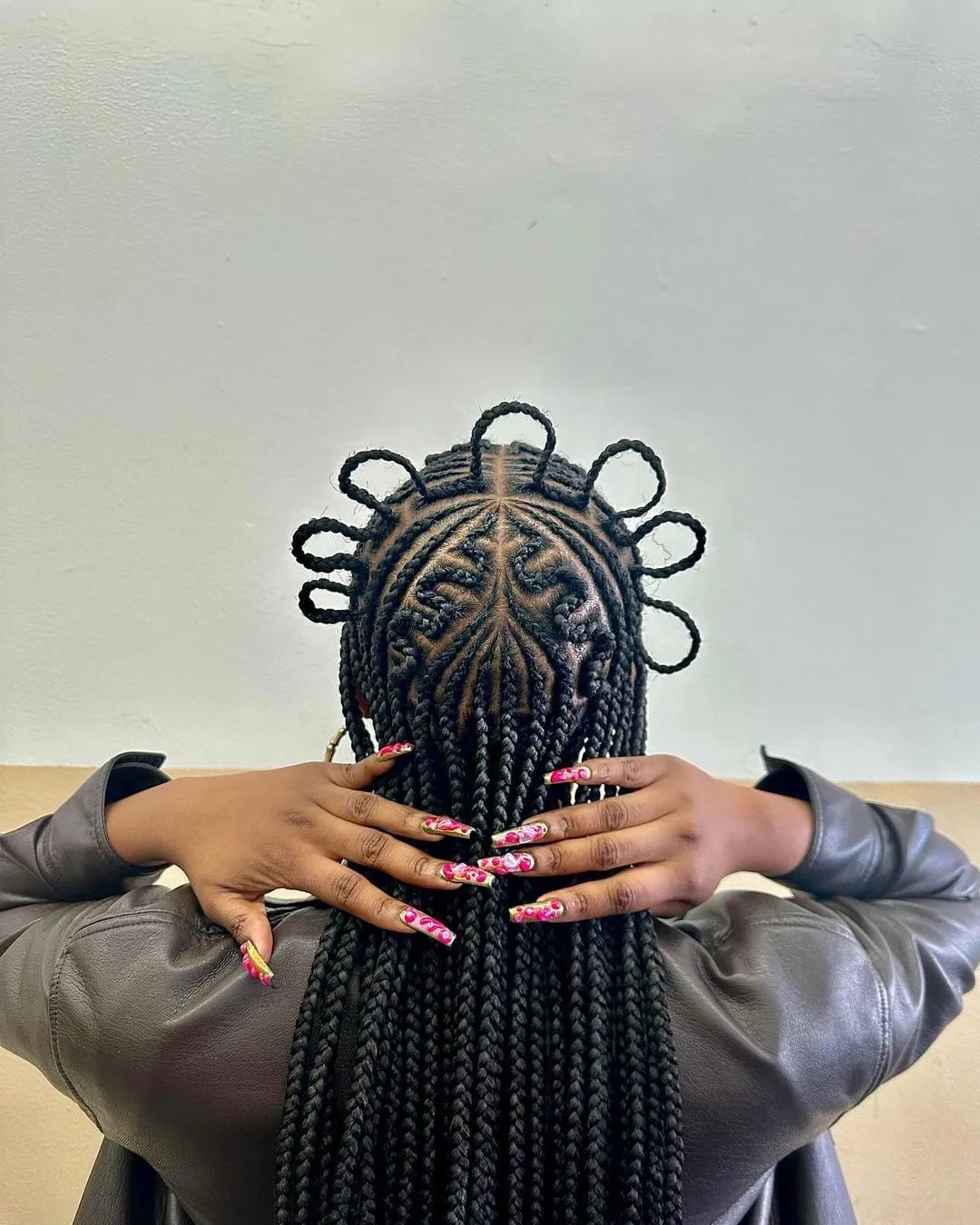
The looped end at the crown turns a standard set of long black braids into a conversation piece. Rather than letting the braids taper to a point, each one finishes in a small, defined loop that sits against the scalp. Ask your stylist for: long braids with looped ends at the crown. This detail works best on thick, straight hair that reaches at least mid-back, so the loops have enough weight to stay put. The middle part keeps the scalp pattern clean, and a finishing spray holds the loops from going fuzzy. It’s a salon-only design, not a weekend experiment, but the visual payoff is worth the appointment time.
Half-Up Fishtail Braid With Waves
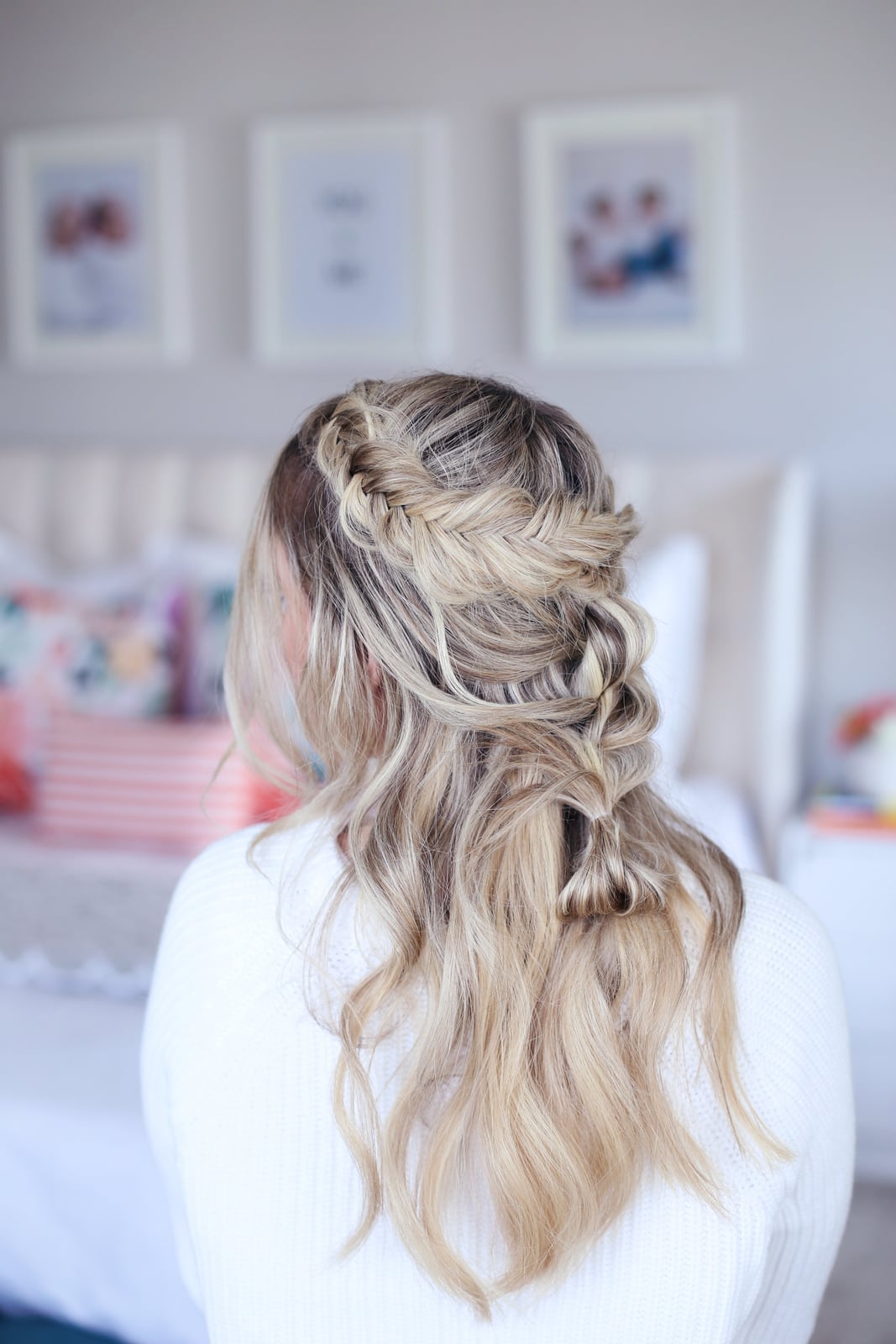
Can a half-up braid still feel fresh? Yes, when it is a fishtail braid that starts at the crown and feeds into loose waves down the back. The braid pulls the hair away from the face, while face-framing tendrils soften the edges. Ask your stylist for: half-up fishtail braid with loose waves. This style works well for thick, wavy hair of mid-back length, because the texture gives the waves volume and the braid something to grip. Texturizing spray on the waves keeps the separation visible and prevents the look from falling flat.
If your hair is fine or straight, the waves may not hold their shape without significant prep, and the braid can look sparse. The blonde base with subtle highlights adds dimension to the braid’s weave, making each twist read clearly.
Cornrows With Brown Tips
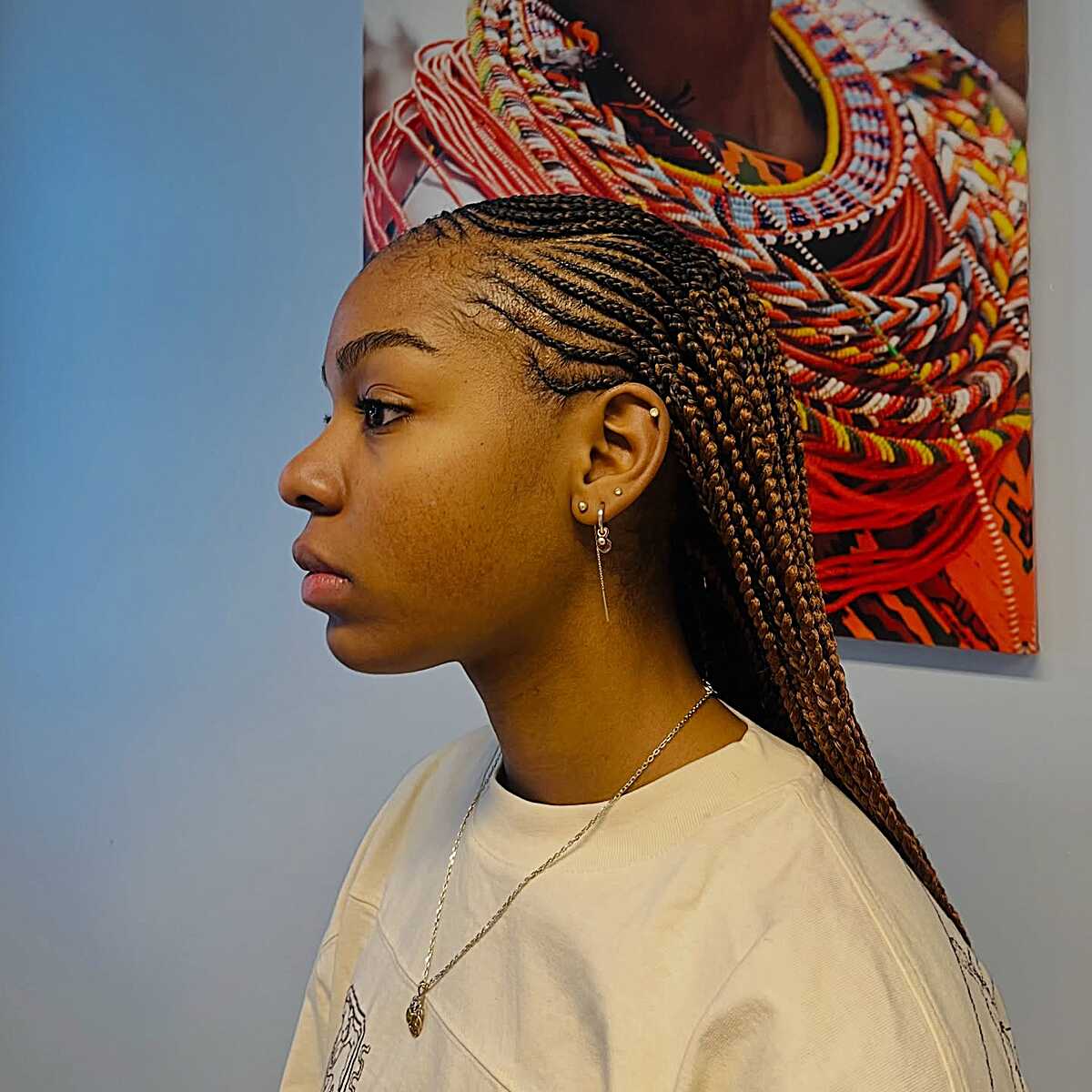
The brown tips on these black cornrows create a two-toned effect without a full color commitment. The base stays black from root to mid-length, then shifts to a warm brown for the last few inches. Ask your stylist for: cornrows with brown tips, mid-back length. The technique involves dip-dyeing the ends before braiding or using brown hair extensions at the tips. A shine serum applied to the ends highlights the color transition and keeps the straight, thick texture looking polished. The middle part and intricate scalp pattern keep the focus on the gradient rather than the parting.
Braided Updo With Twisted Bun
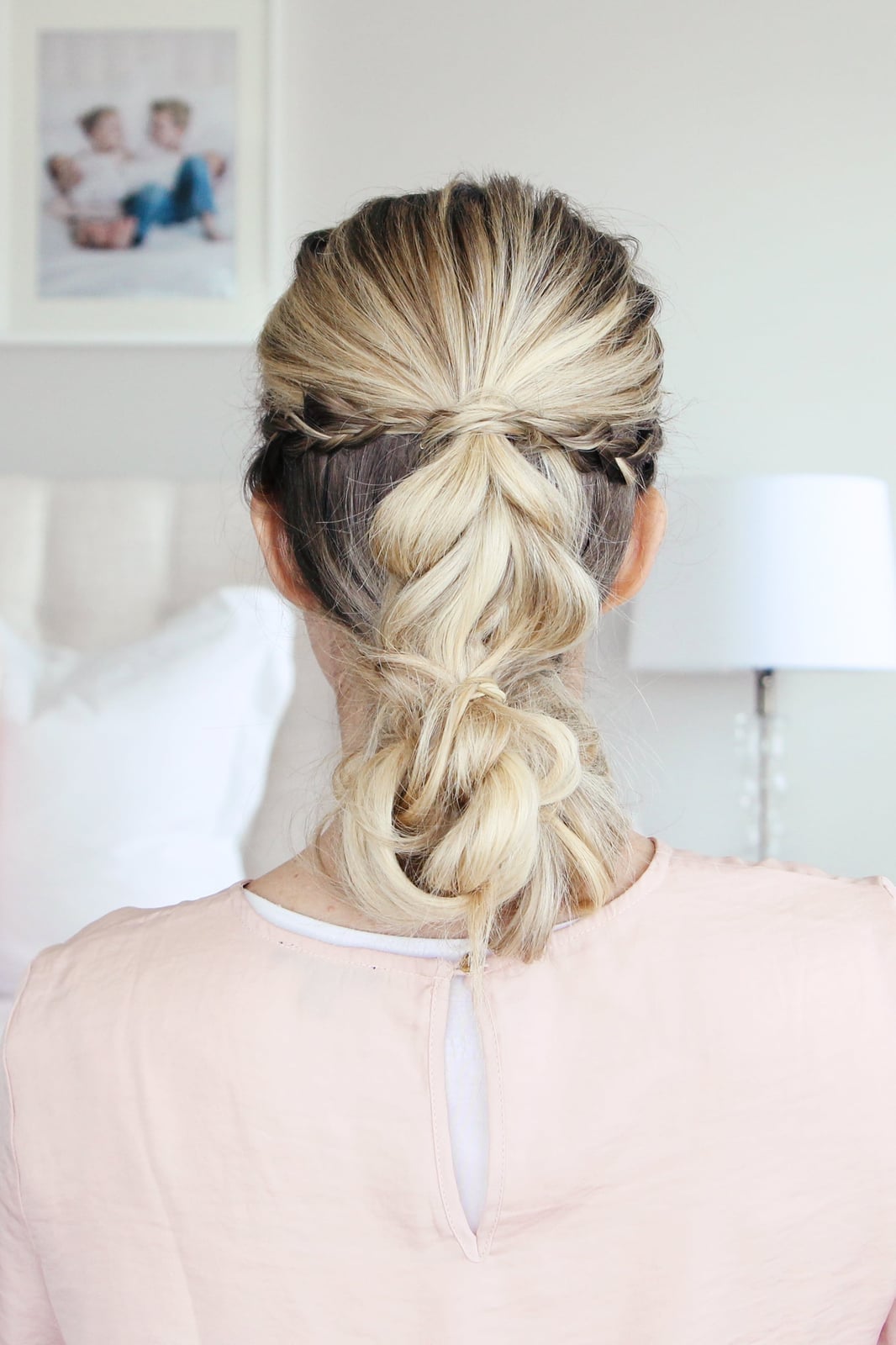
Two braids frame the sides of the head and meet at the back to twist into a low bun, leaving a few loose strands for a softer finish. Ask your stylist for: braided updo with a twisted bun and face-framing pieces. This style lands well for formal events or cooler weather, where an elegant updo keeps the hair off the neck without looking severe. The wavy texture and blonde-with-dark-roots color add depth to the braids, and the middle part at the crown keeps the silhouette balanced. Secure the bun firmly with pins and finish with hairspray, because the loose strands need a little help staying put through a long evening.
Cornrows With Zig-Zag Parting
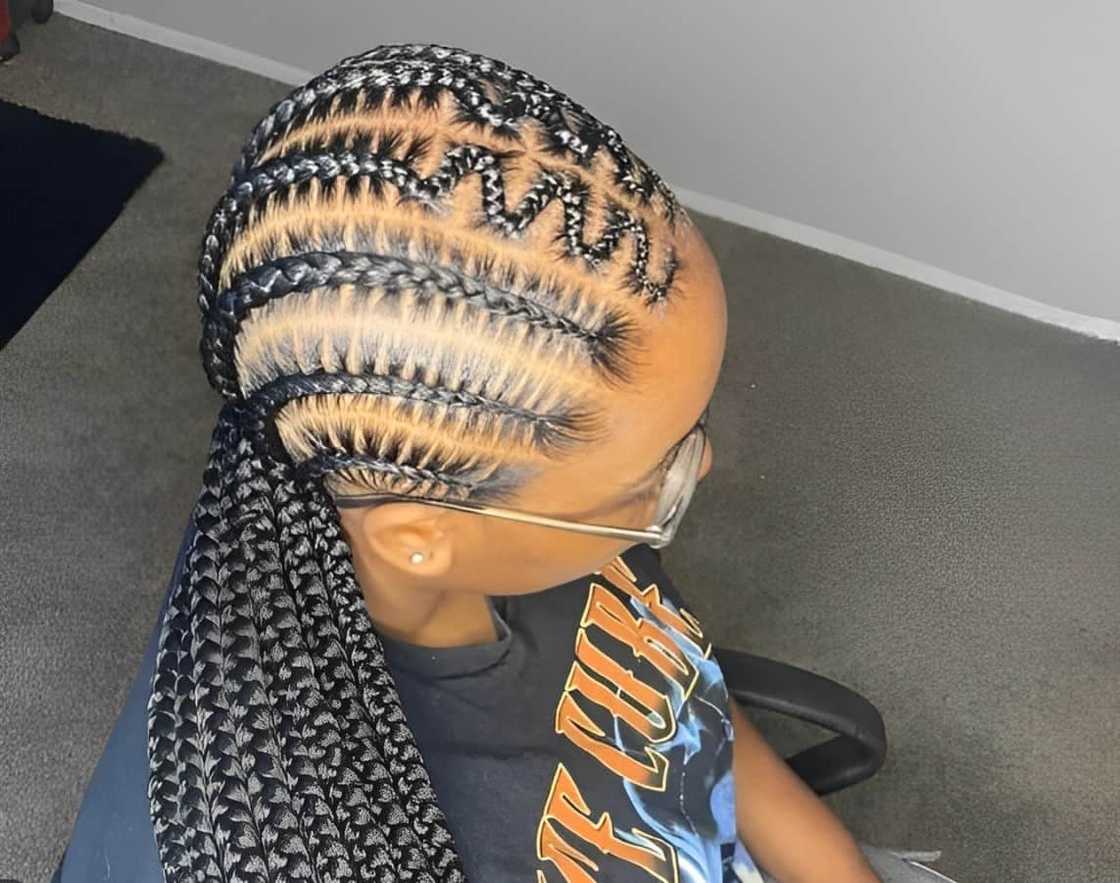
A zig-zag parting sets these long cornrows apart from a standard straight-back set. The angled parts create a geometric scalp pattern that draws the eye from front to back, while the black and blonde tones add contrast. Ask your stylist for: cornrows with a zig-zag parting, long length. The upkeep on an intricate parting like this is real: new growth blurs the lines faster than a straight part, so a touch-up every four to five weeks keeps the pattern sharp. A lightweight scalp oil prevents irritation along the part lines, especially with long, thick hair that adds weight to the braids.
The zig-zag design works best on smooth, dense hair that holds the parting cleanly. If your hair is fine or prone to frizz, the angles may soften within a week, and the pattern loses its impact.
Vibrant Purple Box Braids With Curls
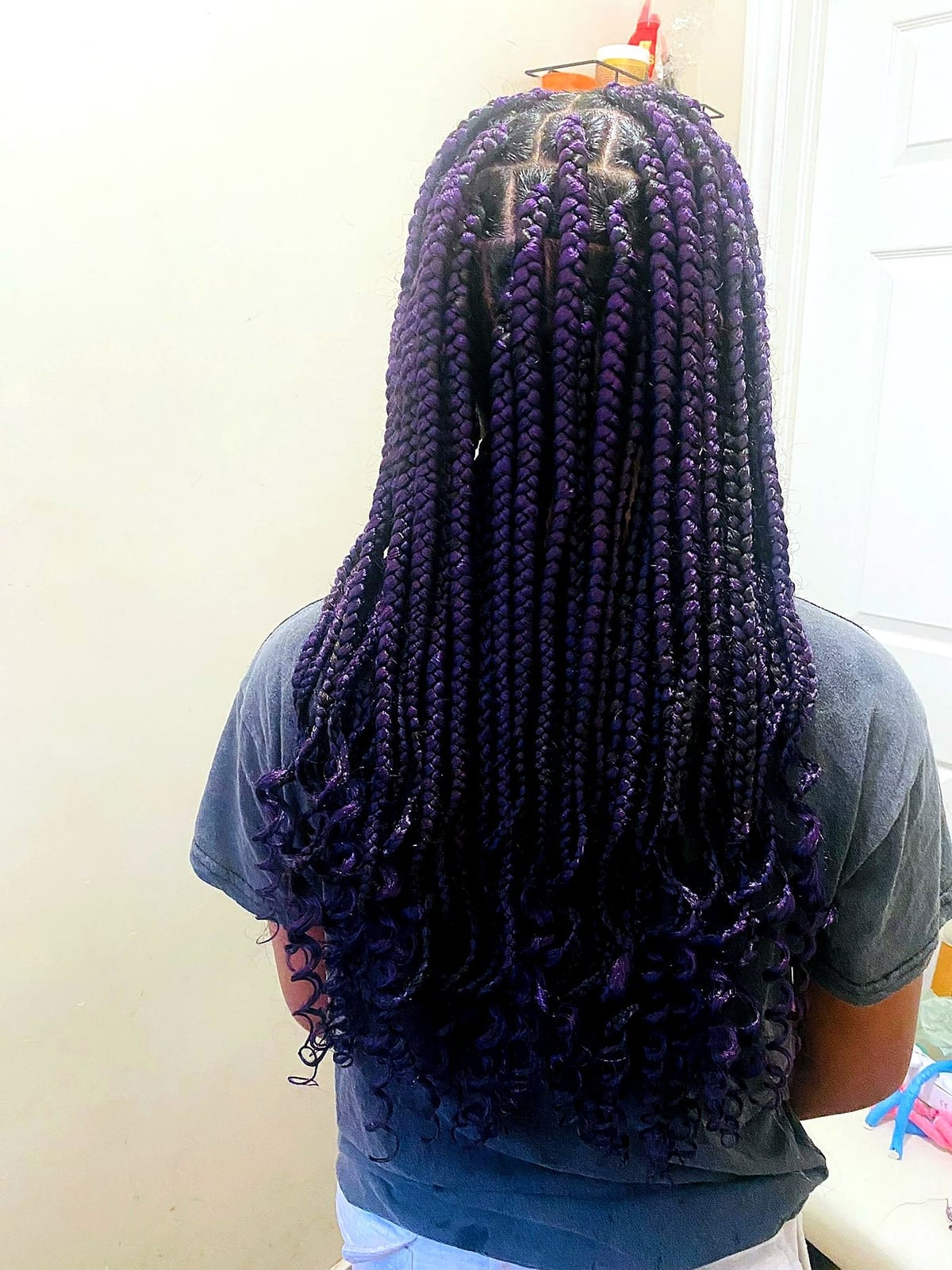
Ever wondered how to get box braids that actually look that purple in real life, not just under salon lighting? The secret is asking for the intensity you want, right down to the root. These mid-back length braids keep a dark root for depth, then shift into a vibrant purple that looks bold, not accidental. Ask your stylist for vibrant purple box braids with curly ends, and specify if you want the color to start at the scalp or blend a few inches down. The curly ends are what sell the look, so thick hair with some natural wave takes them best. A curl-enhancing cream keeps those ends defined and bouncy between washes.
Cornrows With Subtle Purple Streaks
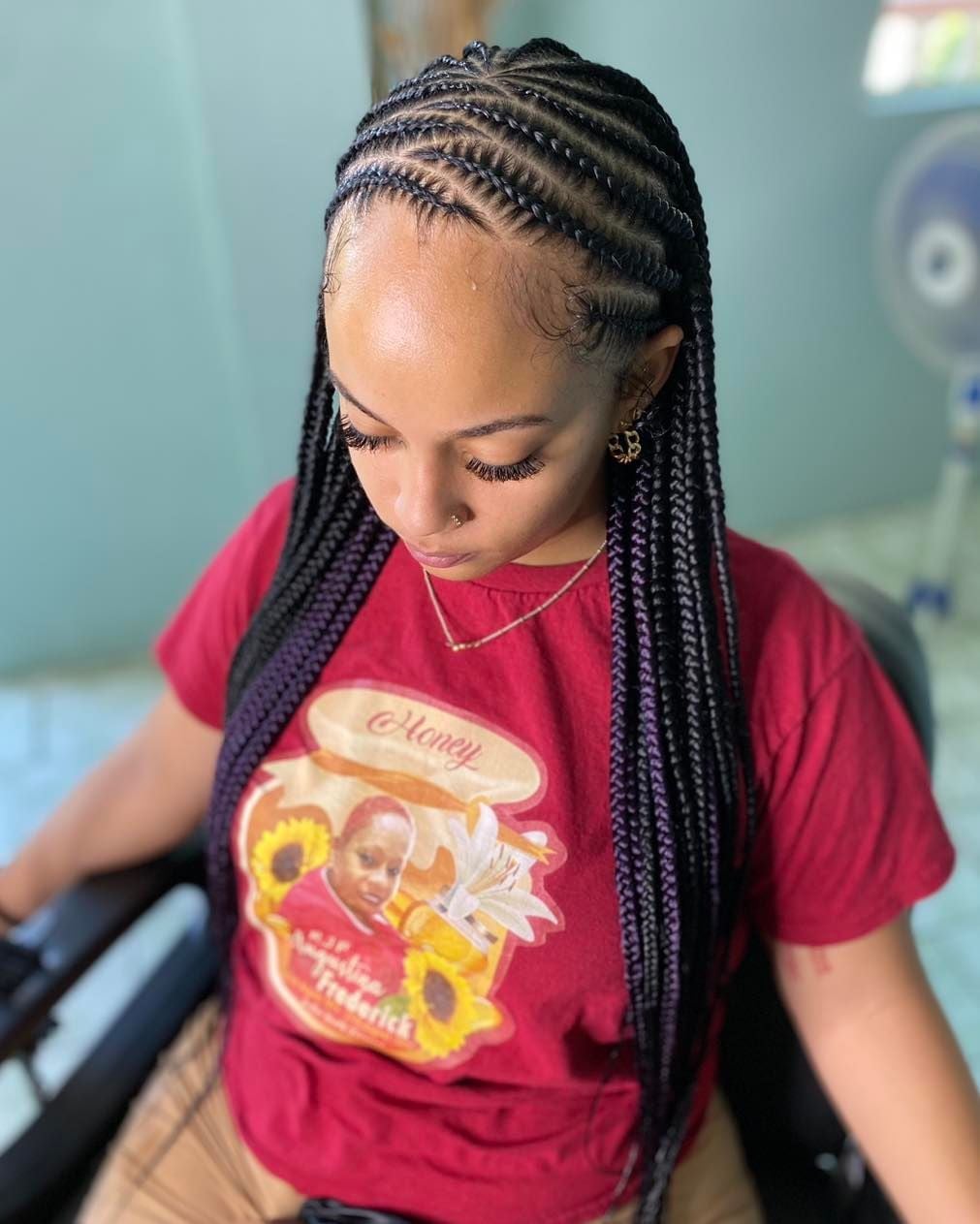
The neatness of these cornrows comes down to precision, and that is exactly why this is a salon-only request. Getting the parts straight and the tension even takes practice, and so does weaving in just a few purple strands without them taking over. This style gives a sleek, black base with subtle purple streaks that catch the eye only when you turn your head. Ask your stylist for cornrows with subtle purple streaks, and be clear that you want the color sparse, not stripey. Thick, straight hair holds these lines best, and the mid-back length gives the style room to move. A DIY version tends to look less deliberate, so save yourself the mirror gymnastics.
Knotless Braids With Ombre Color
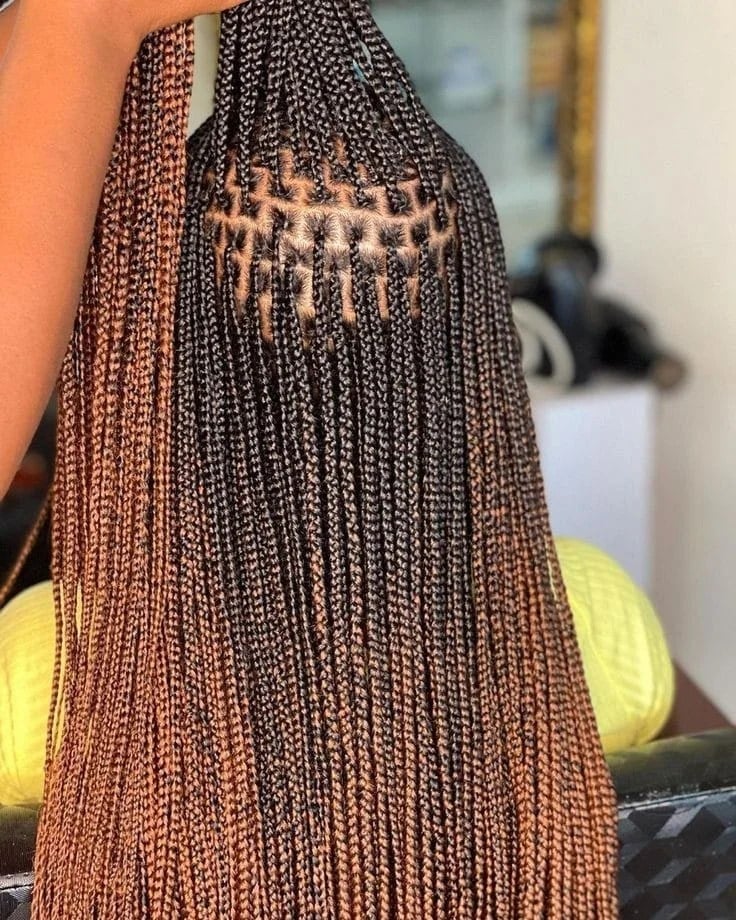
The gradient here starts black at the roots and melts into warm brown at the ends, which makes the braids look like they grew that way. The geometric parting at the scalp adds structure, while the wavy texture keeps the length from feeling heavy. This knotless braids ombre color works well on dense, wavy hair of mid-back length, because the weight of the braids blends with the natural movement. Ask your stylist for small knotless braids with black to brown ombre, and confirm the transition point so the fade lands where you want it. One real drawback: the lighter ends can turn brassy over time, especially if you wash with hot water or spend long days in the sun. A purple shampoo every few weeks keeps the brown tone honest, and a light leave-in conditioner stops the ends from feeling dry.
Fulani Braids With Beaded Ends
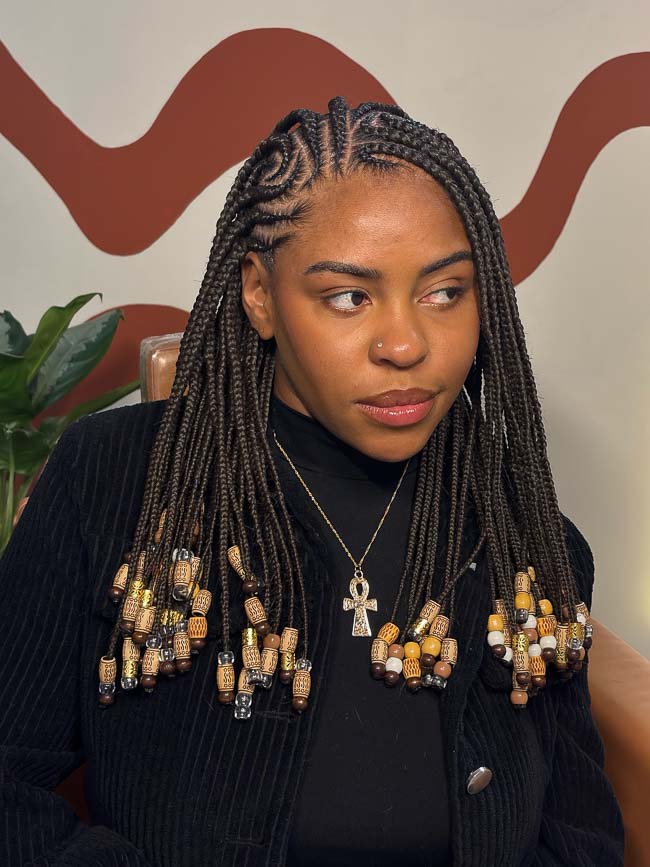
The beads are the whole point here. In Fulani braiding, the ends are finished with metal or plastic beads that clink as you move, and getting them on securely takes a practiced hand. These dark brown braids start at the front and flow straight back, with a middle part that keeps the pattern symmetrical. Ask your stylist for fulani braids with decorative beads at the ends, and decide on the bead size before you sit down, because smaller beads take longer to thread. The style suits straight, mid-back length hair and works well for festivals or cultural events. Be prepared to tuck the beads under a scarf at night, since snagging them on fabric is the fastest way to lose one.
Box Braids With Blonde Highlights
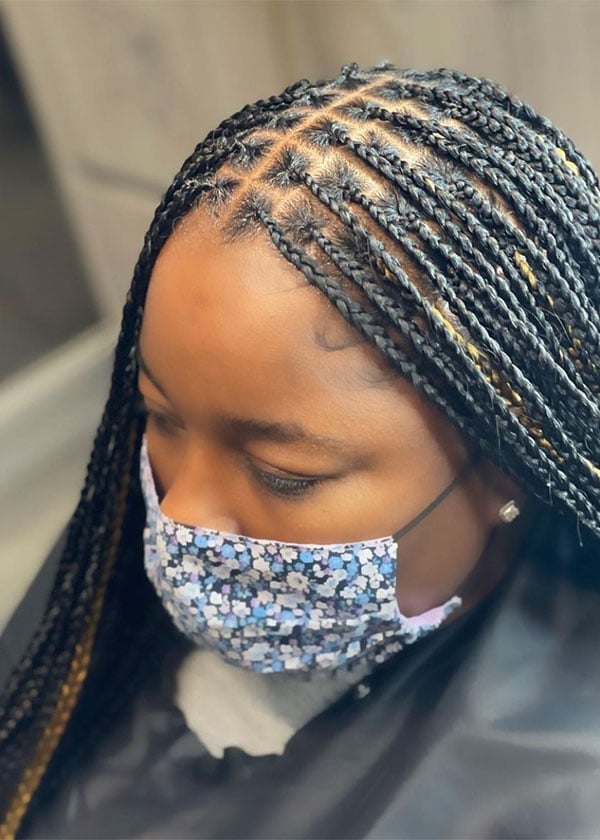
Wondering if your hair can actually support box braids with highlights without looking weighed down? Medium, wavy hair is the sweet spot, because the natural texture gives the braids body and the blonde strands have something to contrast against. The grid pattern at the scalp is what makes this style feel precise, with each part clean and the braids falling straight to the mid-back. Ask your stylist for medium box braids with blonde highlights in a grid pattern, and specify whether you want the blonde woven through every braid or scattered for a more lived-in effect. A scalp refresher spray keeps the parts looking fresh between washes, since oil buildup shows fastest right along those clean lines. This is a summer-friendly style that holds its shape for weeks.
Cornrows With Heart Pattern
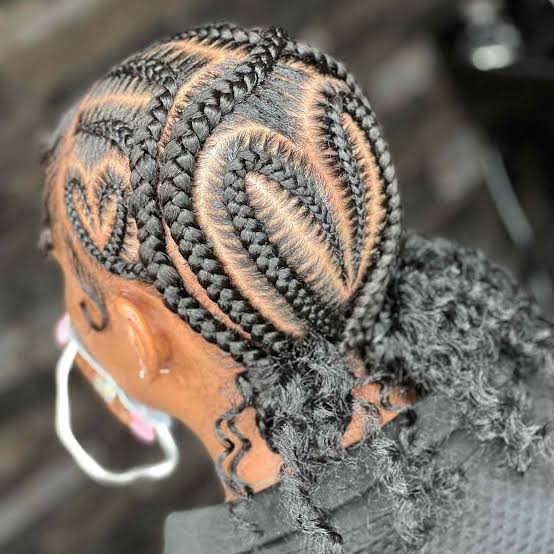
The heart pattern is a clear focal point here. Thick black cornrows trace a centered heart on the scalp before falling into long braids down the back, with a middle parting that keeps the design symmetrical. It lands best on dense, thick hair that can hold the shape without the pattern distorting after a few days.
Ask your stylist for: cornrows in a heart pattern, long braids. This style works for Valentine’s Day or any event where the hair doubles as the accessory. Keep the scalp pattern clean with a soft brush and a lightweight serum, and expect about three hours for the detail work.
Medium Box Braids With Fine Texture
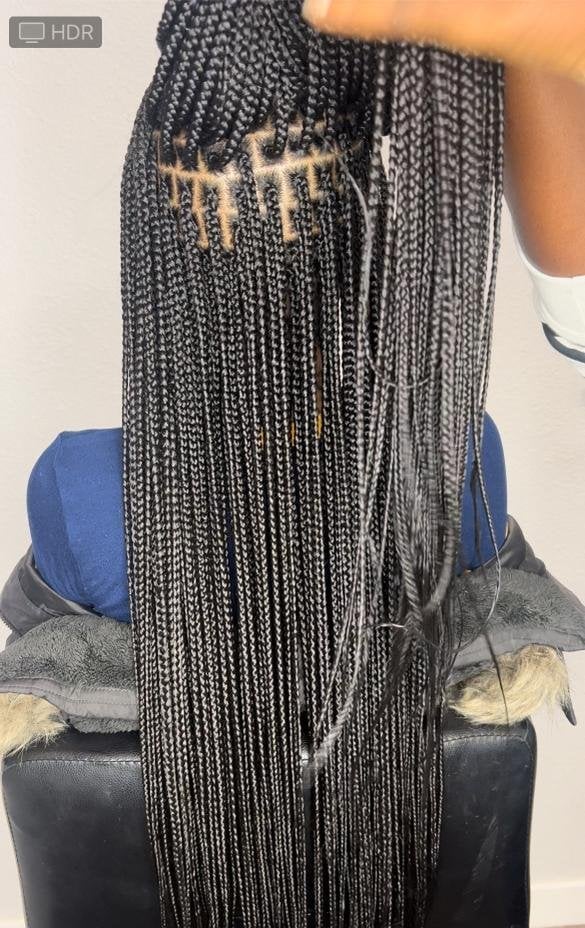
Medium box braids with a fine texture look delicate, not dense, and that is the appeal. Neatly sectioned black braids extend to the mid-back with a clean middle parting and consistent thickness throughout. The fine hair texture keeps each braid lightweight, so the style does not pull at the roots the way a thicker braid can.
Ask your stylist for: medium box braids with a fine texture. Avoid heavy creams or oils that can weigh down the hair and cause the braids to loosen faster. A light spray for shine and a silk scarf at night will keep the edges tidy for about four to six weeks before a refresh is needed.
Final Thoughts
For intricate scalp patterns, prioritize consistent tension and clean parts. For styles with extensions, ensure even distribution and secure attachment. Braids to the back offer endless possibilities for detail and design.
- Moisturize the scalp daily with a light oil or spray to prevent dryness.
- Wrap hair in a silk or satin scarf or bonnet at night to protect braids.
- Avoid excessive pulling or tugging on braids to prevent tension and breakage.
- Professional touch-ups for edges or loose strands are recommended every 2-3 weeks.
- Deep condition hair before braiding for optimal health.