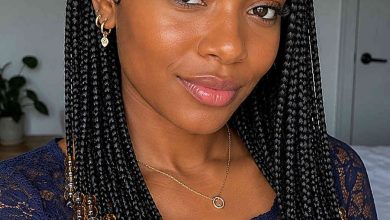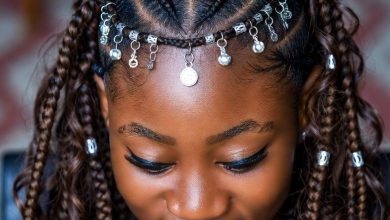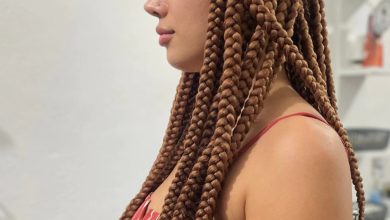
Colored locs are less a single trend and more a whole category of personal style, with the 2024-2028 shift being toward richer, more dimensional tones rather than flat, single-process color. Think jewel-toned accents woven into a natural base, or a deliberate ombré that lets the root breathe.
These 28 Color Locs ideas span the spectrum from subtle caramel highlights to full-on vivid teal, covering short rounded shapes and mid-back lengths alike. The collection is for anyone who wants color without the constant root panic, or who needs a technique that respects natural texture. A few of these looks solve the specific problem of a visible grow-out line by leaning into a darker root from the start.
Honey Blonde High Stacked Updo
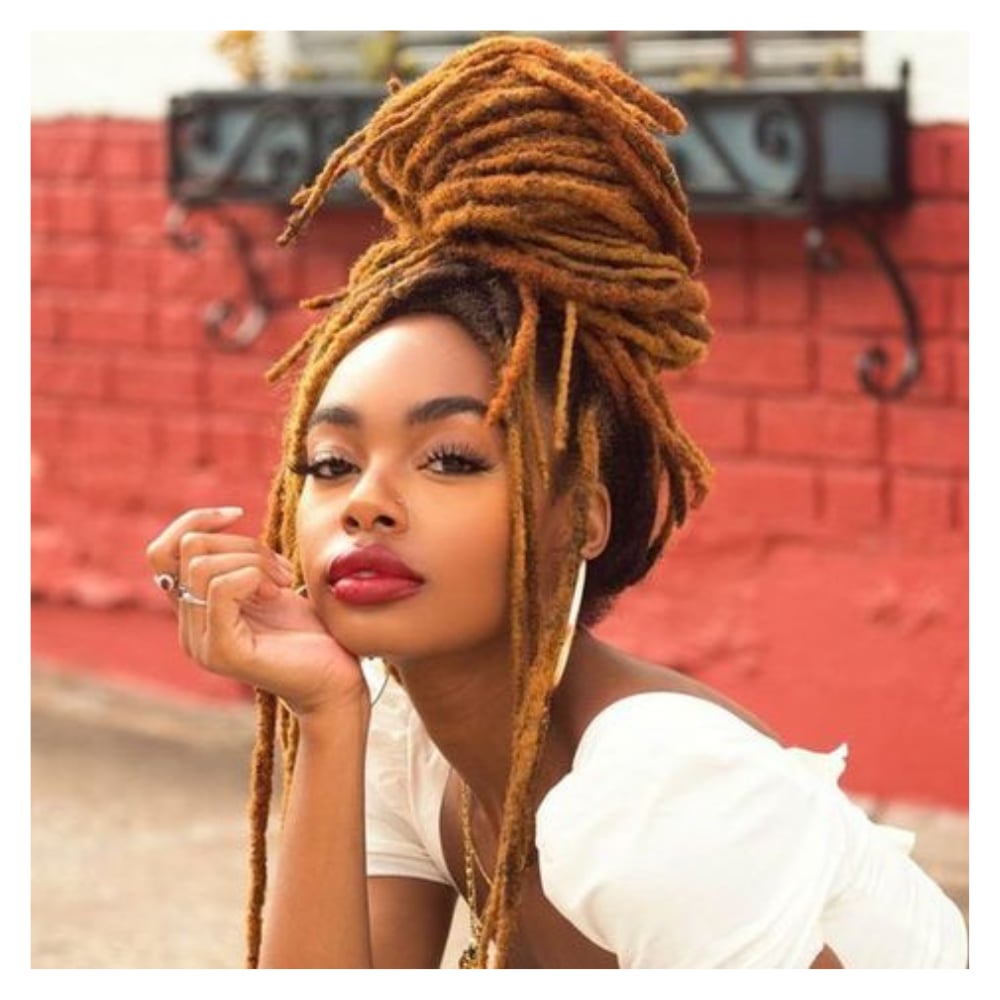
A high stacked updo on locs is about controlled geometry, not just piling hair up. The honey blonde shade reads as deliberate when the locs are thick and wavy, as they are here, rather than sparse. The middle parting keeps the front clean while the stacked back builds height; ask your stylist for a honey blonde locs updo with a middle part. This is a salon achievement, not a five-minute pin job, because each loc needs to be placed so the stack holds its shape without collapsing.
Vibrant Pink and Purple Mid-Back Locs
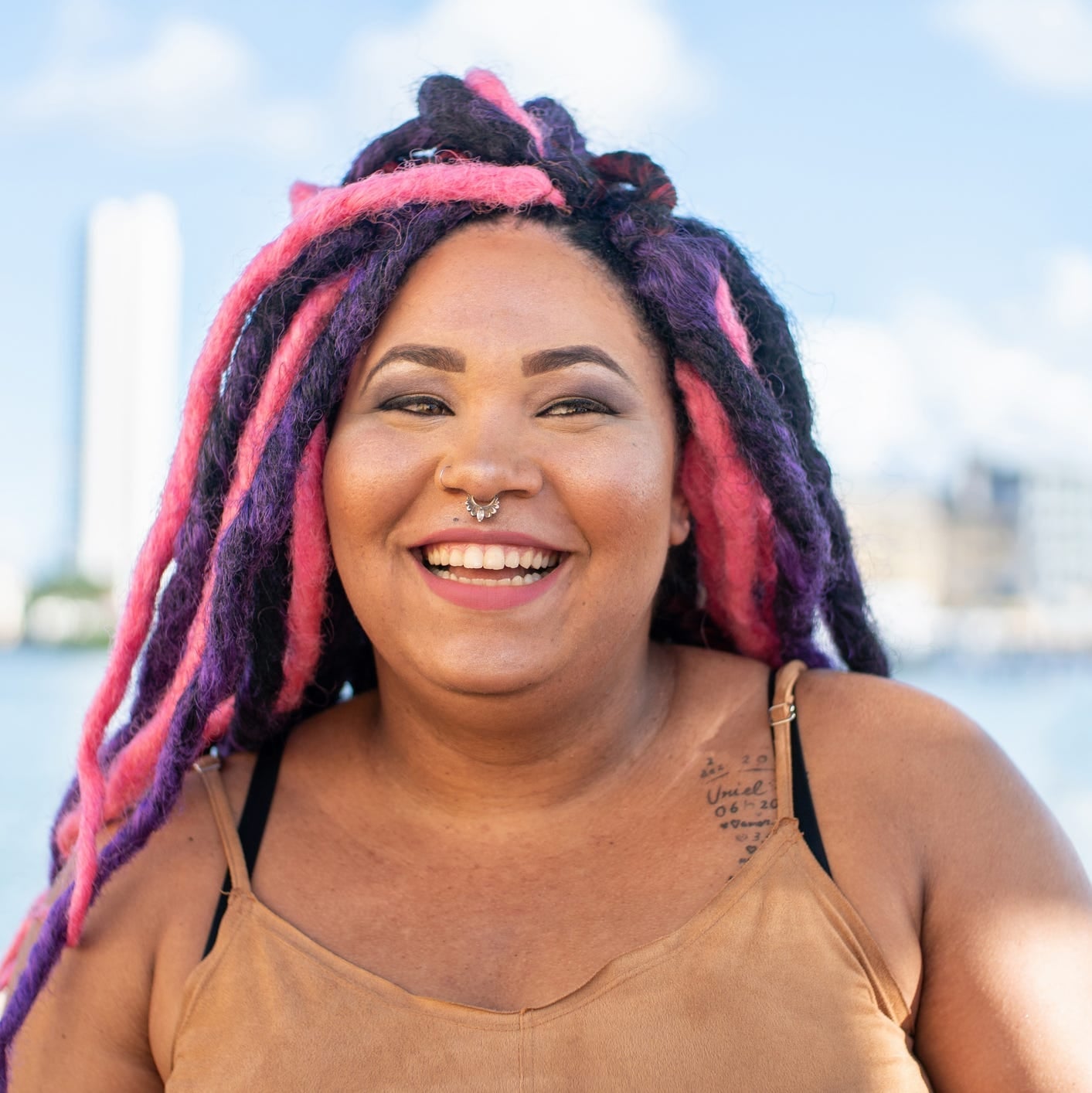
Can you pull off pink and purple locs? Yes, if you like the idea of your hair being the main event. The wavy mid-back length gives the colors room to separate, so each loc reads as its own brushstroke rather than a solid wall of neon. Ask your colorist for vibrant pink and purple locs, loose and wavy. The technique here is a full saturation dye job on each loc section, which means no grow-out line to manage: the color stays vivid until you decide to change it.
Light Brown with Blonde Highlights Updo
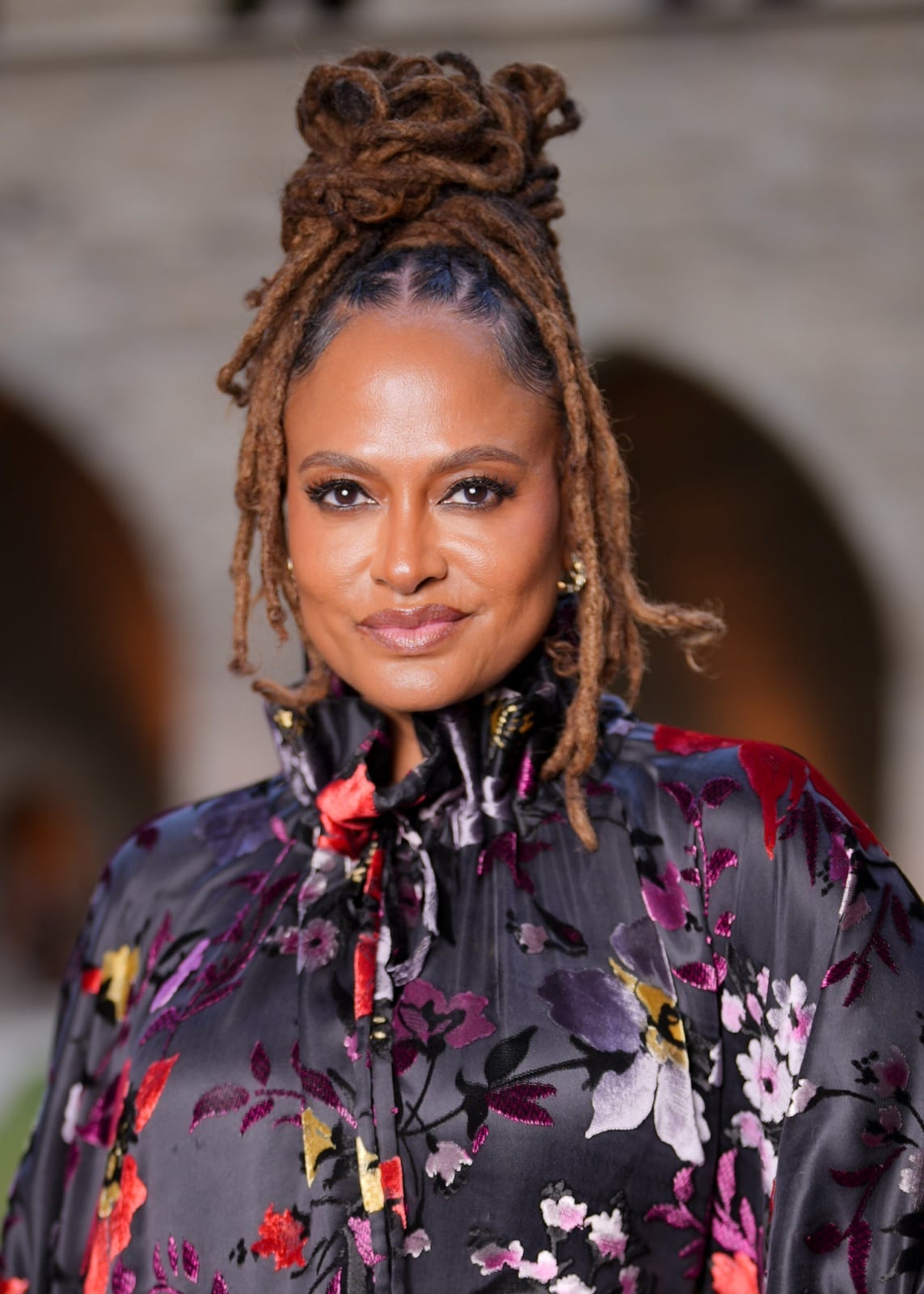
The trick to an updo that looks polished is the blonde highlight placement. Here the light brown base grounds the style, and the lighter pieces catch the eye as they weave through the stacked shape. Ask your colorist for light brown locs with blonde highlights, and specify that you want the highlights distributed evenly, not clustered at the ends. A middle parting and pulled-forward wisps keep the updo from feeling severe; it is a salon look that works for a wedding or a dinner where you plan to be photographed.
Dark Brown Locs with Colorful Accents
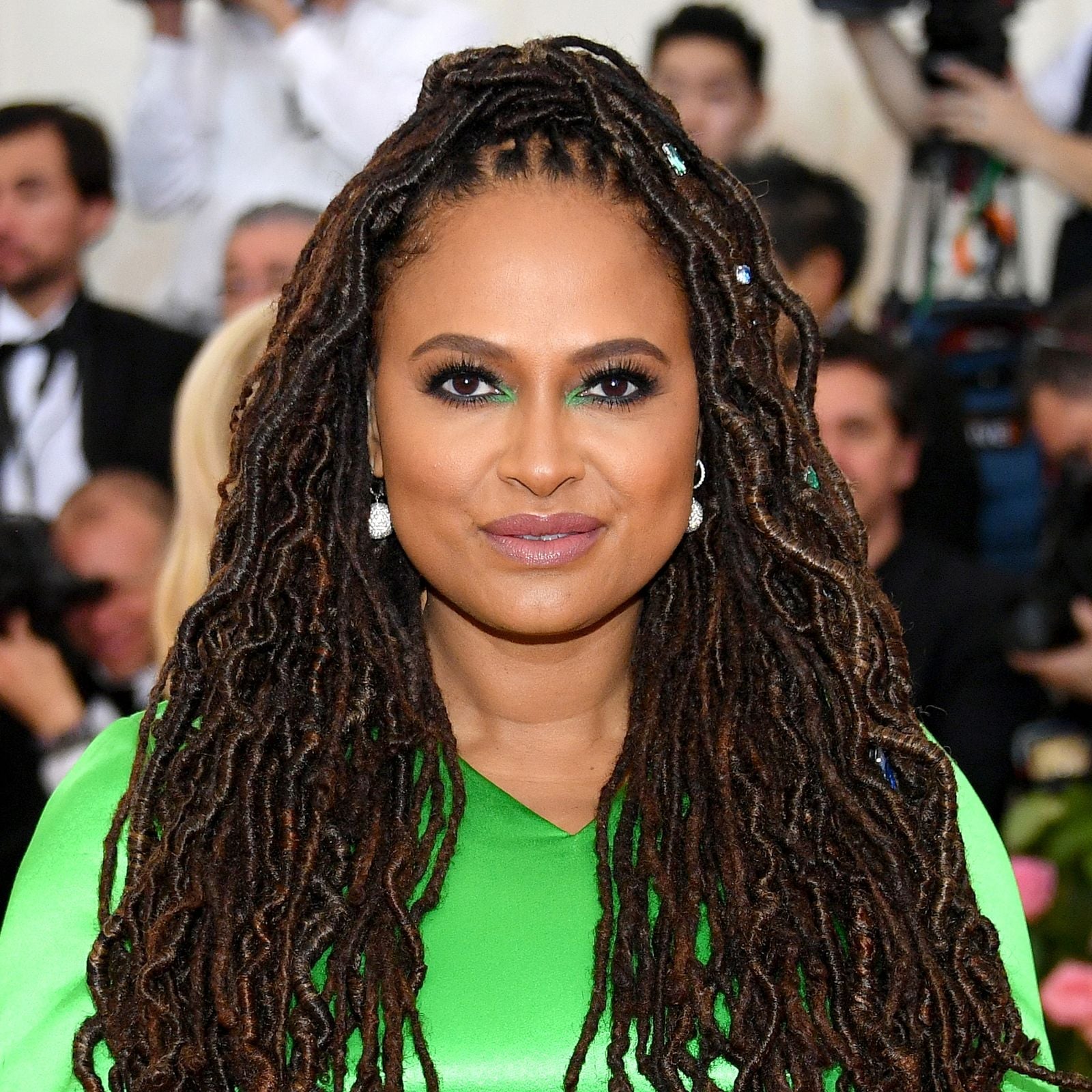
Solid color locs can feel flat; colorful accents and beads add texture that a single shade cannot. Here the dark brown base works as a neutral backdrop, so the bright highlights and decorative beads pop without competing. Ask your colorist for dark brown locs with colorful accents and beads. This is not the same as a full vibrant dye job: the color stays concentrated in sections, and the beads add weight and movement. The slicked-back parting keeps the front tidy while the back does the work.
Collarbone Length Medium Brown Locs
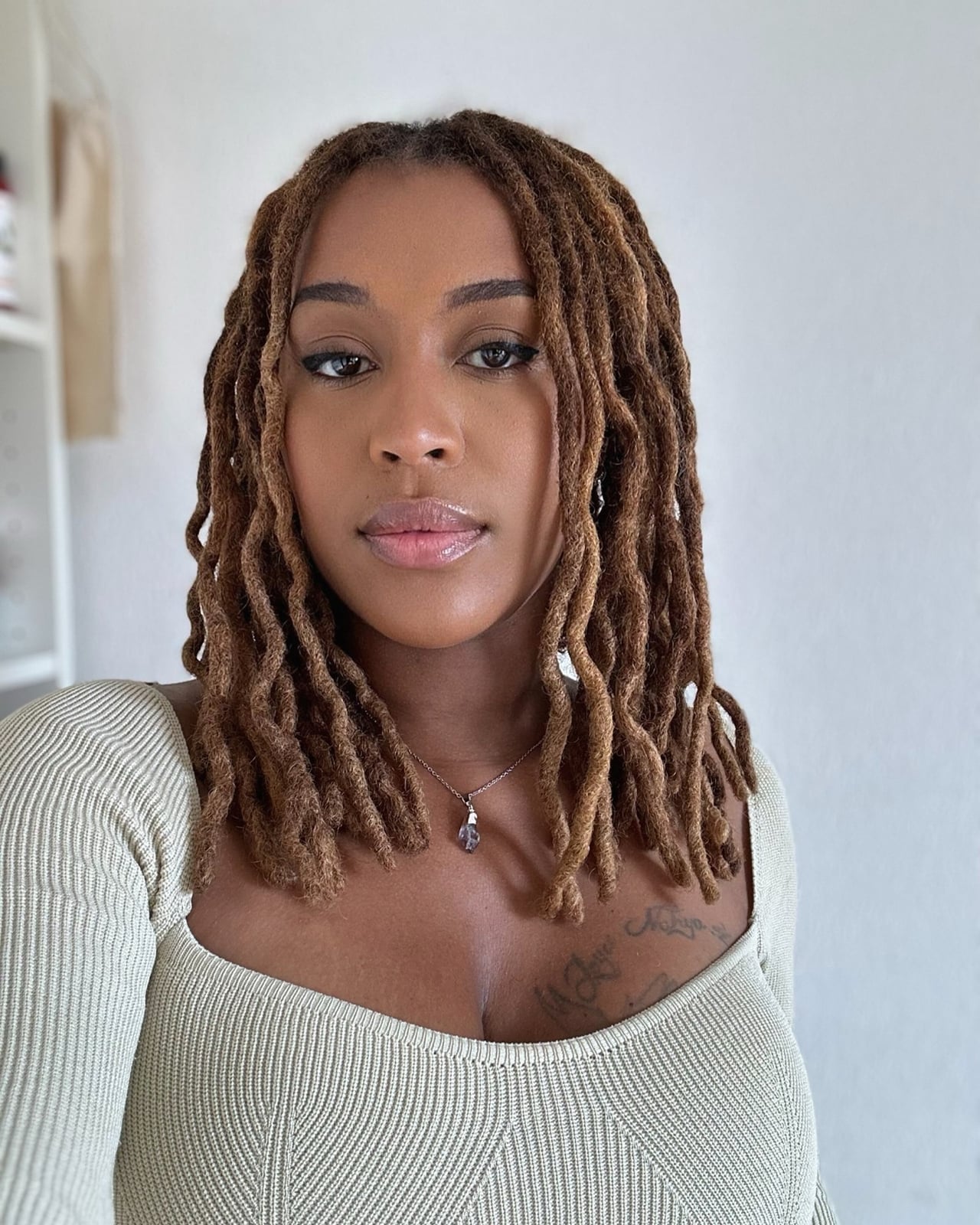
Collarbone length is the sweet spot for locs when you want movement without weight. The medium brown base with subtle lighter brown highlights adds dimension without shouting, and the air-dried wavy texture means zero heat styling most days. Ask your stylist for collarbone length medium brown locs with subtle highlights. This cut lands right at the collarbone, which means it swings when you turn your head and tucks behind the ears easily. A trim every eight to ten weeks keeps the ends neat, and a light serum stops the waves from looking dusty.
Dark Brown Locs with Burgundy Highlights
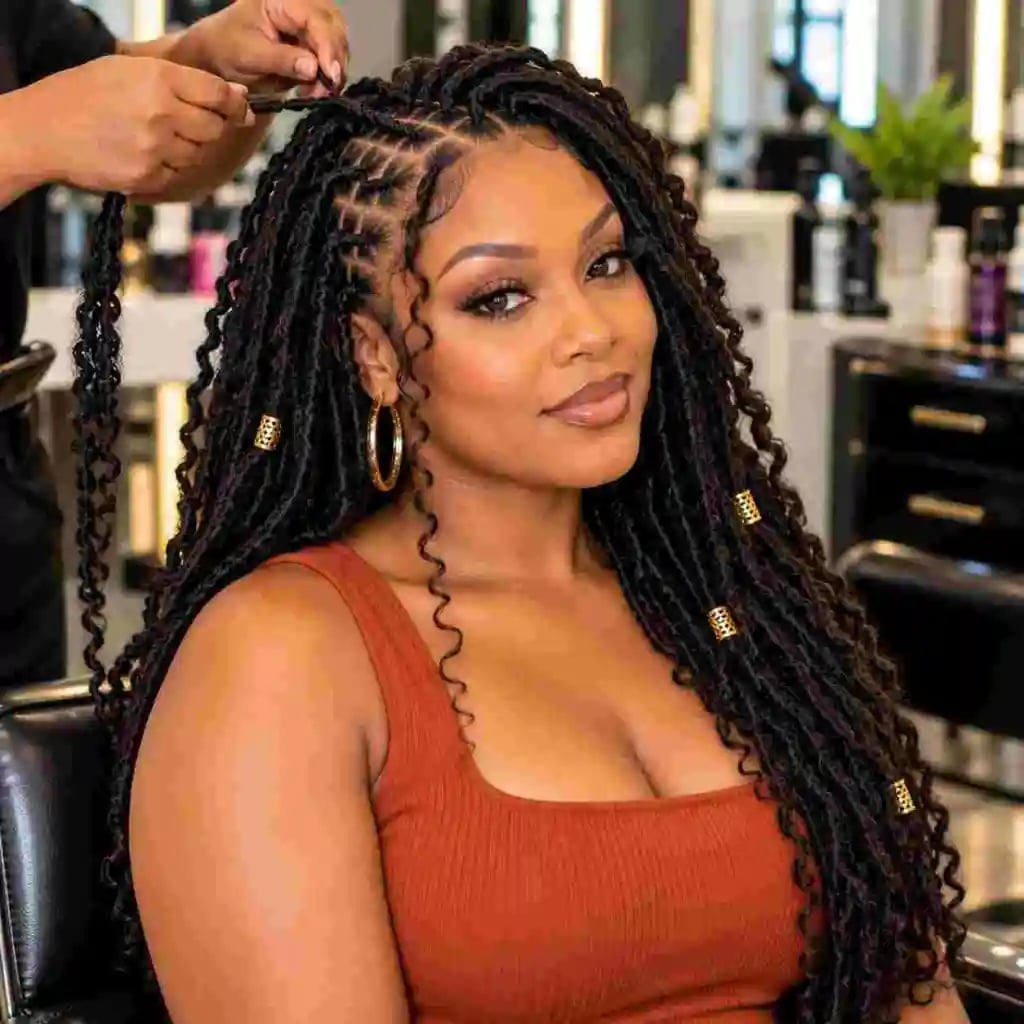
Dark brown locs with subtle burgundy highlights create a warm, rich color story that suits the season. These mid-back locs feature a dark brown base with burgundy woven through, so the color appears as a glow, not a stripe. The curly ends and gold beads add polish without fussiness. Ask your colorist for: dark brown locs with burgundy highlights and gold beads. This style works best on thick, wavy locs with enough length to show off the color. The middle parting keeps the face open, and the burgundy deepens as the season turns.
Copper Red Twisted Collarbone Locs
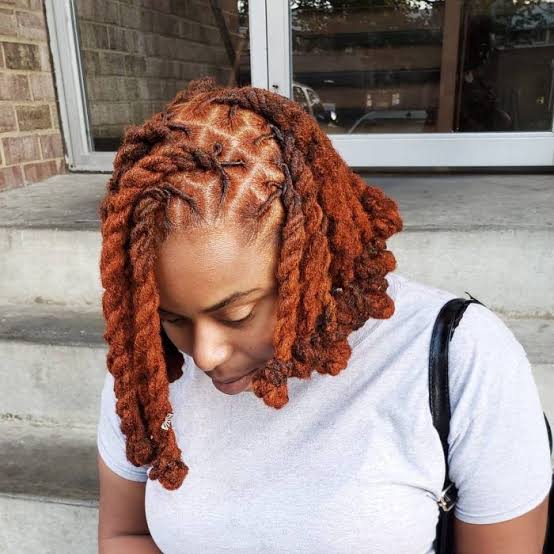
The twist here is doing double duty. It shapes each loc into a defined coil and gives the copper red base a dimensional look. A subtle darker undertone keeps the color from going neon, which is why this works on wavy locs at collarbone length without feeling like a costume. Ask your colorist for: copper red locs, collarbone length, twisted. Twisting every loc is a salon task that takes real chair time, so plan for a longer appointment. The middle part and the lack of bangs keep the focus on the color and the twist pattern.
Fiery Black Locs with Red, Yellow, Orange Streaks
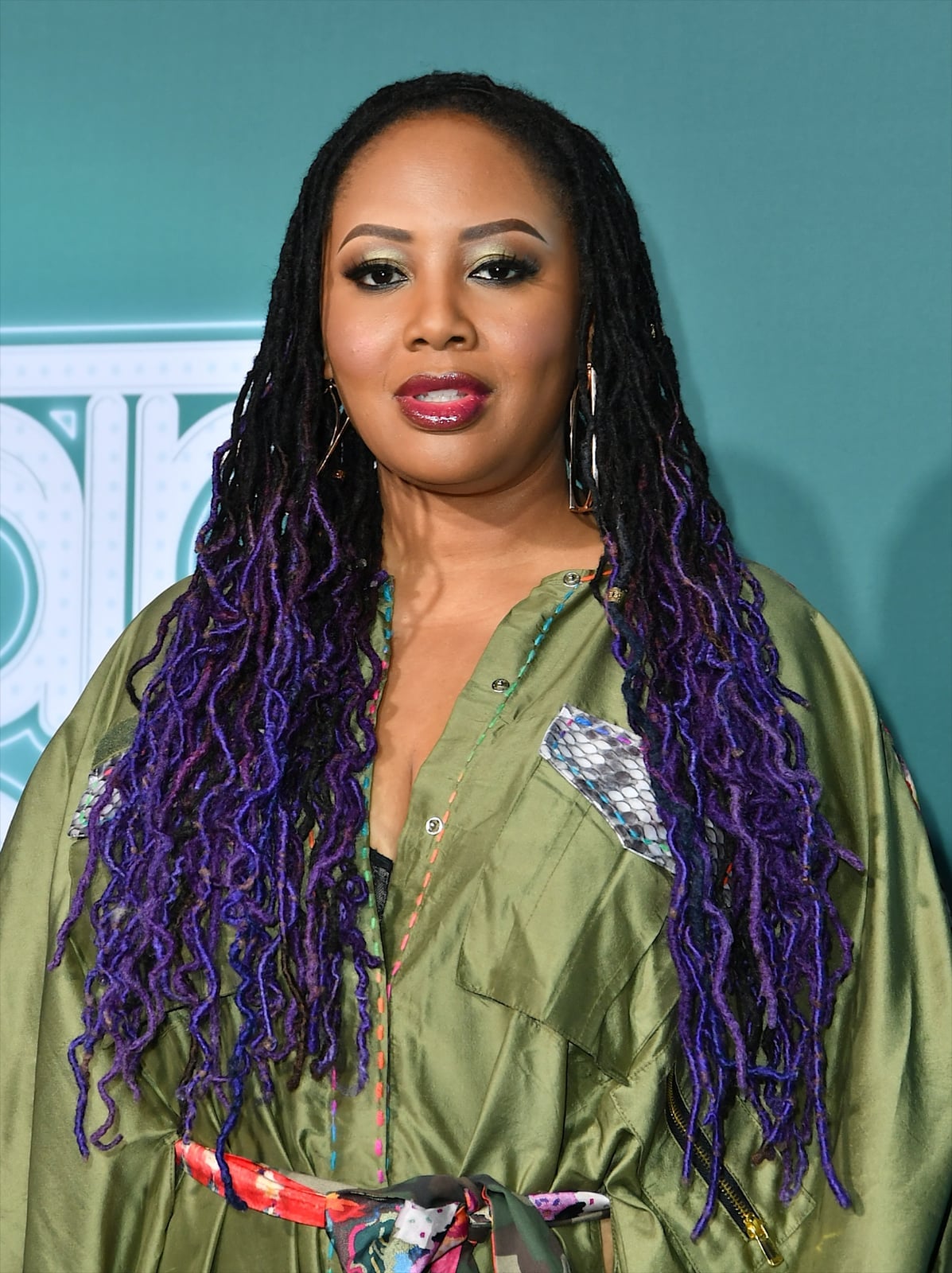
If a black base with red, yellow, and orange streaks sounds bold, that is because it is. The side parting lets the wavy, medium-density locs fall in a way that shows off the color placement, but the honesty comes with upkeep: those vivid streaks fade faster than a single-tone color, and they need touch-ups every four to six weeks to stay fiery. Ask your colorist for: black locs with fiery red, yellow, orange streaks. This is a salon commitment, not a DIY experiment. Skip it if you want a low-maintenance color, because the payoff is directly tied to how often you are willing to refresh it.
Vibrant Red Shoulder Length Updo
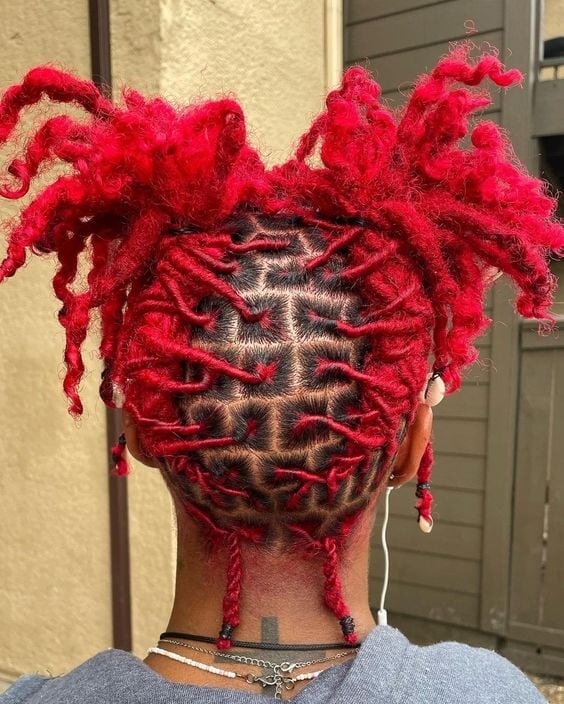
The geometric parting at the back is the quiet genius of this updo. It breaks up the expected roundness of a high bun and gives the vibrant red locs a modern, sculptural line. Thick, wavy locs at shoulder length hold this shape best, because fine or thin locs would not have the weight to keep the parting crisp. Ask your colorist for: vibrant red locs updo with geometric parting. The color needs a red-toned conditioner to stay saturated, and the parting is not something to try at home; it takes a practiced hand to get the angles clean.
Butterfly Locs with Blonde Tips
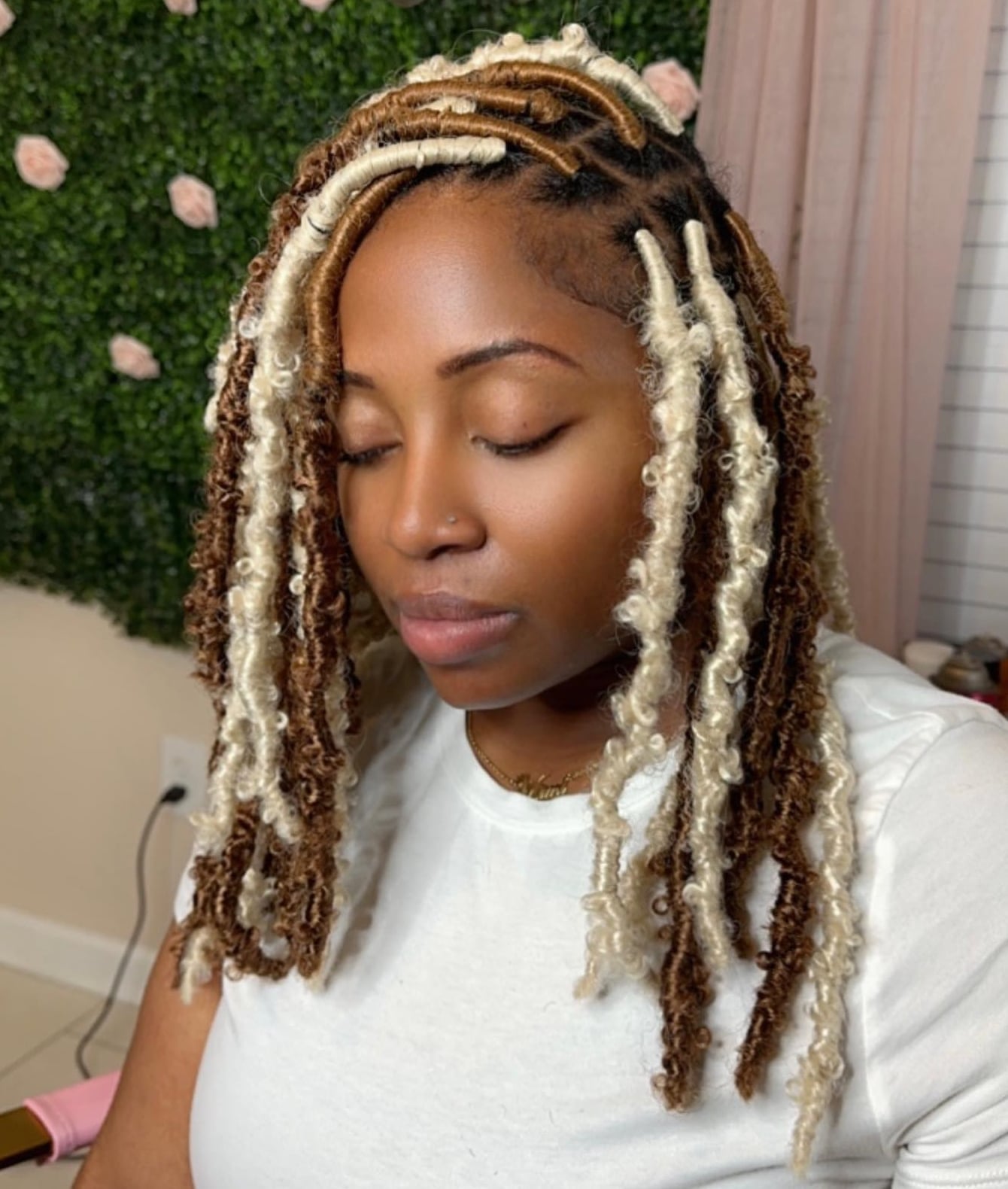
Blonde tips are the part of butterfly locs that actually get noticed. The dark brown base keeps the root grounded, and the blonde highlights lighten gradually toward the ends, so the two-tone effect looks like a fade, not a hard line. On wavy, thick locs at collarbone length, the blonde tips catch the eye with every movement. Ask your colorist for: butterfly locs, dark brown to blonde tips. The upkeep reality is that blonde tips go brassy, so a purple shampoo and a lightweight serum on the ends are essential, with refresh appointments as needed to keep the tone cool.
Faux Locs with Dark Brown, Auburn, Gold Blend
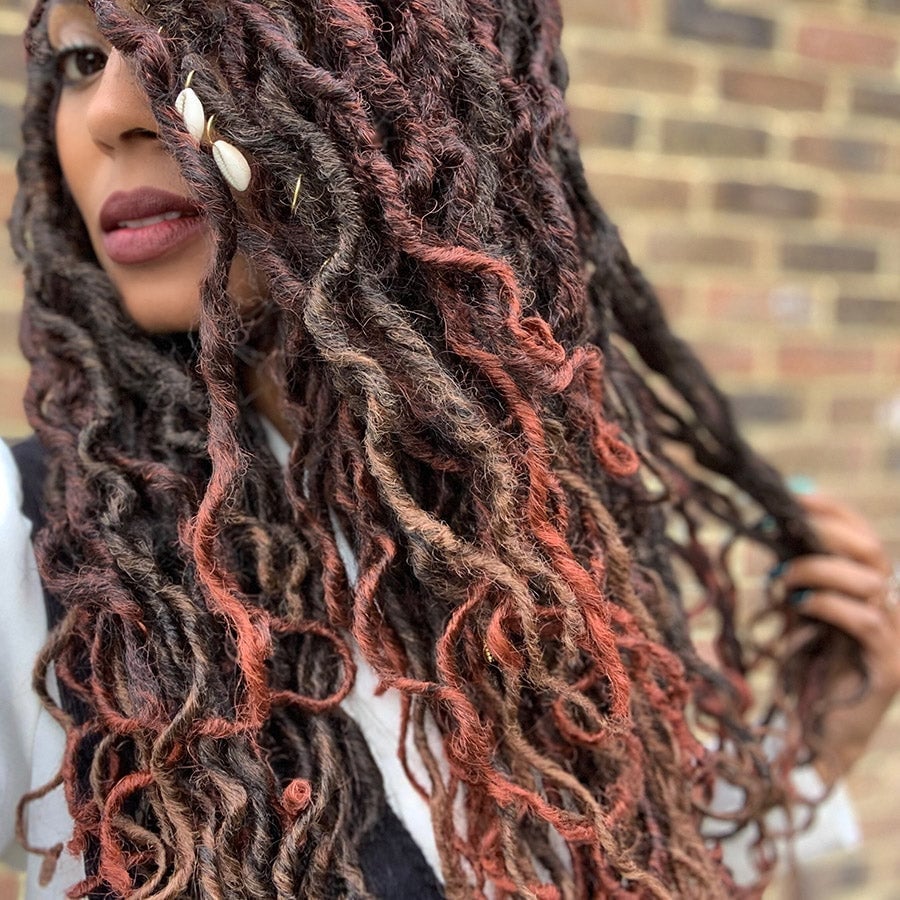
This style uses a three-step color melt on faux locs: dark brown at the root melts into auburn in the middle, then gold takes over the last few inches. The wavy, thick texture of the locs helps the blend appear as one continuous shift, not separate stripes. This technique works best on mid-back length hair, which gives the gradient enough space to develop. Ask your colorist for: dark brown to auburn to gold color melt. The loose waves are set with a low-heat styling tool after installation, and the color variations will soften further with each wash.
Multi-Colored Faux Locs Ponytail
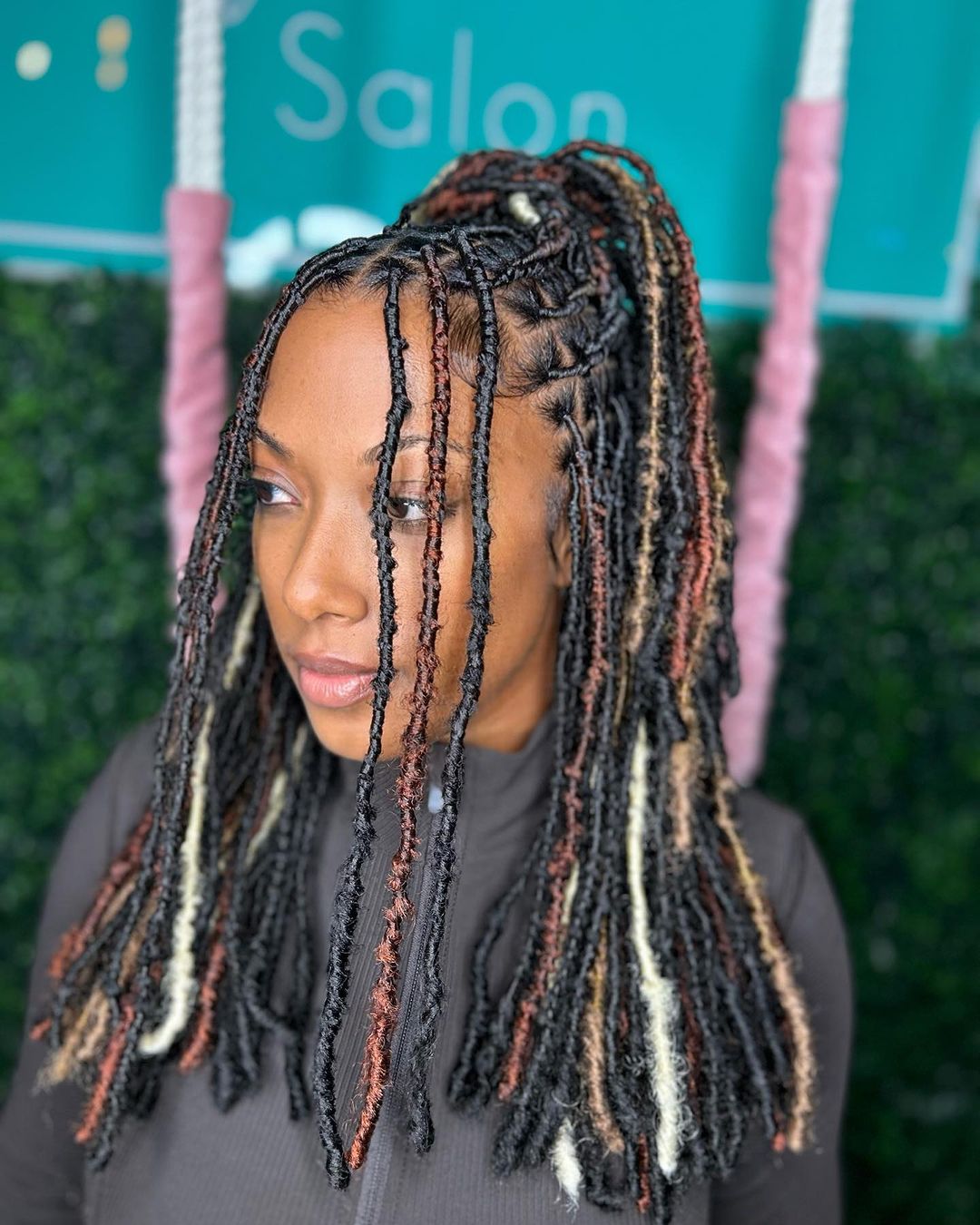
A middle parting keeps the distribution even on both sides. The thick, wavy texture of these faux locs helps each shade catch light differently. Ask your colorist for: black root with copper, blonde, and white tips. This is a salon installation; the color placement alone takes about an hour, and the ponytail styling is done after. Do not attempt the color placement at home.
Burgundy Braided Mid-Back Locs
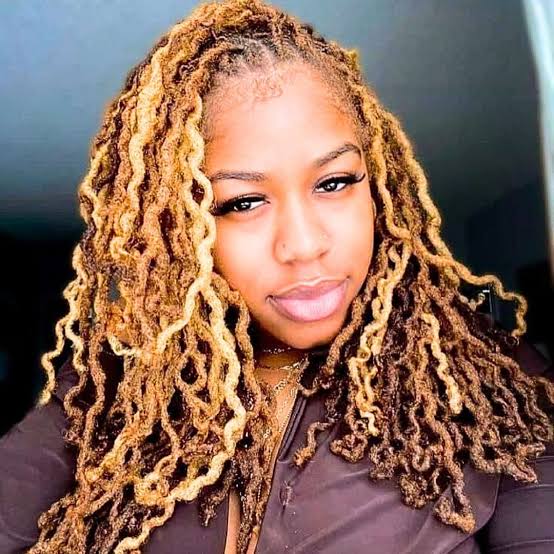
A deep burgundy on braided locs has a seasonal advantage: it looks rich and warm in fall light but holds its own against the cooler tones of winter. The uniform braid width gives the color a structured, intentional look. Thick, wavy locs at mid-back length provide enough surface area for the burgundy to appear solid without streaks. Ask your colorist for: deep burgundy on braided locs. This is a good choice for holiday gatherings or any occasion where you want the color to do the talking. The braid pattern also means the color stays protected longer between touch-ups.
Light Brown Shoulder Length Updo with Bangs
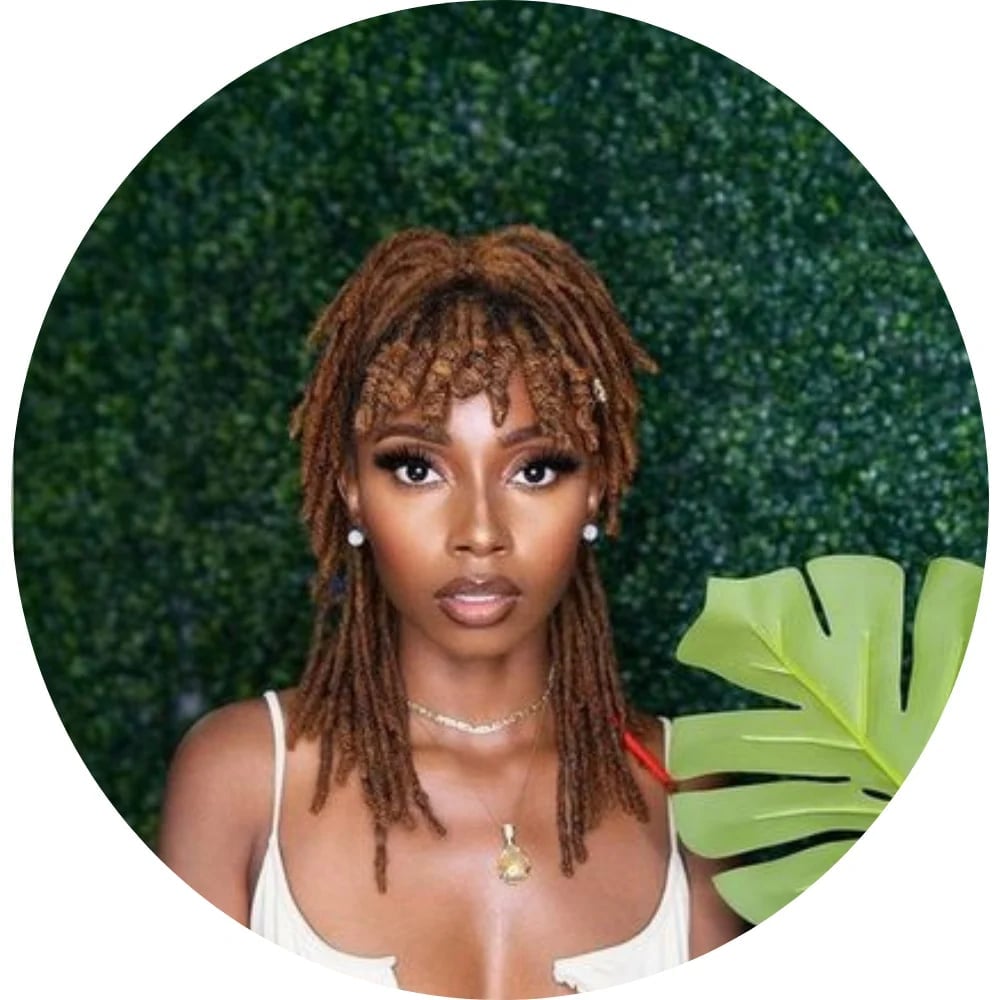
Short bangs on shoulder length locs are a specific ask: they work best when the hair is pulled back, as in this updo. The light brown base keeps the look soft, while the bangs add an edge that a full updo sometimes lacks. The wavy texture of the locs gives the bangs natural movement instead of a stiff line. Ask your stylist for: shoulder length locs updo with short bangs. The bangs will need a trim every three to four weeks to stay out of your eyes. A round brush and low heat can smooth them if the wave is too strong.
Vivid Teal Twisted Mid-Back Locs
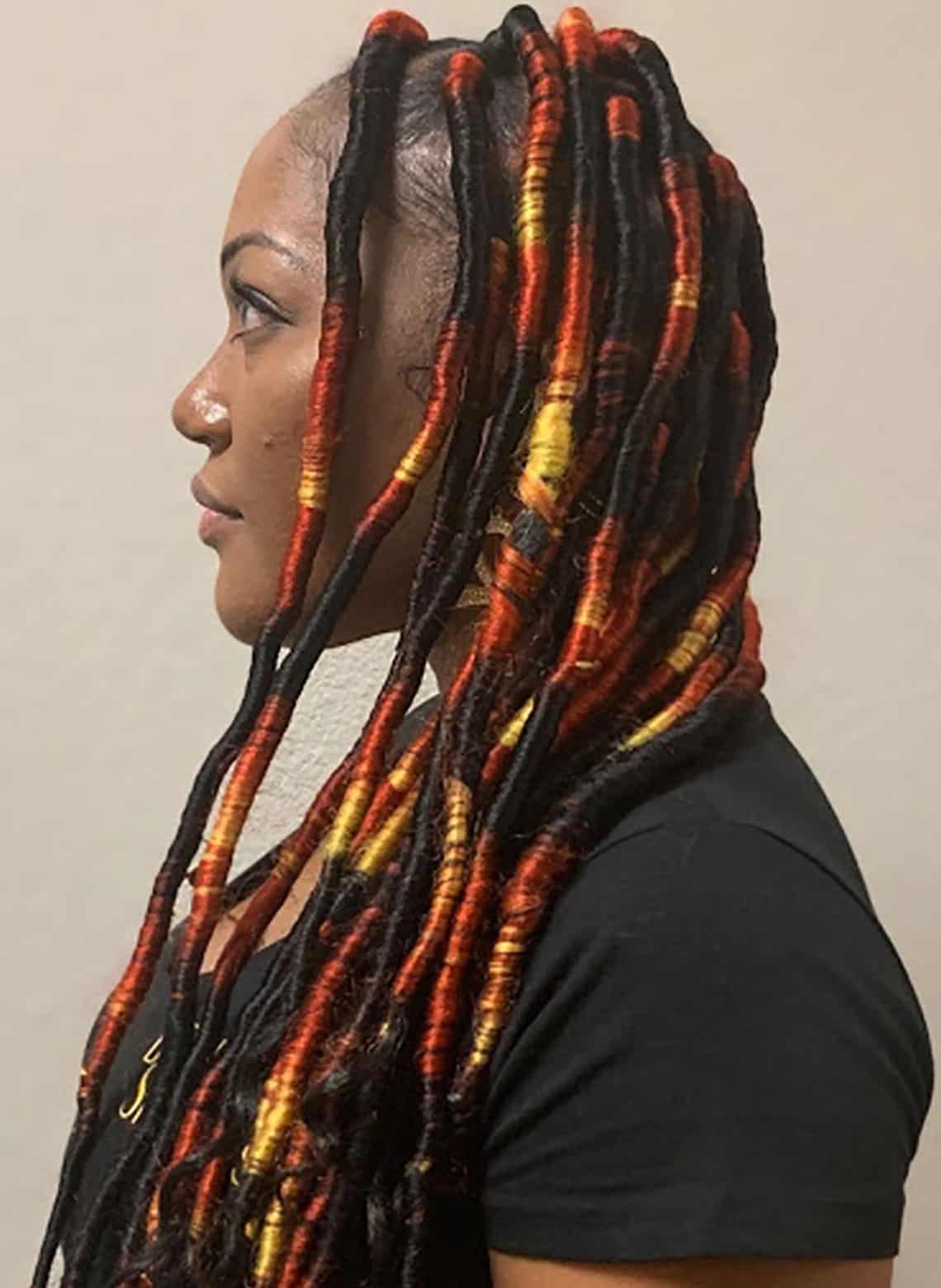
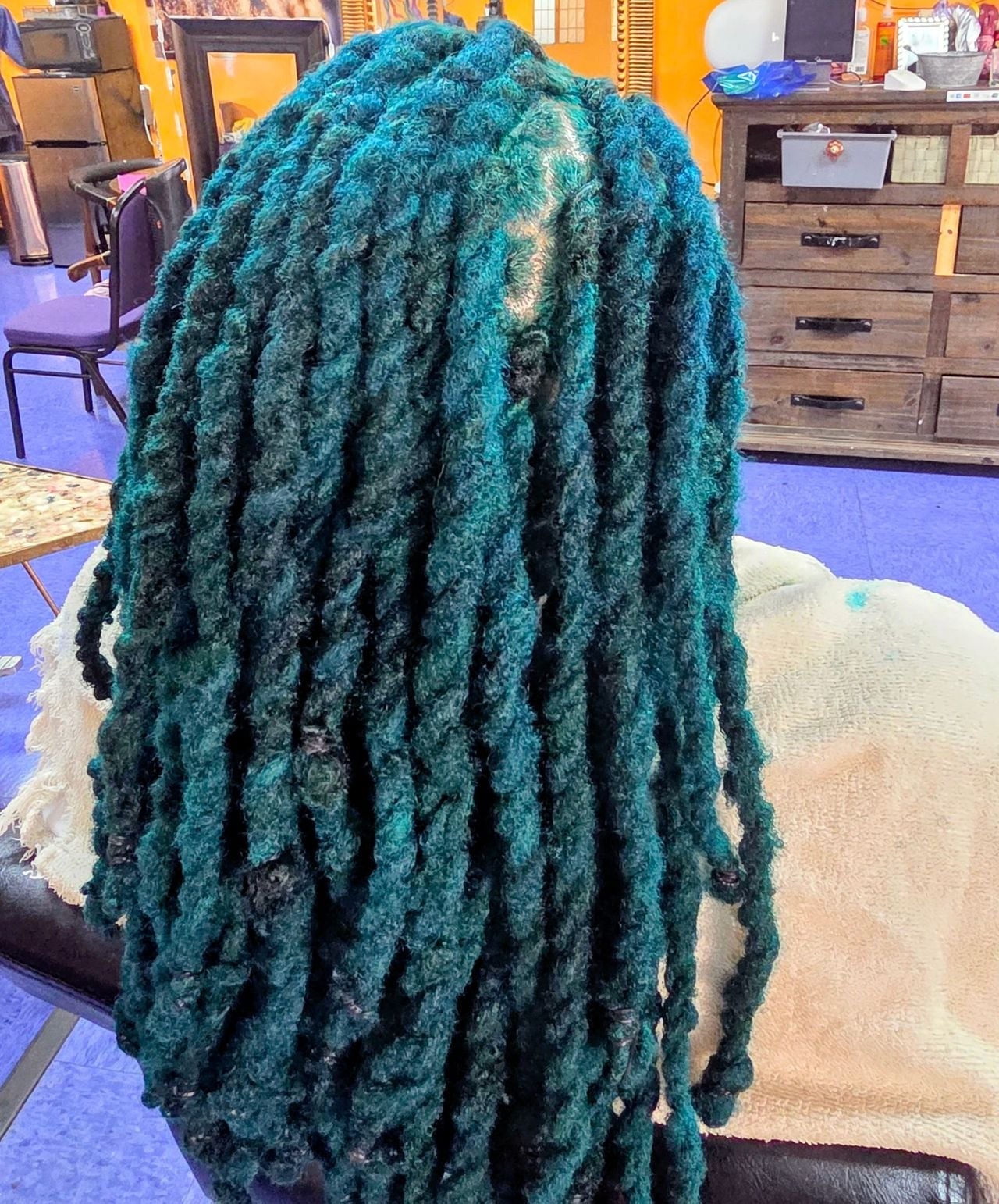
Vivid teal on thick, coarse locs is not a low-maintenance color, but it is a straightforward one. The uniform twisted pattern means the dye saturates each loc evenly, and the coarse texture actually holds onto the pigment longer than fine hair would. The back view here shows the full mid-back length, which gives the teal a solid block of color that looks deliberate. Ask your colorist for: vivid teal on twisted locs. Plan for a deep conditioning treatment every wash day, because that level of saturation can dry the hair out. A toning appointment every four to six weeks keeps the teal from drifting toward green.
Auburn Copper Faux Locs with Dark Root
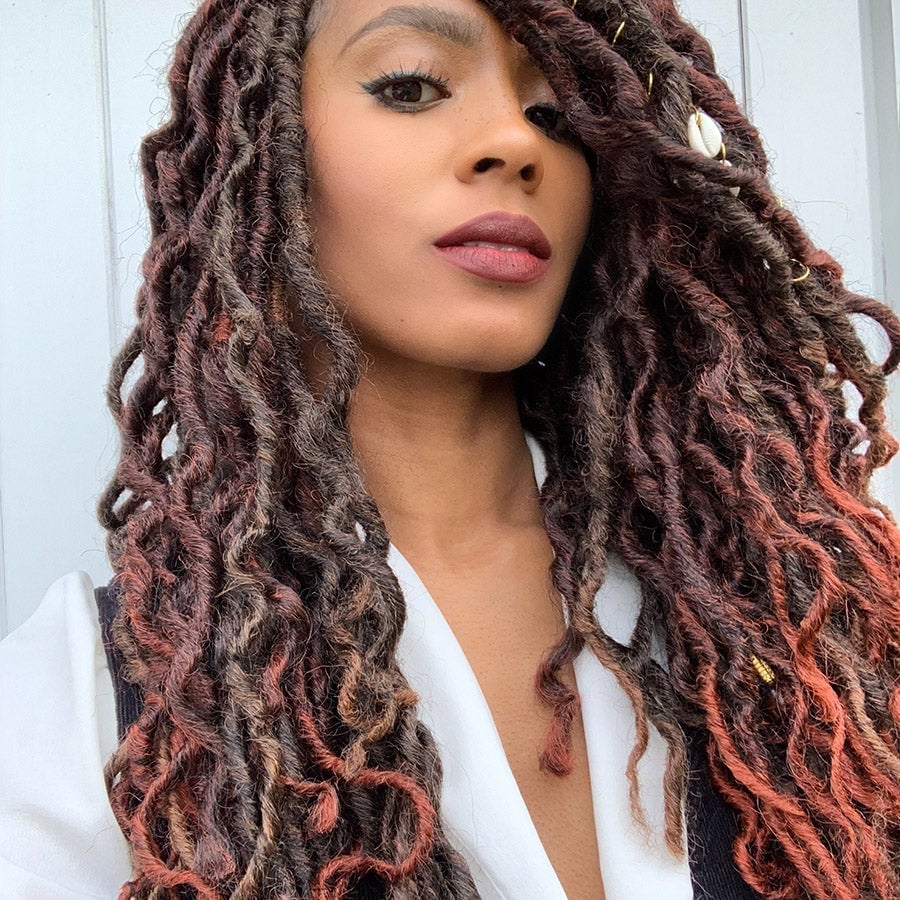
The clever part of this auburn copper faux locs blend is the natural dark root, which keeps the rich color from looking flat against the scalp. Gold undertones woven through the copper catch the light, while the wavy, thick texture at mid-back length gives the color depth to play across. A side parting lets the dimensional blend read clearly from the front. Ask your colorist for: faux locs with auburn, copper, gold blend and dark root. The dark root makes the grow-out phase almost invisible, which is why this design works so well for anyone who hates the line of demarcation.
Brown to Blonde Ombré Faux Locs
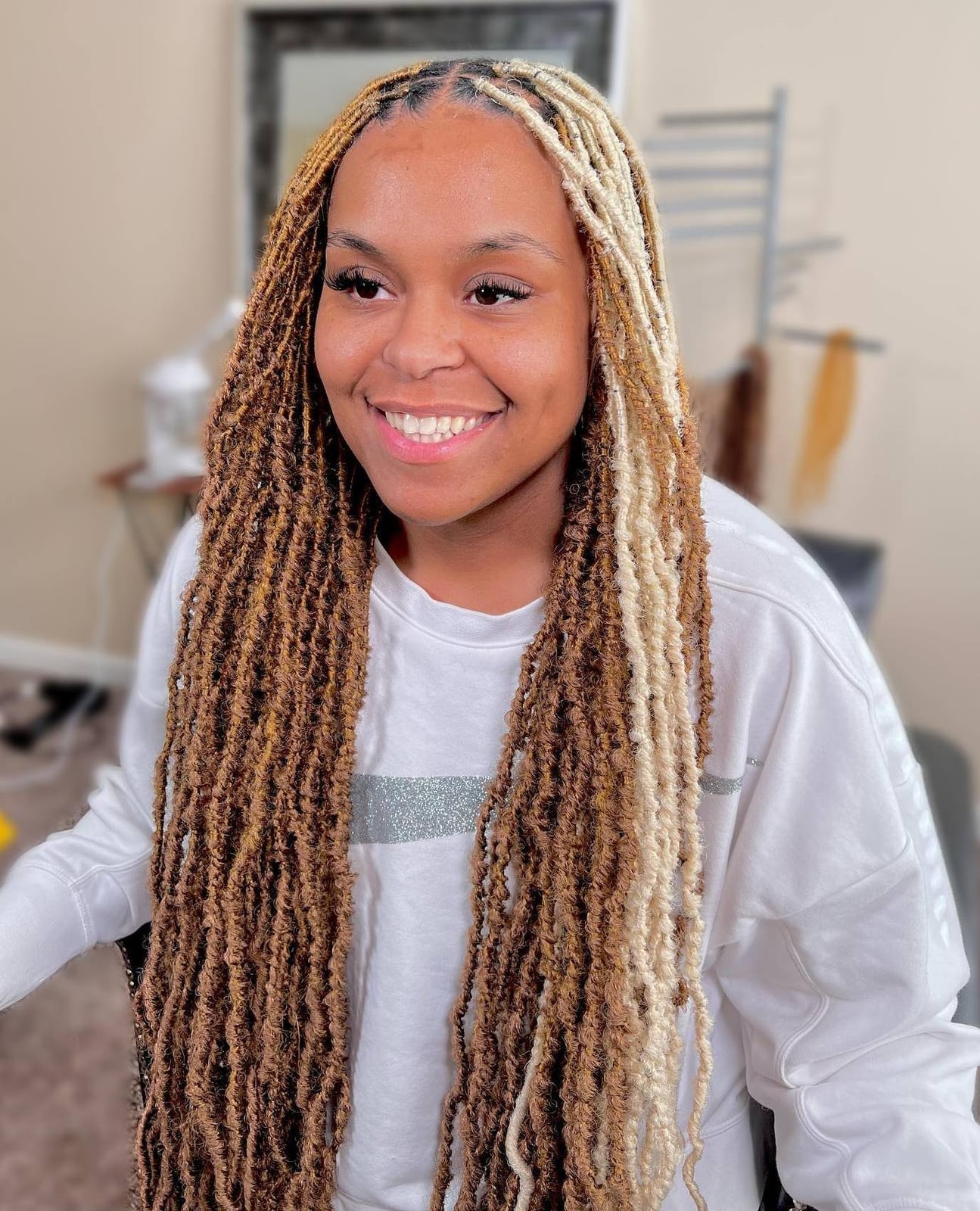
Ombré faux locs differ from traditional hair coloring in one key way: the transition happens on the loc itself, not on individual strands, so the gradient reads as a single sweep from brown at the roots to blonde at the tips. On wavy, medium-density locs at mid-back length, the color change lands softly, with a middle parting showing both shades in one glance. The blonde ends require more attention than the brown roots, since lightened hair pulls warm faster. Ask your colorist for: brown to blonde ombré faux locs. Doing this at home means risking patchy blending, so a salon visit is the safer route for a smooth gradient.
Soft Locs with Blonde Highlights
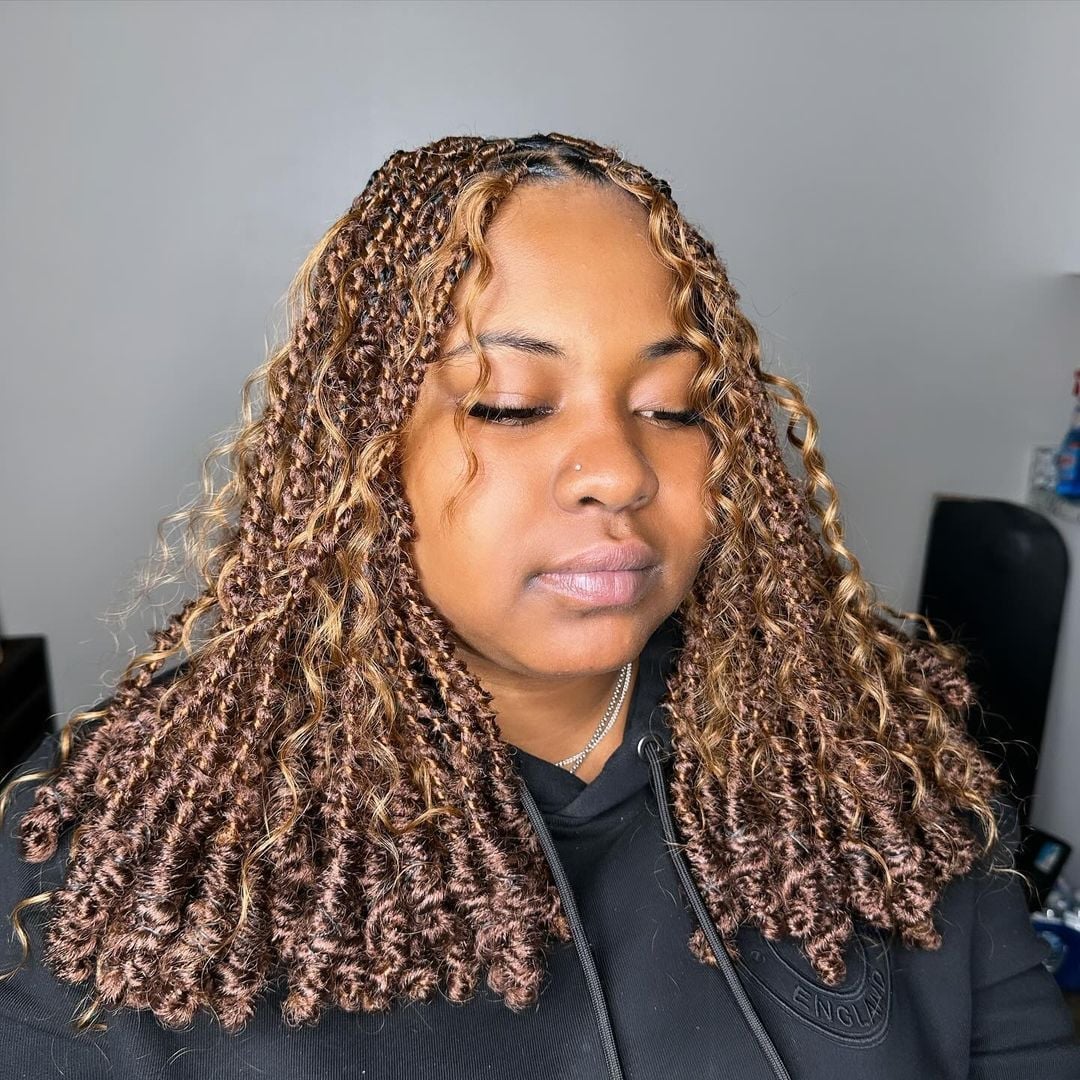
The loose waves in these soft locs do the work that a heavy color application would normally handle, giving the brown base a gentle bounce that the blonde highlights simply accent. At mid-back length with a thick, wavy texture, the highlights appear as thin ribbons, not bold streaks, which keeps the overall effect subtle. Blonde on a brown base shifts warm within a few weeks, especially on locs that get washed regularly. Ask your colorist for: soft locs with brown base and blonde highlights. Anyone unwilling to tone at home should skip the blonde entirely and stick with the brown.
Vivid Ginger Orange Faux Locs
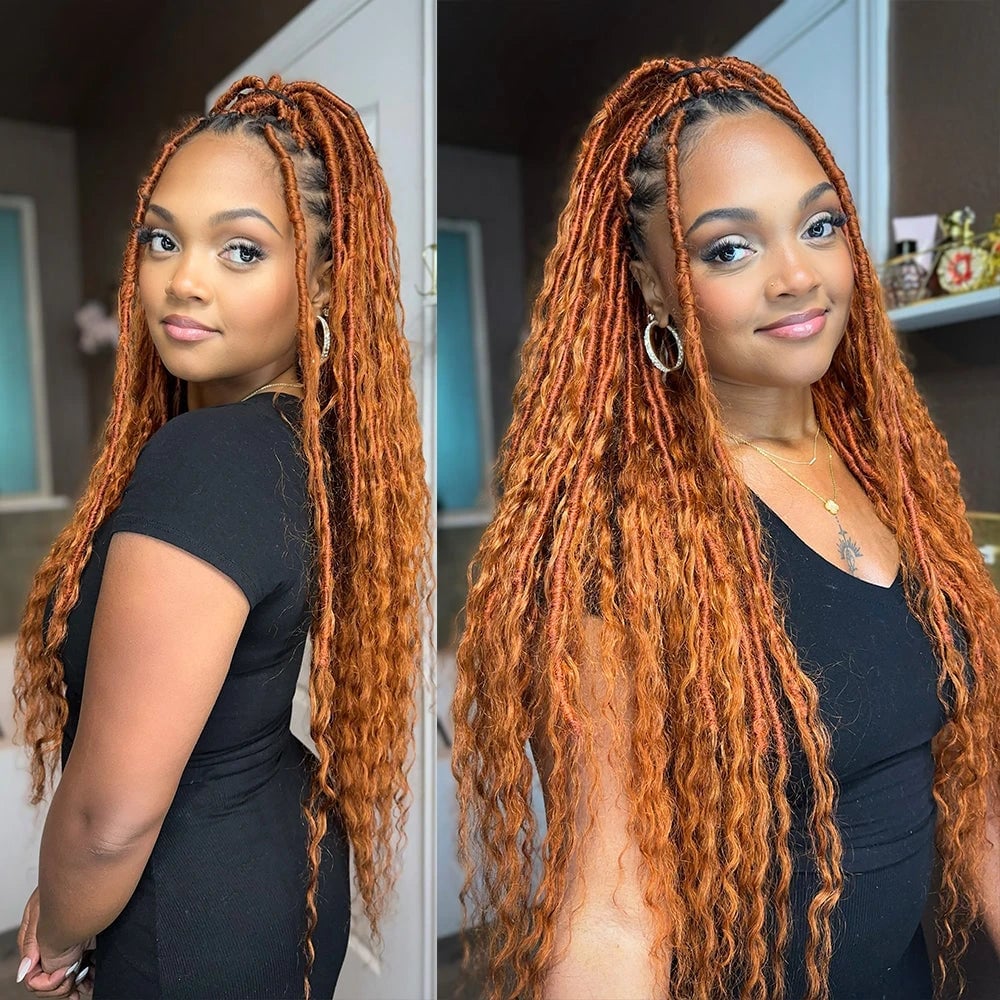
Can a color this loud still look dimensional? Yes, when the vivid ginger orange is cut with lighter copper highlights that add a second layer of depth. The deep wave texture at mid-back length gives the color surface area to shift, so the orange never reads as one flat block. This shade suits anyone who wants their locs to announce themselves before they walk in the room, and the middle parting keeps the volume balanced. Ask your colorist for: vivid ginger orange faux locs with copper highlights. Bold color fades fastest, so plan on refreshing the tone every four to six weeks to keep the ginger from dulling.
Vibrant Purple Shoulder Length Microlocs
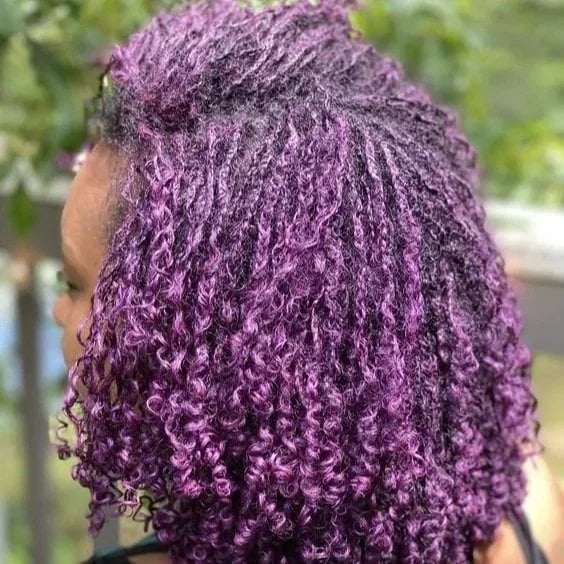
The fine density of these microlocs is exactly what makes the vibrant purple work, since thinner locs let more of the color show through without weighing the style down. Curly texture and shoulder length mean the shade reads clearly from every angle, while the darker roots keep the fantasy color grounded. Air-dried styling preserves the natural curl pattern, which is the low-maintenance win here. Ask your colorist for: vibrant purple microlocs, shoulder length. A lightweight spray keeps the curls defined between washes, and the purple tone needs a monthly refresh to stay bright rather than muddy.
Deep Burgundy Shoulder Length Locs
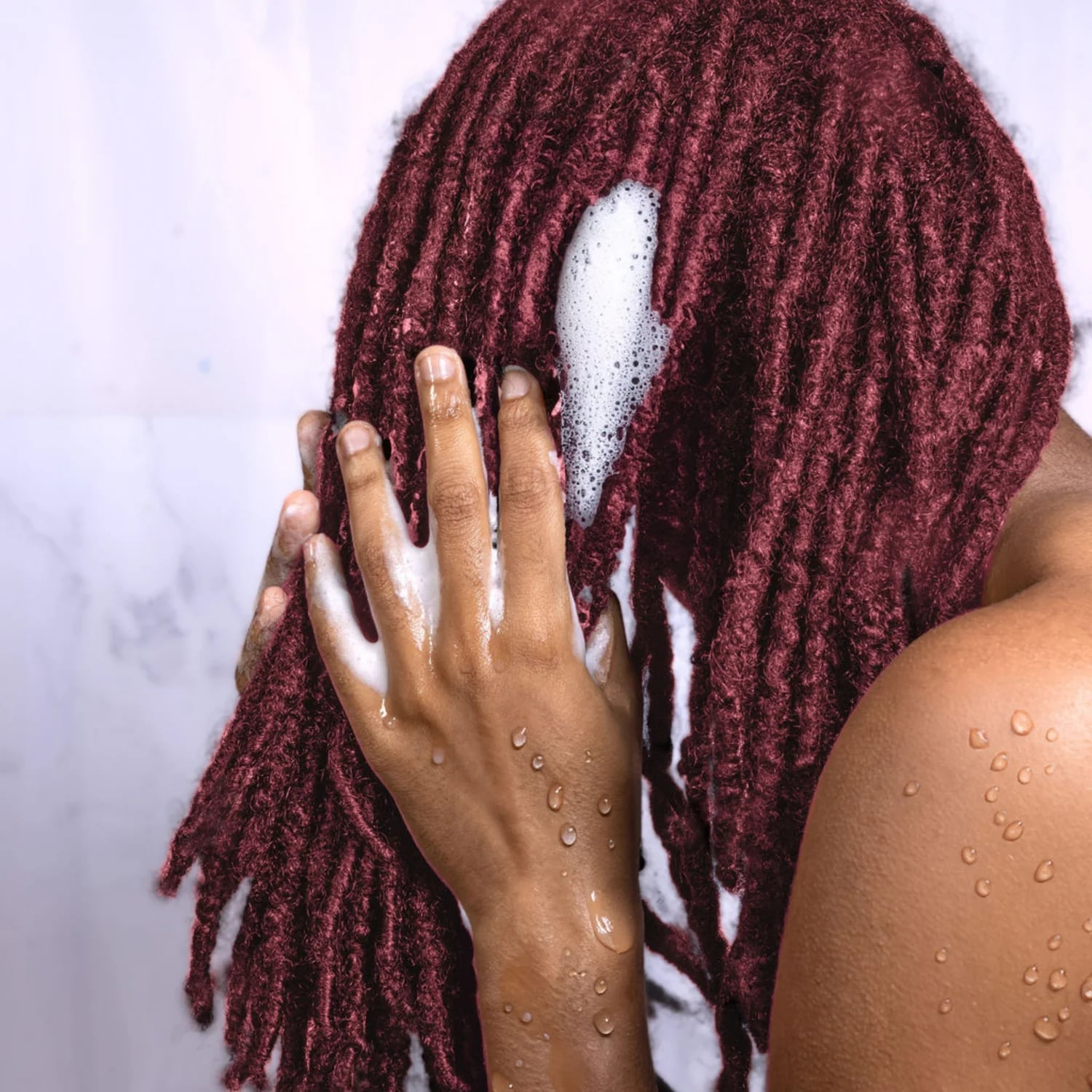
Deep burgundy is the color of expensive velvet and winter wine, which makes it a natural fit for the cooler months. On thick, wavy locs at shoulder length, the shade looks rich and deliberate. Ask your colorist for: deep burgundy locs, shoulder length. The tone works with a middle or side part, and it pairs well with both casual and formal settings, from an office holiday party to a weekend brunch. Plan for a salon visit, since getting this depth of color on locs takes time and precision.
Vivid Red Mid-Back Loose Locs
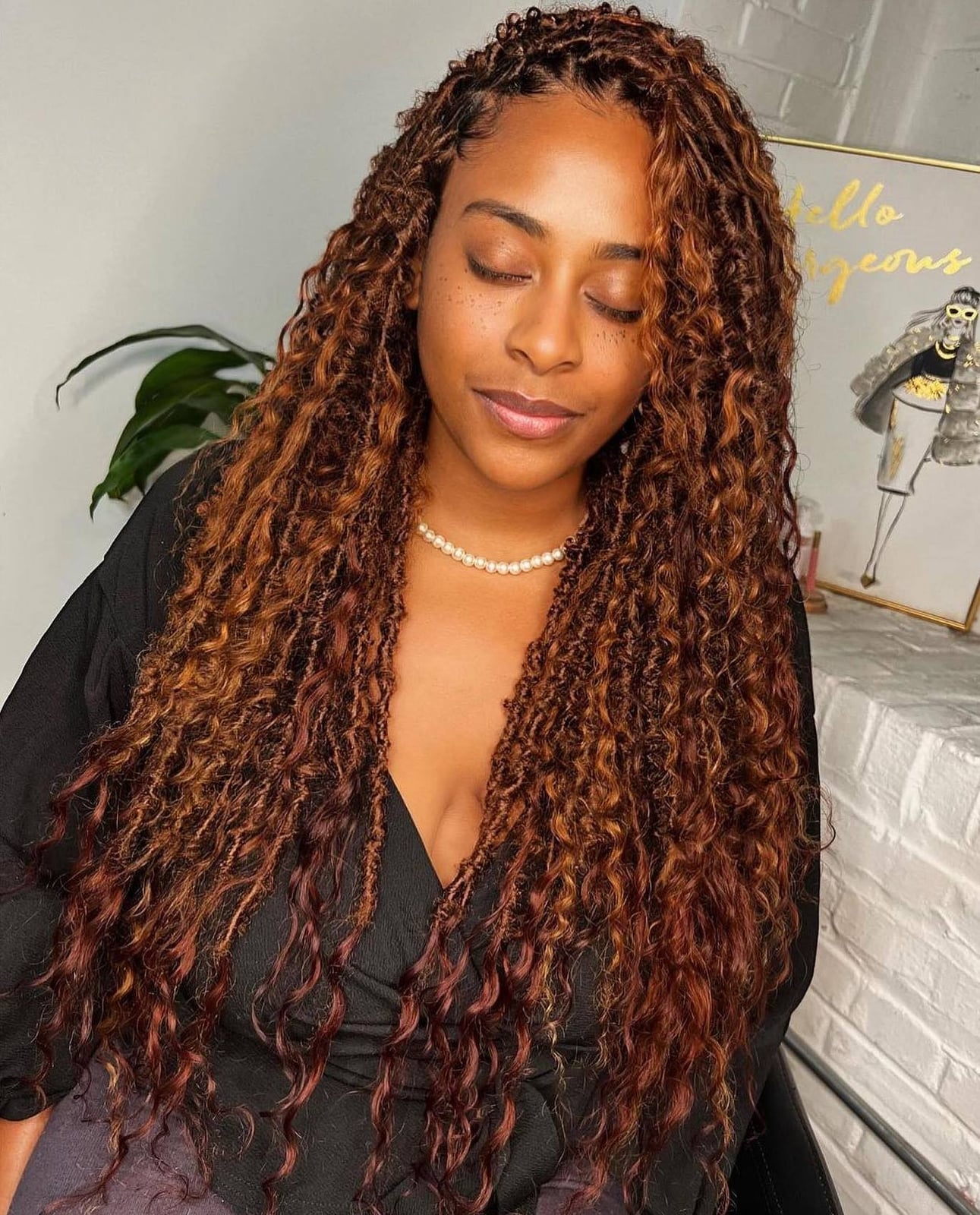
A vivid red this saturated is not a subtle choice, and that is exactly the point. On thick, wavy locs that fall loose to mid-back, the color reads as a statement before the texture even gets a say. The technique involves saturating each loc from root to tip, then letting it dry loose so the waves keep their movement. Ask your colorist for: vivid red loose locs. This is a salon job, not a DIY project, because getting the color even across every loc takes a careful hand. The middle part keeps the look clean while the color does the loud work.
Short Blonde Highlights on Dark Roots
How do you get that sharp contrast without looking like a zebra? The trick is in the parting. On short, dense locs with a fine texture, the grid pattern sections each loc precisely, so the blonde highlights land evenly against the dark roots. Ask your colorist for: short locs with blonde highlights and dark roots. The dark root keeps the grow-out soft, but the blonde still needs a touch-up every six to eight weeks to stay bright. This is a salon-only technique; the sectioning alone takes patience and a steady hand.
Caramel Brown Loose Mid-Back Locs
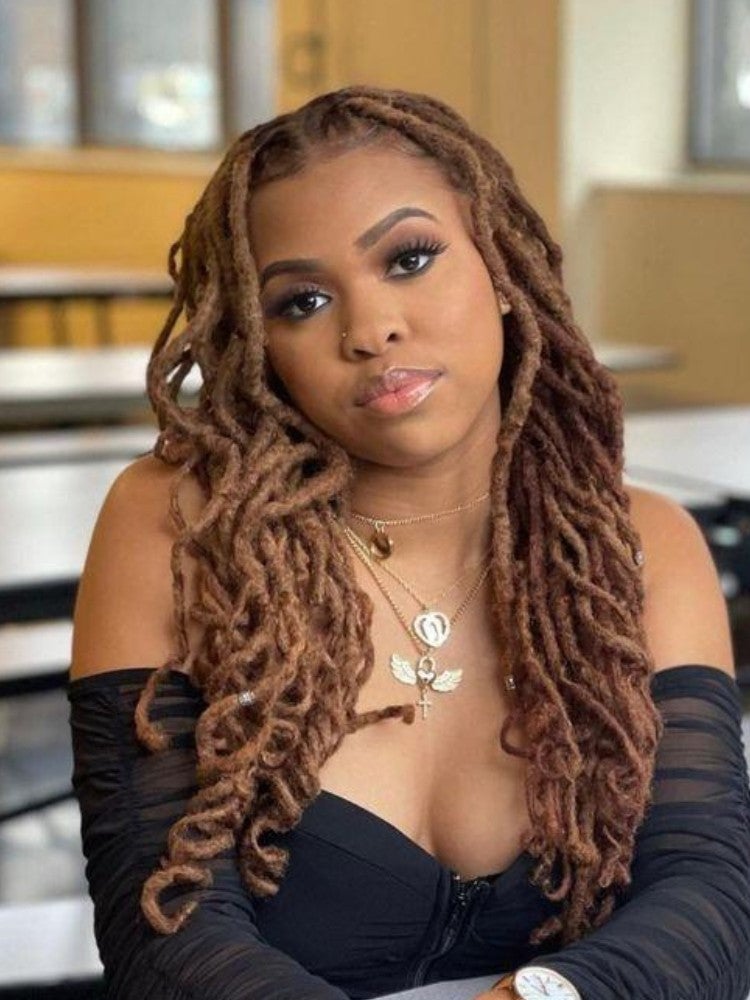
If chocolate brown feels too flat and honey blonde too bright, caramel brown splits the difference with warmth that flatters without shouting. On wavy locs that hang loose to mid-back, the color has subtle variations in tone that catch the eye with movement. Ask your colorist for: caramel brown locs, loose style. The middle part lets the waves frame the face, and the shade reads as natural but with more depth than a single flat color. It is a salon color that needs a gloss or toner every few months to keep the warmth from turning brassy.
Short Rounded Copper Orange Locs
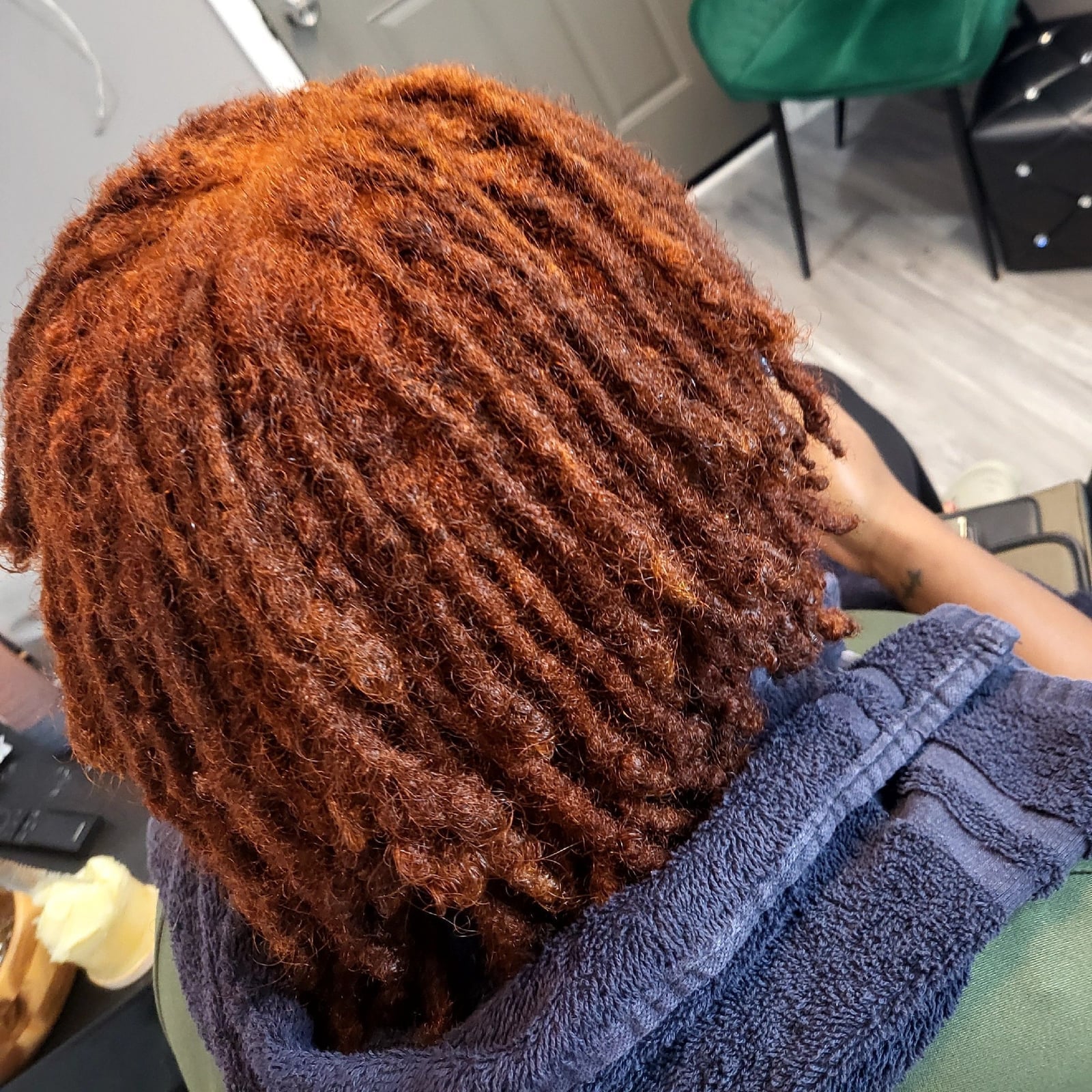
Vibrant copper orange is a bold choice, and on a short, rounded shape it reads as confident and playful. The wavy, medium-density locs keep the silhouette soft, but the color is the real event. Ask your colorist for: short rounded copper orange locs. The honest trade-off is that this shade fades fast, so expect a refresh every four weeks or so to keep the orange from dulling into a muddy peach. It is a salon color, and the short length means trims are frequent if you want to keep the rounded line sharp.
Blonde Highlights High Ponytail with Braids
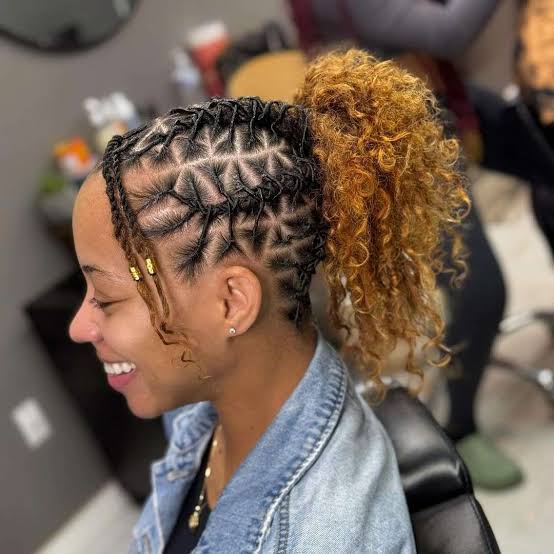
A high ponytail does more than get hair off your neck when the locs are thick, wavy and hit mid-back. The blonde highlights on this dark base add dimension with every movement, and the braided sections at the front add structure to what could otherwise be a simple pull-back. Ask your colorist for: blonde highlights on dark base, high ponytail with braided front. Those with medium to thick density and wavy texture will find the braids help the style hold its shape all day. Secure the braids tightly at the roots, then use a texturizing spray on the ponytail for extra grip and longevity.
The House of Locs
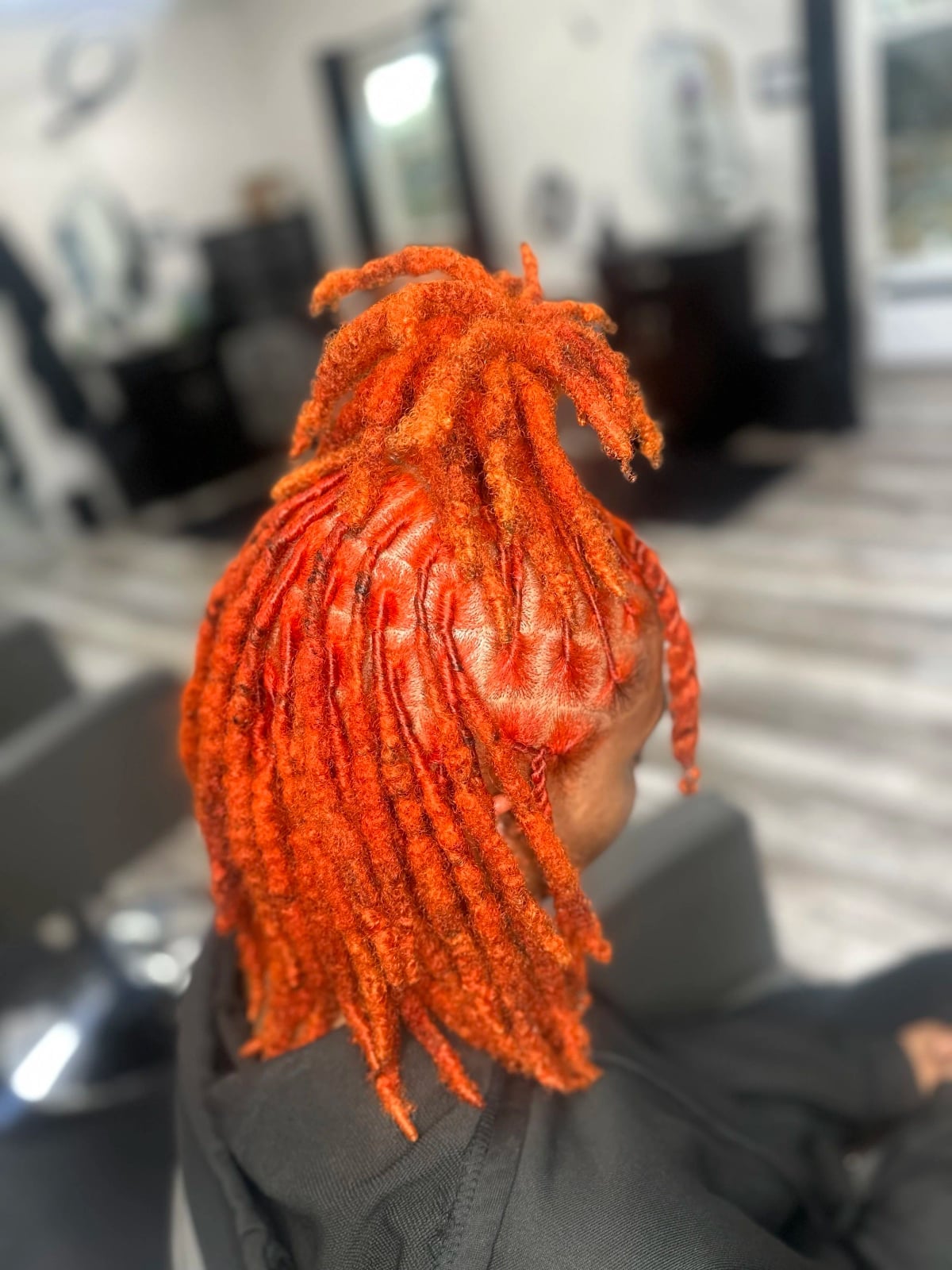
Vibrant orange all over is not a shy color choice, and on shoulder-length locs with a coily, thick texture it becomes a statement. The single-process application keeps the color uniform from root to tip, which means every loc reads as one solid, saturated tone. Ask your colorist for: vibrant orange all-over color on locs.
That level of saturation on thick, coily locs requires a pre-lightening step if you are starting from a dark natural base. The density of the texture also means the colorist will need more product than you might expect to ensure every strand is coated evenly. A gloss treatment afterward helps seal the cuticle and keeps the orange from pulling brassy too quickly.
Natural Faux Locs Hairstyles
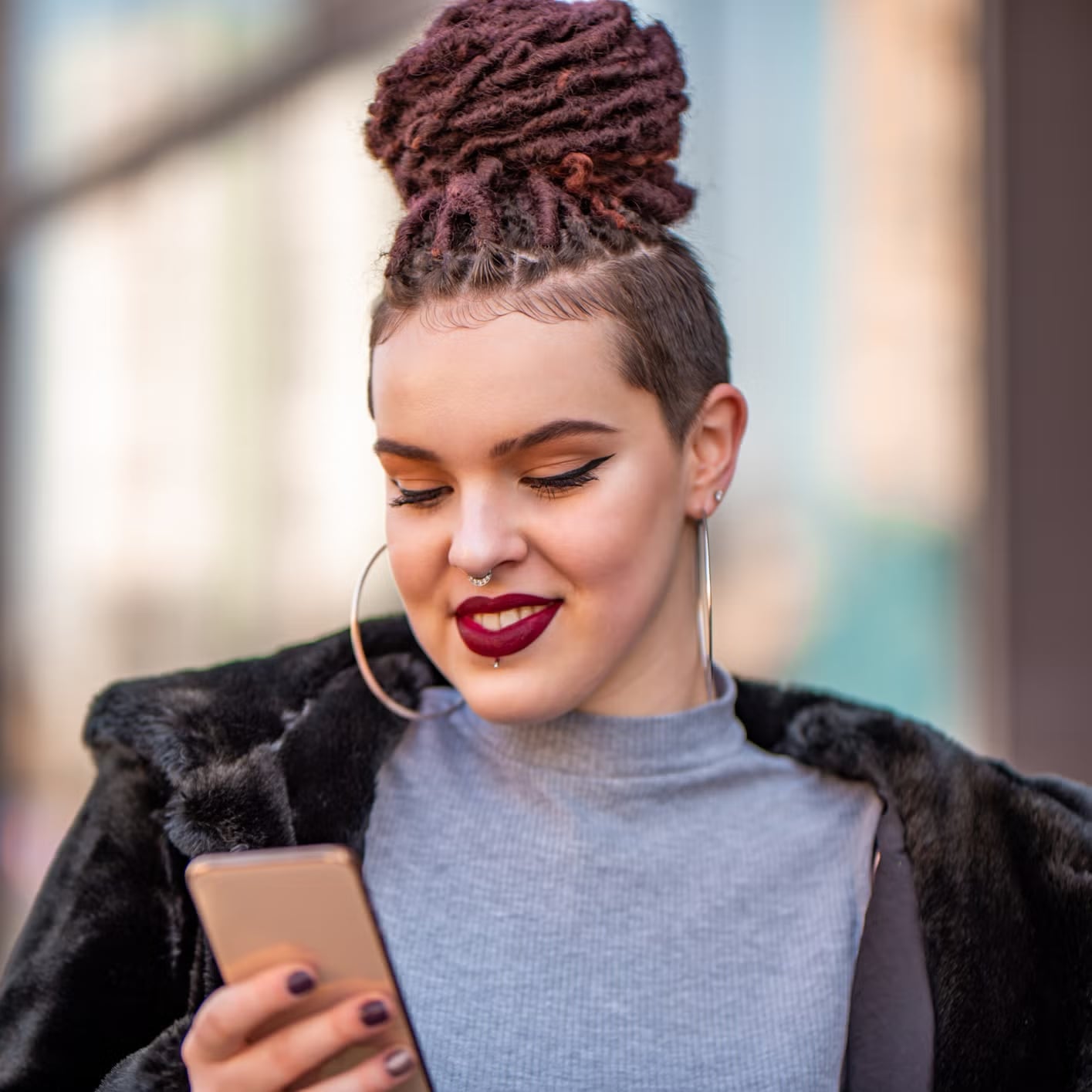
Dark auburn faux locs at mid-back length offer the color payoff of a red-toned shade without the commitment of permanent dye on your natural hair. The undercut beneath keeps the style from feeling heavy, and the high bun with a slicked-back hairline gives it a polished finish. Ask your stylist for: dark auburn faux locs, high bun with slicked back edges. Those with coily, thick natural texture will find the faux locs blend well at the root for a more seamless look. Retwist the edges every two to three weeks to maintain the clean hairline, and sleep with a satin scarf to prevent frizz at the crown.
Final Thoughts
Your rule of thumb: the farther your chosen shade is from your natural base, the more often you will be refreshing it. A deep burgundy or auburn will blur into the root far longer than a pastel pink or a platinum blonde. Stick with a color-safe routine, and the payoff is a look that is unmistakably yours.
- Deep condition locs weekly to maintain moisture, especially after coloring.
- Use color-safe shampoos and conditioners to preserve vibrancy.
- Avoid excessive heat styling to prevent color fading and damage.
- Plan for color refresh appointments every 6-10 weeks, depending on the shade and grow-out.
- Protect locs from sun exposure, which can fade color.
Colored locs are a statement of personal style and artistic flair.