When every spin and leap needs the hair to follow, the right style keeps up without a second thought. Glossy natural texture and soft face-framing layers have quietly replaced the poker-straight flat iron on competition floors and in rehearsal rooms.
These 31 Dance Hairstyles cover the full range, from five-minute slick buns to multi-braid sculptural looks that hold for hours. Fine hair that slides out of a ponytail, a fringe that refuses to stay put, or a visible grow-out line that needs hiding: there is a solution for each here.
High Ponytail With Dynamic Movement
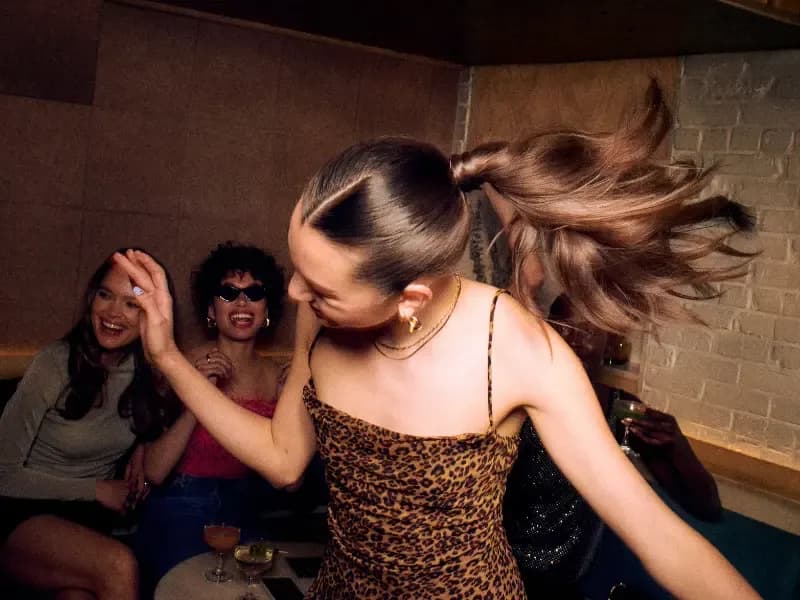
The high ponytail is a dance classic for one reason: it moves when you do. Thick, wavy, medium blonde hair with lighter highlights is pulled up to mid-back length, the strands catching light and momentum as they swing. The middle part keeps the front clean, so the eye goes straight to the motion. This is a style that suits dancers with thick, wavy hair of similar length; the center part also helps elongate a round face.
Ask your stylist for: high ponytail with movement, middle part. Before securing with a strong elastic, add a texturizing spray at the roots for grip and volume. It holds through practice and performance, though the waves will soften by the end of a long session. A quick refresh with a curling wand brings the bounce back.
Braided Updo With Jeweled Accessory
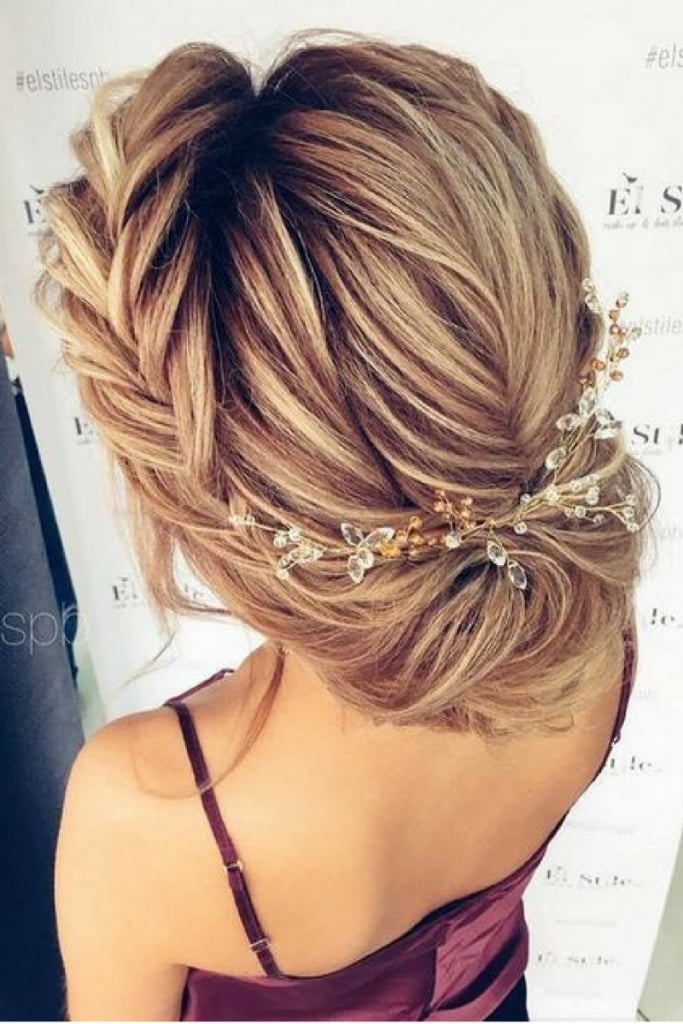
How do you get a braided updo that stays put through a competition and still looks intentional? The technique is everything. This warm blonde style with lighter highlights is built from intricate twists and turns, each section pinned securely to create a sculptural shape. The jeweled accessory, with crystals and gold beads, is added last, so it sits on top of the braid without pulling or loosening it. The back view shows the complexity: layers of braid woven together, not just one rope twisted around. Ask your stylist for: intricate braided updo with jeweled accessory. It suits thick, wavy hair of any length that can be gathered up, and it works well for oval and square faces. This is a salon-only style, ideal for a formal dance event where you want the hair to stay out of the way and still catch the light.
Cornrows With Voluminous Curls
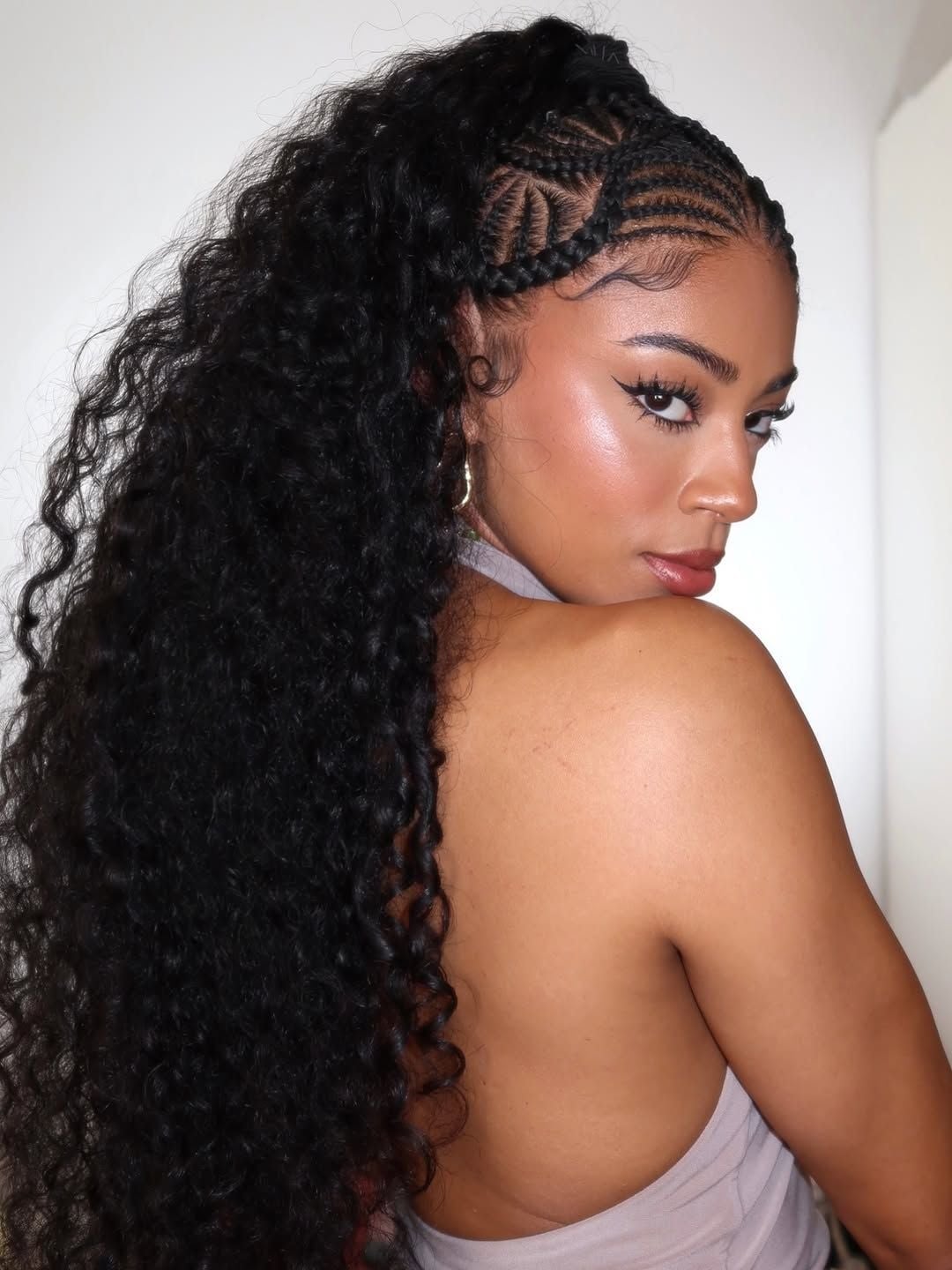
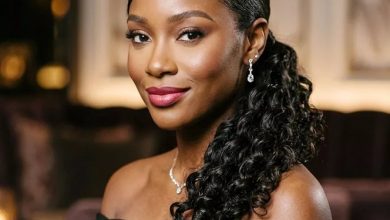
Cornrows with voluminous curls offer a different kind of drama than a full braided updo. The scalp is worked into intricate cornrows with geometric patterns near the hairline, while the ends break free into loose, coily curls that cascade to mid-back. It is a contrast that reads as both controlled and wild. This style suits coily, thick hair of mid-back length, and the tight braids keep the roots flat while the curls add volume where you want it.
Ask your stylist for: cornrows transitioning to loose curls, geometric patterns. To keep the curls defined, use a leave-in spray regularly and sleep with a silk scarf to protect the braids. The cornrows hold for weeks with minimal fuss, making this a solid choice for a long rehearsal period.
Slicked Back Ponytail With Long Braid
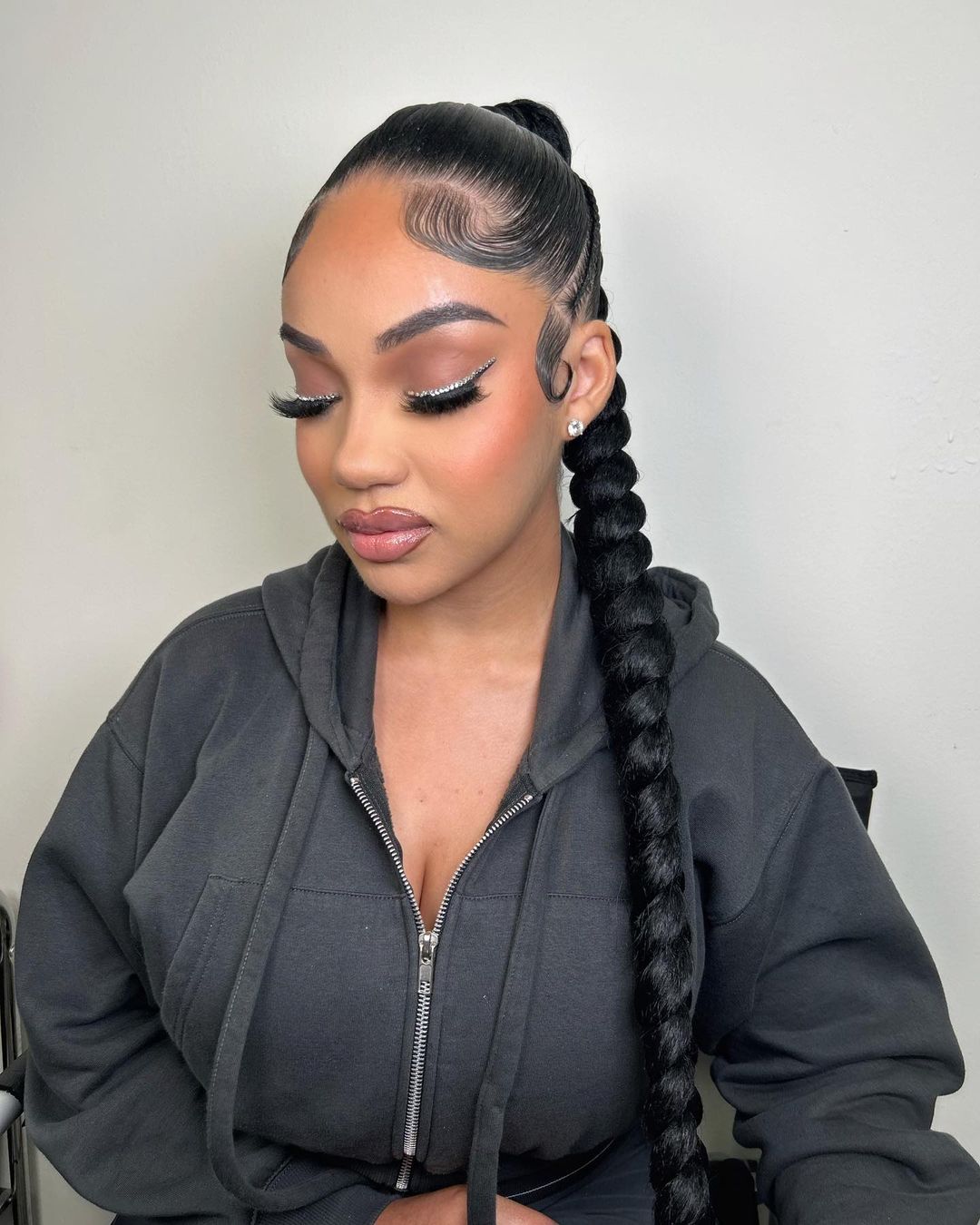
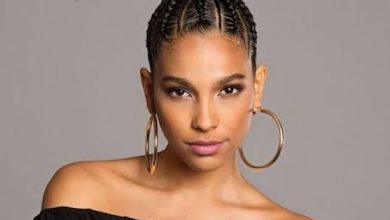
A high, slicked-back ponytail that turns into a long braid is a study in precision. The front is smoothed back from a middle parting, with baby hairs styled into deliberate curls at the hairline. It is straight, thick, black hair, pulled up to mid-back, and the braid gives the ponytail weight and structure so it does not just whip around.
Ask your stylist for: slicked back high ponytail into a long braid, styled baby hairs. The words matter: you want the slick to be flat and glossy, not greasy, and the braid to be tight enough to hold its shape. A strong-hold gel or pomade applied with a boar bristle brush gets the front smooth. This style suits straight, thick hair of mid-back length, and the slicked front works with most face shapes. It is a salon-only look, best saved for a performance where you need the hair to stay put from the first count to the last.
Collarbone Dutch Braid With Loose Waves
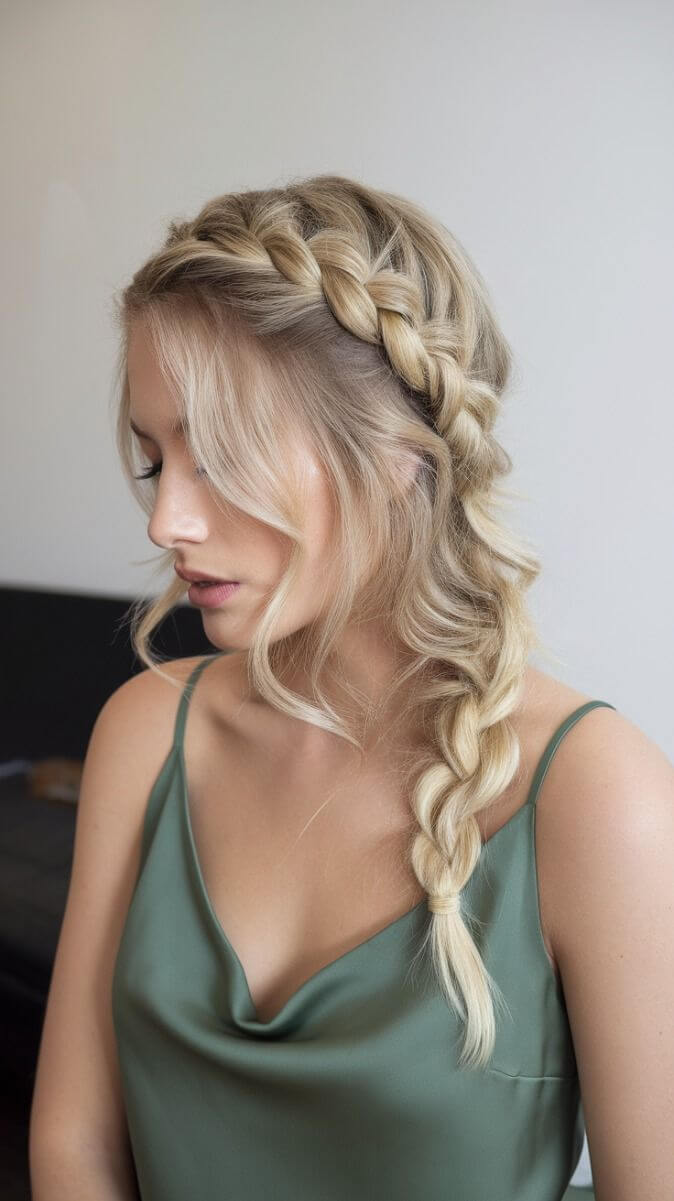
A collarbone-length dutch braid with loose waves is a practical choice that still looks finished. The braid starts at the crown and weaves down one side, while the rest of the ash blonde hair falls in soft, fine waves with curtain bangs framing the face from a side parting. The braid keeps the hair off the face, and the waves add movement without getting in the way.
Ask your stylist for: collarbone length dutch braid with curtain bangs. This is a style you can do at home with a little practice: section the front for the braid, wave the rest with a wand, and mist the braid with hairspray to hold. The curtain bangs need a quick blow-dry each morning, and the waves will soften by evening, but the braid stays. It suits fine to medium wavy hair of collarbone length, and the bangs help soften square and round faces.
Half-Up Half-Down With Voluminous Curls
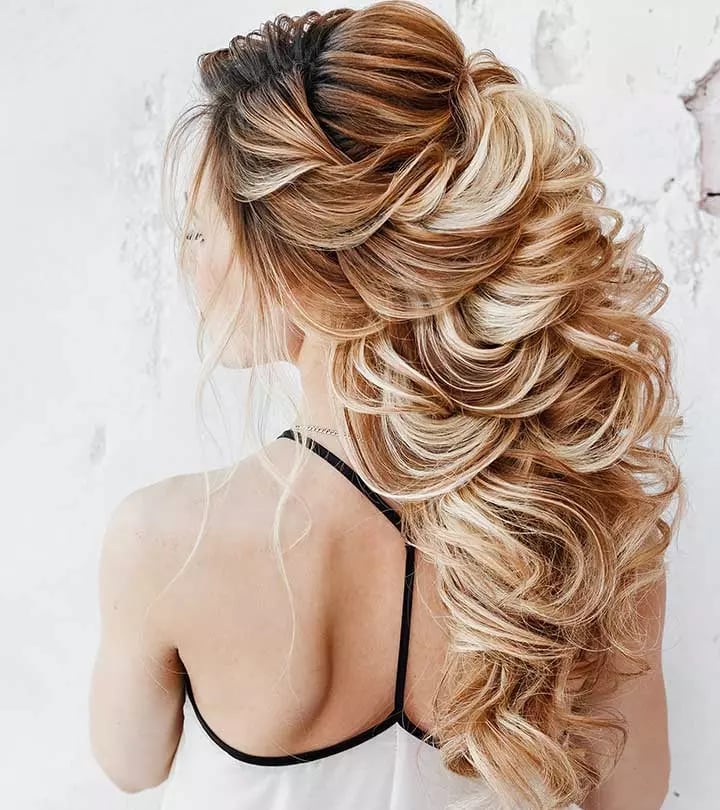
Can a dance hairstyle actually show off the length and still stay out of your face? This half-up, half-down configuration with voluminous curls is the answer for thick, wavy hair. The middle parting and mid-back length create a balanced frame that suits long and heart-shaped faces. Ask your stylist for: half up half down with voluminous curls.
The glamour here comes from the blonde balayage and the texture, not from a tight pull. A large barrel curling iron builds the curls, and the top section is secured firmly enough for a formal event or a stage performance. The wavy texture gives the style natural movement, but it needs that thickness to hold the shape through multiple spins.
Two Intricate Fishtail Braids
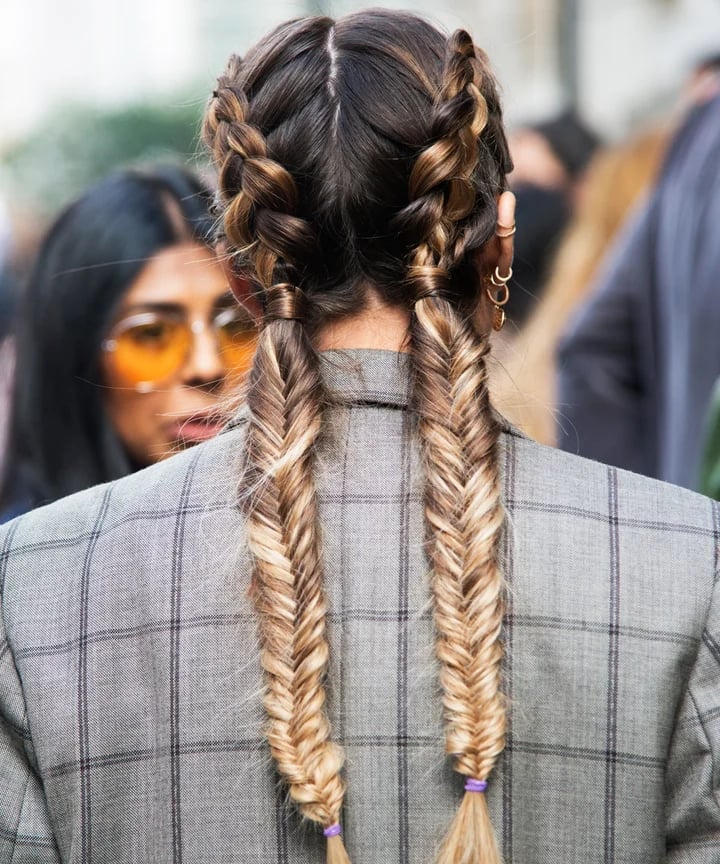
Unlike a basic three-strand braid, the fishtail weave lies flatter and grips the hair more securely. These two intricate fishtail braids are styled down the back, with the dark brown base and blonde highlights creating visible dimension. The woven bands sit close to the scalp, which keeps flyaways contained during high-impact routines. Ask your stylist for: two intricate fishtail braids.
The technique requires sectioning the hair into two even halves and crossing thin strands from the outside inward, a method that works best on thick, wavy hair of mid-back length. The symmetry suits round and oval faces. The braiding takes patience and practice to get the tension even on both sides.
Sleek High Ponytail With Slight Wave
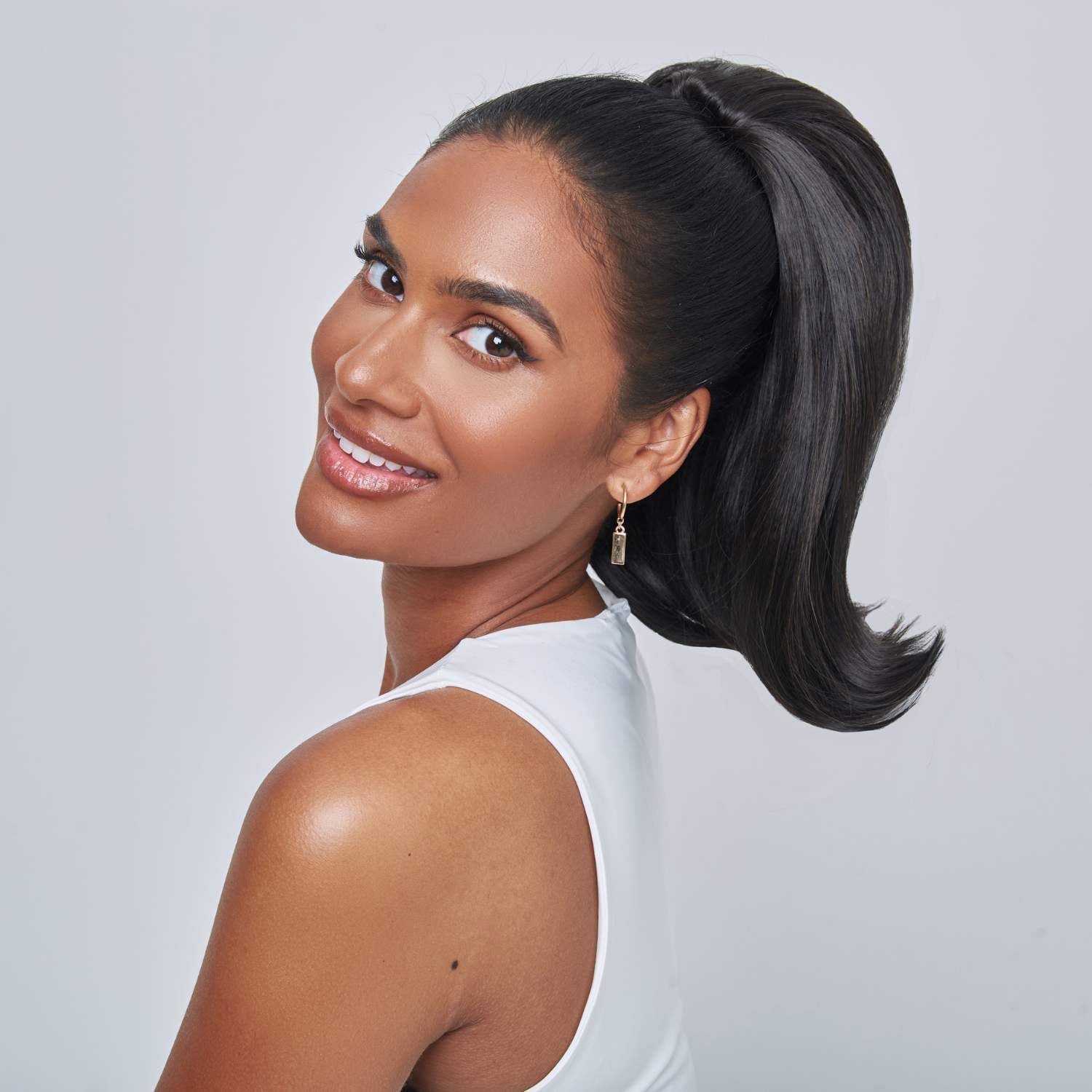
The design is deceptively simple: a high, sleek ponytail with a slight wave at the end. Straight, thick black hair of mid-back length is the ideal canvas, as the texture holds the polished line without puffing up. A middle part and sleek silhouette elongate a long face. Ask your stylist for: high sleek ponytail with a slight wave.
This is a salon-leaning style because the base needs to be glass-smooth, which a flat iron on dry hair achieves faster than a brush alone. The trade-off for that clean look is that fine or thin hair struggles to create the same taut finish without gaps. The slight wave at the ends adds a soft finish, but the real hold comes from a tight elastic at the crown.
Braided Pigtails With Colorful Extensions
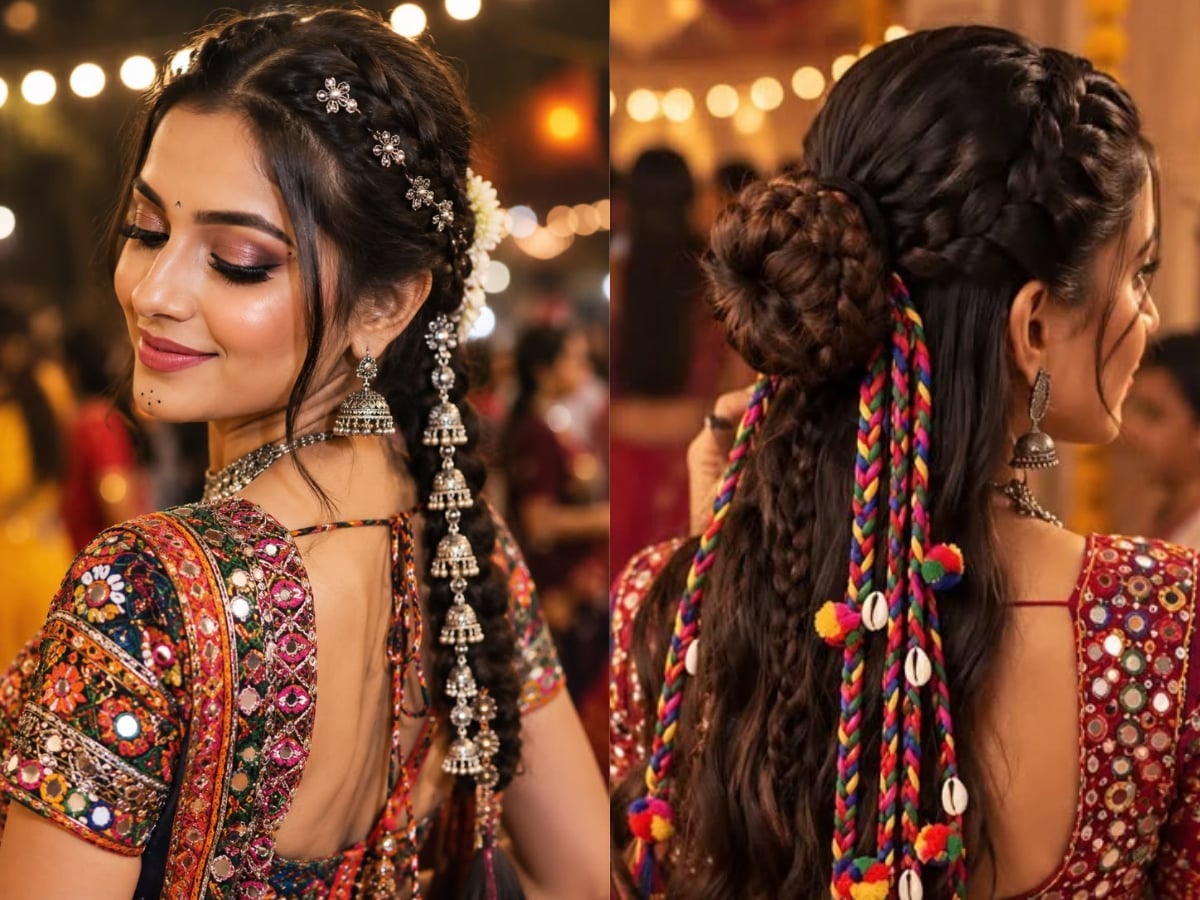
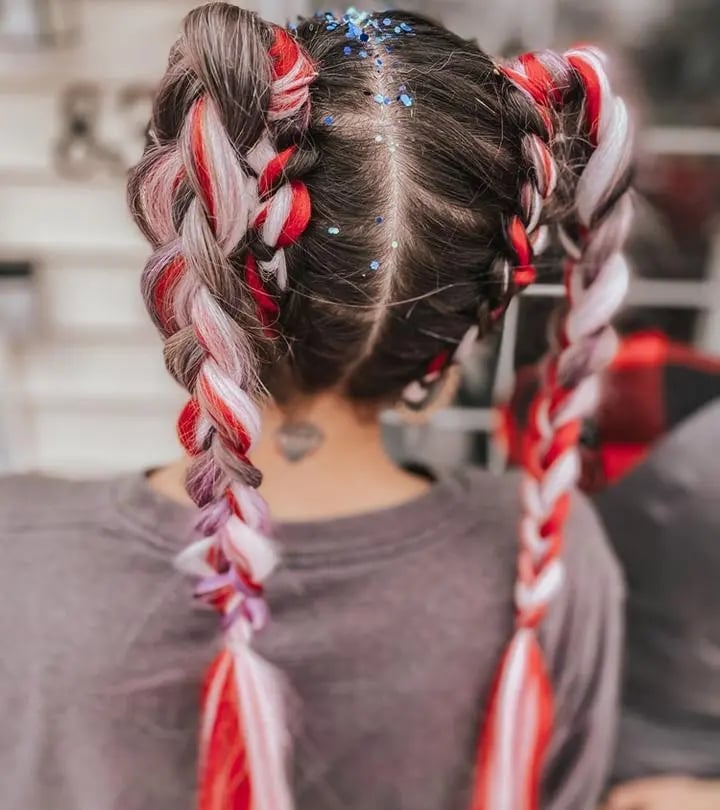
Want a dance hairstyle that reads as festive rather than formal? These braided pigtails with colorful extensions, tassels, and small floral accents deliver that energy. The dark brown base is woven into intricate braids with side-swept bangs, and the vibrant extension strands add length and movement down to the mid-back. Ask your stylist for: braided pigtails with colorful extensions and tassels, side swept bangs.
Sculptural Braided Updo With Side Sweep
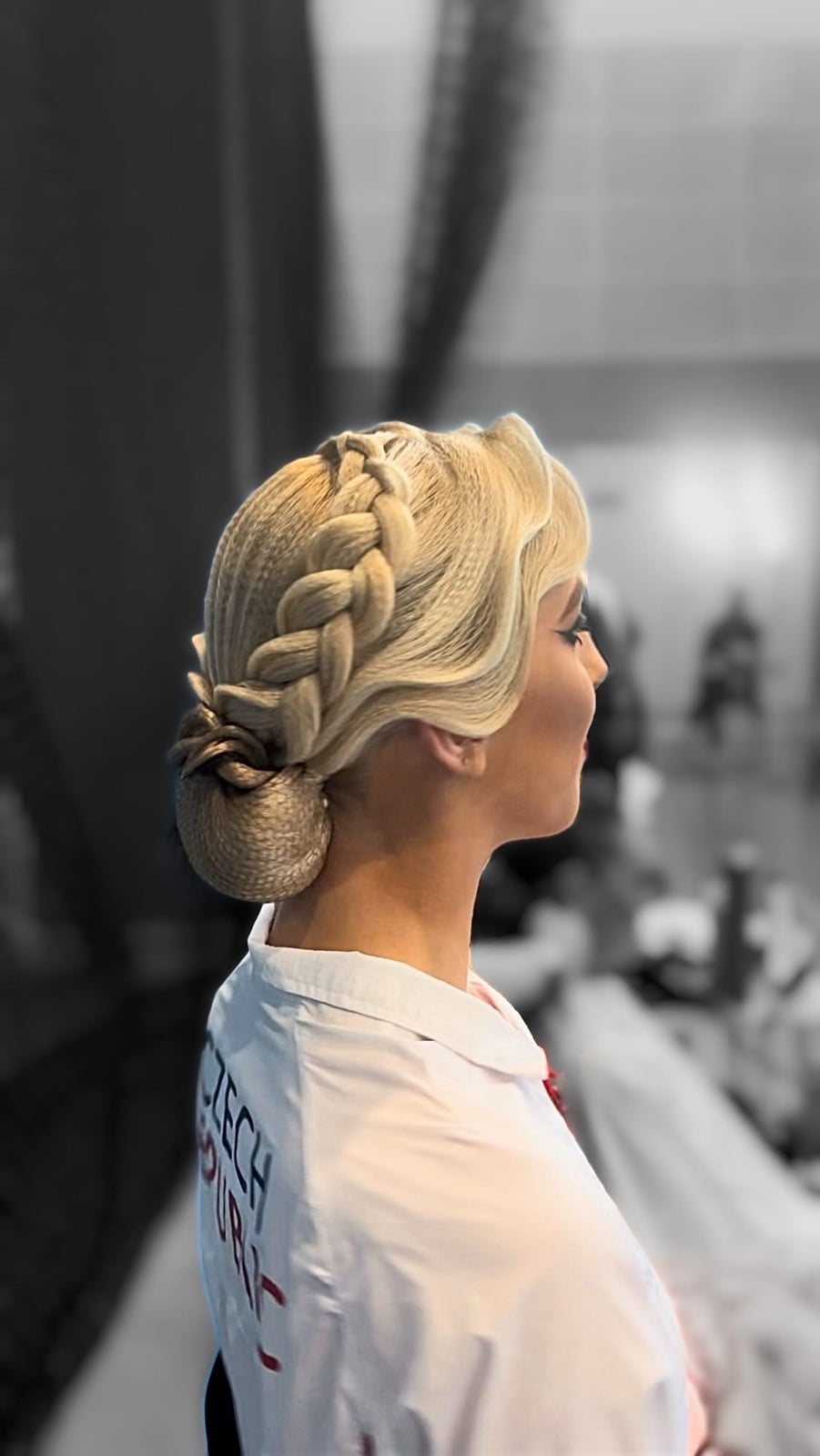
This updo is built with the precision of an architectural sketch, not a casual twist. A platinum blonde base is woven into intricate braids that sweep dramatically to one side, with a low bun or chignon visible at the nape. The side-swept bangs frame the face while the rest of the hair stays locked in place. Ask your stylist for: sculptural braided updo with dramatic side sweep.
Thick, straight hair holds the crisp lines best, and the sculpted shape needs strong hold products and hidden pins to maintain its structure through a competition or performance. The drawback is that the style requires a professional hand and about two hours in the chair, so it is not a quick fix before a rehearsal.
Bubble Braids With Gold Cuffs
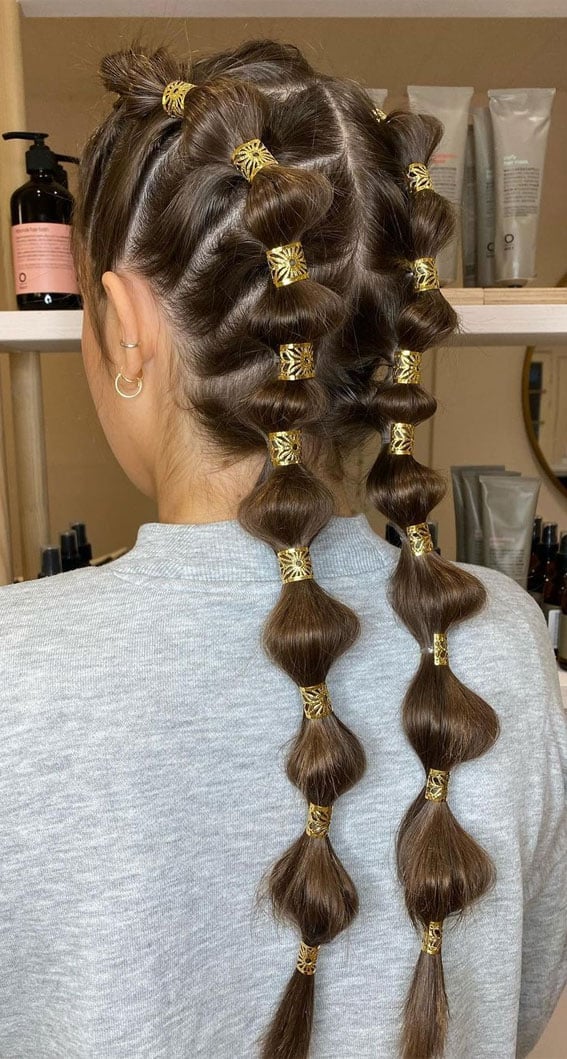
Bubble braids create a series of rounded segments down the back, a design that looks structured and polished. The effect works best on mid-back length dark brown hair with a natural wavy texture, since the slight grip helps each bubble hold its shape. Ask your stylist for: multiple bubble braids with gold cuffs. Section the hair into four to six vertical ponytails, secure each one with an elastic at the nape, then add elastics every two inches down the length.
Gently tug each section between the elastics to puff it into a bubble, and finish by attaching the decorative gold cuffs evenly along each braid. The braids keep hair contained during fast turns, and the accessories add a festive element without weighing the style down. A glossing spray on the finished braids reduces frizz and makes the gold cuffs pop against the dark brown base.
High Braided Updo With Face-Framing Tendrils
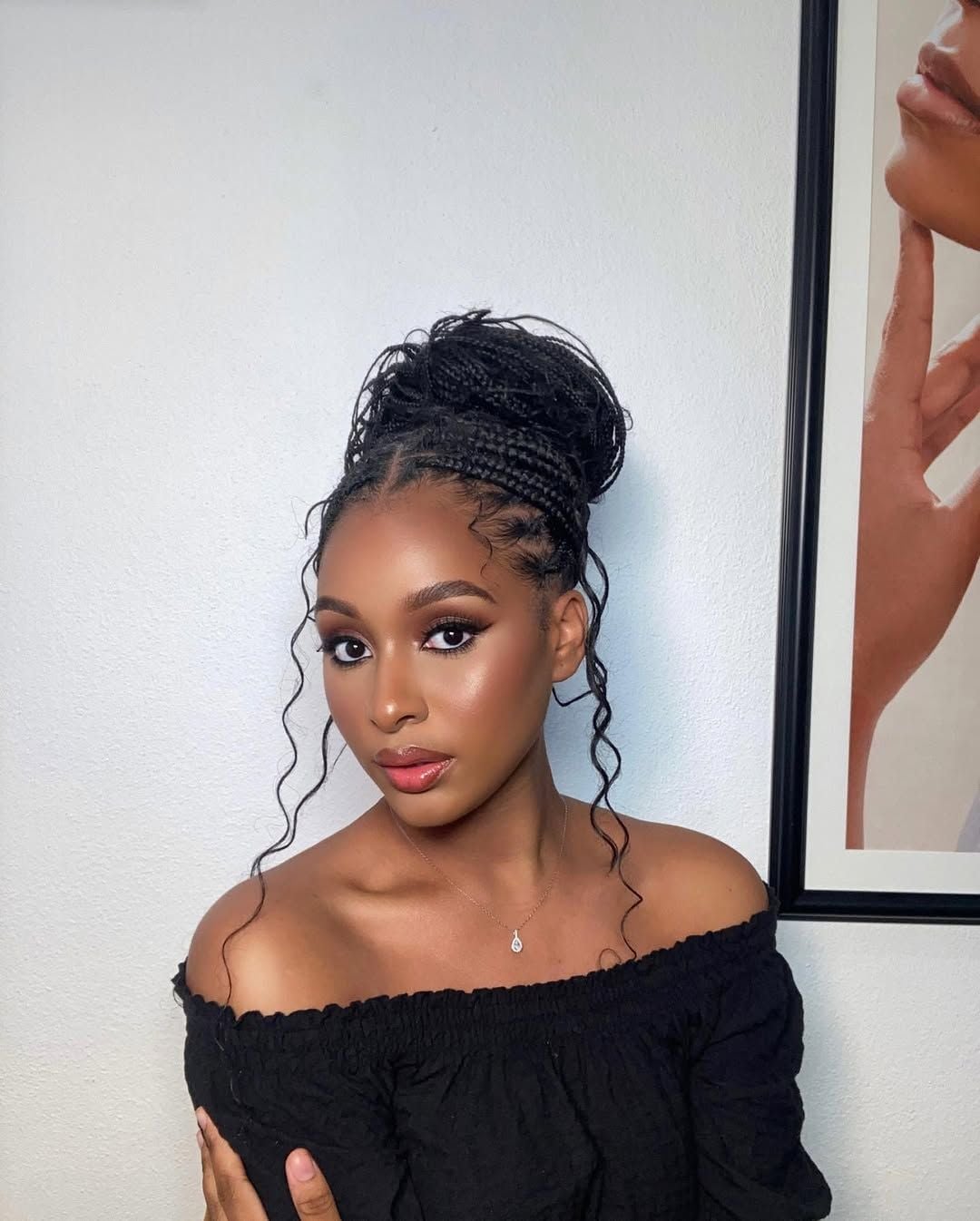
Can a performance style feel romantic and still stay put? This high braided updo on black curly and coily hair delivers both. The voluminous braided crown sits securely at the crown, while the loose tendrils around the face soften the overall silhouette, making it a strong option for dancers with round or heart-shaped faces. Ask your stylist for: high braided updo with face-framing tendrils. The updo holds the bulk of the length off the neck, so spins and lifts stay clean, and the tendrils catch light without falling into your eyes. A light-hold serum on the loose pieces keeps them defined without stiffness.
Half Updo With Braided Crown and Waves
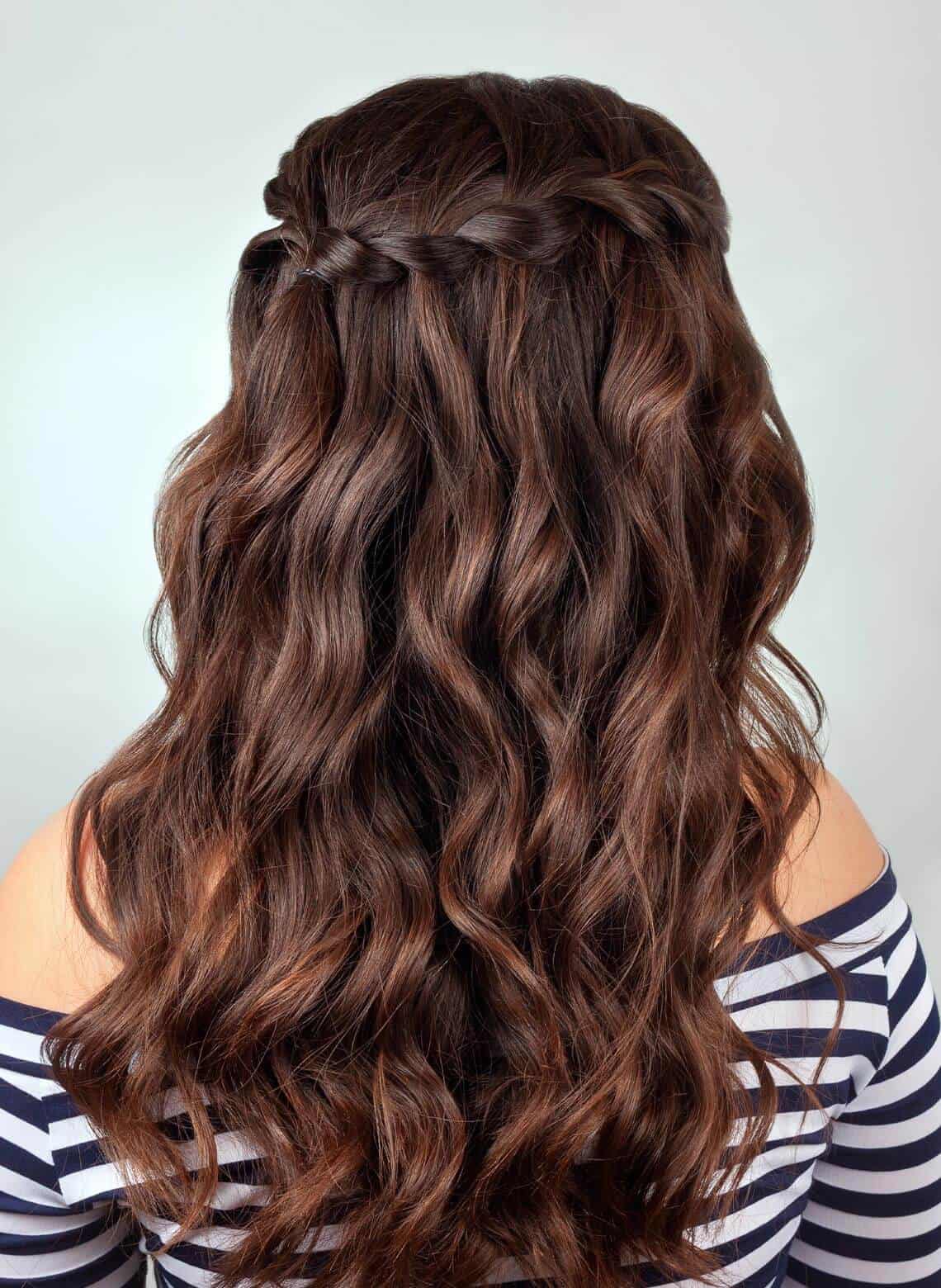
A half-up style keeps more hair down than a full updo, but the braided crown changes the calculation. Where a plain half-up can slip during vigorous movement, the crown braid anchors the top section firmly against the scalp, so the loose waves below can move freely without pulling the whole style apart. Ask your stylist for: half up with a braided crown and loose waves. This mid-back length dark brown hair with subtle highlights benefits from texturizing spray on the waves for grip and definition.
The braided crown also means less heat styling on the top section, since the braid itself creates texture. A trim every eight to ten weeks keeps the waves from looking ragged, and a toning appointment every six weeks maintains the highlight contrast against the darker base.
Braided Ponytail With Decorative Pins
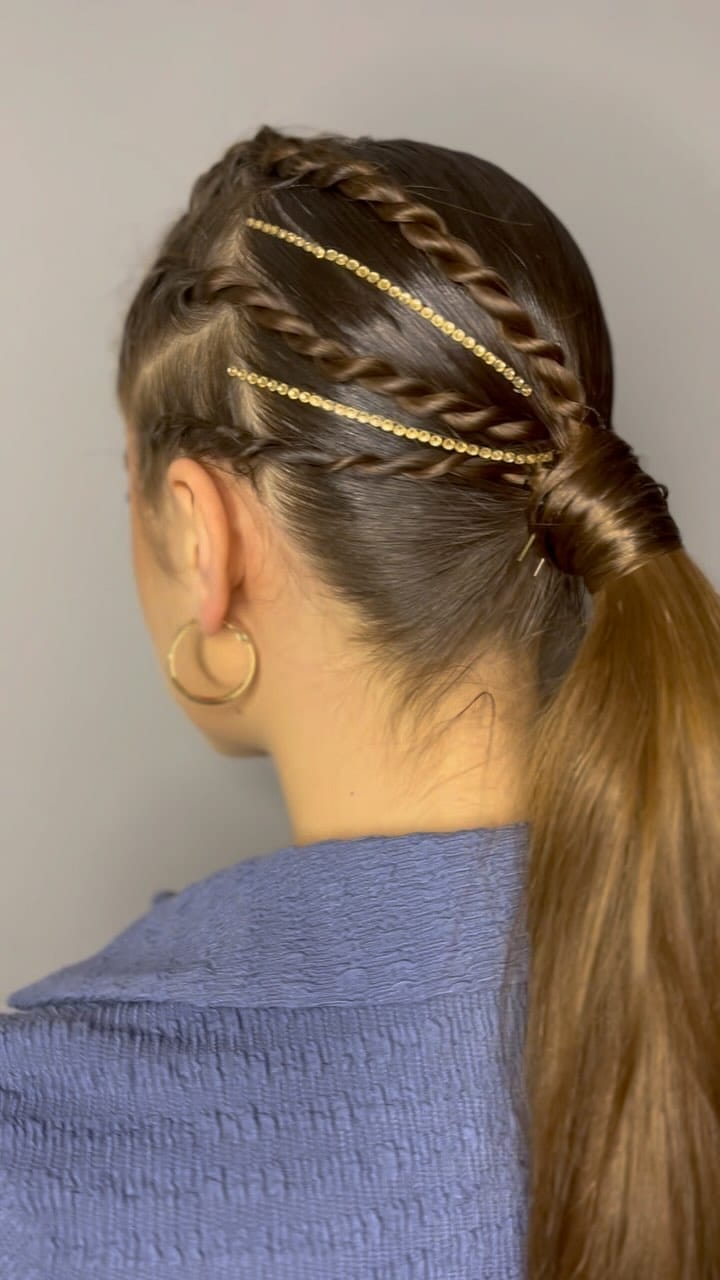
Several intricate braids run from the hairline back into a high ponytail, creating a style that looks complex but follows a repeatable pattern. This brown, straight hair of medium density uses cornrow-style braids along the scalp, which then converge into the main ponytail for a unified finish. Ask your stylist for: ponytail with braided details and decorative pins. The braids keep the front section flat and secure, while the ponytail retains full movement.
This is a salon-only style, since the braid tension and placement require a second pair of hands to keep the lines even. The decorative gold pins and chains add visual weight to the back, so the ponytail looks deliberate and neat. The braids need to be taken out within a week to avoid tension on the hairline.
Sculpted Waves Into A Nape Bun
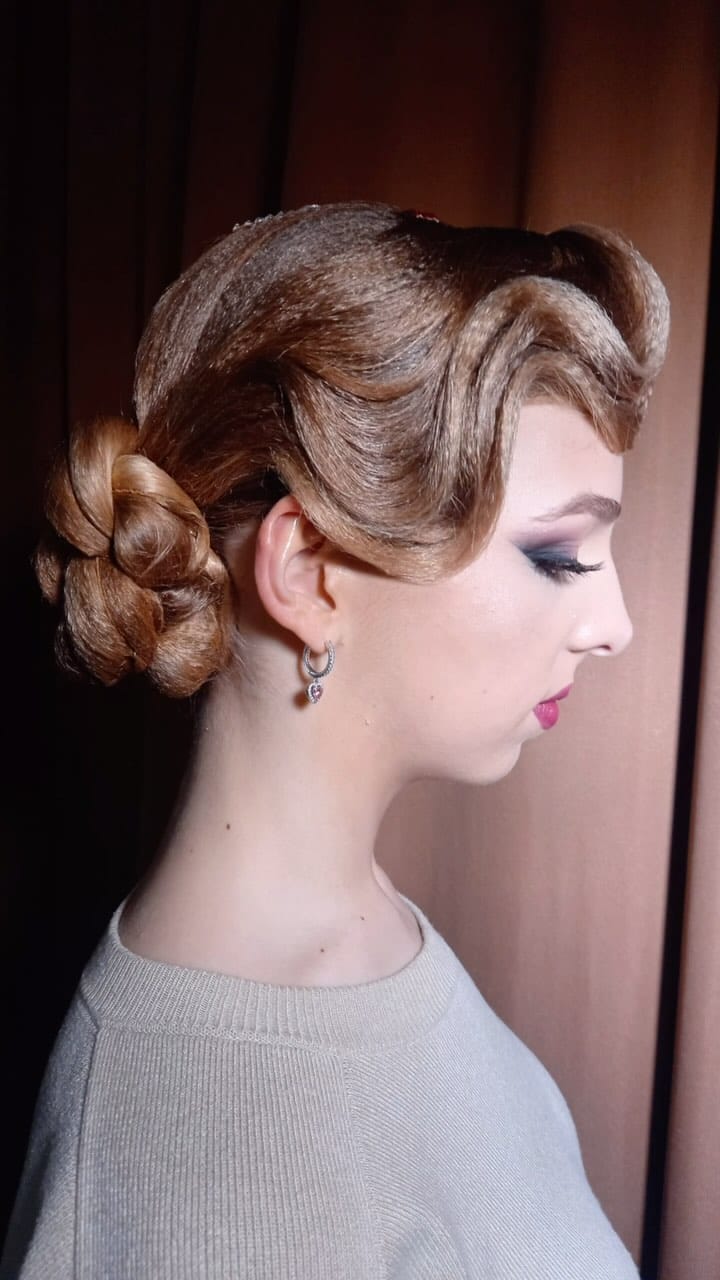
The sculpted waves sweep back from a side parting and flow into a textured bun at the nape, a design that relies on precise wave formation to work. This collarbone-length light brown hair uses its thick wavy texture to hold the wave shape, and the side-swept bangs soften the forehead without requiring constant adjustment. Ask your stylist for: sculpted waves into a nape bun with side swept bangs. The bun sits low enough to stay out of the way during partnering work, but the waves demand a strong-hold hairspray to keep their shape through a full routine. The one real drawback: the waves lose definition after about four hours of active dancing, so this is better for shorter performances than all-day events.
Large Dutch Braid With Glossy Finish
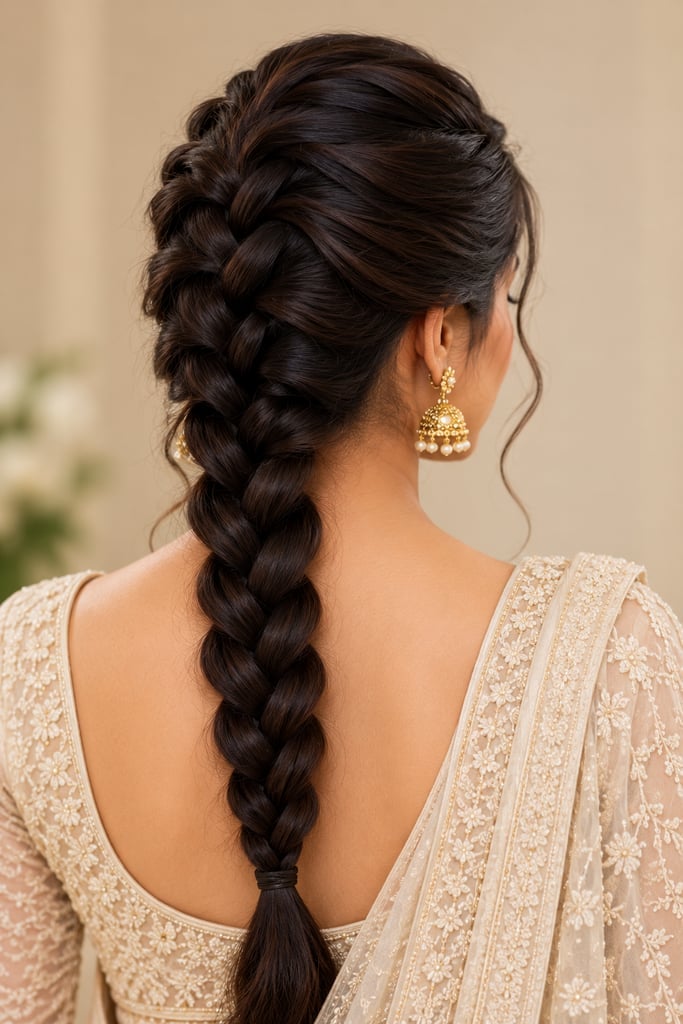
Wondering how to get that large Dutch braid to look so smooth and shiny? The key is in the prep and the tension. Start with straight, mid-back length hair, and apply a shine serum before you begin. A middle parting keeps the braid symmetrical, while the Dutch technique, where the outer strands cross under the center, gives it that raised, prominent look.
Ask your stylist for: large, sleek dutch braid. The braid itself is built by taking thick sections and maintaining even, firm tension as you cross them under. This gives it a clean, glossy finish and clear texture. Because there are no bangs or loose pieces, it holds securely for a full performance, and the dark brown tone adds depth. A tight, small elastic at the end keeps the braid from unraveling mid-spin.
High Voluminous Ponytail With Waves
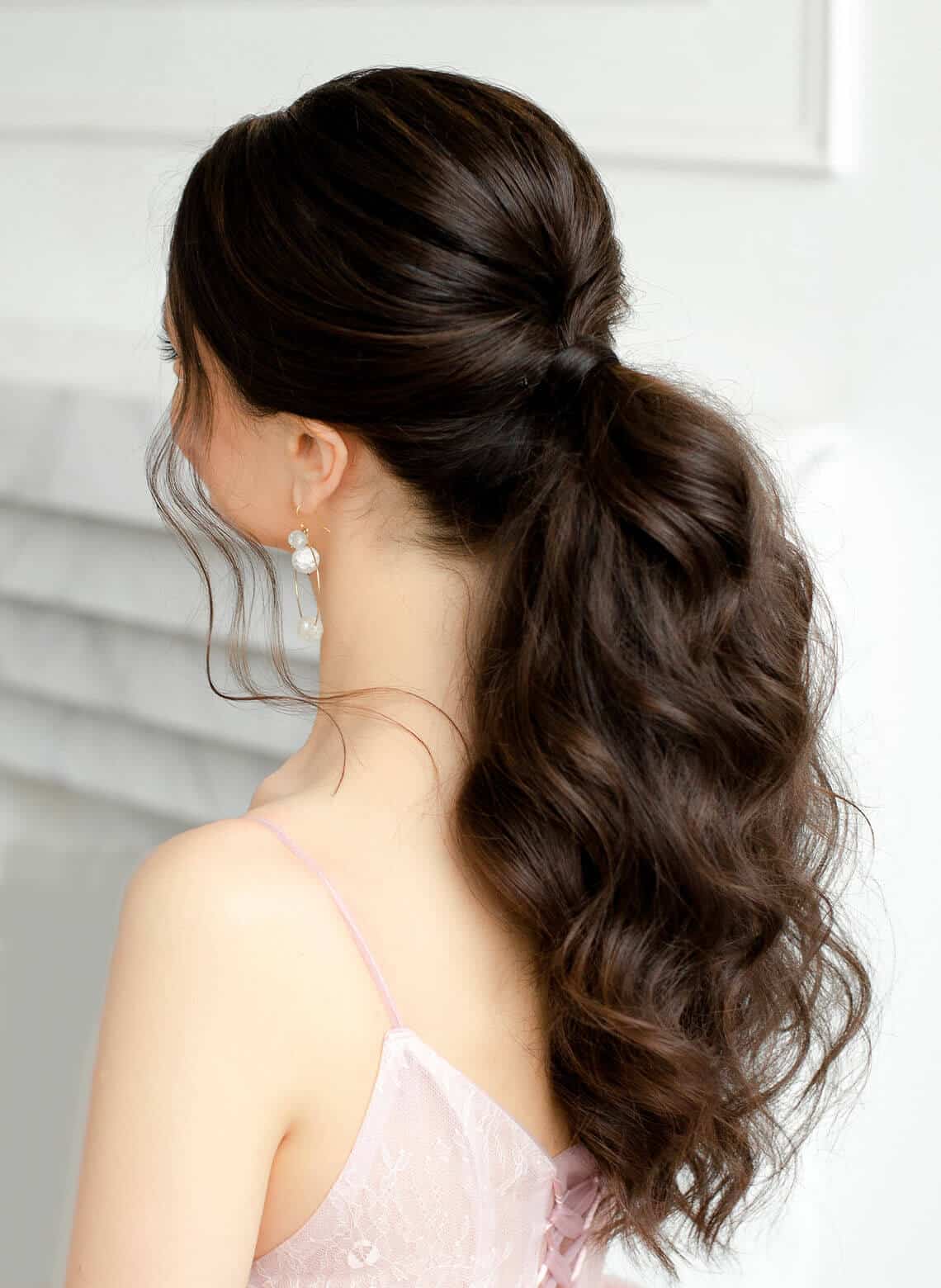
A high ponytail with loose waves is a dance hairstyle that actually moves with you. The design starts with a side part, which adds a touch of softness, while the thick, wavy texture gives the ponytail its body. Face-framing tendrils are the detail that makes it work for angular face shapes, since they break up the line of the jaw.
This style genuinely flatters thick, wavy hair that reaches mid-back. If your hair is fine or straight, you will need to add texture first, because the volume has to come from somewhere. Ask your stylist for: high voluminous ponytail with loose waves and face-framing tendrils. To keep the height all night, tease the crown before securing the elastic, then finish with a texturizing spray on the ponytail. The loose waves mean you will need to refresh them with a curling wand for a few minutes before the next wear.
Braided Ponytail With Beads and Wrap
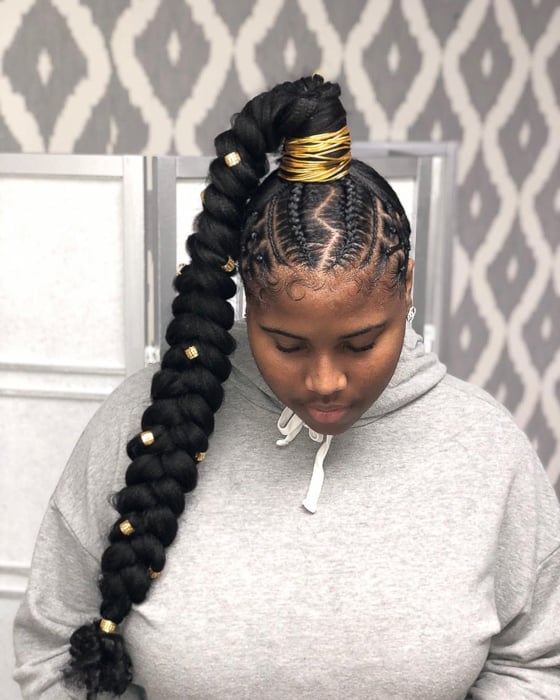
A braided ponytail with gold beads is a different beast from a plain ponytail. The intricate cornrows leading into a large, single braid add structure, while the wrapped string at the base and the gold beads give it a finished, ornamental quality. This is not a five-minute style; it is a salon-only commitment that takes hours, but the look holds through vigorous movement without needing a single touch-up. Ask your stylist for: braided ponytail with cornrows and gold beads. For anyone with thick, straight black hair at mid-back length, the braiding keeps everything neat, and the beads stay put once they are secured. If you want a similar effect with less time in the chair, a simpler braided ponytail without the cornrows will still look intentional, just with less detail.
Collarbone Waves With Wispy Bangs
Can collarbone waves with wispy bangs survive a dance class? The honest answer is that they can, with a little help. The textured, loose waves give the style movement, and the honey blonde balayage adds dimension that catches the light as you turn. But the wispy bangs are the catch: they need a quick blow-dry with a small round brush every morning, or they will fall flat. The middle parting keeps the face open, and the collarbone length works for medium textured hair that does not need a lot of weight to hold a wave. Ask your stylist for: collarbone length textured waves with wispy bangs. A sea salt spray will give you that lived-in texture, but it will not fix bangs that have not been styled. The trade-off is that this style is more about looking good in motion than about staying perfectly in place.
Two Thick Dutch Braids With Ombré
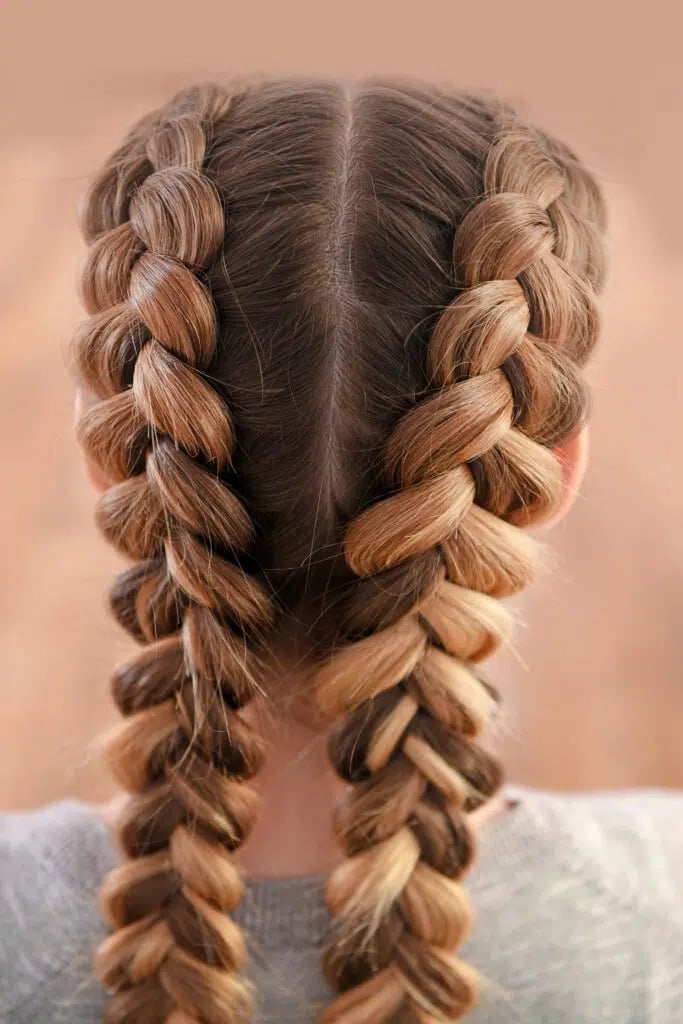
Two thick Dutch braids are a dance hairstyle staple, and the ombré from dark brown to blonde ends makes them stand out. The braids start at a middle parting and are woven with even tension, which keeps them neat and secure from the crown to the mid-back ends. The naturally wavy texture of the hair helps the braids look thick and full, while the color transition adds a visual pop that a single shade cannot.
Ask your stylist for: two thick dutch braids with ombré color. Because the braids are tight and the ends are tucked, they hold for hours of practice or a full performance. The upkeep is mostly about the color: the blonde ends will need a toning appointment every six to eight weeks to keep them from turning brassy. The style itself, once braided, needs nothing until you take it out, which makes it a solid choice for a long day of rehearsal.
Voluminous Side Ponytail With Face-Framing Pieces
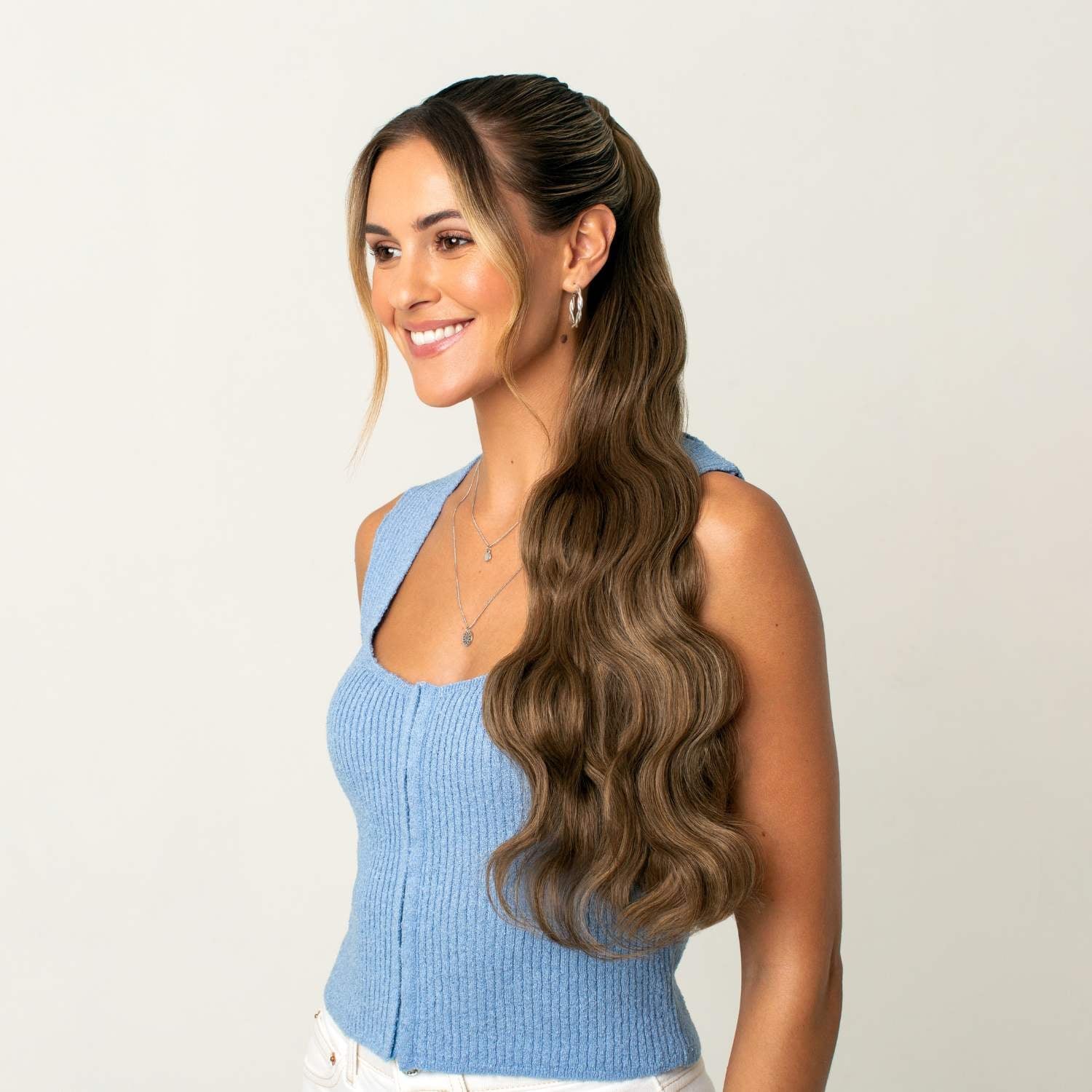
A side ponytail shifts the center of gravity, making each head turn a deliberate accent. The volume comes from the waves and the thick texture, not backcombing, so the shape holds its loft through a full routine. Long, wavy hair with a middle part gives the face-framing pieces room to soften angular jawlines or square faces. Ask your stylist for: voluminous side ponytail with face-framing pieces. Curl the ponytail to keep the wave pattern moving outward, then pin the front pieces loosely enough to swing without sticking to the skin.
The warm brown base with subtle blonde highlights adds depth where the hair bends, so the movement shows even without direct light. A middle part keeps the face-framing sections symmetrical, which matters when the ponytail sits to one side. Thick textures hold the wave best; finer hair will need a texture spray at the roots before the elastic goes in.
Intricate Geometric Black Braids
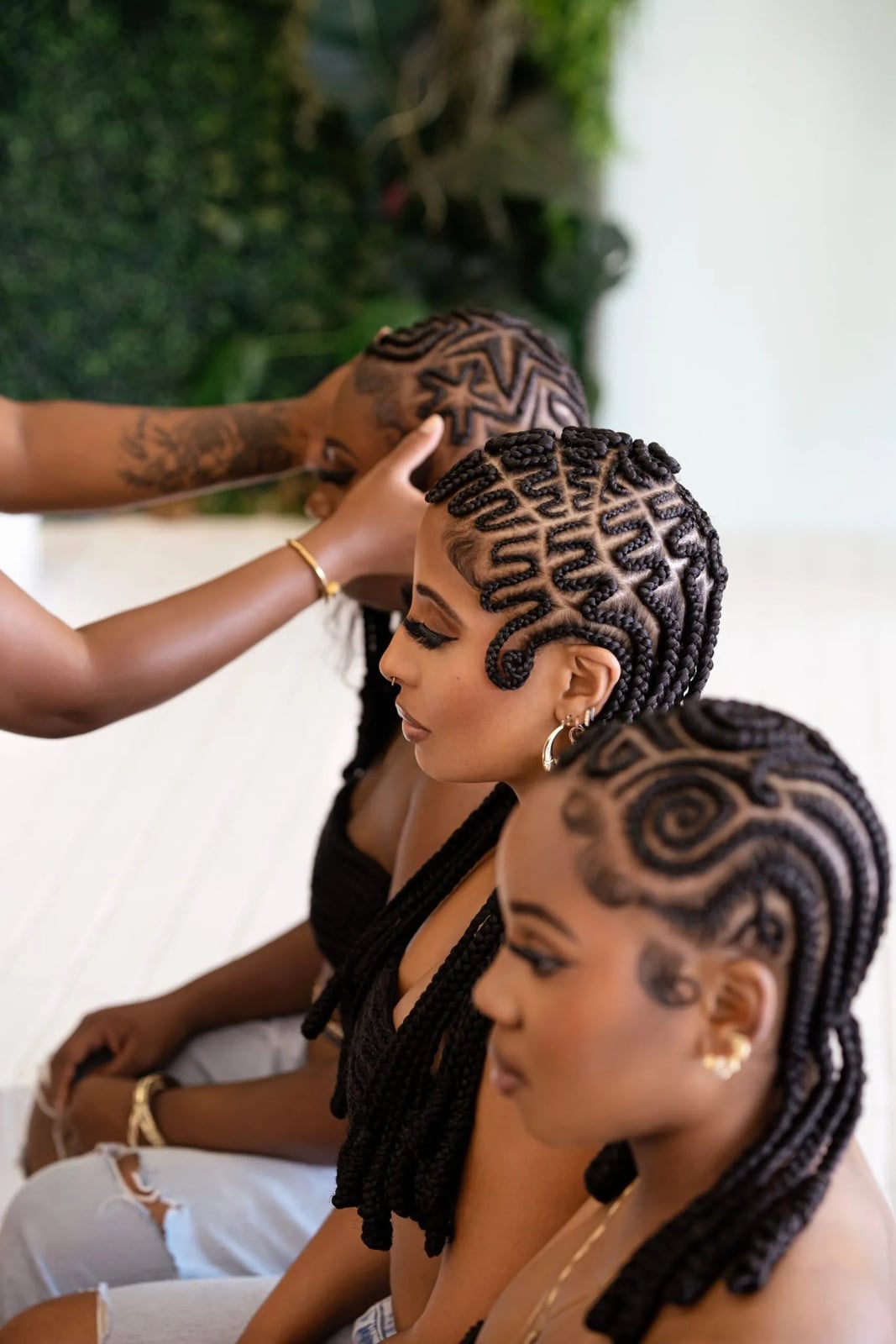
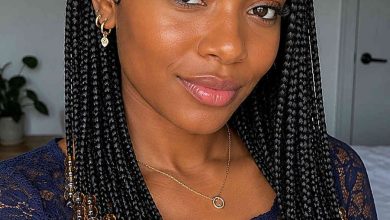
Standard cornrows follow the curve of the head. These geometric braids cut across it, building sharp angles that work like sculpted architecture for the hair. The tightly coiled patterns sit close to the scalp, so they stay intact during fast turning and high-impact footwork. Coily, thick textures at shoulder length are the ideal canvas. The trade-off is the time commitment: a salon session runs several hours, and the precision of the designs means a skilled braider is non-negotiable. Ask your stylist for: geometric scalp braids. A boar bristle brush at the edges keeps the hairline clean between appointments.
Woven Crown Braid With Loose Curls
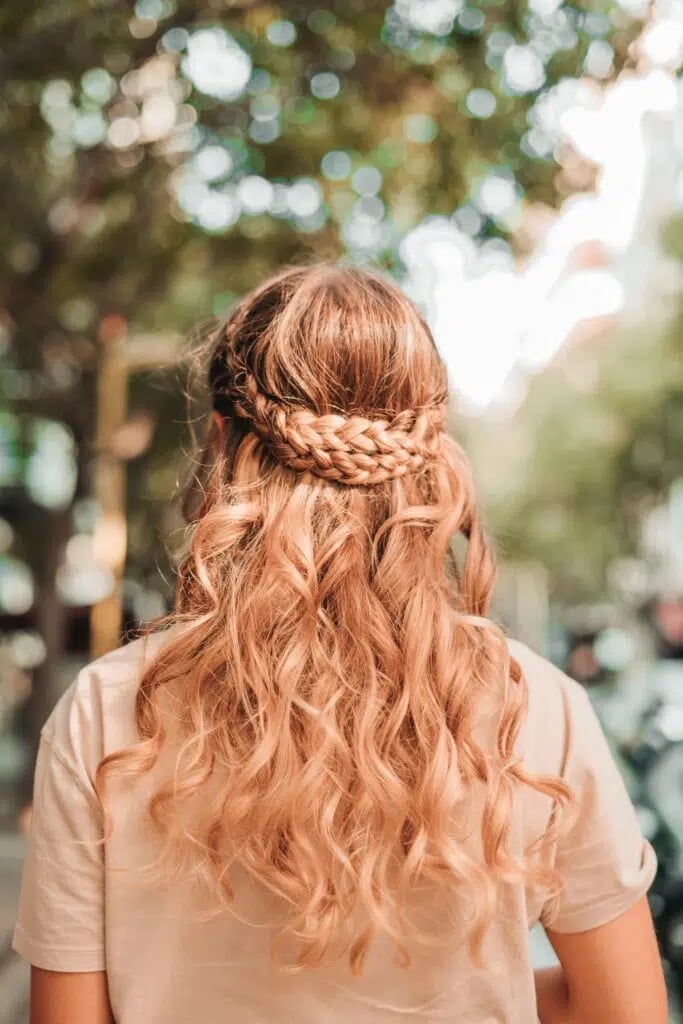
A woven crown braid wraps across the back of the head like a structural headband, keeping the top section secure while the rest falls free. The braid itself does the holding; the loose curls underneath are pure visual payoff. This half-up, half-down shape works best on thick, wavy hair at mid-back length, where the crown has enough density to look substantial and the curls have enough weight to swing. Ask your stylist for: half up with a woven crown braid and loose curls.
To get the right mix of structure and softness, ask for the braid to be woven from the nape upward, not from the hairline back. The balayage highlights in the light brown base make the braid pattern visible from the audience. A middle parting keeps the front clean, and curling the ends with a one-inch barrel before the braid is pinned gives the waves a uniform shape that lasts.
Slicked Back Bun With Spiky Flyaways
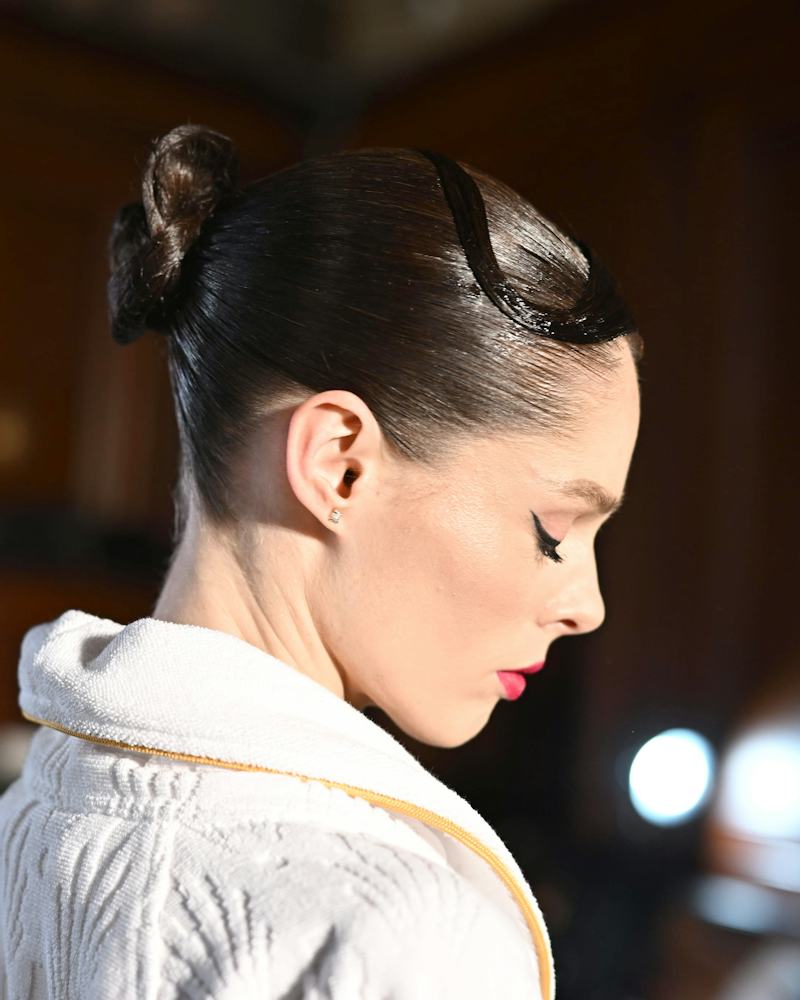
The slicked bun is a dance staple, but the spiky flyaways here are the detail that makes it modern, not just functional. Those short pieces are not escapees. They are a deliberate accent that breaks up the smooth dome. Thick, straight hair at mid-back length gives the right weight for the slicked effect; finer hair may not produce enough substance at the crown. Ask your stylist for: high slicked back bun with spiky flyaways. A strong-hold gel and a fine-tooth comb create the clean surface, then setting spray on the flyaways keeps them upright without the bun moving. This is a salon build: the precision of the placement and the product work are hard to replicate at home on the first try. The style survives the hardest choreography without a single pin shift.
Sleek Dark Brown Bun
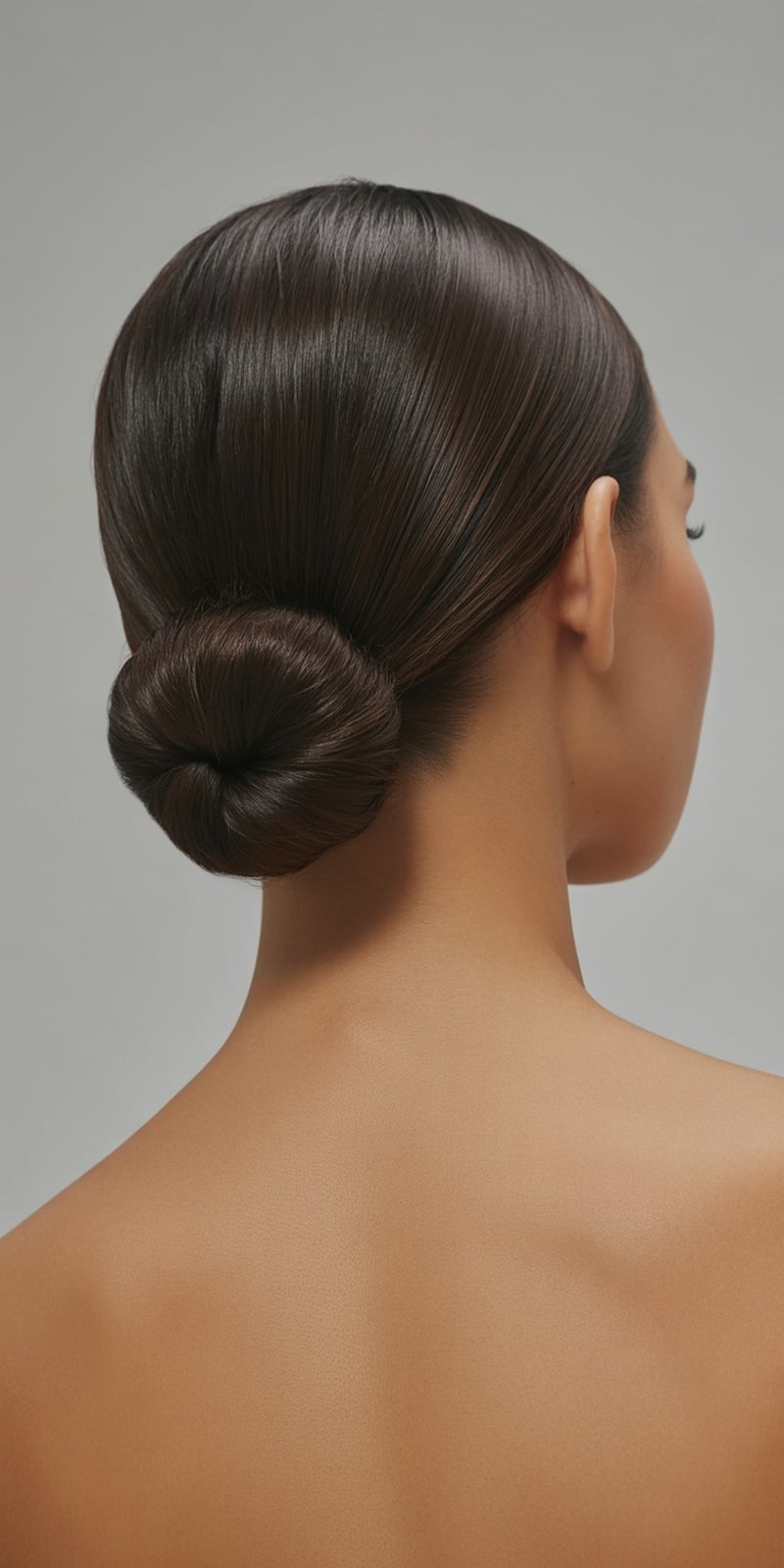
A nape bun is the quiet workhorse of dance hairstyles. No movement, no texture, nothing to catch or pull during a spin. The glossy finish on this dark brown version is what separates a polished bun from a rushed one. Thick, straight hair at mid-back length wraps into a clean shape that stays put through practice and performance. Ask your stylist for: sleek, polished bun at the nape. The honest trade-off: that gloss comes from a smoothing serum and a boar bristle brush, plus a strong-hold gel applied section by section. Hair that resists being flattened, coarse or high-porosity textures, will need a wet set and drying under a hood dryer before the style even starts. For those with fine or slippery hair, the bun may need extra pins at the base to avoid loosening mid-routine.
Braided Ponytail With Fishtail Detail
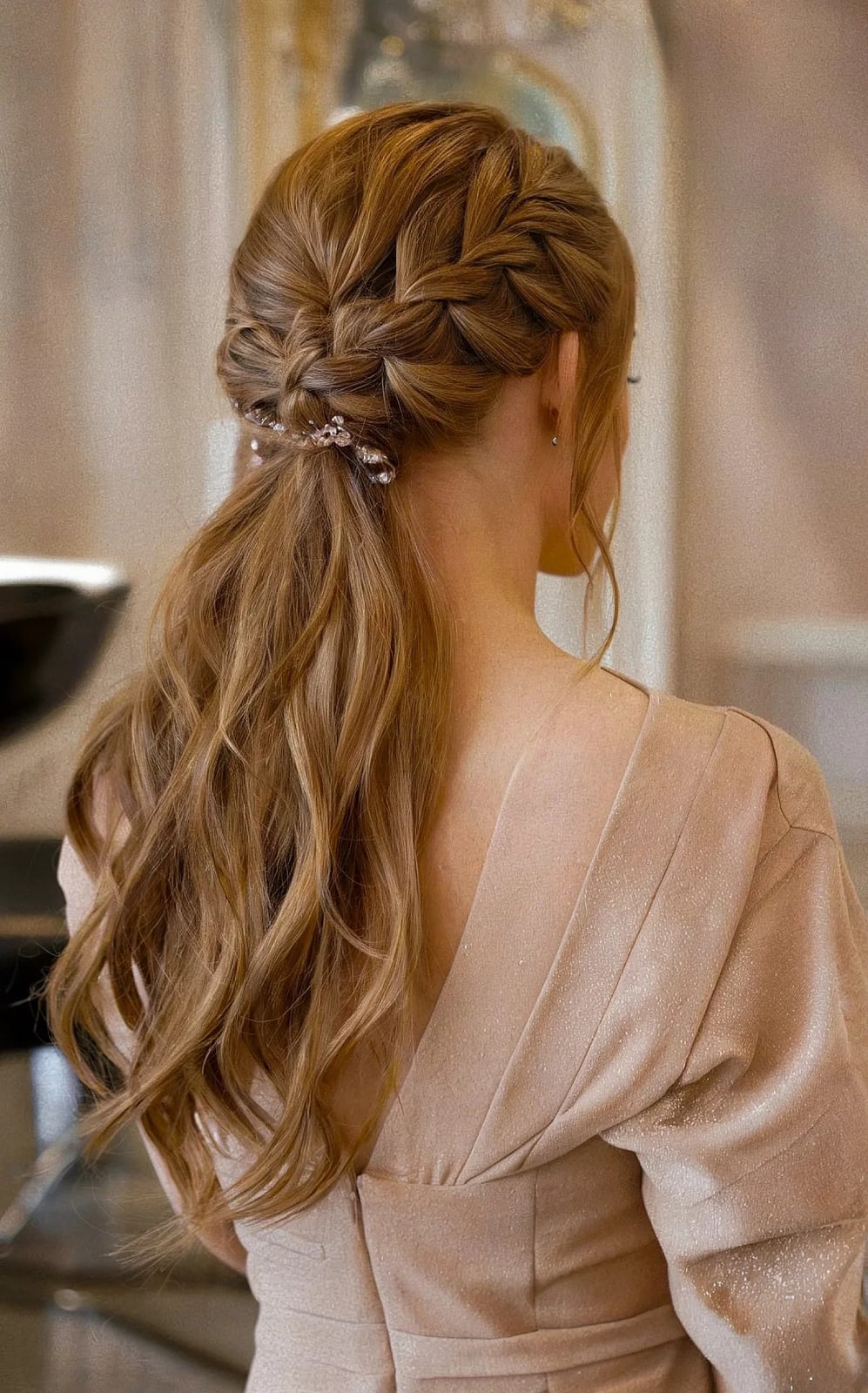
Have you ever watched a dancer’s ponytail whip around mid-spin and wondered how the braid stays intact while the rest flows free? This braided ponytail answers that with a middle part and a low gather at the nape, where a fishtail braid is woven into the main body of honey blonde waves. The skill lives in the transition: the fishtail has to be tight enough to hold its shape, yet the surrounding strands stay loose so the mid-back length keeps moving.
Thick, wavy hair of mid-back length is the ideal canvas here, since the nape placement keeps the weight comfortable during a long practice. Ask your stylist for: ponytail with a fishtail braid detail. The trick is braiding the fishtail section tightly while allowing the loose waves to cascade down the back, which gives you the control of a braid without sacrificing the swing.
Braids With Teal and Purple Extensions
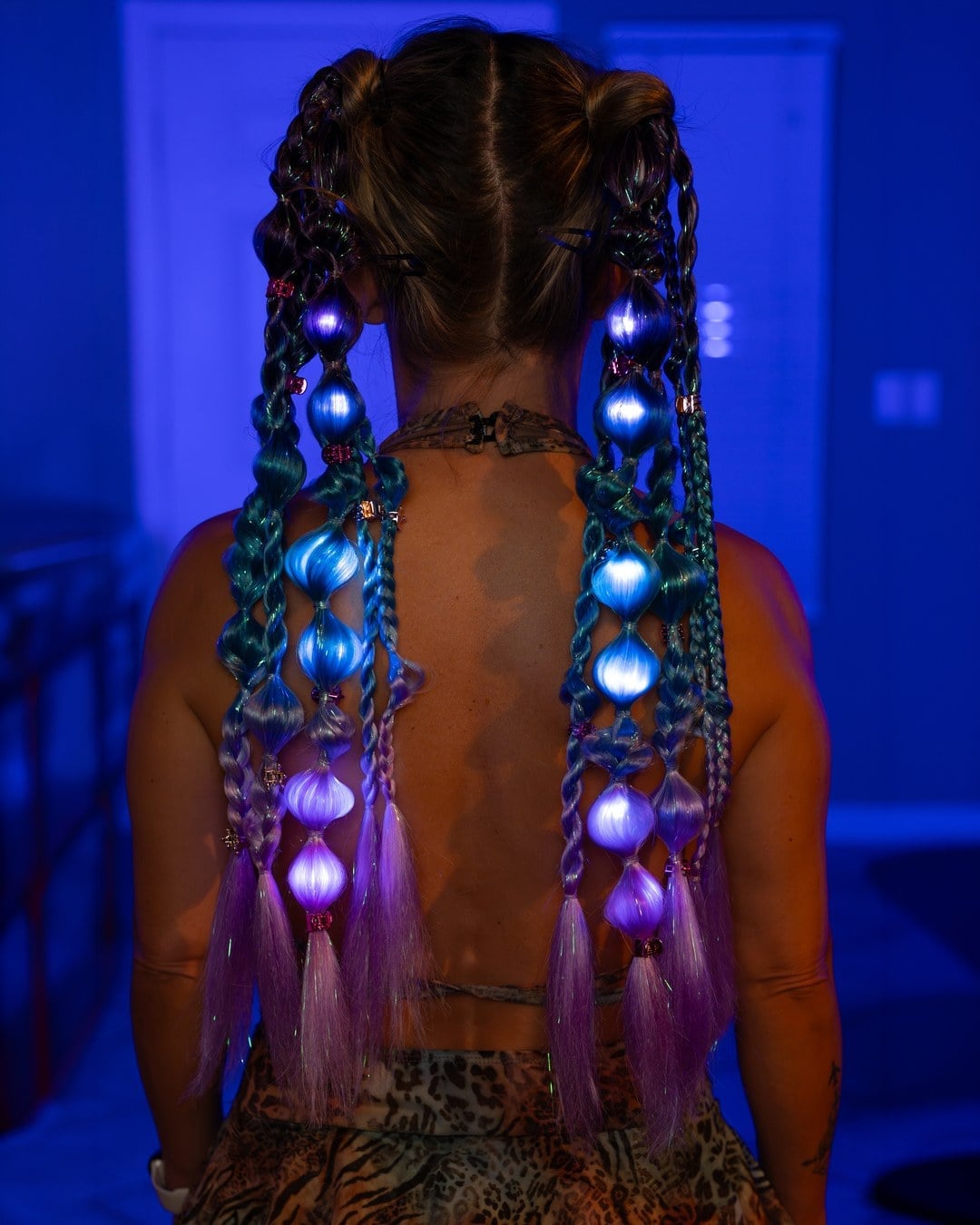
The glowing spheres catch the stage lights before the dancer even moves, which is exactly the point. Long braids in teal and purple extensions reach mid-back on thick, straight hair, and the spherical accessories in matching blue and purple hues turn the whole style into a light show. It is a look built for a costume dance or a themed performance where the hair needs to be part of the production.
This is a salon-only commitment, since the extensions must be securely braided in and the accessories placed so they do not pull or shift during a routine. Ask your stylist for: long braids with teal and purple extensions and glowing accessories. The payoff is a hairstyle that holds through an entire set and adds a visual punch no ordinary ponytail can match.
Intricate Braided Updo
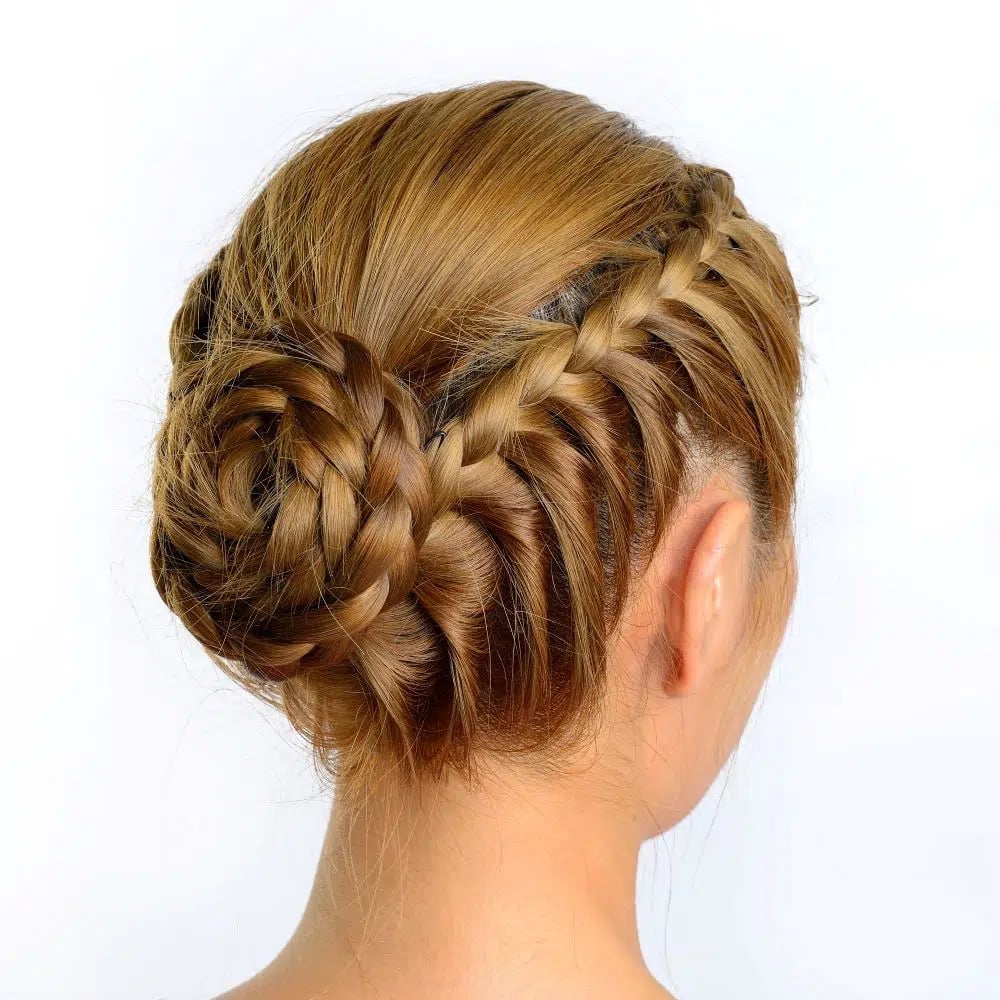
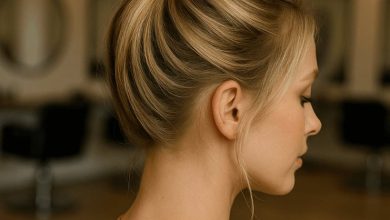
The nape bun is built from layers of honey blonde braids, each one crossing over the next so the whole structure forms a single sculpted piece. Thick, straight hair of mid-back length gives the braiding enough weight to stay put, and the side part keeps the front from looking too severe. This is a salon-leaning style that takes real time to construct, so plan for a longer appointment and accept that the intricate braiding is not a five-minute morning job. The result is an updo that stays locked through a full performance, with pins hidden discreetly and a texturizing spray on the braids to sharpen the detail. Ask your stylist for: intricate braided updo bun.
Cornrows with Voluminous Curls, Mid-Back
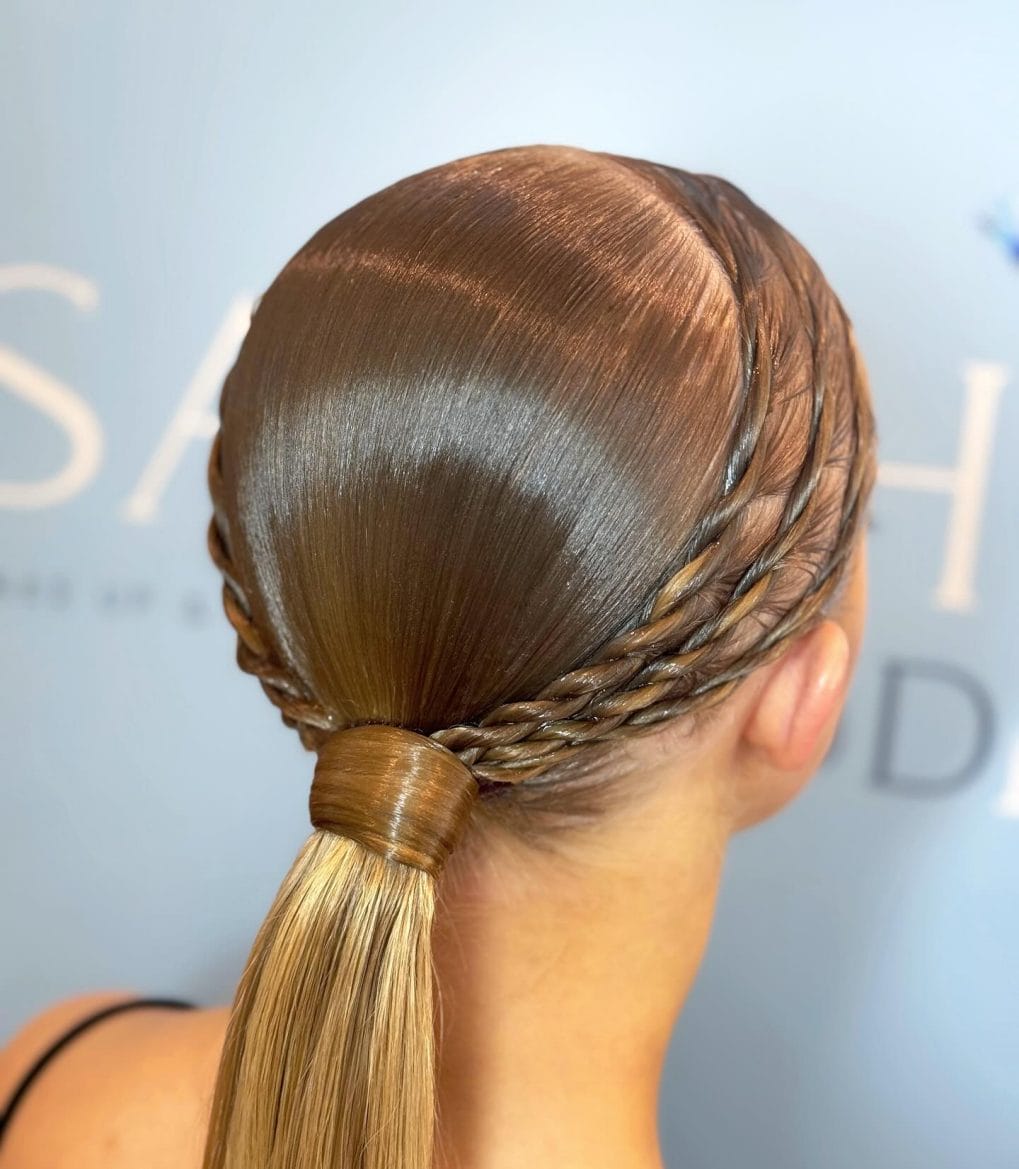
A fully braided style gives you total control, but it sacrifices the movement that makes dance hair feel alive. This version splits the difference: sleek cornrows hug the crown and wrap around the base of a high ponytail, then the rest of the mid-back length falls in a warm blonde, thick and straight. The braids keep the scalp secure while the ponytail gives you that swing, making it a smart pick for a performance where you need both polish and motion.
Coily, thick hair takes to this combination best, since the cornrows offer control at the root and the loose length provides the volume. Ask your stylist for: cornrows transitioning into a sleek high ponytail. The braided detail means the style holds for days, but the straight texture needs a careful hand to keep the transition from looking choppy.
Sleek Ash Blonde Bun
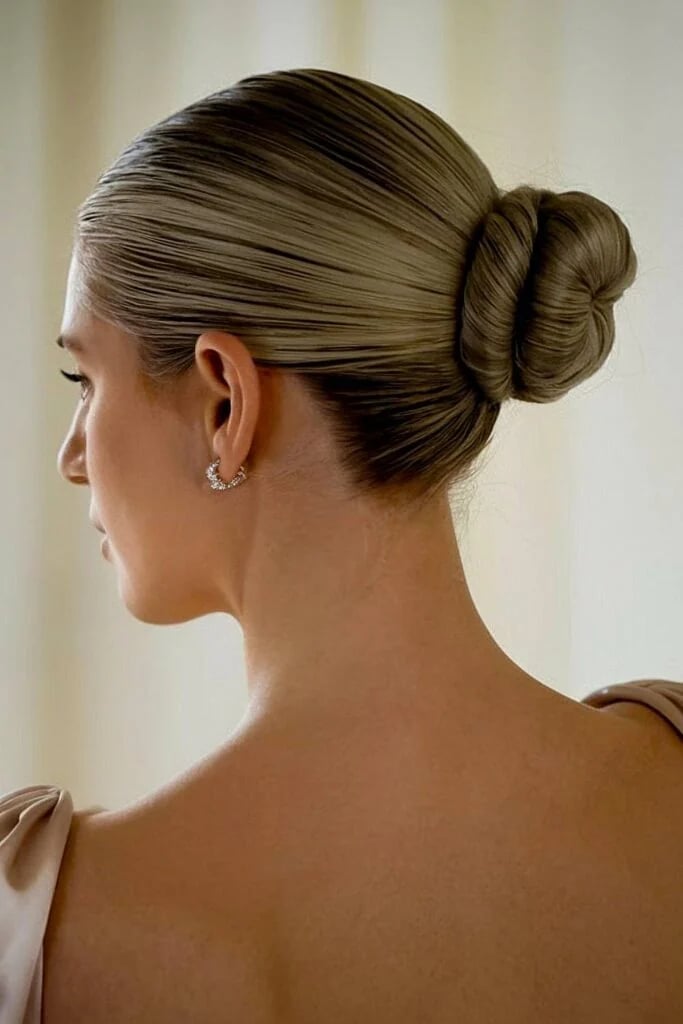
Can a bun be both severe and practical? This one pulls it off. The ash blonde hair is swept back from a middle part and gathered into a perfectly smooth bun at the back of the head, with every strand lying flat. Straight, smooth hair is the obvious candidate here, since the style depends on a glass-like finish that coarser textures will fight against. The sleek placement suits most face shapes, though a middle part and the lack of bangs means it favors those who like an open forehead. Ask your stylist for: sleek, smooth ash blonde bun. A strong-hold hairspray and a fine-tooth comb get the polish, but the real test is whether your hair will cooperate with the slick back.
Perfectly Smooth Dark Brown Bun, The Hair Appears Thick And Straight
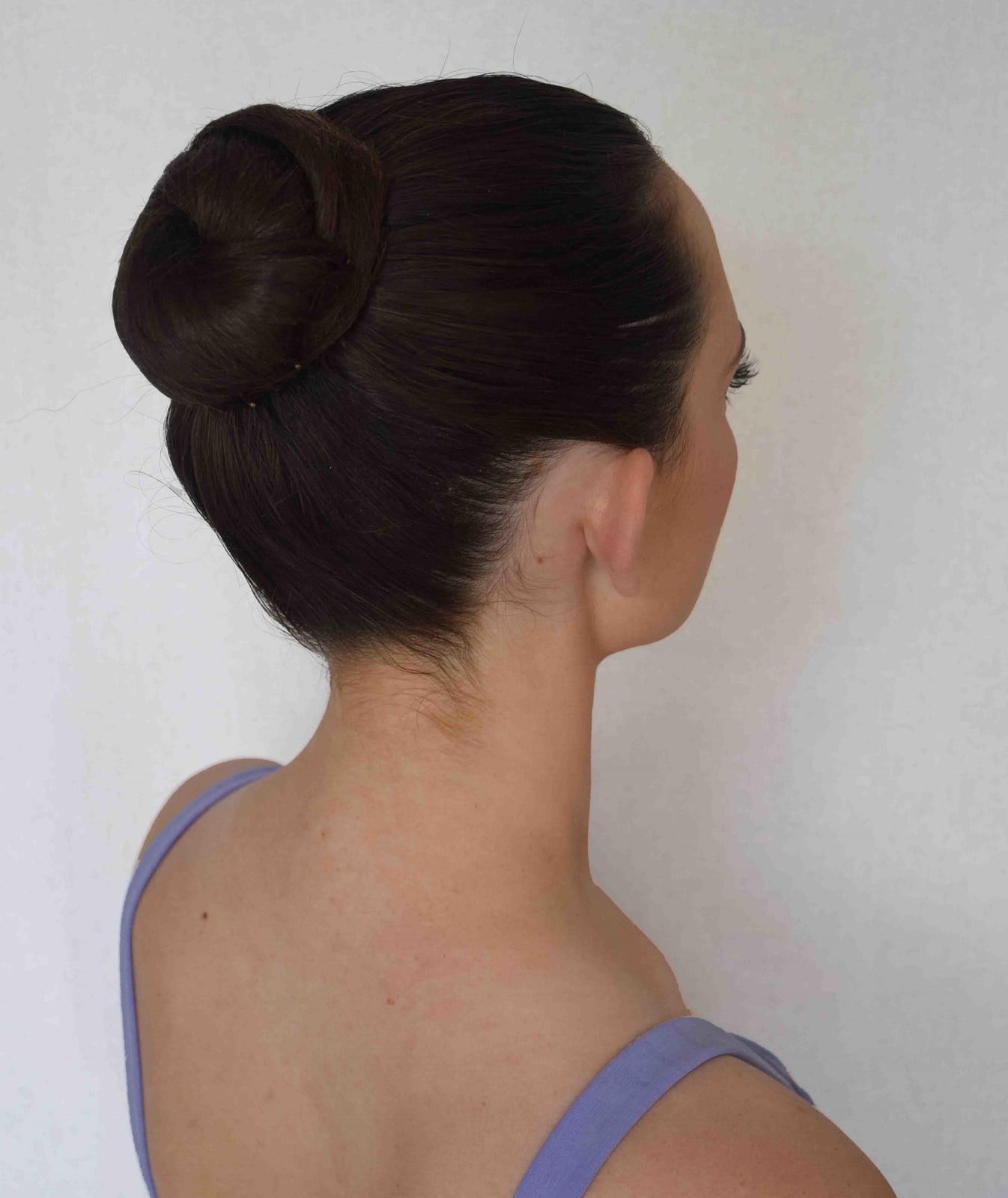
A perfectly smooth bun is a study in restraint. Every strand of this dark brown hair is pulled back with no visible parting from the rear view, wrapped into a tight, polished shape at the back of the head. The thick, straight texture is what makes the finish possible; hair with more wave or curl will need a blowout first to get the same glass-like surface. Ask your stylist for: perfectly smooth, tightly wound bun.
The drawback of this level of polish is that it shows every loose hair. A smoothing cream or serum applied before gathering keeps flyaways at bay for about an hour of active movement, but the bun will need to be re-pinned between rounds. Multiple bobby pins crossed in an X pattern are the difference between a bun that holds and one that sags by the second spin.
Final Thoughts
For maximum hold during intense routines, opt for styles with multiple braids or tight updos. For less demanding practices, a sleek high ponytail with added texture can suffice.
- Refresh braids with a light mist of setting spray for extended hold.
- Use a strong-hold hairspray to tame flyaways around the hairline for sleek styles.
- For coiled hair styles, use a hydrating leave-in conditioner to maintain moisture.
- Braid tension should be firm but not painful; adjust as needed for comfort.
- Regular trims every 6-8 weeks maintain the shape of braided styles’ ends.
Your dance hairstyle should empower your performance, not hinder it.