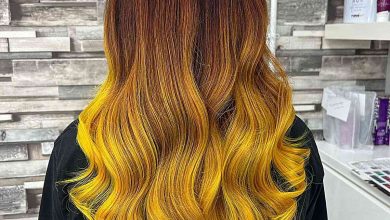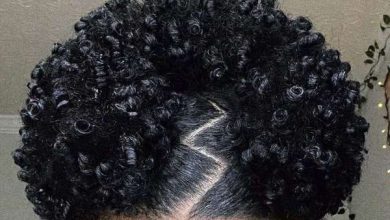
Hair color is the quickest way to change your entire look without a new cut. This year, lived-in color and soft face-framing highlights are taking over, leaving chunky streaks and harsh lines behind.
This collection of 28 ways to dye hair covers the full spectrum, from subtle balayage that grows out gracefully to bold split dyes that demand attention. Whether your hair is fine and needs volume or thick and needs dimension, there is an idea here. The struggle of a visible grow-out line or a fringe that won’t cooperate? These options solve both.
Collarbone Lob With Sun-Kissed Blonde Balayage
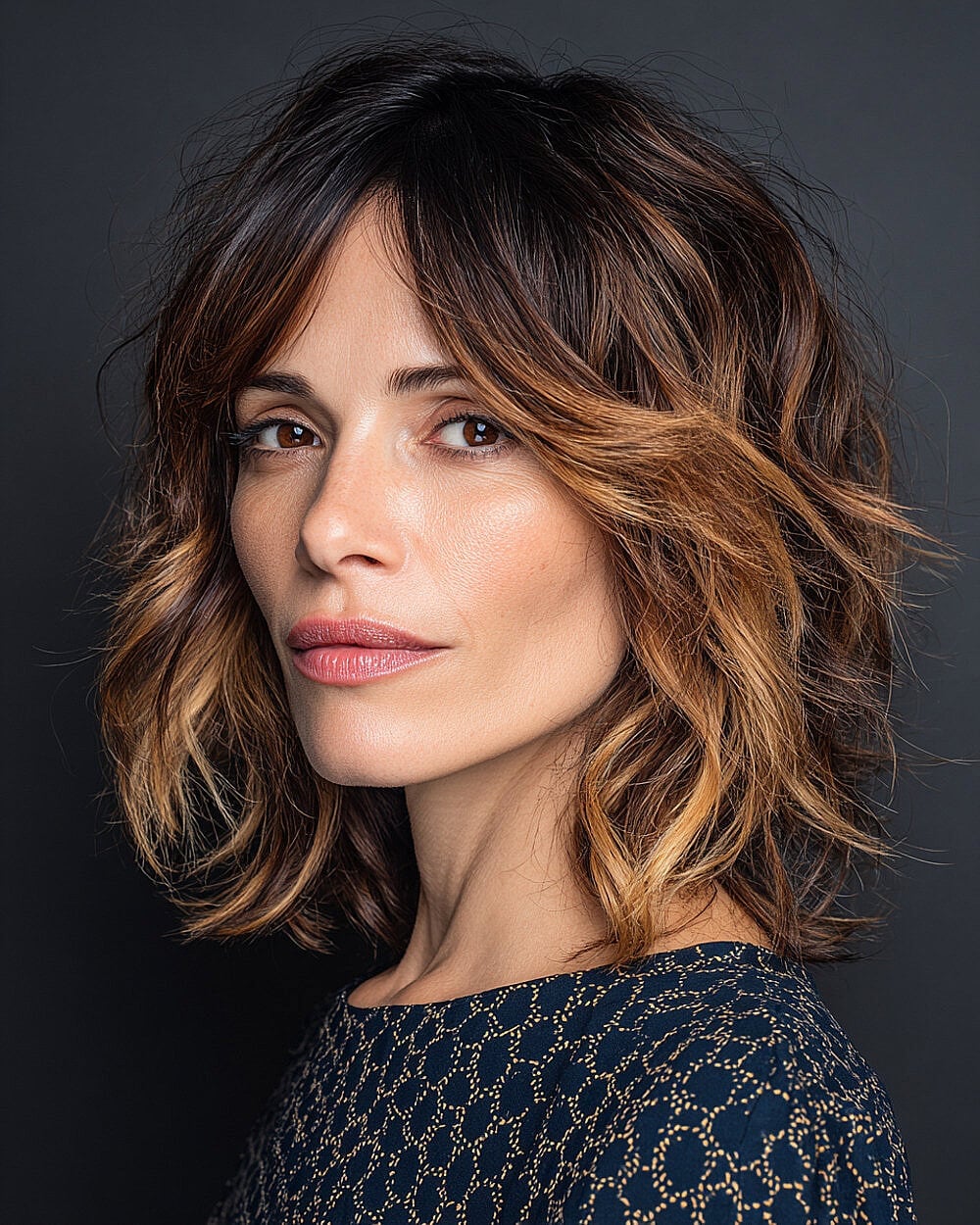
A dark brown base gets lifted by a sun-kissed blonde balayage. This collarbone-length lob works best on medium-density, wavy hair. A side parting keeps the weight balanced. Ask your colorist for: collarbone lob, dark brown base with sun-kissed blonde balayage. Air-dry it for a relaxed texture, and plan to refresh the balayage every three to four months. The lived-in grow-out is part of the point.
Mid-Back Layers With Subtle Brown Highlights
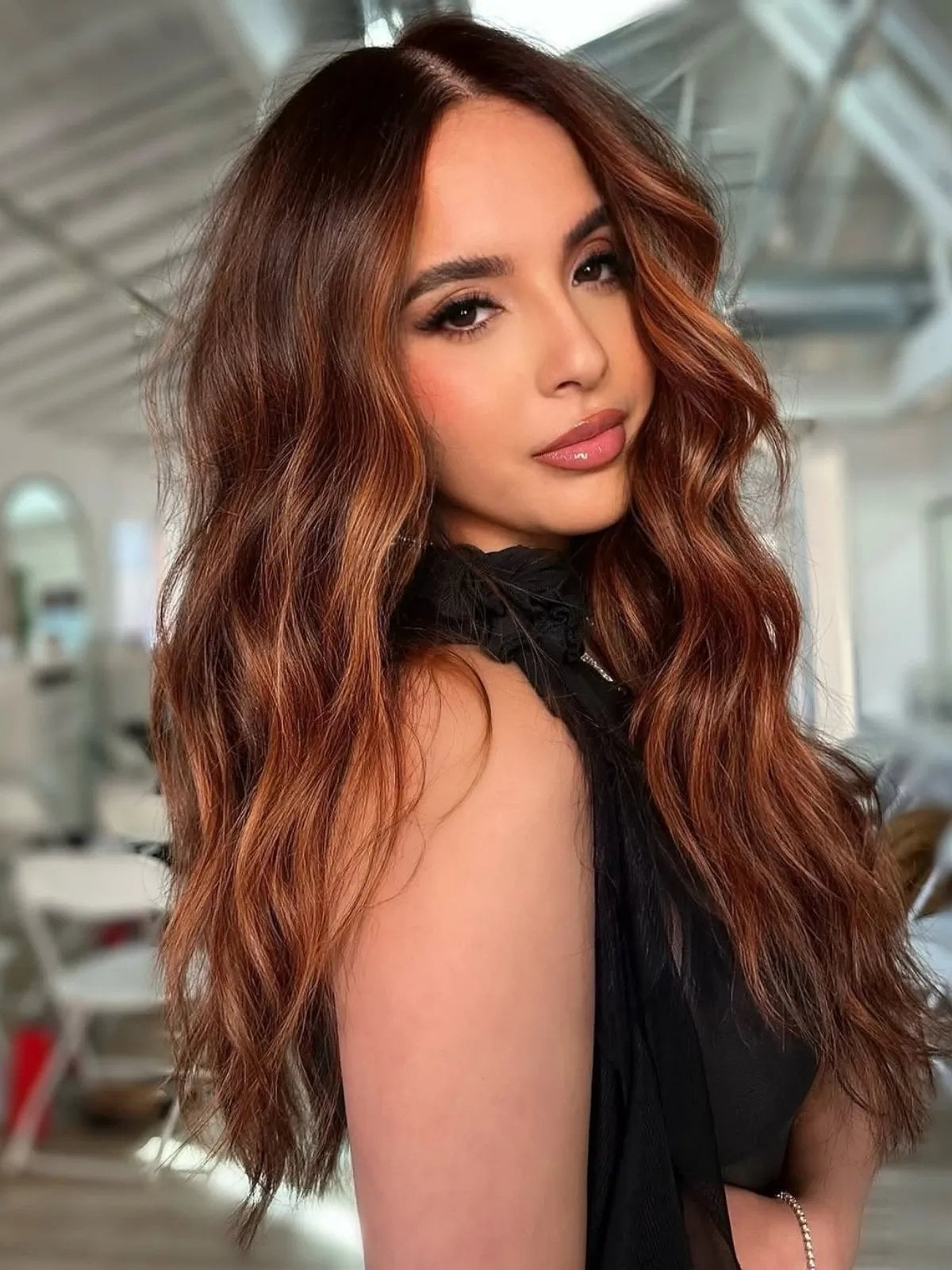
The rich medium brown base does the heavy lifting here; the subtle lighter highlights are just enough to keep it from going flat. A middle part and mid-back length elongate a round face, and the thick wavy texture gives the layers room to move.
Ask your colorist for: mid-back layered cut, medium brown with subtle blonde highlights. A texturizing spray at the mid-lengths will wake up the waves, and a trim every ten to twelve weeks keeps the ends healthy without losing length.
Mid-Back Waves With Brown Base Balayage
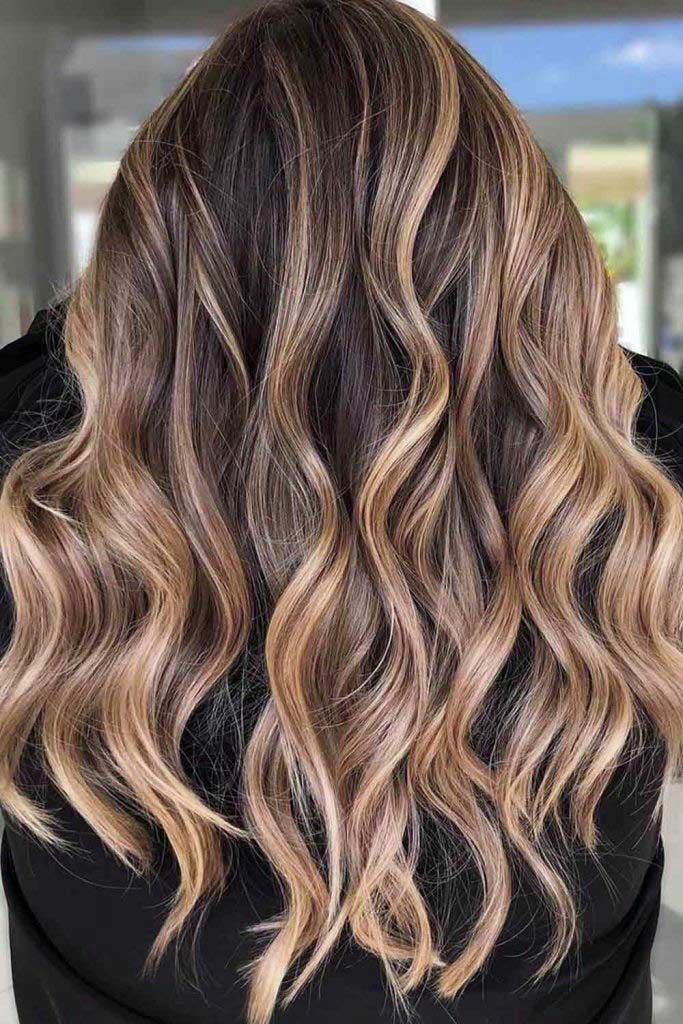
This is the difference between a balayage and a full foil: the blonde pieces here start lower and softer, so the brown base stays dominant at the roots. The back view shows how the loose waves carry the dimension all the way down, and the middle parting keeps the weight balanced.
Ask your colorist for: mid-back length, brown hair with blonde balayage. The grow-out is forgiving enough that you can stretch the refresh to four to six months, but a gloss treatment in between helps keep the brown from turning muddy.
Collarbone Bronde With Face-Framing Layers
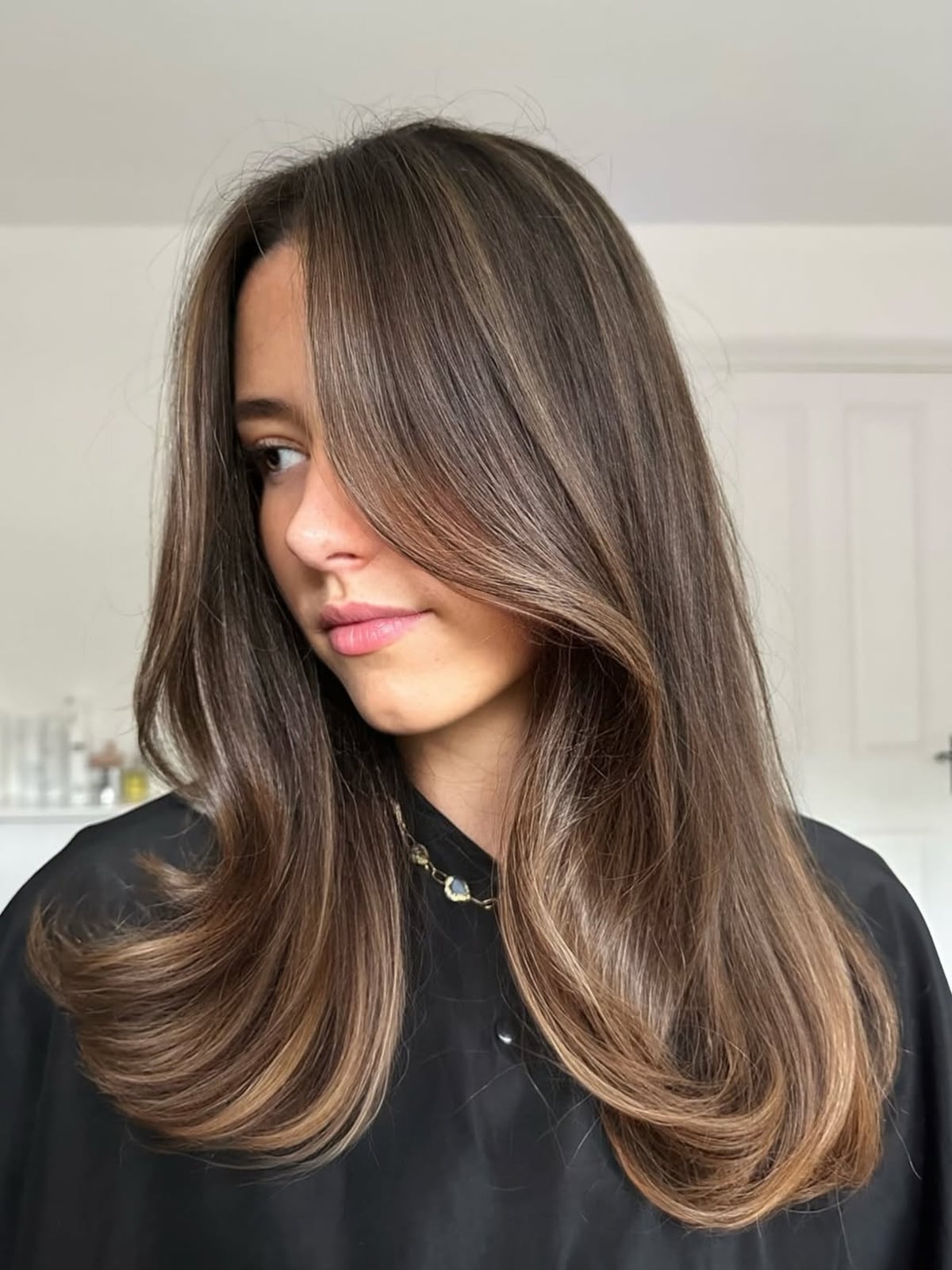
How do you ask for a color that is not quite brown and not quite blonde? You call it bronde. The subtle highlights are woven through the mid-lengths, and the curtain bangs pull the lighter pieces forward. This collarbone length suits medium-density wavy hair, and the soft layers around the jaw help square and round faces. Ask your colorist for: collarbone length bronde, face-framing layers. The middle-part blowout keeps it polished without looking stiff.
Dark Brown Bob With Caramel Balayage
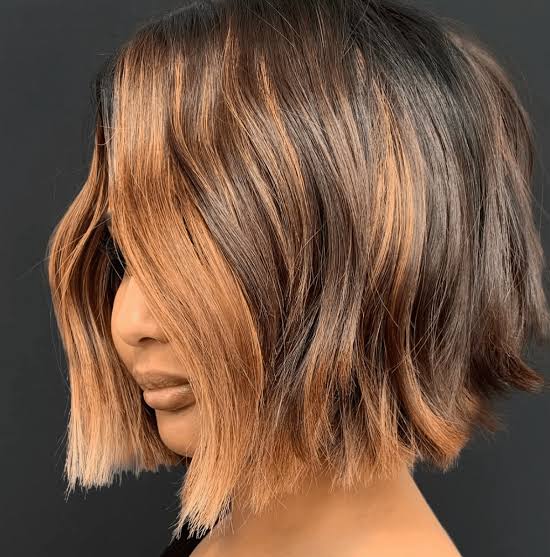
The soft waves and side parting give the collarbone length movement, and the curtain bangs soften the transition from root to highlight. Ask your colorist for: dark brown bob, curtain bangs, caramel balayage. A texturizing spray on the waves keeps the shape from falling flat, and the balayage needs a refresh every three to four months.
Collarbone Wavy Bob With Blonde Face-Framing
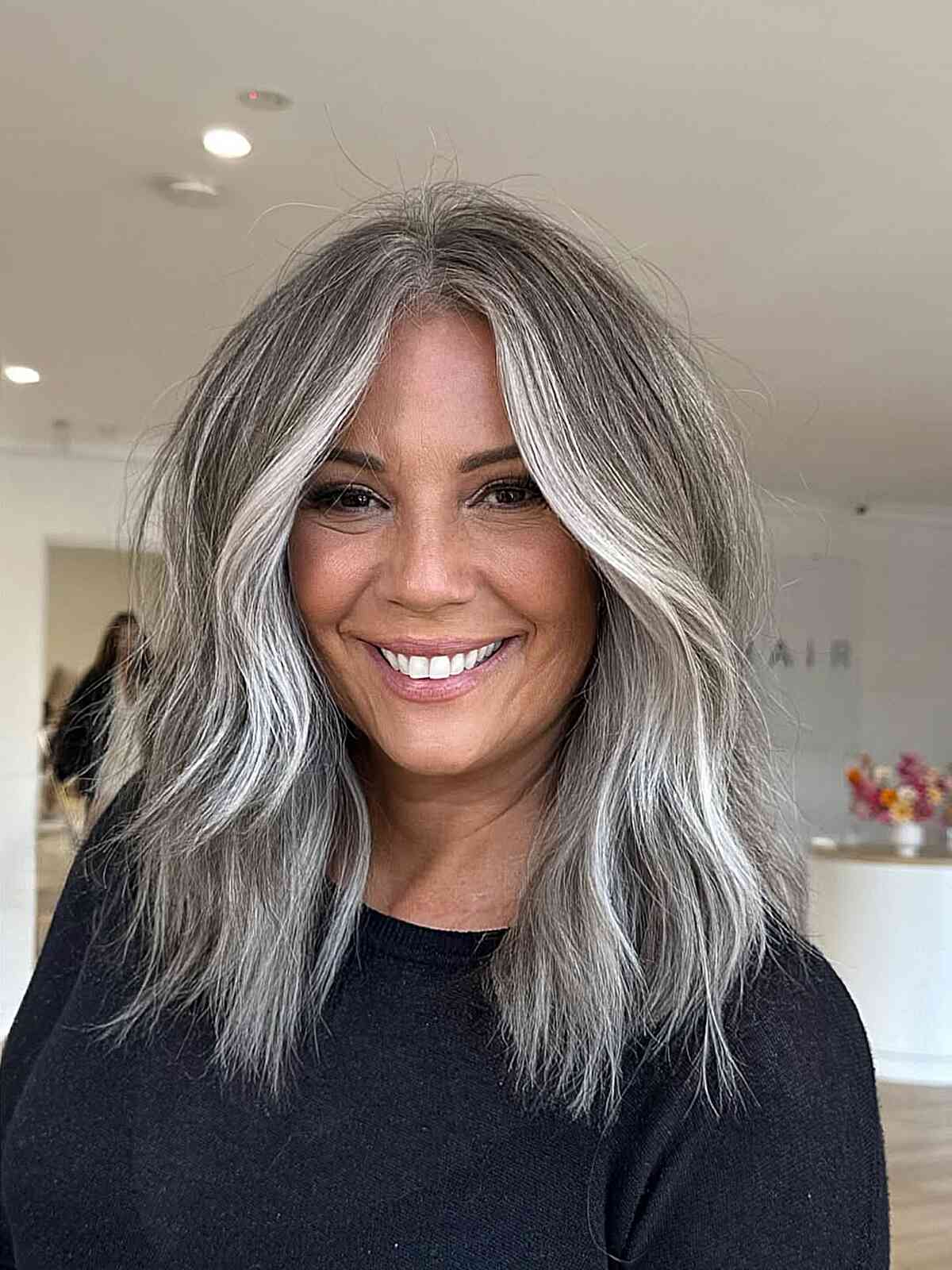
The design here hinges on contrast: a gray base that reads almost silver against bold blonde highlights concentrated around the face. Thick, wavy texture holds the shape best, and the curtain bangs and middle parting do double duty softening a round or heart face. Ask your colorist for: collarbone bob, gray base, bold blonde face-framing highlights. The honest trade-off comes down to brassiness. That cool gray wants a purple shampoo used weekly, and the blonde pieces need a toning appointment roughly every four weeks to stay bright rather than yellow. A trim every six to eight weeks keeps the bob precise.
Long Layers With Strawberry Blonde Shade
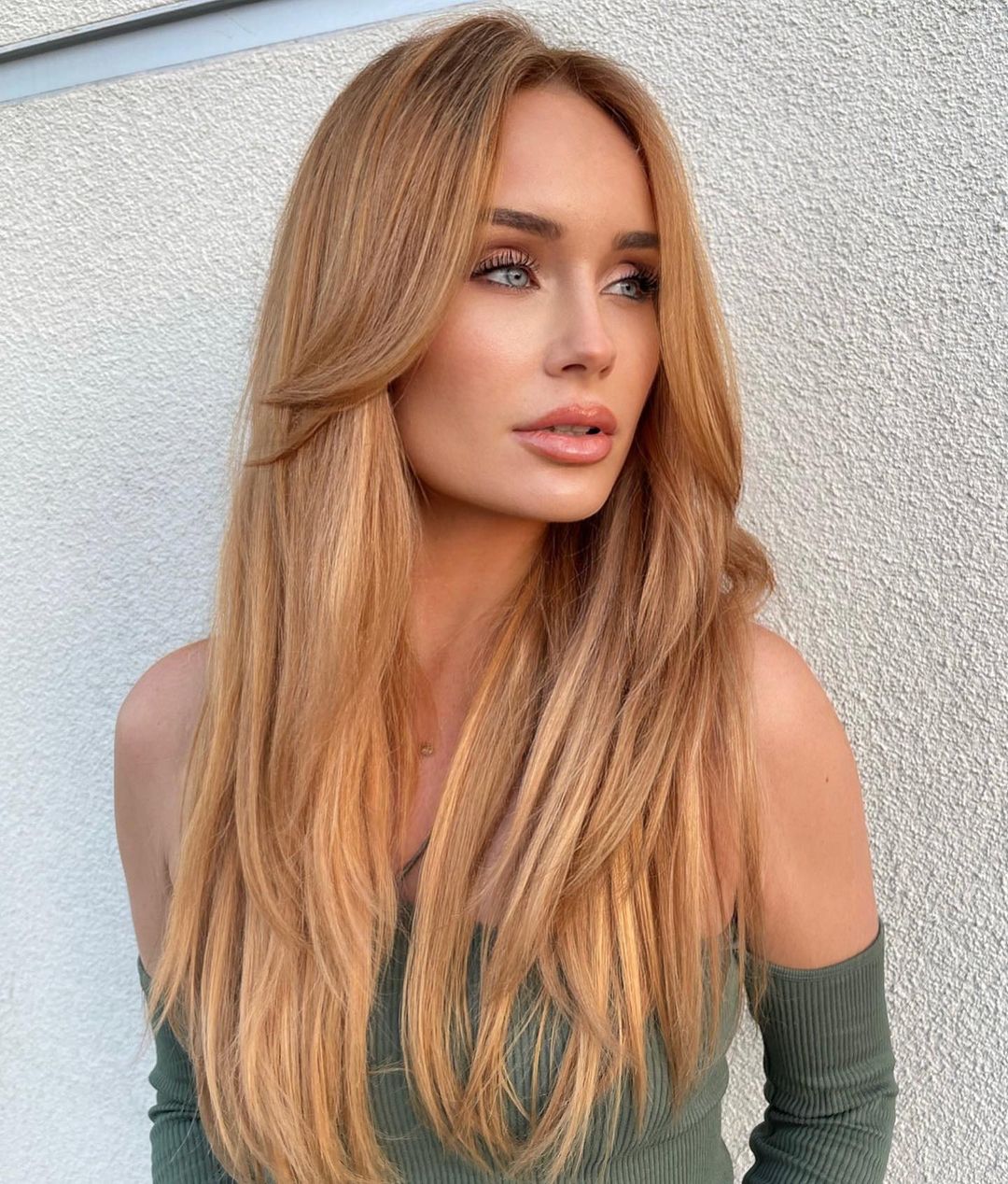
A practical rule with strawberry blonde is that it works best on fine, straight textures starting at collarbone length, because the shade reads as a soft, allover wash instead of a heavy block of color. Curtain bangs break up the uniformity of the long layers, which keeps the look from feeling flat. Ask your colorist for: collarbone length long layers, strawberry blonde, curtain bangs. The lighter tone tends to pick up warmth from the sun, so expect a shift toward peachy gold between salon visits instead of a true fade. A trim every eight to ten weeks preserves the layer structure.
Shoulder Length Copper With Layered Cut
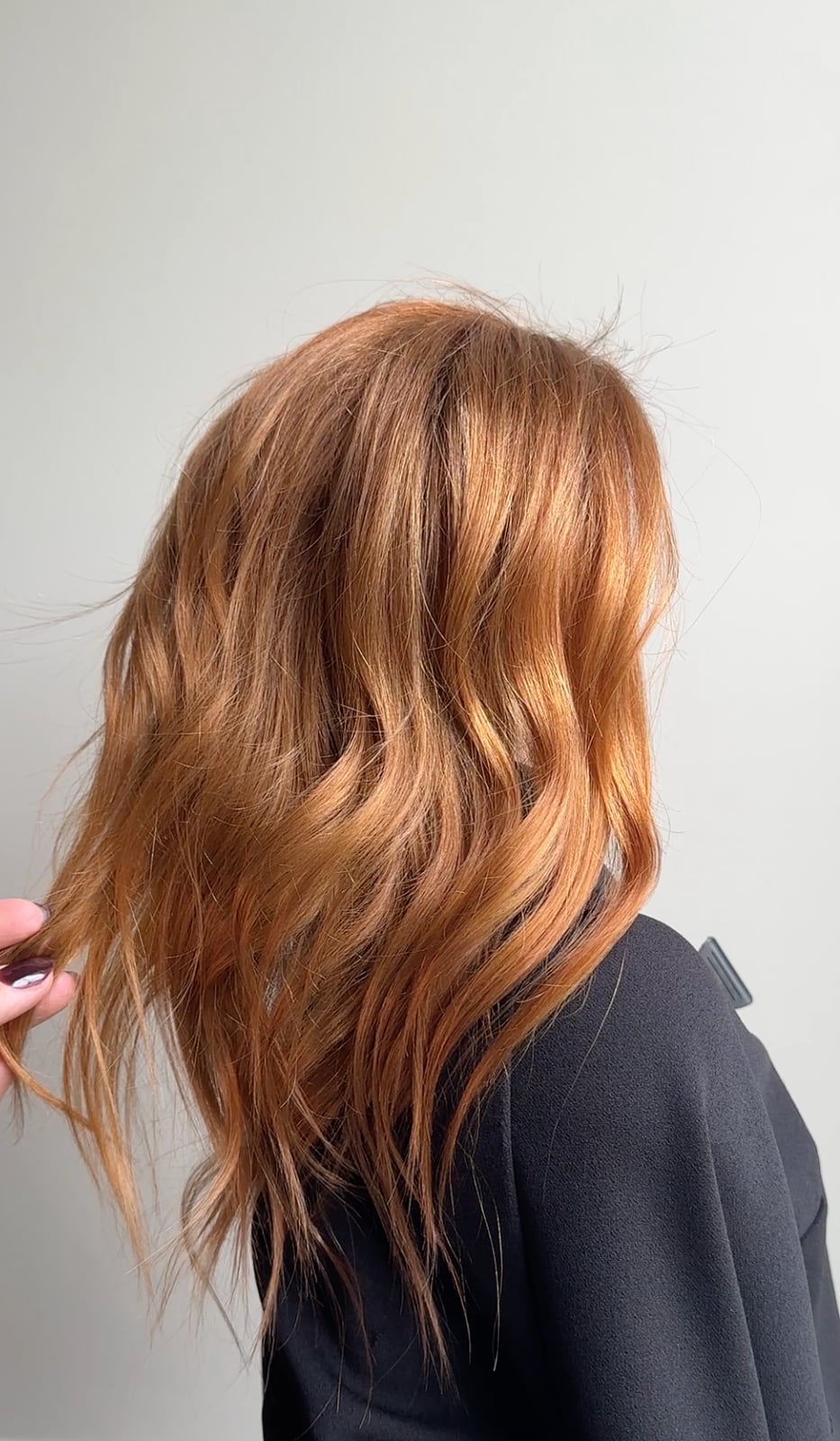
A precise observation about this shade: copper at shoulder length catches the low autumn light in a way that warmer months cannot match. The side-parted blowout and wavy, medium-thick texture give the color a dimensional quality that a flat application would not achieve. Ask your colorist for: shoulder length, vibrant copper color, layered cut. The tonal variations come from a single process over a lighter base, which creates subtle shifts without needing highlights. This shade lands best when the weather turns cool, and it pairs naturally with richer textures like a chunky knit scene.
Collarbone Bob With Fiery Red Color
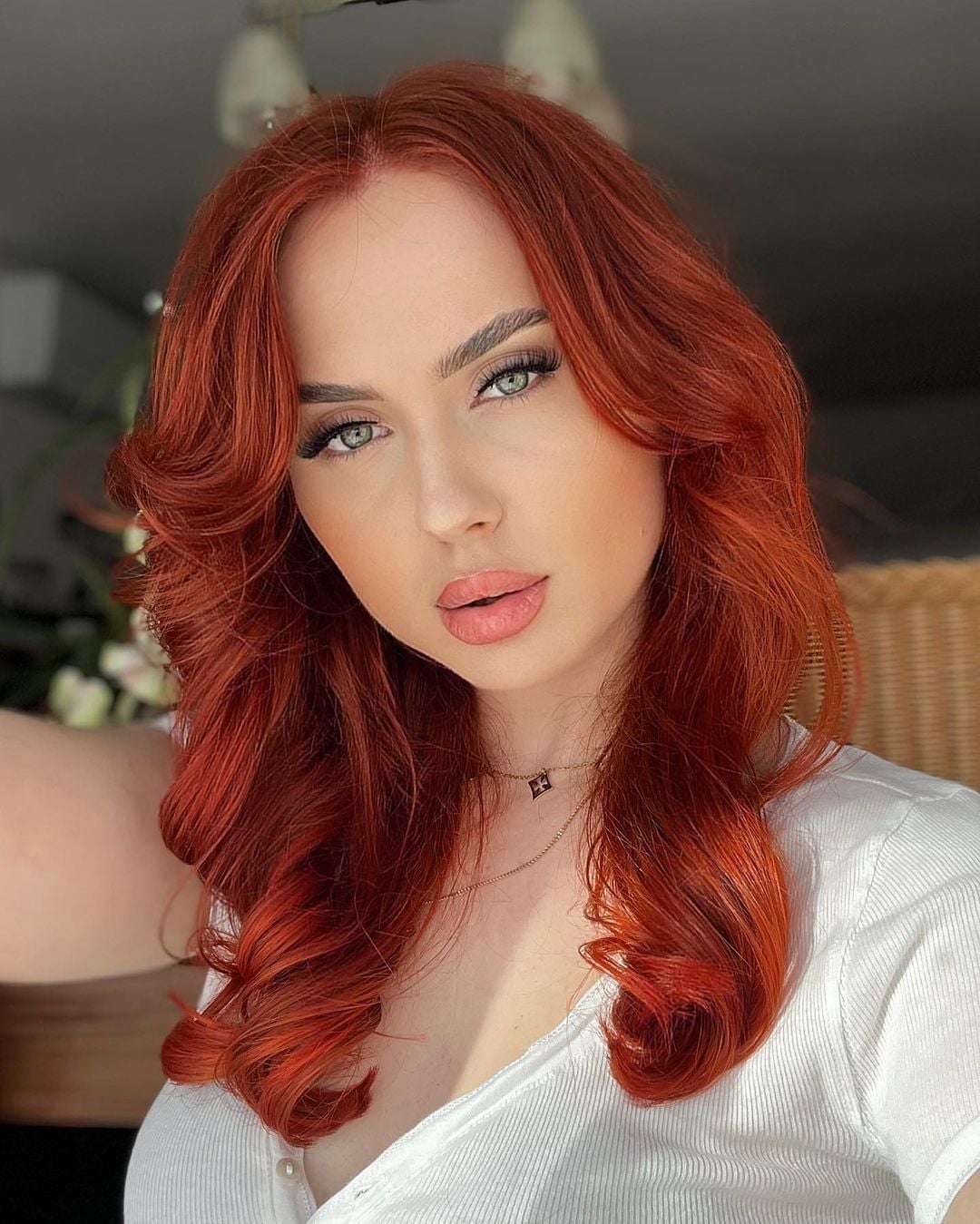
A single-process application of a vibrant, fiery red over a pre-lightened or virgin base creates this look, with no additional highlights or lowlights. The collarbone bob with subtle layers and curtain bangs frames the solid color, and the middle parting lets the shade sit evenly across both sides. Ask your colorist for: collarbone bob, fiery red, curtain bangs. The upkeep is the real conversation. Red fades faster than any other shade, so expect to refresh the tone every four to five weeks. Use a cool-water rinse and a color-depositing conditioner between appointments. A trim every six to eight weeks keeps the bob from looking grown out.
Collarbone Length Ginger Blonde Waves
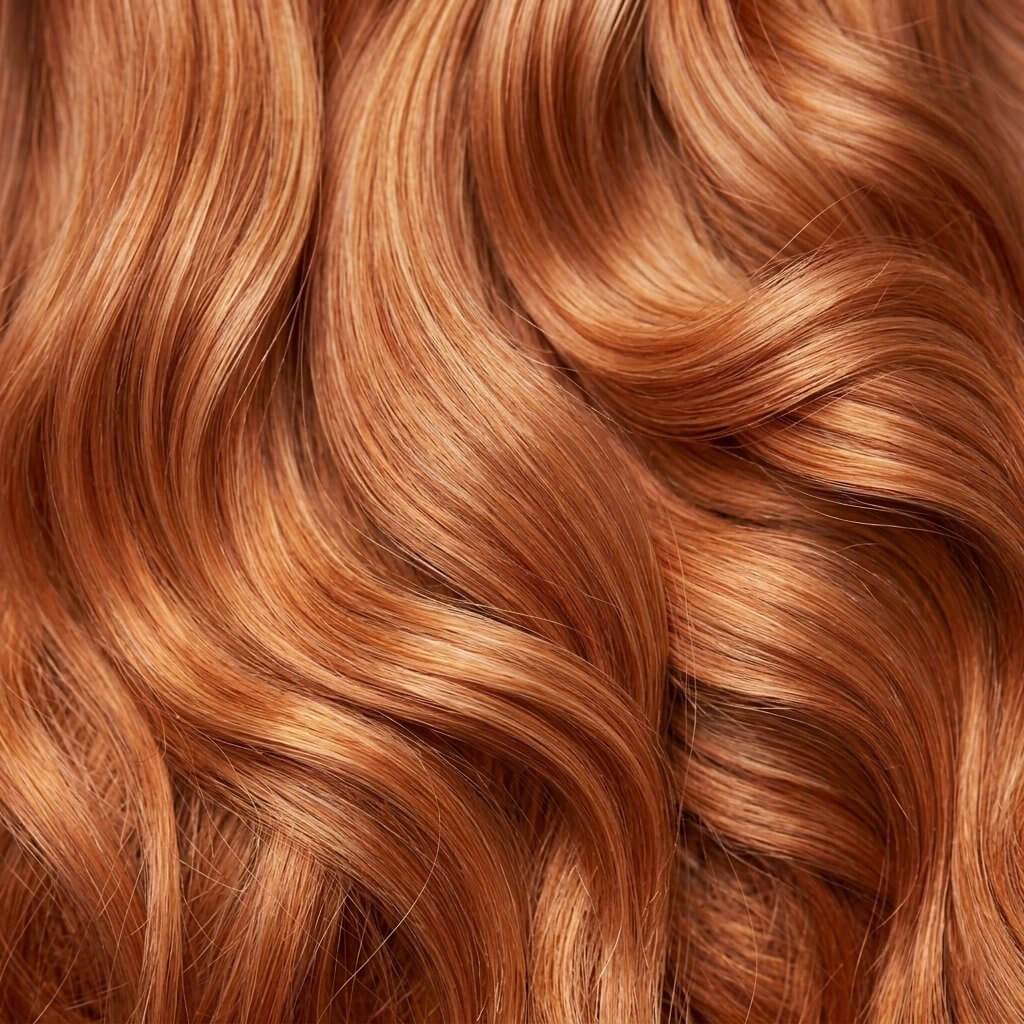
Ginger blonde sits between copper and strawberry, but it wears more like a warm neutral than either of its neighbors. The collarbone length and thick, wavy texture let the color catch light in the bends of the waves, which gives depth without needing dimensional highlights. Ask your colorist for: collarbone length, vibrant ginger blonde. The tonal variations are subtle, coming from the natural interplay of the loose waves and the uniform base color. In natural light, ginger blonde leans warm without tipping into orange, which makes it a reliable everyday shade that does not need frequent toning appointments.
Mid-Back Dark Red With Auburn Highlights
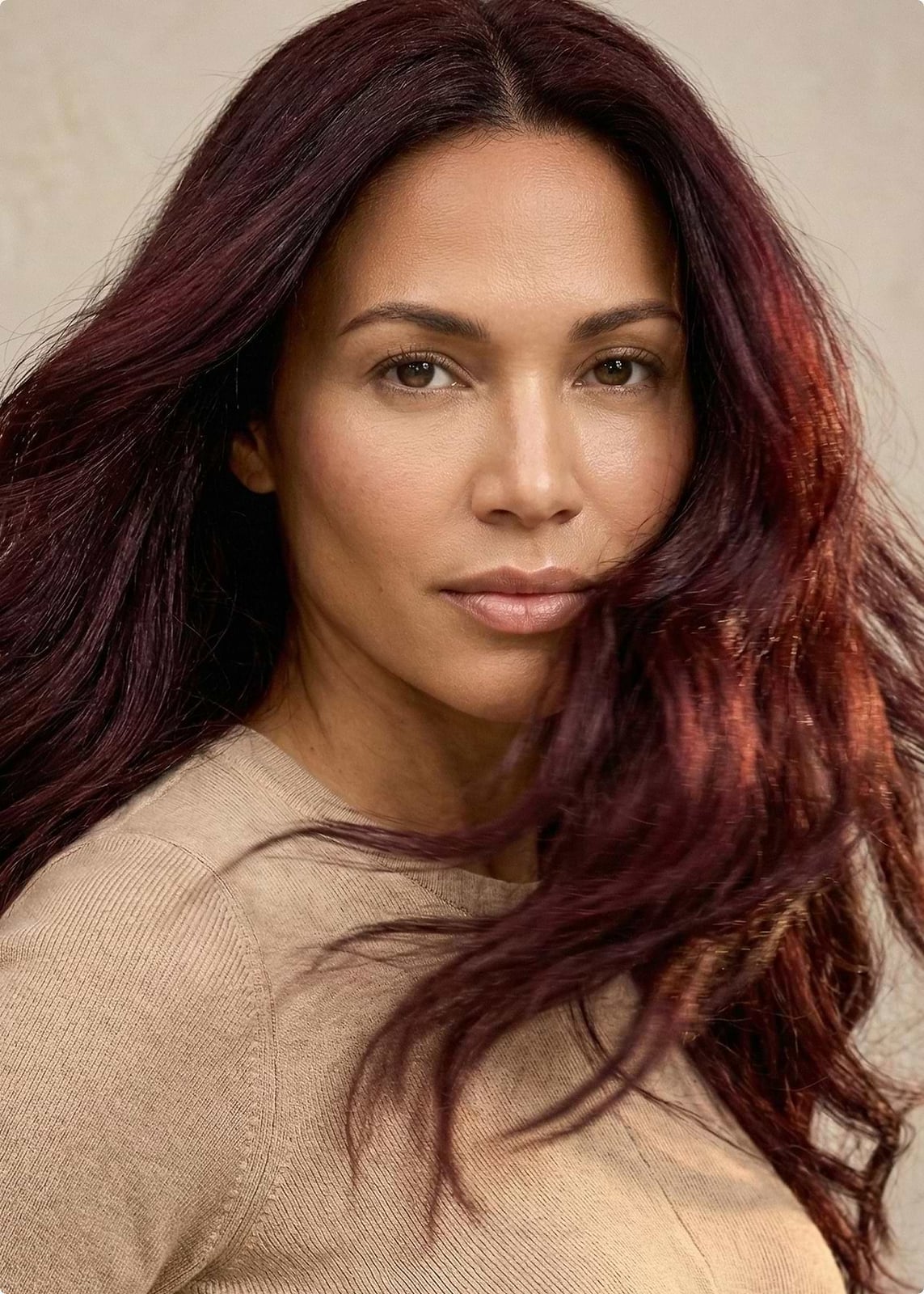
Wondering how to get a red that doesn’t look flat or one-note? The trick is in the interplay between base and highlight. This mid-back length starts with a deep, rich red, then adds auburn highlights throughout for dimension that catches the eye rather than the light. The long layers and smooth blowout keep the overall effect polished. Thick, wavy hair of this length suits most face shapes, especially when the color has this much movement. Ask your colorist for: mid-back length, dark red with auburn highlights. A color-safe shampoo and conditioner will help maintain the richness, and a trim every 10-12 weeks keeps the layers from feeling heavy.
Shoulder Length Pastel Pink Air-Dried Waves
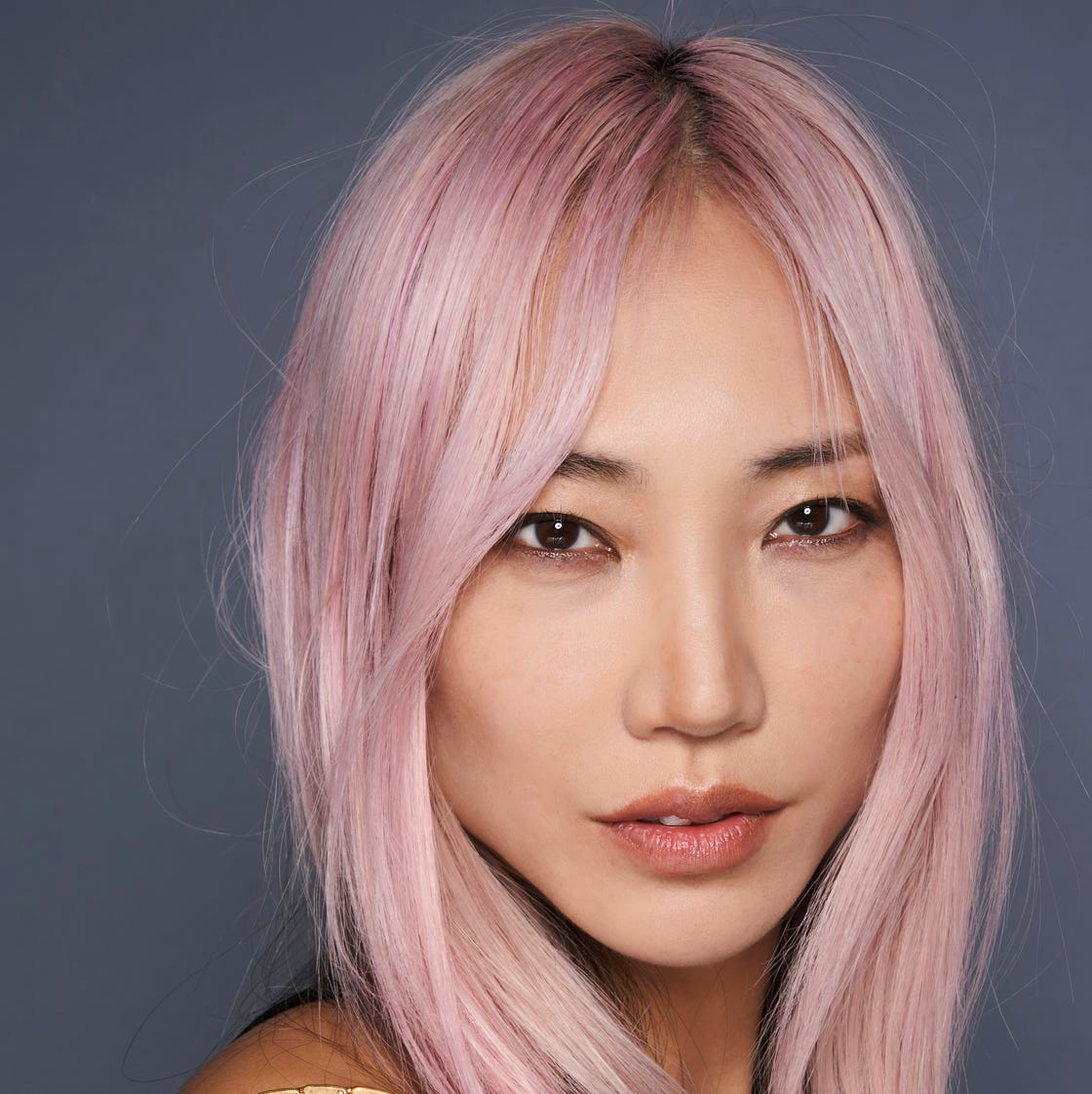
Shoulder-length, fine, layered hair in a soft pastel pink is air-dried into natural waves. The photo can’t show how much planning goes into making pastel pink look this balanced. Achieving it at home is a gamble. The tone lifts unevenly and turns brassy fast. A salon does it right the first time, but the real drawback is upkeep: that delicate pastel pink needs a toning session every 3-4 weeks, or it fades to a color you didn’t ask for. Fine, wavy hair at shoulder length wears this well, but be honest about your patience for the maintenance.
Chin Length Blonde Bob With Dark Roots
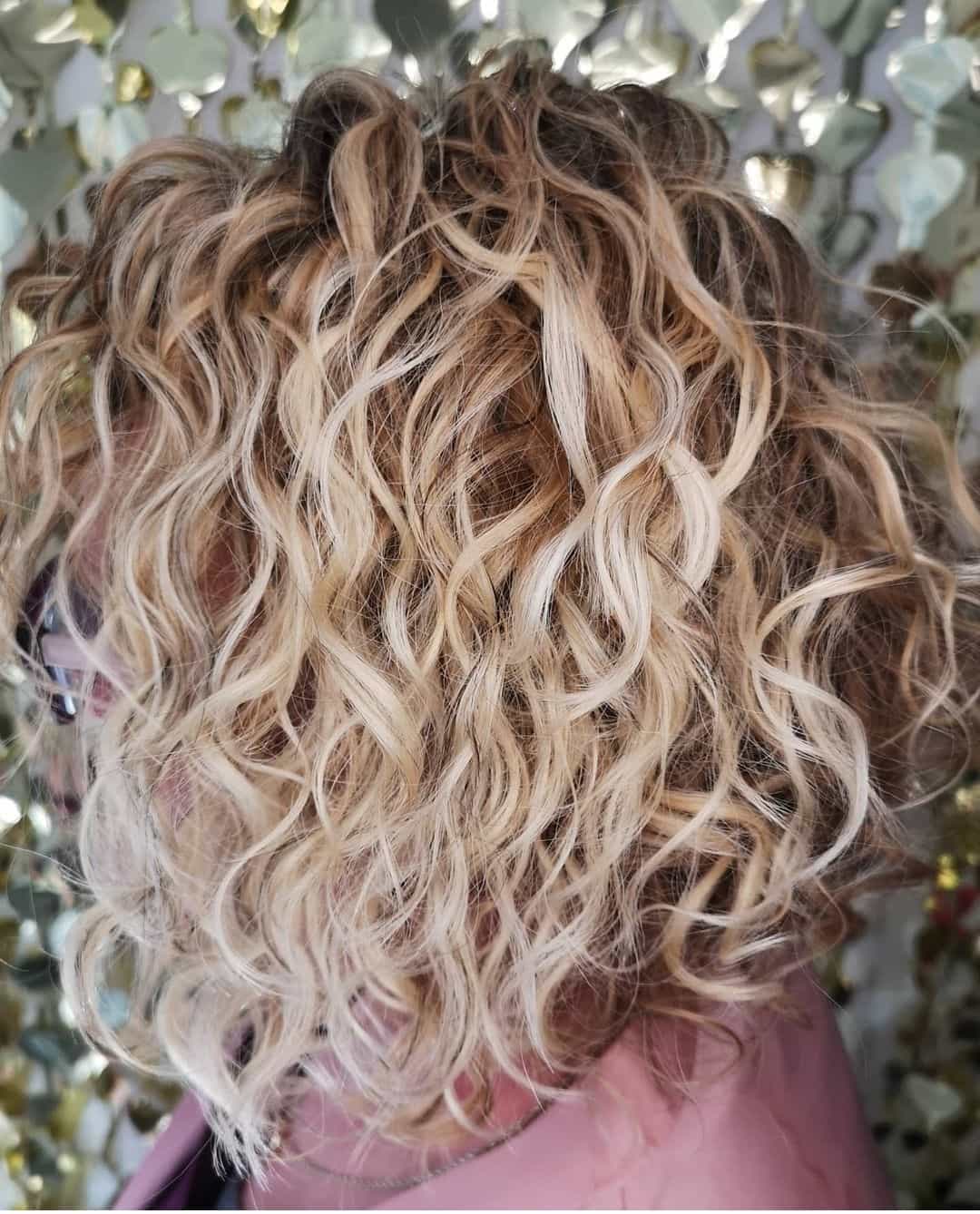
A chin-length blonde bob with visible darker roots isn’t a grow-out you’re hiding, it’s the design. The side-part and defined, natural-looking curls give the cut a shape that reads as intentional from the start. Compare this to a full blonde application on the same bob: the full blonde needs root touch-ups every 4 weeks, while this version stretches to 8 weeks before the contrast feels off. Thick, curly hair at chin length suits most face shapes. Ask your stylist for: chin length blonde bob, natural dark roots. A curl-defining cream helps maintain the pattern, and a trim every 6-8 weeks keeps the bob crisp.
Shoulder Length Brown With Blonde Highlights And Full Bangs
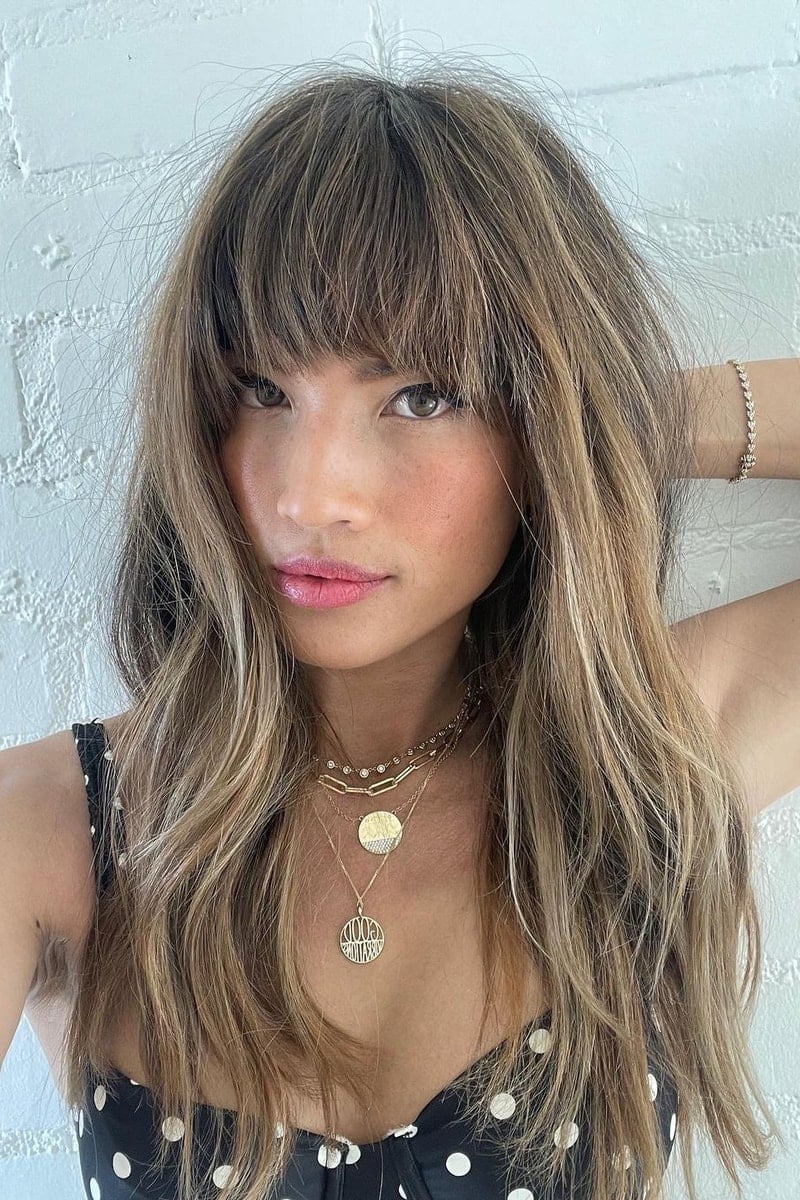
Full bangs with a middle part is a specific choice, and it works best when the rest of the cut supports it. This shoulder-length style uses a mix of medium brown with blonde highlights through wavy, medium-thick hair, with the bangs hitting right at the brow. The full bangs suit oval and long faces, but if you have a round or square face, the middle part and bangs together can shorten the face more than you’d like. Ask your stylist for: shoulder length, brown with blonde highlights, full bangs. A flat iron to smooth the bangs keeps the look tidy, and the cut needs a trim every 8-10 weeks to keep the bangs from drifting into your eyes.
Mid-Back Layers With Brown and Blonde Highlights, Face-Framing
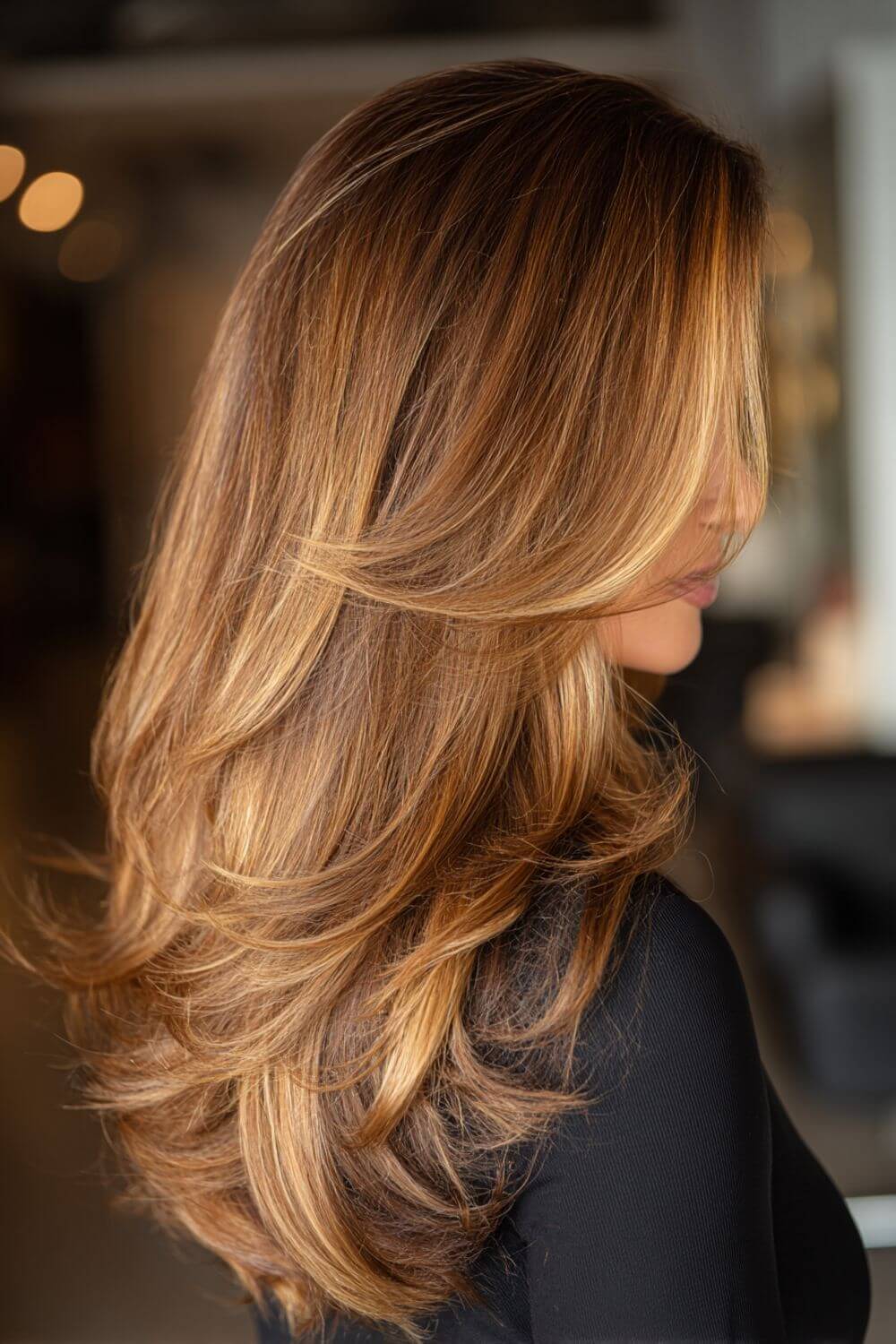
How do you add movement to thick, wavy hair without losing the length? Face-framing layers are the answer, and this mid-back cut proves it. The medium brown base carries blonde highlights that start around the jaw and continue through the ends, while the face-framing pieces soften the overall shape. Thick, wavy hair at mid-back length is ideal here, and the face-framing layers help soften square and round faces. Ask your colorist for: mid-back length, brown with blonde highlights, face-framing layers. A smoothing serum helps control the blowout, and a trim every 10-12 weeks keeps the layers from becoming heavy.
Shoulder Length Platinum With Brown Root Shadow
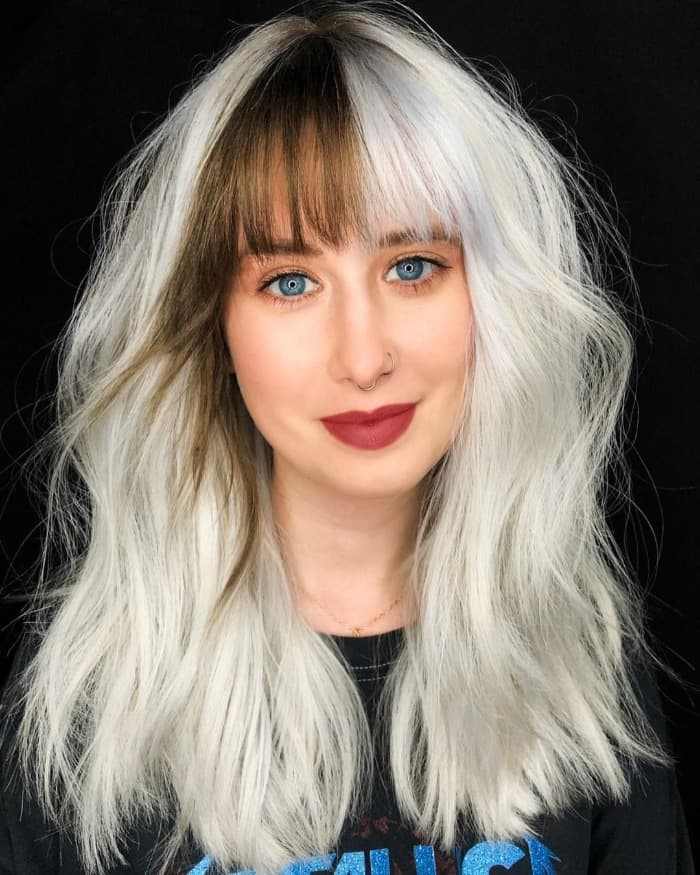
The middle parting makes the contrast deliberate, not accidental. Ask your colorist for: shoulder length, platinum blonde, brown root shadow, blunt bangs. Fine, wavy hair works because the shadow side adds visual weight where the texture is lighter. The blunt bangs suit oval and long faces, giving structure to the soft wave. A purple shampoo keeps the platinum from turning brassy, and a trim every 8 to 10 weeks keeps the blunt line sharp.
Mid-Back Vibrant Pink With Curtain Bangs
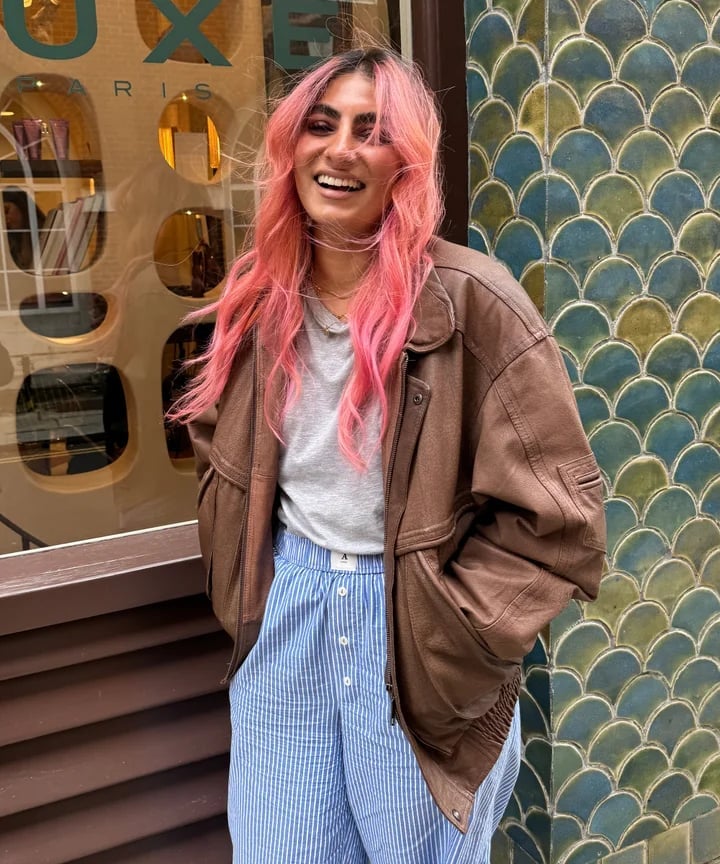
This is a color built for summer festivals and outdoor events where the light catches the wave. Ask your colorist for: mid-back length, vibrant pink, curtain bangs. Thick, wavy texture holds the pigment well and gives the blowout natural volume. Curtain bangs soften round and heart faces without committing to a full fringe. Color-safe shampoo and conditioner are non-negotiable, and plan a toning refresh every 3 to 4 weeks to keep the pink from fading into a wishy-washy pastel.
Long Pink To Purple Gradient With Face-Framing Bangs
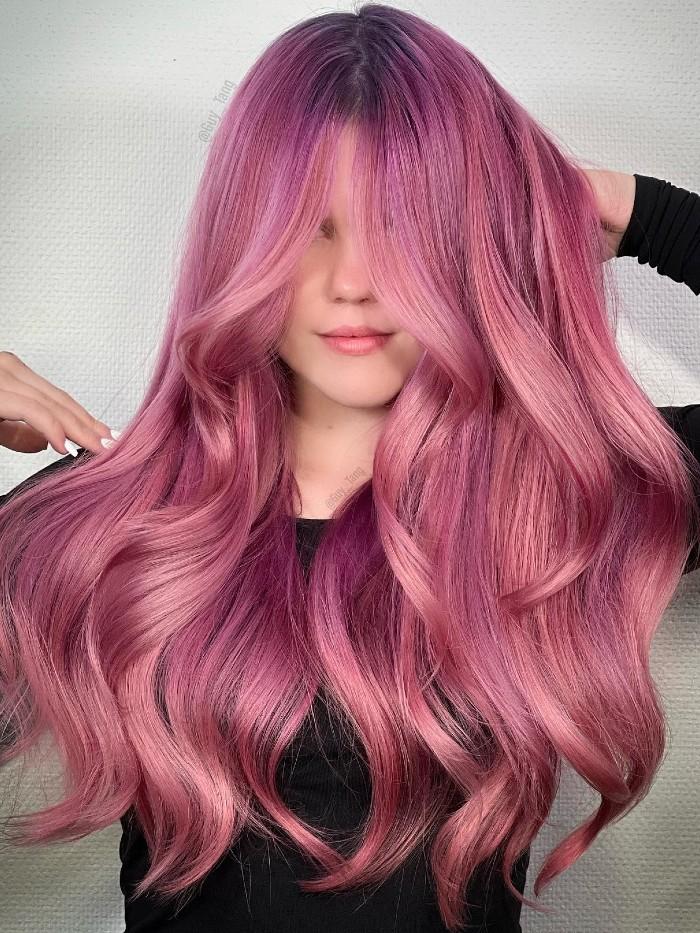
Wondering how to describe a gradient that starts vibrant pink and shifts to deep purple? Long, thick, wavy hair cut with long layers and face-framing bangs, parted at the middle and styled in soft waves. The blend is seamless, not striped. Ask your colorist for: long hair, pink to purple gradient, face-framing bangs. Thick, wavy texture helps the gradient read smoothly because the wave hides any hard transition lines. Face-framing bangs soften round and heart faces. When you book, specify “a soft, blended gradient” and bring a reference photo of the exact pink-to-purple ratio you want. The middle parting keeps the two tones balanced on both sides.
Mid-Back Black To Blue Ombre Waves
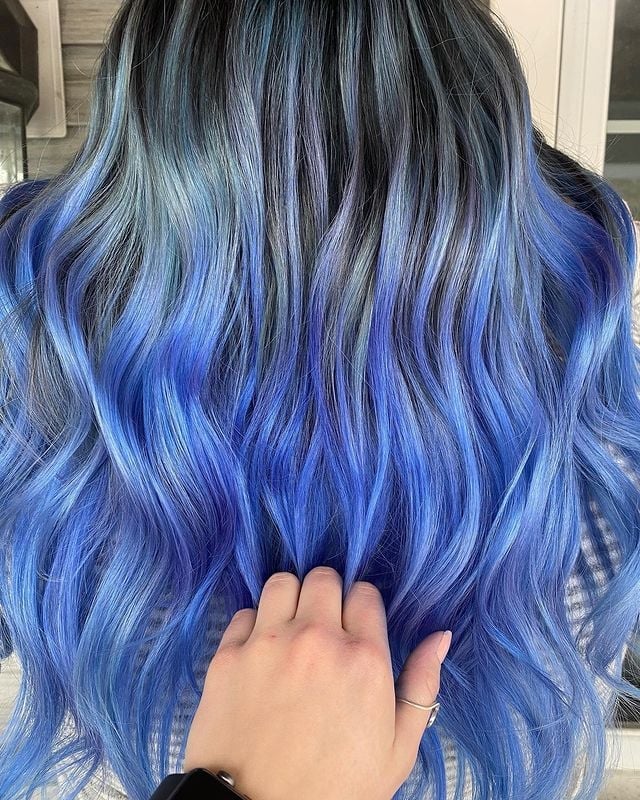
The contrast is dramatic, but blue tones can fade to greenish within three weeks without a color-depositing conditioner. Ask your colorist for: mid-back length, black to blue ombre. This is a salon-only job because lifting dark base to a clean canvas for blue requires expertise. Thick, wavy texture helps the ombre transition look smooth. Skip this if you want low upkeep or if your water has high mineral content, which speeds up the green shift.
Long Straight Black With Red Ombre
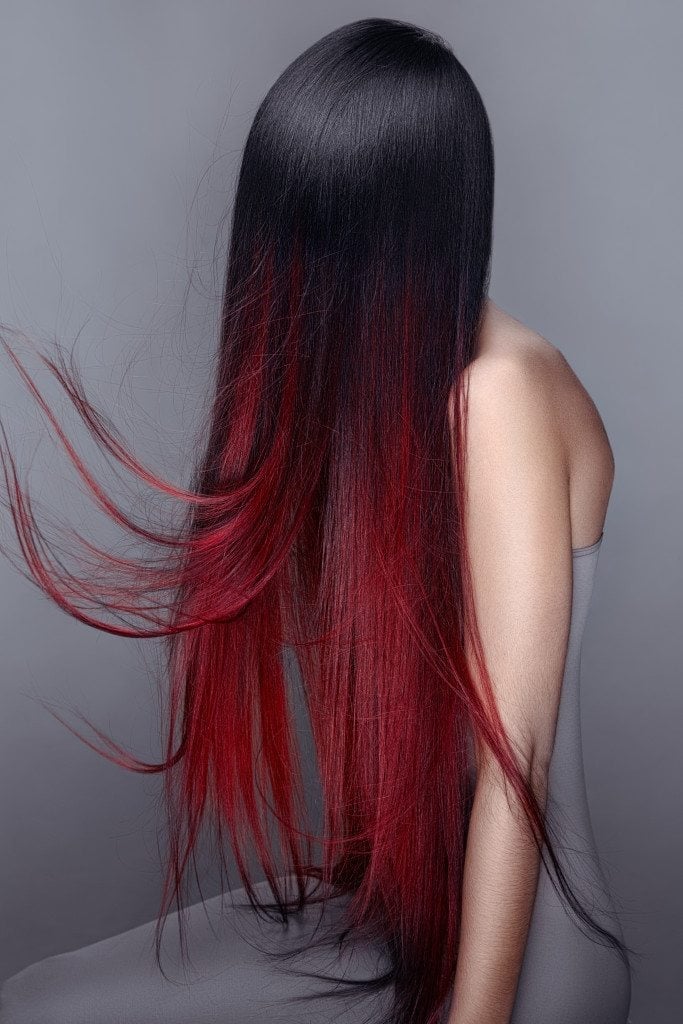
Long, thick, straight hair cut in a straight line with no layers, featuring a deep black base that transitions into a vibrant red ombré at the ends. The sleek texture makes the color shift read cleanly. Ask your colorist for: long straight hair, black with red ombré. Thick, straight hair holds the ombré line without wave distortion, which matters for a color that relies on a clear boundary. Upkeep is less than a full red dye job: the ombré needs a refresh every 6 to 8 weeks, while the black base only needs a root touch-up when growth shows. A heat protectant and shine serum keep the straight texture glossy and the red from looking flat.
Mid-Back Pink and Purple Split Dye Waves
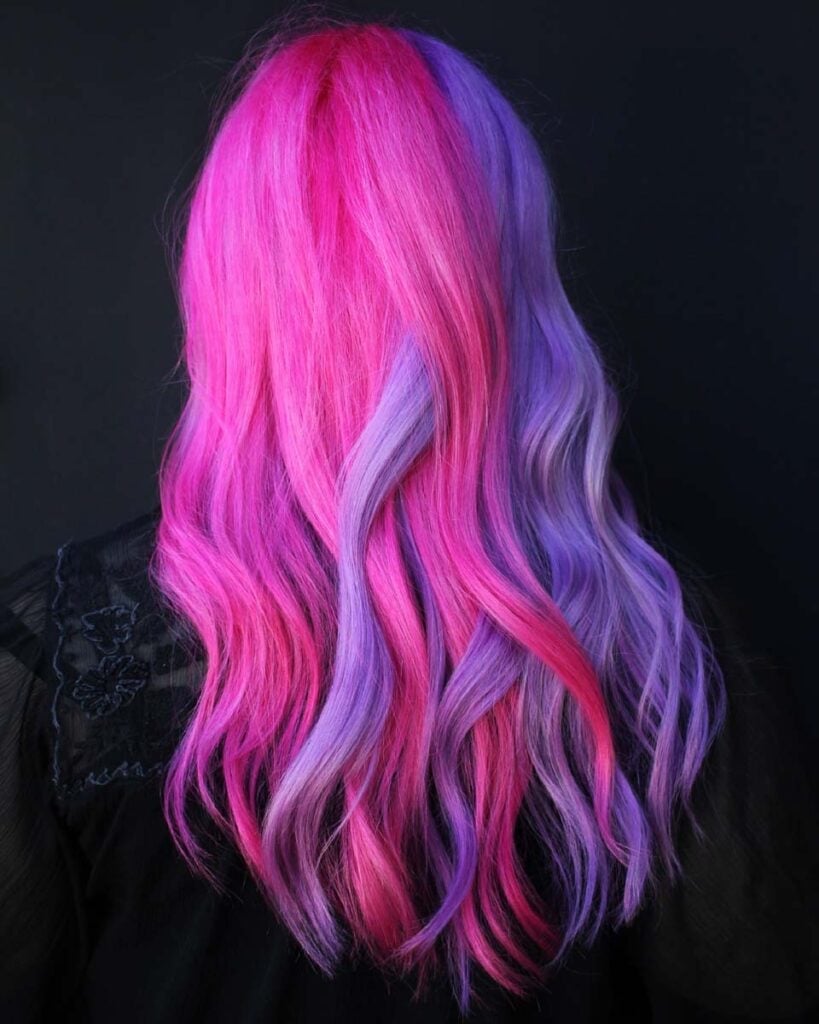
A split dye demands equal parts conviction and hair health, and this pink and purple version on thick, wavy mid-back length hair is a bold commitment. The middle parting makes the contrast feel architectural, not accidental. This look suits most face shapes, though the real prerequisite is hair that can handle the process: lightening two full sides to different pastel shades takes a toll. Ask your colorist for: mid-back length, pink and purple split dye. A toning appointment every four to six weeks keeps each side from bleeding into the other, and cool water is your new best friend between visits.
Thick texture is ideal here because it gives each color enough density to read as a solid block. If your hair is fine or compromised, consider a less extreme version: a peek-a-boo panel or a dip-dye ends situation. The back view of this particular execution reveals just how much real estate the color covers, which is the whole point.
Shoulder Length Teal and Purple Split Dye

Can you wash teal and purple together without turning the whole thing brown? Yes, but only if you treat the two halves like sworn enemies. This shoulder-length wavy cut with curtain bangs and a middle part is a vibrant teal and purple split dye, and the daily reality is a cold-water rinse and separate color-depositing conditioners. Ask your colorist for: shoulder length, teal and purple split dye, curtain bangs. Medium density hair gives each color enough weight to stay distinct, and the curtain bangs soften what is otherwise a very direct statement. A toning refresh every four to six weeks keeps the line crisp.
Shoulder Length Navy Blue and Yellow Split Dye
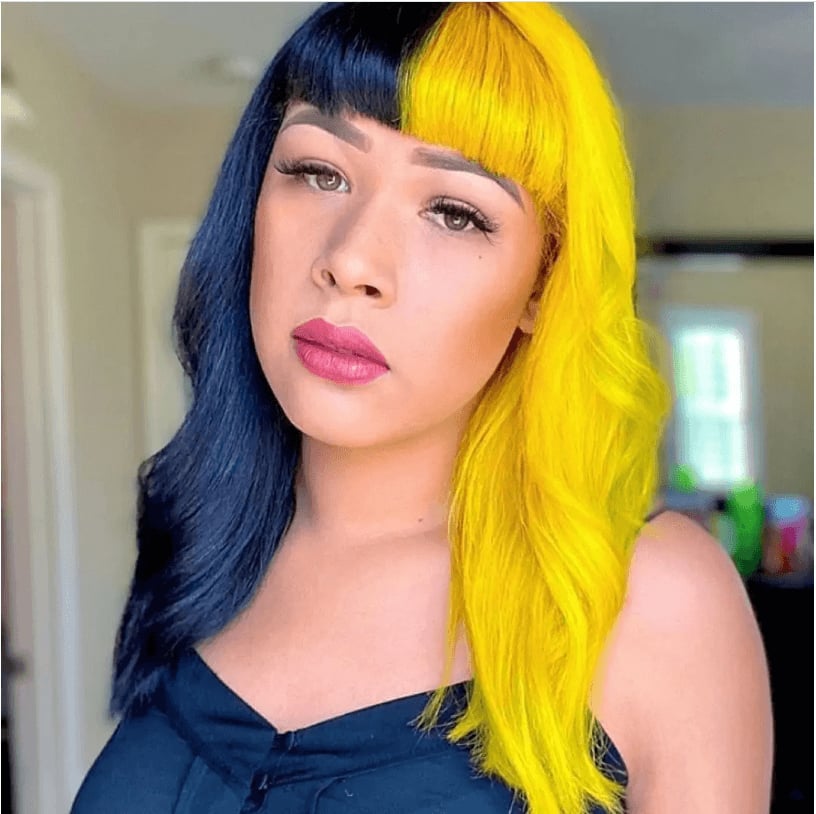
A navy blue and bright yellow split dye is not a color you stumble into; it requires two completely different lightness levels to make each side pop. The navy side sits on dark hair, while the yellow side needs a pale blonde canvas underneath. This shoulder-length wavy lob with blunt bangs and a middle part makes the contrast even more deliberate. Ask your colorist for: shoulder length, navy blue and yellow split dye, blunt bangs. Medium density wavy texture helps the blunt bangs lie flat without looking stiff. Expect a toning appointment every four to six weeks, and wash with cool water to keep the yellow from fading into a sad green.
Mid-Back Pastel Rainbow Watercolor Effect
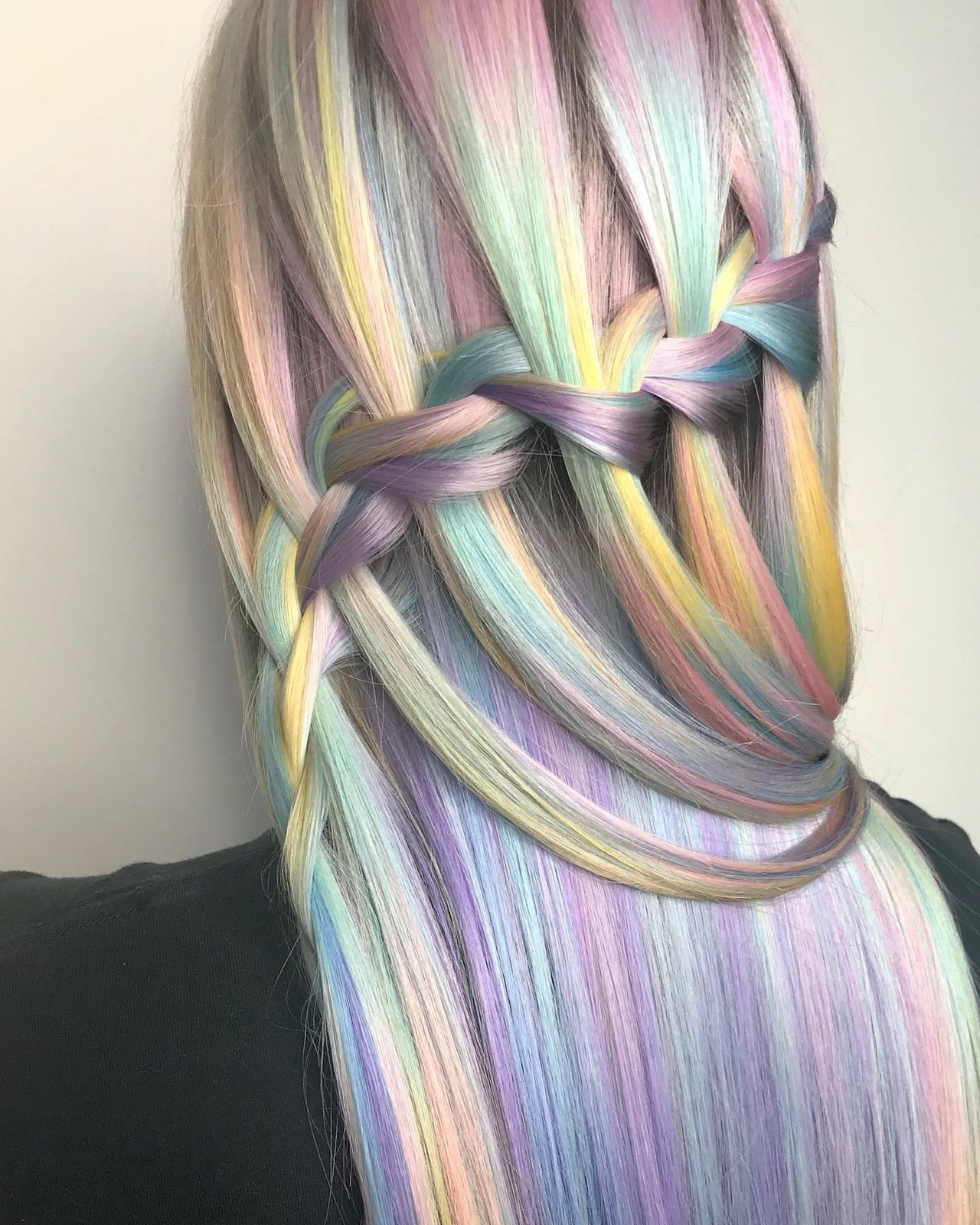
The intricate braids woven into the back add texture without competing with the color. Straight, thick hair works best because it shows the watercolor blending clearly; on very curly or coily hair, the pastel tones might read as a single washed-out shade. Consider this an artistic project, not a maintenance-light option.
Short Teal and Green Afro
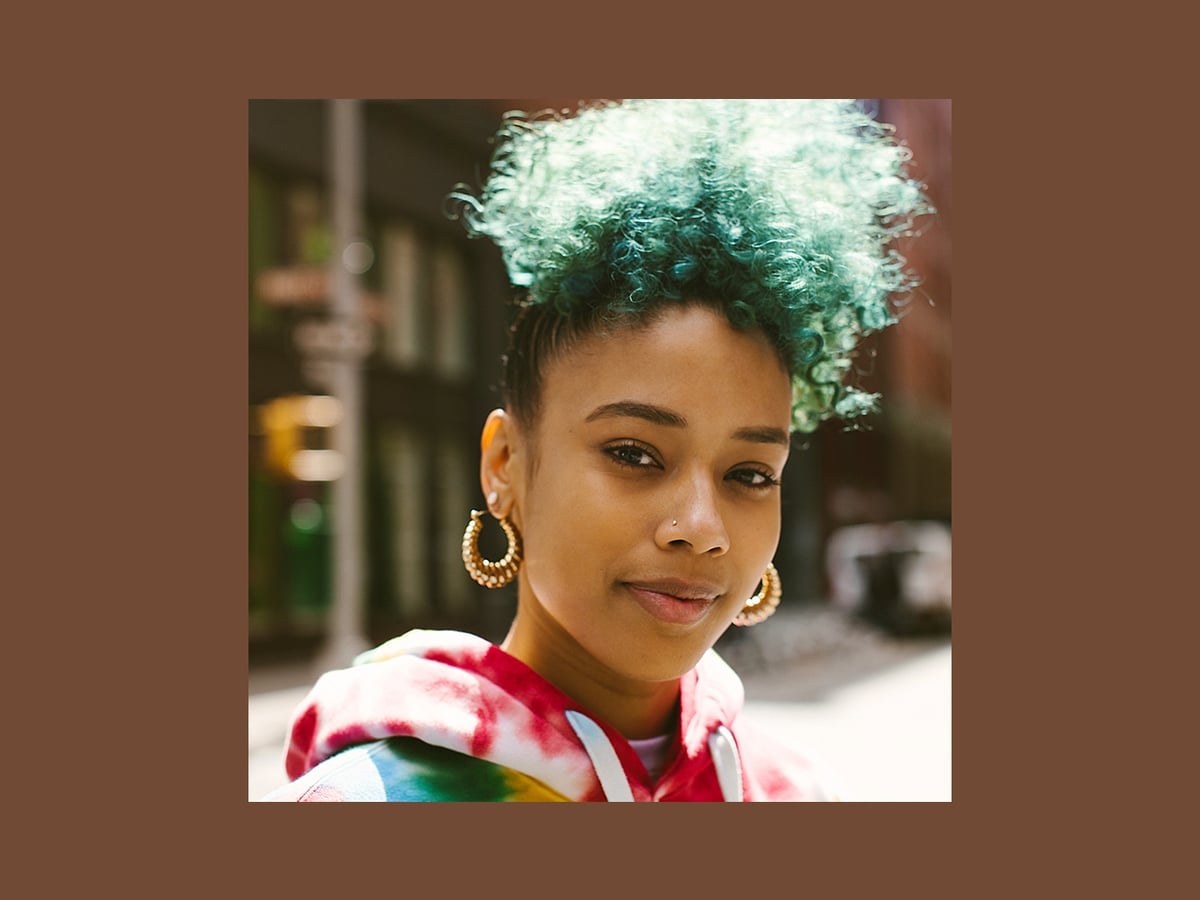
How do you get teal and green to read as vibrant on short, thick, curly hair without looking muddy? Start with a clean, lightened base and ask for the color to be concentrated at the top, as this afro demonstrates. The middle parting shows off the gradient from teal to green, and the short cut keeps the intensity high. Ask your colorist for: short curly hair, vibrant teal and green. The color sits mostly at the crown, which means the roots can grow in for a while before the contrast becomes obvious. This suits most face shapes, and the short length makes the whole process faster than a mid-back dye session.
Mid-Back Braids With Red Highlights
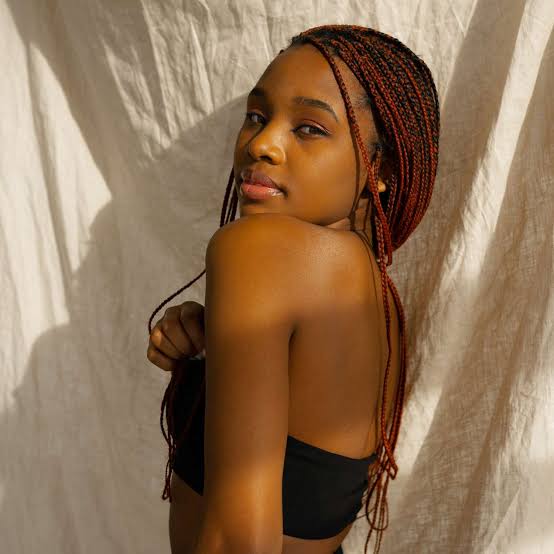
The design is simple: thin braids in black with red highlights woven throughout, falling to mid-back length. That red thread creates a lot of visual interest for minimal extra effort, but the trade-off is real. Red dye, especially on coily hair, can bleed or fade unevenly inside braids, and the highlights lose their pop after a few washes. This is not a quick DIY project. Getting the highlights placed evenly and then braiding the whole head takes several hours in the salon. The side parting keeps the red visible on both sides.
Ask your colorist for: mid-back braids, black with red highlights. The look suits most face shapes because the braids hang straight down, and the coily texture holds the style well. Expect to re-braid every 4-6 weeks to keep the scalp neat and the red tone fresh. If you hate salon appointments, skip this one.
Short Coily Hair With Magenta Highlights
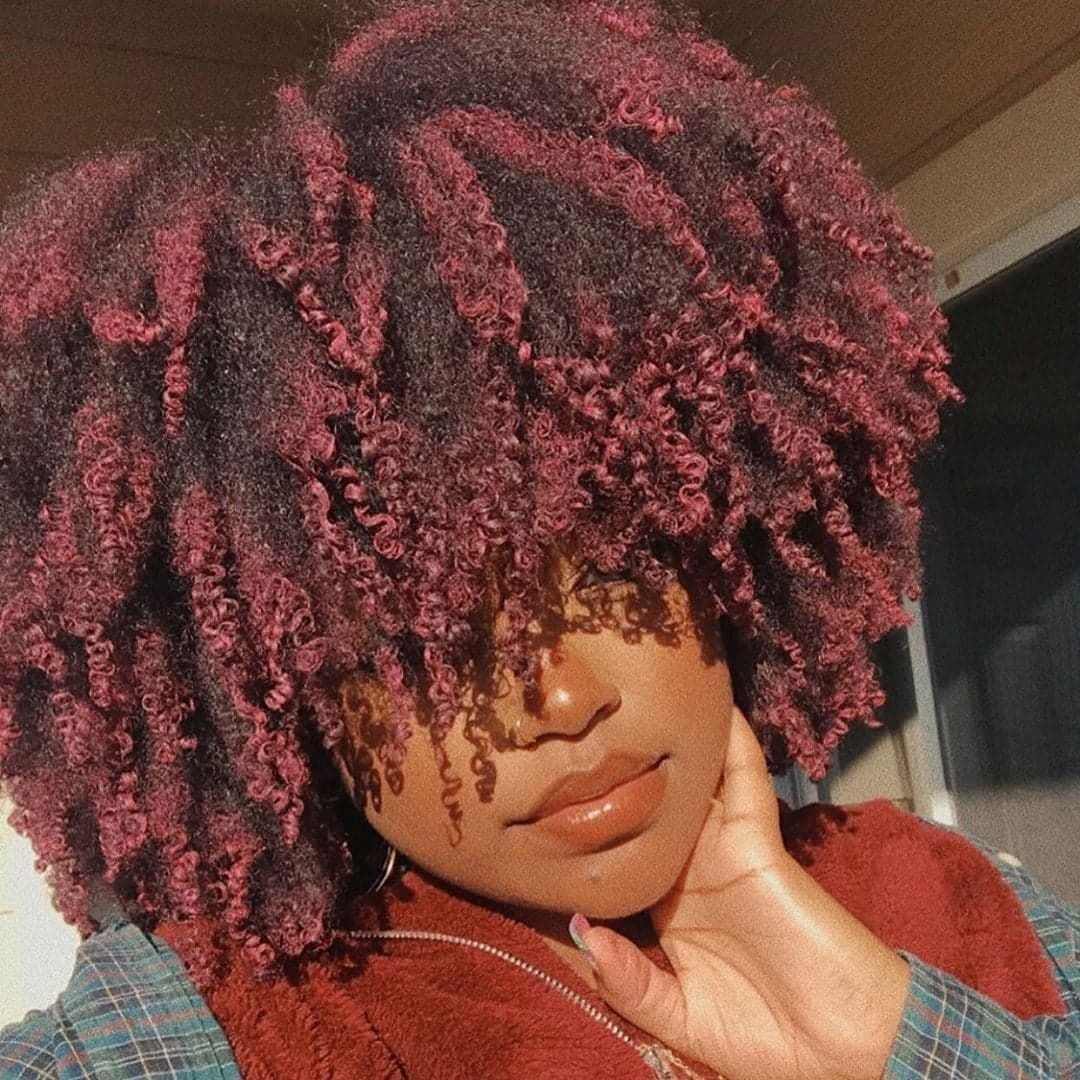
Magenta highlights on a dark base create a sharper contrast than auburn or caramel, which blend more. On short, thick coily hair with wispy bangs and a side parting, the magenta looks modern. The dark base grounds the color, so it never looks like a faded pink. A curl-defining cream keeps the coils separated and the highlights visible. Trim the cut every 6-8 weeks to maintain the shape. Ask your colorist for: short coily hair, dark base with magenta highlights, wispy bangs. The wispy bangs soften round and heart faces, while the side parting adds asymmetry.
Collarbone Shag With Solid Black Color
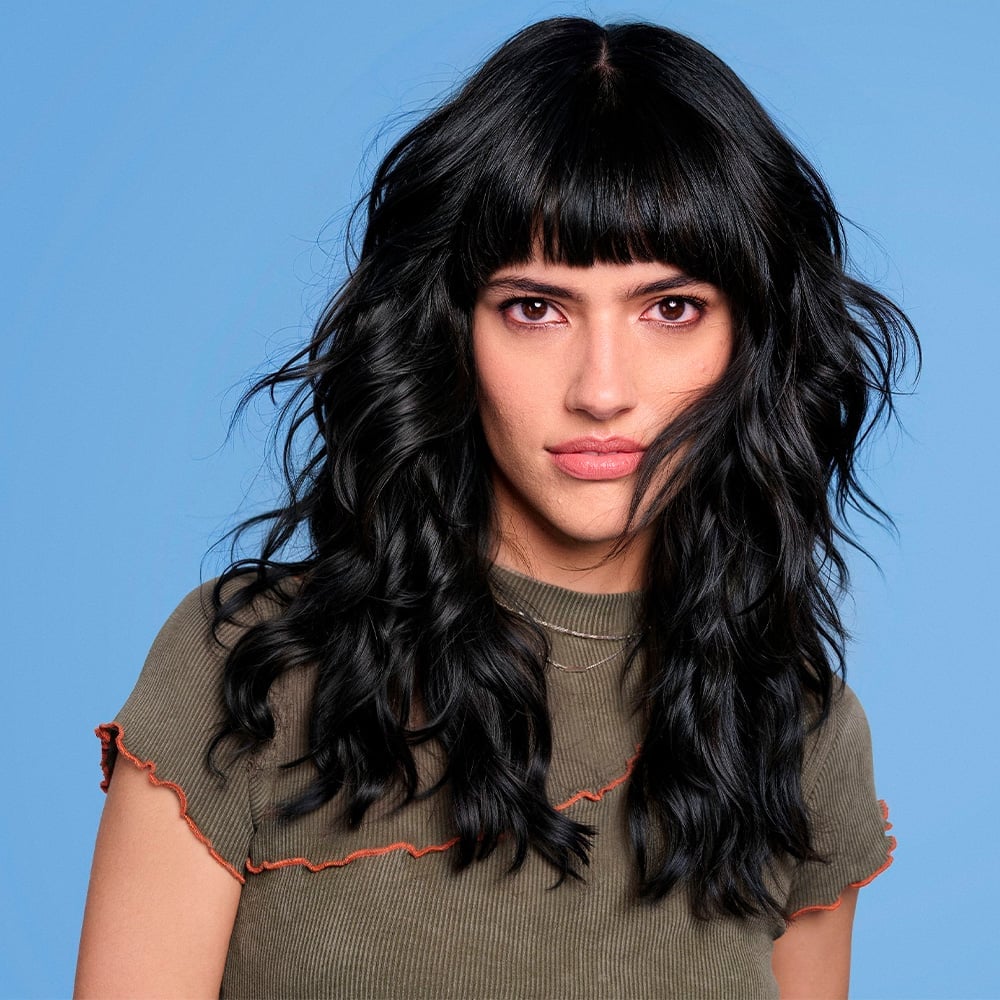
A collarbone-length shag cut with curtain bangs and a middle parting, all in solid black. The color is straightforward, which lets the cut do the work. This look suits thick, wavy hair because the shag layers remove weight without losing volume. Solid black can make fine hair appear thinner and can look harsh on very pale or very cool skin tones. The curtain bangs soften round and heart faces, while the middle parting elongates a round face. Ask your stylist for: collarbone shag, solid black, curtain bangs. Damp waves styled with a texturizing spray create the lived-in finish. Trim the shag every 8-10 weeks to keep the layers sharp.
Final Thoughts
The right color comes down to how much upkeep you actually want. Fine hair needs a soft, dimensional technique like balayage to avoid a harsh line. A round face benefits from length below the chin and a side part to elongate. Consider your weekly styling routine and your salon budget before committing to a high-contrast or vibrant shade.
- Refresh vibrant colors with color-depositing conditioners every 2-4 weeks.
- Use sulfate-free shampoos to preserve color longevity.
- Deep condition weekly to maintain shine and prevent dryness.
- Schedule salon touch-ups for highlights or root color every 6-10 weeks.
Find the color that speaks to you and wear it with confidence.