Feed-in braids start at the scalp with your natural hair and gradually incorporate extensions, which keeps the base flat and the ends full. This year, the style leans into scalp detail and blended color, with soft face-framing layers and lived-in tones replacing uniform, flat-ironed looks.
This collection of 29 Feed In Braids ideas spans from low-maintenance, neat rows to intricate geometric patterns and vibrant highlights. It covers short to long lengths, salon to DIY-friendly approaches, and styles suited for fine, thick, or coily textures. If your braids tend to look flat by afternoon or the grow-out line shows too soon, these options address both struggles with practical, wearable solutions.
Seamless Dark Brown Feed In Braids
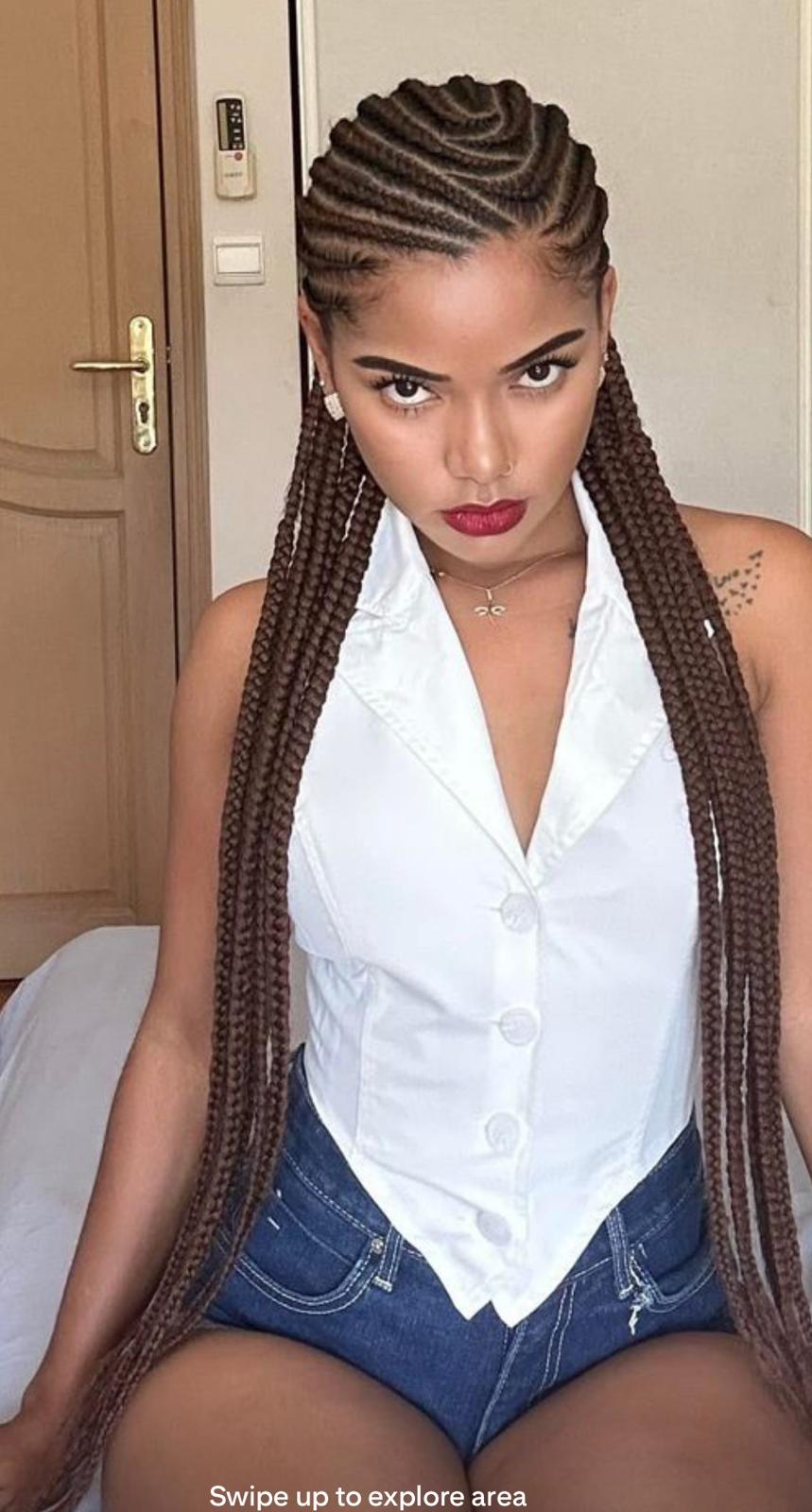
The feed-in technique here is doing its best work at the scalp, where each braid starts thin and gains thickness as it travels down, creating that seamless transition from root to length. The dark brown color reads as a single solid tone, and the straight, thick strands hold a uniform shape all the way to mid-back. A middle parting keeps the geometry clean and symmetrical, which suits anyone who wants a polished, structured look without extra fuss. Ask your stylist for dark brown feed-in braids, seamless scalp transition. The straight texture means the braids lie flat and neat, and the thick hair gives them enough weight to hang properly rather than puffing up at the ends.
Neat Straight Thick Hair Feed In Braids
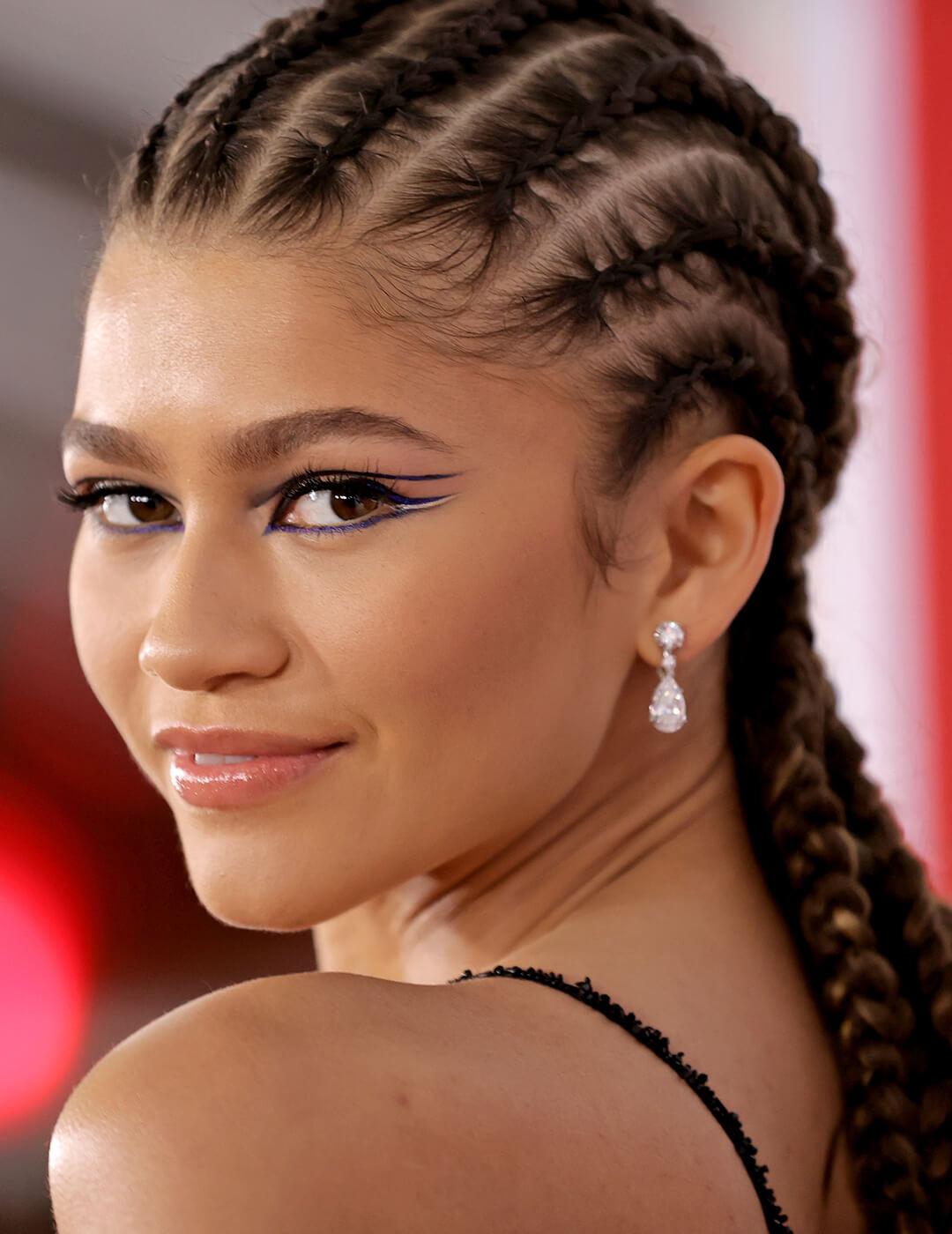
Is your hair thick and straight enough to make a stylist’s life easy? Then these neat feed-in braids are worth a serious look, because the texture is exactly what this style needs to sit smoothly from scalp to tip. The dark brown strands are done up tight against the head, with a middle parting that keeps everything orderly, and they reach mid-back without a single visible flyaway. Ask your stylist for neat feed-in braids, mid-back length. To keep them looking this tidy, wrap your head in a silk scarf at night, which stops the braids from rubbing against cotton and frizzing at the edges. That smoothness is what separates a good braid job from one that looks messy by Tuesday.
Fulani Braids With Geometric Cornrow Pattern
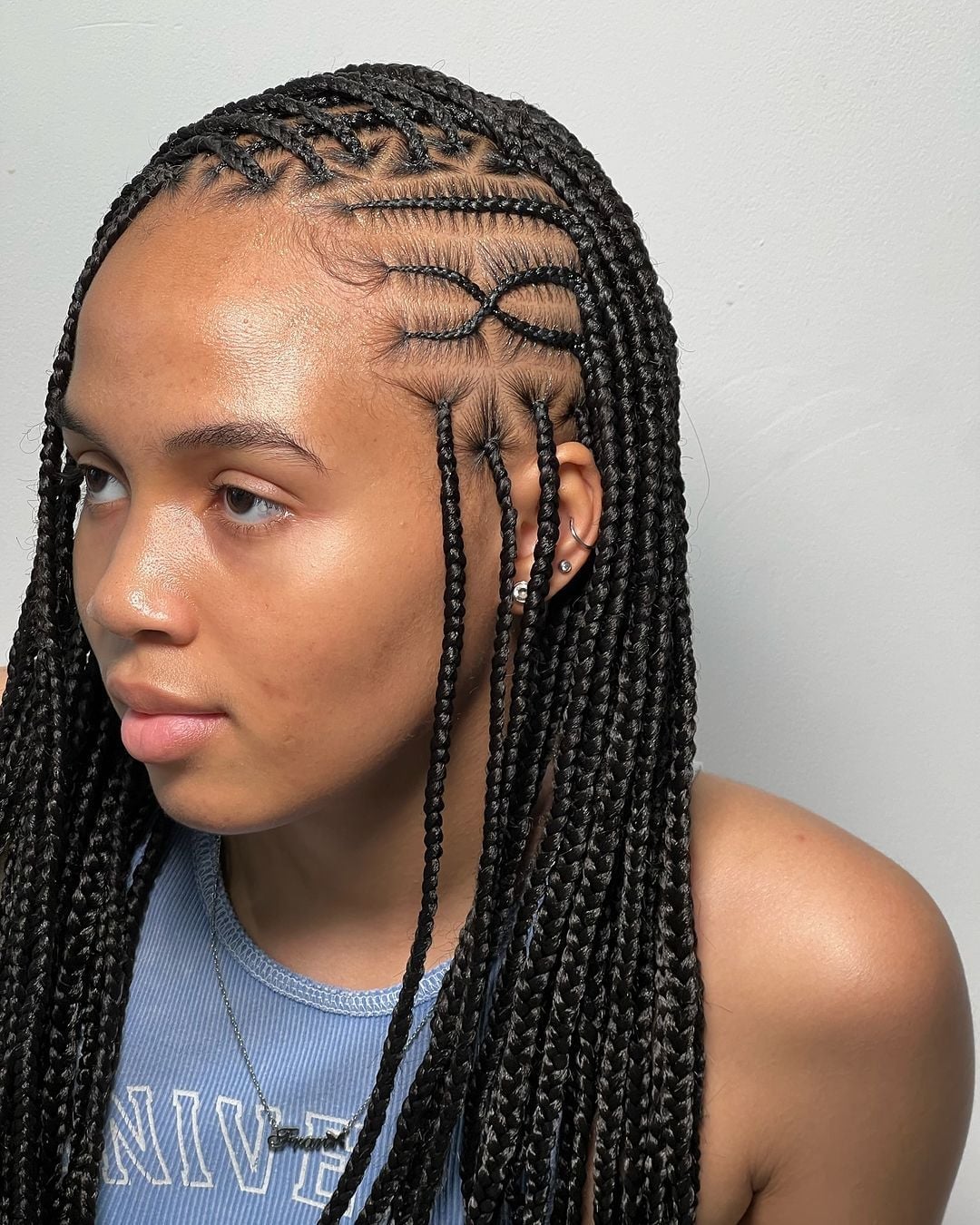
Fulani braids take the standard feed-in concept and add a central cornrow that runs from the forehead to the nape, which sets them apart from the regular straight-down versions. The black, straight, thick hair is parted in the middle, and the geometric pattern at the scalp gives the whole style a more intricate, deliberate feel than a basic braid. Ask your stylist for Fulani braids with a central cornrow pattern. This is the choice if you want something that reads as more fashion-forward than the everyday feed-in, while still keeping the mid-back length that makes it wearable for weeks. The extra scalp detail does mean less room for error, so it is worth sitting with someone who has done the pattern before.
Neat Black Cornrows Mid Back Length
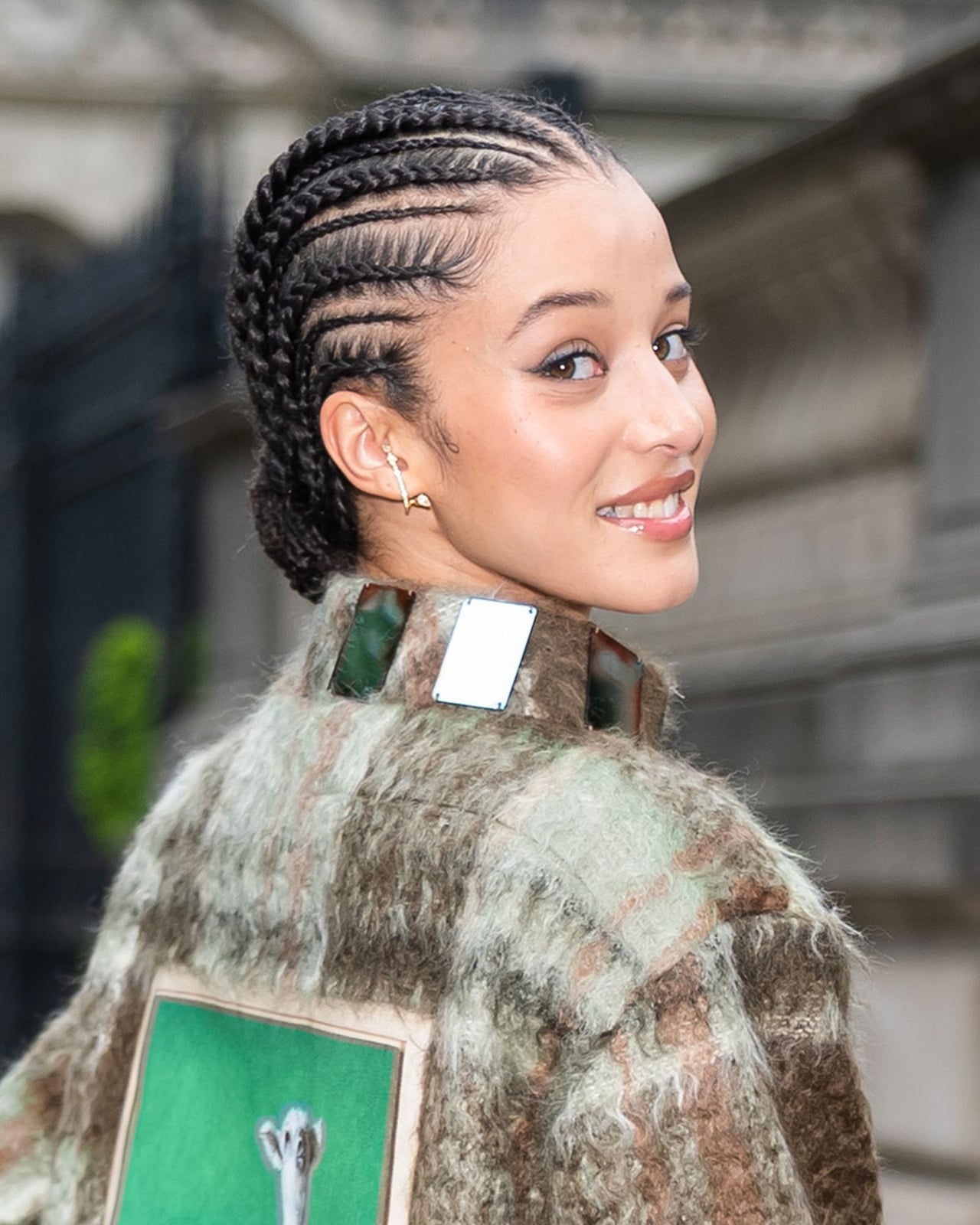
Cornrows are the workhorses of protective styling, and this version is about as tidy as it gets, with each braid lying flat and even from the scalp down to mid-back. The black hair is thick and straight, and the clear middle parting makes the precision of the rows the main event. Ask your stylist for neat cornrows, middle parting, mid-back length. The way this style holds is its real selling point, because tight cornrows stay put for weeks with minimal fuss, as long as you keep the scalp clean and moisturized. A light serum along the braids keeps them shiny and controls the flyaways that inevitably creep up at the hairline. For daily wear, this is the style you can set and forget, which is exactly the point.
Geometric Black Cornrow Pattern, Long
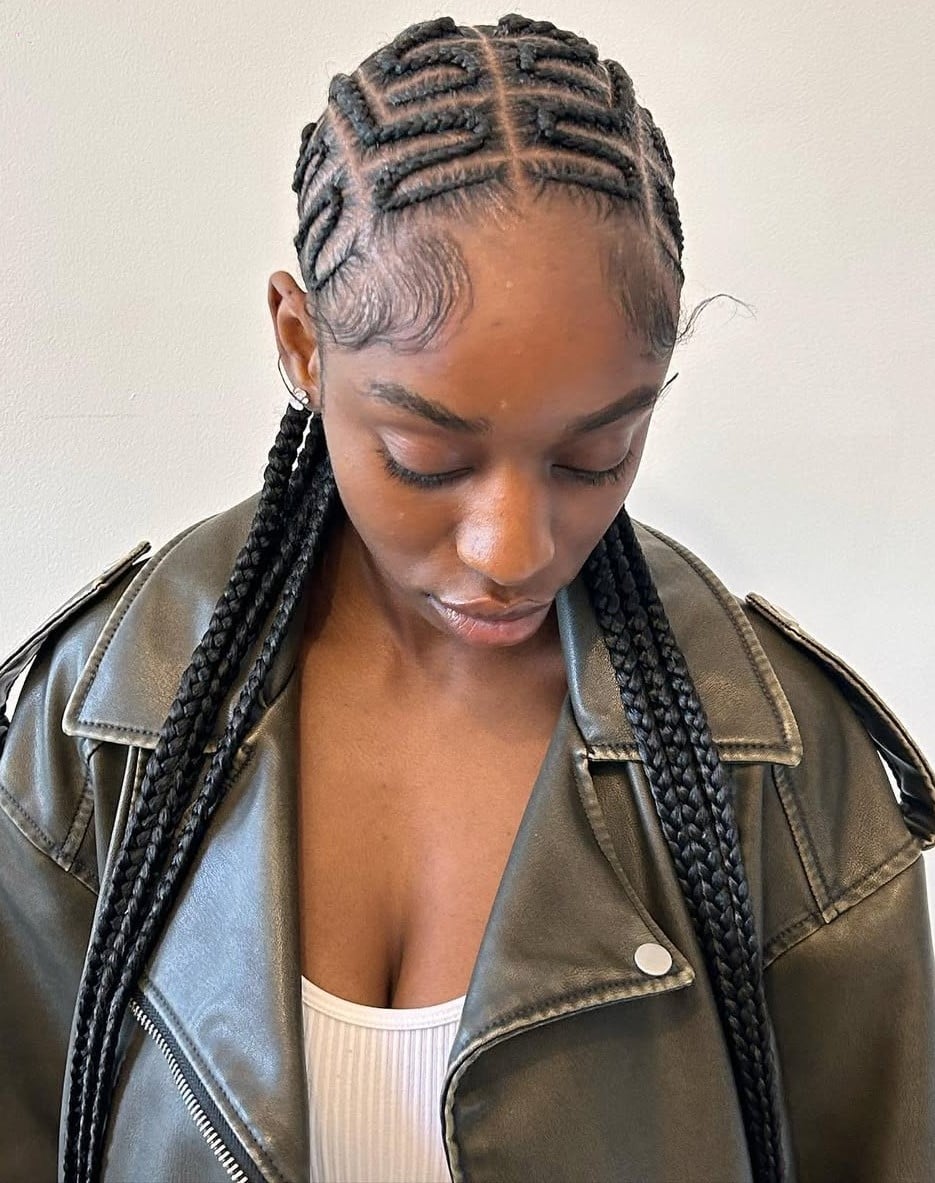
Long hair gives a geometric cornrow pattern room to breathe, and here the black, straight strands are arranged in a precise design that runs from a middle parting down to mid-back. The feed-in technique is what makes the pattern look sharp, because each braid starts thin at the scalp and thickens gradually, so the lines stay crisp rather than blurring into each other. Ask your stylist for geometric cornrow pattern, middle parting.
The longer the hair, the more patience the install takes, since every row has to be mapped out before the first braid is even started. It is not a quick sit, but the style holds its shape for weeks with minimal upkeep beyond a clean scalp and an occasional soft brush to lay down stray hairs. If you like your braids to look like they were drawn on, this is the one to ask for.
Neatly Braided Black Pigtails
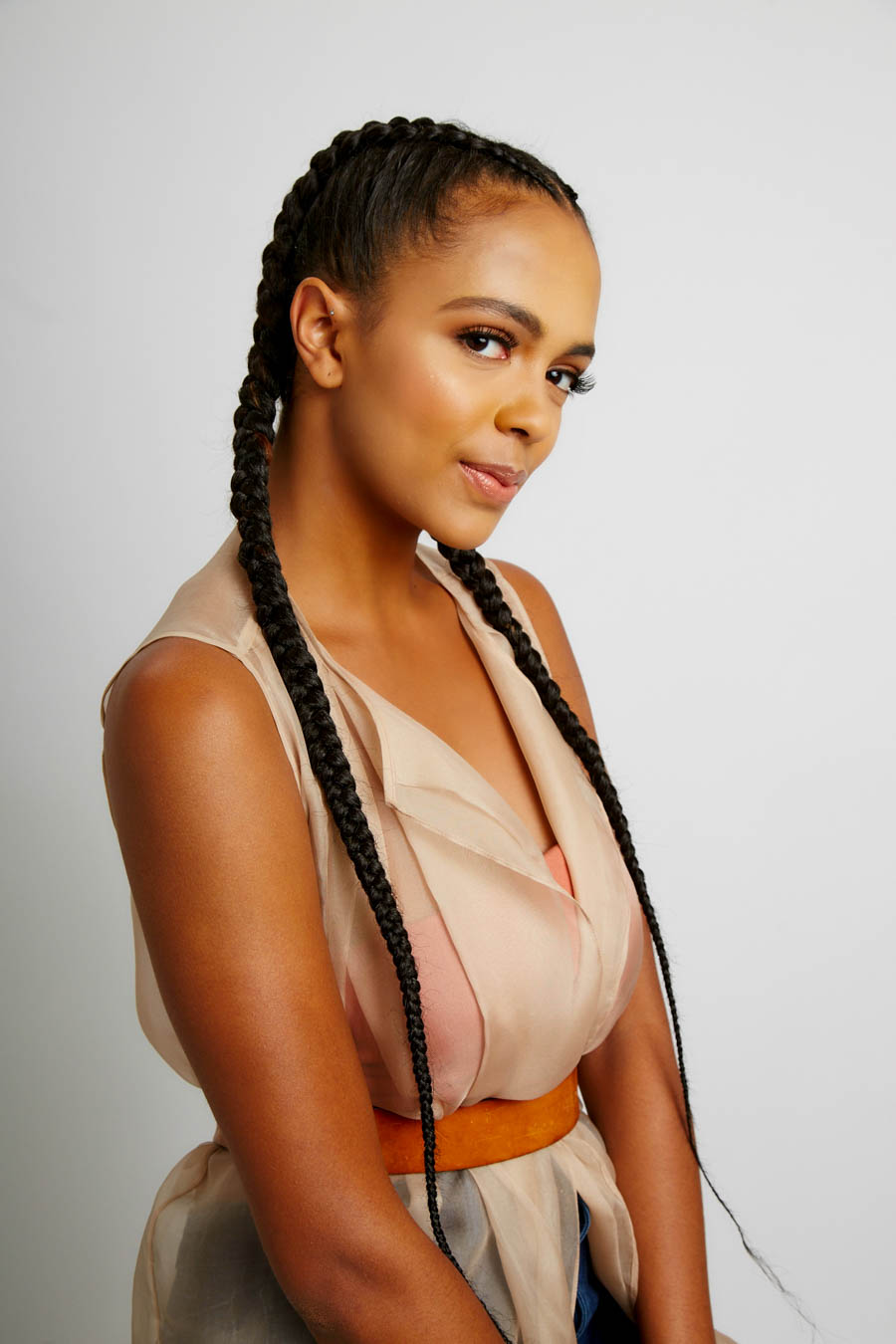
Ever wonder if pigtails can look polished? These two feed-in braids, parted cleanly down the middle and falling to mid-back, answer that with a firm yes. The style leans on thick, straight hair that holds a sharp part and a smooth line, so if your texture runs fine or wavy, you will spend more time coaxing it into submission. Ask your stylist for two neat feed-in braids, middle parting. The key is even tension on both sides, so the braids sit symmetrically and the whole look appears deliberate. Styled edges finish the job, keeping flyaways in check for a clean, tidy effect that lasts.
Two Black Feed In Braids Side View
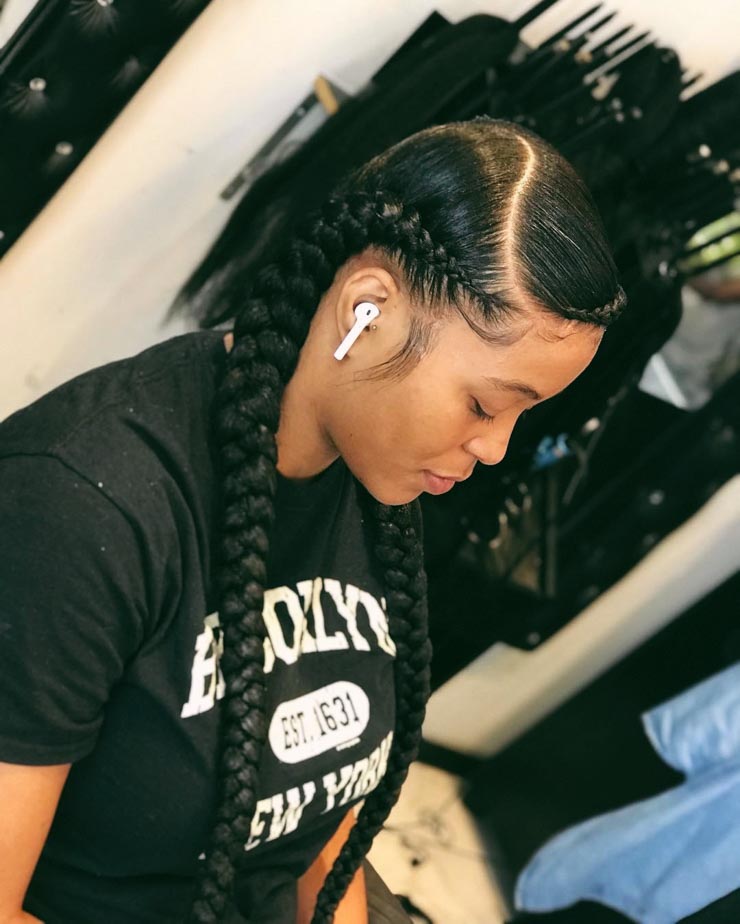
Two black feed in braids, thick and straight, run from a precise middle parting down to the mid back, and the side view shows off the neat parting and styled edges that make it work. Ask your stylist for two feed in braids, clean middle parting. Be specific about the edges, because that is where the polish lives: a light hairspray or edge control keeps them laid down flat, so the whole style holds its crisp line from morning to night. It suits thick, straight hair at least mid back length, and it is a low fuss look that still looks polished.
Feed In Braids With Decorative Beads
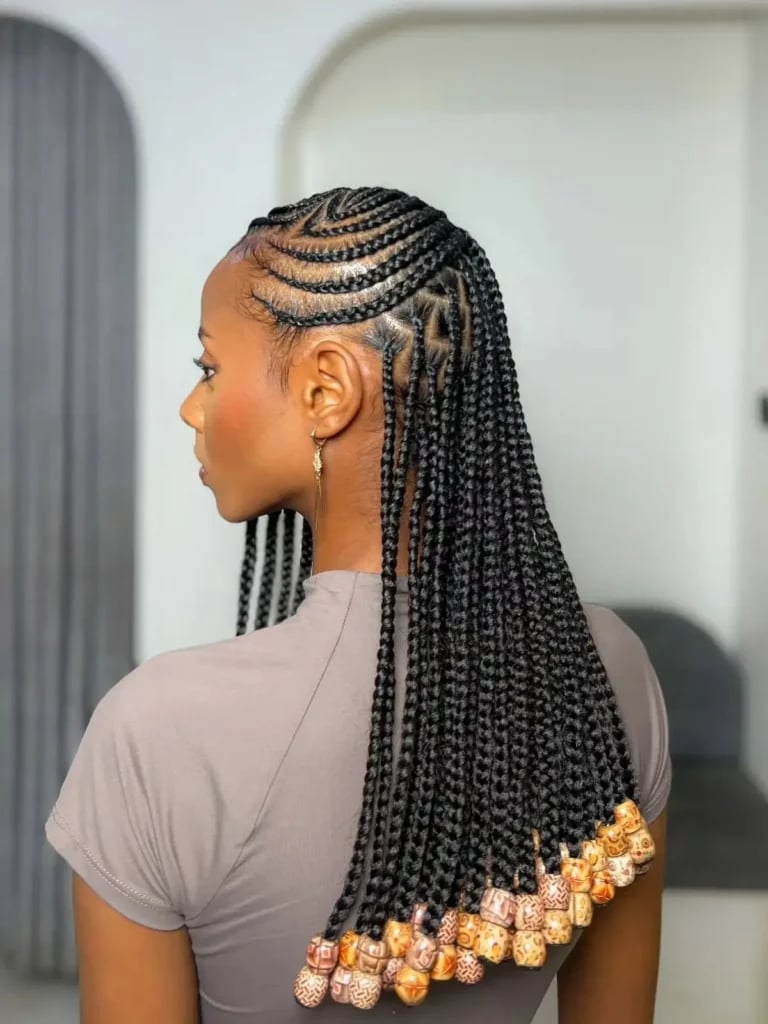
The beads on the ends of these feed-in braids are not just decoration, they are the point. Each strand finishes in a small accent that moves as you walk, turning a simple mid-back braid style into something with a bit of bounce. The middle parting keeps the focus on the embellishment, and the thick, straight black hair gives the beads a clean backdrop to stand out against.
This style lands naturally at summer festivals or any casual outing where a little extra personality does not feel out of place. Ask your stylist for feed-in braids with beads on the ends. Just make sure the beads are attached securely, because the last thing you want is to lose one halfway through the day, and be careful taking jackets on and off so they do not snag.
Sleek Black Braids Geometric Pattern
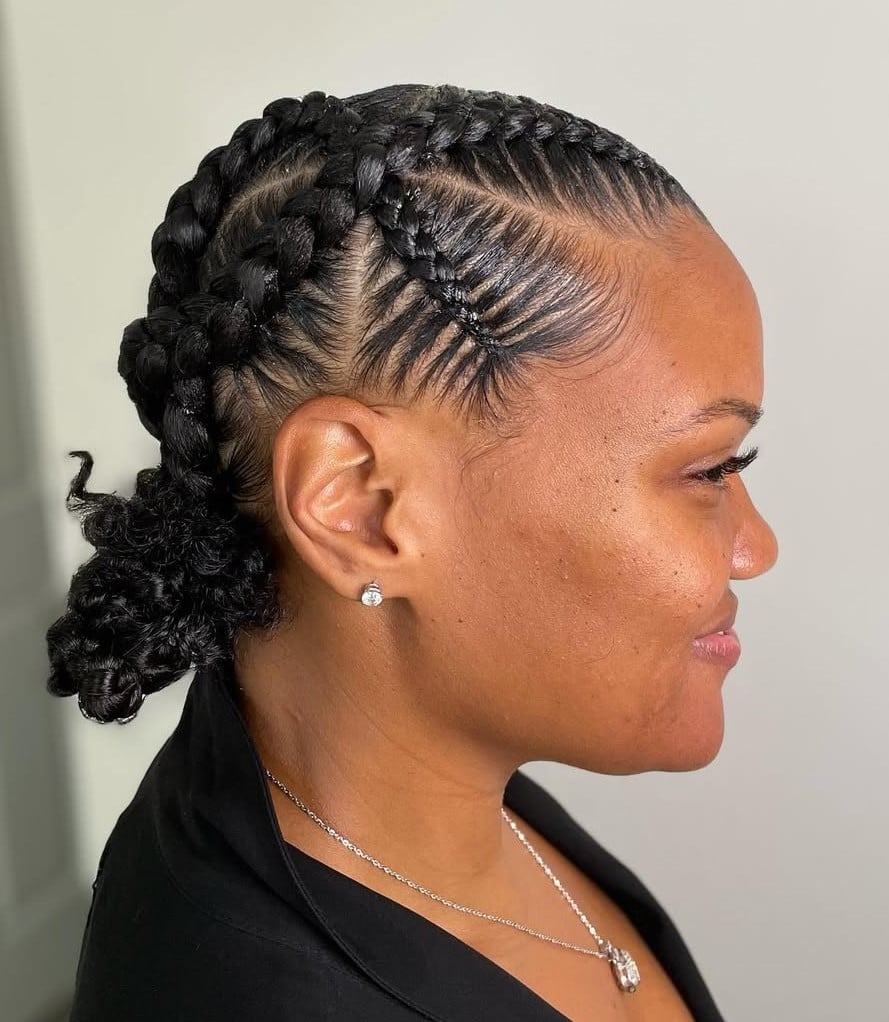
The geometric pattern here is a deliberate design that takes a steady hand and a good eye for symmetry. Sleek, thick braids are parted on the side and laid in sharp lines that run from the scalp down to the mid-back, with the black straight hair giving the pattern a high-contrast, high-gloss finish. Ask your stylist for: sleek feed-in braids with a geometric pattern, side parting. The precision is the whole game, so a light hold gel on the parts keeps those lines crisp and prevents the pattern from blurring as the style wears. This one suits straight hair types that can hold a clean part, and it is for anyone who wants their braids to look like a piece of art, not just a protective style.
Blonde With Dark Roots Braids Curly Ends
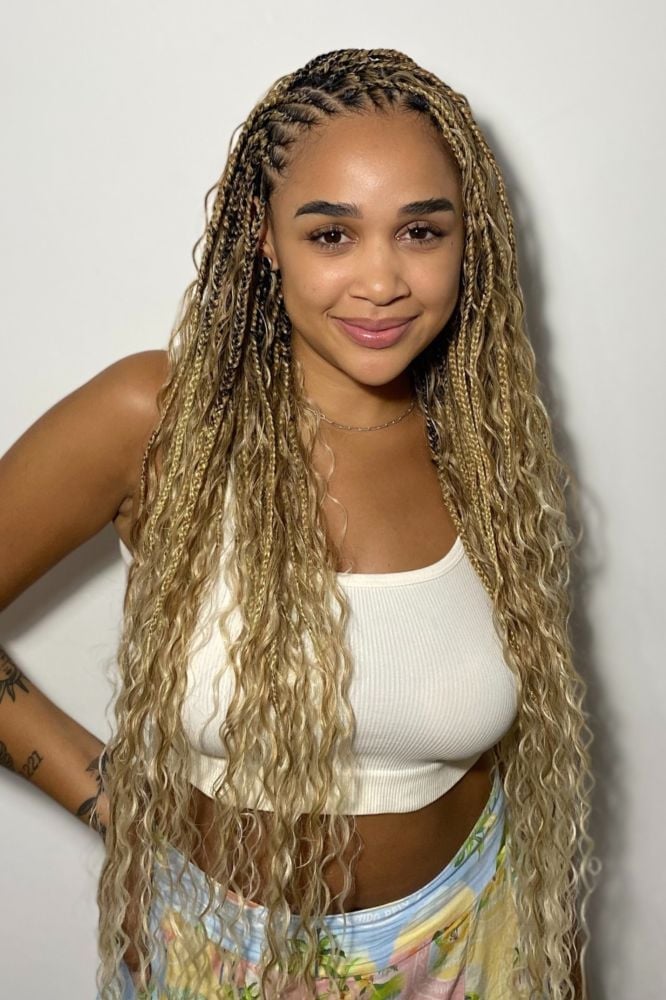
The blonde here is not flat, it is built from dark roots and brown highlights that give each long braid a dimensional, lived-in feel. The curly ends soften the whole look, adding movement and texture that straight braids just do not have. Ask your colorist for blonde highlights with dark roots, curly ends. The side parting lets the braids fall forward and frame the face, and the wavy-to-curly texture means you can gently separate the ends with your fingers to fluff them up, but skip the brush or you will lose the definition. Blonde tones need a purple shampoo every few washes to keep them from going brassy, and the roots will grow out gracefully thanks to that darker base, so you can stretch the time between touch-ups.
Blonde And Brown Braids With Curly Ends
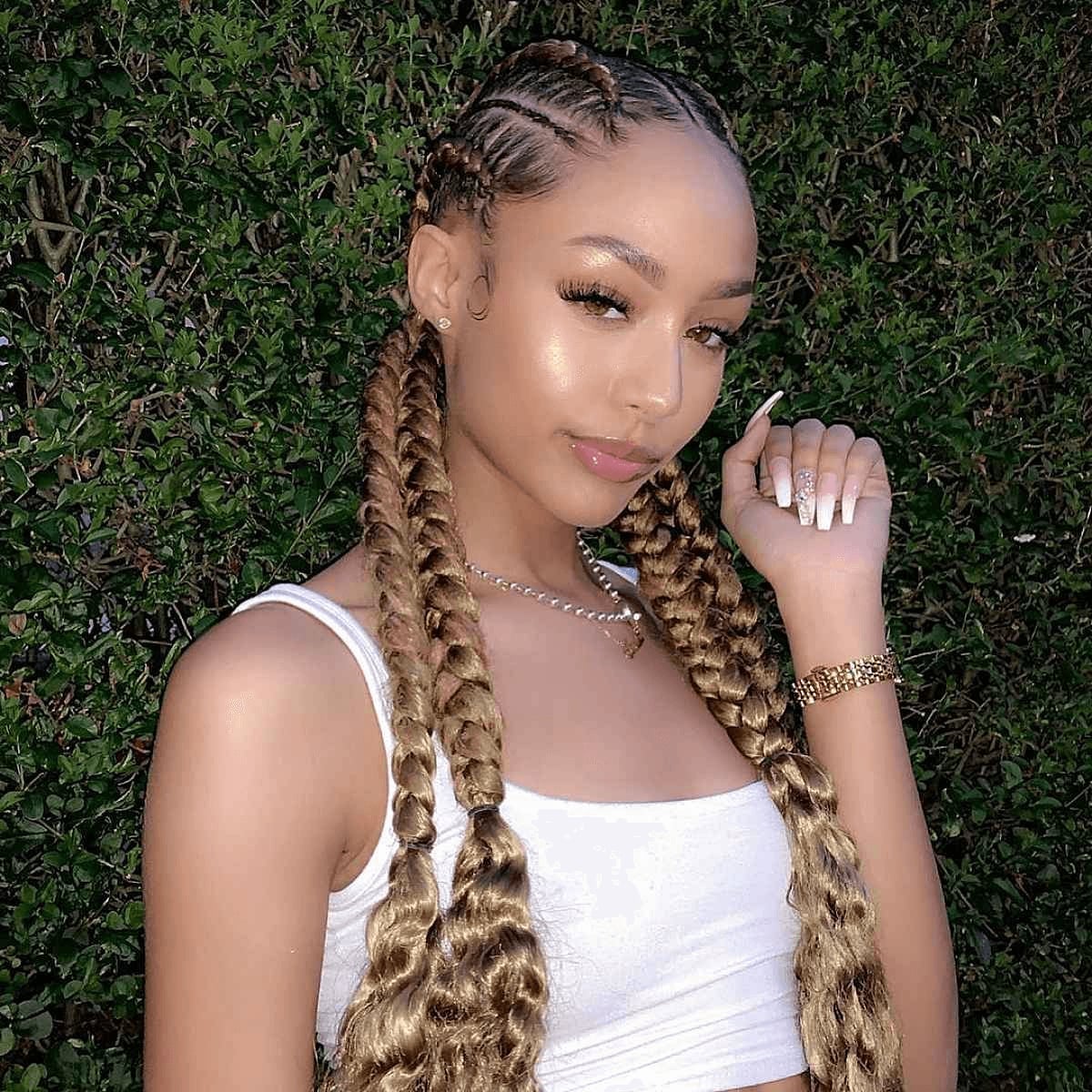
Solid colors are fine for a uniform look, but the real visual interest comes from a blend of blonde and brown tones woven through long feed-in braids. The curly ends add movement that straight braids lack, making the whole style feel looser and more relaxed. A middle parting keeps the color distribution even on both sides. Ask your stylist for: blonde and brown feed-in braids with curly ends. Hair should be at least shoulder length to carry the two-tone effect without looking crowded. The curly ends need a refresh with a curl-defining spray every few days, and the ends themselves benefit from a trim every 10-12 weeks to keep the curl pattern intact.
The combination of wavy and curly texture means this style holds its shape well for several weeks, though the curls will soften over time. That is not a flaw. It just means the look shifts from defined to lived-in, which has its own appeal.
Feed In Braids With Contrasting Highlights
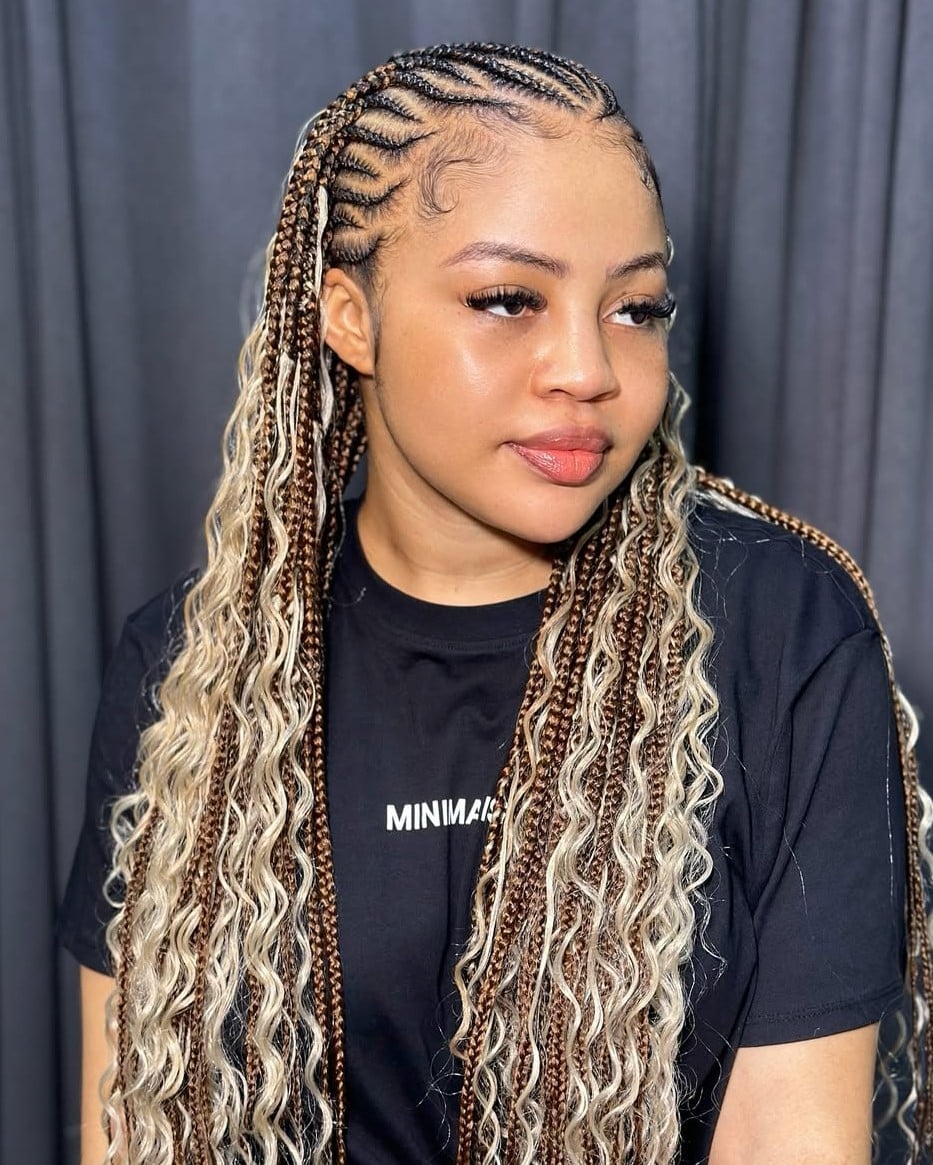
The side parting here is doing something precise: it lets the blonde and brown highlights alternate along the scalp line, so the contrast reads from the root. That is the trick with feed-in braids and contrasting highlights. The color is integrated as each braid is built, not painted on after. Long braids past the shoulders and distinctly curly ends round out the silhouette, giving the straight color work a soft finish. Ask your stylist for: feed-in braids with blonde and brown highlights, curly ends, side parting. Hair needs to be at least shoulder length to let the highlights travel the full length. The curly ends stay defined with a leave-in conditioner applied every few days.
Two Tone Blonde Brown Braids With Ornate Headpiece
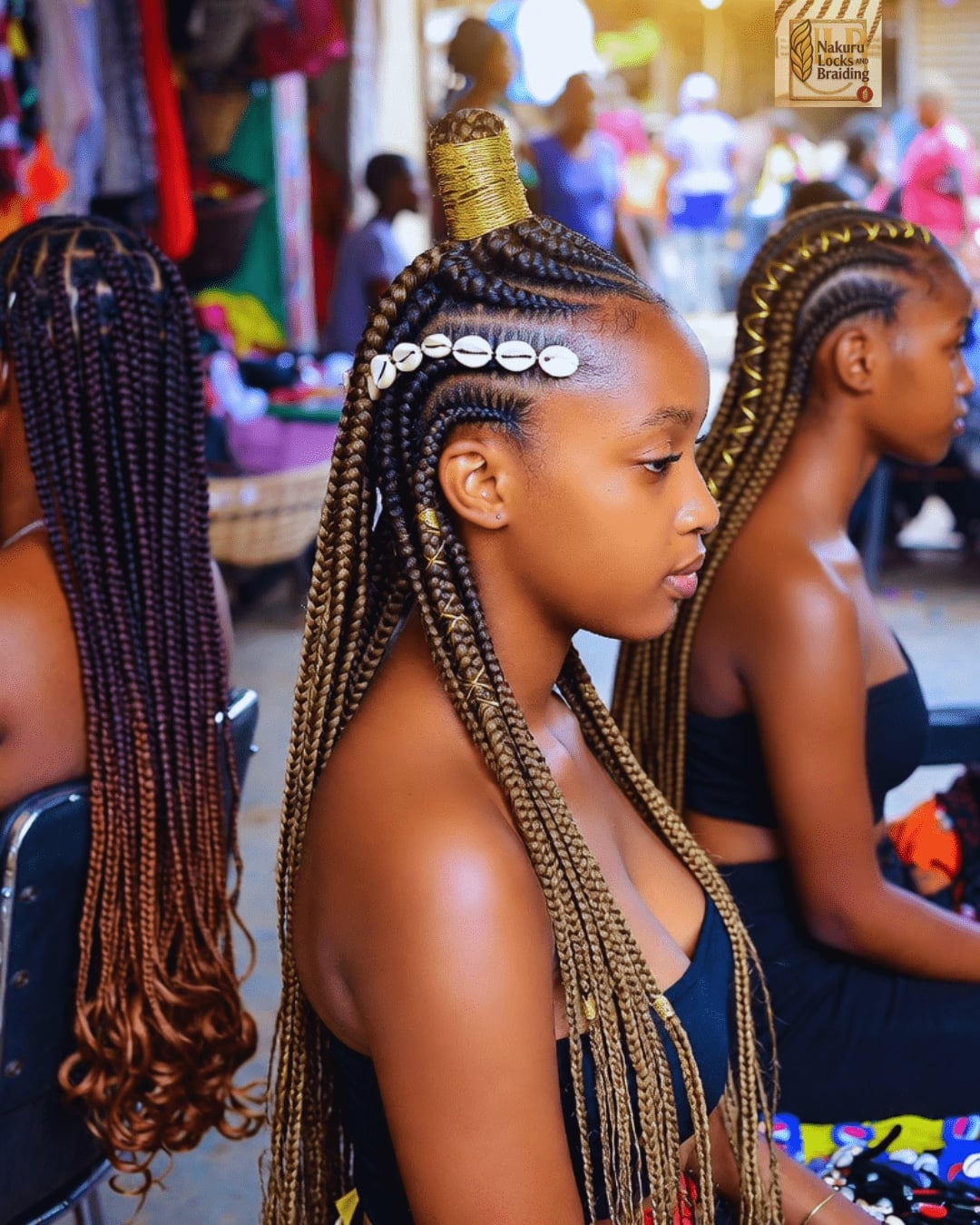
Two-tone blonde and brown feed-in braids reach mid-back, parted down the middle, with an ornate headpiece sitting across the crown. The headpiece creates visual impact, so the braids themselves can stay straight and sleek without competing with curls or texture. Ask your stylist for: two-tone blonde and brown braids with an ornate headpiece. The headpiece should be secured gently to avoid tugging on the braids at the root. Remove it carefully after wear, and the braids underneath look just as polished as they did going in. A wedding or a cultural celebration is the natural home for this.
Black And Blonde Highlights Individual Braids
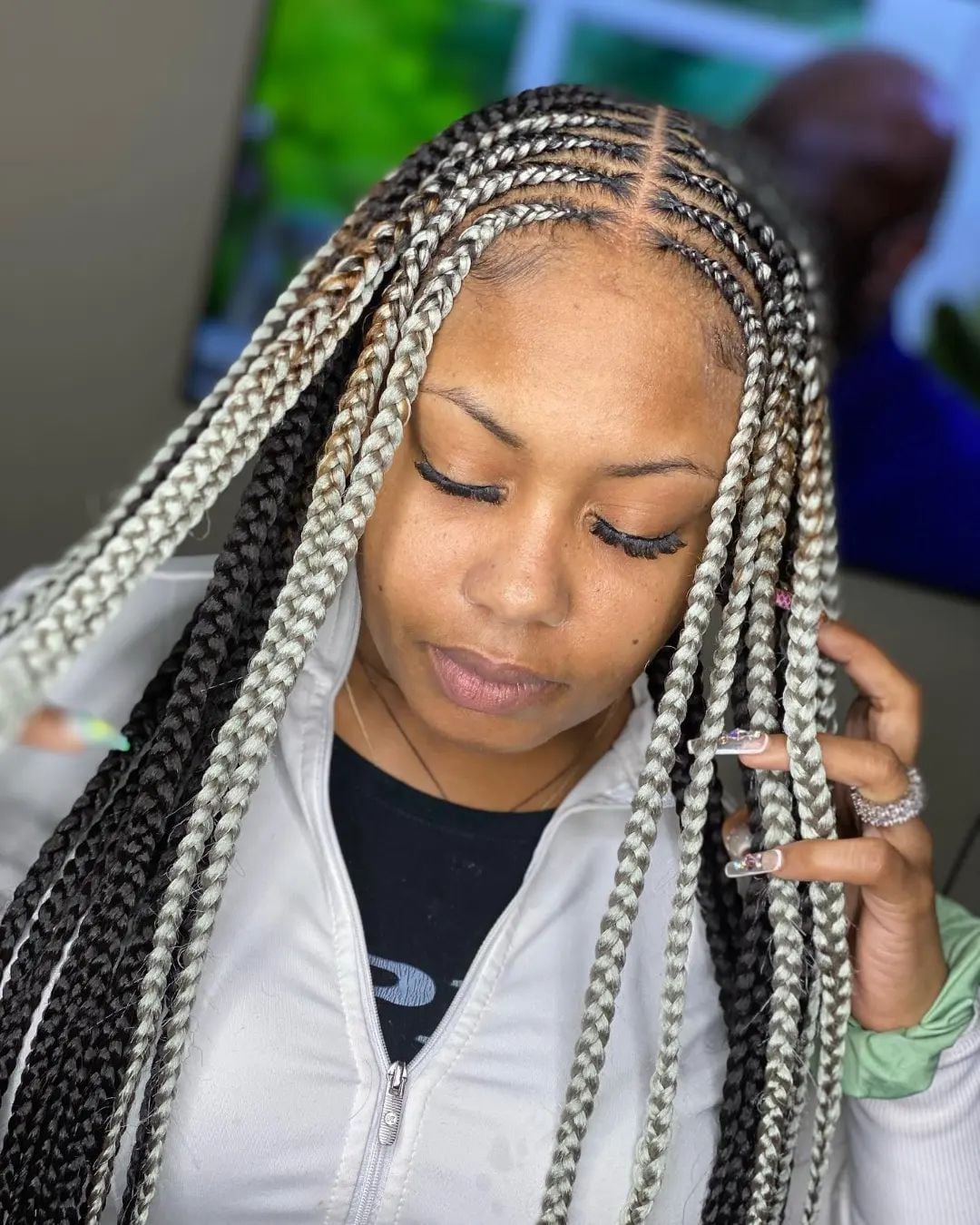
Individual feed-in braids with a blunt black-and-blonde color block require thickness to carry the contrast. The braids here are straight and thick, with the blonde sections appearing as deliberate stripes against the black base. The mid-back length gives the color room to register from root to tip. Ask your stylist for: individual feed-in braids with black and blonde highlights. Hair should be at least mid-back length and thick enough that the braids do not look sparse. A color-safe shampoo keeps the blonde from dulling, and the straight texture means the style holds its clean line for weeks without frizz at the part.
Black And Blonde Highlights Transition To Box Braids
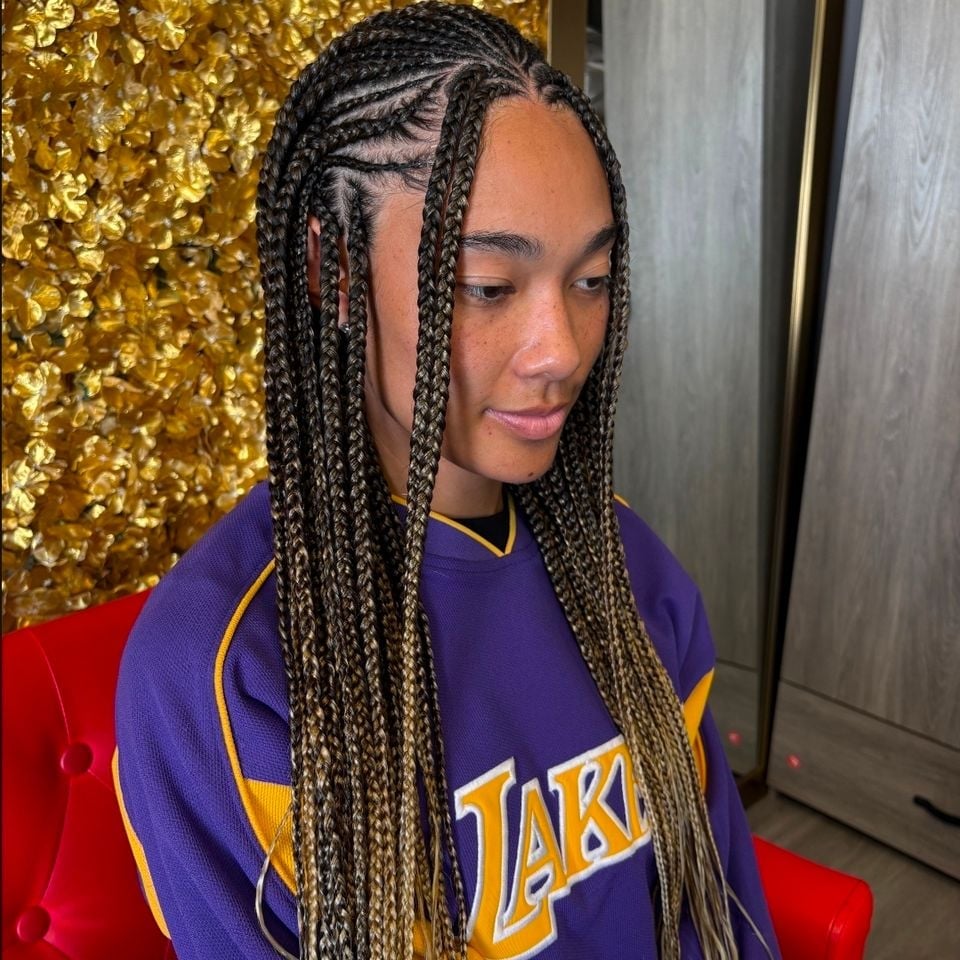
The transition point between feed-in braids and box braids is the detail that makes this style. The feed-in section sits closest to the scalp, creating a smooth, flat base, while the box braids below add weight and swing. A side parting and black base with blonde highlights keep the transition from looking like an afterthought. Ask your stylist for: feed-in braids transitioning to box braids with blonde highlights, side parting. The transition point needs a braid balm worked in every few days to keep both sections lying flat. The mid-back length holds well for about six weeks before the feed-in roots need a touch-up. Straight, thick hair is the best candidate here.
Black Braids With Vibrant Blue Highlights
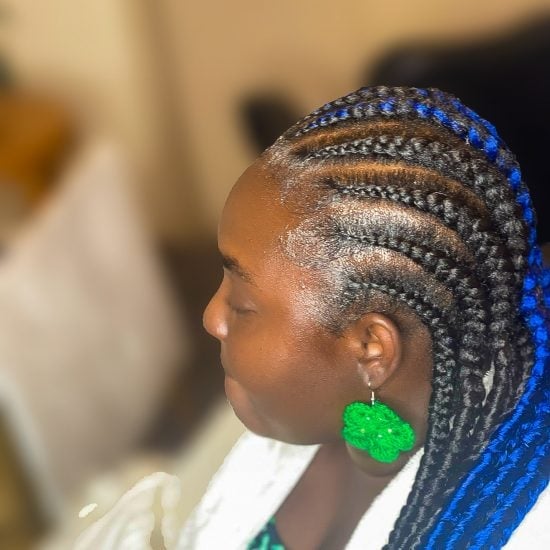
The blue isn’t a shy whisper here; it’s woven in as bold, vibrant streaks that catch the eye before the braid pattern does. The technique involves feeding the blue extension hair in at the root and letting it run the full length of each thick braid, which keeps the color from looking like an afterthought. A middle parting keeps the symmetry clean, so the blue reads as a deliberate design choice rather than a happy accident. Ask your stylist for feed-in braids with vibrant blue highlights, middle parting. This works best on thick, straight hair that’s at least mid-back length, since the weight of the braids needs something substantial to anchor to. The hold is solid for weeks, but the blue will fade faster than the black, so a color-safe shampoo and cooler water are your friends.
Black Braids With Geometric Pattern And Wavy Ends
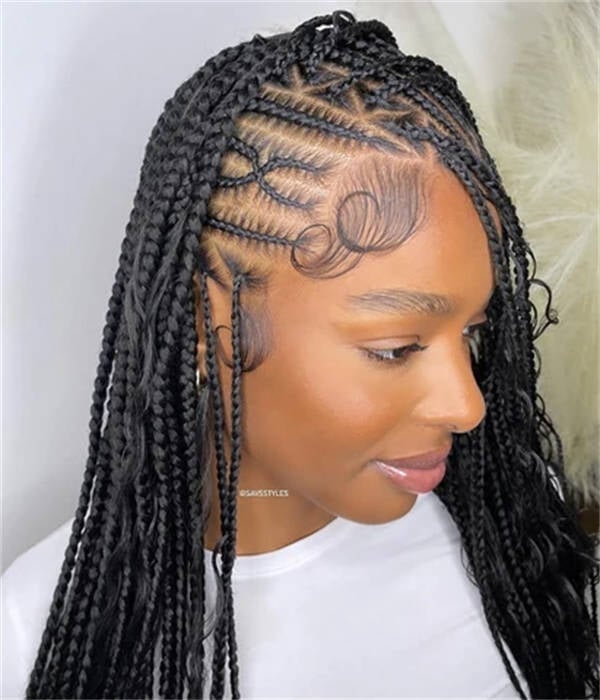
If you’re torn between the precision of cornrows and the softness of loose waves, this is the compromise that actually works. The geometric scalp pattern gives you the structured, almost architectural look, while the wavy ends soften the whole effect, so you don’t feel like you’re wearing a helmet of braids. On coily hair, the wavy ends blend seamlessly with your natural texture, making the transition from braid to loose strand look organic. On straight hair, the waves would need more convincing, so this style suits coily textures best. Ask your stylist for feed-in braids with geometric scalp pattern and wavy ends. The middle parting keeps everything symmetrical, and the hold is strong at the roots, though the wavy ends will need a curl-defining cream to keep their shape.
Fulani Braids With Curly Extensions
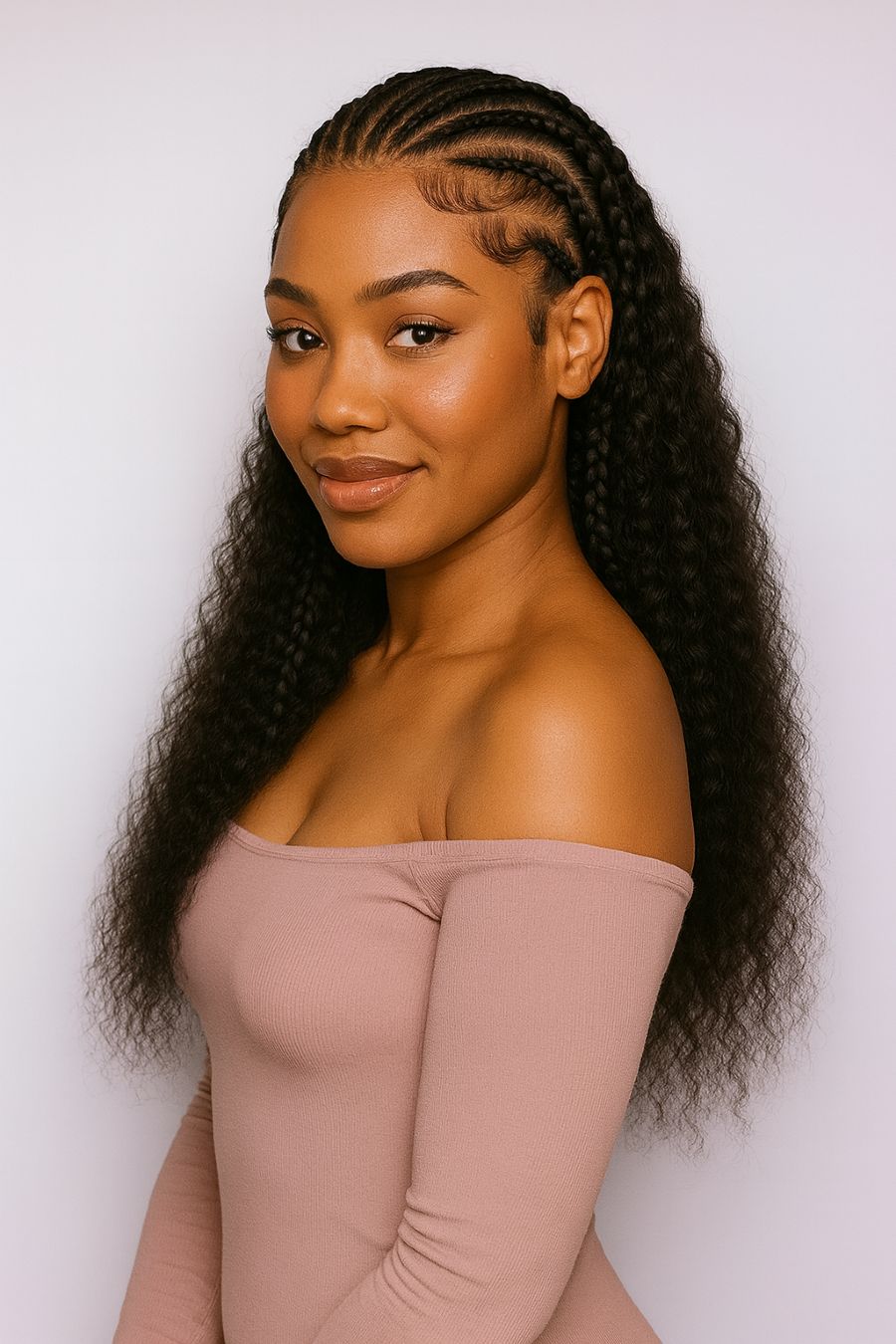
Wondering if Fulani braids can handle your thick, wavy hair without looking like a tangled mess? They can, if you let the extensions do the curling. The neat braids along the scalp keep the roots tidy and secure, while the long, curly extensions add volume and movement that thick hair loves. The middle parting frames the face without needing any bangs to soften it. Ask your stylist for Fulani braids with long, curly extensions. The contrast between the flat braids and the voluminous curls is what makes this style work, and it holds well for a few weeks if you sleep with a satin scarf. Just don’t expect the curls to stay perfect forever; a wide-tooth comb will detangle them without wrecking the braids.
Box Braids With Blonde Highlights And Loose Curls
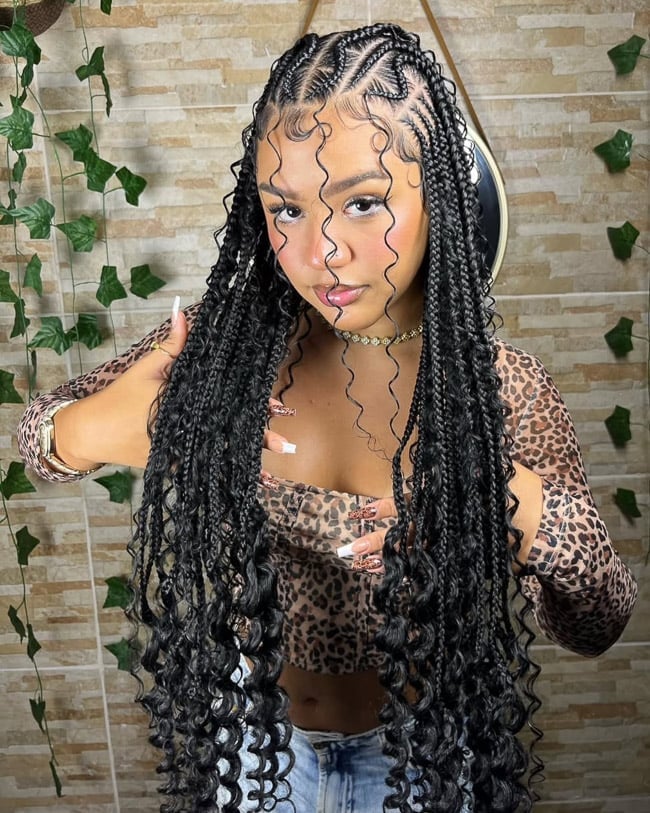
The blonde highlights here are subtle, woven into black box braids that transition into loose, wavy curls. It’s a clever way to add dimension without going full platinum, and the wispy tendrils at the hairline keep the look from feeling too severe. The middle parting gives the whole style a neat, almost symmetrical foundation. Ask your stylist for box braids with blonde highlights and loose curls, baby hairs. On fine hair, this combination is a gift: the braids provide structure, while the loose curls add volume that fine textures usually lack. The hold is good, but the curls will relax over the week, so a silk serum on the ends will bring back some bounce and keep frizz at bay.
Black Box Braids With Cascading Loose Curls
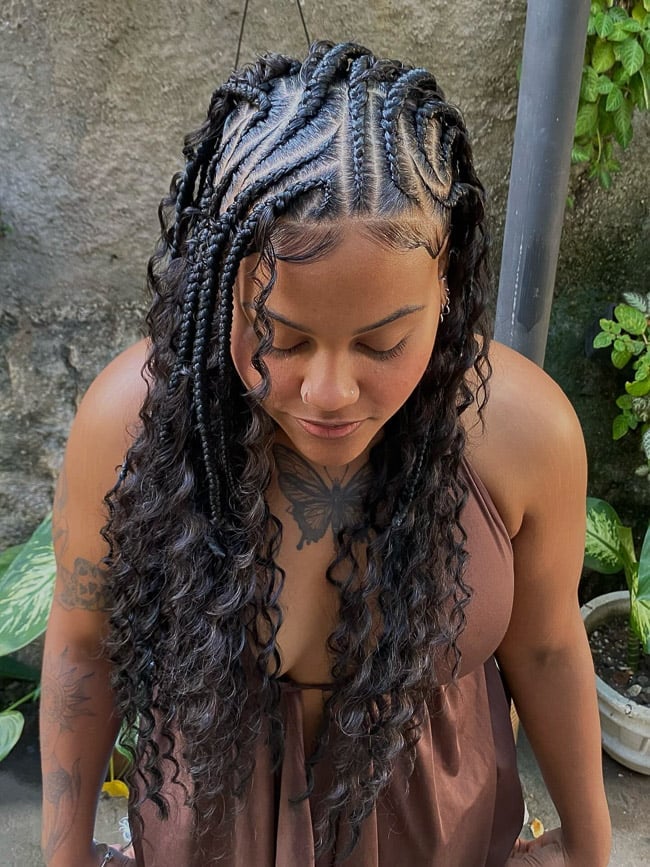
The braids start at the root with a clean middle parting, then give way to long, cascading loose curls that add a soft, romantic finish. It’s a two-in-one style: the top is structured and precise, the bottom is all movement and volume. The baby hairs along the hairline are styled, not slicked down, which keeps the look from feeling too formal. Ask your stylist for box braids with cascading loose curls and baby hairs. This works on fine hair because the braids give the roots some grip, while the curls add body where fine hair tends to fall flat. The hold is solid for weeks, but the curls will need a refresh with a diffuser attachment to keep their shape, especially if you want that just-done bounce.
Brown With Copper Highlights Collarbone Braids
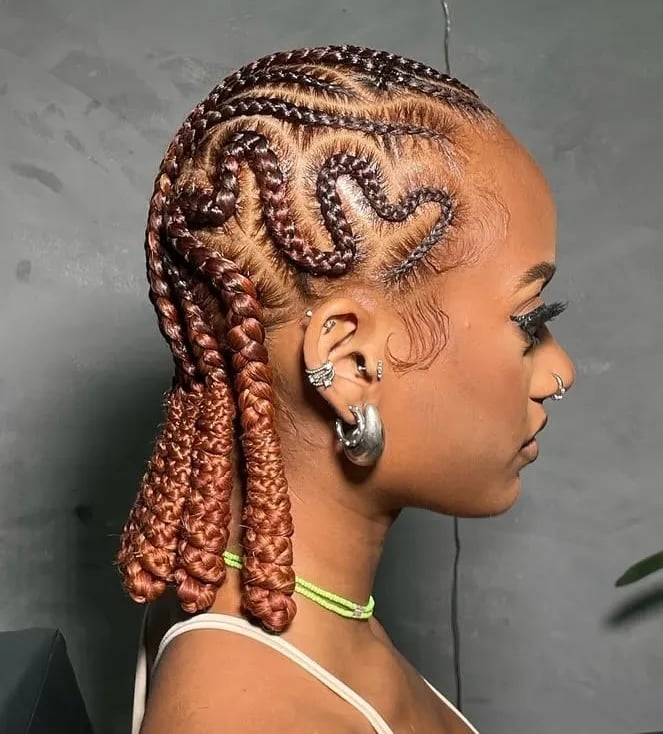
Can a braided style actually have a centerpiece? This one does: a heart-shaped scalp pattern woven into collarbone-length feed-in braids with copper highlights running through a rich brown base. The wavy, thick texture holds the design clearly, so it reads as what it is, not an accident of parting. Ask your stylist for: collarbone length feed-in braids with copper highlights and heart pattern. Thick, wavy hair at least collarbone length takes this best, since the pattern needs density to stay defined. A middle part keeps the heart symmetrical and fully visible.
Cornrows And Box Braids With Side Swept Bangs
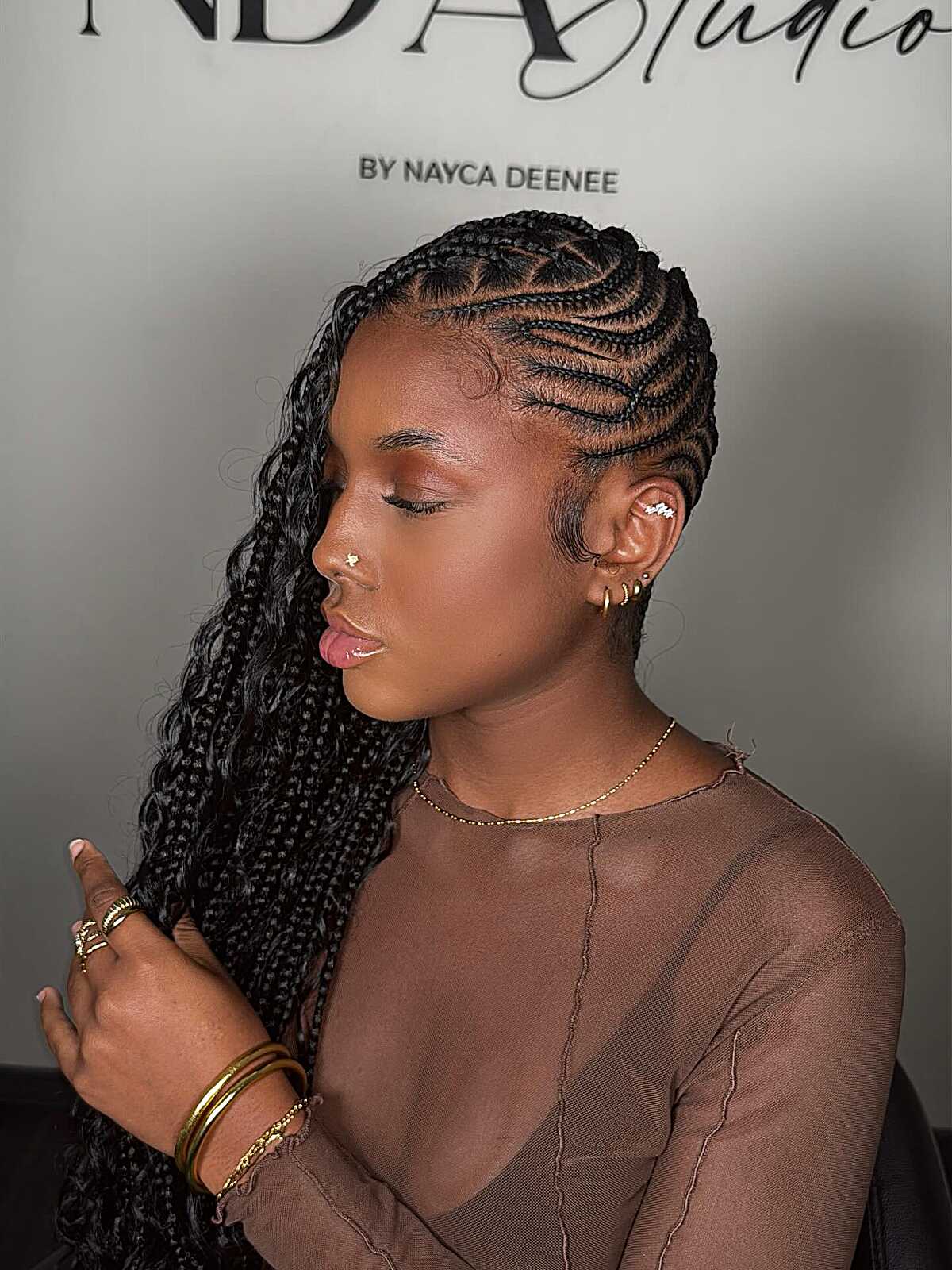
Straight-back cornrows are a classic, but side-swept bangs change the whole silhouette. This version starts with intricate cornrows at the scalp, then transitions into loose box braids that fall to mid-back. The side parting and side-swept bangs add movement that a center part with no bangs cannot touch. Thick, straight hair at least mid-back length gives the transition a clean line. Ask your stylist for: cornrows transitioning to box braids, side swept bangs. The bangs frame the face without hiding the cornrow detail, which is the whole point.
Black Braids With Heart And Geometric Scalp Patterns
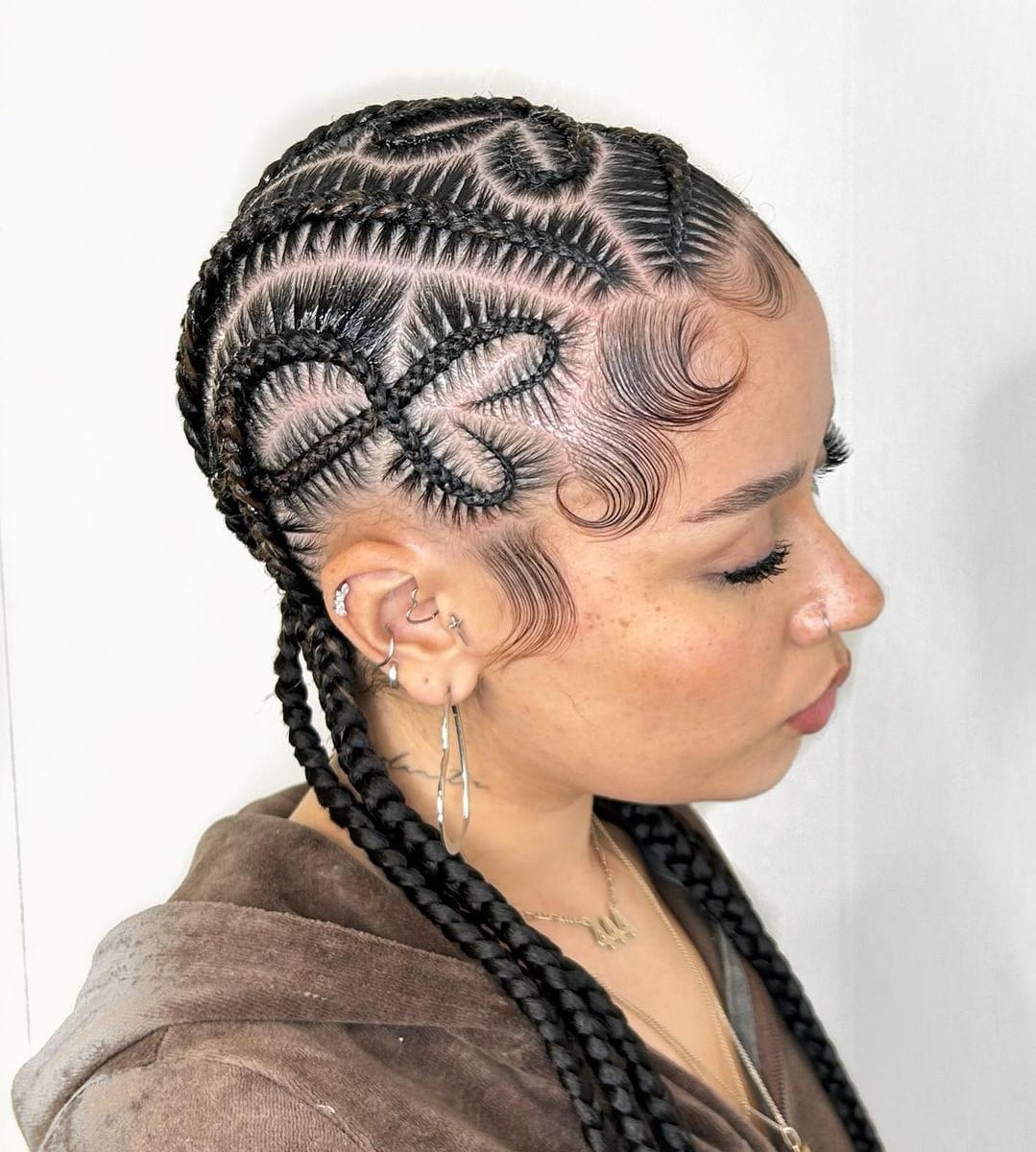
Straight, thick hair at mid-back length becomes a canvas when the scalp pattern includes hearts and geometric shapes. The middle part divides the design evenly, and baby hairs laid along the hairline finish the frame. This is not a quick braid-and-go; the patterns require a steady hand and a clear vision from your stylist. Ask your stylist for: feed-in braids with heart and geometric scalp patterns, laid baby hairs. The style holds its detail for weeks, as long as you keep the scalp moisturized and the edges laid.
Thick Coily Cornrows Geometric Pattern
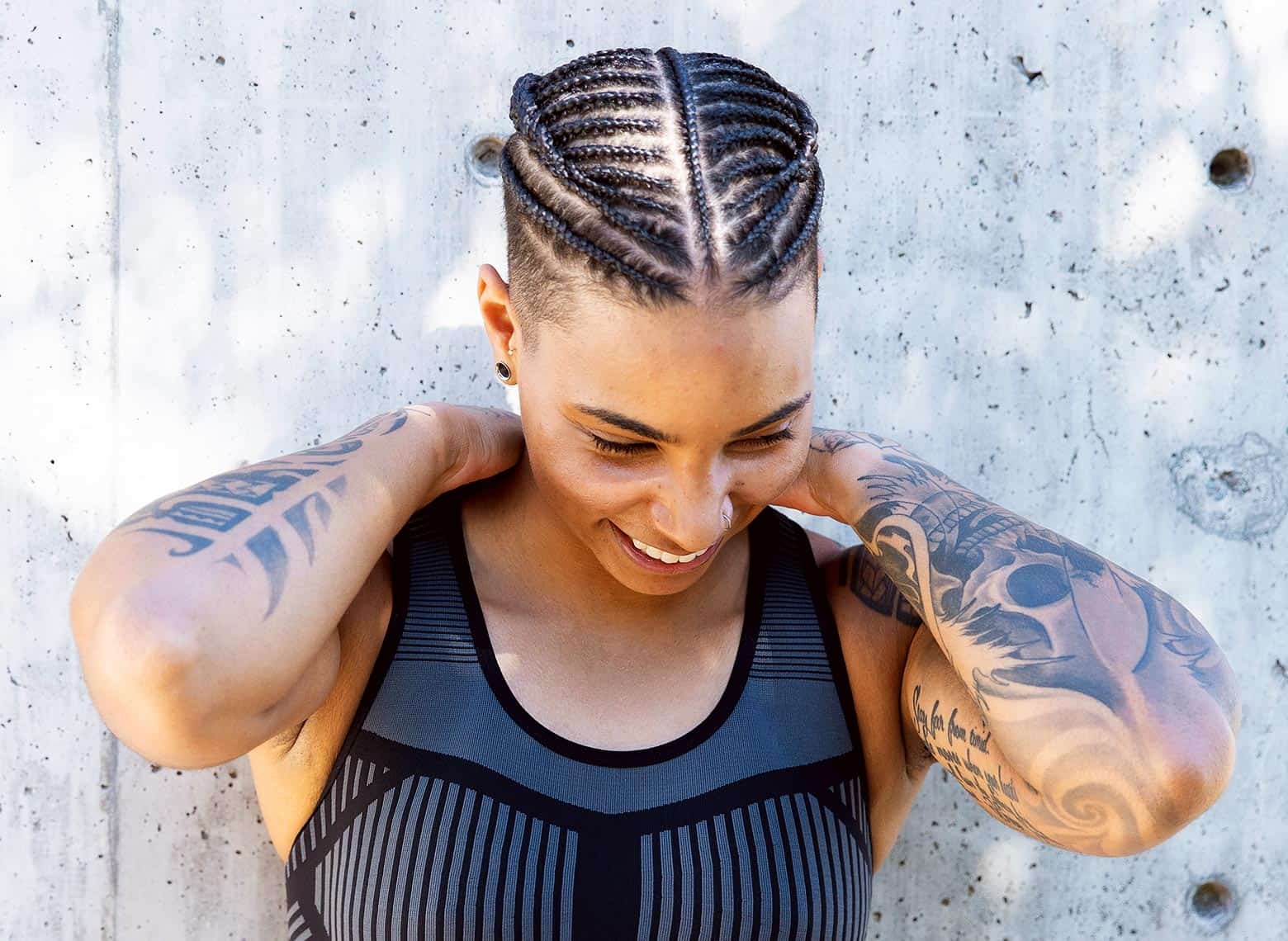
Does your hair have the density to support a geometric cornrow pattern without gaps? Thick, coily hair does, which is why this front-view style works. The middle part and short length keep the focus on the pattern across the scalp, right to the nape. Ask your stylist for: cornrows with a geometric pattern, short length. If your hair is fine or low-density, the pattern may lose definition as the braids settle. Coily textures hold the shape longer, and a moisturizing balm on the parts prevents the dryness that comes with tight braiding.
Black Braids Geometric Pattern Shoulder Length
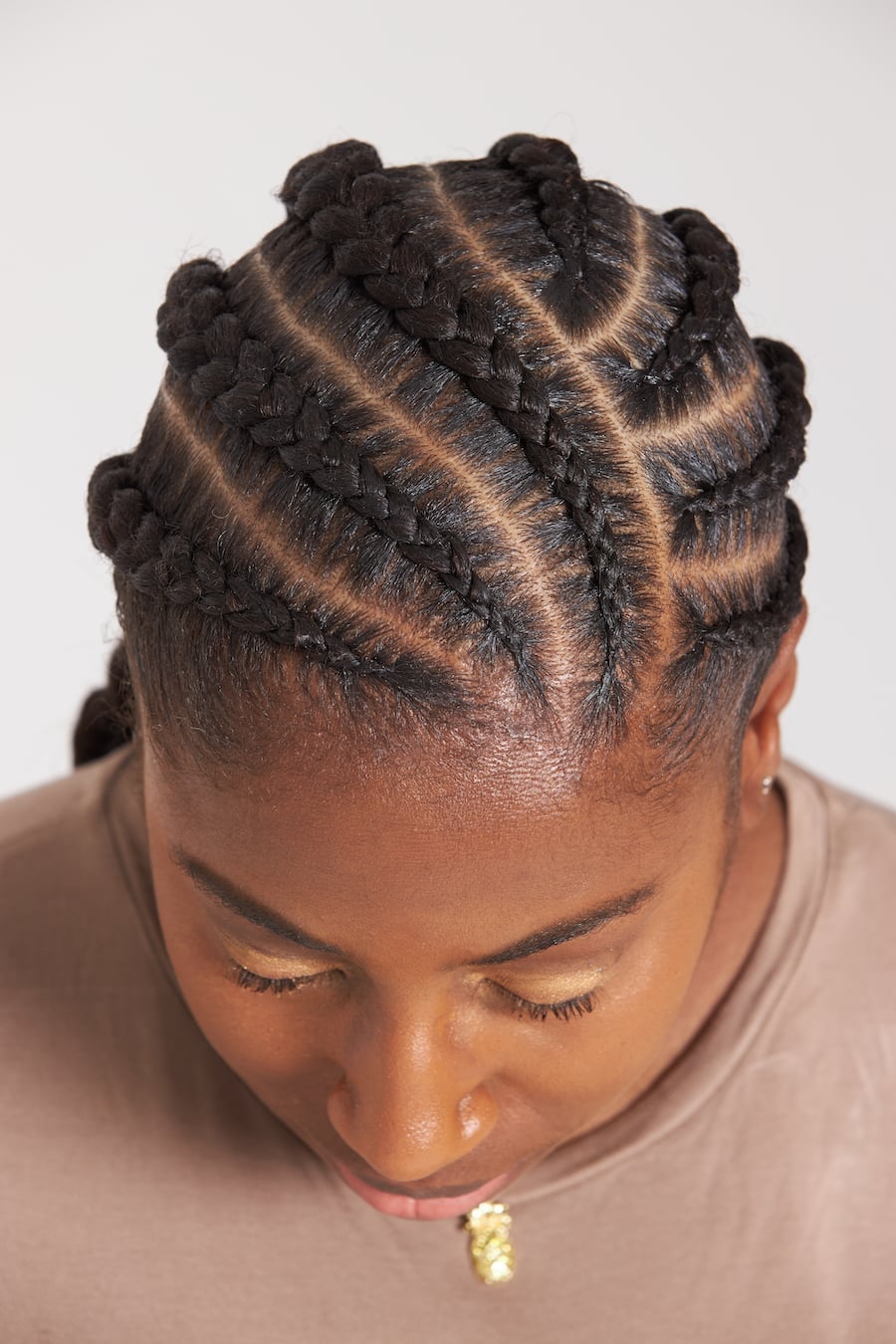
A top-down view reveals exactly how a geometric pattern maps across the scalp. These shoulder-length feed-in braids use a middle part and straight, thick hair to keep every line crisp. The shorter length means less weight pulling on the roots, so the pattern stays tight longer. Ask your stylist for: feed-in braids in a geometric pattern, shoulder length. A silk pillowcase helps preserve the shape overnight. Plan for a touch-up around the hairline after three weeks, since shorter braids show new growth faster than longer ones.
Black And Gray Braids Into High Ponytail
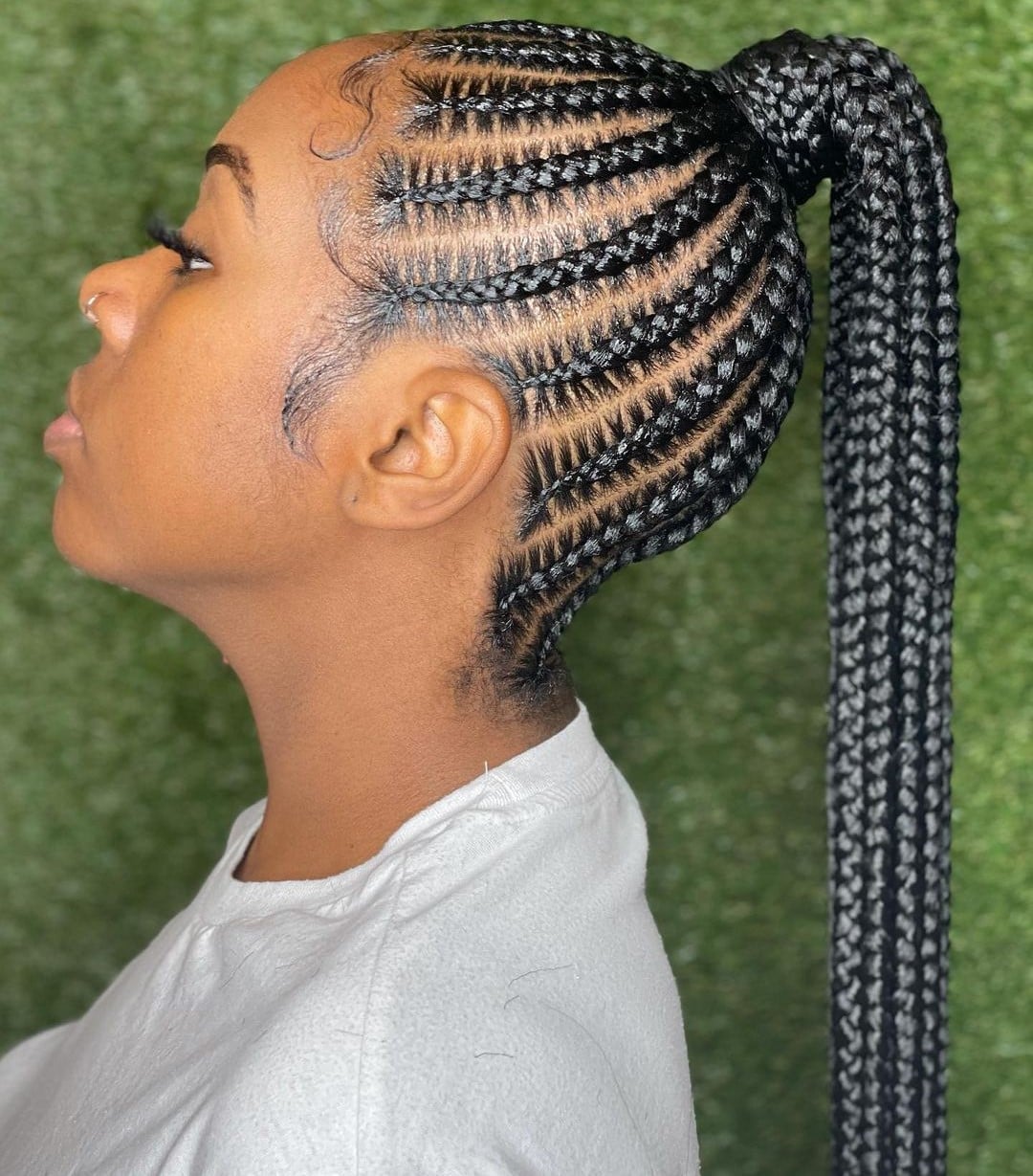
The placement is the giveaway: a high ponytail in black and gray feed-in braids that sits well above the crown, so the braids drop straight down the back rather than fanning out at the nape. Straight hair types with at least a long starting length get the cleanest lift, since shorter hair struggles to reach the tie-off point without puckering. Ask your stylist for: feed-in braids into a high ponytail.
This is the one braided style that actually works for active seasons and sporting events, where loose braids would whip into your face. The middle parting keeps the scalp pattern symmetrical, and the gray strands woven through the black add depth without a full color commitment. A tight elastic at the base and a spritz of hairspray over the crown are all it takes to keep the ponytail from drooping mid-game.
Long Straight Black Braids Side Parting
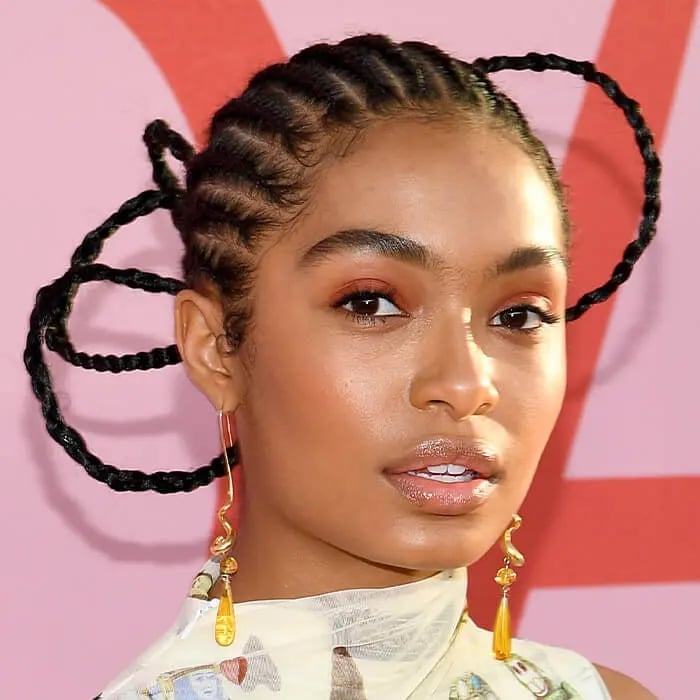
Long, straight, black feed-in braids arranged with a side parting rely on one thing: a smooth transition from the scalp that shows no gaps or bumps. Thick, straight hair at least shoulder length holds the sleek finish best, as fine or layered hair tends to let the parting line shift after a week. Ask your stylist for: long, straight feed-in braids with a side parting.
The side parting creates a natural asymmetry that softens the block of length, which is useful when the braids reach past the mid-back. A lightweight serum patted along the braids keeps them glossy without weighing down the roots, and the clean lines mean this style works for the office as easily as it does for a night out. The finish typically lasts about three to four weeks before the new growth starts to soften the part.
Black Cornrows Curved Design Side Parting
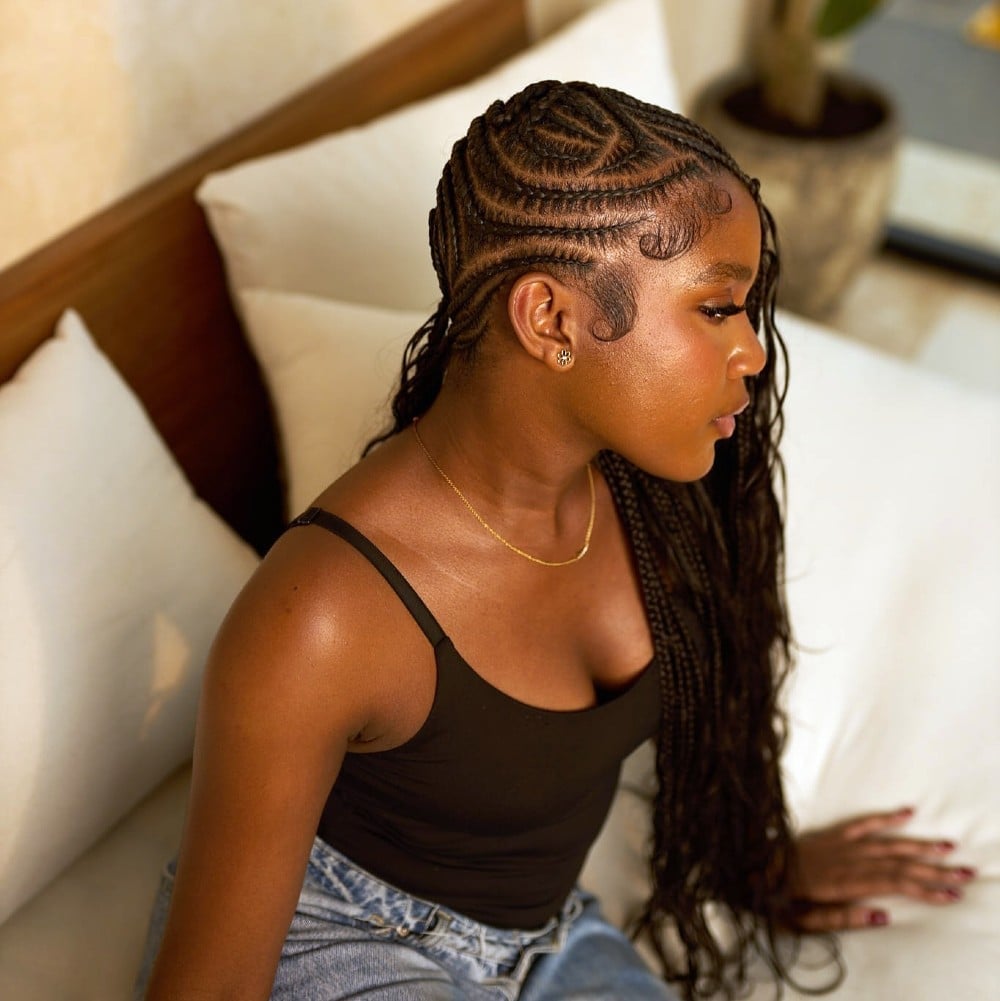
Where straight cornrows run parallel to the scalp, a curved design arcs and loops, following the natural contour of the head from a side parting. The difference is in the visual flow: straight lines lean graphic and modern, while curves read as organic and almost sculptural. Straight hair types with at least mid-back length give the curves room to breathe and keep the pattern readable. Ask your stylist for: feed-in cornrows with a curved design, side parting.
Black Braids With Curly Ends Top View
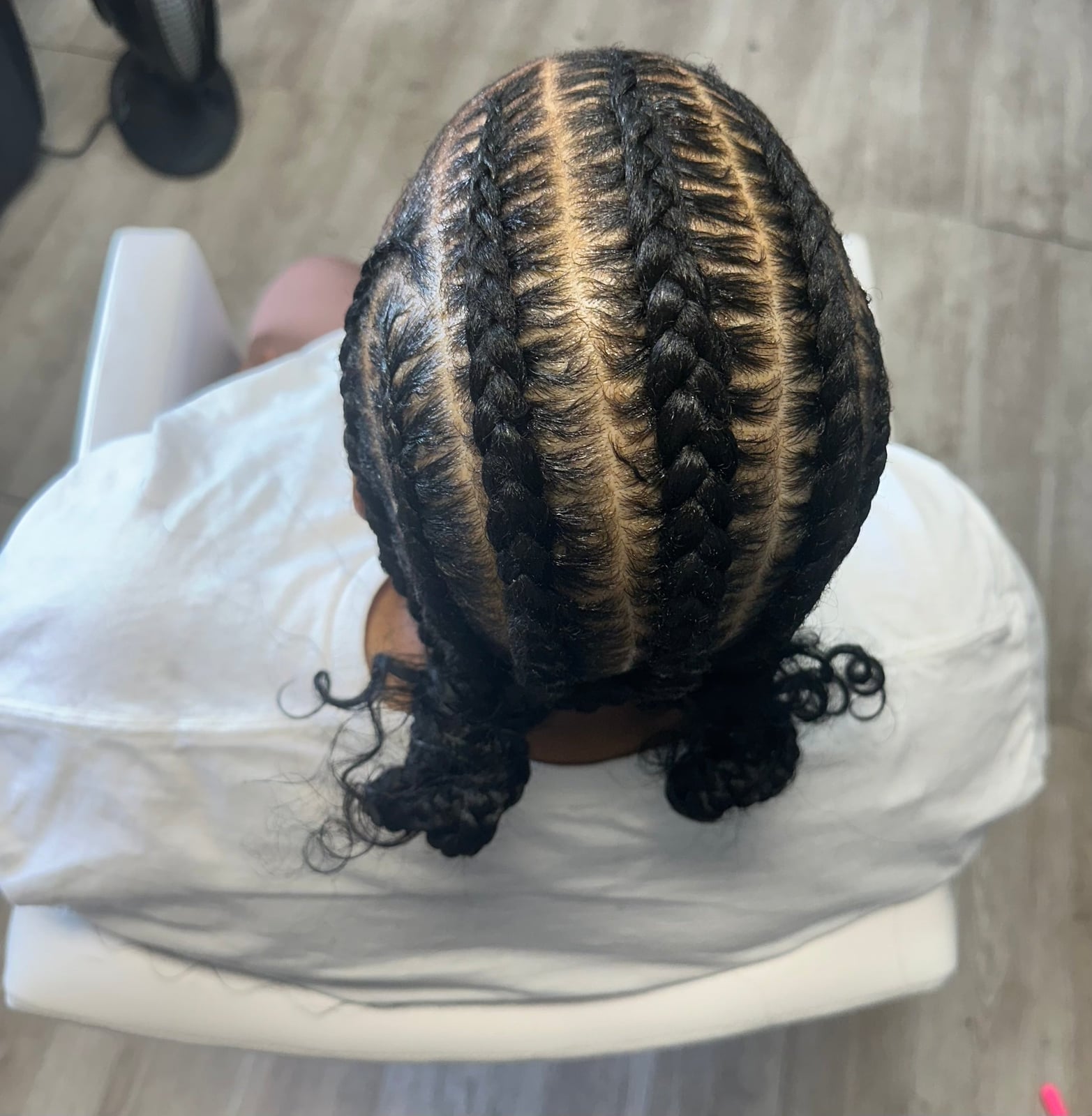
A top view of black feed-in braids reveals what a side angle cannot: the middle parting and the even spacing between each braid. The straight shafts transition into curly ends, which adds texture without altering the clean scalp pattern. Straight hair types at least shoulder length can support the weight of the curly ends without the braids pulling at the roots. Ask your stylist for: feed-in braids with curly ends, middle parting.
Those neat parts take time. Even an experienced braider needs about an hour just to section the hair perfectly before the feed-in work begins, which makes this a longer salon visit than a standard braid style. The curly ends also require occasional finger-separating to stop them from matting into a single clump, so it is not a set-and-forget look. The style looks deliberate from every angle, including the one most people see first.
Final Thoughts
When choosing your feed-in braid style, let your daily routine set the pace. For a polished everyday look, opt for neat, uniform braids with a clear parting. For something more artistic, explore geometric scalp patterns or vibrant color highlights. Either way, the right style holds its shape and keeps your hair protected.
- Keep scalp moisturized with a lightweight oil or spray.
- Protect braids with a silk or satin scarf at night.
- Avoid tight styles that pull on the hairline.
- Trim flyaways with scissors for a neat finish.
Find the feed-in braid style that speaks to your personal aesthetic.