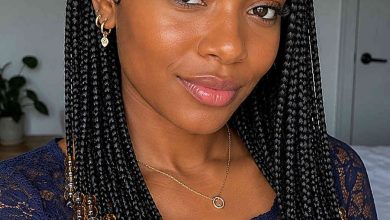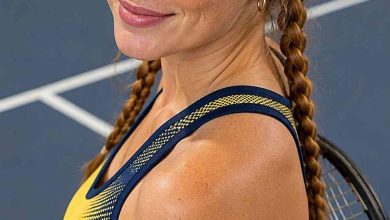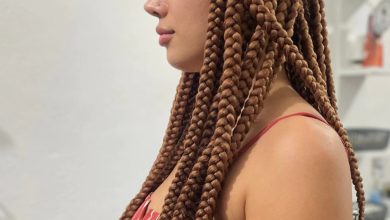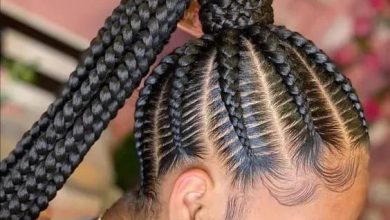
Fulani braids are a traditional African hairstyle defined by a center part, braided patterns along the hairline, and often adorned with beads or cowrie shells. Now they’re being updated with softer face-framing layers and a lived-in color that keeps the look current.
This collection of 29 Fulani Braids Natural Hair ideas covers everything from sleek, polished versions to those with loose, curly ends. You’ll find options for different hair textures and lengths, plus styling and upkeep tips to help you decide. It also addresses common issues like fine hair that falls flat or a style that doesn’t hold its shape.
Mid-Back Fulani Braids With Coily Curls and Silver Beads
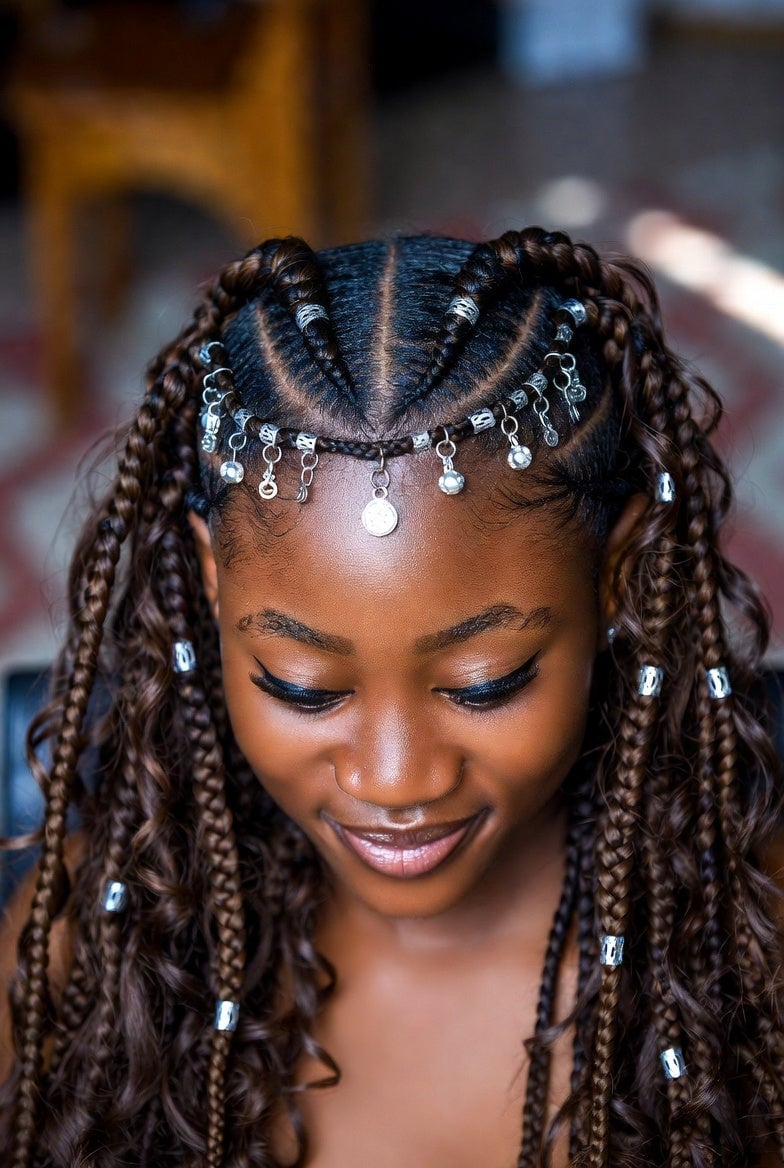
The middle part keeps the scalp pattern legible while the loose coily ends soften the whole silhouette, a combination that reads as bohemian rather than strict. This is a style for natural hair with a genuine coily texture, since those curls blend into the braids without a visible line where the extension starts. You want at least shoulder-length hair to carry the transition. Ask your stylist for Fulani braids with a middle part, loose coily ends, and silver beads. Dark brown is the base here, and the silver beads add a metallic accent while the curls remain the focal point. A light mist of water and a curl enhancer keeps the definition from drooping by day two.
Sleek Mid-Back Fulani Braids With Silver Beads
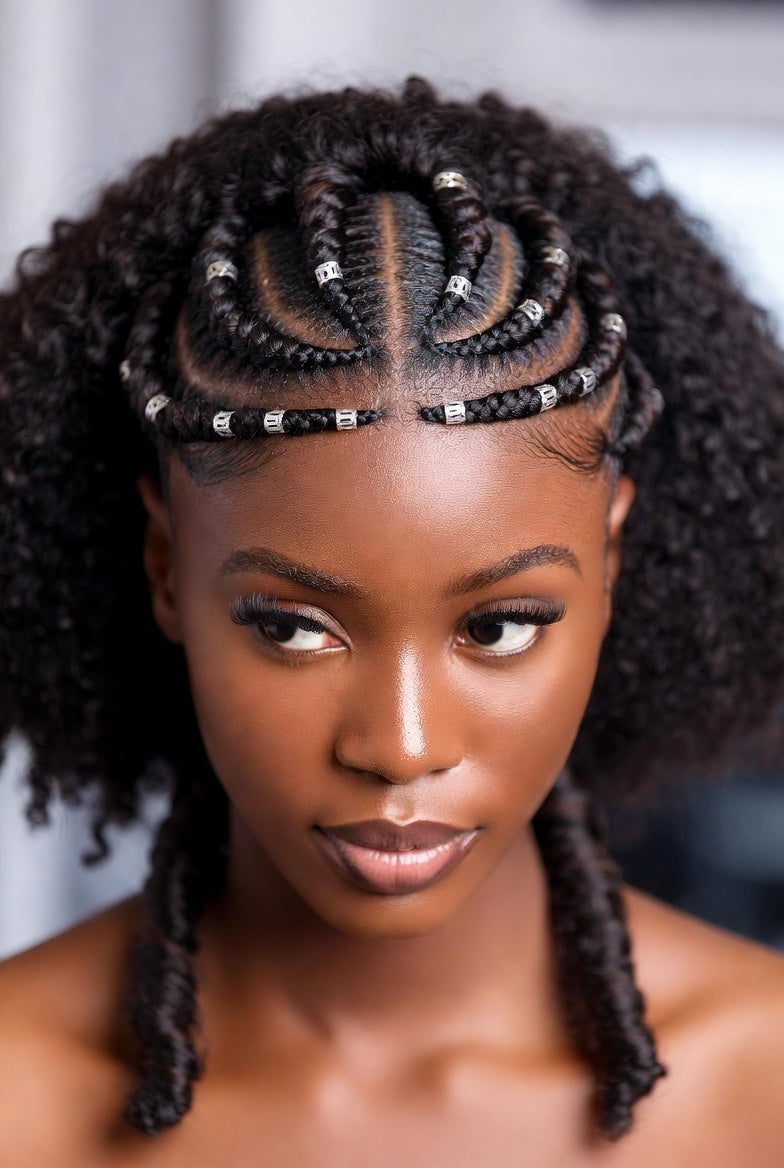
This version skips the loose ends entirely, so the neat scalp pattern and the silver beads carry all the visual weight. The braids are pulled tight from a middle part and run straight to the mid-back, which makes the black hair read as polished and deliberate. It suits coily textures that can handle the tension of a sleek install without slipping, and it holds its shape well for weeks when the edges are kept laid. Ask your stylist for neat Fulani braids with a middle part and silver beads. A light hair oil on the scalp keeps things comfortable, but this is a salon-only style that needs a professional hand to get the parting that precise.
Long Black Fulani Braids With Wooden Beads
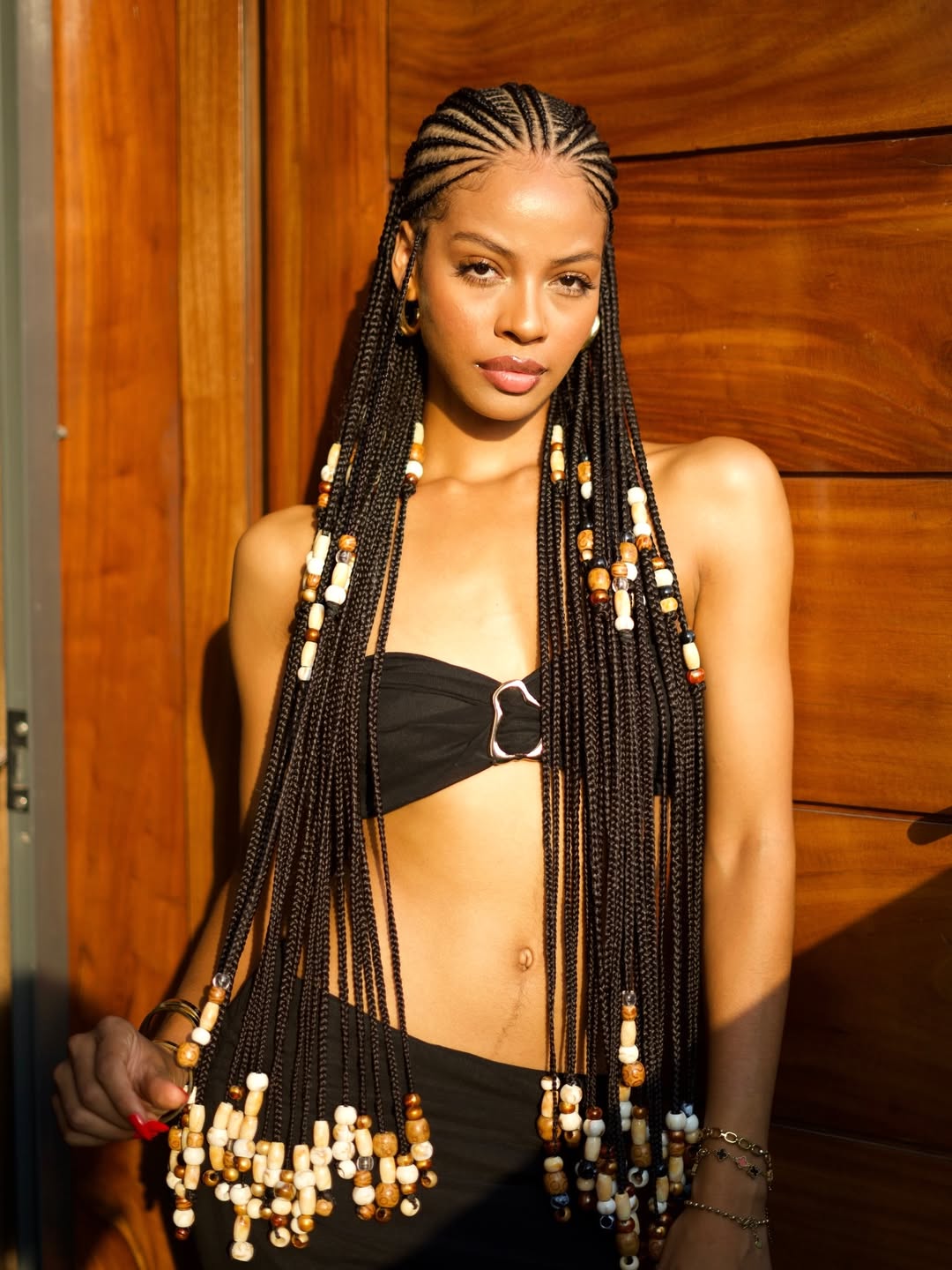
Unlike the coily or wavy versions, these braids stay straight and fine from root to tip, which gives the style a sleek, almost architectural line down the back. The numerous wooden and white beads add weight and a tactile rhythm that a single charm cannot match. This suits long natural hair that can support the length without the braids pulling at the scalp, and the straight texture means the beads actually show rather than getting lost in curl. Ask your stylist for long, sleek Fulani braids with many wooden beads. The weight requires even distribution by keeping the braids uniform, and protect the ends with a satin scarf at night so they do not fray.
Fulani Braids With Wavy Extensions and Wooden Beads
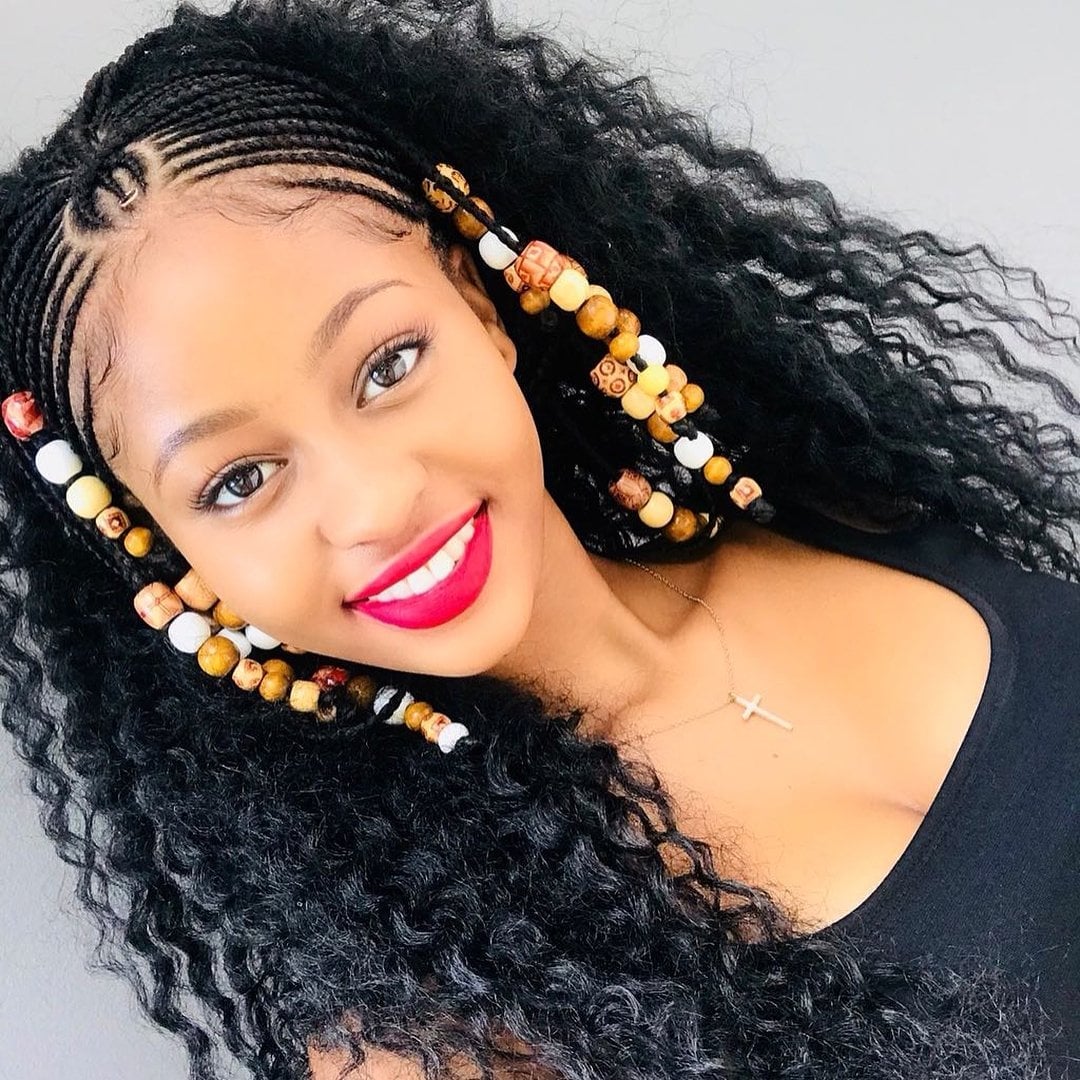
Wondering how to get a lived-in look without the braids looking too uniform? Ask for Fulani braids that start tight at the hairline and then transition into loose, wavy extensions, with wooden and white beads scattered along the length. The middle part keeps the scalp pattern visible while the waves add movement and volume, so the style looks natural and thick. It works best on hair that has some density to blend with the extensions, and it holds its shape for a few weeks before the waves need a refresh. Ask your stylist for Fulani braids with wavy extensions and wooden beads, and keep a moisturizing spray on hand to stop the waves from getting crunchy.
Thick Mid-Back Fulani Braids With Gold Beads
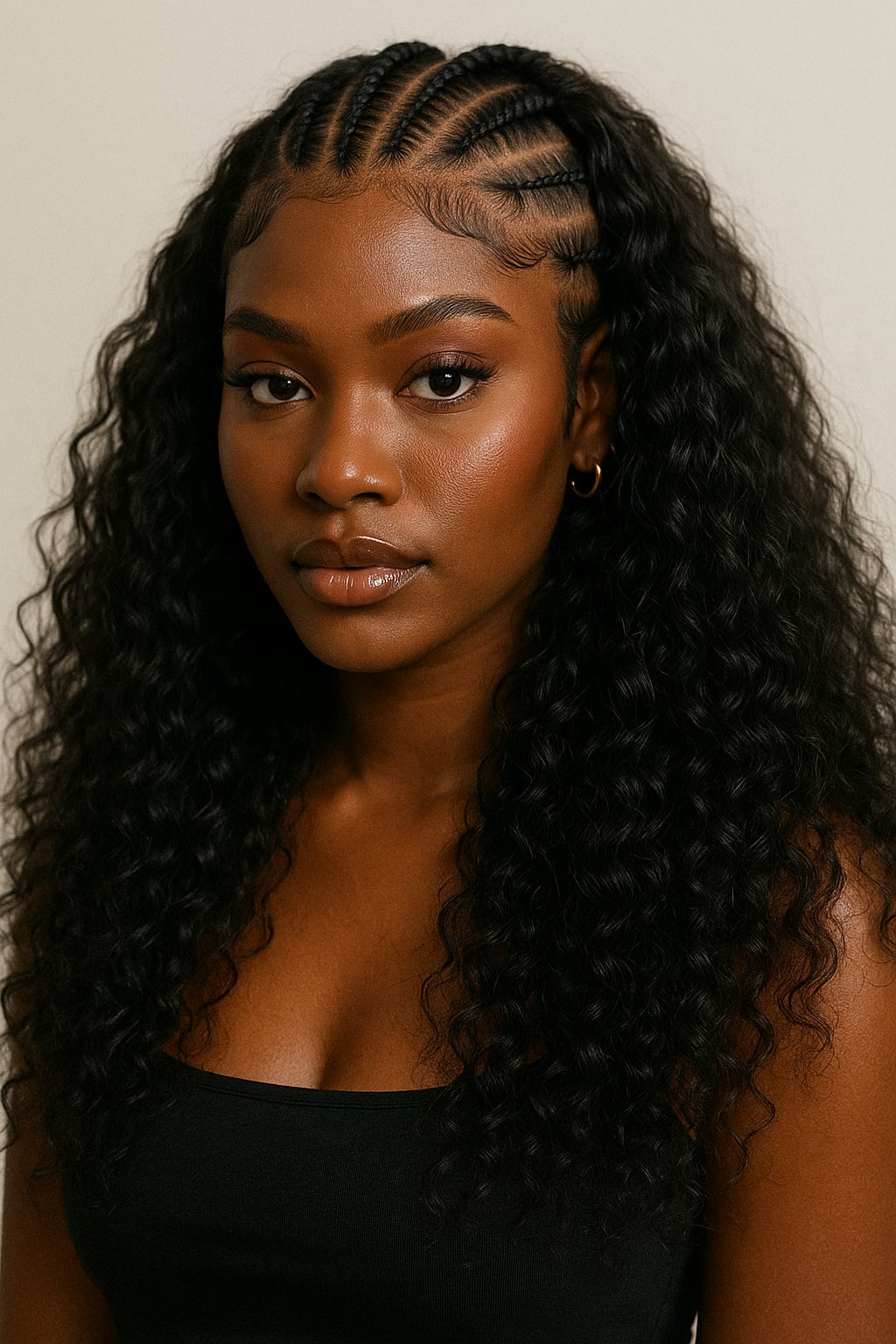
Thick hair is the quiet advantage here: the wavy, loose ends carry real volume, so the mid-back length doesn’t look stringy the way it might on finer textures. The middle part and gold beads give the scalp pattern a clear focal point, while the black waves soften everything below. This is a protective style that suits dense natural hair looking for something decorative but wearable every day. Ask your stylist for Fulani braids with wavy ends and gold beads. To keep the waves from tangling into each other, gently separate them with your fingers and wrap the whole thing in a silk scarf at night, which also stops the gold beads from catching on pillowcases.
Fulani Braids Crown With Loose Waves
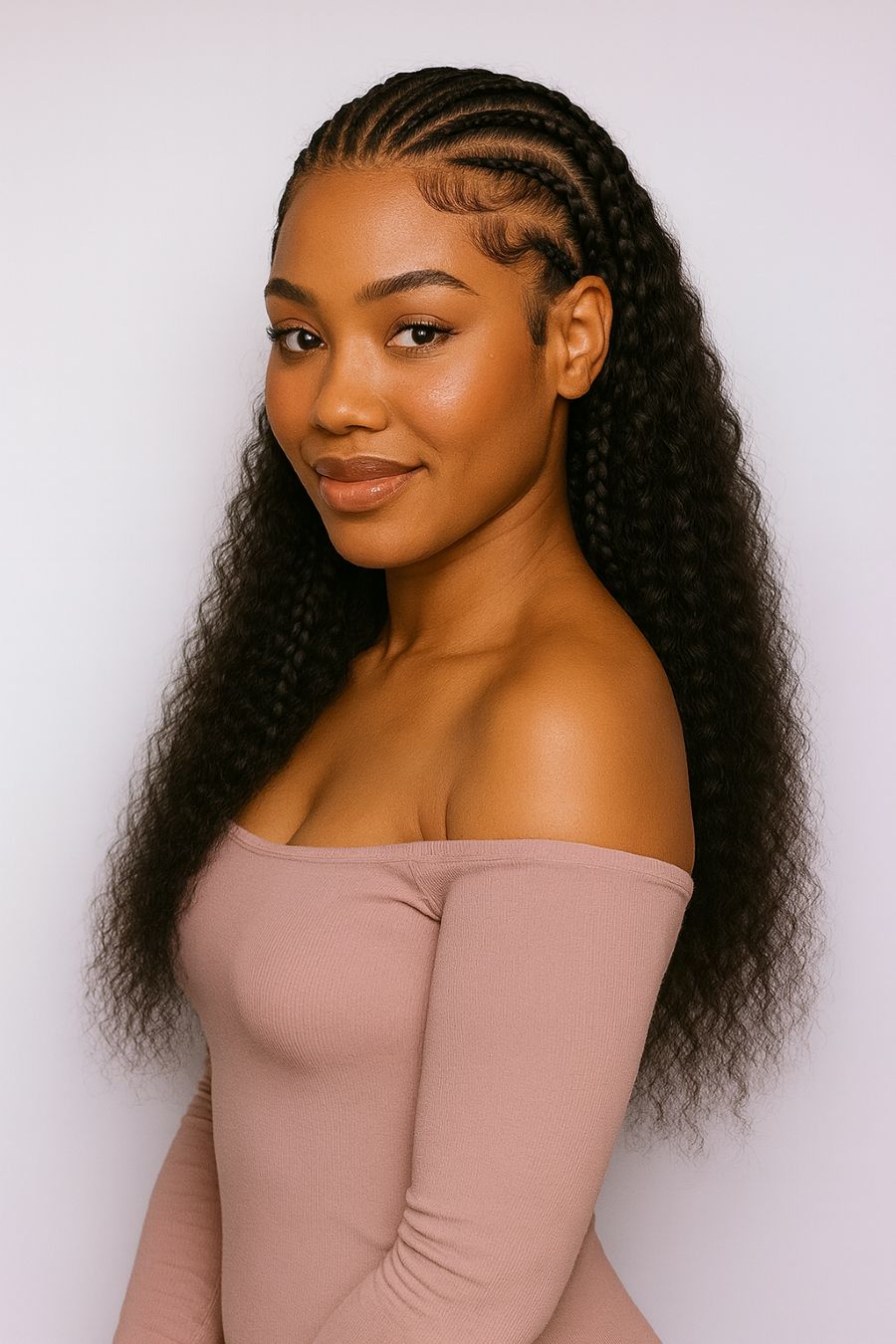
The crown stays neat and structured, while the rest of your hair does its own thing in loose waves, which is a combination that works harder than it looks. The braids frame your face, and the mid-back length gives the waves room to move. Ask your stylist for Fulani braids on top with loose waves. Define the waves with a curl cream or mousse, and re-braid the crown section as needed to keep the contrast sharp. The black color keeps it low-maintenance, and the thick texture holds the wave pattern well, so you are not re-styling daily.
This style suits natural hair that wants both structure and softness, with volume at the mid-lengths. The braids at the crown mean your edges stay protected, but the loose waves require a little more attention than an all-braided look. You will be refreshing the waves every couple of days, but the braids themselves hold for weeks.
Mid-Back Fulani Braids With Face-Framing Tendrils
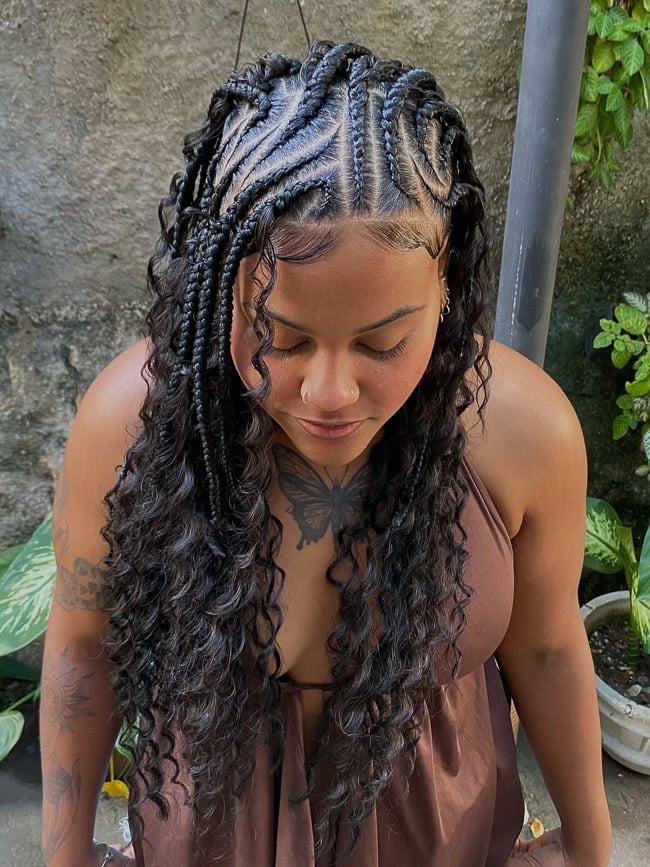
Here is a clear one-line assessment: the face-framing tendrils are what separate this from a standard Fulani braid style. The braids themselves are worked into intricate scalp patterns with a middle parting, but the loose, wavy strands left out around your face are the real feature. The black braids run to mid-back, and the tendrils soften the whole look, so it feels polished without being strict. Ask your stylist for Fulani braids with face-framing wavy tendrils. The technique is simple: your stylist braids the crown and sides, then leaves out a few sections at the front to wave freely. It suits natural hair that wants a style with some movement around the face, and the thick texture keeps the tendrils from looking sparse.
Polished Mid-Back Fulani Braids With Face-Framing, Close-Up Take
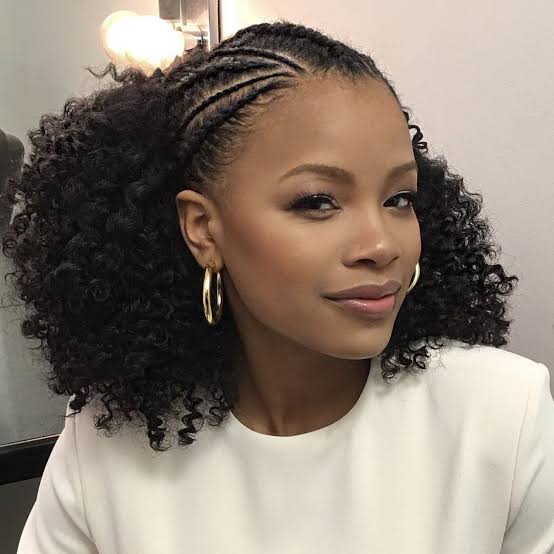
Want the polished version of face-framing tendrils without the frizz? Ask for exactly that: Fulani braids with intricate scalp patterns and face-framing tendrils. The braids are black and reach mid-back. The tendrils are the detail to specify, because they are what soften the look. You want them wavy, not straight, and you want them long enough to actually frame your face, not just graze your ears. The stylist will braid the rest tight, so the contrast between the structured braids and the loose tendrils is what makes it work. This suits natural hair that wants a sophisticated style with some softness, and the thick texture holds the tendrils shape well.
Natural Mid-Back Fulani Braids With Wavy Tendrils
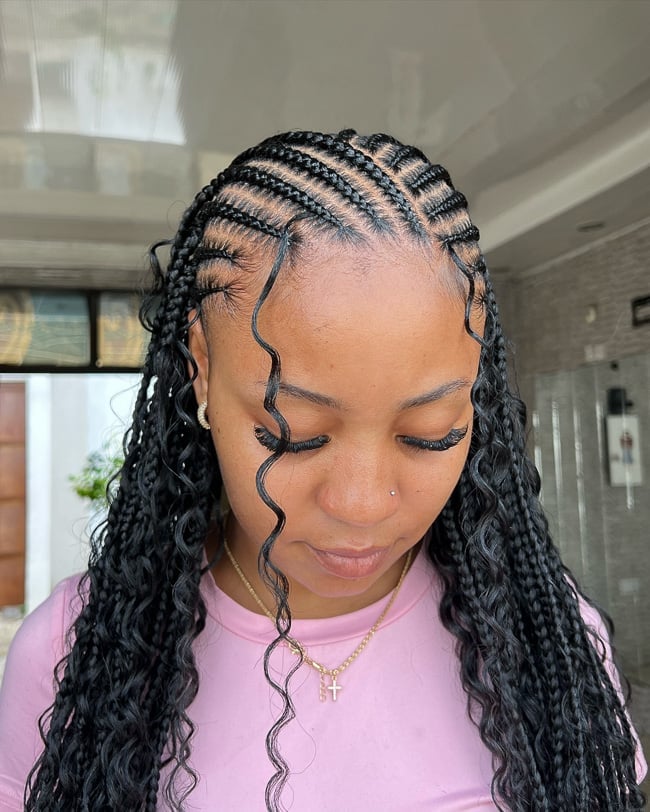
The design is straightforward: intricate scalp patterns at the roots, black braids running to mid-back, and loose wavy tendrils left out at the front. The middle parting keeps it clean, and the tendrils are what give it that natural, unstyled feel. Ask your stylist for Fulani braids with intricate scalp patterns and wavy face-framing tendrils. For upkeep, keep the tendrils moisturized with a light serum, because they will frizz faster than the braids. Gently pull a few more strands out around your face for a softer look, and use a light hold spray to keep them in place. The braids themselves hold for weeks, but the tendrils need a refresh every few days.
Mid-Back Fulani Braids Integrated With Loose Curls
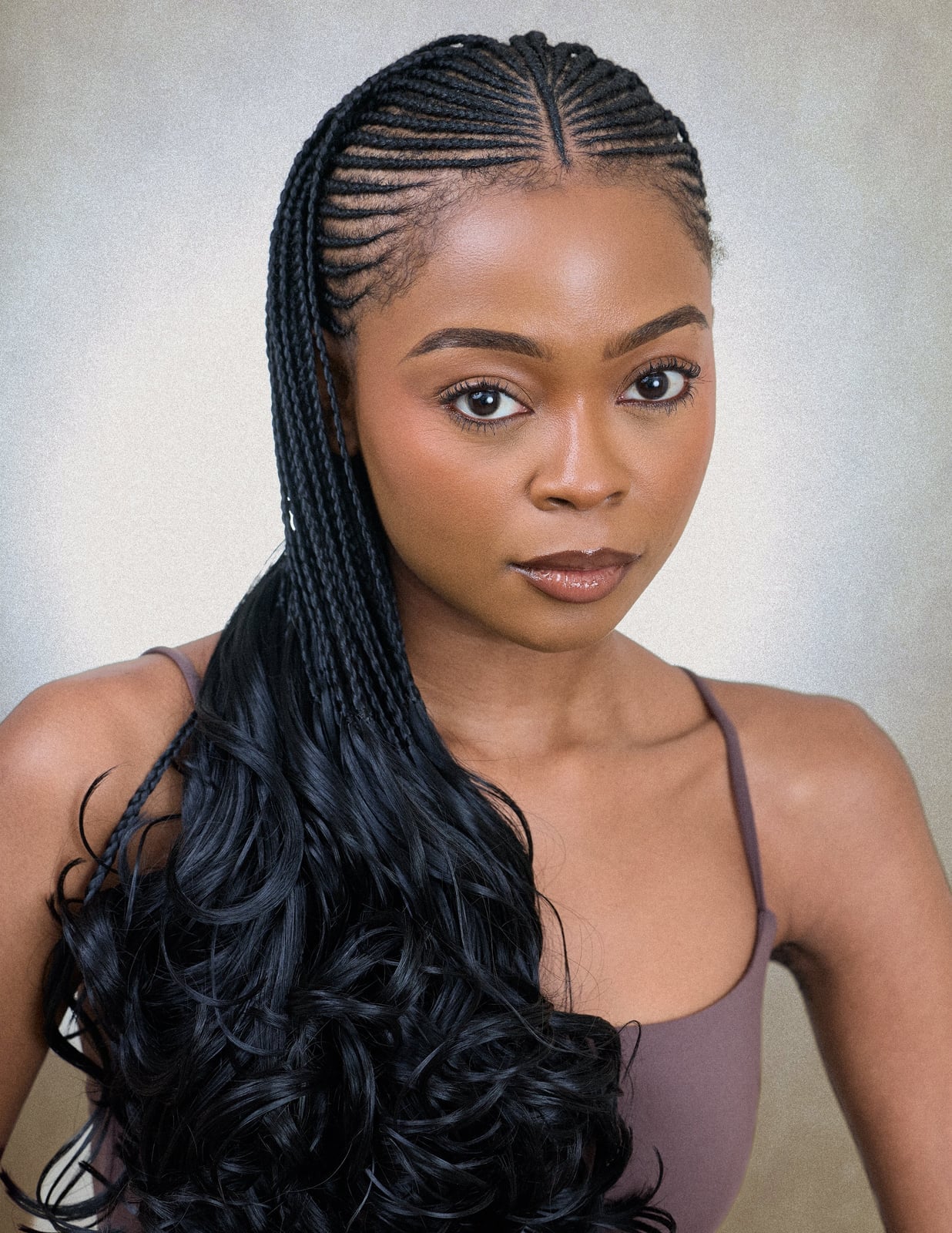
Compared with an all-braided style, this one trades some neatness for a lot more movement. The braids are concentrated along the hairline, forming a decorative pattern, while the rest of your natural hair falls in loose, touchable curls. The black color keeps it unified, and the mid-back length gives the curls room to bounce. Ask your stylist for Fulani braids at the hairline with loose curls.
This is the option if you want the protective benefits of braids but still want to feel your own hair. The braids hold their shape for weeks, but the loose curls need daily attention. Apply a curl-defining cream and scrunch to keep the texture defined.
Long Fulani Braids With Voluminous Loose Curls
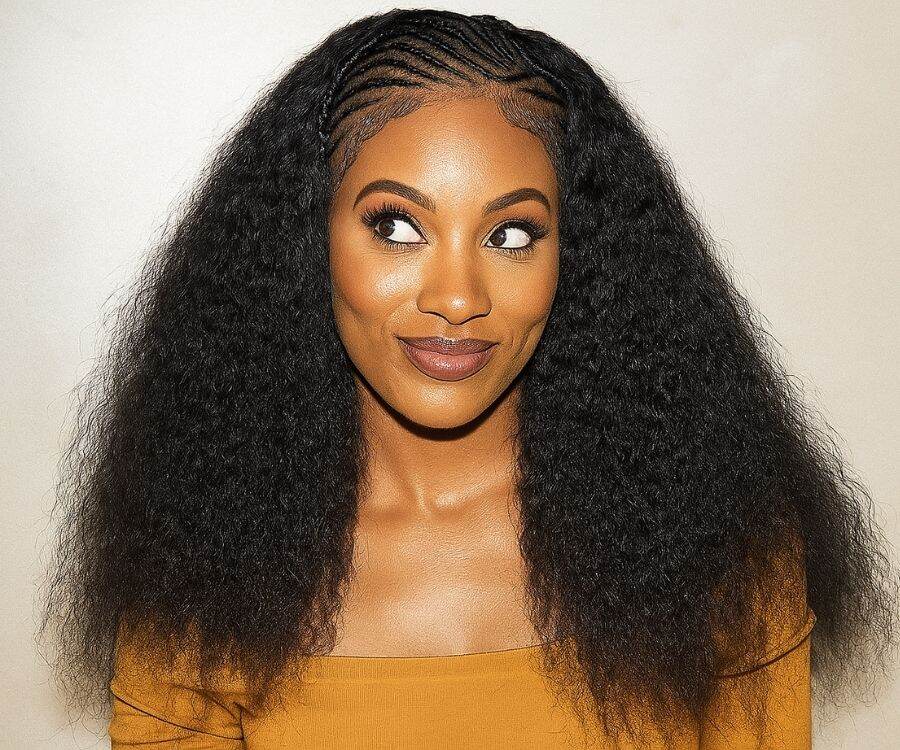
Long hair is the canvas here; anything above mid-back shortchanges the curl volume. The hold is excellent for a week or two, then the front braids will start to loosen. That is normal, not a sign of bad work. Re-braid the front sections as needed, and use a diffuser on low heat to refresh the curl shape without disturbing the scalp pattern.
Side Profile Fulani Braids With Curly Extensions
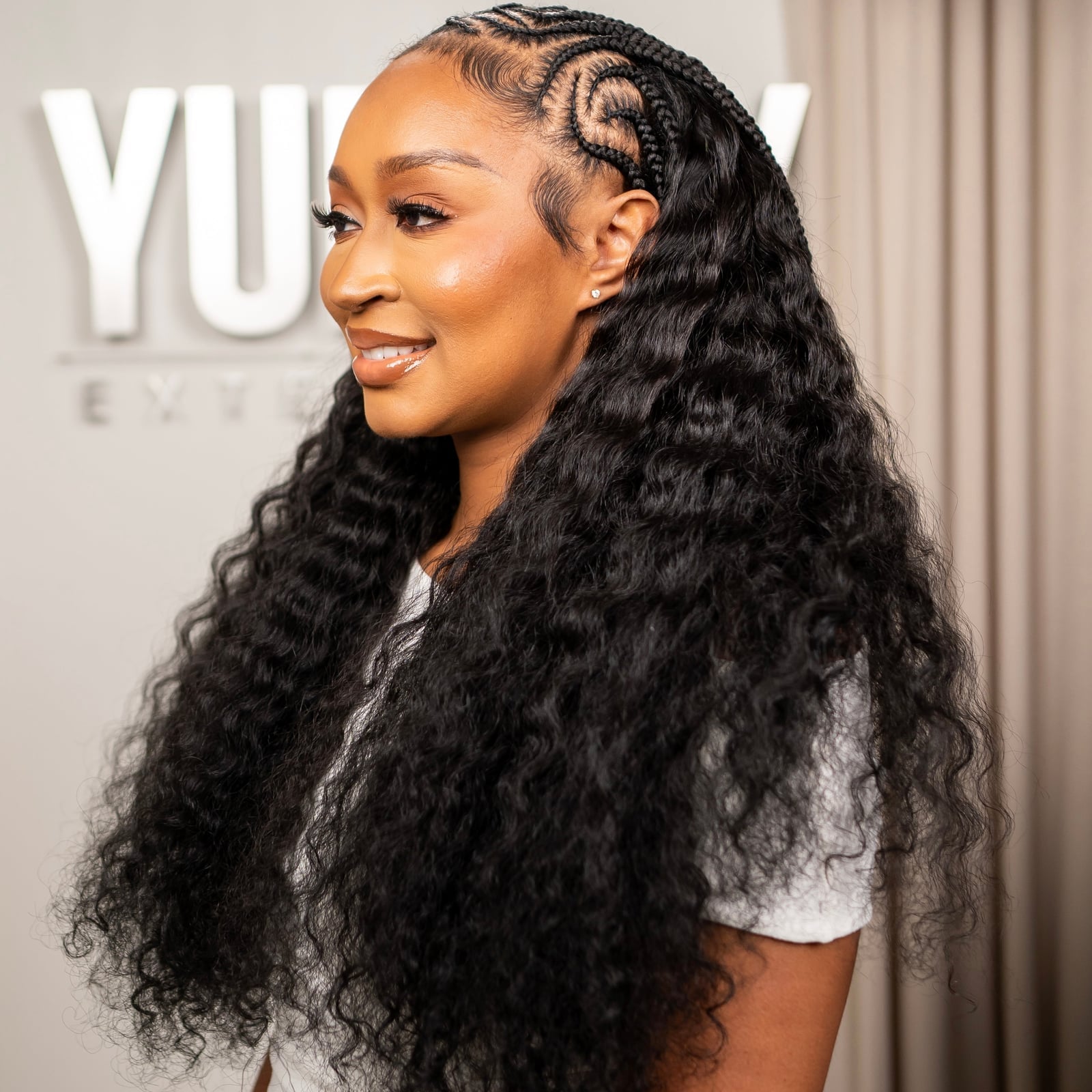
A side profile view reveals the architecture of this style: a middle parting feeds into neat scalp braids that then release into voluminous, long curly extensions. The hold is strongest at the root, where the braids are taut, and loosest at the ends, where the curls do what curls do. Ask your stylist for: Fulani braids with voluminous curly extensions. This is a salon-only installation; the technique requires even tension and a consistent braid width to keep the pattern readable from every angle.
Upkeep is minimal but specific. Apply a light curl-defining cream to the extensions every few days to maintain definition, and check the scalp braids for any pulling or tightness around the hairline. The style wears well for two to three weeks before the curls begin to frizz and the braids soften at the edges. A satin scarf at night preserves the shape longer than any product.
Collarbone Fulani Braids With Curtain Bangs and Curls
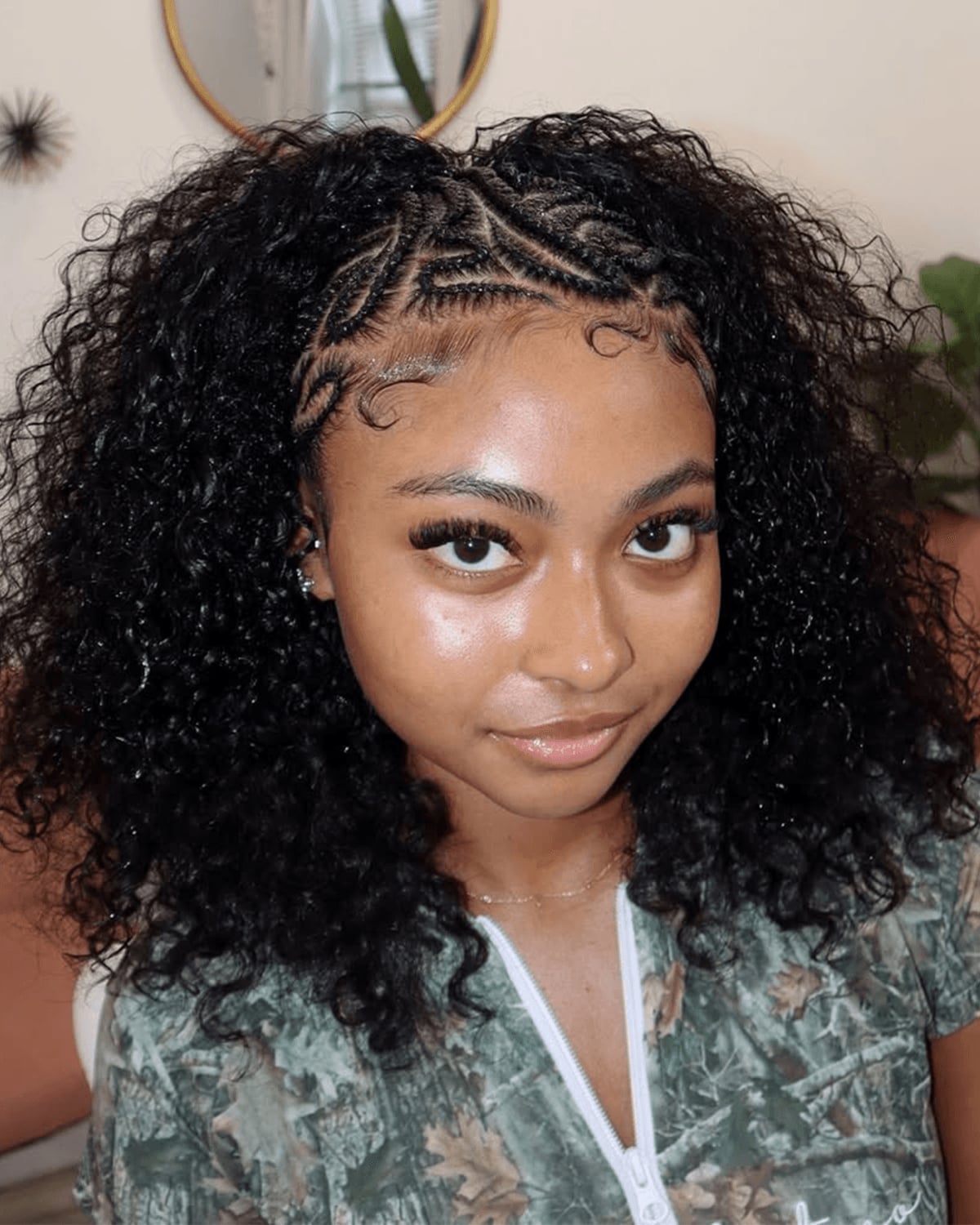
How do you explain to a stylist that you want the structure of Fulani braids but with soft, face-framing curtain bangs and loose curls that hit the collarbone? Say this exactly: Fulani braids with curtain bangs and loose curls. The braids run along the hairline in a geometric pattern, then the bangs break free into a soft, wavy curtain that skims the cheekbones. The remaining length transitions into voluminous curls that stop at the collarbone, not the waist. This is a collarbone-length style that prioritizes framing over length. The hold is moderate: the braids stay put, but the bangs need a round brush and a spritz of water each morning to keep their shape.
Long Fulani Braids With Loose Natural Curls and Flower, Black
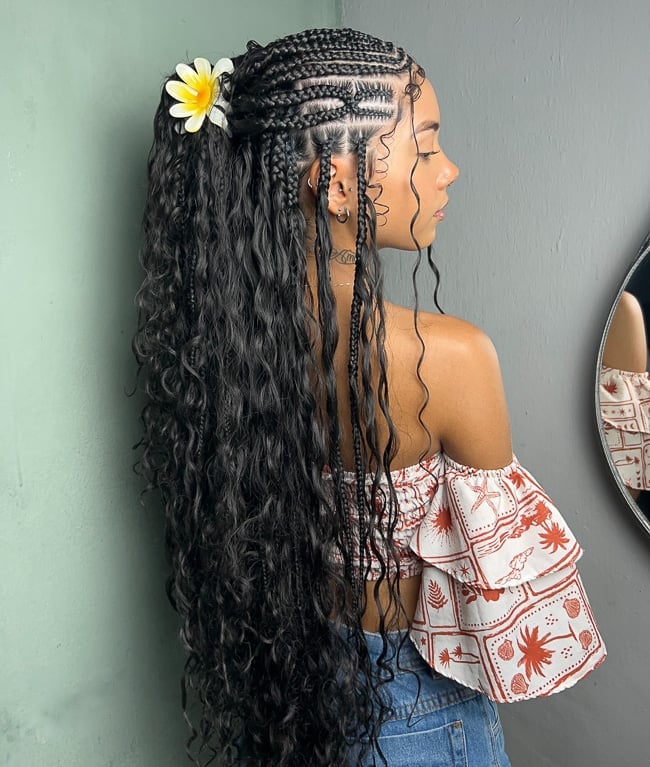
A yellow flower tucked behind the ear signals that this style belongs at a summer festival or an outdoor wedding, not a Tuesday board meeting. The back view shows long Fulani braids that transition into loose, natural wavy and curly black extensions, with the flower acting as the sole adornment. Ask your stylist for: Long Fulani braids with loose natural curls and a flower accessory. The texture is deliberately undone. The curls are not perfectly uniform, which gives the whole thing a bohemian ease that polished styles lack.
The season for this is warm weather, when the flower stays fresh and the loose curls can air-dry without turning into frizz. Secure the flower with a bobby pin through the stem, not the petals, so it stays put through a day of dancing or outdoor eating. The braids themselves hold well, but the curls will lose definition after a day or two; re-moisturize them with water and a leave-in to bring the wave pattern back.
Long Fulani Braids With Brown Highlights and Wavy Texture
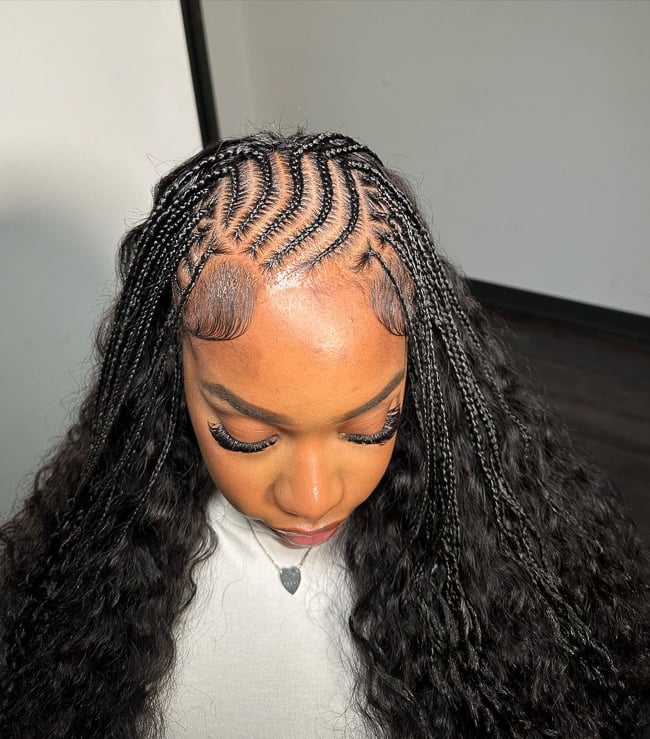
The technique here is subtle: black Fulani braids with brown highlights woven through the extensions, so the color creates dimension without contrast. A central parting leads into neat scalp braids that release into loose, wavy and curly hair at the ends. Ask your stylist for: Long Fulani braids with brown highlights and wavy texture. The highlights are placed in the extensions, not the natural hair, which means they last as long as the braids themselves, no root touch-up needed.
This style suits natural hair that wants depth without going full ombre. The wavy texture softens the braids, making the transition from scalp to ends feel fluid, not abrupt. The hold is standard for Fulani braids: two to three weeks before the waves relax and the braids show wear at the edges. Use a color-safe conditioner on the extensions to keep the brown highlights from fading into a muddy tone.
Long Fulani Braids With Heart Designs and Curly Ends
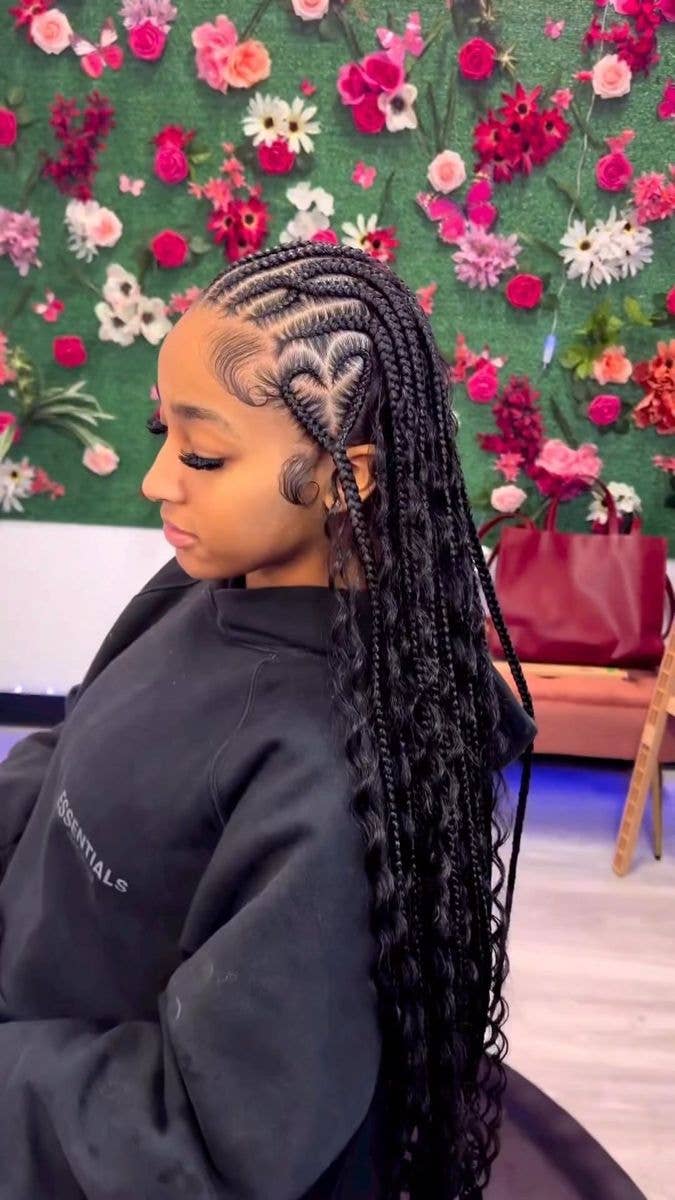
Heart-shaped designs near the temples set this apart from the standard straight-back cornrow base, making it a style that is deliberately artistic. The long black braids end in loose curls, with baby hairs smoothed along the hairline for a polished finish. This suits natural hair that wants intricate detail without committing to a full scalp pattern, though the hearts require a steady hand and a salon chair. Ask your stylist for: Fulani braids with heart designs and curly ends, styled baby hairs. The complexity of the shapes means this is not a DIY project; the precision for symmetrical hearts is worth three hours in the chair.
Mid-Back Fulani Braids With Beads and Cowrie Shells
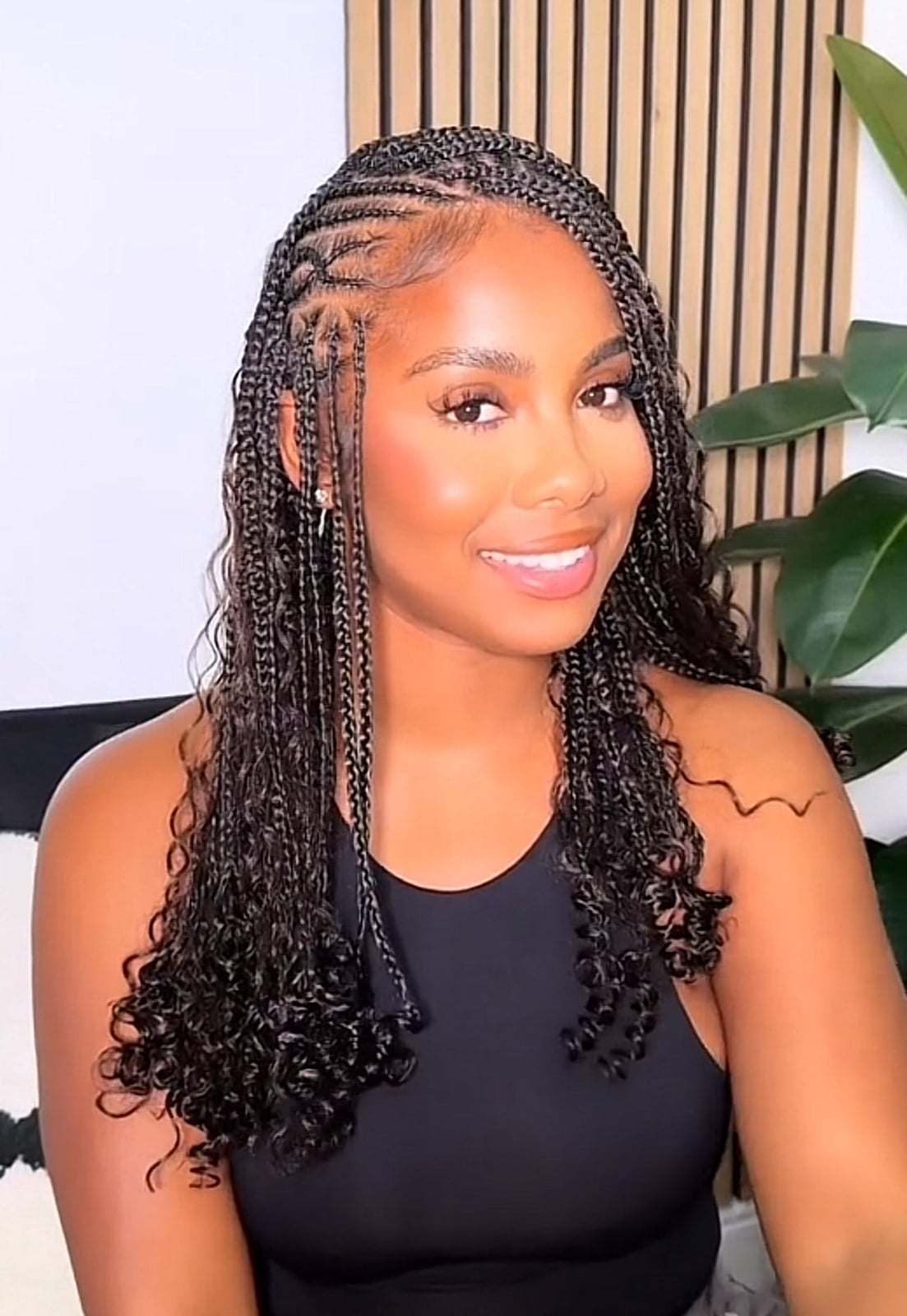
Beads and cowrie shells make this style immediately recognizable, adding weight and sound to every turn of the head. The black, thick braids fall to mid-back with curly ends, and the middle parting keeps the scalp pattern visible. This is a decorative choice that wears well for festivals and summer events, but the shells require a practical eye: they can tangle with loose strands and make sleeping a negotiation with your pillow. Ask your stylist for: Fulani braids with beads, cowrie shells, and curly ends. Ensure each shell is anchored tightly to avoid snagging, and keep the curly ends moisturized so they stay defined instead of frizzing into a single mass.
Mid-Back Fulani Braids With Neat Cornrows and Wavy Ends
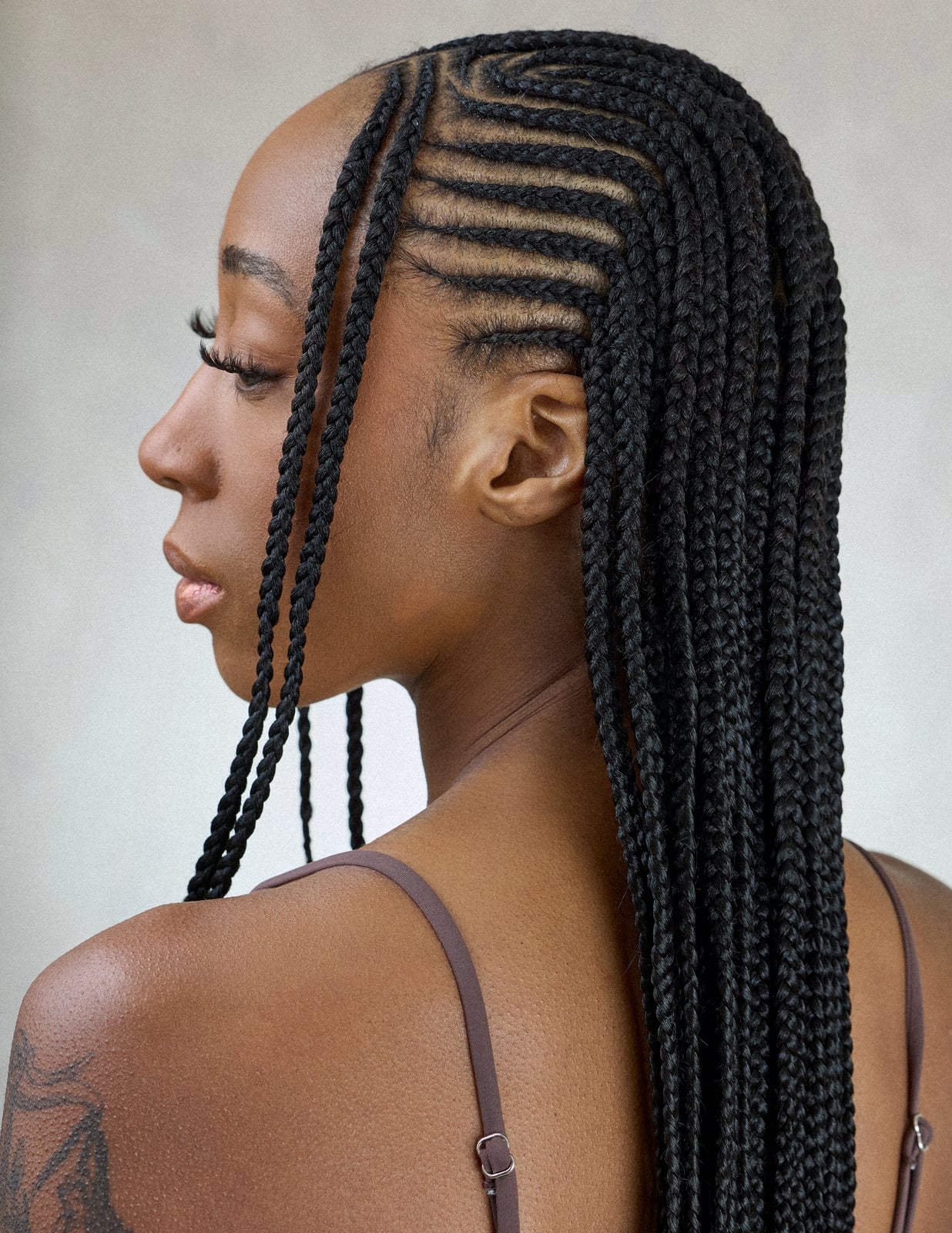
The cornrows here are clean enough to pass a white-glove inspection, but the wavy loose ends keep the whole thing from feeling like a uniform. Medium-sized braids transition from the scalp into long individual strands that reach mid-back, all in black. This suits thick natural hair that wants structure at the root and movement at the ends. Ask your stylist for: Fulani braids with neat cornrows and wavy loose ends. If you prefer a sleeker finish, ask for straight braids all the way down; if you want more softness, the wavy ends are the way to go.
Mid-Back Fulani Braids With Intricate Cornrows
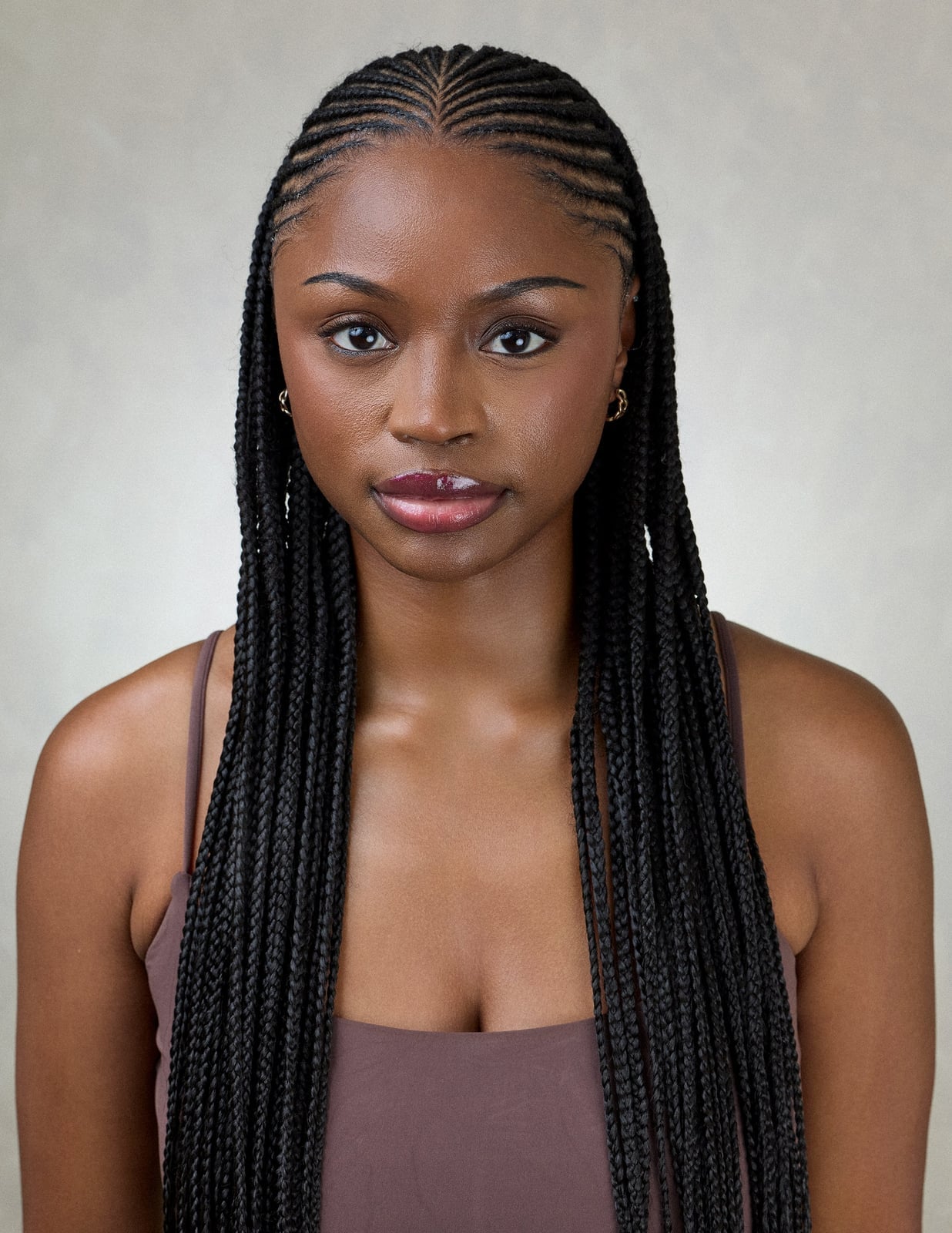
Small, precise cornrows run along the scalp before giving way to long individual braids, and the effect is a style that looks engineered rather than assembled. The black, thick hair reaches mid-back, and the middle parting frames the face with symmetry. This is a technique-heavy build: each cornrow must be even, and the transition to loose braids has to happen at the same length on both sides. Ask your stylist for: Fulani braids with intricate cornrows and long individual braids. The result holds its shape for weeks, but the scalp needs regular cleansing with a diluted shampoo to stay comfortable under all that tension.
Side Profile Fulani Braids With Swirl Pattern
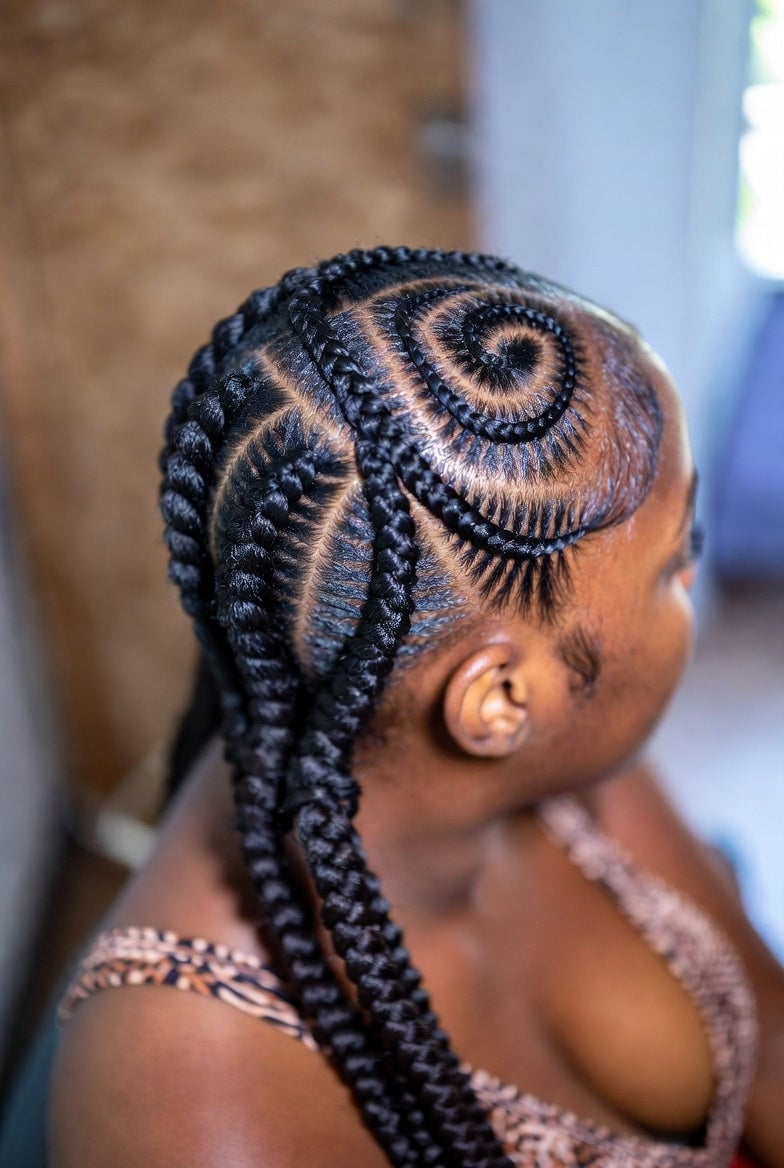
Can a scalp pattern make you reconsider your part? The central swirl here draws the eye immediately, with defined parting lines radiating outward. The long black braids fall to mid-back, and the natural coily texture keeps the ends soft against the structured base. This suits coily textures especially well, since the pattern reads clearly against the scalp. Ask your stylist for: Fulani braids with a central swirl pattern on the scalp. The swirl is a statement, so it works best if you are comfortable with attention on your part line. Keep the scalp moisturized with a light oil to avoid flaking, and resist the urge to fiddle with the pattern.
Mid-Back Fulani Braids With Baby Hairs
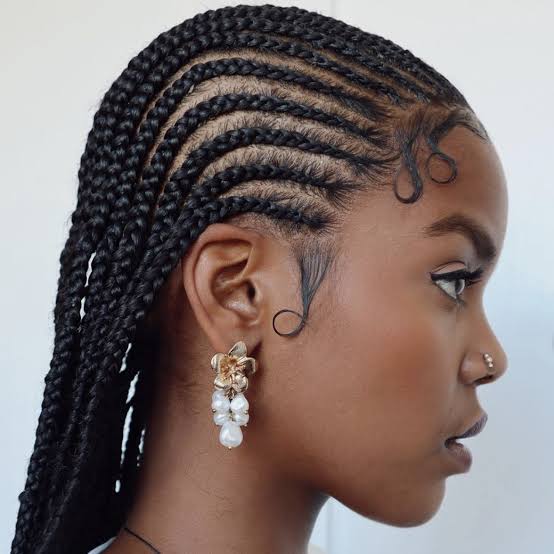
Baby hairs are the difference between a braid job and a finished one. These mid-back Fulani braids use black coily natural hair with a middle part, and the carefully shaped hairs along the hairline add polish that lasts all day. Ask your stylist for: Fulani braids with shaped baby hairs. Use a small dab of edge control to lay them down, and the hold will carry you through the work week without a second thought. Re-braid any loose sections as needed to keep the look clean.
Side View Fulani Braids With Polished Pattern
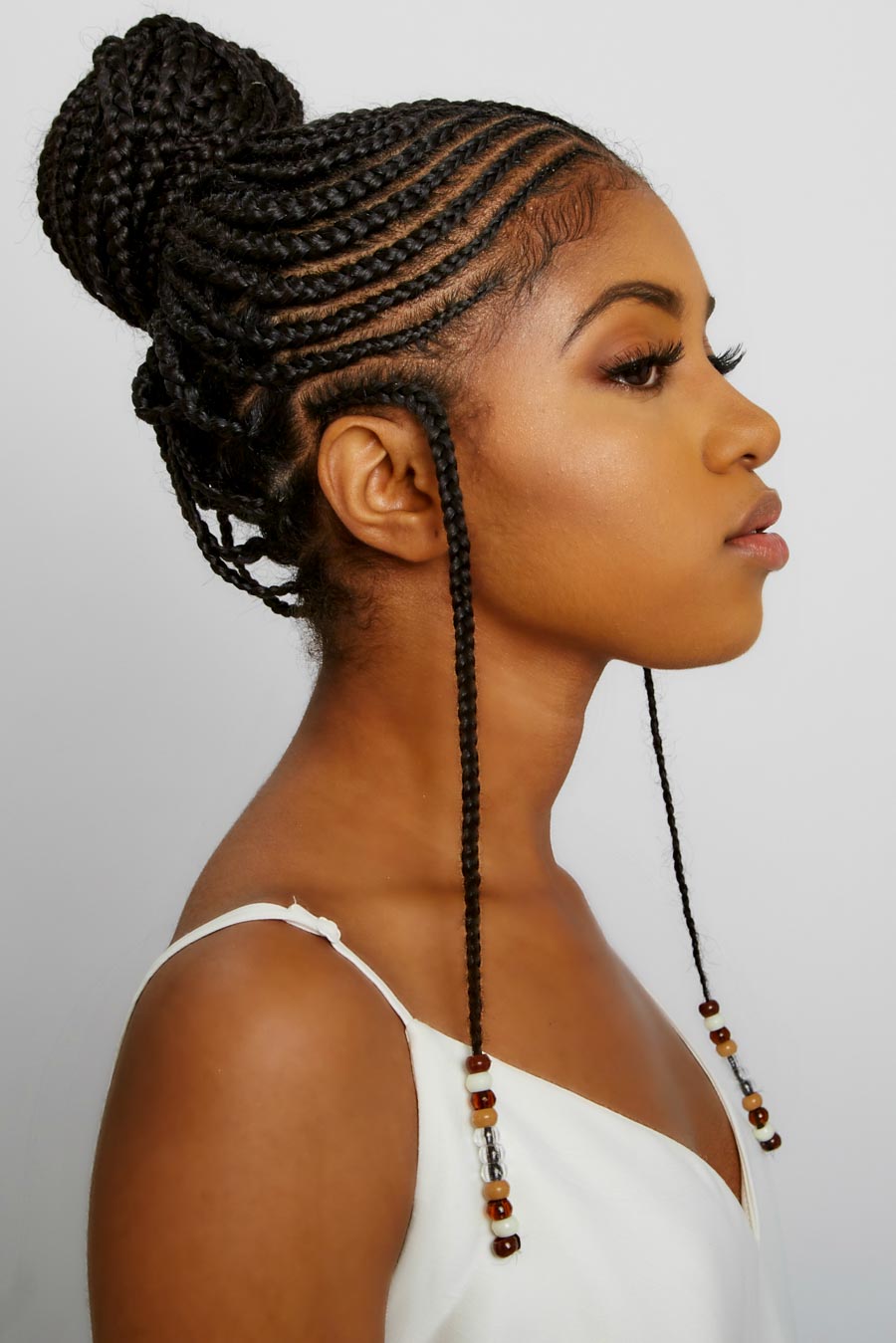
A side view reveals what a front shot hides: the precision of the scalp pattern. These Fulani braids are uniformly sized and sit on a clean middle part, with straight, fine texture that lets the linework read clearly. It is a polished look, not a textured one. Ask your stylist for: Fulani braids with detailed scalp patterns.
If your hair is coarser or you prefer more volume at the ends, a wavy finish will give you that softness. This version is for anyone who wants the pattern itself to do the talking, no loose curls or wavy ends needed. Keep the scalp clean and avoid over-handling the braids to maintain the structure.
Side Profile Fulani Braids With Geometric Pattern, Mid-Back
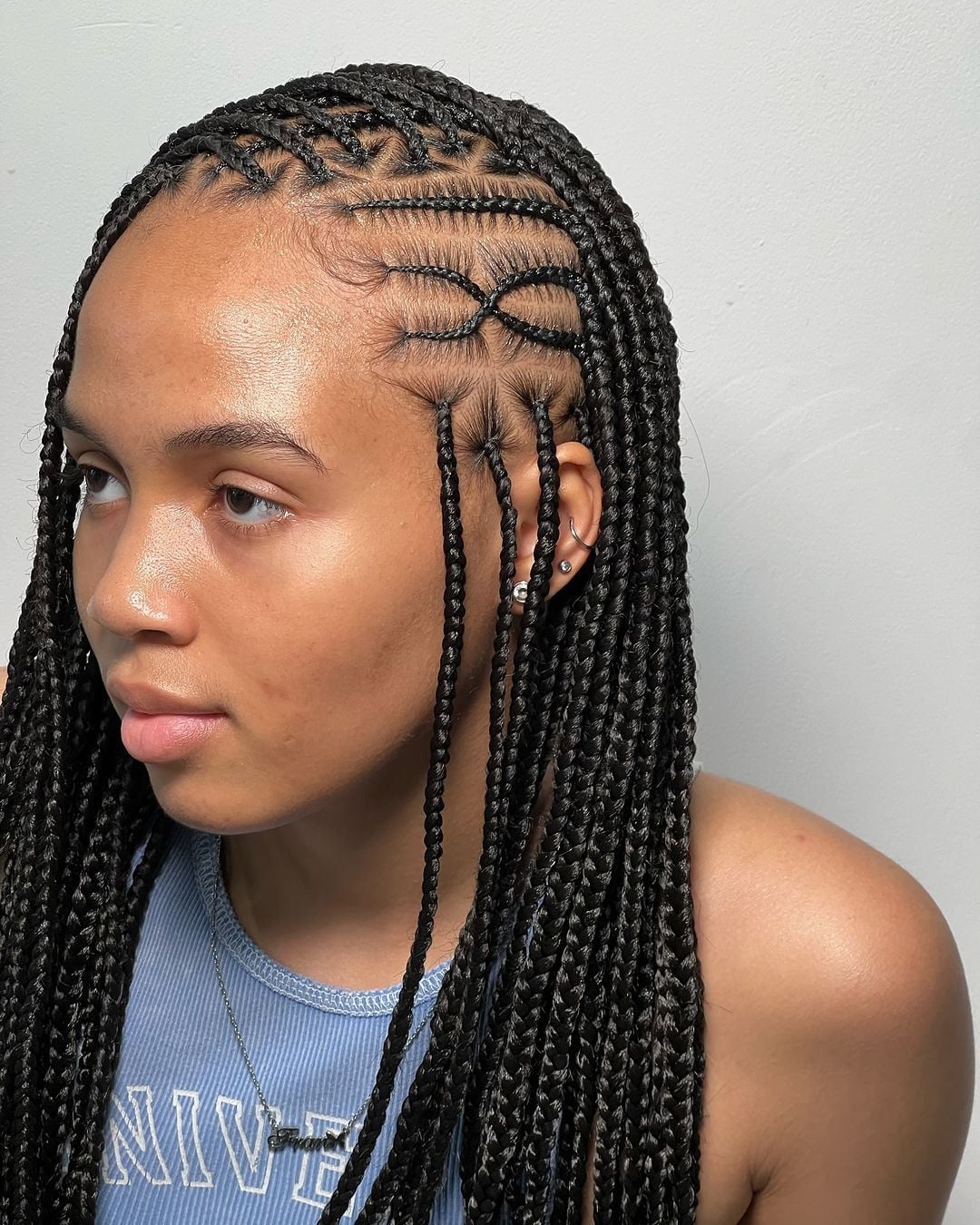
Geometric patterns on the scalp require a steady hand and a clear plan before the first section is parted. These mid-back Fulani braids use small, uniform sections to build the design, with a middle part anchoring the symmetry. Ask your stylist for: Fulani braids with geometric scalp patterns. The technique relies on consistent tension and angle changes as the stylist works from the front hairline back. Black natural hair in a straight, fine texture shows every line distinctly, so any unevenness would be visible. That is the point of this style: the craftsmanship is the statement.
Mid-Back Fulani Braids With Geometric Pattern
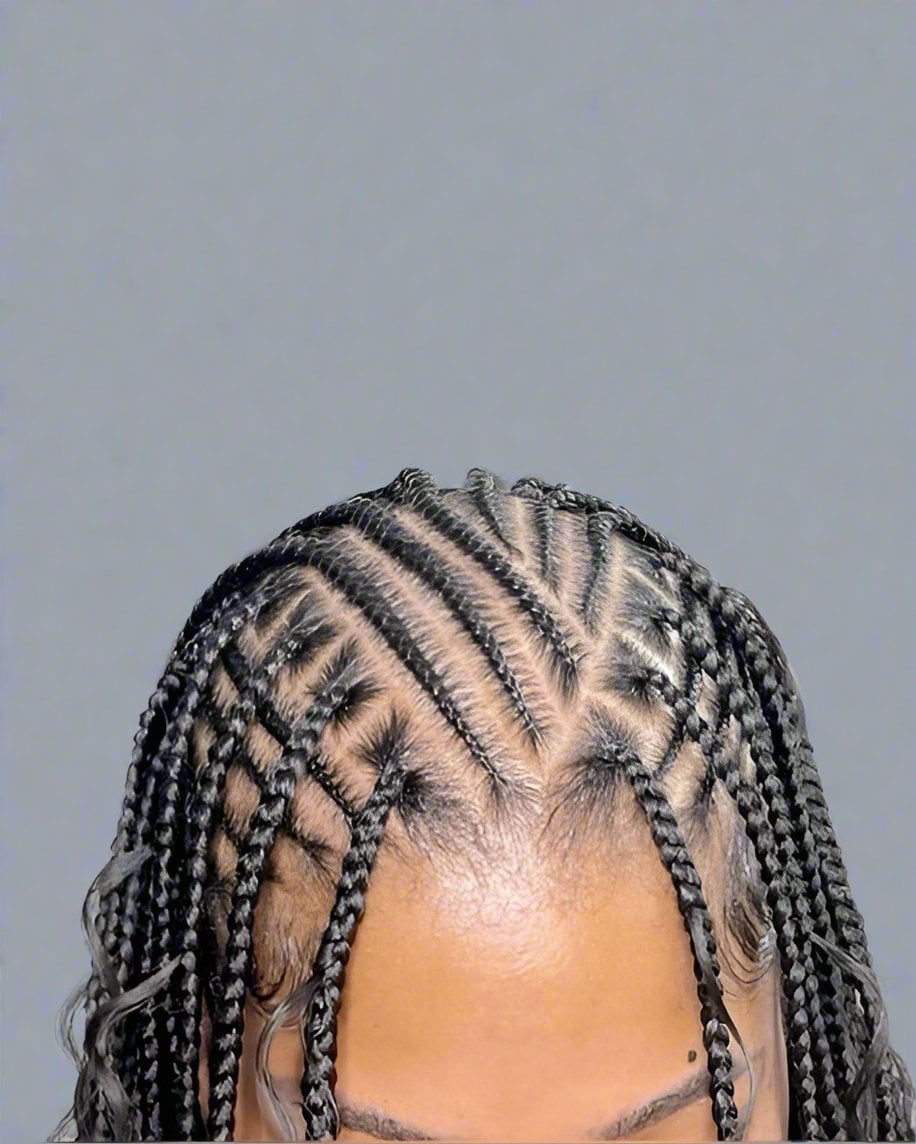
How do you ask for a structured scalp design without the ends looking severe? This front-view set of Fulani braids answers that: a geometric pattern on the crown, then wavy, thick black texture for the mid-back length. Ask your stylist for: Fulani braids with a geometric scalp pattern and wavy ends. The contrast between the neat lines at the root and the soft waves below keeps the style from feeling rigid. A light pomade brushed over the scalp pattern smooths any flyaways, a quick spritz of water on the waves revives their definition.
Mid-Back Fulani Braids With Subtle Highlights
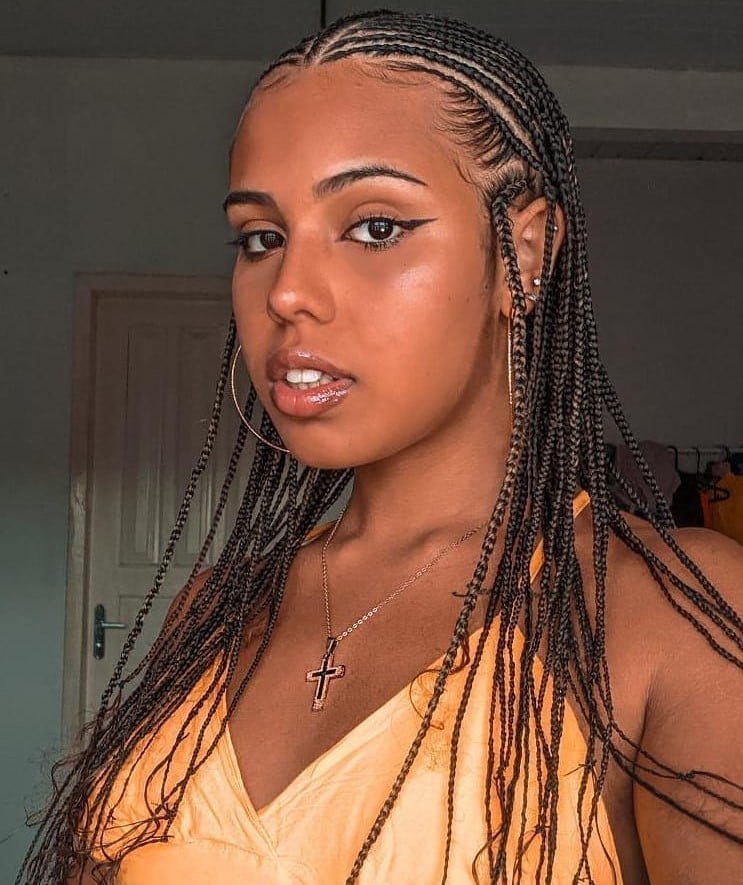
Subtle highlights woven into Fulani braids add dimension, which is useful when you want the braid pattern itself to stay the main event. These mid-back braids use black hair with fine lighter strands and a wavy texture at the ends, all parted down the middle. Ask your stylist for: Fulani braids with intricate patterns and subtle highlights. The color variation catches light differently than solid black, so the style appears richer in sunny or bright settings. A color-safe shampoo keeps the highlights from shifting tone, and re-braiding every few weeks maintains the crisp look.
Shoulder-Length Fulani Braids With Subtle Highlights
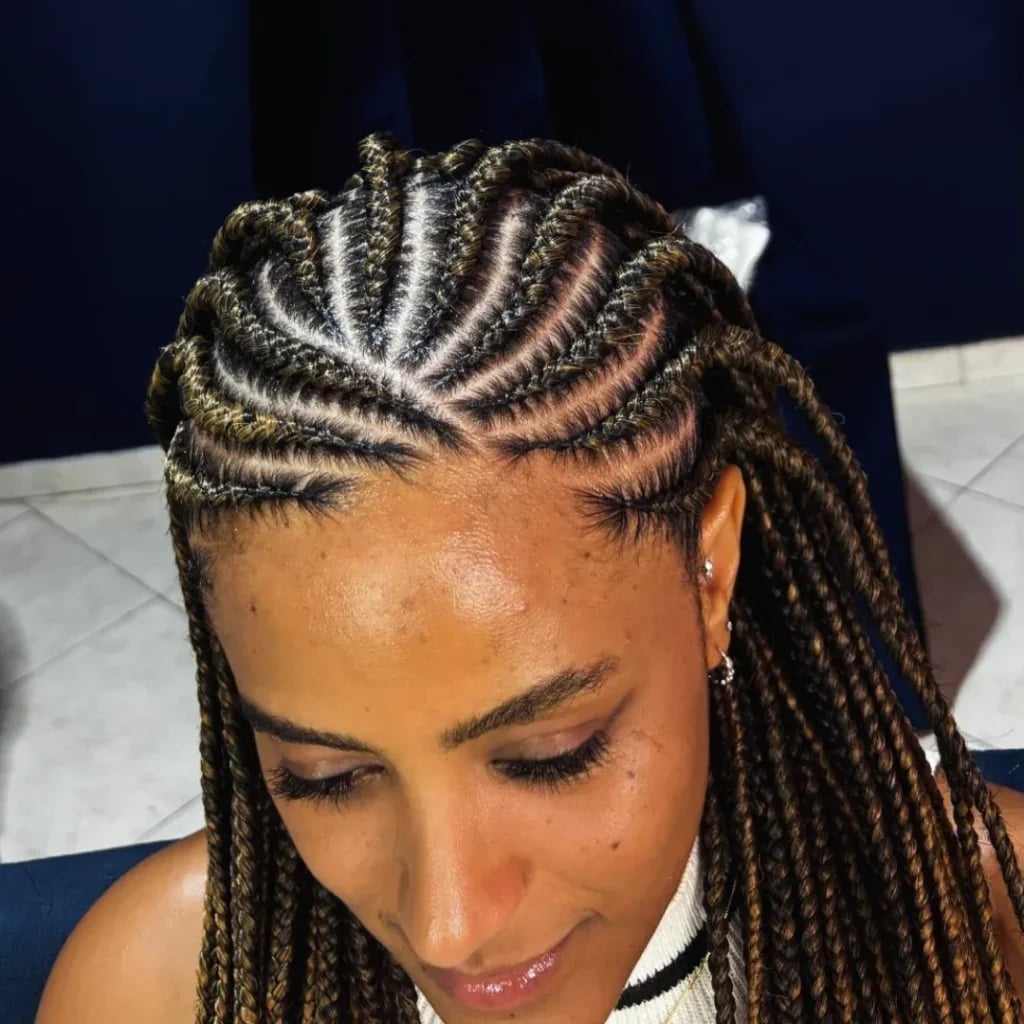
A central parting and smaller face-framing braids give this shoulder-length style a neat, almost architectural quality that reads clearly from across the room. The black base is warmed by subtle lighter highlights woven through, so the color catches attention without shouting. Ask your stylist for: shoulder-length Fulani braids with subtle highlights and patterned parting. This length suits natural hair that wants the full braided look but with less weight to carry, and the straight, smooth texture keeps the pattern sharp. The shorter sections also mean faster styling sessions, since there is simply less hair to braid.
Shoulder-Length Fulani Braids With Blonde Highlights, Wavy
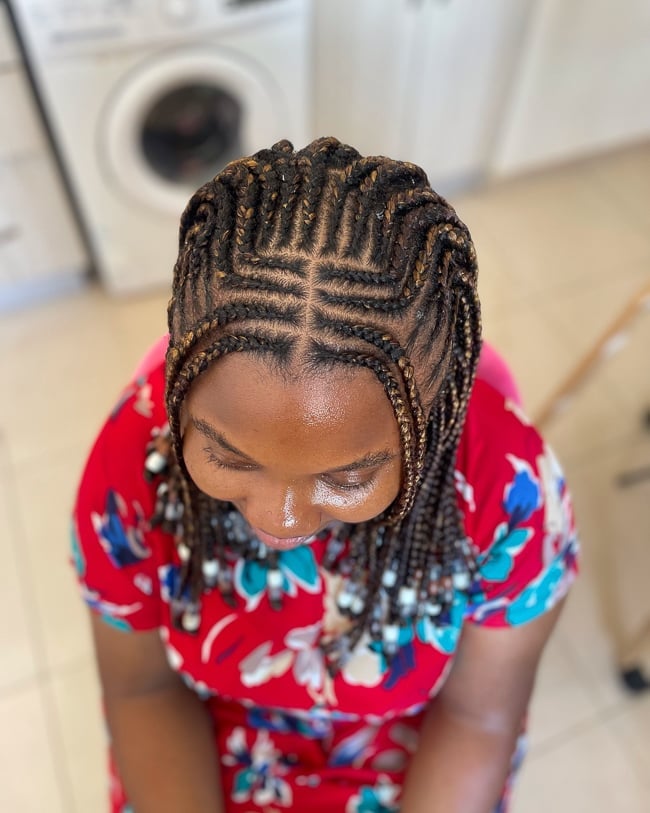
A geometric parting pattern on the crown is the first thing you notice, and the black-and-blonde mix keeps it interesting. These shoulder-length braids with a wavy texture hold their shape well, but the lighter strands need a bit more attention. Ask your colorist for: shoulder-length Fulani braids with geometric pattern and blonde highlights. A purple toning shampoo once a week keeps the blonde from turning brassy between appointments, and re-braiding the front sections keeps the pattern crisp. Expect to refresh the color every eight to ten weeks, depending on how fast your natural shade grows in.
Straight Back Cornrow Fulani Braided Wig
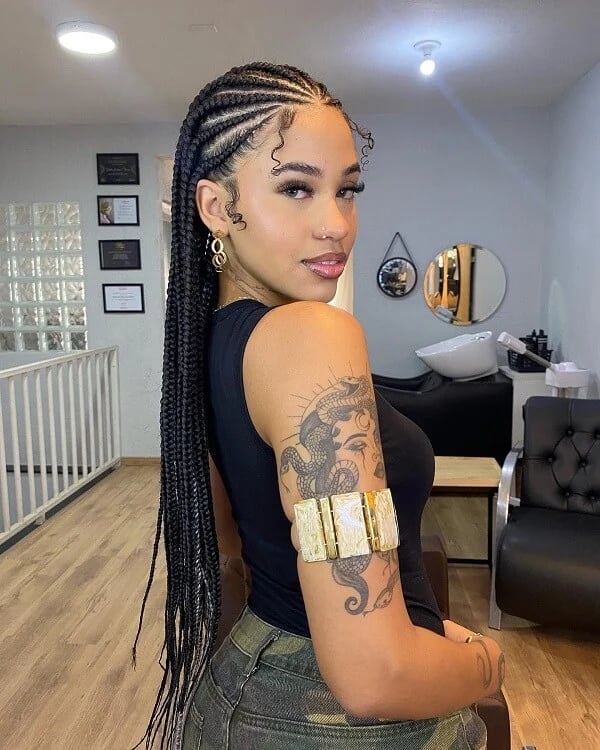
Unlike braiding your natural hair, a wig with straight-back cornrows gives you the Fulani silhouette in a fraction of the chair time. The slicked-back parting and delicate baby hair curls at the edges are the details that make it look integrated rather than obvious. Ask your stylist for: a Fulani braided wig with straight back cornrows. Getting that natural integration is a salon skill, since a wig needs to be customized to your hairline, which is not something a DIY attempt usually nails. You save the hours of braiding, but you trade them for fitting, trimming the lace and styling the edges, which still takes about an hour of professional time. Store it on a stand and it keeps its shape for months.
Mid-Back Fulani Braids With Wavy Texture, Shoulder
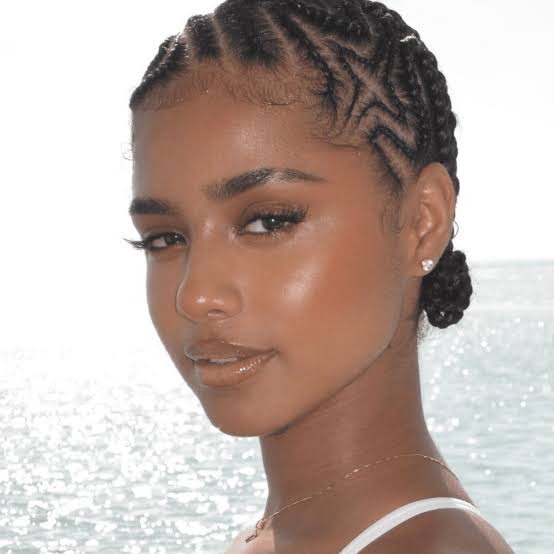
The geometric pattern on the scalp is built first, then the braids are extended to mid-back with a wavy texture that softens the whole design. A middle parting keeps the symmetry, and the black color gives the pattern a clean, high-contrast finish. Ask your stylist for: Fulani braids with wavy texture. This one suits natural hair that wants a detailed, textured protective style with some movement at the ends. The wavy texture means the ends are less likely to look stiff, and they hold their bend for several weeks before you need to re-dip them. Just keep the scalp moisturized and the waves will stay defined without much effort.
Final Thoughts
The right Fulani braid style depends on your hair’s texture and how much time you want to spend on it. Fine hair holds a sleek, neat pattern longer, while thicker textures can carry more volume and loose ends without losing shape. For a style that lasts, ask for a braid gel or pomade to smooth the scalp and edges.
- Keep scalp moisturized with a light oil or spray.
- Protect braids with a silk or satin bonnet at night.
- Cleanse scalp gently with diluted shampoo.
- Avoid excessive pulling or tension on the braids.
Fulani braids offer a versatile canvas for personal expression.