The hair color chart for 2027 leans into lived-in color and glossy natural texture, with soft face-framing layers replacing heavy, uniform highlights. Warm browns, rich coppers, and cool blondes all get a dimensional update this year.
This collection of 18 ideas covers the full spectrum, from low-upkeep root shadows to bold blue transitions and vibrant balayage. Whether your hair is fine, thick, short, or long, there is a shade and technique here that works with your base. The Hair Color Chart solves the real struggle of finding a color that does not fight your natural texture or grow out awkwardly.
Chest-Length Layers With Warm Brown and Blonde Highlights
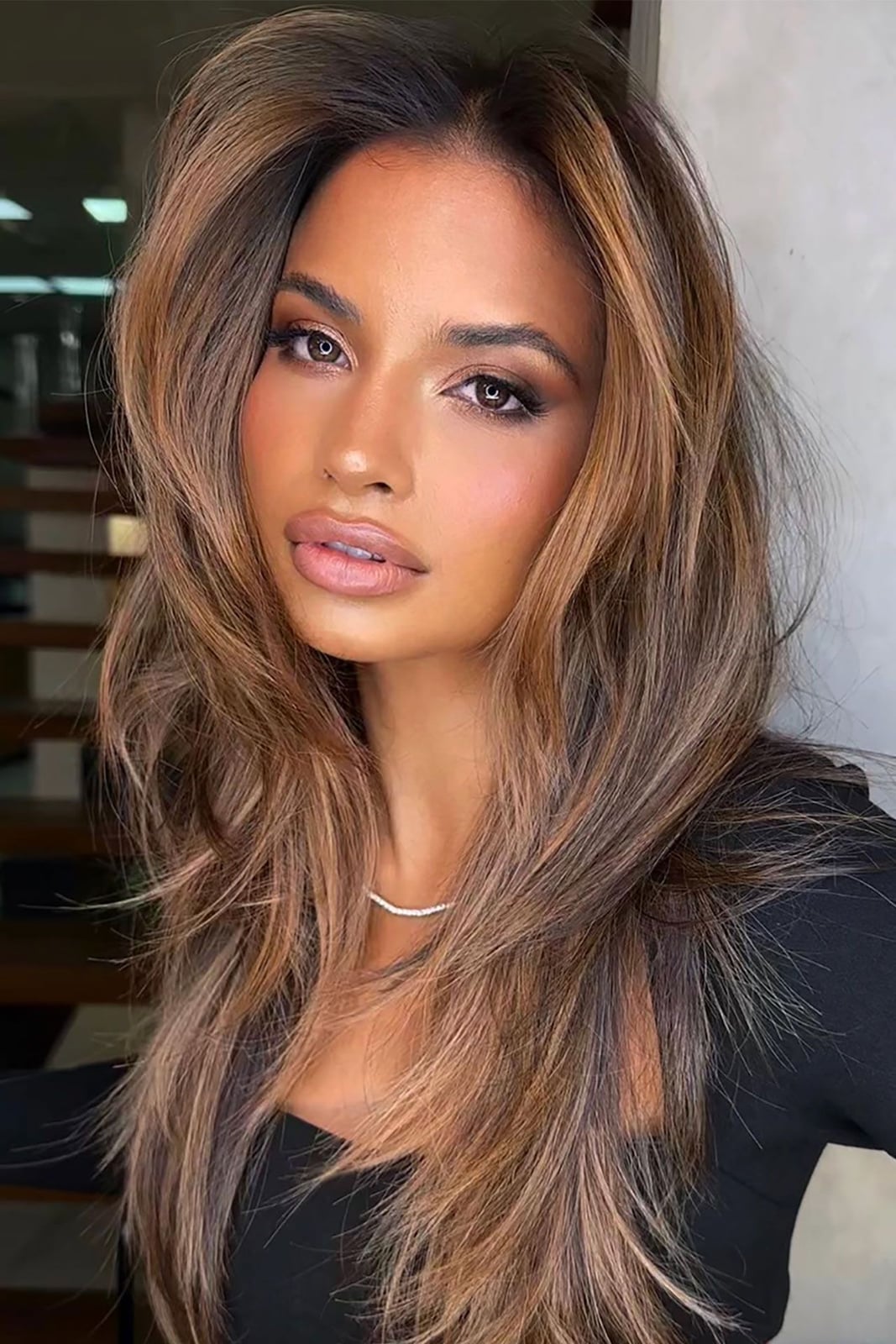
A medium brown base with lighter brown and blonde highlights is the sort of thing that reads as expensive without trying to be. The long layers and face-framing pieces keep thick, wavy hair from turning into a solid block of color, giving it movement instead. This works best on medium to thick hair that already reaches chest length or longer, and the face-framing layers soften round and oval faces without requiring a full fringe commitment. Ask your colorist for: chest-length layers with face-framing pieces, medium brown with lighter brown and blonde highlights. A voluminous blowout with a round brush adds the polish this cut deserves, and a trim every eight to ten weeks keeps the shape from going limp.
Mid-Back Length With Root Shadow and Blonde Highlights
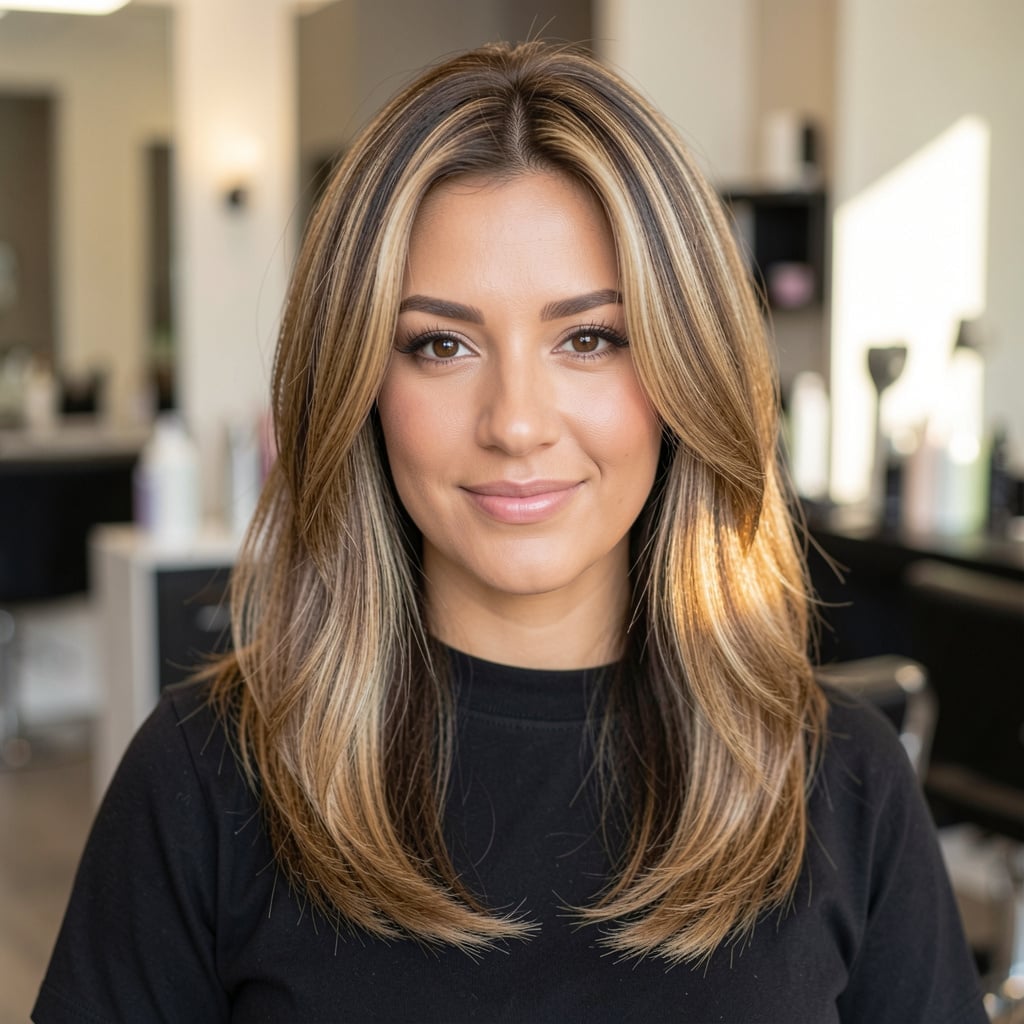
How does a root shadow keep blonde highlights from looking like a regrettable impulse decision? It blends the medium brown base into the lighter pieces so the grow-out is gradual rather than harsh. The visible root shadow sits at the part and temples, softening the contrast and buying you a few extra weeks between appointments. This mid-back length works on thick hair, and the curtain bangs frame the face without a full fringe. Ask your colorist for: mid-back length hair, medium brown with subtle blonde highlights and root shadow, curtain bangs. The blowout is essential for that polished finish, but the root shadow means you can skip the salon for at least ten weeks.
Mid-Back Waves With Dark Brown and Blonde Balayage
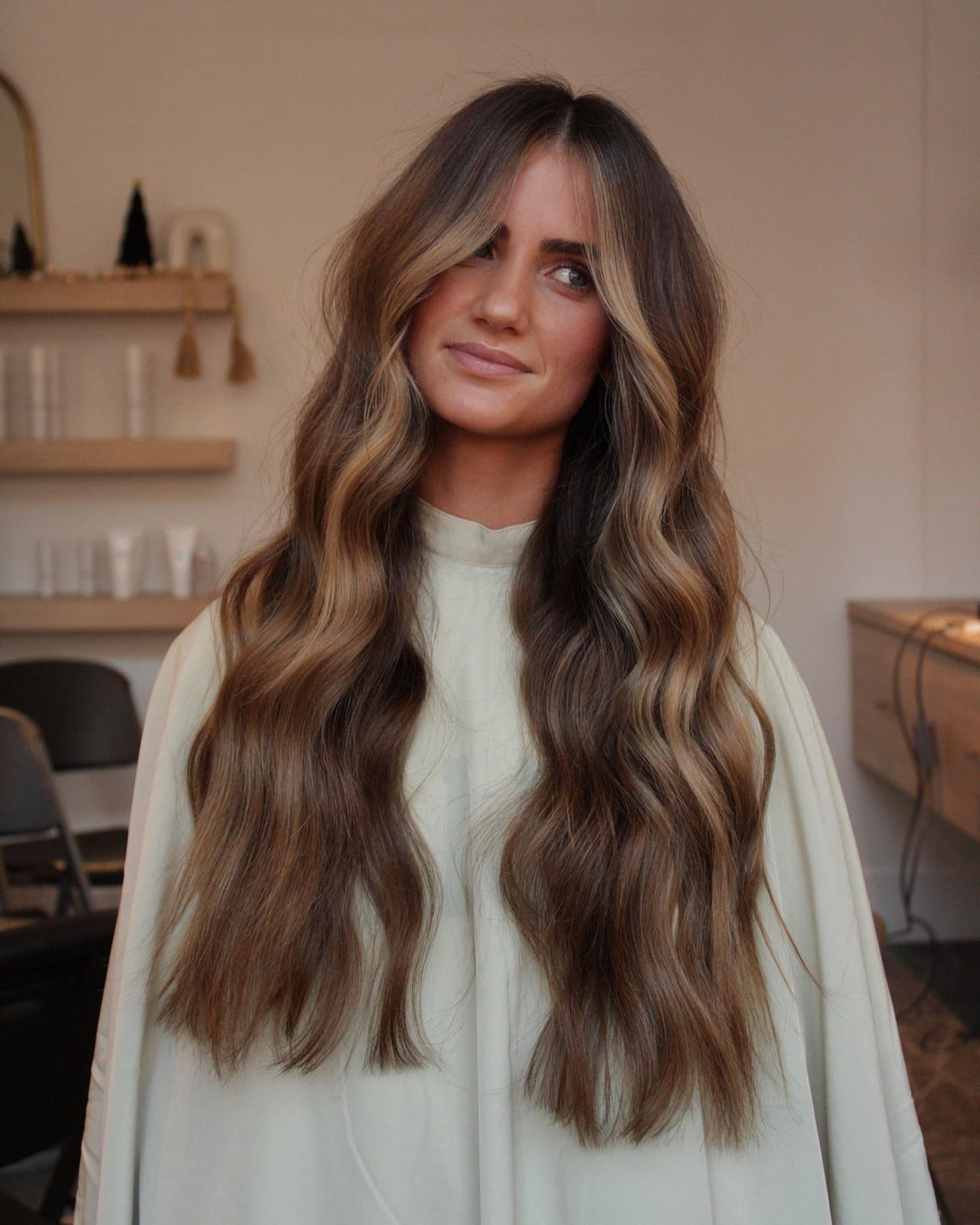
Balayage and traditional highlights share a colorist but not a technique. Traditional highlights start at the root and go to the end, while balayage is painted on by hand, landing heavier on the mid-lengths and ends for a softer blend. This dark brown base with blonde balayage keeps the root area dense and dark, then lightens gradually through the waves. The blend grows out naturally without a sharp line of demarcation. Thick, wavy hair at mid-back length is the ideal canvas, and the curtain bangs soften square and oval faces. Ask your colorist for: mid-back length waves, dark brown base with blonde balayage, curtain bangs. For a more dramatic contrast, go with traditional highlights instead.
Mid-Back Dark Brown With Blonde Balayage, Close-Up Take
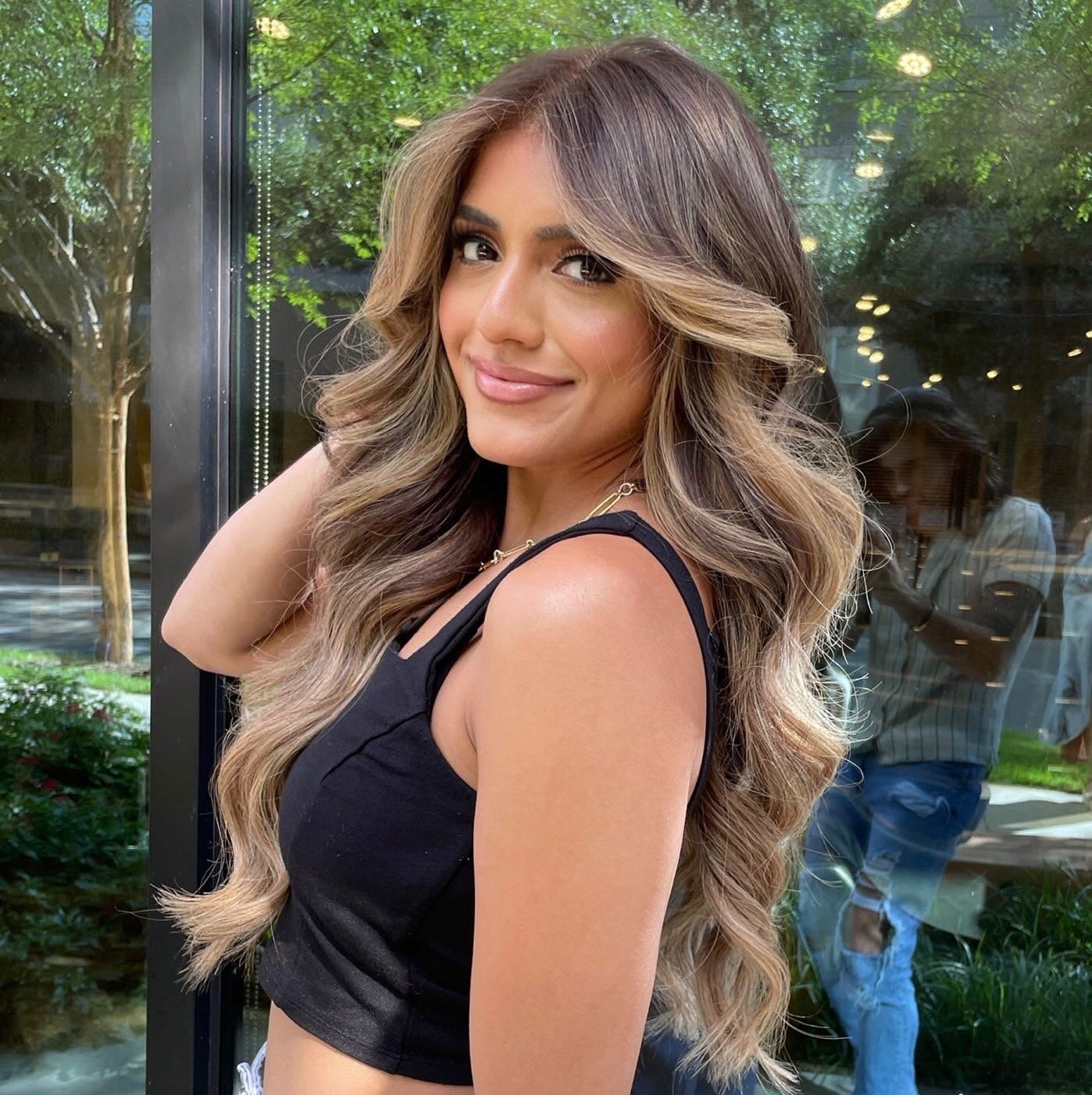
The close-up view reveals how the blonde balayage sits on a dark brown base: not as a uniform stripe but as a series of soft, hand-painted ribbons that show dimension at every angle. Styling this look requires a blowout for structure and a curling iron for the loose waves that display the color variation. The curtain bangs need a quick brush and blow-dry each morning to fall the right way. Ask your colorist for: mid-back length hair, dark brown base with blonde balayage, curtain bangs. The styling steps are straightforward:
- Blow-dry with a round brush to smooth the base.
- Wrap sections around a large-barrel curling iron, alternating directions.
- Finish with a texture spray for separation.
Collarbone Bob With Dark Blonde Balayage
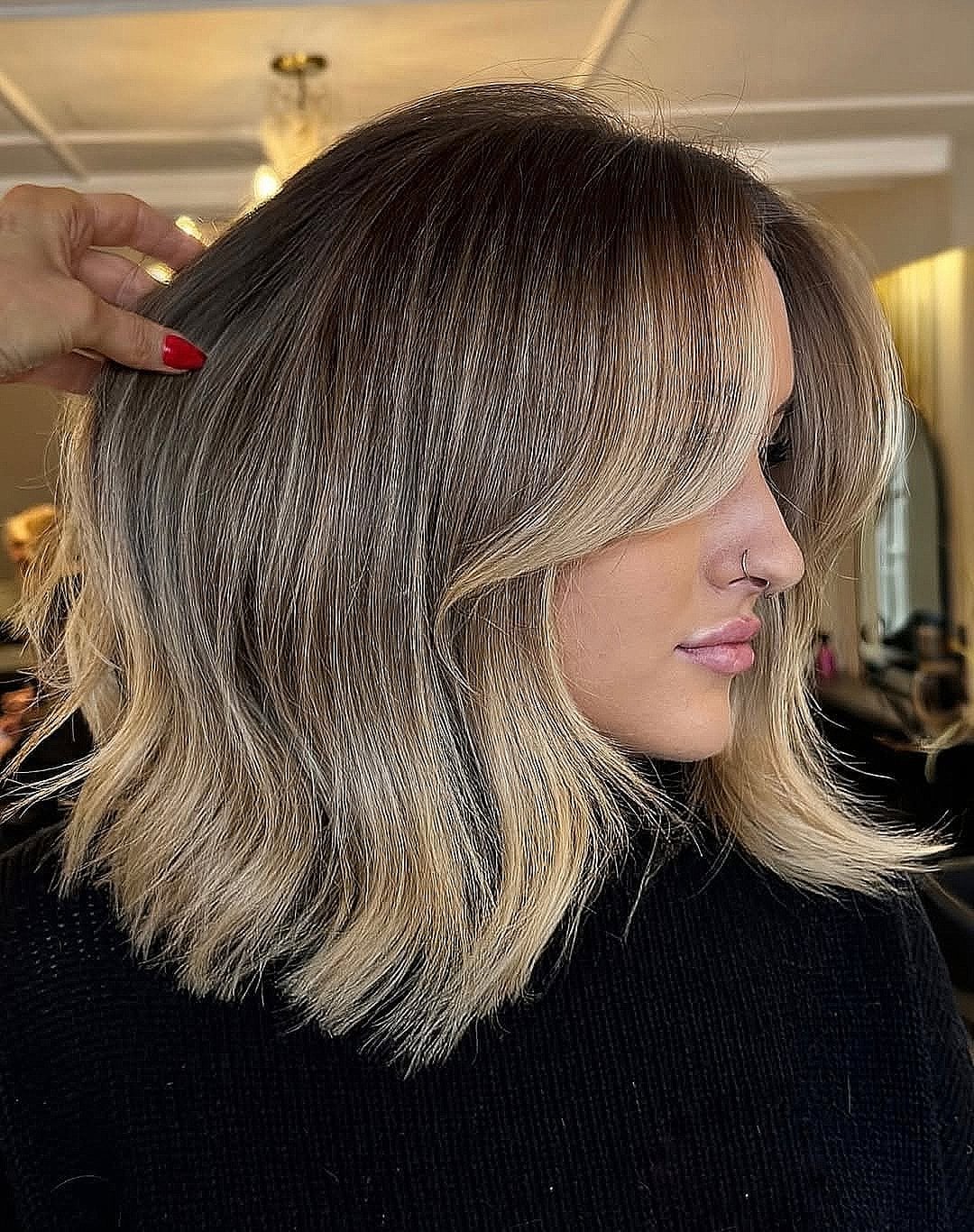
How do you walk into a salon and leave with a collarbone bob that has a dark blonde base and lighter blonde balayage? Use the exact words: ask for a collarbone-length bob with soft layers and curtain bangs, a dark blonde base, and a lighter blonde balayage that stays concentrated on the ends and face-framing pieces. The bob is a salon cut, not a DIY project, and the balayage technique means the grow-out is gradual rather than stripey. Medium-density hair holds the loose waves best, and the curtain bangs soften square and heart faces. Ask your colorist for: collarbone bob with layers, dark blonde base with lighter blonde balayage, curtain bangs. A trim every six to eight weeks keeps the bob from turning into a shapeless blob.
Collarbone Length With Bright Blonde Balayage
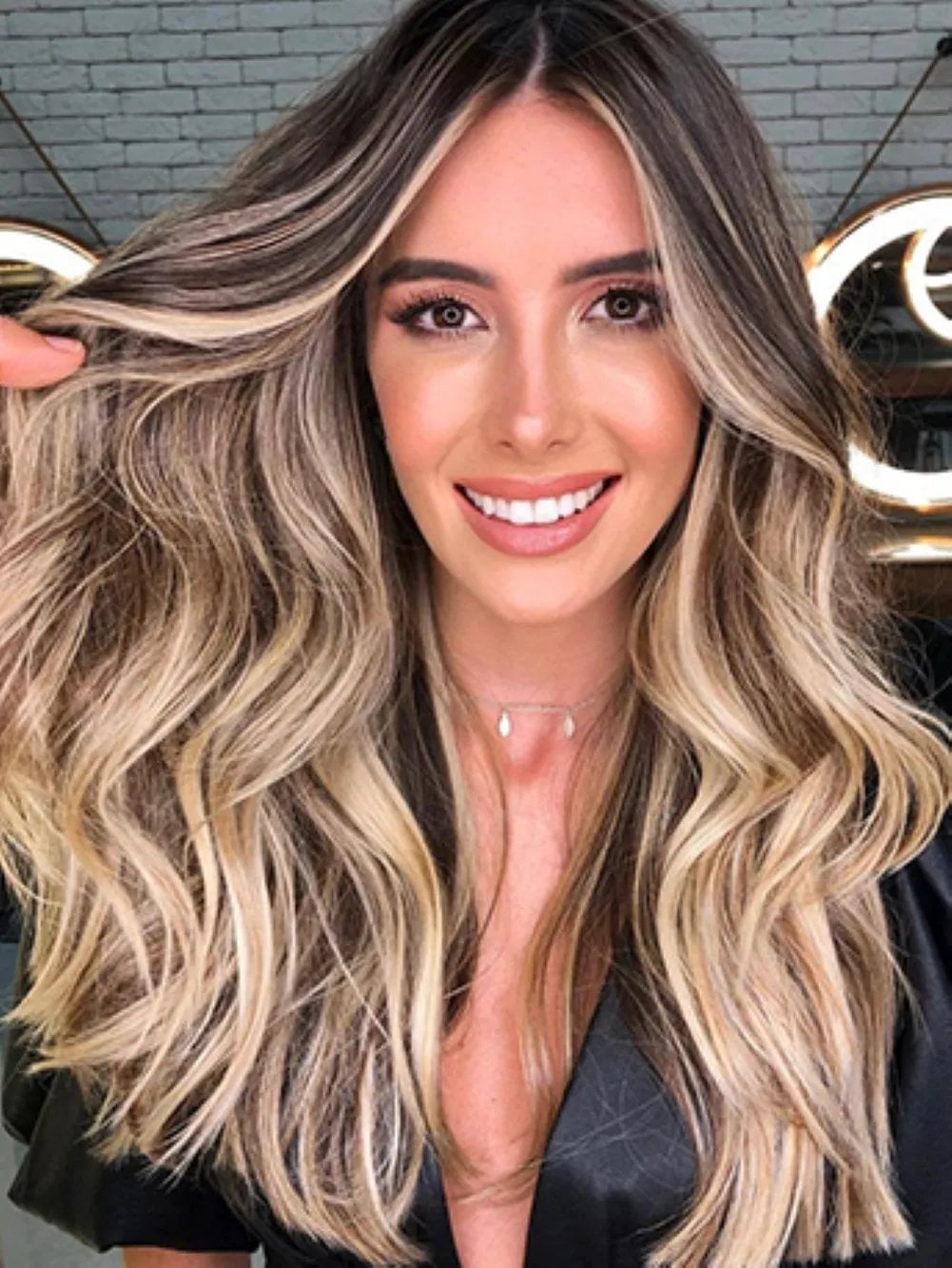
The face-framing bangs and middle parting anchor the lightness at the front, while the blowout waves keep the texture from reading as flat. Ask your colorist for: collarbone length hair, dark blonde base with bright blonde balayage, face-framing bangs. The trade-off: bright blonde on a dark base can throw brass after a few weeks, so a toning appointment every six to eight weeks is the price of staying cool. This works best on medium to thick hair that can hold the wave pattern without collapsing.
Collarbone Lob With Dark Brown and Blonde Balayage
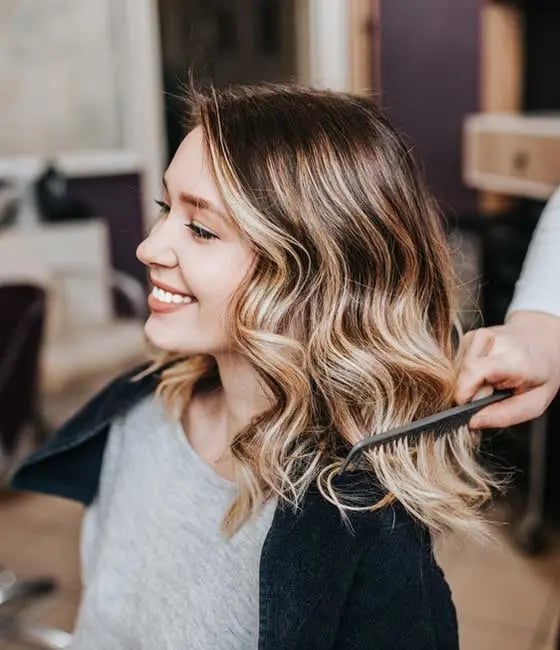
The side parting and loose waves give medium-density hair a fuller silhouette, which makes this a solid choice for the work-to-weekend calendar. Ask your colorist for: collarbone length lob, dark brown base with blonde balayage, side parting. Fall and winter are the natural seasons for this palette, when the darker base feels grounded and the blonde pieces catch what little light there is. Balayage touch-ups land around every three to four months, which is forgiving for anyone who books appointments in advance or forgets to.
Mid-Back Waves With Medium Brown and Blonde Balayage and Long Layers
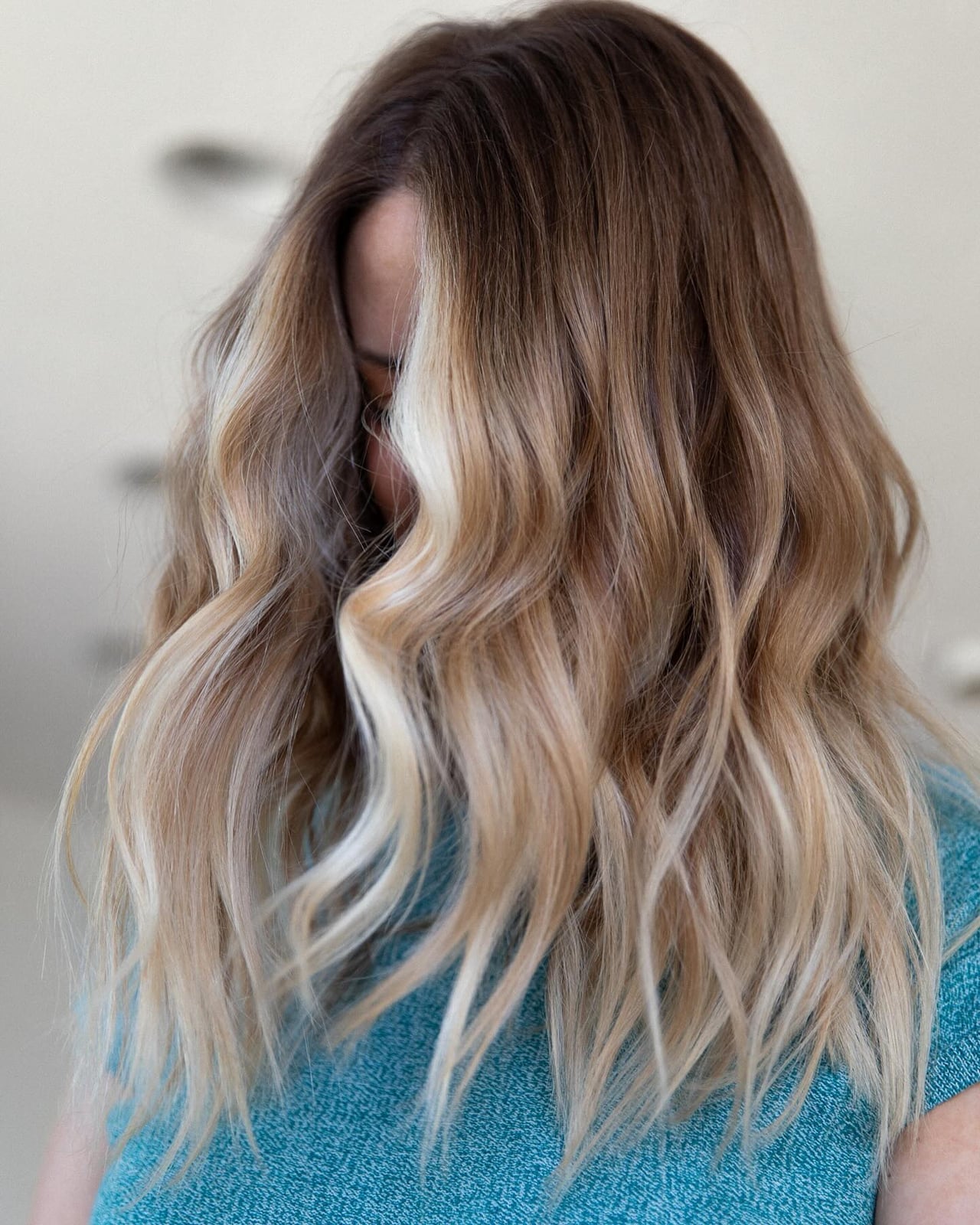
Does this color work on thick hair, or does it just add bulk? It works, because the long layers remove weight without sacrificing length, and the blonde balayage pieces break up what could otherwise be a solid wall of medium brown. The side parting adds lift at the crown for anyone with a rounder face shape. Ask your colorist for: mid-back length hair, medium brown base with blonde balayage, long layers, side parting.
On the upkeep side, balayage grows out softly because the color is painted on rather than foiled to the root, so you can stretch salon visits to ten or twelve weeks. Thick hair holds the wave pattern well with a medium-barrel iron and a heat protectant. The texture stays defined for a full day without re-curling, which is the quiet win of this combination.
Mid-Back Copper Red With Loose Waves
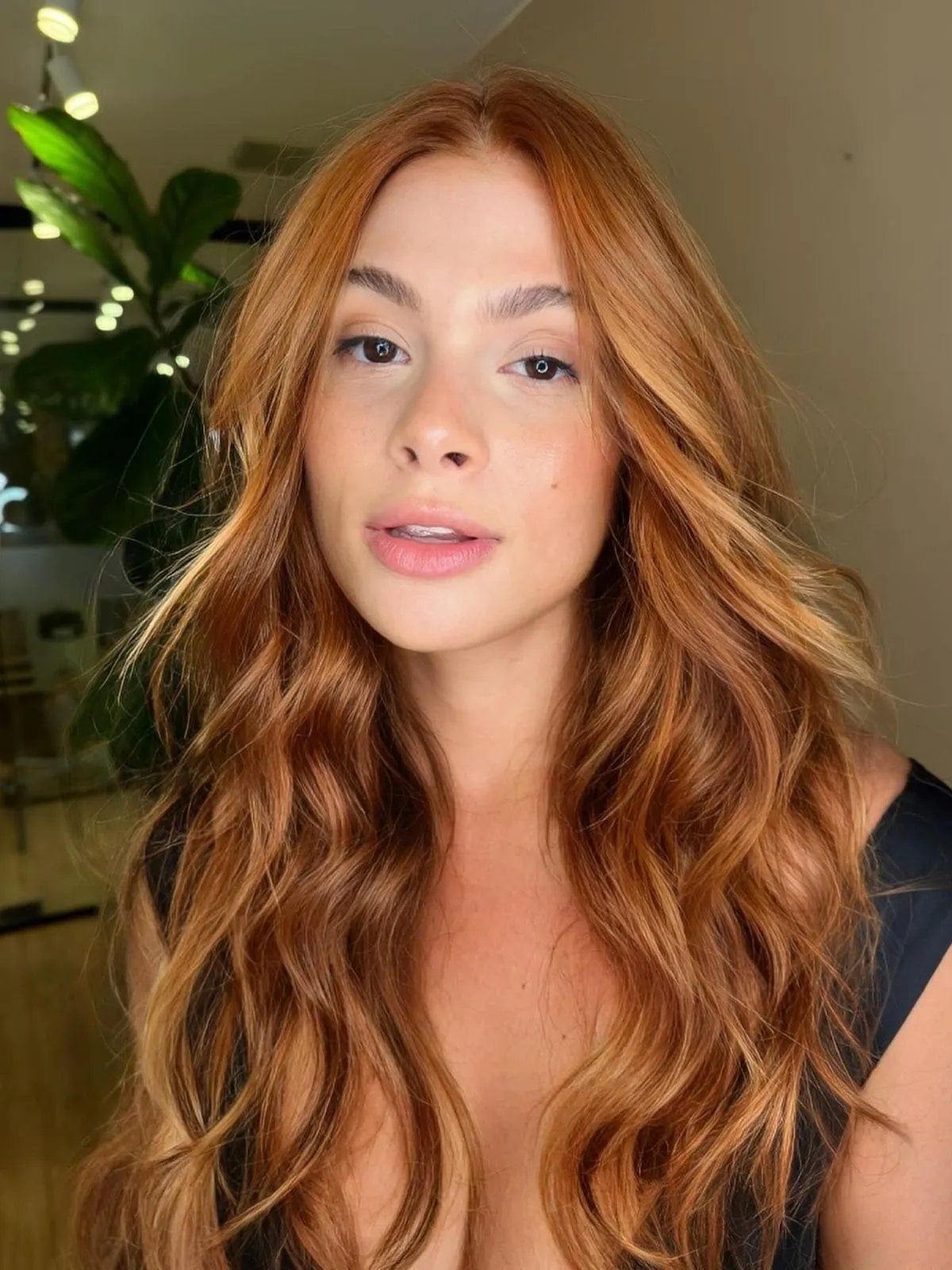
The warm copper red here is built with lighter tones woven through the ends, not painted from root to tip. That technique keeps the base from feeling flat and lets the color shift in different light, which is the goal of a multi-tonal red. The long layers and middle parting give the loose waves room to move without tangling. Ask your colorist for: mid-back length hair, warm copper red with lighter tones, long layers.
Medium-density wavy hair takes this color well because the texture holds the lighter pieces. The application is salon-only, as red requires precise saturation to avoid patchiness. A color-depositing conditioner every second wash extends the vibrancy between appointments, because copper red fades faster than brown and that fading is a common lesson.
Mid-Back Rich Copper Red With Waves and Long Layers
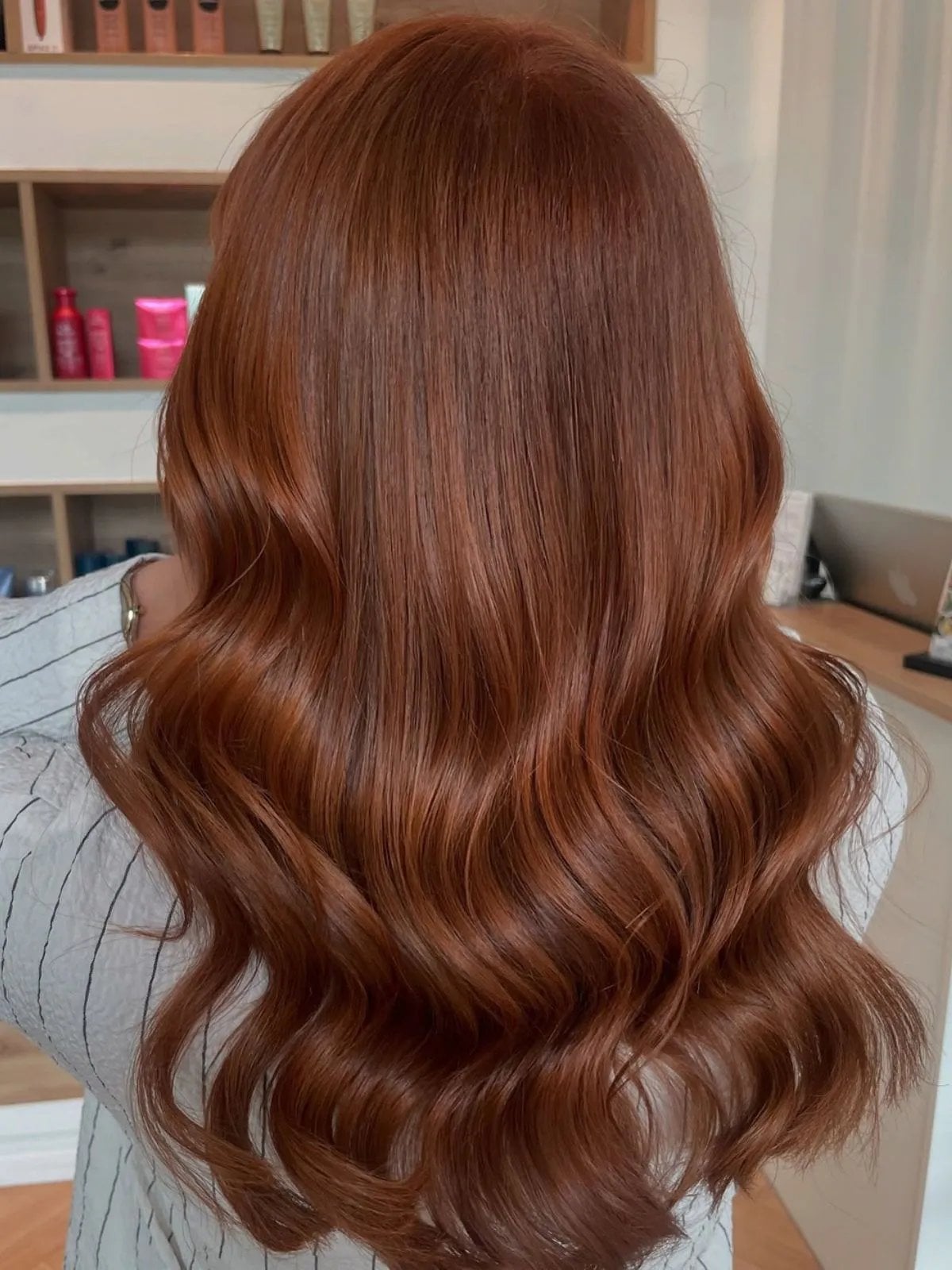
Rich copper red at mid-back length is a commitment, and the back view here shows exactly why: the color has to be consistent from crown to ends, with no banding or uneven fade. The long layers and loose waves create the movement that makes a solid red read as glossy rather than heavy. Ask your colorist for: mid-back length hair, rich copper red color, long layers. The upkeep reality is that red fades faster than any other shade, and a tone refresh every four to six weeks is the norm if you want to keep the saturation high. Medium-density wavy hair is the ideal canvas because it reflects light at multiple angles, so the color looks dimensional even when the wave pattern relaxes. Color-safe shampoo and cooler water are non-negotiable here.
Mid-Back Wavy Hair in Rich Copper Red
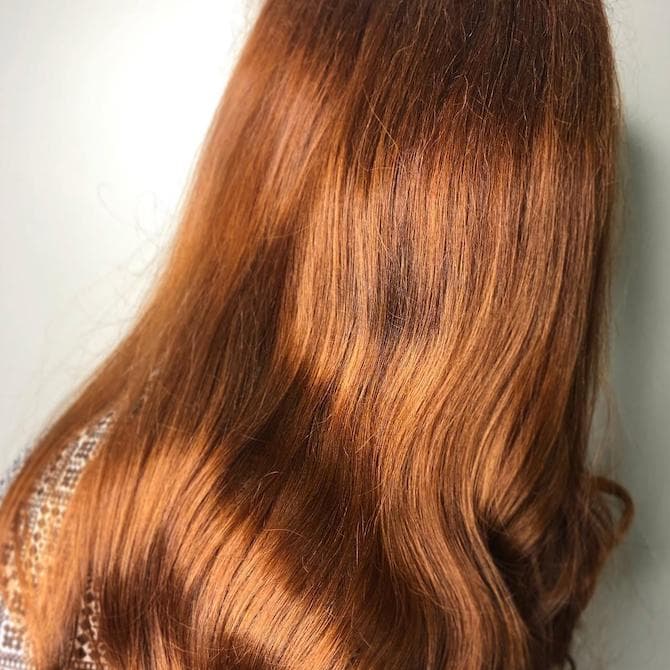
If auburn leans too brown and true red reads a little flat, this is the shade that splits the difference. The rich copper red sits somewhere between a penny and a new brick, with enough warmth to catch overhead light but no orangey neon edge. The mid-back length gives the color room to show its subtle tonal shifts, especially in natural waves that catch the light at different angles. Medium density hair carries the pigment well without looking flat, and the back view makes the depth obvious.
Ask your colorist for: rich copper red, mid-back length, natural waves. The vibrant red color works best on hair that starts at a medium or light brown base, since lifting from darker shades can pull the tone more orange. A color-depositing conditioner every other wash keeps the richness from fading toward pink, and that is the only real maintenance trick. Skip this if you wash daily or prefer a shade that reads the same in every light.
Mid-Back Dark Brown With Caramel Balayage, Everyday Version
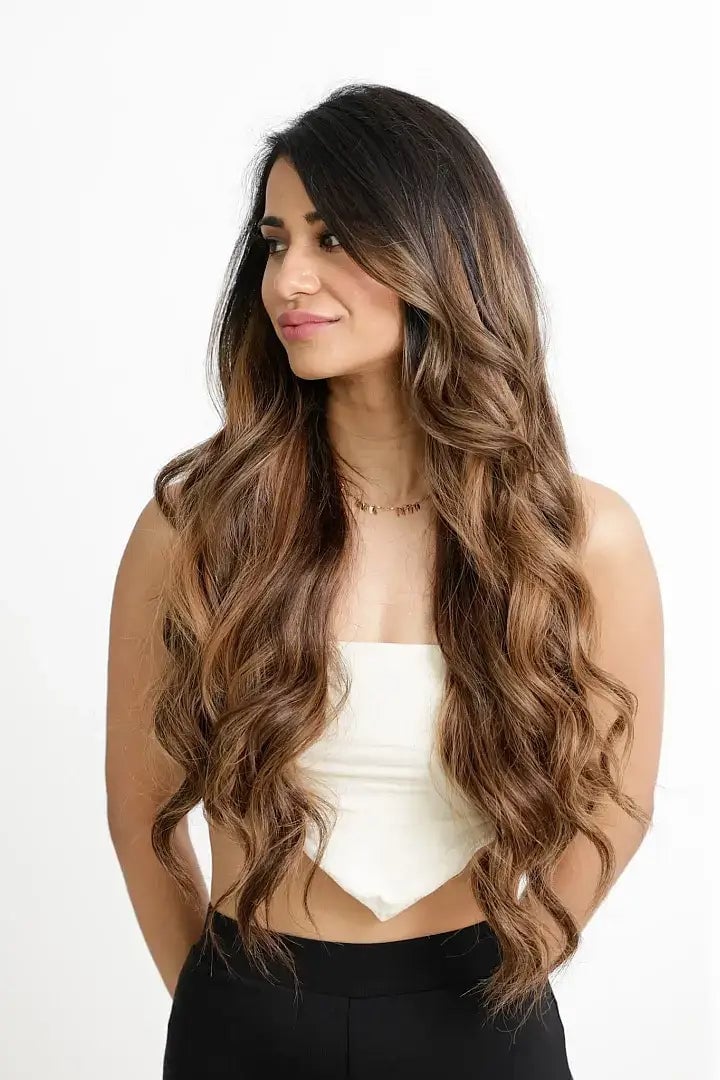
A warm dimension comes from the base. This mid-back length hair keeps a dark brown root and lower lengths, with caramel balayage painted through the ends. The middle parting and side view show the color sitting mostly underneath and around the face, so the overall impression is still brunette with a soft lift. Thick hair benefits here because the caramel can spread through layers without overwhelming the base.
Ask your colorist for: dark brown base, caramel balayage, lived-in placement. The technique leaves more brown at the crown and concentrates the lighter pieces where the hair naturally bends, which is exactly what makes it look grown-in. A blowout with loose waves pulls the caramel forward and shows the dimension. For oval and long faces, the middle parting balances the length without adding extra weight at the sides.
Chest-Length Dark Blonde With Bright Balayage
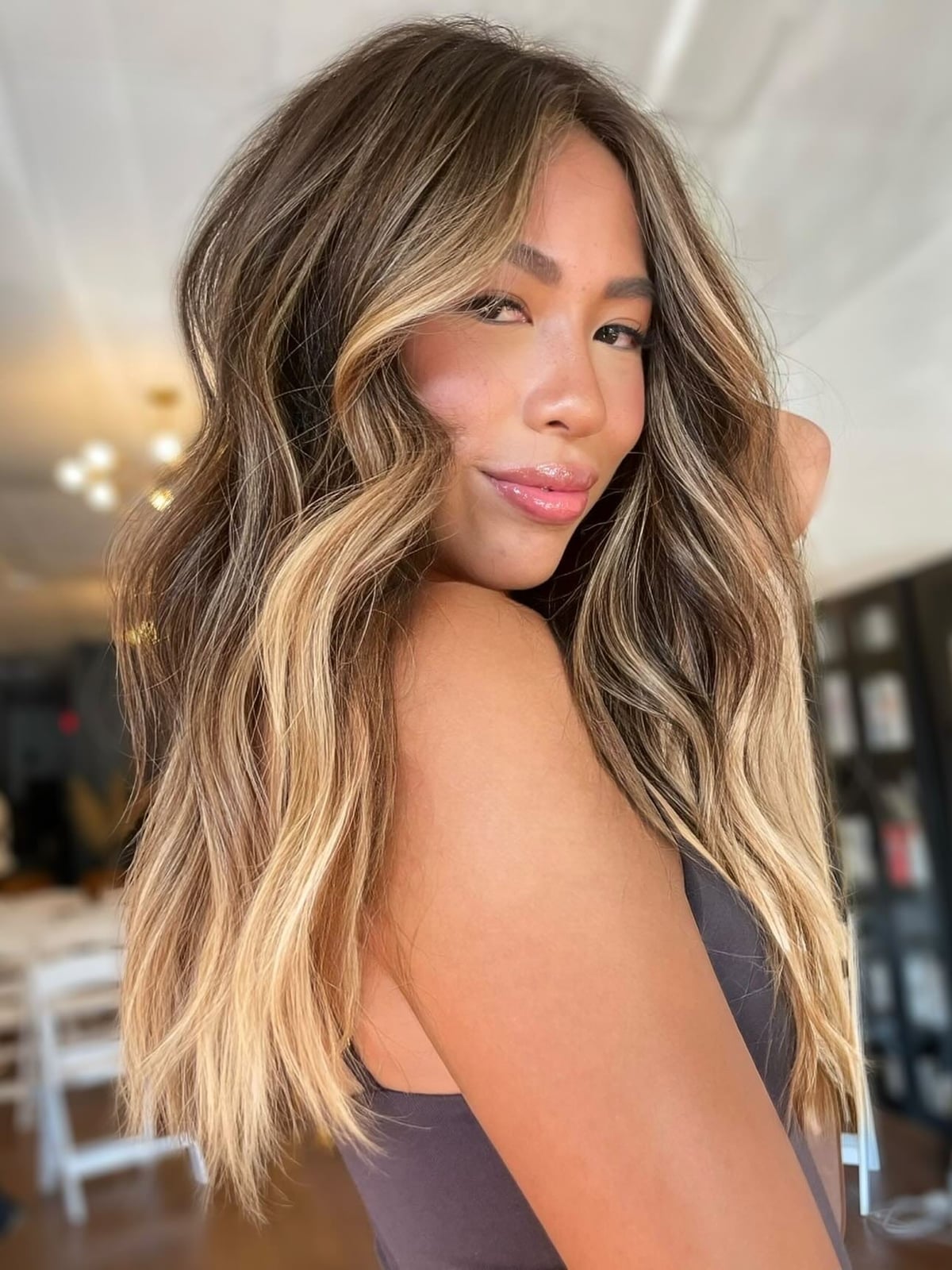
The face-framing highlights here provide the brightness of a full head of blonde but require less root maintenance. The dark blonde base is close to the natural level for most light brunettes, and the bright blonde balayage is concentrated around the face and through the mid-lengths. The curtain bangs are cut to graze the cheekbones, and the loose, glossy waves keep the overall finish polished. Medium density hair holds the wave pattern well, and the chest length gives the color gradient enough room to show a smooth transition.
Ask your colorist for: dark blonde base, bright blonde balayage, curtain bangs. The curtain bangs need a trim every six to eight weeks to keep the length right at the cheekbone, and a smoothing serum on damp hair before blow-drying gives that glossy finish. This is a solid choice for anyone who wants brightness without a full blonde base, and the soft framing works well on round and square face shapes.
Collarbone Length Gray With White Blonde Highlights
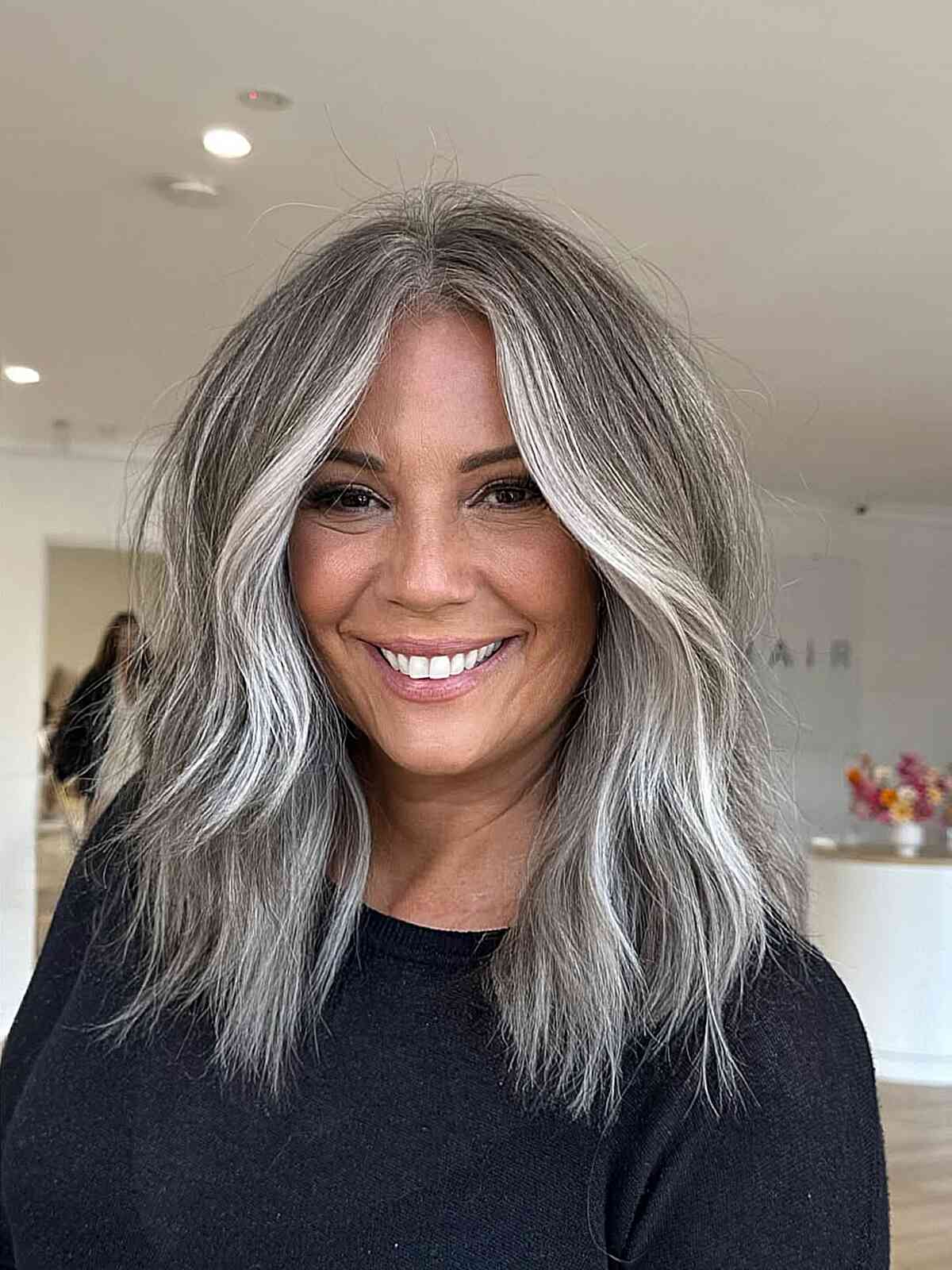
How do you build a gray that does not read as washed out? The trick is the contrast. The collarbone length hair here uses a gray base, which is already a cool, smoky tone, and adds white blonde highlights in face-framing layers. The middle parting and loose, slightly messy waves keep the finish from looking too stiff, and the white pieces catch the light while the gray absorbs it. Medium density hair works because the layers remove enough weight to let the waves form without the color looking heavy.
Ask your colorist for: gray base, white blonde highlights, face-framing layers. The gray base requires lifting to a pale blonde first, then toning with a violet-based formula to neutralize warmth. The white blonde highlights are woven in as fine ribbons around the front sections. A purple shampoo once a week keeps both the gray and the white from yellowing, and the face-framing layers soften a square jawline without shortening the overall length.
Mid-Back Dark Brown To Blue Transition
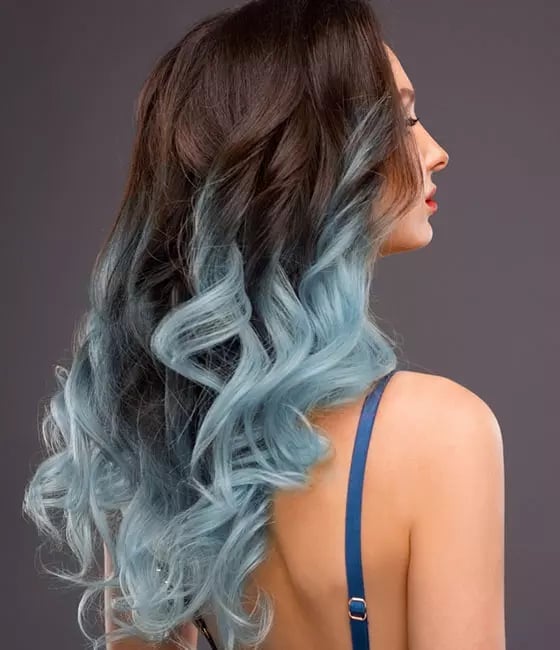
This is not a subtle color shift. The mid-back length hair keeps a dark brown base at the root and crown, then transitions to a vibrant blue on the ends. The side parting and wavy blowout let the two colors sit next to each other without blending into a muddy middle, and the thick texture helps the blue appear saturated. The contrast is deliberate: the brown anchors the look, the blue provides the payoff.
Ask your colorist for: dark brown base, vibrant blue ends, side parting. Blue fades faster than any warm tone. Expect visible fading after four to six washes, especially if you use warm water or sulfate shampoo. A color-depositing conditioner in a matching blue tone can stretch the time between salon visits, but this is a commitment to cold water washes and less frequent shampooing. If you are not ready for that rhythm, skip the blue and stick to a cool brunette instead. The salon application takes about three hours because the brown needs to stay untouched while the ends are pre-lightened and then toned blue.
Mid-Back Black With Gray and Purple Balayage
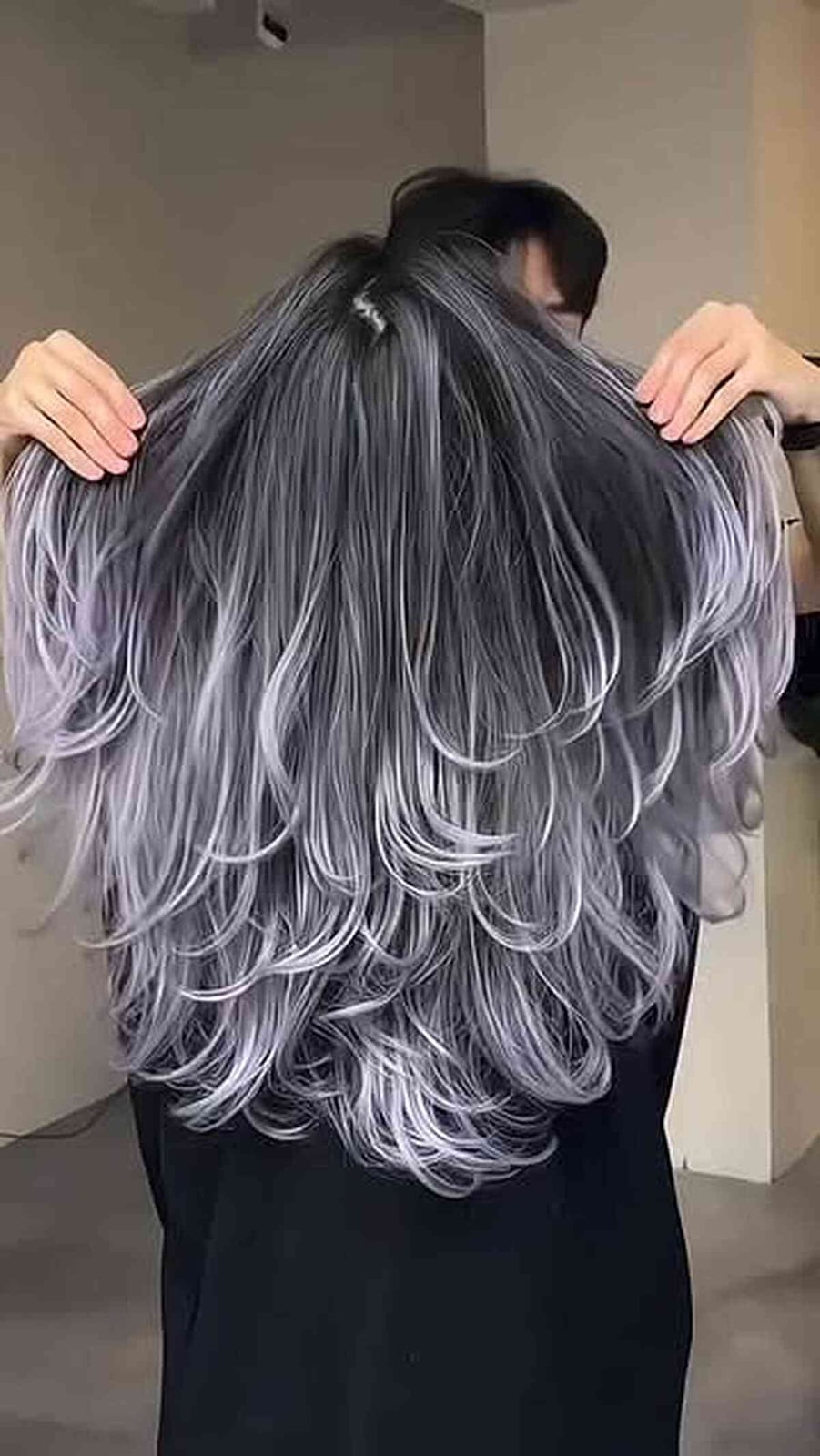
A black base fading into gray and purple sounds like a mood board, but on mid-back length hair with long layers the color transition is deliberate. The middle parting lets the color transition land evenly on both sides, and the loose curls catch each shade separately without blurring them together. Fine texture benefits from the curl body, so the weight of the color work does not fall flat.
Ask your colorist for: mid-back length hair, black base with gray and purple balayage. This is a cold-weather move that holds its own against holiday metallics and winter neutrals. The grow-out is low drama since the black base stays dark, but the gray and purple ends need a toning appointment every six to eight weeks to keep the ash from turning muddy. A curling wand at medium heat builds the wave without stressing the lighter pieces.
Ash Blonde Shade Swatches
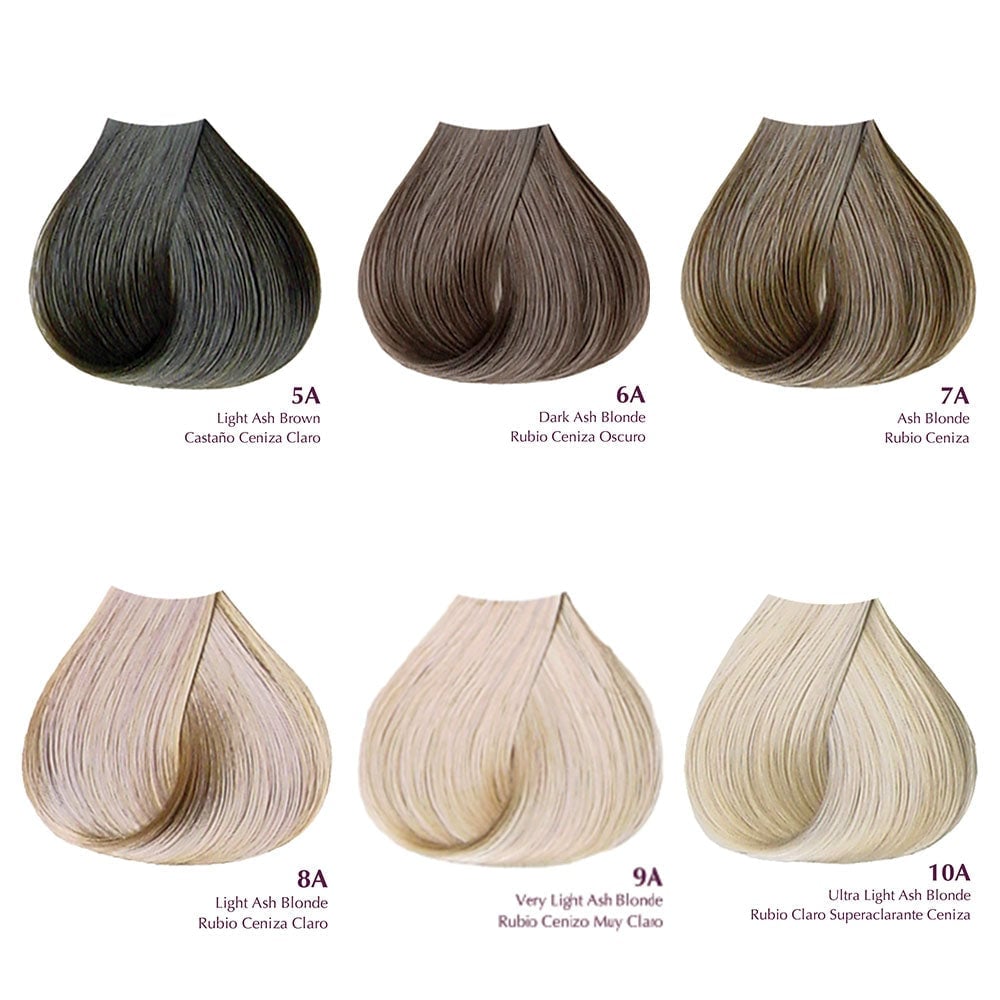
Ever stood in the aisle wondering which ash blonde actually looks ash and not beige? These six swatches, from light to ultra light, settle the question in a grid. The straight texture of the chart shows the true undertone without curl interference, so you can hold a swatch next to your pre-lightened hair and match the level. Ask your colorist for: light to ultra light ash blonde shades. The upkeep is a purple shampoo used twice a week and a toning appointment every four to six weeks. Skip the conditioner for one wash for a cooler result faster.
Semi-Permanent Color Swatch Book
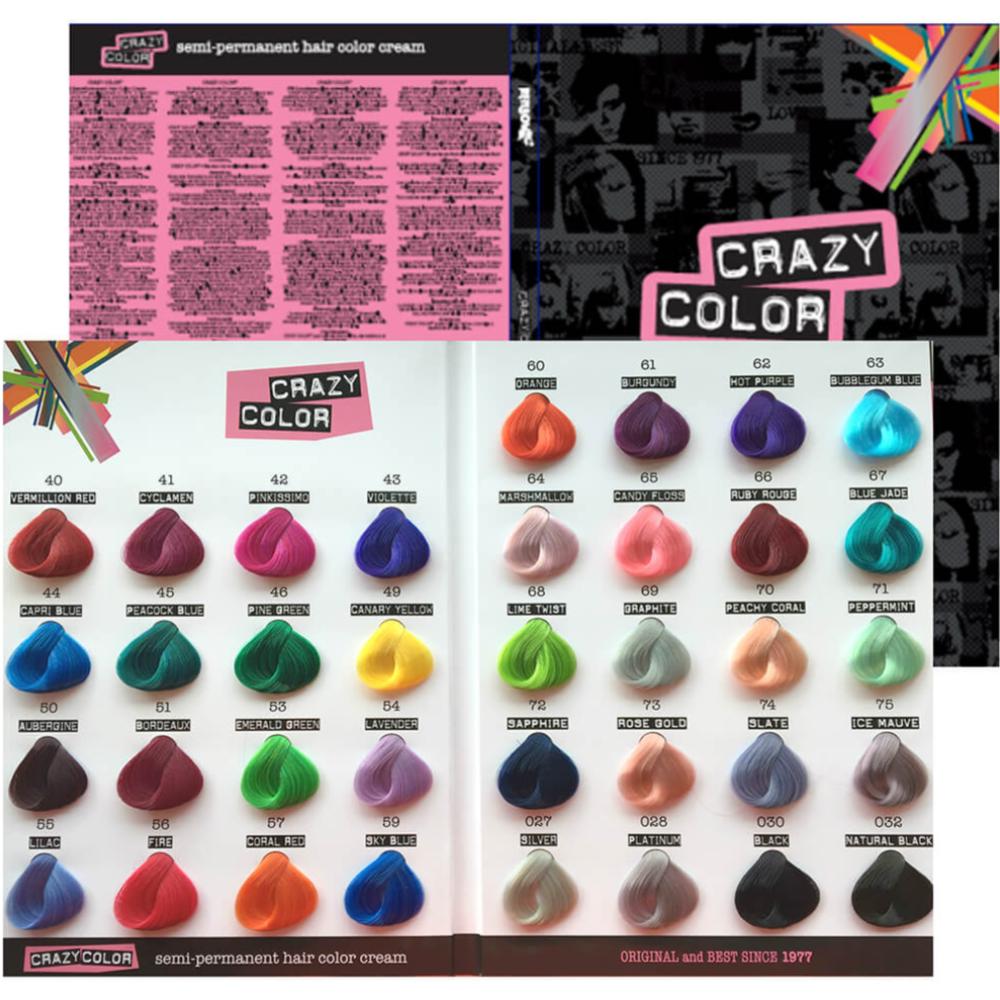
A swatch book with names and numbers visible is the closest thing to a cheat sheet for temporary color. Reds, pinks, blues, greens arranged in rows let you see the opacity and the undertone before you commit a tube to your hair. Semi-permanent formulas deposit color without lifting, so the result depends on your starting shade. Ask your colorist for: semi-permanent color swatches in vibrant shades. Application takes about 30 minutes at home, and the color fades gradually over 6 to 12 washes. That makes it the lowest-risk way to test a shade you would not wear for a full grow-out cycle.
Final Thoughts
If your base is dark, a caramel or honey balayage keeps things natural with minimal upkeep. For those starting with lighter hair, a root shadow or deeper tone adds dimension and stretches time between appointments. Fine hair benefits from a single-process gloss or subtle babylights, while thicker textures can handle chunkier highlights or vivid transitions. Find the color that speaks to your style.
- Schedule salon toning appointments every 6-8 weeks to maintain vibrancy.
- Use color-safe shampoos and conditioners to prolong color life.
- Incorporate a weekly deep conditioning treatment for moisture and shine.
- Protect colored hair from heat with a heat protectant spray before styling.
Find the color that speaks to your style.