Lavender hair is less a single shade and more a whole spectrum, from barely-there pastel to a deep violet that reads almost black in low light. The shift for 2027 leans into lived-in color and texture, with soft face-framing layers and curtain bangs replacing the uniform, flat-ironed looks of seasons past.
These 27 ideas cover the range, from low-upkeep grown-out roots to high-commitment salon statements, and from short, sharp pixies to long, layered waves. They work for fine hair that needs a blunt baseline, thick hair that benefits from interior layers, and anyone who has ever watched a pastel fade into a muddy beige by week four. Lavender Hair, done right, is a color that can actually last.
Pale Lavender Mid-Back Length With Wispy Bangs
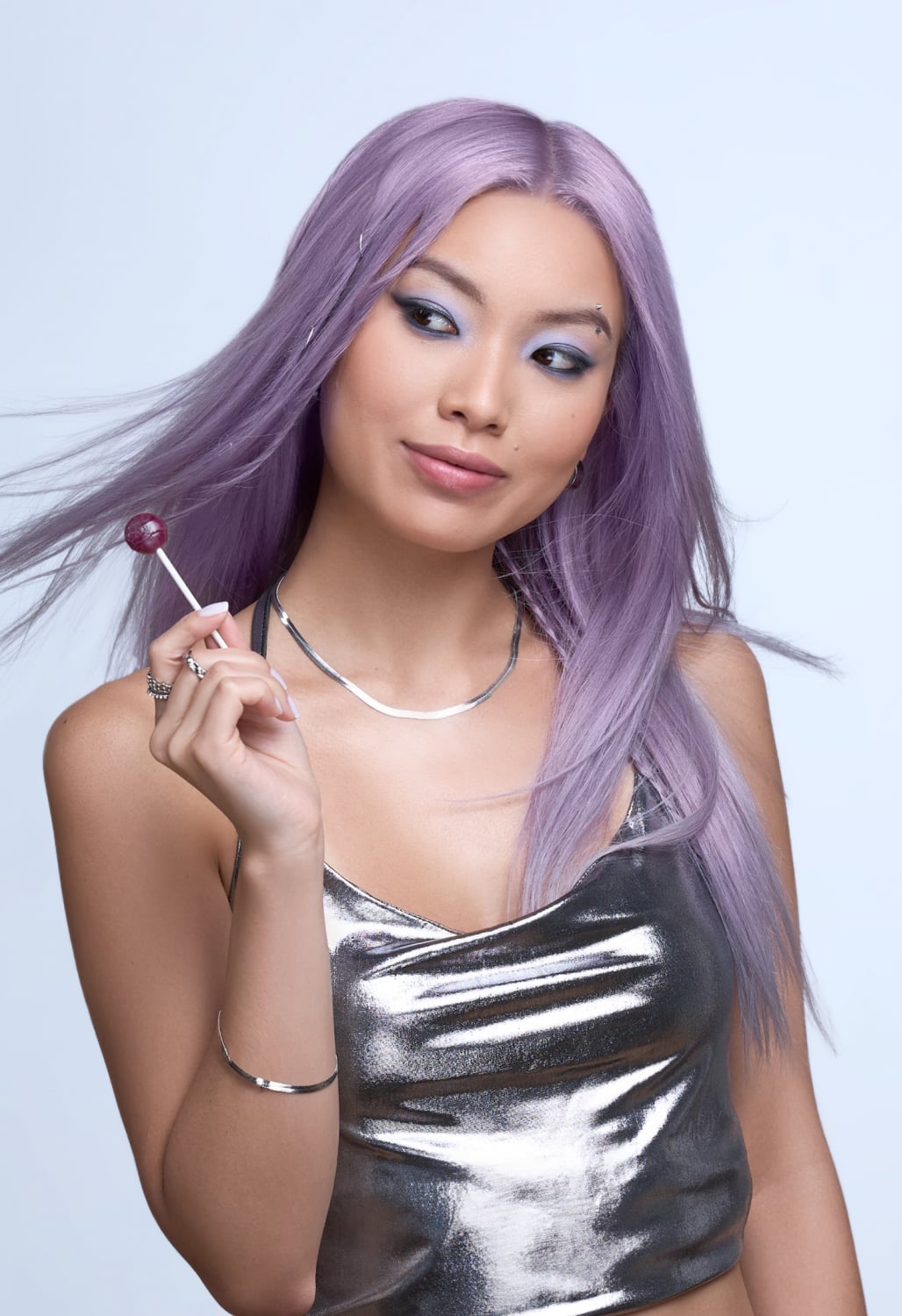
A middle parting and a straight style with a slight bend at the ends keep this pale lavender color from reading as costume. The wispy bangs land just above the brows, softening the forehead without committing to a full fringe. Fine, straight hair that reaches at least mid-back will hold this shape best; the long layers add movement without sacrificing length.
Long layers and mid-back length can suit most face shapes, the wispy bangs soften features, while the vertical lines elongate a round face. Ask your stylist for: mid-back length with long layers, wispy bangs. A heat protectant spray before straightening is all you need for styling. A trim every six to eight weeks maintains the length and keeps the ends healthy.
Textured Pixie With Shaved Sides
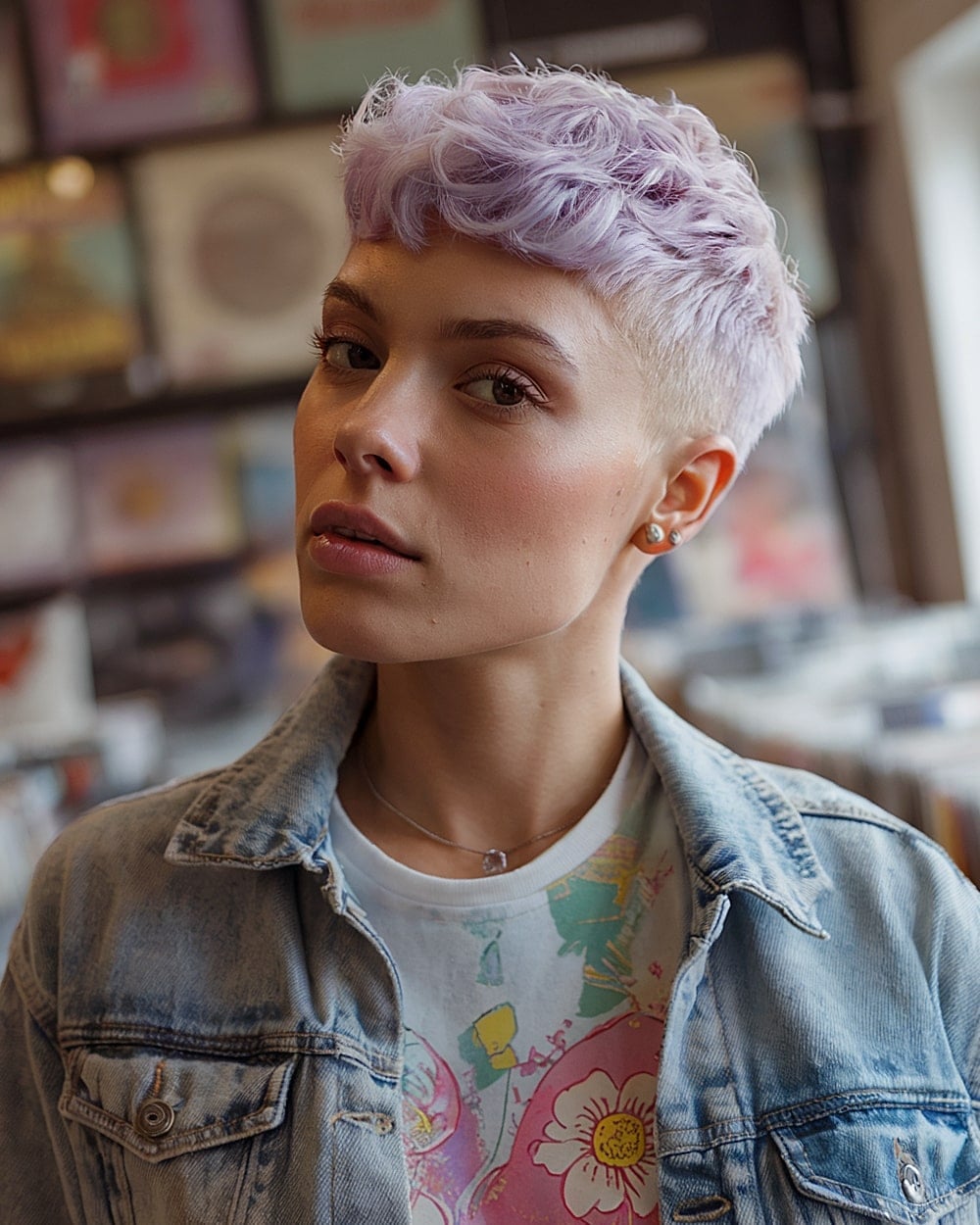
Can fine, curly hair handle a pixie? Only if the cut is built for texture. This light lavender style keeps the length on top, with soft wavy curls that play off the shaved sides. A side parting adds asymmetry without extra effort. The honest downside: a textured pixie on fine curls requires a trim every three to four weeks to keep the shape from looking overgrown. Ask your stylist for: light lavender pixie cut, shaved sides, textured waves on top.
Asymmetrical Bob With Blunt Fringe
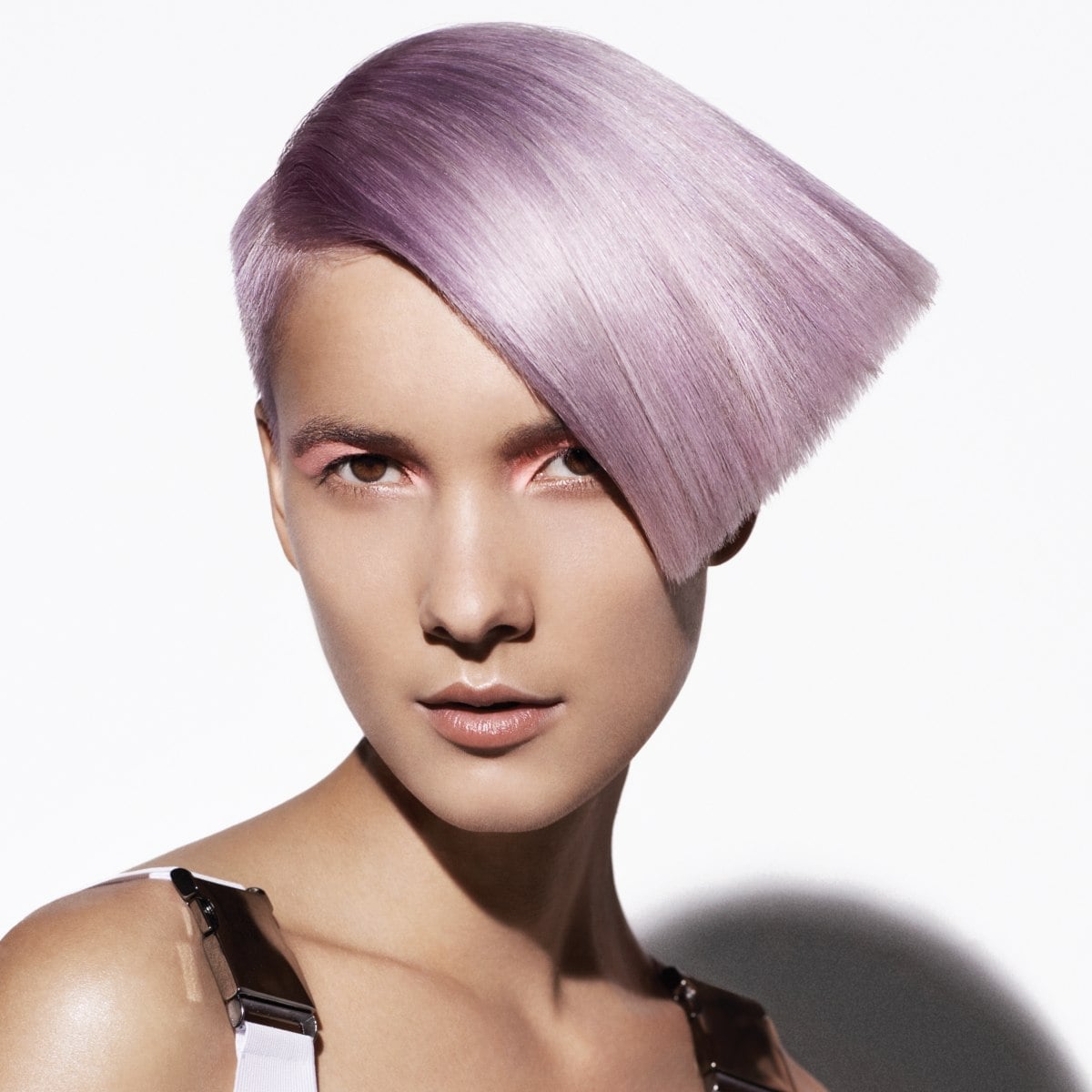
A metallic pastel lavender shade sets off the geometry of an asymmetrical bob. One side sits at the ear, the other drops longer toward the jaw, and a blunt fringe cuts straight across the forehead. Fine, straight hair holds this sharp line best; the side parting breaks up the symmetry just enough. When you book this cut, be specific about the angles. Ask your stylist for: asymmetrical bob, blunt fringe, metallic pastel lavender color. Bring a reference photo for the exact asymmetry you want.
Short Pixie With Dusty Lavender
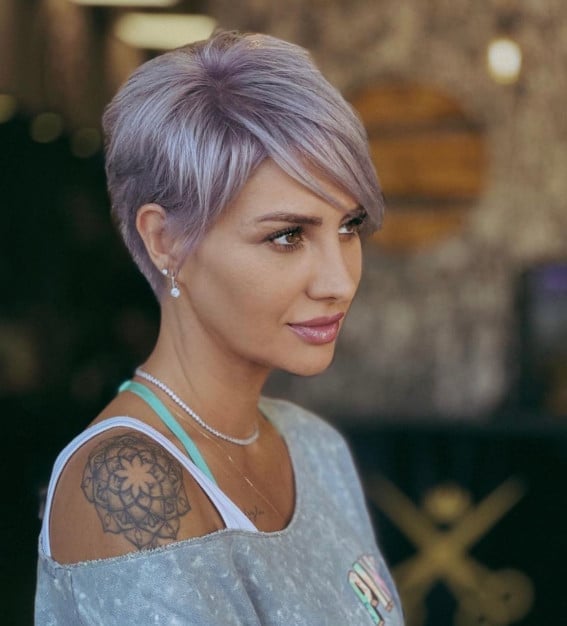
It is not a cropped pixie, it is a short pixie with an asymmetrical side-swept fringe, a small difference that changes the daily reality. The dusty lavender shade has subtle tone variations that keep medium-density straight hair from looking flat. Styling takes five minutes: work a light-hold product into the fringe to keep it sweeping where you want it, then smooth the rest with your fingers. Ask your stylist for: short pixie, dusty lavender color, asymmetrical side-swept fringe. A trim every four to six weeks is non-negotiable for this shape.
Long Layered Hair With Lavender Blonde Blend
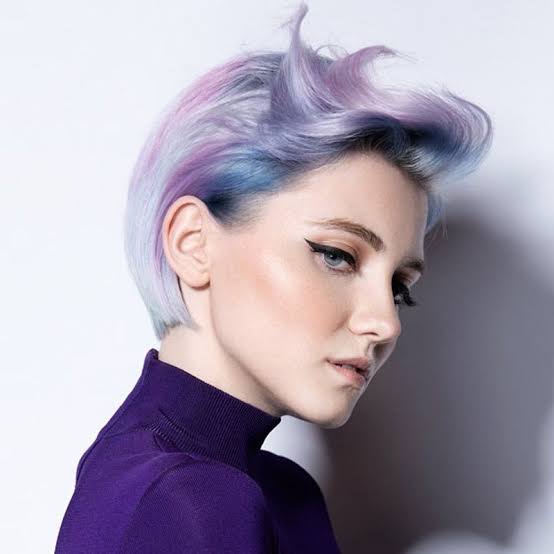
A blend of light lavender and blonde highlights creates a lived-in color that grows out softly without a harsh root line. The long layers are cut with face-framing pieces that start at the chin, and the loose waves give the color dimension that a straight style would not. This is a low-commitment way to try lavender because the blonde base makes the grow-out appear planned. Ask your colorist for: light lavender and blonde balayage, face-framing layers. A trim every eight to ten weeks keeps the layers from losing shape.
Shoulder Length Bob With Vibrant Purple Curls
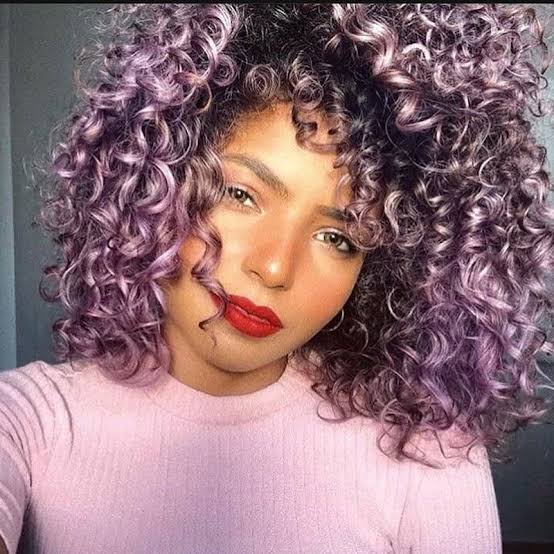
Can thick, curly hair handle a vibrant purple bob? Yes, if the cut respects the texture. A shoulder length bob with defined curls and a full fringe works best on hair that is naturally dense enough to support the volume. A full fringe is a good match for longer face shapes; rounder faces may want the fringe softer or side swept. Ask your stylist for: shoulder length bob, vibrant purple color with lavender highlights, full fringe, defined curls. Use a diffuser attachment on your dryer to enhance the curl pattern without frizz. A trim every six to eight weeks keeps the bob shape intact.
Pixie Bob With Undercut And Pastel Lavender
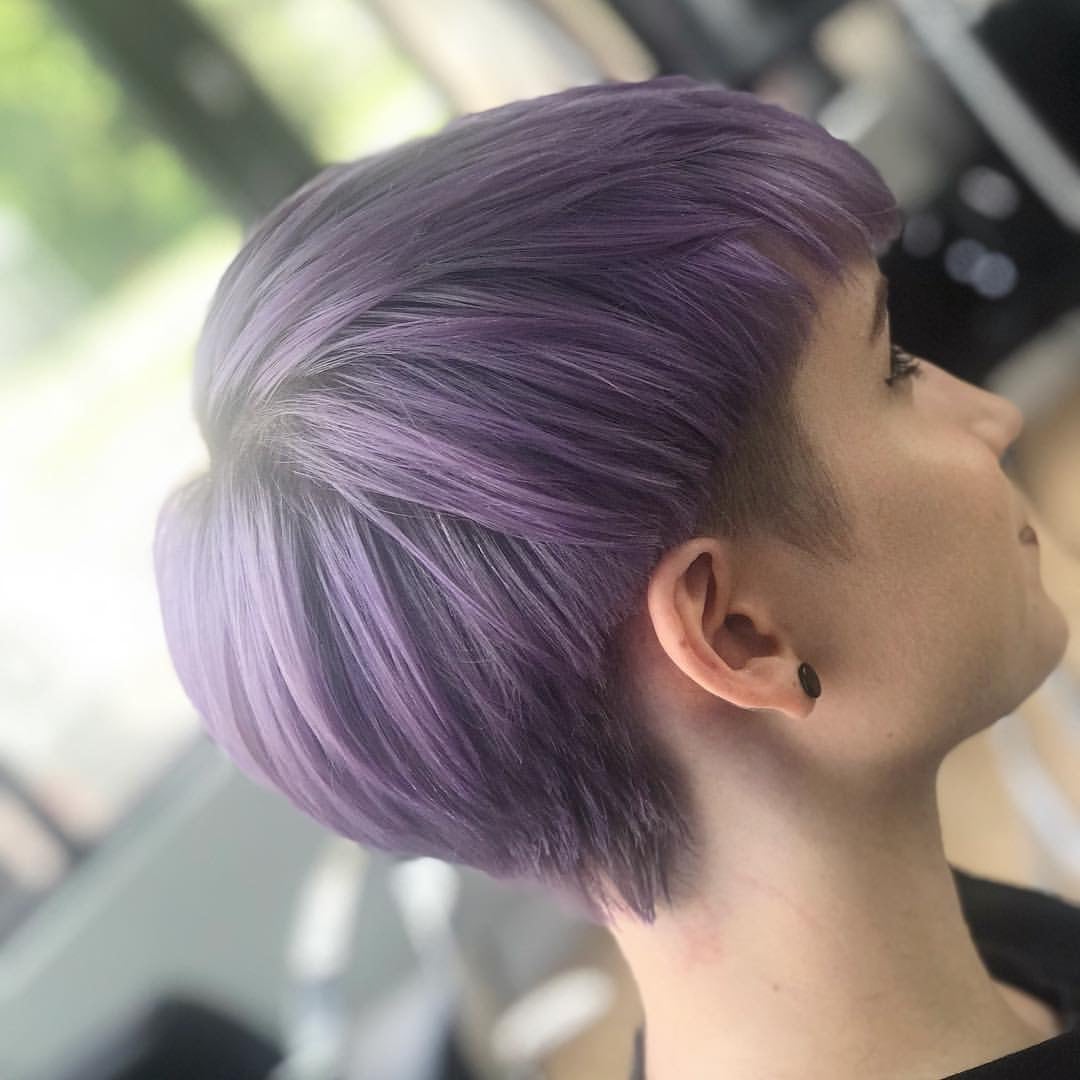
Fine, straight hair handles this cut well because the shaved section stays clean and the longer top layers hold texture without weight. The short side-swept fringe lands short of the eyebrow, which suits most face shapes. Ask your stylist for: pixie bob, undercut, pastel lavender color with darker roots, short side-swept fringe. This is a salon-only cut; the undercut needs a trim every four to six weeks to keep the line sharp.
Mid-Back Waves With Soft Lavender Ends
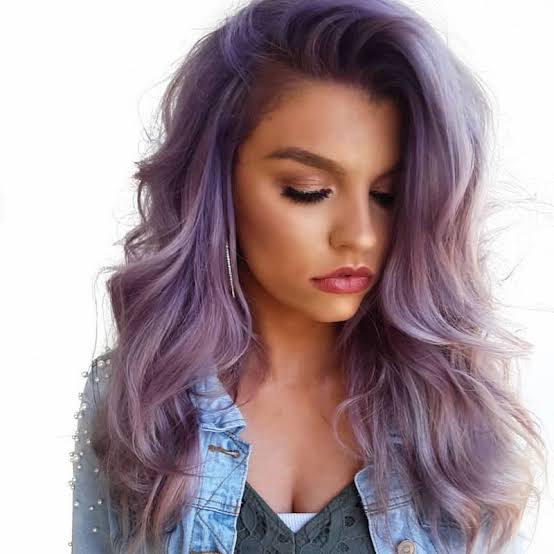
A soft lavender that fades to lighter ends is a color gradient, not a solid dye job. The lighter ends catch movement in loose waves, which makes the color change look intentional rather than like regrowth. Medium, wavy hair at mid-back length holds the wave pattern without extra product. There are no bangs here, so the face is fully open; this works for any face shape. Ask your colorist for: mid-back length with long layers, soft lavender color fading to lighter ends, no bangs.
The one drawback: lighter ends fade faster than the root area. A toner gloss every four to six weeks keeps the pastel tone from turning beige. Trim every eight to ten weeks to prevent the lighter ends from looking thin.
Thick Wavy Hair With Lavender Highlights
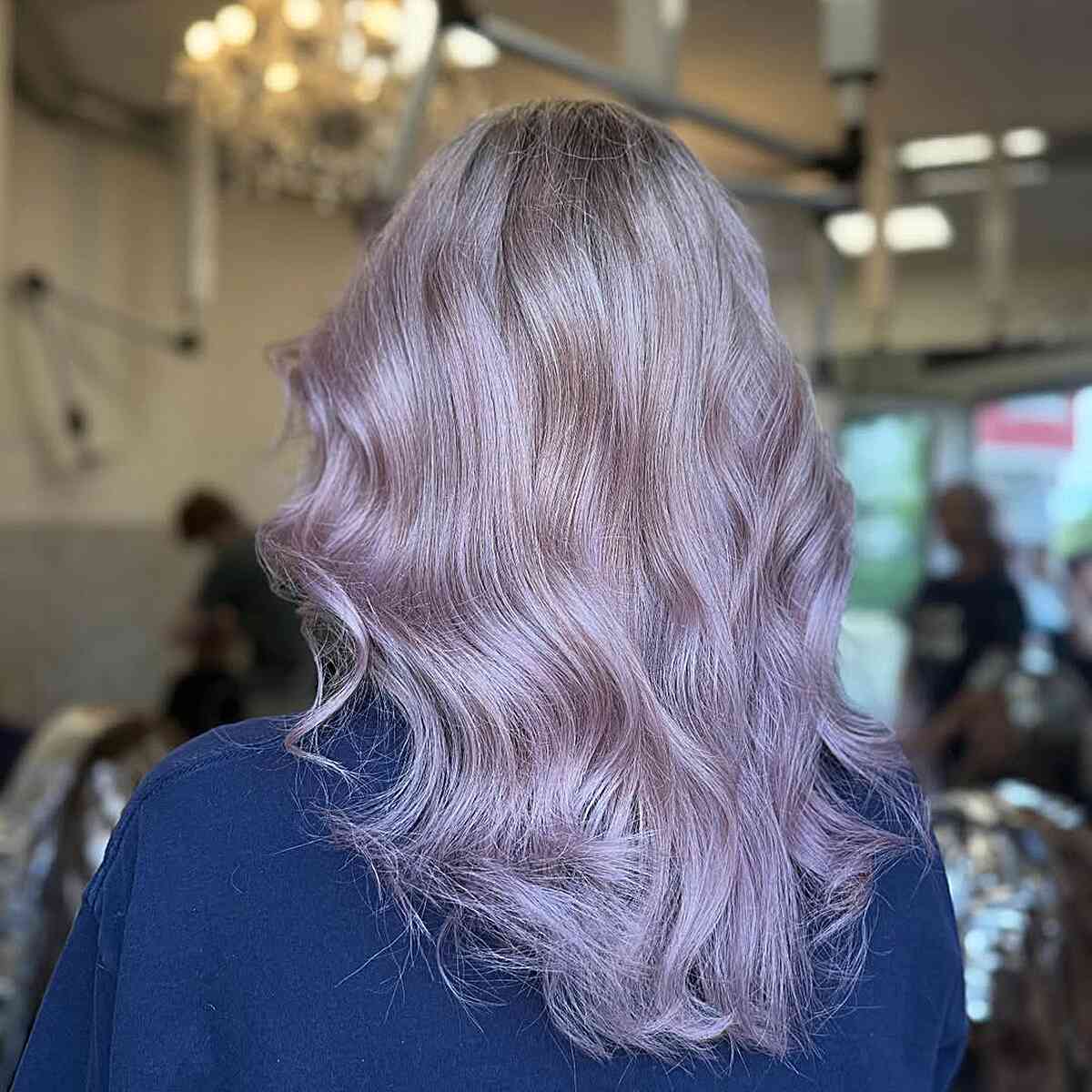
How do you ask for highlights that look dimensional on thick, wavy hair? Start with placement: lighter lavender highlights woven through the ends, not at the root. This keeps the natural depth at the scalp and lets the wave pattern scatter the lighter pieces so they read as texture, not streaks. Thick, wavy hair at mid-back length needs the highlights placed on the larger surface area of each wave. Ask your colorist for: long thick wavy hair, soft lavender color with lighter highlights, no bangs. The highlights should be fine and spaced apart, not chunky.
Collarbone Shag With Lilac Blonde Balayage
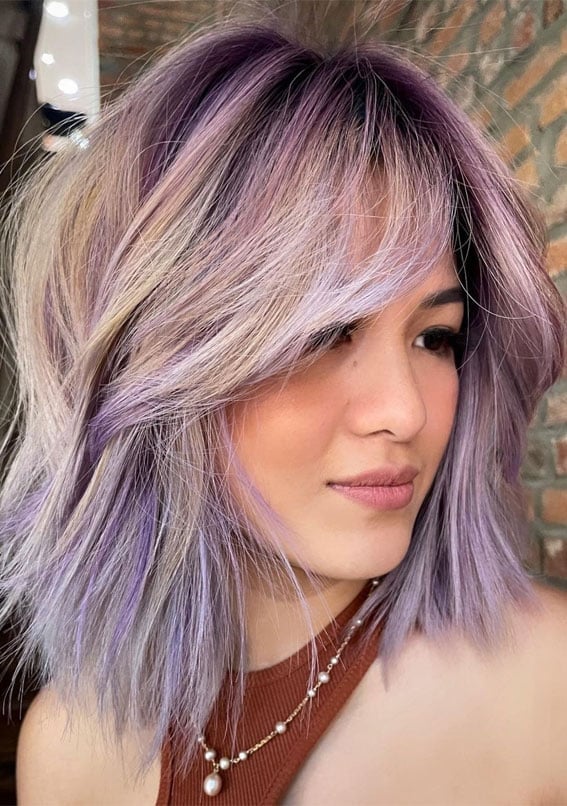
This is not a beach wave that needs a curling iron; it is a shag cut with an air-dried finish that relies on the lilac and blonde balayage to create the dimension. The collarbone length hits right at the shoulder, which makes the shag layers visible even when the hair is dry. Side-swept bangs soften a square or round jaw. Medium density, wavy hair holds the shag shape without falling flat. Ask your colorist for: collarbone length shag, lilac and blonde balayage, side-swept bangs. Scrunch with sea salt spray on damp hair and let it dry. The shag layers need a trim every eight to ten weeks to keep the shape.
Long Layers With Light Lavender Highlights
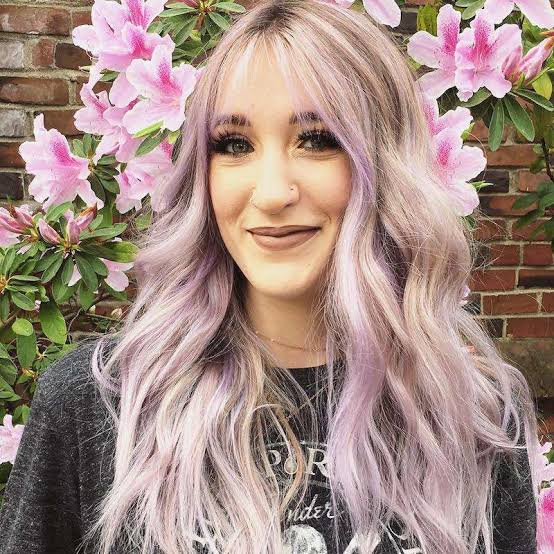
Long layers on fine, wavy hair can blur into one shape if you are not careful: the cut needs the wave pattern to hold its own. The light lavender base with blonde highlights here keeps the eye moving, which helps, but the real work comes from the wispy bangs and middle part, giving the front some distinct pieces. Ask your stylist for: long layered cut, light lavender and blonde highlights, wispy bangs. The trade-off: fine hair can lose the separation between layers after a week or two, especially with a loose wave that does not hold curl. A trim every eight to ten weeks keeps the ends from thinning out, but the wave will soften faster than you expect. If your hair is very fine, you may prefer a shorter layer stack to keep the shape visible.
Pastel Lavender With Darker Roots
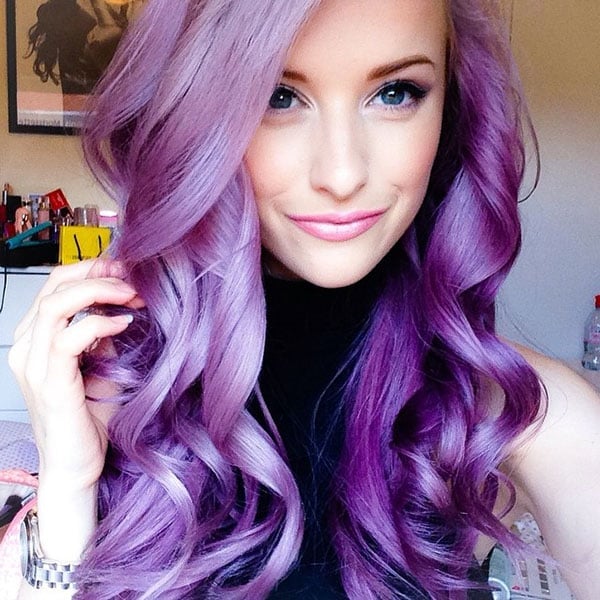
How long before that pastel lavender roots-out look actually looks like part of the plan? The darker roots here are the whole point, turning grow-out from a chore into a feature. The mid-back length and long layers with loose waves keep the softness, while the face-framing pieces and side part add structure. Ask your colorist for: long layers, pastel lavender color with dark roots, face-framing pieces. A smoothing serum keeps the waves polished, and a trim every eight to ten weeks maintains the layer shape. The pastel shade will fade toward silver in about four weeks, so a toning shampoo every other wash extends the color life without a full salon visit.
Chin Length Bob With Straight Fringe
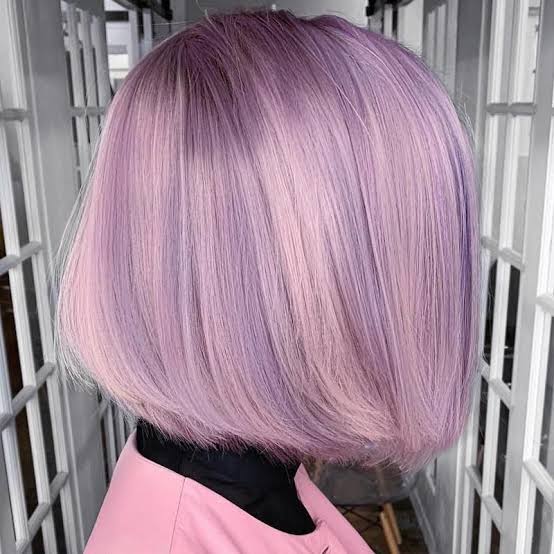
A chin-length bob with a blunt straight fringe and a uniform soft pastel lavender shade is one of those designs that works best when nothing is up for interpretation. The straight, fine to medium texture here holds the clean line. Ask your stylist for: chin-length bob, blunt straight fringe, uniform pastel lavender color. The straight fringe suits oval and longer face shapes better than round ones, where it can shorten the face visually. A flat iron keeps the smooth finish, and a trim every six to eight weeks is needed to keep the blunt line sharp.
Collarbone Layers With Muted Lavender
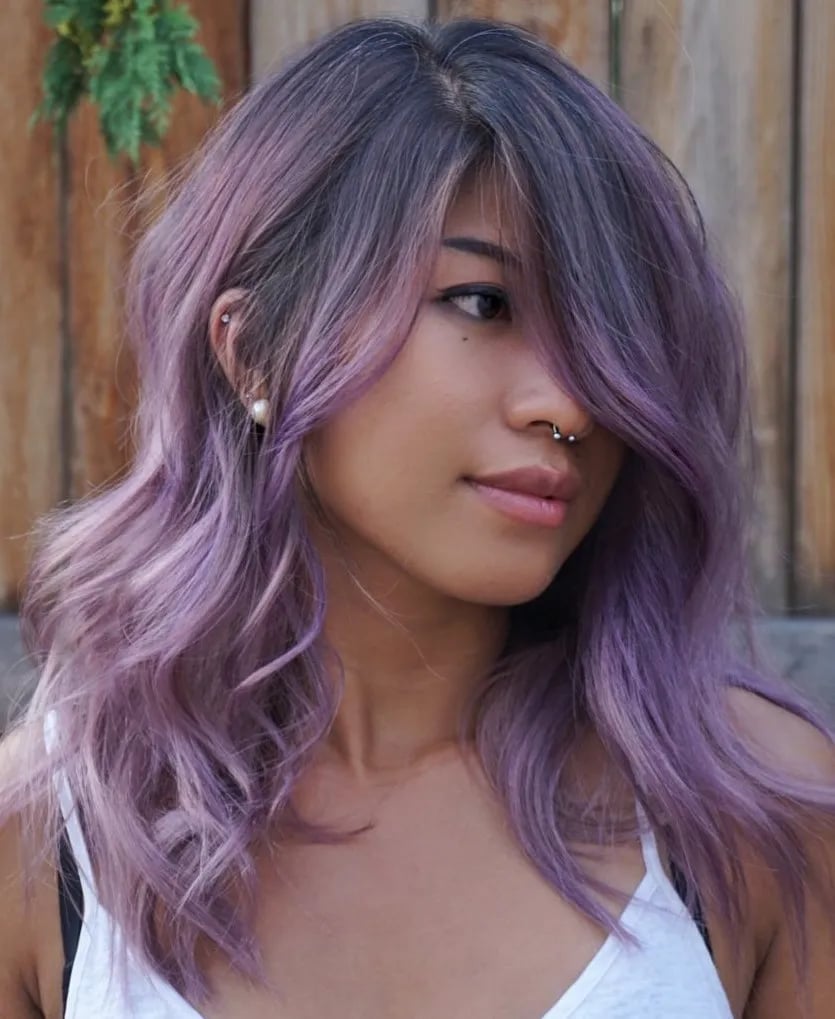
The muted lavender here reads like a neutral that happens to be purple, which is harder to pull off than it looks. The technique relies on a darker root shade that fades into the muted tone through the collarbone-length layers, avoiding a harsh line. Ask your colorist for: collarbone length with long layers, muted lavender color with dark roots, face-framing bangs. The face-framing bangs soften angular jawlines, and the wavy, air-dried texture with a side part keeps everything low-effort. This is a salon-leaning color application, not a DIY project: the muted lavender requires pre-lightened hair that is toned to a pale canvas first, then tinted with a diluted violet formula. Plan for about three hours in the chair.
Mid-Back Layers With Vibrant Lavender Streaks
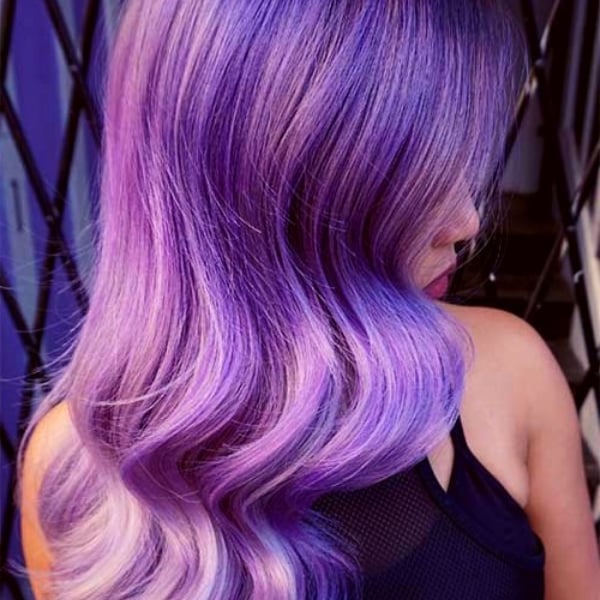
Vibrant lavender with lighter streaks reads bolder than a solid pastel, but the real difference between this and a subtler color transition is how fast the contrast shifts. A lived-in balayage fades gracefully; here, the lighter streaks on medium-density wavy hair create a deliberate stripe effect that needs the base to stay vivid. Ask your colorist for: mid-back length with subtle layers, vibrant lavender base with lighter streaks. The side view here shows the color transition from root to tip, and the loose waves help the streaks stand out. The drawback: the lighter streaks require a higher lift level at the salon, which means more damage to the hair shaft and a faster fade on the bright sections. A purple shampoo is your weekly fix, but the streaks will need a refresh every four to six weeks.
Collarbone Layers With Lavender Highlights
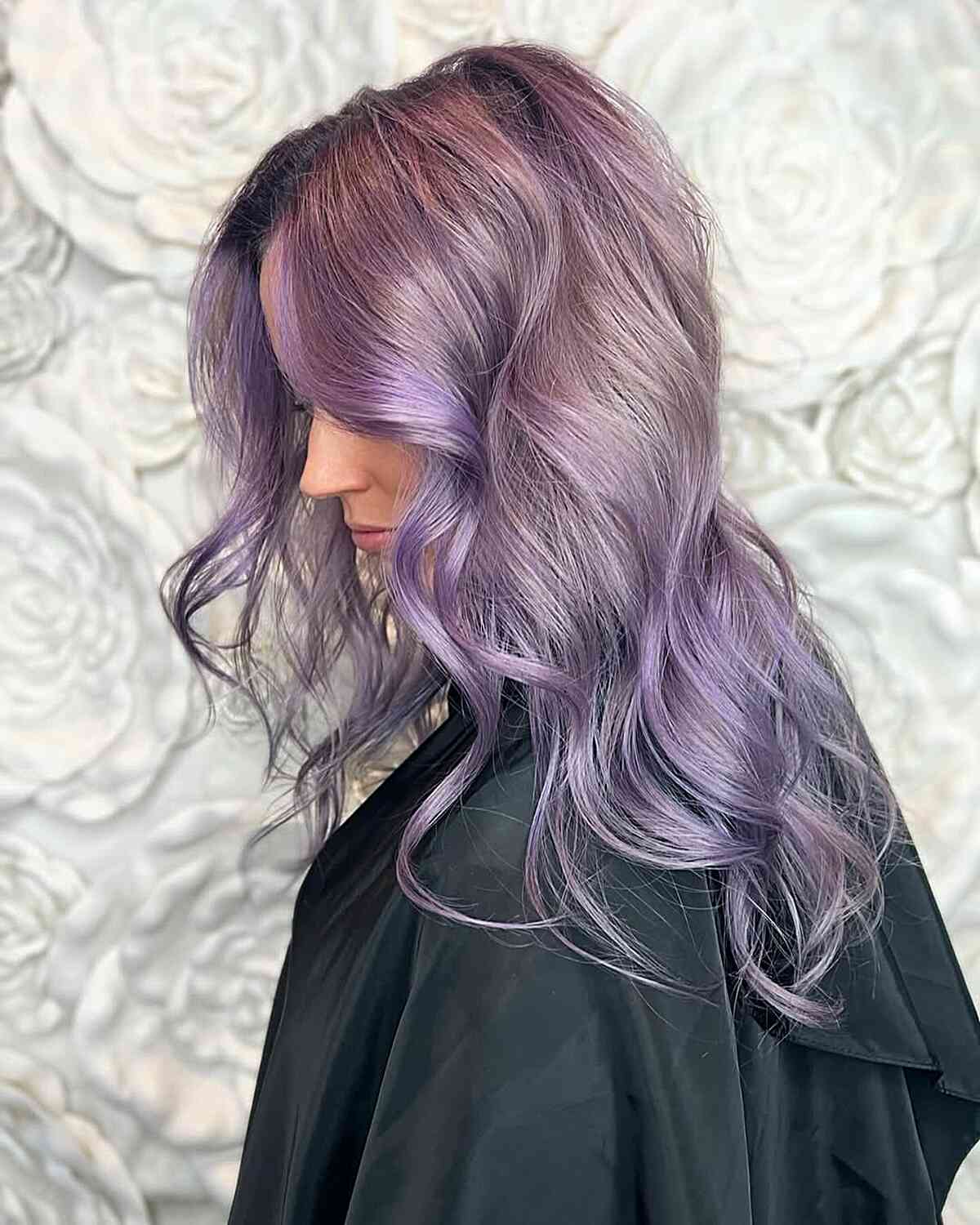
This cut keeps the length at the collarbone and layers it softly so the waves have somewhere to go, while the ash blonde base gets subtle lavender highlights that read as a muted, ethereal tone rather than a full commitment to purple. The curtain bangs are the real workhorses here, softening round and square faces and blending into those face-framing layers. For fine, wavy textures, this is a flattering shape that adds movement without weighing things down. Ask your stylist for: collarbone length layered cut, ash blonde with subtle lavender highlights, curtain bangs. A round brush and a blow-dry will convince those bangs to behave, and a trim every six to eight weeks keeps the shape honest.
Short Pixie In Soft Lavender
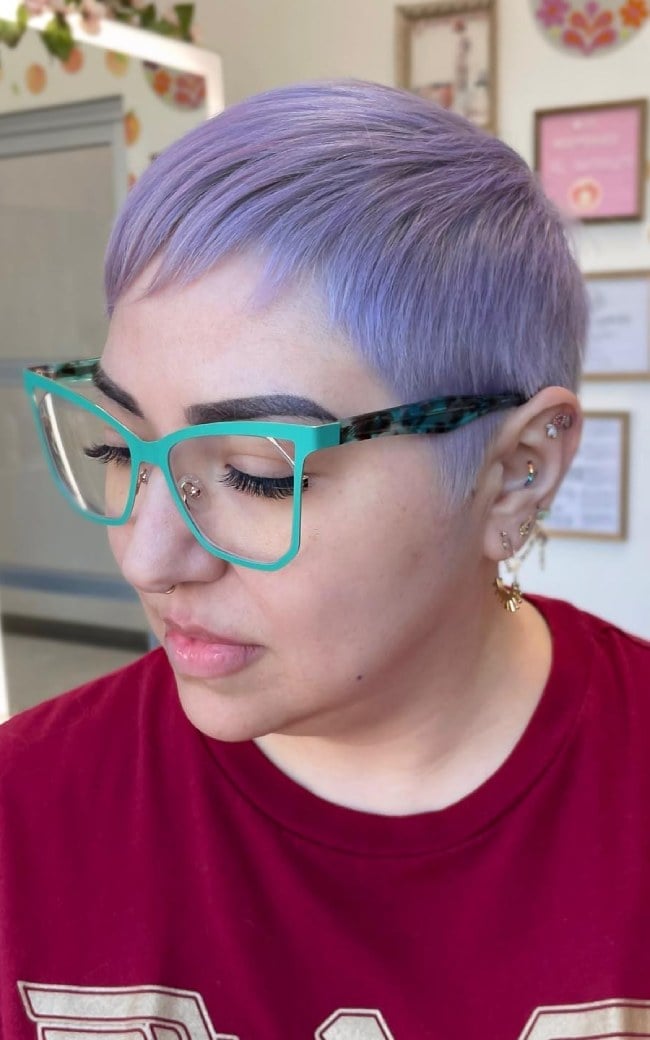
A short pixie with feathered texture and a soft lavender color ends right around the ear, with a middle parting that keeps it looking neat. On fine, straight hair, this cut holds its shape with minimal fuss, though it does demand a certain tolerance for regular salon visits. The feathering gives it a bit of lift at the crown, which helps most face shapes carry the length. Ask your stylist for: short pixie cut, soft lavender color, feathered texture. A dab of wax or pomade defines the pieces without weighing them down, and a trim every four to six weeks keeps the silhouette sharp.
Mid-Back Layers With Pastel Lavender Balayage
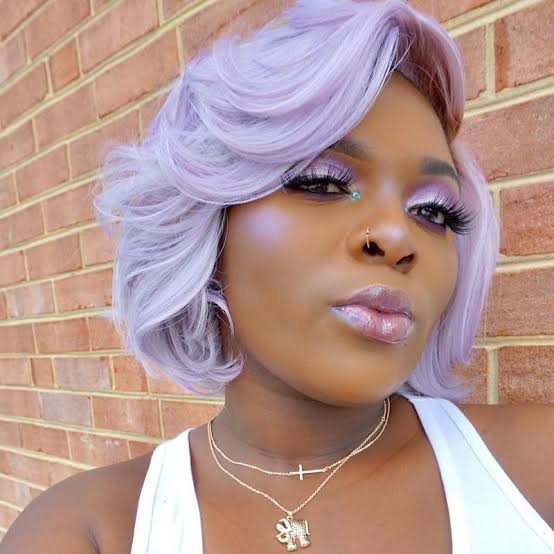
Wondering how to wear pastel lavender without looking like a cotton candy accident? This takes the color to mid-back length with long layers and a blonde balayage that starts darker at the roots and melts into the pastel, so the grow-out is forgiving and the overall effect looks natural. The loose waves and side parting show off the blend, and on thick, wavy hair the long layers add movement instead of weight. Spring and summer events are where this shade earns its keep, especially outdoor gatherings where the soft lavender gets noticed. Ask your colorist for: mid-back length with long layers, pastel lavender and blonde balayage. A leave-in conditioner keeps the waves defined, and a trim every eight to ten weeks maintains the layers.
Long Layers With Multi-Tonal Lavender
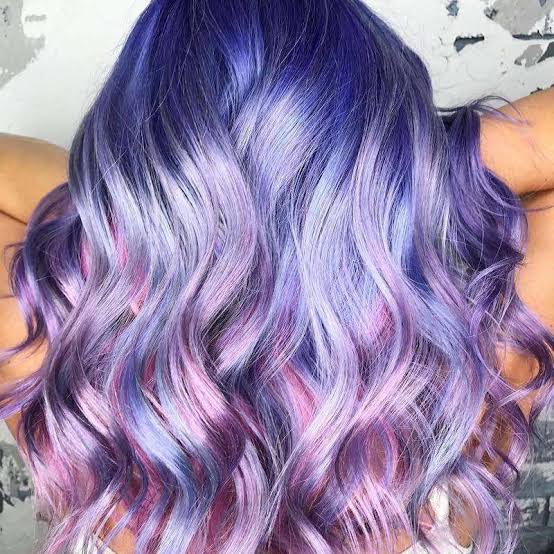
This is a color technique that layers lavender, pink, and blue through long, wavy hair, creating a vibrant blend that shifts as the light moves. The curtain bangs frame the face while the back view shows off the depth, and the medium density of the hair carries the multi-tonal effect without looking muddy. Building this look is a salon project: it requires lifting the base and then placing each tone in sections, so it is not a weekend DIY. Ask your colorist for: long layered cut, multi-tonal lavender pink blue color, curtain bangs. Between appointments, a color-depositing conditioner helps keep the pink and blue from fading into a single lavender blur, and a trim every eight to ten weeks keeps the layers tidy.
Chin Length Bob With Light Lavender
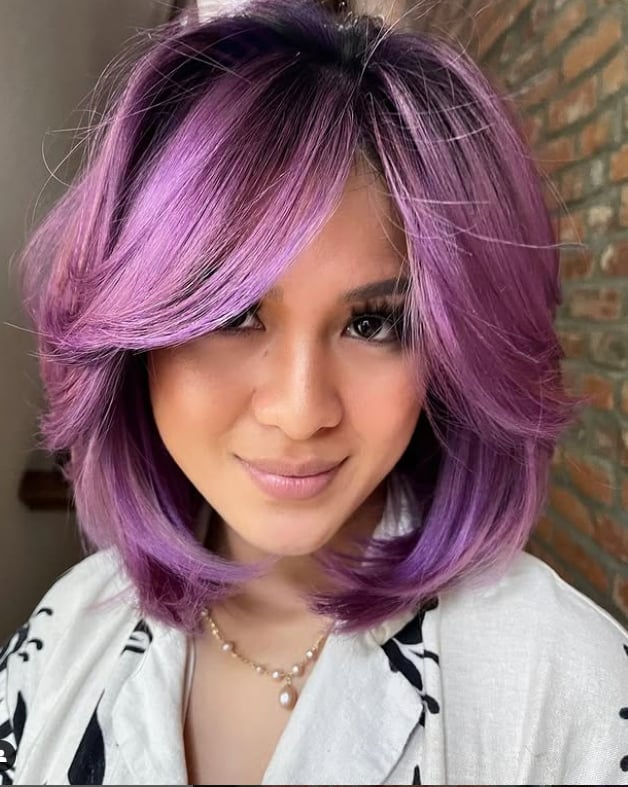
A chin-length bob with face-framing layers and curtain bangs gets a bright, light lavender color with darker roots, and the smooth blowout gives it a polished finish. On fine, straight hair, this shape works well because the layers add a hint of volume without sacrificing the clean line, though the same layers can look sparse if your hair is very fine, so ask your stylist to keep them soft. The curtain bangs soften round and heart faces, and the darker roots make the grow-out less obvious for a few weeks. Ask your colorist for: chin-length bob, light lavender color with dark roots, face-framing layers, curtain bangs. A round brush during the blowout gives the bangs their curve, and a trim every six to eight weeks keeps the bob from turning into a shag.
Shoulder Wolf Cut Two-Toned Lilac
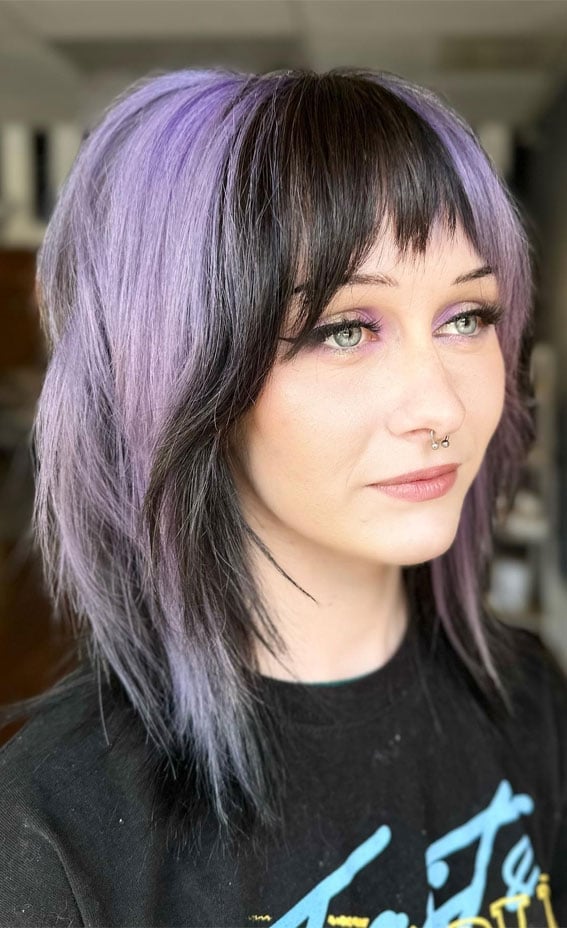
If a full lavender commitment feels like too much, the two-toned route offers a middle ground. This shoulder-length wolf cut pairs dark brown on one side with lilac on the other, split by a visible middle part. The choppy layers and full bangs create an undone texture that works best on medium-density wavy hair. Ask your stylist for: shoulder length wolf cut, choppy layers, full bangs, dark brown and lilac two-toned color. A texturizing spray or paste helps define the layers without weighing them down. Trim every six to eight weeks to keep the shape from looking shaggy.
Mid-Back Uniform Light Lavender
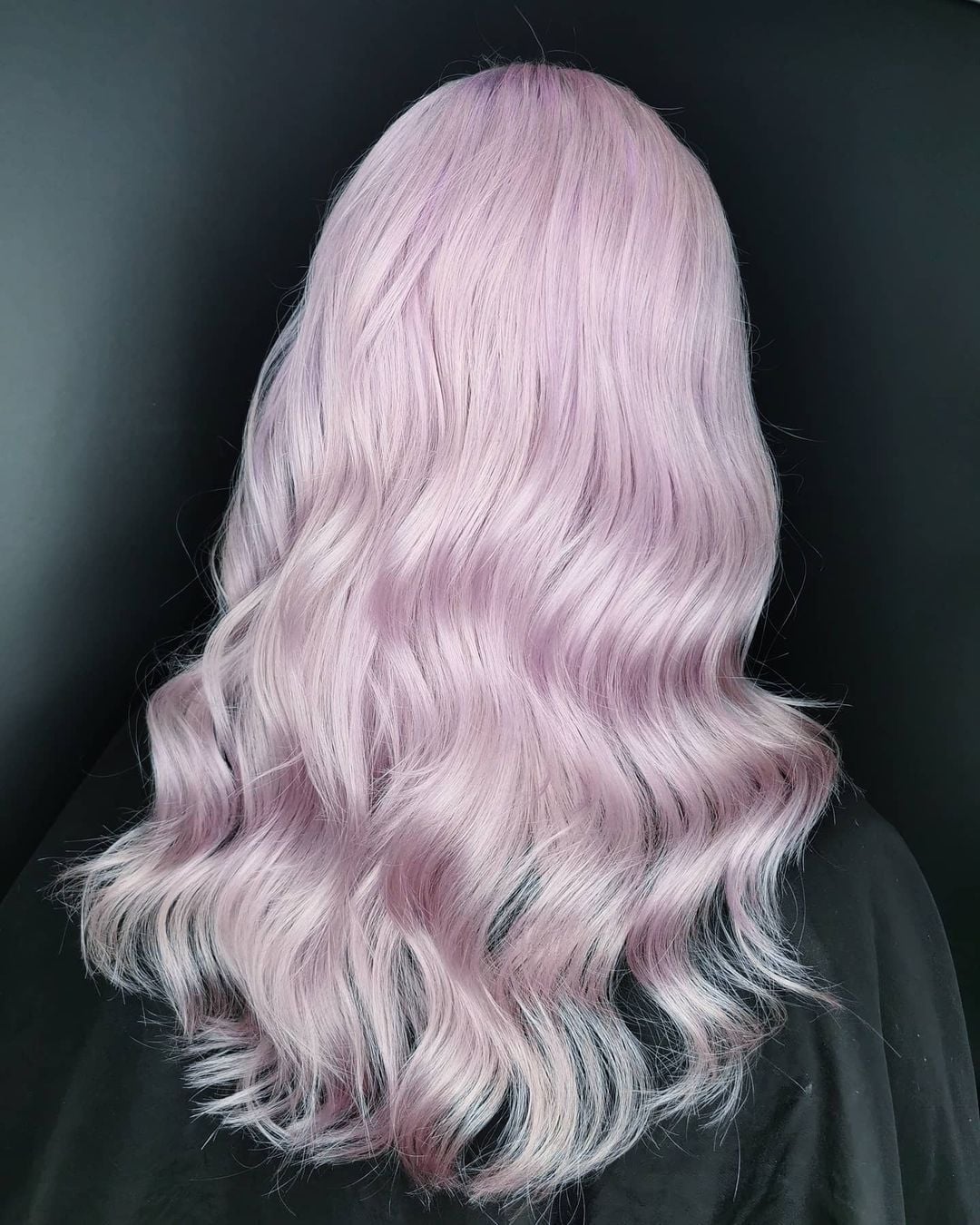
How do you ask for a shade that is one solid color without flatness? Start with the length. This mid-back cut uses soft, wavy layers to keep the uniform light lavender from looking like a single block of pastel. The layers add movement while the color stays consistent from root to end, helped by a glossy finish that reflects light evenly. Ask your colorist for: mid-back length with soft layers, uniform light lavender color. Thick wavy hair is ideal for this approach, since the density carries the pigment without needing heavy product. A shine serum after drying reinforces the gloss.
For the cut itself, the key is requesting layers that start around the collarbone and graduate down. That keeps the weight at the hemline while the waves have room to bend. No bangs here, the middle part and the color do the work.
Collarbone Bob With Multi-Colored Strands
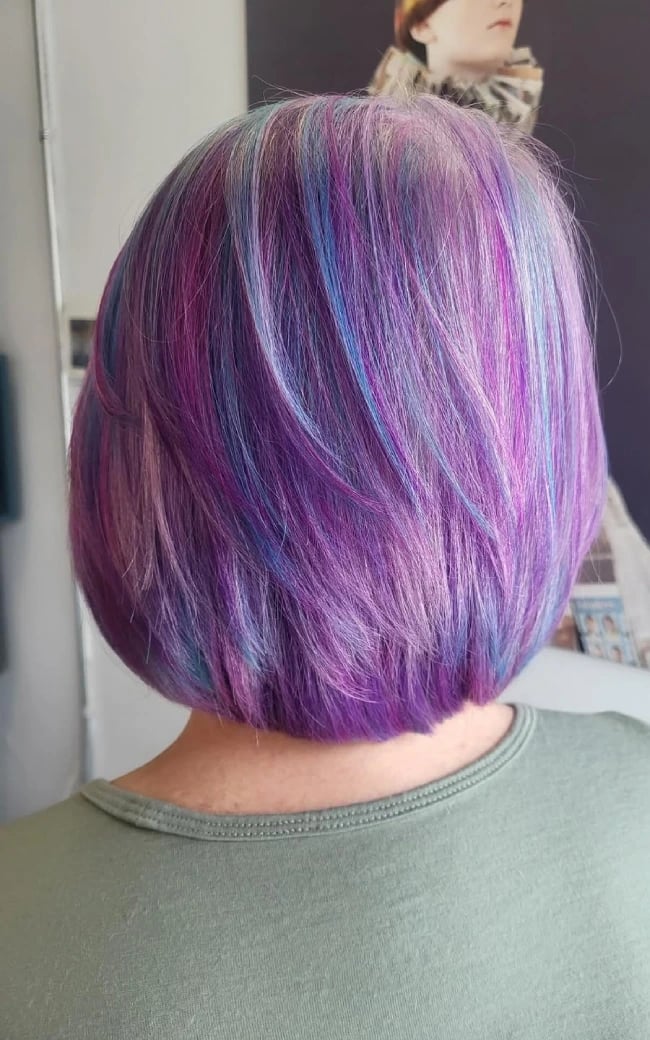
A collarbone bob with purple, blue, and pink highlights is a lot of color in a compact space. The straight, layered cut keeps the strands from tangling, which matters when you are working with three tones that can bleed into each other. Medium straight hair handles the saturation well, though the lighter shades may need a color-safe shampoo to keep the pink from turning brassy. Ask your colorist for: collarbone length layered bob, purple, blue, and pink highlights. The honest drawback is that the blue tends to fade fastest, so expect a toning appointment every four to six weeks. Trim rhythm stays at six to eight weeks to keep the bob crisp.
Chin Length Bob With Lavender Highlights and Side Swept Bangs
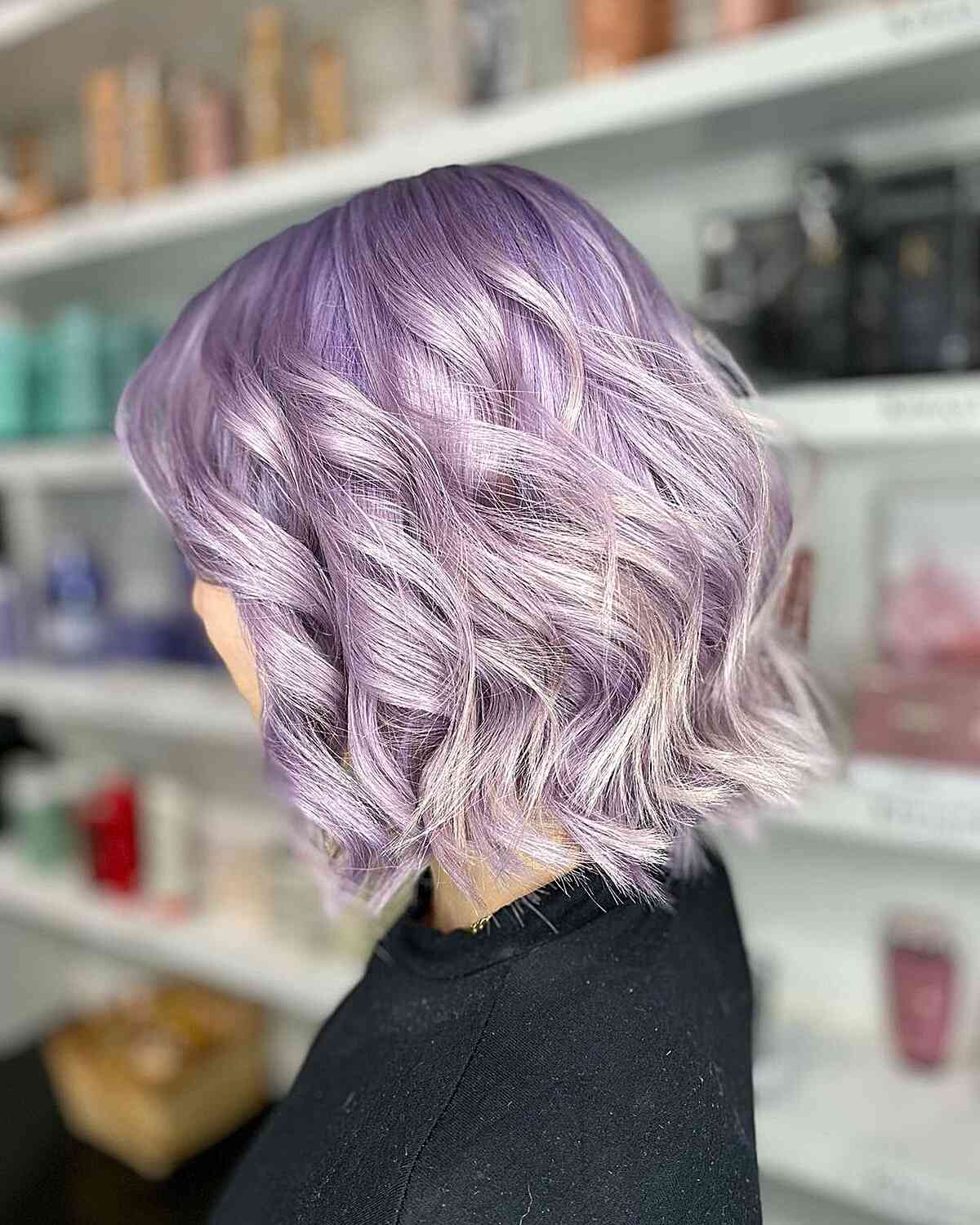
The technique here is about placement. A soft lavender base gets subtle blonde highlights woven through the top and around the face, while the side-swept bangs catch the lightest pieces. The chin-length bob is cut with minimal internal layers, so the loose waves hold their shape without collapsing. Ask your colorist for: chin-length bob, soft lavender base with blonde highlights, side-swept bangs. This is a salon-only job, the highlights need a balayage or foil technique to sit naturally against the pastel base. Fine wavy texture benefits from a lightweight texturizing spray to define the waves without weighing them down.
Asymmetrical Bob Updo With Pastel Purple
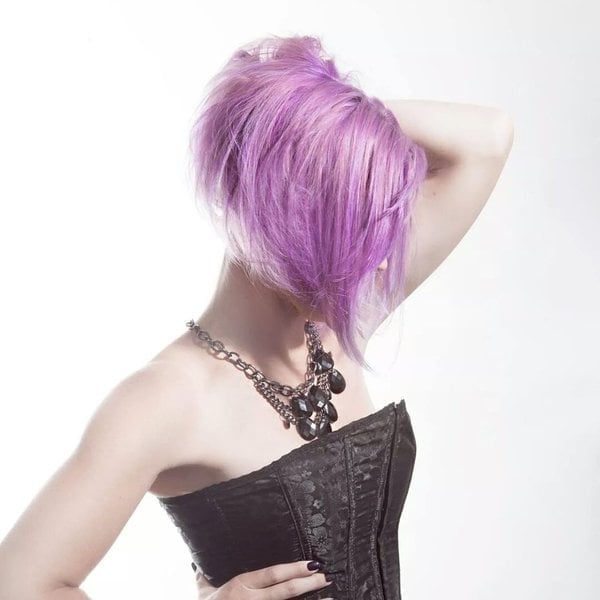
An asymmetrical bob in pastel purple with pinkish undertones already makes a statement. Styling it into a textured updo turns it into an event look without adding more color. The side-swept bangs stay out while the shorter side pins back, creating asymmetry that works for warmer months when you want hair off the neck. Ask your colorist for: asymmetrical bob, pastel purple color with pinkish undertones, textured updo. Fine wavy texture holds the pin curls well, and a dry texture spray adds grip. This is a professional styling situation, not a quick bathroom pin job. The updo hides the grow-out line for about two weeks longer than wearing it down.
Chin Bob Gradient Purple To White
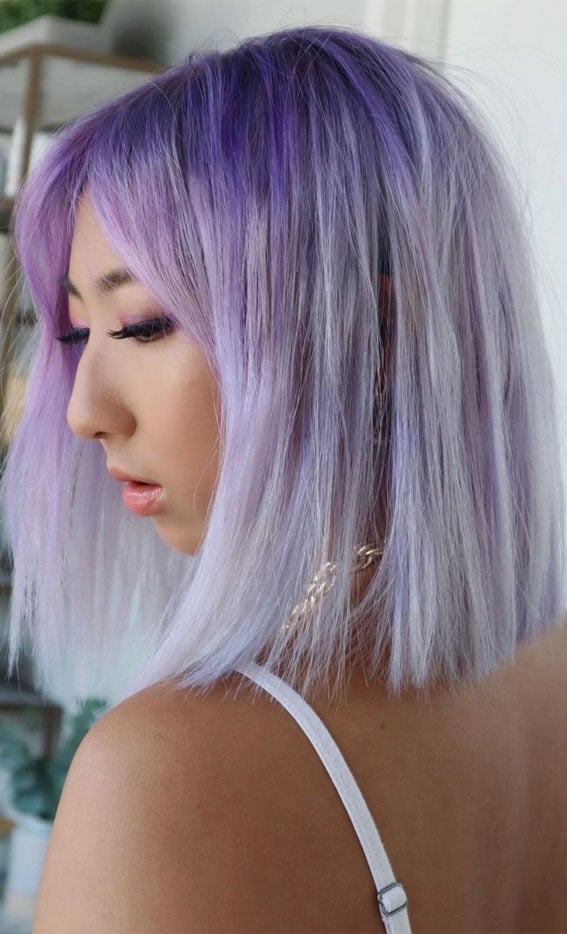
The gradient here does something unusual: it starts vibrant at the root and fades to soft white at the ends, so the color looks like a deliberate design instead of a grow-out. On fine, straight hair, that smooth blowout keeps the transition crisp, and the side-swept bangs lean into the drama without fighting it. Ask your stylist for a chin-length bob with a purple to white gradient color and side-swept bangs. The drawback is the white section: it shows every hint of brassiness, so plan on a toning visit every three to four weeks to keep it cool.
This cut suits fine, straight hair that holds a shape well, and the side-swept bangs work with most face shapes since they soften the forehead without hiding it. A smoothing serum helps the gradient catch evenly, and a trim every six to eight weeks keeps the bob from drifting past the chin into something less deliberate.
Short Undercut With Vibrant Purple Curls
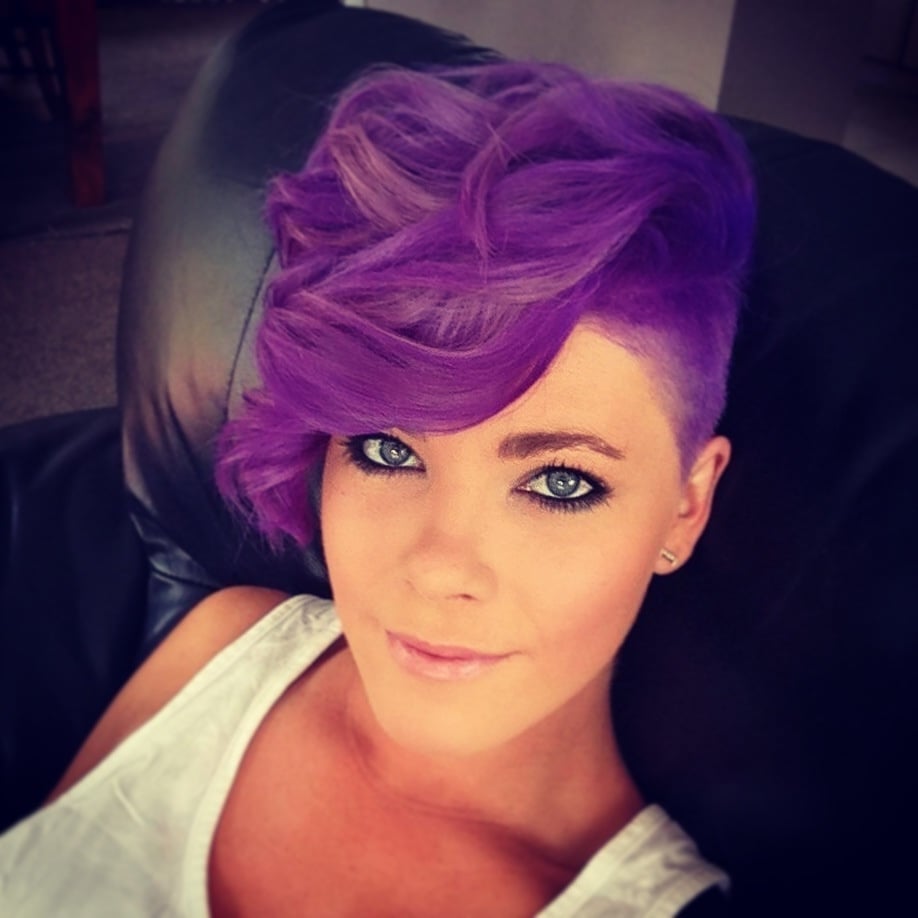
Wondering if an undercut works with curly hair? It does, provided the curls are thick enough to carry the volume. The vibrant purple here is swept up and to the side, with side-swept bangs that frame the face while the shaved sides keep the shape light. Ask your stylist for a short haircut with an undercut, vibrant deep purple color, and swept up textured curls. A curl-enhancing mousse keeps the movement defined, and the undercut needs a trim every four to six weeks to stay sharp. This is a bold, alternative look for anyone ready to commit to the maintenance.
Final Thoughts
For fine hair, keep one blunt baseline and skip heavy layers to maintain density. Pastel or muted lavender tones won’t overpower the hair’s natural lightness. For thick hair, embrace layers to add movement and consider deeper, vibrant lavenders or multi-tonal effects.
- Use color-safe shampoos and conditioners to preserve the lavender hue.
- Wash hair with cool water to prevent color fading.
- Schedule toning treatments every 4-6 weeks to maintain vibrancy.
- Minimize heat styling to protect the color and hair integrity.
- Plan for root touch-ups every 6-8 weeks, depending on growth rate.
Embrace the spectrum of lavender.