The polished ponytail gets a lot of airtime, but the real work happens in the cut, the part line and the finish. Soft face-framing layers and lived-in color have quietly replaced the uniform one-length blunt cut in most offices.
This collection of 35 professional hairstyles covers the range from wash-and-wear lobs to intricate braided updos, with options for fine hair that needs volume, thick hair that needs shaping, and every texture in between. The focus is on styles that hold their shape through a workday without demanding a mid-afternoon reset.
Long Layered Hair With Balayage Waves
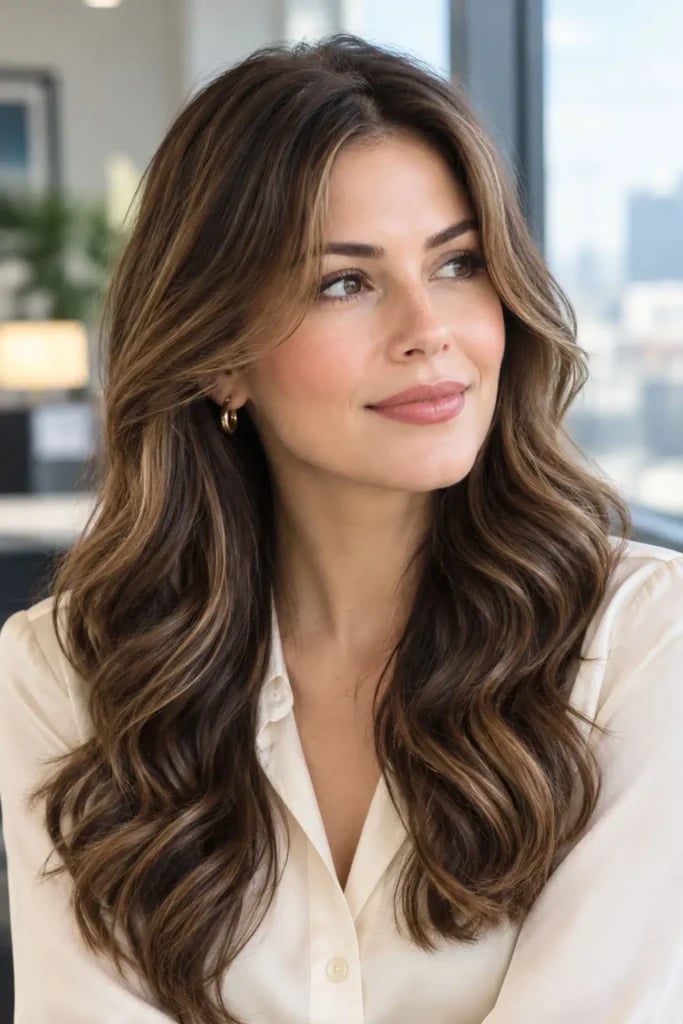
The genius of this cut is how the long layers keep the mid-back length from feeling heavy. The rich dark brown base is warmed by blended balayage highlights, and the curtain bangs and middle parting frame the face without committing to anything too severe. It’s a style that works for thick, wavy hair at mid-back or longer, and the layering softens square and round face shapes by adding movement around the jaw.
Ask your stylist for: long layers with balayage, loose waves. To recreate the wave pattern, use a large barrel curling iron and let the hair cool before brushing through. A trim every 8 to 10 weeks keeps the layers from losing their shape, and the lived-in balayage means you can stretch color appointments to every four to five months without the grow-out line showing.
Shoulder Length Bob With Soft Layers And Bangs
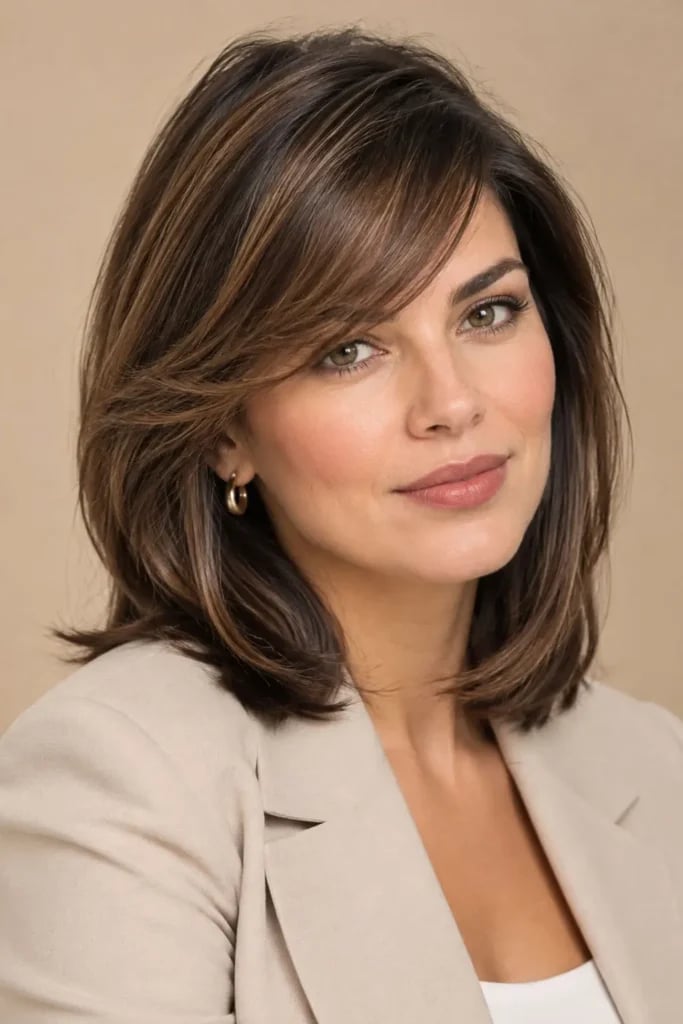
Wondering how to ask for that collarbone-grazing cut with the soft face-framing pieces? The key phrases are “collarbone length” and “soft layers,” with curtain bangs to open up the face. The dark brown base gets dimension from subtle lighter brown highlights, and the middle part keeps the blowout looking polished. This shoulder length bob suits thick, wavy hair best, and the curtain bangs flatter most face shapes without demanding daily styling. Ask your stylist for: collarbone length bob, soft layers, curtain bangs. Blow-dry with a round brush, focusing on the framing layers to tuck them gently around the cheekbones. Plan on a trim every 6 to 8 weeks to keep the ends from straying.
Dark Brown Lob With Face Framing Layers
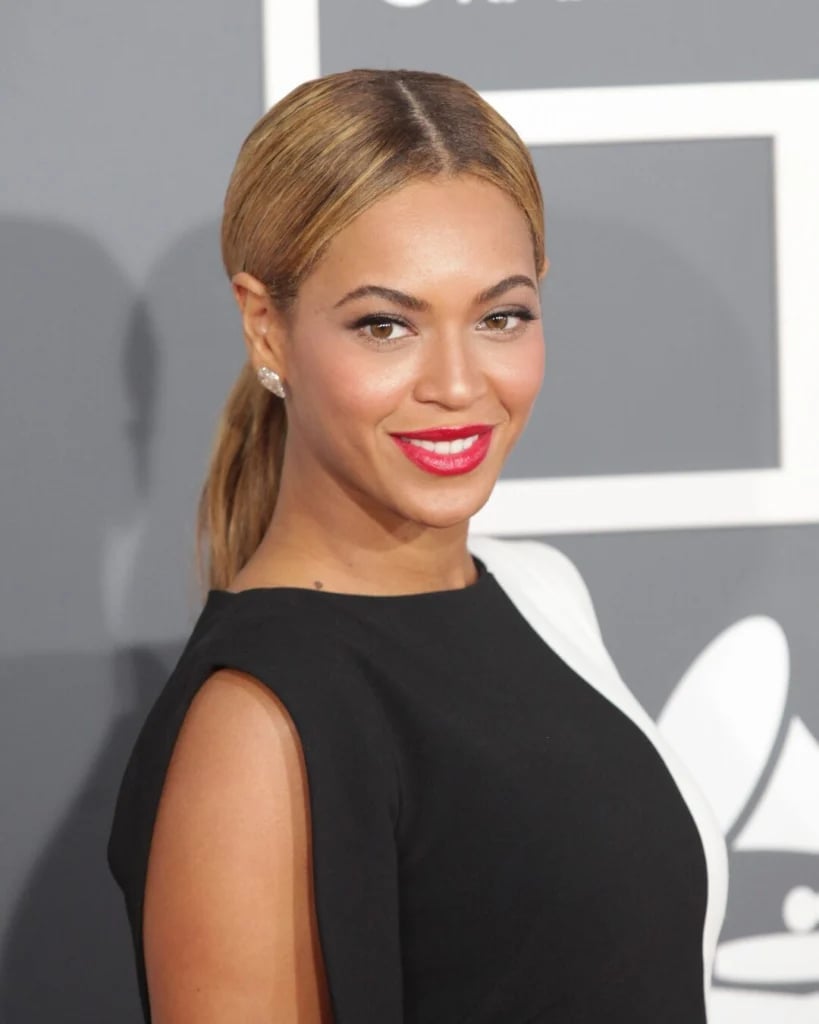
Where this lob differs from a blunt cut is in the face-framing layers. The dark brown base with subtle blonde highlights is styled in a smooth blowout with gentle waves, and the curtain bangs soften the edges of angular faces. It’s a collarbone-length cut that moves with you, where a blunt lob just sits there. Ask your stylist for: shoulder length cut, face-framing layers, curtain bangs. Use a large barrel brush to smooth the hair and add a slight bend at the ends. A trim every 6 to 8 weeks keeps the layers from growing into one shapeless block.
The middle part and the way the layers fall forward make this a low-maintenance option for thick, wavy hair. You get the polish of a structured cut without the daily commitment of a sharp bob.
Collarbone Length Waves With Curtain Bangs
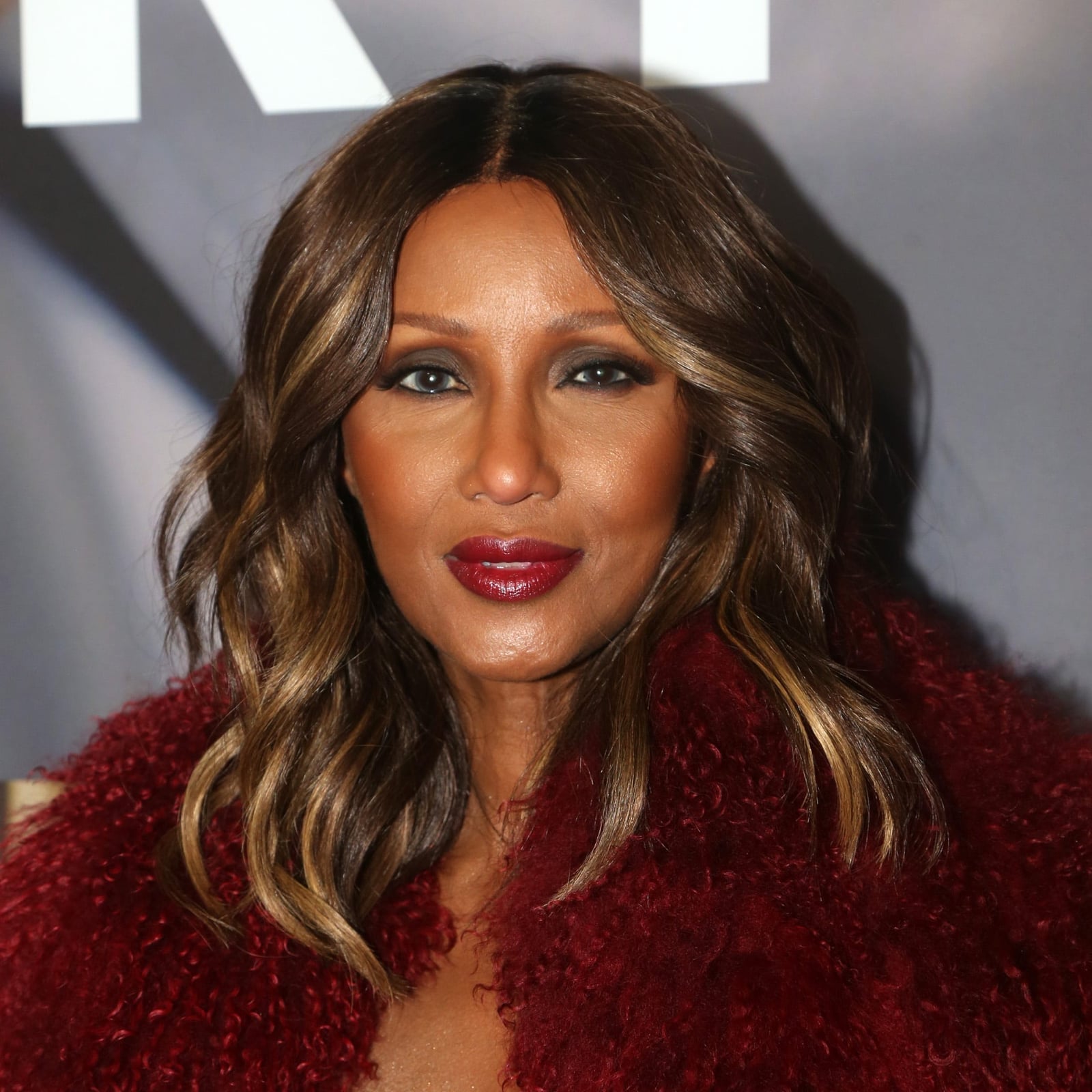
The glossy wave pattern here is the result of a careful blowout, not a natural curl. The collarbone length is ideal for thick, wavy hair because it’s short enough to dry quickly but long enough to show off the movement. The dark blonde base with lighter highlights adds dimension, and the curtain bangs soften any face shape. Ask your stylist for: collarbone length, soft wavy layers, curtain bangs. To keep the glossy finish, apply a smoothing serum to damp hair before blow-drying, and use a round brush to bend the ends under. Plan on a trim every 6 to 8 weeks, and expect to spend about 15 minutes with the dryer if you want the waves to hold all day.
Mid-Back Balayage With Loose Waves
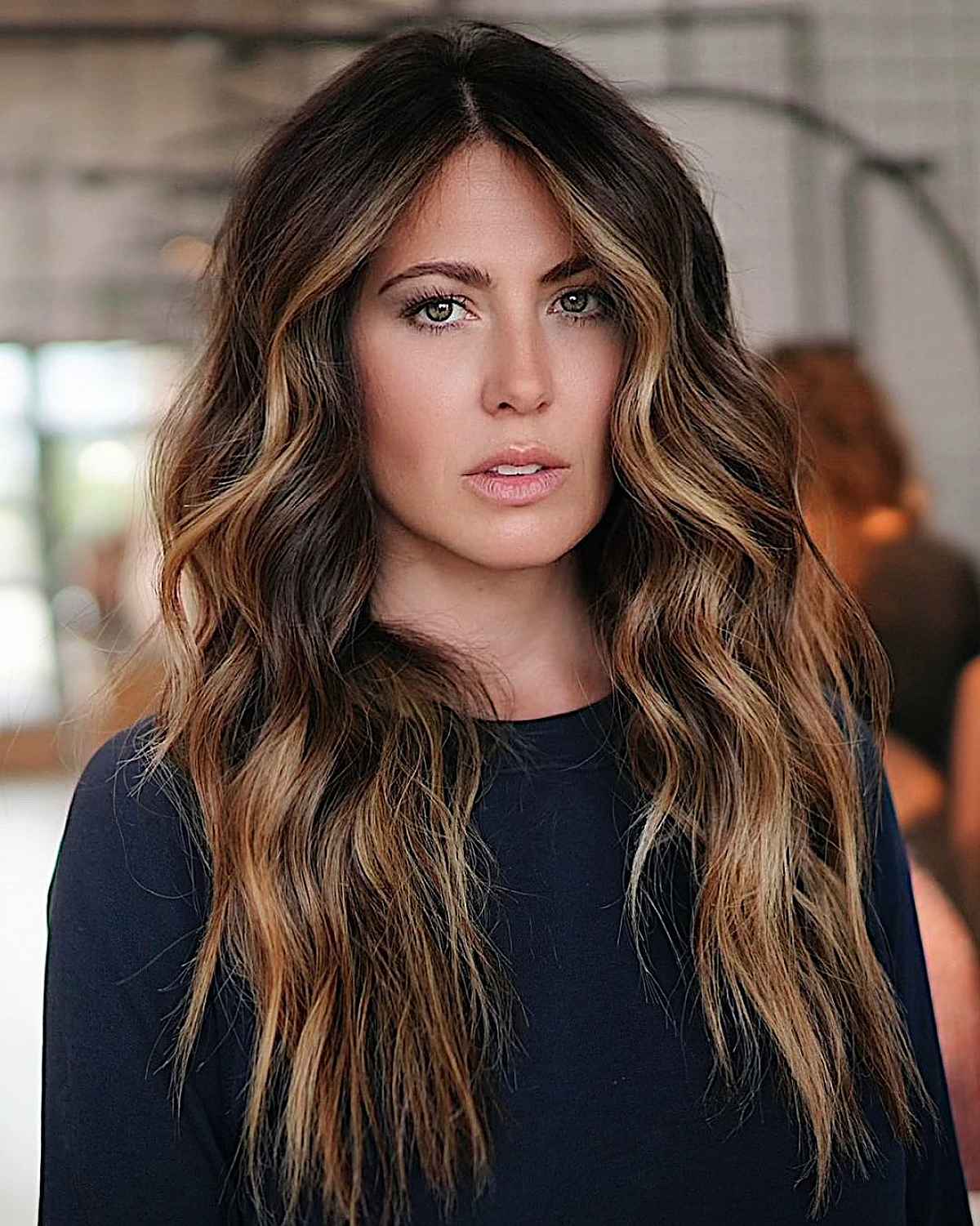
Balayage is a painting technique, not a foil job. The colorist hand-paints the blonde highlights onto the dark brown base, which is why the grow-out looks lived-in instead of stripey. The mid-back length provides enough canvas for the loose waves to show off the dimension, and the curtain bangs and middle parting keep the whole thing from feeling like a hippie throwback. Ask your colorist for: mid-back length, loose waves, balayage, curtain bangs. The technique works best on thick, wavy hair, and it softens round or square face shapes with the face-framing pieces.
Because the highlights are concentrated mid-length to ends, the roots stay dark, which means you can book color appointments every four to five months. A texturizing spray on damp hair before a blowout will enhance the wave definition without crunching the ends.
Chin Length Bob With Ash Blonde Shade
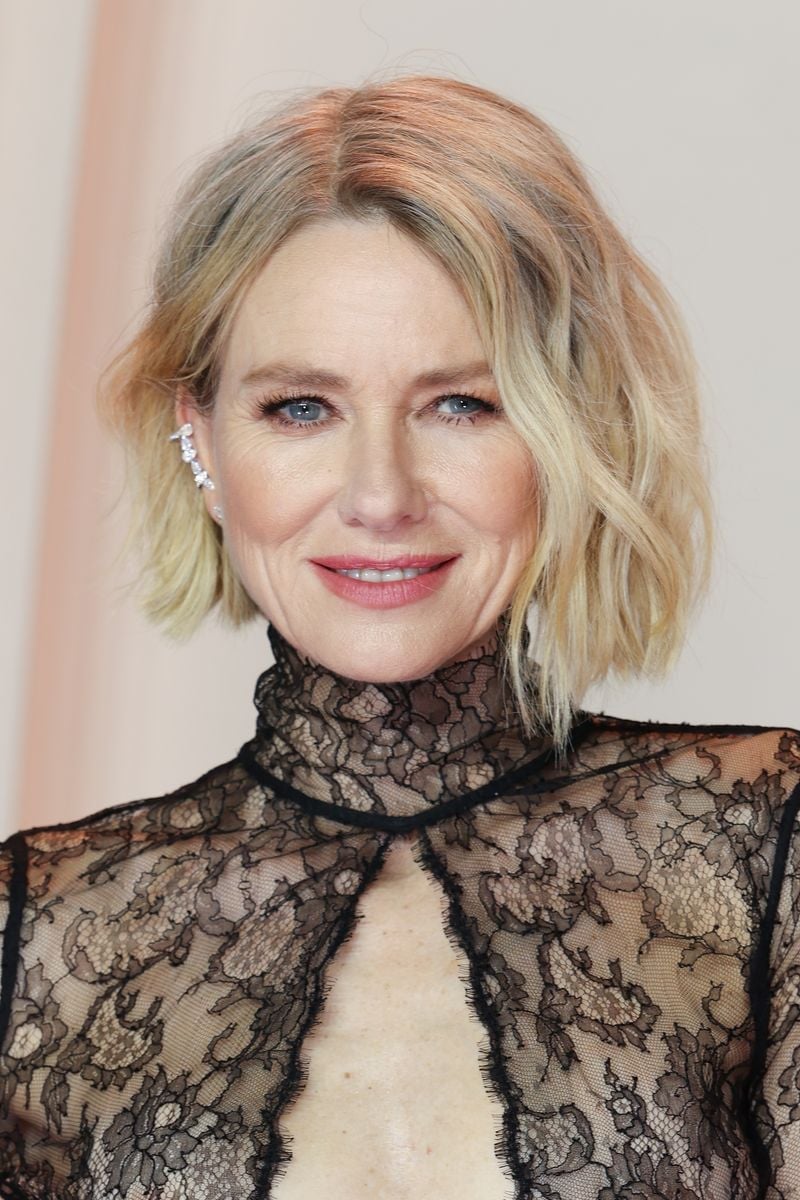
A chin-length bob with soft waves and side-swept bangs is a classic for a reason, and the ash blonde shade keeps it from feeling dated. The fine, wavy texture takes well to this shape, since the shorter length lets the hair hold a gentle bend without weighing down. Ask your stylist for: chin length bob, soft waves, side-swept bangs. Side-swept bangs also do a favor for oval and heart-shaped faces, drawing the eye across rather than down. A smoothing cream before blow-drying keeps the polish, and a trim every four to six weeks maintains the line.
Angled Chin Bob With Root Shadow

The angled cut is what gives this ash blonde bob its modern edge, with the front sweeping longer toward the chin while the back stays shorter. That sharp geometry shows every skipped trim, so a four to six week schedule is required if you want the angle to stay crisp. The root shadow softens the grow out between color appointments, but you will still be in the chair regularly to keep the ash tone from drifting brassy. Ask your stylist for: chin length angled bob, side-swept bangs, root shadow. A flat iron finishes the sleekness, and the fine, wavy texture holds the shape well.
Asymmetrical Blonde Bob With Side Swept Bangs

If you are weighing an asymmetrical blonde bob against a more traditional chin-length cut, know this: the asymmetrical version demands precision. One side sits shorter than the other, and the deep side part plus prominent side-swept bangs create a sharp, deliberate line that a standard bob does not attempt. The result is a modern silhouette that suits fine, straight hair and looks sharp in a boardroom. Ask your stylist for: chin length asymmetrical bob, deep side part, side-swept bangs. This is not a DIY trim situation; the geometry requires a salon visit every four to six weeks to hold its edge. A texturizing spray at the roots gives the fine texture some grip.
Sleek Chin Length Bob With Glossy Finish
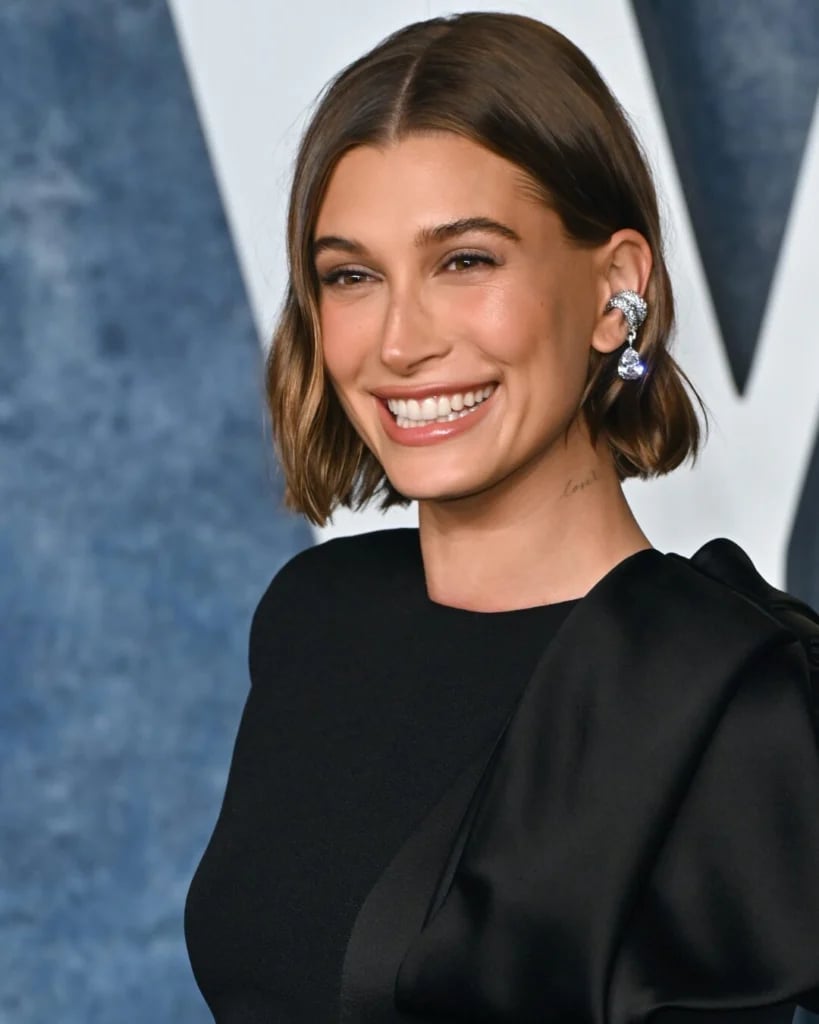
A sleek, glossy chin-length bob with a clean middle part is the uniform of the low-maintenance professional, but do not mistake it for a wash-and-go. The glossy finish comes from a blowout with a boar bristle brush, pulling the fine, straight hair taut as you dry. A middle part elongates a round face, which is a useful trick if that is your shape. Ask your stylist for: chin length sleek bob, middle part, glossy finish. The dark brown shade adds depth and shine, and a trim every four to six weeks keeps the ends blunt and the line sharp. Daily styling runs about ten minutes with a round brush and a heat protectant.
Dark Brown Bob With Soft Waves
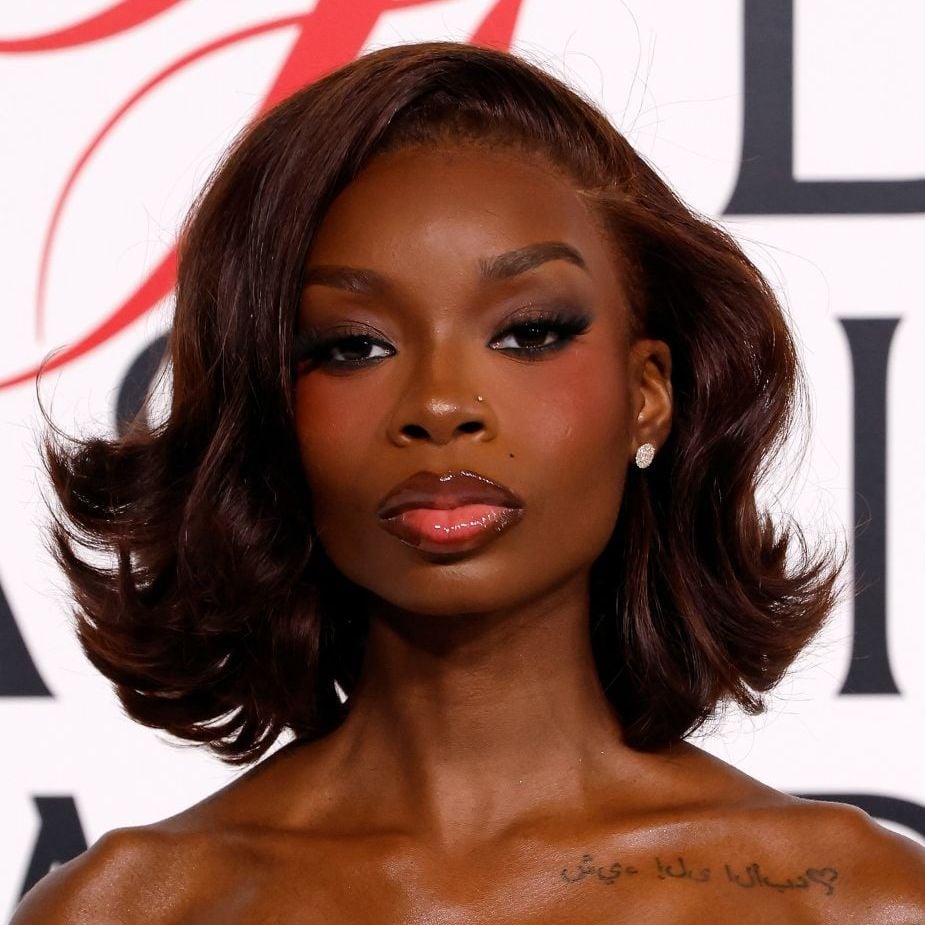
This chin-length bob works its magic with soft layers that end in subtle waves, the volume concentrated at the ends rather than the roots. That makes it a smart pick for medium-density hair, which can otherwise fall flat in a one-length cut. The side parting and dark brown shade keep the look grounded, while the polished blowout gives it a professional finish. Ask your stylist for: chin length bob, soft layers, soft waves, volume at ends. The volume at the ends helps balance a longer face by adding width where you want it. A volumizing spray at the roots before drying, then a trim every four to six weeks, keeps the shape honest.
Layered Bob With Voluminous Curls
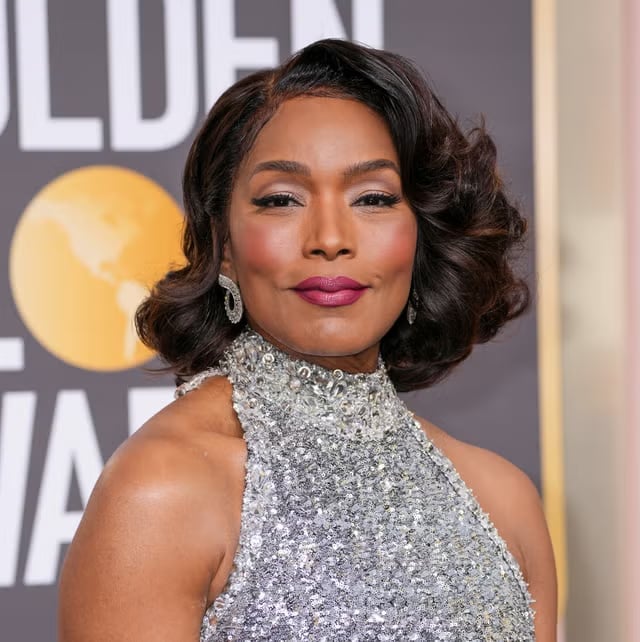
Can a bob actually hold a curl without falling flat by lunch? Yes, when the cut is built for volume. Ask your stylist for a chin length layered bob with side-swept bangs, then request the layers be cut to support soft, voluminous curls rather than weigh them down. A side parting and subtle highlights add movement and dimension, so the shape looks intentional from every angle.
The layers should be graduated at the back and slightly shorter around the face, which gives the curl pattern room to lift at the crown. A blowout with a round brush sets the base, and a diffuser on low heat encourages bounce without disrupting the wave. Medium density hair holds this best, and the side-swept bangs soften a square jawline. A trim every six to eight weeks keeps the layers light enough for the curls to spring.
Collarbone Long Bob With Glossy Blowout
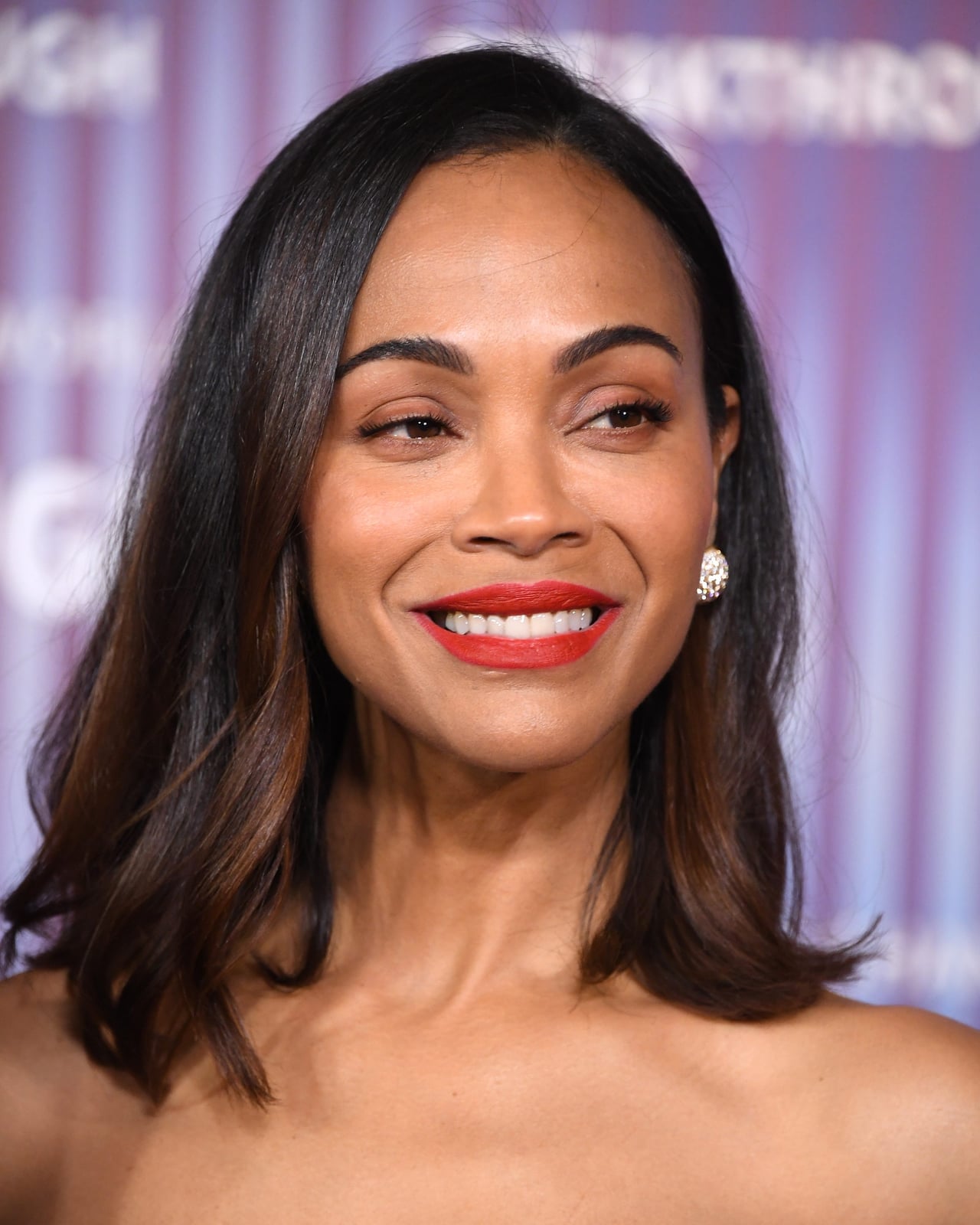
The difference between a basic blowout and a glossy one comes down to the technique used at the roots. A collarbone length long bob with a middle part needs tension from a large round brush, pulling each section taut as you dry. The dark brown base with subtle lighter highlights adds dimension, which is why the finish looks polished.
A middle part elongates a round face by drawing the eye down the center, making this a reliable choice for oval and heart faces too. Medium density straight hair takes the smoothest finish, and a cool shot of air at the end seals the cuticle for that mirror shine. A trim every eight weeks prevents the ends from softening the line.
Collarbone Layers With Low Bun
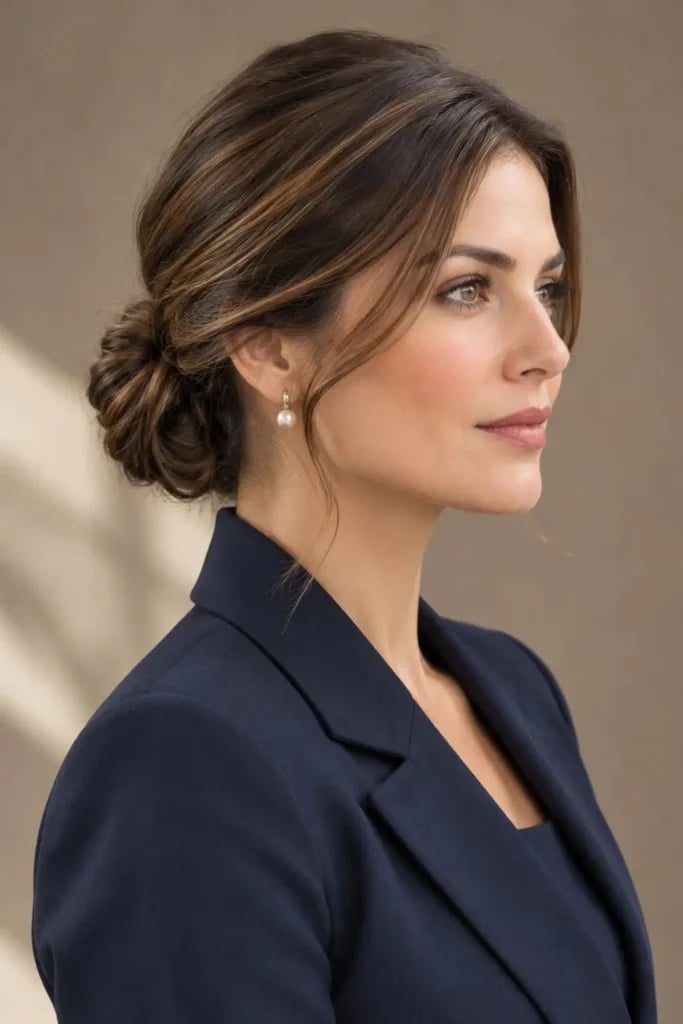
A low bun at the nape sounds simple, but the layers here do the work. Collarbone length with soft waves built into the hair means the bun has grip without needing a pin in every section. A side part and subtle highlights break up the solid color, so the bun reads as textured rather than flat. Medium density wavy hair holds this shape through an eight-hour day, and the soft waves left loose around the face keep the look from feeling severe. A trim every six to eight weeks maintains the layer length so the bun stays neat rather than messy.
Neck Length Dark Brown Low Bun
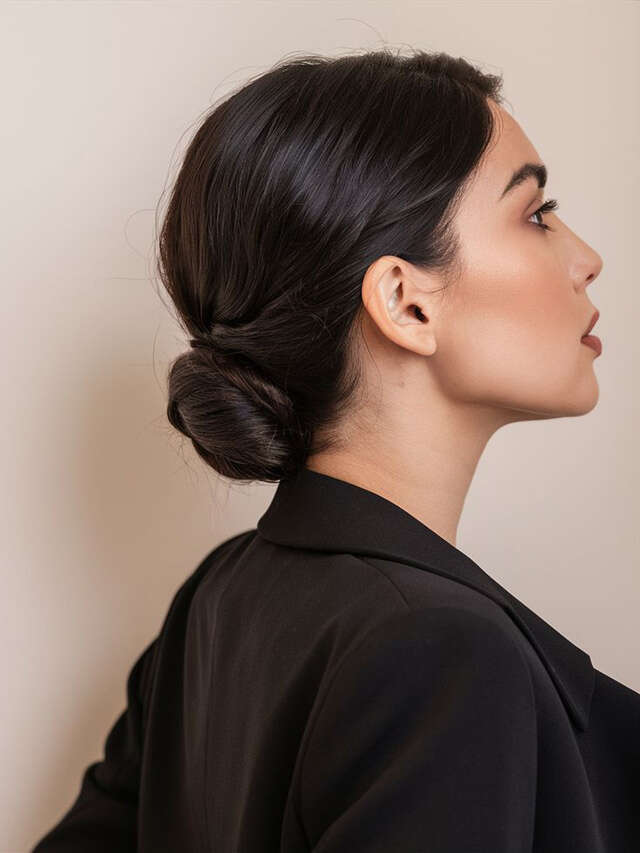
Thick, straight hair at neck length has a natural weight that makes a low bun sit cleanly without slipping. The dark brown color reads as solid and polished, which is exactly what a sleek nape bun needs. This style suits all face shapes because the bun sits low enough to avoid pulling at the temples. Ask your stylist for a neck length cut that can be gathered into a neat low bun. The density of the hair means the bun holds its shape without pins fighting the weight, and the straight texture keeps the surface smooth. A trim every eight to ten weeks keeps the ends blunt and the line sharp.
Slicked Back Fine Hair Low Bun

Fine hair and a slicked back bun have a complicated relationship. The sleek finish requires product, a strong hold gel or hairspray applied before smoothing, but the result is a tidy, professional shape that lasts. A middle parting elongates a round face, and the lack of bangs keeps the line clean. The trade-off is that fine hair shows every flyaway, so this style benefits from a few minutes with a fine-tooth comb and a spritz of hairspray. A trim every eight to ten weeks keeps the ends from fraying. It is not a five-minute style, but the outcome looks deliberate.
French Braid To Low Bun Updo
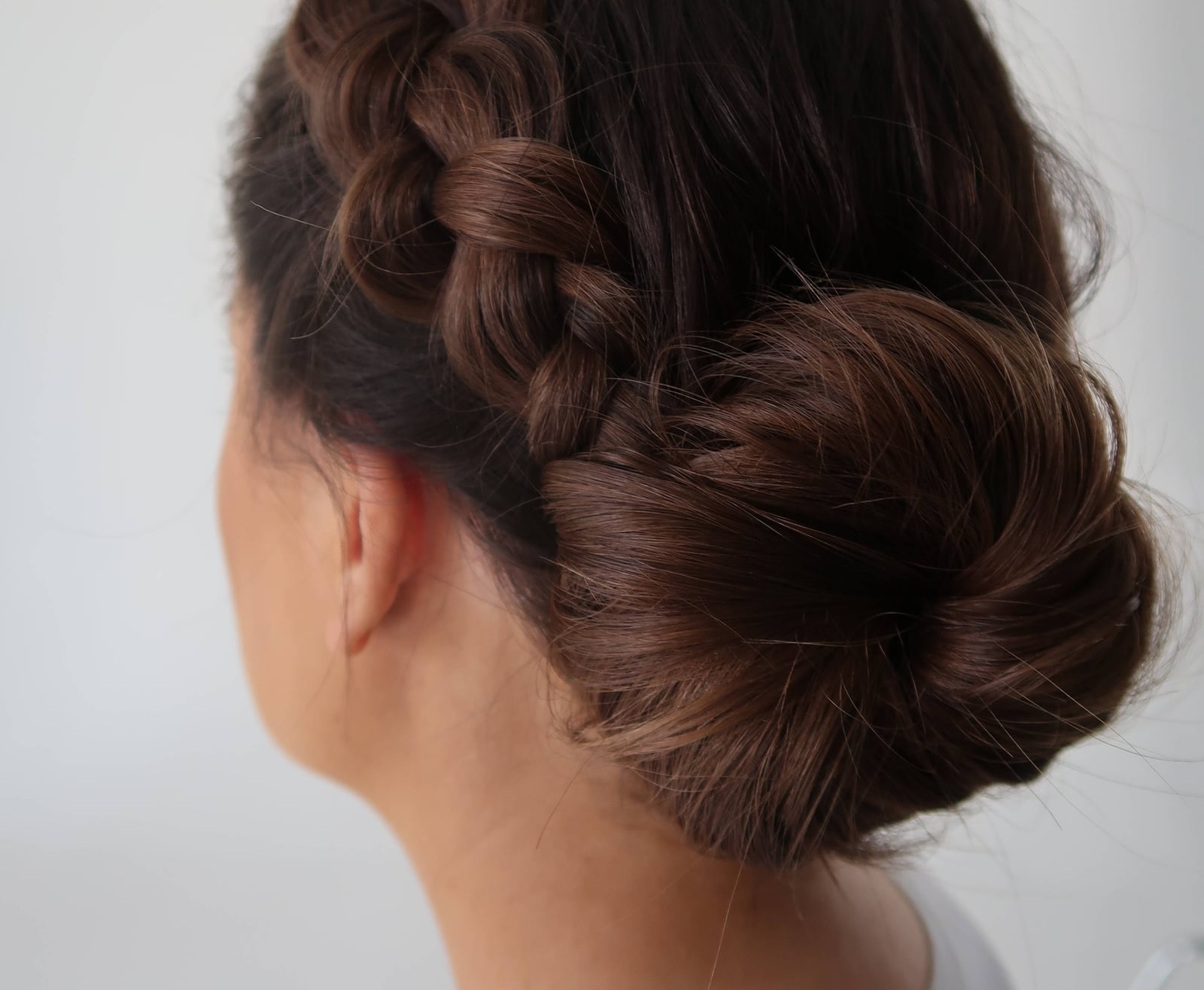
The braid does not stop where it usually would. Instead of ending at the nape, the woven strands continue into a low, textured bun, creating a single continuous line of dark brown hair from crown to nape. The transition is the design: visible braid segments feed directly into the bun, which is secured without a visible elastic. Thick, wavy hair of mid-back length or longer provides the volume needed for the braid to read clearly and the bun to hold its shape. Most face shapes can wear this updo, though the backward pull works especially well for those who prefer hair off the face.
The technique requires precision. A stylist sections the crown, French braids to the occipital bone, then twists the remaining length into a bun, pinning it flat against the head. Ask your stylist for: French braid into a low bun. The hold is strong enough for a full workday, though a few bobby pins along the braid’s outer edge add insurance. A trim every eight to ten weeks keeps the layers from fraying the braid’s clean edges.
Honey Blonde French Twist Ponytail
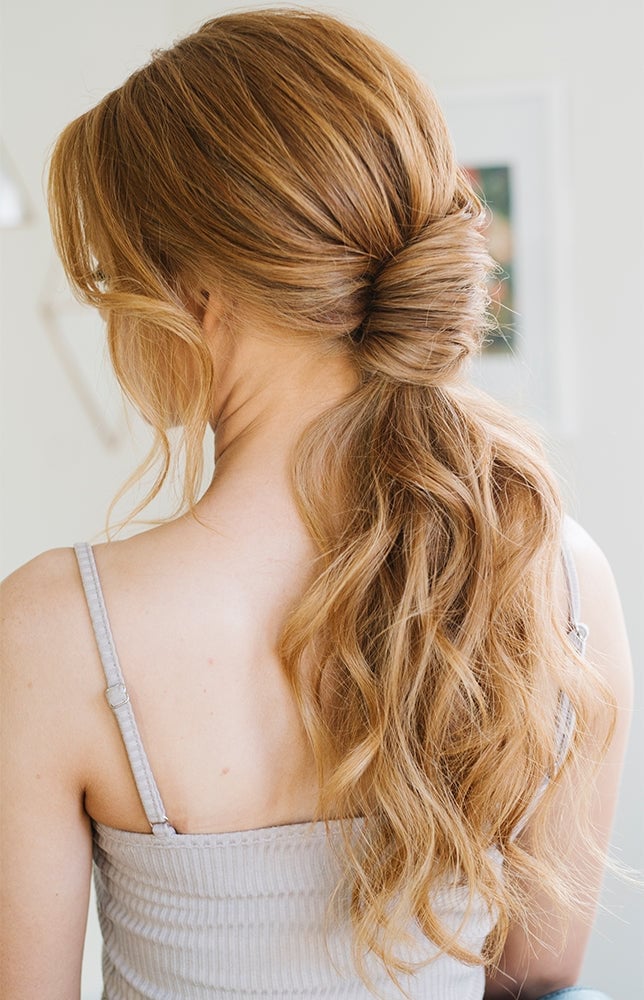
Will a French twist ponytail hold its shape on wavy hair without constant pinning? Yes, if the prep is right. The honey blonde hair here is sectioned into a low twist at the crown, with the ponytail falling straight down the back in a soft wave. Loose tendrils frame the sides, softening the line without making the style look undone. Medium density, wavy hair of mid-back length or longer works best. The wave pattern gives the twist natural grip, and the length ensures the ponytail has weight to hang cleanly. The loose tendrils soften angular faces, making this a versatile shape for round or square jawlines.
Ask your stylist for: low French twist ponytail, loose tendrils. A texturizing spray applied to dry hair before styling gives the twist enough friction to stay put for eight hours. The subtle highlights in the honey blonde base add dimension to the twist’s folds. A trim every eight to ten weeks prevents the ends from thinning out.
Dark Brown Pixie Bob With Short Bangs
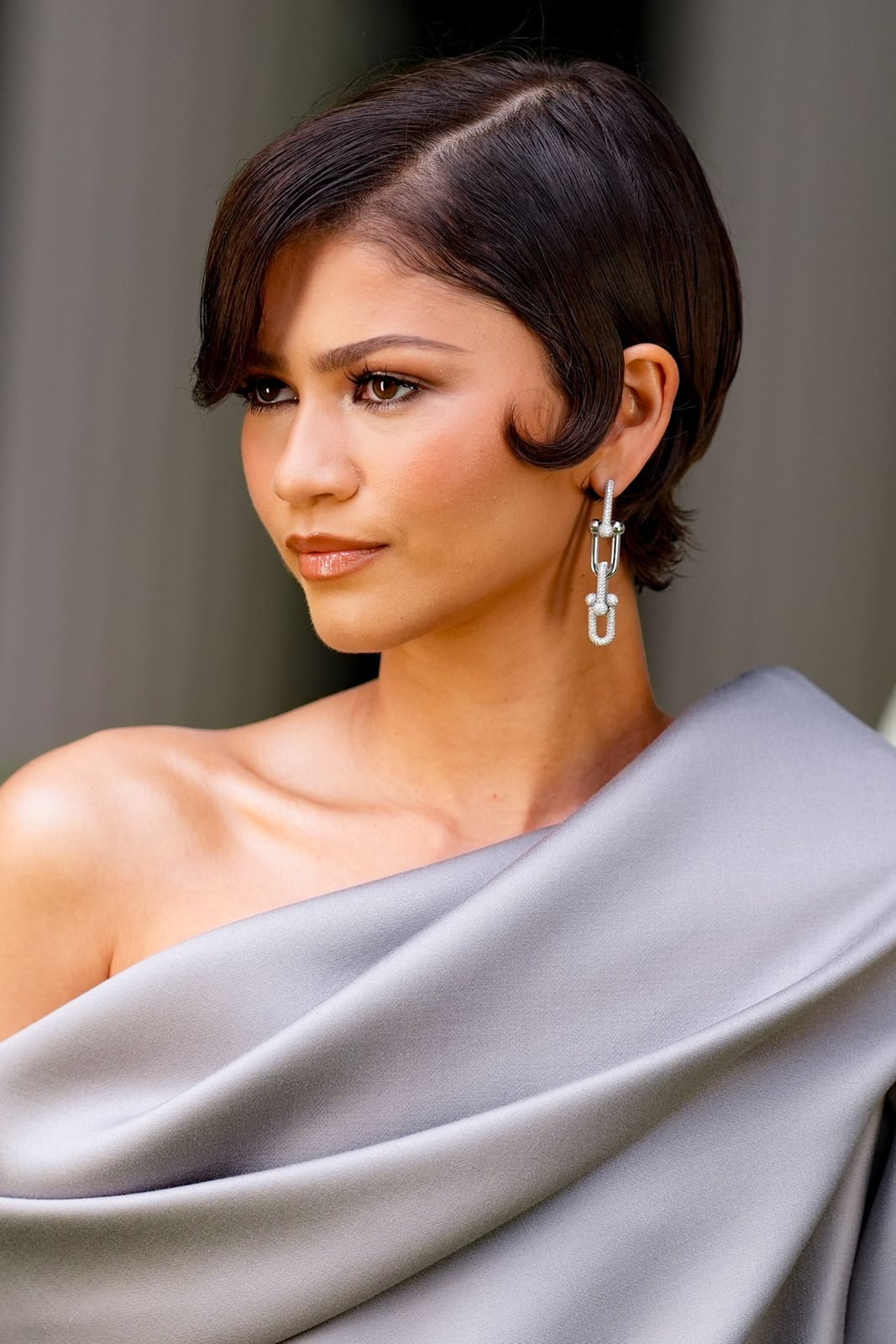
Short bangs and a pixie bob together can look severe on the wrong texture, but on fine, straight hair they deliver sharp polish. The ear-length cut is slicked back from the face, with the short, side-swept bangs breaking the clean line at the forehead. The dark brown color keeps the look monochrome, so the style appears deliberate. Fine, straight hair of ear length is the ideal candidate. The lack of bulk means the cut holds its shape without puffing. The short bangs complement oval and round faces by shortening the visual length of the face. Ask your stylist for: ear length pixie bob, short side-swept bangs.
Sharp Black Pixie Cut With Side Swept Bangs
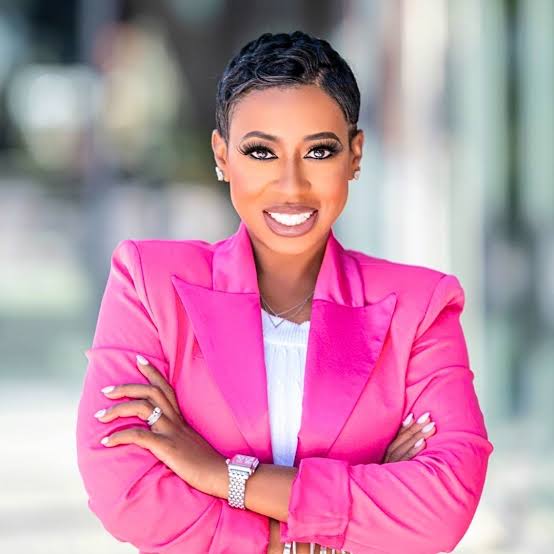
A sharp pixie is not a softer pixie with more gel. The difference is in the cut geometry: the black hair here is cut with a blunt perimeter and a side parting that creates a clean, asymmetrical line across the top. The side-swept bangs are cut to a precise point, not feathered, so they sweep across the forehead without wispiness. The smooth blowout finish adds gloss but no volume, which is the point. This is a structured shape that relies on precision, not lift. Fine, straight hair of ear length holds the line best, and the side-swept bangs soften angular faces without hiding the cut’s architecture. Ask your stylist for: ear length sharp pixie cut, side-swept bangs.
Sleek Black Pixie With Side Swept Bangs and A Woman’S Fine
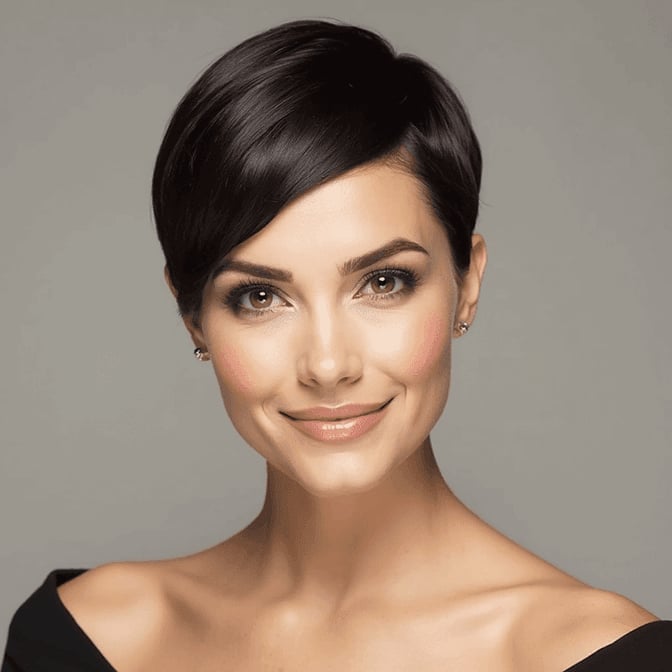
How do you ask for a pixie that looks polished, not spiky? Start with the finish. The black hair here is cut to ear length with side-swept bangs, then blow-dried with a directional brush to create a smooth, sealed surface. The key words are “sleek” and “blowout”; the stylist uses a smoothing cream and a small round brush to train the hair forward and down, eliminating any lift at the crown. Fine, straight hair of ear length is the natural match, as the lack of texture lets the smooth finish read clearly. The side-swept bangs balance the forehead width on oval and heart-shaped faces. Ask your stylist for: ear length sleek pixie, side-swept bangs.
Textured Black Pixie Cut
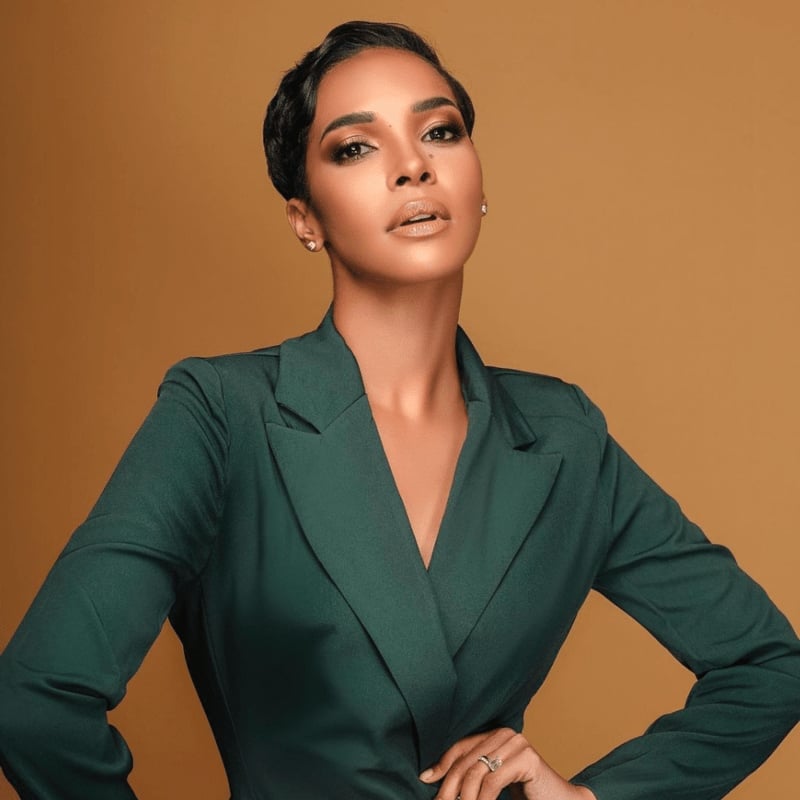
The textured black pixie cut works because it doesn’t pretend to be anything else. Cut to ear length with short bangs and a side parting, the fine, straight texture gives it sharp, clean lines that hold their shape through a workday. It suits angular faces well, since the soft texture at the crown balances stronger jawlines. Ask your stylist for an ear length pixie cut with textured bangs. The daily styling is simple: a matte paste or wax defines the pieces, and a trim every four to six weeks keeps the silhouette from drifting into shag territory.
Silver Gray Bob With Voluminous Waves
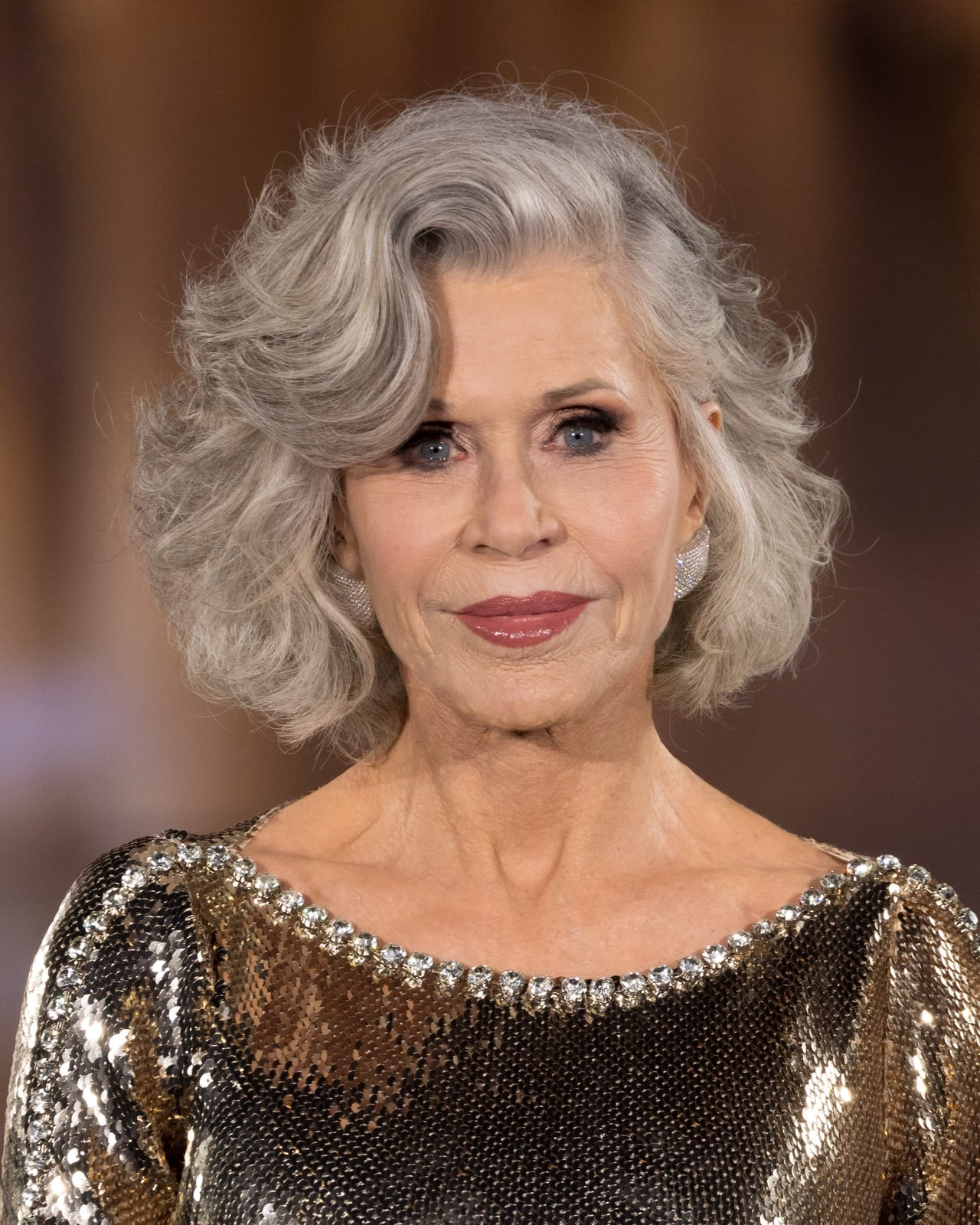
Voluminous waves on a silver gray bob are built, not born. The technique starts with a volumizing spray applied to damp, fine hair, then a round brush lifts each section at the root while the dryer shapes the wave. The side parting and side-swept bangs add movement to the ear length cut, giving fine hair the appearance of density. Ask your stylist for an ear length bob with voluminous waves and side-swept bangs. The result holds for a full day, though the volume does soften as the hours pass.
Thick Black Curls With Side Swept Bangs
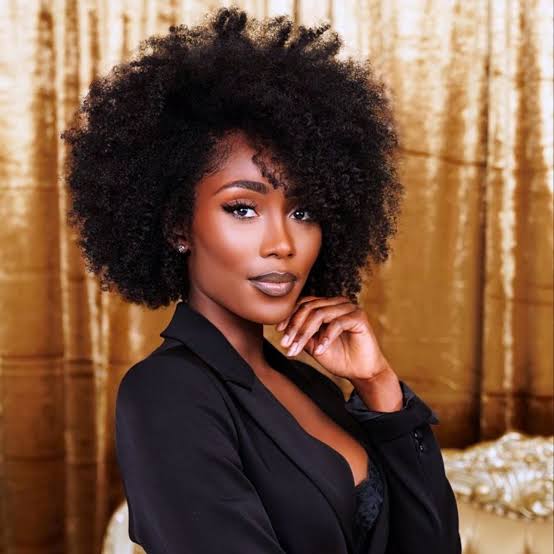
Thick, black hair finally gets its due with this shoulder length style. The natural curls are voluminous without being overwhelming, and the side-swept bangs break up what could be a heavy mass of texture. It genuinely suits round and square faces, since the diagonal line of the bangs softens the angles without hiding them. Ask your stylist for shoulder length natural curls with side-swept bangs. A curl-defining cream and either air-drying or diffusing keeps the pattern intact, and a trim every eight to ten weeks prevents the ends from turning frizzy.
Shoulder Length Curly Black Blowout
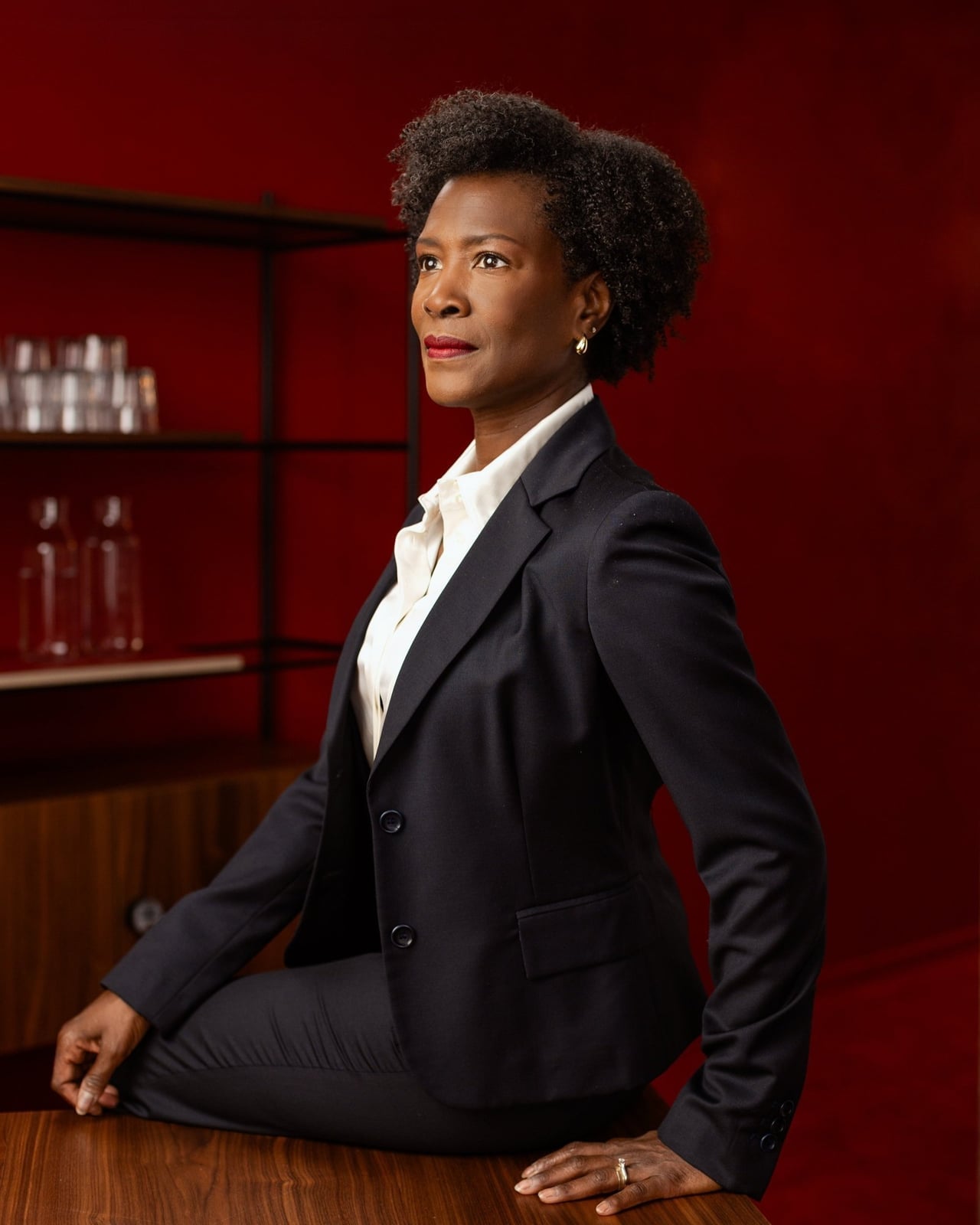
Defined curls that still look professional start with a blowout that respects the natural texture instead of fighting it. On shoulder length black hair, the stylist uses a diffuser to dry the curls with their pattern intact, then smooths the ends to control the volume. The middle parting keeps the shape balanced. Ask your stylist for a shoulder length natural curly blowout. Product before diffusing locks in the definition, and the style holds for a full workday, though the roots tend to flatten by evening.
Shoulder Length Natural Curly Blowout, Mid-Back
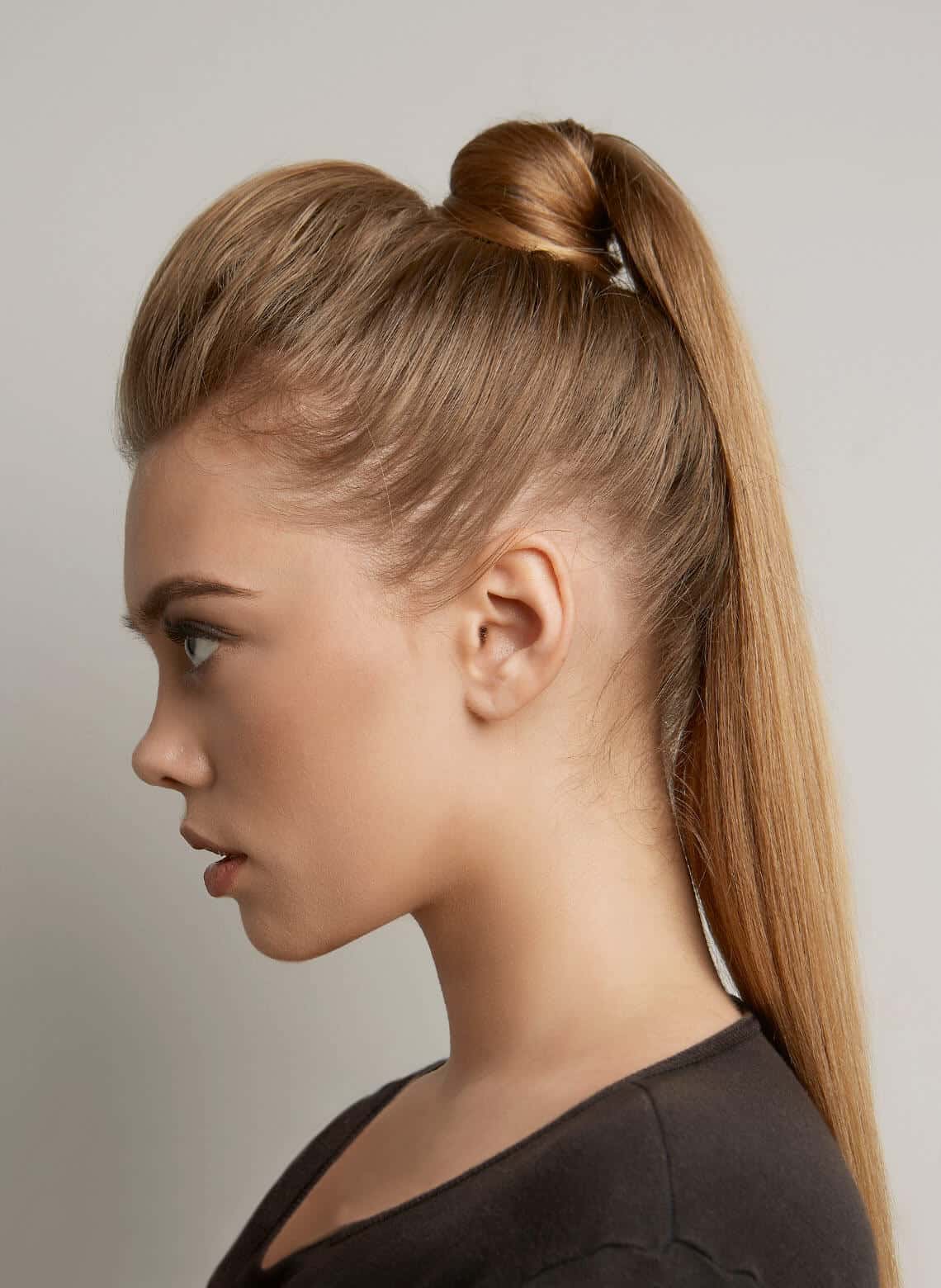
A high ponytail on fine, straight blonde hair is a lesson in physics. The hair is pulled back tight from a middle parting at the crown, and the length extends to mid-back, which means the weight is working against you. The hold depends on how well the base is secured; a firm elastic at the crown keeps it upright, but fine texture can slip over several hours, especially if the hair is freshly washed and too smooth.
Ask your stylist for a mid-back high ponytail with a sleek finish. The styling takes under ten minutes with a brush and an elastic, and a light texture spray at the roots helps the ponytail grip its position. A trim every eight weeks keeps the ends from splitting, which matters because split ends make the whole thing look undone.
Collarbone Afro Blowout
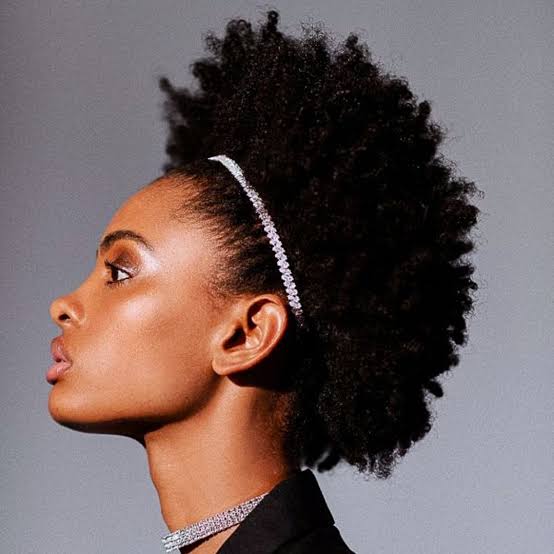
A collarbone-length afro blowout is not the same as leaving your coil pattern loose. The difference is deliberate volume with a defined shape, achieved by stretching each section with a blow-dryer and a pick. Thick, coily hair can hold the lift without deflating by lunch. The middle part keeps the shape balanced. Ask your stylist for: collarbone length afro, middle part. A wide-tooth comb and a dab of oil are all you need to reset the shape between washes. Plan a trim every 10 to 12 weeks to keep the ends from thinning out.
Shoulder Length Natural Afro
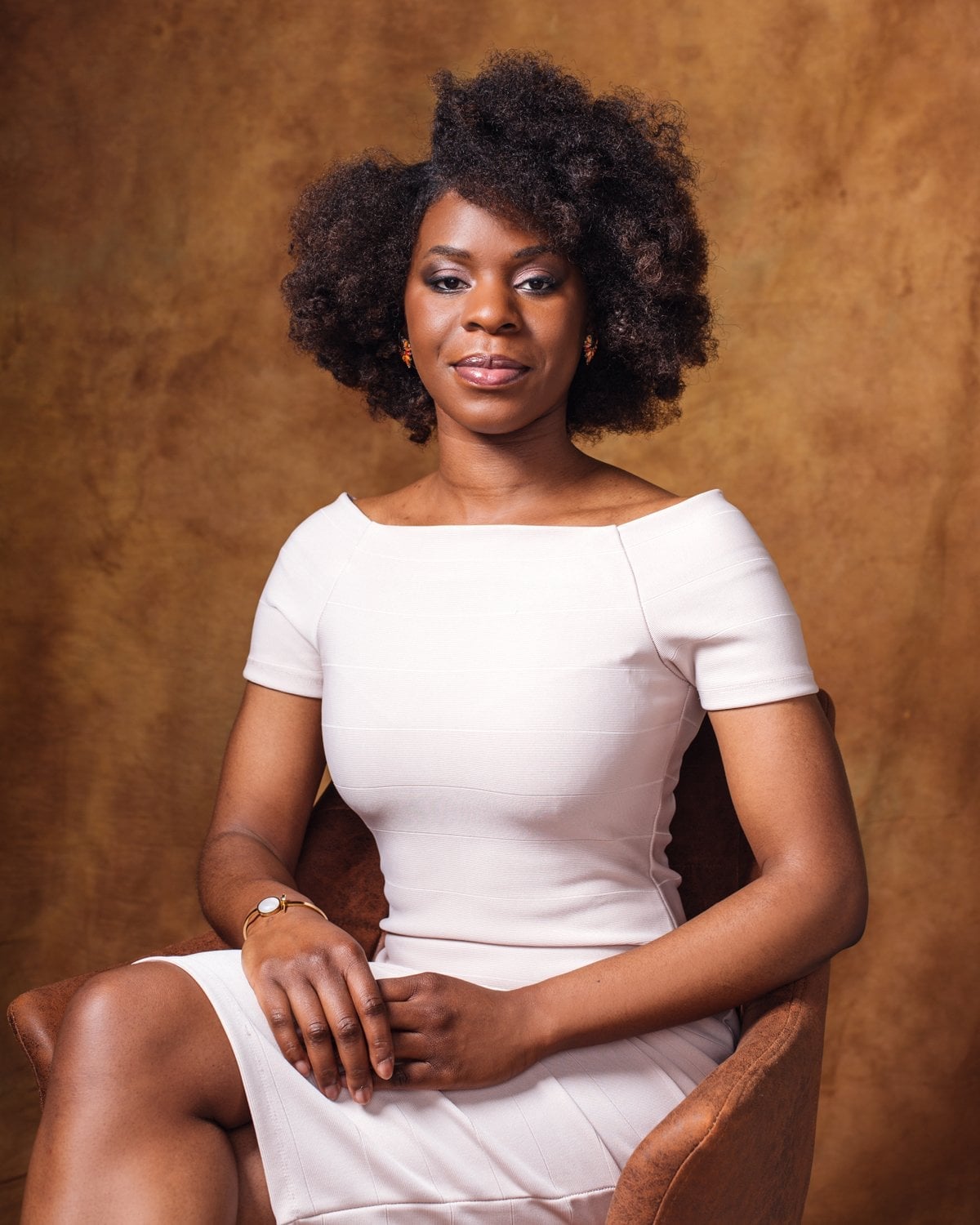
A shoulder-length natural afro is the definition of low-intervention styling. The goal is not a perfect sphere but a shape that follows your coil pattern and sits where it lands.
Shampoo and condition as usual, then apply a leave-in while the hair is damp. Use a pick to lift at the roots and let it air-dry. No heat, no manipulation once it sets. Ask your stylist for: shoulder length natural afro. A trim every 10 to 12 weeks keeps the shape honest. The DIY time is about 15 minutes on wash day, with nothing to do the rest of the week.
Sleek Shoulder Length Bob
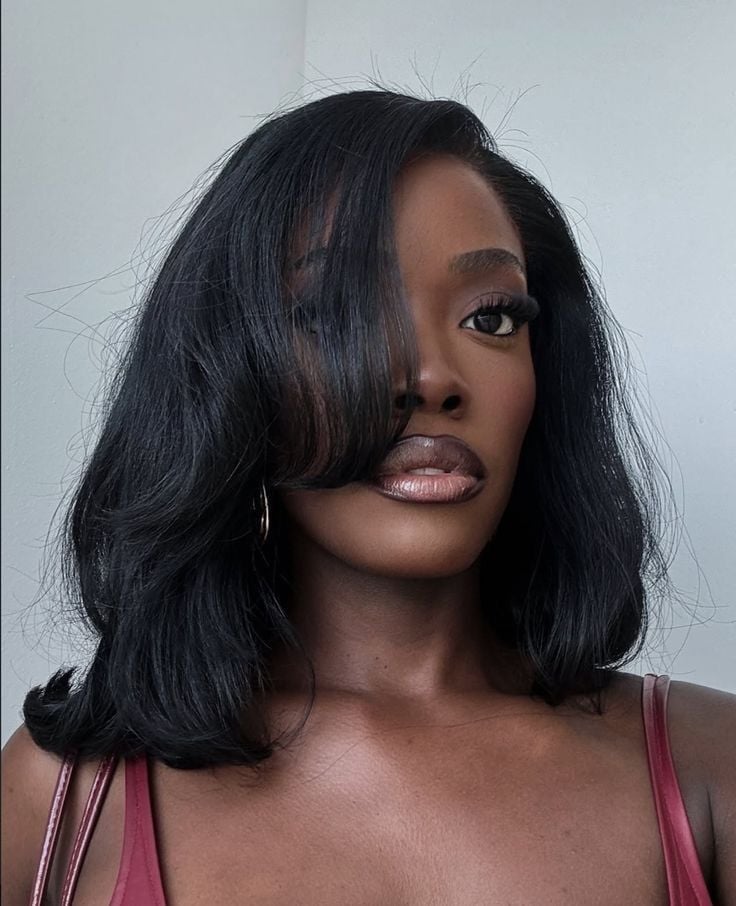
A shoulder-length bob with a side part and a glossy blowout looks straightforward until you try it on fine, straight hair. The trick is the cut: a blunt line that hits at the shoulder gives the illusion of density because there are no layers to thin the silhouette. This works best on hair that does not need a lot of heat to lie flat. Ask your stylist for: shoulder length sleek bob, side part. The finish comes from a round brush and a flat iron, not product buildup. A trim every six to eight weeks keeps the line sharp. Skip this if your hair is thick or wavy, as the blunt weight can sit like a helmet.
Ash Blonde Chignon With Loose Tendrils
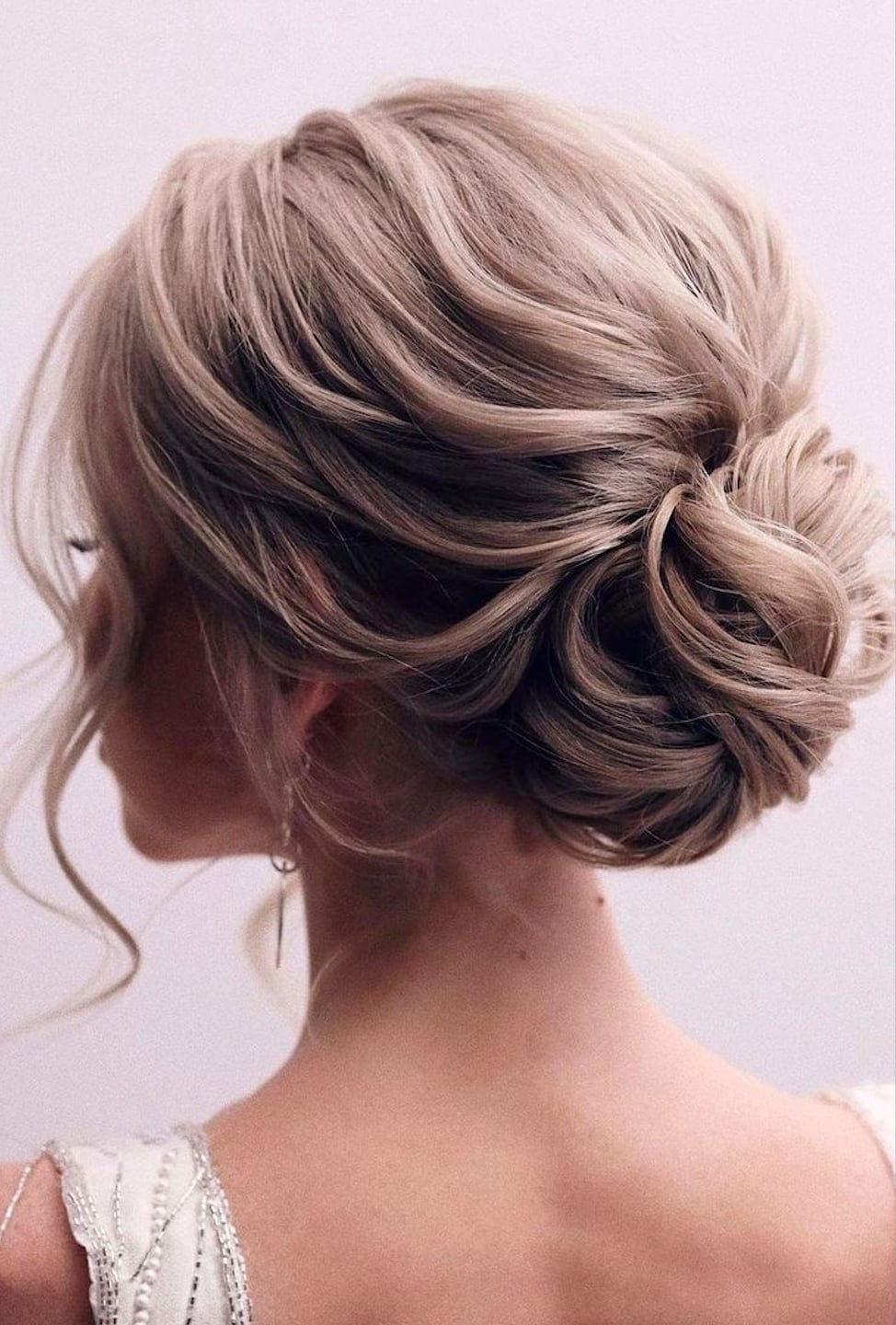
A soft, voluminous chignon with loose tendrils is a polished updo that avoids a severe look. The style is built by twisting sections into a low bun and pinning them loosely, then pulling a few face-framing pieces free. It works best on wavy, thick hair that has enough grip to hold the pins. Ask your colorist for: ash blonde hair. The ash tone and subtle highlights keep the color from washing out against the updo shape. The trade-off: tendrils can drift out of place by hour three of an event, so a light-hold hairspray is not optional. This is a salon style that suits collarbone length or longer hair, and it works well for a work presentation or a wedding guest look. If you have fine or very straight hair, the bun may not hold its volume without a lot of backcombing.
Blonde Mid-Back High Ponytail
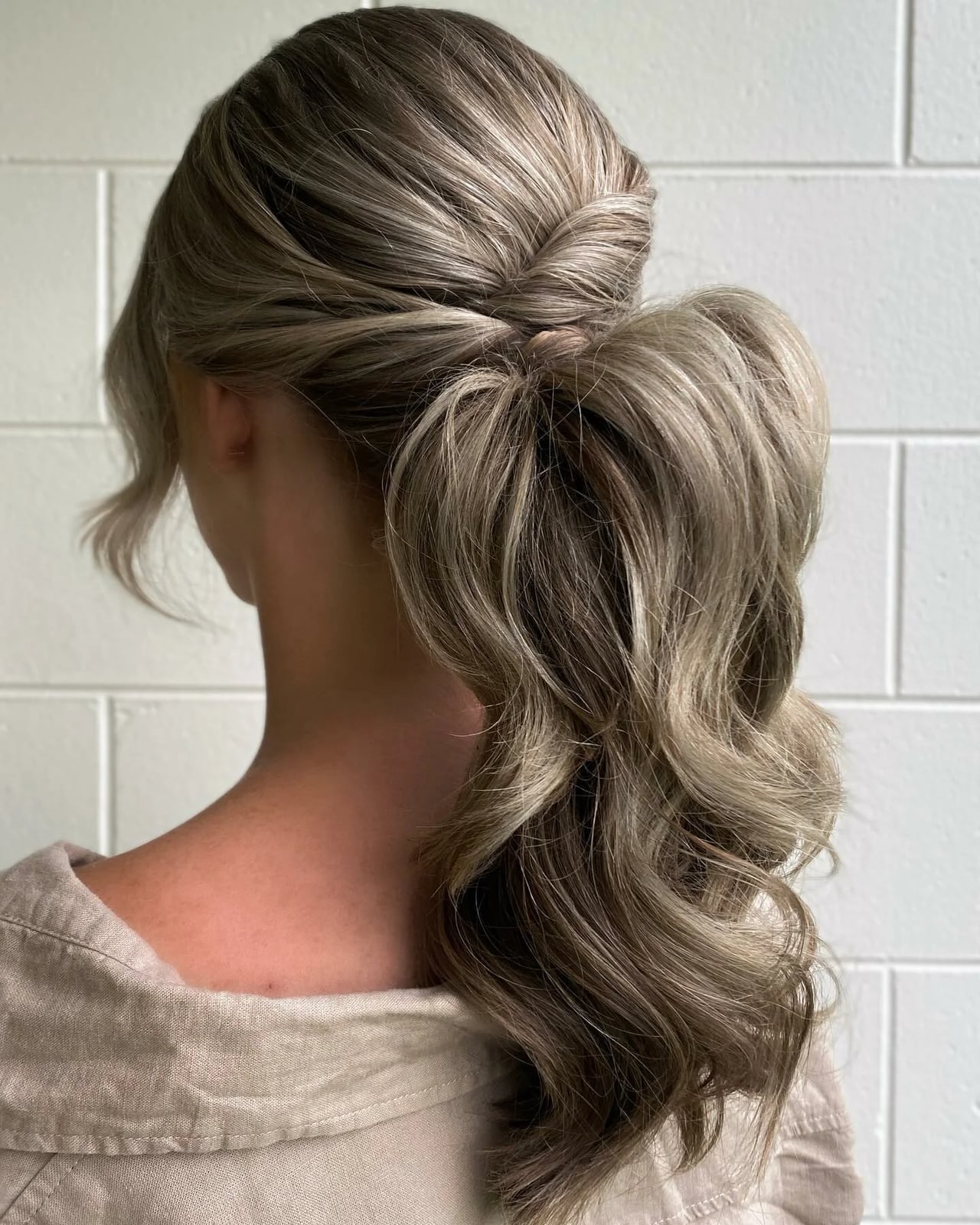
A high ponytail that reaches mid-back length relies on tension and a clean part to look polished. The hair is brushed smooth from the crown and secured at the top of the head, with the tail falling straight down the back. Fine, straight hair can be pulled tight without creating bumps. Ask your colorist for: ash blonde hair with highlights. The highlights add dimension to an otherwise uniform tail. A smoothing cream before the elastic and a firm-hold spray after will keep flyaways at bay for the day. Expect a trim every eight to 10 weeks. The middle part at the crown separates this from a gym ponytail.
Ash Blonde Braided Ponytail
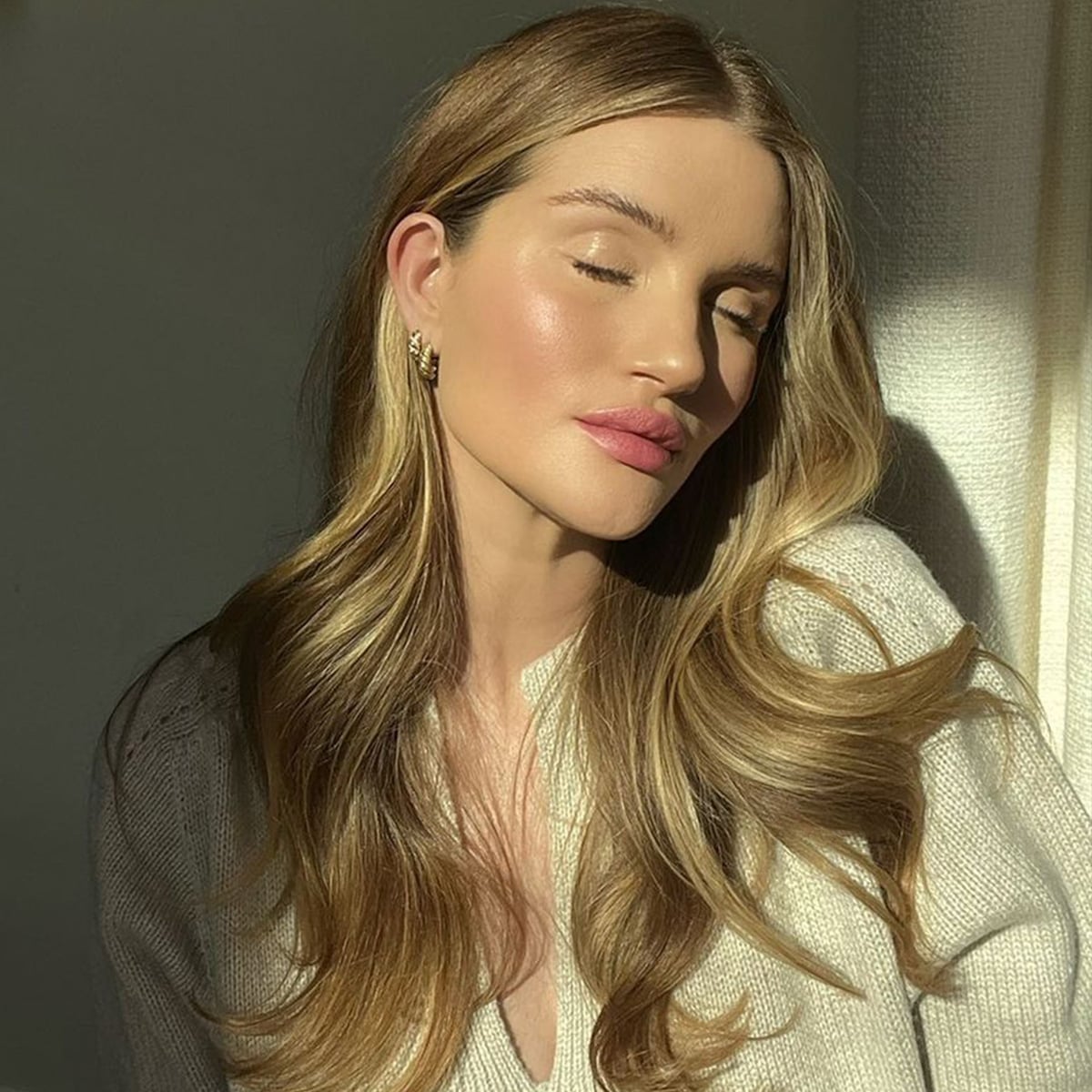
Can air-dried fine hair really hold a professional shape through a full workday? This mid-back length ash blonde ponytail with subtle highlights and a braided detail answers that question with a yes. The middle part and wavy texture give it structure without heat, and the braided accent keeps the ponytail from looking like a rushed afterthought. Ask your stylist for: mid-back length braided ponytail. Fine hair needs a texturizing spray for grip before braiding, and a trim every eight to ten weeks maintains the shape.
Blonde Chunky Dutch Braid
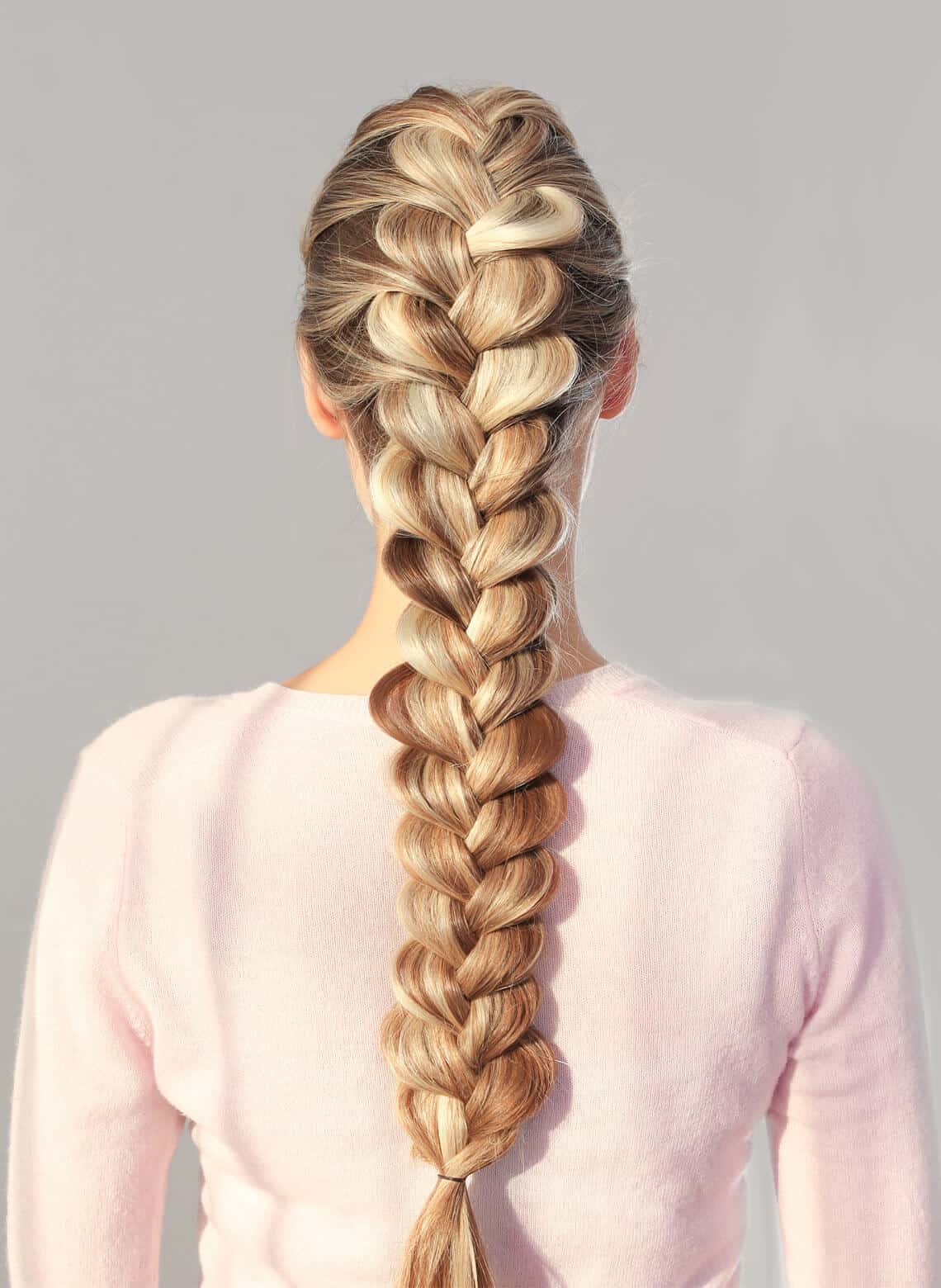
The chunky Dutch braid is not a delicate ribbon braid; it sits proud, woven from thick sections that show every strand of blonde highlights. This mid-back length version uses layers to keep the braid from looking like a single heavy rope. Ask your stylist for: mid-back length chunky Dutch braid. The thickness of the weave matters, so specify that you want the braid to be substantial rather than fine. Pull gently on the braid edges after weaving to soften the look.
Thick, wavy hair holds this style best, and the raised Dutch weave means it stays secure for a full day of meetings. A trim every eight to ten weeks keeps the ends clean for braiding.
Dark Brown Braids and Updo
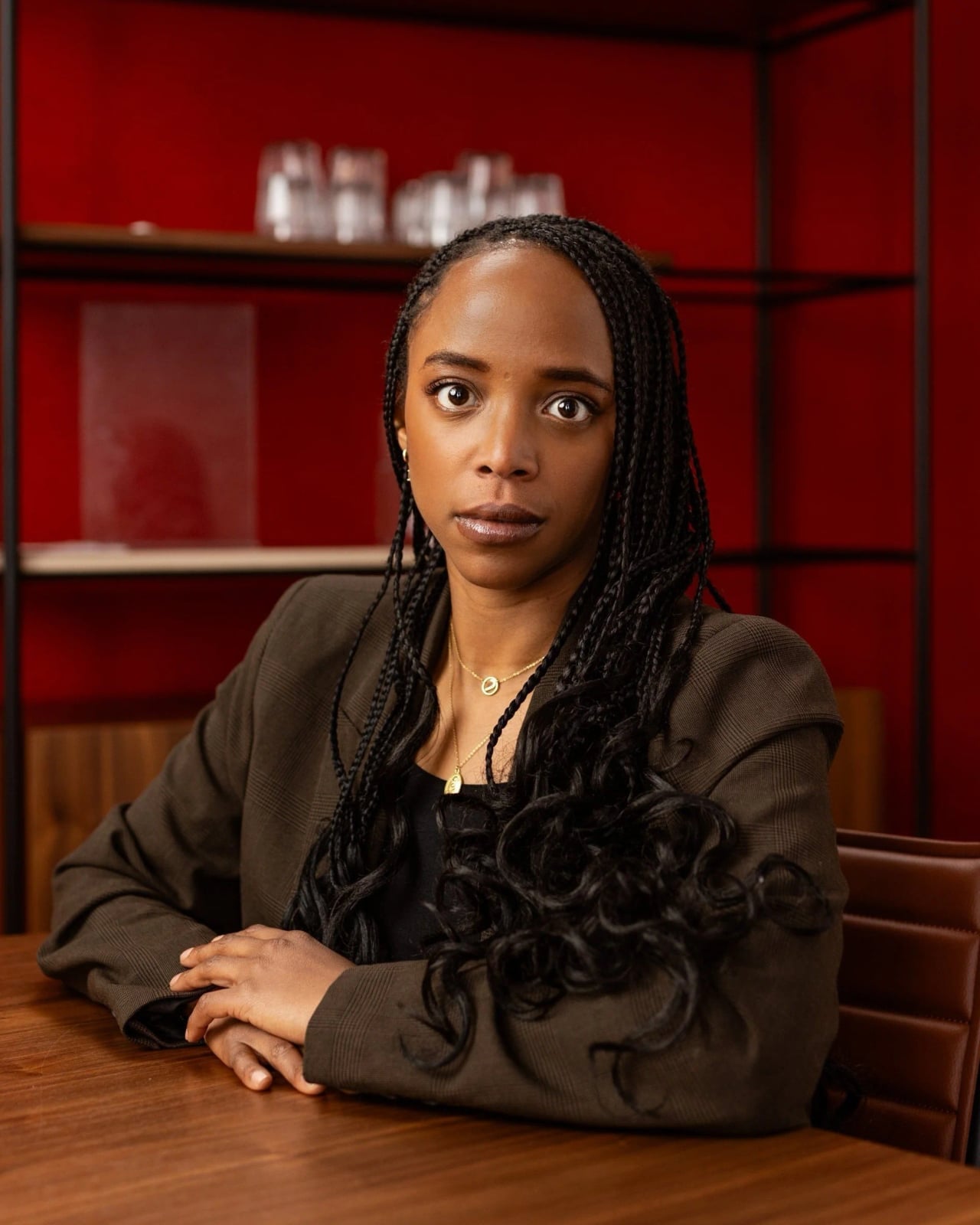
Simple box braids tend to hang loose, but this style takes the braids into a structured updo. The dark brown, thick, coily hair is sectioned into intricate box braids that are then twisted into an updo, with a few loose strands left soft at the edges. Ask your stylist for: mid-back length intricate box braids updo. The salon time is significant, about three to four hours, compared to a simpler braid style that takes half that.
This is a salon-only project. The style stays intact for days without redoing.
Thick Black Box Braids With Curls
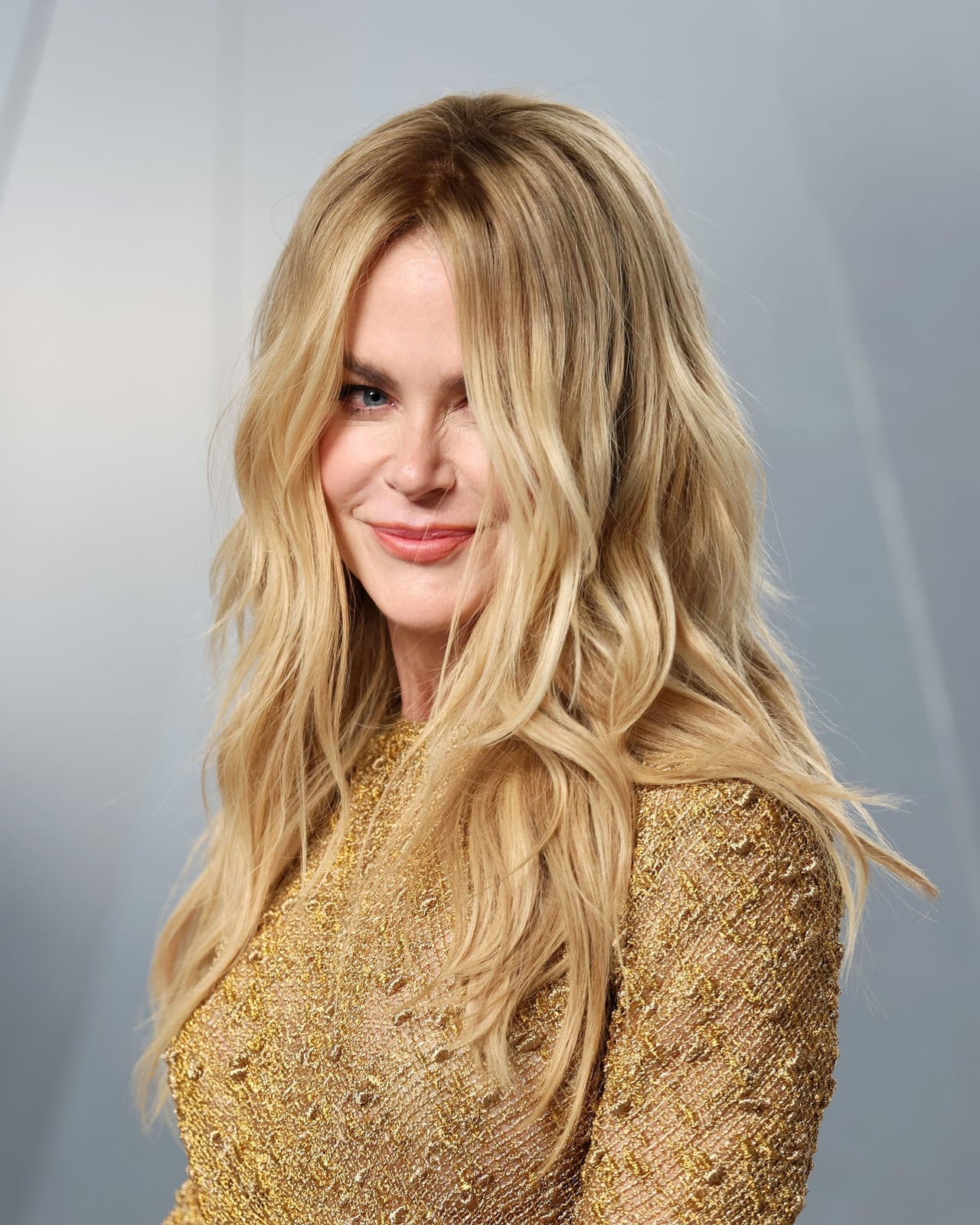
Box braids with loose curls at the ends change the silhouette entirely; the curls add movement and keep the braids from looking too uniform. This mid-back length version uses a middle part and thick, coily black hair woven into intricate sections. Ask your colorist for: mid-back length box braids with loose curls. The curls at the ends require a small amount of water and curl cream to redefine them between washes. A trim every eight to twelve weeks keeps the ends from fraying.
Mid-Back Blonde Layers Air Dried
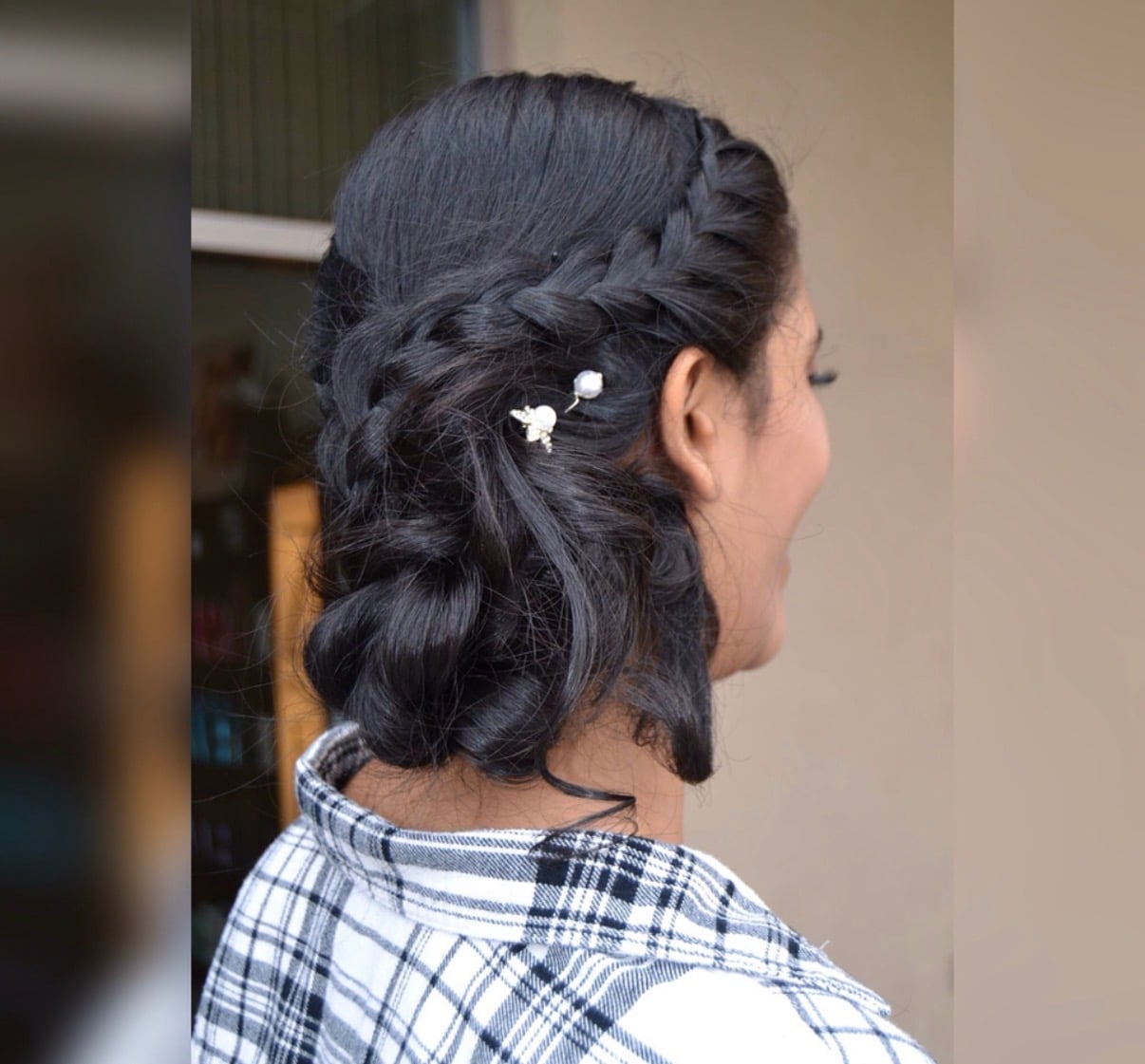
The mistake people make with air-dried layers is expecting them to look intentional without any product. This collarbone length dark brown braided updo sidesteps that problem entirely by using intricate braiding to create structure. Ask your stylist for: collarbone length intricate braids and updo. The thick, wavy texture holds the braids in place without pins sliding out. A texturizing spray before braiding gives grip, and a trim every eight to ten weeks keeps the ends neat enough to braid cleanly.
Final Thoughts
For fine hair, stick with blunt cuts and styles that add volume, like a layered bob or a sleek pixie. Thick hair benefits from layered cuts, well-structured buns, or intricate braids to manage density.
- Regular trims every 6-10 weeks maintain the shape of cuts like bobs and pixies.
- Deep conditioning treatments once a week keep color-treated hair vibrant and smooth.
- Use heat protectant spray before blow-drying or heat styling to prevent damage.
- For updos, sleep on a silk pillowcase to minimize friction and frizz overnight.
- Toning treatments every 4-8 weeks can refresh blonde or highlighted shades.
A professional hairstyle is one that makes you feel confident and composed.