Purple hair dye is neither a single shade nor a single commitment. One person’s deep plum lob is another person’s pastel pixie, and the gap between them is just a conversation with your colorist.
This collection of 25 looks spans everything from subtle face-framing streaks on a dark base to full-on electric violet. You will find low-upkeep balayage that grows out gracefully, all-over color that demands a four-week toning rhythm, and options for fine hair that needs a blunt baseline to hold shape. Purple Hair Dye works on straight, wavy and coily textures, and the right technique solves the visible grow-out line that keeps many people from trying it.
Deep Plum Purple Collarbone Lob
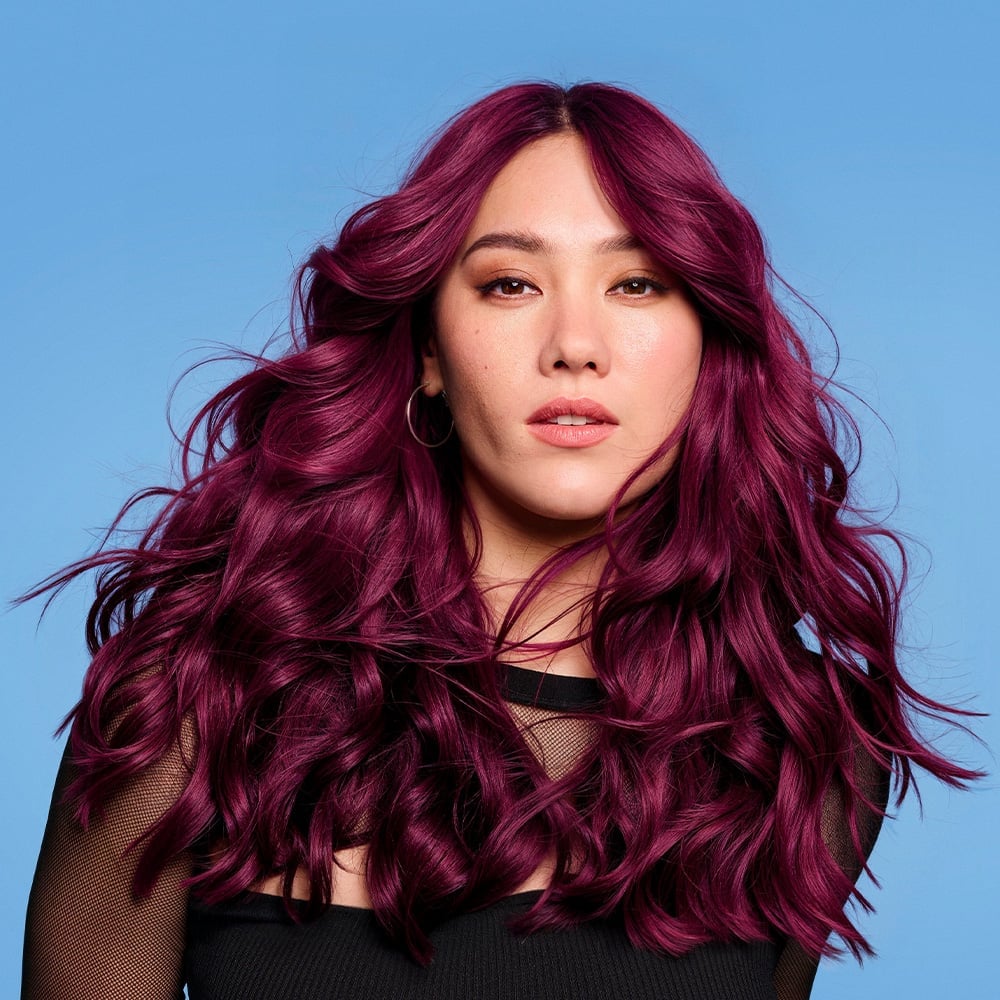
The collarbone length here is a classic lob, especially when layers and curtain bangs are adding movement. On wavy, medium density hair, that cut keeps the shape from falling flat while the deep plum purple shade gives it a glossy, rich finish that reads as more polished than playful. A middle parting and soft waves make the most of the texture without demanding much styling effort. Ask your colorist for: collarbone length layers with curtain bangs in deep plum purple. Apply a finishing product to the ends after drying to keep the shine where it counts, and a trim every six to eight weeks holds the line.
Uniform Deep Purple Collarbone Cut
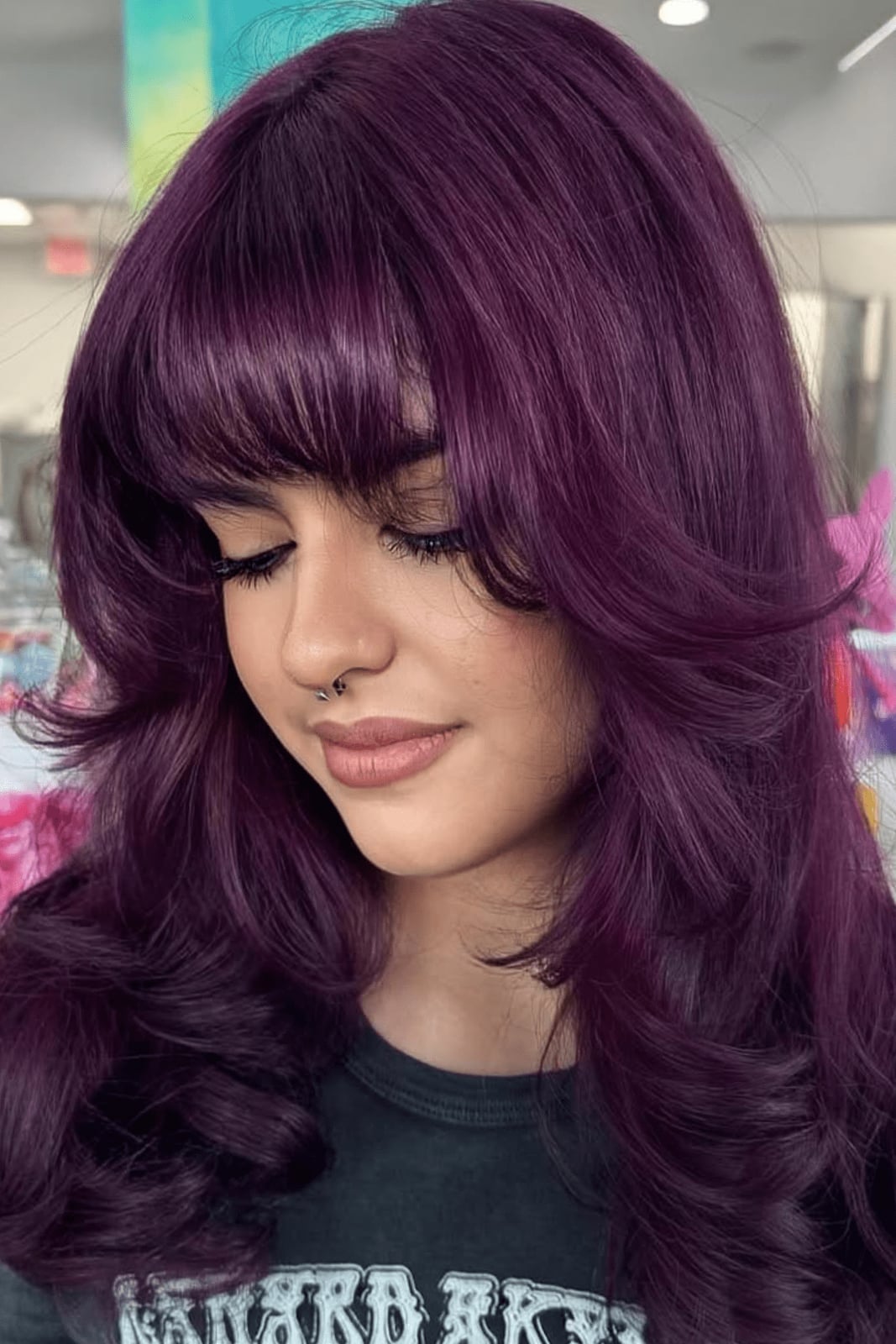
A solid, uniform deep purple on thick, wavy hair is a commitment that pays off in saturation. The key is getting the color to read evenly from root to tip, which means the stylist has to lift the hair enough to take the shade without letting it turn muddy. Long layers and curtain bangs keep the collarbone length from feeling heavy, and a voluminous blowout shows off the all-over color. Ask your colorist for: collarbone length with long layers and curtain bangs, solid deep purple color. Volumizing mousse before drying gives the roots lift, and a color-depositing conditioner keeps the tone from fading to a washed-out violet.
Dark Base With Vibrant Purple Face-Framing
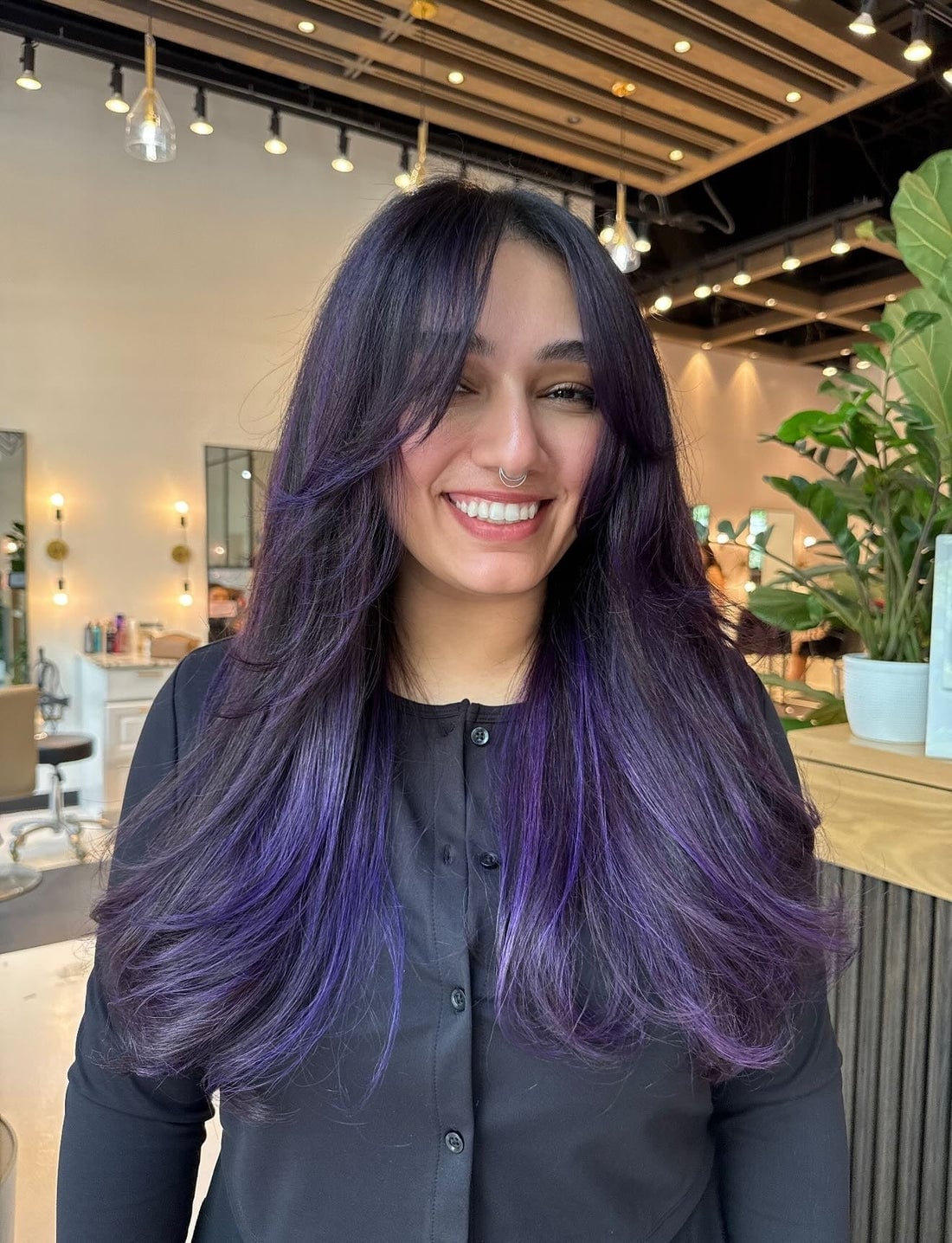
How do you get purple front and center without committing to an all-over color? You keep the base dark and let the vibrant purple highlights do the talking, especially in the face-framing pieces. On mid-back length, wavy hair with curtain bangs, this approach gives you a pop of color that moves with you, without the grow-out math of a full dye. The dark base also means less upkeep on the roots, which is the part most people dread. Ask your colorist for: dark base with face-framing purple highlights and curtain bangs. A heat protectant before styling is essential, and plan for a touch-up every six to eight weeks to keep the brightness sharp.
Rich Plum Color Mid-Back Layers
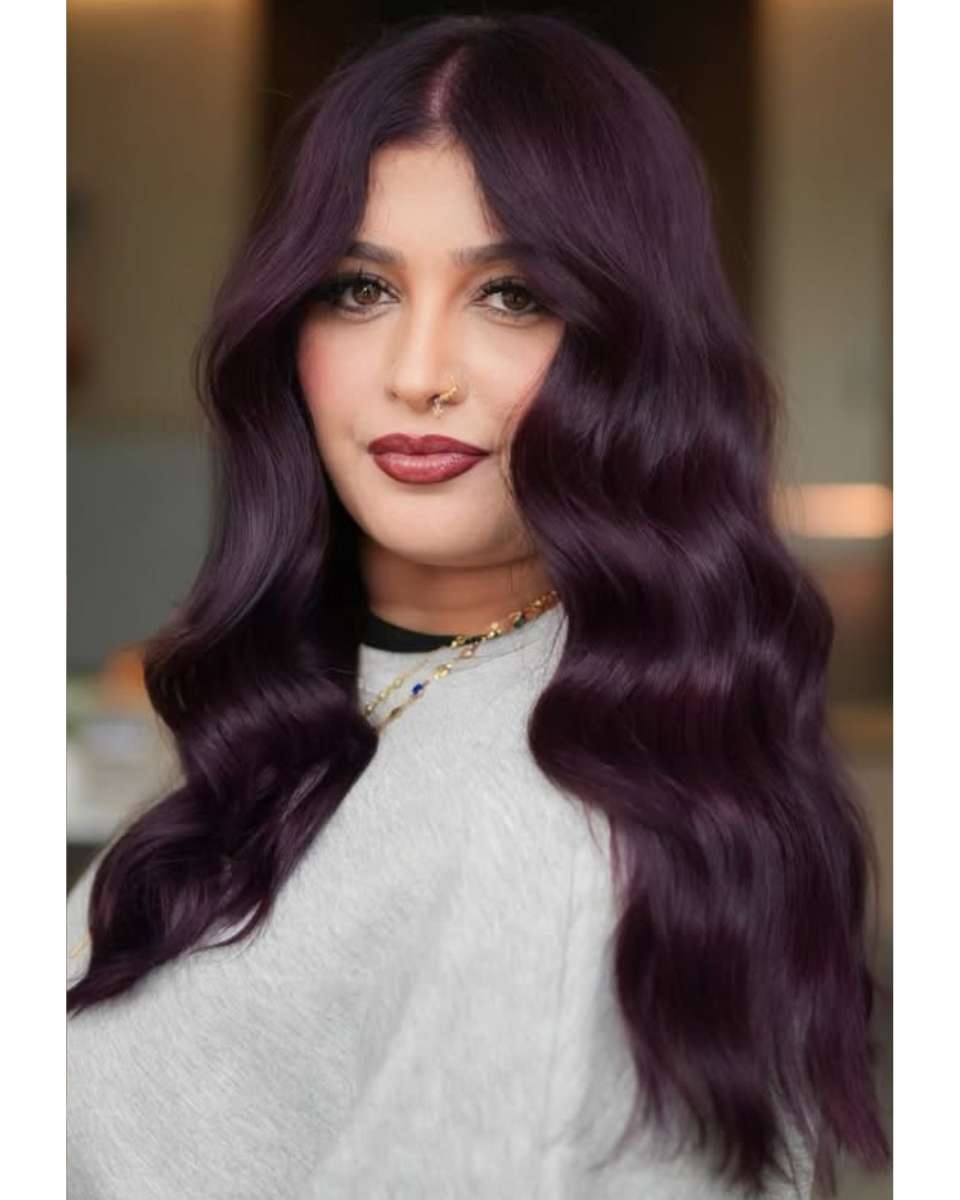
Rich plum tones on a dark base give mid-back length layers a depth that flat purple can’t touch. On thick, wavy hair, the color adds dimension to the waves, making them look layered rather than just colored. The back view here shows how the shade sits on the lengths, and the lack of bangs keeps the focus on the overall hue. Rich plum needs more maintenance than a darker shade. Ask your colorist for: mid-back length layers in a rich plum color. A glossing spray adds shine that keeps it looking fresh, and a trim every six to eight weeks prevents the layers from getting straggly.
Vibrant Purple With Violet Tones
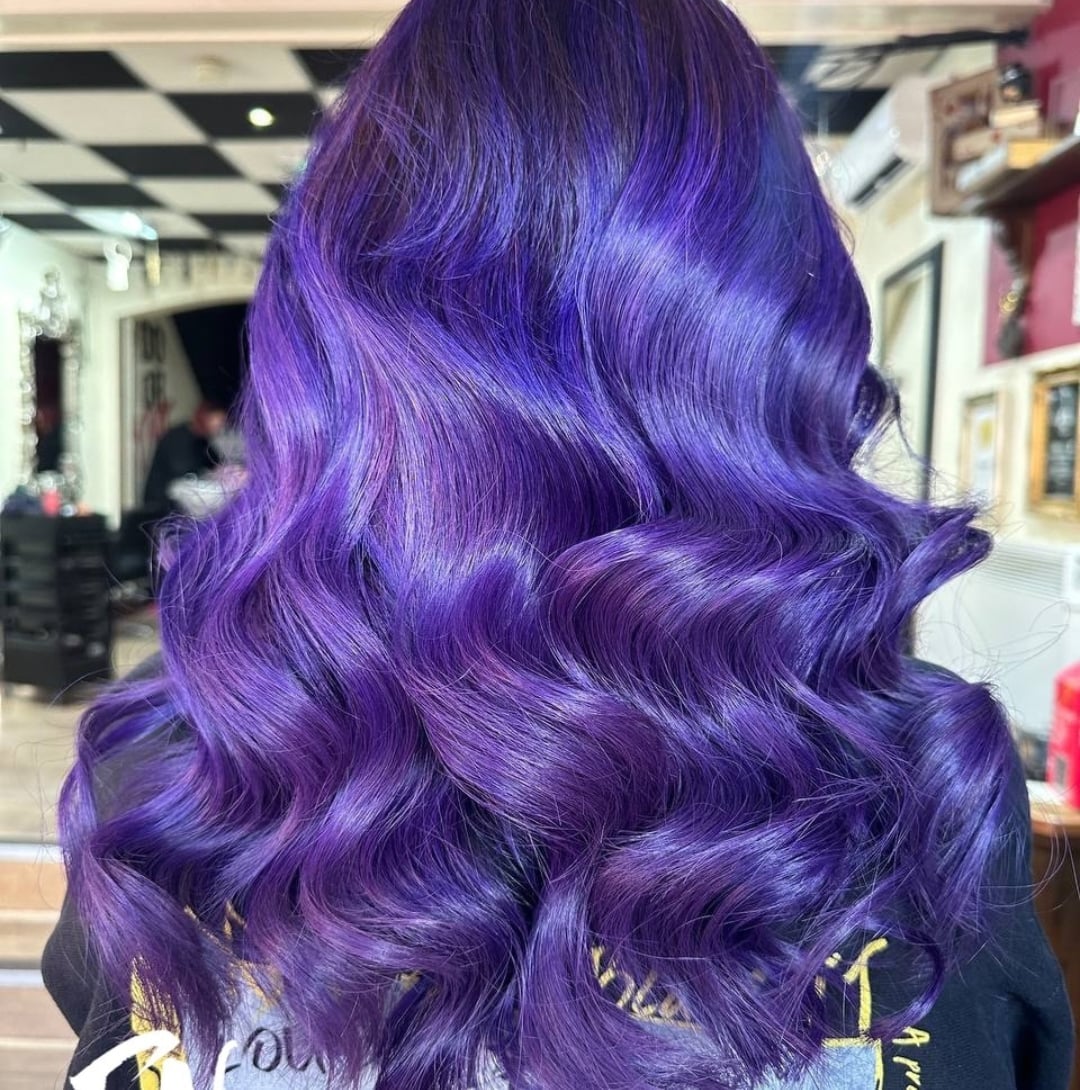
Set vibrant purple with violet tones against a solid purple and you’ll see the difference: the lighter violet undertones give the color a lift that makes it seem brighter and more alive. On thick, wavy hair at mid-back, this multi-tonal approach means the purple doesn’t sit flat, it shifts as the waves move. The back view shows the saturation, but it’s the dimension that sells it. Ask your colorist for: mid-back length with vibrant purple and violet tones. The upkeep is about keeping the tone from going brassy, so a color-safe shampoo and conditioner help, and letting hair air dry when you can preserves the hue longer.
Deep Purple Magenta Blend
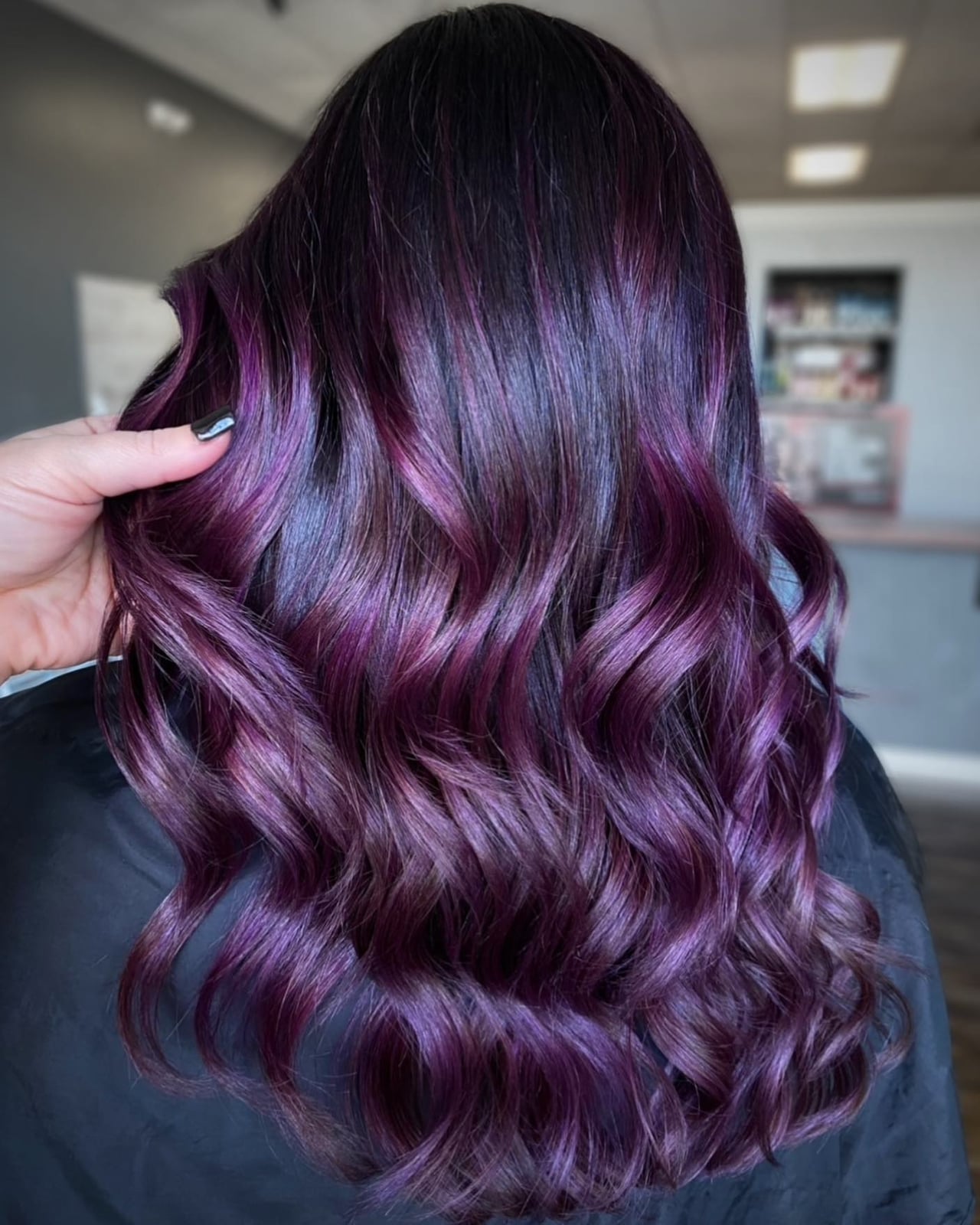
This purple magenta hair color works because the magenta never sits flat: the colorist weaves it through the deep purple base in fine pieces, so the two tones read as one dimensional shade rather than a stripe effect. On thick, wavy hair at mid-back length, the soft waves catch each tone differently, which is what gives the color its depth. Ask your colorist for: mid-back length hair with deep purple and magenta tones. The technique suits anyone with enough density to carry multiple tones without them blending into a muddy single shade.
Rich Deep Purple With Subtle Highlights
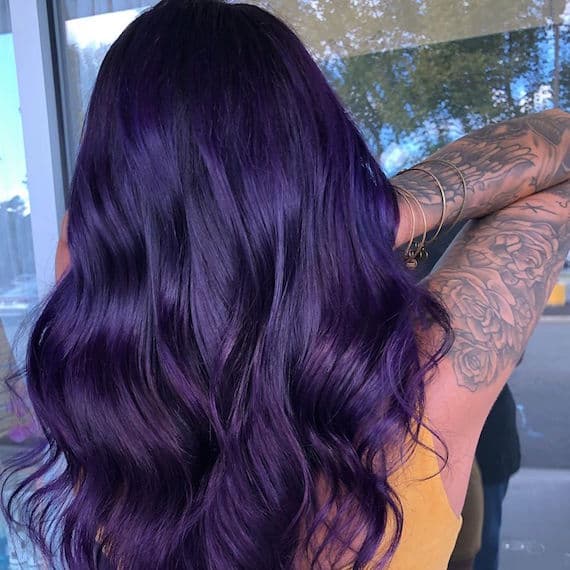
A deep purple base with subtle lighter highlights is a bold color choice that stays understated: the base carries the drama, while the highlights add just enough lift to keep the hair from looking flat. This suits thick, wavy hair at mid-back length, where the waves can show off the lighter pieces as they move. If your hair is fine or thin, the highlights can look sparse, so you would want them placed closer together.
The middle part and the wavy blowout help the highlights land naturally, like the color grew that way. Ask your colorist for: mid-back length with deep purple base and subtle lighter highlights. The subtle placement means grow-out is forgiving, though a root shadow can stretch the time between appointments even further.
Dark Purple With Lighter Balayage
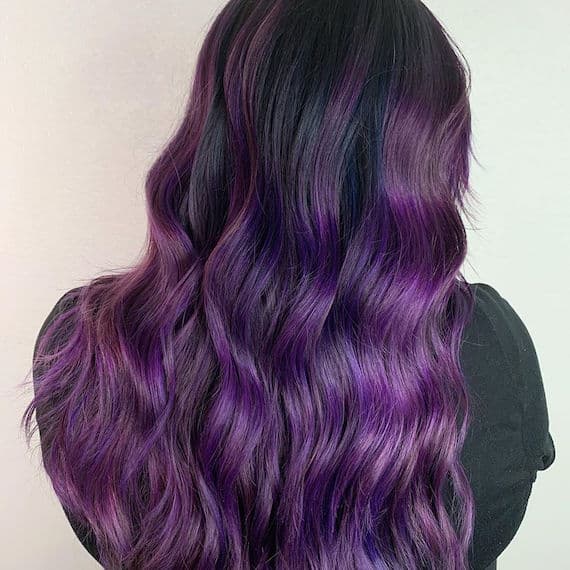
How do you ask for purple balayage hair without ending up with a stripe? You describe the placement, not just the color. The technique here starts with a dark purple base, then the colorist hand-paints lighter purple balayage from the mid-lengths down, so the lightest pieces concentrate around the waves and the ends.
Ask your colorist for: mid-back length with dark purple base and lighter purple balayage. This technique suits thick, wavy hair at mid-back length, because the layers and movement give the balayage depth. The grow-out is soft by design, so you are looking at a touch-up every few months, not every few weeks. A conditioner keeps the lighter ends from drying out, and a trim every eight to ten weeks keeps the shape honest.
Dark Brown With Purple Balayage
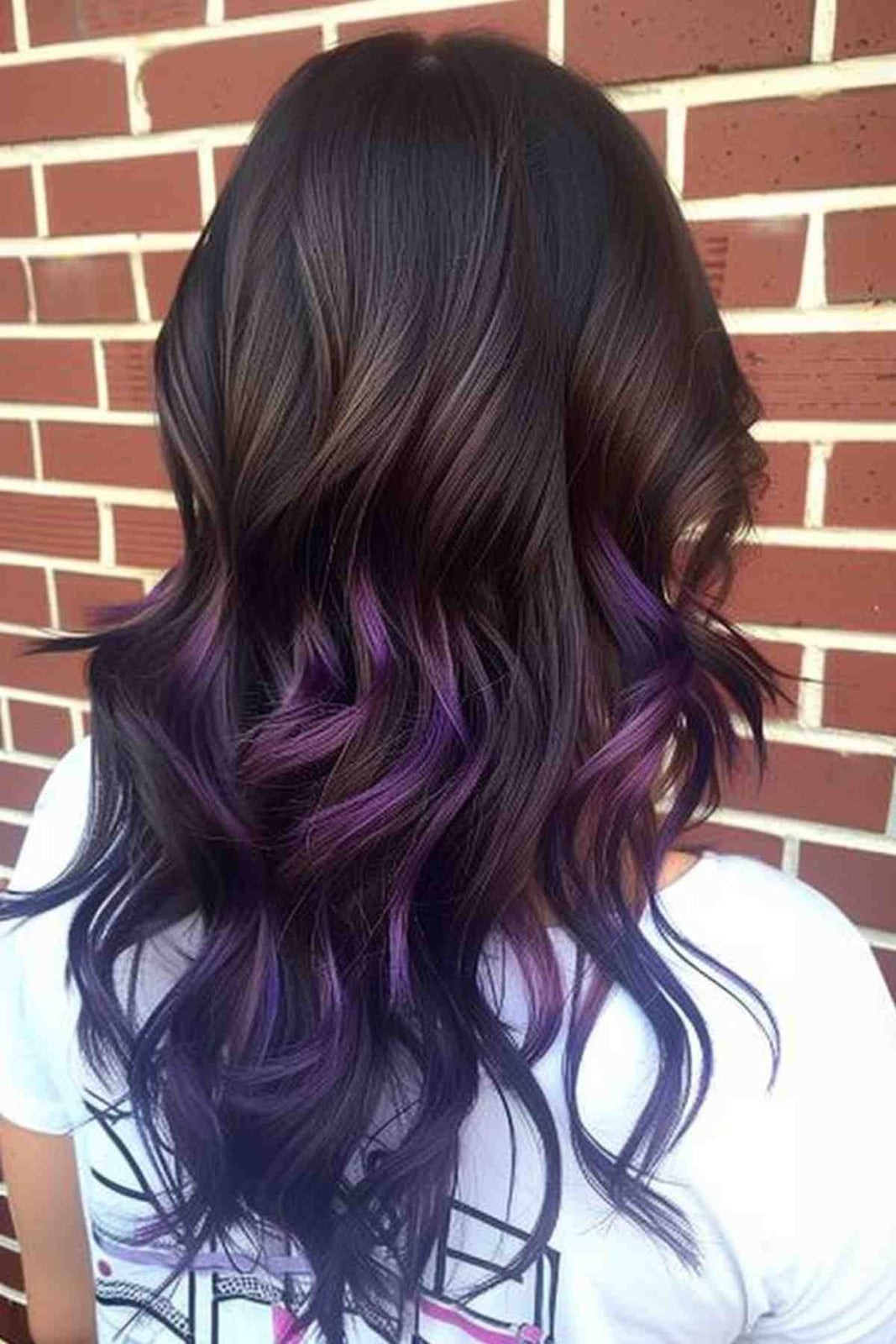
Purple balayage on a dark brown base is the low-commitment entry point: the brown keeps the roots natural, and the purple tones surface only where the waves fall. On shoulder-length, thick hair with long layers, the wavy blowout lets the purple peek through without overwhelming the base. Ask your colorist for: shoulder length with dark brown base and purple balayage. This wears well because the dark base means no obvious grow-out line, though the purple will fade faster than the brown, so a toning appointment every six to eight weeks keeps the violet from turning muddy. A silk pillowcase helps the waves stay smooth overnight.
Rich Plum Color Blend With Root Shadow
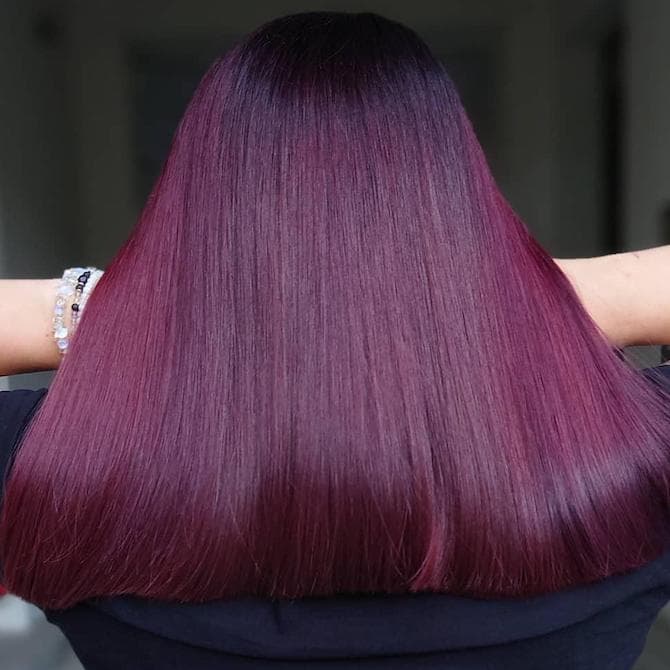
This is a salon technique that starts at the roots: the colorist applies a dark purple root shadow, then blends a plum balayage through the ends. The root shadow is the trick that makes the grow-out invisible, because the darker shade at the top matches what your natural roots will look like in a few weeks. On thick, straight hair at mid-back length, the plum looks rich and dense. Ask your colorist for: mid-back length with dark purple root shadow and plum balayage. Doing this at home is not realistic, since the blend between the shadow and the balayage takes a steady hand and a good eye. Plan for a salon visit, then a wide-tooth comb on wet hair to keep the straight texture smooth between trims.
Dark Base With Purple Pink Balayage
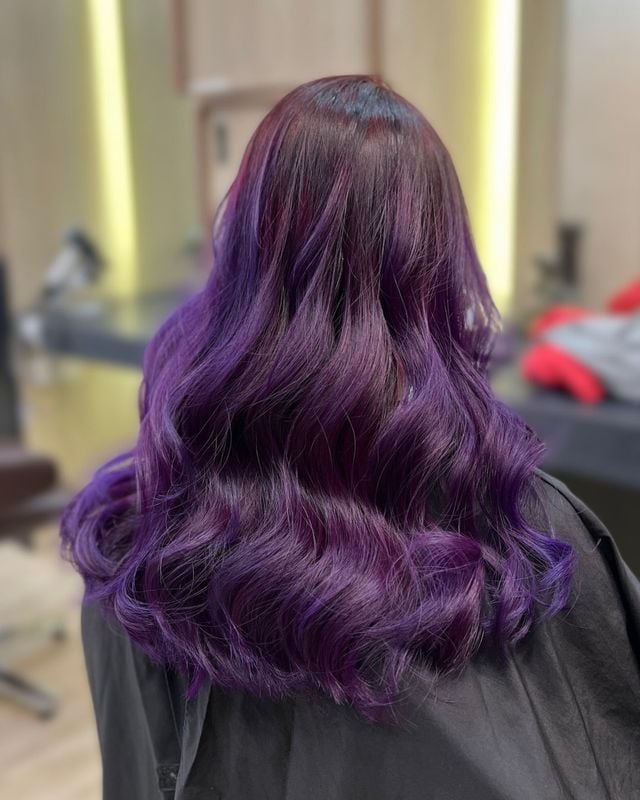
If solid purple feels like a commitment, this dual-tone balayage offers a way to test the waters without going all in. The dark base keeps the roots grounded while purple and pink melt through the mid-back length in loose waves, creating dimension that a single shade simply can’t match. It suits medium density, wavy hair that’s already at mid-back length, since the color needs length to show off the blend. Ask your colorist for: mid-back length with dark base and purple-pink balayage. The middle parting lets the tones fall symmetrically, though a side part works just as well if you want more color on one side. This is a salon color, so budget a few hours in the chair for the balayage application and processing.
Dark Base With Pink Purple Balayage, Close-Up Take
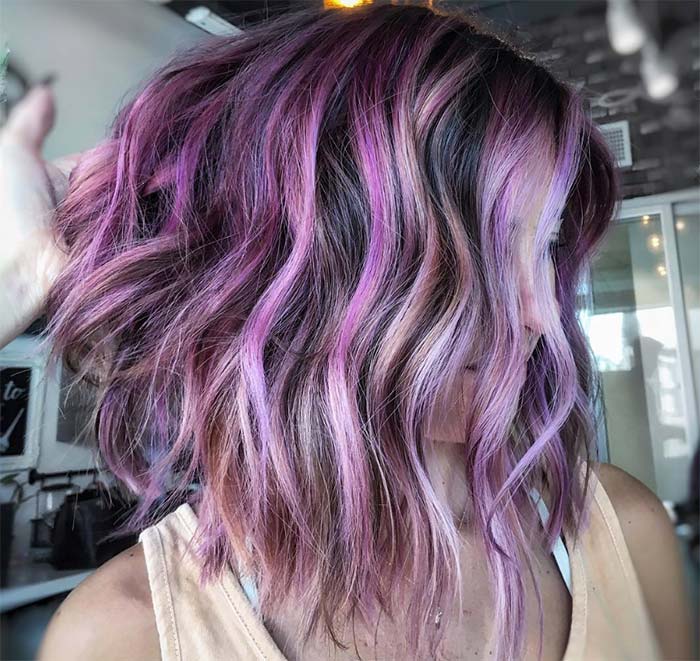
The side view here shows how the pink and purple tones weave through a collarbone-length lob, giving it a blended vibrancy that looks deliberate. It’s a flattering choice for medium textured, wavy hair, since the waves help the colors catch light at different angles. Ask your colorist for: collarbone length lob with dark base and pink-purple balayage. Upkeep is a factor: vibrant pink and purple blends on a dark base tend to fade faster than deeper shades, so you’ll likely need a toning appointment every four to six weeks to keep the pink from turning brassy. A texturizing spray can help define the waves and keep the color looking fresh between visits.
Dark Base With Pink Purple Streaks, Mid-Back
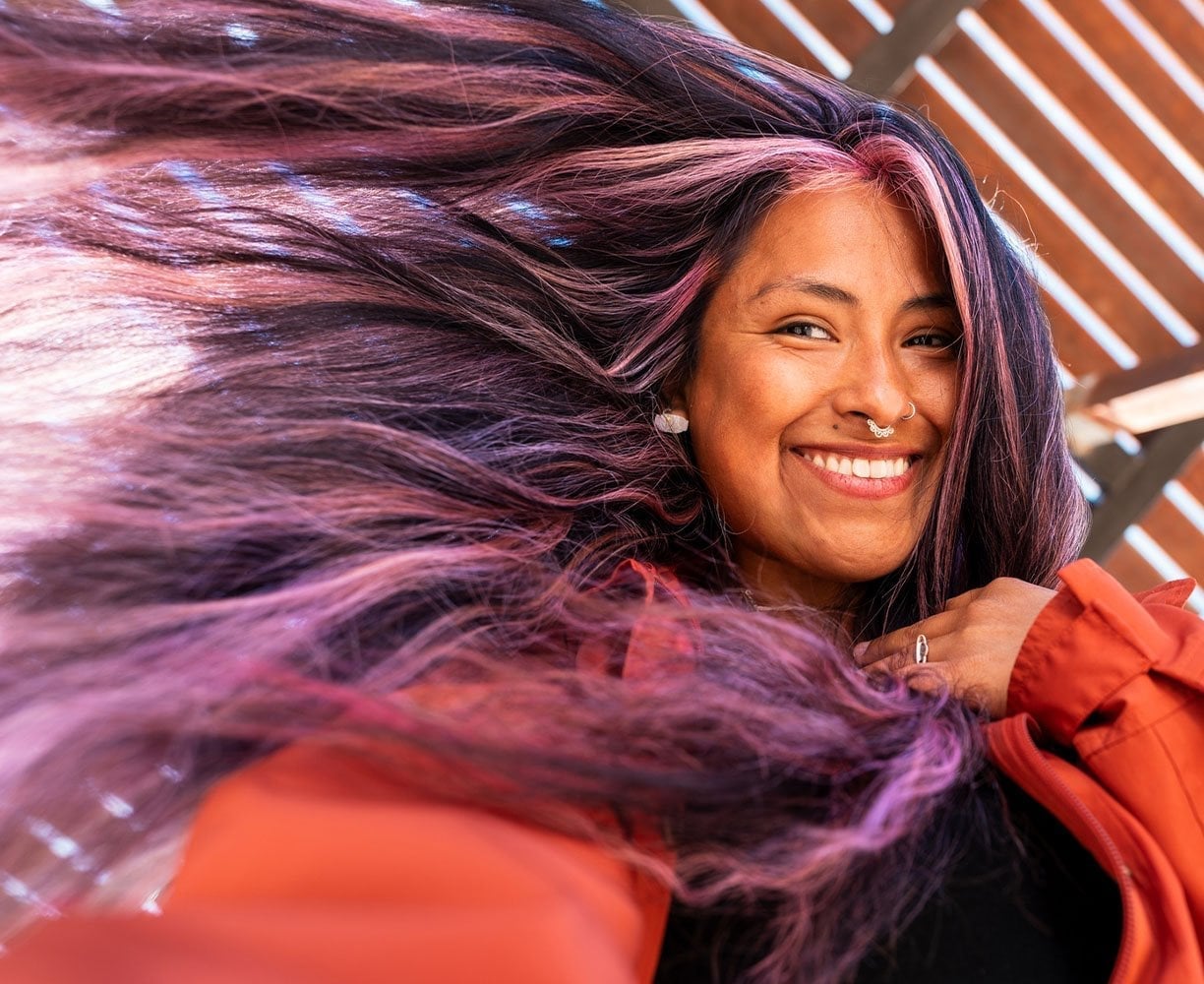
Wondering if bold streaks work on fine hair? They do, provided the placement is right. Here, the dark base holds its own while pink and purple streaks run through long layers at mid-back, and the curtain bangs frame the face without overwhelming it. The air-dried texture keeps the look relaxed, which suits fine, wavy hair because heavy styling can flatten it. Ask your colorist for: mid-back length layers with curtain bangs, pink and purple streaks. A lightweight leave-in conditioner helps keep the streaks defined, and skipping the brush will preserve the wave pattern. This is a salon-leaning color, so expect a longer appointment for the streak placement, but the grow-out is forgiving since the dark base hides the roots.
Teal And Purple Streaks Combination
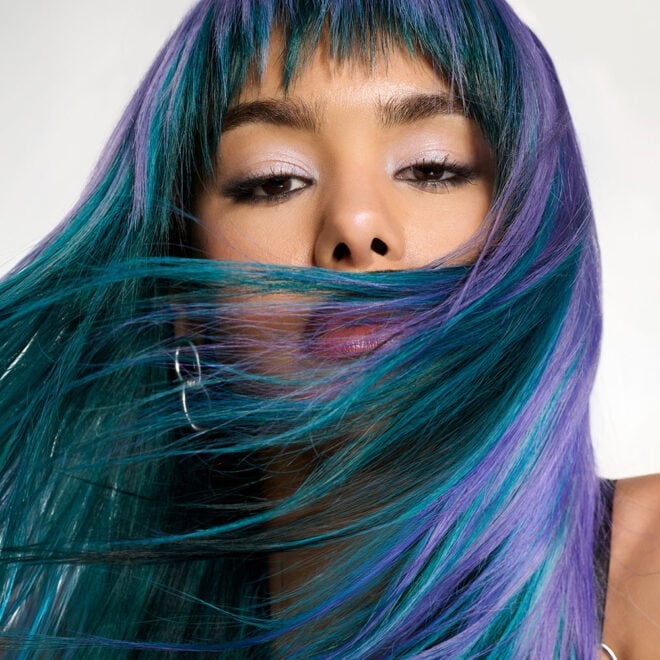
How do you ask for a color combo that sounds like a mermaid’s revenge? You name the two shades and let the stylist handle the rest. The teal and purple streaks here sit on long, layered hair at mid-back, with blunt bangs adding a graphic edge. The thick, wavy texture gives the streaks body, so they don’t disappear into the rest of the hair. Ask your colorist for: mid-back length layers with blunt bangs, teal and purple streaks. Be specific about placement: front-facing streaks for visibility, or underneath for a hidden pop. This one needs a salon appointment, and the vibrancy depends on pre-lightening, so the base may need a lift before the colors go on. Use color-safe products and cool water to keep both shades from muddying together.
Dark Brown With Bold Purple Streaks
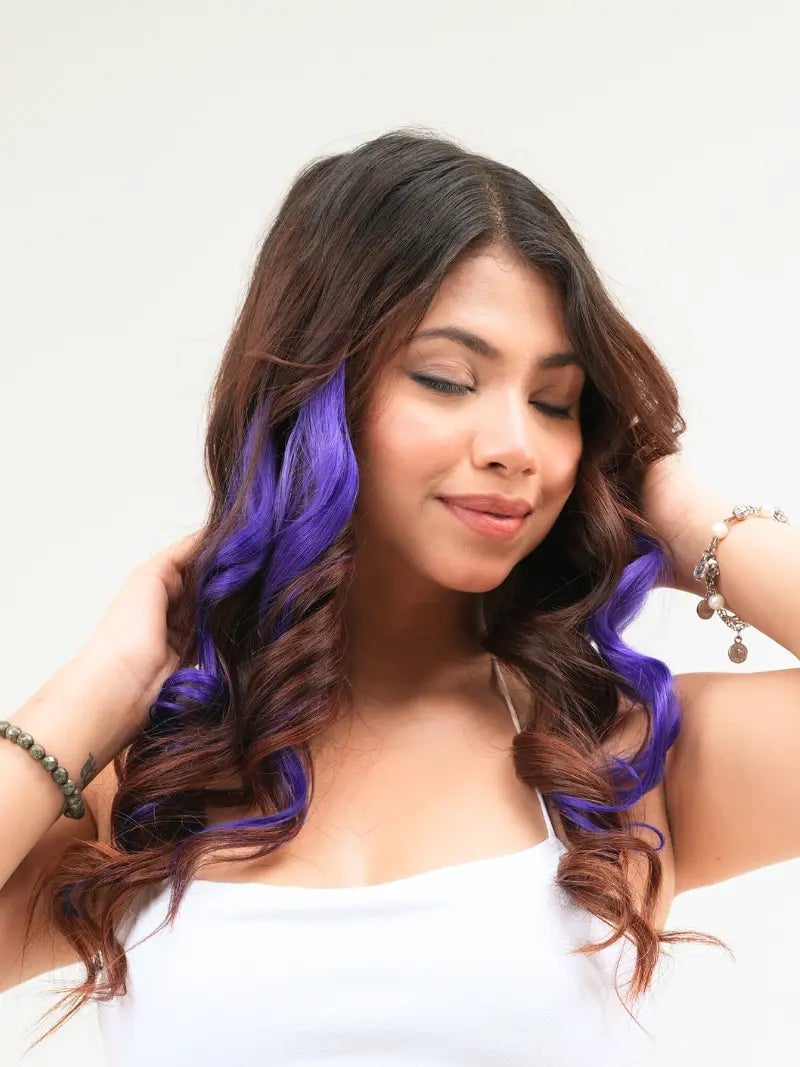
A dark brown base with bold purple streaks is a low-maintenance way to get a statement color, but it wears predictably: the streaks stay vivid for a few weeks, then soften into a muted violet. On shoulder-length layers with loose waves, the contrast is what sells it, and thick, wavy hair holds the color well. Ask your colorist for: shoulder length layers with dark brown base and bold purple streaks. You won’t need to pre-lighten the entire head, only the sections getting the purple, so the appointment is shorter than a full balayage. Expect to touch up the purple every six to eight weeks, and a texturizing spray will keep the waves from looking flat while the color does the talking.
Dark Base With Bright Purple Highlights
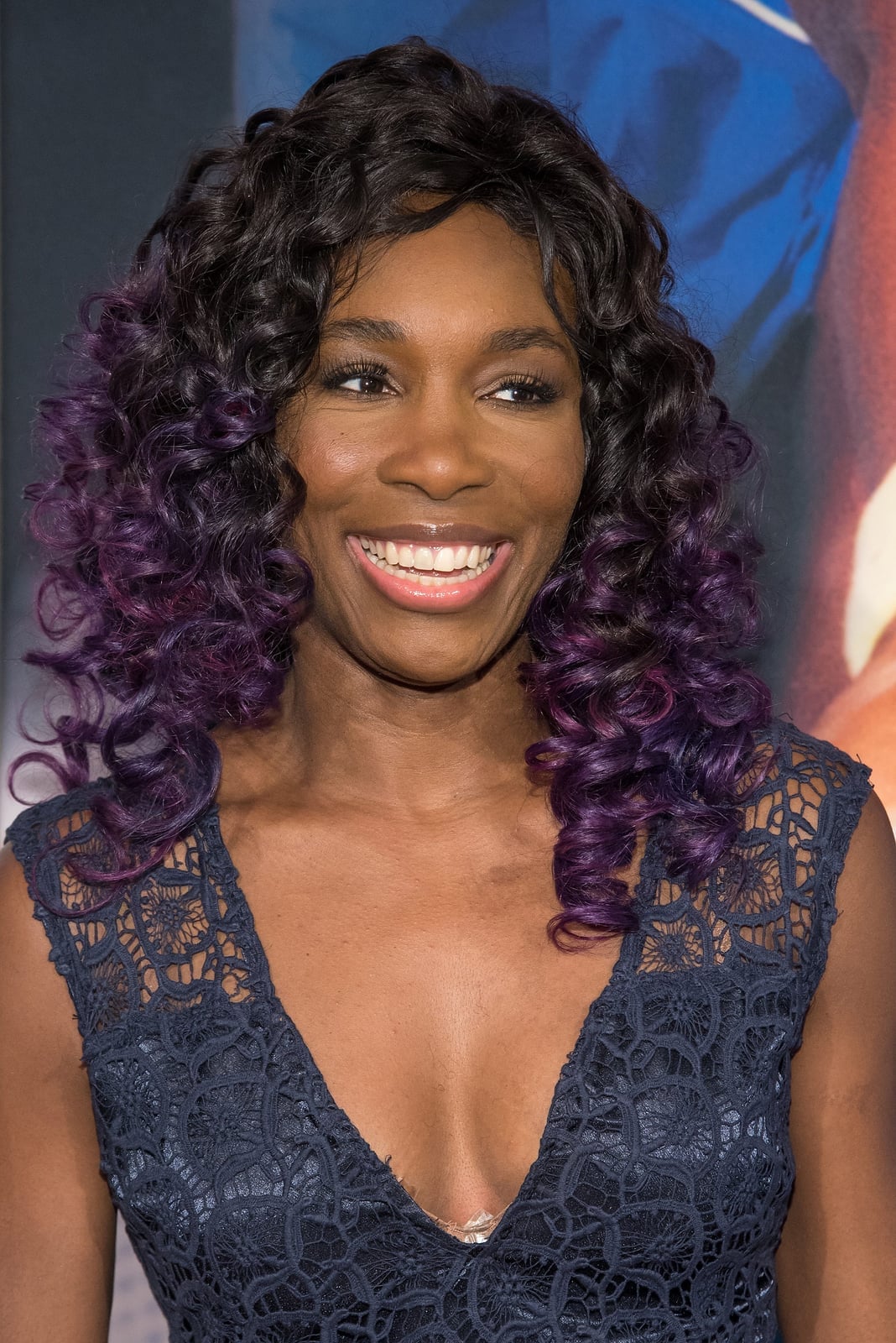
Bright purple highlights on a dark base work best when they’re woven through the mid-lengths and ends, not painted on as chunky stripes. On collarbone-length hair with tight curls, the color lands where the curl bends, so each ringlet catches a different slice of violet. Ask your colorist for: dark base with bright purple highlights. This suits thick, curly hair that can hold the pigment without the strands turning muddy. The side part opens up the front, letting the brightest pieces sit near the face. A curl-defining cream and a diffuser keep the texture springy, and the highlights stay vivid for about six weeks before they need a refresh.
Chin Bob With Bright Purple Highlights
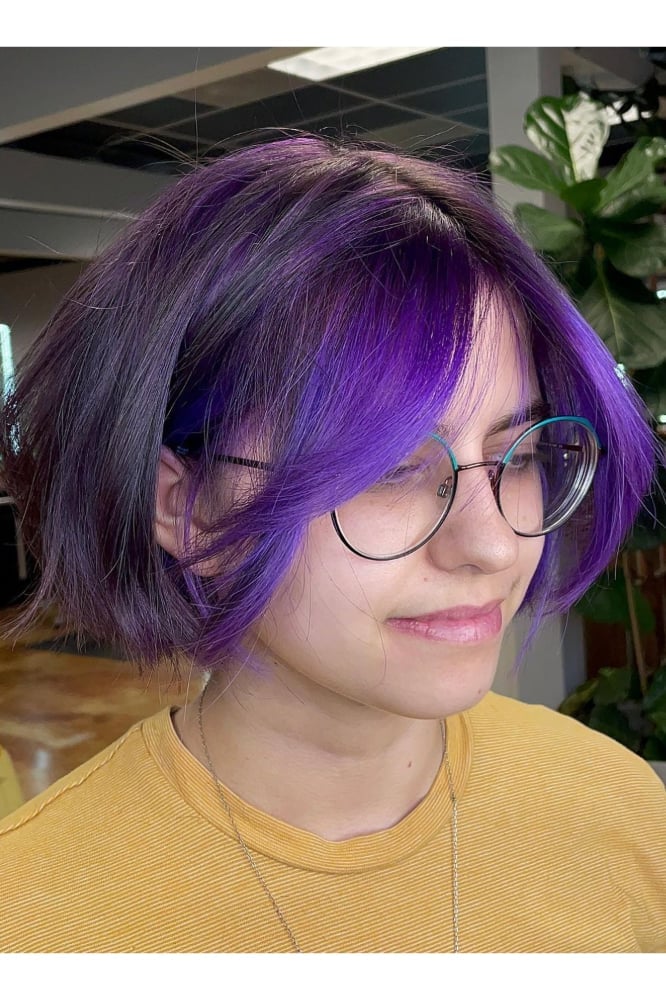
A chin-length bob with side-swept bangs and a dark base gets a jolt of personality from bright purple highlights. The wavy texture gives the color movement, so the purple shows up as dimension instead of a flat stripe. Ask your colorist for: chin length bob with side-swept bangs, dark base and bright purple highlights. This suits medium-density, wavy hair that can carry the contrast without the bob looking heavy. The side part keeps the bangs sweeping across the forehead, which softens a square jaw. A texturizing spray adds definition to the waves, and the bob needs a trim every four to six weeks to hold its shape.
Collarbone Lob With Vibrant Purple Highlights
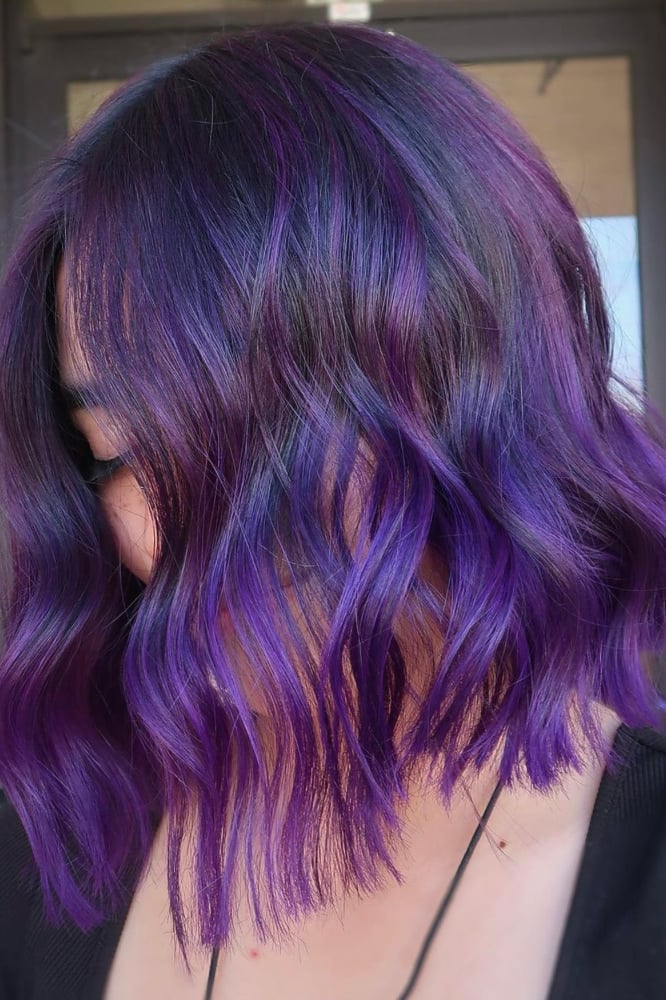
What do you actually say to get vibrant purple highlights on a collarbone lob without the roots screaming for attention? The trick is a root shadow. This lob has a dark base with vibrant purple highlights and a subtle root shadow, so the color grows out soft instead of harsh. The wavy blowout, parted in the middle, lets the purple peek through the texture. Ask your colorist for: collarbone length lob with dark base, root shadow, and vibrant purple highlights. This suits medium-density, wavy hair that wants color without a high-maintenance grow-out line. A dry shampoo at the roots stretches washes, and the lob needs a trim every six to eight weeks.
Blonde Base With Purple Highlights
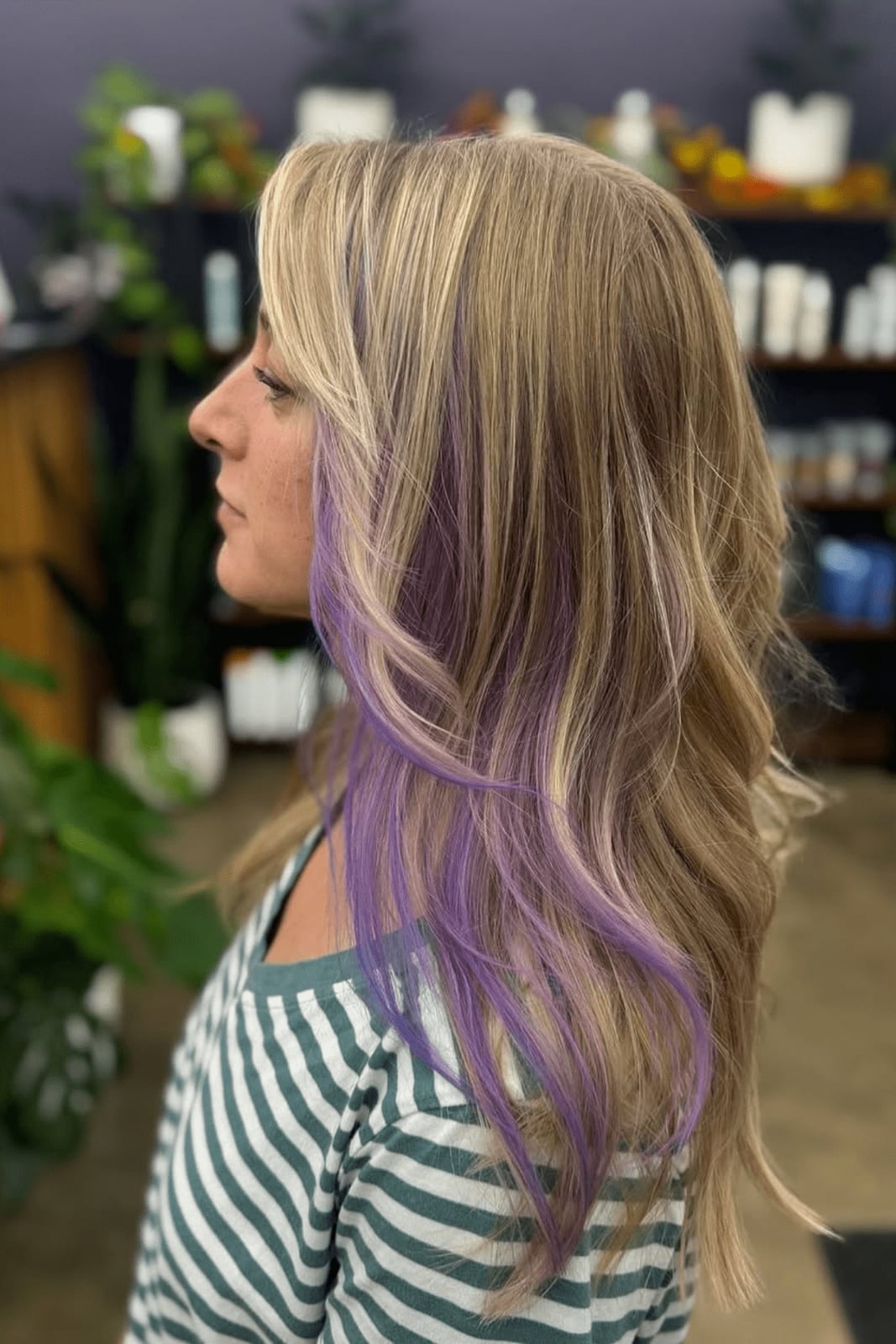
Purple highlights on a blonde base behave differently than they do on dark hair. On a collarbone-length cut with curtain bangs, the blonde base makes the purple read softer and more pastel, while a dark base would push it toward jewel tones. The wavy blowout with a middle part lets the highlights show at different angles. Ask your colorist for: collarbone length with blonde base, curtain bangs, and subtle purple highlights. This suits medium-density, wavy hair that already has a blonde foundation and wants a tonal shift instead of a full color change. A purple toning shampoo once a week keeps the highlights from turning brassy, and the curtain bangs need a round brush to hold their sweep.
Dark Base With Purple Ombre Ends
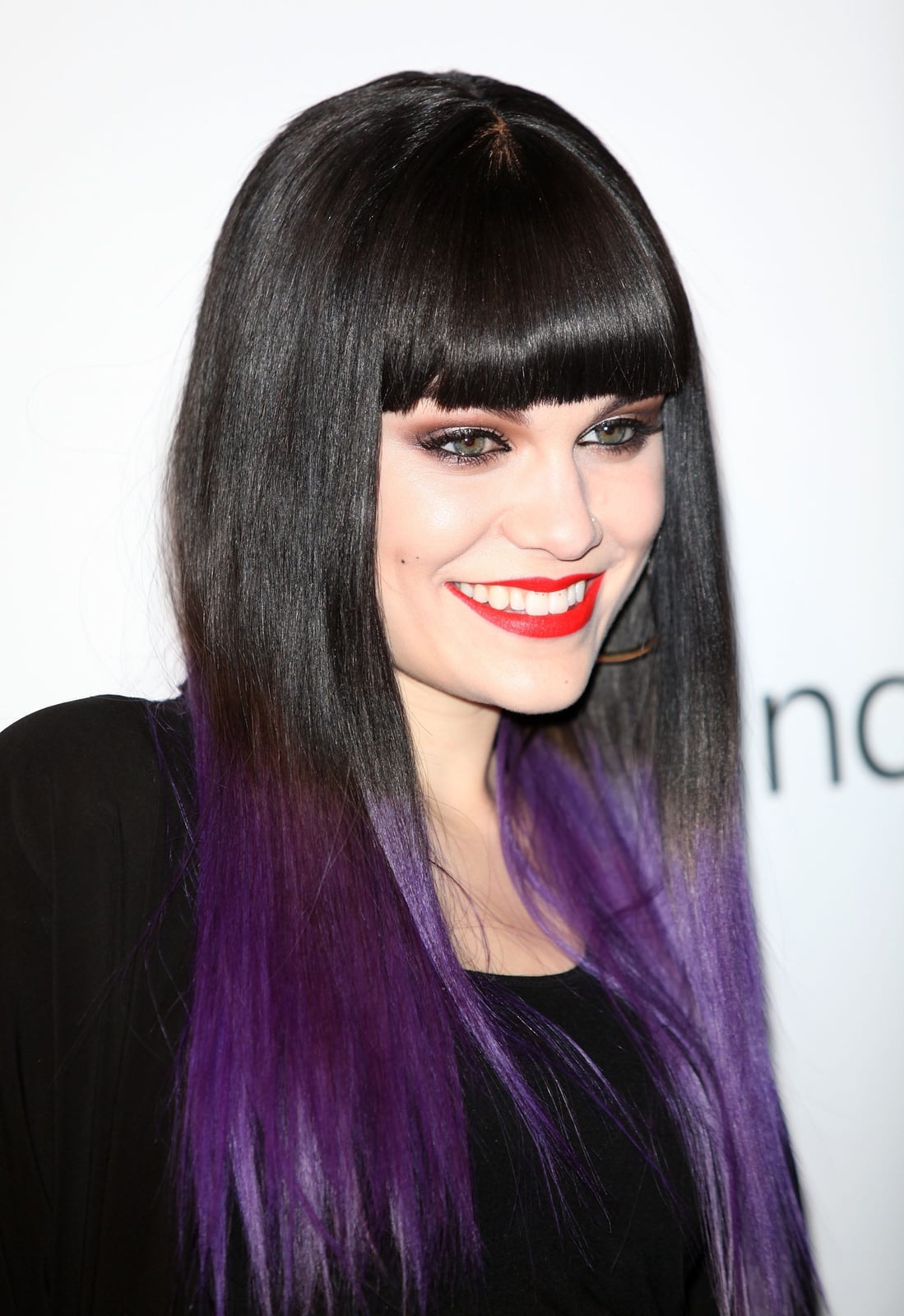
Purple ombre ends on long, straight, thick hair are a commitment to the bottom half of your head. The dark base stays put, but the vibrant purple at the ends is what you’ll be maintaining, and it fades faster than you’d like. Blunt bangs and a middle part keep the look sharp; the straight blowout shows off the color transition. Ask your colorist for: mid-back length with blunt bangs, dark base, and purple ombre ends. This suits thick, straight hair that can carry the length and the color. A heat protectant before straightening is essential, and the ombre section needs a trim every eight to twelve weeks to keep the ends healthy and the color crisp.
Light Brown With Lavender Purple Ombre
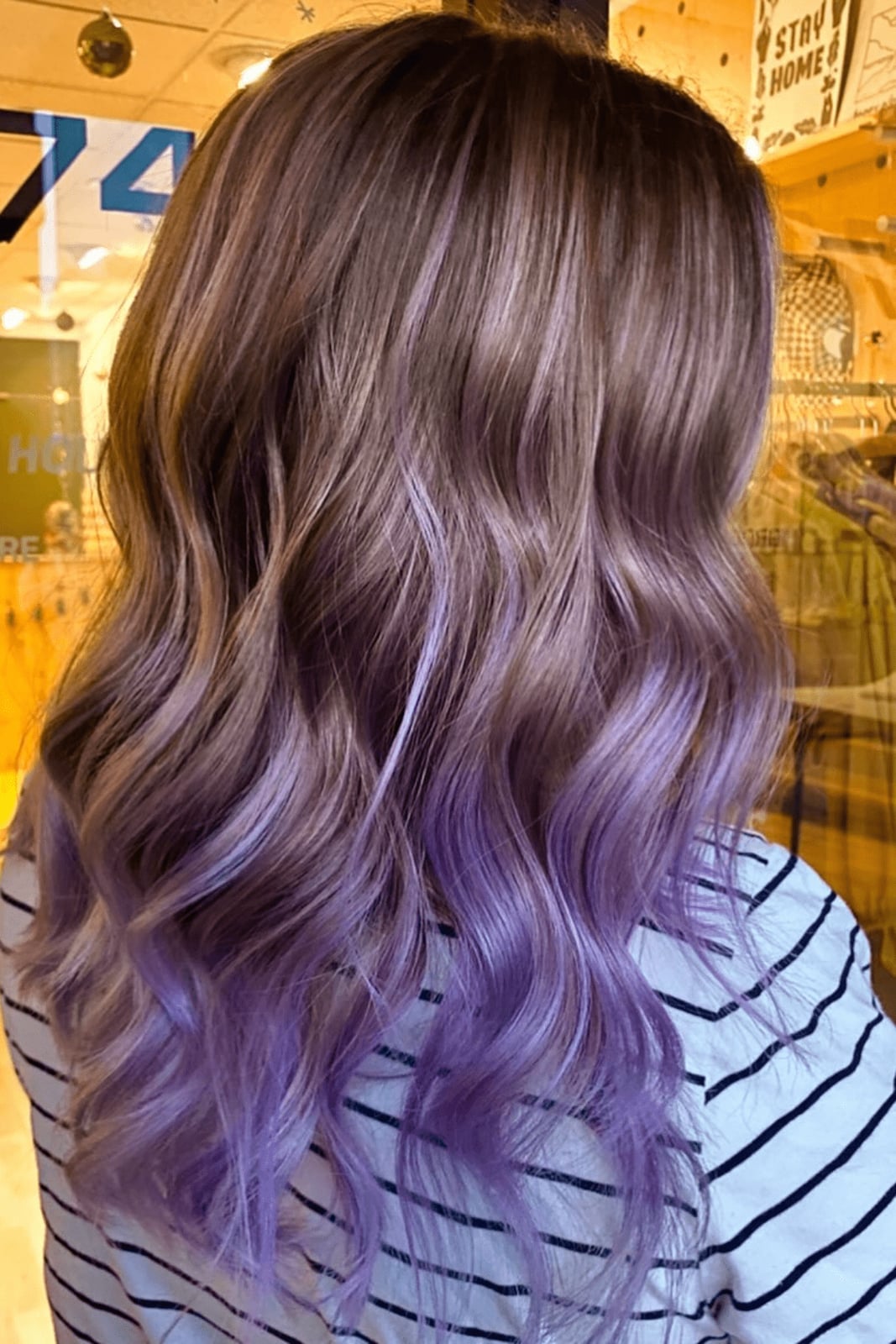
Building a soft lavender purple ombre starts with lightening the ends of a light brown base to a pale enough canvas that the pastel tone reads as true lavender instead of muddy gray. The color is painted on in a gradient, densest at the collarbone-length ends and fading up through the mid-lengths, so the transition stays subtle and the roots stay untouched. This suits medium-textured, wavy hair that already sits at collarbone length, since the waves help blur the line between brown and purple. Ask your colorist for: collarbone length with light brown base and lavender purple ombre. Because lavender is a fragile tone, a purple toning conditioner at home keeps the hue from drifting; a trim every six to eight weeks keeps the ends clean enough to hold the fade.
Shag Cut In Light Lavender
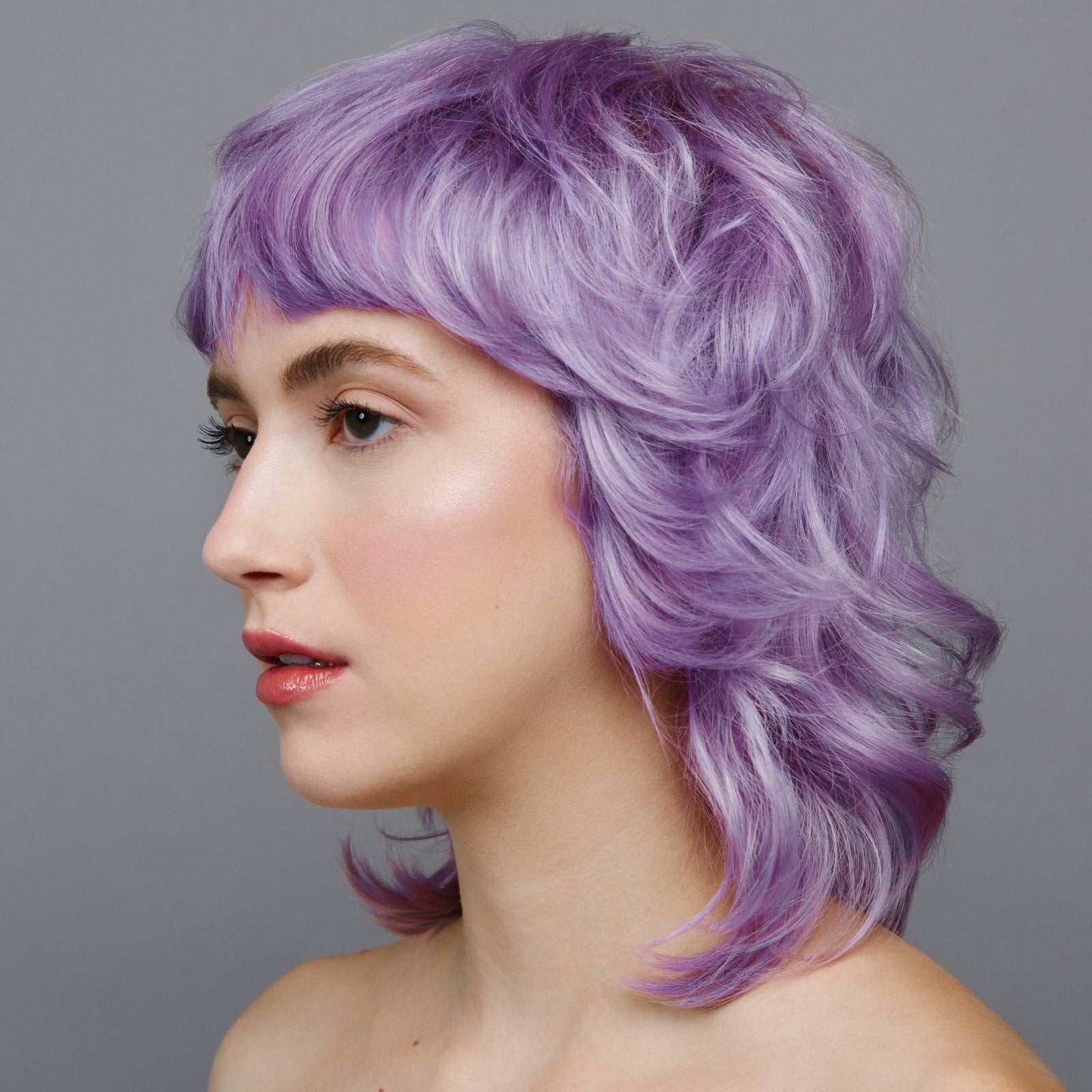
Does a light lavender shag cut suit fine hair, or will it just fall flat? The wavy layers and curtain bangs do the work here, giving fine, wavy hair at shoulder length the body it lacks on its own. The color is a light lavender with subtle white highlights, a lived-in blend that softens the whole look. Ask your stylist for: shoulder length shag cut with curtain bangs, light lavender and white highlights. The fringe needs a trim every four to six weeks to keep the curtain shape, but the shag itself grows out gracefully, so the upkeep is mostly about those bangs.
Pastel Silver Purple With Darker Roots
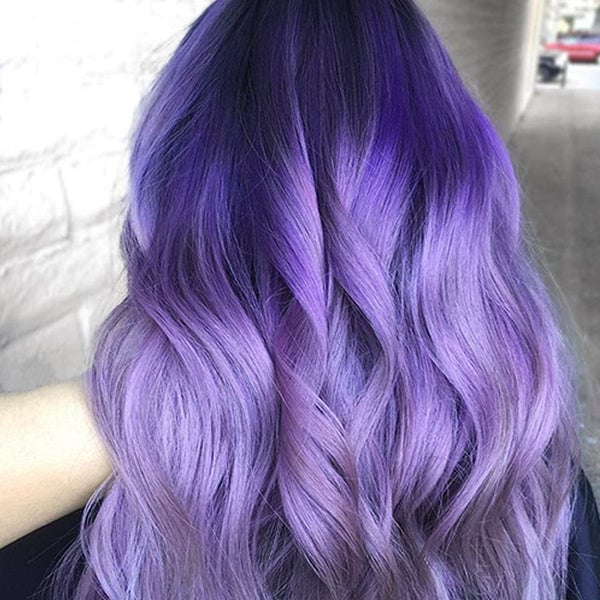
If you want the pastel purple look but dread the grow-out, this version is built around that exact worry. The color is a pastel silver purple that fades into darker roots, so the line where new growth meets dye is a soft transition instead of a hard stripe. The mid-back length, thick, wavy hair shows off the dimension of the tone, which shifts between silver and lavender depending on the light. Ask your colorist for: mid-back length with pastel silver purple and darker roots, specifying that you want the root shadow to blend rather than contrast.
The darker roots do more than hide regrowth: they give the pastel shade a grounding that keeps it from washing out. Thick, wavy texture holds the loose waves that make the color look deliberate. A purple toning shampoo keeps the silver tones from going brassy, and a trim every eight weeks maintains the shape.
Solid Midnight Purple Mid-Back Cut
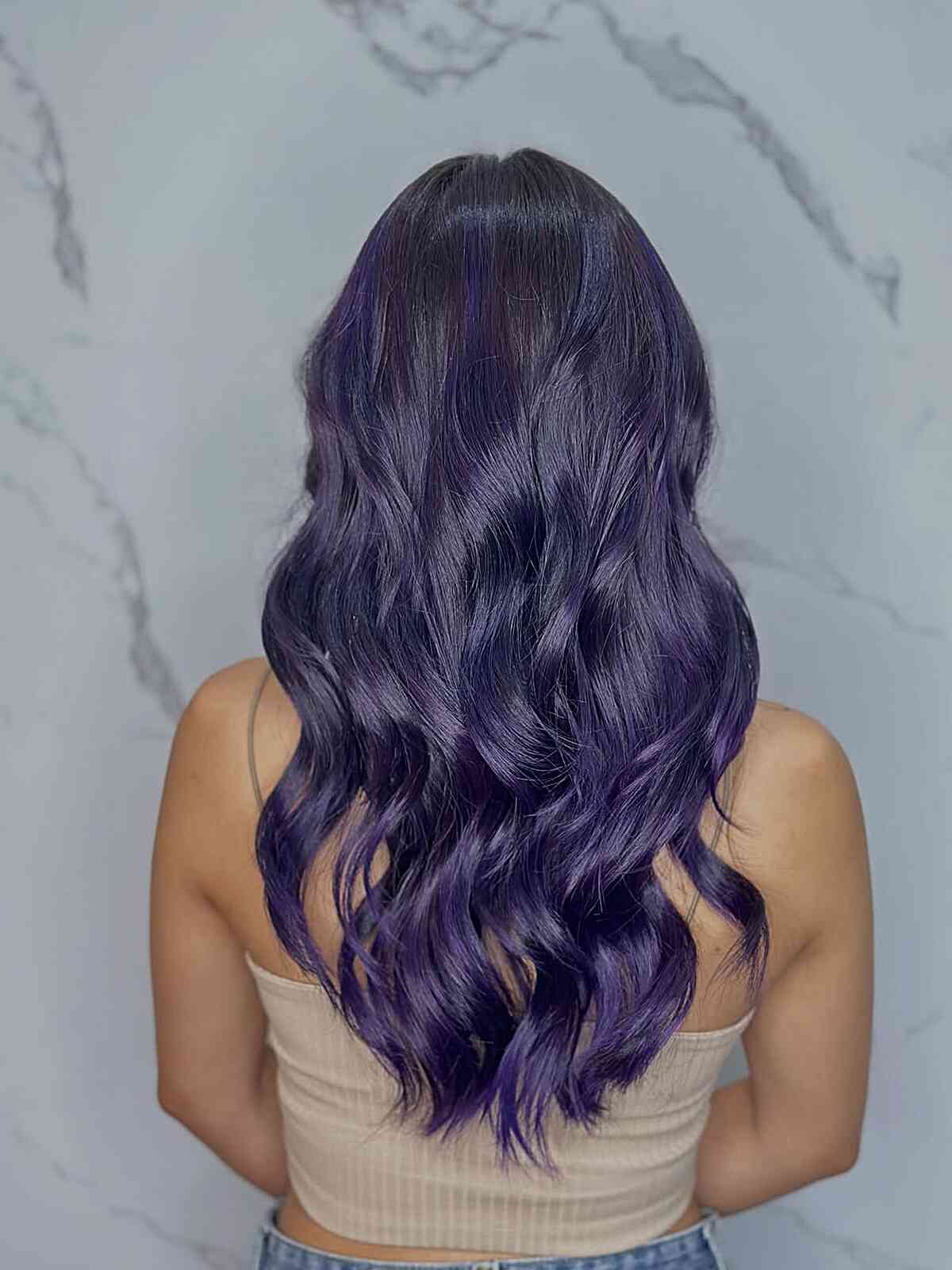
Solid midnight purple is a commitment that rewards patience. Because the color is uniform, every split end and dull patch shows, so the sleek, straight blowout you see here demands a trim every eight to ten weeks and a gloss treatment in between. The mid-back length and thick, straight texture carry the deep purple well, the clean lines of the cut letting the richness of the shade do the talking. Ask your colorist for: mid-back length with solid midnight purple color.
The grow-out is the honest trade-off. With no root shadow or balayage to blur the line, new growth appears as a visible band of your natural color within about four weeks. A root touch-up every six to eight weeks keeps the uniform look intact, and a flat iron with heat protectant maintains the sleek finish that makes this shade look its best.
Vibrant Electric Purple Pixie Cut
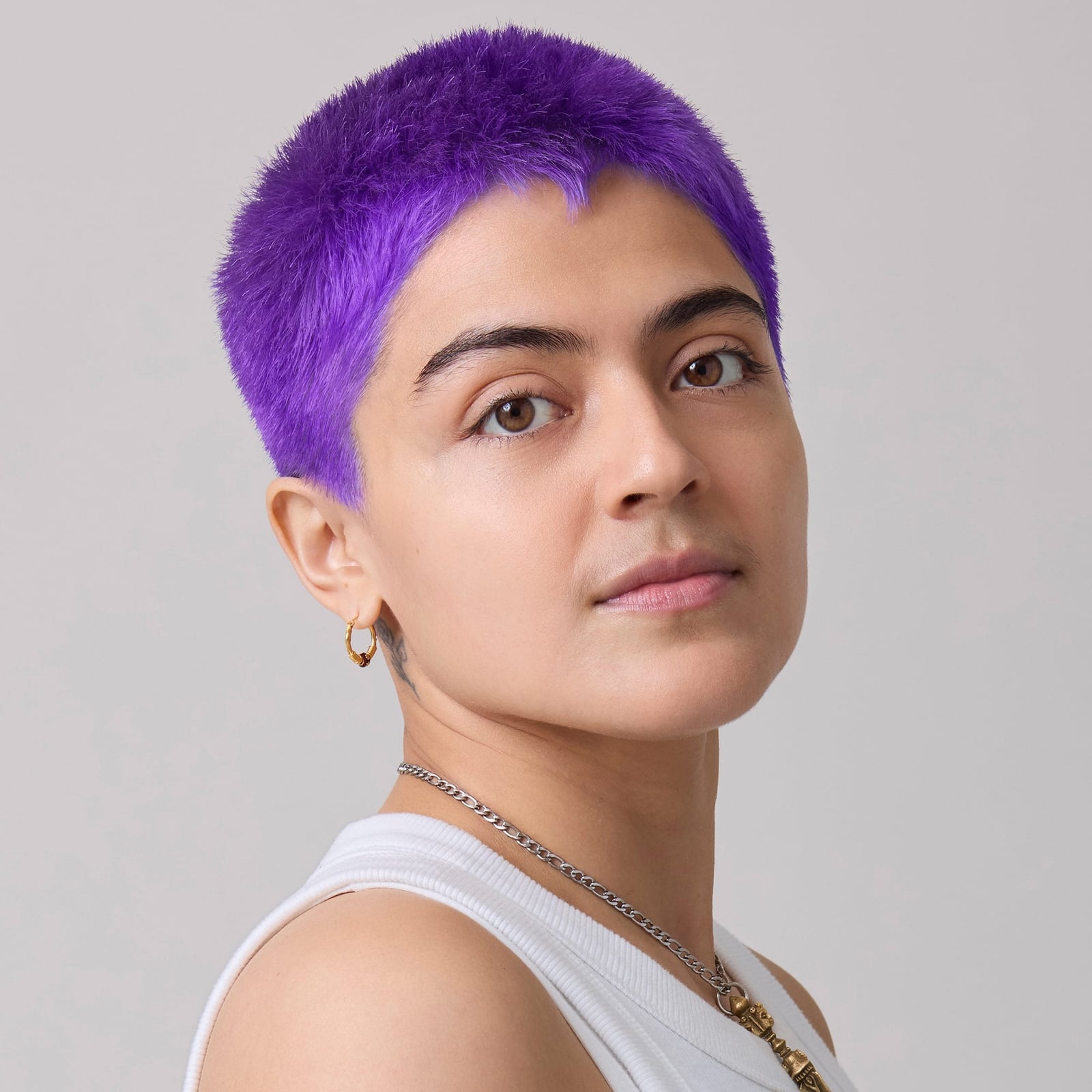
If you want a color that cannot be ignored, vibrant electric purple on a pixie cut is the shortest route to that outcome. The fine, straight texture takes the saturated shade well, and the textured crop with a short fringe slicked back shows off the sharp lines of the cut. This is a salon job, not a DIY project: getting that electric tone to read as purple, not pink or blue, requires precise lightening and toning that takes about three hours in the chair. Ask your colorist for: ear length pixie cut with short fringe, vibrant electric purple. The drawback is the upkeep: the color fades fast on fine hair, needing a refresh every four to six weeks, and the pixie itself needs a trim on the same schedule to keep its shape.
Final Thoughts
For a low-maintenance purple, ask for balayage or ombre on a darker base so the grow-out line stays soft. If you want vibrant, all-over color, plan for touch-ups every four to six weeks and a gloss to keep the tone fresh.
- Use color-depositing conditioners to refresh vibrancy between salon visits.
- Wash with cool water and sulfate-free shampoo to slow fading.
- Tone purple shades every four to six weeks, depending on the depth.
- Deep condition weekly to keep color-treated hair shiny and healthy.
Embrace the power of purple, from subtle whispers to bold declarations.