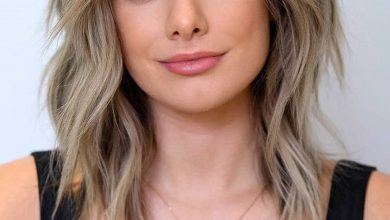
The shag haircut keeps its reputation for movement, but the current versions lean into a softer, more lived-in finish. Curtain bangs and face-framing layers have replaced the sharp, disconnected pieces of past decades, and the result works on straight, wavy, and curly textures alike.
This roundup holds 34 variations of the shag haircut, from mid-back lengths to ear-grazing crops, so there is a starting point for every density and commitment level. Whether your hair falls flat at the crown or your fringe refuses to cooperate, these cuts address those frustrations without demanding a full reset. The styling stays low-effort and the grow-out stays forgiving, which is the whole point.
Mid-Back Shag With Full Bangs

A shag that lands at the mid-back and pairs its signature layers with full, blunt bangs is a rare beast: volume without the sacrifice of length. The middle parting and loose waves keep the weight distributed evenly, so the cut doesn’t turn into a triangle. Thick, wavy hair is the natural partner here, and the full bangs do their best work on longer face shapes, shortening the vertical line without adding width.
Ask your stylist for: mid-back shag, full bangs, middle part. A large barrel curling iron creates consistent waves that mirror the blowout finish, and the baseline needs a trim every six to eight weeks to keep the hemline from looking ragged. The lighter brown highlights add dimension without a full color commitment.
Vibrant Copper Mid-Back Shag

Can a haircut make a statement for an entire season? This one does. A mid-back shag with choppy layers and a full fringe gets doused in vibrant copper, and suddenly the cut becomes a bold shape rather than a practical one. The textured waves add dimension that flat color cannot, and the thick, wavy texture gives the copper enough body to look rich and not washed out.
Ask your stylist for: mid-back shag, full fringe, choppy layers, vibrant copper. The color leans warm, so autumn is its natural habitat, though it works any time you want a cut that announces itself. A trim every six to eight weeks keeps the choppy layers from looking overgrown.
Mid-Back Straight Shag With Full Fringe

A straight shag with a full fringe and subtle layers is the low-effort version of a high-maintenance reputation. The mid-back length stays intact while the middle parting and full fringe frame the face, and the air-dried finish means zero heat styling on a daily basis. Thick, straight hair holds the shape without product, though a smoothing serum keeps flyaways in check. Ask your stylist for: mid-back shag, full fringe, subtle layers, middle part. A trim every six to eight weeks prevents the fringe from creeping past the brows and the hemline from losing its line.
Platinum Blonde Long Shag With Curtain Bangs

The long shag gets an upgrade when the layering is precise enough to hold shape without heat. Soft curtain bangs part at the middle and blend into the mid-back length, while the platinum blonde balayage keeps the root depth before fading into a cool, lived-in blonde. The textured, air-dried finish relies on the cut itself rather than styling tools, which is the whole point of a well-built shag. Medium-density wavy hair is the ideal canvas; the layers add movement without thinning the ends. Ask your stylist for: long shag, soft curtain bangs, platinum blonde balayage. The curtain bangs soften square and round faces by breaking up the horizontal line, and a toning appointment every four to six weeks keeps the platinum from turning brassy.
Mid-Back Blonde Shag With Curtain Bangs

If you are torn between a full fringe and no fringe, curtain bangs are the diplomatic solution. This mid-back shag pairs them with a thick, wavy texture and a blonde balayage that starts darker at the roots and lightens toward the ends. The middle part and air dried waves create a finish that looks deliberate without requiring a curling iron. Thick hair benefits from the weight removal of the shag layers, while the curtain bangs work with oval, round and square face shapes alike. Ask your stylist for: mid-back shag, curtain bangs, blonde balayage. A trim every six to eight weeks keeps the bangs from merging back into the cut, and a heat protectant is all you need if you choose to blow dry.
Dark Brown Long Shag With Curtain Bangs

Curtain bangs in a dark brown shag are a commitment, not a set-it-and-forget-it detail. The trade-off for that middle-part framing is a trim every three to four weeks, because the second those pieces graze your cheekbones wrong, the whole shape reads as overgrown. Ask your stylist for: long shag, curtain bangs, dark brown. If you are not prepared to visit the salon more often than you would like, skip the fringe and keep the layers alone.
Ash Blonde Shag With Shaggy Layers

How do you keep shaggy layers from looking like a failed grown-out bob? The answer is lived-in highlights, applied so the lighter pieces land exactly on the cut’s choppiest sections. Ask your stylist for: mid-back shag, shaggy layers, wispy curtain bangs, ash blonde. The technique uses a hand-painted balayage that leaves the roots darker, so the dimension follows the layer pattern rather than fighting it.
The wispy bangs here are cut shorter than a standard curtain fringe, which means they blend into the shaggy layers without a hard line. A thick, wavy texture helps the whole thing hold its shape with just a rough dry and a finishing spray. The middle parting keeps the weight distributed evenly, so the layers stack rather than collapse.
Dark Brown Long Shag With Choppy Layers
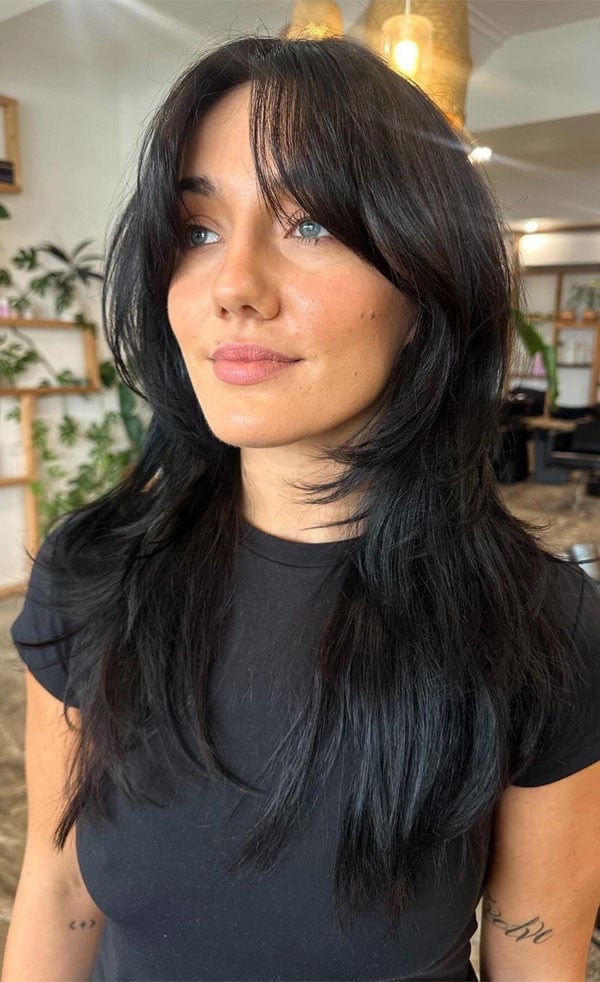
Choppy layers at collarbone length work best when the hair is thick enough to hold the separation without looking stringy. The dark brown base keeps the cut grounded, while the side parting lets the curtain bangs sweep across rather than sit dead center. Ask your stylist for: long shag, choppy layers, soft curtain bangs, dark brown. A texturizing cream applied to damp hair defines the choppiness without stiffness. Plan for a baseline trim every six to eight weeks, because the collarbone length shows uneven growth faster than longer cuts do.
Brunette Long Shag With Balayage
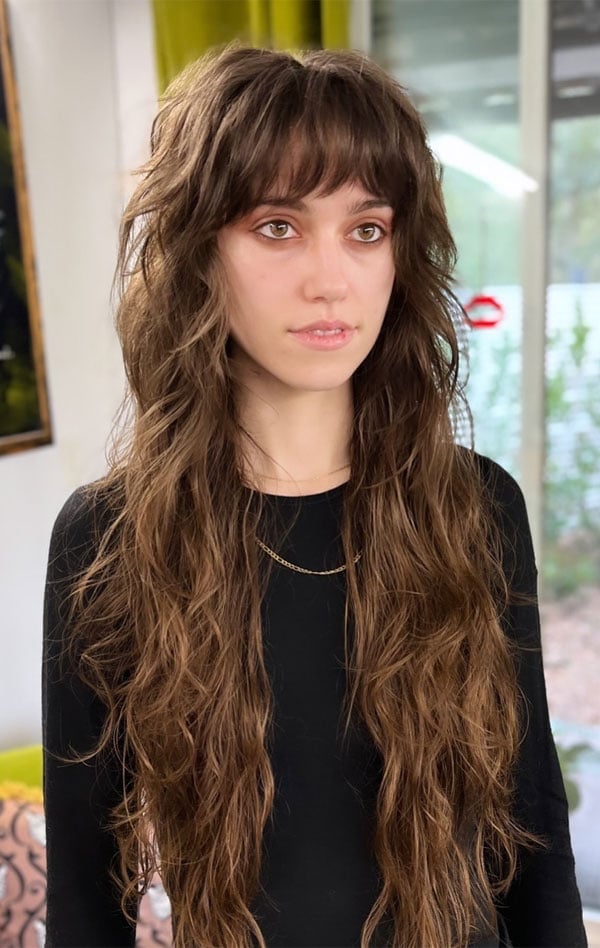
The lived-in texture of this long shag relies on the balayage doing the work that heat tools would otherwise handle. Medium-fine, wavy hair air-dries into soft bends rather than defined waves, so the subtle brunette highlights create the illusion of movement where the natural wave pattern is gentle. Ask your stylist for: long shag, curtain bangs, brunette balayage.
The payoff is a wash-and-go routine that actually looks intentional. The balayage is painted from mid-shaft to ends, leaving the root area dark, which means the grow-out is gradual rather than obvious. A lightweight mousse applied to soaking wet hair encourages the wave to form without weighing it down. The side parting keeps the curtain bangs from splitting too wide, maintaining that face-framing effect even on low-effort days.
Collarbone Shag With Face-Framing Layers
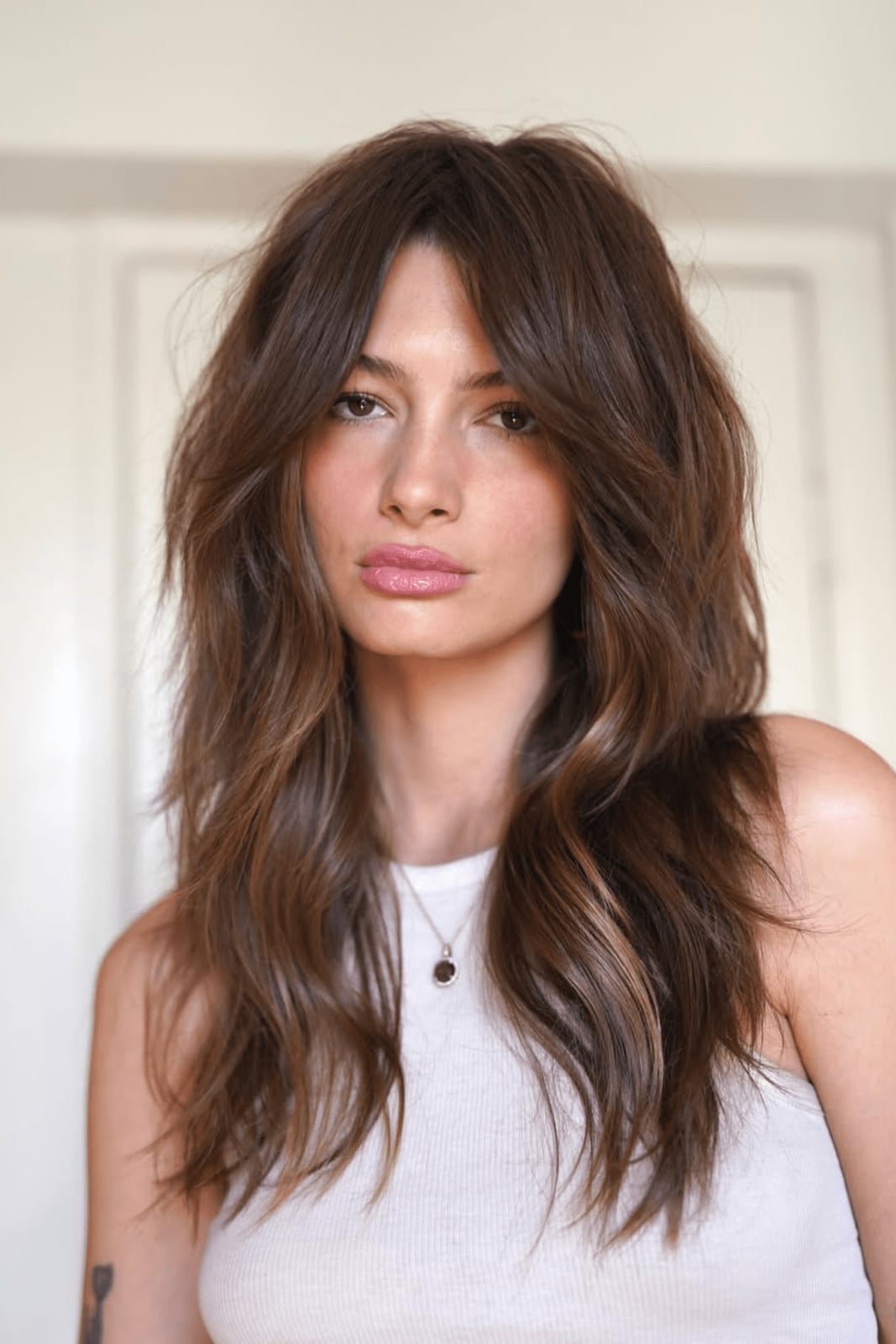
Then specify that the shortest face-framing piece should hit your cheekbone, with the layers graduating down from there. Ask your stylist for: collarbone shag, face-framing layers, curtain bangs. The blonde highlights in the dark brown base add contrast so the layers read clearly, even without styling. A round brush blowout smooths the curtain bangs into that curved shape, but the rest of the hair can dry naturally for a softer finish.
Collarbone Shag With Caramel Highlights

Not quite a summer blonde and not yet a fall brunette, this collarbone shag lands in that sweet transitional zone. The dark brown base and subtle caramel highlights add warmth without a full color commitment, while the curtain bangs and textured layers keep the whole thing moving. Ask your stylist for a collarbone shag, curtain bangs, and caramel highlights. A textured blowout makes this work for medium-density wavy hair; the face-framing layers soften square and round face shapes. A texturizing spray preserves the shape between washes, and a trim every six to eight weeks maintains the shape.
Collarbone Shag With Soft Waves

The air-dried finish here is the point, not a compromise. This collarbone shag uses soft face-framing layers and curtain bangs so the dark brown base with subtle lighter highlights looks intentionally relaxed rather than unfinished. Ask your stylist for a collarbone shag, face-framing layers, and curtain bangs. The side parting helps the waves fall forward, which suits medium-density wavy hair. At-home styling is possible with a diffuser and a leave-in conditioner, though getting those soft, disconnected ends right is easier in the salon. Plan a trim every six to eight weeks.
Collarbone Curly Shag With Curtain Bangs

Curtain bangs on curly hair can go rogue, but here they land exactly where they should. This collarbone shag is built for medium-density curly hair, with textured curly layers that keep the shape balanced. The dark brown base with blonde highlights adds depth without competing with the curl pattern. Ask your stylist for: a collarbone curly shag, curtain bangs, and textured curly layers. Defined curls work best on oval and round faces. A curl-defining cream and diffuser keep the shape readable, and a trim every eight to ten weeks maintains the baseline.
Voluminous Collarbone Curly Shag

Can a curly shag have too much volume? This one asks the question and answers it with full bangs. The collarbone-length layers and full bangs create a dense, rounded silhouette that frames the face closely. The dark brown base with subtle highlights keeps the focus on the shape rather than the color. Ask your stylist for a collarbone curly shag, full bangs, and voluminous curls. This cut suits oval and long faces best. The real drawback is the daily styling: defined curls require a curl-enhancing mousse and either air drying or diffusing, and skipping the routine means the volume becomes frizz. A trim every eight to ten weeks is standard.
Honey Blonde Collarbone Curly Shag

No bangs means the curl pattern does all the work here. This shoulder-length shag uses defined, air-dried curls on a honey blonde base with lighter highlights, letting the texture dictate the shape. Ask your stylist for a shoulder-length curly shag, defined curls, and honey blonde highlights. The middle parting and medium-density curly hair make this a low-commitment cut for oval and heart-shaped faces. The technique is straightforward: a curl cream applied to wet hair, then air drying. A satin pillowcase helps the curls survive the night, and a trim every eight to ten weeks keeps the ends from tangling.
Shoulder Length Red Shag With Full Bangs

A thick, curly shag at the shoulders with a full fringe and a middle parting, the color stops you first. That vibrant red works best in cooler months, when a punchy, saturated hue feels like a deliberate choice against gray skies. Ask your stylist for: shoulder length shag, full bangs, vibrant red. The full bangs and length sit well on oval and long face shapes. Thick, curly texture is ideal here; the layers prevent the cut from becoming too wide, and the fringe breaks up the volume without losing density.
Shoulder Length Shag With Face-Framing Bangs

Not sure how to describe those wispy front pieces that land just above the cheekbone? Start with the words face-framing bangs. A shoulder-length shag with loose waves, this version uses subtle highlights to add depth through the ends. Ask your stylist for: shoulder length shag, face-framing bangs, subtle highlights. Medium, wavy textures take the shape most easily. The bangs soften a square or heart-shaped face, and the side sweep keeps the weight forward without hiding the layers.
Ask for the fringe to be cut dry, so the stylist can see how your natural wave falls. Apply a texturizing spray on damp hair, scrunch and air dry for a lived-in wave without heat. The layers will need a trim every eight weeks to keep the face-framing pieces from growing past the collarbone and losing their shape.
Shoulder Shag With Wispy Bangs

A shoulder-length shag with wispy bangs, this one leans on air-dried texture to do the work. The wavy, thick hair carries the shag shape well, but the wispy bangs can turn unruly between washes if your wave pattern is unpredictable. Ask your stylist for: shoulder length shag, wispy bangs, textured layers. A light-hold hairspray on the fringe after drying keeps the wisps from drifting. Trim the baseline every six to eight weeks, and the bangs every three to four.
Shoulder Length Wavy Shag No Bangs
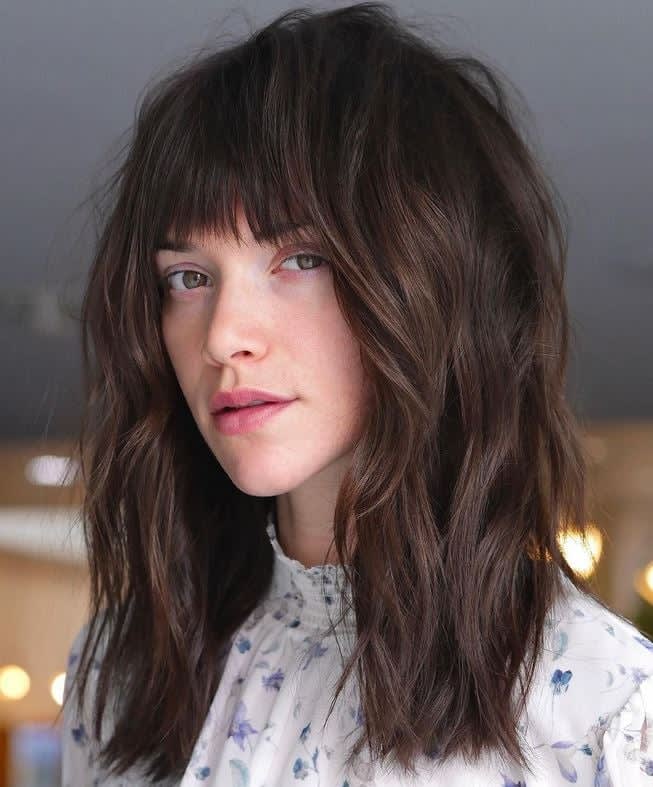
No bangs on a shoulder-length shag means the eye goes straight to the layers. This version, in solid dark brown with a middle parting, relies on textured waves for movement. Medium-density wavy hair holds the shape without looking thin. Ask your stylist for: shoulder length shag, textured layers, no bangs. A sea salt spray on damp hair enhances the natural wave and prevents the ends from clumping. The cut wears well for four to five weeks before the perimeter needs tidying, and the lack of fringe means no extra snipping between trims.
Collarbone Shag With Choppy Bangs

What is the difference between choppy bangs and softer fringe styles on a shag? Choppy bangs hit with a blunt, uneven edge that adds a graphic quality to the cut. A collarbone-length shag with subtle highlights, styled with an air-dried wave, lets the choppy fringe contrast with the textured layers below. Ask your stylist for: collarbone shag, choppy bangs, textured layers. This shape suits round and oval faces, where the blunt edge cuts across the forehead and shortens the visual length. Medium wavy hair handles the choppy ends best; fine hair may expose too much scalp between the pieces.
Collarbone Shag With Choppy Bangs and Brunette With Subtle Highlights
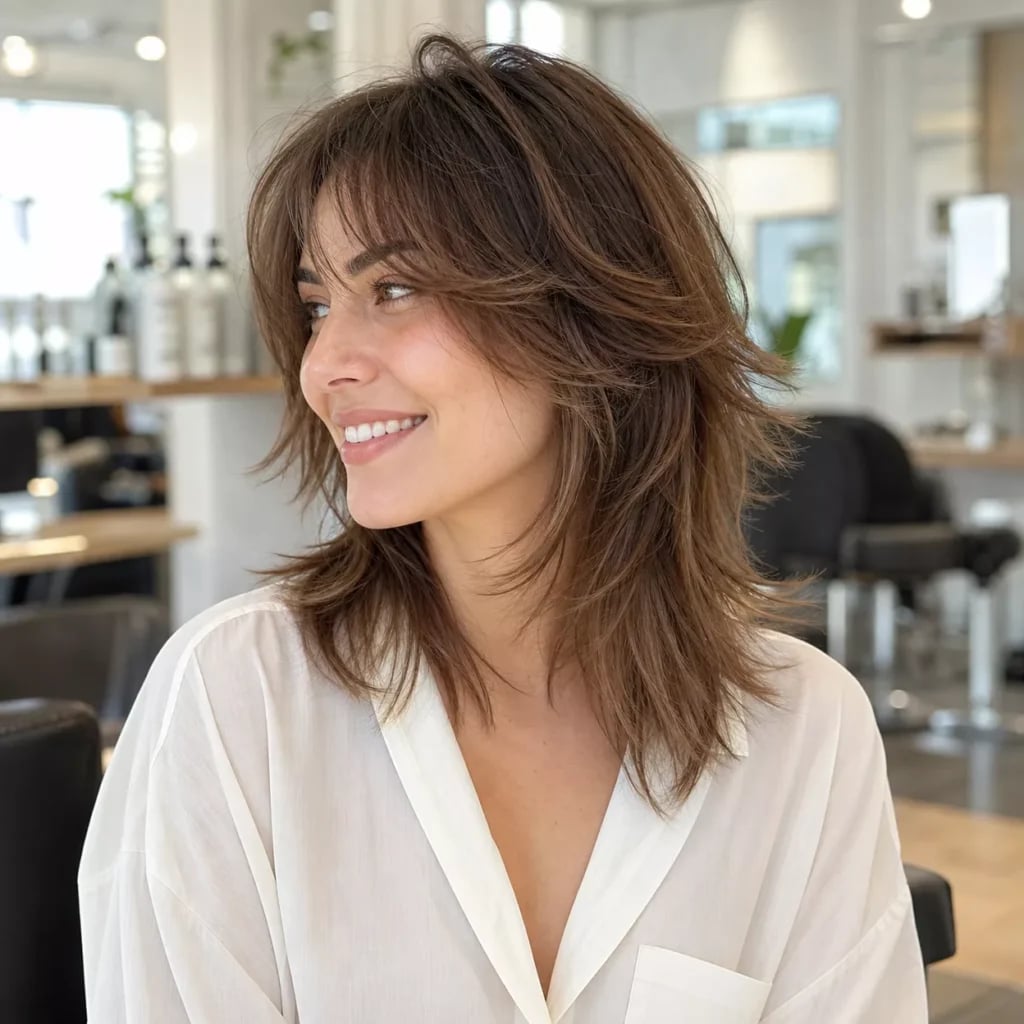
A collarbone shag relies on point-cutting through each section to create that uneven, piecey edge rather than a smooth taper. The choppy bangs are cut separately, with the scissors held vertically to avoid a solid line. Ask your stylist for: collarbone shag, choppy bangs, textured layers. The side view here shows how the layers stack from the nape forward, which gives medium wavy hair more movement than a blunt cut would. The air-dried finish is the point, a texturizing paste patted into the ends defines each piece without heat. The baseline will need a trim every six to eight weeks to keep the choppiness intentional rather than ragged.
Collarbone Shag With Textured Curtain Bangs, Wavy
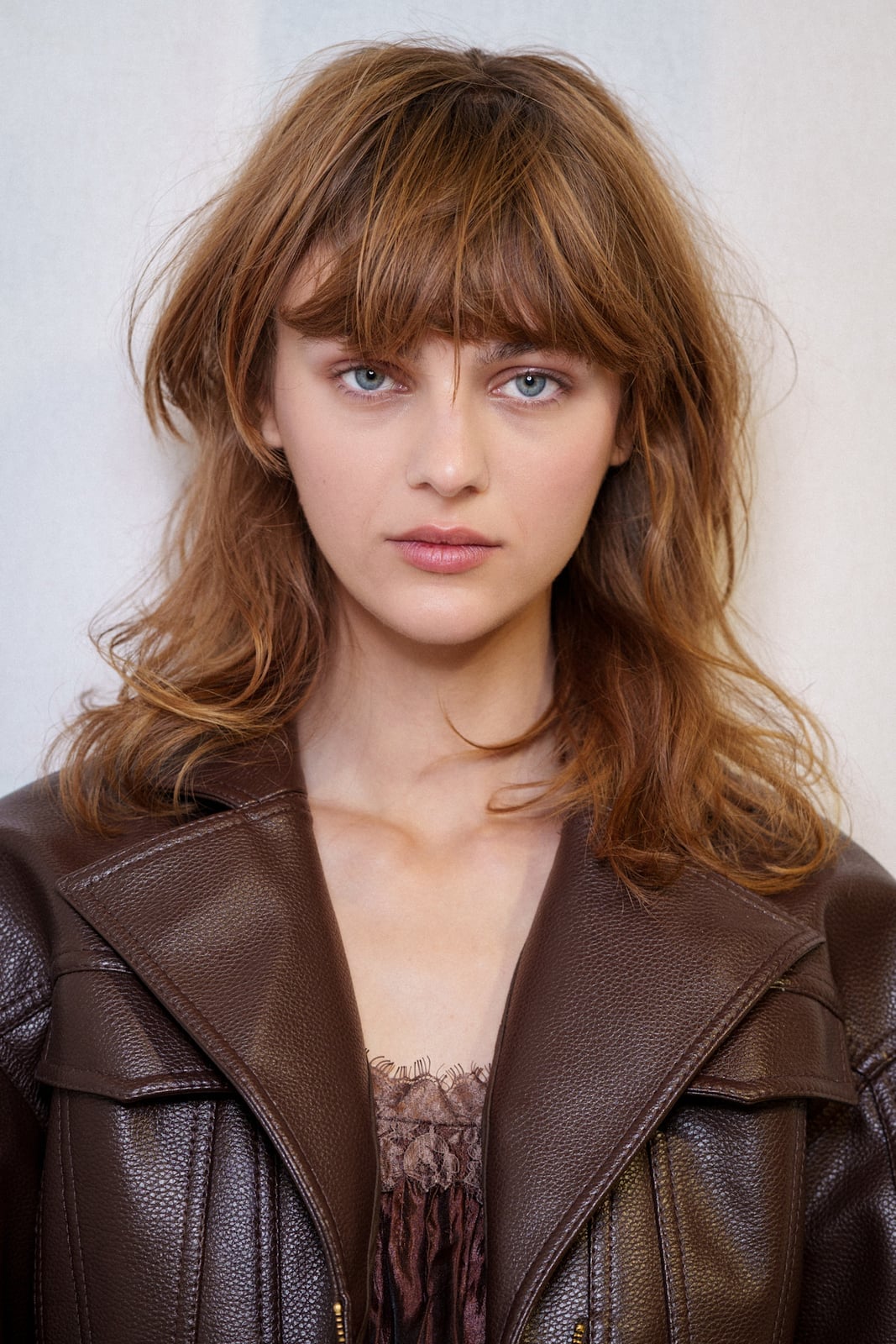
A shag at collarbone length with curtain bangs solves a common problem for fine, wavy hair: it adds visual weight around the face without removing density everywhere else. The curtain bangs are cut to sweep toward the cheekbones, and the interior layers are carved to avoid collapsing at the ends. Ask your stylist for: collarbone shag, textured curtain bangs. A texturizing spray applied to damp hair and scrunched gives the waves piecey definition that holds through the day. The trim rhythm is every six to eight weeks, though the bangs may need a touch-up at four weeks to keep them grazing the brow rather than sliding past it.
Collarbone Ash Blonde Shag
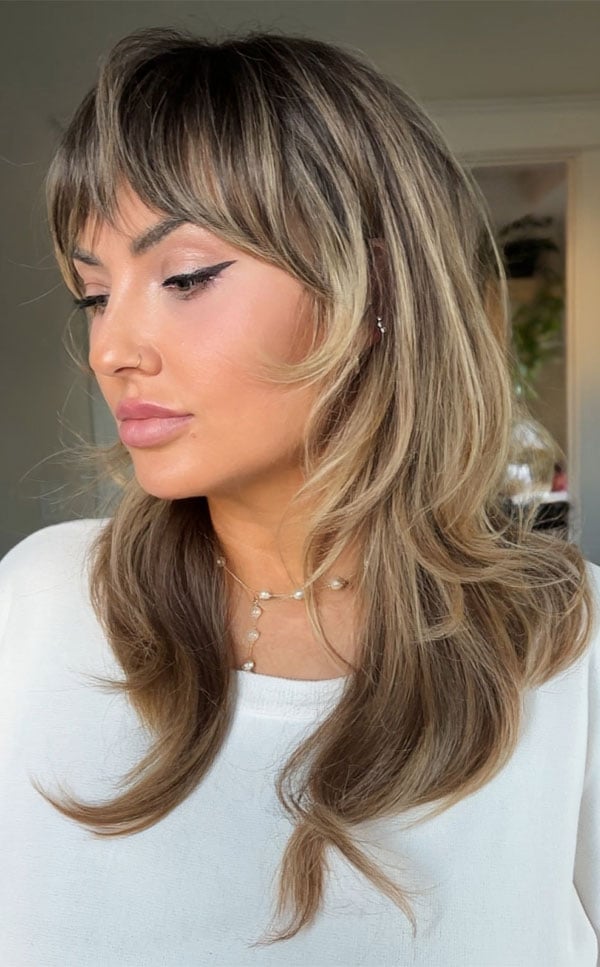
Why does an ash blonde shag work so well when the weather warms up? The cool, matte tone keeps the hair from looking washed out in bright sunlight, and the face-framing layers add dimension that a solid block of color cannot. Ask your stylist for: collarbone shag, face-framing bangs, ash blonde balayage. The balayage placement here is painted onto the surface layers only, so the roots stay darker and the ends lift gradually. Spring and summer are the natural seasons for this. The lighter shade looks fresh and airy, and the loose waves hold up against humidity better than a pin-straight finish would.
The side parting and textured waves give the collarbone length a soft silhouette that works for medium wavy hair. A root-lifting spray at the crown prevents the layers from pulling the top flat.
Collarbone Ash Blonde Shag With Curtain Bangs

An ash blonde shag with curtain bangs needs a specific upkeep rhythm to stay wearable. The fine, wavy texture here means the bangs will naturally separate, which is the goal, but the ash tone will start to warm up after about four weeks. Ask your stylist for: collarbone shag, curtain bangs, ash blonde. A purple shampoo used once a week keeps the color from drifting toward yellow, and a volumizing mousse applied to damp roots gives the fine waves enough lift to maintain the shag shape.
The curtain bangs are cut to blend into the face-framing layers, so they grow out as a unit rather than leaving an awkward shelf. The baseline trim lands at every six to eight weeks, and the bangs can be tidied at the same appointment.
Collarbone Shag With Textured Layers
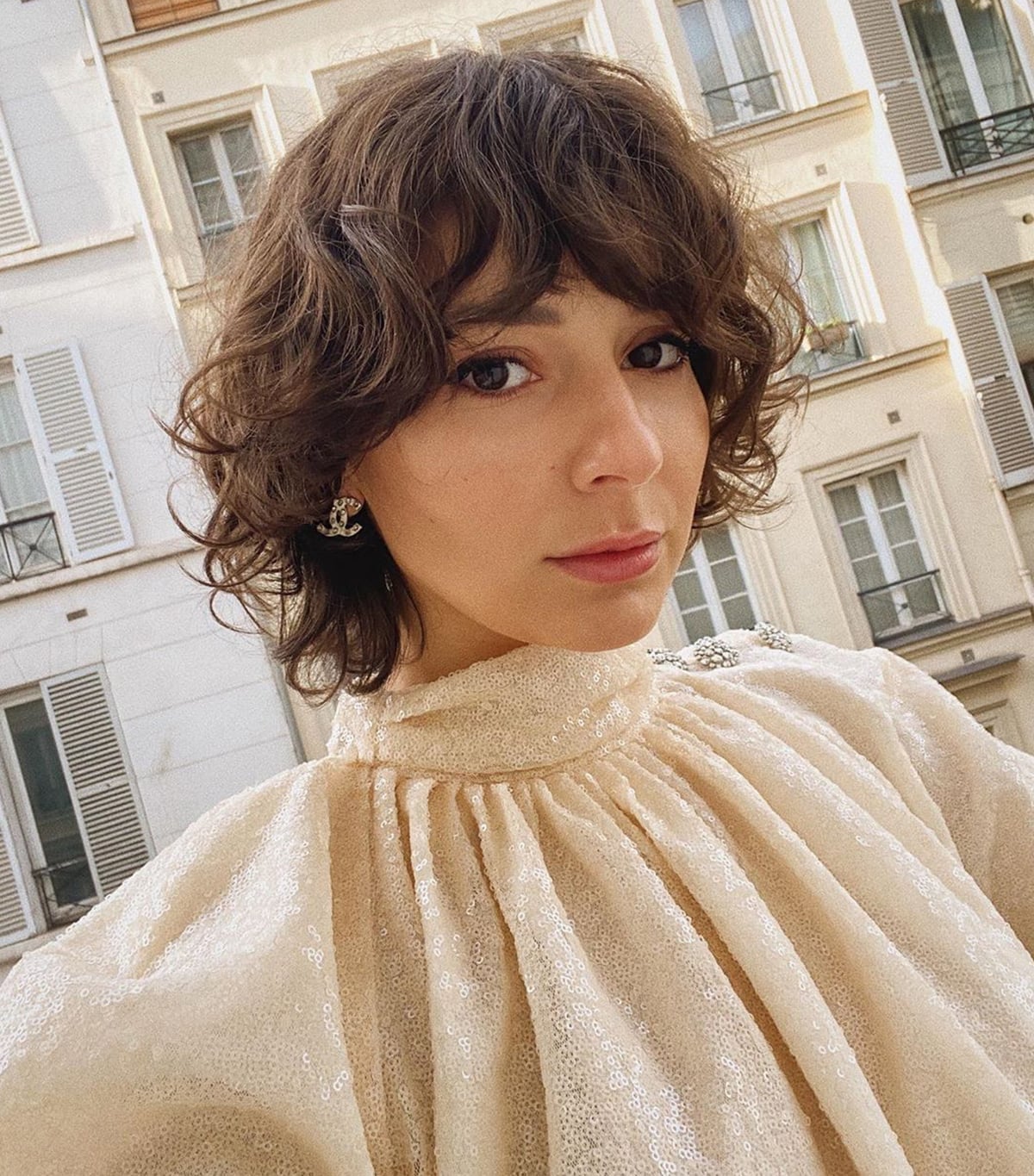
A collarbone shag on fine, wavy hair uses a specific layering technique: the stylist carves out each section with a razor or texturizing shears, removing bulk from the interior while keeping the perimeter intact. The curtain bangs are cut to blend into the shortest face-framing layer, creating a continuous line from brow to collarbone. Ask your stylist for: collarbone shag, textured layers, curtain bangs. The styling steps are simple, apply a texturizing spray to damp hair, scrunch, and air-dry or diffuse. The fine density means the layers add body rather than exposing thin spots, and the subtle highlights create depth without needing a full balayage.
Collarbone Blonde Shag With Curtain Bangs and Middle Parting

How do you ask for a blonde shag that doesn’t read as one-note? Start with the root shadow and highlights. This collarbone-length cut uses a darker root to anchor the lighter lengths, so the grow-out stays soft rather than harsh. The fine, wavy texture and prominent curtain bangs with a middle parting do the heavy lifting for face-framing. Ask your stylist for: collarbone shag, curtain bangs, blonde root shadow. A dry shampoo at the roots refreshes the waves between washes, and a baseline trim every six to eight weeks keeps the shape from losing its edge.
Collarbone Shag With Root Shadow
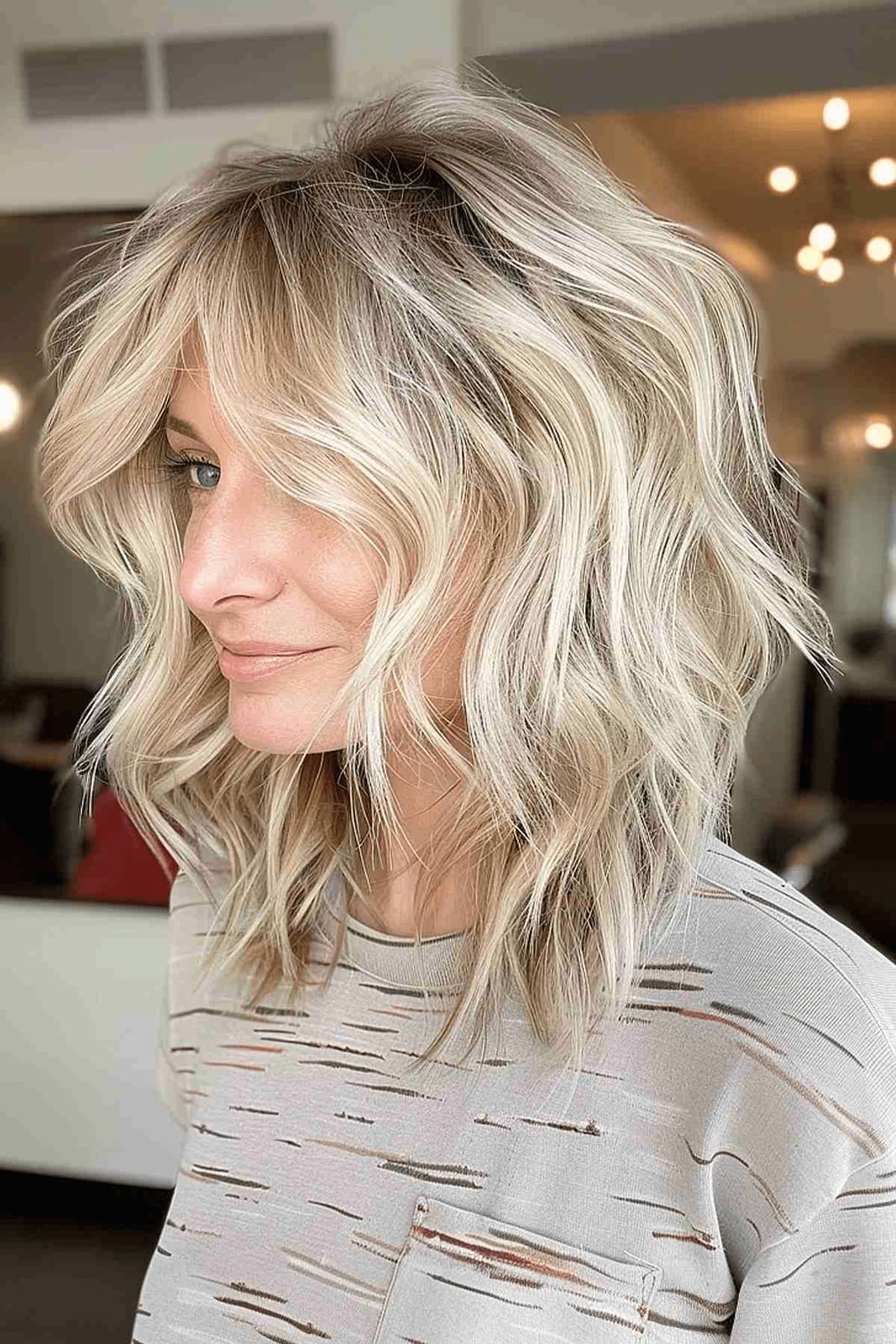
A collarbone shag with a visible root shadow and face-framing bangs, styled in a blowout with loose waves. The thick, wavy texture takes well to the layered cut. The root shadow on a blonde base needs a toning appointment every four to six weeks to keep the contrast clean. Ask your stylist for: collarbone shag, face-framing bangs, root shadow. A smoothing serum tames the blowout, and the side parting adds volume where the layers hit.
Mid-Back Shag With Volume and Layers
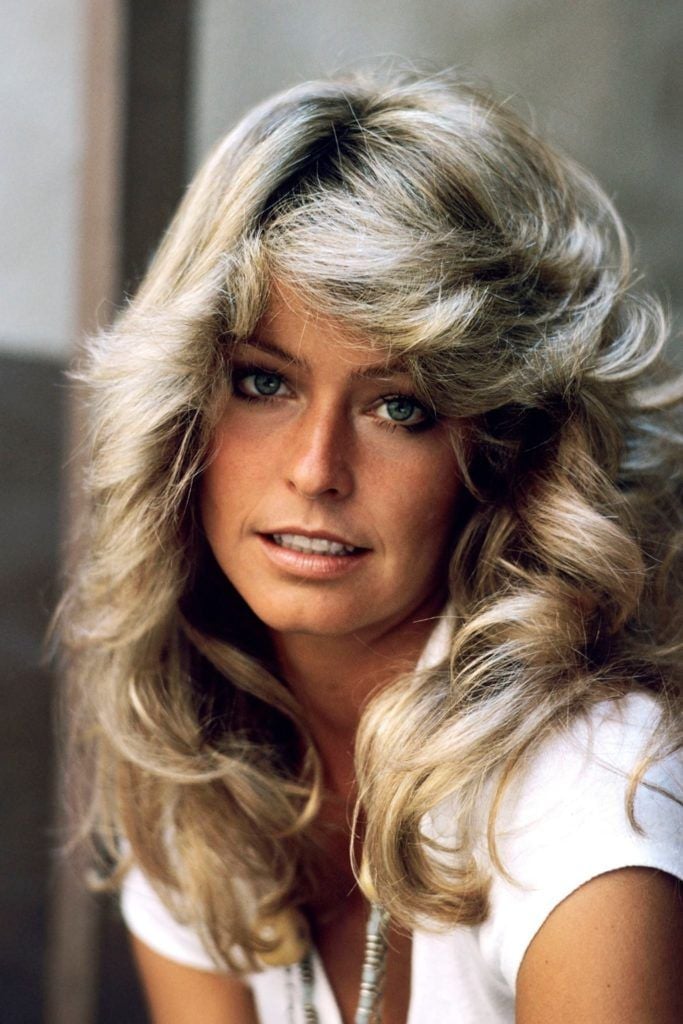
The volume here is not an accident. This mid-back shag uses feathered layers and soft, face-framing bangs to build a full, bouncy silhouette that works best on thick, wavy hair. The bright blonde with subtle highlights catches the light in each layer, so the cut reads as dimensional rather than flat. Ask your stylist for: mid-back shag, voluminous feathered layers, face-framing bangs. A volumizing spray and a diffuser are your tools for the loose curls. Plan a baseline trim every eight weeks to maintain the shape.
If your hair is fine or straight, this much layering can look sparse rather than lush. The cut relies on density and wave to hold its iconic structure, so those with thinner textures may find the silhouette falls flat by midday.
Collarbone Soft Shag With Wispy Fringe
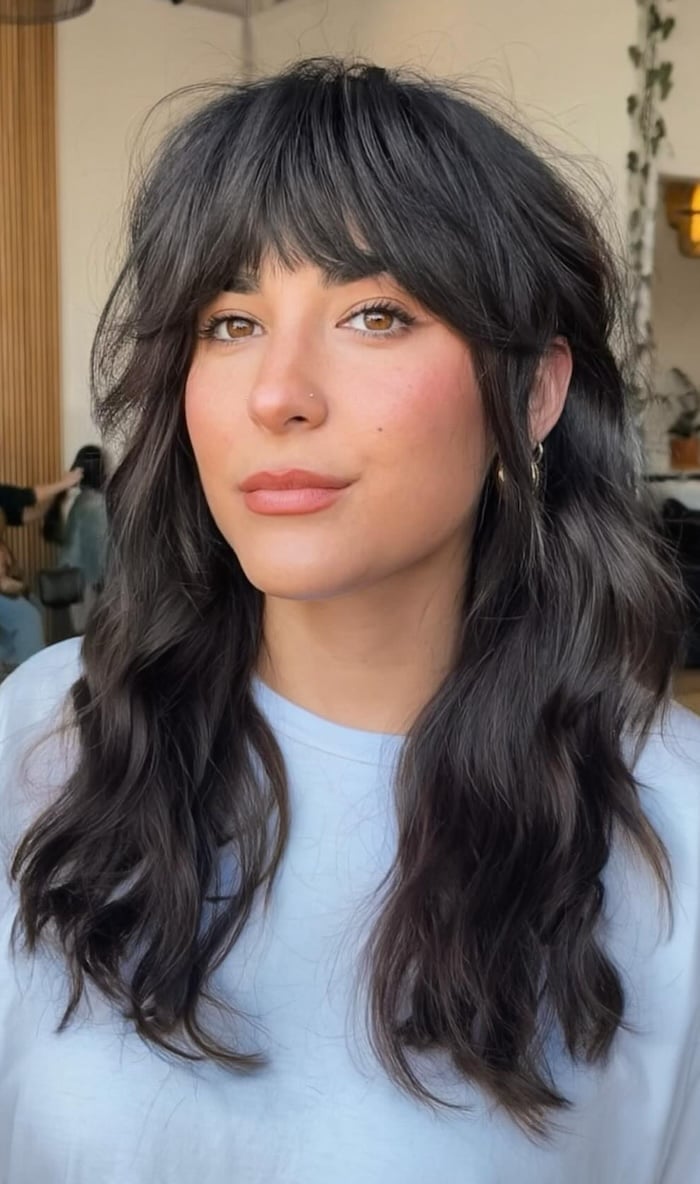
Can a shag look like it took no effort at all? This one does, and that is the point. The collarbone soft shag in dark brown relies on a wispy fringe parted to the side and an air-dried, textured finish. The medium-density wavy hair does not fight the cut, so the lived-in look comes from letting the natural texture do its thing. Ask your stylist for: collarbone soft shag, wispy fringe, side part. Minimal product and a trim every six to eight weeks keep the wispy fringe from turning into a full bang.
Collarbone Shag With Face-Framing Layers, Platinum Blonde
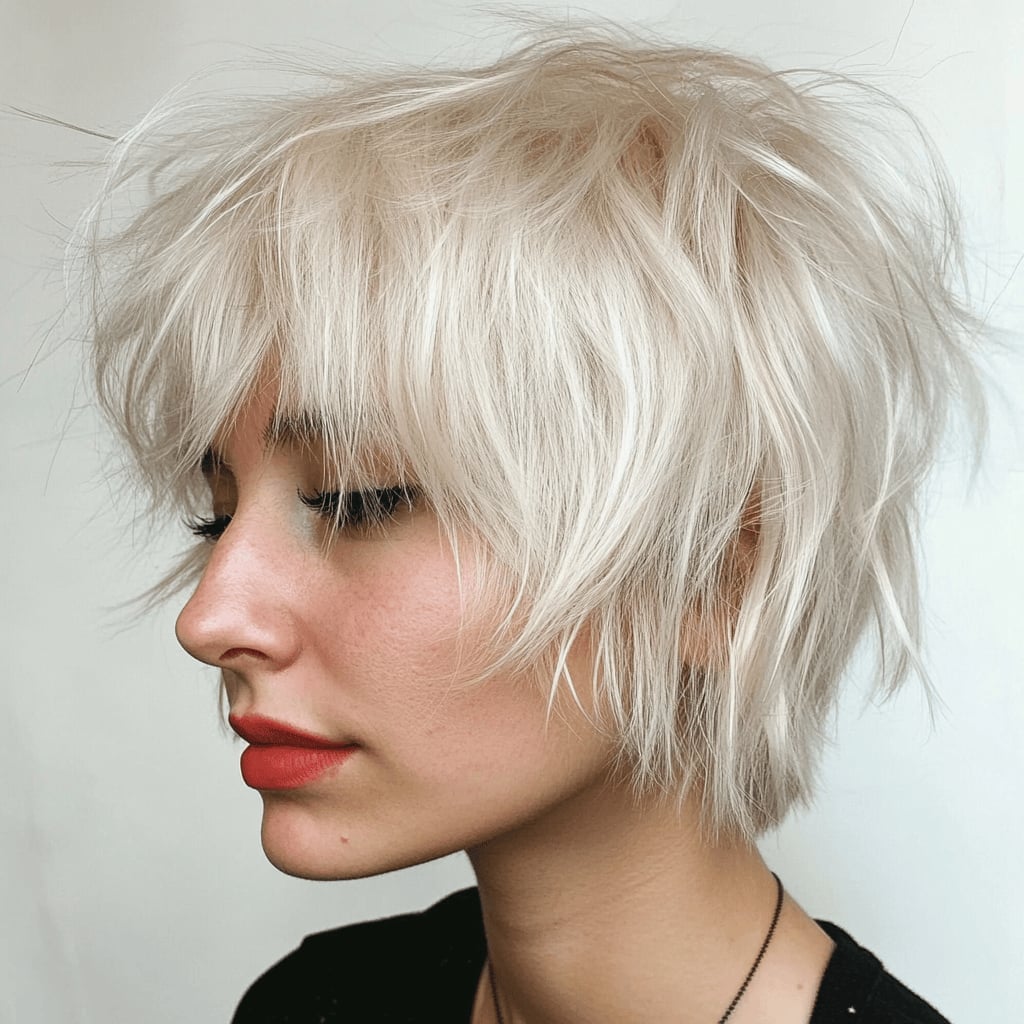
A short platinum blonde shag with a choppy fringe and extreme texture is not a shy haircut. The ear-length cut uses wispy, piecey styling on fine, light hair to create sharp, defined layers that look modern and deliberate. Ask your stylist for: short platinum shag, choppy fringe, extreme texture. The fine texture and short length mean flyaways are part of the look, not a flaw. A texture spray keeps the piecey finish intact.
Chin Length Shag With Wispy Bangs

A chin-length shag with wispy bangs and a middle part is the haircut equivalent of rolling up your sleeves on the first warm day. The fine, wavy texture and subtle lighter tones keep the weight off the ends, which matters when summer humidity starts testing your patience. Ask your stylist for a chin length shag with wispy bangs and a middle part. A light texturizing spray is all it takes to wake up the layers, and a trim every six weeks keeps the baseline clean.
Short Shag With Choppy Bangs

Can you get a short shag with choppy bangs to look this textured at home? Sort of. The honey blonde base and subtle highlights do some of the work, and a texturizing wax applied to dry hair will give you piecey separation on the fine, wavy texture. But the precision of those choppy bangs and the chin-length silhouette is a salon job, not a bathroom-mirror gamble. Ask your stylist for a short shag with choppy bangs at chin length.
A side part adds asymmetry to the tousled finish, which helps round and oval faces. Plan on a trim every six weeks to keep the choppiness intentional rather than accidental.
Short Platinum Blonde Shag
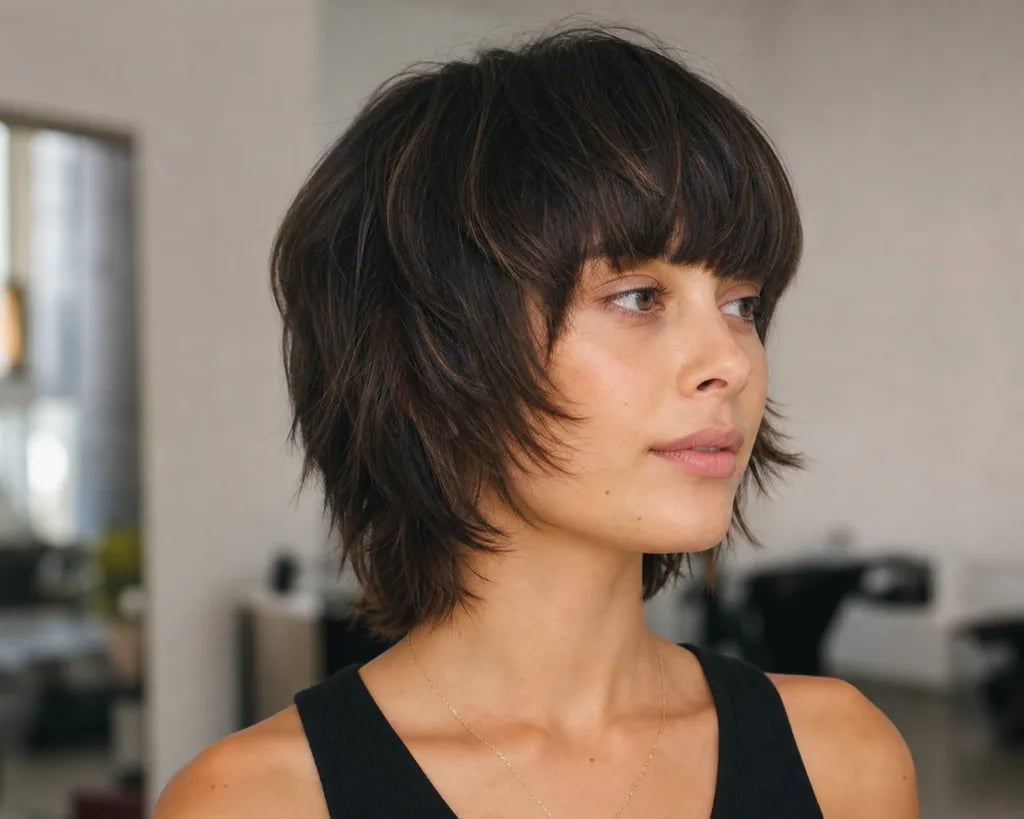
An ear-length shag in platinum blonde with a choppy fringe is not a subtle haircut, and that is the point. The fine, straight texture gains instant architecture from the extreme layering and wispy, piecey styling. Ask your stylist for a short platinum shag with a choppy fringe and extreme texture. A texturizing spray or powder provides the grit to hold the shape, and the fringe needs a trim every four to six weeks to stay sharp.
Ear Length Dark Brown Shag

A long shag with soft, face-framing curtain bangs is a study in controlled chaos. The honey blonde balayage and loose waves create movement that keeps the fine, straight texture from falling flat, while the side part adds a little asymmetry. Ask your stylist for a long shag with curtain bangs and face-framing layers.
This cut works for oval and long face shapes because the curtain bangs soften the forehead without shortening it. The glossy finish comes from a smoothing serum applied to damp hair before blow-drying. A trim every six to eight weeks maintains the shape, but the grow-out is forgiving enough to skip a month.
Final Thoughts
For fine hair, keep the baseline blunt and skip excessive thinning so the shape holds density. For thick hair, embrace the layers to remove weight and enhance natural movement. Always discuss your desired finish with your stylist before the first snip.
- Trim the baseline every six to eight weeks to maintain shape.
- Use texturizing sprays or sea salt sprays for enhanced waves and grit.
- Air-dry or use a diffuser on a low setting to preserve natural texture.
- Toning for blonde shags may be needed every 4-6 weeks to maintain vibrancy.
Embrace the shag’s evolution for a look that’s both classic and contemporary.