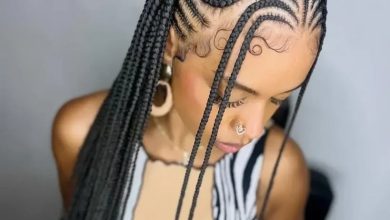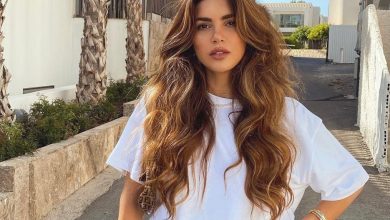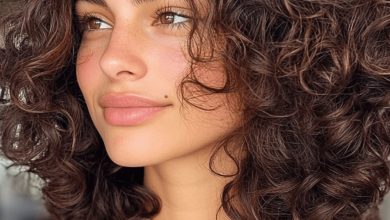
A sharp side part can transform any braided hairstyle, adding structure and polish. This season, the side part is the key detail that makes braids feel fresh and intentional, moving away from flat-ironed poker straight looks toward lived-in color and glossy natural texture.
These 32 side part braids range from salon-intensive cornrow patterns to simpler box braids and fishtails, suiting fine to thick hair and any length from collarbone to mid-back. The collection solves a common struggle: finding a protective style that holds its shape without looking stiff or dated.
Dark Red Braids With Loose Curls
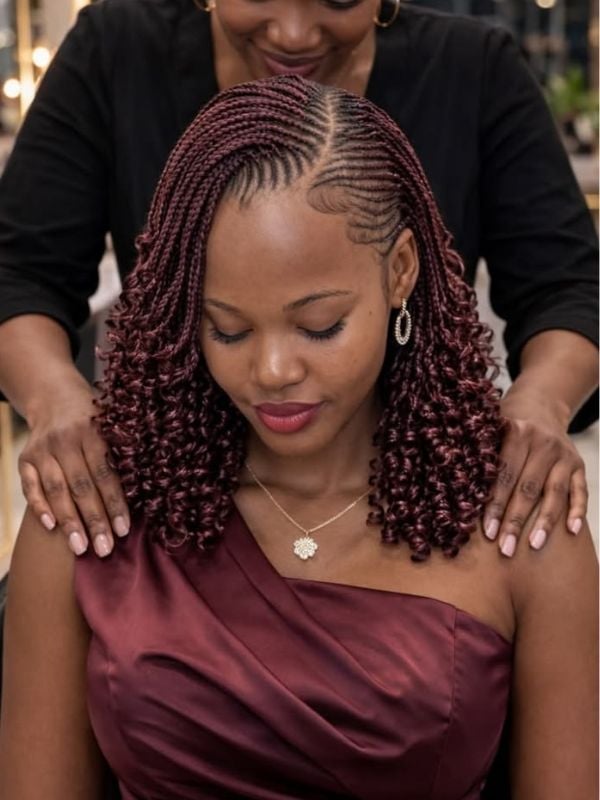
A middle part and a sharp shift from tight braids to loose, coily curls give this style its double personality. The dark red color reads as rich rather than loud, and the contrast between the structured braided crown and the bouncy ends keeps the eye moving. Thick, coily hair starting at shoulder length will hold that curl best, and the shape softens round and oval faces without much effort. Ask your stylist for: braids transitioning to loose curls, dark red color. Apply curl cream to the braided ends and twist them loosely to define the shape, then plan for a trim every eight to ten weeks to keep the ends healthy.
Black Cornrows To Mid-Back Box Braids
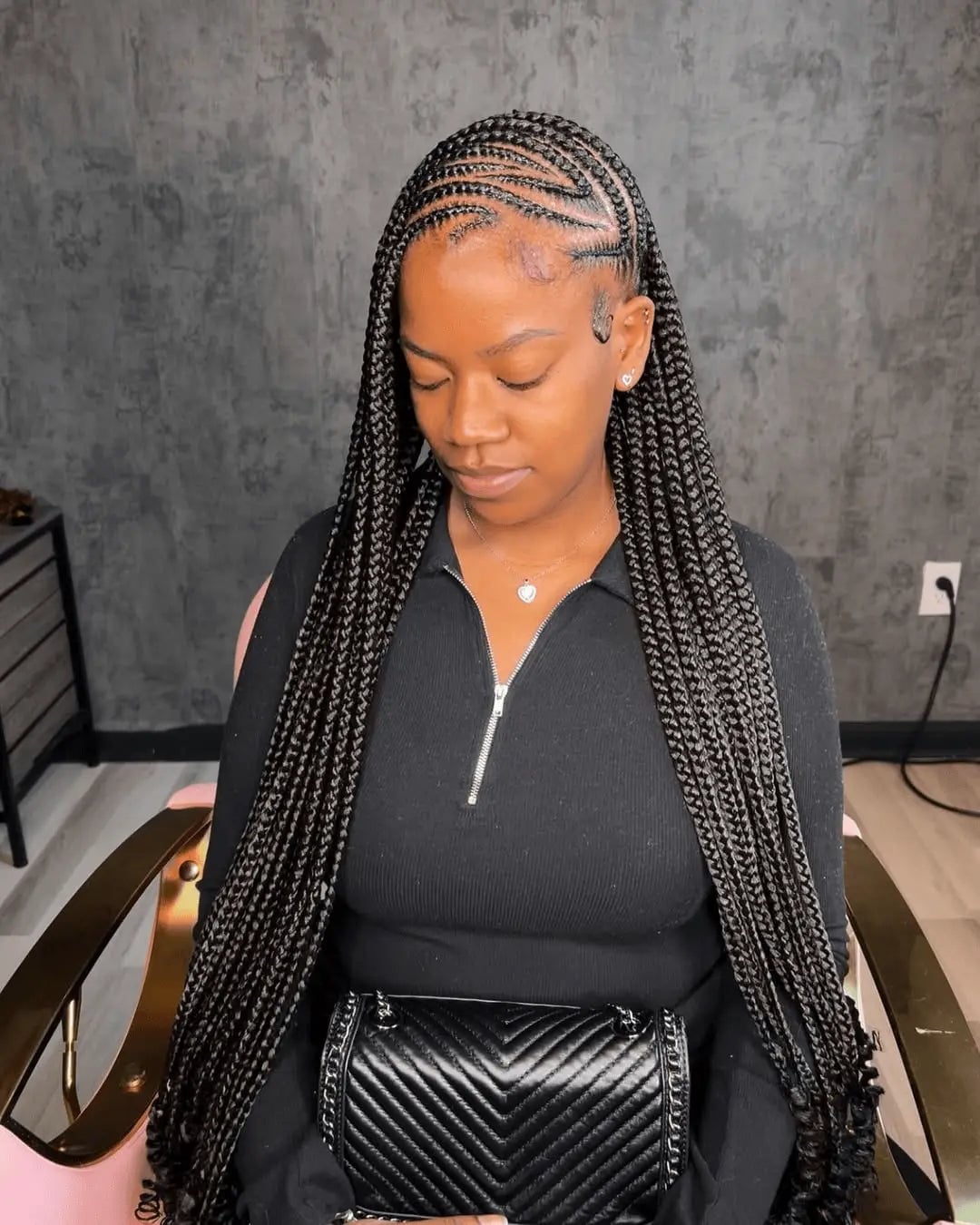
The transition from tight cornrows at the hairline to long, flowing box braids creates a clean architectural line. A sharp side part anchors the geometric cornrow pattern, and the braids extend to mid-back with subtle curly ends that add movement without disrupting the sleek silhouette. Thick hair starting at shoulder length holds this shape well, and the vertical lines of the cornrows help elongate a round face.
Ask your stylist for: cornrows to mid-back box braids with curly ends, side part. Sleek the cornrowed section with a light gel to keep the pattern crisp, and mist the braids with water and a braid spray for shine. A trim every ten to twelve weeks keeps the ends from fraying.
Brown Cornrows With Box Braids And Highlights
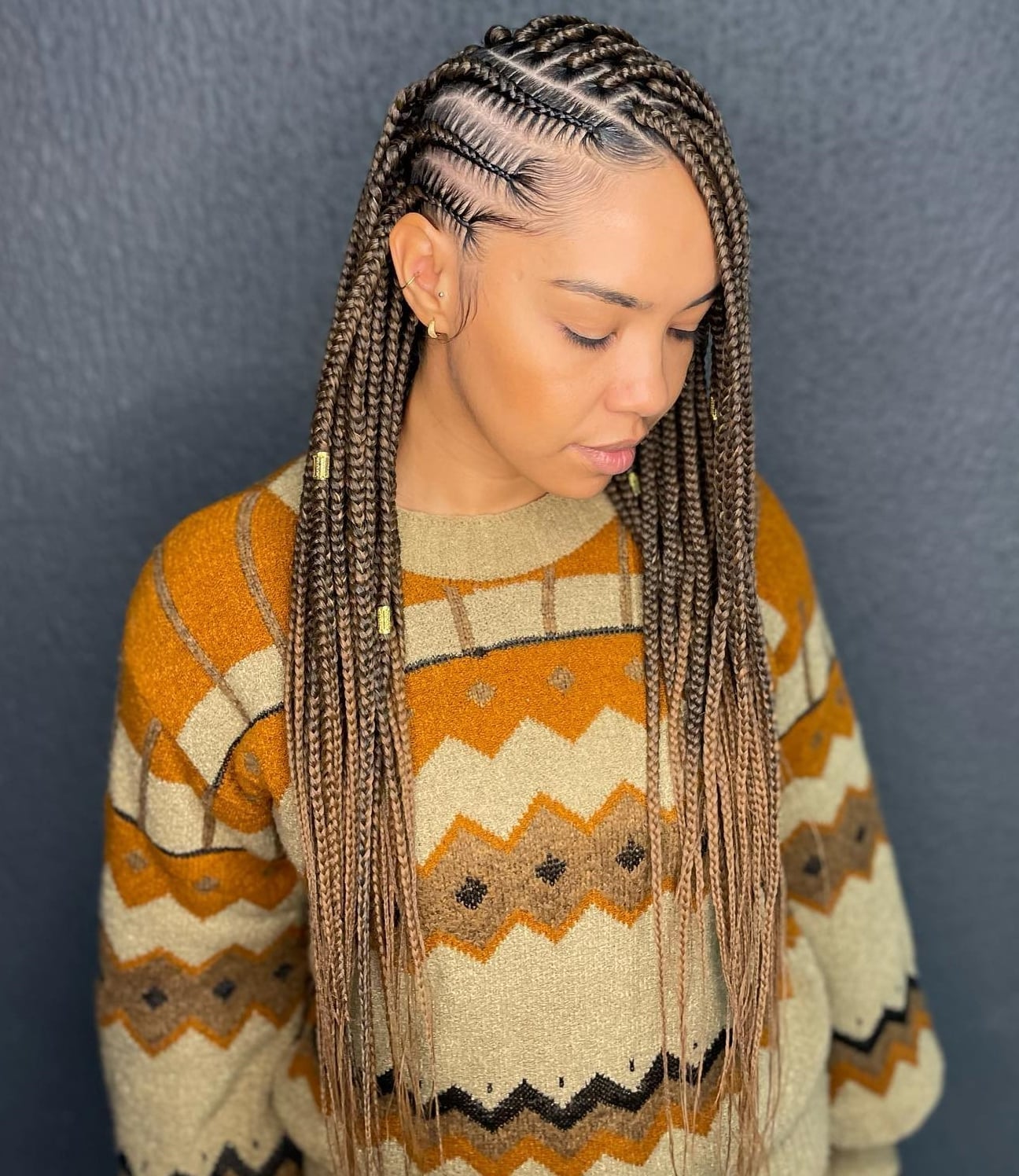
How do you make a classic cornrow-to-box-braid style feel less expected? Add lighter brown highlights woven through the braids. The fine, straight texture lets the color catch the light without competing with the intricate cornrow pattern at the hairline. The side part keeps the look polished, and the mid-back length gives you plenty of styling options. Fine to medium straight hair starting at shoulder length works best here, and the soft vertical lines help balance a square face. Ask your stylist for: cornrows to mid-back box braids with lighter brown highlights, side part. A silk wrap at night preserves the highlights and keeps the braids smooth.
Black Micro Braids With Side-Swept Bangs
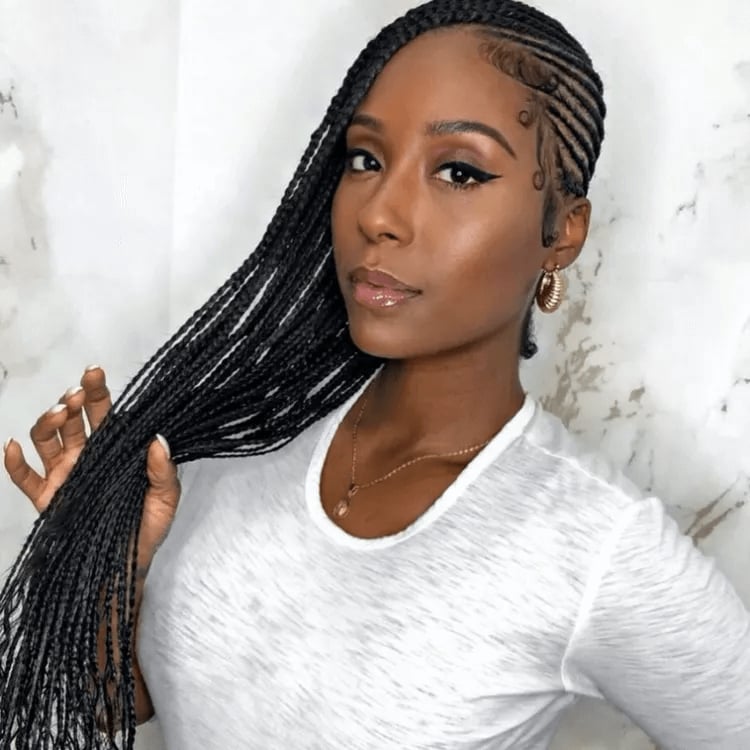
Micro braids already demand patience, but the side-swept bangs make this version worth the extra time in the chair. The fine, coily texture of the braids lets them drape softly rather than stick out, and the side part creates a natural sweep that frames the face without weight. The bangs soften a round face, but micro braids are delicate: the tension at the hairline and the sheer number of small braids can stress fine hair, so this style is best for medium-density hair that can handle the weight. Ask your stylist for: mid-back micro braids, side-swept bangs, side part. Slightly mist the bangs with a smoothing serum for a polished finish, and plan to re-braid every six to eight weeks.
Black Box Braid Bob
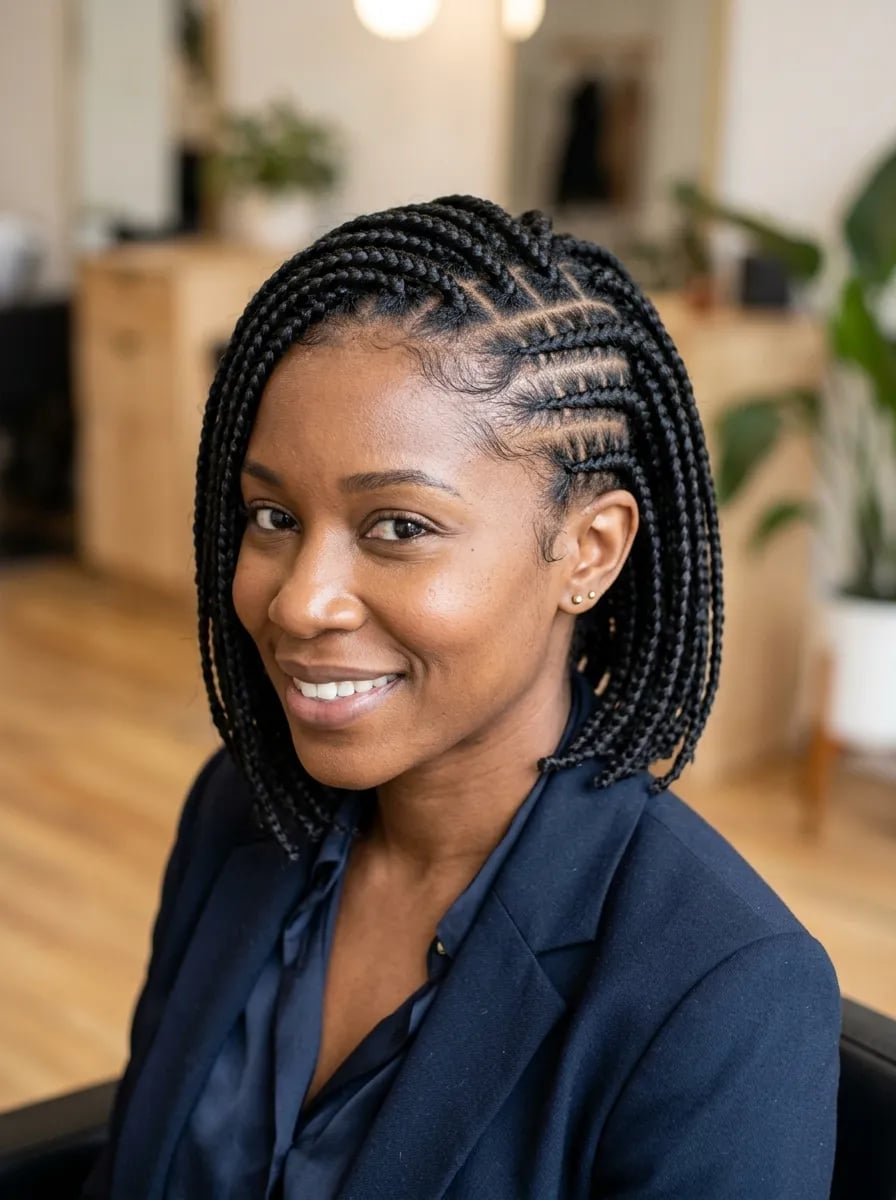
A collarbone-length box braid bob reads as deliberate because of one detail: the sharp side part. The clean parting line breaks up the uniform black braids and gives the bob a tailored finish, with smaller braids near the hairline keeping the edge crisp. Thick hair starting at shoulder length fills out the blunt shape without looking sparse, and the collarbone length suits most face shapes without needing a lot of adjustment. Ask your stylist for: collarbone box braid bob, sharp side part. Apply a light pomade to the parting line for extra definition, and trim the bob line every six to eight weeks to maintain the precision.
Black Cornrows To Wavy Mid-Back Braids, Flowing Into Long
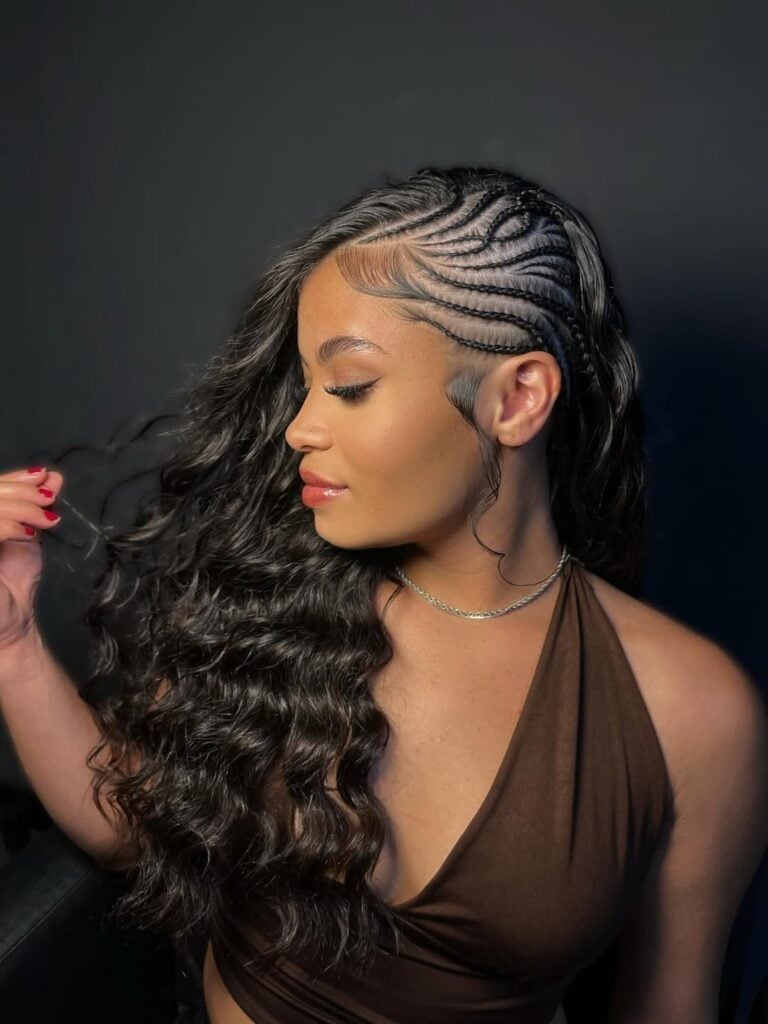
The geometric precision of the cornrows near the scalp is a deliberate contrast to the softer, wavy extensions that follow. That sharp side part anchors the whole design, giving structure to what would otherwise be a cascade of loose waves. Thick hair starting at shoulder length works best here, and the vertical lines help elongate a round face.
Ask your stylist for: cornrows to mid-back wavy braids, side part. The hold is solid at the roots, but the wave pattern needs a silk scarf at night to keep its shape. Mist between washes to maintain the gloss.
Thick Black Knotless Braids With Beads
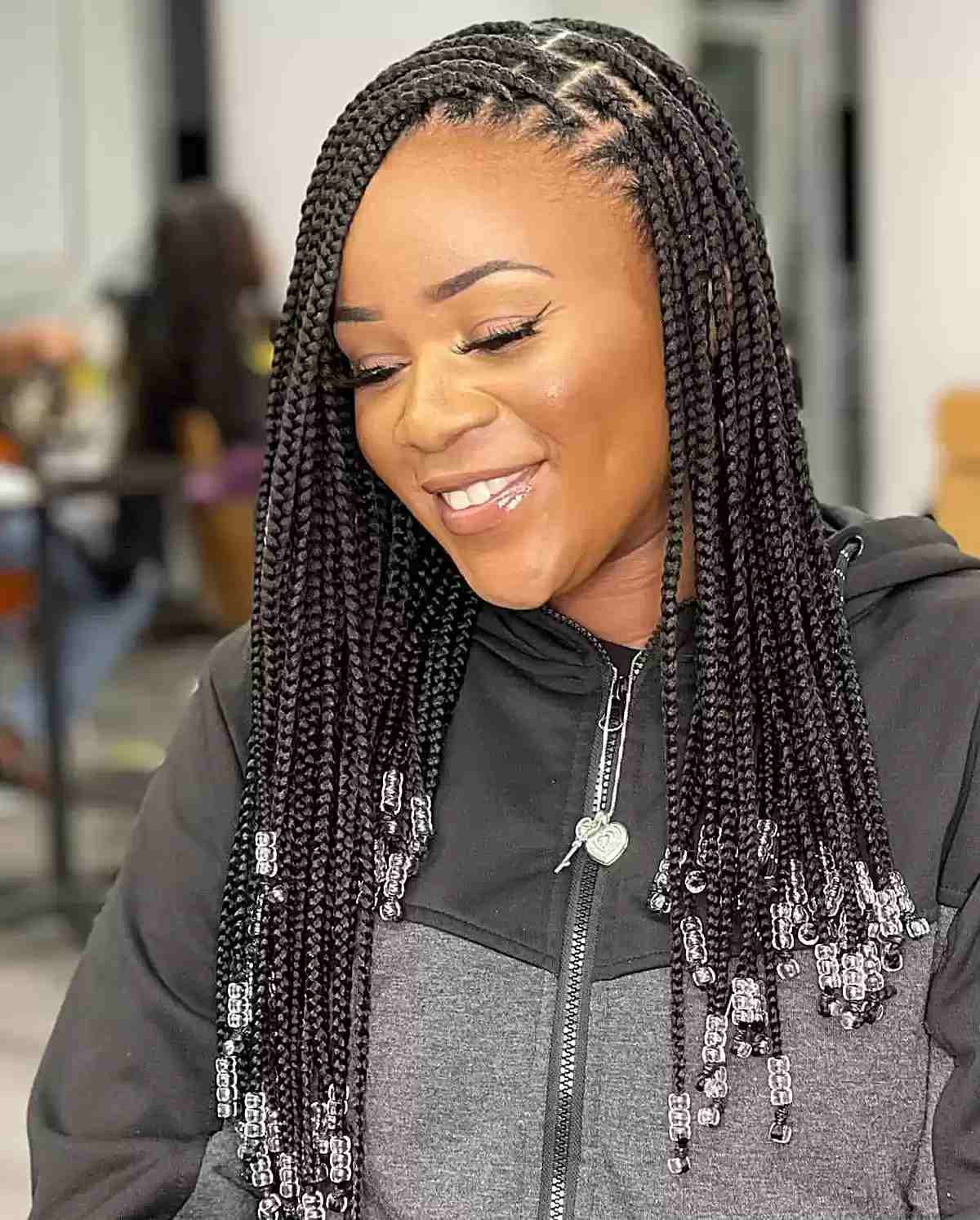
Can beads make a braid feel like an event? Yes, and that is exactly the point. These thick, straight black knotless braids stop at shoulder length with a middle part, and the small decorative beads at the ends turn a weekday style into something you would wear to a celebration. Dense hair starting at shoulder length holds the weight well, and the middle part balances a long face.
Ask your stylist for: shoulder length thick knotless braids, beads, middle part. Gently brush the hair around the beads to keep them secure; re-braid every 10-12 weeks.
Black Braids With Blonde Highlights And Curls
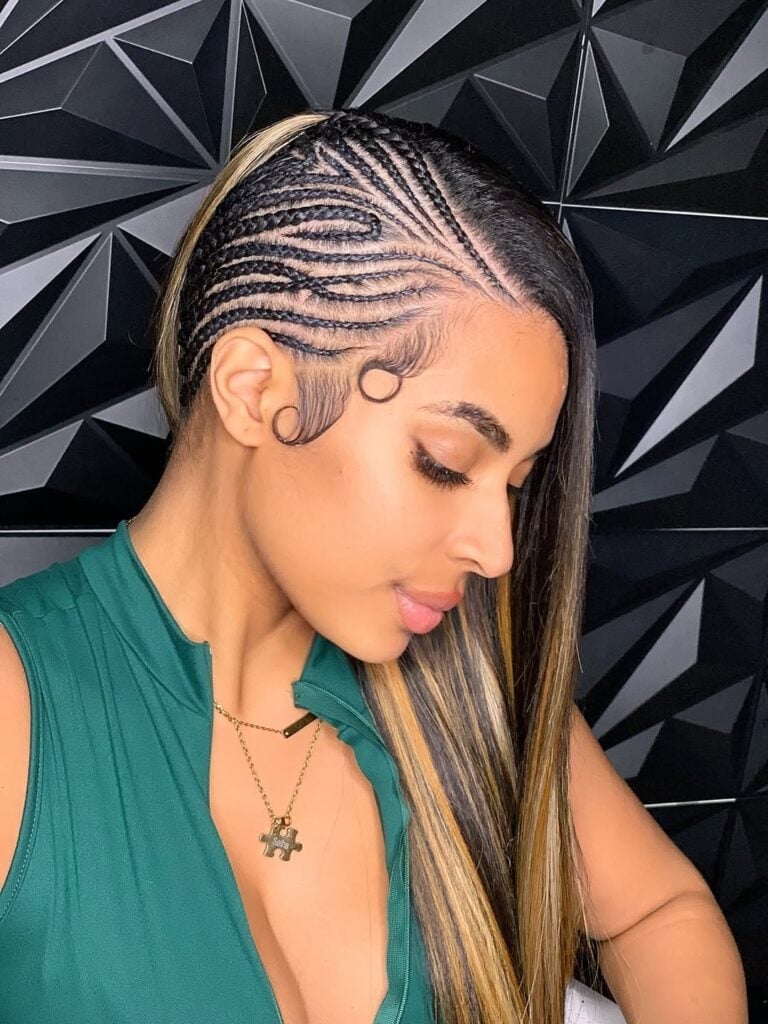
The blonde highlights here are not random: they are woven into the cornrows near the side part, then continue into the wavy extensions and curled ends. That placement draws the eye along the part line, making the side part the focal point. Thick hair starting at shoulder length carries the contrast best, and the vertical lines soften square and round faces.
Ask your stylist for: cornrows to mid-back braids with blonde highlights and curled ends, side part. The curled ends hold about a week before they start to relax. Apply a curl-defining cream to the ends and gently scrunch; re-braid every 8-10 weeks.
Jumbo Box Braids With Blonde Highlights
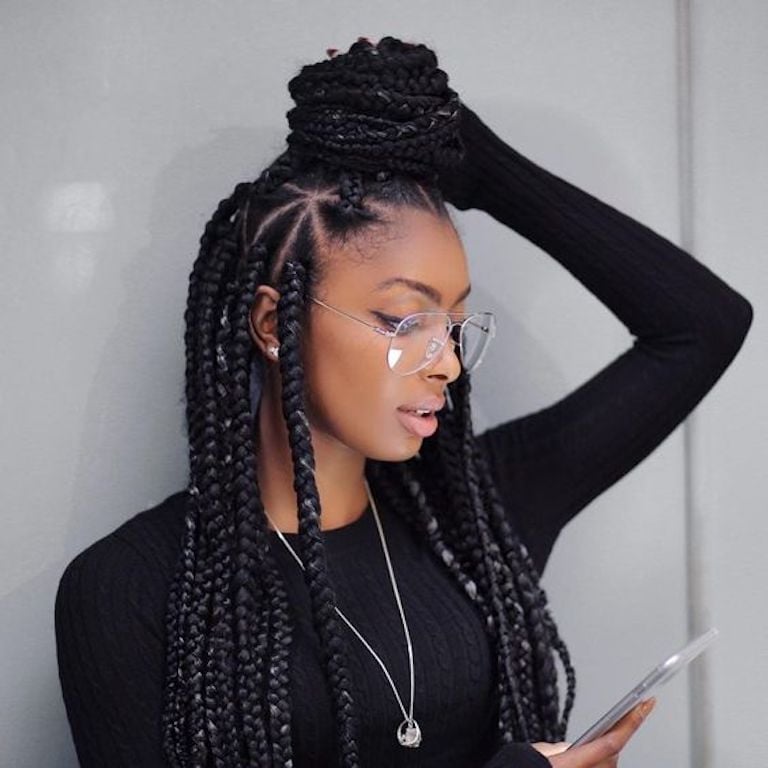
The technique here is about contrast: a sharp side part divides the scalp, and the blonde highlights are placed in bold sections against the black base. Jumbo braids mean fewer total braids, so each highlight section reads clearly rather than getting lost in the density. Thick hair starting at shoulder length gives the braids enough weight to hang straight, and the style suits most face shapes.
Ask your stylist for: jumbo box braids with blonde highlights, side part. This is a salon-only build, roughly three to four hours in the chair. Use a texturizing spray on the blonde sections for added dimension; re-braid every 8-10 weeks.
Black Cornrows With Curly Extensions
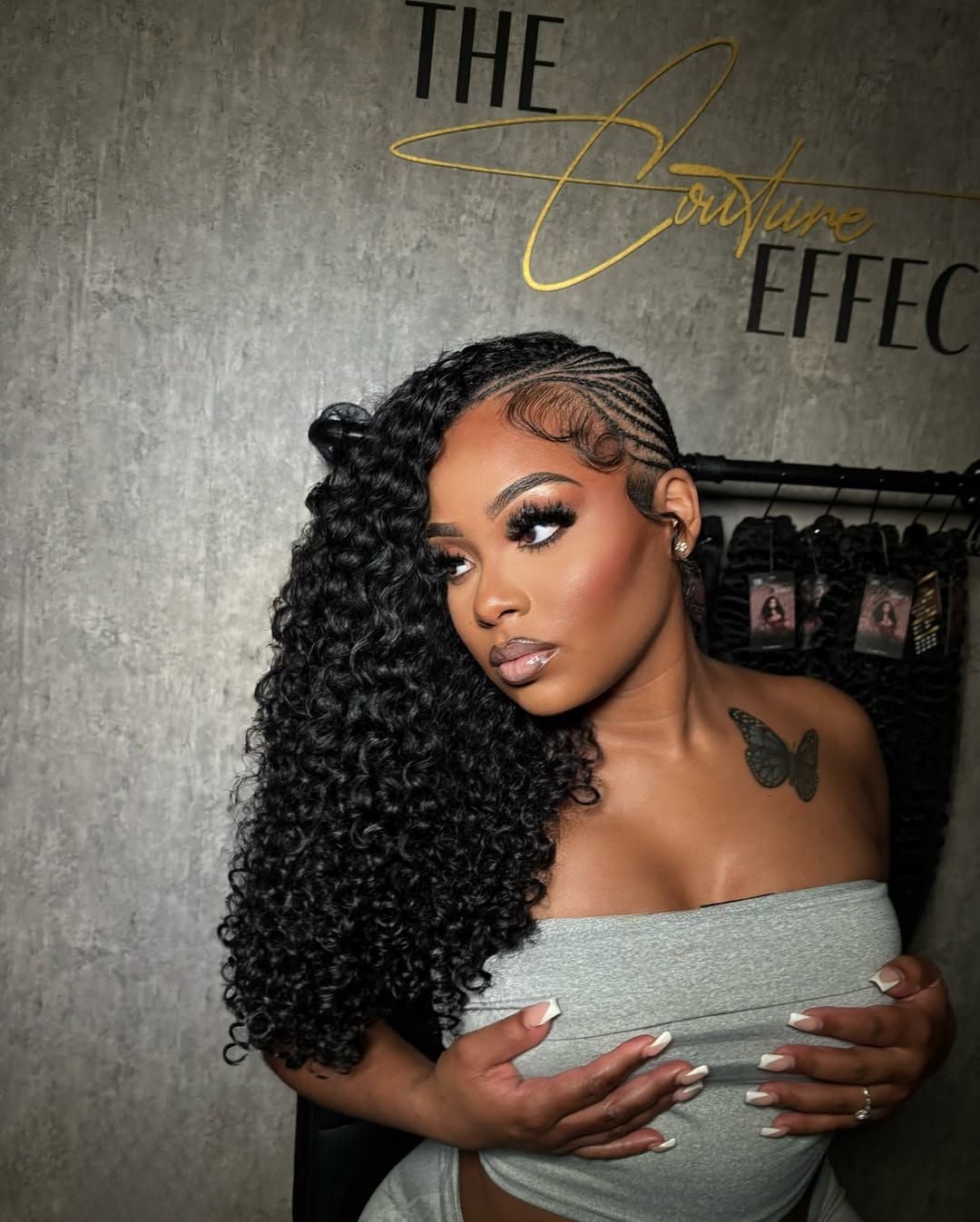
Is this style for someone with fine hair who wants the volume of curls without the weight of a full head of extensions? Yes. The neat cornrows at the side transition into long, bouncy curly extensions that reach mid-back, and the side part keeps the look grounded. Fine to medium density hair starting at shoulder length works best; the soft curls help soften a square face.
Ask your stylist for: cornrows to mid-back curly extensions, side part. Apply a lightweight serum to the curls to enhance definition and shine; re-braid every 8-10 weeks.
Dark Brown Braids With Wavy Layers And Bangs
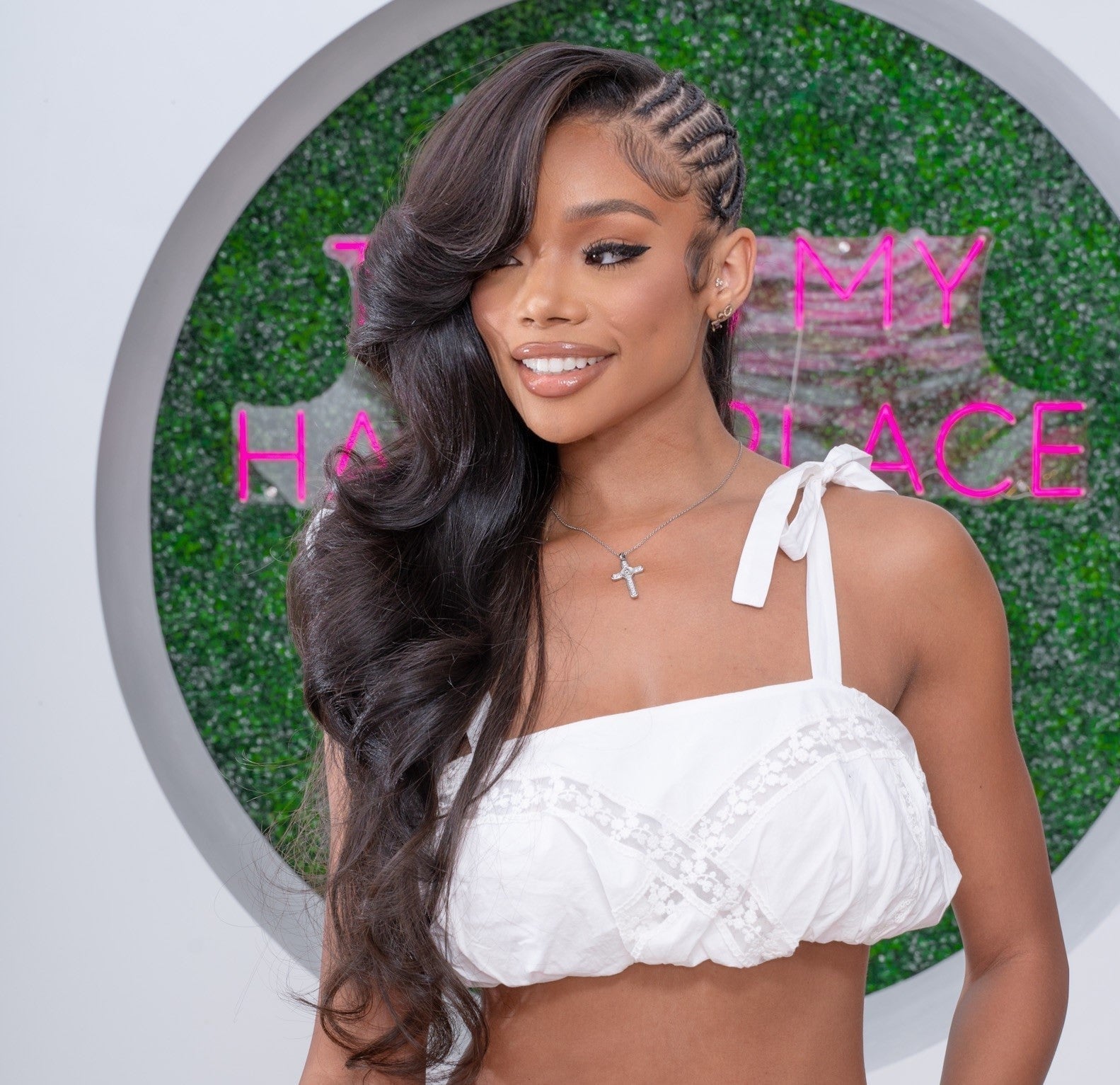
Side braids often mean committing to a single texture, but this style lets you have it both ways. Intricate cornrows on one side transition into voluminous dark brown waves and layers that fall to mid-back, with soft curtain bangs softening the whole thing. Thick hair starting at shoulder length has the weight to hold those loose waves, and the curtain bangs are a good call for round and heart faces. Ask your stylist for: side braids to mid-back waves with curtain bangs, dark brown.
Upkeep is a factor. Those curtain bangs need a trim every four to six weeks to stay out of your eyes, and the wavy sections will need a texturizing spray to keep their shape between washes. Not a set-it-and-forget-it situation, but the braided side and the soft waves make the effort worth it.
Blonde Box Braids With Face-Framing Pieces
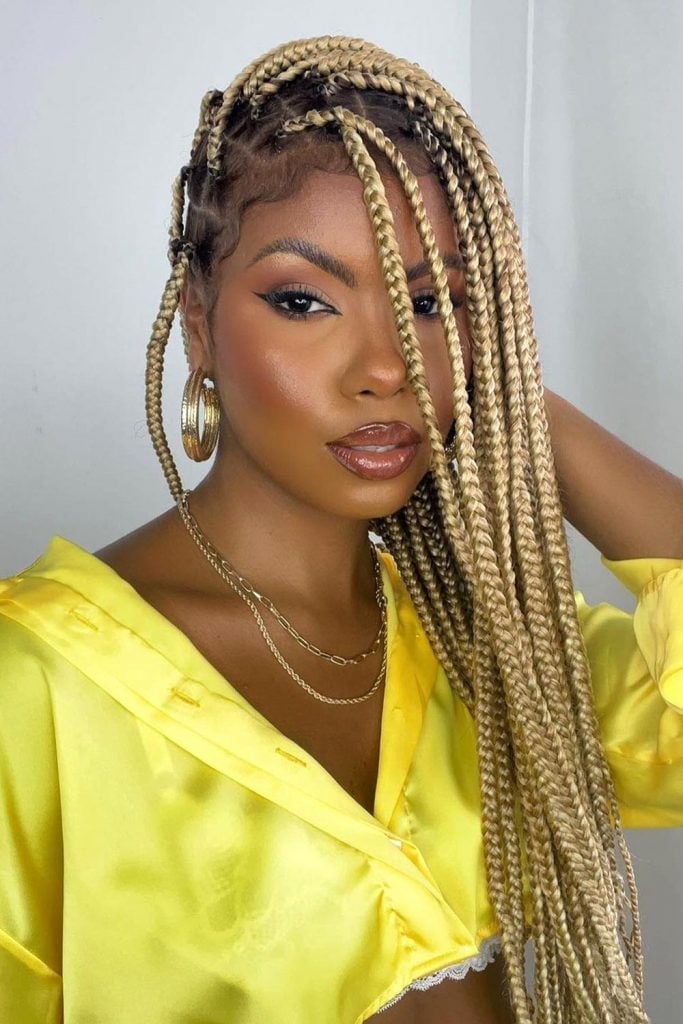
The trick with blonde box braids is keeping the parting sharp enough that the color does not look faded. A distinct side part with a few face-framing pieces pulled forward does exactly that, giving long blonde braids a shape that does not rely on a blunt cut. Medium to thick hair starting at shoulder length will hold the braids best, and those face-framing pieces soften a square jaw. Ask your stylist for: long blonde box braids, side part, face-framing pieces.
To get close at home, start with pre-stretched blonde extensions and section the hair with a rat-tail comb for a clean part. Pull two or three braids forward on each side before you begin braiding. This is a salon install, but the daily styling is minimal. A light oil on the ends every few days keeps the blonde from drying out. Re-braid every eight to ten weeks.
Black And Brown Box Braids With Highlighted Ends
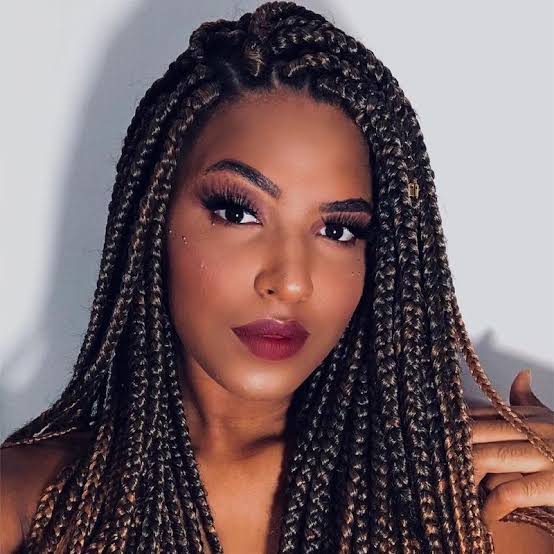
Medium box braids that blend black and brown tones with lighter highlights concentrated toward the ends create a gradient that looks lived-in from day one. The wavy texture and mid-back length give the braids movement, and the side part keeps the color distribution even. Medium to thick hair starting at shoulder length works well, and the wavy finish softens angular faces. Ask your stylist for: medium box braids to mid-back with black, brown, and highlight mix. The highlighted ends will fade slightly over eight to ten weeks, so a leave-in conditioner on the ends helps maintain the contrast. Plan for a re-braid at that interval to keep the color fresh.
Black Box Braids With Geometric Parting
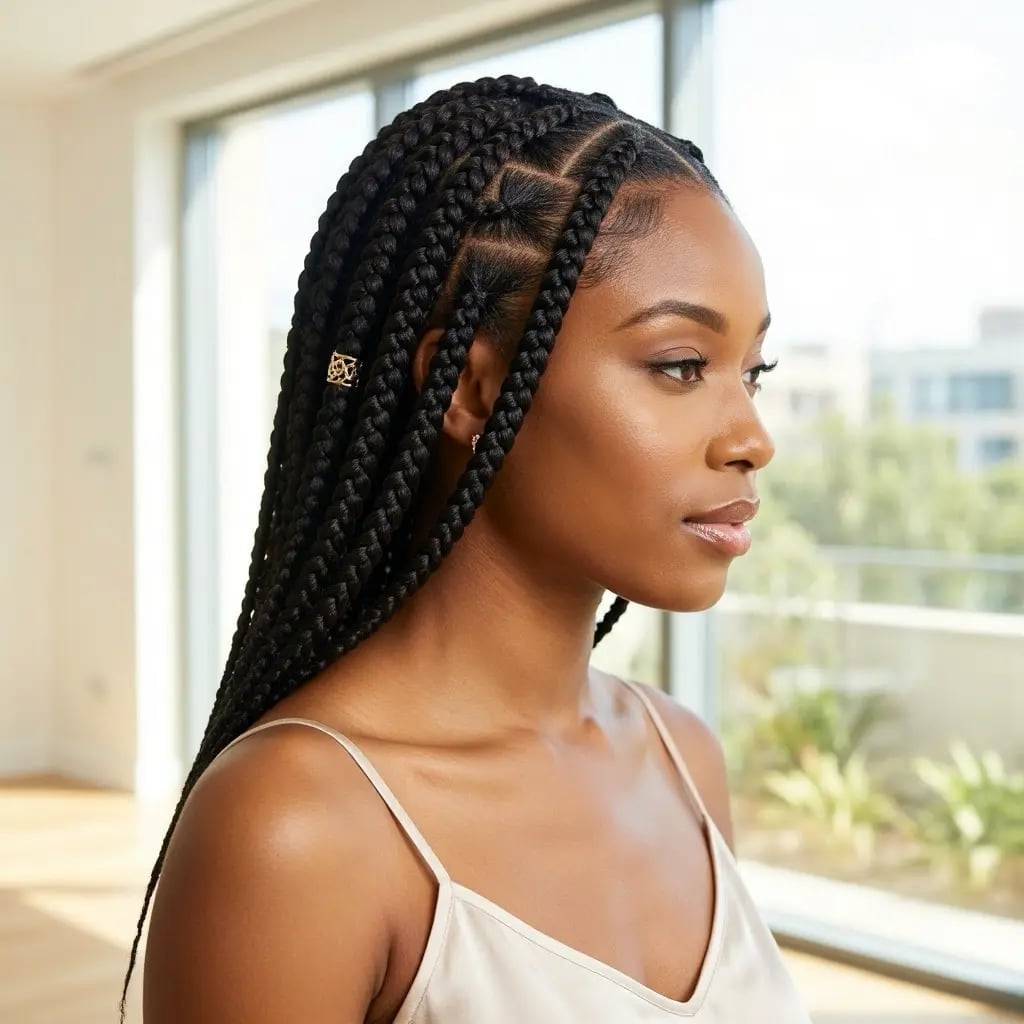
How do you make black box braids feel architectural without adding color? The answer is in the parting. A deep side part with clean geometric sections at the front turns the scalp into a design element, and small gold hair accessories punctuate the lines. Medium box braids falling to mid-back keep the focus on that precise part. Dense hair starting at shoulder length holds the geometric shapes best, and the structured look suits most face shapes. Ask your stylist for: mid-back box braids with geometric side part and gold accessories. A light styling gel along the part lines keeps them crisp between appointments. Re-braid every eight to ten weeks.
Thick Coily Black Knotless Braids, Mid-Back
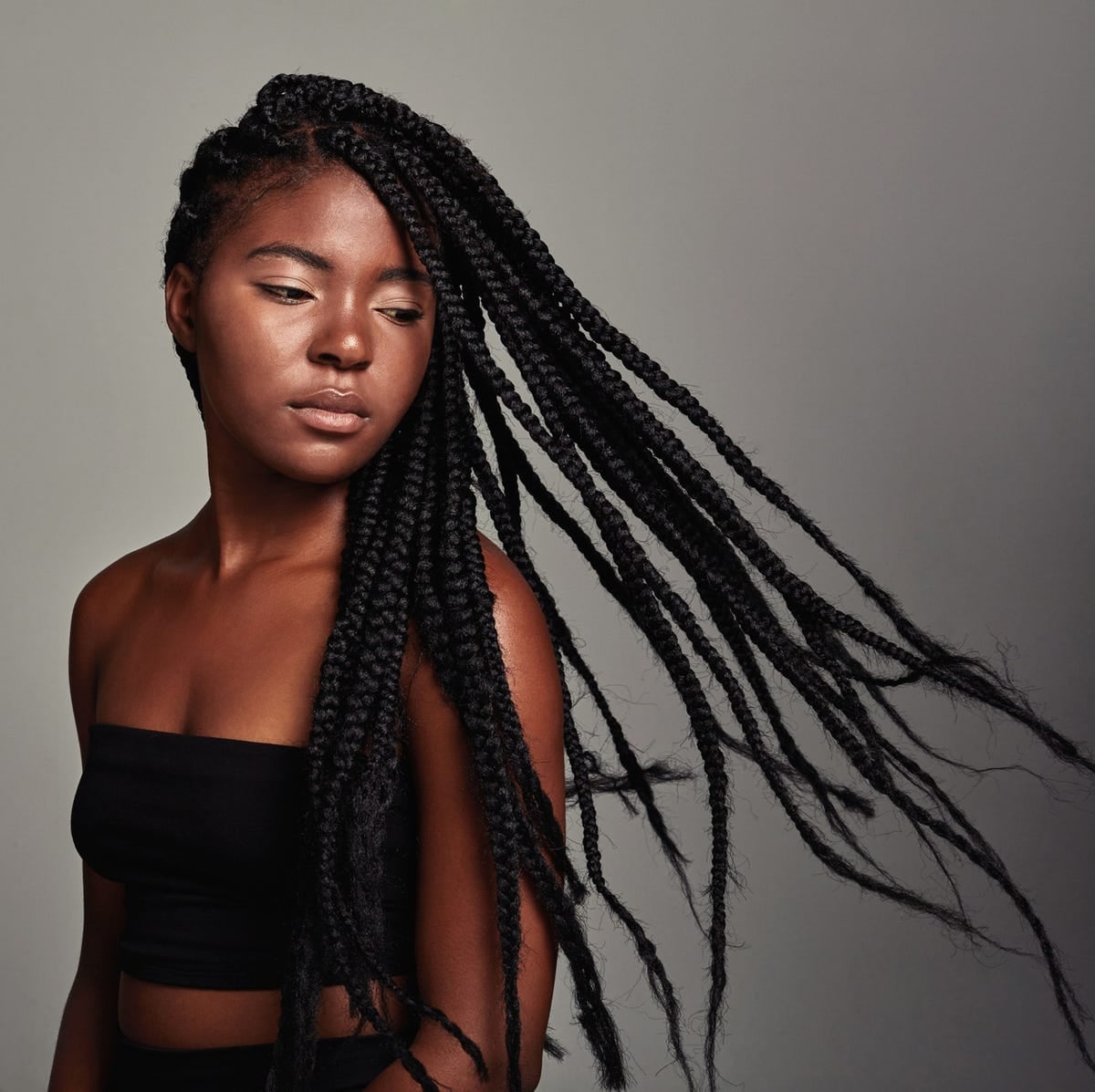
Thick, coily hair has a natural advantage with knotless braids: the texture blends seamlessly with the extension, so the braids look like they grew that way. Long, deep black braids styled with a side part fall loose and dynamic to mid-back, with enough weight to swing. This density adds volume even on fine hair, but the real win is for anyone with thick, coily texture starting at shoulder length. Ask your stylist for: long, thick, coily knotless braids with a side part. A moisturizing oil on the scalp and the braids themselves keeps everything supple. Re-braid every ten to twelve weeks, which is a longer stretch than most braided styles.
Uniform Black Box Braids With Side Part
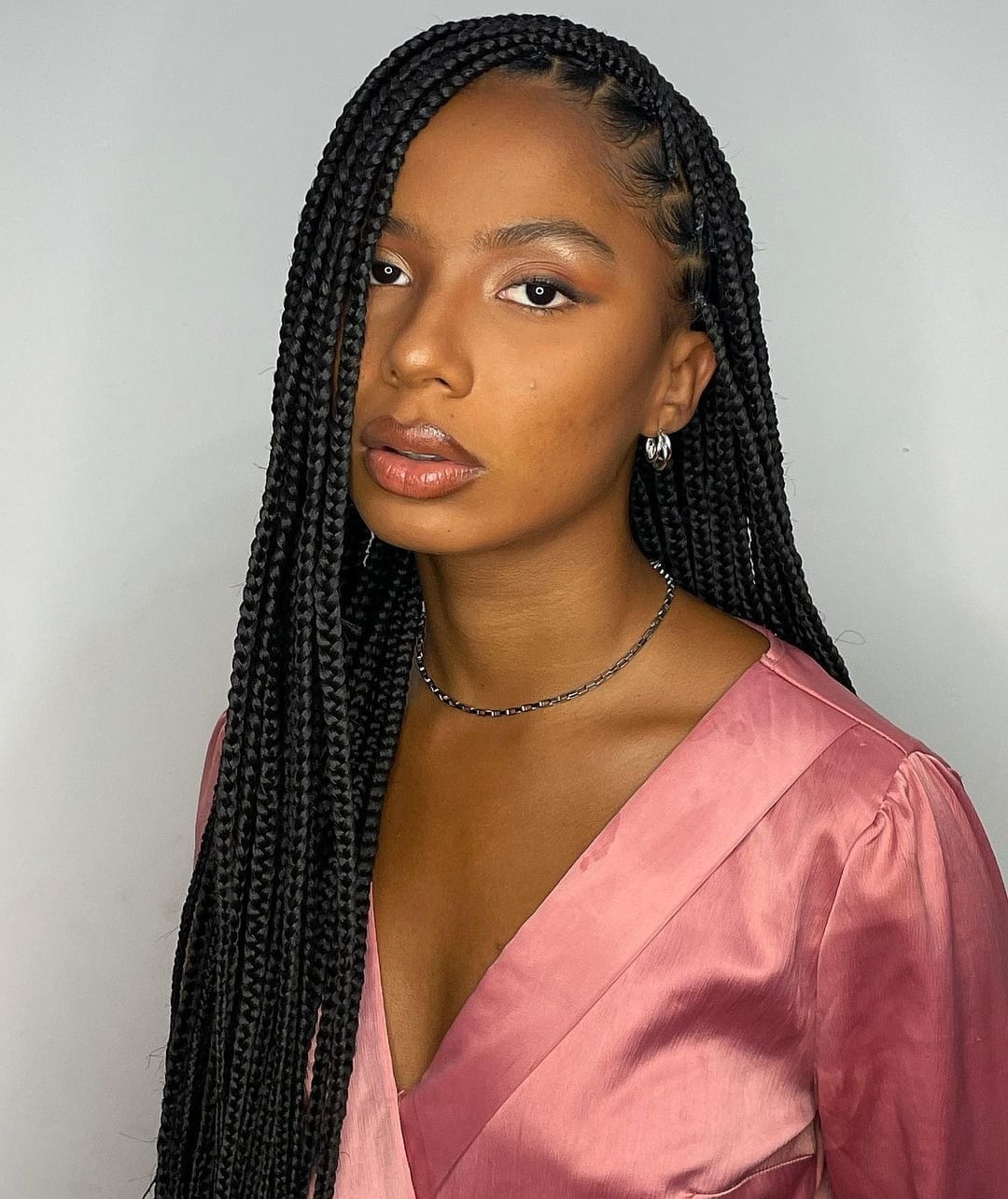
Mid-back length box braids get their structure from a clean side part that runs from the hairline back. The uniform black color and consistent braid width make this a reliable choice for everyday wear or a work week. Ask your stylist for: mid-back box braids with a clear side part. Medium to thick hair starting at shoulder length works best, and the style suits most face shapes. Sleek the parting with a light gel for a polished finish that holds through a full day. A re-braid appointment every eight to ten weeks keeps the edges crisp and the length consistent.
Blonde Fishtail Braid With Waves
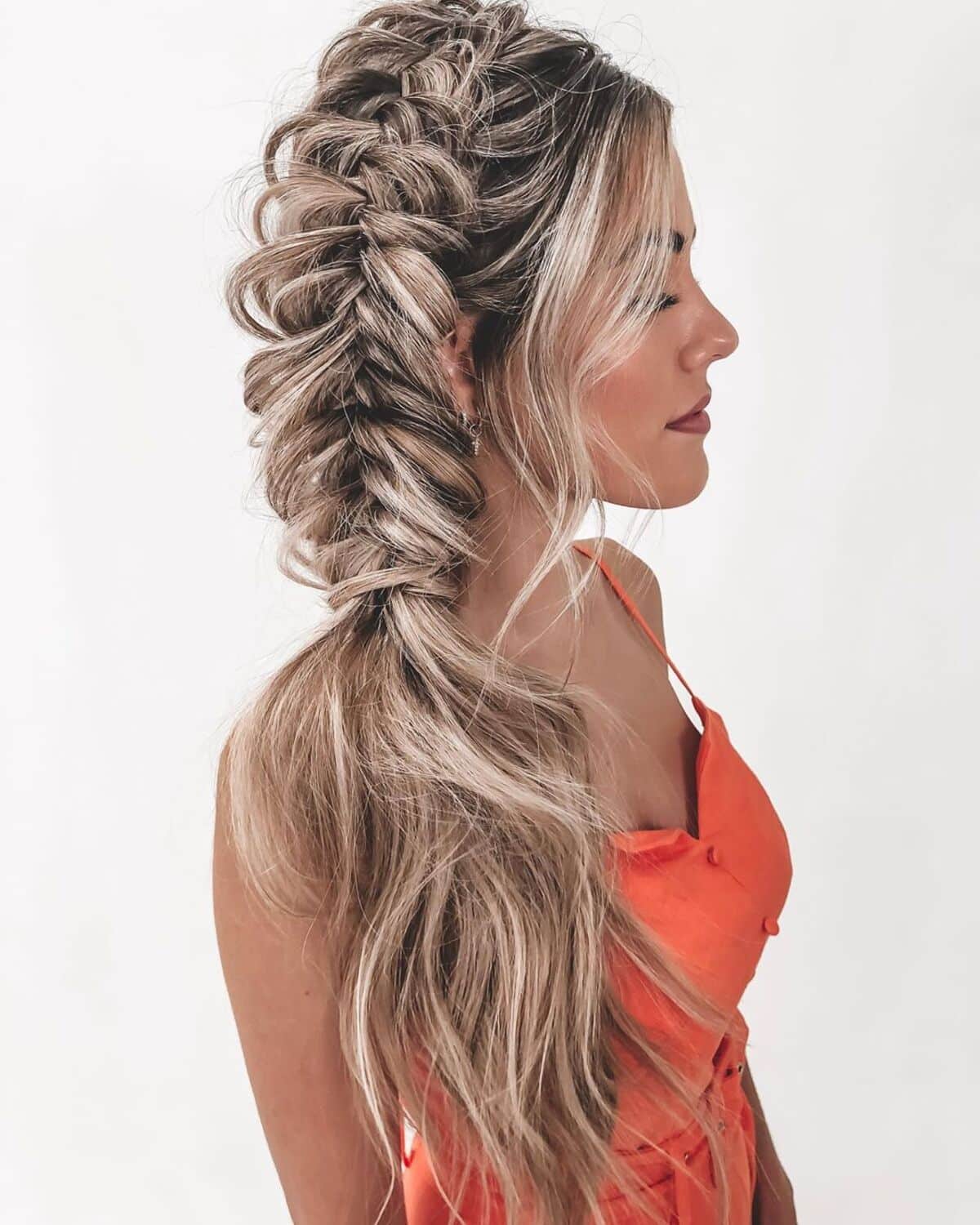
A fishtail braid is not a Dutch braid, though they get confused often enough. This version starts from a side part and weaves through mid-back length blonde hair with lighter highlights, leaving loose waves and face-framing layers out. The thick, wavy texture gives the fishtail enough grip to hold its shape without constant pinning. Ask your stylist for: mid-back fishtail braid with loose waves and face-framing layers, side part. Face-framing layers soften a square jawline, so that is the face shape to lean into here.
The trade-off is time. A salon fishtail with waves takes about two hours, and DIY attempts on thick hair usually end with one arm asleep. Gently pull apart the braid sections for a fuller look, and trim the face-framing layers every six to eight weeks so they do not grow past the collarbone and lose their shape.
Black Cornrows To Long Mid-Back Braids, Straight
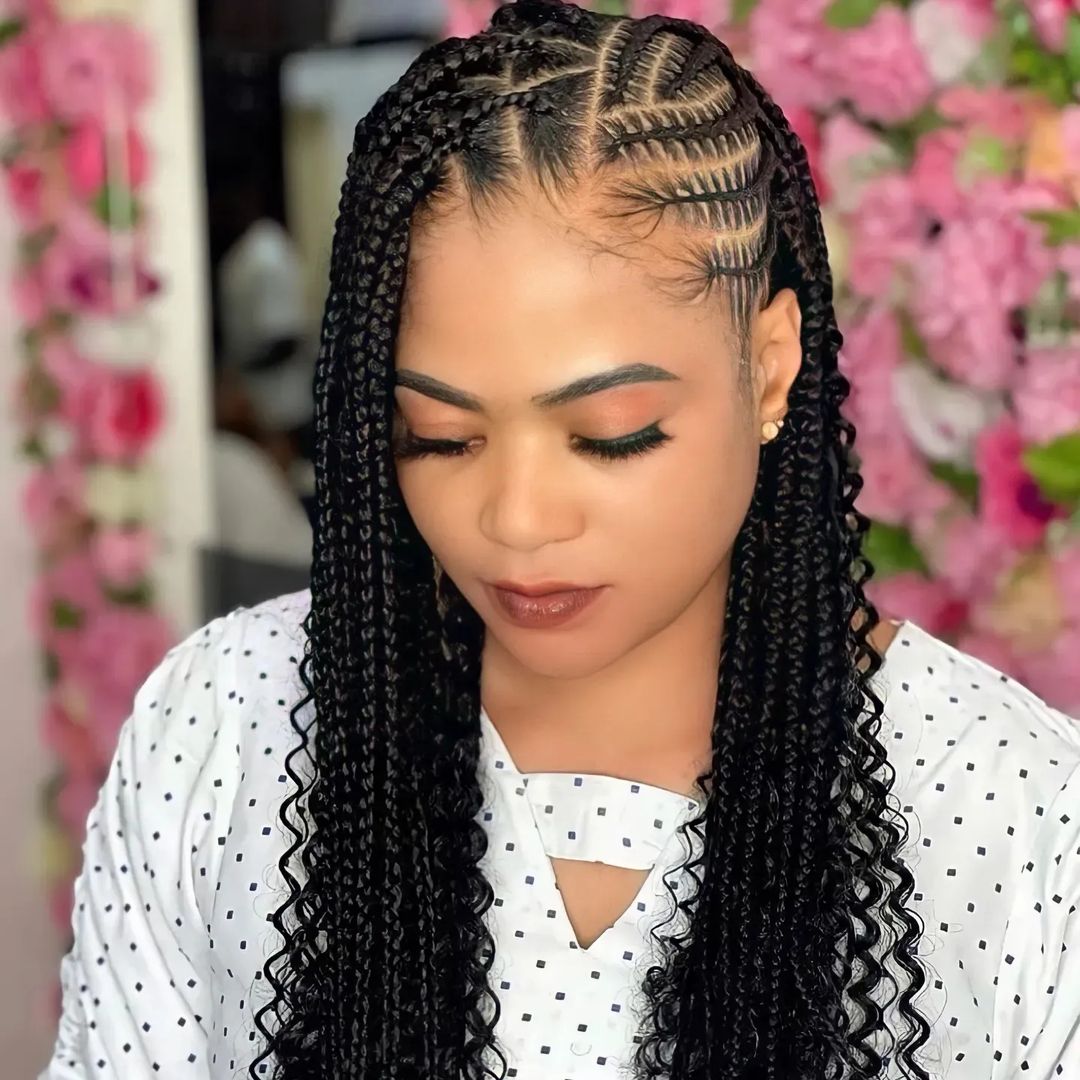
The side cornrows here are intricate but not so dense that they take a full day to install. They transition into straight, thick black braids that fall to mid-back, with the side part acting as the dividing line between the two textures. Ask your stylist for: intricate side cornrows to mid-back braids, side part. Thick, straight hair starting at shoulder length holds the cornrow pattern cleanly, and the style works for most face shapes. Use a light oil on the scalp along the cornrows to prevent tightness, and plan a re-braid appointment every eight to ten weeks before the new growth lifts the pattern.
Ash Blonde Fishtail Braid With Curls
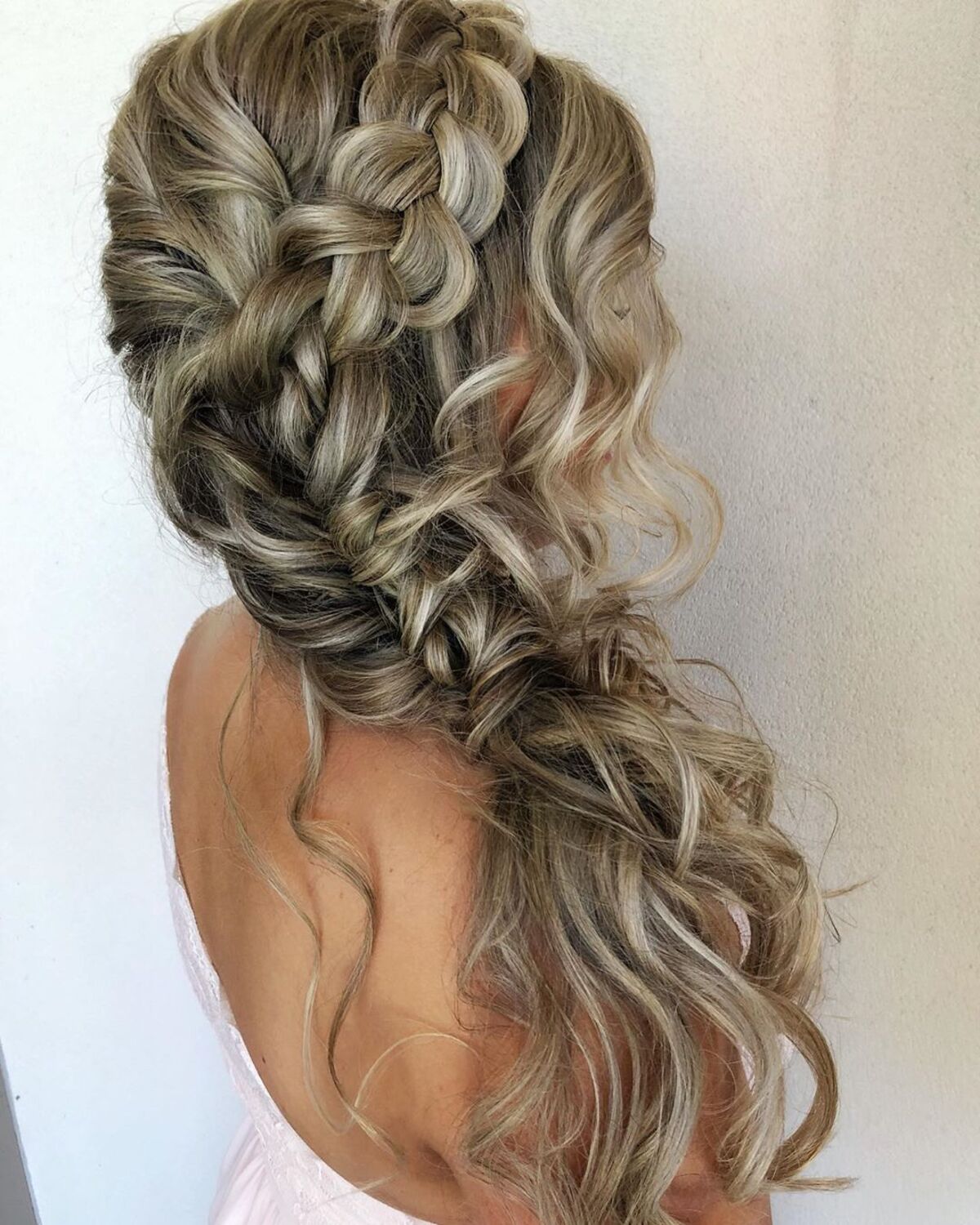
Should you go for a structured braid or soft curls? This style gives you both. A large, intricate fishtail braid starts from a side part and runs through long ash blonde hair with darker roots and lighter highlights, while loose curls frame the face. Ask your stylist for: long ash blonde fishtail braid with loose curls, side part. Thick wavy hair starting at shoulder length holds the braid and the curls equally well. The loose curls soften a square face shape, and the darker root line means you can push a toning appointment to ten or twelve weeks without the grow-out looking harsh. Gently pull out sections of the fishtail for volume, then use a texturizing spray on the curls.
Honey Brown Box Braids
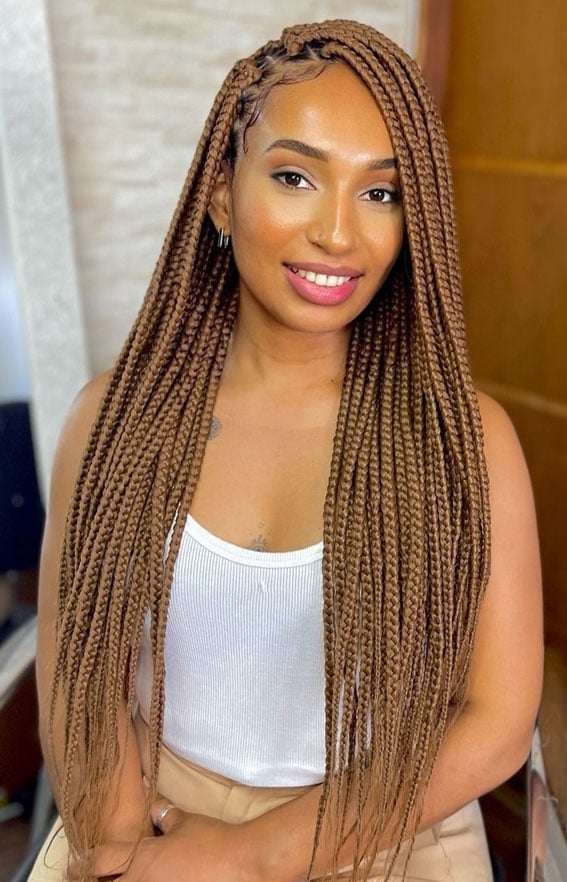
Honey brown box braids at mid-back length rely on the side part to show off the warm color. The braids are straight and uniform, which keeps the look polished. Ask your stylist for: mid-back honey brown box braids with a side part. Medium to thick hair starting at shoulder length works for many face shapes.
The honey brown shade is warm enough to catch sunlight but neutral enough not to clash with a wardrobe. It does fade with sun exposure and frequent washing, so use a leave-in conditioner to maintain the rich tone and smooth texture. A re-braid appointment every eight to ten weeks keeps the color looking fresh and the ends from fraying.
Dark Brown Coily Box Braids With Scrunchie
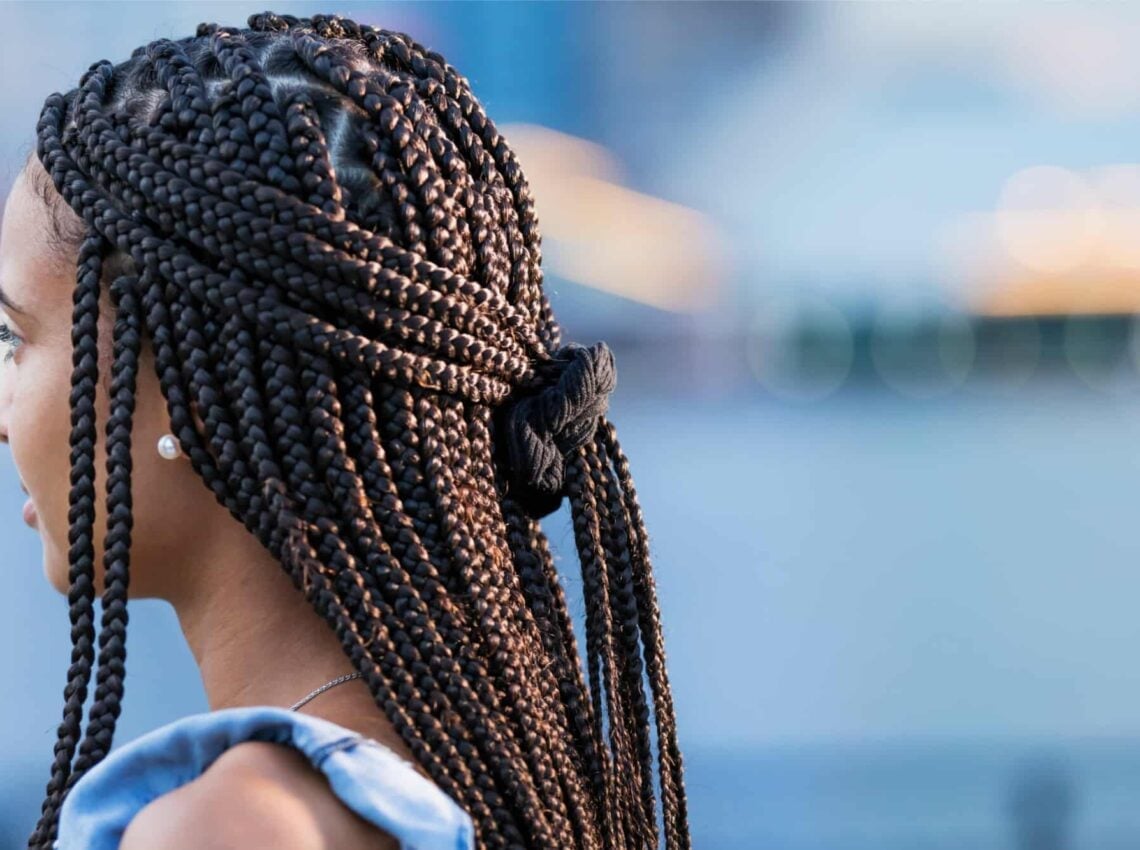
This is a salon-only style, and the prep work matters. The braids need to be installed on hair that starts at least at shoulder length to handle the weight of mid-back extensions. Thick, coily texture holds the braid shape best without slipping. The scrunchie should sit evenly to avoid pulling on one side. A re-braid every 10-12 weeks keeps the roots neat and the part line sharp.
Black Fulani Braids With Beads
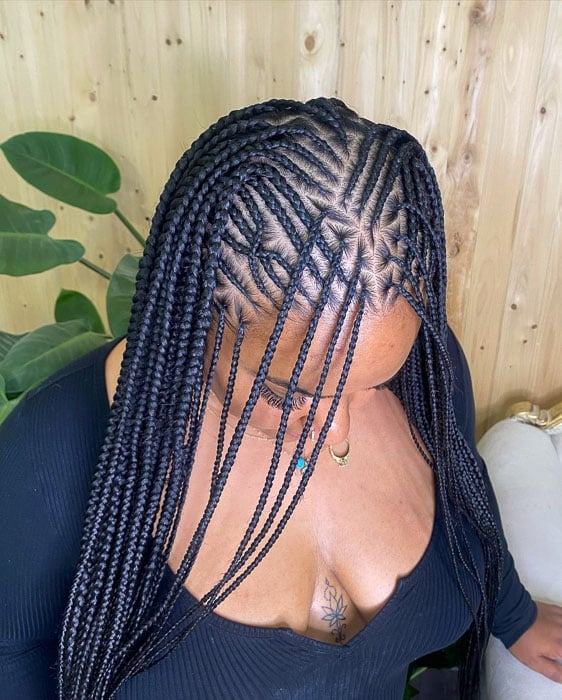
Who actually wears ornate beads on Fulani braids without looking like they are headed to a costume party? Someone with thick, coily hair and a taste for structure. The middle part and the detailed pattern of smaller braids running along the scalp create a geometric frame that balances longer face shapes. The decorative beads add weight and a soft click when you move, which is either satisfying or annoying depending on your tolerance for jewelry in your hair. Ask your stylist for: mid-back Fulani braids with beads, middle part. The beads are not a weekend experiment: this is a salon appointment, and the braids will last 10-12 weeks if you cleanse the scalp gently around the ornaments.
Dark Brown Braids With Blowout
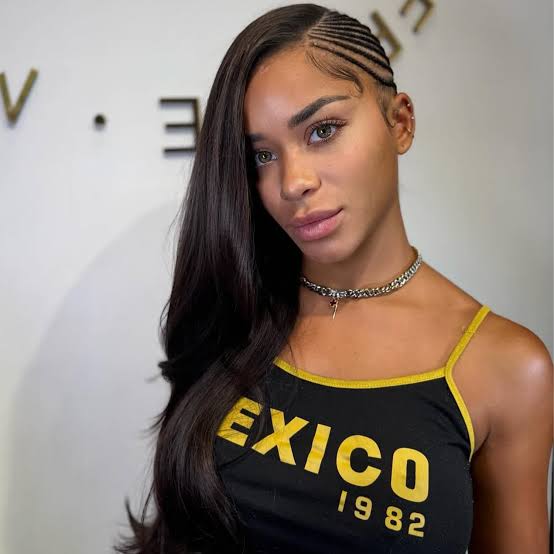
The trick here is the contrast: intricate scalp braids along a deep side part that feed into a smooth blowout, not another braid. The dark brown color is uniform, no dimension, which makes the transition from braided to blown-out look like a finished style. The curtain bangs soften the forehead and frame the face, and the mid-back length gives the blowout room to fall straight. This is a look for a work event or a dinner where you want the polish of a blowout without losing the edge of braided detail.
Ask your stylist for: side part braids with a smooth blowout, dark brown. The scalp braids need to be tight enough to last through a blow-dry session without frizzing. A heat protectant spray before the dryer keeps the ends from frying. Re-braid the scalp sections every 6-8 weeks; the rest of the hair can be trimmed on a standard schedule.
Black Box Braids With Neat Side Part
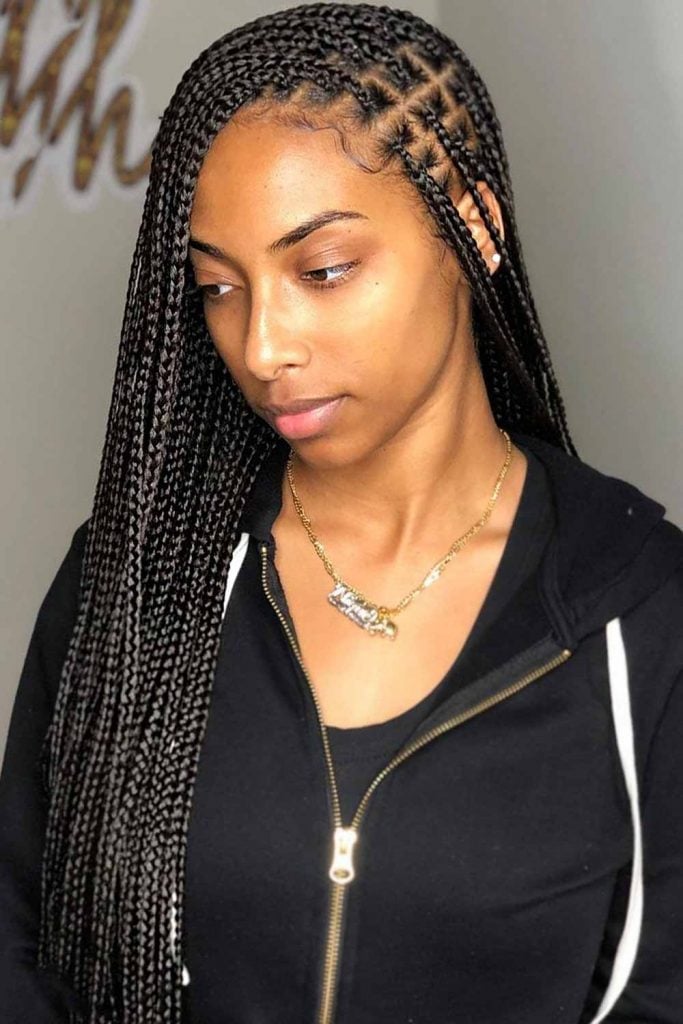
Set this against the relaxed, slightly messy braid look and you see the difference immediately. The neat side part here is the whole point: a precise, clean line at the crown that splits the box braids evenly down one side. The black color is flat, no highlights, which makes the parting a geometric detail, not a color transition. The braids are mid-back and uniformly thick, so the structure holds its shape for weeks.
The upkeep is the challenge. That sharp parting line needs a light gel or edge control applied every few days, or it starts to soften into a blurry line. If you prefer a braid style that gets better as it gets messier, this one will fight you. Ask your stylist for: mid-back box braids with a neat side part. The precision of the install determines how long the part stays sharp, so this is not a DIY project.
Dark Brown Side Braid Collarbone Length
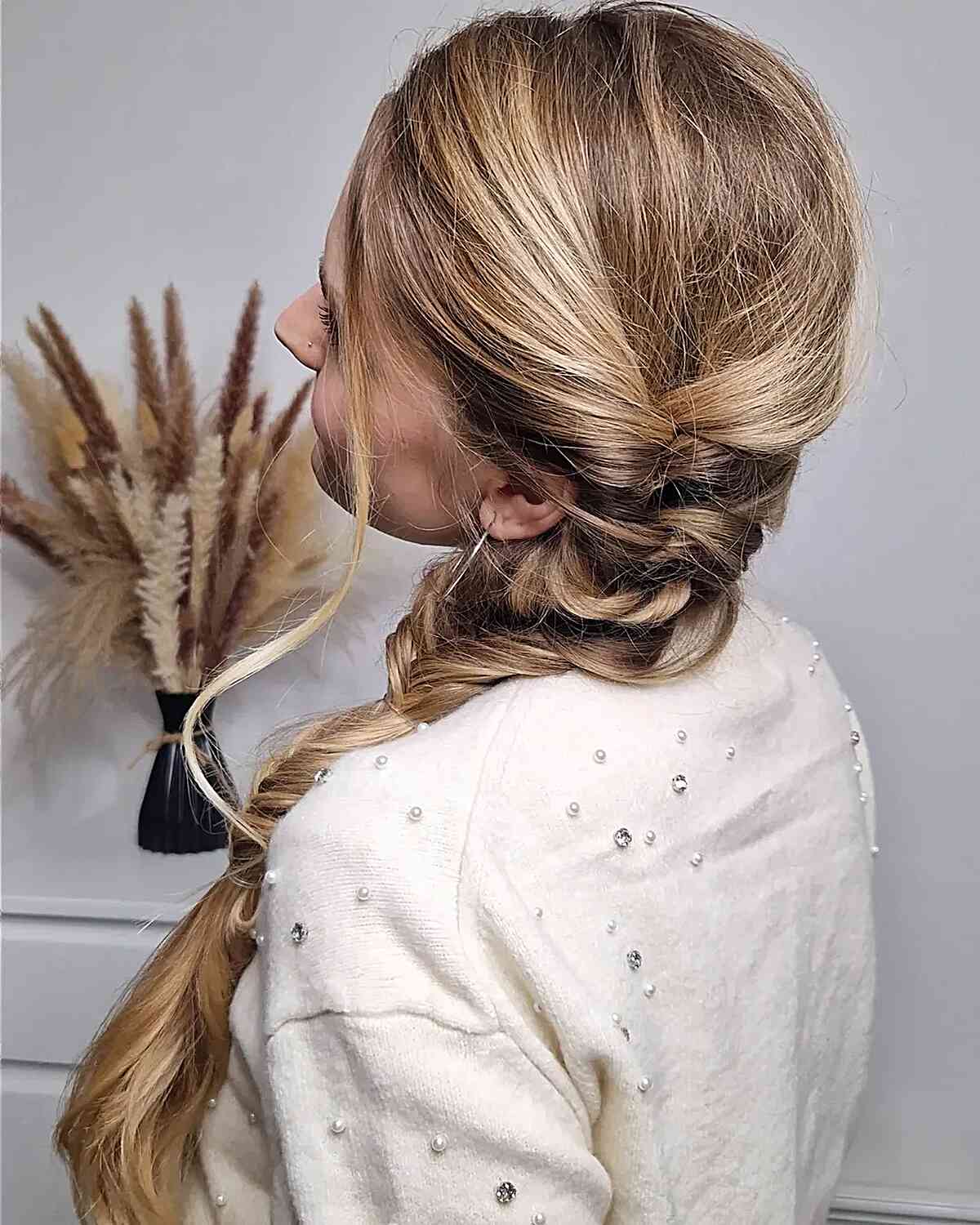
A single side braid at collarbone length is the kind of style that looks like it took effort but actually takes about ten minutes. Start with a deep side part on damp, wavy hair, then gather the hair to the heavier side and braid loosely, leaving a few strands out at the front for softness. The dark brown color and medium density mean the braid reads as a solid shape rather than a thin string. Ask your stylist for: collarbone length dark brown side braid. This one is DIY-friendly: no extensions, no salon time, just a braid that holds for a day and comes out with a shake.
Black Box Braids With Subtle Highlights
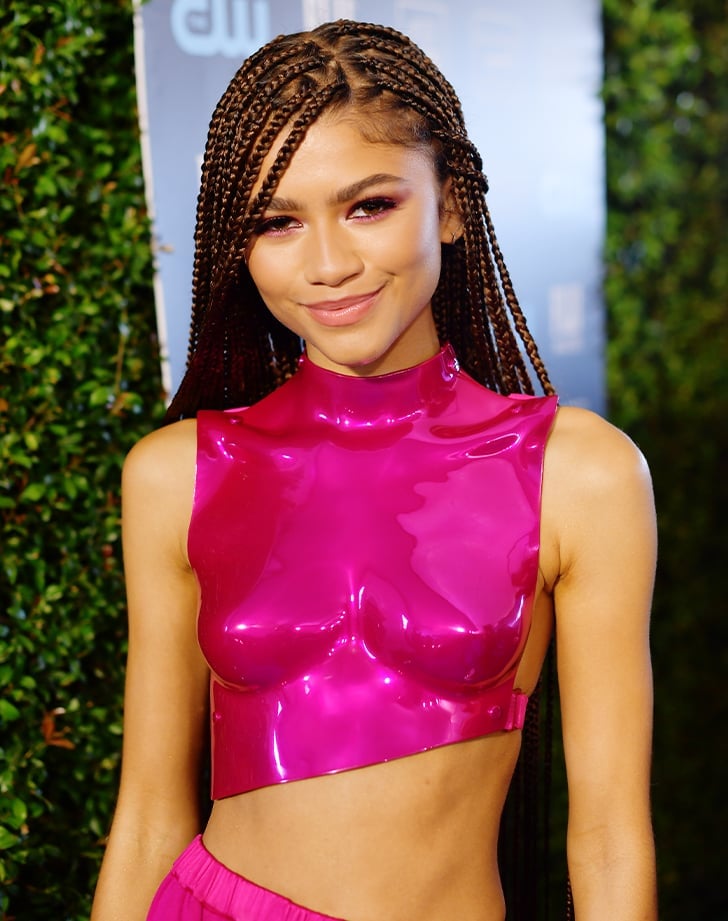
Mid-back box braids in black get a quiet upgrade from subtle lighter strands woven throughout. The side part is the structural detail here, giving the loose braids a deliberate sweep that keeps them from falling into your face. Medium to thick hair starting at shoulder length is a good starting point for this style. Ask your stylist for: mid-back box braids with subtle highlights, side part.
The highlights do their best work in natural light, catching a soft glow that a single flat shade would miss. A braid sheen spray helps maintain that effect between washes. Expect to re-braid every 8-10 weeks, which is standard for this length and density.
Black Box Braids High Ponytail With Highlights
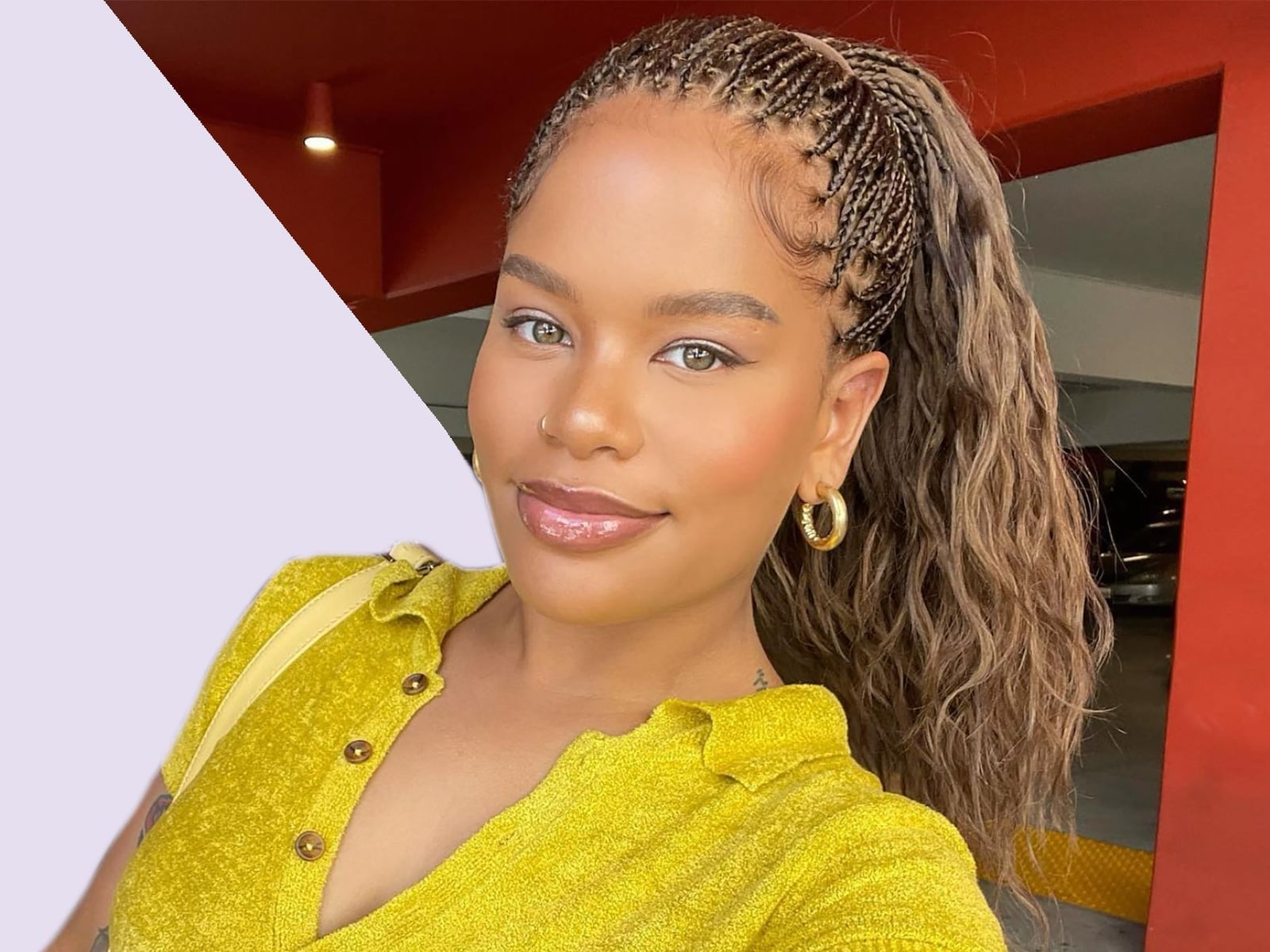
How do you pull mid-back box braids into a high ponytail without the weight pulling the whole thing south? The trick is a strong elastic wrapped twice around the base, placed just below the crown, with a few face-framing braids left loose to soften the pull. The side part stays visible, adding lift at the root. Medium to thick hair from shoulder length can handle the tension. Ask your stylist for: box braids into a high ponytail with a side part and highlights.
Blonde highlights break up the black mass so the ponytail has visible texture. The wavy ends add movement that a straight finish would lack. This style requires a salon visit, and the ponytail holds through a workout or a long dinner without shifting.
Two-Tone Cornrows With Loose Wavy Braids
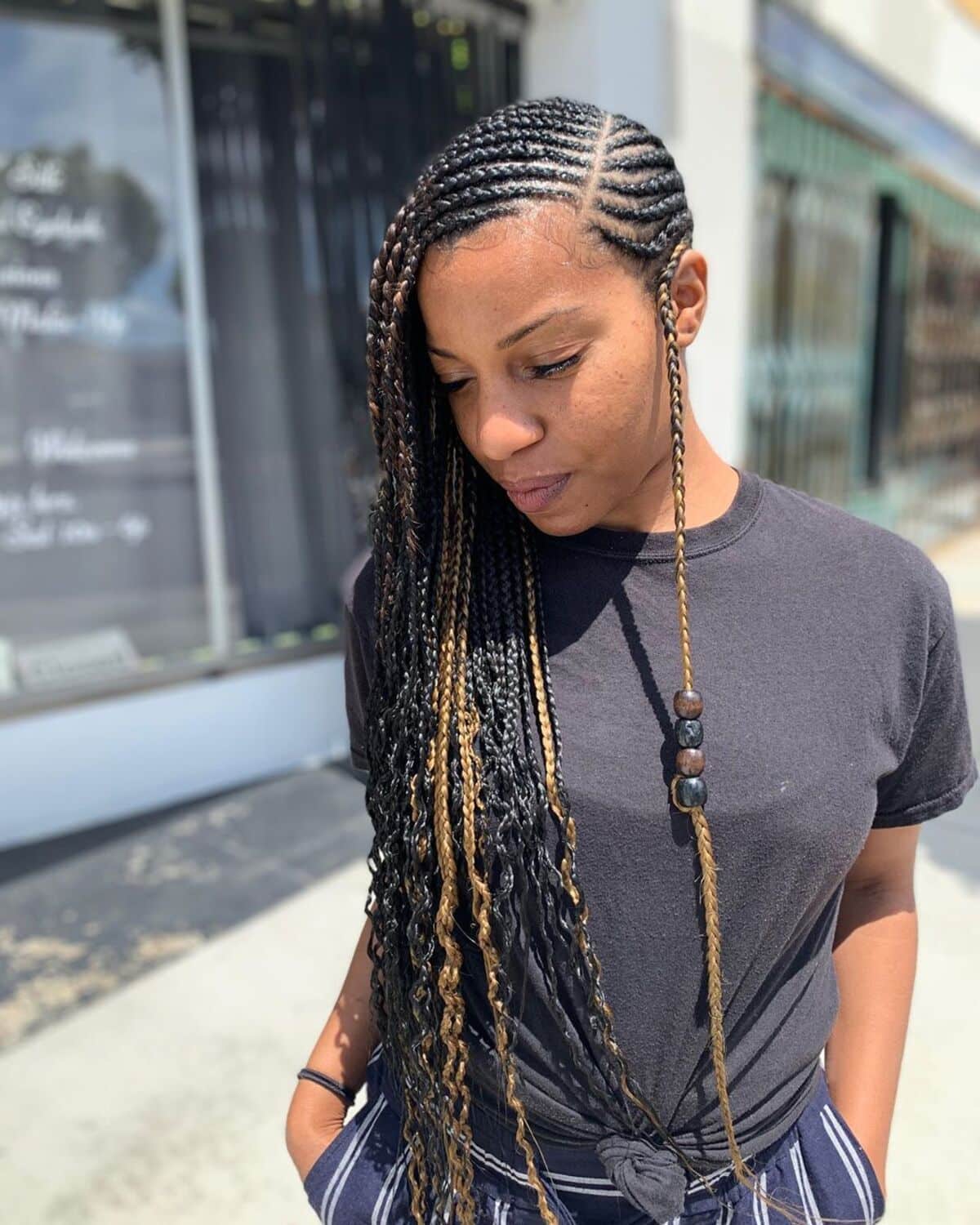
The contrast between tight cornrows on one side and loose, wavy braids on the other gives this style two distinct personalities in one head. The side part is the seam where the transition happens, and the blonde highlights against the black base make the shift more pronounced. Fine hair starting at shoulder length benefits from the added volume on the wavy side, while the cornrows keep the overall shape neat. Ask your stylist for: two-tone cornrows to mid-back loose wavy braids, side part. For a square or angular face, the soft waves on the looser side provide a gentle counterpoint that the cornrows alone would not.
Black And Blonde Box Braids With Side Part
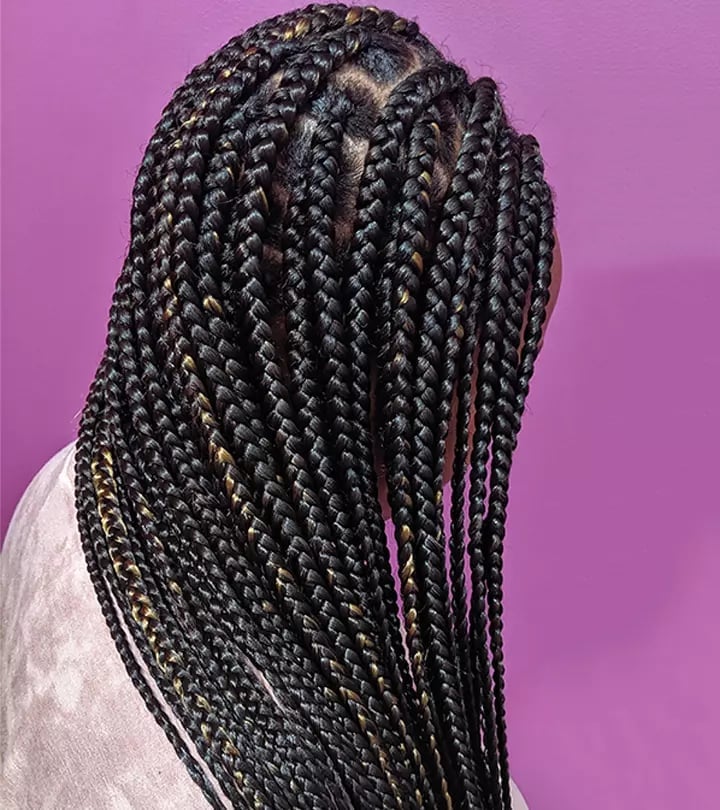
Mid-back box braids in black with blonde highlights create a contrast that is hard to miss, and the side part ensures the lighter strands land where they get the most visibility. This is a look for someone who wants the braids themselves to do the talking, not the styling. Medium to thick hair starting at shoulder length carries the weight well. Ask your stylist for: mid-back box braids with black and blonde highlights, side part.
The side-swept arrangement pushes the blonde pieces forward, so they frame the face rather than disappearing into the mass. A leave-in conditioner keeps both the braid and the highlight color looking fresh. Re-braid every 8-10 weeks to maintain the crisp part and prevent frizz at the roots.
Black Bob Box Braids With Side-Swept Bangs
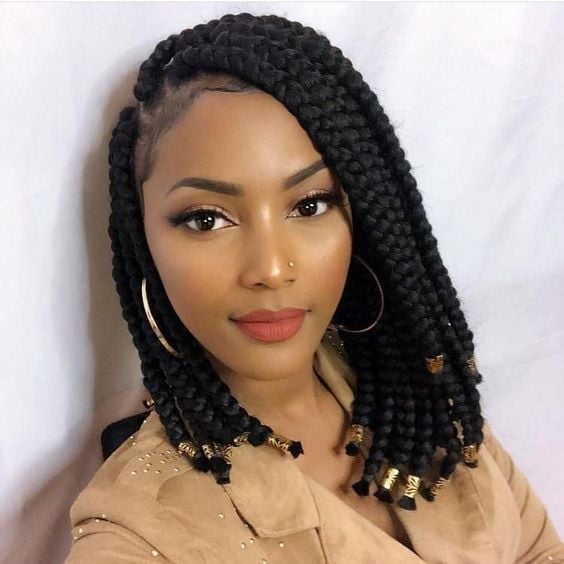
A chin-length bob in box braids sounds neat until you account for thick, coily texture that can make the shape feel bulkier than a sleek bob would. The side part and side-swept bangs help break up the density, drawing the eye diagonally across the face. This style requires a salon visit, and the thickness shortens the wear window: the bob line needs trimming every 4-6 weeks to keep the shape from rounding out. Ask your stylist for: chin-length bob box braids with side-swept bangs, side part. The coily texture gives the braids a soft, full finish that straight braids cannot achieve.
Black Cornrows Shoulder Length
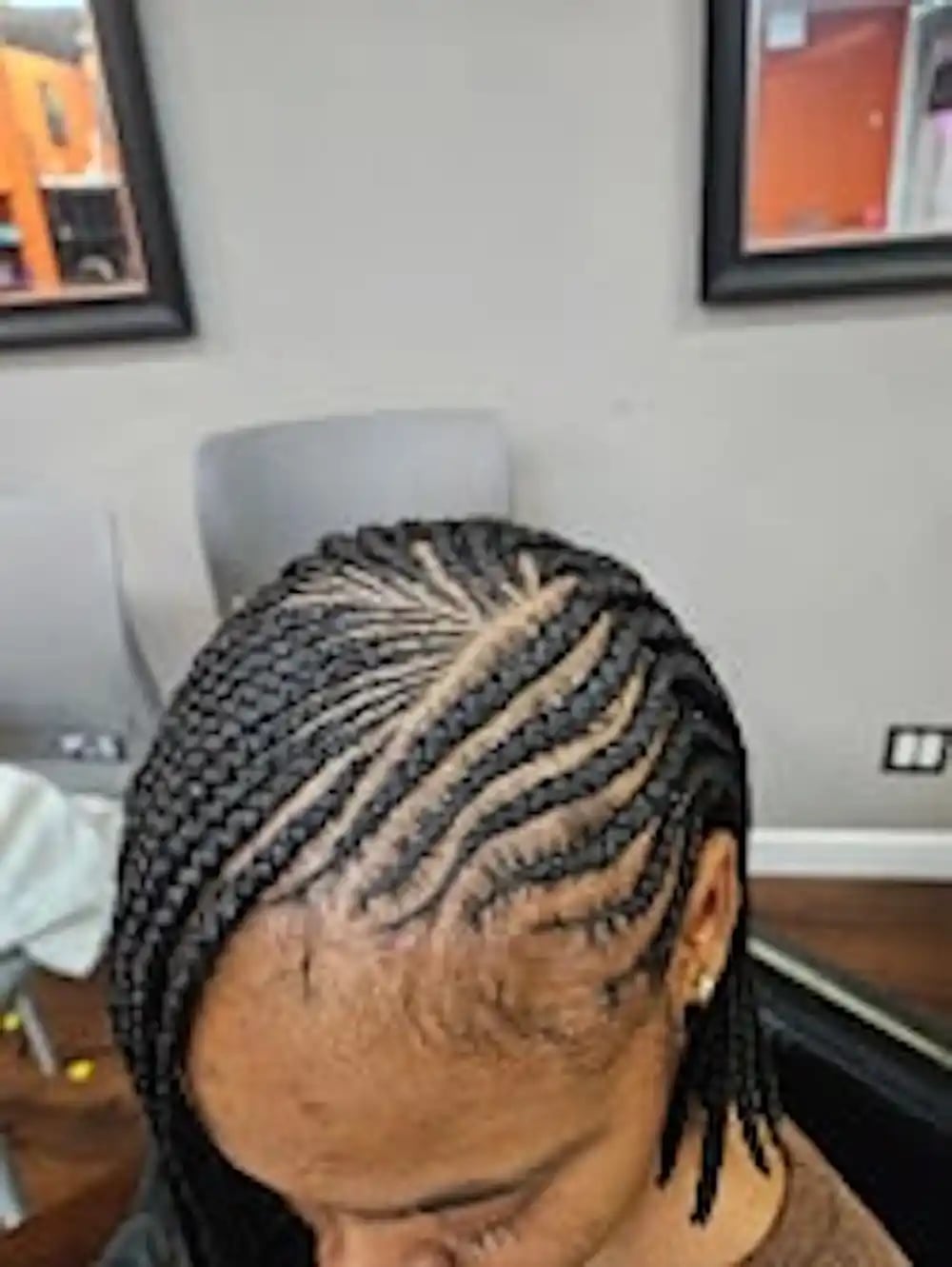
A deep side part carves a geometric pattern across the scalp, with neat black cornrows running back into a shoulder-length finish. The thick, straight texture holds the braids taut and uniform. Ask your stylist for: shoulder length cornrows with a deep side part. Sleek the parting with a light gel to keep the lines sharp; a re-braid appointment every 8 to 10 weeks maintains the pattern and prevents frizz from softening the edges.
Black Cornrows With Loose Straight Hair
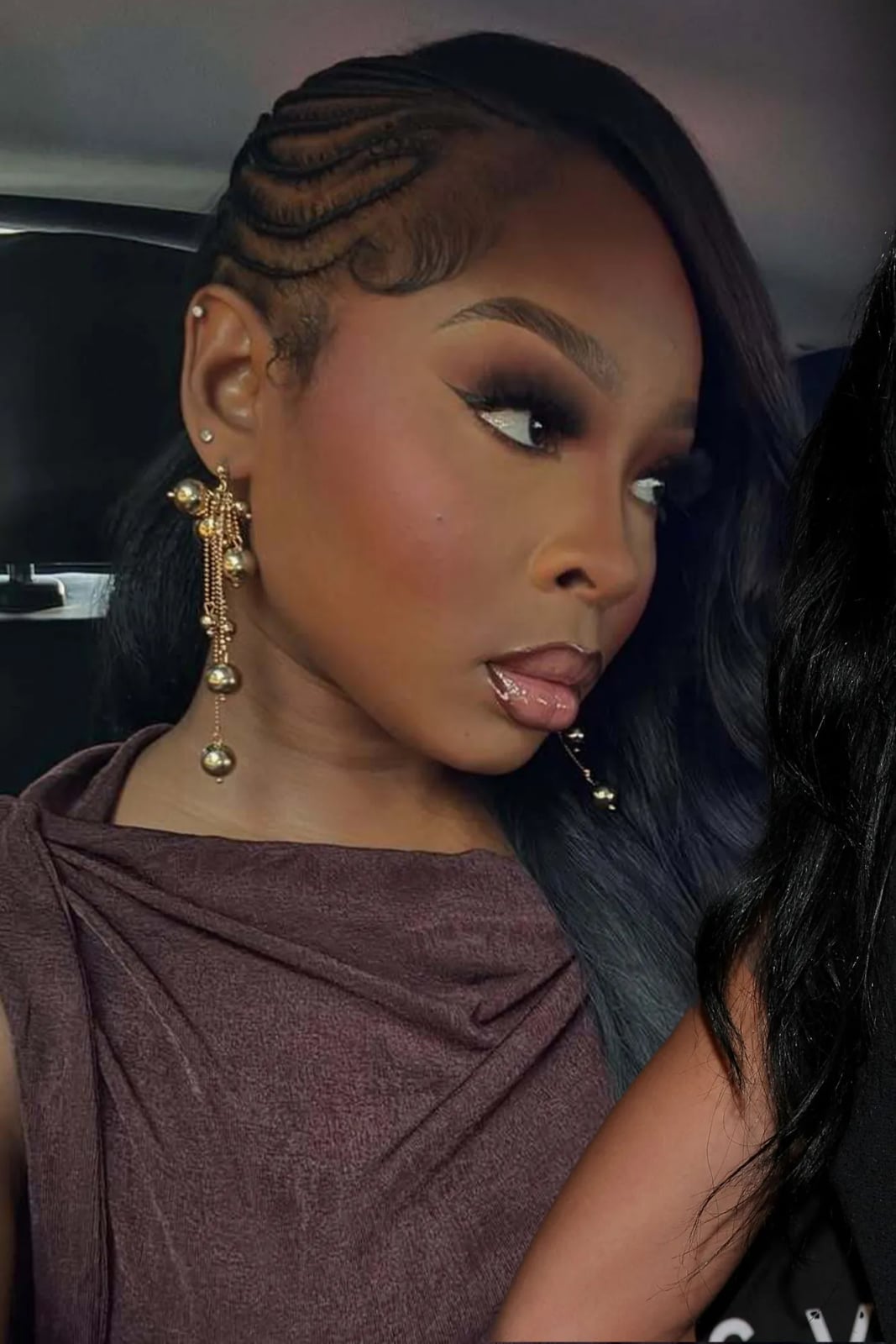
The geometric cornrow pattern here is a technical feat: each braid starts at the side part and curves toward the crown, then releases into loose, straight hair that falls past the shoulders. Fine, straight hair works best for this precision layout because the braids lie flat against the scalp without bulk. Ask your stylist for: cornrows with loose straight hair, side part, baby hairs.
Styled baby hairs along the hairline soften the transition from braided to loose sections, which makes the overall shape feel polished rather than abrupt. The side part stays crisp because the cornrows anchor the pattern at the root, so the loose hair never pulls the part off-center. A fine-tooth comb and a light-hold gel handle the baby hairs at home between salon visits.
Final Thoughts
For a low-maintenance look, opt for consistent box braids or knotless braids with a defined side part. For more intricate styling, consider cornrow patterns that lead into loose braids or waves, understanding these require more frequent salon visits.
- Maintain braids by spritzing with a leave-in conditioner daily to keep them hydrated.
- Wrap hair in a silk or satin scarf at night to prevent frizz and preserve the style.
- Re-braid or touch up loose ends weekly, or as needed, to maintain neatness.
- Avoid excessive heat styling on natural hair underneath braids to prevent damage.
The side part braid is a versatile statement.