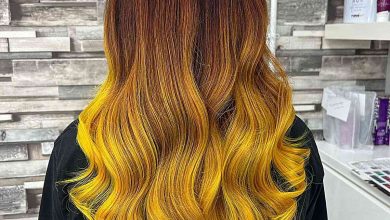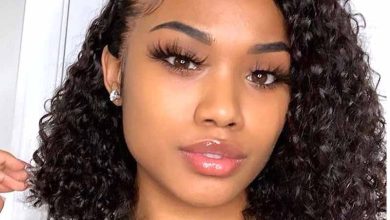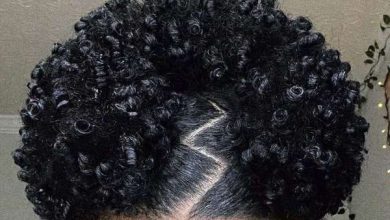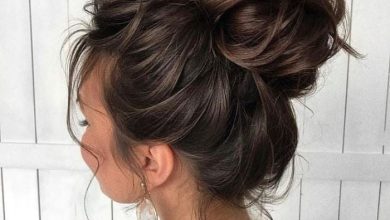
Soft curls are the sweet spot between a polished blowout and your natural texture, and in 2027 they are showing up with soft face-framing layers and curtain bangs that add movement without losing definition. The shift is away from anything rigid: lived-in color and glossy finishes replace flat-ironed strands and crunchy scrunched curls.
This collection of 26 ideas covers every length from a short pixie to very long curls, every texture from fine to coily, and every commitment level from a ten-minute air-dry to a salon blowout. If your fine hair falls flat by midday, your grow-out line shows too soon, or your fringe refuses to cooperate, there is a version here that works with your routine.
Mid-Back Length Soft Curls With Face-Framing Layers
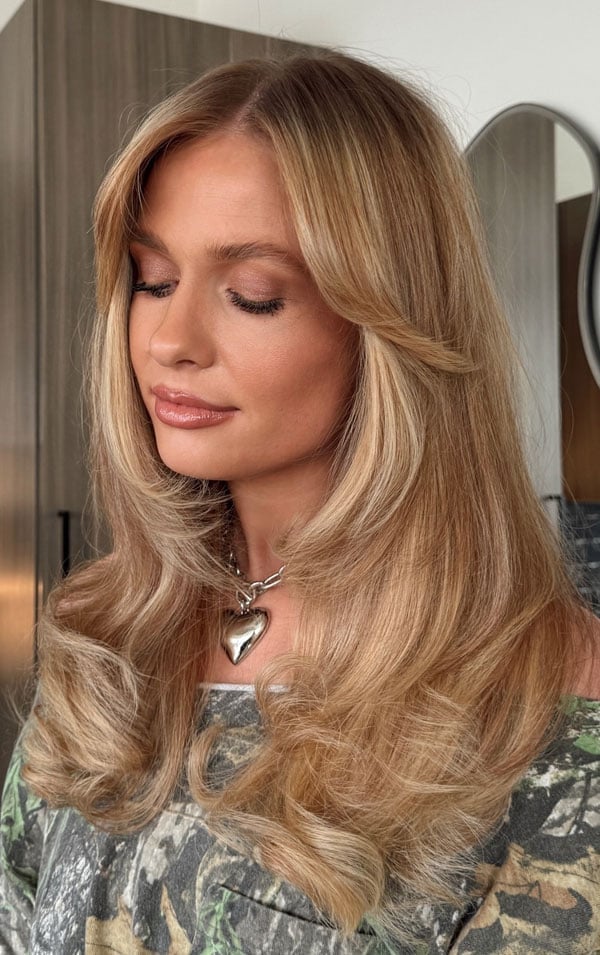
The genius of this cut is how the face-framing layers keep a middle part from falling flat on thick, wavy hair. The layers start around the cheekbones, so the soft curls have something to grab onto, and the longest pieces hit mid-back. That golden blonde base with subtle highlights reads as glossy rather than brassy. Ask your colorist for: golden blonde highlights with soft face-framing layers. The blowout effect comes from a large round brush and medium heat; a trim every eight to ten weeks keeps the layers from tangling.
Chin Length Soft Curls With Curtain Bangs
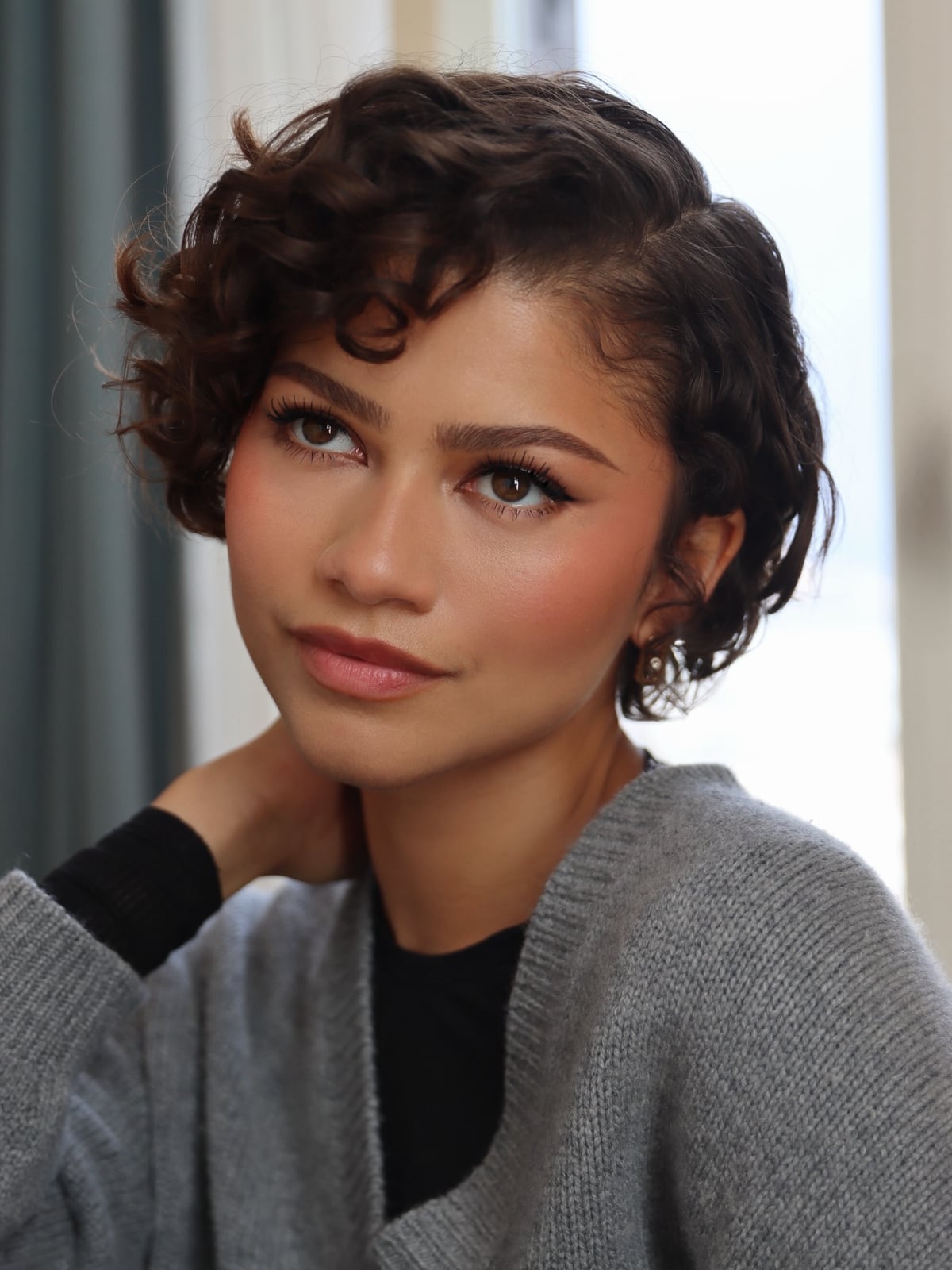
How do you get volume on fine, curly hair without the weight? Start at chin length. The side part and curtain bangs create the illusion of density, while the soft, loose curls add movement without dragging the hair down. Ask your stylist for: chin length bob with soft loose curls and curtain bangs. A volumizing mousse applied to damp roots before a round-brush blowout gives the lift that holds all day. That dark brown base with subtle highlights keeps things dimensional, not flat.
Short Bob With Defined Dark Brown Curls
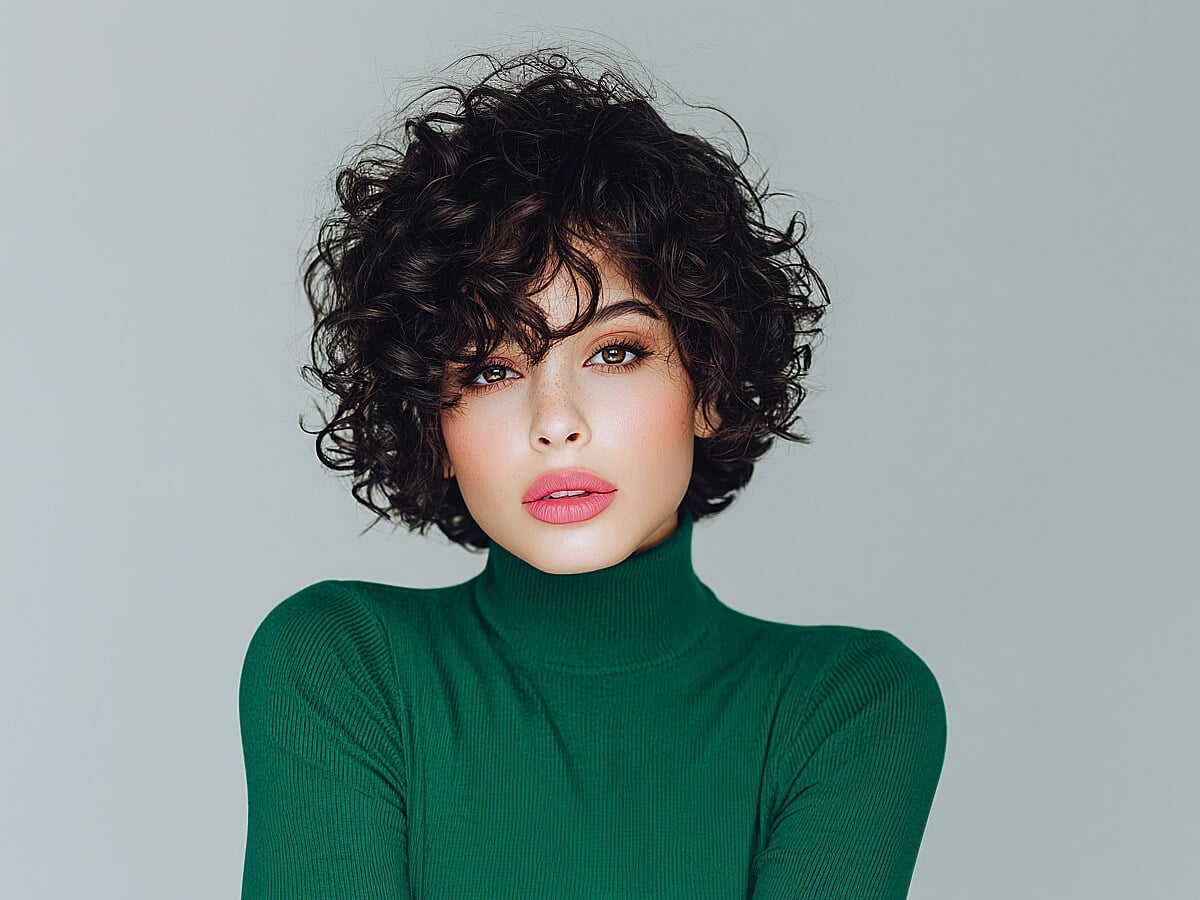
Air-dried curls on a short bob can look messy, but defined curl patterns keep the style polished. A curl cream defines each curl without heavy scrunching. Short curly bangs add structure, and a middle part keeps volume centered. Ask your stylist for: chin length bob with short curly bangs and defined curls. A trim every six to eight weeks maintains the shape, and the dark brown color needs minimal toning.
Mid-Back Voluminous Dark Brown Curls With Curtain Bangs
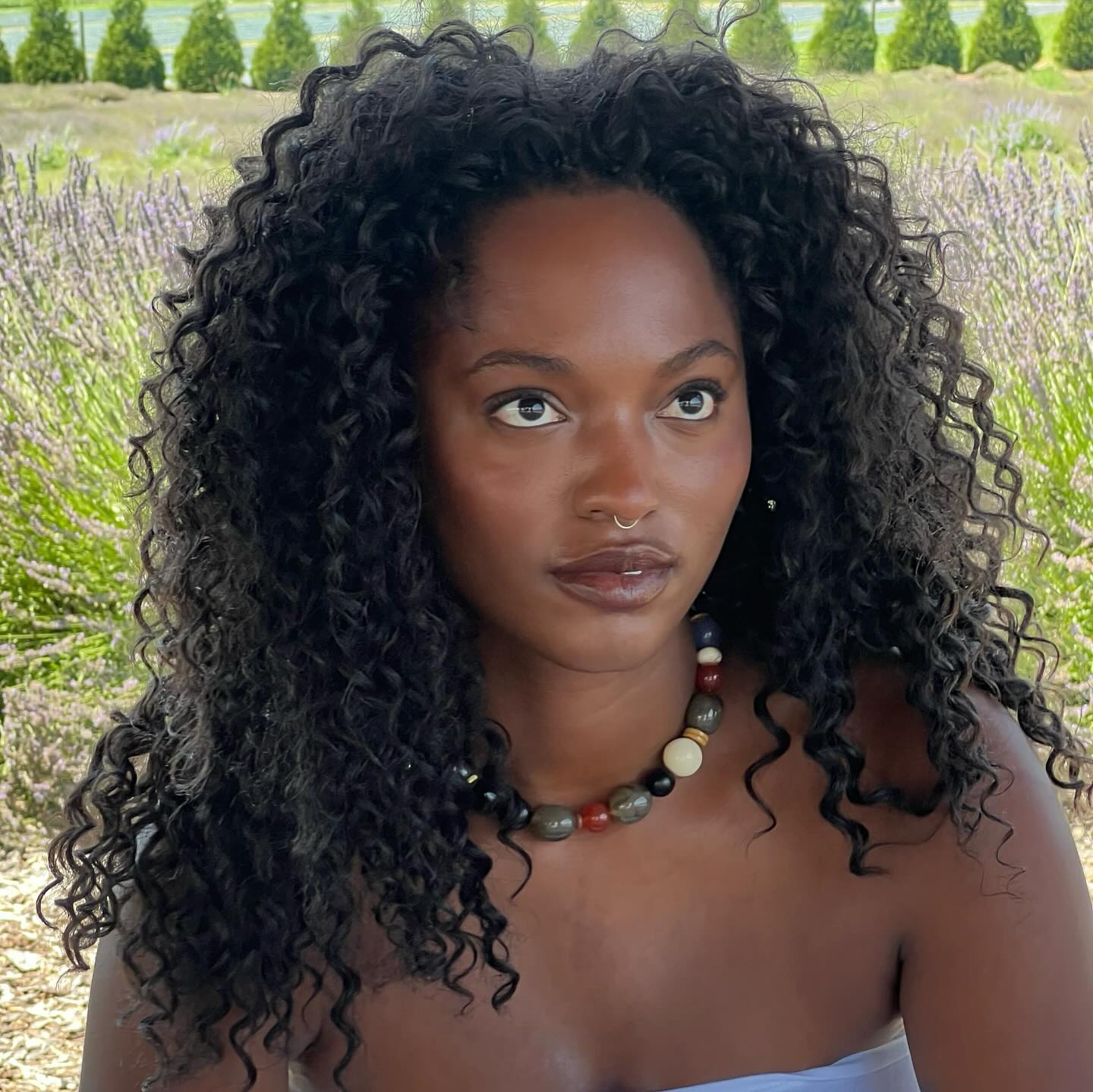
Thick, naturally curly hair at mid-back length can be a lot of maintenance. The air-dried finish here is the shortcut: a curl enhancer and a leave-in conditioner, then zero heat. The subtle highlights break up the dark brown base so the voluminous soft curls avoid looking like a single heavy mass.
Ask your colorist for: dark brown base with subtle highlights and curtain bangs. The bangs need trimming every three to four weeks, but the length only sees the scissors every ten weeks. The middle part and curtain bangs soften a square jaw, and the whole thing takes about fifteen minutes of product application before air drying.
Collarbone Soft Curls With Vintage Blowout
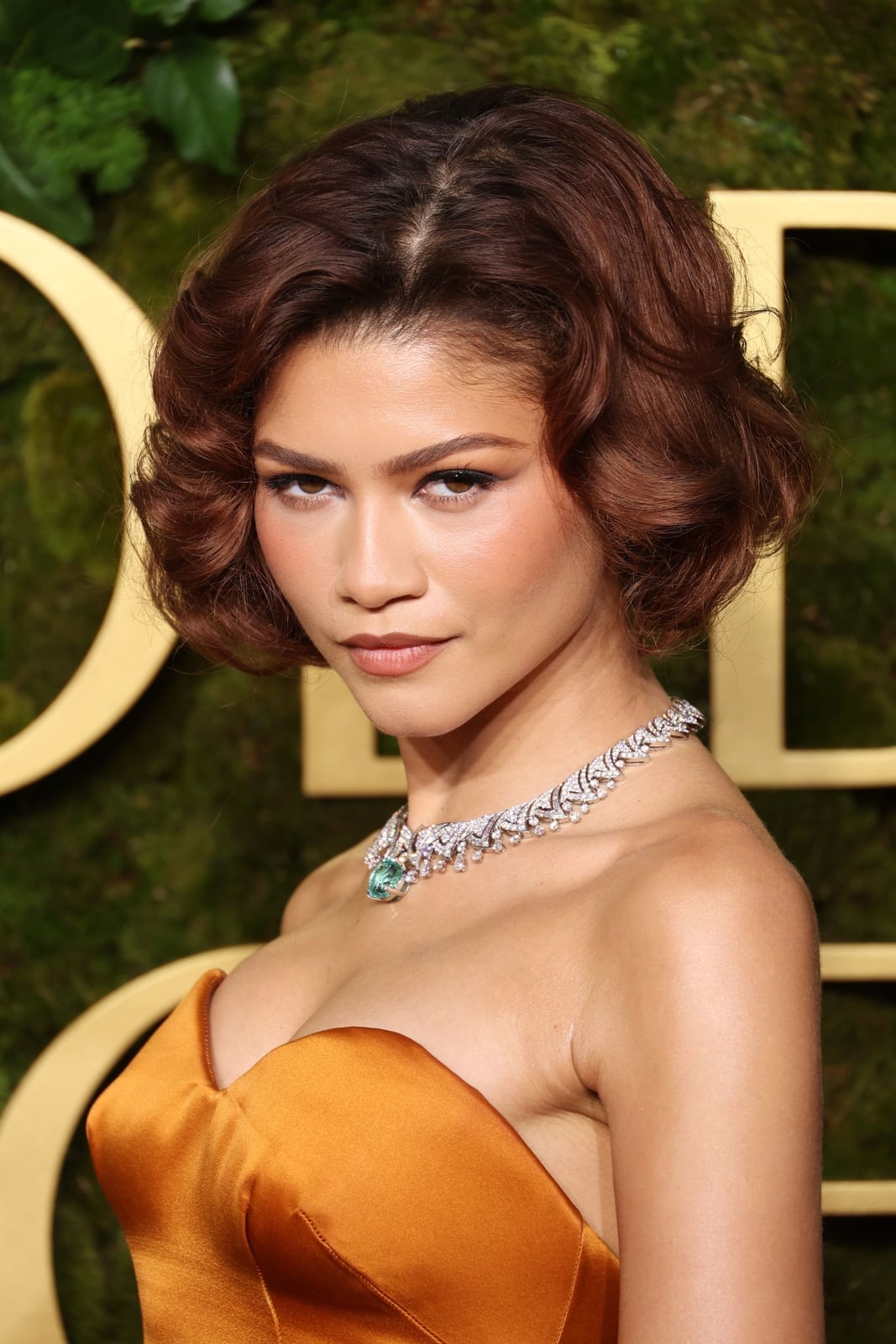
A vintage blowout on collarbone-length hair works because the layers are cut to bend, not flip. The middle part and subtle highlights in chestnut brown give the soft curls a retro depth. Ask your stylist for: collarbone length soft curls with a vintage-inspired blowout. A round brush and medium heat create the bend; a cool shot locks it in. Medium-density wavy-curly hair holds this shape for a full day, and the curtain bangs frame the face without needing a trim every three weeks.
Dark Brown Shag With Face-Framing Curtain Bangs
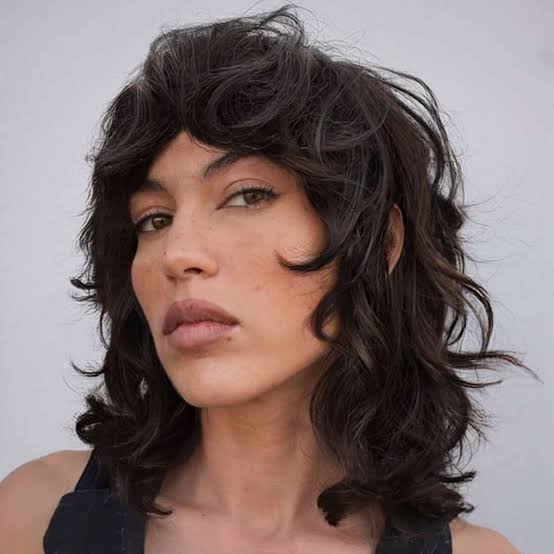
A shag haircut earns its keep when the face-framing layers do the work, and here they land at collarbone length with curtain bangs that soften the whole shape. The dark brown base with subtle highlights adds dimension for a lived-in color. This cut suits anyone with wavy texture who wants a blowout that looks intentional. Ask your stylist for: collarbone length shag with face-framing curtain bangs and soft waves. Use a texturizing spray on dry hair and tousle for a lived-in finish; a trim every eight to ten weeks keeps the layers from losing their shape.
Collarbone Voluminous Honey Blonde Curls
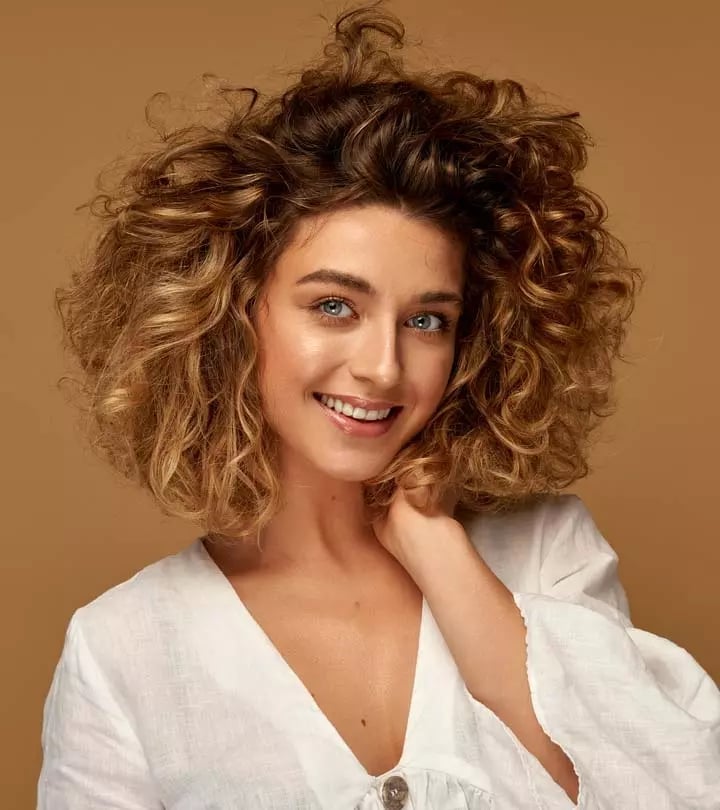
Voluminous curls at collarbone length work best when the hair is thick and the layers are cut to support lift without sacrificing density. The honey blonde highlights here catch light in a way that makes the volume look like a happy accident, but it is the blowout technique that locks it in. This style genuinely flatters those with thick, curly hair who want movement without going shorter. Pass on this if your texture is fine or your hair is thin, since the weight of the curls can fall flat. Ask your stylist for: collarbone length layers with voluminous honey blonde curls. Use a large round brush and medium heat for the blowout, then finish with a shine serum.
Collarbone Dark Brown With Pink Highlights
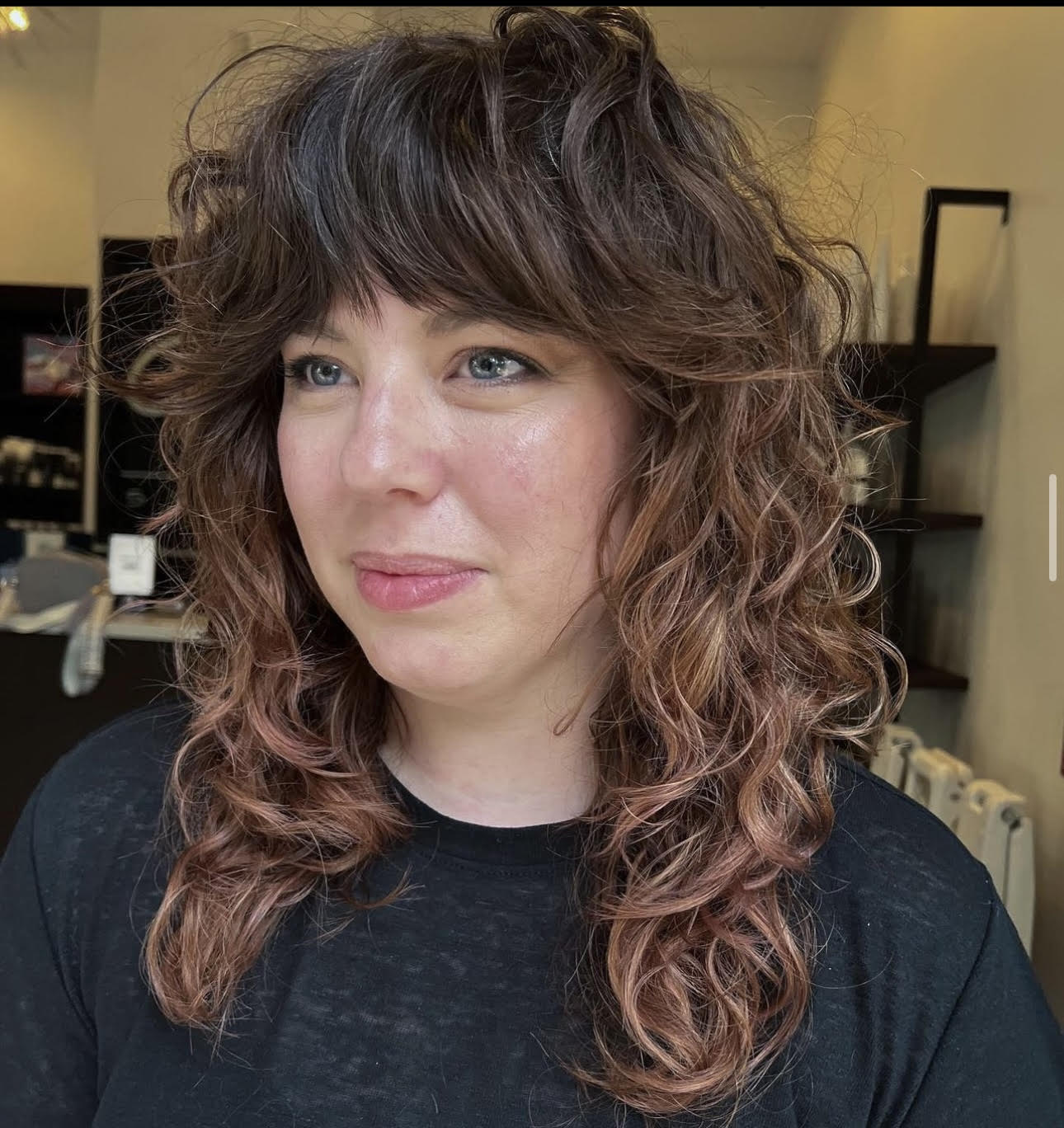
Pink highlights on dark brown hair stay subtle and are concentrated toward the ends, as they are here on collarbone-length layers with curtain bangs. The face-framing layers and soft, loose curls keep the look grown-up, but the pink demands attention in a way that a neutral tone does not. Upkeep requires a color-depositing conditioner every two to three washes, and the highlights will need a freshening appointment every six to eight weeks to avoid fading to a muddy rose. This works for thick, wavy to curly hair and most face shapes, but if you cannot commit to a toning rhythm, skip it. Ask your colorist for: collarbone length layers with soft curls and pink highlights.
Collarbone Defined Dark Brown Curls
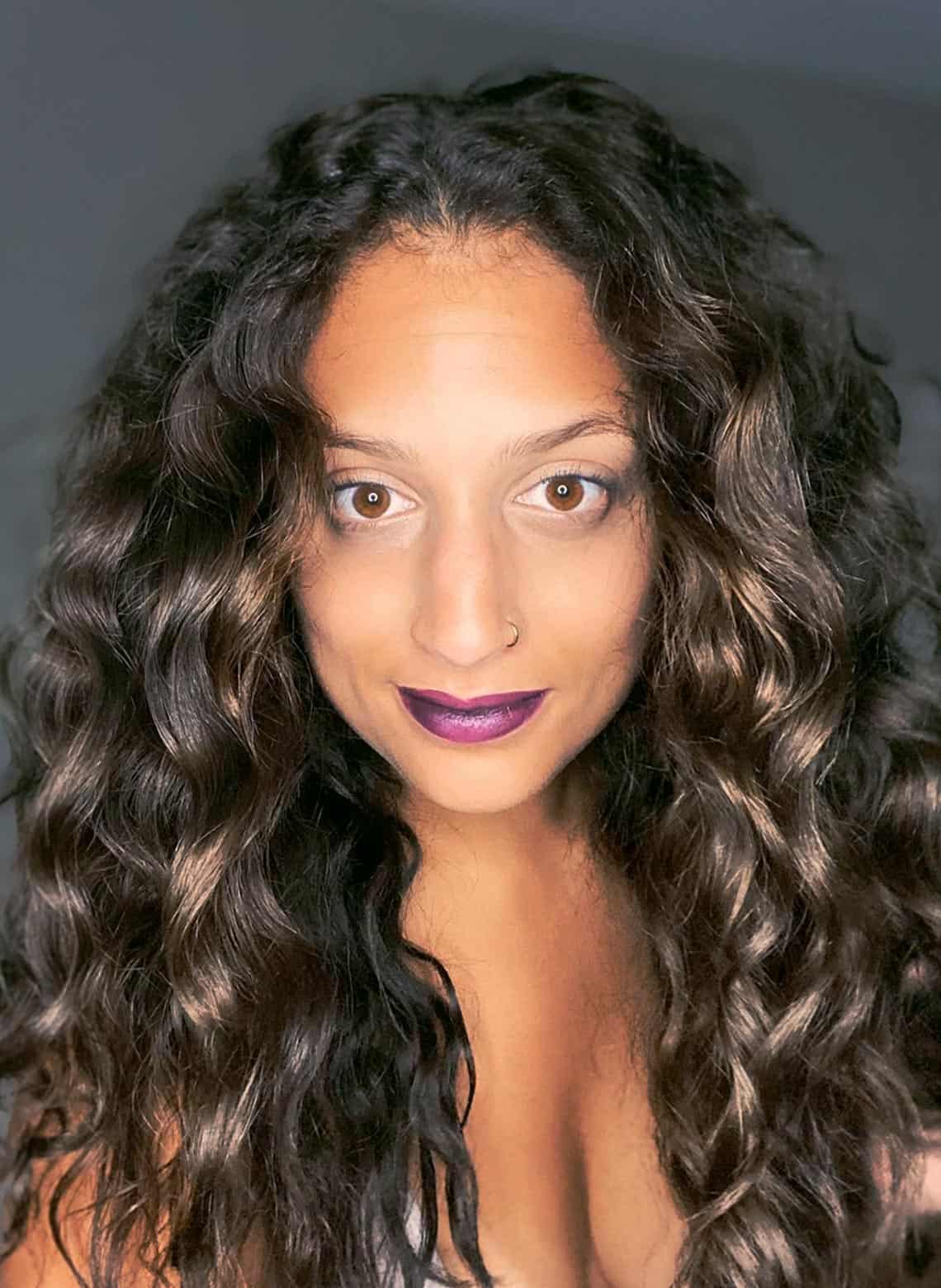
Defined curls at collarbone length rely on the cut as much as the texture, and here thick dark brown hair holds a well-defined pattern without looking stiff. The middle part and healthy gloss suggest a cut that respects the curl’s natural shape rather than fighting it. This style suits most face shapes because the length sits at the collarbone, a neutral zone that neither shortens nor elongates. Ask your stylist for: collarbone length soft, well-defined dark brown curls. Use a curl-defining cream and scrunch gently, then let air-dry or diffuse on low heat. A trim every eight to ten weeks maintains the shape and prevents the ends from losing definition.
Mid-Back Voluminous Honey Blonde Curls
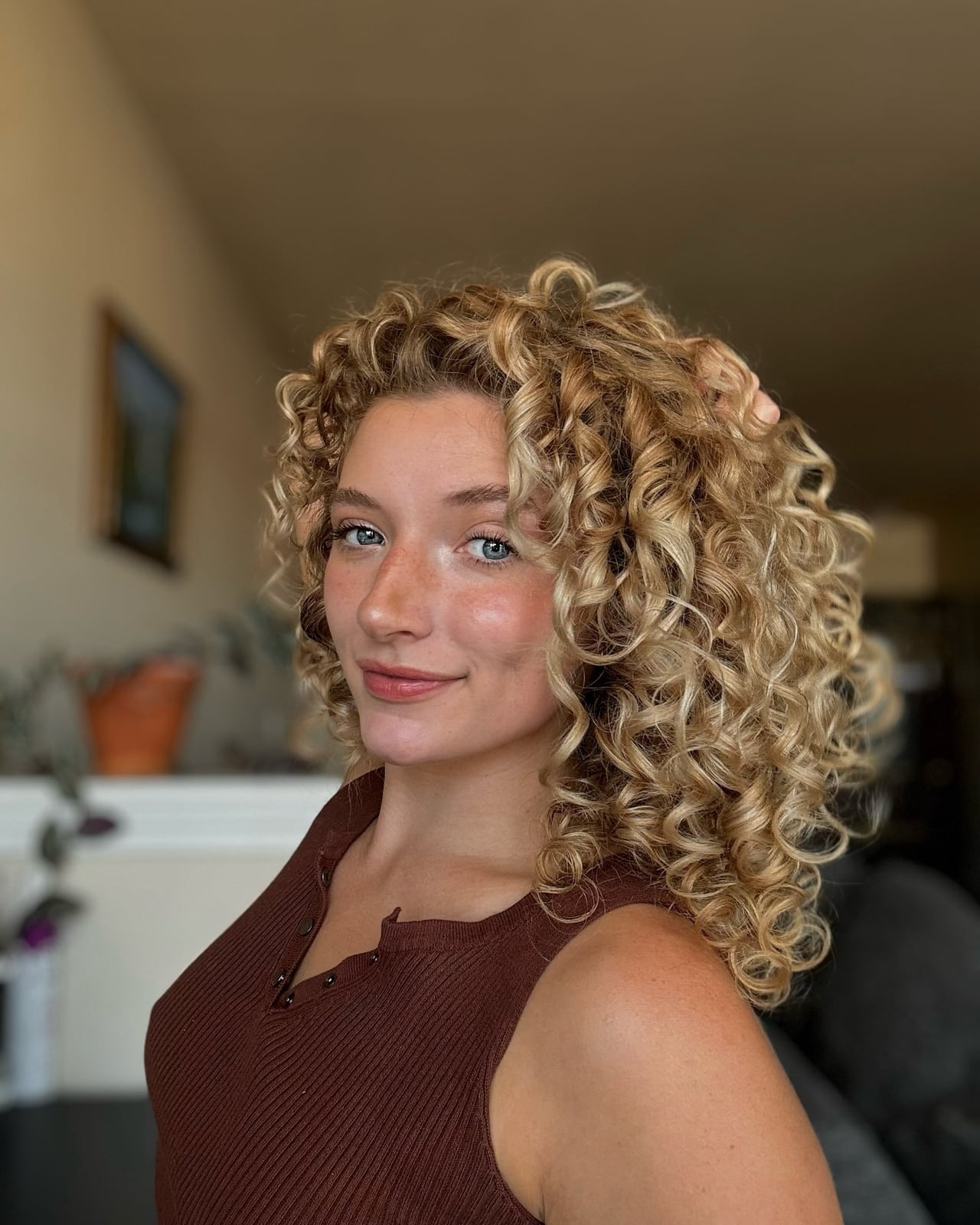
How do you ask for mid-back length curls that look this full without looking weighed down? The key is a honey blonde base with lighter highlights woven through thick, curly hair, cut with layers that let the volume breathe. The side parting here adds lift at the root, which is essential for keeping long curls from falling flat. Thick hair of mid-back length is the ideal candidate; the side parting and volume suit oval and long faces particularly well. Ask your stylist for: mid-back soft voluminous honey blonde curls. Apply a curl-enhancing serum and diffuse for maximum volume, then avoid heavy oils that can pull the curl down. A trim every ten to twelve weeks keeps the ends healthy without sacrificing length.
Mid-Back Auburn Soft Curls
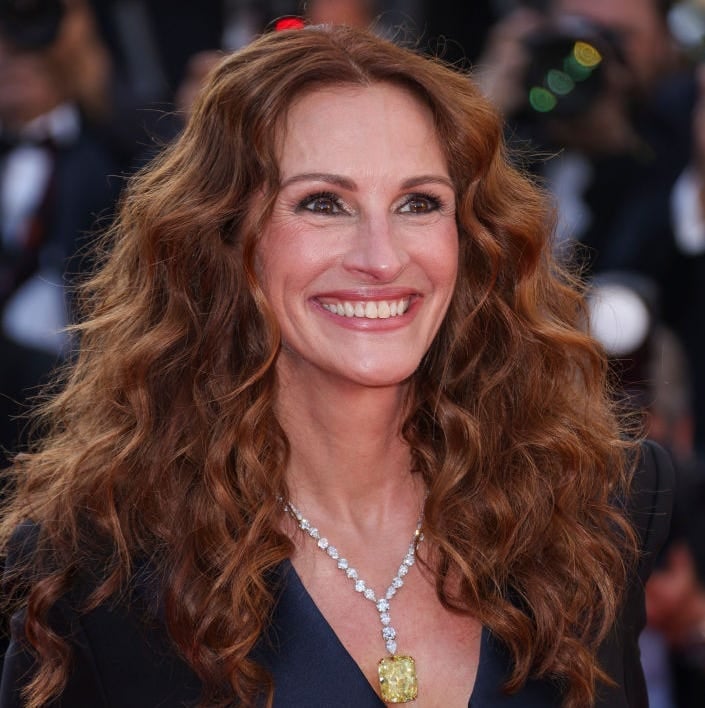
Auburn is a color that looks best with a blowout. That warm, almost-copper tone catches the light differently at every bend, so the gloss from a round brush and diffuser makes it read richer than a cooler red ever could. The side parting here breaks up the volume just enough to keep mid-back curls from turning into one heavy triangle.
Ask your stylist for: mid-back soft voluminous auburn curls. This one is for thick hair that can hold the shape without a curl-enhancing product. A trim every 10 to 12 weeks keeps the ends from splitting faster than the color fades. Use a color-safe shampoo; auburn is notoriously quick to wash out.
Mid-Back Defined Dark Brown Curls With Balayage
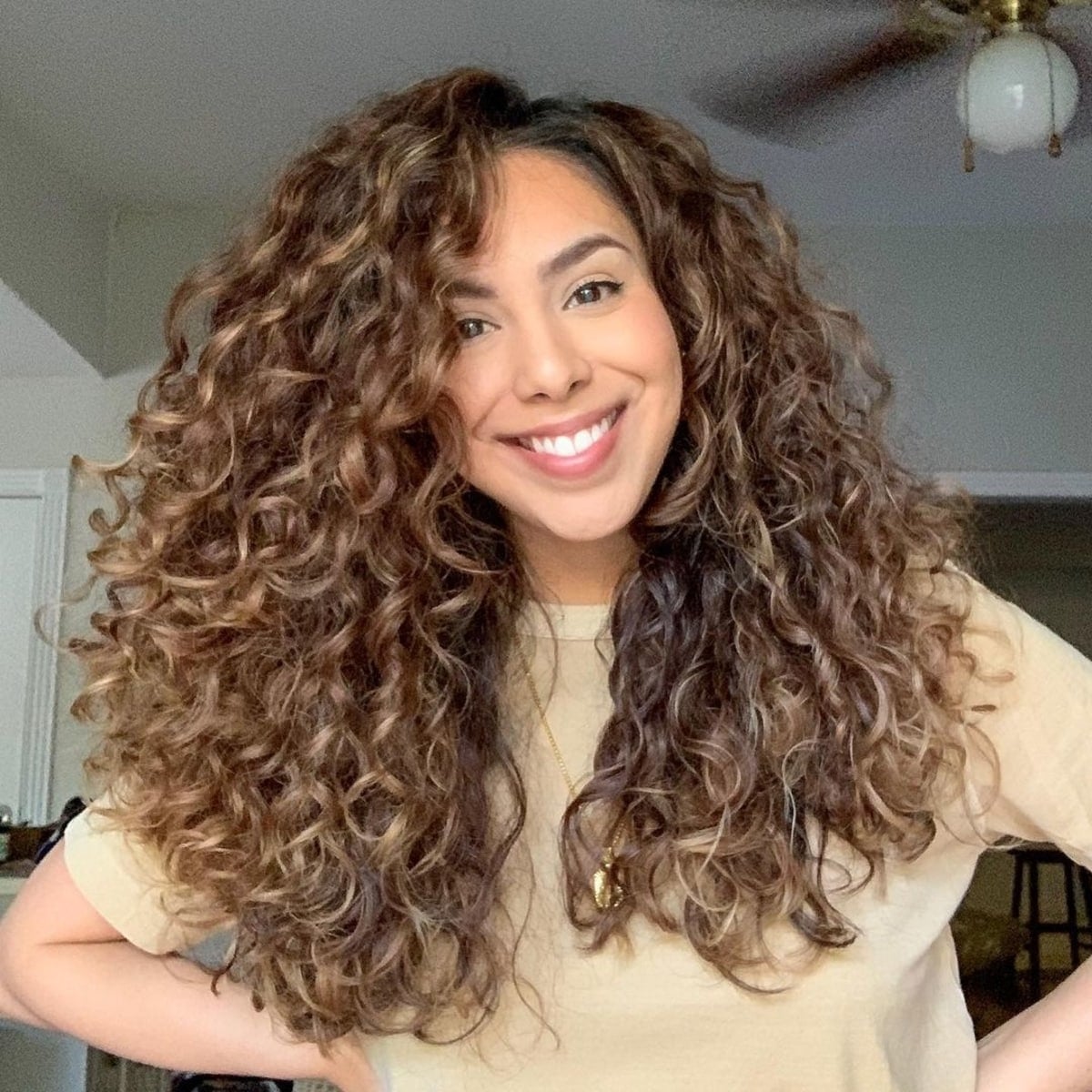
A caramel balayage on dark brown hair is a low-maintenance way to add dimension: the lighter pieces start a few inches from the root, so the grow-out line is soft. On thick, mid-back curls that are air dried, the balayage looks like natural highlights. Apply a curl cream and scrunch while hair is damp; on off days, refresh with water. Ask your colorist for: mid-back air-dried dark brown curls with caramel balayage.
Mid-Back Dark Brown Curls With Caramel Highlights
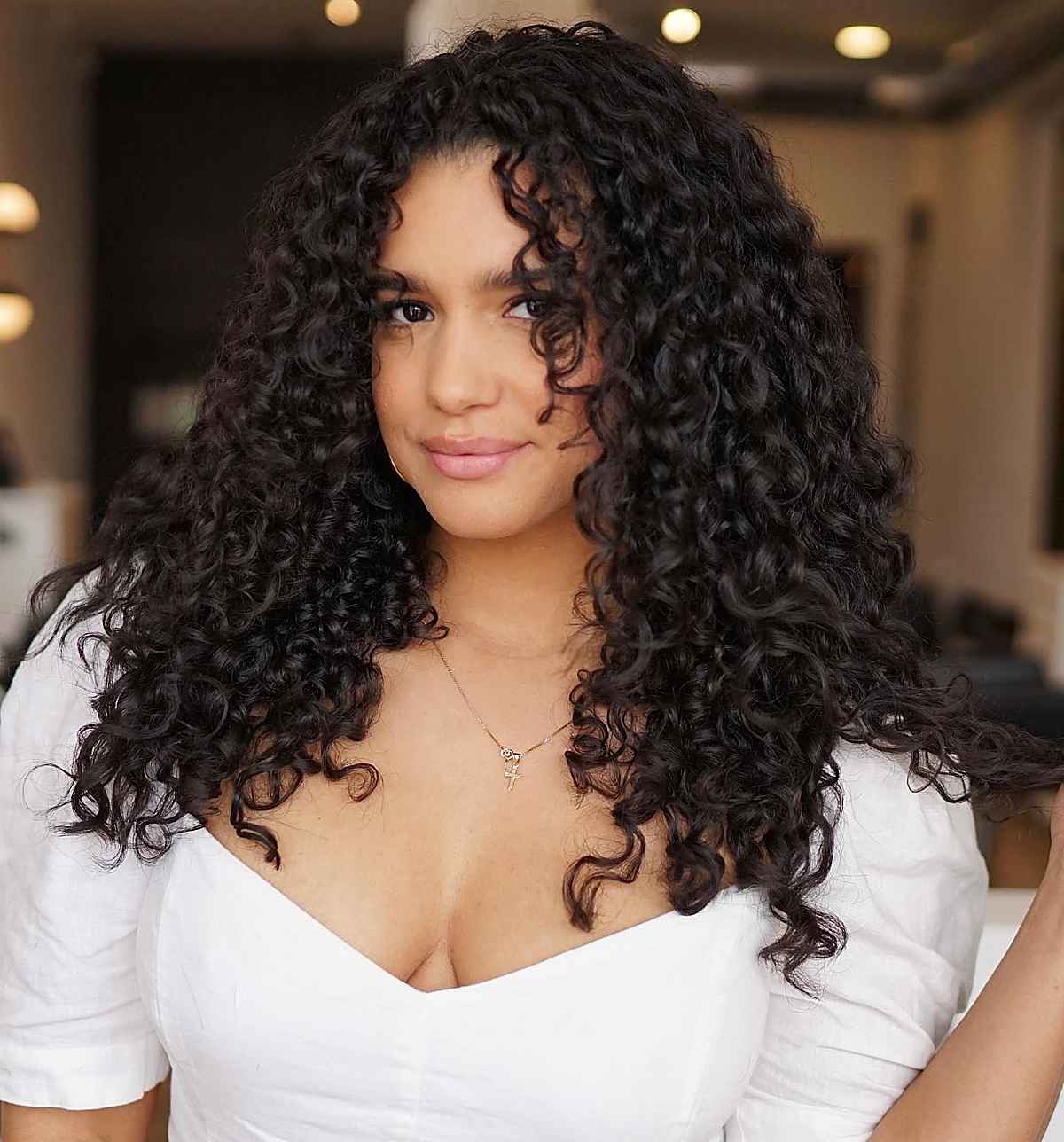
Caramel highlights on dark brown hair add warmth without shifting the base. The lighter pieces are woven through the mid-lengths and ends, so the curl pattern catches each highlight from a different angle. This creates a soft, dimensional look that does not depend on perfect curl formation. This is a salon job, not a box-dye project, because the placement needs to sit within the curl pattern. Ask your colorist for: mid-back soft loose dark brown curls with caramel highlights. A trim every 10 to 12 weeks keeps the ends healthy enough to bounce back.
Mid-Back Defined Dark Brown Curls With Caramel and Long Layers
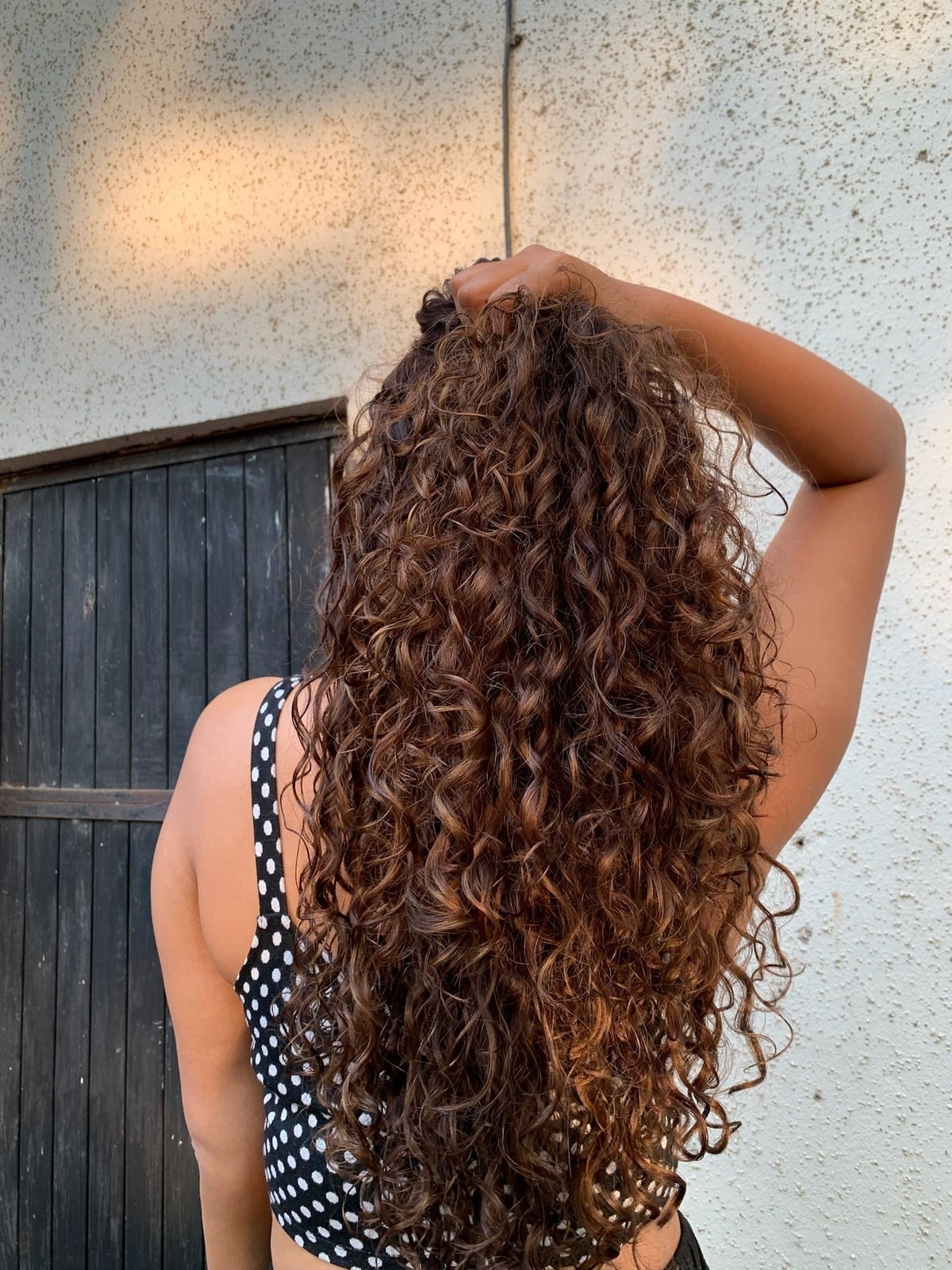
Long layers are the difference between curls that sit and curls that move. On a back view like this one, the long layers let the defined curls stack without collapsing at the bottom, which is the main problem with thick, mid-back hair that has no interior shape. The caramel highlights trace each layer, so the eye follows the curl rather than the bulk. Ask your stylist for: mid-back defined dark brown curls with caramel highlights and long layers. A curl-defining cream applied to wet hair, scrunched, then diffused on low heat gives the most consistent result.
Very Long Dark Brown Curls With Subtle Highlights
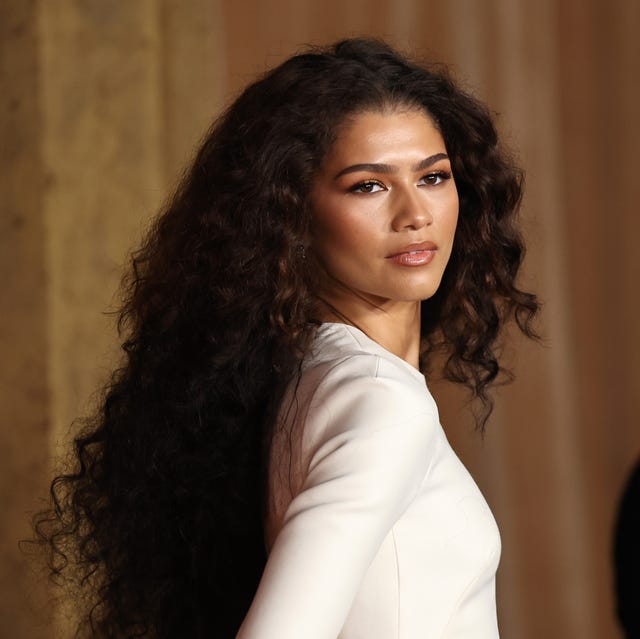
Very long curls need weight management, and this one gets it from long layers that prevent the hair from hanging like a curtain. The subtle highlights add depth without dominating the look, which is the right move when the length is the main event. The middle part and air-dried texture mean the hair lands where it wants to, not where a brush tells it to. Ask your colorist for: very long soft defined dark brown curls with subtle highlights. A wide-tooth comb for detangling and a deep conditioner every wash keep the length from fraying.
Shoulder Honey Blonde Curls With Caramel Balayage
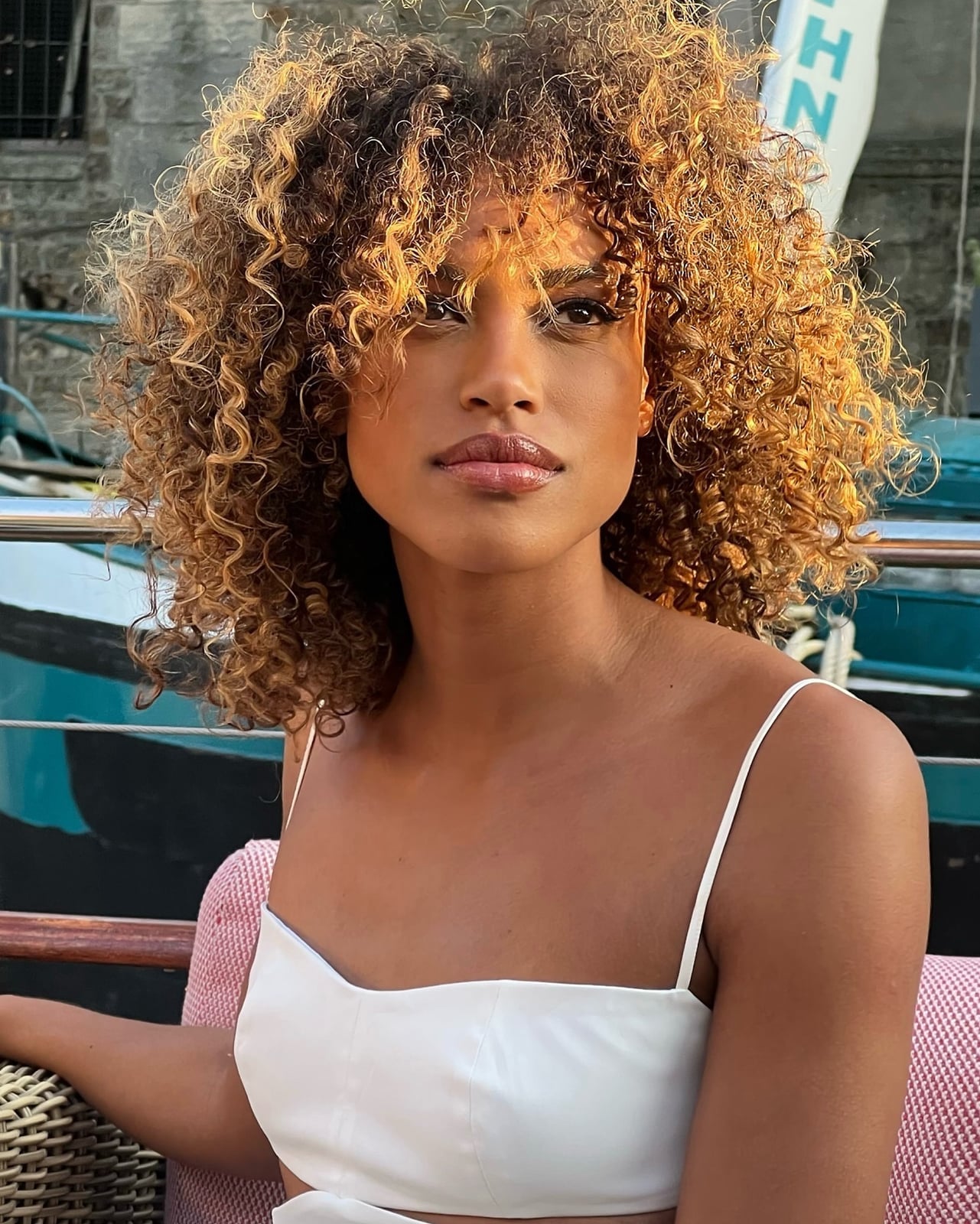
A shoulder-length bob with honey blonde base and caramel balayage reads as sun-kissed in a straight-to-the-point way, not as a slow-burn grow-out. The defined soft curls on thick texture give the color depth room to show off, but here is the honest trade-off: honey blonde on curly hair can pull brassy after four to six weeks, especially with balayage that skips the roots. Ask your colorist for: shoulder length honey blonde bob with caramel balayage and defined curls. A toning gloss every second wash and a trim at eight weeks keep the warmth in check without a full salon visit.
Shoulder Defined Spiral Curls With Caramel
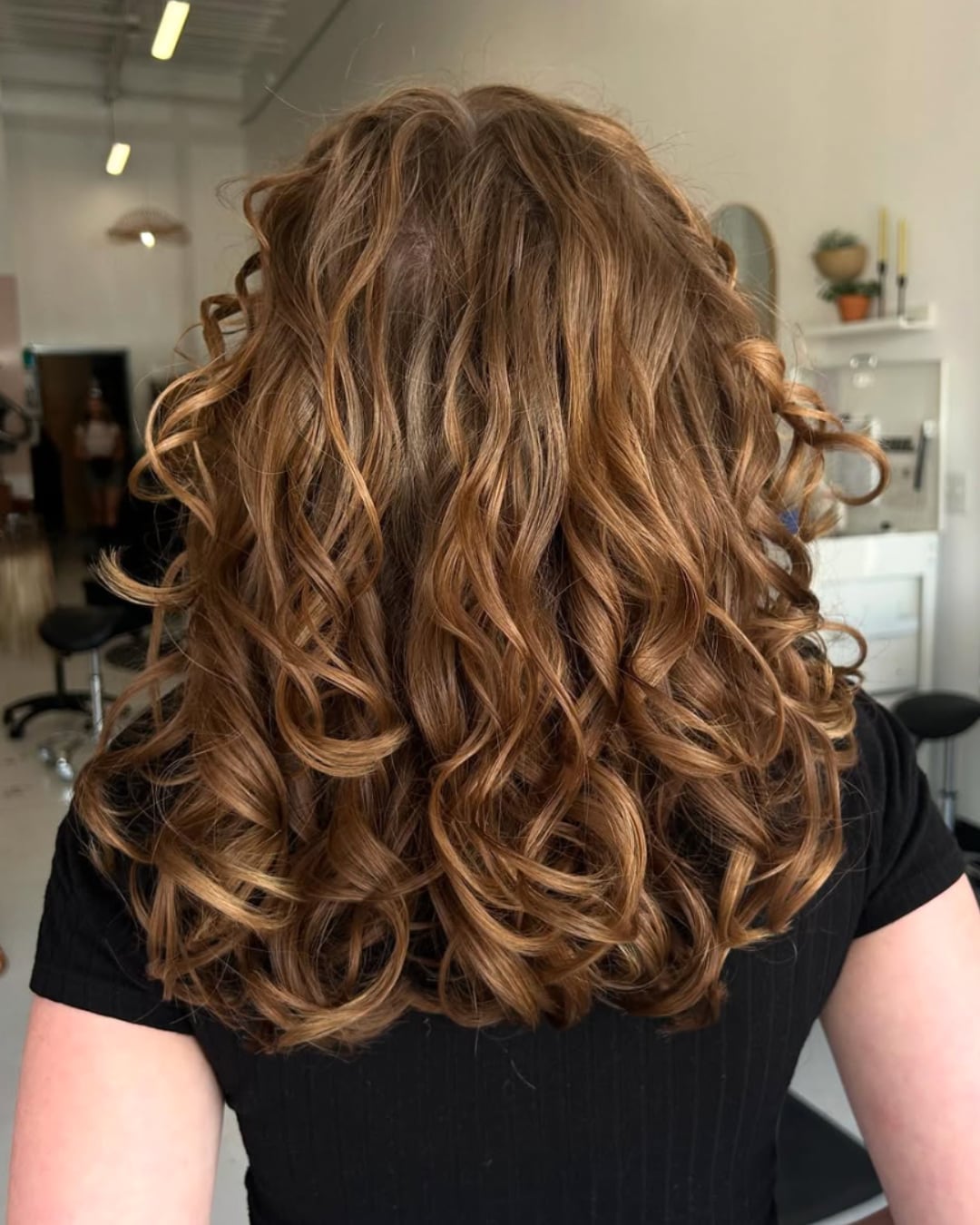
How do you get defined spiral curls on thick, shoulder-length hair without a salon appointment? Start with damp hair and a generous pump of curl-enhancing mousse, then section into four quadrants. Finger-coil each section around a two-inch barrel, clip it, and let air do the work or use a diffuser on low heat. The medium brown base with caramel highlights adds dimension that makes the spirals look polished. Ask your colorist for: shoulder length defined spiral curls with caramel highlights.
To refresh on day two, spritz with water and re-scrunch. The spiral shape holds best when you skip brushing entirely. It is a DIY-friendly method, but the highlighting requires a colorist to place the caramel pieces where the curl lands.
Shoulder Length Defined Black Curls
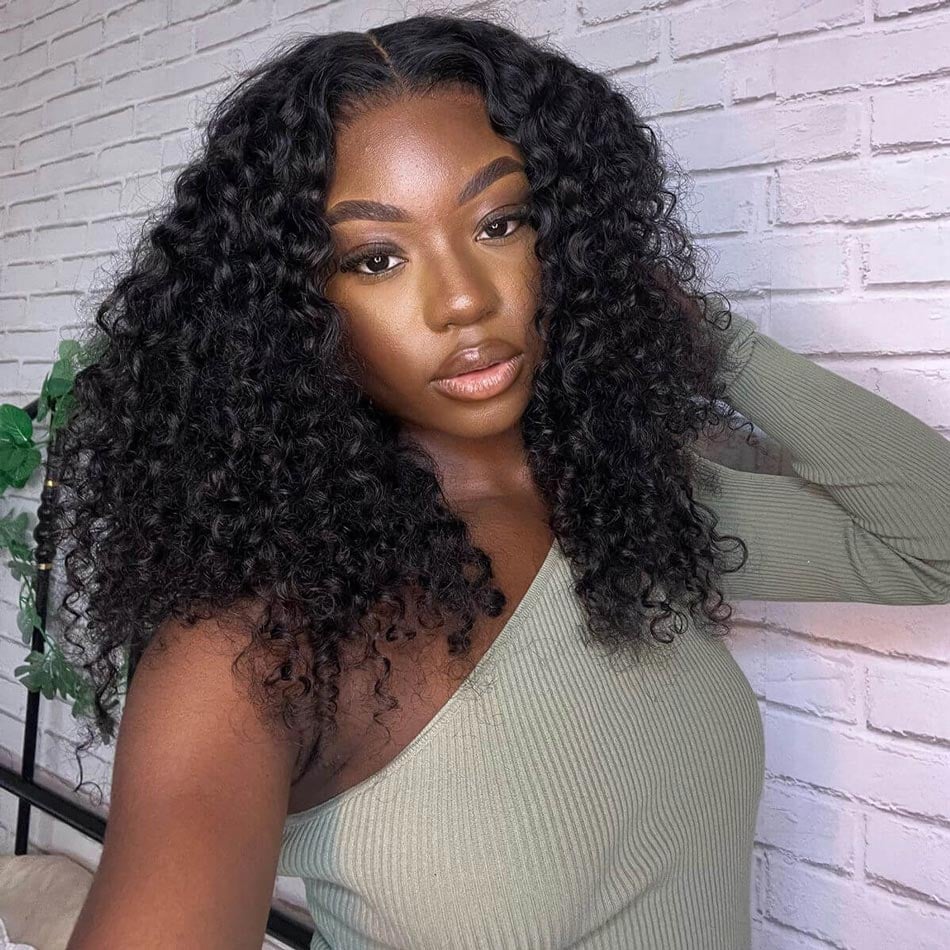
This is a straightforward design: shoulder length black hair with defined, air dried curls and a middle part. The long layers let the curl pattern stack without losing shape at the ends, and the natural texture creates the volume. Ask your stylist for: shoulder length defined soft black curls. A curl defining cream applied to soaking wet hair and left to air dry gives this finish with zero heat. It is a true wash and wear look that works for most face shapes, provided the layers are cut to follow the curl.
Collarbone Honey Blonde Loose Curls, Wavy
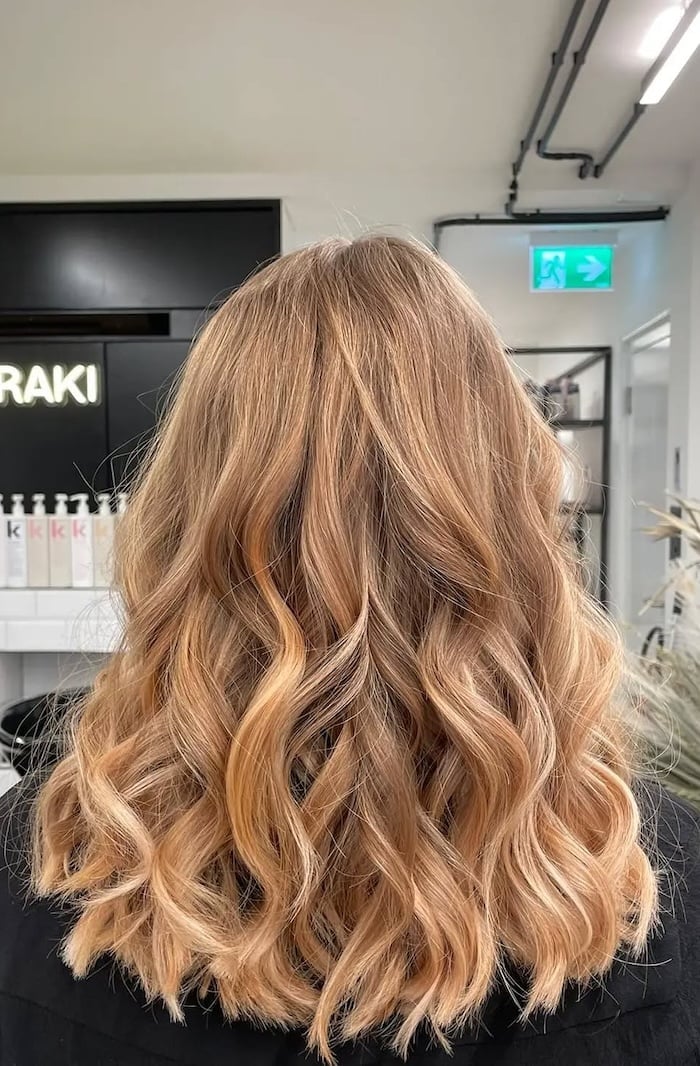
The collarbone length with long layers and soft, loose curls hits a sweet spot between polished and undone. The honey blonde base with lighter highlights makes the waves catch light differently at each bend, which is the whole point of a lived-in color. Ask your colorist for: collarbone length loose honey blonde curls.
Reality check: loose curls on medium-density wavy hair tend to relax by midday unless you build in some texture. A texturizing spray on dry hair and a quick tousle with fingers restores the movement. The trim rhythm is every eight to ten weeks, which is forgiving, but the highlights need a toner visit at the six-week mark to keep the blonde from going flat.
Mid-Back Voluminous Gray Curls With Silver Highlights
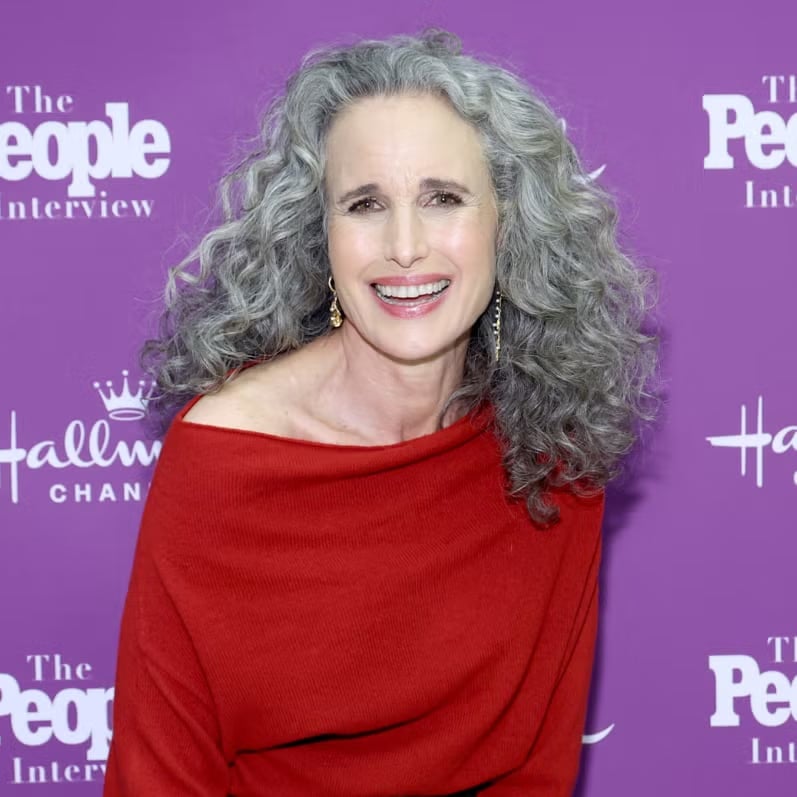
Building volume and curl definition on mid-back length, thick gray hair starts with the cut: layers placed to remove weight without sacrificing length. The silver highlights add contrast against the gray base, giving the curl pattern dimension. Ask your colorist for: mid-back voluminous gray curls with silver highlights. Diffuse on low speed, tilting the head to each side, to lift the roots. A purple shampoo used once a week keeps the silver tone clean and prevents the gray from yellowing. Expect a toning appointment every four to six weeks and a trim every eight to maintain the shape without the ends thinning out.
Mid-Back Dark Brown Curls With Honey Highlights and Air Dried
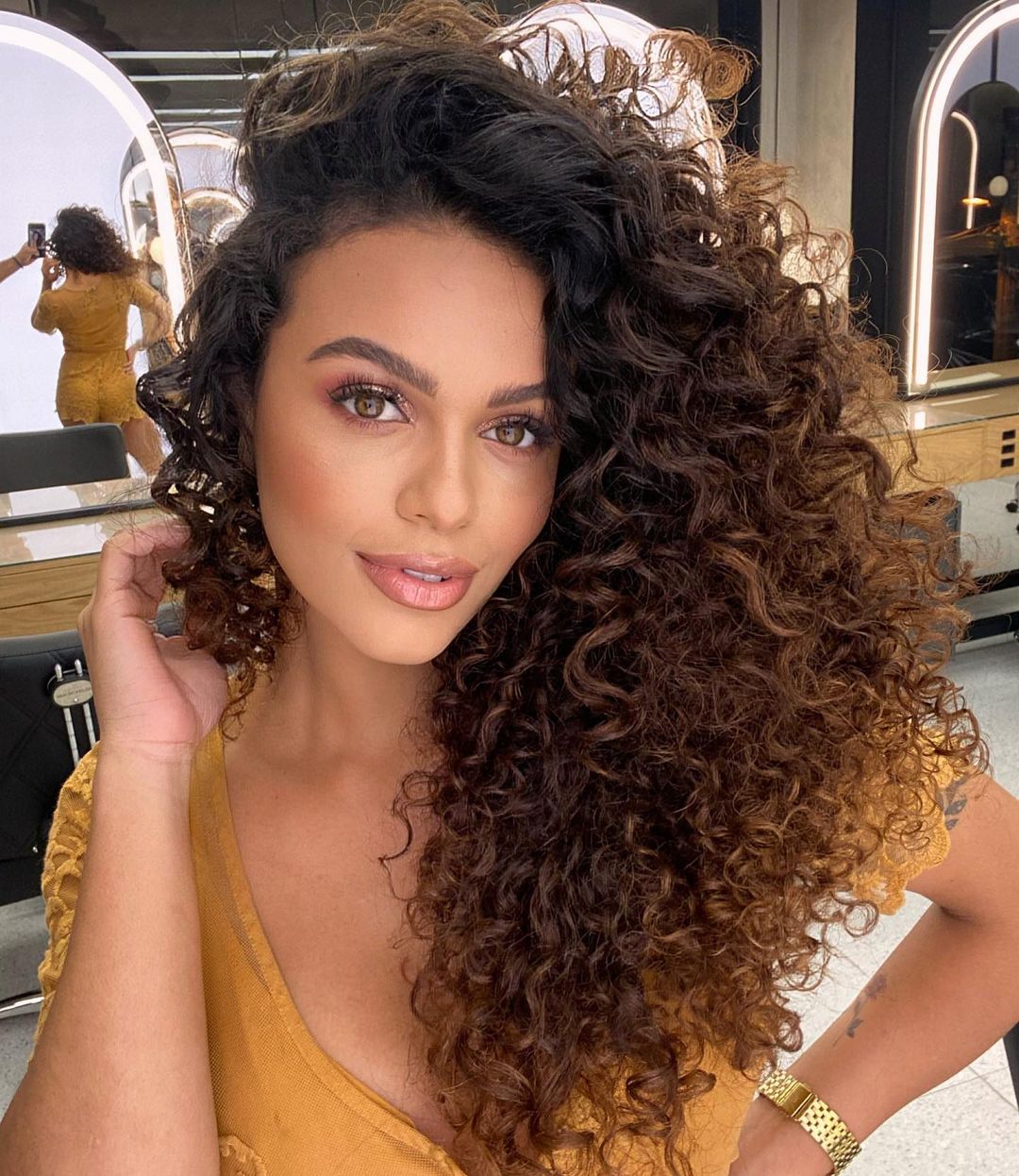
The trick to glossy, defined curls without heat damage is starting with the right cut and product. On thick, mid-back length dark brown hair with honey highlights, a generous amount of curl-defining cream applied to soaking wet hair, then scrunched and left to air dry, produces the kind of soft, polished bend that looks salon-fresh all day. It is a DIY process, but the timing depends on your hair’s density and the humidity.
This style suits thick, curly hair of mid-back length. The side part works well with most face shapes. Ask your stylist for: mid-back defined glossy dark brown curls with honey highlights. Apply a curl-defining cream and scrunch, then either air dry or use a diffuser on low heat for a faster finish without frizz.
Short Cropped Honey Blonde Curls
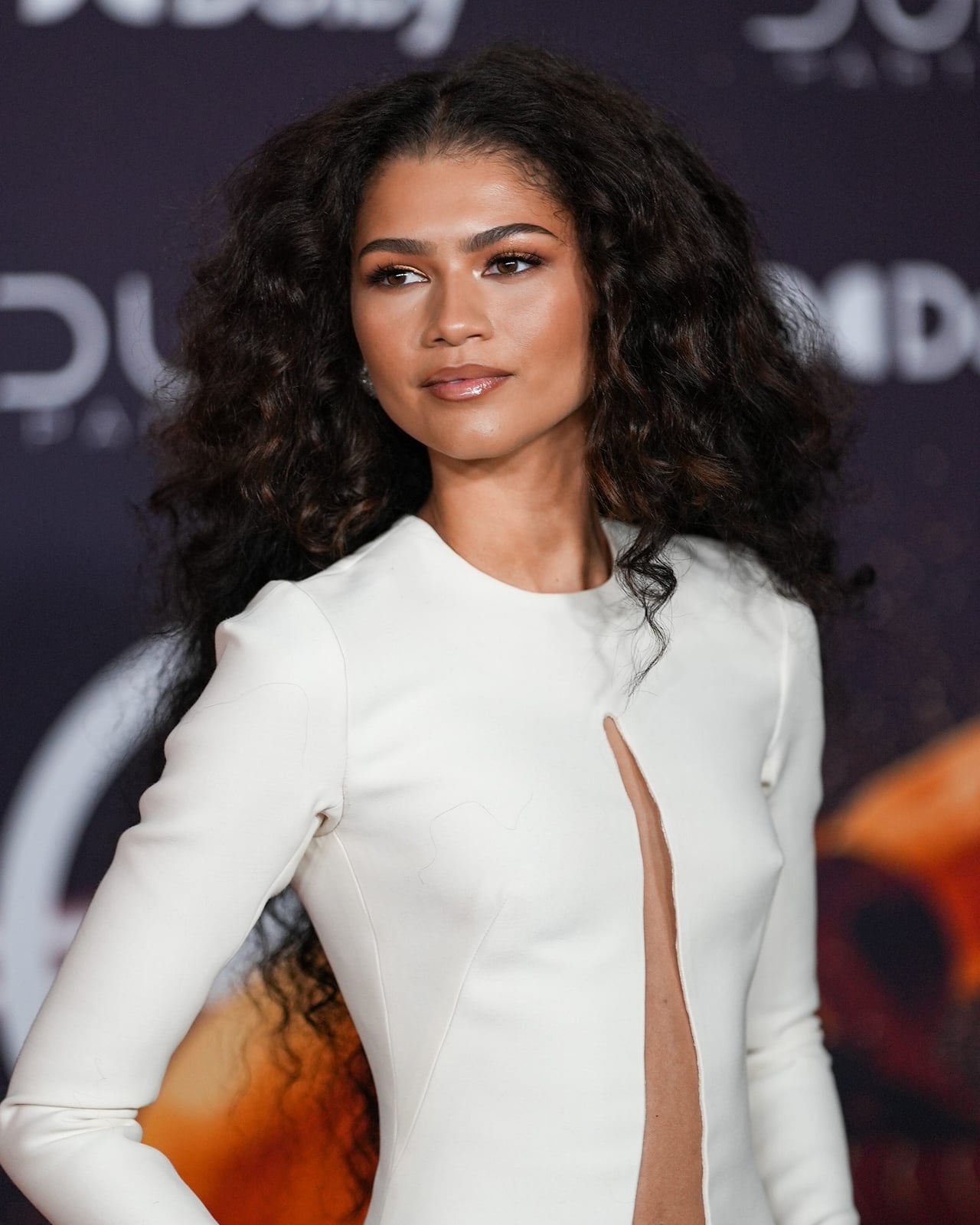
Can fine hair really hold a short, dense curl pattern? Yes, when the cut is cropped close to ear length and the color is a layered honey blonde with lighter highlights throughout. The fine texture actually works in your favor here: it creates a full, rounded silhouette that does not weigh down. Ask your stylist for: short cropped honey blonde curls. Apply a curl-defining cream to damp hair and scrunch, then air dry for a finish that looks natural, not polished within an inch of its life.
Short Pixie With Tight Blonde Curls
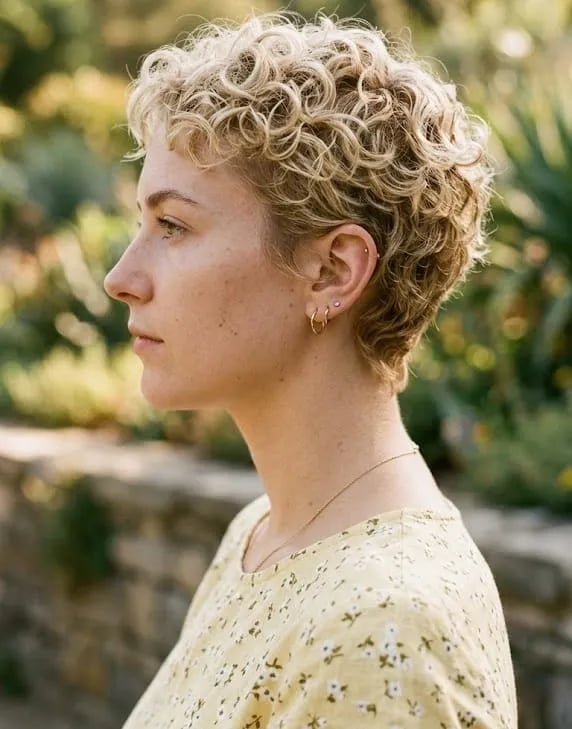
A clean, graphic shape comes from the uniform curl pattern. The upkeep is demanding: fine, light hair shows every quarter-inch of new growth, and tight curls on a short cut need a trim every four to six weeks to avoid looking top-heavy. Ask your stylist for: short pixie with tight blonde curls. Use a small amount of styling paste to define individual curls without weighing them down.
Short Pixie With Textured Dark Brown Curls
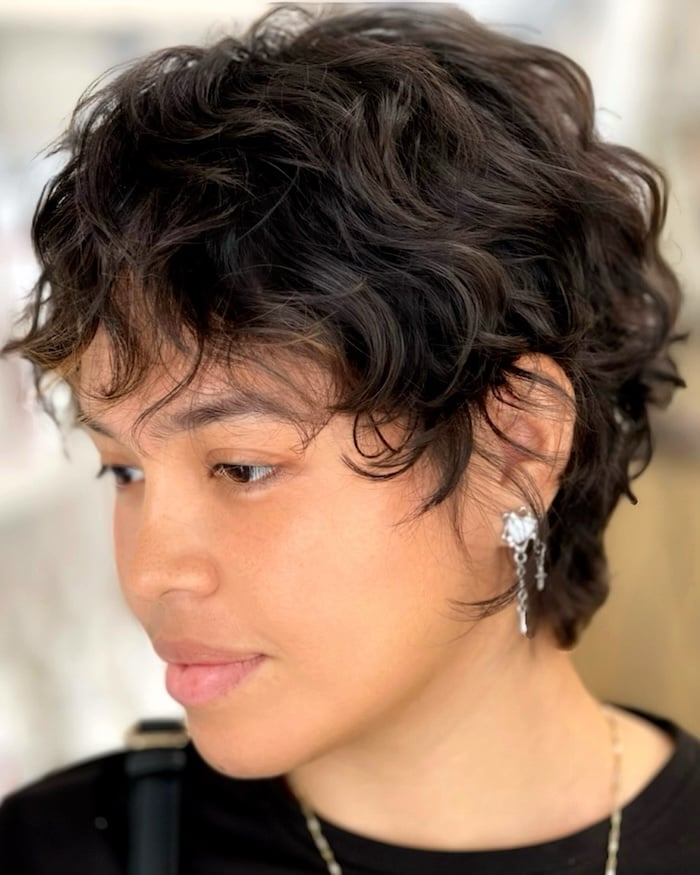
A short pixie cut with soft, natural dark brown curls and short bangs is one of the easiest styles to recreate at home. The side part and air-dried texture mean zero heat is involved. Start with a light-hold styling cream on damp hair, scrunch the curls upward, then let them set as you go about your morning. Ask your stylist for: short pixie with soft natural curls and short bangs. A trim every four to six weeks keeps the shape from turning into a mushroom.
Soft Textured Half-Up Prom Hairstyle
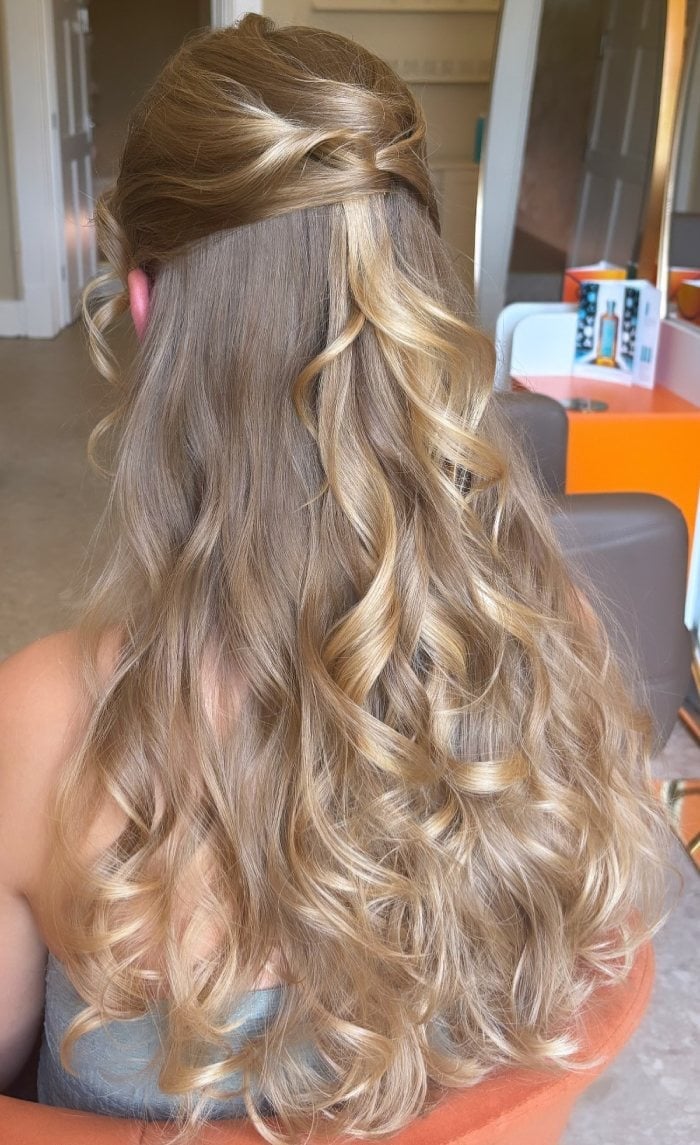
What event calls for a half-up style that is polished but not stiff? Prom, a wedding, or any evening occasion where you want soft, bouncy curls to frame your face while keeping the hair off your neck. The medium to long hair is twisted at the crown, pinned loosely, and the remaining length falls in gentle waves. Ask your stylist for: soft textured half-up hairstyle with loose curls. Secure the half-up section with bobby pins and finish with a flexible-hold hairspray so the curls stay bouncy, not crunchy.
Understanding Your Curly Hair Type
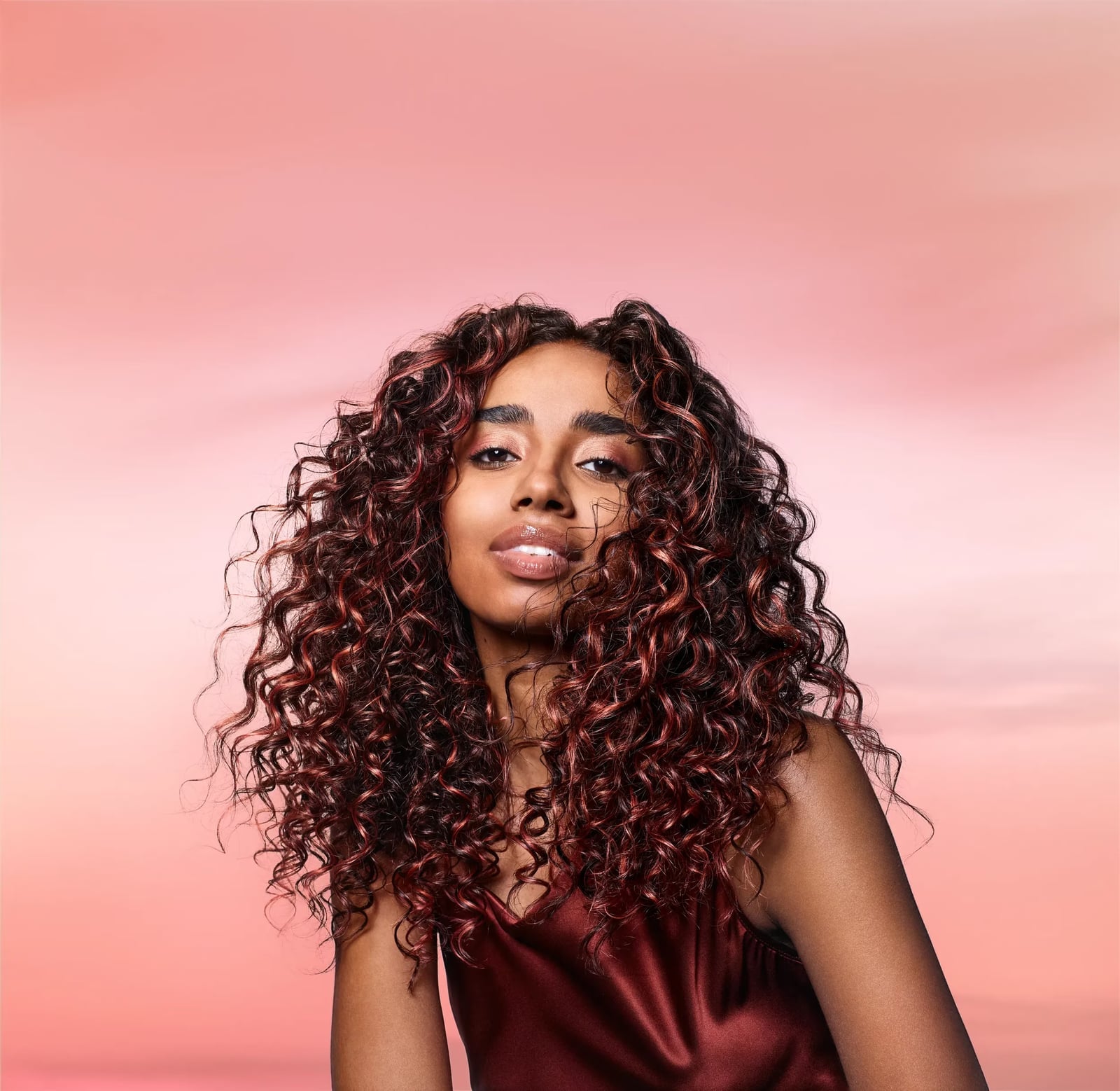
Identifying your curl pattern is the first step to getting soft curls that actually hold. The standard classification runs from 2A (loose waves) to 4C (tightly coiled), and each type needs a different approach to styling and product choice. This collarbone-length cut uses a middle part and long layers to let the natural volume spread evenly, with no bangs to interrupt the shape. The dark brown base with red highlights adds dimension that shows up best in air-dried texture.
Ask your stylist for: long layers to remove weight without sacrificing curl. A thick, curly texture like this benefits from a leave-in conditioner applied to soaking wet hair, then left to air dry or diffused on low heat. The hold comes from the hair’s natural wave pattern, not from heavy gels. A trim every eight weeks keeps the ends healthy so the curl pattern stays consistent from root to tip.
Final Thoughts
For fine hair, keep one blunt baseline and skip heavy layers; blow-dry with a round brush for volume, then use a one-inch iron for loose bends. For thick, naturally curly hair, embrace air-drying with minimal layers to maintain density and let your curl pattern do the work.
- Trim every 6-10 weeks to maintain shape and prevent split ends.
- Tone every 8-12 weeks to refresh color and enhance shine.
- Use a heat protectant spray before any blow-drying or curling.
- Wash hair 2-3 times a week, using a sulfate-free shampoo and conditioner.
Embrace the soft curl trend for a look that’s both natural and refined.