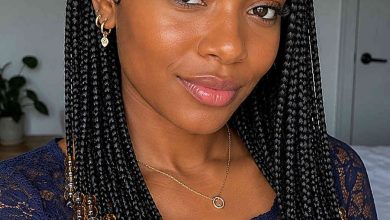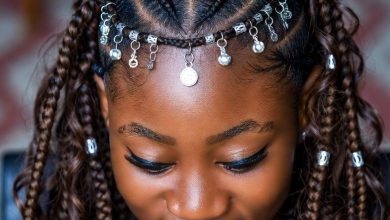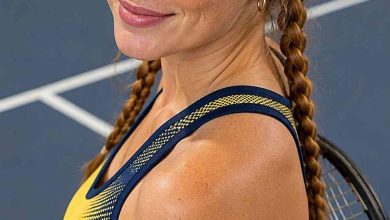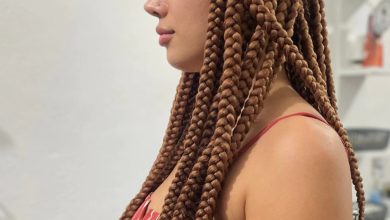
Softball hair is about keeping every strand locked in place while you sprint, slide, and swing, which is why braids and buns have taken over the dugout. The shift is clear: loose, down styles are out, and sweat-proof, natural-texture-friendly looks are carrying the season.
Here are 24 Softball Hair ideas that balance security with style, from quick DIY twists to salon-level cornrows. Whether your hair is fine or thick, long or shoulder-length, these styles hold through warm-ups and game time. If your fine hair falls flat by the third inning or your bangs won’t sit still, this collection has a fix. Expect braids that distribute weight evenly, buns that stay put, and ponytails that survive a full doubleheader.
Double Dutch Braids to Fishtail Ponytail
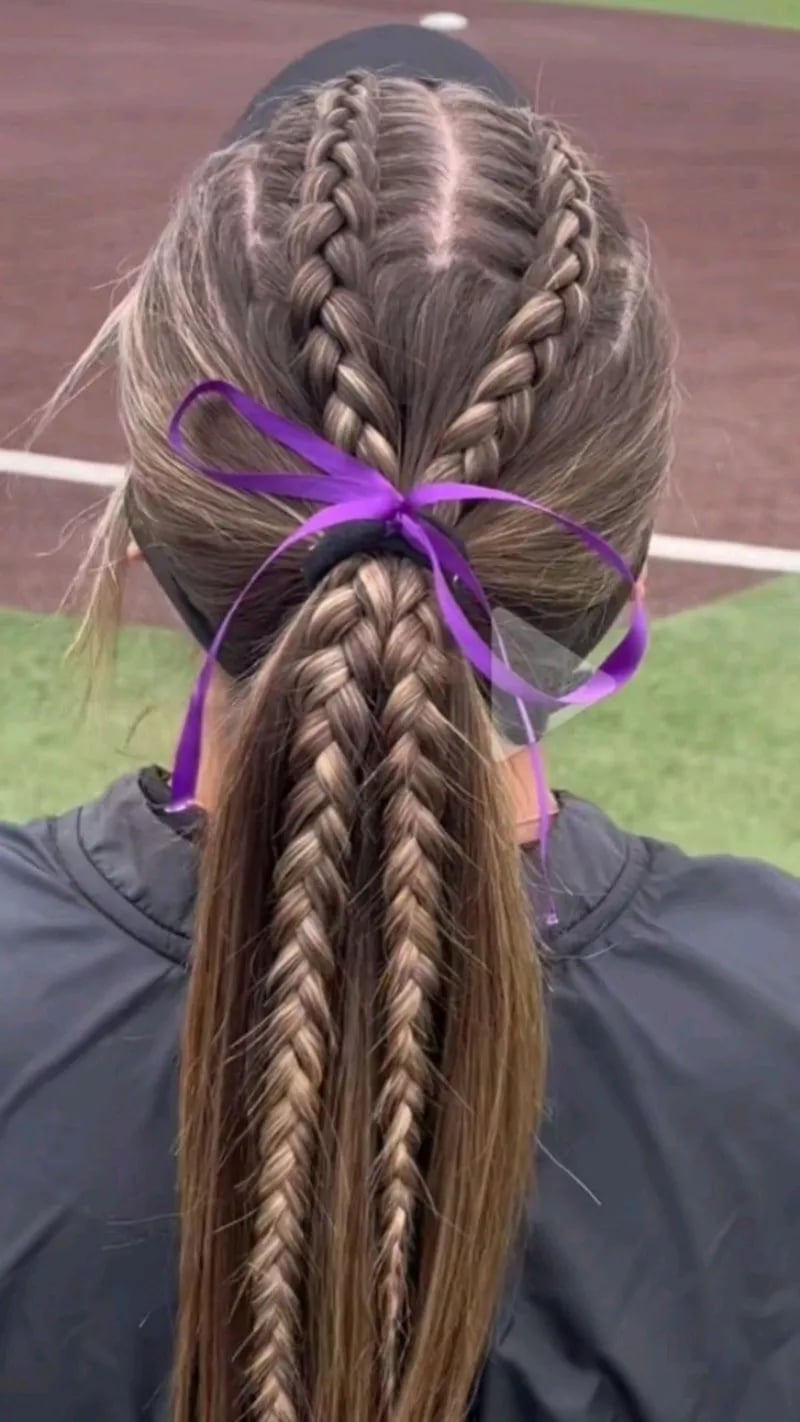
Two parallel Dutch braids run from the forehead to the nape, then merge into a pair of fishtail braids gathered into a ponytail, a combined technique that keeps every strand locked in place through a full game. The shoulder-length, straight, thick blonde hair gives the braids clean lines and even tension. Ask your stylist for: double Dutch braids to fishtail ponytail, add ribbon. This is a salon-level style, so expect to sit a while, but the result is a secure, intricate look that holds its shape. A spritz of hairspray on the ends keeps the fishtail sections from frizzing.
Thick Wavy Fishtail Braid
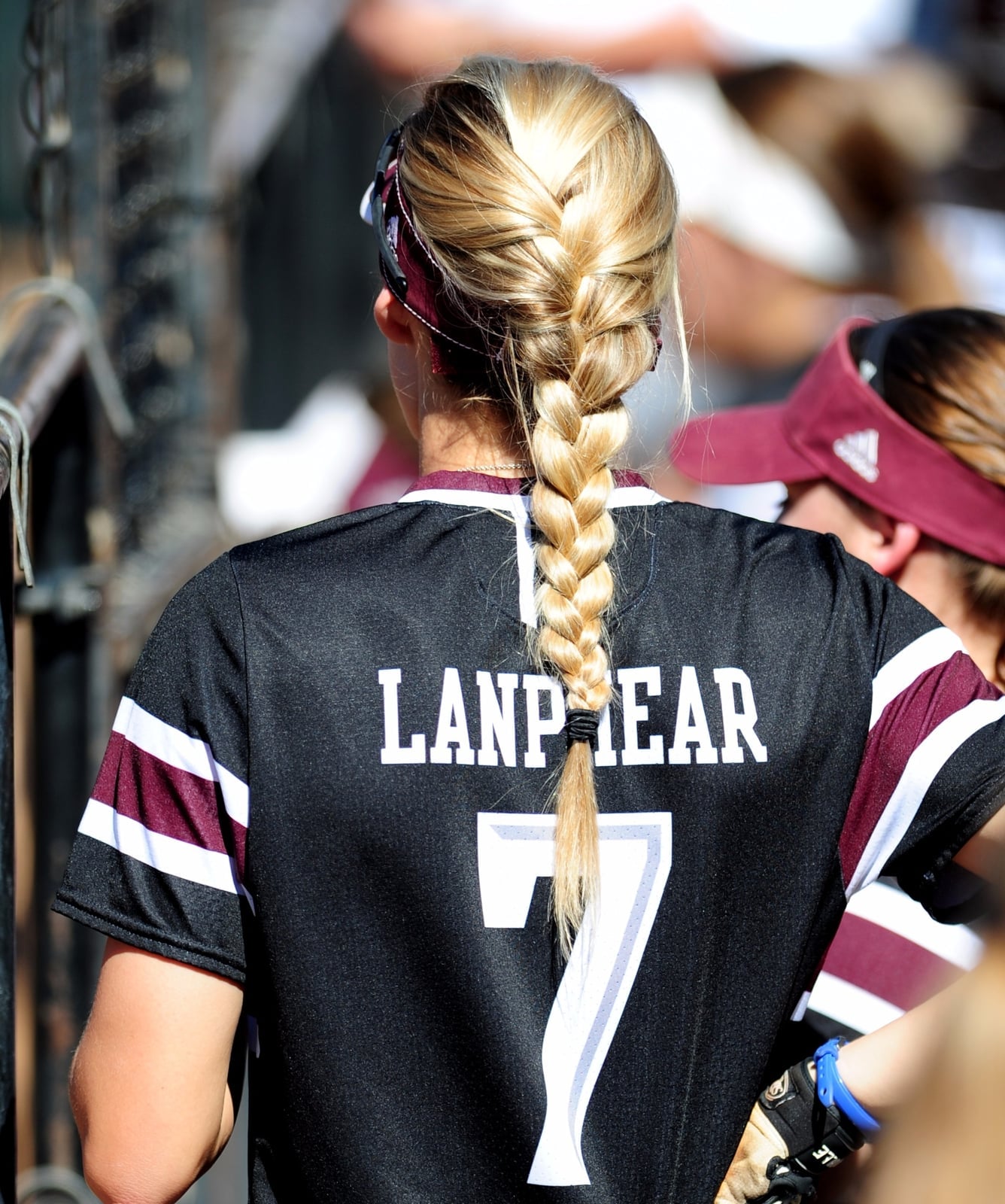
Wondering if your thick, wavy hair can handle a single braid without slipping? A fishtail braid actually grips wavy texture better than straight hair, since the wave pattern adds friction that keeps the weave snug from a middle parting at the crown down to mid-back. The dense, blonde strands create a substantial braid that stays put through warm-ups and innings. Ask your stylist for: thick fishtail braid from crown. To boost the texture, gently pull the braid sections apart after securing the end with a tie. This style holds best on second-day hair, so skip the wash and go.
Low Bun With Braided Accents
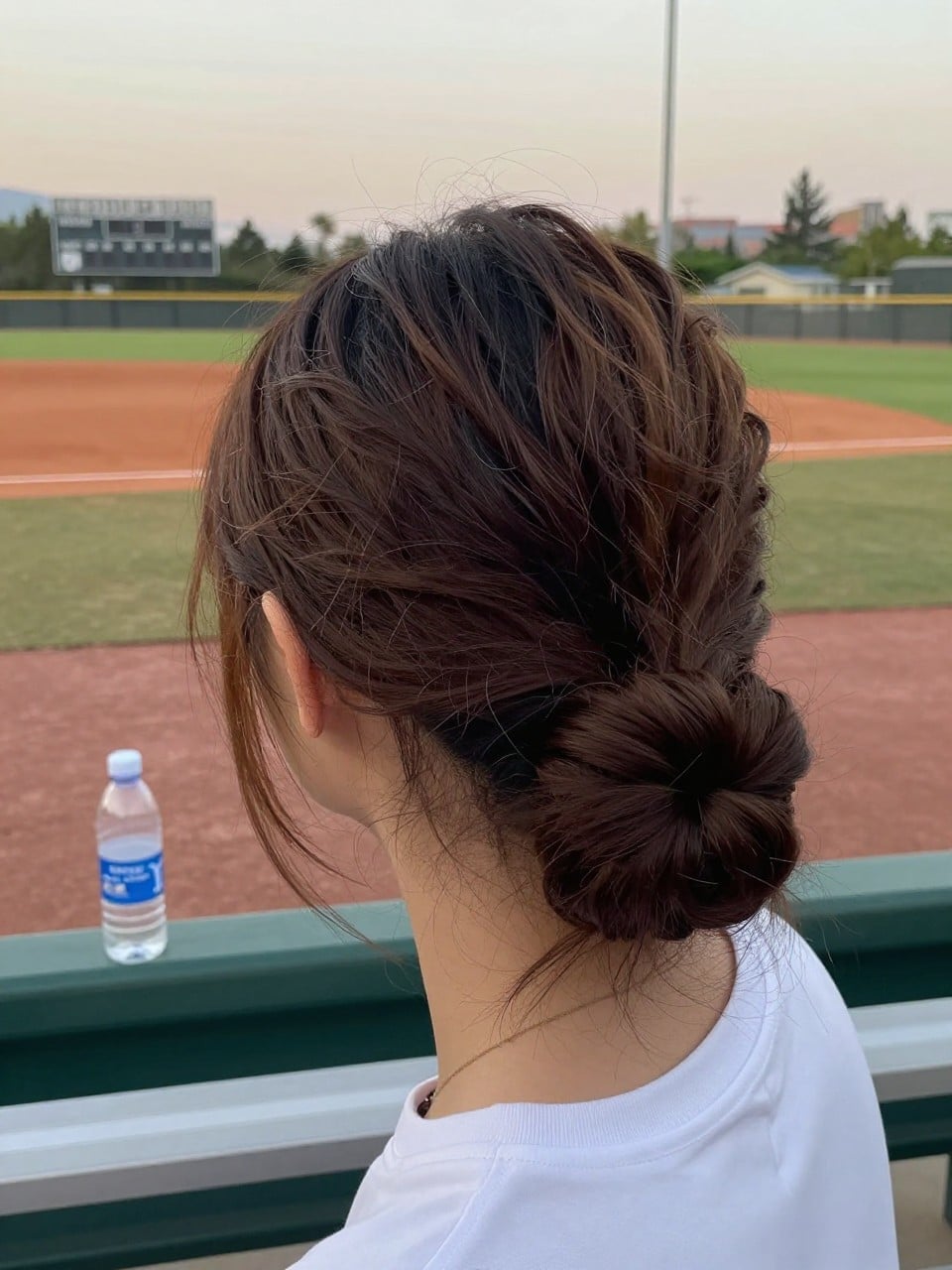
The layered cut adds movement, so the bun sits flat without bulk. Ask your stylist for: low bun with braided accents. Start by braiding small sections at the sides, then gather everything into a low bun and pin it securely. A strong-hold hairspray keeps the bun tidy, and the braids prevent flyaways. This style suits thick, wavy hair of mid-back length, and it reads as refined enough for post-game events.
Braided Space Buns With Glitter
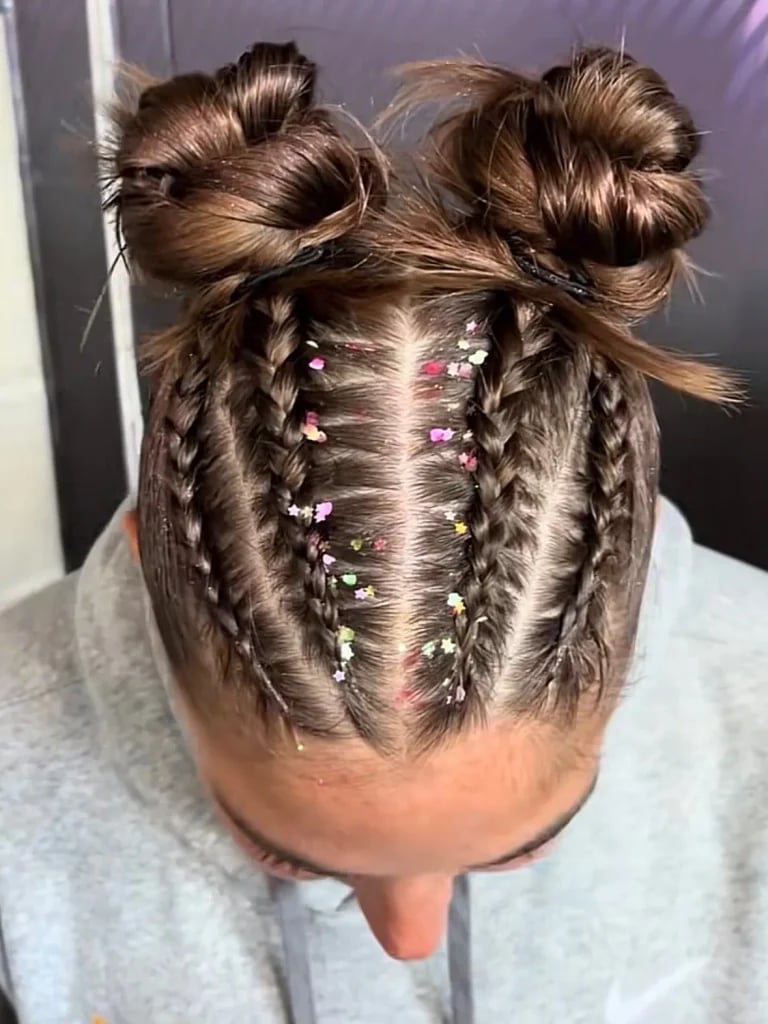
Compared to a single braid or a plain bun, this style goes further: multiple tight braids from a middle part feed into two high space buns, with small, colorful glitter pieces applied along the braid lines. It’s a playful, secure updo that turns heads at festivals or themed games, and the dark brown, wavy texture holds the braids firmly. Ask your stylist for: double space buns with braids and glitter. Use cosmetic adhesive for the glitter so it stays through activity. The buns need tight securing with ties and pins, so it’s a salon-only commitment.
For a softer event, skip the glitter and keep the braided buns clean; for a night game, the sparkle adds personality without compromising hold.
Intricate Multiple Braids With Blonde With Lighter Highlights
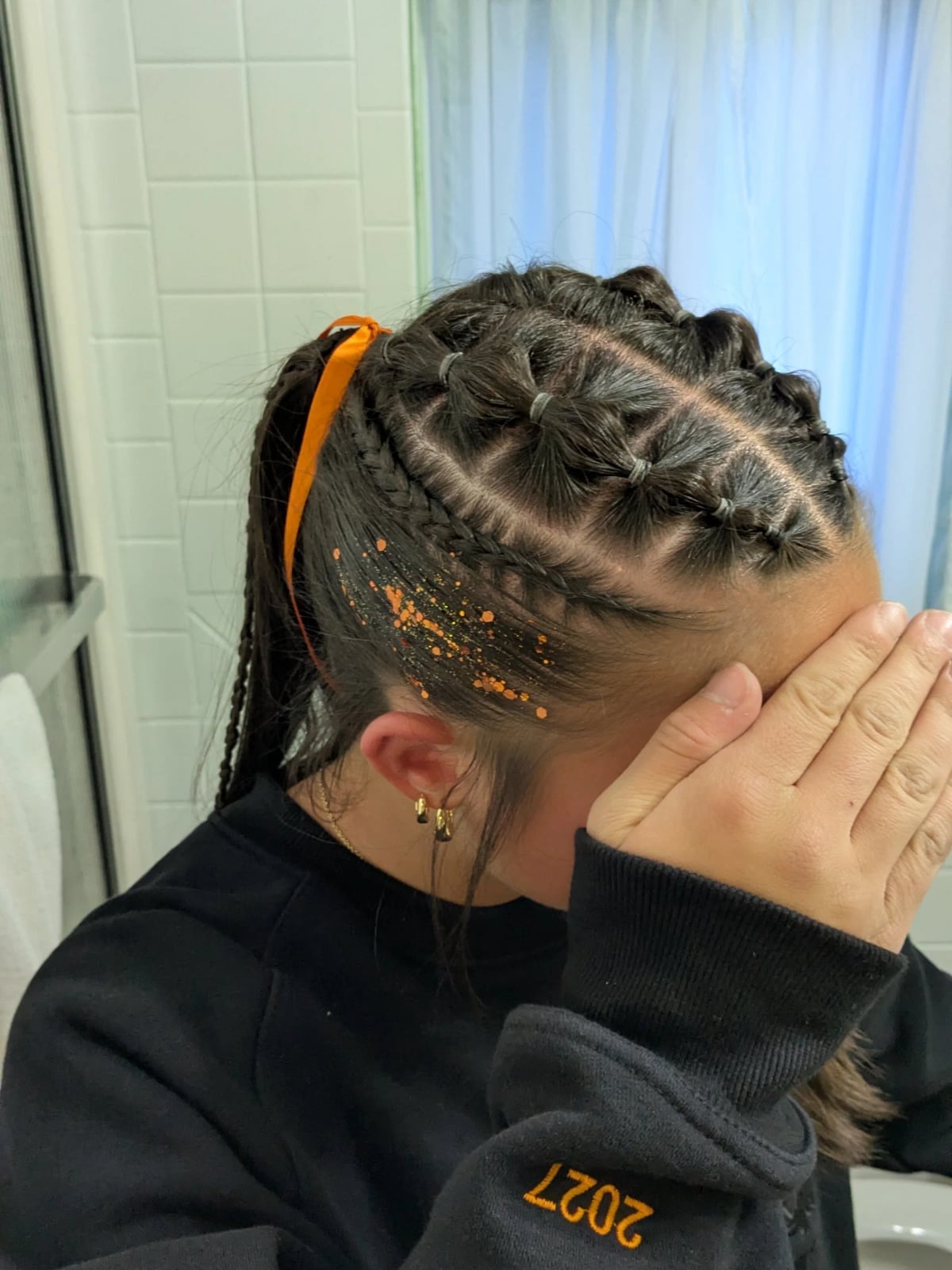
No bangs in the way, this design lets the braiding itself do all the talking. Long, thick, wavy blonde hair with lighter highlights is woven into several intricate braids, each one pulling the hair back with a precision that suggests a salon chair was involved. The layered cut gives the braids varied thickness, so the overall effect is textured rather than uniform.
This style suits long, thick, wavy hair best, since the braids need enough weight to stay put and enough texture to hold their shape. Ask your stylist for: multiple intricate braids, long hair. Expect to set aside a solid chunk of time for the braiding itself, and plan for upkeep: a light serum smoothed over the finished braids tames flyaways and adds shine, while a silk scarf at night keeps the edges neat. With that routine, the style stays game-ready for several days before it needs a redo.
High Ponytail With Cornrows and Side Swept Bangs
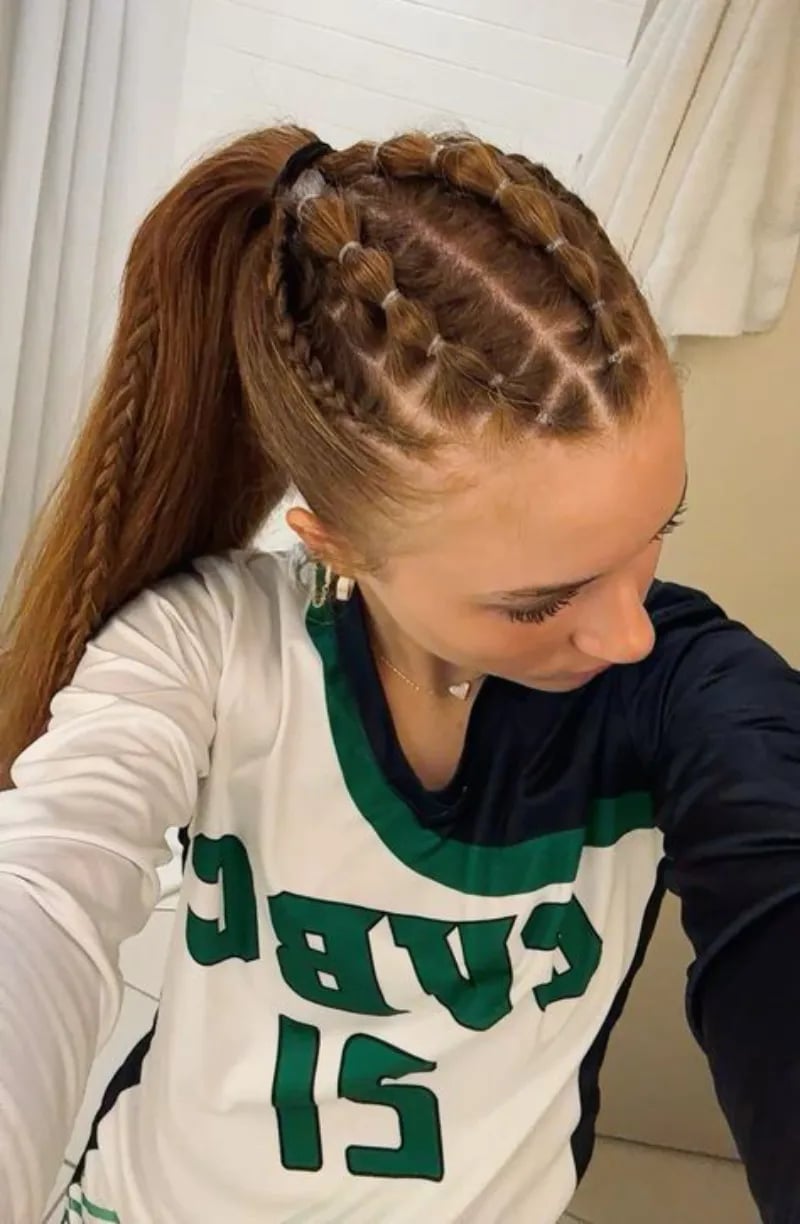
Ever wonder how cornrows merge into a high ponytail without a single strand escaping? The braids start at the scalp and feed upward, so the ponytail reads as one continuous piece of texture rather than a tail tacked on afterward. The side-swept bangs break the sleekness, which is exactly what keeps thick, wavy red hair from looking like a helmet.
This one is a salon job. Ask your stylist for: high ponytail with cornrows and side swept bangs. The cornrows take time to map out, and the ponytail needs to be anchored tightly so it holds through a full game. A gel or pomade smoothed over the braids keeps flyaways down. Plan on sitting for a couple of hours, and tip well.
Cornrows to Low Bun
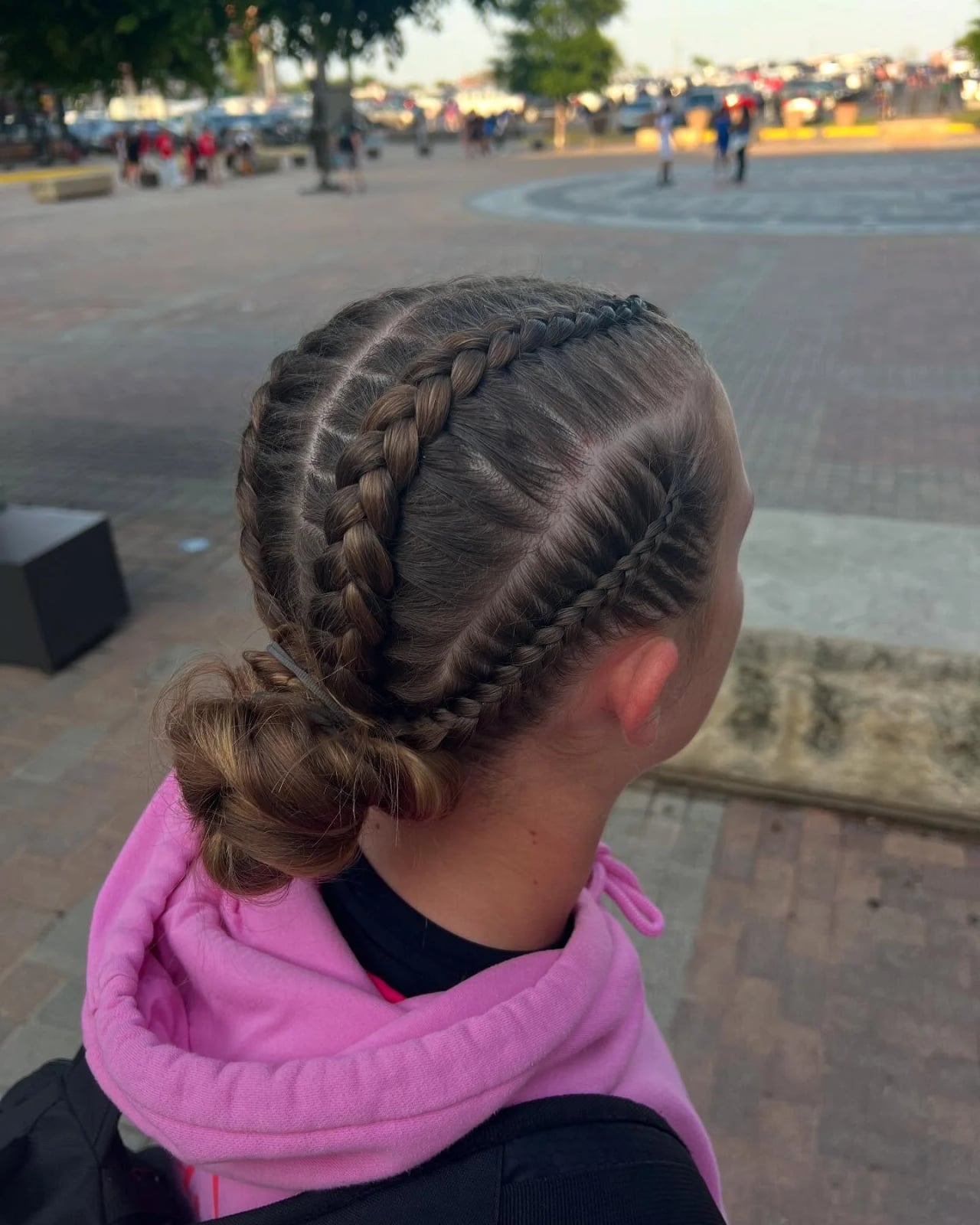
The cornrows here run from the hairline all the way back into a low bun, keeping the whole pattern symmetrical. This suits straight, medium-density hair at mid-back length best, because the braids need enough weight to lie flat against the scalp without slipping. No bangs means the parting stays crisp and the intricate braiding gets to do the talking. Ask your stylist for: cornrows leading to a low bun. Medium brown hair at this density holds the pattern well, and the low bun keeps everything off the neck. A trim every eight weeks or so keeps the ends from fraying, which matters when the braids terminate right at the bun’s base.
Chevron Cornrows to High Bun
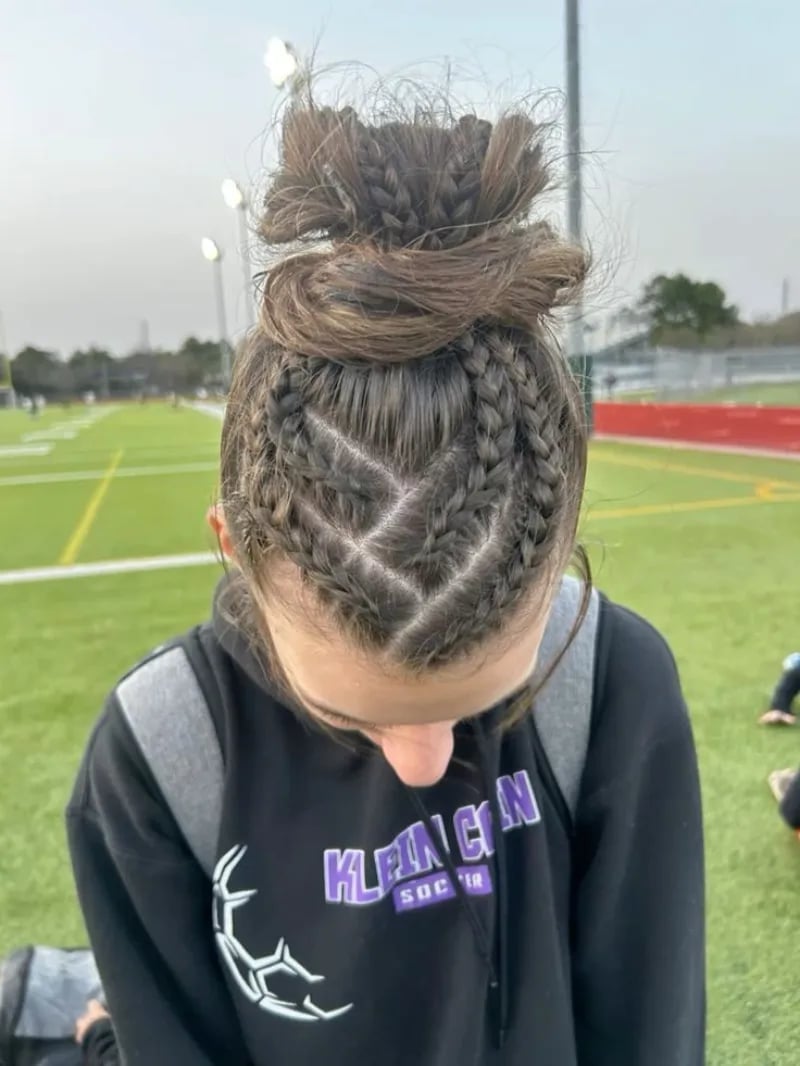
Notice how the cornrows angle inward in a chevron pattern before converging at the crown. That geometric detail is what makes this high bun style wear differently from standard straight-back braids. The pattern stays sharp for about a week if you sleep on a silk scarf, but the edges at the hairline will soften first, so expect to re-braid the front sections between games. Ask your stylist for: chevron cornrows into a high bun. Dark brown, wavy, thick hair holds the angles well, and the bun keeps everything secure for a full day of practice. A strong-hold gel on the cornrows maintains the pattern without flaking.
Double Dutch Braids
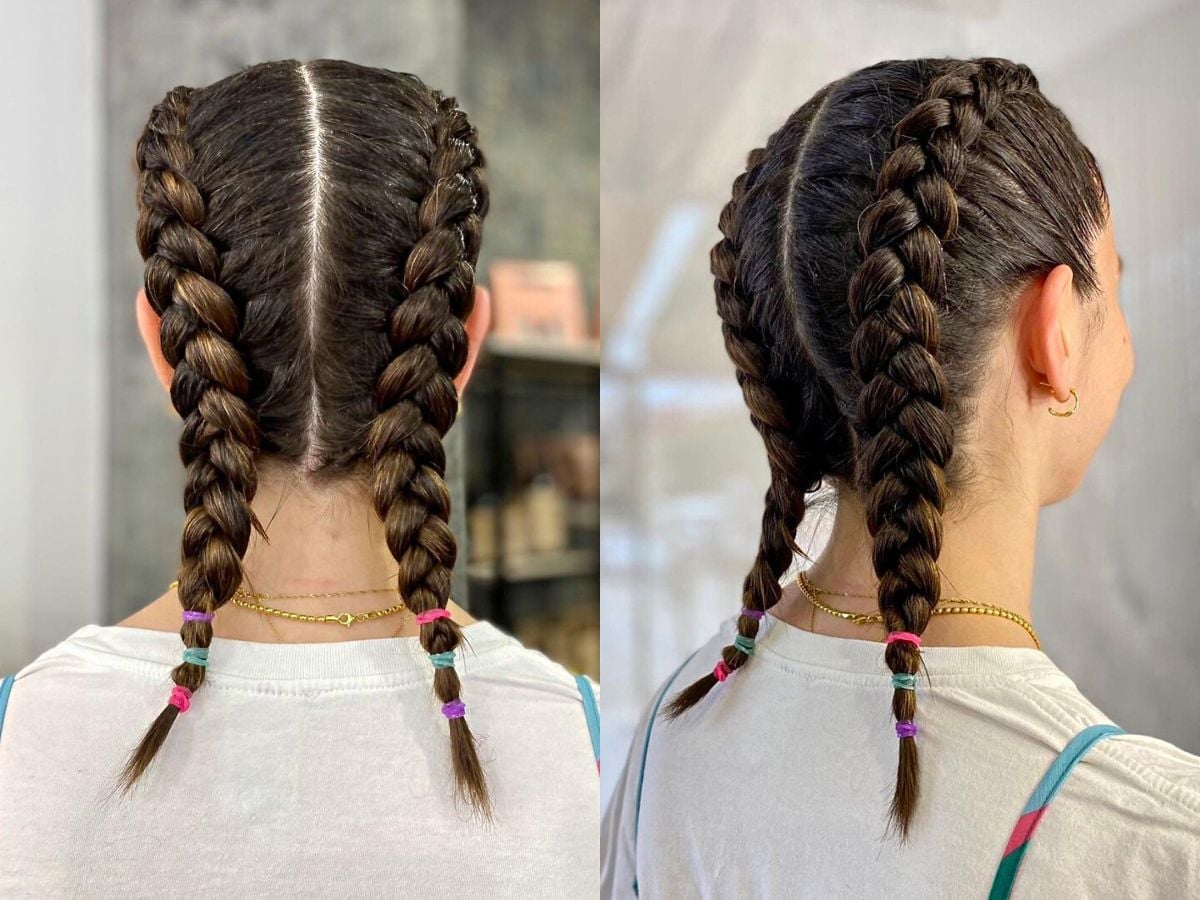
Want braids that actually stay put through a doubleheader? Start with a middle part and ask for two Dutch braids, which means the sections cross under instead of over, so they sit closer to the scalp. On thick, straight dark brown hair at mid-back length, the braids have enough weight to hang cleanly without puffing up. Ask your stylist for: double Dutch braids from middle part. Bring a reference photo and specify that you want the braids tight at the root, because loose Dutch braids unravel by the third inning. Small, clear elastics at the ends keep them from fraying, and a texturizing spray before braiding adds grip so the sections do not slide apart.
Braided Pigtails With Headband Braid
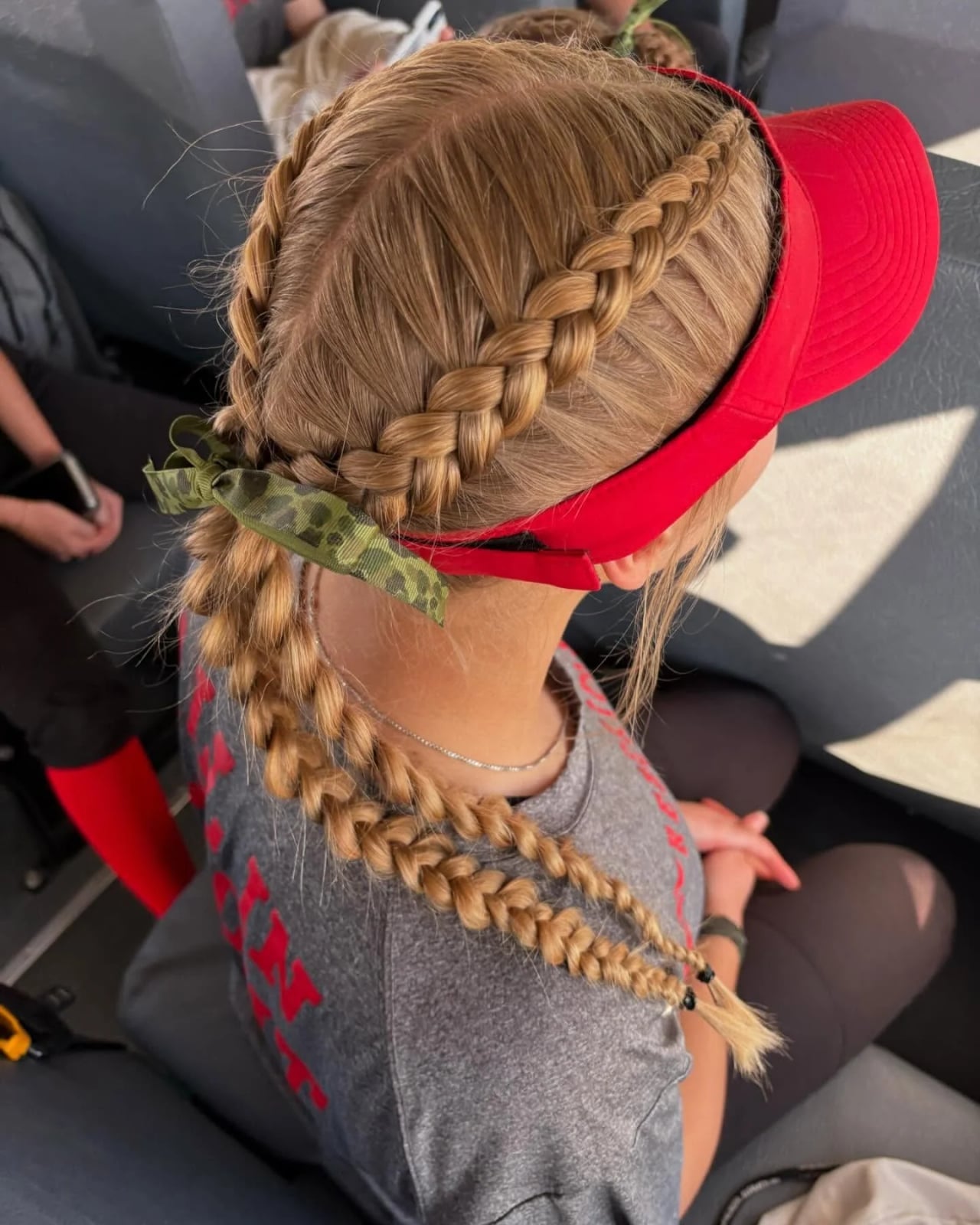
The headband braid that connects the two pigtails is the clever part: it frames the face without needing bangs, and on fine, straight blonde hair it adds visual weight where there isn’t much. Fine hair makes the headband braid prone to slipping, so it needs to be woven tightly against the scalp, which usually means a salon visit. Ask your stylist for: two long braids with braided headband. The camouflage ribbon tied at the base is a practical touch, since it secures the ends without elastics that snag. Just know that on fine hair, the headband section will loosen first, and you will be re-pinning it by the end of the day.
Thick Double Dutch Braids, Mid-Back
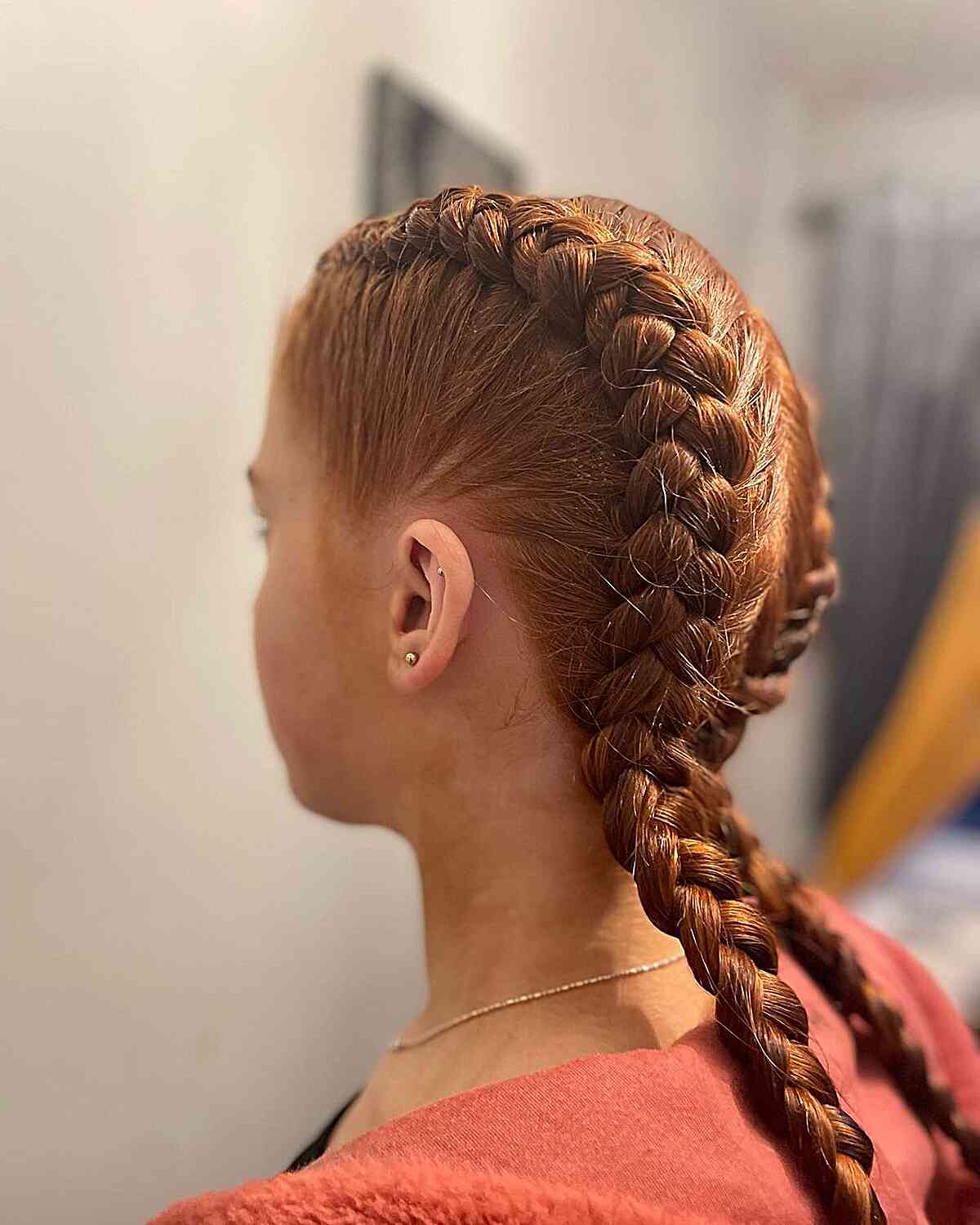
The precision comes from even tension on each side, which keeps two thick Dutch braids lying flat against the scalp from crown to mid-back. On straight, thick hair with a red base and lighter strands, the braids form one clean unit, and that is exactly what you want when a pitch can run long.
This style suits anyone with dense, straight hair who wants a secure, low-maintenance look that still shows off color dimension. Ask your stylist for: thick double Dutch braids. Once the braids are in, they hold for days, but the red base needs a color-depositing conditioner every few washes to keep the lighter strands from turning brassy.
Neat Side Parted Cornrows
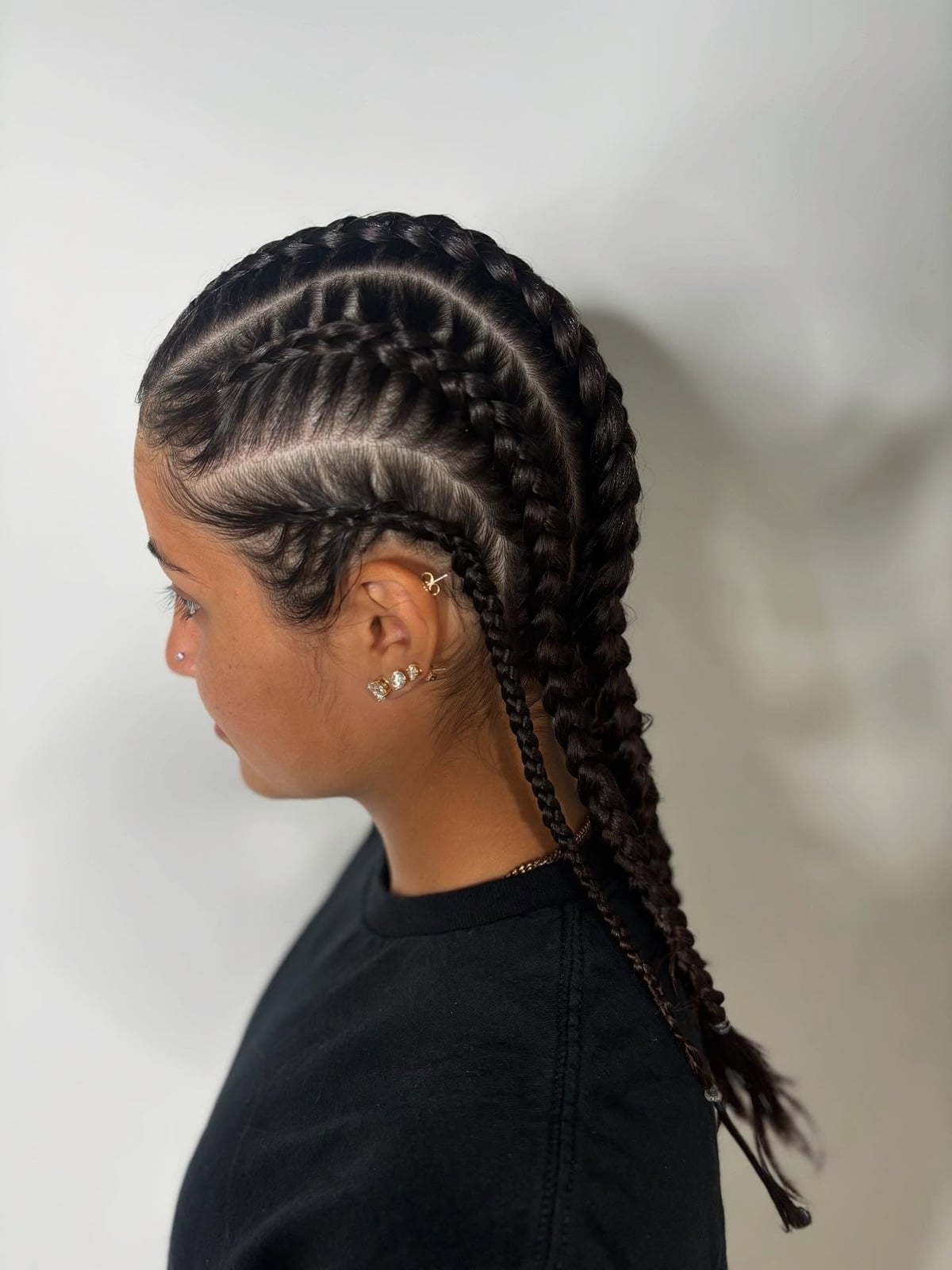
Wondering if cornrows will work with your hair type? The neat side-parted cornrows here sit tight against the scalp on thick, straight dark brown hair, and that density is the real requirement, fine or thin hair tends to let the rows loosen within a day. The side parting adds a touch of asymmetry that keeps the style from feeling like a uniform, while the mid-back length gives you room to pull everything back without stray strands escaping.
Ask your stylist for: neat cornrows with side parting. For upkeep, wrap the braids in a satin scarf at night to keep the lines crisp, and massage a light oil into the scalp every couple of days to prevent dryness.
Braided Mohawk With Pink and Blonde Extensions
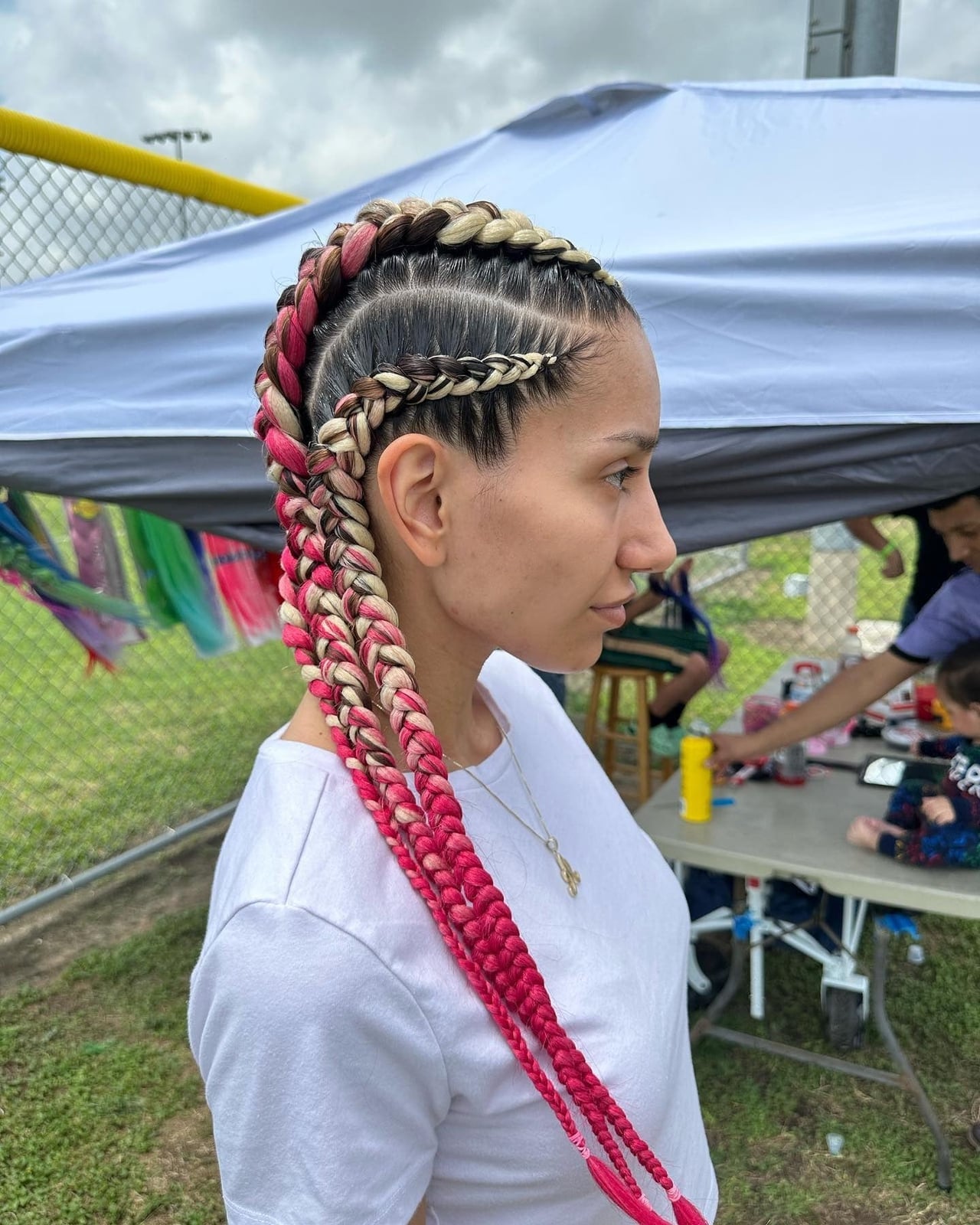
If a standard set of cornrows feels too quiet for a tournament weekend, the braided mohawk with pink and blonde extensions is the louder cousin. The cornrows hug the sides close to the scalp, while three thick braids down the back carry the vibrant pink and blonde strands against the dark brown base, and the contrast makes it a deliberate choice.
This is a festival or championship-season pick, the kind of style that holds up through a full day of play and still looks polished at the post-game dinner. Ask your stylist for: braided mohawk with pink and blonde extensions. Just know the extensions need a color-safe shampoo to keep the pink from fading into a washed-out coral.
Symmetrical Double Braids
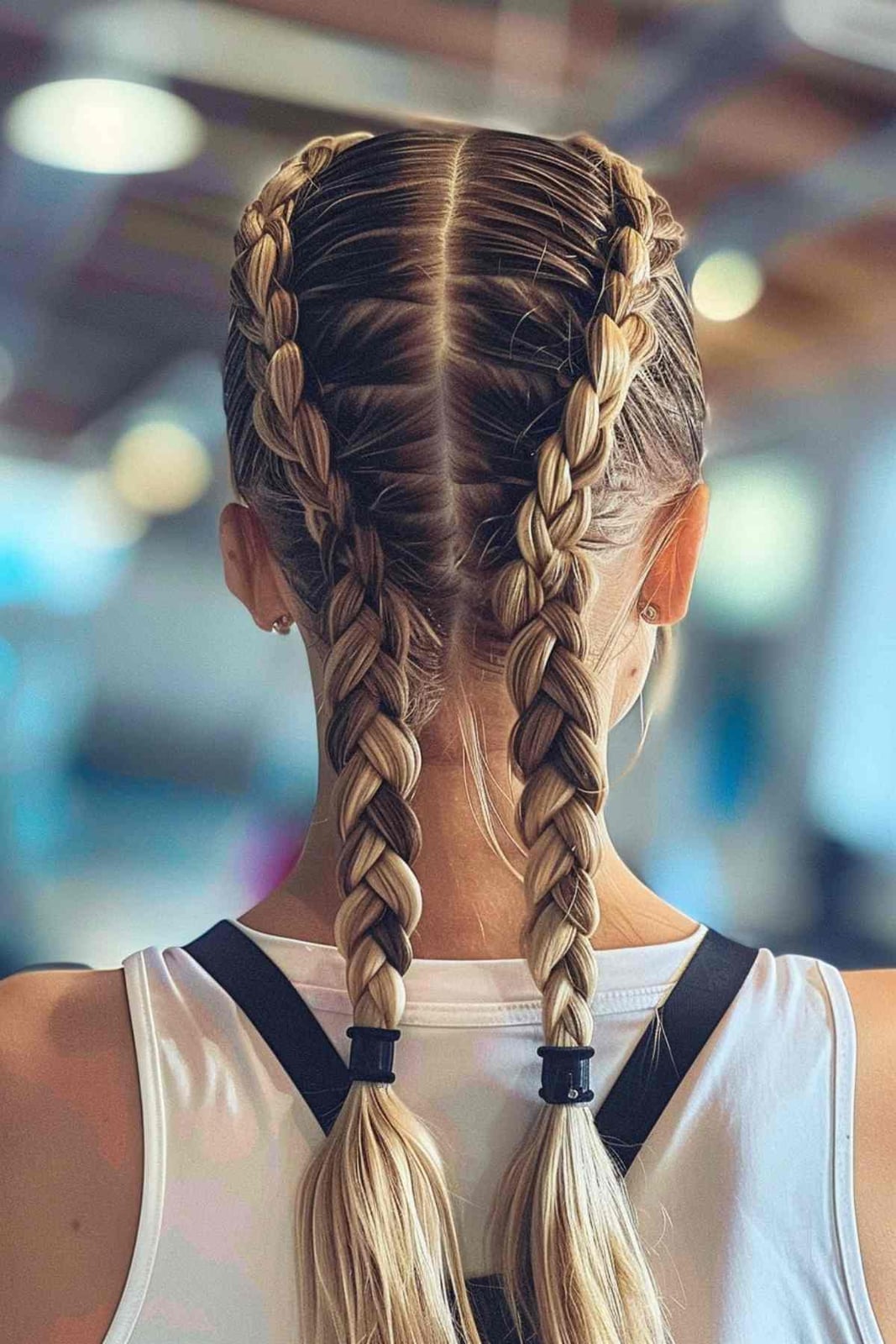
Two braids are only as good as their symmetry, and here the middle parting splits the blonde base evenly, with lighter highlights making each braid look thicker than it is. The black elastics at the ends hold everything at mid-back without slipping, and on straight, thick hair the braids keep their shape for a full day of practice.
Maintenance is mostly about the sectioning. Ask your stylist for: two neat double braids. To keep the symmetry, have the stylist measure the part with a comb instead of eyeballing it, and re-tie the elastics every couple of days to stop the ends from fraying.
Bubble Ponytail With Braided Accents
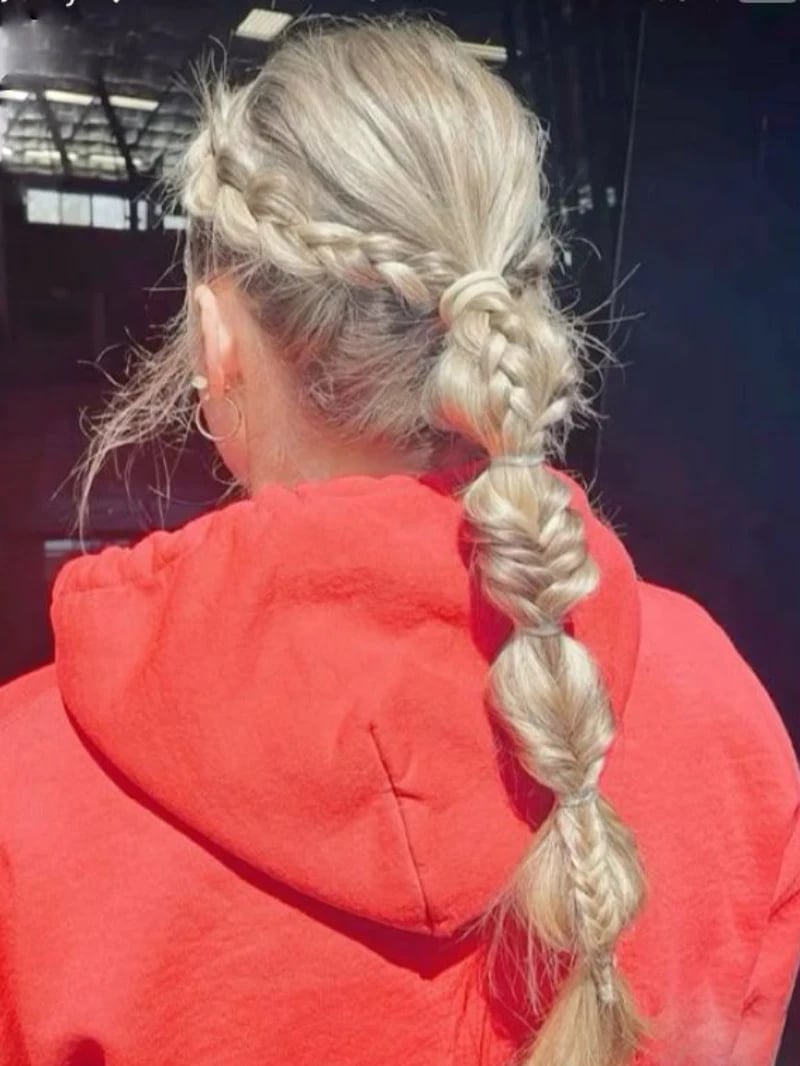
How do you make a ponytail feel less like a default and more like a plan? The bubble ponytail with braided accents answers that by sectioning thick, wavy blonde hair into a series of puffs separated by elastics, with braided pieces woven in to keep the whole thing from looking like a kids’ party trick.
Ask your stylist for: bubble ponytail with braided accents, and specify that you want the sections evenly spaced so the bubbles stay uniform from crown to mid-back. The wavy texture helps each bubble hold its volume, and the blonde highlights add depth between the elastics. Start with a clean, product-free base so the sections slide apart easily.
Multiple Cornrows to High Bun, Mid-Back
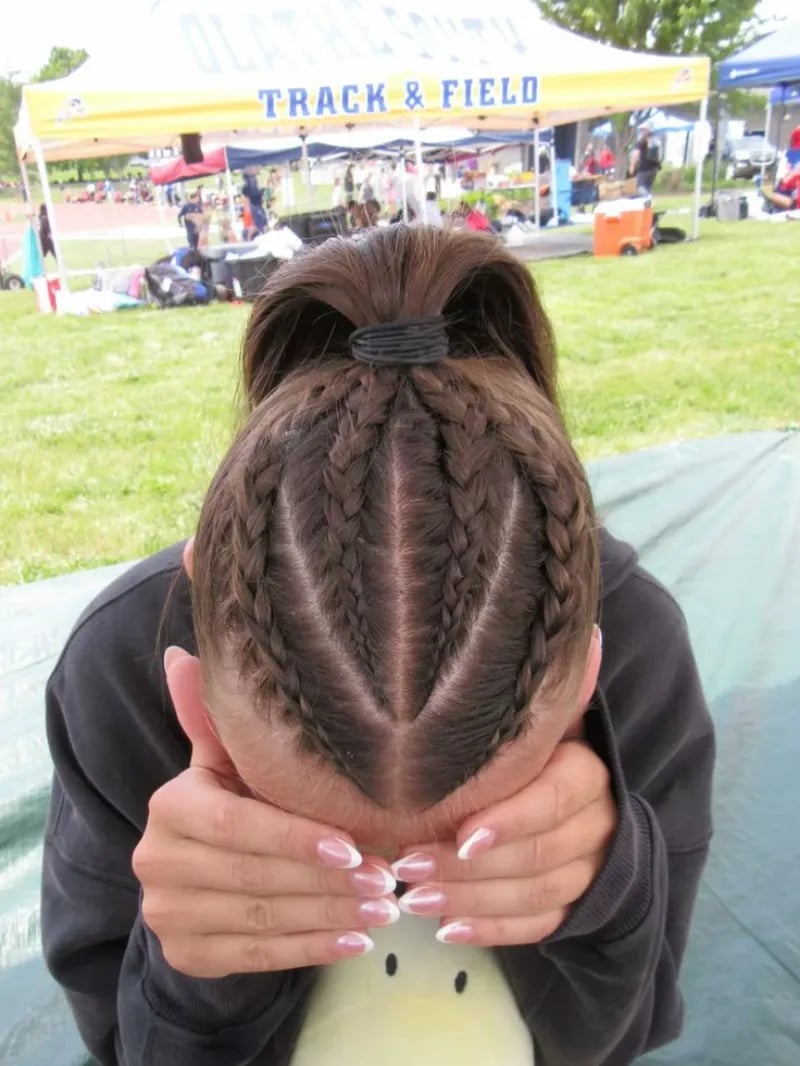
The design here is structural: narrow cornrows start at the hairline and meet at the crown, where the remaining length coils into a high bun. Thick, wavy hair at mid-back length gives the braids body, and a middle part keeps the lines symmetrical. This is not a fifteen-minute DIY. Ask your stylist for: multiple cornrows into a high bun. The cornrows need clean sections and even tension, so expect to spend at least an hour and a half in the chair. A strong-hold pomade at the roots keeps the parts sharp, and the bun should be pinned firmly enough to survive a full game. A trim every eight weeks prevents the ends from fraying.
Messy Bun With Wispy Face-Framing Bangs
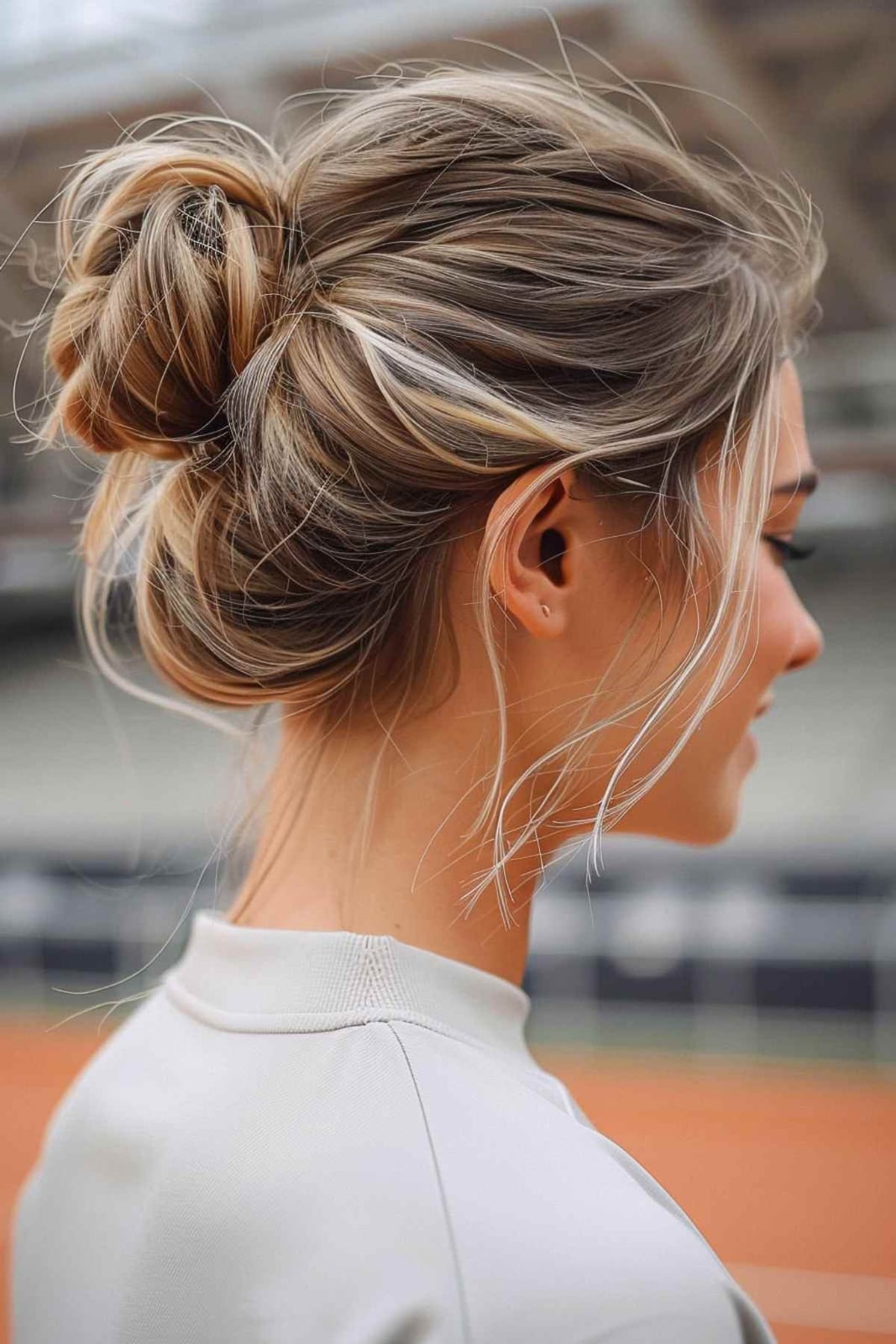
Can a messy bun look like you meant it? Yes, if the face-framing bangs are cut to land at cheekbone level. The thick, wavy texture at mid-back length gives the bun volume without teasing, and the blonde balayage keeps the whole thing from reading flat. Ask your stylist for: messy bun with wispy face framing bangs. The drawback: wispy bangs need a trim every three to four weeks to stay out of your eyes, and they will require a quick pass with a round brush each morning. A texturizing spray on the bun adds grip so the shape holds through warm-ups.
Shoulder Length Twisted Braids
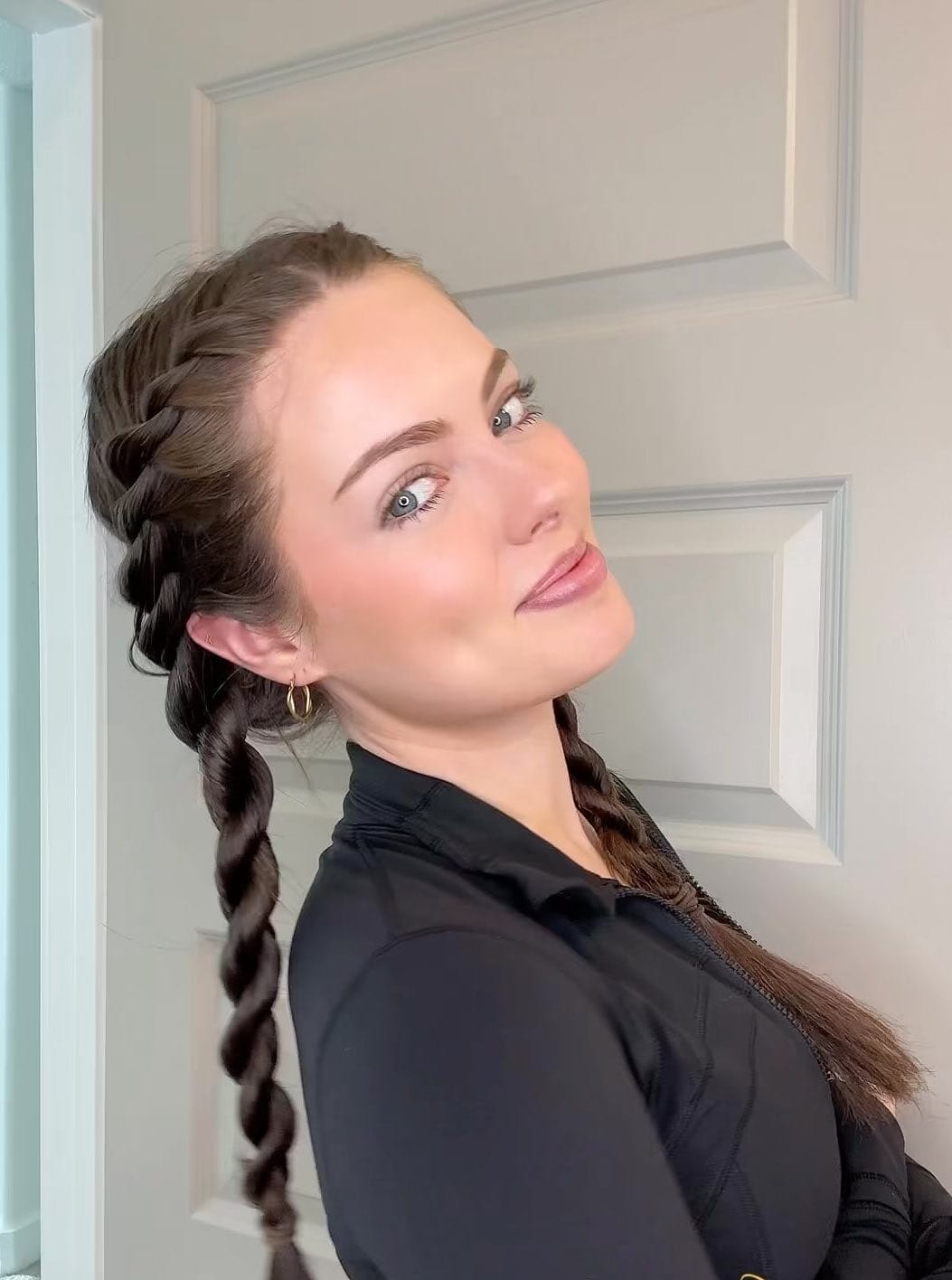
Two twisted braids at shoulder length are a practical midpoint between a full braid and a loose style. The dark brown, wavy texture twists up cleanly, and the side-swept bangs keep hair off the face without needing a headband. Ask your stylist for: two twisted braids with side swept bangs. To maintain the definition, twist each section tightly from root to tip and seal the ends with a small elastic. A lightweight serum on the bangs controls flyaways between washes. A trim every six to eight weeks keeps the braids from looking frayed at the ends.
Thick Braid into High Ponytail
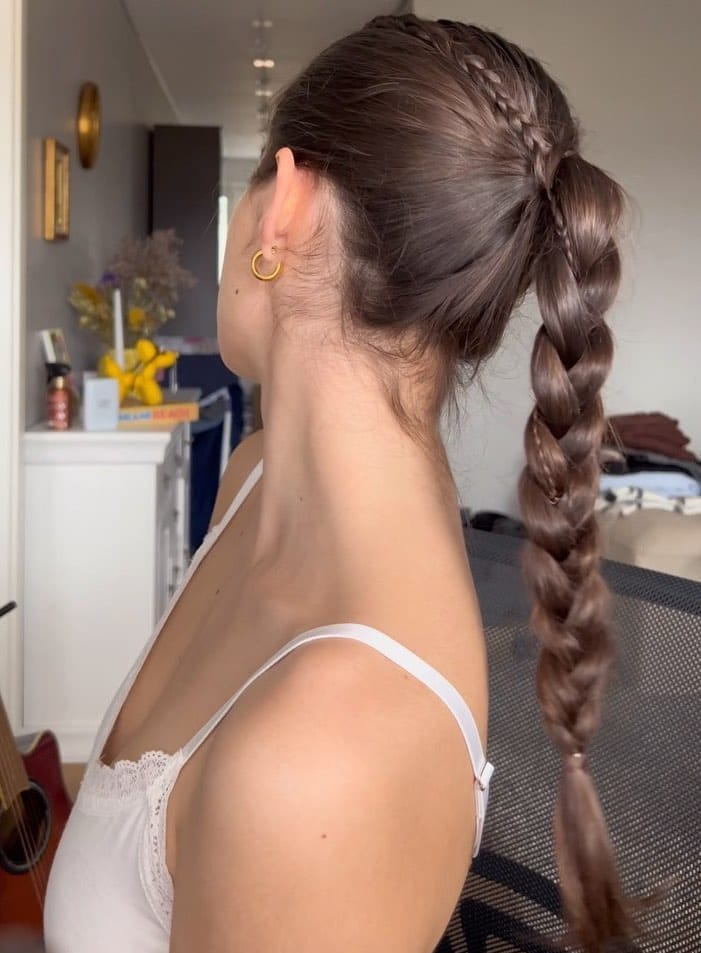
Wondering how to get a thick braid that does not unravel halfway through the fifth inning? The hair is braided from the nape upward, then gathered into a high ponytail at the crown. The side part adds a little asymmetry to an otherwise symmetrical line. Ask your stylist for: thick braid into a high ponytail. For maximum hold, request the braid be woven tightly with three even sections and secured with a coated elastic before the ponytail band goes on. No bangs means nothing to tuck back. A trim every eight weeks keeps the length even and the braid uniform.
Double Braids With Lighter Highlights
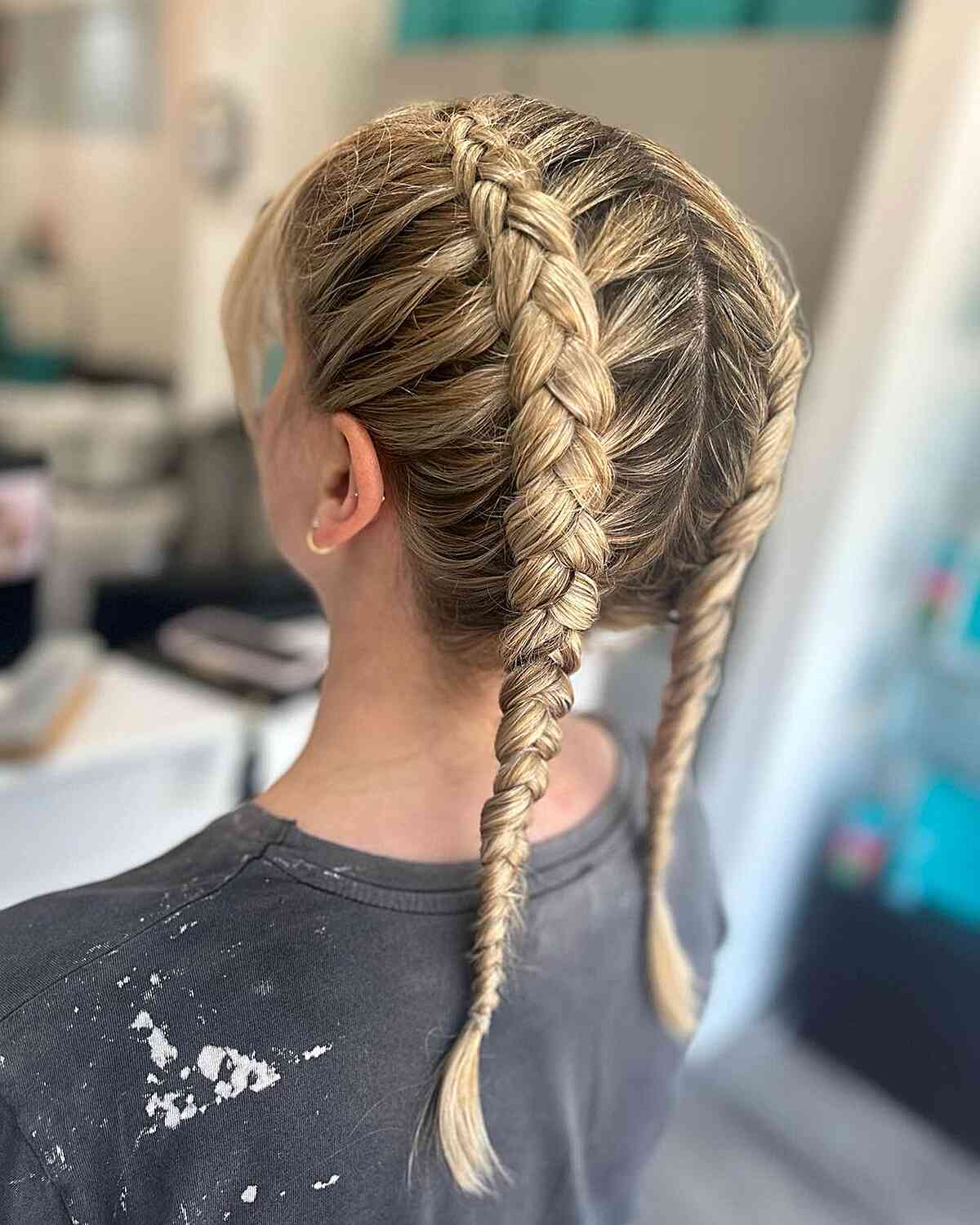
Two neat braids from a middle parting, woven tightly from root to tip at mid-back length. The lighter highlights add dimension to a practical style, making the braids stand out as they move. Ask your stylist for: two neat double braids. The highlights mean this is a salon process first: expect about two and a half hours for the color application and toner, plus another twenty minutes for the braiding if you want it done in the chair. At home, a shine serum keeps the highlights from looking dull between washes. A toner refresh every six weeks maintains the contrast.
Thick Uniform Braid Ponytail
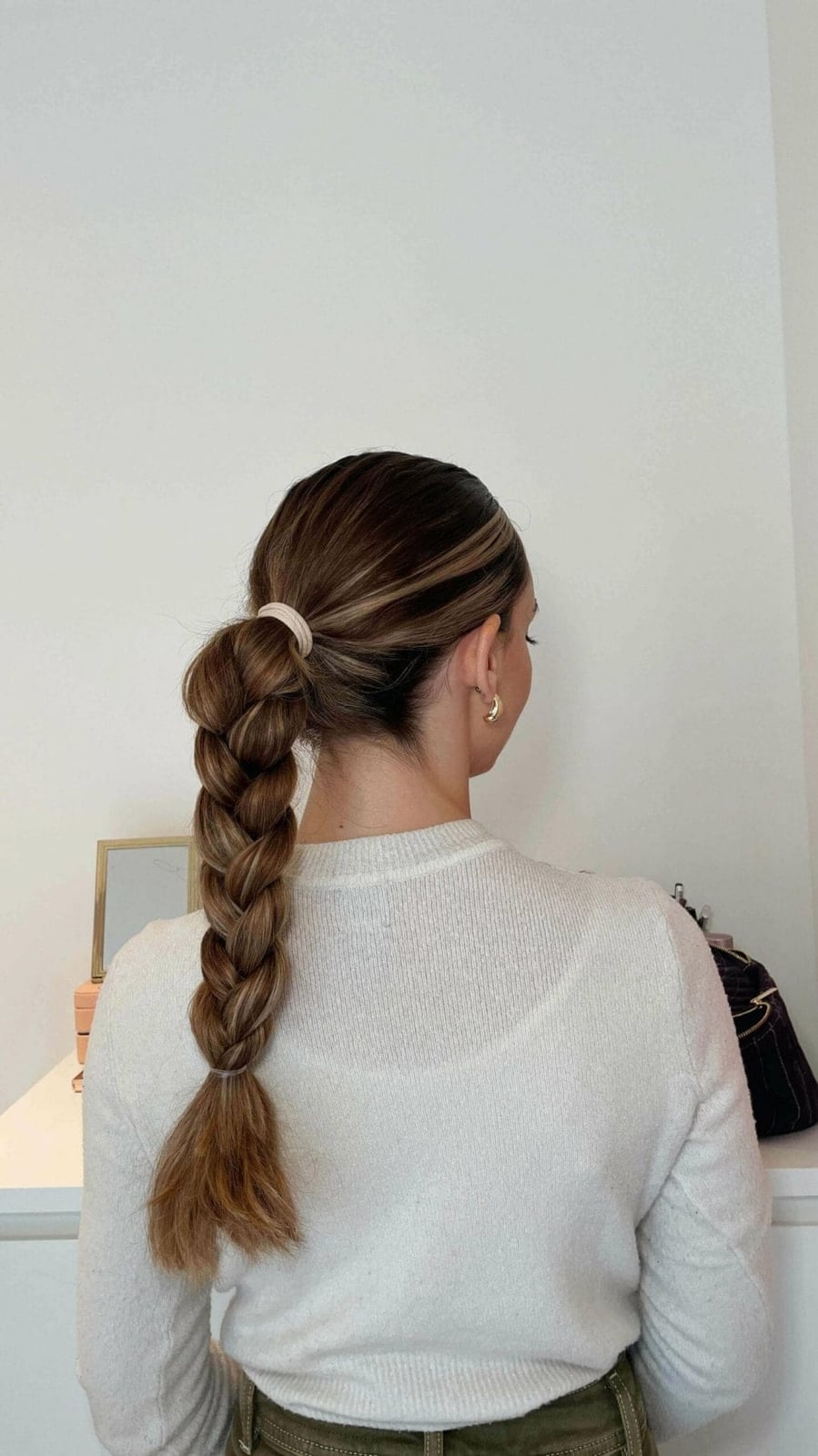
This thick uniform braid ponytail is built on straight, dense hair, with a side parting that keeps the front clean and the back sleek. The braid itself runs from the crown to mid-back, and the key is an even tension from root to tip so the plait stays perfectly cylindrical. Ask your stylist for: thick uniform braid into a ponytail. It works best on mid-back length hair that has some weight to it, because fine or layered ends tend to taper and lose the uniform shape. A strong-hold finishing spray along the braid will keep flyaways down, and the tight weave means it will hold through a full game without slipping.
Prominent Double Braids
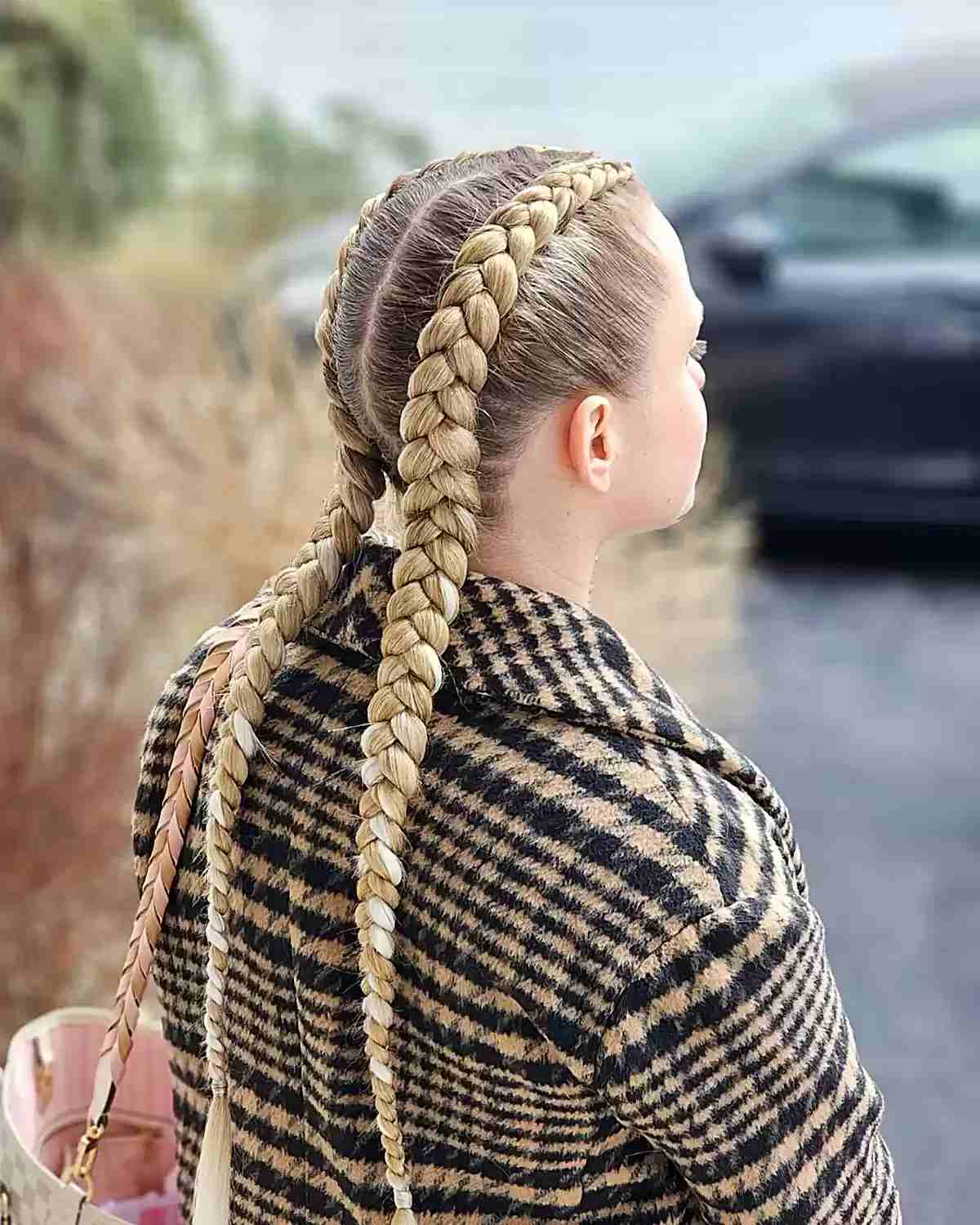
Do you have thick, wavy hair that never stays put inside a single braid? These prominent double braids are the answer, styled with a middle parting and falling to mid-back with a neat, uniform tension that shows off every lighter highlight. Ask your stylist for: two prominent double braids. The style suits anyone with dense, wavy texture, because the weight of the hair keeps the braids full and defined. For upkeep, gently tug the outer edges of each braid to loosen them slightly, which adds volume and softens the lines. The braids sit off the neck, so they stay comfortable through warm weather, and they hold their shape for a full day of activity without constant re-tightening.
Sleek Ponytail With Central Braid
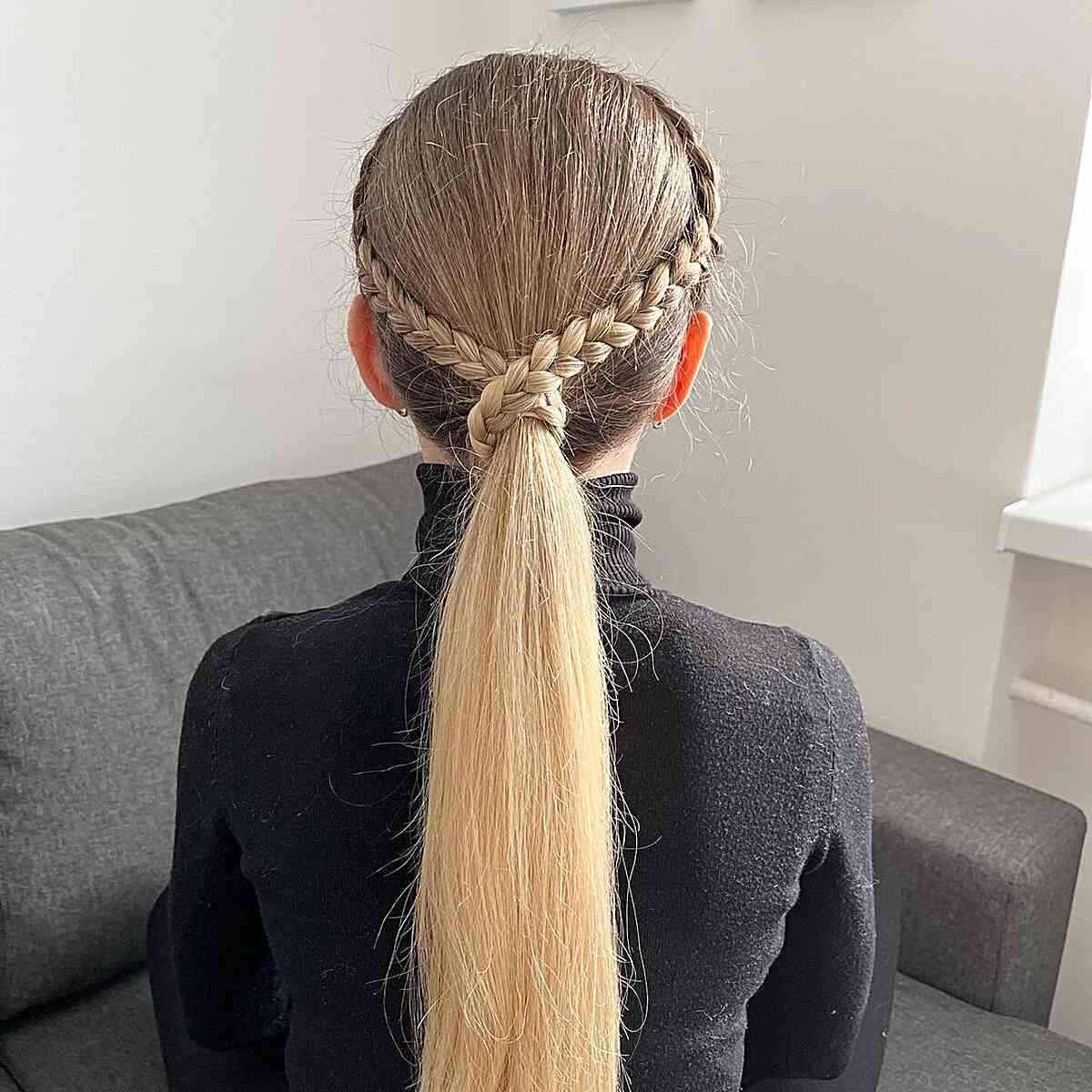
A sleek ponytail usually means a simple elastic, but this version adds a thin braid that frames the hairline and meets a thicker central braid at the nape, so the whole tail reads as one continuous, polished line. Ask your stylist for: sleek ponytail with a central braid detail. The design suits straight, dense hair at mid-back length, where the clean lines and uniform blonde color can actually show. Daily wear is straightforward: a strong-hold gel or pomade smooths the hairline, and the central braid needs to sit tightly against the scalp or it will start to lift by the fourth hour. Once it is set, it stays put through a full game, but expect to refresh the front with a dab of product before the next day.
Dutch Braids to Messy Bun
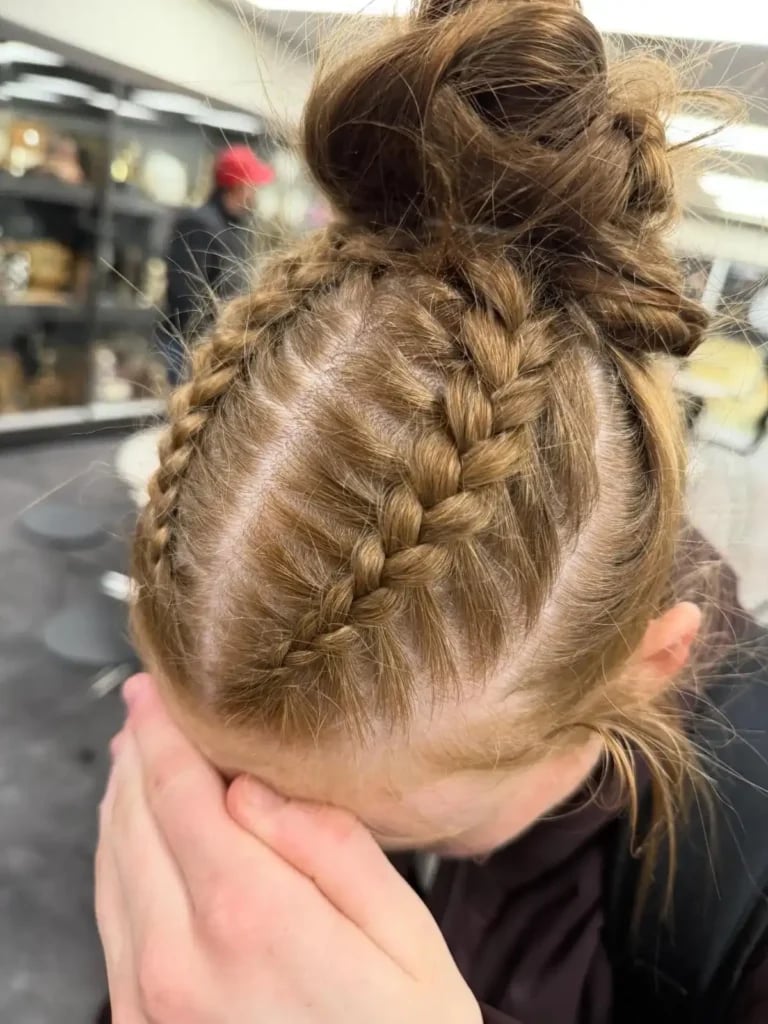
Multiple Dutch braids start at a center part, sweep toward the sides, and all converge into a messy bun at the crown, which keeps thick, wavy hair off the neck while still looking undone on purpose. Ask your stylist for: multiple Dutch braids into a messy bun. The trade-off is that the reddish-brown color, while striking, requires a salon visit to maintain its warmth, and the style itself is not a quick DIY. You can loosen the braids slightly before forming the bun for a fuller texture, but the base needs professional braiding to stay secure through a game. If you skip the salon trip, the braids will loosen unevenly and the bun will slide within an hour.
Final Thoughts
When choosing a style, let your hair’s density and texture lead. Thick, dense hair handles multiple braids or a low bun that spreads weight evenly. Fine hair needs braids and updos that build volume, or extensions to add thickness.
- Moisturize the scalp and seal braid ends with light oil.
- Unbraid gently, then comb damp hair with a wide-tooth comb.
- Refresh roots with texturizing spray or dry shampoo.
- Give braids a break after a week to ease scalp tension.
Play hard, look sharp, and keep your hair in check.