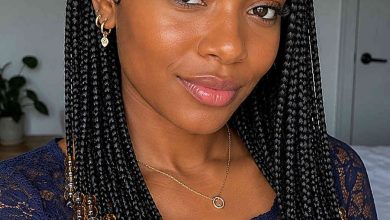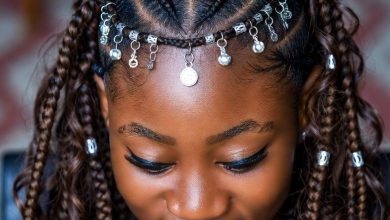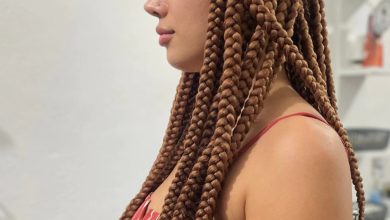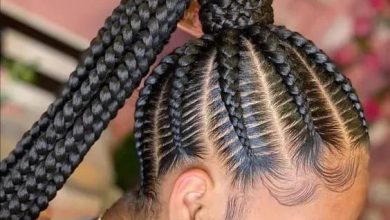
Sports Hair is about cuts and styles that hold their own through a sprint, a set, or a stretch, without asking you to choose between function and finish. The shift toward soft face-framing layers and lived-in color means athletic styles no longer have to look stripped back or severe.
Here are 25 Sports Hair ideas, from low-maintenance ponytails to intricate braids, suited to every hair density and texture. If your fine hair falls flat by midday, your braids pull at the temples, or your fringe refuses to stay put mid-workout, this collection covers the fixes. Expect salon-level looks and five-minute options, all built to last through the final rep.
Wavy Red Hair In Double Face-Framing Braids
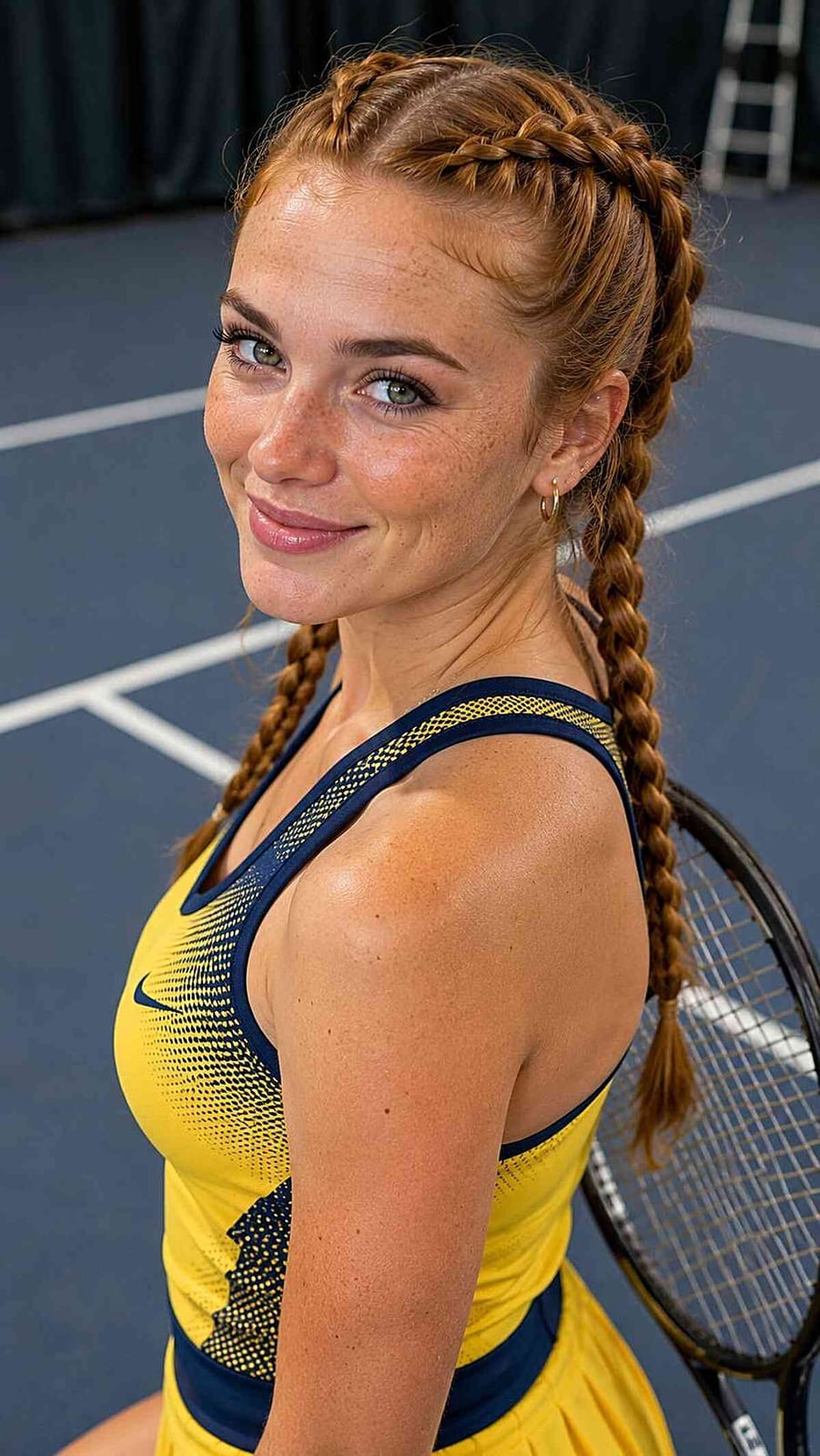
When the hairline is the starting point, you get braids that do double duty as a frame and a restraint. That is exactly what this wavy red hair with blonde highlights achieves, with two prominent braids beginning at the front and sweeping back to secure every strand. The middle parting keeps the look balanced, so it suits oval and long face shapes, while the layers underneath add movement without letting thick hair get unruly. Ask your stylist for: double braids starting from hairline. A smoothing serum along the hairline keeps the finish polished, and a trim every six to eight weeks maintains the layers so the braids stay even.
Thick Curly Dark Brown High Bun
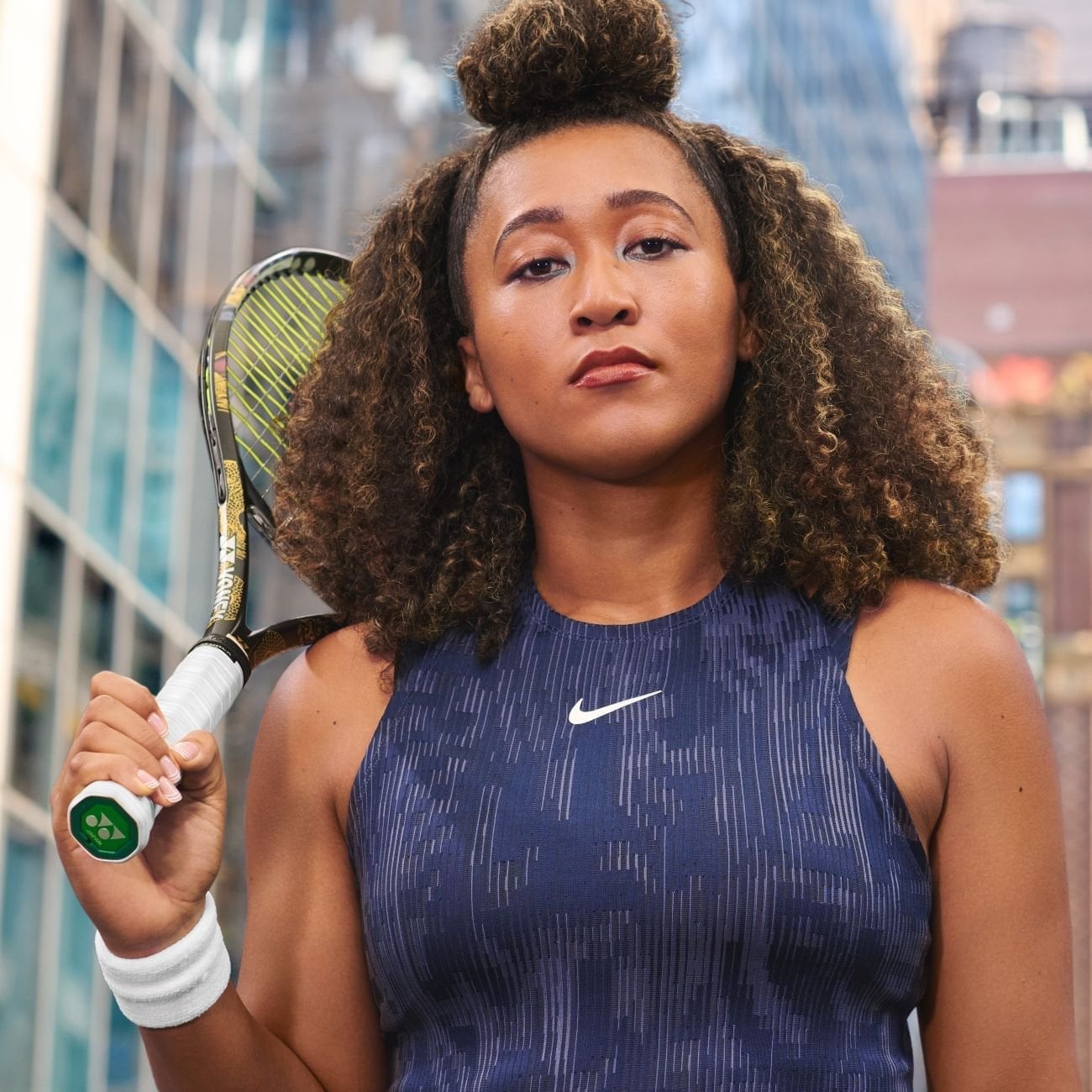
Thick, curly hair has a habit of staging a mutiny inside a regular ponytail, which is why the high bun exists. This one gathers dark brown, mid-back length curls into a secure knot at the crown, letting the natural texture stay glossy and intact. The key is building it on damp hair with a strong hold product so the curls do not pull it loose. Ask your stylist for: high textured bun for active wear. Secure flyaways with bobby pins and a firm hairspray, then plan a trim every eight to ten weeks to keep the ends from fraying.
Thick Wavy Brown Cornrows to Braids
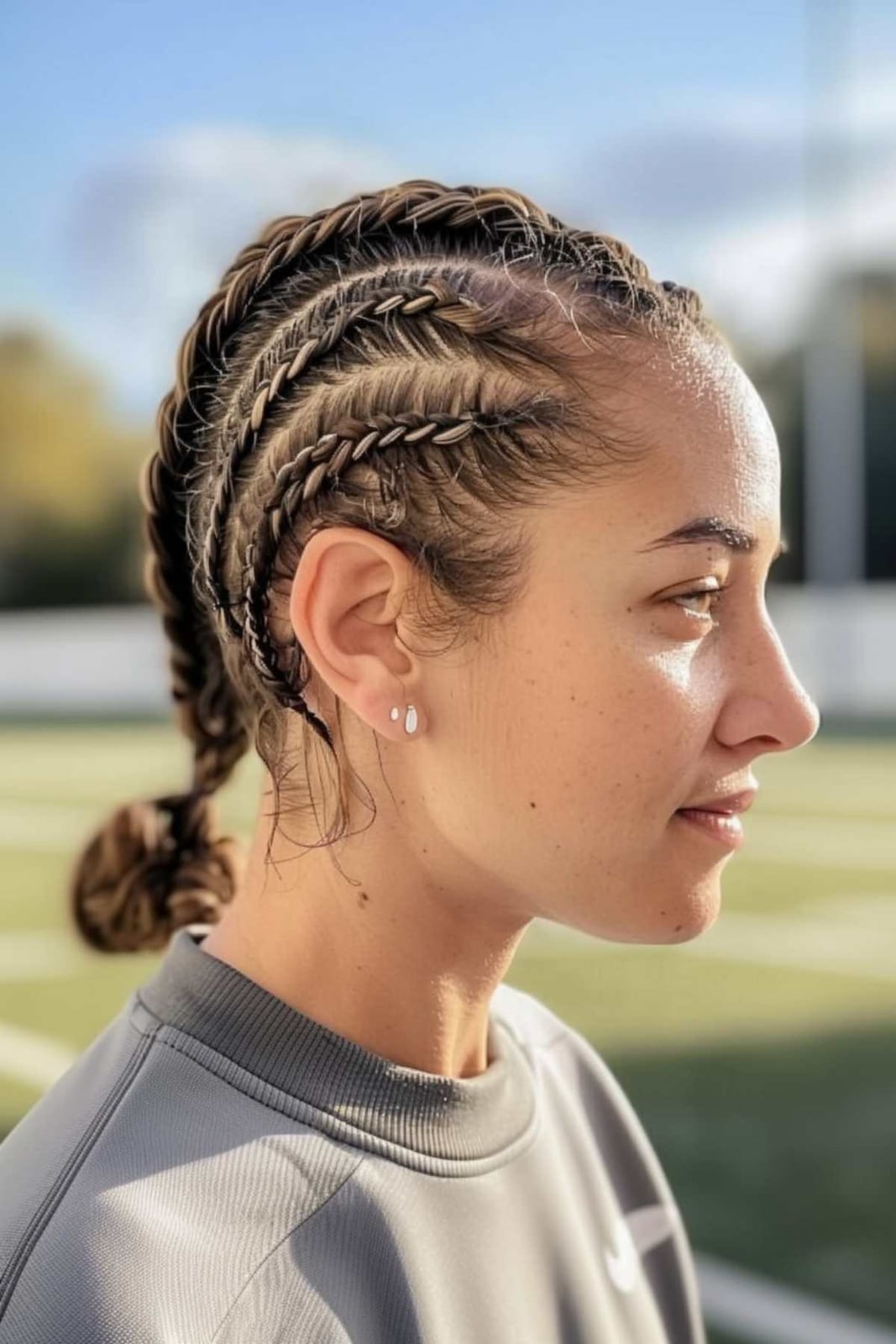
Here, tight rows start at the hairline and transition into two thick braids that land at mid-back, with brown wavy hair and lighter ends adding depth to the pattern. It is a strong choice for square and round faces, since the vertical lines lengthen the face. Ask your stylist for: cornrows leading into two thick braids. The trade-off versus a single braid is installation time, but the rows last longer between visits. Keep the scalp moisturized with a light oil, and expect to refresh the cornrows every four to six weeks.
Short Voluminous Coily Black Afro
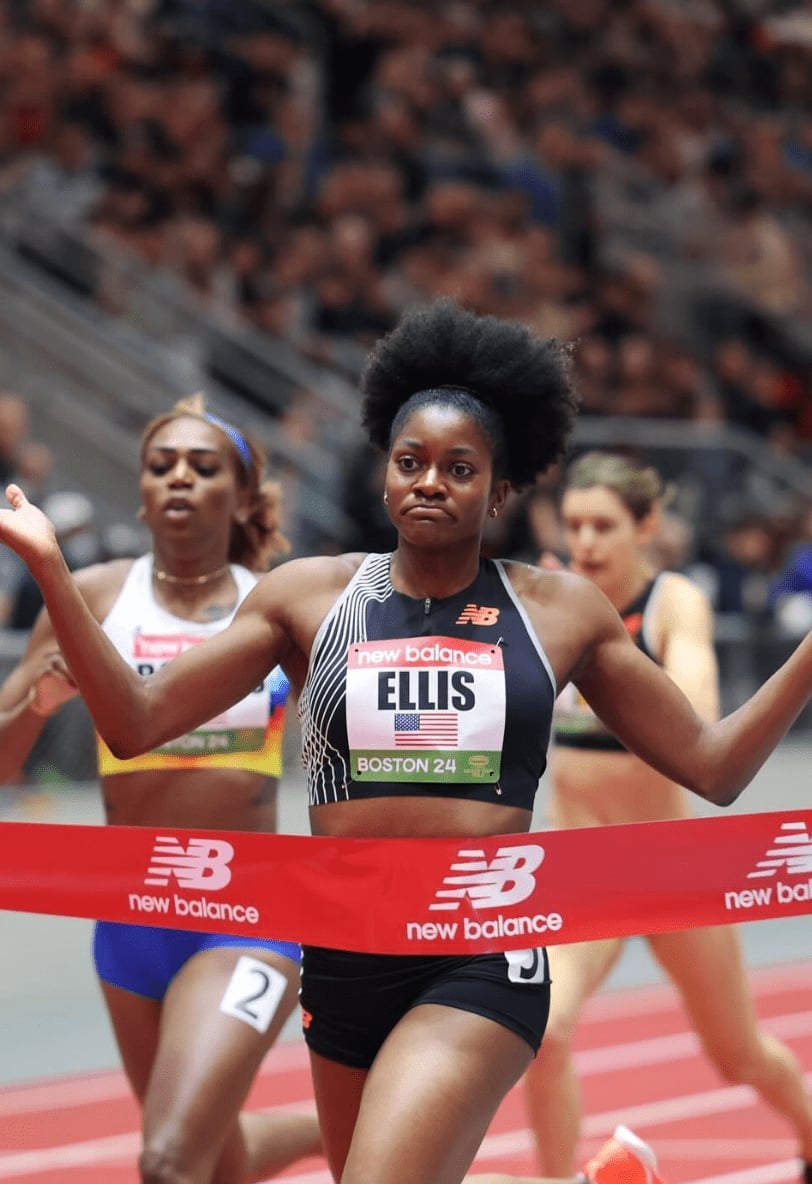
Can a hairstyle cross a finish line without moving an inch? This short, coily black afro basically does. The volume is the point, and the middle parting keeps the shape deliberate while the natural texture does all the work. It suits every face shape, especially if you like your hair to take up space without asking for attention. Ask your stylist for: short, voluminous afro. This one is a do-it-yourself situation: a pick fluffs the shape, a moisturizing spray keeps the coils hydrated, and regular trims every four to six weeks keep the outline clean. No heat, no tension, no problem.
Thick Wavy Black Ponytail With Loose Strands
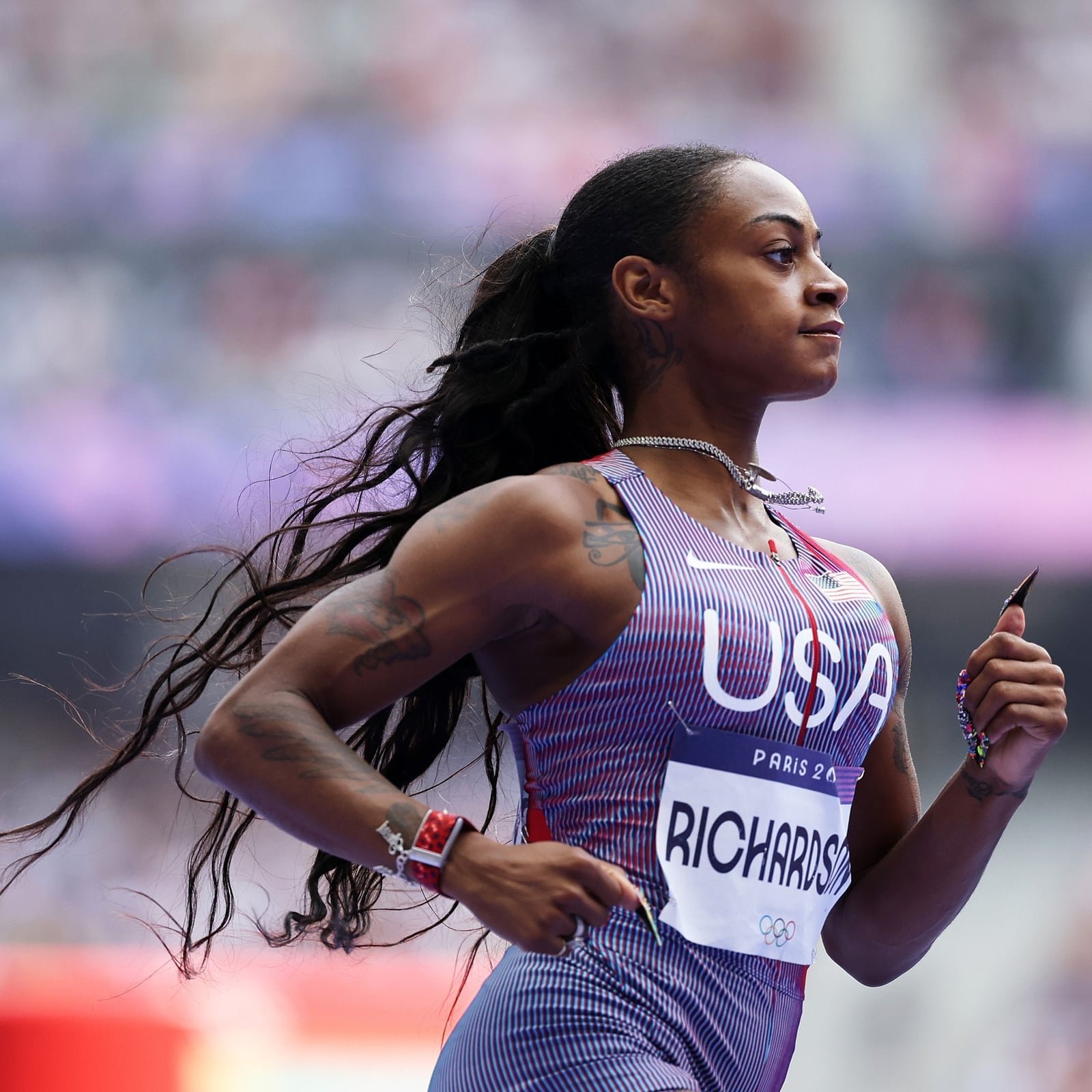
Loose strands in a ponytail usually mean chaos, but here they read as motion, which is exactly what you want when you are moving. Thick, wavy black hair with subtle highlights is pulled into a high ponytail, and the side parting lets a few front pieces escape without undermining the hold. This style suits round and square faces, since the height adds length. Ask your stylist for: high ponytail with soft, loose front pieces. For sports, pin those pieces back or tuck them behind the ears so they do not become a distraction. A trim every six to eight weeks keeps the ends healthy and the waves defined.
Dark Brown Blonde Highlighted Ponytail
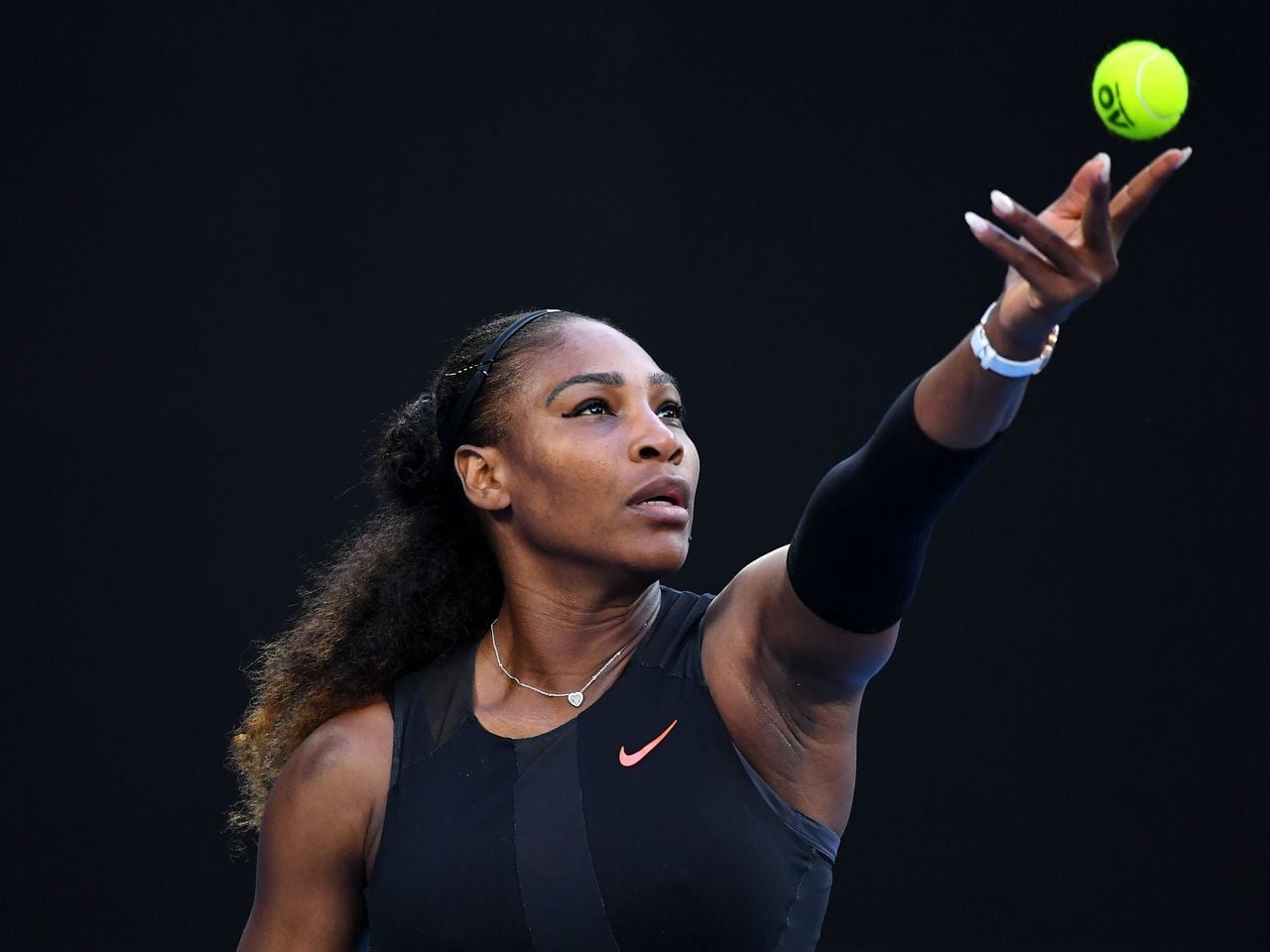
A high ponytail with blonde highlights looks sharp on the court, but it takes more effort than throwing it up after a shower. Ask your stylist for: high, secure ponytail with a headband. This one starts with wavy, thick hair at mid-back length, pulled back and held in place with a headband that stops stray pieces from escaping during a serve. The layers help the ponytail move without looking choppy. The drawback: highlighted hair is drier, so flyaways happen faster when sweat hits. A texturizing spray before tying gives better grip, and a trim every six to eight weeks keeps the ends from fraying.
Mid-Back Straight Dark Brown Low Ponytail
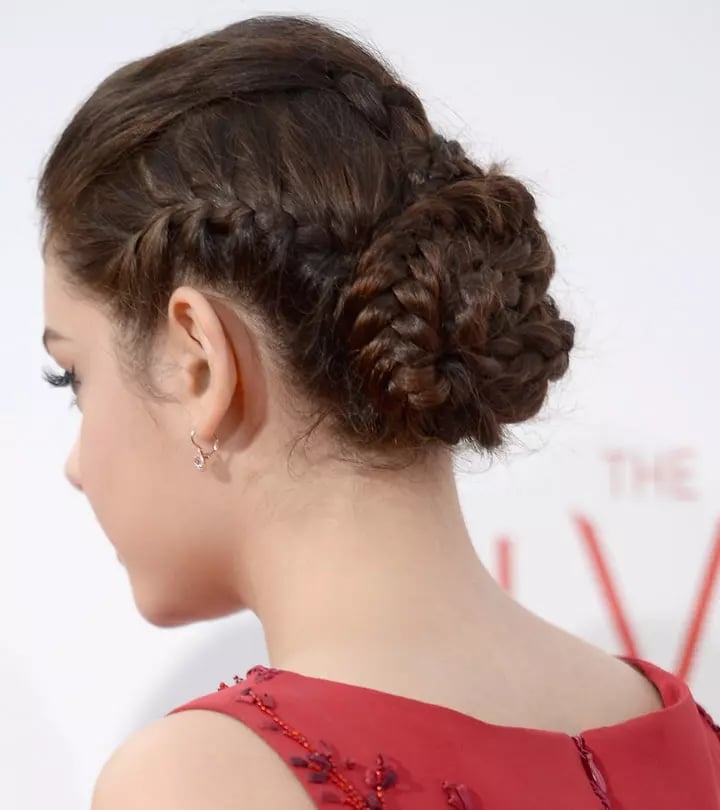
A low ponytail is the quiet workhorse of sports hair: it stays put without pulling at the temples. Ask your stylist for: smooth, low ponytail. Start with thick, straight dark brown hair at mid-back length, split with a clean middle part. Brush it back until the surface is even, then secure it at the nape with a firm elastic. A smoothing cream on the lengths before tying cuts down on flyaways. The middle part and the low placement keep the weight off your face during a run or a gym session. Trims every six to eight weeks maintain the blunt ends that make this look neat.
Long Blonde Braids With Decorative Loops
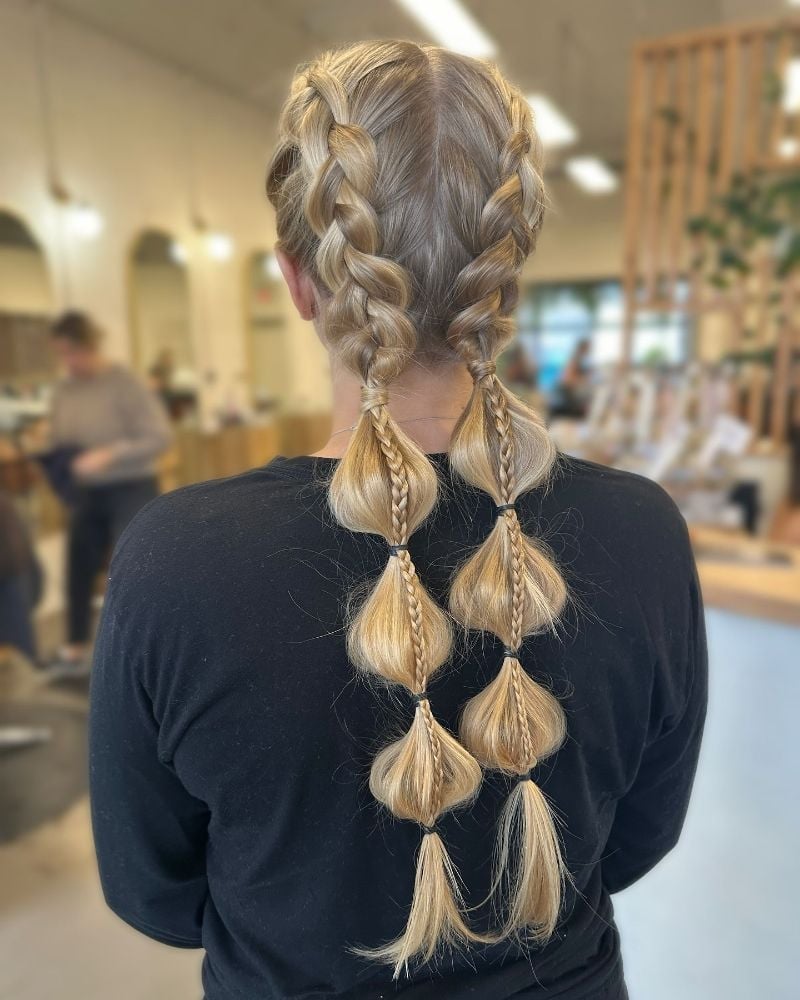
Double braids with looped sections add structure without the bulk of a single braid. Ask your stylist for: intricate double braids with looped sections. The hair is long, straight and thick, parted down the middle and divided into two sections. Each braid is built with small elastics that create visible loops along the length, locking every strand in place. The technique distributes tension evenly, so the style holds through sprints and sudden changes in direction. A light hairspray keeps the loops defined without making them stiff. The symmetry balances weight on both sides, which helps with longer activity. Trims every eight to ten weeks keep the ends from splitting.
Mid-Back Coily Black Braids
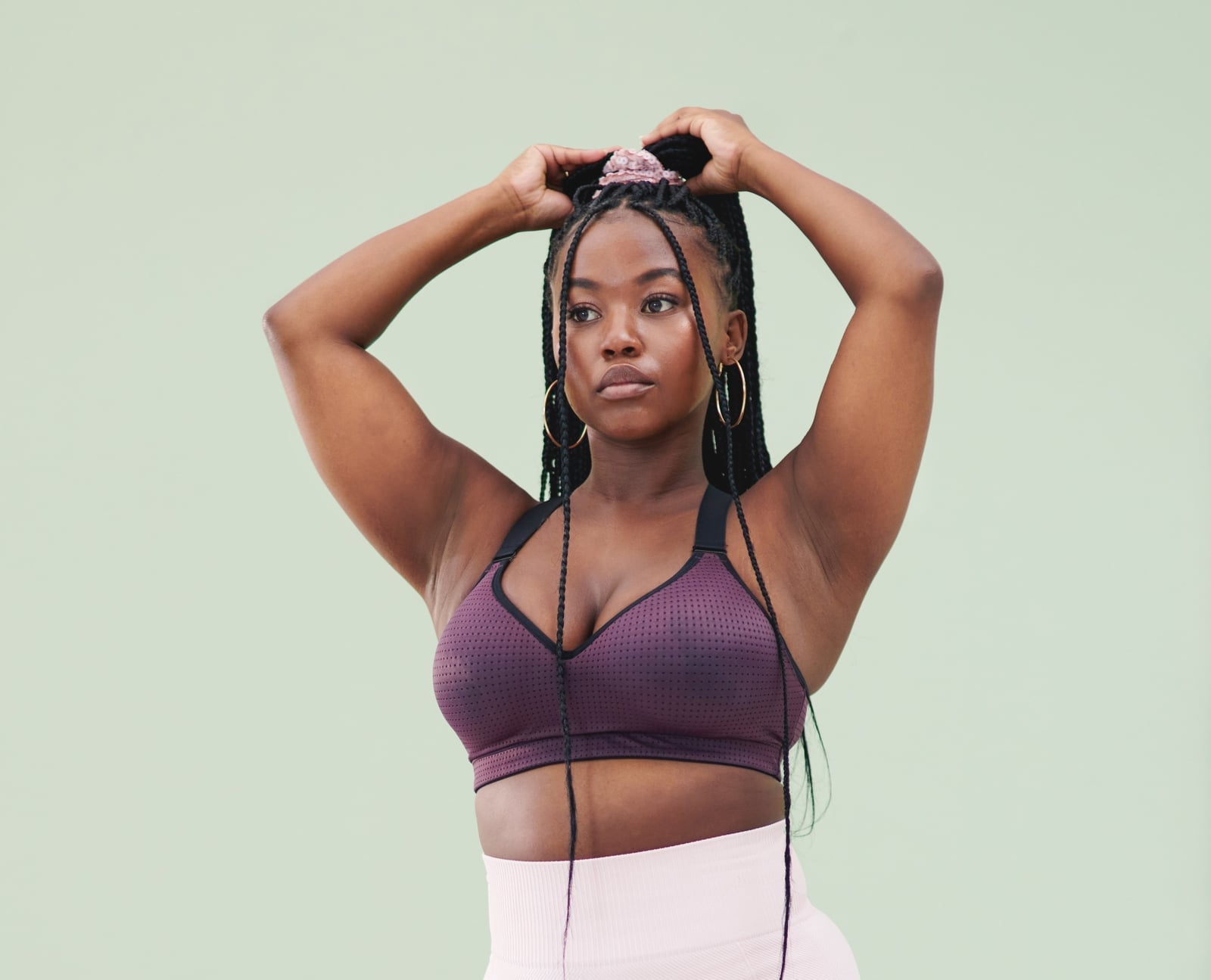
Can braids handle coily, thick hair during a workout without unraveling? Yes, when they are installed with enough sections to distribute the tension. Ask your stylist for: multiple long braids secured at the crown. The hair is parted in the middle and divided into several braids that reach mid-back, gathered at the top with a scrunchie that prevents pull on the edges. The braiding locks the coils in place, so there is no redoing them mid-game. A light oil on the scalp and along the braids keeps the hair hydrated. Trims every eight to ten weeks prevent the ends from weakening, and the style itself protects the hair from daily manipulation.
Shoulder Length Fine Blonde High Ponytail

A high ponytail on fine, straight blonde hair looks voluminous in motion, but the trade-off is that fine hair slips out of elastics faster than thicker textures. Ask your stylist for: high, side-swept ponytail for fine hair. The hair is shoulder length with subtle layers that add lift without removing density. A high side-swept ponytail gives the appearance of more volume than a centered one. The drawback: without texture at the roots, the ponytail can shift during a run. Dry shampoo or a texturizing spray at the crown before tying gives the elastic something to grip. Trims every six to eight weeks keep the layers from losing their shape.
Long Wavy Blonde High Ponytail
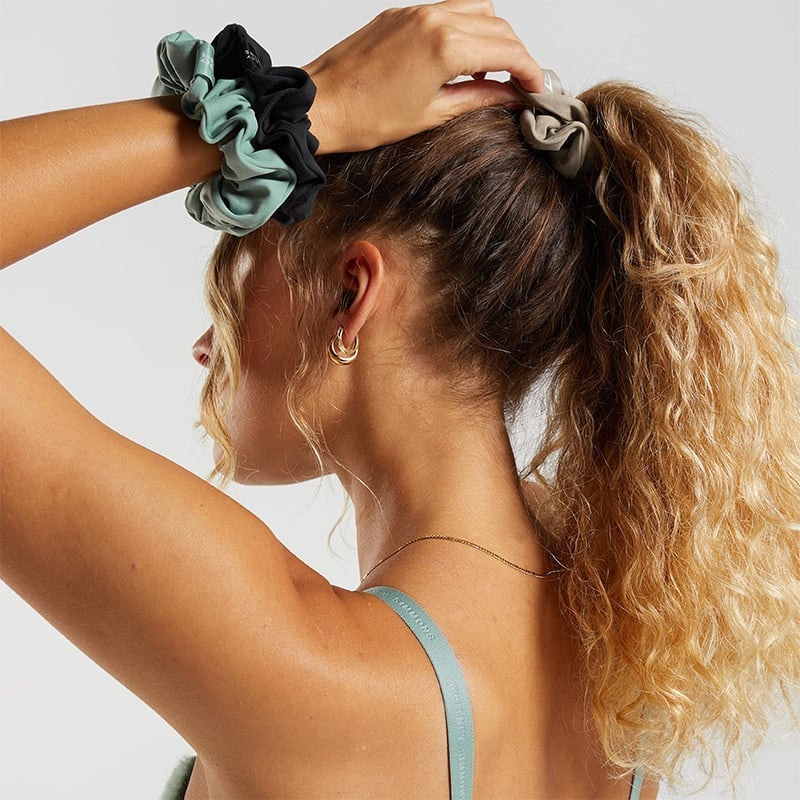
The high ponytail on thick, wavy blonde hair is the athletic equivalent of a ponytail that means business: it stays put, it clears the neck, and it shows off the natural wave pattern from the back. The side parting adds a touch of softness to what is otherwise a straightforward, functional style. To recreate it, start with hair that is long enough to gather at the crown without too much tugging, then secure it with a strong elastic. A quick pass with a texturizing spray on the lengths gives the waves grip, so they do not flatten mid-workout. Wrap a section of hair around the elastic to hide it, and you have a look that is polished and ready for the day.
Ask your stylist for: long, high ponytail. This style suits medium to thick wavy hair, and it works on any face shape because the height adds length and width. A trim every eight to ten weeks keeps the ends clean and the ponytail looking full. It is a DIY do if you have the length and the arm strength, though a salon can help with the initial shape if your layers have grown out unevenly.
Fine Blonde Braided Ponytail
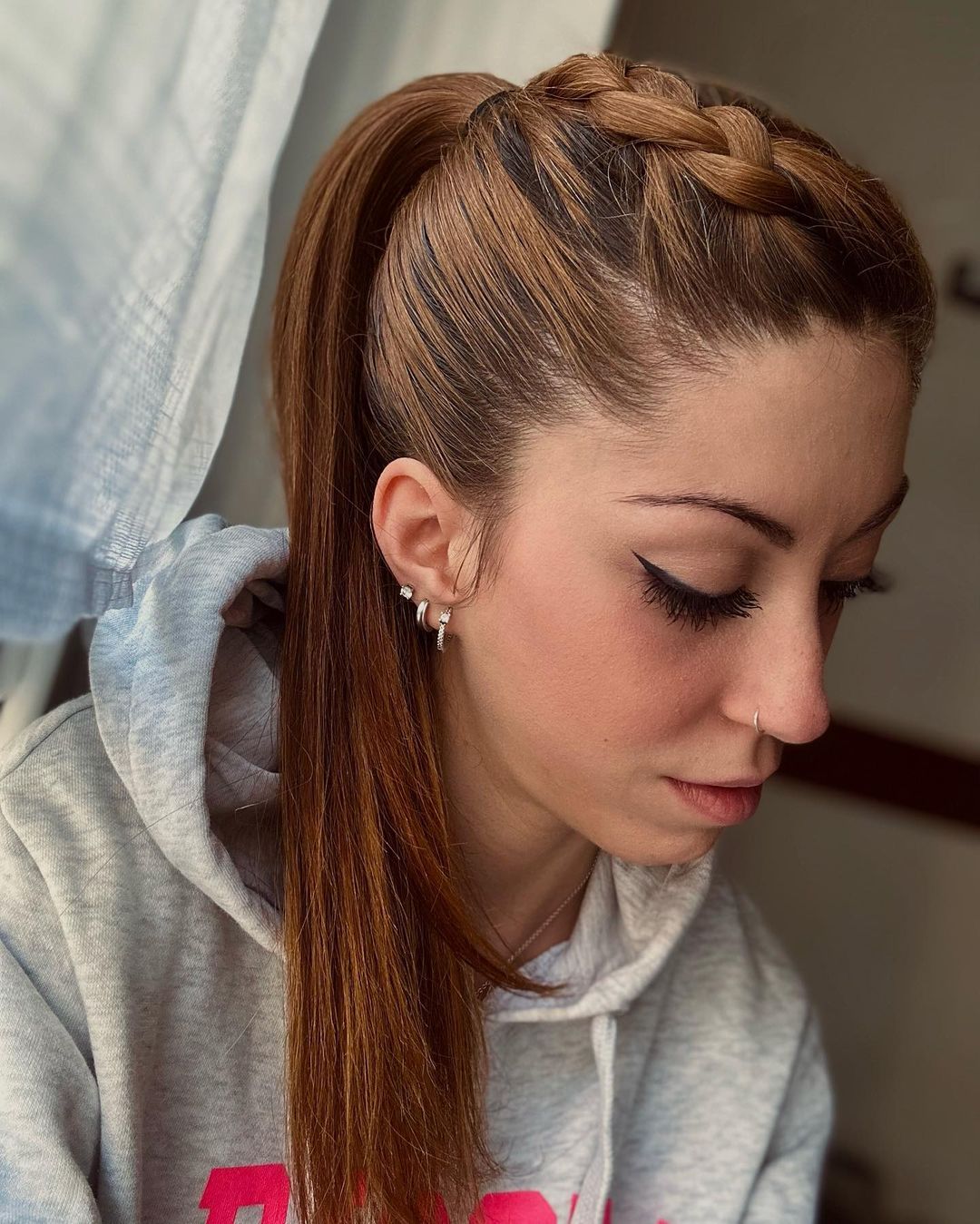
The braided ponytail on fine blonde hair is a clever trick: the braid runs along the side, giving the ponytail structure without adding bulk. It is a style that works because the braid anchors the fine strands, preventing them from slipping out of the elastic during a run. Ask your stylist for: high ponytail with a side braid detail. This suits fine, straight hair of mid-back length, and the vertical line of the braid helps elongate a round face. The braid also keeps the ponytail from looking flat, since it breaks up the surface with a defined texture. A trim every six to eight weeks maintains the shape, and the style itself is a salon build, though it is a simple enough technique to master at home with practice.
Thick Dark Brown Ponytail With Loose Waves and Slightly Wavy Texture
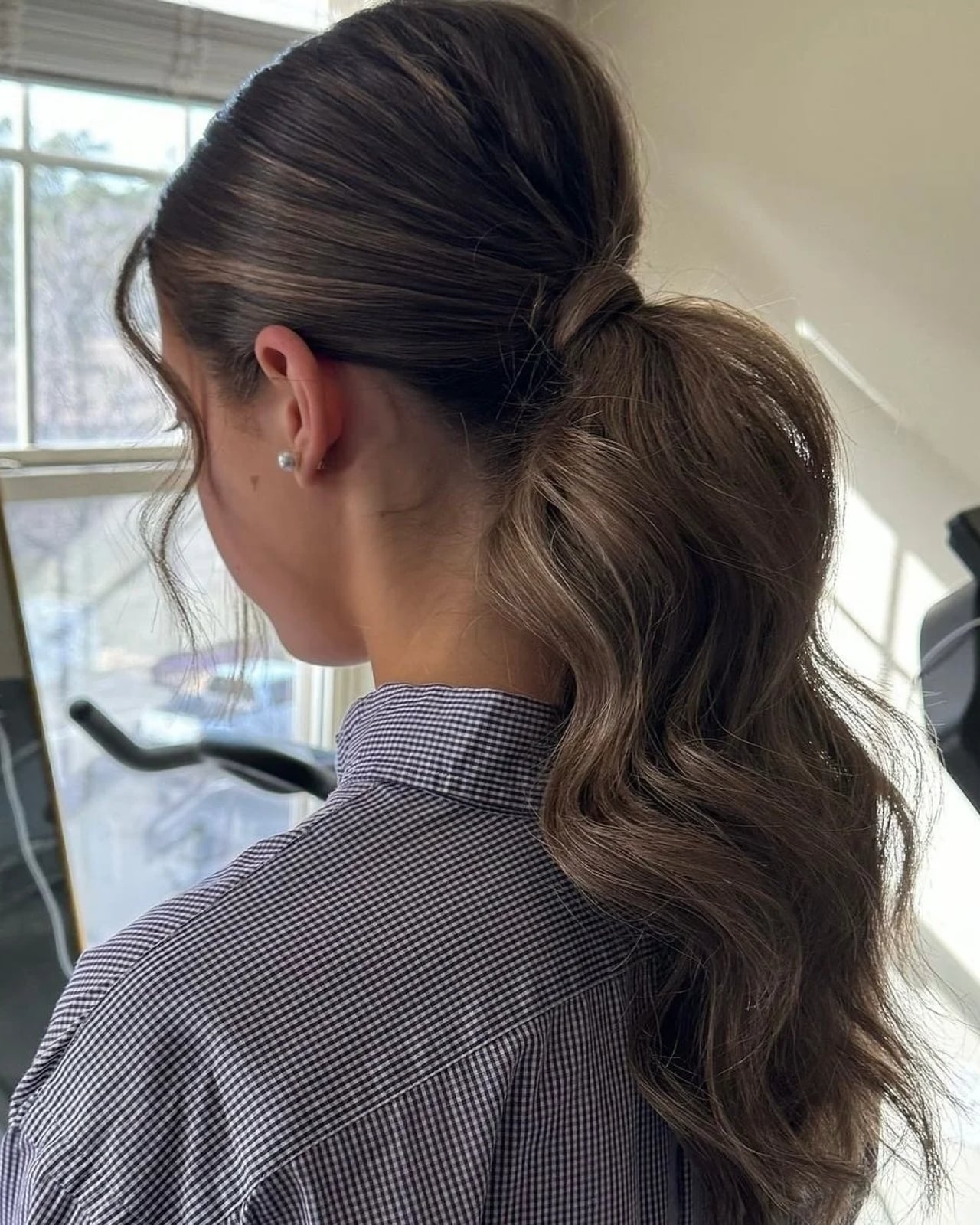
Can a ponytail with loose waves survive a sprint without turning into a tangled mess? It can, if the waves are set into thick, mid-back length dark brown hair with subtle highlights, as seen here from the side. The volume at the crown keeps the ponytail from pulling at the scalp, while the wavy texture gives it enough grip to hold its shape through most of a workout. This wavy ponytail dark brown suits oval and heart face shapes, and it needs layers cut through the lengths so the waves stack instead of clumping. Ask your stylist for: voluminous ponytail with loose, wavy ends. Before tying it up, run a texturizing spray through the lengths to keep the waves defined and reduce frizz. A trim every six to eight weeks keeps the ends from splitting and the layers from losing their shape.
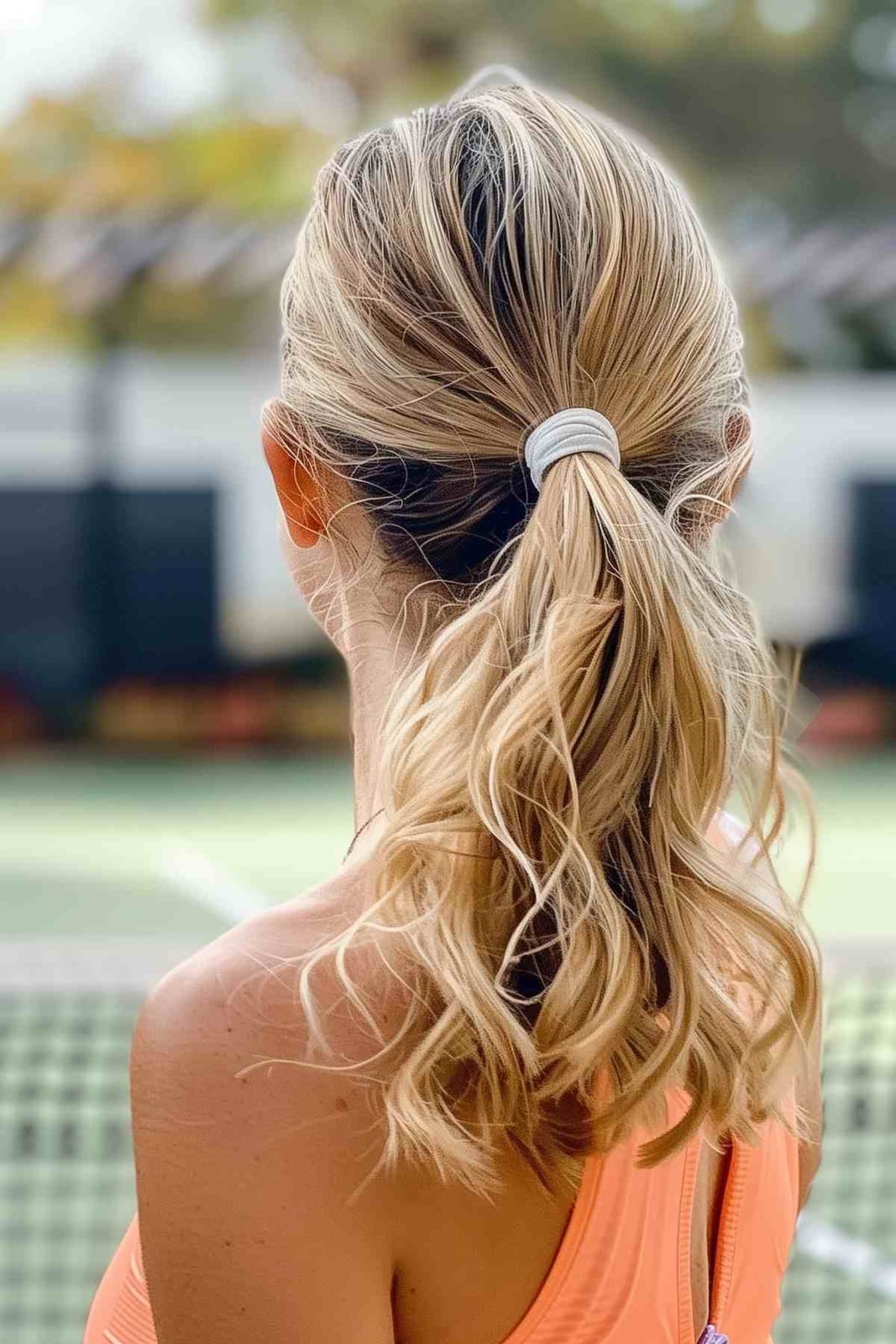
Thick Wavy Dark Brown High Ponytail
The high ponytail on thick, wavy dark brown hair is a study in control: the curly ends are defined, not fuzzy, and the side parting keeps the whole thing from reading as a helmet. It is a style that works because the thickness of the hair holds the curl pattern, so the ends bounce instead of droop. But here is the honest drawback: sweat and humidity can turn those defined curls into frizz, especially if you are mid-interval. Once the texture goes, the ponytail loses its shape.
Ask your stylist for: high ponytail with defined curly ends. This suits mid-back length wavy hair, and the height elongates a round face. A curl-defining cream on the ends before styling helps, but a trim every six to eight weeks is what keeps the ends springy enough to hold the curl. If you know you will sweat hard, this is a look for the warm-up, not the finish line.
Thick Wavy Brown Mid-Back Braid
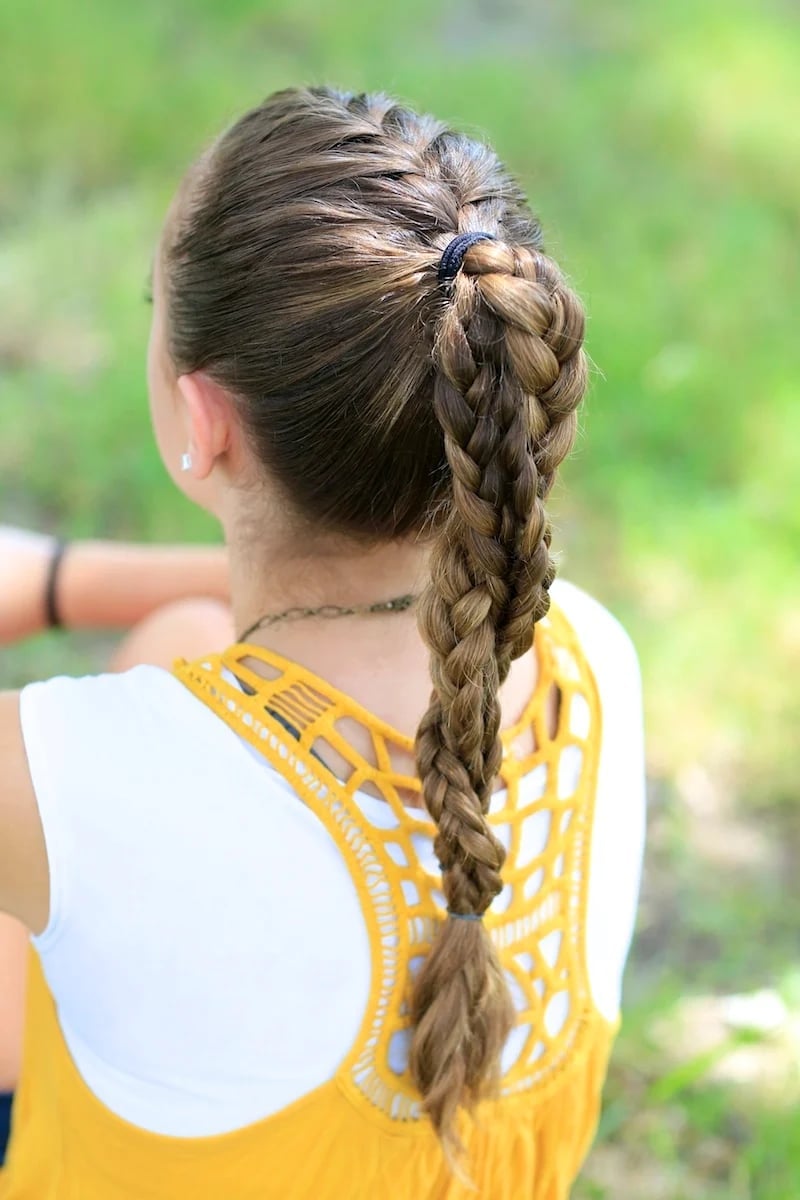
The braid is thick enough to have real weight, which means it does not whip around, and the side part keeps the front tidy. Ask your stylist for: single, thick braid. This works on any face shape, and it needs hair of mid-back length or longer so the braid has enough substance. A texturizing spray before braiding gives the strands grip, so the braid does not loosen as you move. It is a DIY do in under five minutes, and a trim every six to eight weeks keeps the ends from fraying. The only skill required is a steady hand to keep the braid even, which is easier than it sounds.
Blonde Double Braids With Darker Roots
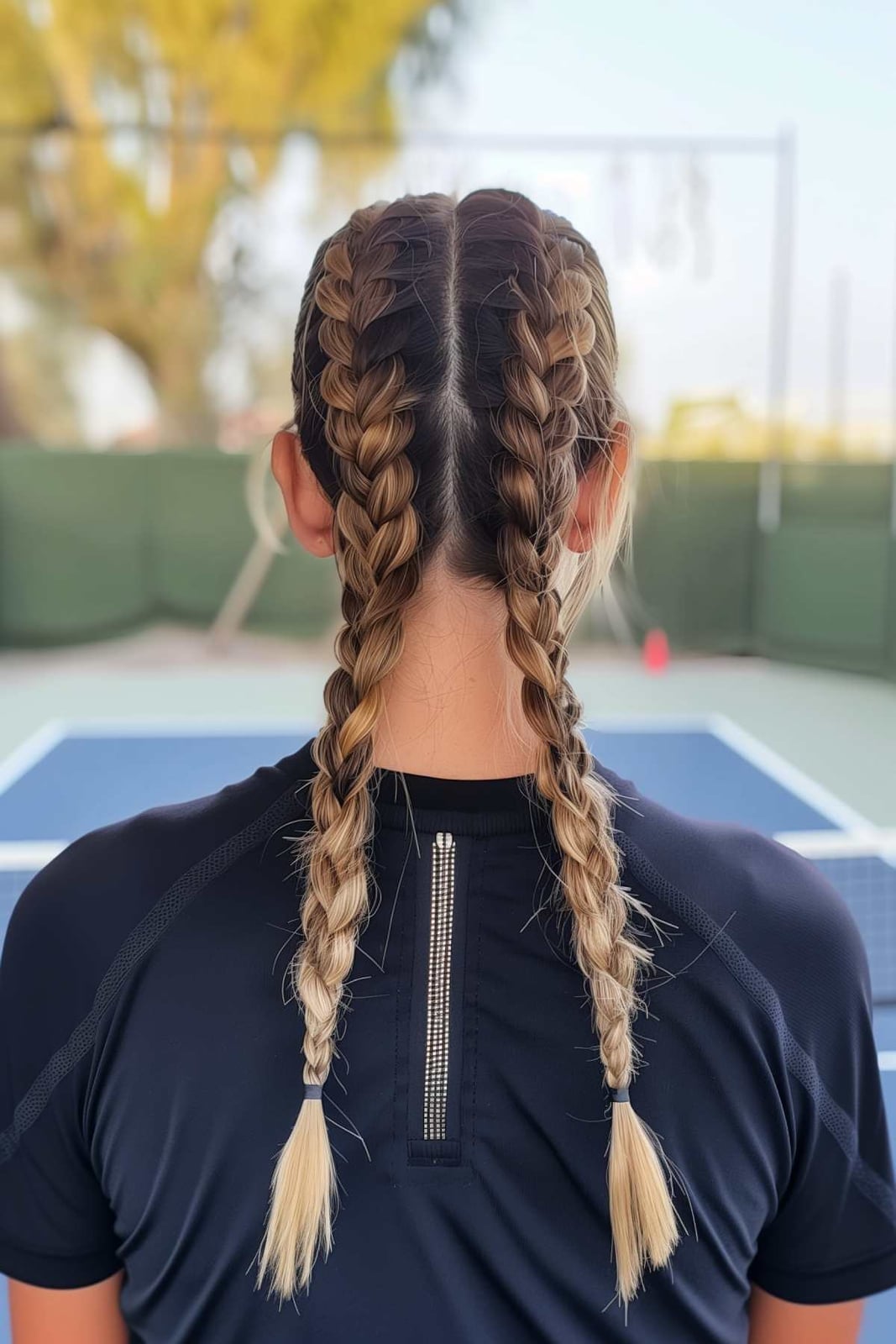
The design is a study in symmetry: a clean middle parting splits the hair into two equal halves, and each side is woven into a thick, neat braid that runs straight down the back. The blonde lengths brighten toward the ends while the darker roots ground the whole look, so the braids appear lived in. Mid-back wavy hair takes to this style best, and the technique suits oval and heart face shapes equally.
Ask your stylist for: two neat, thick double braids. The secret is tension, keeping each braid tight from the crown to the tips so nothing loosens mid-game. A trim every 6 to 8 weeks maintains the shape. The middle part creates the symmetry.
Wavy Blonde Braids With Lived-In Color
Compared to a fresh all-over blonde, this wavy braided style feels lower maintenance and more forgiving. The darker roots and lighter ends mean regrowth blends into the braids instead of announcing itself, which is a genuine advantage when sweat and sun are working against you on an outdoor court. Mid-back wavy hair carries the double braids well, and the look suits oval and heart face shapes.
Ask your stylist for: two neat, thick double braids. The lived-in color lets you stretch touch-ups further apart, so you can focus on training rather than the salon. A trim every 6 to 8 weeks keeps the ends tidy. The braids hold up through sprints and drills.
Light Brown Wavy Braids and Ponytail With Ribbons
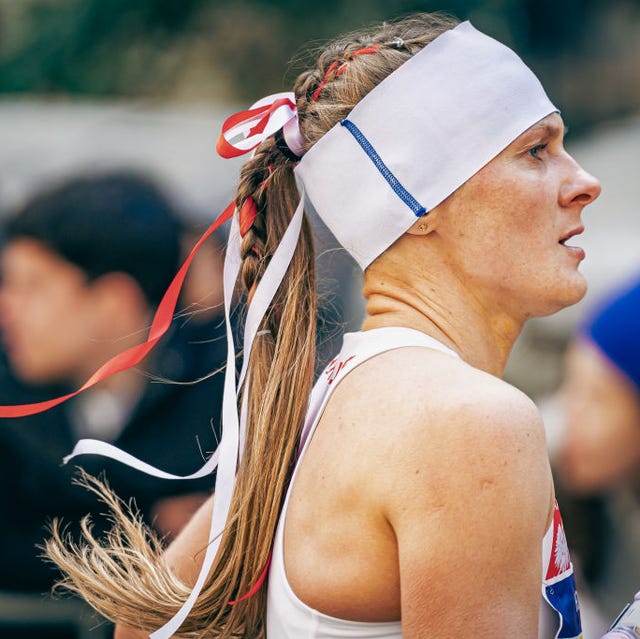
How do you get ribbons to stay in active hair? The answer is a braid-and-ponytail combo where the ribbons are woven into the braid itself, not just tied on top. The long, wavy, thick light brown hair is pulled into a secure ponytail with a braided section, and red and white ribbons trail behind, catching movement without slipping. This style adds width, which suits long faces that need a bit of fullness at the sides.
Ask your stylist for: braid and ponytail combo with decorative ribbons. The layers are cut so the braid and ponytail blend smoothly, and the ribbons are anchored tightly enough to survive a competition.
Straight Dark Brown Low Ponytail With Ideal For Athletic Activities
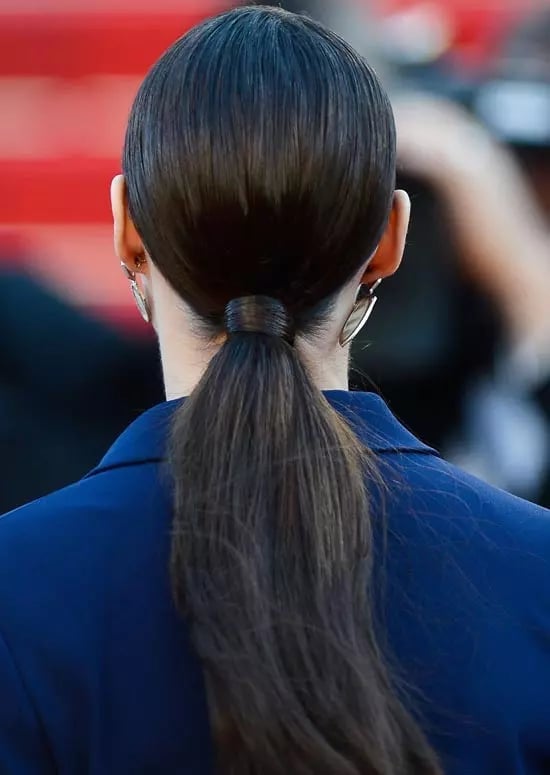
The geometry is simple: a middle parting, hair smoothed back, and a low ponytail that lands at mid-back. On thick, straight dark brown hair, this is a five-minute style that stays put through a gym session or a long run. You can do it at home by brushing the hair flat, gathering it low at the nape, and securing it with a firm elastic. A smoothing cream tames flyaways before you tie it.
Ask your stylist for: smooth, low ponytail. The low placement keeps the weight off your neck, and the middle part keeps the front clean. It suits round and heart faces because the length below the chin elongates the face. A trim every 6 to 8 weeks keeps the ends blunt.
Collarbone Wavy Dark Brown Layers With Curtain Bangs
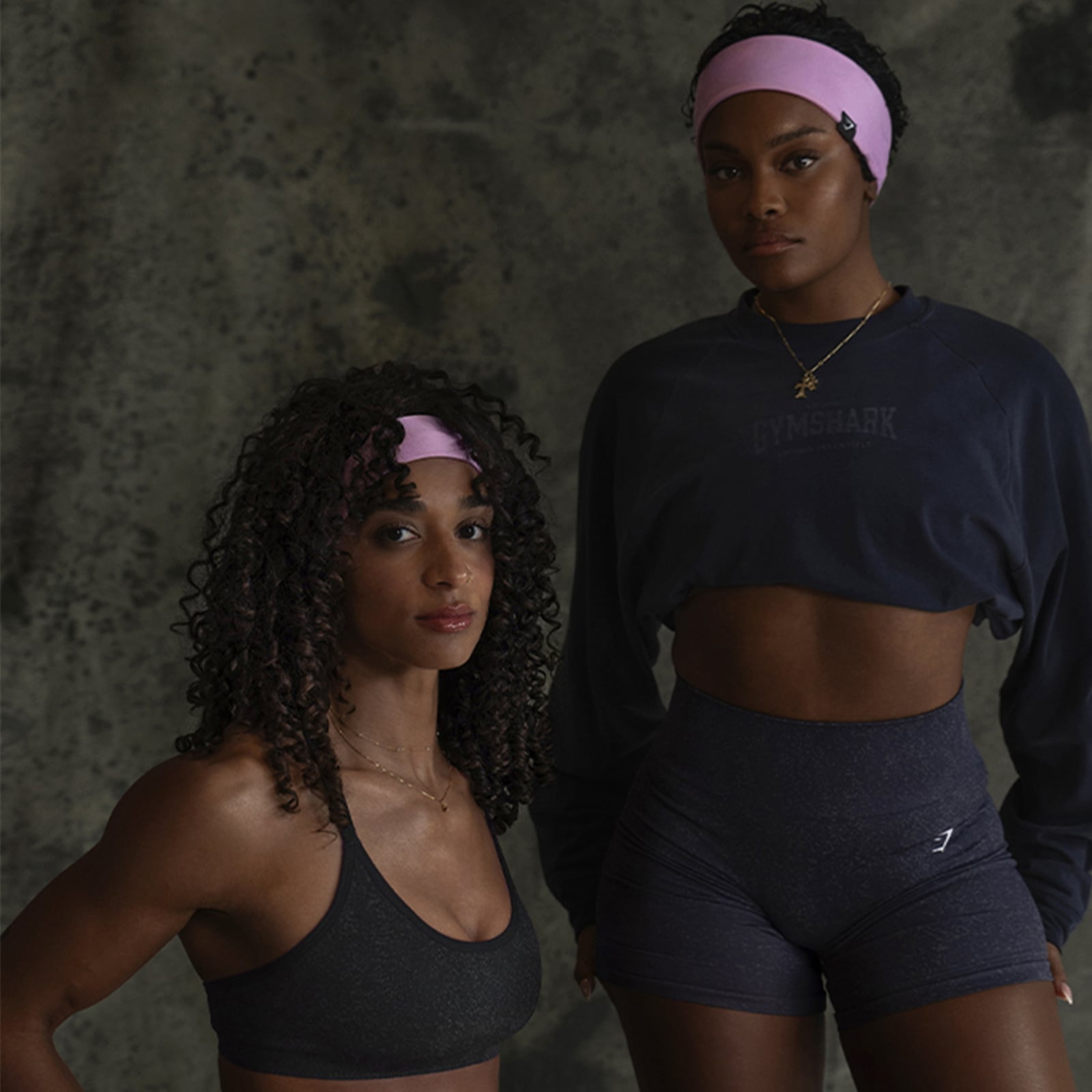
The cut lands at collarbone length, with soft face-framing layers and curtain bangs that sweep away from the center. On wavy, thick dark brown hair with subtle highlights, the result is a glossy blowout that moves with you. Curtain bangs are the practical choice here: they can be pinned back or tucked behind the ears when you train, and they soften square and round faces without needing constant trims.
Ask your stylist for: collarbone length layers with curtain bangs. The layers give the waves room to move, and the side parting keeps the shape from looking too round. A blow-dry with a round brush on the fringe takes minutes. Trim the layers every 8 to 10 weeks.
Child’s Blonde Braids Into Bun With Ribbons
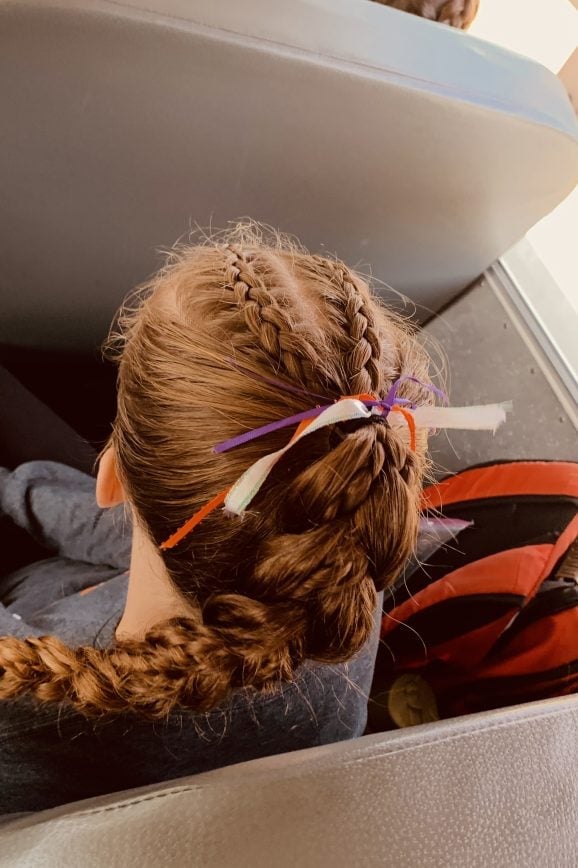
The design starts with a clean middle part, then splits fine, wavy blonde hair into multiple braids that all gather into one bun at the back. A longer braid extends from the side, and colorful ribbons are tied through the braids, which keeps everything looking intentional rather than last-minute. This braids into bun child style works best on long hair with a fine, wavy texture, and it suits all face shapes since nothing sits close to the face.
Ask your stylist for: multiple braids into a bun with ribbons. The ribbons do double duty, adding color and helping the ends stay tucked. Use soft elastics that hold each braid without pulling, since fine hair can snap under too much tension. A trim every ten to twelve weeks keeps the ends clean so the braids lie smoothly. This one takes some time in the chair, but it stays secure through a full day of running around.
Coily Black Ponytail Wrapped Into Bun
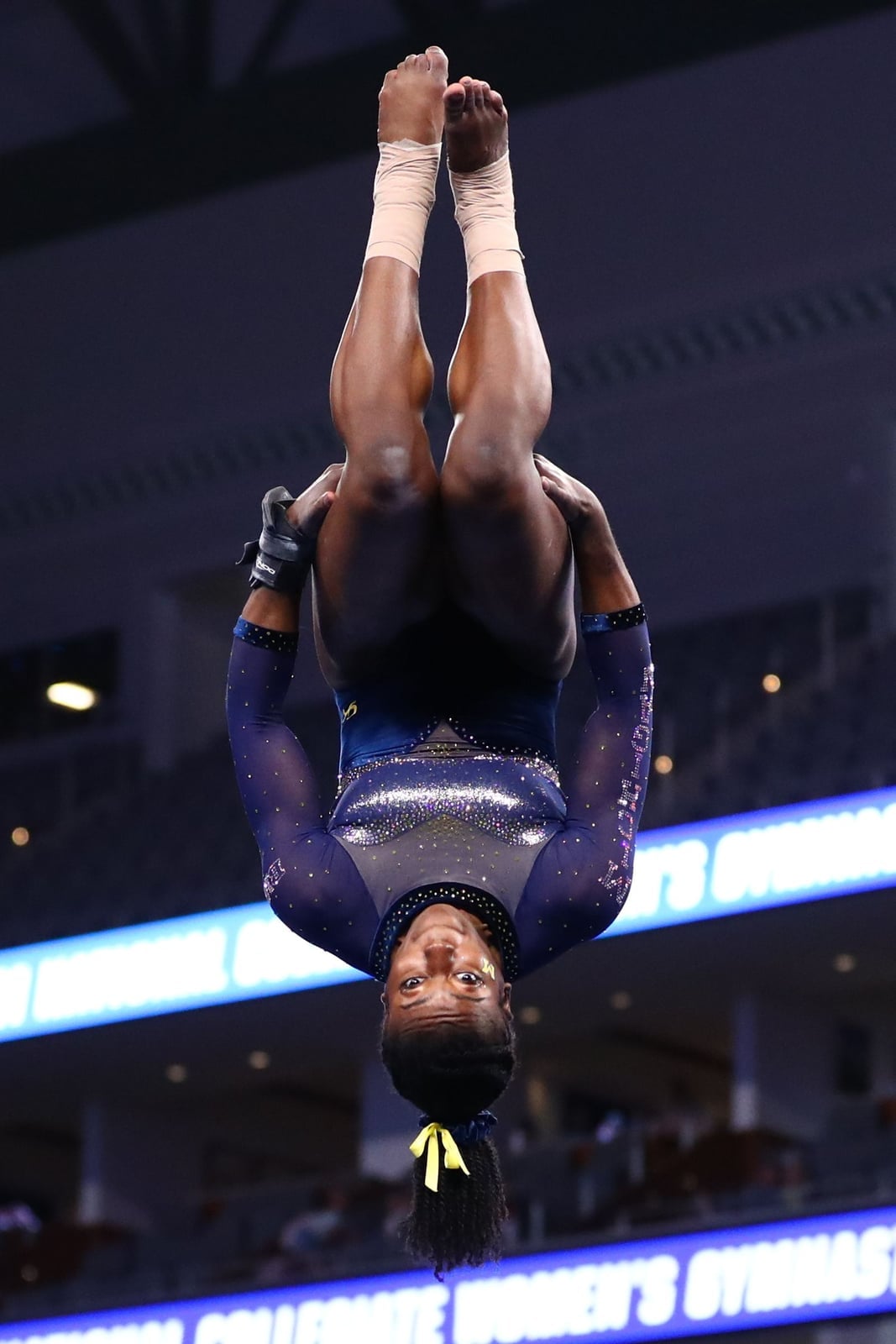
A simple high ponytail works, but wrapping coily hair into a bun adds security that a loose tail cannot match. The hair is pulled back tightly from the face and wrapped into a smooth bun, with a small accent ribbon as the only decoration. This coily hair bun suits shoulder-length or longer coily textures and all face shapes. Ask your stylist for: tightly wrapped ponytail bun. The honest trade-off: coily hair needs a bit of product to stay smooth and frizz-free during activity, and the tight styling can feel heavy by the end of a long practice. Sleeping on a satin scarf keeps the shape intact for a second day.
High Blonde Wavy Ponytail, Mid-Back
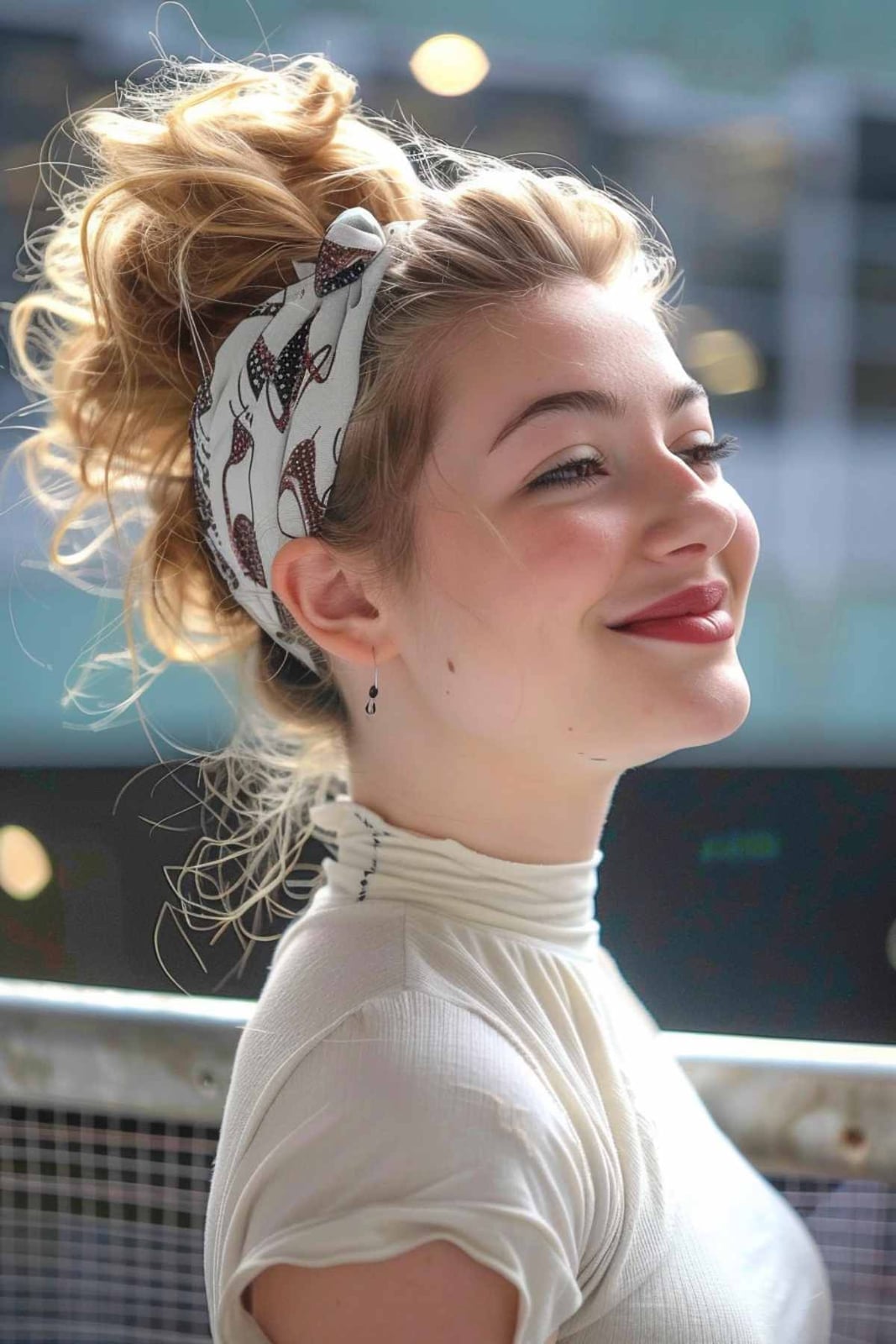
Does a high ponytail actually stay put when your hair is thick and wavy? This one does, thanks to a middle parting that keeps the front sleek while the rest is gathered high on the head. The blonde waves carry enough volume to reach mid-back without looking stringy, though that weight can make the ponytail shift during longer workouts. Ask your stylist for: high, voluminous ponytail. Wrapping a section of hair around the elastic hides the tie and adds a polished finish. A trim every six to eight weeks keeps the ends from splitting, since wavy hair shows damage quickly. This works for any face shape, and the height balances the length below.
Shoulder Length Fine Blonde Ponytail With Styled Neatly For Activity
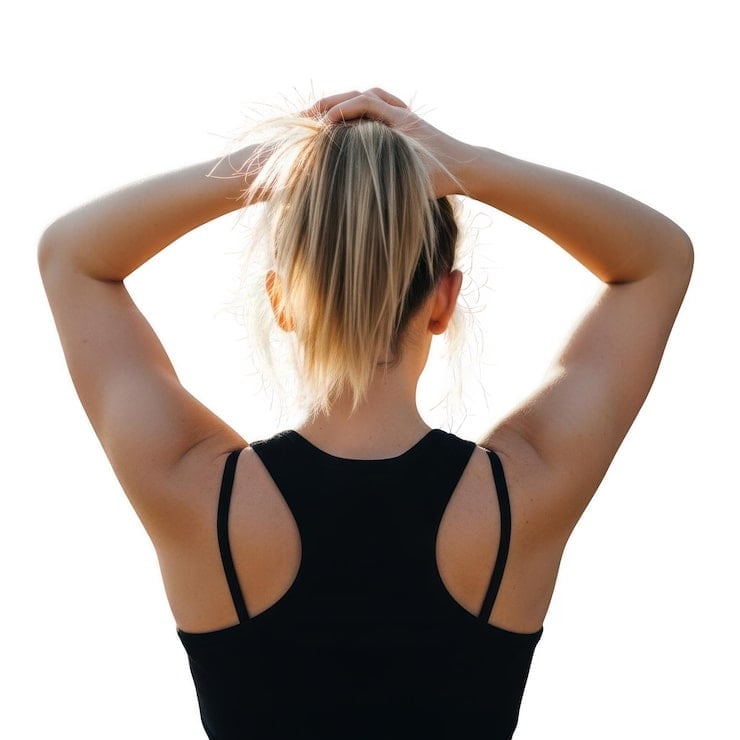
The key is brushing the hair back in one clean motion, then securing it with an elastic that does not create bumps. Ask your stylist for: high, neat ponytail for fine hair. Fine hair benefits from a root lift so the ponytail does not sit flat against the head. This is a do-it-yourself style in under five minutes, and the shoulder length keeps it light enough for activity. It suits round faces by pulling the eye up and elongating the line. A trim every six to eight weeks keeps the ends blunt and healthy.
Shoulder Length Bubble Braid Blonde
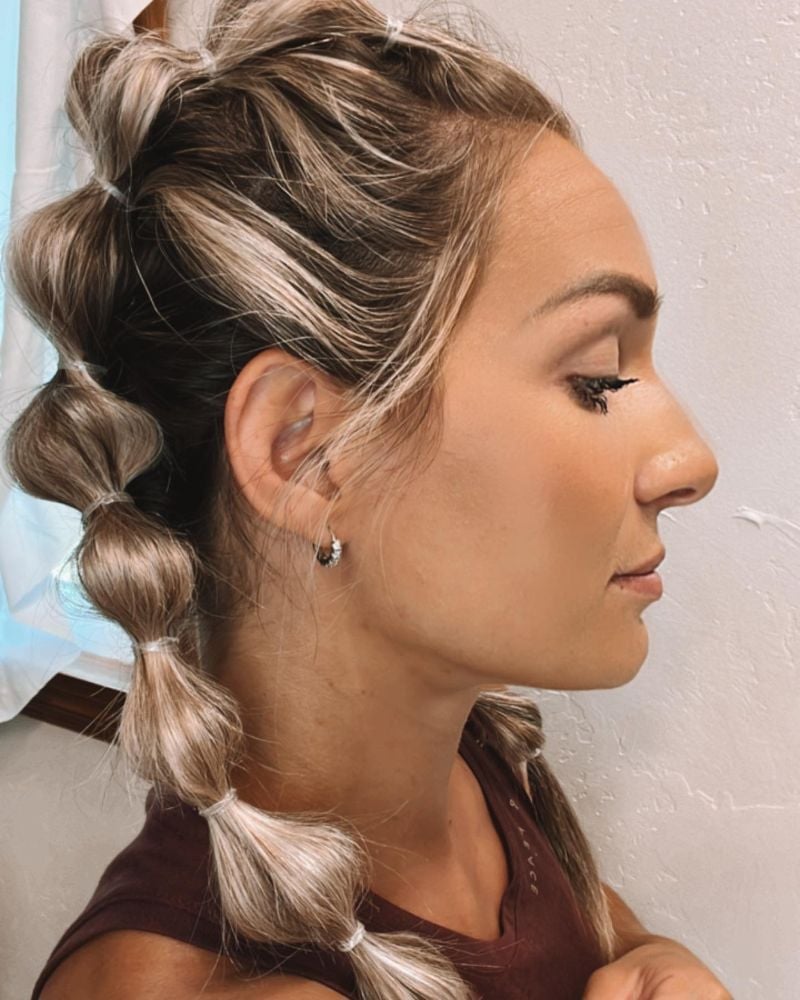
What a bubble braid lacks in subtlety, it makes up for in sheer practicality. The side view shows the hair parted to the side and sectioned with elastics, each segment puffed out to create a textured, voluminous effect that stays put far better than a loose ponytail. It suits wavy hair of shoulder length and flatters any face shape, though it is particularly forgiving on round faces since the volume sits at the back, not the sides. Ask your stylist for: textured shoulder-length bubble braid. Unlike a traditional braid, the bubble version does not need tight tension to hold, so it is quicker to create and gentler on the hair, making it a solid choice for sports.
Final Thoughts
Match the style to your texture. Thick, coily, or very wavy hair holds braids, cornrows, and high buns well, which manage volume and keep frizz at bay. Fine or straight hair benefits from a texturizing spray or a braided ponytail for grip and staying power.
- Trim braids or ponytails every 6 to 10 weeks to keep the shape clean.
- Use dry shampoo at the roots to absorb sweat between washes.
- Apply leave-in conditioner or hair oil after workouts to keep textured hair hydrated.
- Let braids and ponytails breathe between sessions to prevent breakage.
Keep your hair secure and stylish, no matter the sport.