Blue hair has moved past the punk phase and into something more versatile: a spectrum that runs from deep navy to soft pastel, with plenty of room for lived-in dimension. This year, the shift is toward richer, more saturated tones that don’t sacrifice depth for brightness.
These 35 ideas cover the full range of Blue Hair Color, from low-maintenance dark bases with subtle highlights to vibrant all-over shades that demand a bit more upkeep. Whether your hair is fine, thick, straight, or curly, there is a version here that works with your texture and your schedule. No more wondering how to keep a visible grow-out line from ruining the effect.
Vibrant Blue With Lighter Blue Balayage Waves
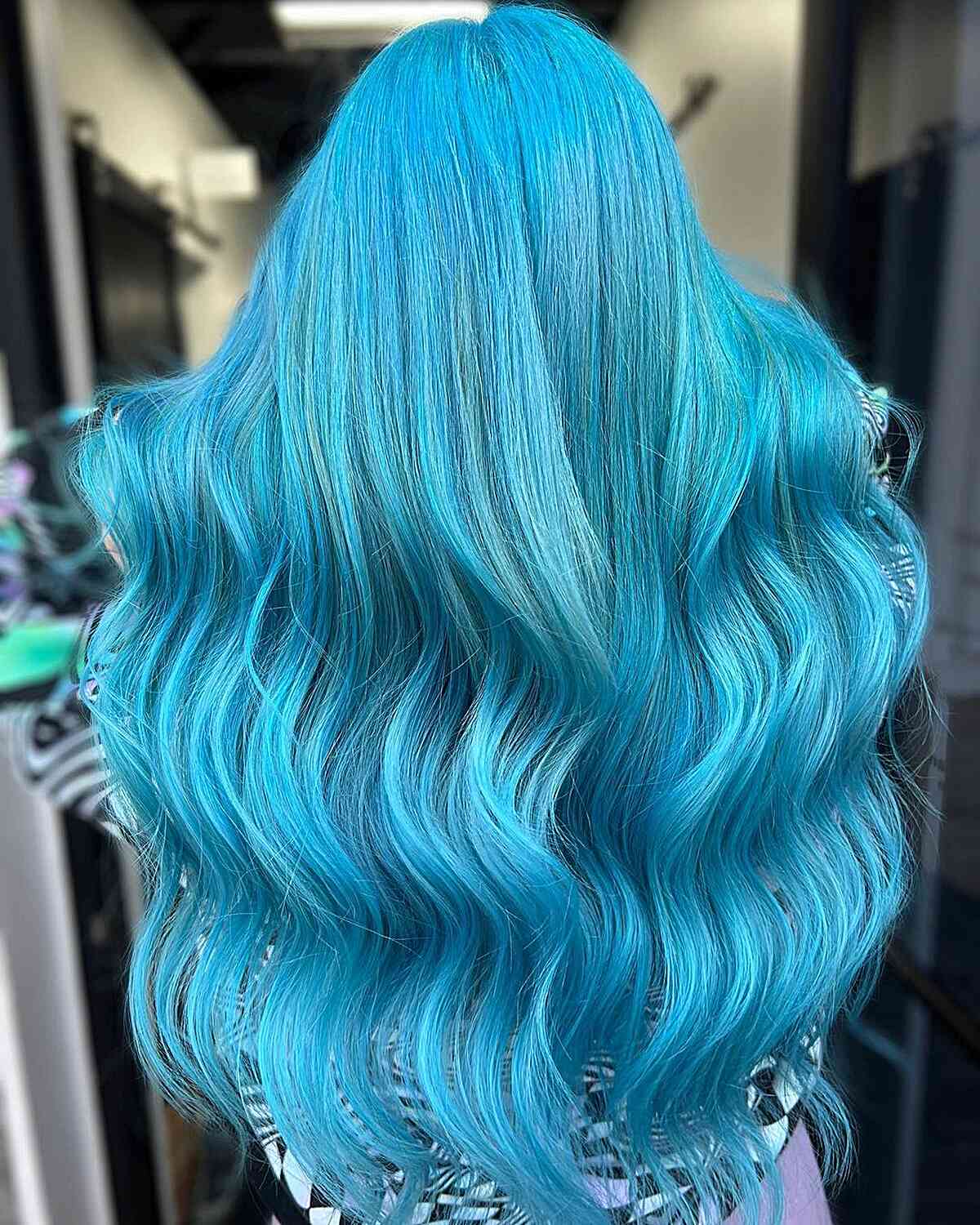
The clever bit here is that the balayage does not lighten the whole head. It lifts select sections from mid-length to end, so the vibrant blue base stays rich at the roots while the lighter blue pieces sit in the waves. This creates a gradient of dimension on mid-back length hair with a middle part and no bangs. The soft waves and thick texture help the color transition look seamless.
This technique works best on hair that already holds a wave, since the bend helps the lighter pieces sit visibly on top. Thicker hair has the density to show the balayage without losing the base. Ask your colorist for: mid-back length waves, vibrant blue balayage with lighter tones. The cut uses layered ends to keep the shape from widening at the bottom, and a trim every eight weeks will keep the wave pattern looking polished.
Gradient Blue To Lighter Blue Mid-Back Waves
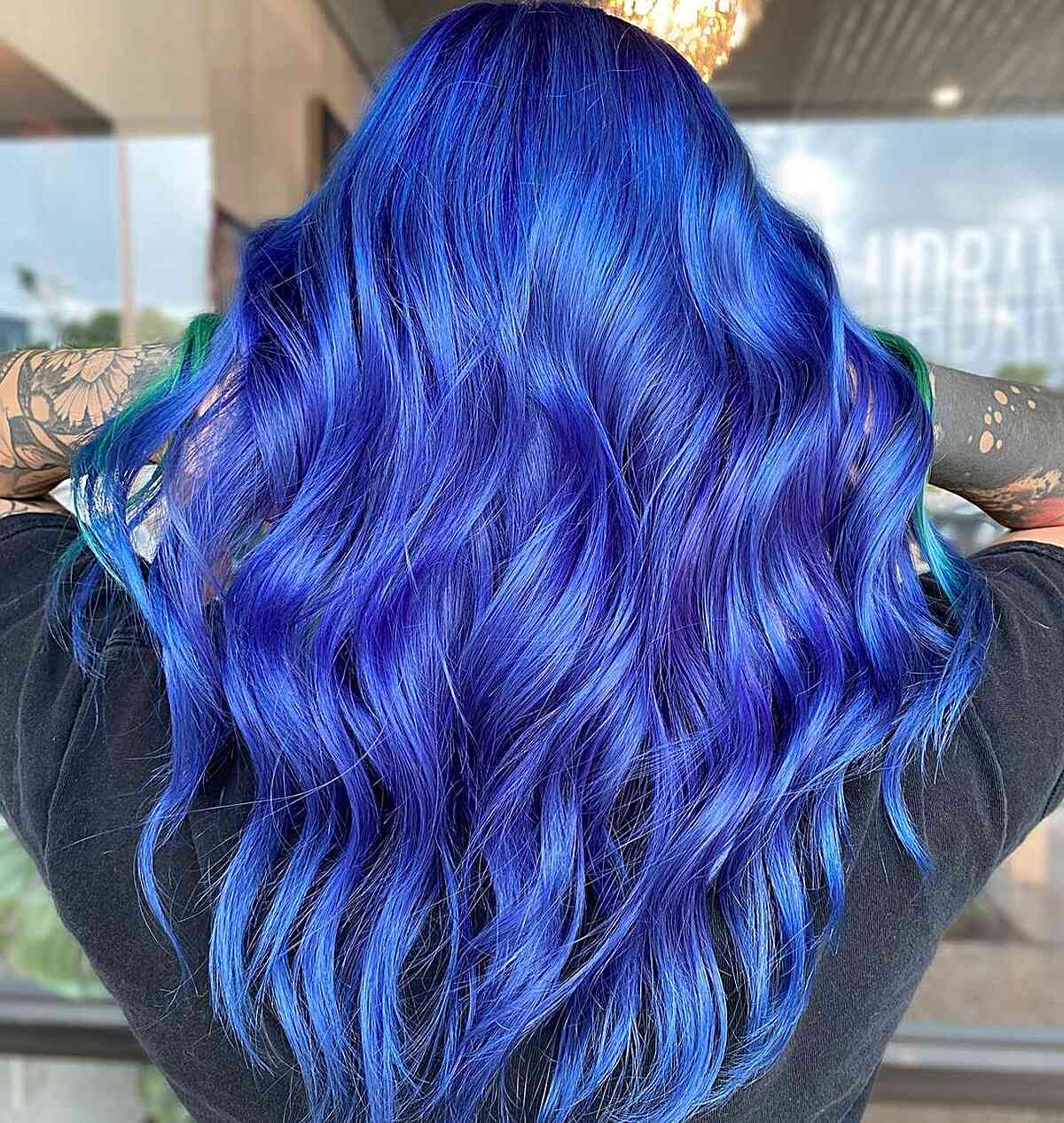
A gradient is not the same thing as a balayage. Where a balayage paints lighter color onto random sections, a gradient fades the entire head from one shade at the roots to another at the ends. Here the deep blue at the top graduates into a lighter blue that hits the mid-back, creating a smooth shift that reads as a single wash of color. The loose waves and thick texture help the transition feel organic, not striped.
This approach suits anyone who wants a clear color change without the darker roots that come with ombré. The back view shows the full effect, so the parting and styling matter less than the overall saturation. Ask your colorist for: mid-back length waves, gradient blue from dark to light. The color needs a toner at the ends to keep the lighter blue from tipping into green, and a toning shampoo once a week will extend the fade.
Solid Vibrant Blue Mid-Length Straight Blowout
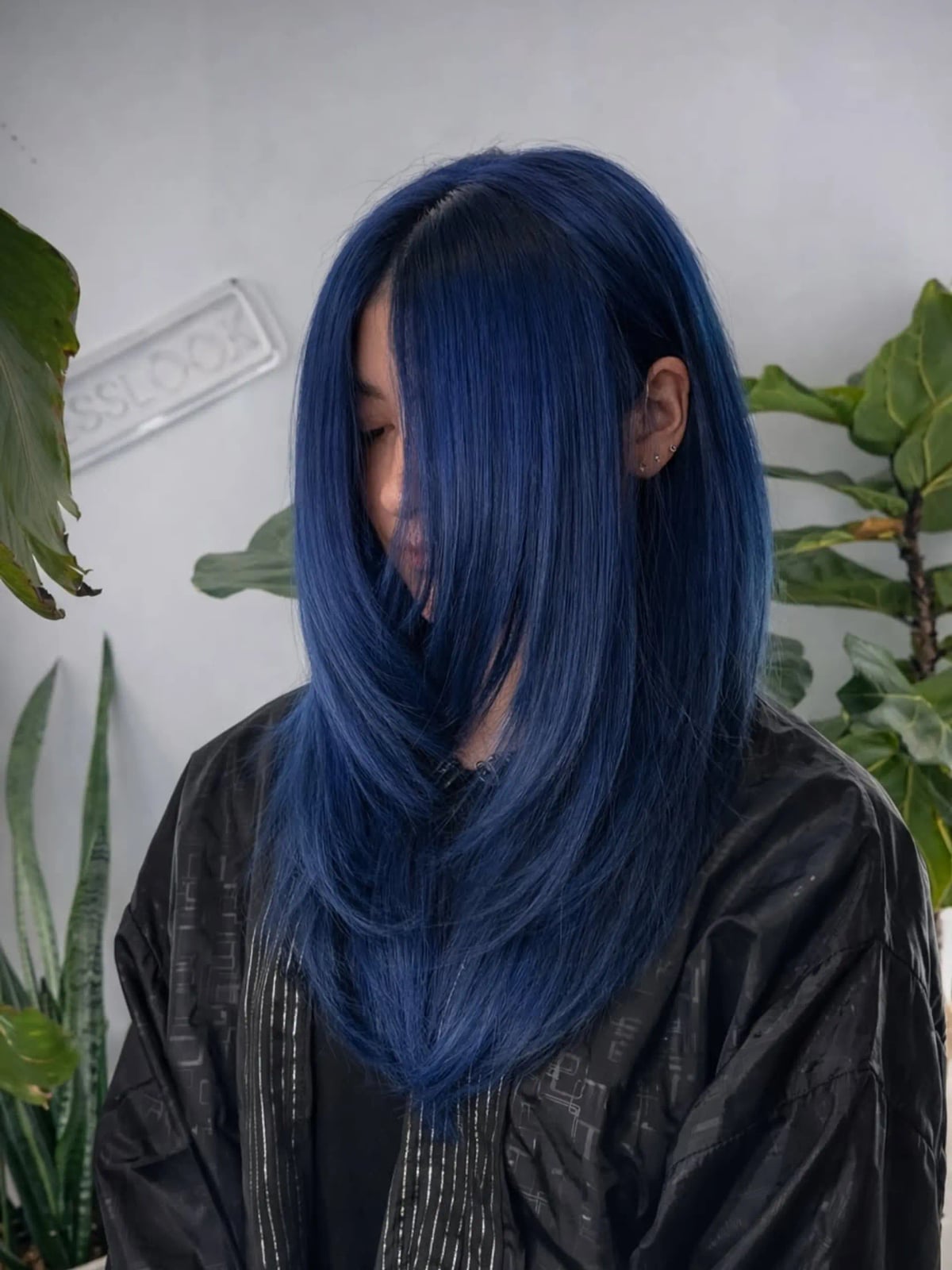
Can a single color be enough? Yes, when the cut and finish do the work. The solid vibrant blue here sits on mid-length, straight, thick hair styled in a smooth blowout, with face-framing bangs and a middle part. There is no second shade, no highlight, no balayage. The uniformity is the point, and the straight texture lets the color read as a flat, saturated block.
The face-framing bangs soften the middle part, which makes this style work for oval and long face shapes. Thick hair carries the solid color best because it holds the pigment density without looking thin. Ask your colorist for: mid-length solid vibrant blue, face-framing bangs. The bangs will need a trim every four to six weeks to stay at the right length, and a flat iron keeps the blowout smooth between washes.
Vibrant Blue Loose Curls Mid-Back
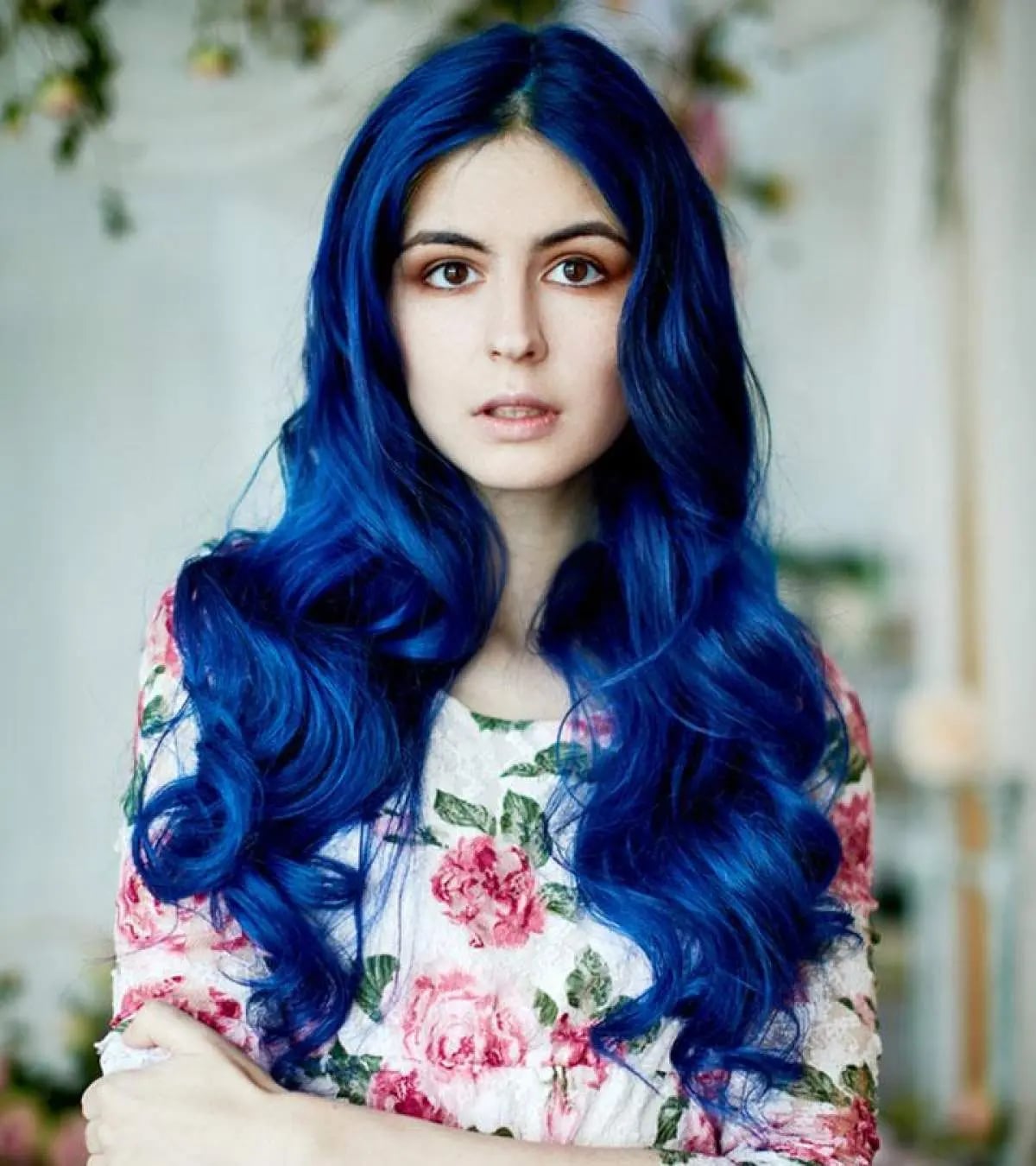
Loose curls change how a color behaves. On mid-back length hair, the vibrant blue appears darker in the hollows of the curl and brighter on the crests, so the same uniform shade reads as two tones without any extra technique. The middle part and the volume at the sides make this a strong choice for heart and square face shapes, since the width balances the jaw.
The texture here is thick and wavy, which holds a curl longer than fine hair. This is a party or statement look, because the volume and intensity demand attention. Ask your colorist for: mid-back length loose curls, vibrant blue. A curl-defining cream applied to damp hair and diffused will give the same shape, and a trim every eight to ten weeks keeps the ends healthy enough to bounce.
Vibrant Blue With Lighter Undertones Straight Cut
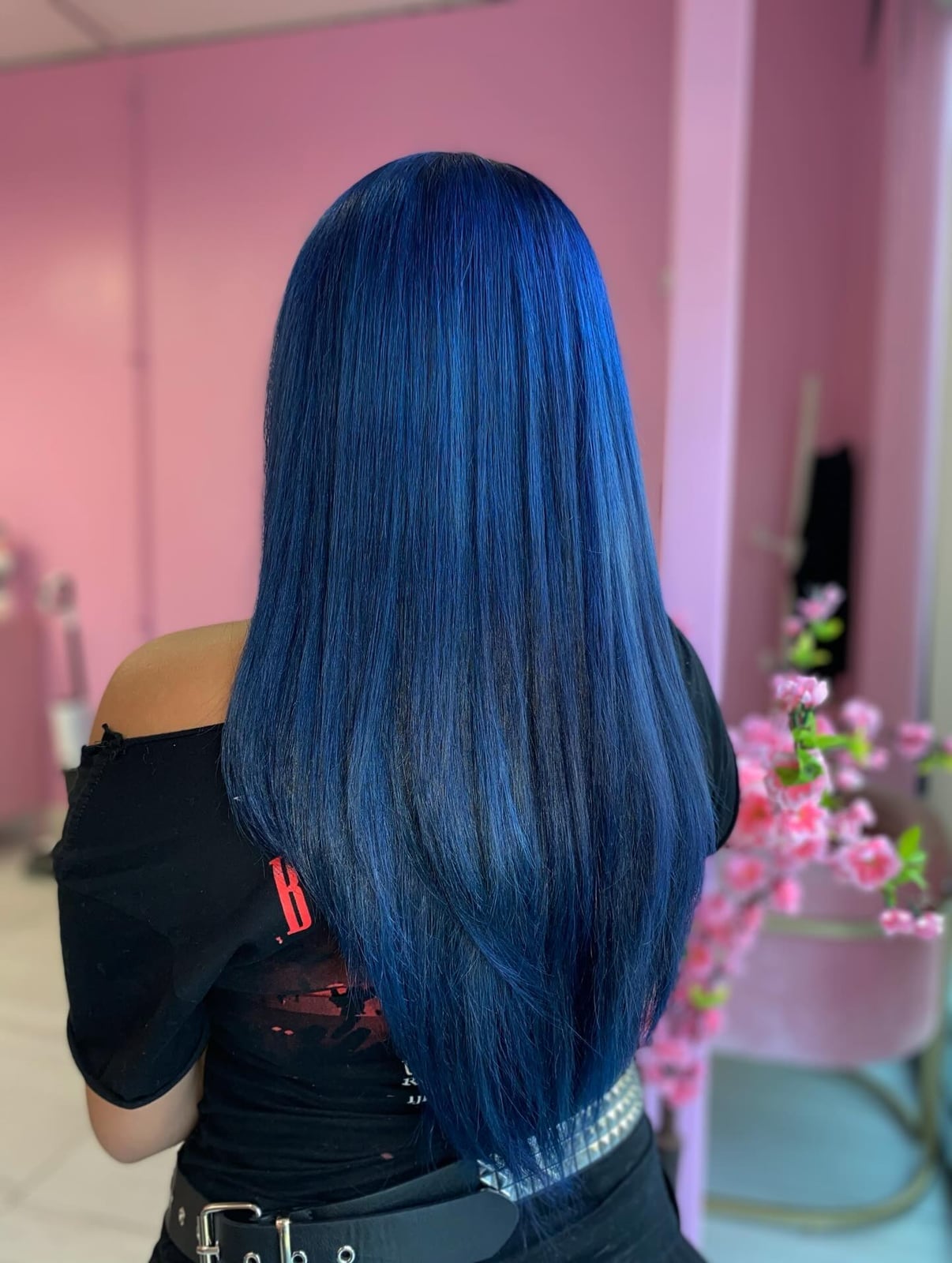
The straight cut makes the undertones visible. On mid-back length hair with a blunt line, the vibrant blue base sits solid while subtle lighter blue undertones appear at the ends. The back view and middle part show the color shift as the hair moves, which a layered cut would break up. The thick, straight texture keeps the line sharp and the shine high.
Undertones shift over time. The lighter blue can fade toward silver or green, depending on the starting pigment, so a toning shampoo is not optional here. Ask your colorist for: mid-back straight cut, vibrant blue with lighter undertones. This is a salon-only color; the undertones need a precise level of lift that is hard to gauge at home. A smoothing serum helps the straight cut stay sleek, and a trim every six to eight weeks keeps the blunt line from splitting.
Bright Blue And Turquoise Blend Waves
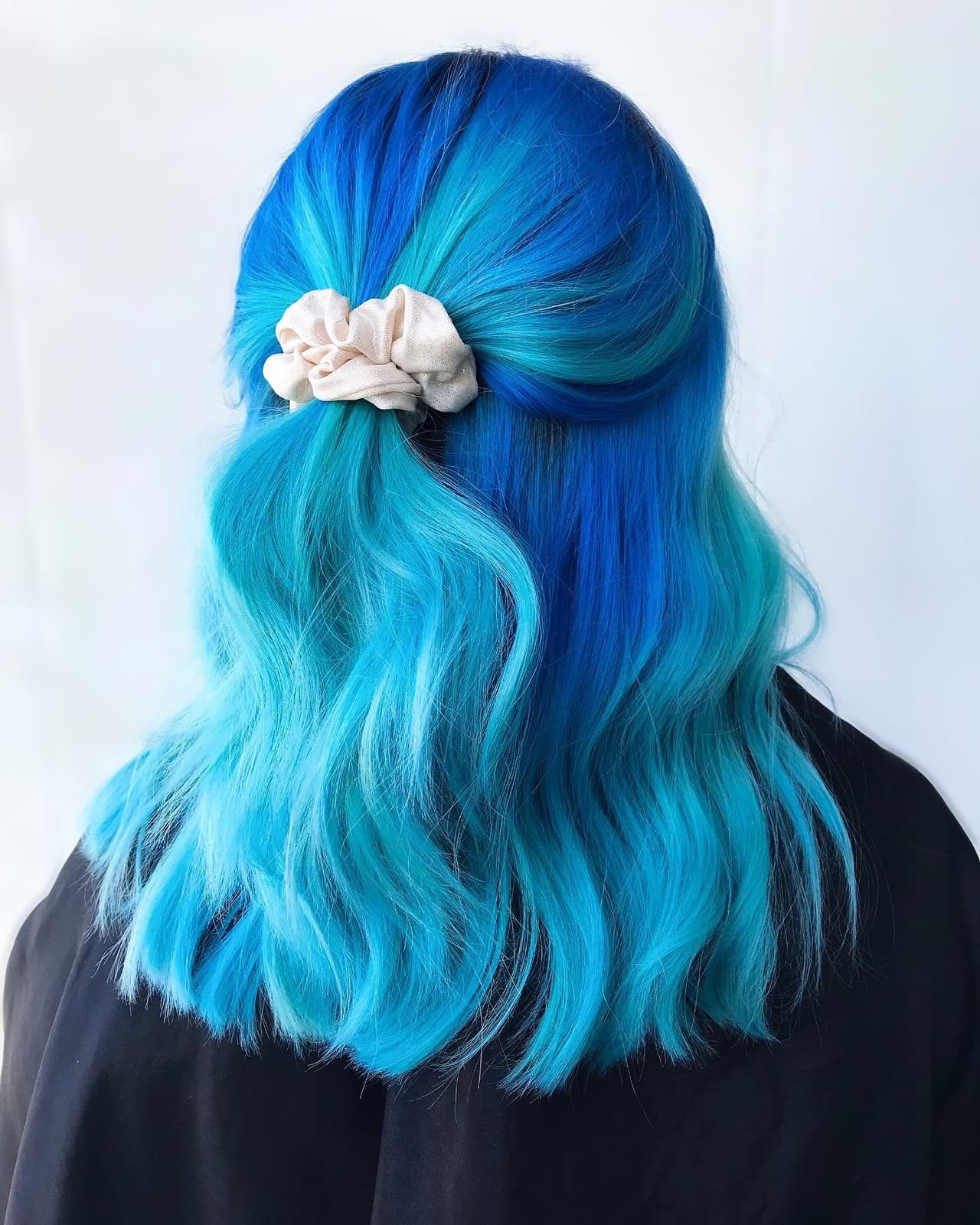
The trick to a blend like this is where each color lands: the bright blue sits at the root and mid-lengths, while the lighter turquoise highlights concentrate on the ends and a few face-framing pieces. That placement creates depth without looking stripey. The mid-back length and visible layers give the colors room to travel. Ask your colorist for: bright blue with turquoise highlights. A middle parting shows off the symmetry of the blend, and the soft wave pattern keeps the transition from reading as harsh.
Bright Blue Shoulder Length Curly Layered
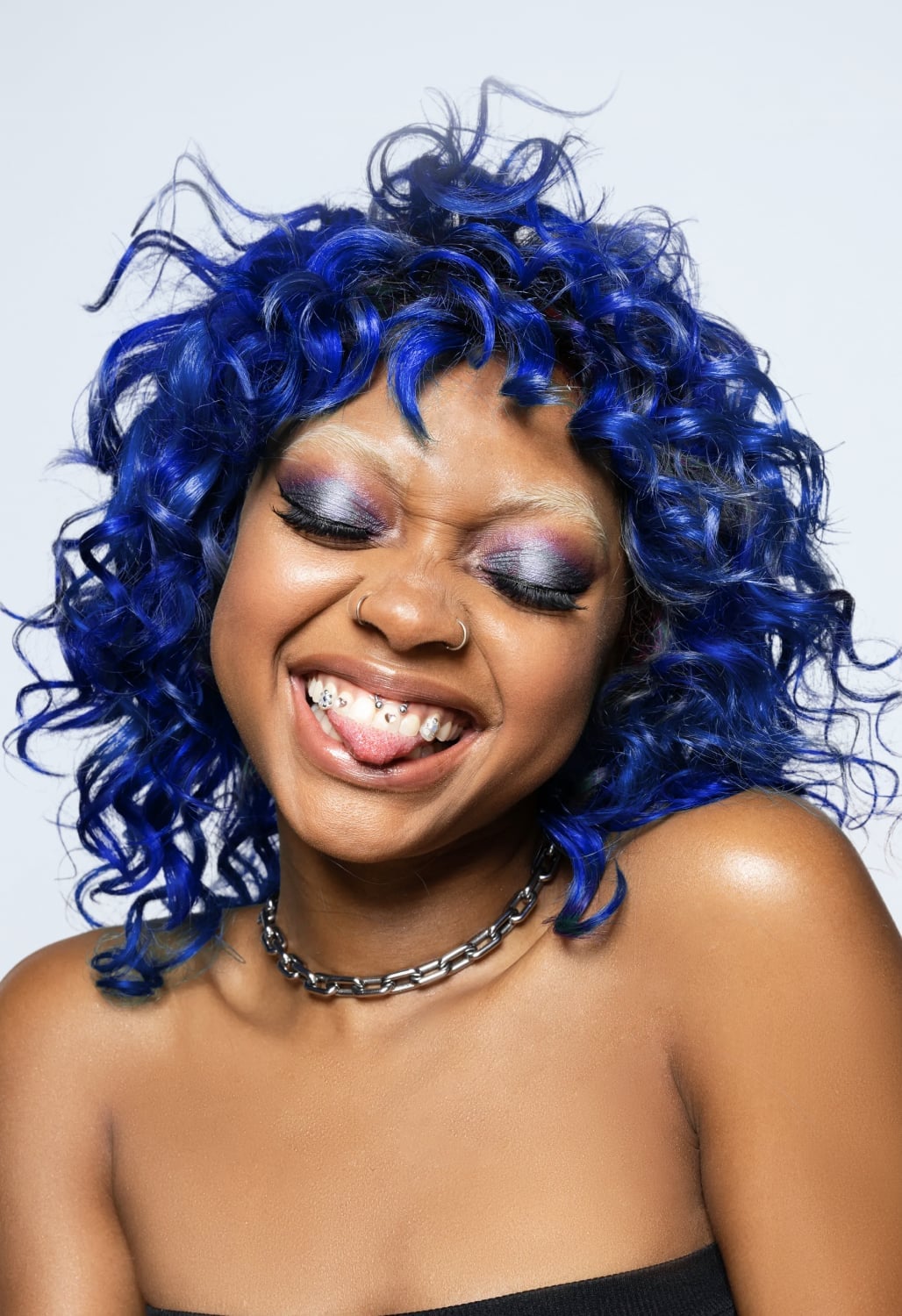
Can curly hair hold a bright blue without turning muddy? Yes, if the cut works with the texture. The shoulder-length layers here are cut to follow the curl pattern, so each coil catches the color evenly. This density of curl also hides grow-out better than straight hair does. Thick, curly textures benefit most from this shape, as the layers prevent bulk at the ends. A middle parting keeps the volume balanced. Ask your colorist for: shoulder length layered bright blue. The shade stays bold because the cut lets the light hit every curve.
Vibrant Blue Mid-Back Soft Blowout
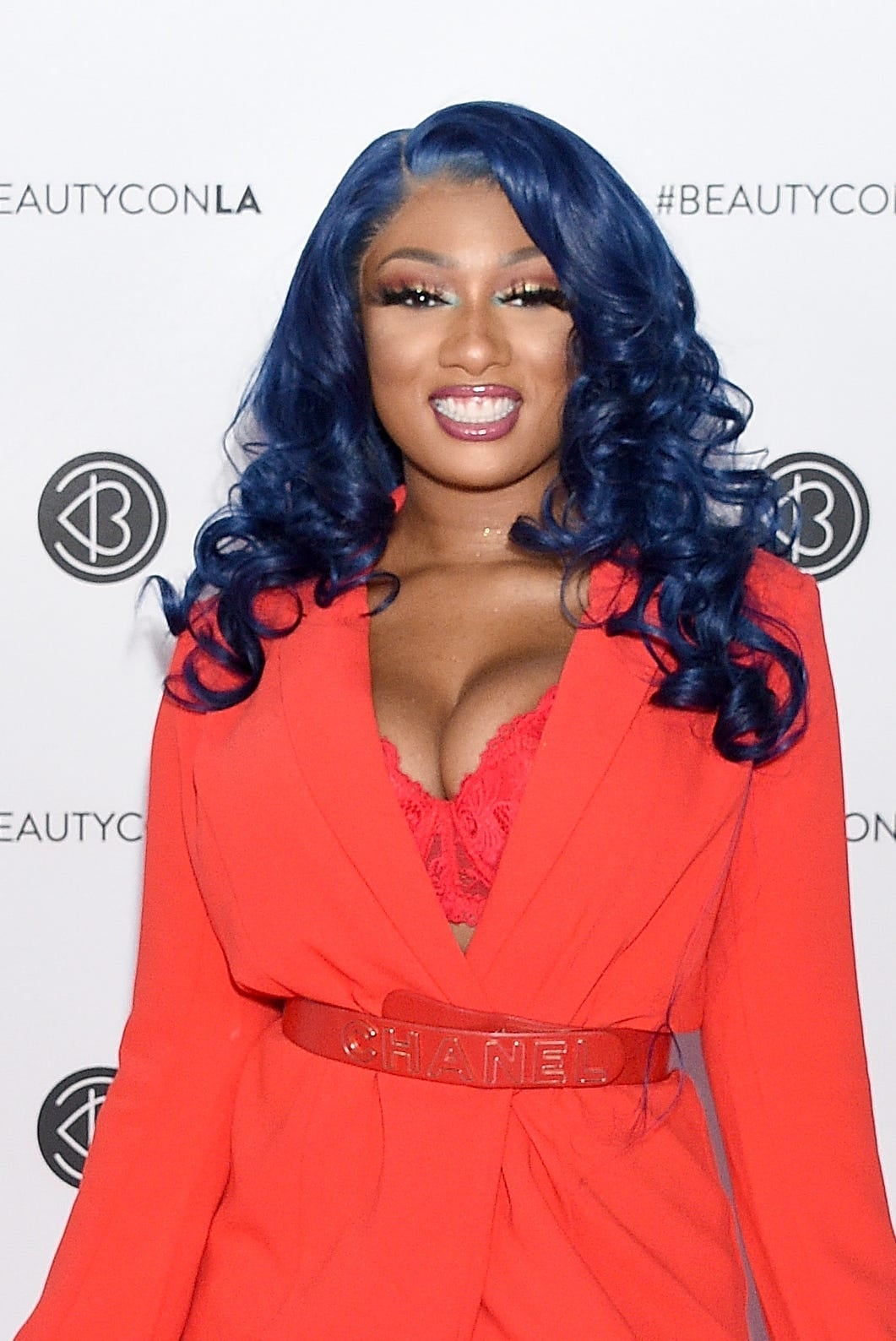
A vibrant blue this saturated reads like a glossy solid when the blowout is done right. The mid-back length and thick texture need a round brush to smooth the layers without flattening the wave entirely. The middle parting keeps the color uniform from root to end.
The real work is maintenance. A blowout like this takes about twenty minutes with a medium round brush and a heat protectant. The color itself fades slower on thick, wavy hair, but you will want a toning appointment every four to six weeks to keep the blue from pulling green. Plan a trim every eight weeks to keep the ends healthy enough to reflect light.
Collarbone Layers Vivid Blue Highlights Black Base
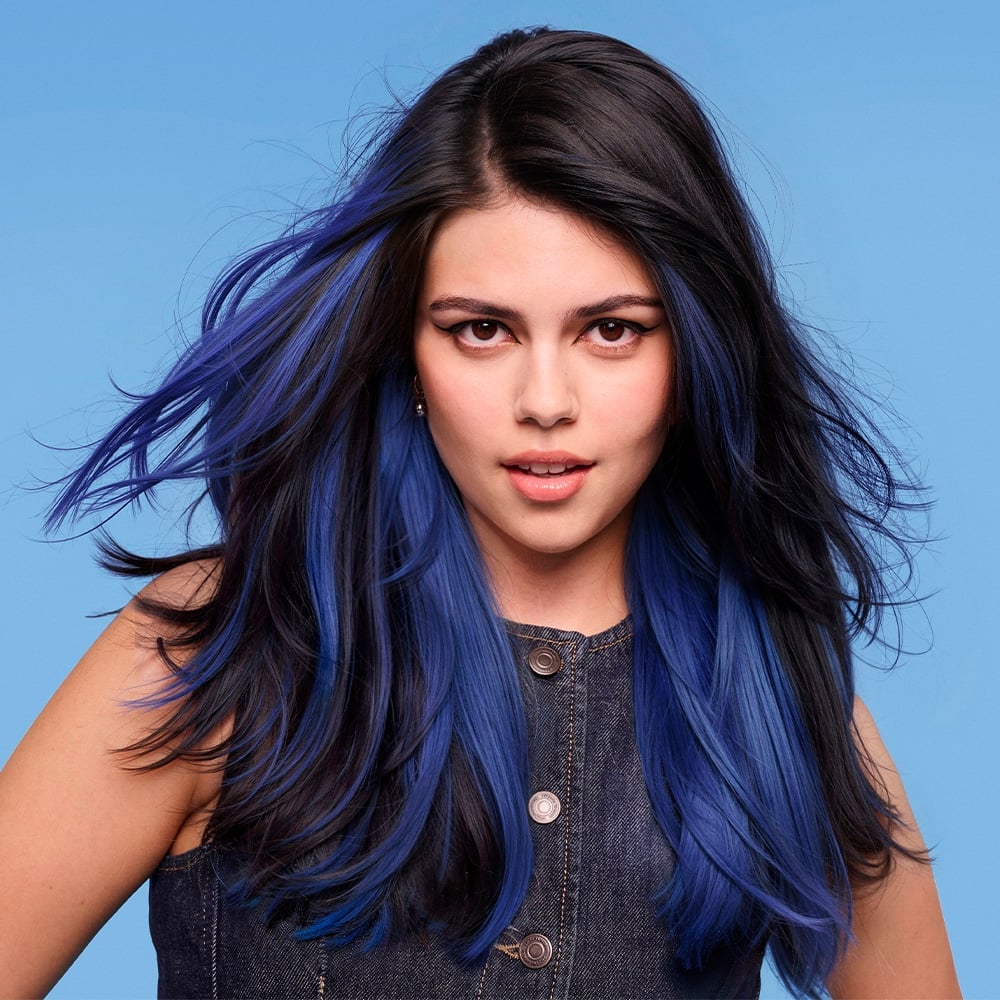
The design here is deliberate spacing: vivid blue highlights are painted onto a black base so the dark sections act as negative space. The collarbone-length layers let each blue streak wrap around the curve of the hair, making the contrast visible from every angle. This is not a DIY project. Achieving that separation between the black base and the blue requires a colorist to weave fine sections and apply the lightener with precision. Thick, wavy texture helps the highlights sit naturally. Ask your colorist for: vivid blue highlights on black base.
Mid-Back Ombré Dark Base To Blue Ends
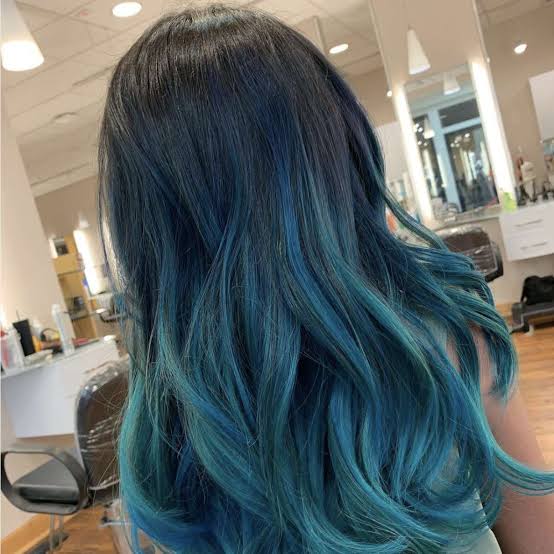
An ombré like this one works differently than balayage. The transition is a soft gradient from a dark base at the roots to vibrant blue at the ends, with no lightener touching the top half of the hair. That means the roots stay low-maintenance for about twelve weeks before the grow-out becomes noticeable. Balayage, by contrast, paints the lighter color closer to the root for a sun-kissed effect, which needs more frequent toning.
This version suits thick, wavy mid-back hair because the length gives the gradient space to travel. The glossy finish comes from a silicone-free serum applied after the blowout. A trim every ten weeks keeps the ends strong enough to hold the blue without fraying. Ask your colorist for: dark base to blue ombré.
Collarbone Bob Pastel Sky Blue Curtain Bangs, Close-Up Take
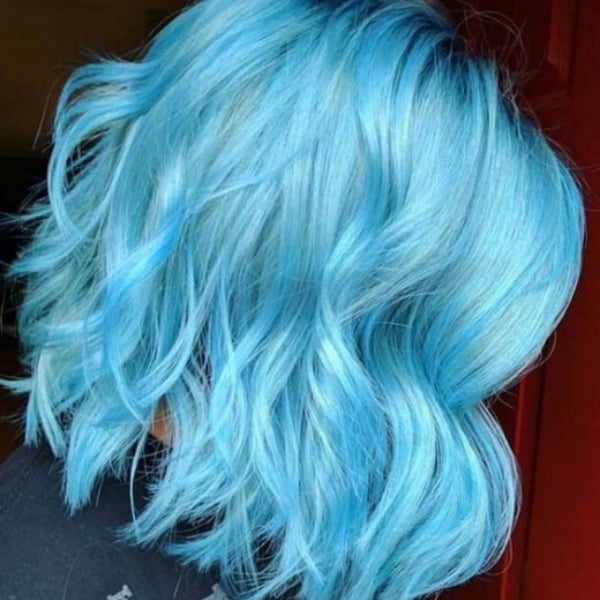
Can a pastel sky blue bob with curtain bangs actually look grown-up? Yes, if the cut has structure and the color stays glossy without turning chalky. The collarbone length and wavy texture give the pastel shade enough weight to appear deliberate, not washed out. Curtain bangs soften a square face and balance a round one, while a middle part keeps the shape symmetrical. On medium-density wavy hair, the pastel sky blue highlights the waves, which a solid pastel on straight fine hair cannot do. Ask your colorist for: collarbone bob, pastel sky blue, curtain bangs. A pastel this light requires a pre-lighten to pale blonde first, and any warmth in your base will show through as yellow.
Collarbone Lob Dark Blue Base Lighter Highlights
A dark blue base with lighter blue highlights builds dimension without going full electric. On a collarbone lob styled in loose waves with a middle part, the contrast is visible in motion but subtle at rest. Ask your colorist for: collarbone lob, dark blue base with lighter blue highlights. The darker root means grow-out is forgiving for about six weeks, though the lob shape needs a trim every eight to keep the ends from feeling straggly.
Mid-Back Blue To Purple To Light Blue Ombre
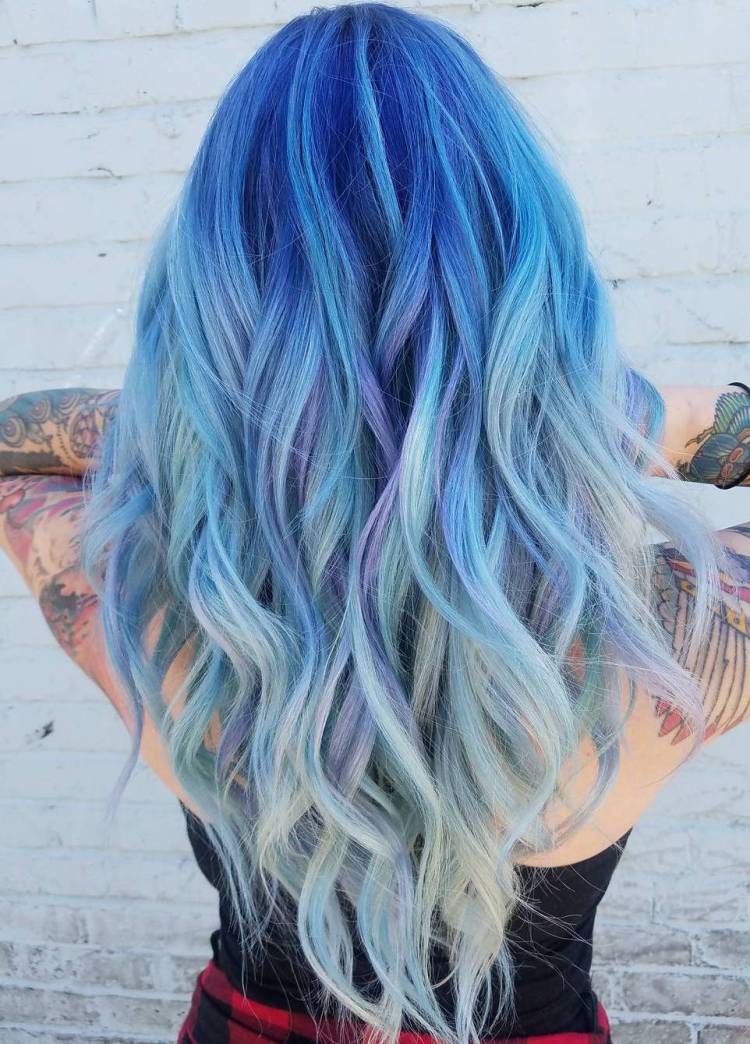
The technique requires a precise hand because each section must be painted at a different lift level. Purple acts as a buffer between the blue root and the pale ends, preventing a muddy blend. A middle part lets the gradient read clearly from root to tip.
Mid-Back Dark Base Navy And Grayish-Blue Highlights
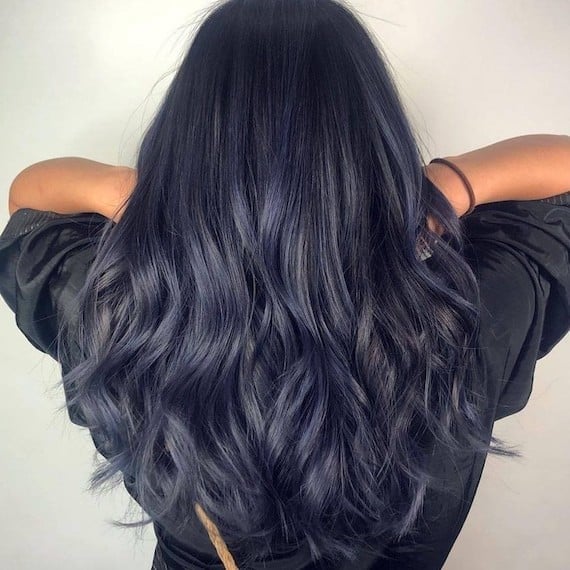
If vibrant blue feels too loud, this is the alternative: a dark base with navy blue and grayish-blue highlights that add depth. On thick, wavy mid-back hair, the highlights create texture. Ask your colorist for: mid-back length, dark base with navy and grayish-blue highlights. This color looks subtle in office light but shows dimension in the sun, though it requires a sulfate-free shampoo to keep the gray tones from turning muddy.
The contrast with a bolder blue like a full vibrant blue is about commitment. This version grows out gracefully because the dark base matches most natural levels, meaning you can stretch salon visits to ten weeks.
Mid-Back Dark Base Blue And Grayish-Blue Balayage, Close-Up Take
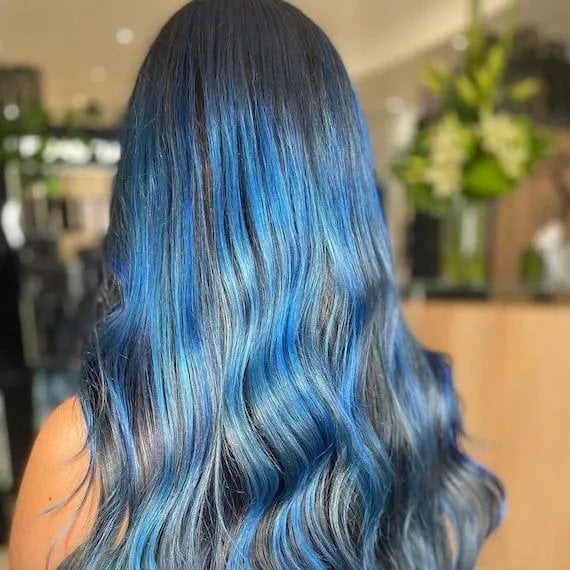
Balayage on a dark base lets blue and grayish-blue tones sit on the surface rather than saturating the whole strand. On thick, wavy mid-back hair, the hand-painted placement creates a lived-in effect that a foil highlight cannot mimic. Ask your colorist for: mid-back length, dark base with blue and grayish-blue balayage. The soft grow-out means you can skip the salon for two months, and a texturizing spray will define the waves without disturbing the color.
Mid-Back Muted Blue-Gray Base Grayish-Blue Highlights, Wavy
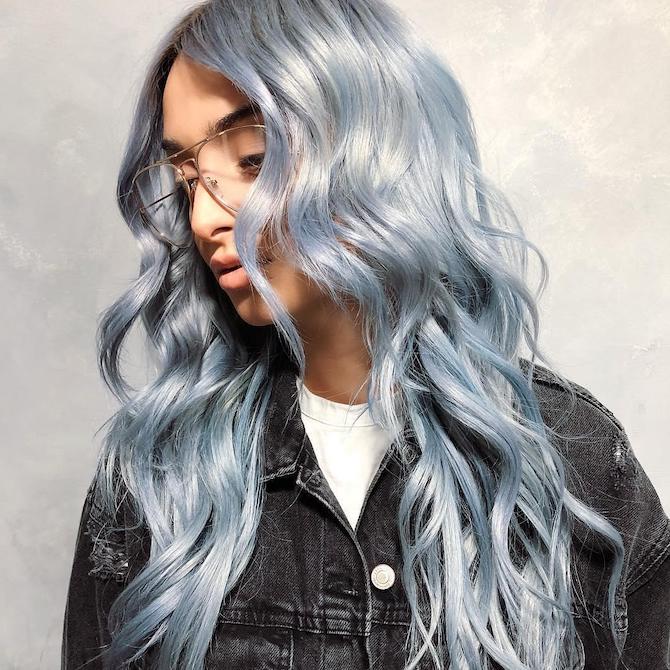
This muted blue-gray base with lighter grayish-blue highlights offers a subtle take on blue hair. The back view shows a middle part and thick, wavy texture reaching mid-back, with a tone that reads as lived-in and sophisticated. Ask your colorist for: mid-back length, muted blue-gray base with lighter grayish-blue highlights.
The deep, dusty tone blends well with natural movement. Use a color-depositing conditioner once a week to keep the grayish-blue from pulling too warm, and book a trim every eight to ten weeks to keep the layers readable. A salon job is the only option here, given the two-tone lift required.
Mid-Back Pastel Blue With Gray Undertones Wavy Blowout
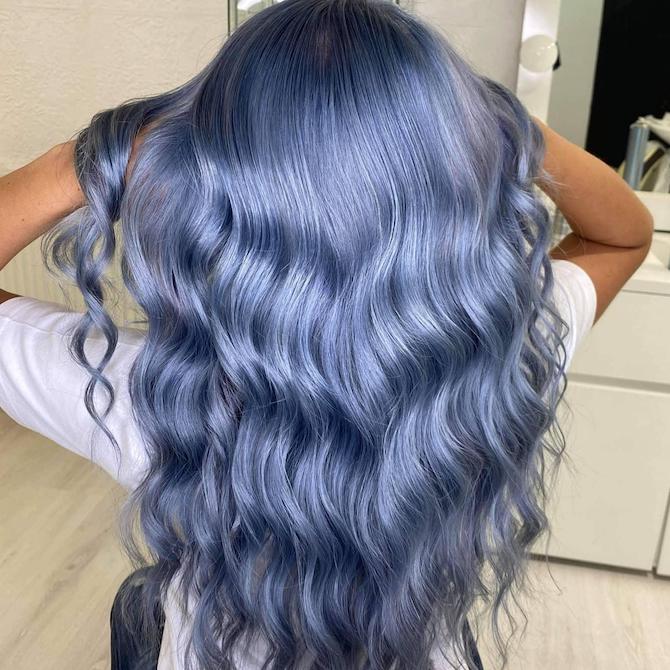
Pastel shades are high-maintenance. This one lives in the pale zone where fading shows fastest, and a warm toner can make the gray undertones look muddy instead of cool. Expect a salon session to lift you to a clean, pale blonde first, then tone to the pastel blue. That process takes about three hours. A purple shampoo helps, but it will not save a shade that has already warmed up.
Collarbone Layers Vibrant Blue Curtain Bangs
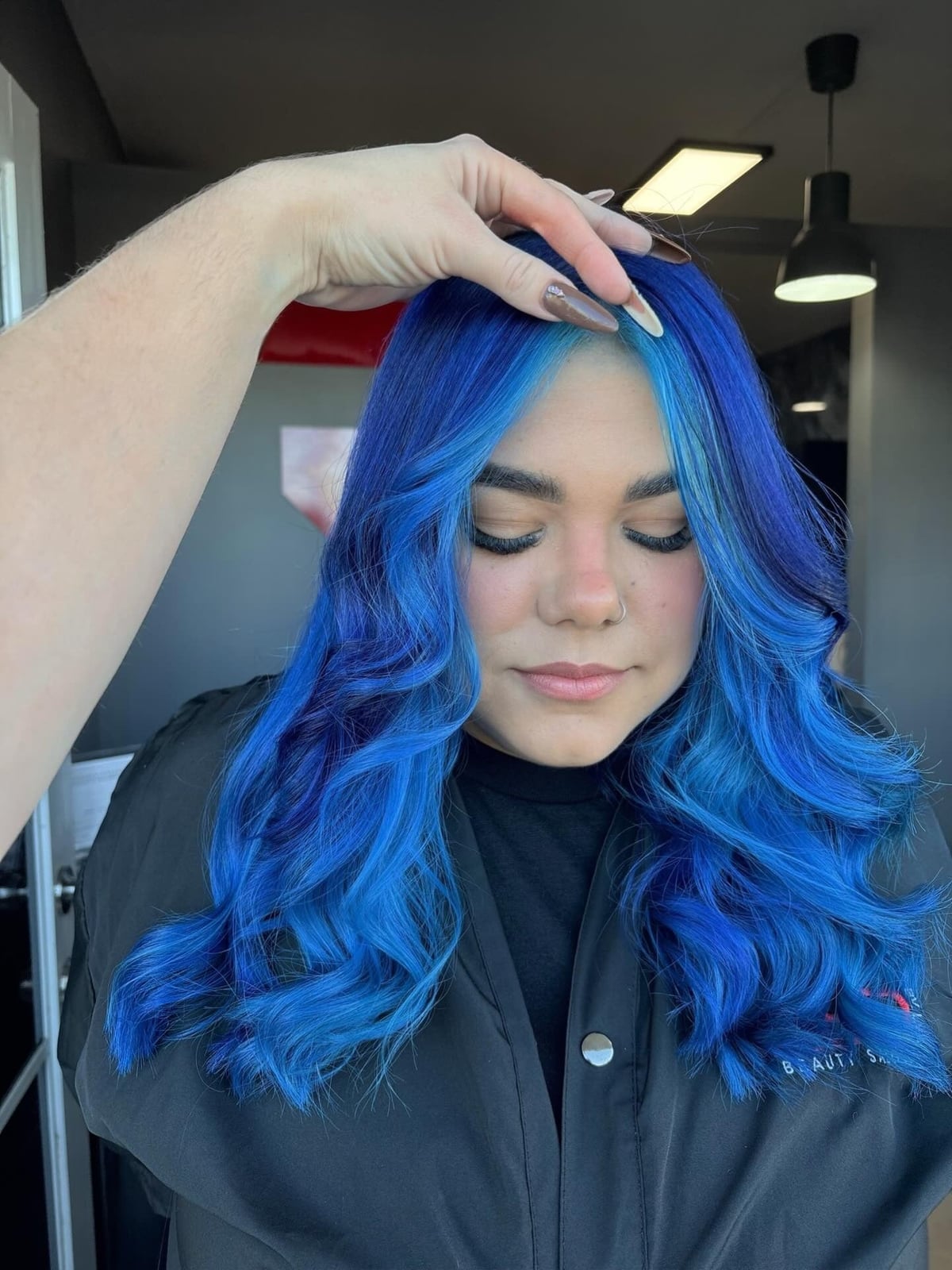
A vibrant blue base with lighter blue highlights, applied through the full head and concentrated in the curtain bangs. The collarbone length and soft layers keep the color from feeling heavy, while the middle part and wavy blowout give the lighter pieces a chance to catch the eye. Ask your colorist for: collarbone length layers, vibrant blue with lighter highlights, curtain bangs.
Mid-Back Midnight Blue Wavy Blowout
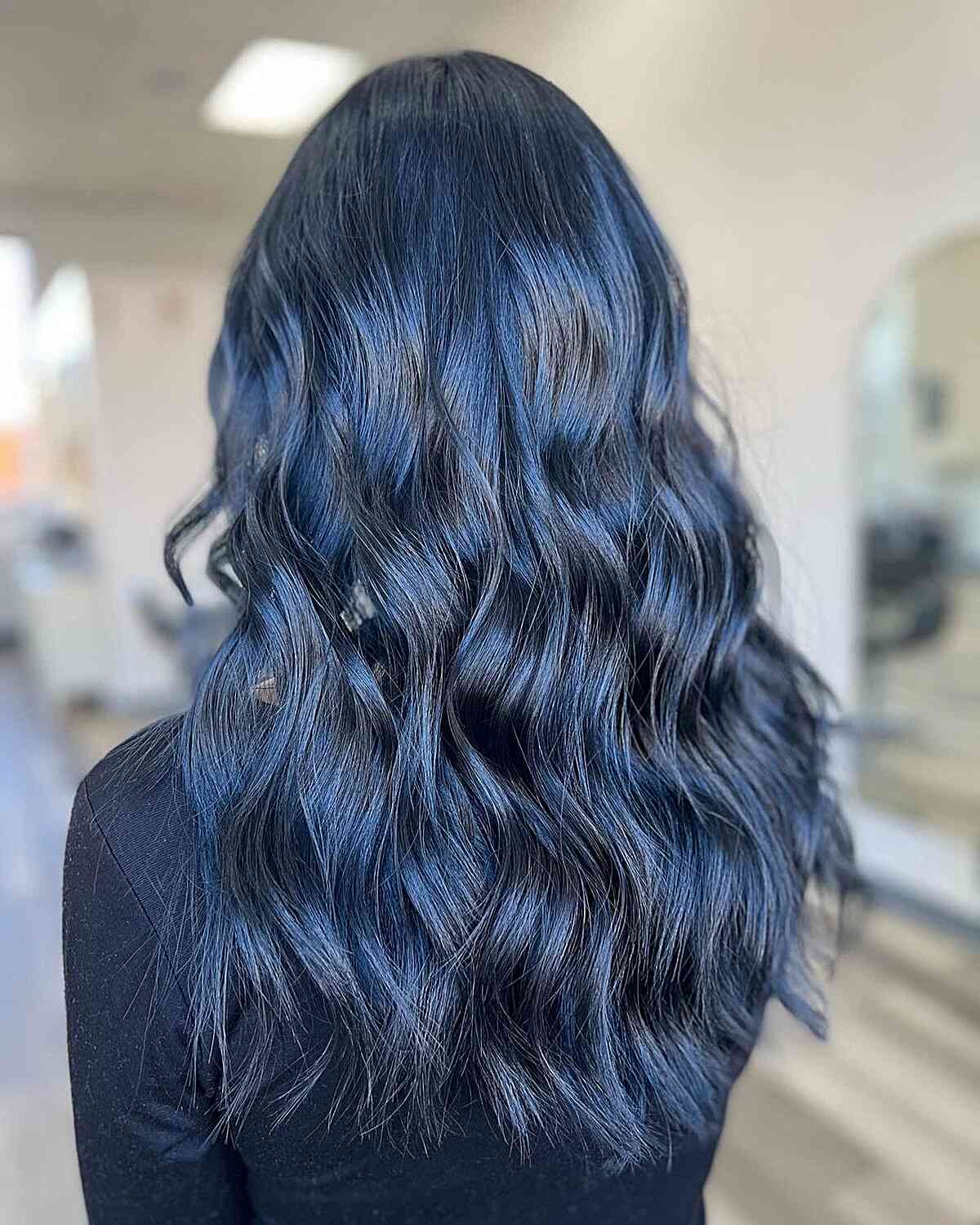
If you want a deep blue that still looks natural, midnight blue is the better choice over something like deep teal, which carries green undertones. The wavy texture here helps because the color needs motion to show its richness. A color-depositing mask every two weeks prevents the tone from flattening out, and a trim every eight to ten weeks keeps the layers from tangling at the ends.
Shoulder Length Vibrant Turquoise Blue
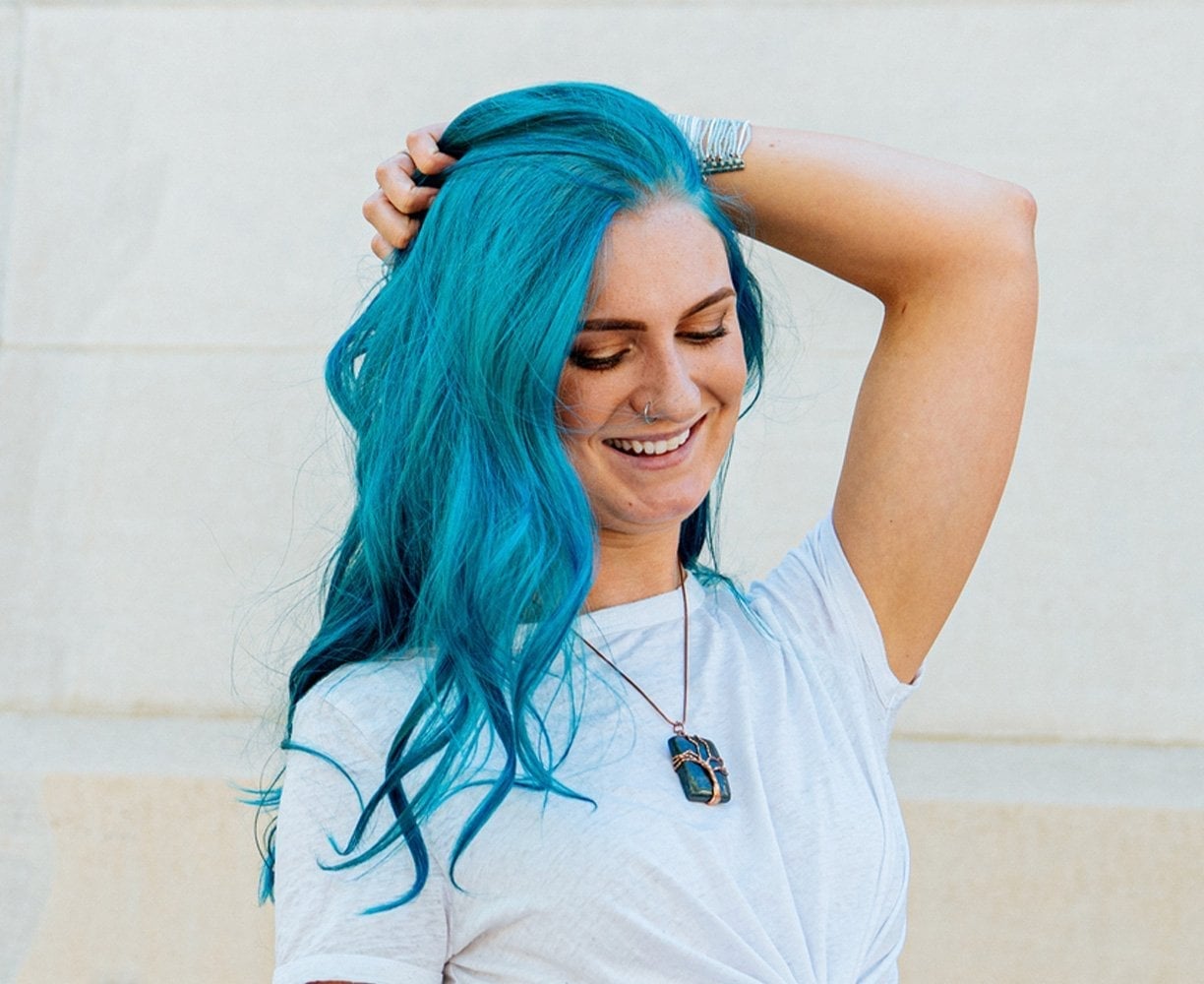
Is a turquoise blue too bold for everyday life? Not if you treat it like a neutral. This shoulder-length cut with thick, wavy texture and a side part lets the vibrant turquoise blue sit front and center without apology. The glossy finish and healthy texture do the heavy lifting. Ask your colorist for: shoulder length, vibrant turquoise blue.
Collarbone Layers Vivid Pink And Electric Blue Streaks
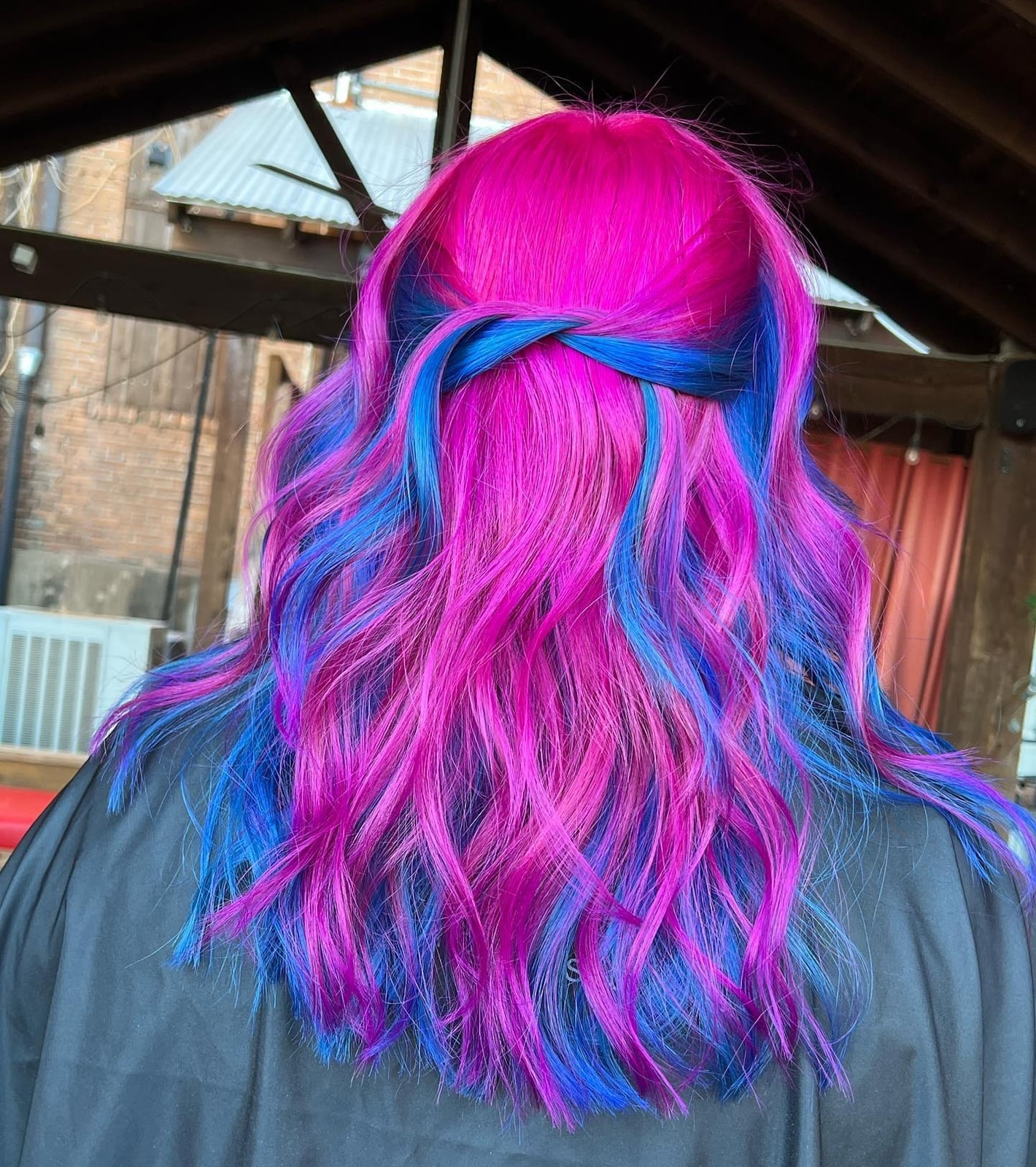
The design relies on contrast: vivid pink and electric blue streaks woven through collarbone-length layers, with one blue strand braided at the crown. That small braid breaks up the color blocking and keeps the mixture from reading as a costume. Thick, wavy hair holds the loose waves and the streaks’ placement best, and the two-tone effect needs a salon visit. Ask your colorist for: collarbone length layers, vivid pink and electric blue streaks. Both shades require bleaching first, so the appointment runs long, and the pink will fade faster than the blue, leaving you with a bluer head than you planned.
Mid-Back Deep Blue Base Darker Blue Lowlights
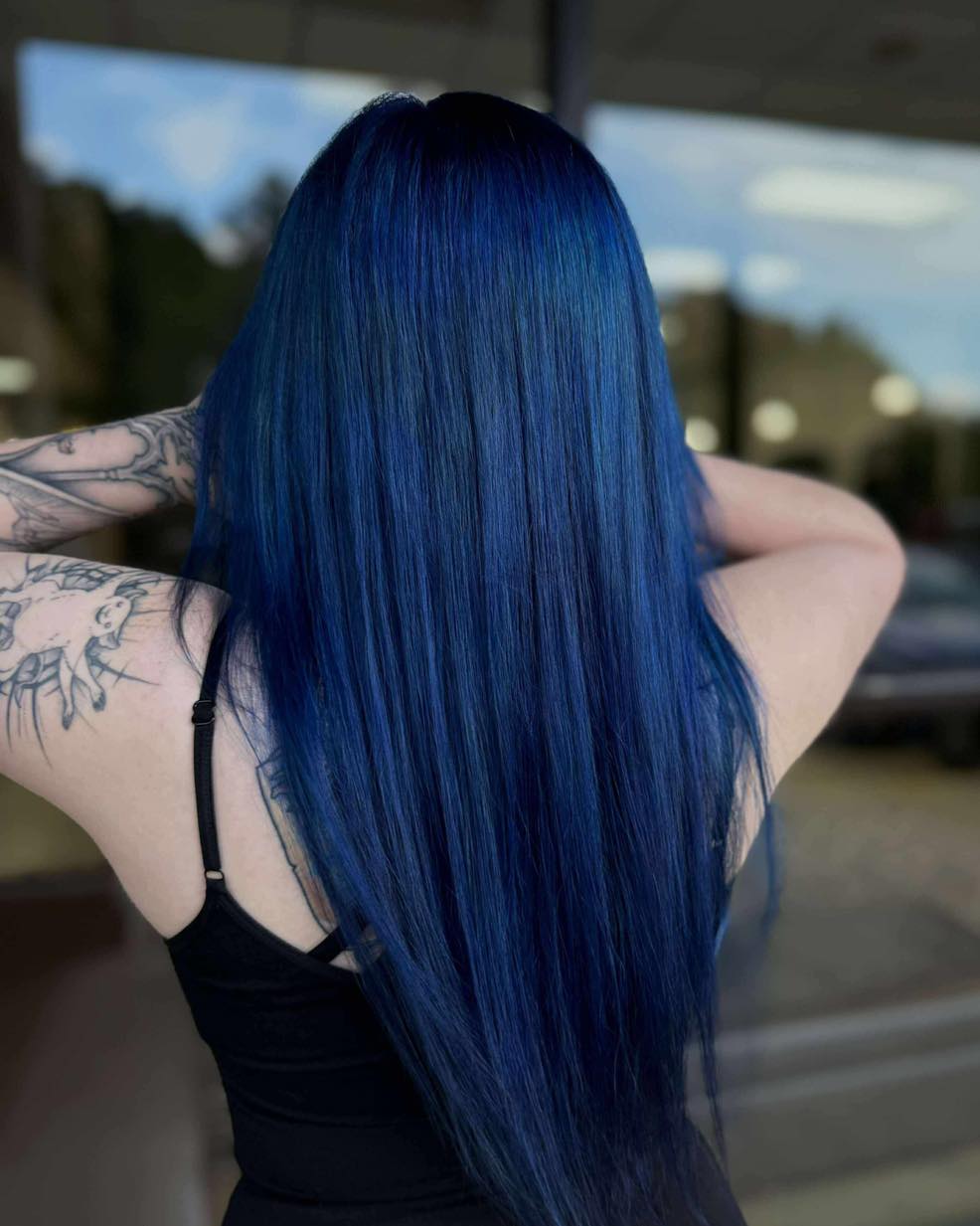
A deep blue base with darker blue lowlights wears like a solid color until the light hits it, then the dimension shows. On thick, straight hair at mid-back length, the lowlights add depth without turning the look busy, and air-drying keeps the cut’s long layers moving naturally. The darker lowlights also slow down the fading process, so the blue stays rich longer than a single-shade application would. Ask your colorist for: mid-back length, deep blue base with darker blue lowlights. Plan on a trim every eight to ten weeks to keep the ends healthy, and expect the lowlights to soften into the base over time rather than vanish abruptly.
Mid-Back Deep Teal Blue Straight Air-Dried
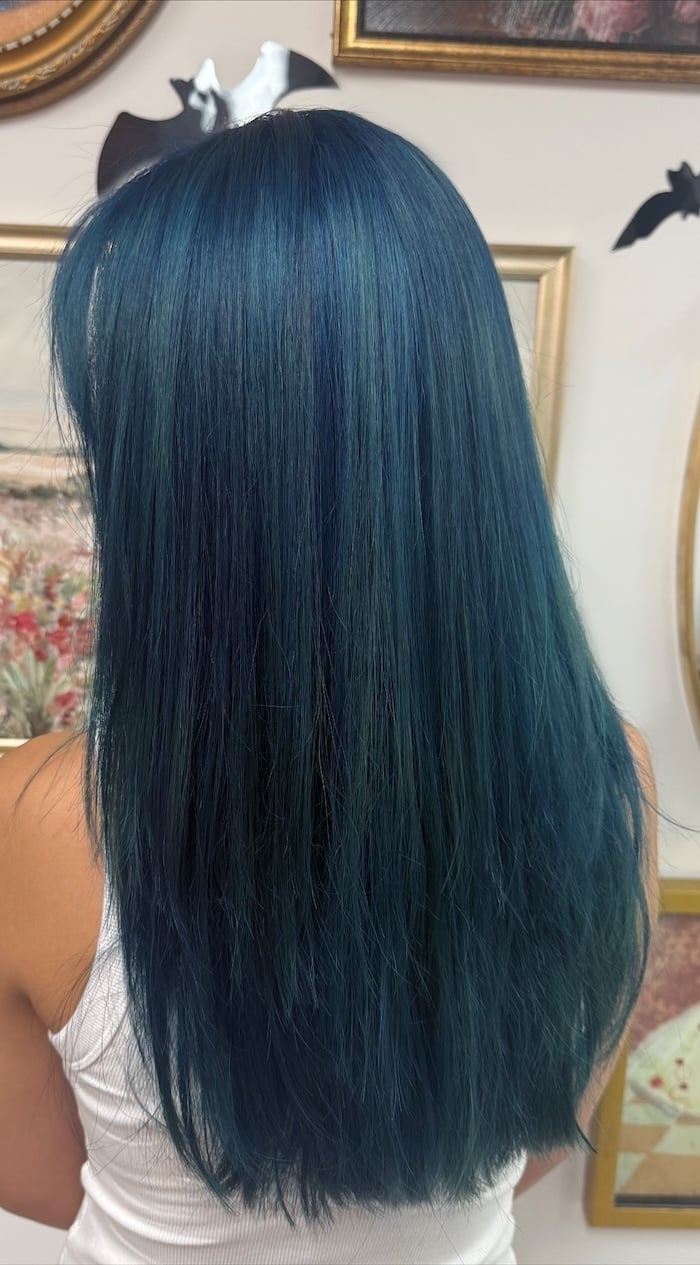
Deep teal blue sits between navy and green, so it reads darker and moodier than a true blue, with subtle tonal variations that catch the eye only when the hair moves. On fine, straight hair at mid-back length, the color adds perceived density, which a lighter blue would not. The middle parting and air-dried finish keep the look understated, so it suits anyone who wants color without the shout. Ask your colorist for: mid-back length, deep teal blue. If you want a cooler, more classic blue, ask for navy instead; teal leans greener and warmer, which is the difference between ocean and ink.
Mid-Back Dark Blue Base Lighter Blue Highlights With Wavy Blowout
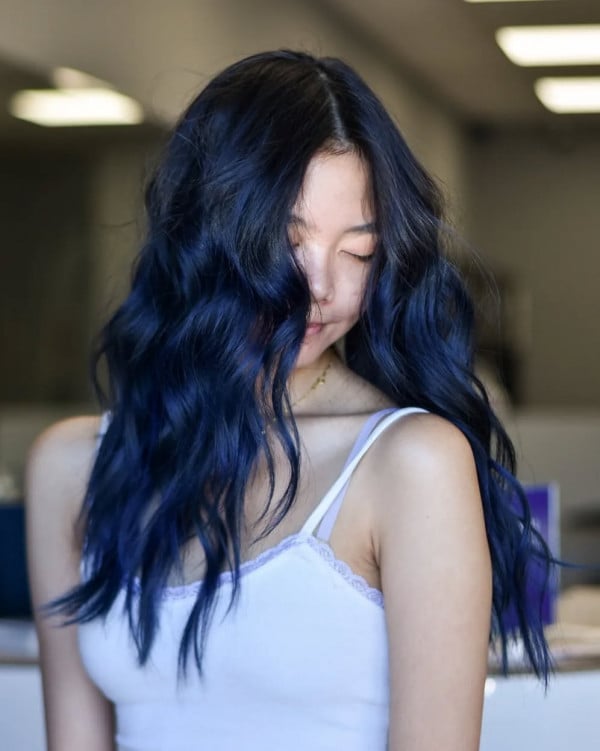
The mistake with dark blue highlights is going too subtle, so they vanish into the base. Here, the lighter blue highlights are placed to contrast with the dark blue base, and the wavy blowout lets each strand catch light at a different angle. Thick, wavy hair at mid-back length benefits from the dimension, as the waves break up the color placement nicely. Ask your colorist for: mid-back length, dark blue base with lighter blue highlights. Getting this right means a salon visit: the highlights need to be painted on after the base is set, and trying to do both at home usually ends with a muddy blend.
Collarbone Layers Blue With Lighter Tones Curtain Bangs
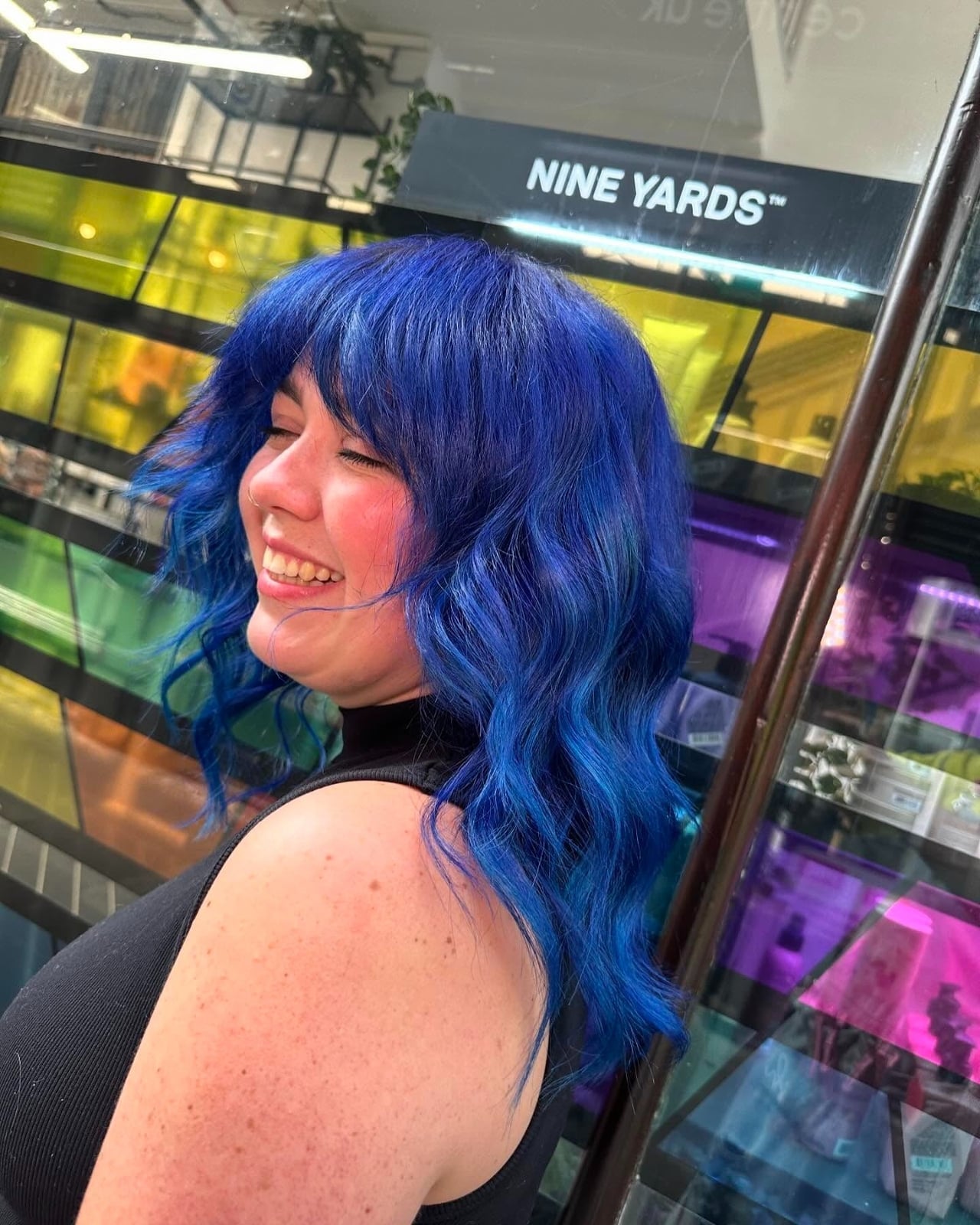
Wondering if blue hair with curtain bangs will actually suit you? The answer depends less on face shape and more on how much time you give the fringe. The curtain bangs frame the face and soften the transition from forehead to cheekbones, while the collarbone-length layers add movement to medium-density wavy hair. The blue with lighter tones creates depth without needing a heavy highlight section. Ask your colorist for: collarbone length layers, blue with lighter tones, curtain bangs. The drawback: curtain bangs need a trim every six to eight weeks, or they start grazing your eyes and lose their swing.
Shoulder Layers Bright Electric Blue Wispy Bangs
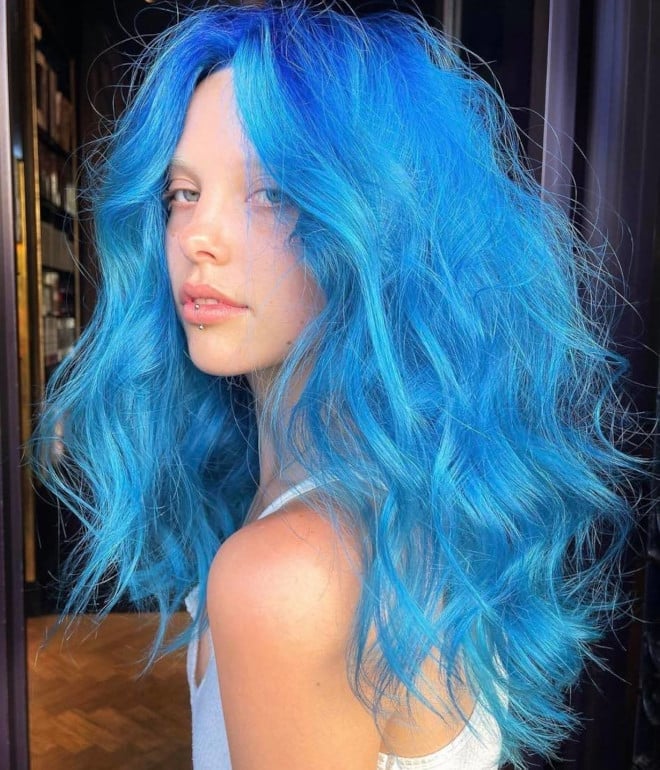
Bright electric blue on shoulder-length layers is a commitment that shows up in your mirror every morning, because the color is the whole story. The wispy bangs and air-dried texture keep it from feeling like a costume, so the bold shade looks like a style choice, not a dare. Medium density wavy hair holds the shape without much fuss, and the middle part lets the color sit evenly around your face.
Ask your colorist for: shoulder length layers, bright electric blue, wispy bangs. Expect to refresh the tone every four to six weeks, since vivid blues fade faster than they should, especially on air-dried hair. A texturizing spray gives the waves grip without crunch, and the bangs need a trim every four to six weeks to stay soft. Plan for about three hours in the chair to lift and deposit the color, then budget your washing routine for cooler water.
Collarbone Bob Aqua Blue Curtain Bangs
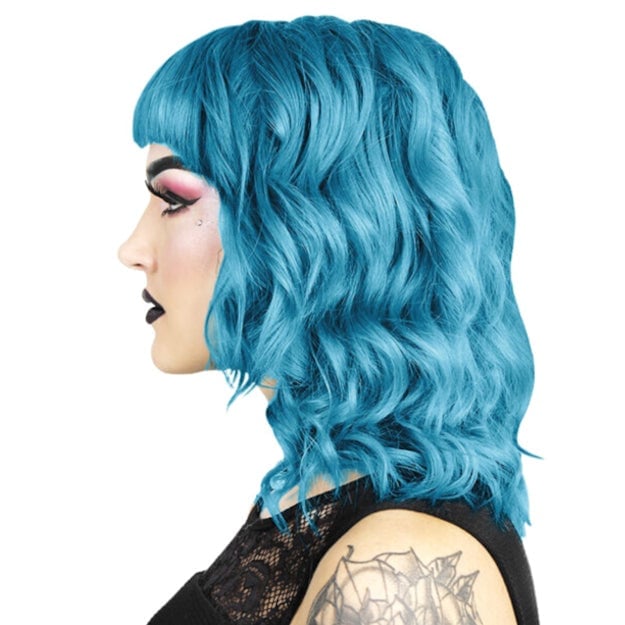
The collarbone bob with blunt ends and wavy texture gets a glossy aqua blue that looks like it was poured, not painted. Curtain bangs and a middle parting frame the face without hiding the sharp line of the cut, which suits most face shapes. This is a salon job from start to finish, because the vibrant shade needs a lightened base to read true.
Ask your colorist for: collarbone bob, aqua blue, curtain bangs. The color application alone takes about two hours, and the bob keeps its shape best with a trim every six to eight weeks. A smoothing serum on the waves keeps the shine visible, and the curtain bangs need a quick trim every four to six weeks to maintain their sweep.
Chin Length Bob Deep Solid Blue Dark Root
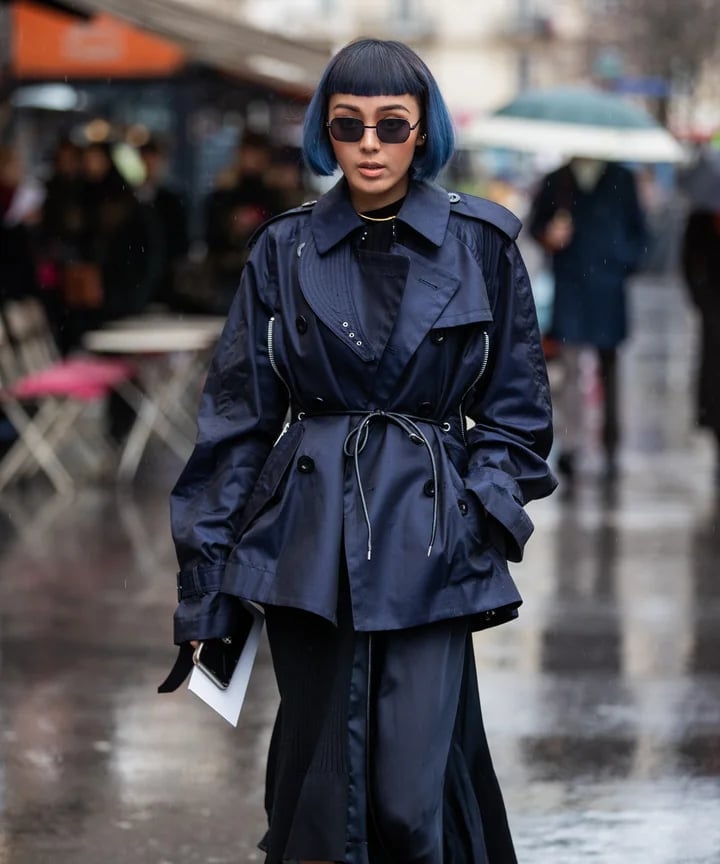
Compared to a full solid blue, this chin-length bob with a dark root and short blunt bangs keeps the color close to the scalp, which means less obvious regrowth. The deep blue is solid and glossy, styled straight and fine, and the middle part emphasizes the graphic shape. It suits fine straight hair that can carry a blunt cut without looking heavy.
Ask your colorist for: chin-length bob, short blunt bangs, deep solid blue with dark root. The dark root line hides new growth for about six weeks, but the solid color needs a gloss or toner every four to six weeks to keep the tone even. A flat iron smooths the ends, and the bangs need a trim every four to six weeks to stay sharp.
Chin Length Bob Vibrant Blue Darker Roots Side Part
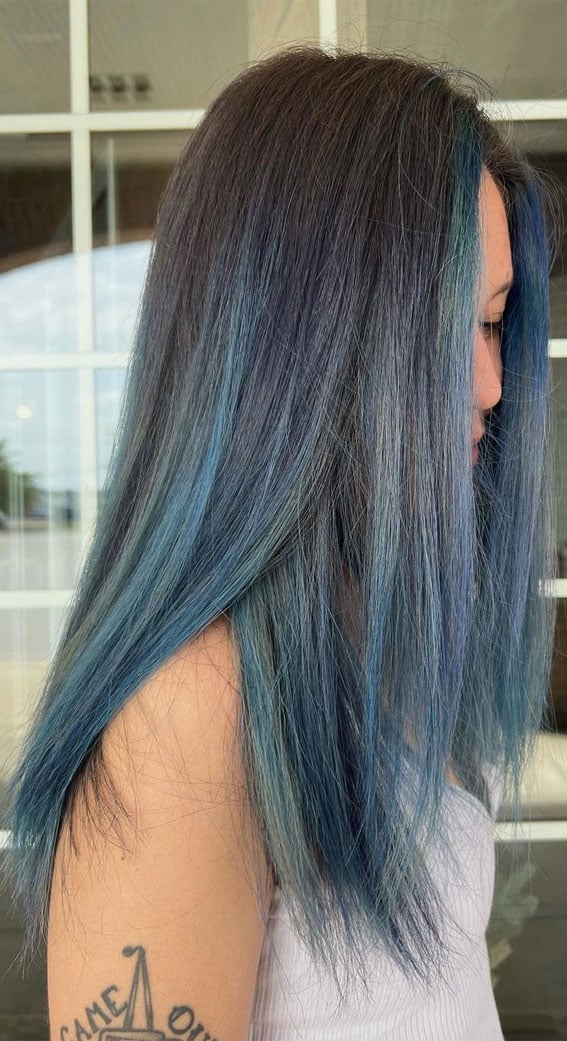
Does a vibrant blue bob with blunt bangs work on fine straight hair? Yes, if you accept that the cut and color are doing the talking. The side part adds an asymmetric twist to the chin-length shape, and the darker roots give the vivid blue a grounded start. This suits face shapes that can take a blunt fringe, since the bangs sit straight across and draw attention to the eyes.
Ask your colorist for: chin-length bob, blunt bangs, vibrant blue with darker roots. The vibrant tone needs more frequent upkeep than a deeper shade, so plan for a toning appointment every three to four weeks. A smoothing serum keeps the fine texture from looking frizzy, and the bangs need a trim every four to six weeks to hold their line.
Collarbone Wavy Black Base Vibrant Blue Highlights
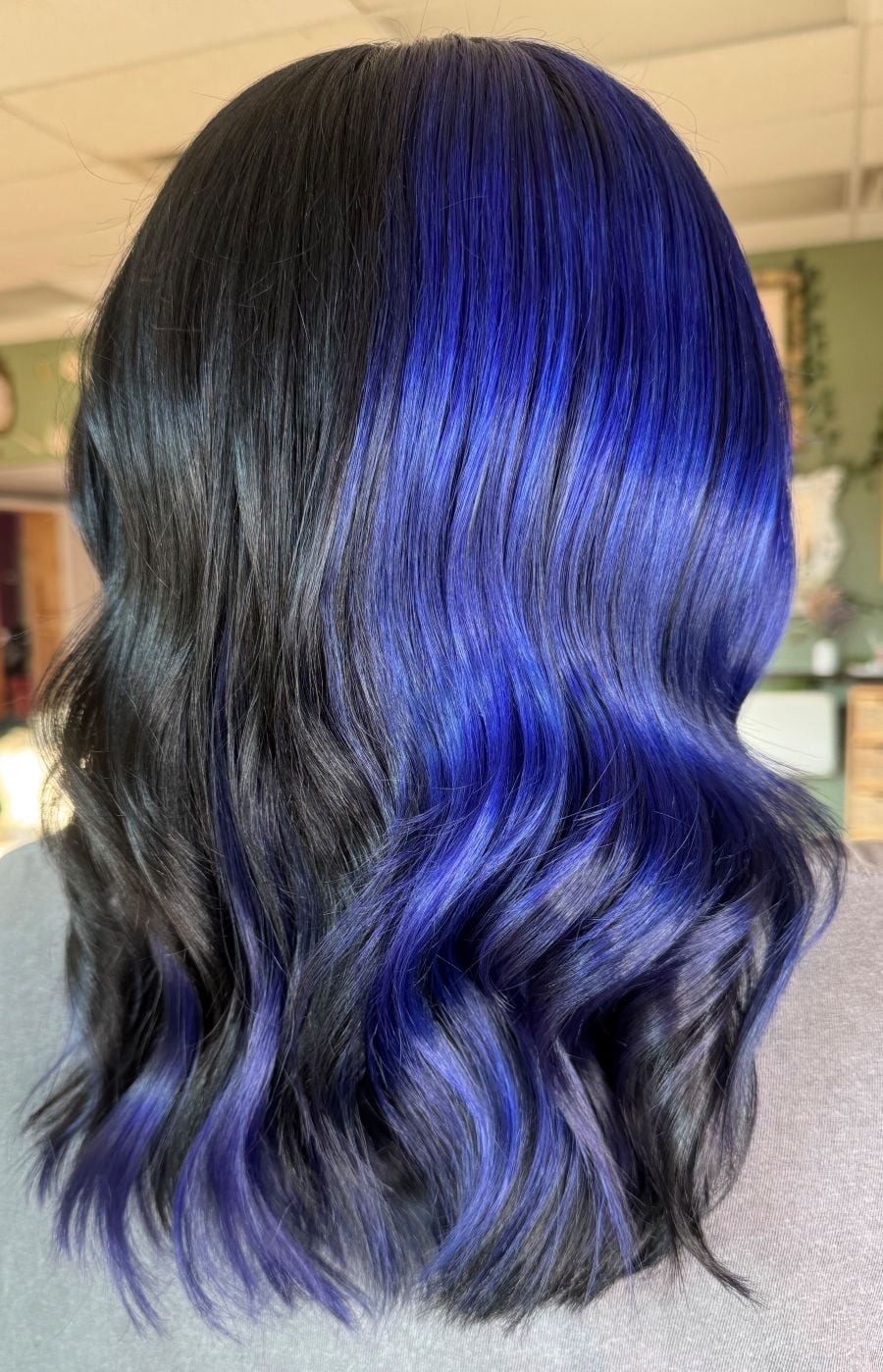
A black base with vibrant blue highlights gives you the color without the full commitment, and on collarbone-length wavy hair, the streaks show up as you move. The loose waves and thick texture let the highlights peek through rather than shout, which keeps the look wearable for everyday. This is a salon-leaning technique because the blue needs lightening to stay bright against the dark base.
Ask your colorist for: collarbone length, black base with vibrant blue highlights. Use a color-safe shampoo to slow the fading, and a leave-in treatment keeps the wavy texture soft. Expect a refresh every six to eight weeks, since the highlights will soften against the black base over time.
Shoulder Layers Blue And Gray Split Dye Blowout
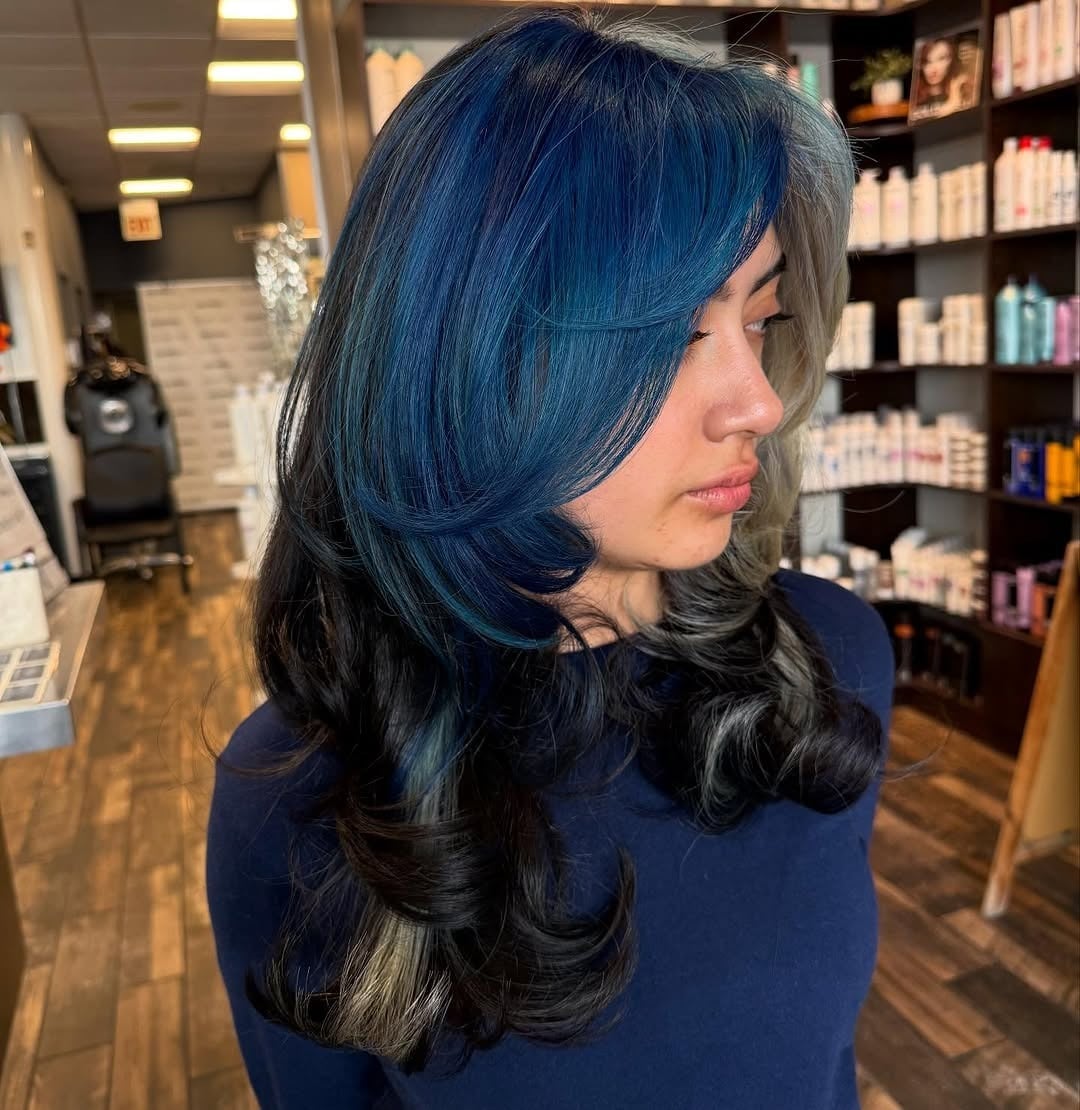
A split dye asks for precision before it asks for courage, since the line where vibrant blue meets light gray has to stay clean from root to tip. The shoulder-length layers and curtain bangs soften what could be a harsh divide, while the side parting lets each color take its own half. Medium density wavy hair holds the blowout shape without fighting the color placement. Ask your colorist for: shoulder length layers, blue and gray split dye. Plan on a full day in the chair, because sectioning and applying two colors without bleed takes time, and a toner on the gray side keeps it from warming up.
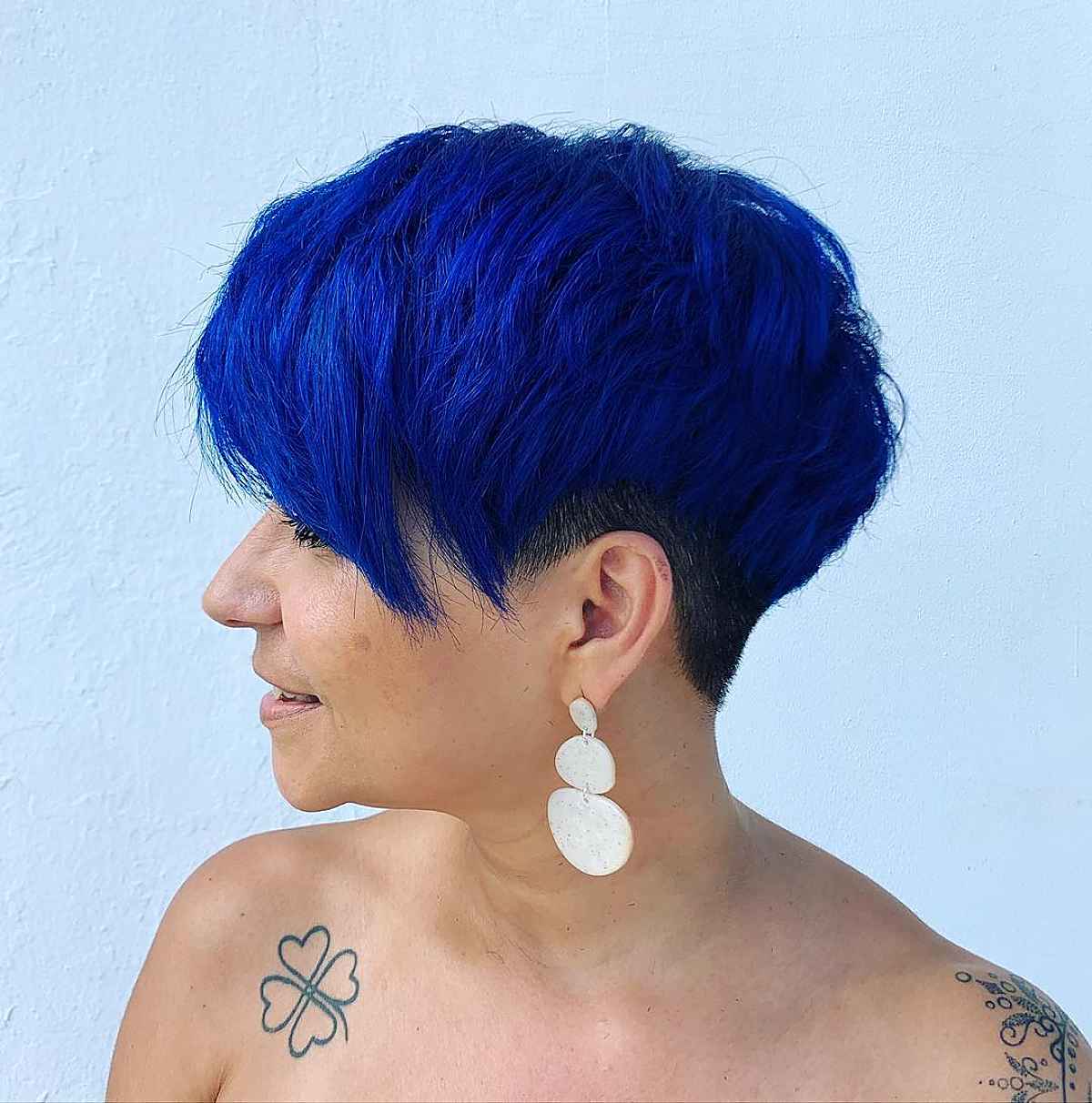
Short Textured Pixie Vibrant Royal Blue
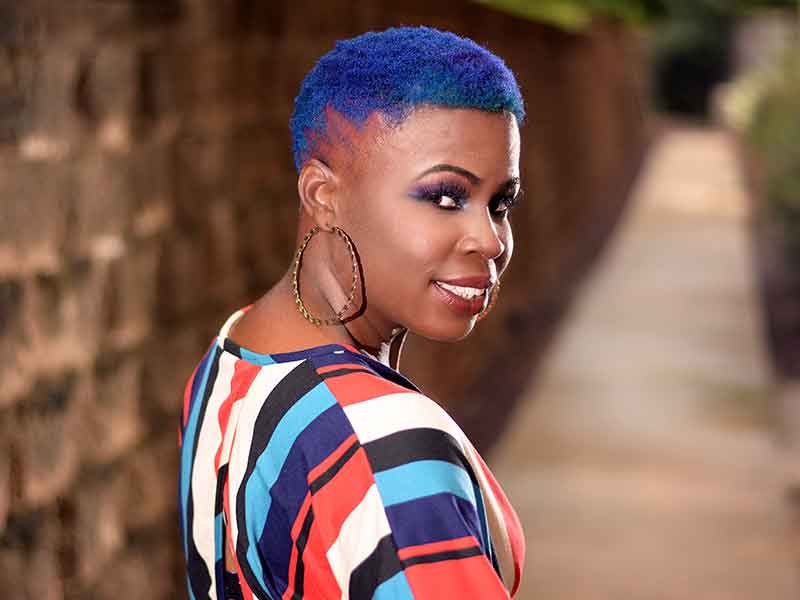
Can a short cut survive a color this loud? Yes, if the texture does the talking. The vibrant royal blue sits on a short textured pixie with a short fringe and side parting, and the curly thick texture gives the color depth that straight hair would flatten. This cut suits round and oval faces well, since the height at the crown adds length, while the short fringe keeps the focus on the eyes. Ask your stylist for: short textured pixie, vibrant royal blue, short fringe. The honest drawback is the grow-out: a shape this precise needs a trim every four to six weeks, and the color needs a refresh at the same pace to keep the roots from showing.
Navy Blue Hair Color Ideas
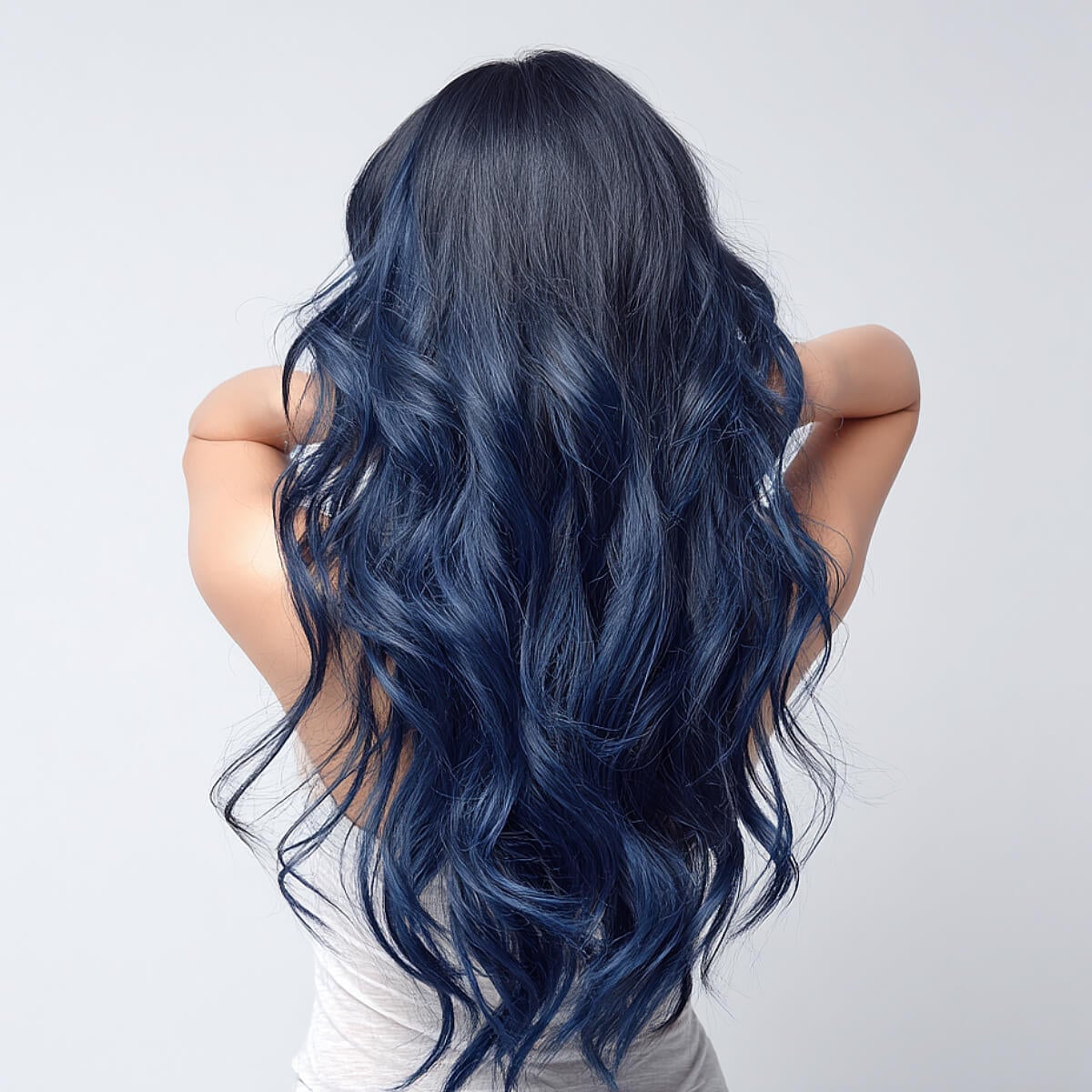
The dark blue with black root shadow reads almost like a natural brunette until light reveals the blue note. Long layers through mid-back wavy thick hair let the color move and catch dimension, while the slicked back parting shows off the depth at the root. Ask your colorist for: deep navy blue shade. The black root shadow hides regrowth for about six weeks, but the navy itself needs a color-depositing conditioner every couple of washes to stop it from drifting toward green.
Cosmic Cobalt Healthy Color Duo
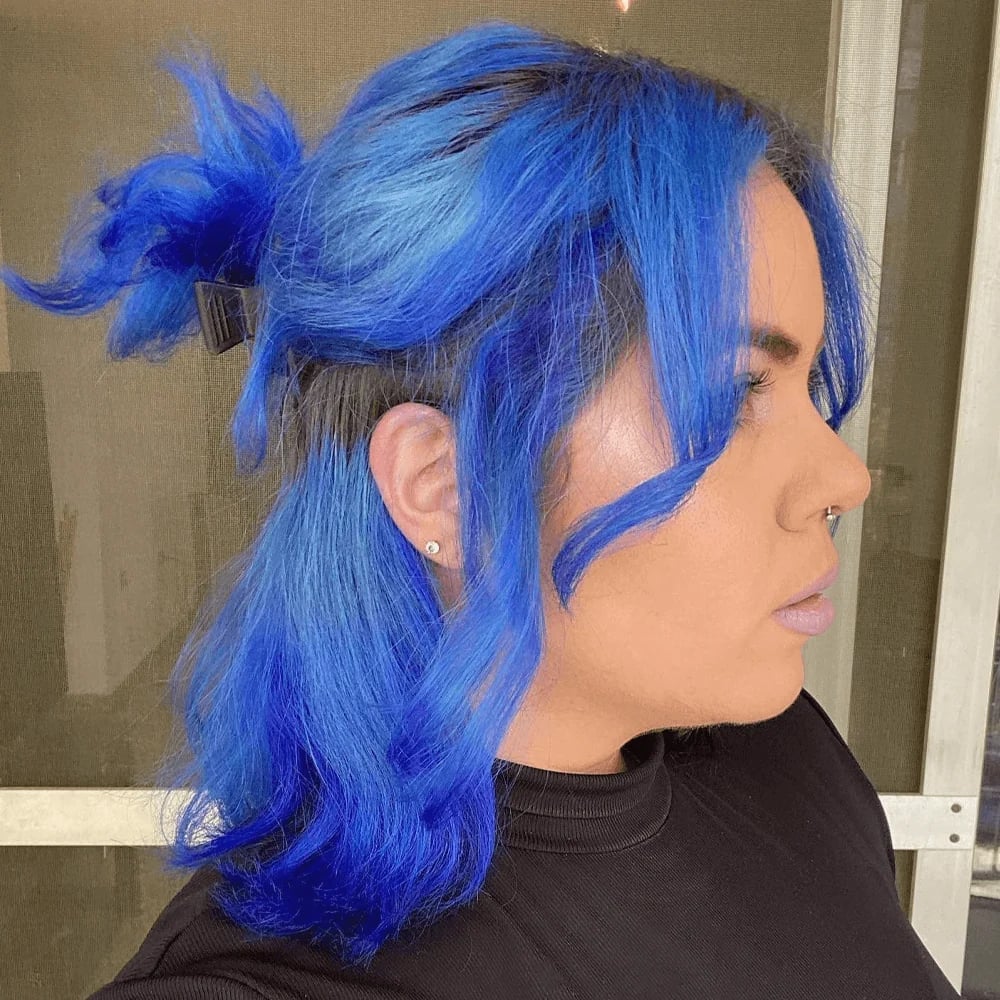
Cosmic cobalt sits between electric blue and royal, brighter than navy but deeper than a pastel, and the vibrant blue with dark root shadow makes it feel grounded rather than costume-like. On a collarbone lob with curtain bangs and wavy thick texture, the half-up messy bun shows off the color’s intensity at the ends while the dark root adds contrast. Ask your colorist for: cosmic cobalt shade. The root shadow is what separates this from a flat all-over blue, and it buys you about five weeks before the grow-out line becomes obvious.
Persian Blue Hair Streaks Dark Midnight Blue Highlights
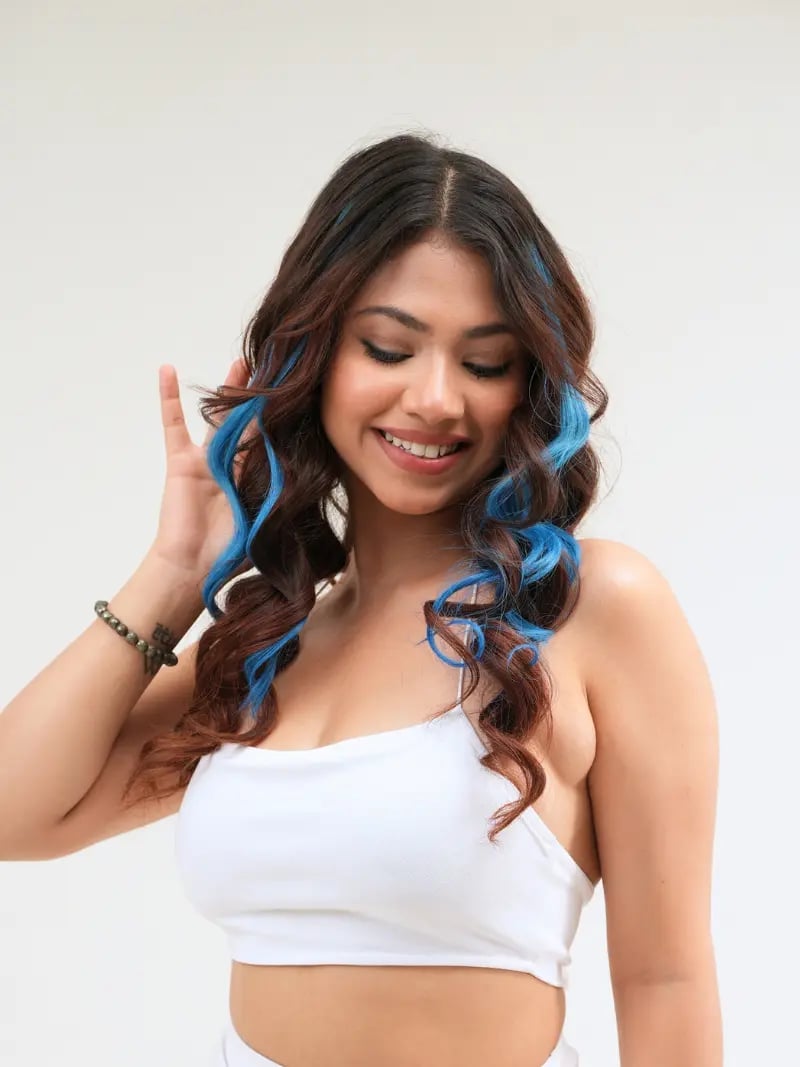
The mistake with Persian blue streaks is treating them like an all-over color when they work best as a contrast layer. On a dark brown base with bright blue highlights through mid-back wavy thick hair, the streaks are visible only when the hair moves, which keeps the look subtle from the front. Ask your colorist for: dark midnight blue with persian blue streaks. Long layers let the highlights peek through without overwhelming the base. Color-safe shampoo and conditioner are essential here, since the bright blue fades faster than the dark base, and a toning appointment every six to eight weeks keeps the streaks from turning green.
Final Thoughts
The trick with blue hair color is matching the shade to your maintenance tolerance. A dark navy or deep teal base hides new growth for weeks, while a pastel or vibrant solid blue needs a root touch-up every four weeks and a toning session at week six. Fine hair holds a solid blue longer without fading patchy; curly and coily textures benefit from a semi-permanent formula that deposits color without extra damage.
- Use color-safe shampoos and conditioners to preserve vibrancy.
- Wash hair with cool water to minimize color fade.
- Deep condition weekly to maintain shine and prevent dryness.
- Plan for root touch-ups every 4-6 weeks, depending on growth.
- Consider a color-depositing conditioner to refresh the tone between salon visits.
Choose a shade that makes you feel confident.