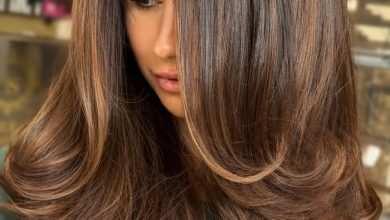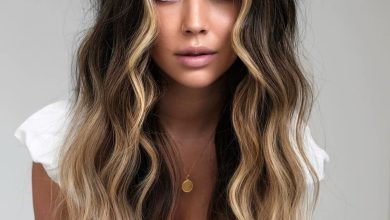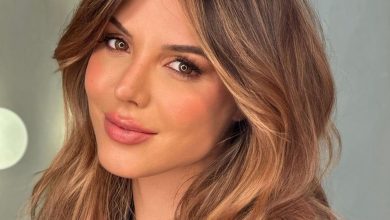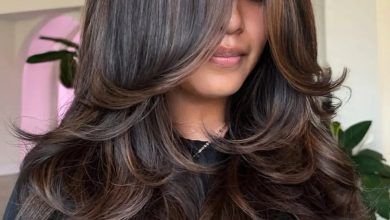
Chestnut hair is the color that keeps its depth whether it’s cut into a sharp bob or left long and layered. Right now, the shift is toward lived-in color and soft, face-framing layers, with curtain bangs doing the work that heavy fringes used to.
These 35 Chestnut Hair ideas move from short shags to mid-back waves, covering every length in between. Whether your hair is fine and falls flat or you’re fighting a visible grow-out line, there’s a cut and color combo here that fits your routine. Low upkeep to high, blunt to textured, these are the looks worth saving.
Short Curly Shag With Curtain Bangs
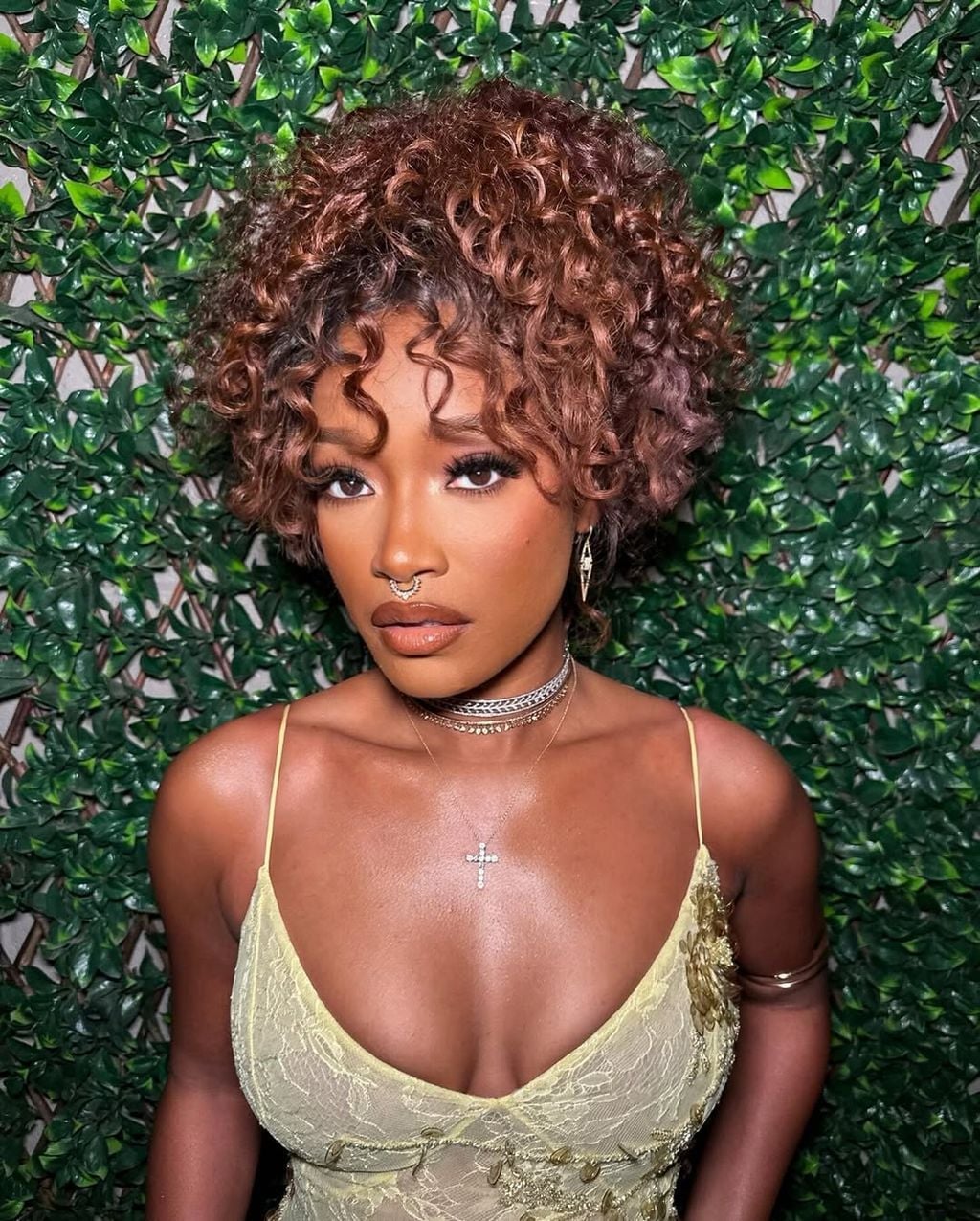
Ever wondered if your thick, curly hair can handle a shag without turning into a triangle? This chin-length cut proves it can, especially when the curtain bangs are cut to blend right into the face-framing layers. The rich chestnut base gets a lift from warmer highlights woven through the curls, and the soft blowout keeps the shape voluminous instead of wild. Ask your stylist for a short curly shag with curtain bangs. A diffuser on low heat is your friend here, and a trim every six to eight weeks keeps the shag from losing its bounce.
Collarbone Layered Lob With Curtain Bangs
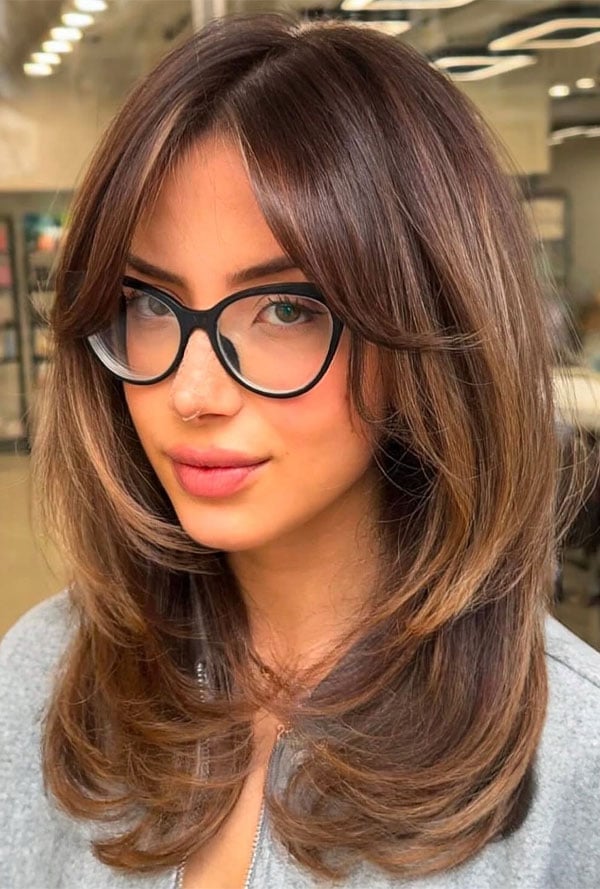
The clever part of this collarbone lob is how the curtain bangs are cut: they start longer at the sides and sweep forward to soften the face, while the layers underneath are angled to keep the fine, wavy texture from falling flat. The middle parting lets the bangs frame both sides evenly, and the subtle highlights on the chestnut brown base add dimension to the overall look.
Ask your stylist for a collarbone layered lob with soft curtain bangs and face-framing layers. For styling, blow-dry the bangs forward with a round brush, then switch to a large barrel for the rest. A trim every six to eight weeks keeps the lob from turning into a shapeless blob.
Collarbone Lob With Soft Face-Framing Layers

A lob with soft face-framing layers is a low-maintenance cut that still looks intentional. The layers start around the cheekbones and blend down to the collarbone, so the wavy, medium-density texture has movement without losing weight. The curtain bangs are cut to feather at the edges, which keeps them from looking blunt. This cut suits most face shapes, especially if you want to soften a square jaw. Ask your stylist for a collarbone lob with soft face-framing layers and curtain bangs. To keep the volume, spritz a volumizing spray at the roots before blow-drying, and book a trim every six to eight weeks. The side parting adds a bit of asymmetry that makes the shape feel less static.
Shoulder Length Lob With Wispy Curtain Bangs
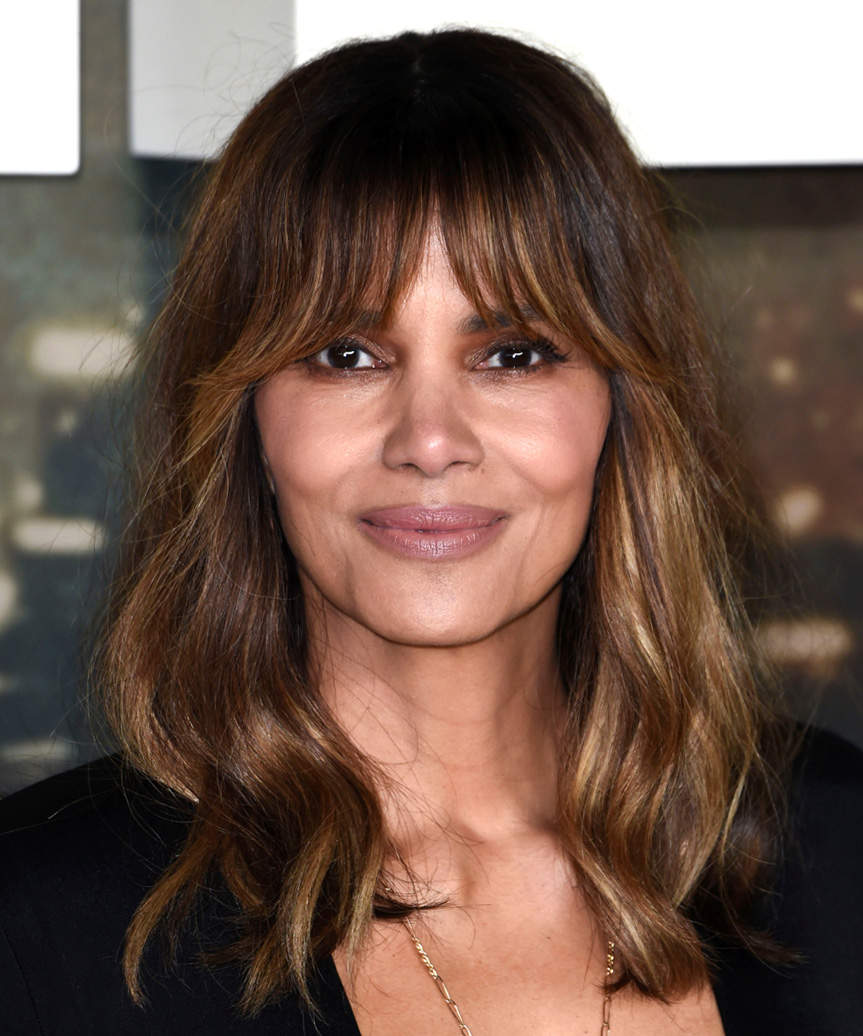
If a blunt, one-length lob feels too severe, this wispy version is the softer sibling. The collarbone-length cut keeps the weight low, but the wispy curtain bangs and soft layers break up the line, so it moves with you instead of against you. The rich chestnut brown base gets subtle lighter brown highlights that add dimension without looking streaky. This lob suits medium-density wavy hair best, and the wispy bangs work on most face shapes because they can be parted to flatter. Ask your stylist for a collarbone lob with wispy curtain bangs and soft layers. Style it by tousling with a texturizing spray for a lived-in finish, and expect a trim every six to eight weeks.
Textured Collarbone Shag With Curtain Bangs
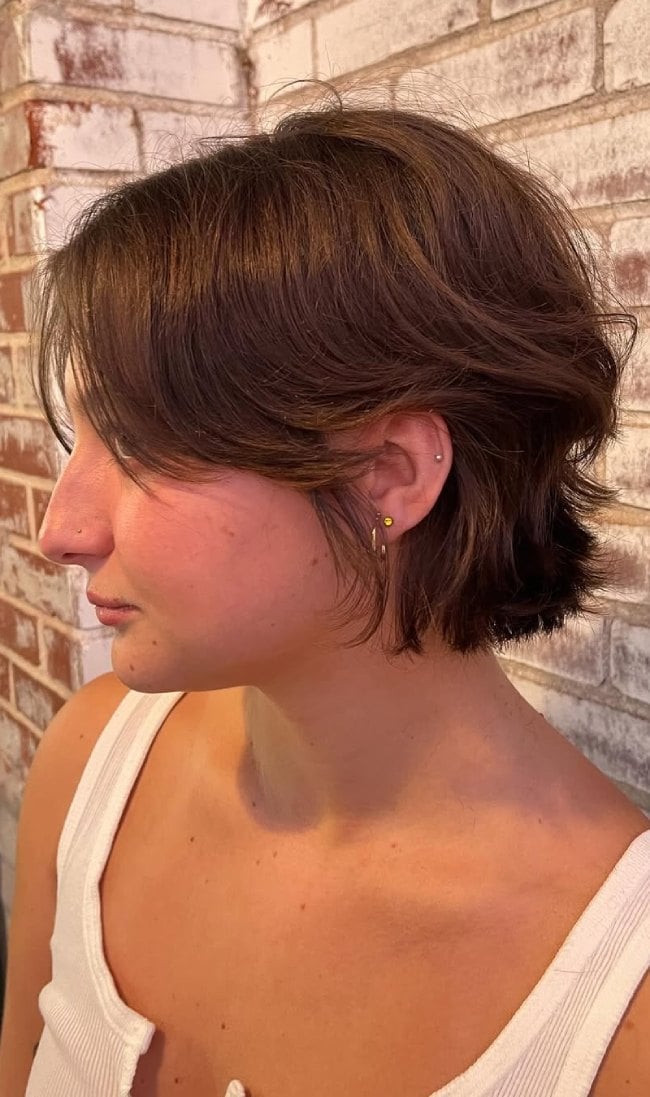
The shag is a cut that relies on technique more than styling. Here, the layers are carved through the interior to create that textured, choppy effect, while the curtain bangs are cut to blend seamlessly into the face-framing pieces. The side parting adds a bit of asymmetry, which gives the wavy, medium-density texture a natural swing. The rich chestnut brown has visible dimension, thanks to the way the layers catch the light.
Ask your stylist for a collarbone shag with curtain bangs and textured layers. The key is point-cutting, where the scissors are held vertically to soften the ends, so they don’t look blunt. For styling, scrunch in a sea salt spray to enhance the wave, and let it air-dry or diffuse on low. A trim every six to eight weeks keeps the shag from growing out into a shapeless mass.
Collarbone Waves With Curtain Bangs
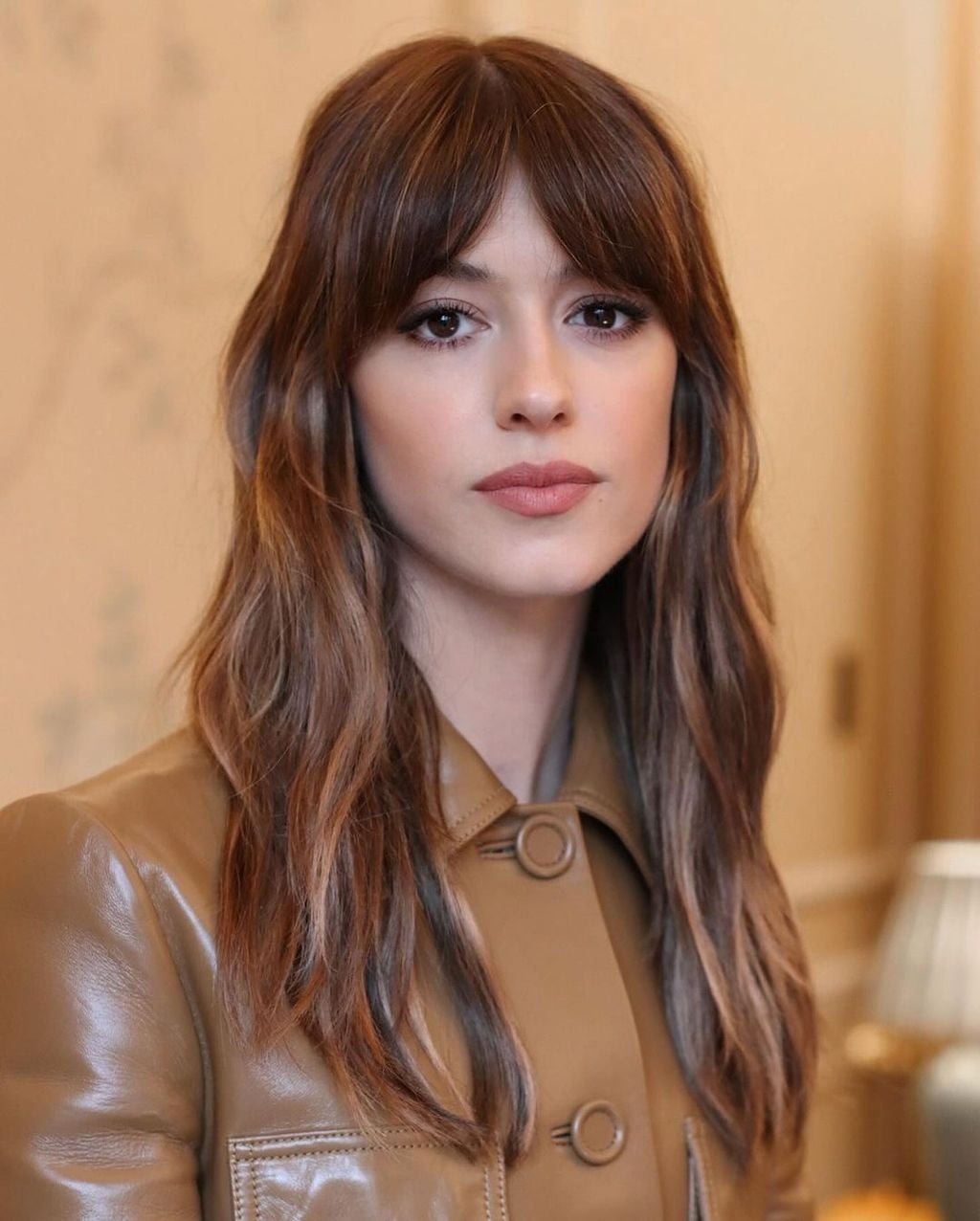
Why does collarbone length suddenly feel like the most wearable length of the season? Because it hits that sweet spot between short and long, and when you add loose waves and curtain bangs, it reads as relaxed rather than undone. The middle parting and soft, face-framing pieces suit round and heart faces by balancing the jaw. Ask your stylist for: collarbone waves, soft curtain bangs, blonde balayage. A large barrel curling iron gives you that loose wave in about fifteen minutes, and a trim every six to eight weeks keeps the ends from straying. It is the kind of cut that works for the office on Tuesday and a weekend brunch without a single change.
Shoulder Length Layers With Caramel Balayage
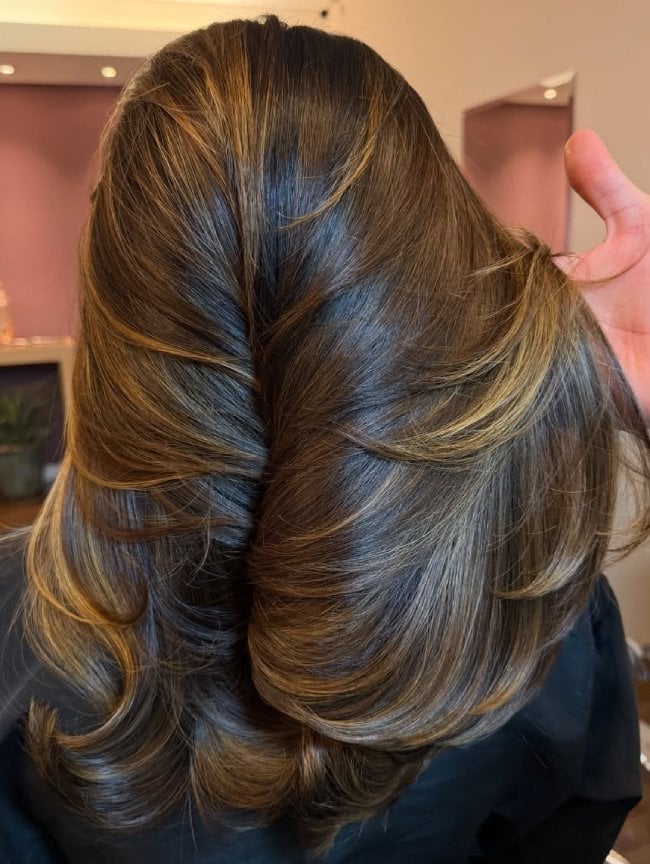
The rule with balayage on fine hair is simple: the lighter pieces go where the layers move, or the color reads as a stripe. This dark mocha base with golden caramel balayage keeps the dimension close to the ends, so the grow-out line stays soft. The side parting and curtain bangs frame the face without adding weight. Ask your colorist for: shoulder length layers, curtain bangs, golden caramel balayage. A smoothing serum adds the gloss you see in that wavy blowout, and a trim every six to eight weeks keeps the shape honest. Do this at a salon, not at home; balayage on fine hair needs a steady hand to avoid patchiness.
Shoulder Length With Face-Framing Layers
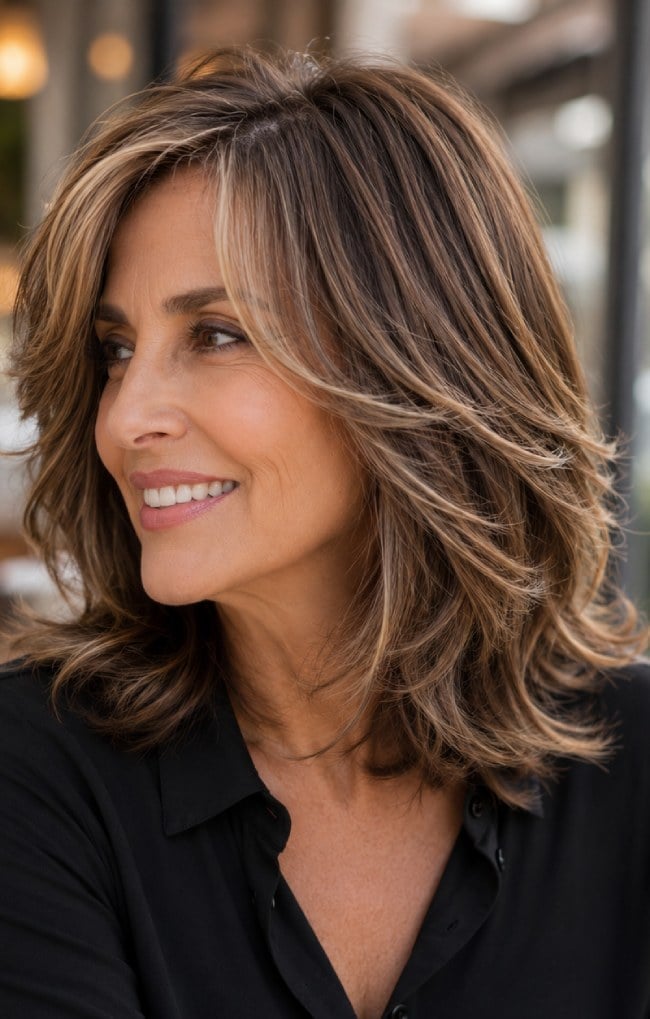
Face-framing layers are the design element that does the most work for the least commitment. Cut to start around the cheekbone and blend through the ends, they give the hair movement without sacrificing length. The side-swept bangs tuck into the layers, so the whole shape reads as one continuous line. This suits medium density wavy hair best, since the layers need a little natural body to lift. Ask your stylist for: shoulder length layers, side-swept bangs, honey highlights. Blow-dry with a round brush, pulling the front pieces away from the face, and you have a polished wave in about twenty minutes. A trim every six to eight weeks keeps the framing from turning into a mullet.
Chin Length Bob With Blunt Bangs
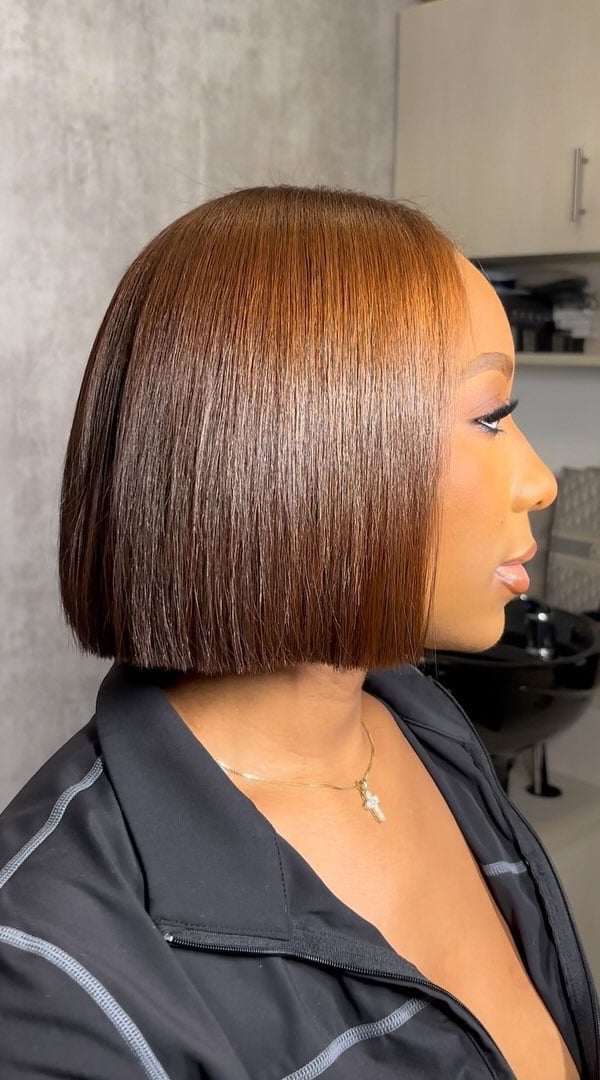
How does a bob this sharp stay looking intentional? It does not; it needs maintenance. The blunt bangs and chin length cut are precise, so the lines show every skipped appointment. On fine, straight hair, the sleek finish is a flat iron away, but the baseline will need a trim every four to six weeks to keep that clean edge. Blunt bangs suit oval and long faces by shortening the vertical line. Ask your stylist for: chin length bob, blunt bangs, poker straight. This is a salon-only cut, because a millimeter off the wrong side changes the whole geometry. The color is a rich, uniform chestnut brown, which means no root touch-up worries, just the shape.
Chin Length Blunt Bob With Medium Brown
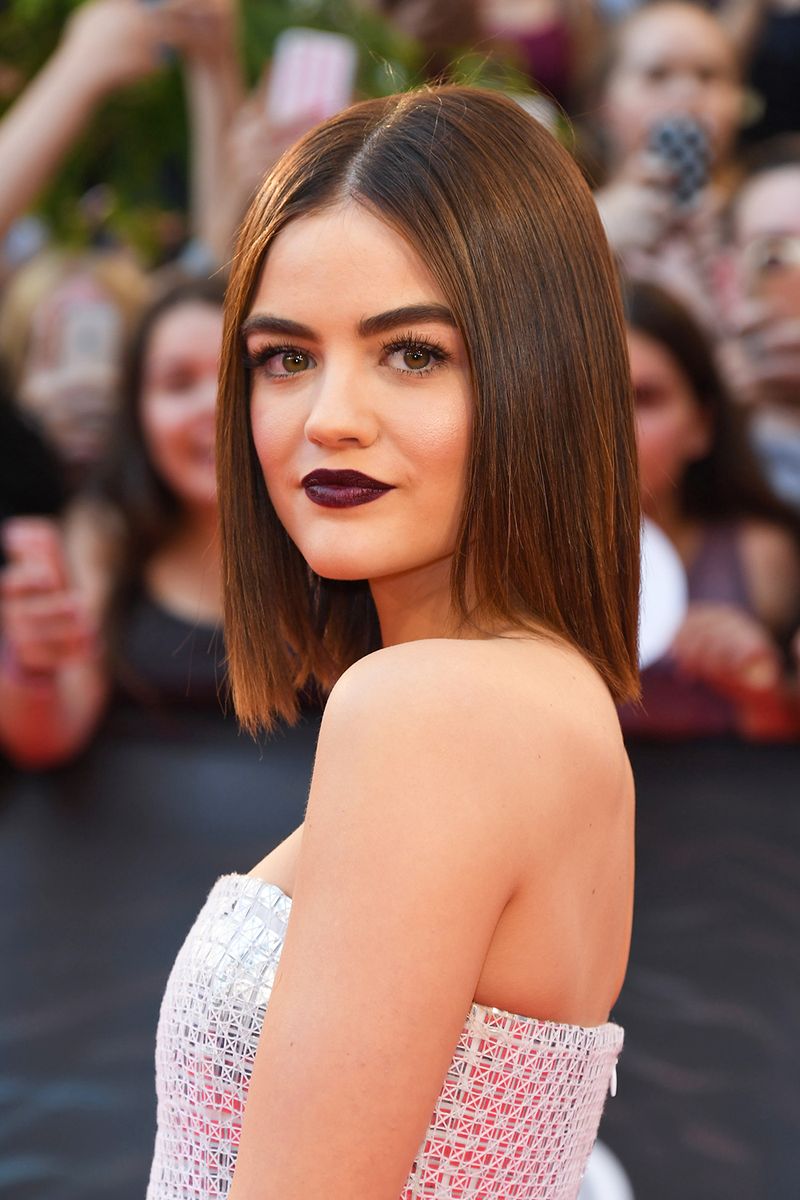
The middle parting draws the eye down, which elongates round faces, and the medium chestnut brown keeps the look understated. On fine, straight hair, the sleek finish is achievable, but it does require daily styling with a flat iron and a smoothing serum to avoid flyaways. Ask your stylist for: chin length blunt bob, straight and sleek. The honest drawback is that the shape shows every growth spurt; a trim every four to six weeks is not optional. It is a sharp, modern cut that looks best when the wearer accepts the upkeep.
Chin Length Bob With Glossy Finish
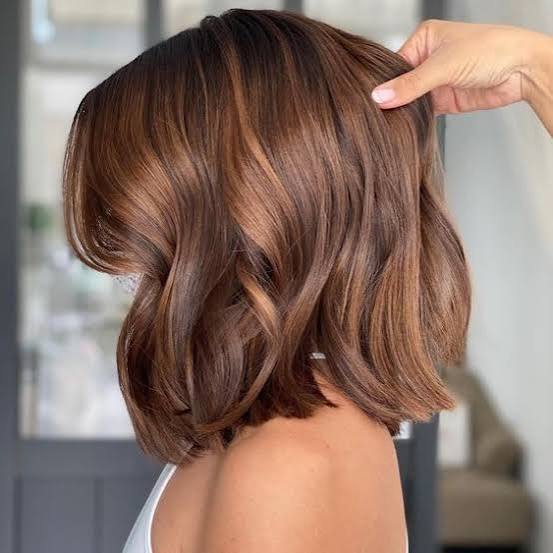
A chin-length bob cut to sit close to the jaw and styled into soft, smooth waves with a side part. The glossy chestnut brown color has no highlights or lowlights, which means the shine is the whole point. Medium density wavy hair at this length can handle the polish without looking flat. The wave pattern needs to be uniform, not loose at the ends and tight at the roots. Ask your stylist for: chin length bob, soft waves, glossy finish. Use a large barrel curling iron and a shine spray to get the reflection right. A trim every four to six weeks keeps the shape sharp.
Collarbone Layered Bob With Caramel Highlights
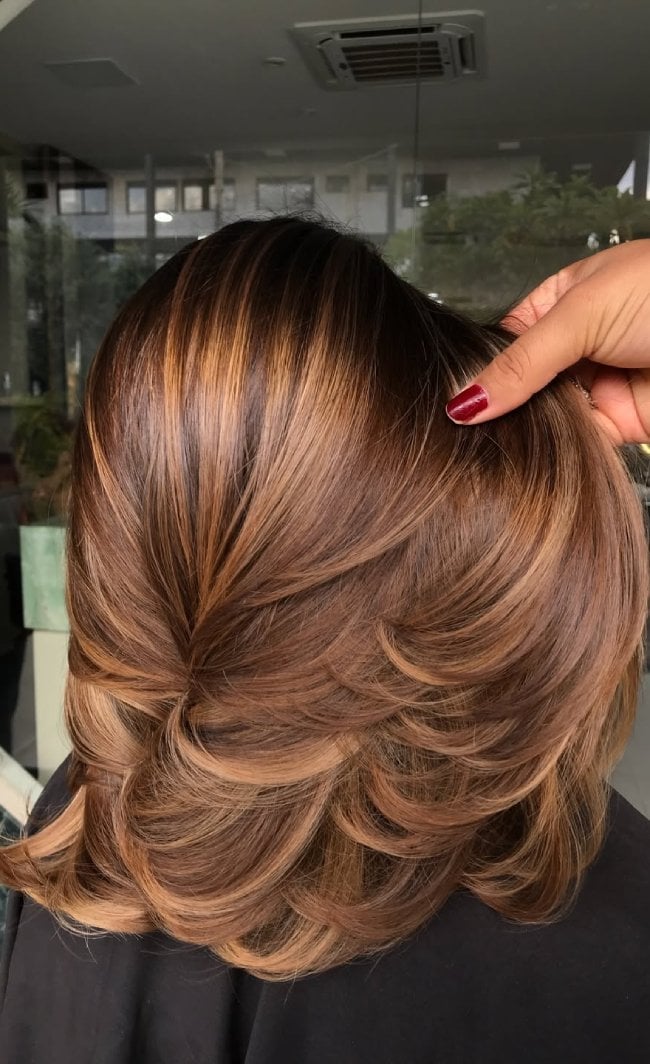
This is not a solid chestnut bob. It is a collarbone-length layered bob where the caramel ribbon highlights run through the layers, not on top of them. The chestnut brown base keeps the contrast warm rather than brassy. Thick wavy hair at this length benefits from the layering technique that lets the caramel pieces peek out with each wave. Ask your colorist for: collarbone layered bob, caramel ribbon highlights, soft waves. A smoothing cream on damp hair before blow-drying keeps the waves defined. Trim every six to eight weeks to maintain the bob shape and the highlight placement.
Collarbone Long Bob With Face-Framing Layers
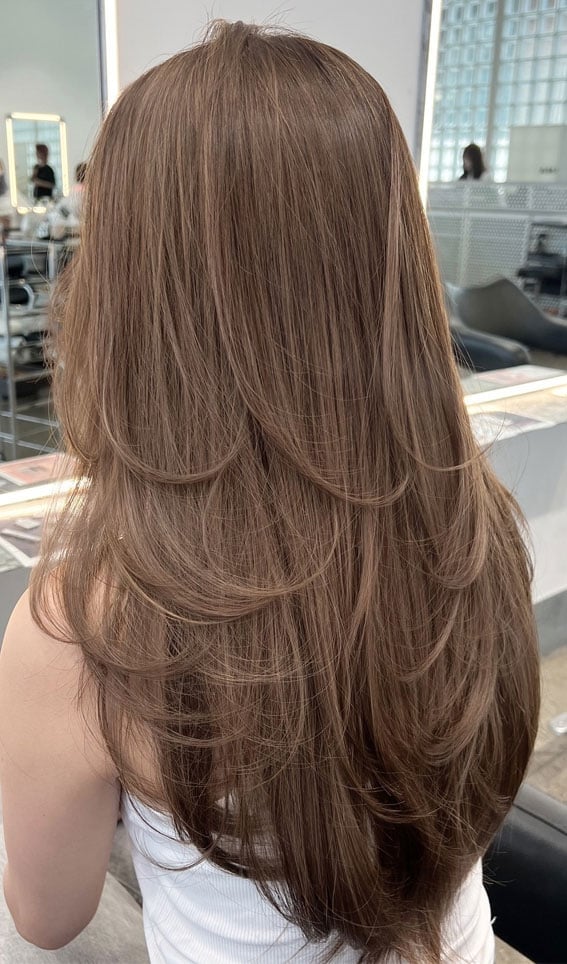
Can one haircut go to a client meeting and then to dinner without restyling? A collarbone long bob with prominent face-framing layers and a middle part can. The light chestnut base has subtle lighter strands that catch movement. Fine straight hair at this length gains the volume it lacks from the layered blowout technique. Ask your stylist for: collarbone long bob, face-framing layers, subtle highlights. A round brush and blow dryer create the lift. Trim every six to eight weeks keeps the ends from looking stringy.
Collarbone Layers With Balayage
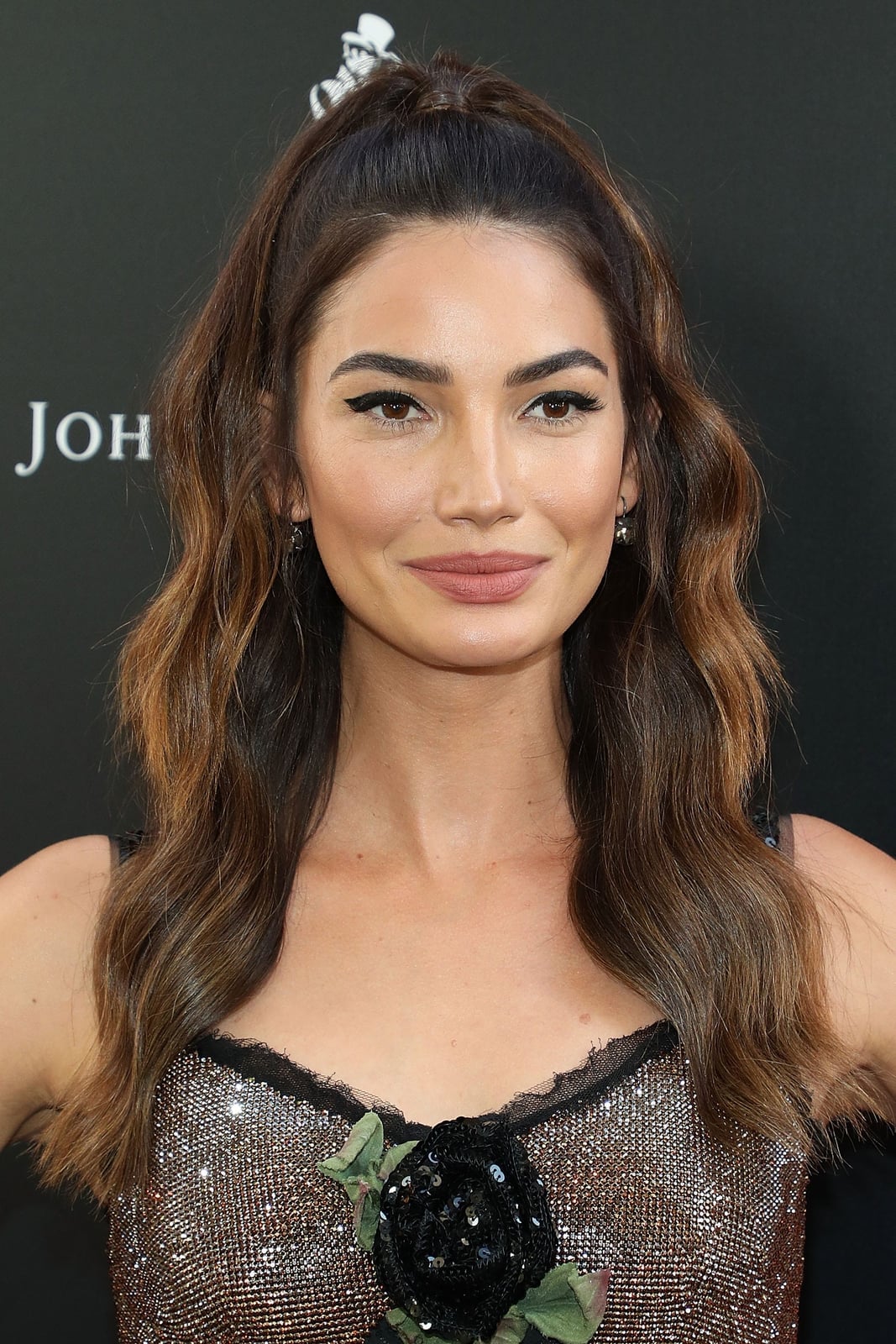
Collarbone-length layers with a side part and a subtle balayage that adds caramel-toned highlights around the face. The warm chestnut brown base means the grow-out line is soft, not stark. Medium wavy hair at this length moves well with the layers, and the balayage placement near the face draws attention to the cut. Ask your colorist for: collarbone layers, subtle balayage, face-framing highlights. A texturizing spray on dry waves gives the shape some grip. The balayage buys you about eight to ten weeks between color appointments. Trim the ends every six to eight weeks to keep the layers from collapsing.
Mid-Back Length With Face-Framing Layers
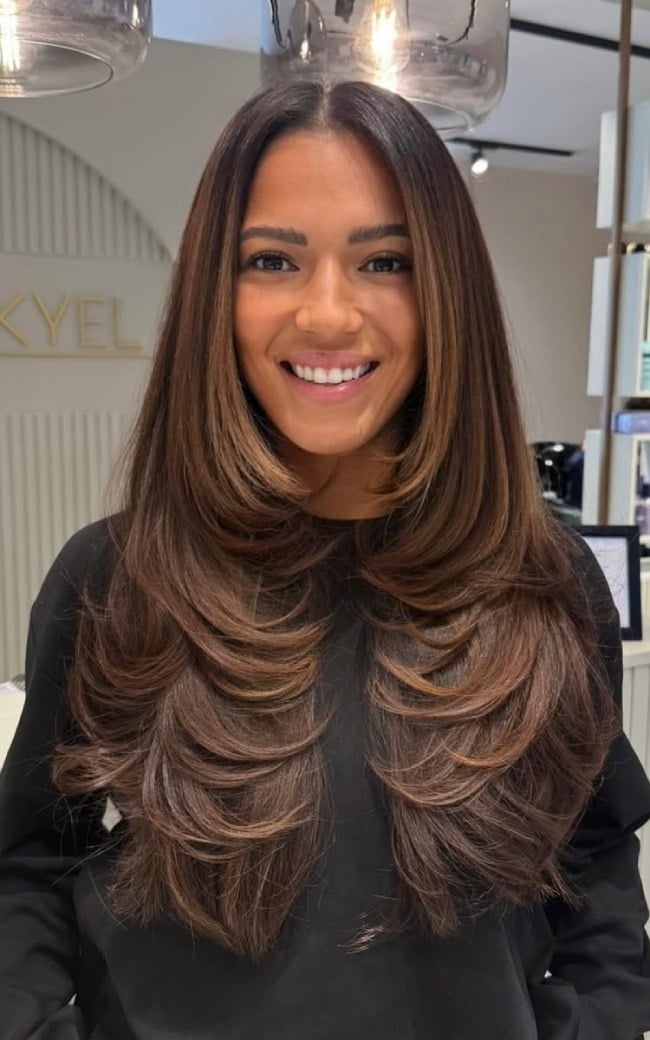
Mid-back length hair with long layers and prominent face-framing pieces that wrap around the front. The rich chestnut brown color has a healthy sheen from the blowout. Thick wavy hair at this length can handle the weight removal of the layers without losing body. Face-framing layers soften a strong jawline or a round face by adding vertical movement. Ask your stylist for: mid-back length, long layers, face-framing pieces. Use a volumizing mousse at the roots before blow-drying to keep the lift through the crown. Trim every eight to ten weeks to maintain the shape without sacrificing length.
Mid-Back Voluminous Layers With Caramel
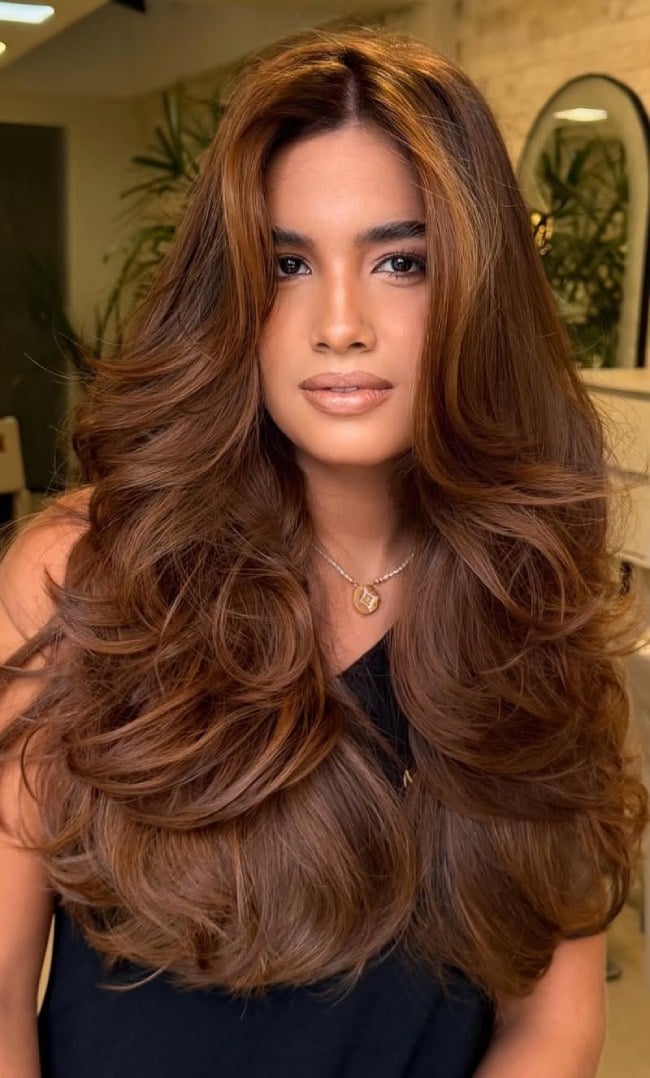
Before you ask for a one-length cut that lets that warm chestnut base sit still, consider what the caramel highlights are actually for: they need movement to show. Long, voluminous layers cut into thick, wavy mid-back length hair give the lighter pieces somewhere to land, so the color does not just sit on the surface. A solid, single-length style tends to hold the caramel as a flat stripe, while these layers catch it in the wave. Ask your colorist for mid-back length, voluminous layers, caramel highlights. The result is a bouncy blowout with visible shape and dimension, which is what most people mean when they ask for volume that lasts past noon.
Mid-Back Waves With Wispy Curtain Bangs
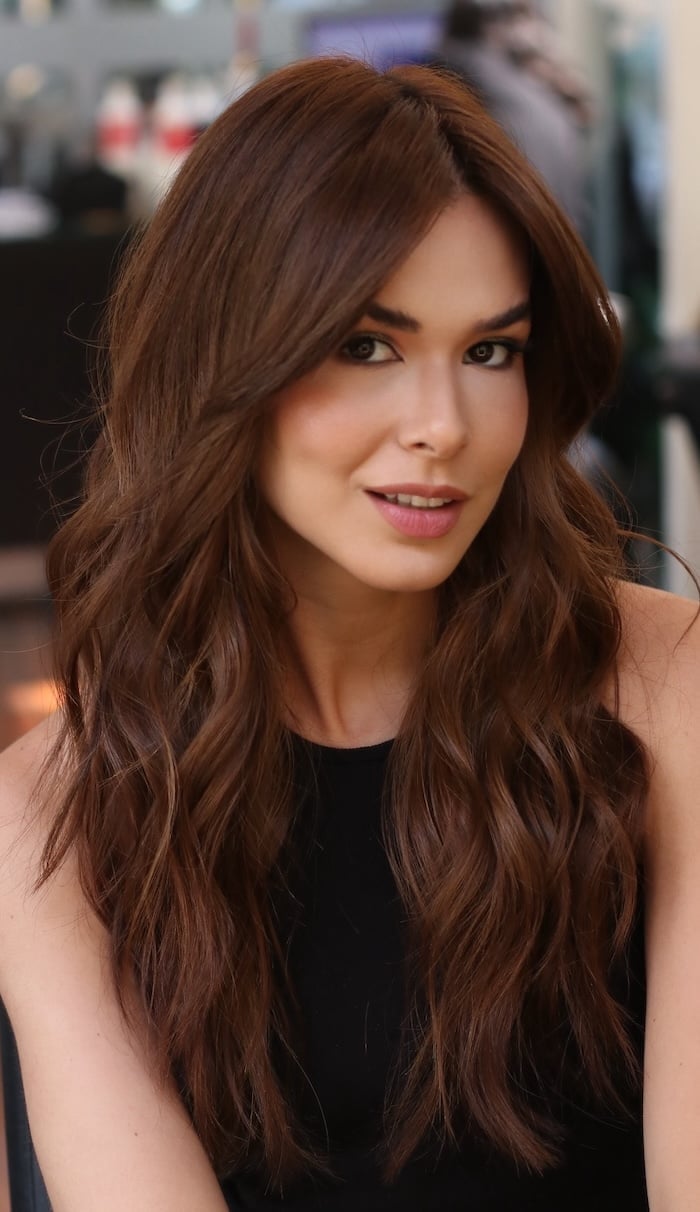
To get long layers that meet curtain bangs without a visible step, keep the shortest layer at the cheekbone and angle every subsequent section down from there, so the bangs blend into the length. On thick, wavy mid-back hair, the fringe frames the face while the longest layers carry the weight. The warm chestnut brown base adds richness to loose waves, giving them a glossy finish. Ask your stylist for mid-back length, long layers, wispy curtain bangs, warm chestnut. A cut like this looks assembled with purpose, which is the entire point of asking for a curtain bang in the first place.
Mid-Back Length With Wispy Fringe
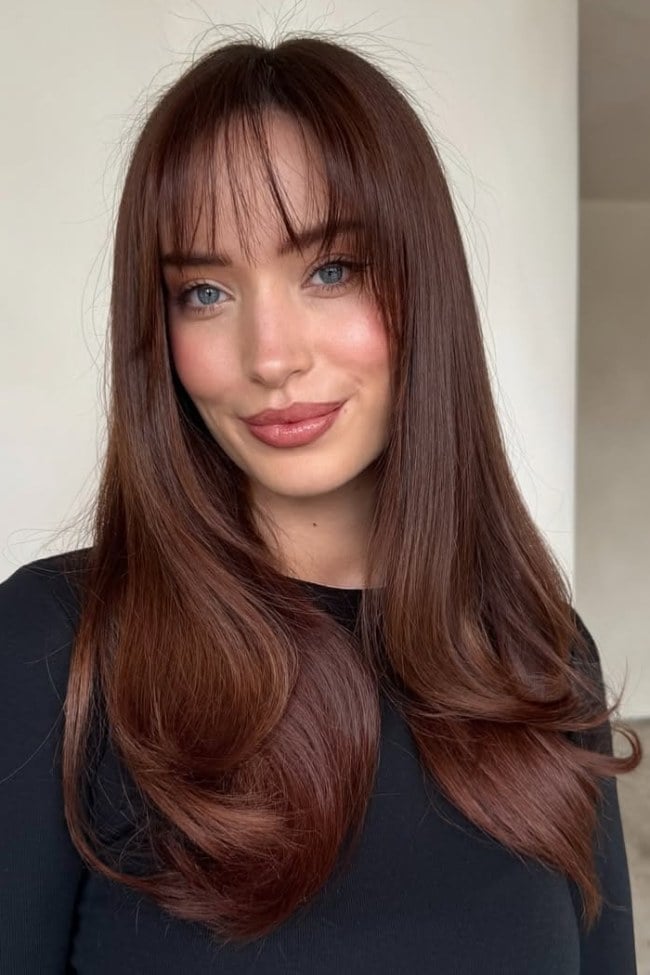
The wispy fringe is the part of this cut that will demand attention every three weeks, because it grows out faster than the long layers behind it. That is the trade-off for a soft, feathered edge that frames the face without committing to a heavy bang. The mid-back length and long layers give the chestnut brown waves their movement, while the fringe keeps the whole thing from reading as too grown out. Ask your stylist for mid-back length, long layers, wispy fringe. A smoothing balm on damp hair keeps the wispy pieces from separating into odd strands, and a trim every 8 to 10 weeks keeps the fringe from turning into an accidental side part.
Collarbone Layers With Blonde Highlights
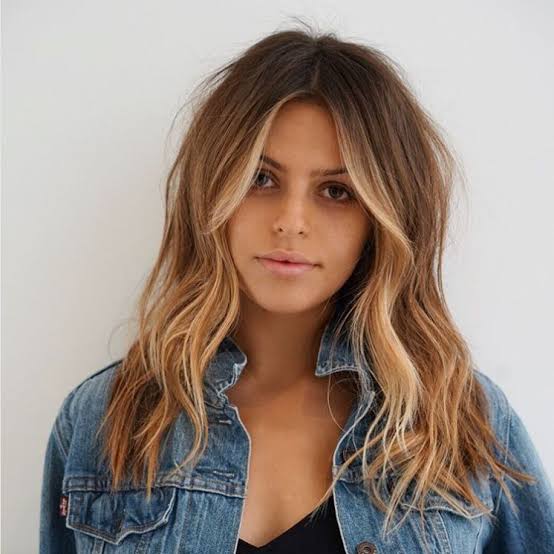
The blonde highlights here are doing a specific job: they sit in the face-framing layers and curtain bangs, not the whole head, which keeps the chestnut brown base intact. That placement is what gives the collarbone length cut its dimension without turning it into a full blonde situation. When you book, be exact about where the lighter pieces should land, because vague requests tend to result in highlights everywhere. Ask your colorist for collarbone layers, curtain bangs, blonde highlights. A good rule is to ask for the lightest pieces around the face and keep the interior a solid chestnut, so the color frames you instead of competing with the cut.
Mid-Back Waves With Auburn Tones
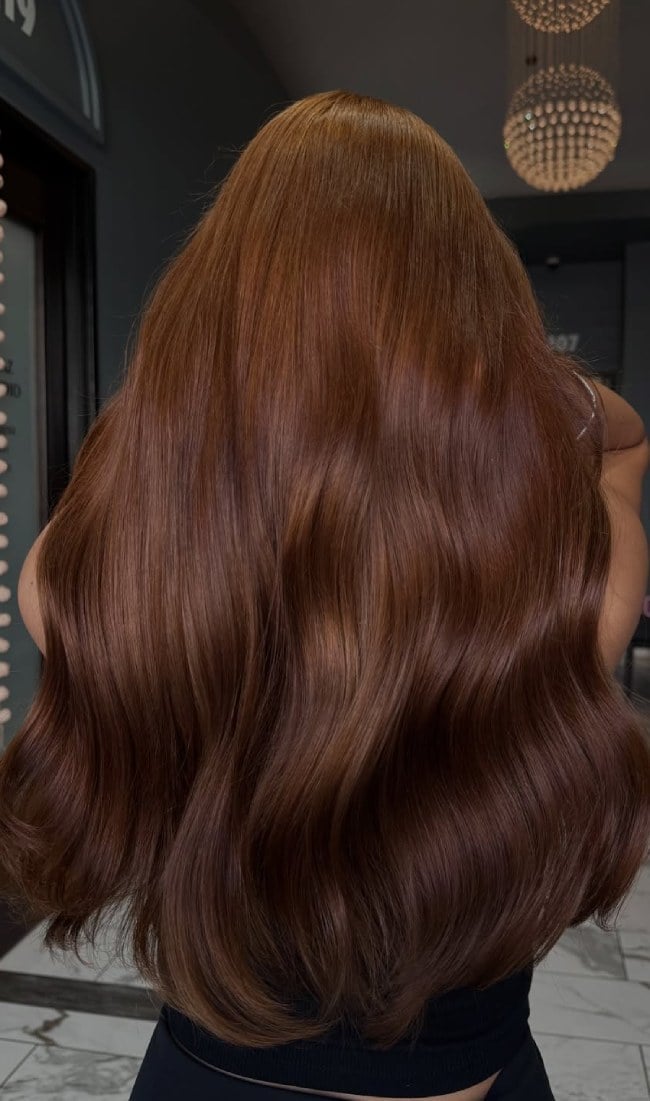
Why does chestnut brown with auburn undertones feel like it belongs to a specific season? The red in the color catches warm light in a way that plain brown does not, which makes it the obvious choice for the months when the sun is lower. Long layers cut into thick, wavy mid-back length hair give those auburn tones room to shift as the hair moves. The middle parting and back view show how the color concentrates at the ends, which is where the light hits. Ask your colorist for mid-back length, long layers, auburn undertones. It is the kind of color that works for everyday but does not need an occasion to justify itself.
Mid-Back Waves With Lighter Highlights
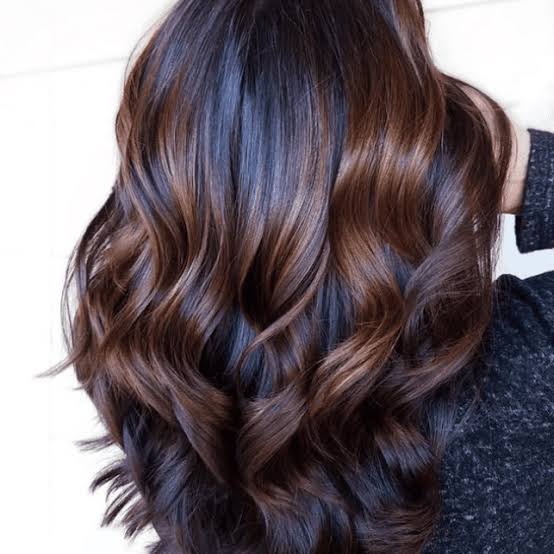
Lighter highlights on a rich chestnut brown base add dimension without drifting into caramel territory. The side parting and blowout waves give thick mid-back hair a polished finish that looks salon-fresh. Ask your colorist for: subtle lighter brown highlights on a chestnut base. The result is a color shift that catches light differently with every wave, so you notice it, but not everyone will. The trade-off: lighter pieces on dark hair tend to warm up over time, so expect a toning appointment every six to eight weeks if brass is not your thing. This is a salon-only job: two to three hours for the application, and the grow-out is soft enough that you can stretch visits to ten weeks.
It works best on thick, wavy hair that can hold the blowout shape without deflating by midday. Fine hair might find the contrast too stark, and the highlights can look chunky if the base is too dark. Skip this one if you air-dry exclusively, because the dimension needs the structure of a round brush or diffuser to land properly.
Mid-Back Air Dried With Subtle Highlights
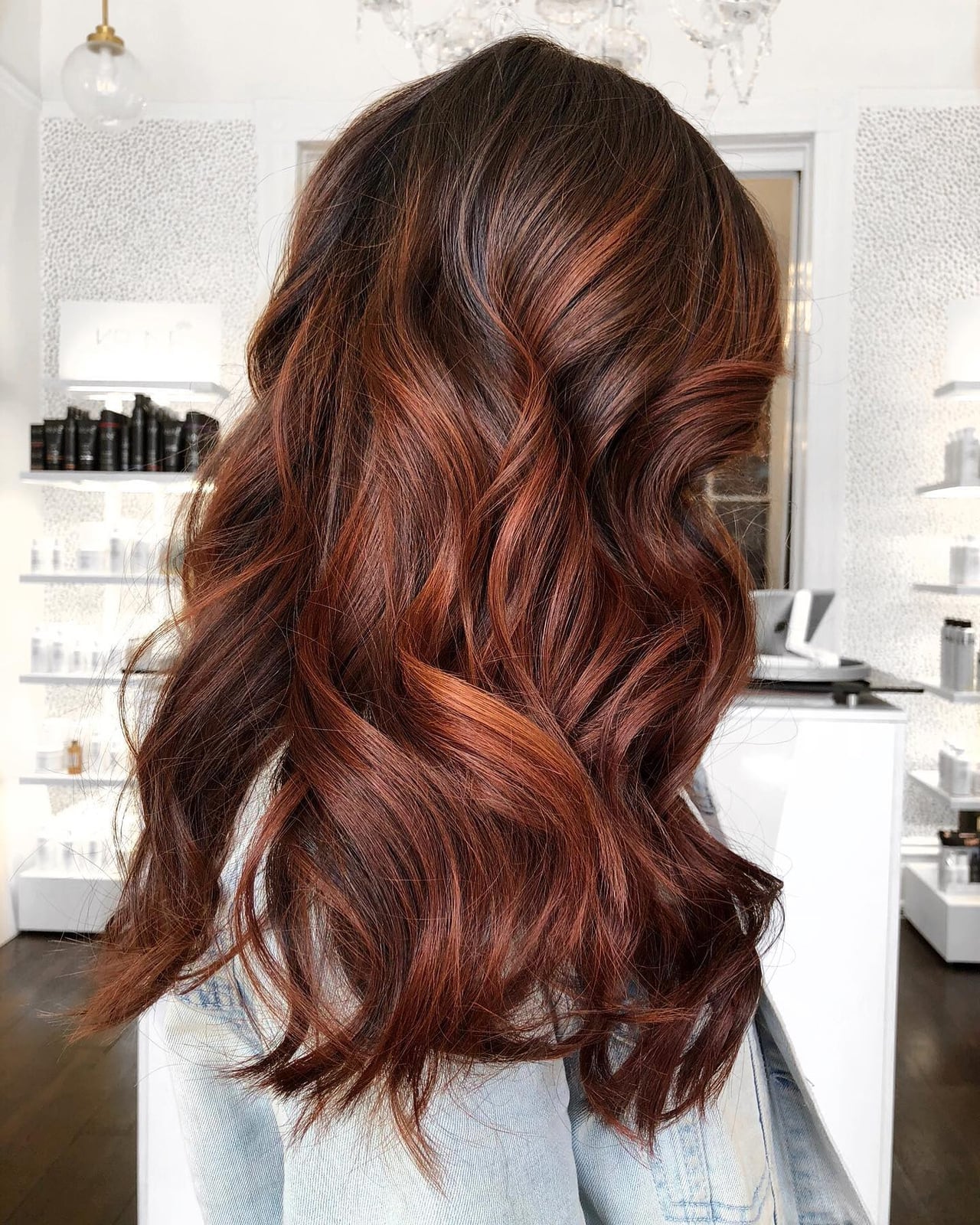
Air drying thick wavy hair to mid-back length usually means accepting some unpredictability, but the subtle lighter highlights here give the texture a reason to exist. The chestnut brown base reads as solid from a distance, while the lighter pieces catch light in the wave bends, creating movement without a blowout. Ask your colorist for: mid-back length with subtle lighter highlights. Apply a smoothing cream to damp hair and let it do its thing, then scrunch out any crunch once dry. A trim every eight to ten weeks keeps the ends healthy enough that the color does not look faded at the bottom. The upkeep is minimal, no root line to chase, no heat styling required, which is the point.
Mid-Back Wavy With Color Dimension
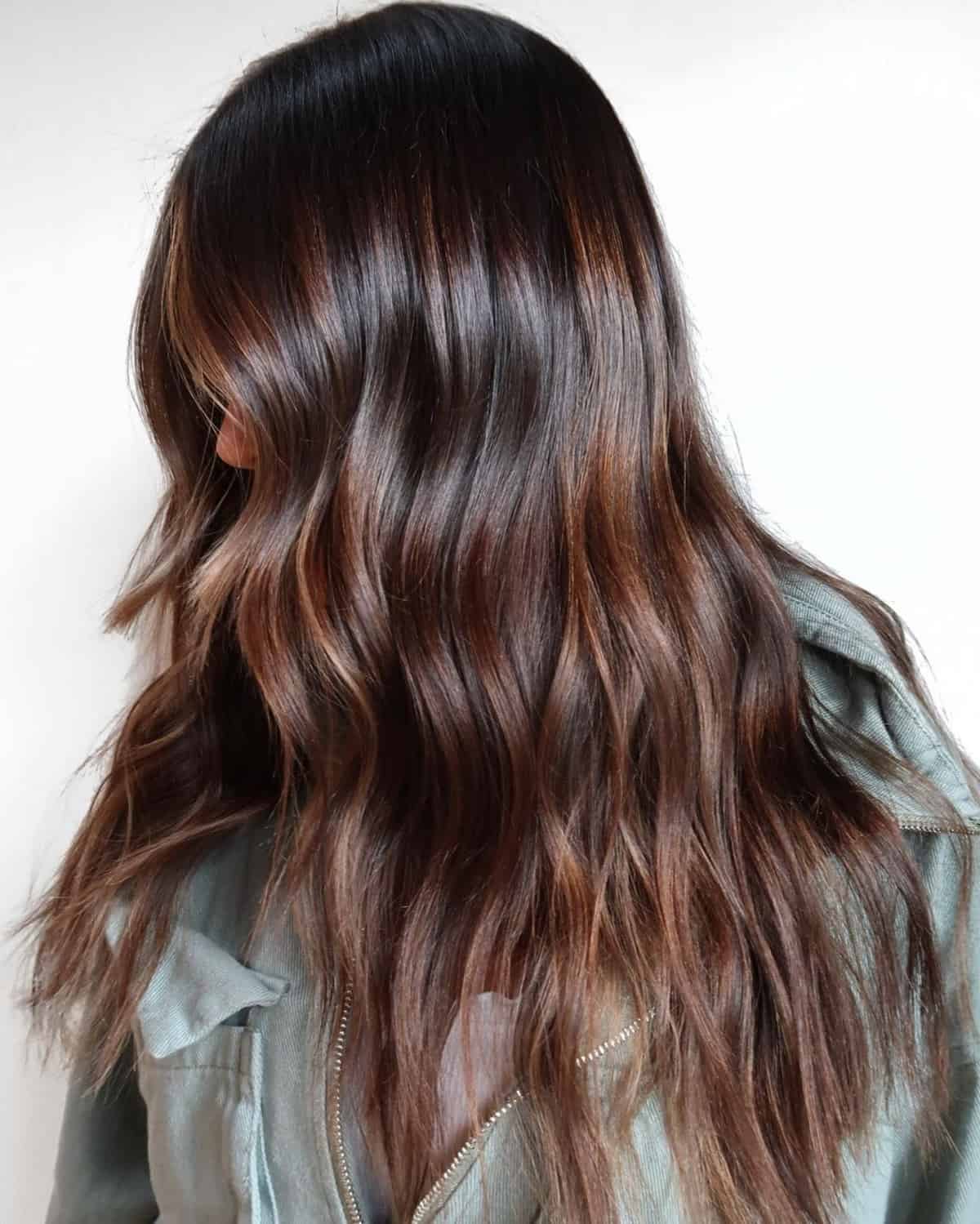
Does thick wavy hair ever need more than a good cut and the right color placement? Not really, but this version proves it. The chestnut brown base with subtle lighter highlights works with the wave pattern rather than against it, so the dimension lands exactly where the hair bends. Ask your colorist for: long layers with dimensional chestnut highlights. The layers are long enough to keep weight at the ends, which prevents the triangle shape that thick wavy hair defaults to when layers are too short or too aggressive. If your hair is fine or straight, the color dimension will still show, but the texture will not amplify it the same way. A middle parting and air-dried finish keep it honest: this is not a style that needs a curling iron to make sense.
Mid-Back Layers With Dimensional Color
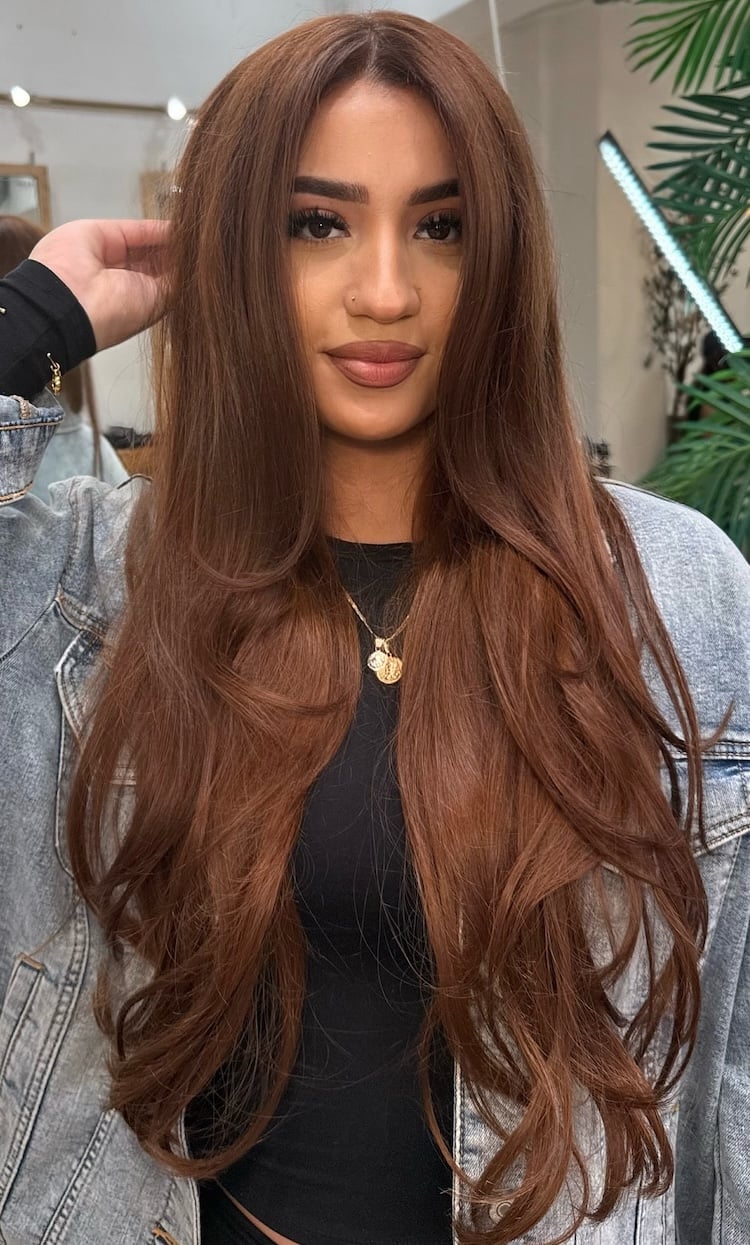
A solid, uniform chestnut shade is reliable, but it can look flat on long hair. The dimensional color here adds movement through lighter and deeper tones within the chestnut family. Ask your colorist for: long layers with dimensional chestnut color. The layers are cut to stack at the mid-back, so the volume sits high enough to avoid dragging the face down. This is the better pick if you want the depth of a dark base but need the light to reflect somewhere. The uniform version works better on shorter cuts where the shape itself provides interest, or on hair that is naturally glossy enough to shine without help. On mid-back length, dimension keeps the eye moving instead of landing on one flat block of color.
Mid-Back Waves With Dimensional Balayage
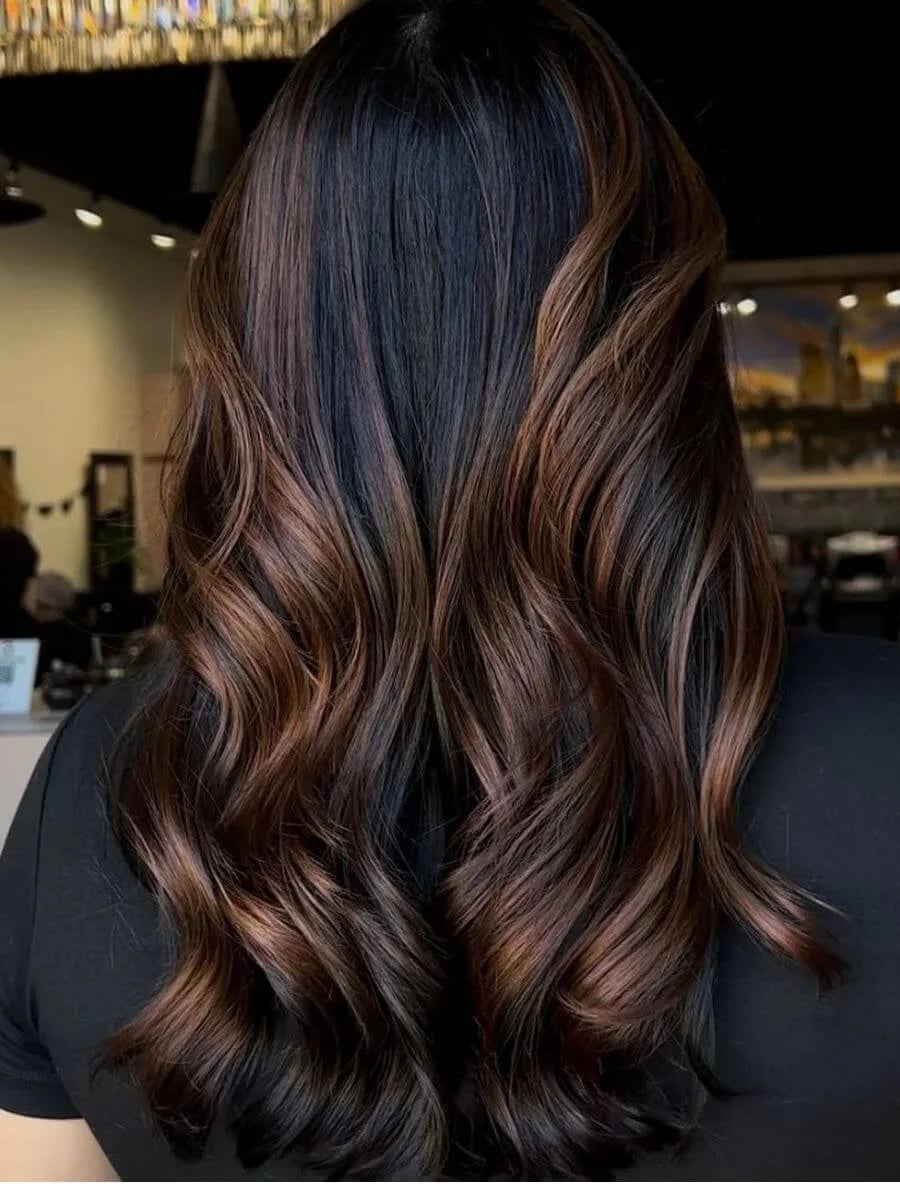
Balayage on dark chestnut hair is a technical exercise in restraint: the lighter pieces need to be subtle enough that the base stays rich, but visible enough that the dimension shows. The loose waves here are not styled for curl, just for a gentle S-shape that lets the balayage catch light in sections. Ask your colorist for: subtle lighter brown balayage on a dark chestnut base. The hand-painted application keeps the grow-out soft, which means you can go ten to twelve weeks between appointments without a harsh root line. This finish typically needs only a light styling cream on damp hair, then air dry or diffuse. The technique suits medium to thick textures best; on fine hair, the balayage can appear sparse.
Mid-Back Waves With Blonde Balayage, Wavy
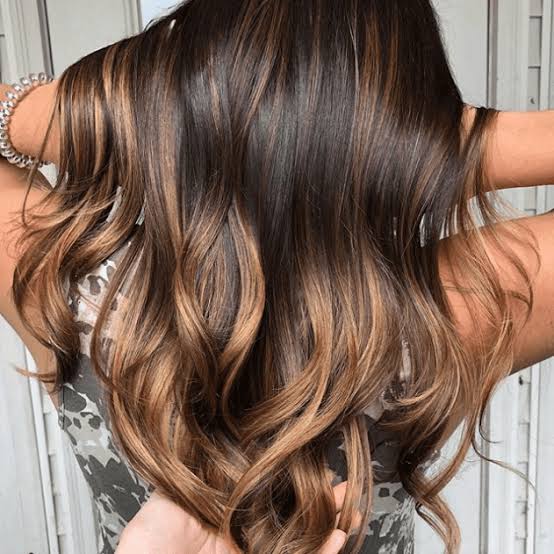
Wondering how to brighten chestnut hair for spring without a full color overhaul? A blonde balayage is the answer, especially when it lands on loose waves. The mid-back length keeps the effect grounded, while the subtle layers give the waves room to move without losing shape. With a middle part and no bangs, the face stays open and the color does the talking.
This approach works best on medium-density wavy hair that can hold a bend without falling flat. Ask your colorist for: mid-back length, loose waves, blonde balayage. The technique lightens toward the ends, so the roots stay low-maintenance and the grow-out looks intentional. A texturizing spray will keep the waves defined, and a trim every eight to ten weeks keeps the ends healthy. It is a low-commitment way to make chestnut feel sunnier.
Mid-Back Curls With Caramel Highlights
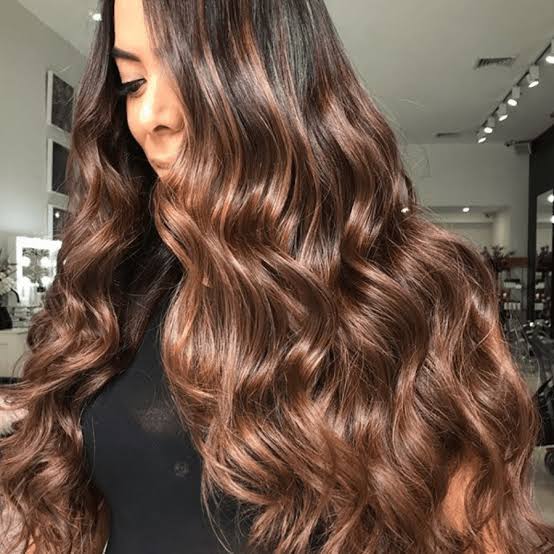
Loose curls have a way of making caramel highlights look like they were always part of the plan. The deep chestnut brown base anchors the warmth, while the caramel pieces add dimension that moves with every turn of the curl. Long layers keep the mid-back length from feeling heavy, and the middle parting lets the color fall symmetrically. No bangs means the focus stays on the shine and the rich tone.
This cut suits medium-density wavy hair that can support the weight of the length without looking stringy. Ask your colorist for: mid-back length, long layers, loose curls, caramel highlights. To keep the curls defined, a curl-defining cream and a diffuser are your main tools; skip the towel rub and let the hair set. A trim every eight to ten weeks prevents the layers from losing their shape. The payoff is a color that looks lived-in, not flat.
Mid-Back Air Dried With Balayage
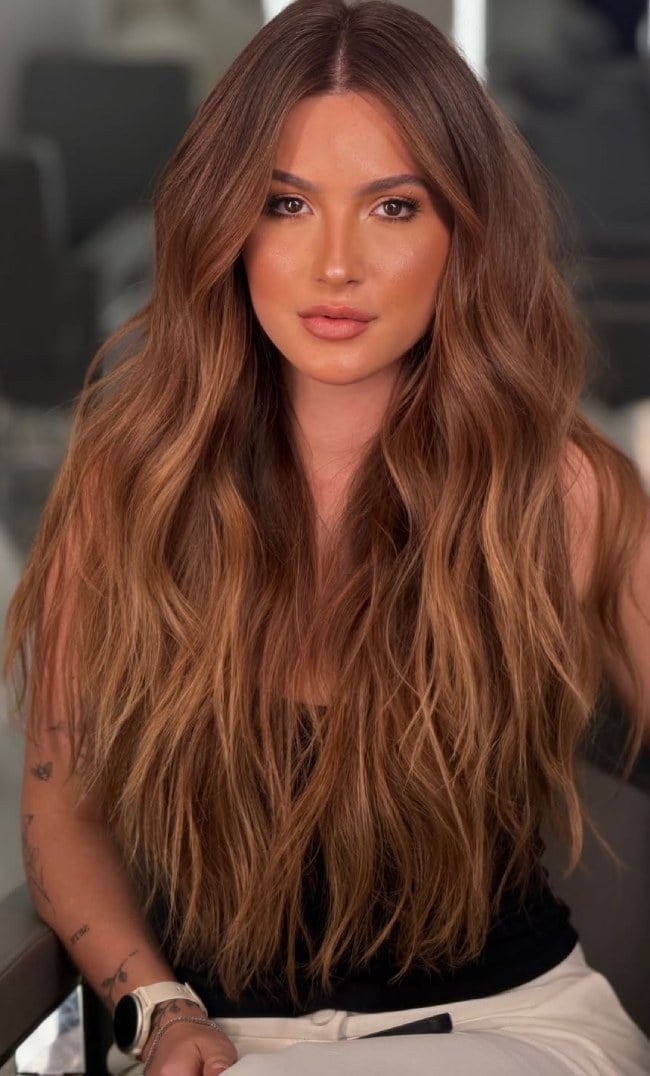
The air-dried texture here is not an accident, it’s a request. Tousled layers at mid-back length work with a warm chestnut caramel balayage to create that sun-kissed, just-left-the-beach effect. The absence of bangs keeps the look clean, while the thick, wavy texture gives the balayage plenty of surface to play with. The color melts from deeper roots to lighter ends, which looks natural.
Ask your colorist for: mid-back length, air dried texture, warm chestnut caramel balayage. The key is asking for a balayage that mimics sun-lightened warmth, not uniform stripes. A sea salt spray applied to damp hair and left to dry will enhance the wave without scrunching. This is a salon-leaning color that forgives a low-effort styling routine, which is exactly why it works for everyday wear.
Mid-Back Waves With Warm Undertones
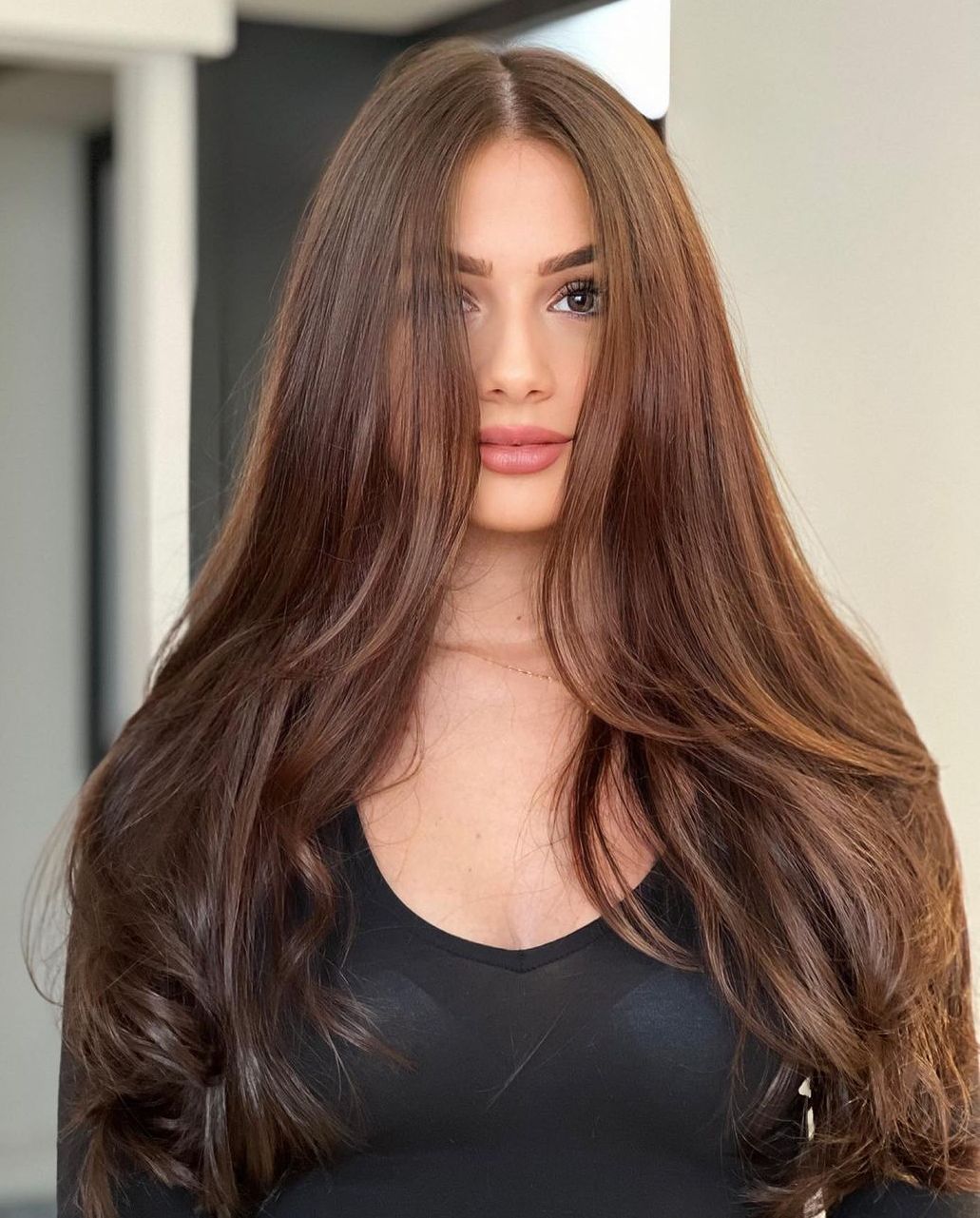
Before you commit to this length, know that mid-back hair demands time. The loose waves and smooth blowout in this style are not a five-minute morning result, they need a round brush and a blow dryer. The deep chestnut base with subtle warm undertones gives the hair a glossy, healthy appearance, and the thick texture carries the weight well. With no bangs and a middle parting, the face stays clear and the length becomes the statement.
Ask your stylist for: mid-back length, loose waves, deep chestnut with warm undertones. The trade-off is the styling time: a smooth blowout on thick hair can take a while, and skipping it leaves you with unpredictable texture. A shine serum helps control frizz and adds gloss, but it will not shorten the drying process. This look requires a salon visit and suits those who enjoy the ritual over the rush.
Mid-Back Rich Chestnut Color
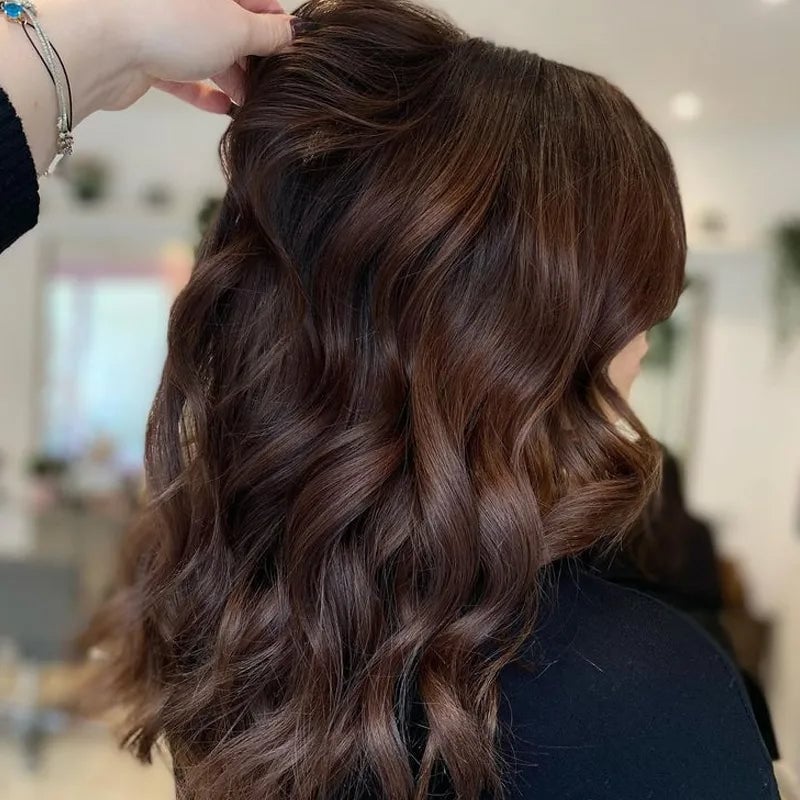
Can you get a rich, uniform chestnut at home? Usually not. The depth in this color comes from a single-process salon application that leaves the hair glossy and even, with subtle lighter tones that keep it from looking flat. The mid-back length, styled in loose waves, shows off the color’s dimension from every angle. Thick, wavy texture and a middle parting complete the look, with no bangs to distract from the payoff.
Ask your colorist for: mid-back length, loose waves, rich chestnut brown. Achieving this level of richness at home is a gamble, since boxed colors often turn brassy or patchy on long hair. A leave-in conditioner maintains softness and shine between washes, and a trim every eight to ten weeks keeps the ends looking as good as the roots. This color delivers a polished, high-end finish that fits any occasion.
Mid-Back Waves With Chestnut Caramel Tones, Wavy
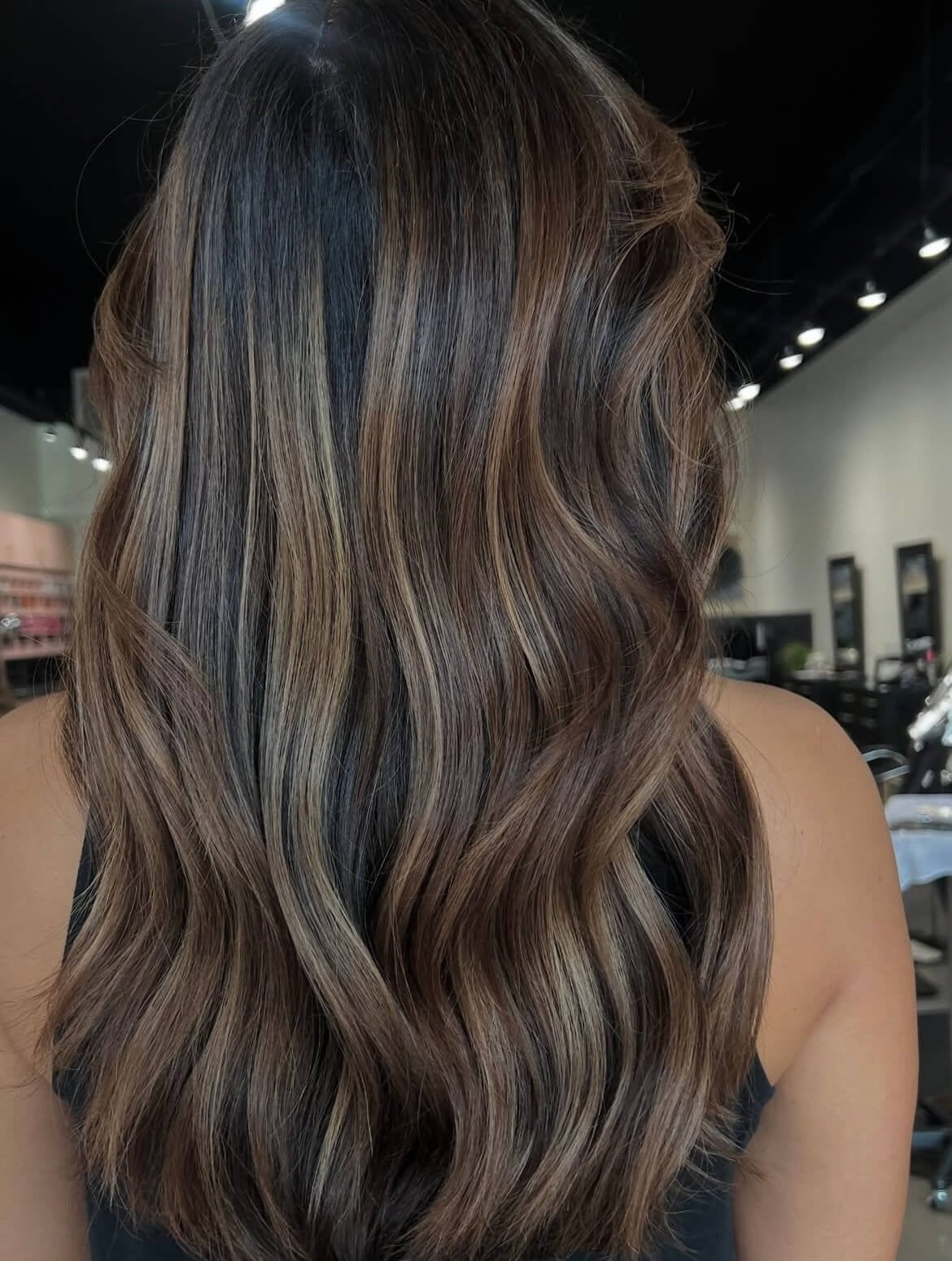
The dark brown base takes turns with the chestnut and caramel highlights, so the color is layered and not flat. This works best on thick hair that can carry the weight of long layers without losing shape. Ask your colorist for: mid-back length, loose waves, chestnut and caramel highlights. The dimensional pieces need a color-safe shampoo and conditioner to keep the caramel from turning brassy, and a trim every eight to ten weeks keeps the wavy ends from splitting. The result is a rich, multi-tonal chestnut hair that moves with you instead of sitting still.
Mid-Back Air Dried With Lighter Tones
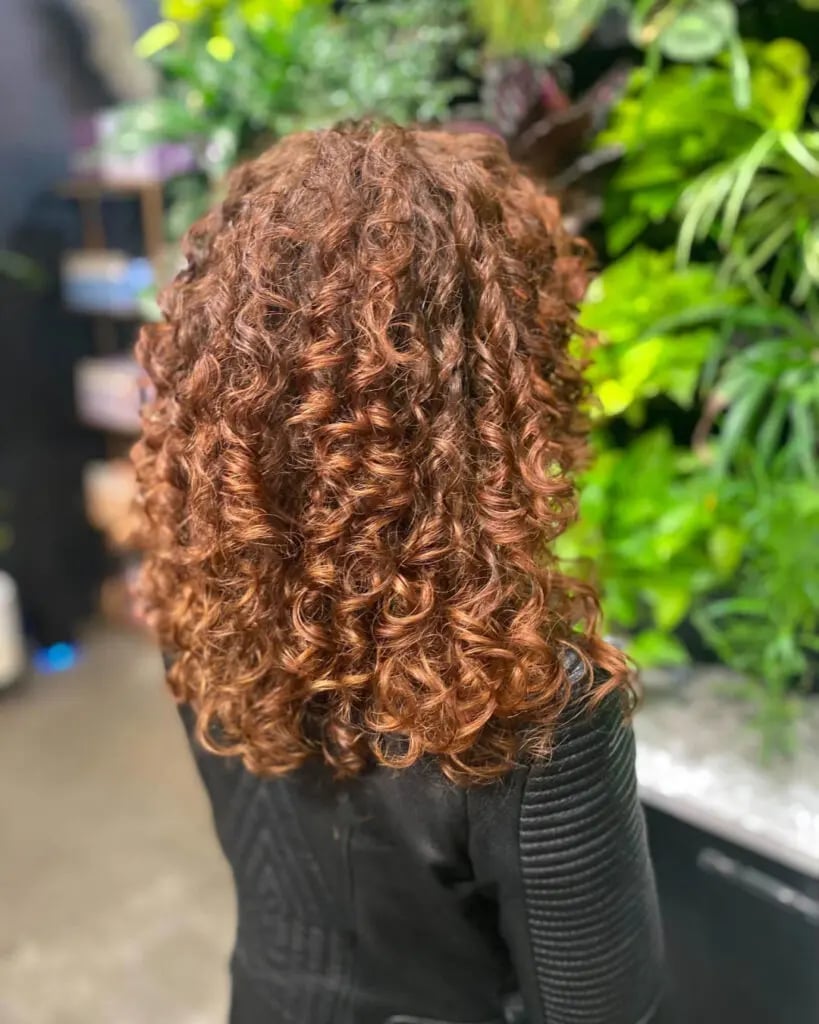
The warm chestnut base with lighter pieces is a natural fit for anyone who wants color that looks lived in without a high-maintenance root line. The side parting and air-dried waves make the layers visible, which gives thick hair movement it might otherwise lack. Ask your colorist for: mid-back length, air dried texture, warm chestnut with lighter tones. If your hair is very fine, the lighter tones can read as sparse, so ask for them placed closer to the face. A smoothing cream applied to damp hair keeps the wave pattern defined, and a trim every eight to ten weeks stops the ends from looking straggly. It is not a wash-and-go cut, but it is close.
Mid-Back Air Dried With Balayage and A Woman’S Thick
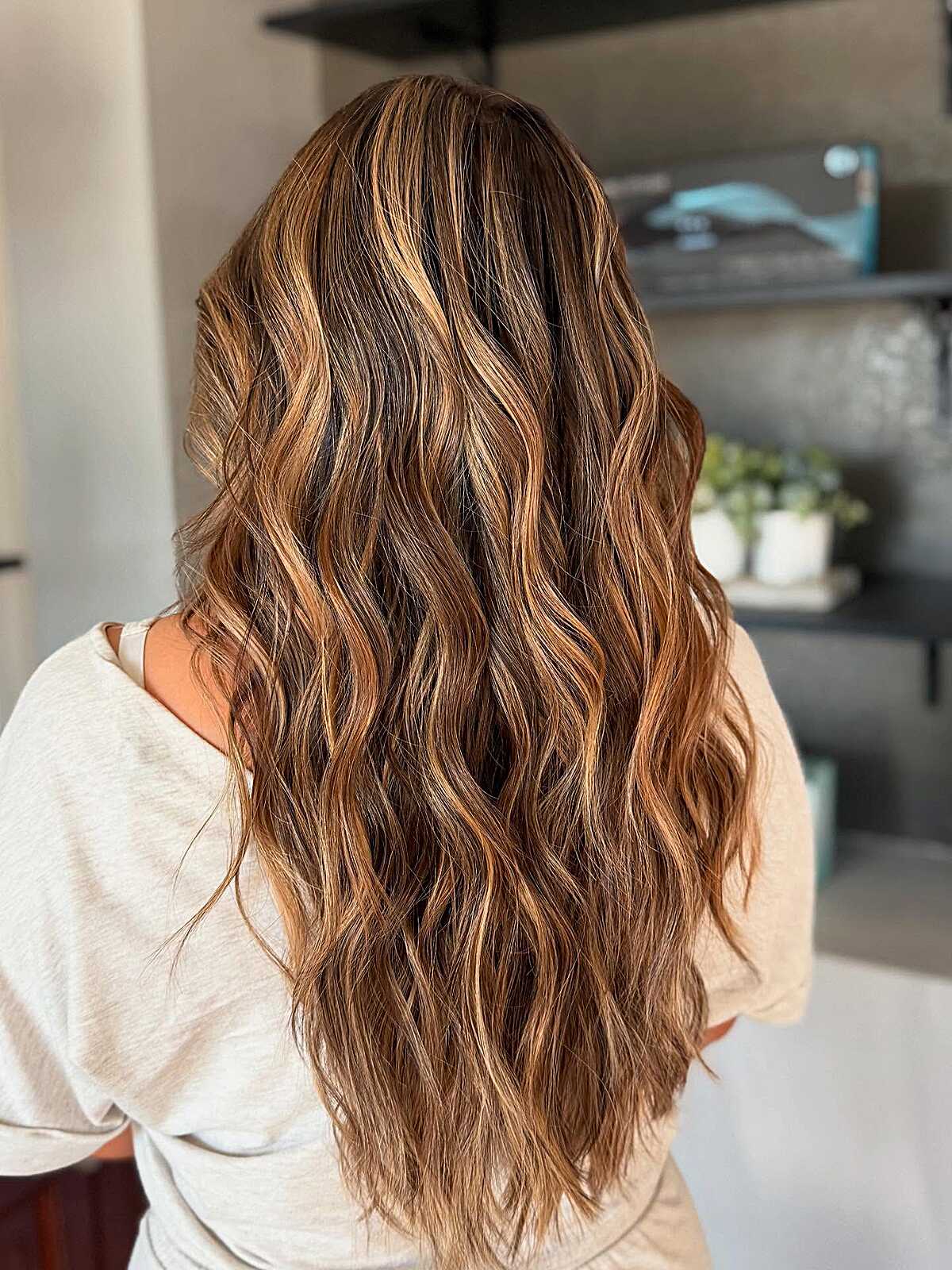
Set this against a heat-styled version of the same cut and the difference is clear: the air-dried finish keeps the balayage soft and blended, while a flat iron would make the chestnut brown base look flatter and the highlights more stripey. Thick, wavy hair holds the long layers beautifully, so the color has room to shift as the hair moves. Ask your colorist for: mid-back length, air dried texture, blended balayage highlights. A sea salt spray on damp hair encourages the natural wave without crunch, and a trim every eight to ten weeks keeps the ends healthy. This is the choice when you want the color to do the talking, not the styling tools.
Mid-Back Straight Auburn Chestnut
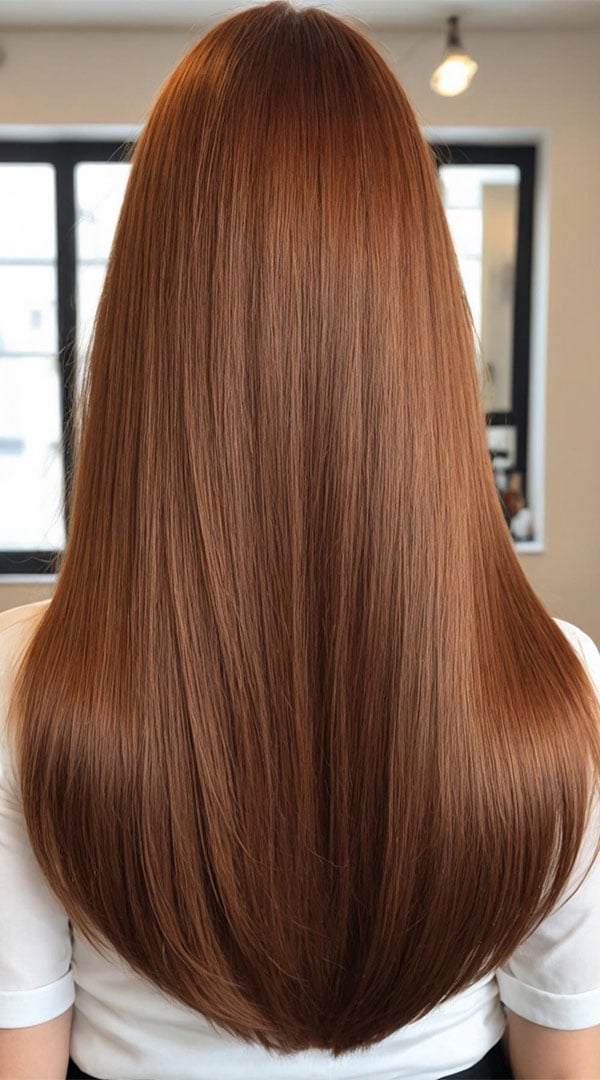
The one-length cut is doing something quietly clever: it lets the solid auburn chestnut color shine without any layers interrupting the surface. Thick, straight hair is the ideal canvas, because the uniform color reflects light evenly and the slight curve at the ends keeps the style from feeling severe. Ask your stylist for: mid-back length, straight smooth style, solid auburn chestnut. A flat iron and a shine serum give the polished finish this look depends on, and a trim every eight to ten weeks maintains the clean line. The tradeoff is that split ends are more visible on a one-length cut, so skipping trims shows quickly.
Mid-Back Fine Wavy With Highlights
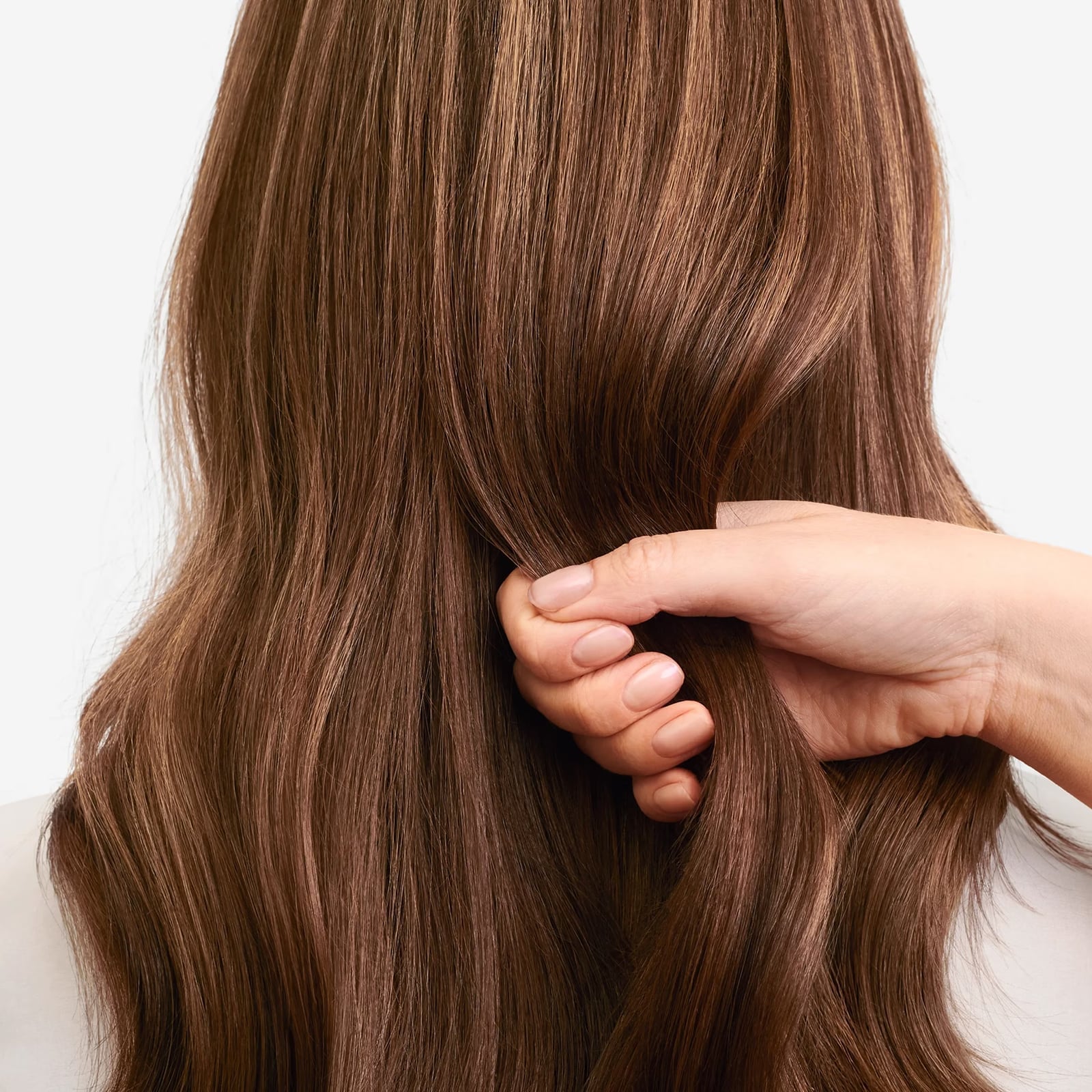
What is the mistake most people make with fine, wavy hair and dimensional color? They let the highlights go too chunky, which weighs the hair down and makes the ends look thinner than they are. The fix is subtle lighter brown pieces woven through a medium-to-dark chestnut base, which add depth without bulk. Ask your colorist for: mid-back length, fine wavy texture, subtle highlights. A root spray and an air-dried finish give the hair body, but fine hair shows split ends faster, so a trim every eight to ten weeks is not optional. The color stays vibrant with a color-safe shampoo, and the lived-in look means you can stretch between toning appointments.
Final Thoughts
For fine hair, keep one blunt baseline and skip heavy layers that steal density. Thicker textures can carry more pronounced layers and bolder dimensional color. Chestnut offers endless depth and warmth for any season.
- Use sulfate-free shampoo and color-depositing conditioner every 2-3 weeks.
- Tone every 6-10 weeks to keep warmth and stop brassiness.
- Deep condition weekly, especially with highlights.
- Trim every 6-10 weeks to hold shape and prevent split ends.