Light brown balayage is a hand-painted technique that lifts the mid-lengths and ends a shade or two lighter than the base, leaving the root area untouched. This season, the look leans into softer, more lived-in color transitions that mimic natural sun exposure rather than a sharp, salon-fresh line.
This collection of 27 real-life examples covers the range from a chin-length bob to mid-back lengths, with tones from caramel to ash. Fine hair that tends to fall flat gets a lift from the lighter pieces placed around the face, and the soft grow-out means a visible root line is not a weekly concern. Light Brown Balayage works here because it adds dimension without demanding a full commitment to blonde.
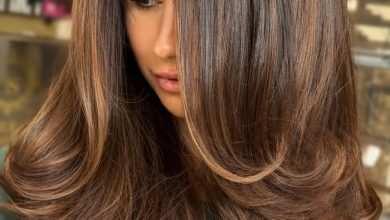
Collarbone Lob With Caramel Balayage
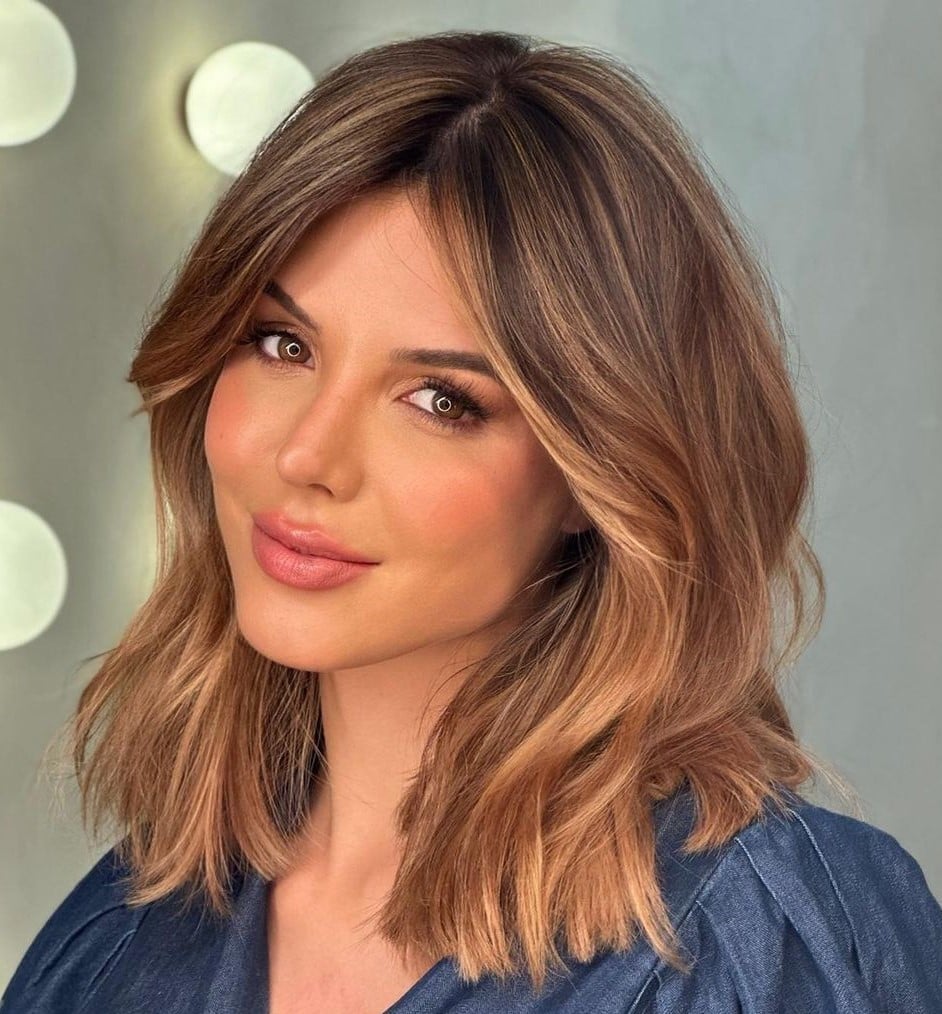
A lob that lands at the collarbone gets a dimensional lift from caramel-toned balayage highlights that graduate from a slightly deeper root. The soft waves and face-framing layers give the cut movement without making it look fussy. Medium density hair starting at collarbone length is the sweet spot here, and the layers around the jaw soften round and oval faces. Ask your colorist for: collarbone lob with soft caramel balayage and face-framing layers. A large barrel curling iron creates those loose waves, and the baseline needs a trim every six to eight weeks to keep the shape clean.
Collarbone Layers With Ash Brown Balayage
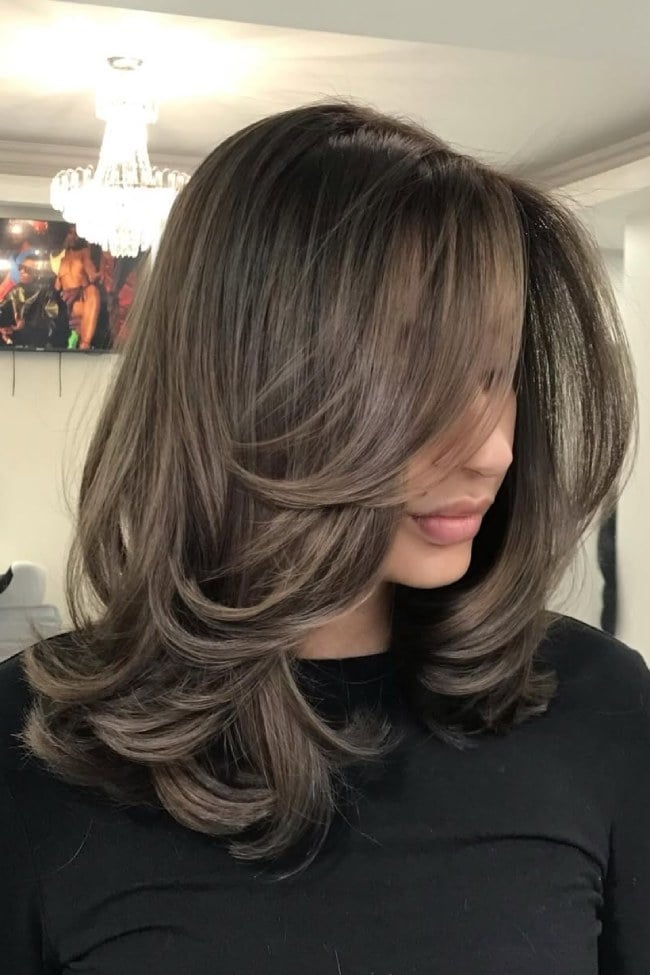
Where warm caramel balayage reads as sunlit, an ash brown base with lighter ash brown balayage leans cool and deliberate. This is the version for anyone who finds golden tones too brassy. The collarbone-length layers and face-framing pieces keep the cut from feeling flat, and the cool dimension works well on medium density hair. Oval and square faces benefit from the soft framing around the jaw. Ask your colorist for: collarbone layers with ash brown balayage. A smoothing serum applied to damp hair before blow-drying gives the finish a polished, reflective surface.
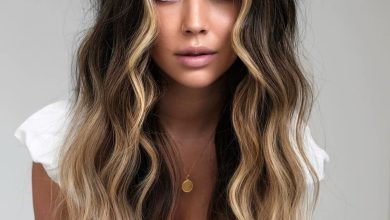
Shoulder Length Blowout With Blonde Balayage
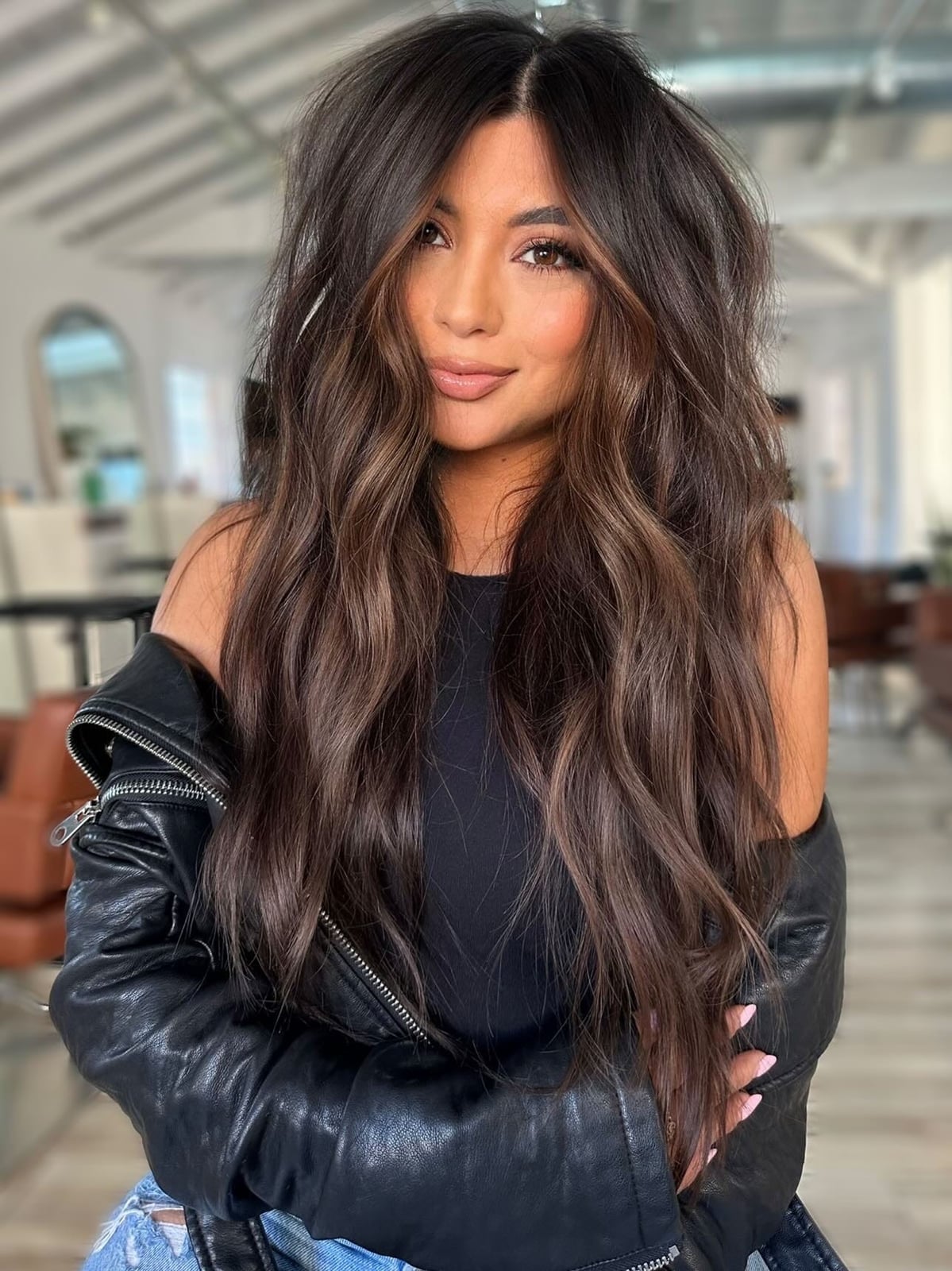
A light brown base provides the backdrop for blonde balayage highlights that are painted through the mid-lengths and ends, skipping the root for a lived-in effect. The curtain bangs and thick wavy texture give the blowout its volume. Ask your colorist for: shoulder length light brown with blonde balayage and curtain bangs. The balayage placement is what creates the depth here: the lighter pieces sit mostly on the surface layers, so the hair reads as dimensional rather than streaky. A round brush and a blow dryer are all you need to replicate the shape at home.
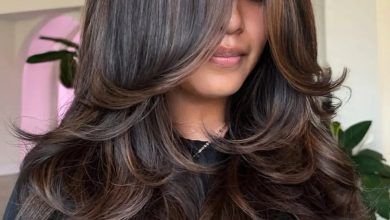
Lob With Dark Brown Base And Light Brown Balayage
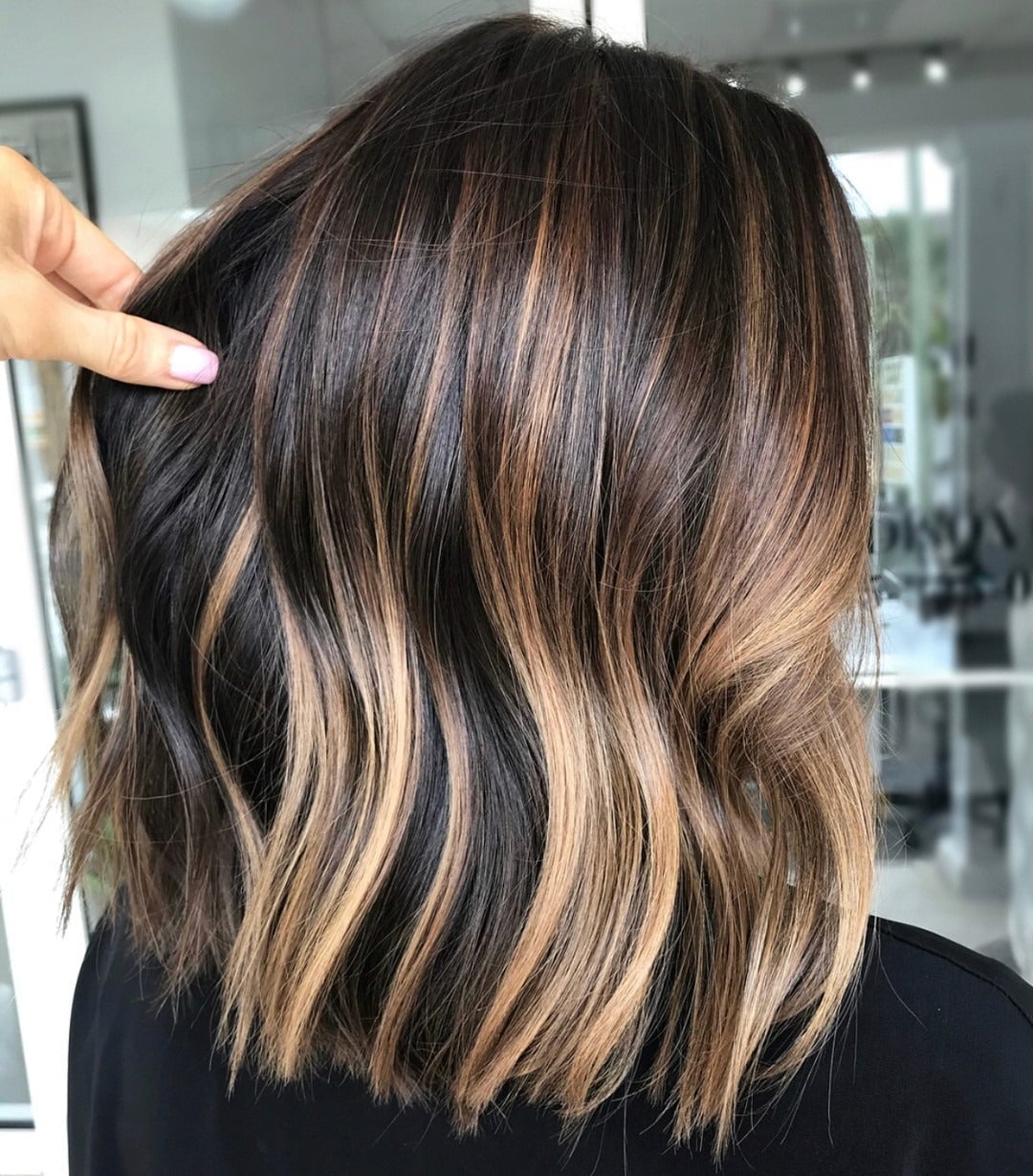
The contrast between a dark brown base and light brown balayage is noticeable, which is the point, but it also means the regrowth is more visible than on a lighter base. The lob cut lands at collarbone length, and the curtain bangs frame the face without demanding daily styling. Thick, wavy hair starting at collarbone length carries the dimension best. Ask your colorist for: lob with dark brown base and light brown balayage. A smooth blowout shows off the color contrast, though the trade-off is a toning appointment roughly every eight weeks if you want to keep the lighter pieces from warming up.
Collarbone Lob With Face-Framing Balayage
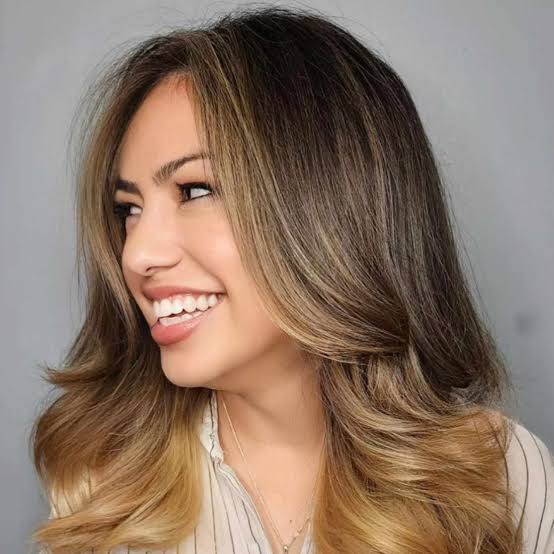
Wondering how to get the balayage to actually frame your face rather than just sit on the ends? The trick is asking for the lighter pieces to be concentrated around the front layers and the curtain bangs. This collarbone lob keeps a light brown base, with blonde balayage highlights that start a few inches from the root and intensify toward the ends. Thick, wavy hair starting at collarbone length holds the shape well. Ask your colorist for: collarbone lob with face-framing blonde balayage. Soft waves created with a blow dryer and a round brush are the simplest way to show off the placement.
Chin Length Bob With Light Brown Balayage
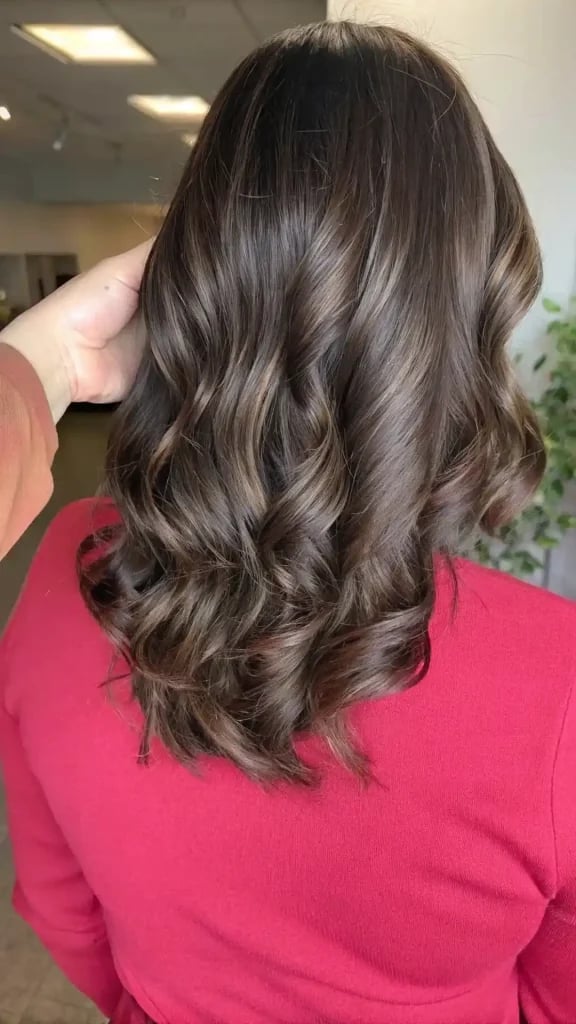
A chin-length bob with a medium brown base and light brown balayage waves relies on the grow-out to do the work for you. The lighter pieces sit mostly on the surface, so new growth stays subtle rather than screaming for a root touch-up. Ask your colorist for: chin-length bob with light brown balayage. Medium density hair starting at chin length works best; oval, square, and heart faces get the most from this shape. A texturizing spray gives the wave some grip, and the bob needs a trim every four to six weeks to keep the line clean.
Shoulder Length Layers With Dark Base Balayage
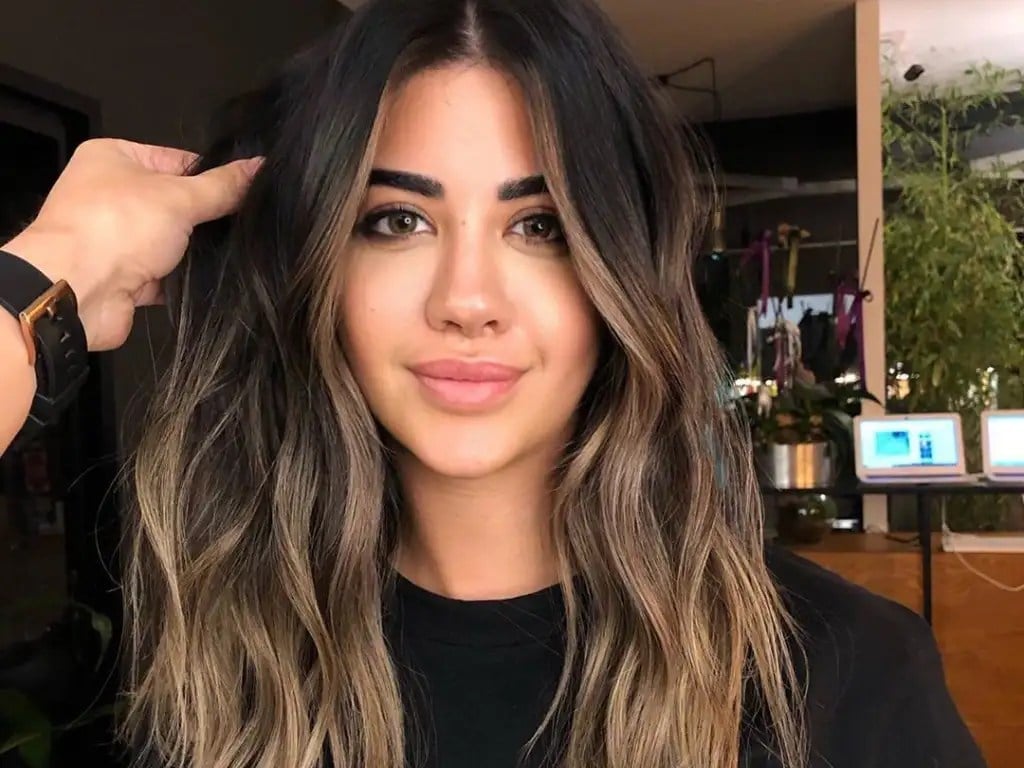
The dark brown base here does not fight the light brown and blonde balayage; it anchors it. By keeping the root zone deep, the colorist creates contrast that makes the lighter pieces pop without lifting the whole head. Ask your colorist for: shoulder length dark brown with light brown and blonde balayage. Thick, wavy hair starting at shoulder length handles the multi-tonal application well, and the curtain bangs soften round and heart faces. The layers are painted in a graduated pattern, so the color feels heavier at the ends and lighter toward the face.
This is not a single-shade balayage; the two lighter tones are woven separately to mimic natural sun damage. A middle part shows off the symmetry of the face-framing pieces, and the loose waves keep everything from reading as too polished.
Collarbone Length Layers With Face-Framing
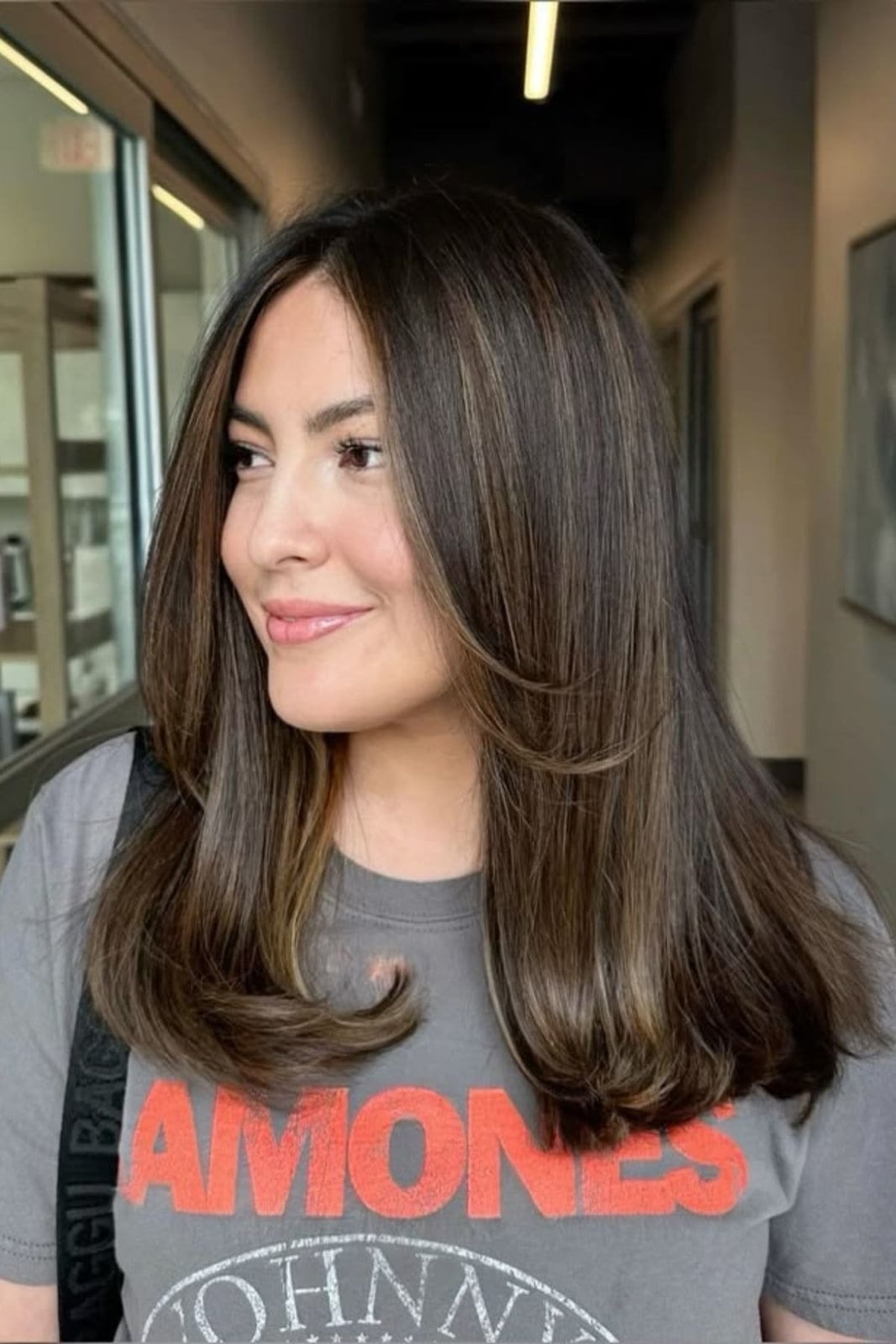
Can a collarbone cut still feel like a lot of hair? Yes, when the layers and face-framing bangs add movement and shape. The rich brown base gets lighter, blended balayage highlights that taper toward the ends, so the color moves with the wave. Ask your colorist for: collarbone length with face-framing bangs and light brown balayage. Thick, wavy hair starting at collarbone length is the sweet spot; the face-framing bangs complement oval and heart faces by shortening the visual line of the jaw. The middle part keeps the framing even, and the blowout adds gloss without needing a flat iron.
Collarbone Layers With Face-Framing Curtain Bangs
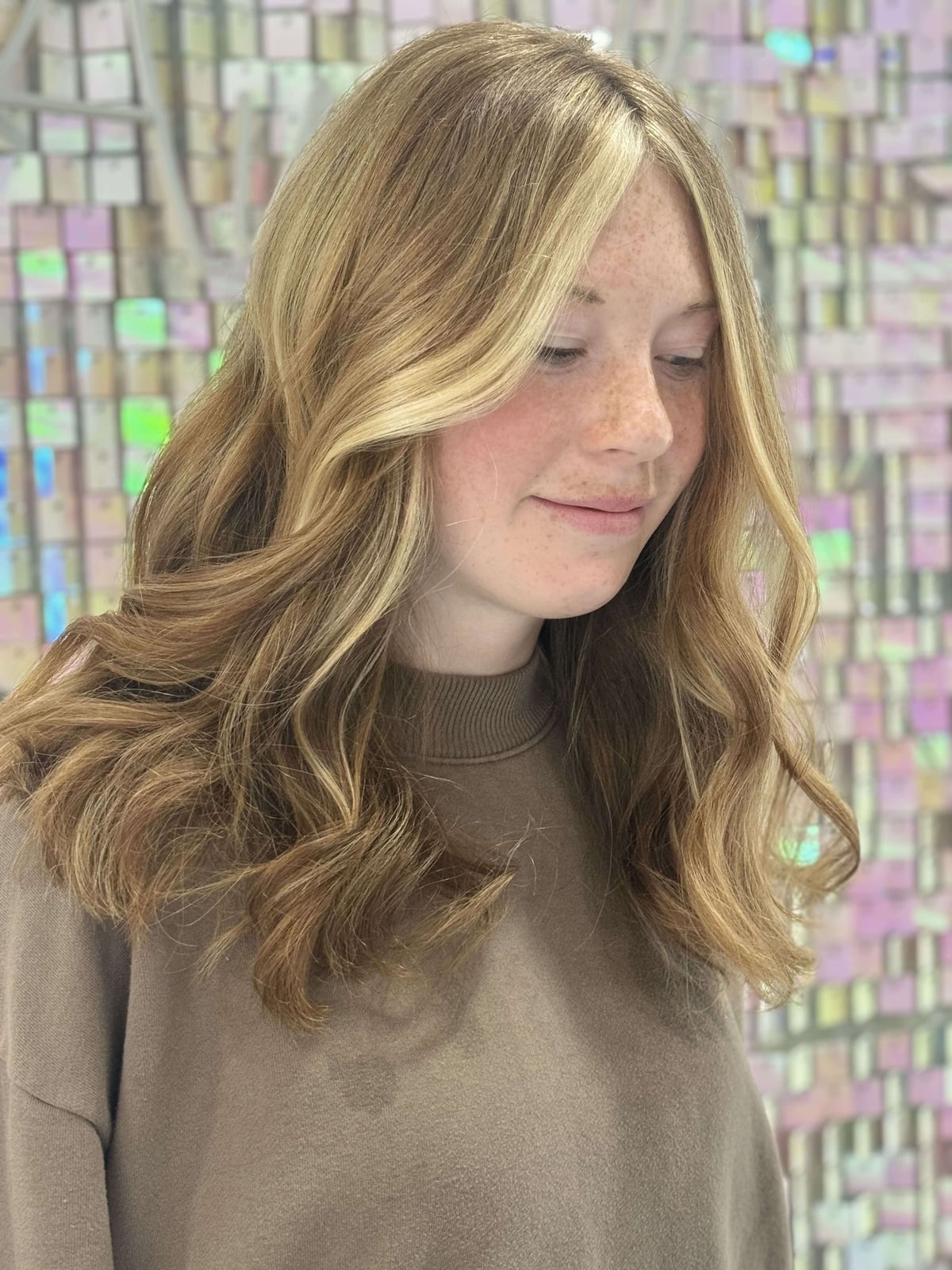
When the weather warms up, a light brown base with blonde balayage reads as sun-kissed without requiring actual sun exposure. The curtain bangs catch the lighter pieces first, which draws attention to the eyes and cheekbones. Ask your colorist for: collarbone length layered with face-framing curtain bangs and blonde balayage. Thick, wavy hair starting at collarbone length holds the shape well, and the curtain bangs soften round and heart faces. This is a spring-to-summer color move: the blonde lifts the base without going full platinum, so the grow-out stays low-maintenance through Labor Day.
Mid-Back Layers With Honey Blonde Balayage
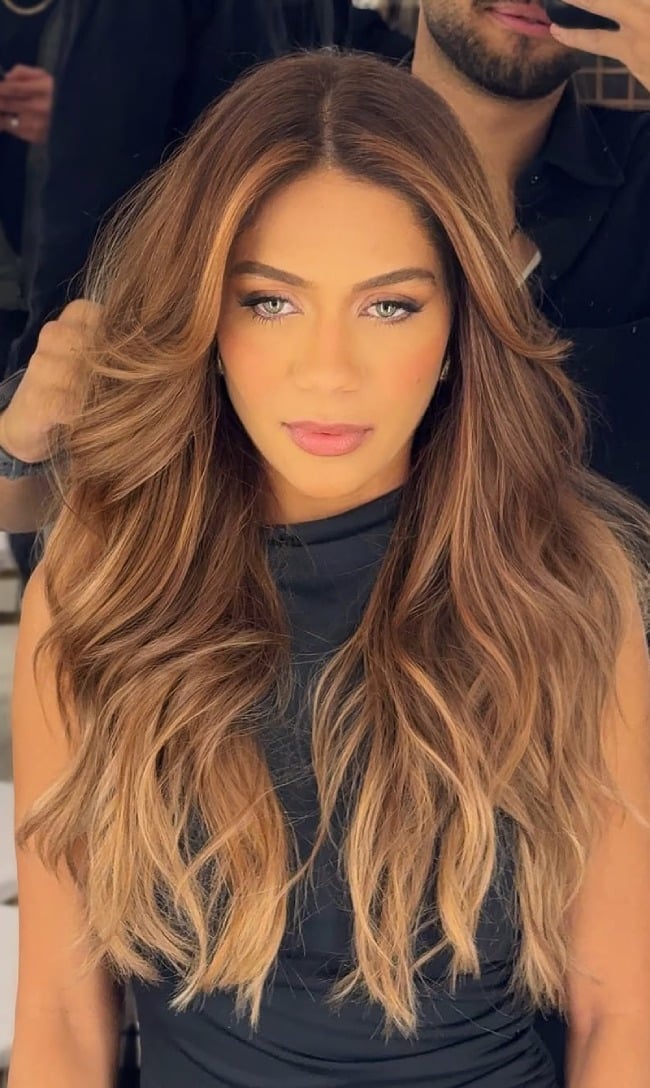
A medium brown base with honey blonde balayage on mid-back layers creates warmth. The colorist paints the lighter pieces freehand, starting mid-shaft and concentrating the lift on the ends and face-framing layers. Ask your colorist for: mid-back length with layers and honey blonde balayage. Thick, wavy hair starting at mid-back length is ideal; the face-framing layers complement oval and square faces by adding movement around the jaw.
This is a salon-only technique. The honey tone requires precise lifting to avoid brassiness, and the freehand painting needs a trained eye to place the lighter pieces where the light naturally hits. A volumizing mousse and a round brush blow-dry will mimic the salon finish at home, but the color itself is not a box-dye project. Budget for a toning appointment every six to eight weeks to keep the honey from shifting toward brassiness.
Mid-Back With Face-Framing Layers And Blonde Balayage
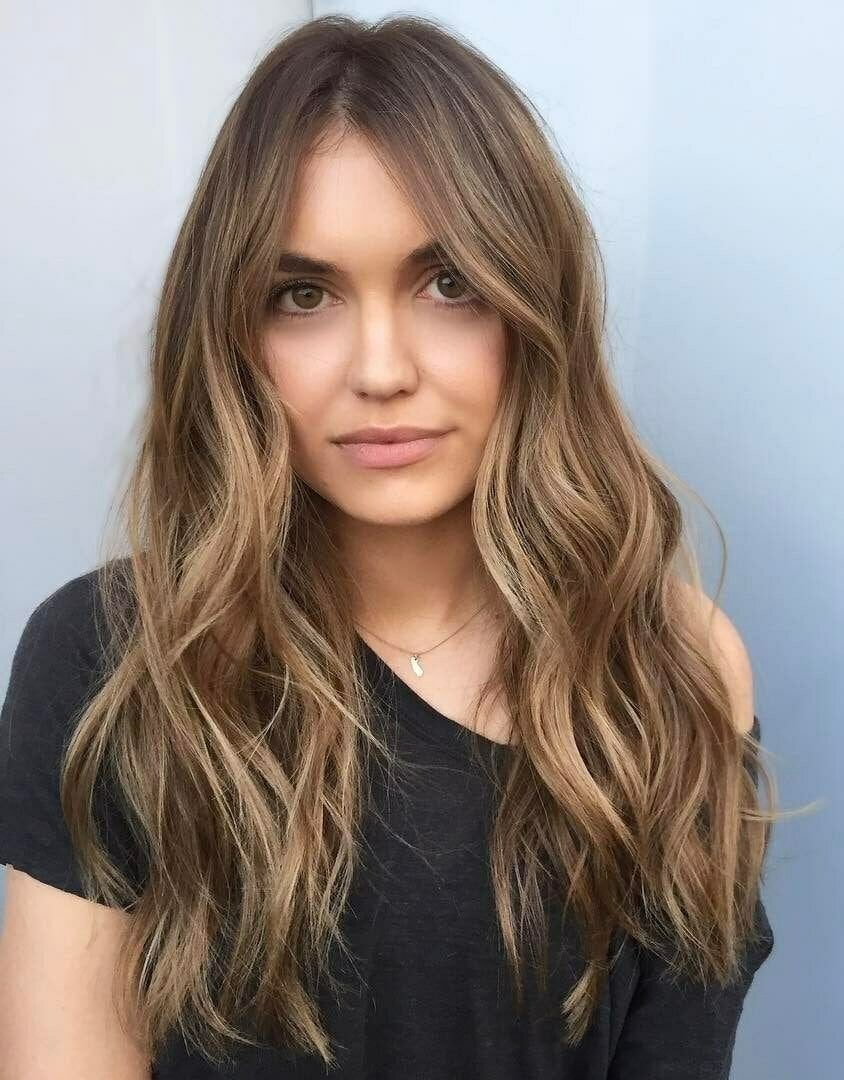
Face-framing layers and curtain bangs define this mid-back length cut, but they come with a catch: those lighter blonde pieces around your face are the first to show brassiness. The common mistake is asking for the face-framing sections to be lifted too many levels, which turns a soft balayage into a high-maintenance highlight situation. A light brown base with blonde balayage keeps the contrast subtle enough that grow-out looks natural. This cut works best on thick, wavy hair, and the curtain bangs soften round or heart face shapes.
Ask your colorist for: mid-back length with face-framing layers and blonde balayage. The real drawback here is toning rhythm: those front pieces need a toner refresh every four to six weeks, while the balayage can coast for eight to ten. Style with a round brush and a blow-dryer for loose waves, and plan to trim the face-framing layers every six to eight weeks.
Mid-Back Layers With Caramel Balayage
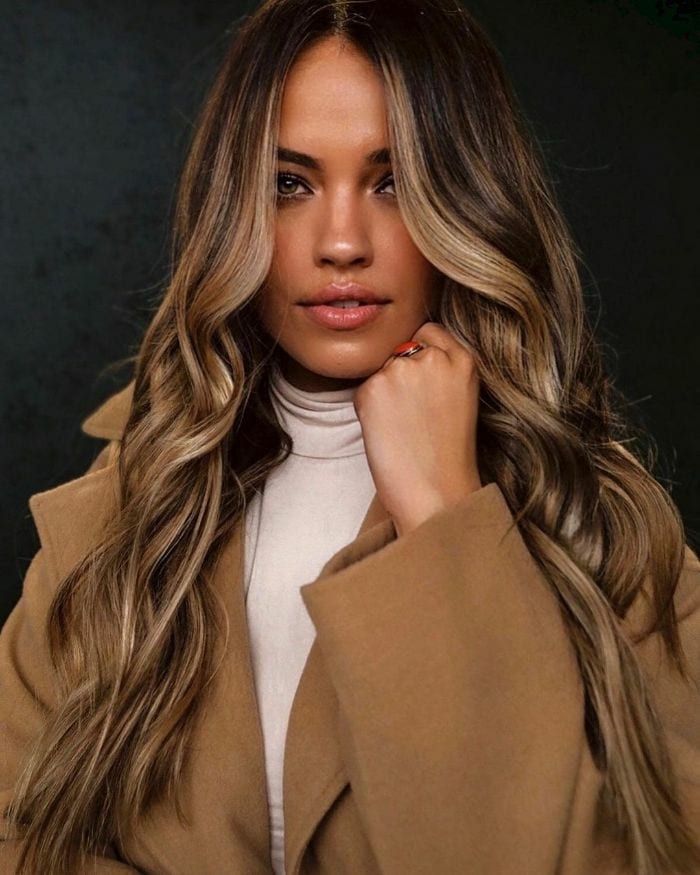
The hand-painted application of caramel balayage onto a medium brown base gives this mid-back length its natural, sunlit dimension. The colorist paints the caramel sections freehand, starting lower on the shaft to avoid a harsh root line, then blends them into the base for a seamless transition. The warm, dimensional look has a grown-in finish. Thick, wavy hair starting at mid-back length carries the layers best, and the face-framing pieces work well with oval or square face shapes. Ask your colorist for: mid-back length with layers and caramel balayage.
Mid-Back With Face-Framing Highlights
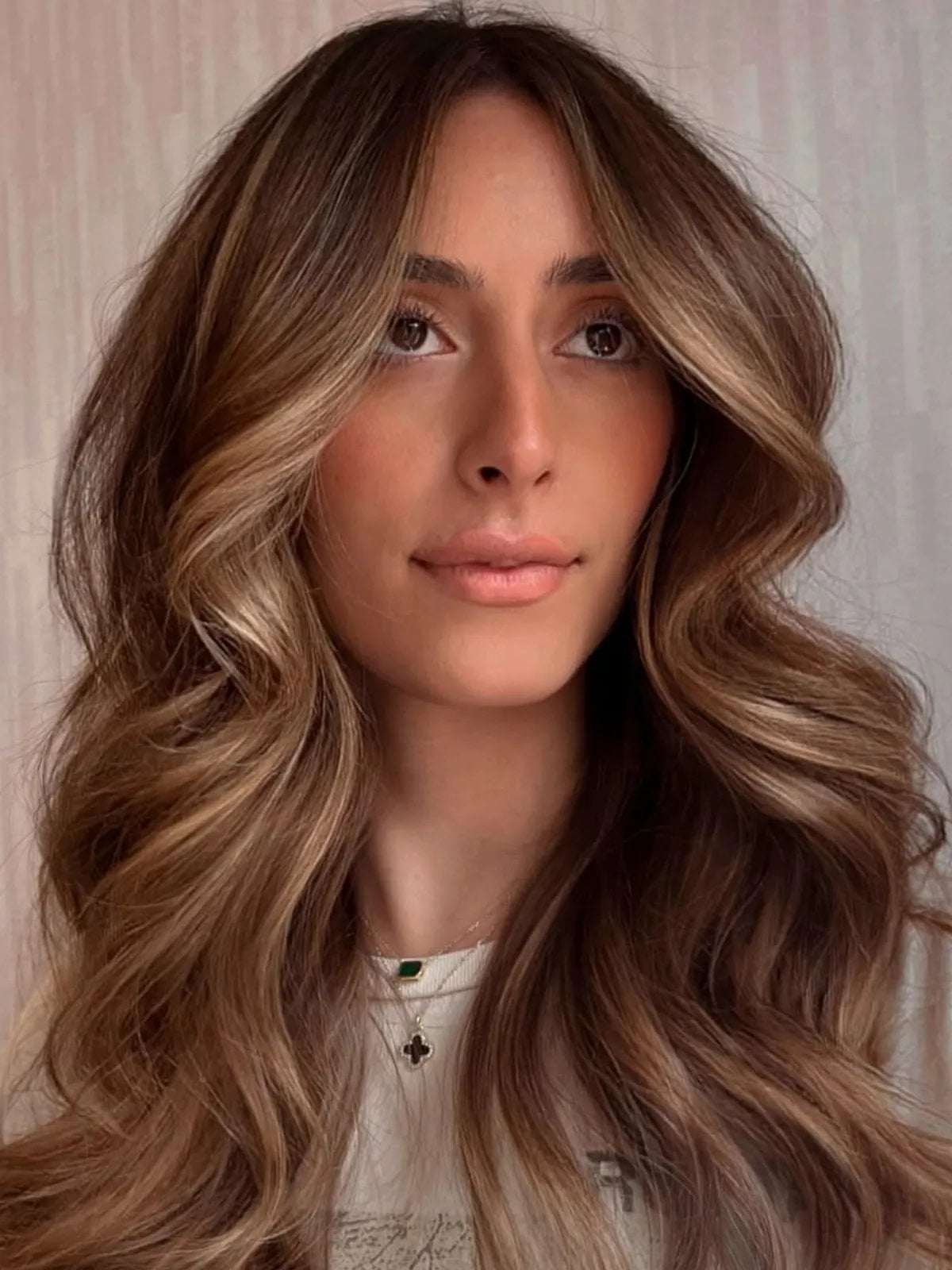
Face-framing highlights on a light brown base do one specific thing: they bring brightness to the front without committing the whole head to blonde. This approach genuinely flatters fine hair textures because the lighter pieces around the face create the illusion of density without the weight of full highlights. Thick, wavy hair also carries it well, but fine hair benefits most from the strategic placement. If your hair is very thin, the contrast between the light brown base and the blonde face-framing sections can make the rest look sparse, so ask your colorist to keep the highlights soft and blended rather than chunky.
Ask your colorist for: mid-back length with face-framing blonde balayage highlights. The upkeep is reasonable: a gloss or toner every eight weeks keeps the blonde from turning brassy, and the base color grows out without a harsh line. Style with loose waves and a light-hold hairspray to maintain shape without weighing the ends down.
Mid-Back Layers With Dimensional Balayage and Curtain Bangs
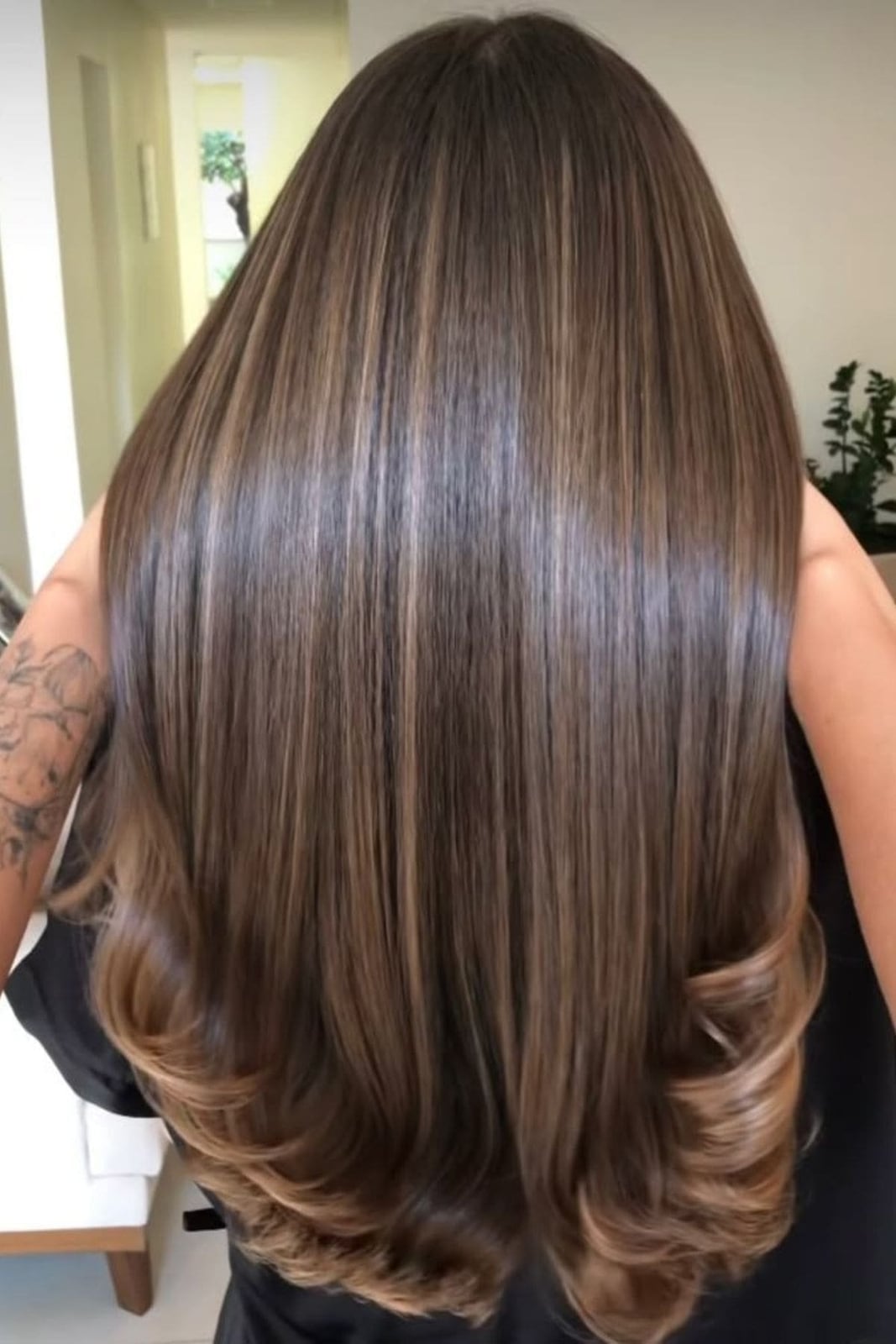
A one-dimensional color application sits flat; dimensional balayage does the opposite. This mid-back length uses a light brown base with subtle, blended balayage highlights that shift in tone from root to end, creating depth that a single shade cannot match. Set it against a solid color gloss, and the difference is immediate: the dimensional version has movement, while the solid one reads as uniform. Curtain bangs and long, flowing layers complete the look, softening round and heart face shapes. Thick, wavy hair starting at mid-back length is the ideal canvas.
Ask your colorist for: mid-back length layers with dimensional balayage and curtain bangs. Dimensional color requires a colorist who understands placement and does not just paint everything the same shade. Style with a smooth, wavy blowout, and trim the baseline every six to eight weeks to keep the layers from losing their shape.
Mid-Back With Lighter Brown Highlights
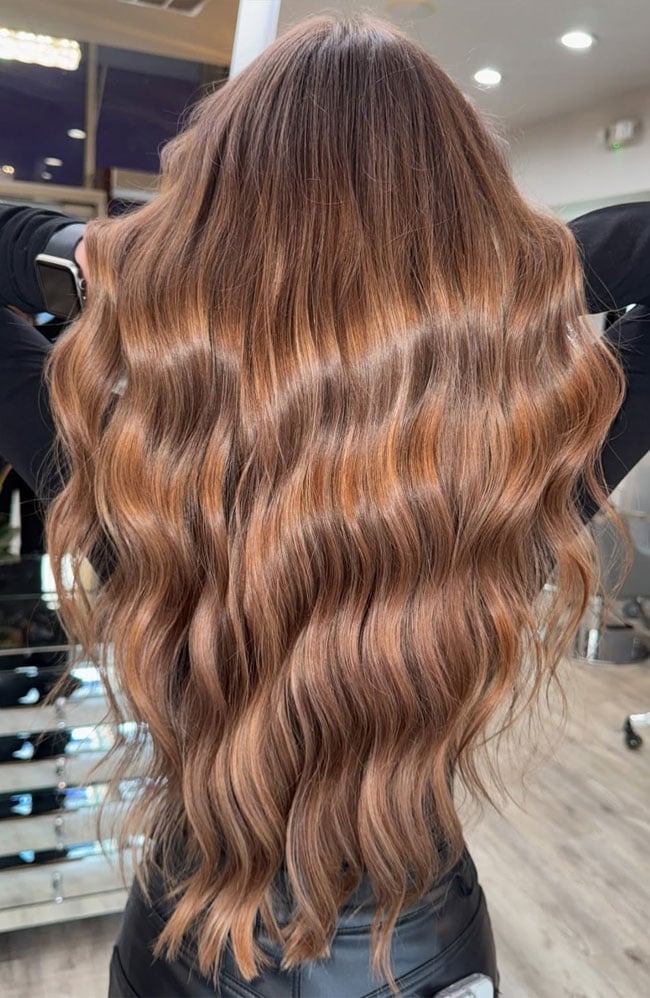
Lighter brown highlights on a light brown base are the low-maintenance version of balayage: the contrast is subtle enough that grow-out barely registers. The highlights are painted freehand onto thick, wavy mid-back length hair, with a middle parting that lets the dimensional color show through the soft waves. This finish wears well for eight to ten weeks between trims, and the color itself needs a refresh every ten to twelve weeks. Ask your colorist for: mid-back length with lighter brown highlights. Embrace natural texture with a sea salt spray, and trim the ends every eight to ten weeks to keep the waves from looking frayed.
Mid-Back With Subtle Light Brown Balayage
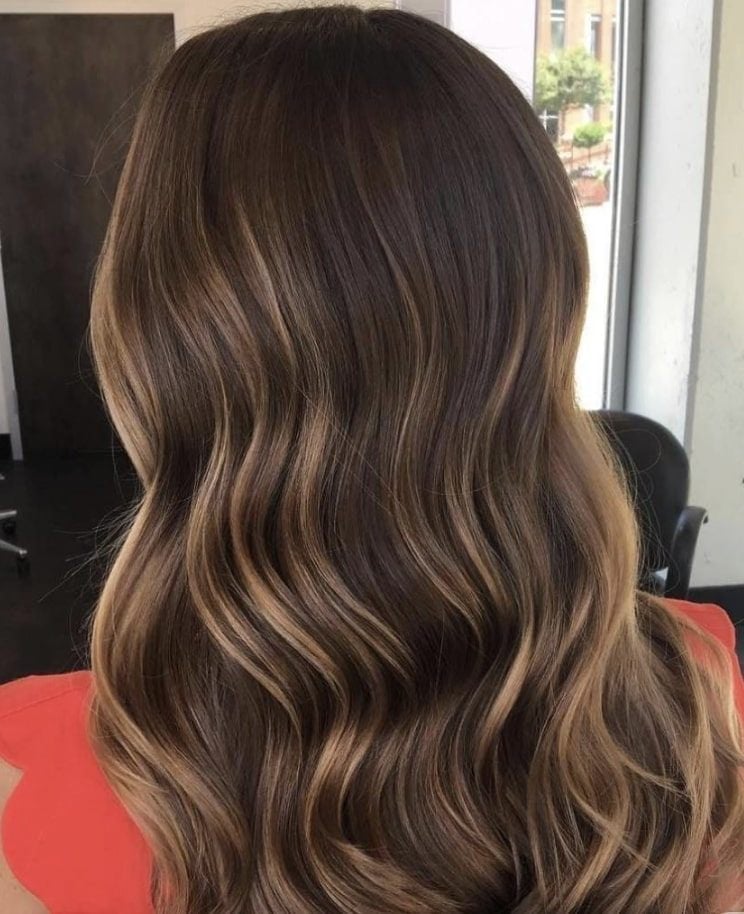
What if you want balayage that stays subtle? This version keeps the medium brown base intact and adds just enough light brown lift for a soft transition. The thick, wavy texture makes the color change look like a slow fade instead of a hard line. Ask your colorist for: mid-back length with subtle light brown balayage.
Soft waves let the color appear natural rather than painted on. This color works for anyone who wants dimension without a high-contrast grow-out. A trim every eight to ten weeks keeps the ends looking glossy and the shape intact.
Mid-Back Long Layers With Blonde Caramel Balayage
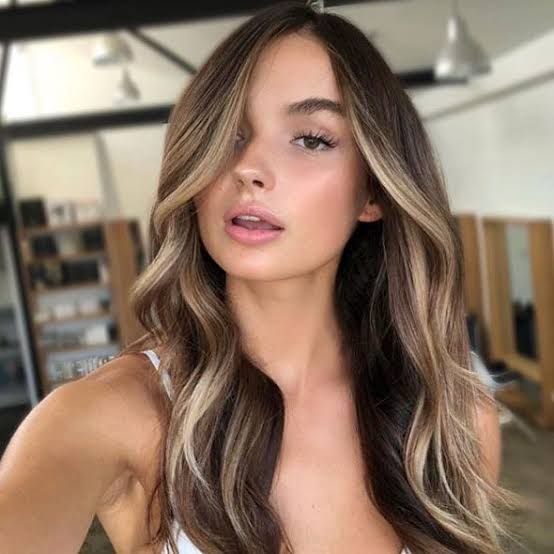
The trick here is the two-tone lift: blonde and caramel pieces weave through a dark brown base, creating a gradient that feels sun-bleached. The long layers give the color room to travel, so the lightest sections land near the ends instead of sitting at the root. Ask your colorist for: mid-back length long layers with blonde and caramel balayage.
Thick, wavy hair carries this technique best because the texture breaks up the color evenly. The dark base stays rich near the scalp, which buys you about three months before a refresh feels necessary. A trim every ten to twelve weeks keeps the layers from losing their shape.
Mid-Back With Chocolate Base And Caramel Balayage
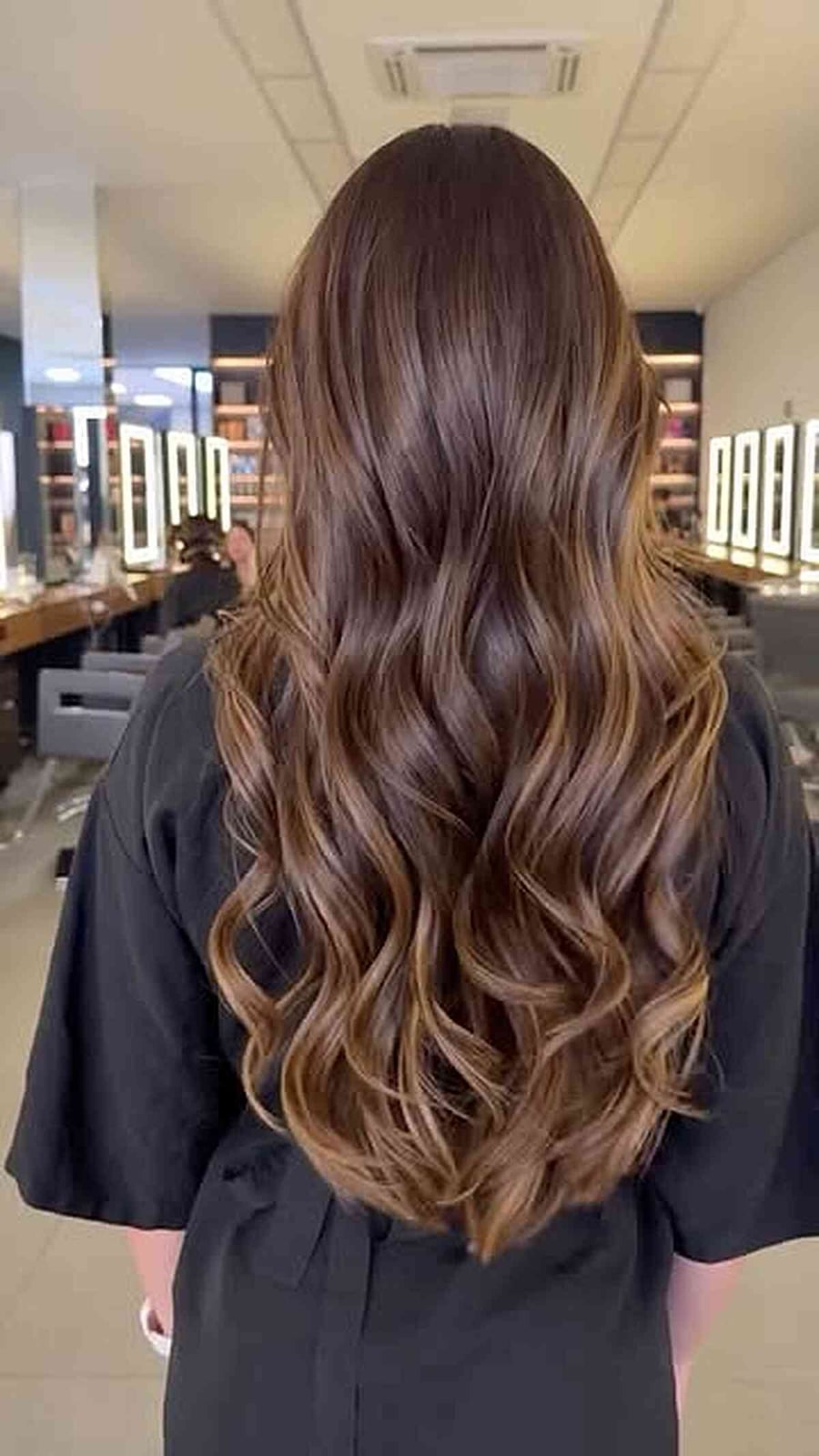
A chocolate brown base with caramel balayage is the color equivalent of a cozy sweater: warm, dimensional, and perfectly timed for autumn. The back view shows how the caramel pieces fan out through thick, wavy hair, creating a lived-in effect that doesn’t look like you just left the salon. Ask your colorist for: mid-back length chocolate brown with caramel balayage. This shade offers a low-maintenance grow-out that looks natural even when it’s not fresh.
Mid-Back With Dark Base And Light Brown Balayage
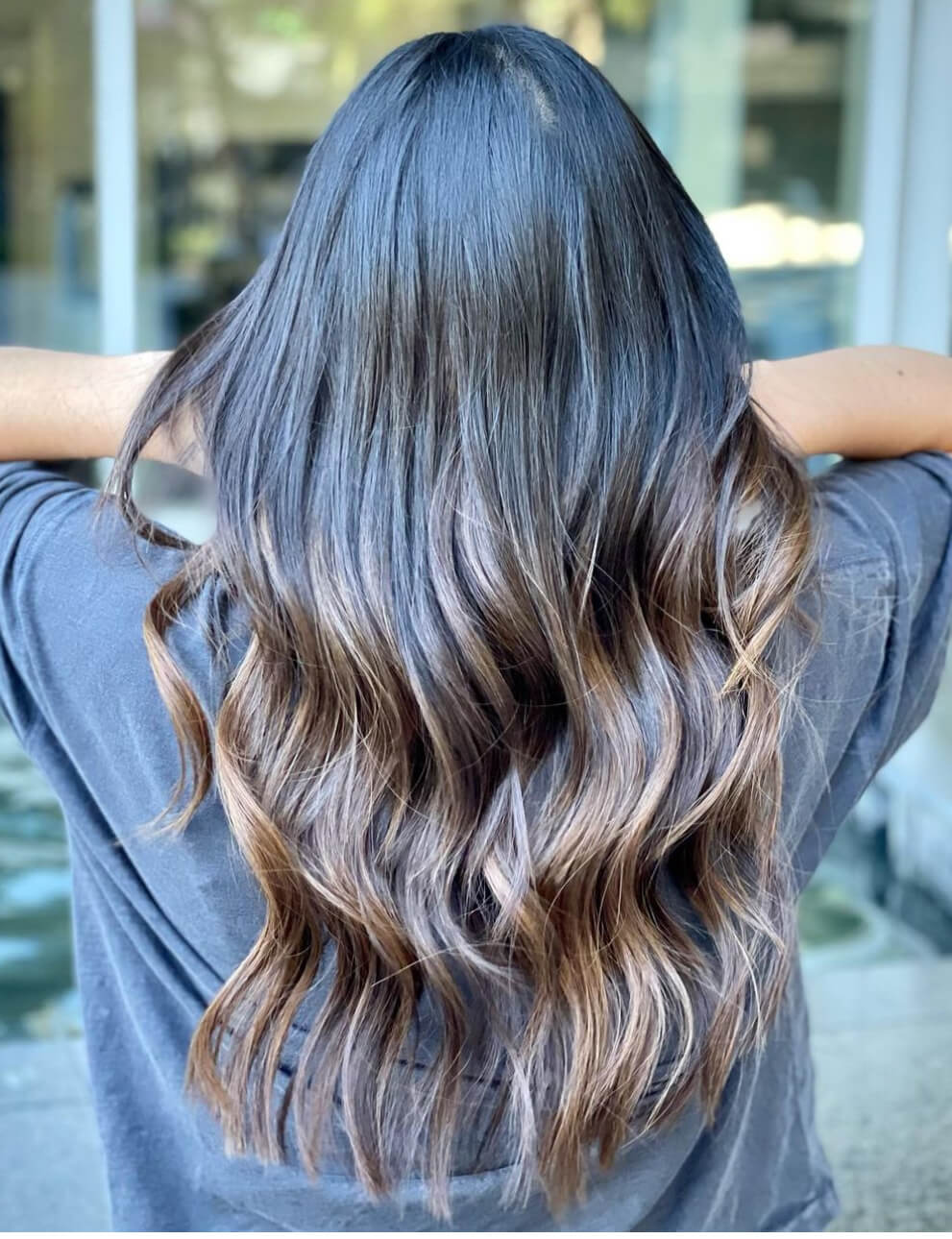
Lifting a dark brown base to light brown is a delicate balance: go too warm and you get brass, go too ashy and the dimension disappears. This version keeps the transition soft, with blended highlights that start below the crown and fan out through the ends. Ask your colorist for: mid-back length dark brown with light brown balayage.
The honest drawback is that dark bases have more warmth to fight, so a purple shampoo once a week is your insurance policy against orange tones. The thick, wavy texture helps camouflage any uneven lift during the first few weeks. A trim every eight to ten weeks keeps the shape and the color looking intentional.
Mid-Back With Curtain Bangs And Light Brown Balayage
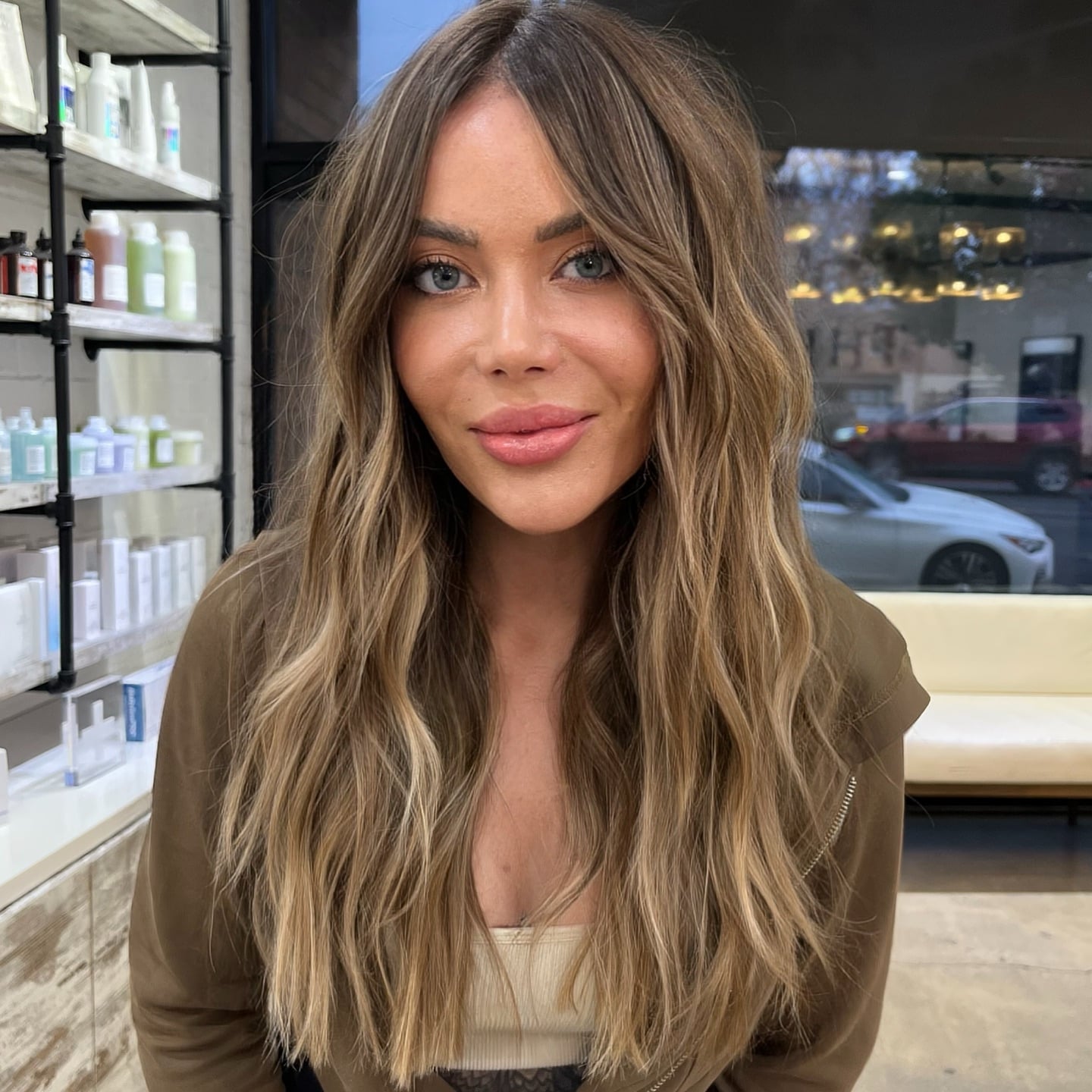
Curtain bangs and light brown balayage work together to frame the face. The medium brown base keeps the roots low-maintenance, while the balayage adds brightness around the face and through the lengths. Ask your colorist for: mid-back length with curtain bangs and light brown balayage.
The curtain bangs soften round and heart face shapes. Thick, wavy hair holds the shape well, though the bangs will need a trim every four to six weeks to stay at the right length. A wavy blowout ties the whole thing together.
Mid-Back With Dark Base And Blonde Balayage, Wavy
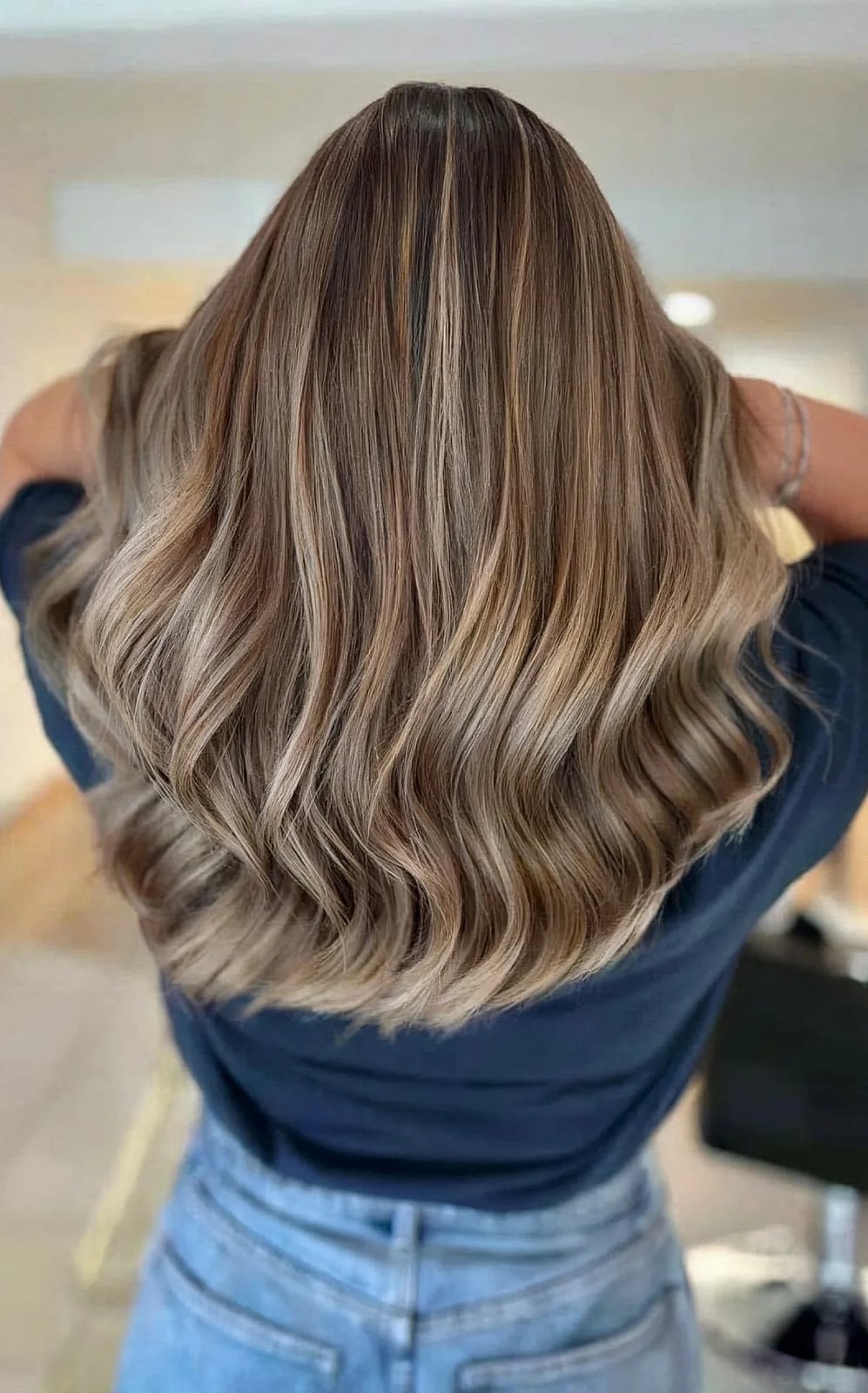
Thick, wavy hair at mid-back gets a high-contrast treatment with a dark brown base and blonde balayage, not the usual honey or caramel. Ask your colorist for: mid-back length dark brown with blonde balayage. The significant contrast is a deliberate choice, which makes it a better fit for someone who wants their color noticed than for the low-maintenance devotee. A shine serum on soft flowing waves keeps the blonde pieces looking fresh between toning appointments every eight to ten weeks.
Mid-Back Long Layers With Caramel Balayage, Close-Up Take
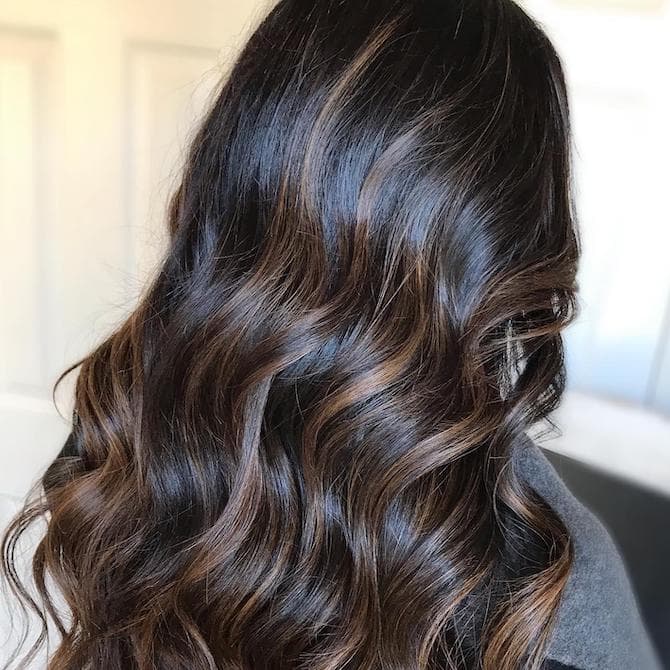
The caramel balayage here is applied in sweeping, vertical strokes that start lower than the ears and intensify toward the ends, leaving the dark brown base intact at the root. Long layers cut into thick, wavy hair at mid-back length ensure the caramel pieces have room to move without the color stacking into a solid block. Ask your colorist for: mid-back length long layers with caramel balayage. The technique relies on the natural wave pattern to blend the two tones, so a flat iron would undo the effect. Loose waves, air-dried or diffused, are the point.
A toning appointment every eight weeks keeps the caramel from pulling too warm, though the dark base buys you a few extra weeks of grow-out grace.
Mid-Back With Medium Brown Caramel Balayage, Wavy
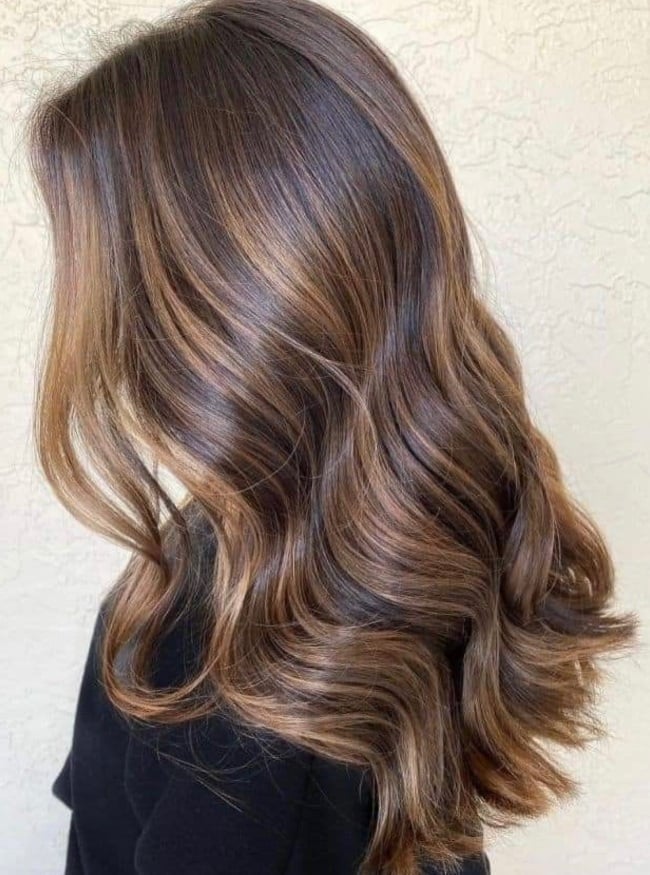
A medium brown base with caramel balayage on thick, wavy mid-back hair reads as a warmer, lower-commitment version of the blonde-heavy looks. Ask your colorist for: mid-back length medium brown with caramel balayage. The caramel tones fade gradually, shifting from a bright golden-brown to a softer honey over about six weeks before they need a gloss refresh. A texturizing spray on loose waves revives the warmth between washes, but heavy creams will flatten both the wave and the color’s dimension. Trim the ends every eight to ten weeks to prevent the lighter sections from looking frayed.
Long Hair With Face-Framing Balayage
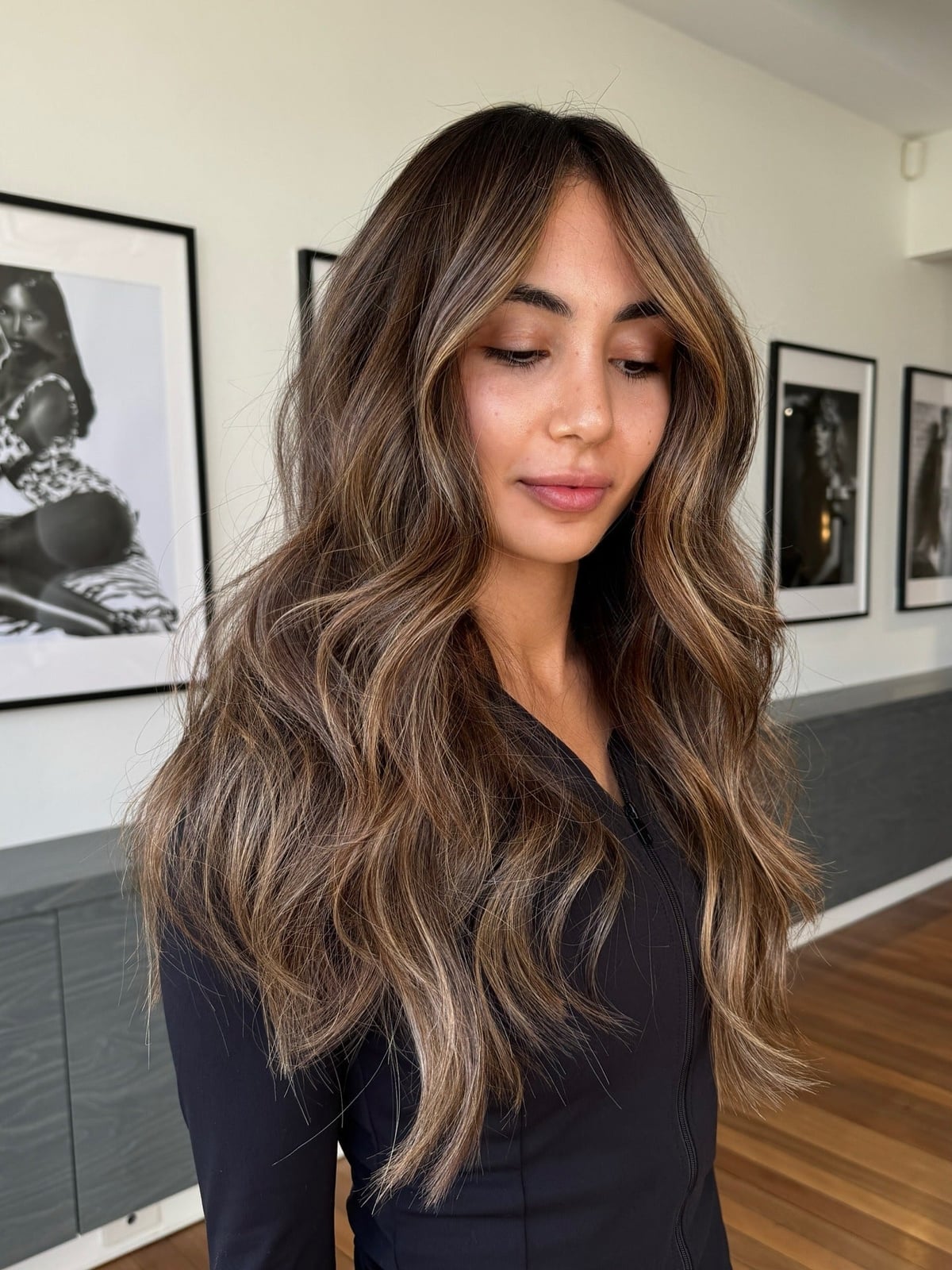
Can long, thick hair handle balayage without looking like a solid curtain of color? Yes, when the lighter strands concentrate around the face. Ask your colorist for: long hair with face-framing balayage. The face-framing pieces and bangs soften round and heart-shaped faces, while the rest of the length stays closer to the natural light brown base. A glossy blowout is the default styling here, since the face-framing pieces need direction to do their job. The baseline needs a trim every eight to ten weeks, but the balayage itself can stretch to twelve weeks between appointments.
Mid-Back Fine Hair With Beige Bronde Balayage
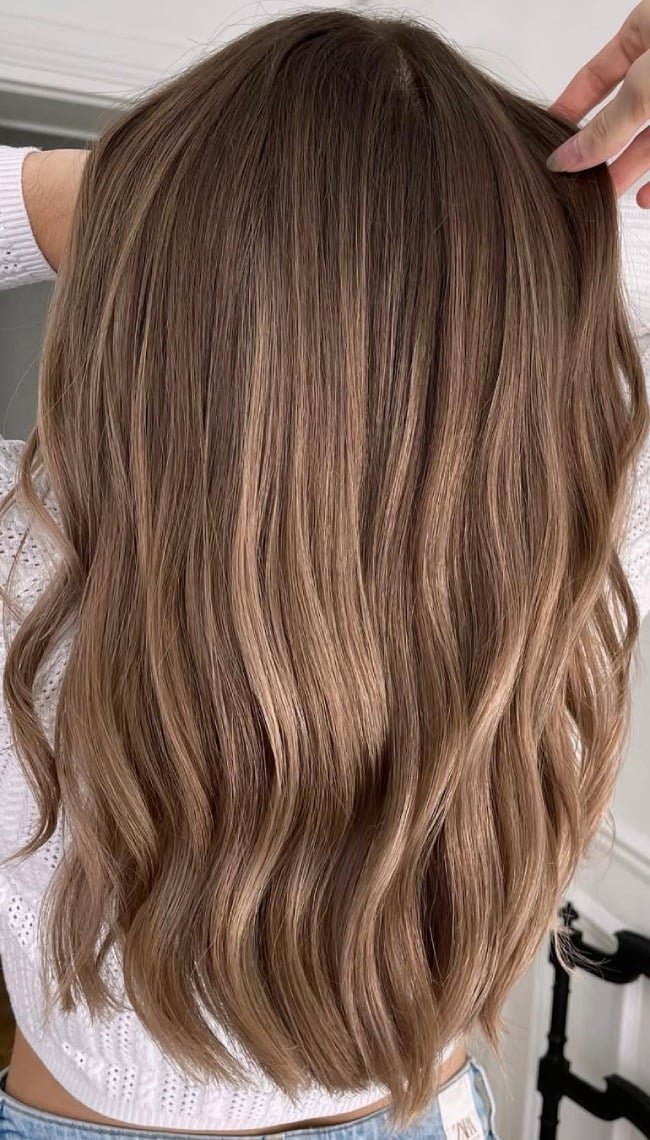
Fine, wavy hair at mid-back length can look washed out by a balayage that is too close to the base color, which is why the beige bronde tone here works: it is light enough to register as a highlight but neutral enough to avoid brassiness. Ask your colorist for: mid-back length fine hair with beige bronde balayage. The drawback is that fine hair shows every stray root and uneven fade, so this look demands a toning appointment every six weeks. Long layers add the illusion of fullness, but skip heavy styling creams that weigh the waves flat. A volumizing mousse at the roots keeps the shape.
Mid-Back Straight Fine Hair With Vertical Highlights
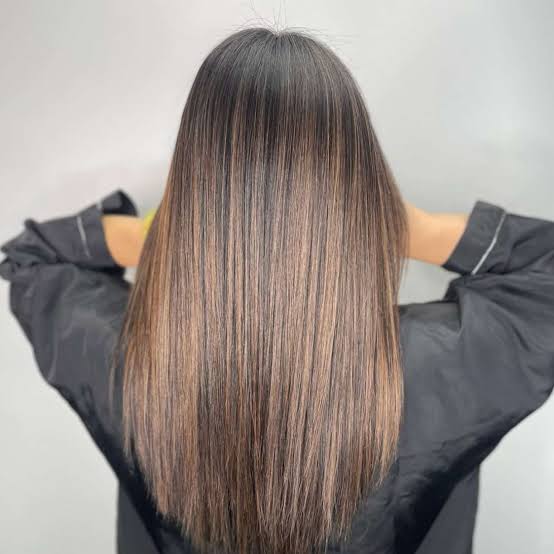
Vertical highlights demand a steady hand because on fine, straight hair there is no curl to hide a slip. This mid-back length keeps a dark brown base and lets light brown pieces run down the strands in slim, even lines, creating a sleek finish. The technique suits fine, straight textures that need dimension without bulk.
Ask your colorist for: mid-back length vertical light brown highlights. A middle parting shows off the symmetry, so keep the style straight and glossy to let the color do the talking. Smoothing serum keeps flyaways down, and a trim every ten to twelve weeks stops the fine ends from looking ragged.
Mid-Back Mushroom Brown Balayage
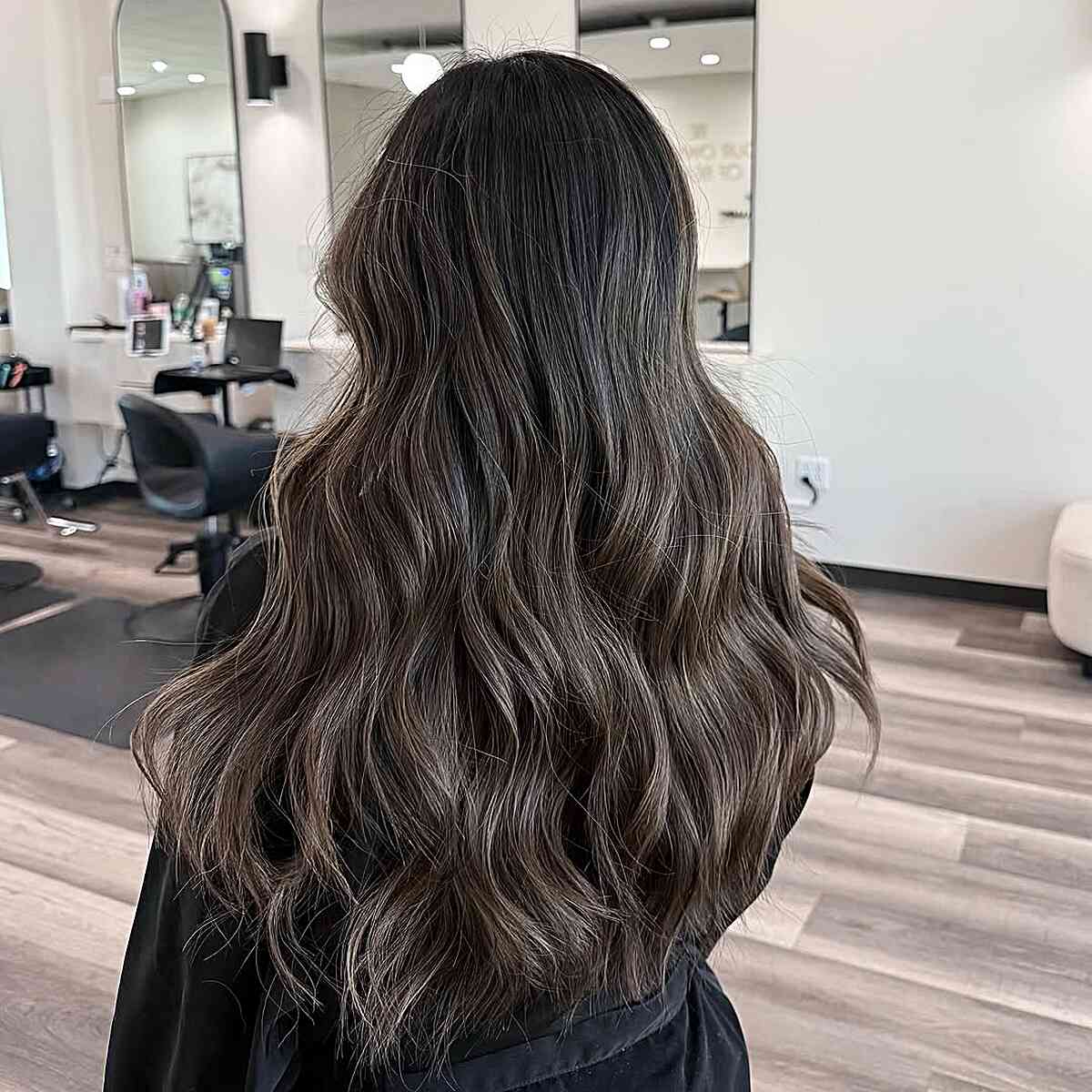
Mushroom brown balayage is the winter color that quietly outshines the usual caramel and honey requests. The cool-toned base lands somewhere between ash brown and taupe, with lighter, blended highlights that keep the mid-back length from falling flat. Long layers give thick, wavy hair room to move, and the loose waves catch the dimensional tone without any harsh lines. Ask your colorist for: mid-back length long layers with mushroom brown balayage. It suits those who want a sophisticated, low-contrast shift that still looks intentional. A violet shampoo once a month keeps the cool tone from drifting warm between salon visits.
Final Thoughts
For a low-maintenance balayage, opt for tones that are only one to two shades lighter than your base, focusing placement around the face and ends. Choose a technique with softer blending to avoid stark, contrasting pieces that require frequent toning. Embrace the subtle art of light brown balayage for dimensional, low-upkeep color.
- Maintain tone with a color-depositing conditioner every 2-3 weeks.
- Use sulfate-free shampoo to preserve color vibrancy.
- Deep condition hair weekly to combat dryness from lightening.
- Trim ends every 8-10 weeks to prevent split ends.
- Protect hair from heat styling with a thermal spray.