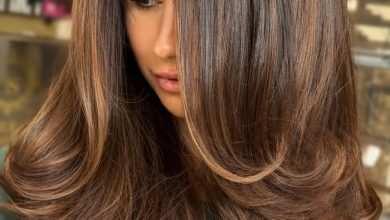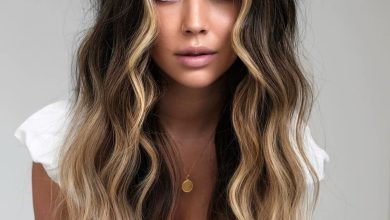
Balayage on dark brown hair is the low-commitment way to add dimension without a full color overhaul. The trend has shifted toward softer, face-framing highlights and lived-in blends that grow out naturally, not the chunky stripes of a few years ago.
These 27 ideas cover the range from subtle caramel ribbons to ash-toned contrast, across collarbone cuts and mid-back lengths. Whether your hair is fine and needs volume or thick and wants movement, there is a dark brown balayage here that solves the grow-out line problem and keeps your base rich. No bleach bath required.
Mid-Back Waves With Curtain Bangs
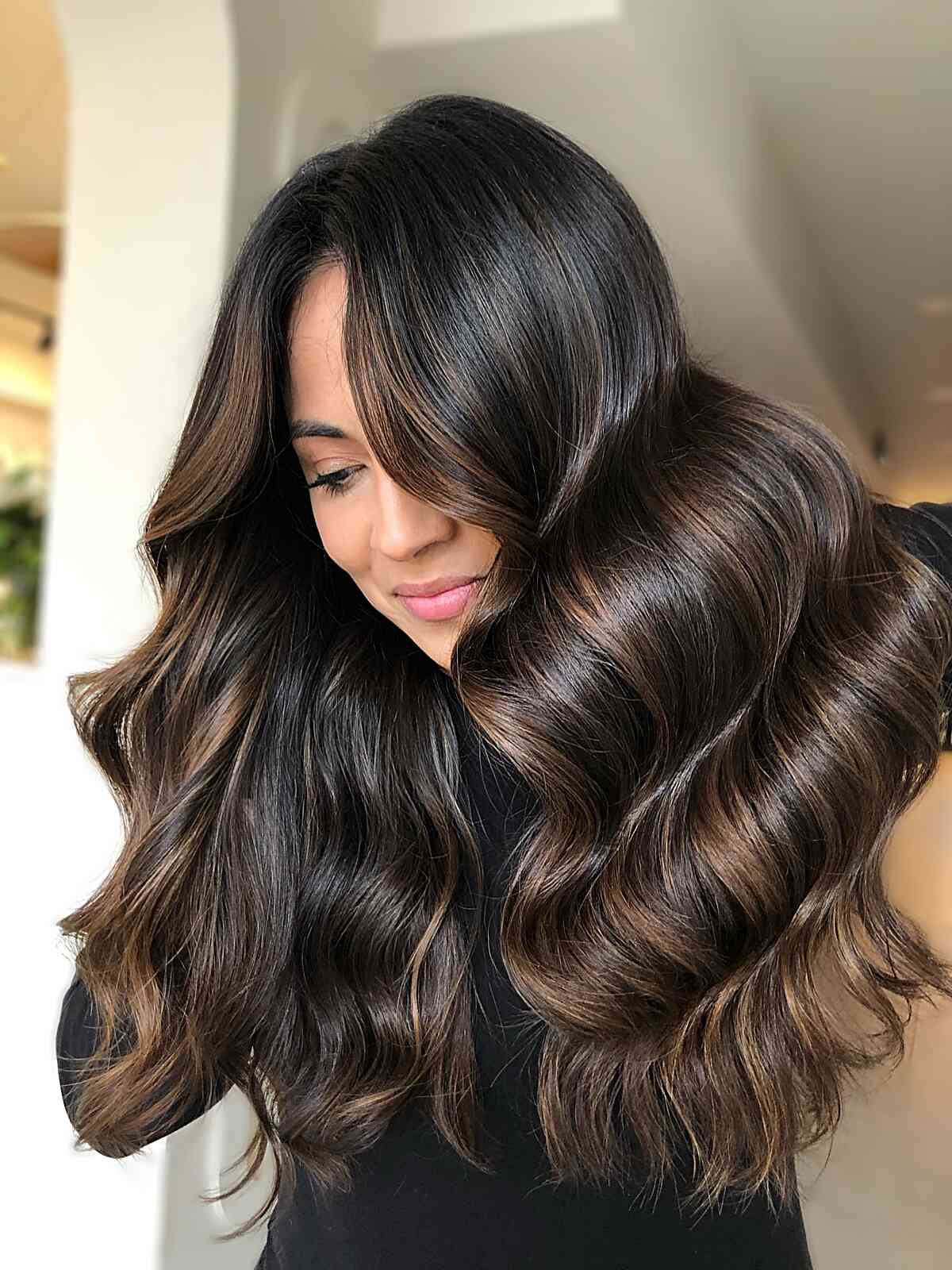
Wondering how to add dimension to dark brown without going full blonde? A dark brown base with lighter brown balayage, reaching mid-back and styled in soft waves with curtain bangs, is the answer you are looking for. The middle parting and glossy finish give it a polished look that works for everyday or a night out.
This cut suits thick, wavy hair starting at shoulder length or longer. Curtain bangs soften round and oval faces without requiring a full fringe commitment. Ask your colorist for: mid-back balayage with curtain bangs, soft waves. Use a large barrel curling iron for the waves and plan to trim the curtain bangs every four to six weeks to keep them from crossing into awkward territory.
Collarbone Cut With Ash Brown Balayage
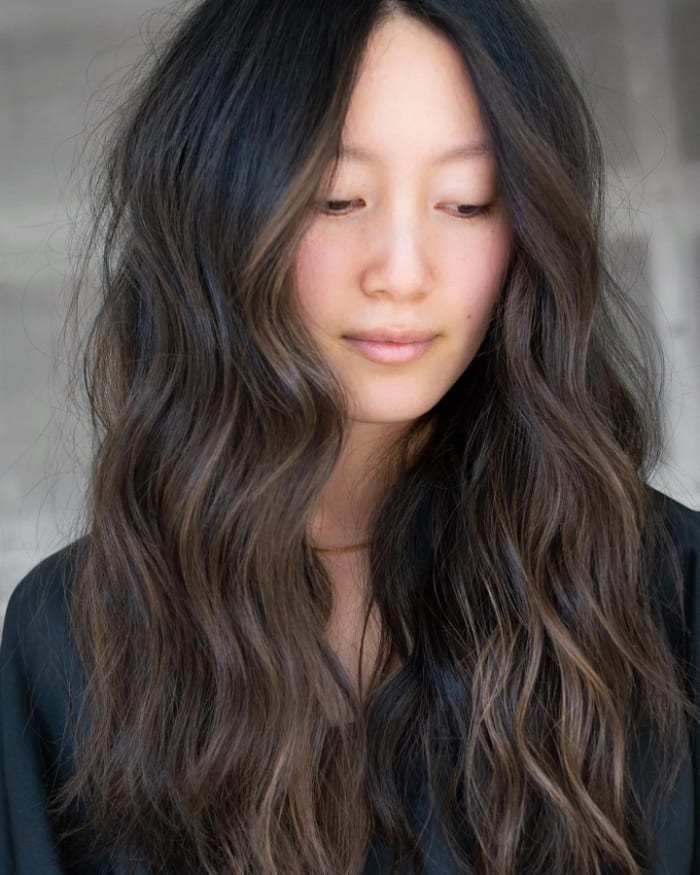
If warm caramel balayage feels too golden for your taste, consider its cooler cousin: a dark brown base with ash brown balayage. This collarbone-length cut has soft layers and fine, wavy texture with curtain bangs. The ash tones mute the warmth in dark hair, creating a more subdued contrast. It suits fine, wavy hair starting at shoulder length, and curtain bangs complement oval and heart faces. Ask your colorist for: collarbone length balayage, ash brown tones, curtain bangs. Air dry for a natural finish and use a light texturizing spray to define the waves. Expect a toning appointment every six to eight weeks to keep the ash from drifting warm.
Mid-Back Waves Rich Color Dimension
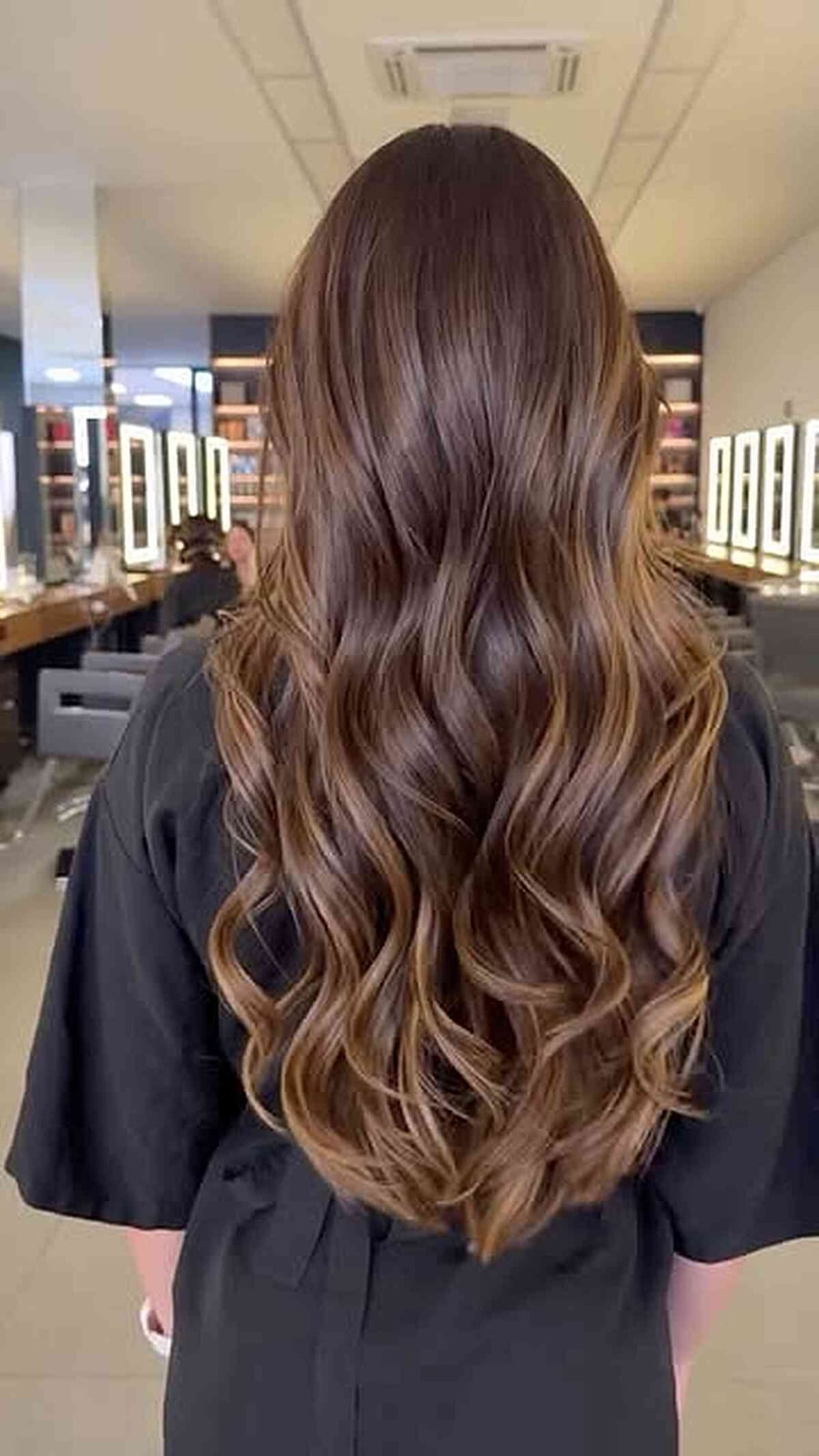
The back view tells the real story here: a dark brown base with lighter brown balayage applied through thick, wavy hair that reaches mid-back. The loose waves and middle parting let the lighter pieces catch the light from every angle, making the hair look fuller and richer than a single-process color ever could. This technique works best on thick, wavy hair of mid-back length and suits most face shapes because there are no heavy bangs to contend with. Ask your colorist for: mid-back balayage, lighter brown highlights, loose waves. This is a solid choice for fall and winter, when deeper shades with subtle brightness feel right. A flexible hold hairspray keeps the wave shape without making it crunchy.
Collarbone Layers With Ash Tones
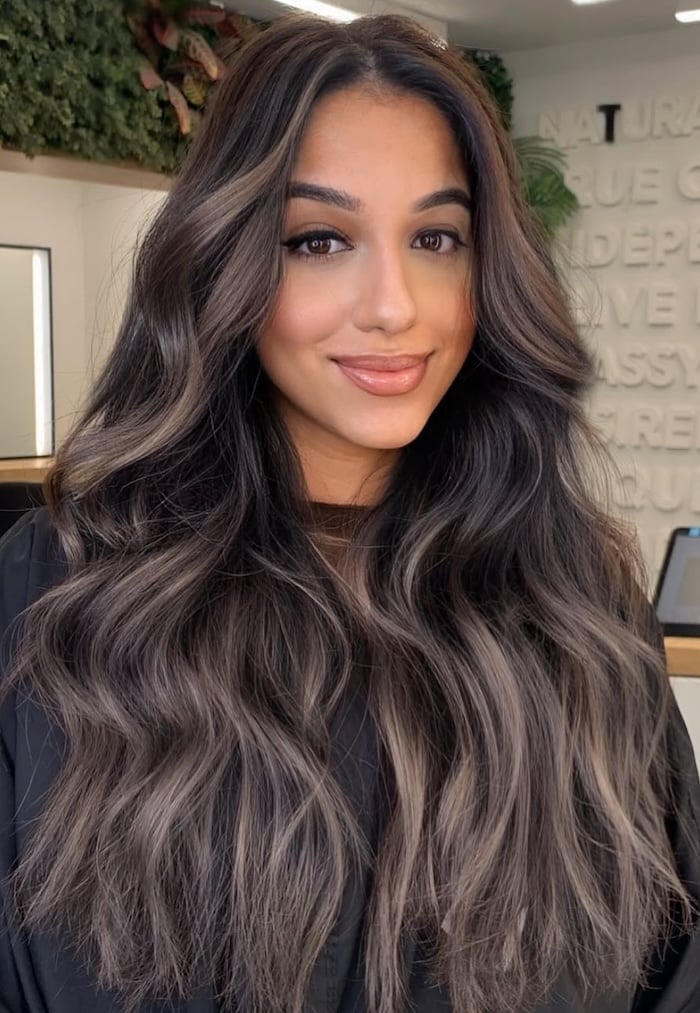
The thick, wavy texture and side parting give the hair volume and movement without extra effort. This combination genuinely flatters those with naturally cool-toned hair or anyone looking to neutralize unwanted warmth in their dark brown base. Ask your colorist for: collarbone length layered cut, ash brown balayage, side part. Flip your parting to the opposite side for instant lift at the roots, and run a smoothing serum through dry ends to keep the ash tones looking polished. A toning appointment every six weeks prevents the ash from shifting brassy.
Collarbone Lob Face Framing Layers
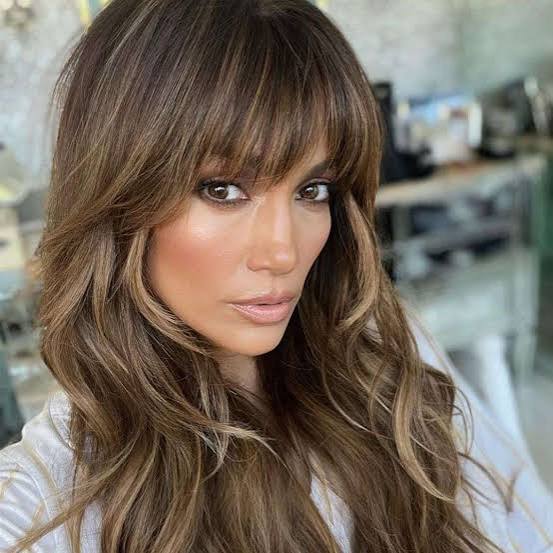
Face-framing layers and curtain bangs on a collarbone-length lob do the heavy lifting here. The dark brown base with lighter brown balayage highlights adds dimension around the face, drawing attention to the cheekbones and jawline. The thick, wavy texture and middle parting keep the look soft rather than severe. Ask your colorist for: collarbone length lob, face-framing layers, curtain bangs. The one real drawback: those face-framing layers require a trim every six to eight weeks. If you let them grow past the collarbone, the lighter pieces start to look like an afterthought rather than a design choice. Use a round brush to blow-dry the front sections away from the face for that lifted effect.
Mid-Back Wavy Blowout Balayage Transition
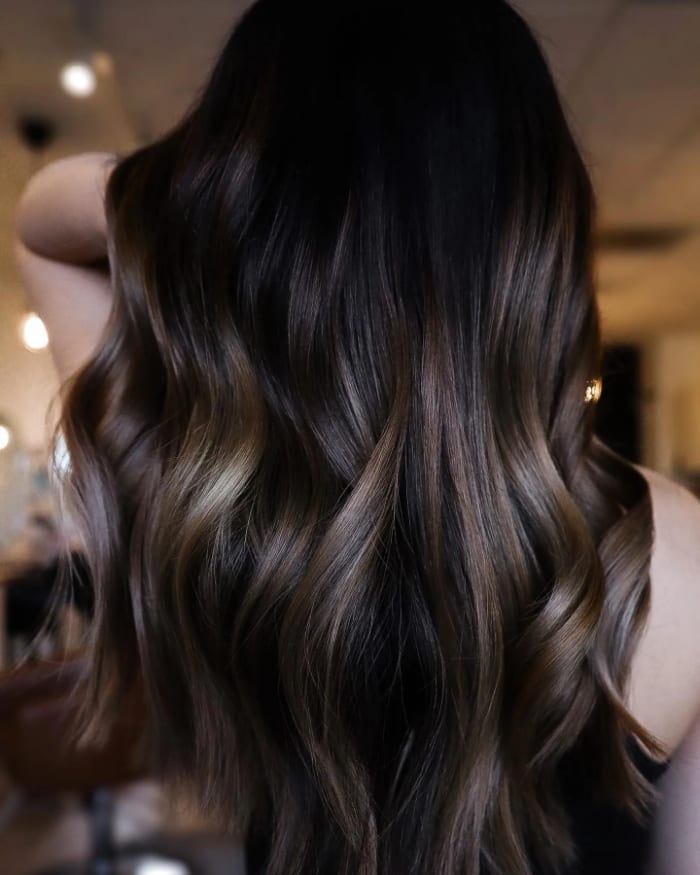
This is not a sharp, high-contrast balayage; the lighter brown pieces blend into the dark brown base with a softness that mimics a natural sun fade. Thick, wavy hair falling to mid-back provides the ideal canvas for this subtle lift, especially when styled in a wavy blowout that catches the dimension. Ask your colorist for: mid-back balayage, subtle lighter brown highlights, wavy blowout. The back view here confirms the technique works evenly through the lengths, making it a solid pick for anyone who wants warmth without a full commitment.
The transition lands perfectly for late summer, when hair has already seen some sun and you want to carry that lightness into autumn. Thick textures hold the wave pattern well, so the blowout stays bouncy through a workday. A heat protectant spray before drying keeps the strands healthy, and a drop of shine serum on the ends seals the deal. This is a salon-only project, but the grow-out is kind: the darker base means regrowth blends rather than announces itself.
Mid-Back Flowing Layers Subtle Blend
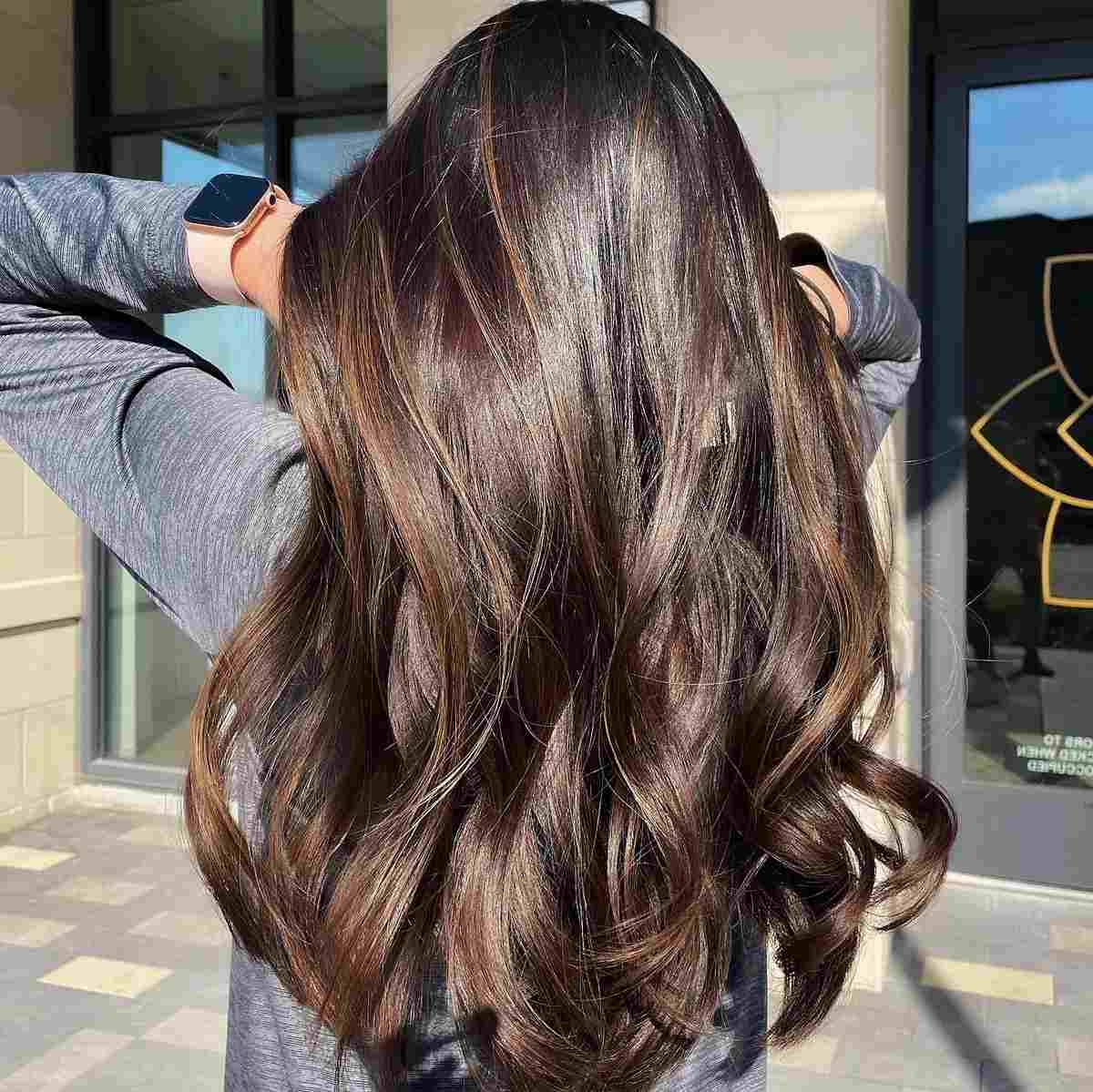
The design here is deliberate: the lighter brown balayage is hand-painted in soft ribbons that follow the hair’s natural fall, avoiding any harsh lines. On thick, wavy hair at mid-back, the flowing layers allow the color to peek through at different depths, creating movement that a solid shade cannot match. Ask your colorist for: mid-back balayage, subtle lighter brown blend, flowing layers. The back view shows how the technique avoids pooling at the ends, keeping the overall look airy rather than heavy.
This approach works best on hair that already has some wave, since the texture helps the color transition read as organic rather than painted on. Low heat encourages the natural bend without frizz, and the layers themselves need a trim every ten to twelve weeks to maintain their shape. The subtlety of the blend means you can skip the salon for a while without the roots screaming for attention.
Mid-Back Voluminous Wavy Blowout With Long Layers
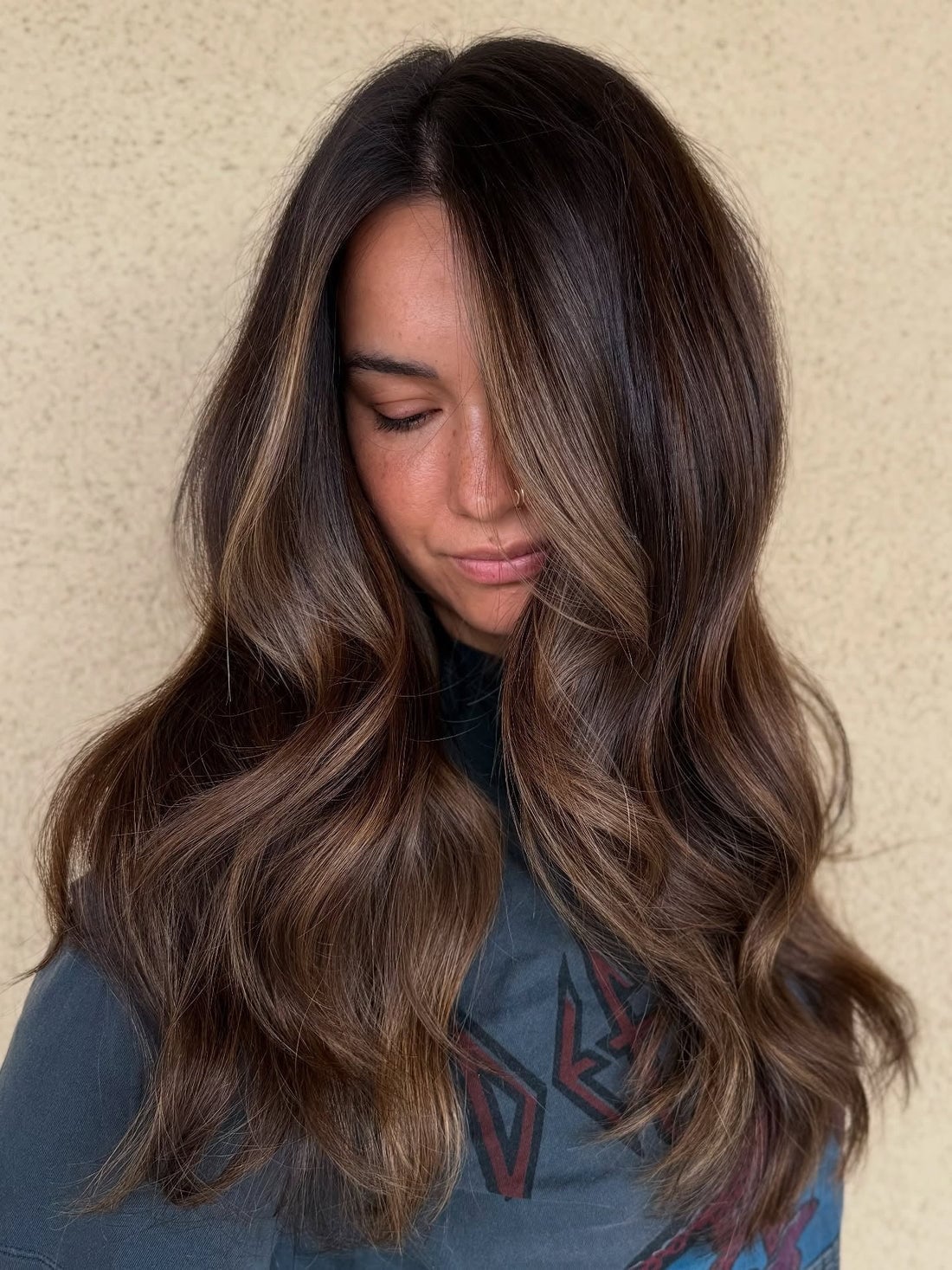
Wondering how to get dimension without looking like you tried too hard? The answer is a rich brown balayage on a dark brown base, painted through long layers so the lighter pieces sit mostly on the ends. Thick, wavy hair at mid-back takes the color well, and the middle parting lets the depth read evenly on both sides. Ask your colorist for: mid-back balayage, rich brown tones, voluminous wavy blowout.
When you sit in the chair, specify that you want the balayage to stay within two shades of your base. That keeps the contrast low and the upkeep manageable. The long layers here are key: they remove weight without sacrificing length, which helps the blowout hold volume at the roots. A large round brush and a blow dryer with a concentrator nozzle give you that lift. The result is a color that adds richness without drama.
Collarbone Glossy Blowout With Fringe
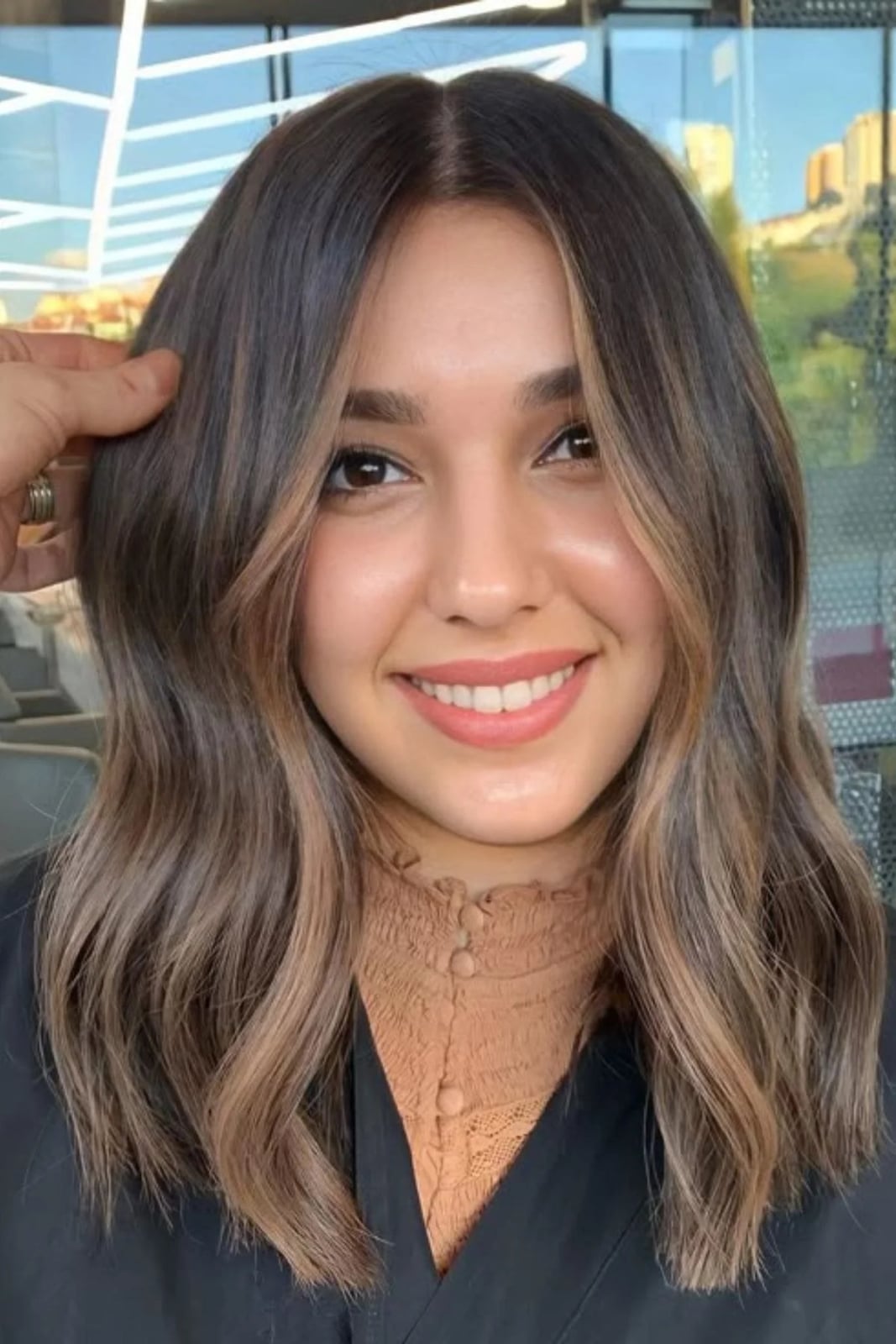
The glossy finish on this collarbone-length cut reflects light off the dark brown base and lighter balayage pieces, making the color look deeper and more dimensional. Curtain bangs frame the face without demanding constant trimming, and the face-framing layers keep the weight from settling at the ends. Ask your colorist for: collarbone length balayage, curtain bangs, glossy finish. Thick, wavy texture holds the blowout shape well, but the gloss effect fades after about two weeks, so a clear gloss treatment every four to six weeks keeps the shine alive. A shine serum applied to damp hair before blow-drying buys you a few extra days between washes.
Collarbone Layers Voluminous Blowout
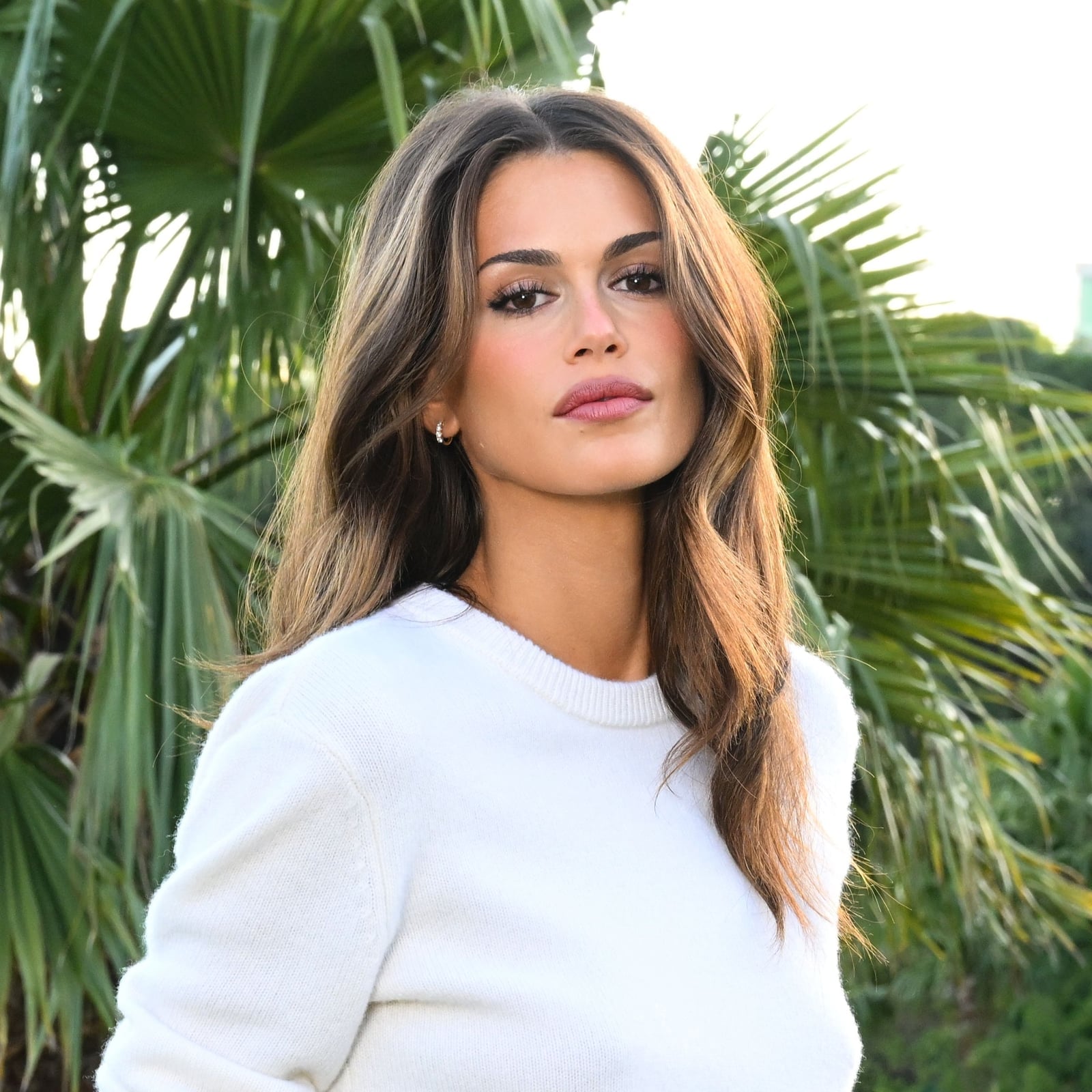
Soft face-framing layers and curtain bangs are paired with a dark brown balayage that adds subtle lightness around the face, and the voluminous blowout gives the cut lift at the crown. Ask your colorist for: collarbone length balayage, soft layers, curtain bangs, voluminous blowout. Soft layers work well on oval and square face shapes, as the framing pieces soften the jawline without shortening the face. Thick, wavy hair benefits from the layers, which remove bulk while keeping the overall density. This is a low-commitment color update: the balayage stays close to the base shade, so regrowth is barely noticeable for the first eight weeks.
Mid-Back Caramel Tones Soft Waves
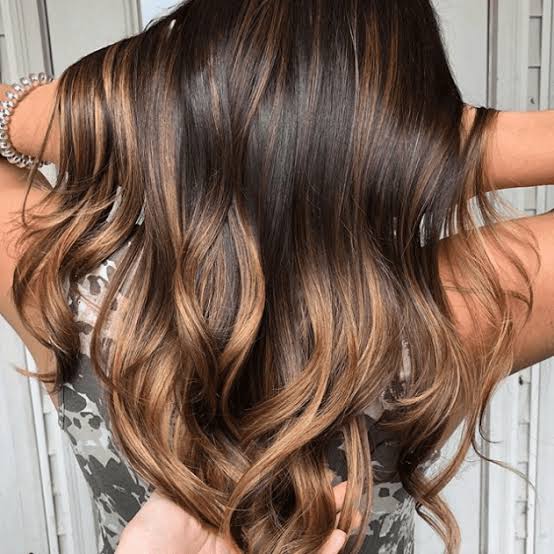
If ash tones read too cool for your taste, caramel balayage on a dark brown base offers the warmer alternative. The transition here is seamless, with lighter caramel pieces melting into soft, loose waves that fall to the mid-back. This blend works best on thick, wavy hair that already has some movement, since the caramel needs texture to show off its dimension. Ask your colorist for: mid-back balayage, caramel tones, soft waves. A styling cream will keep the waves defined and control frizz, which matters more as the lighter ends tend to dry out faster.
The warmth in caramel tones gives a softer contrast against dark brown than ash ever could, making it a solid pick for dimension without the cool-girl glare. It is a salon process, but the payoff is a color that looks like it grew that way, even when it did not.
Mid-Back Wavy Blowout Rich Dimension
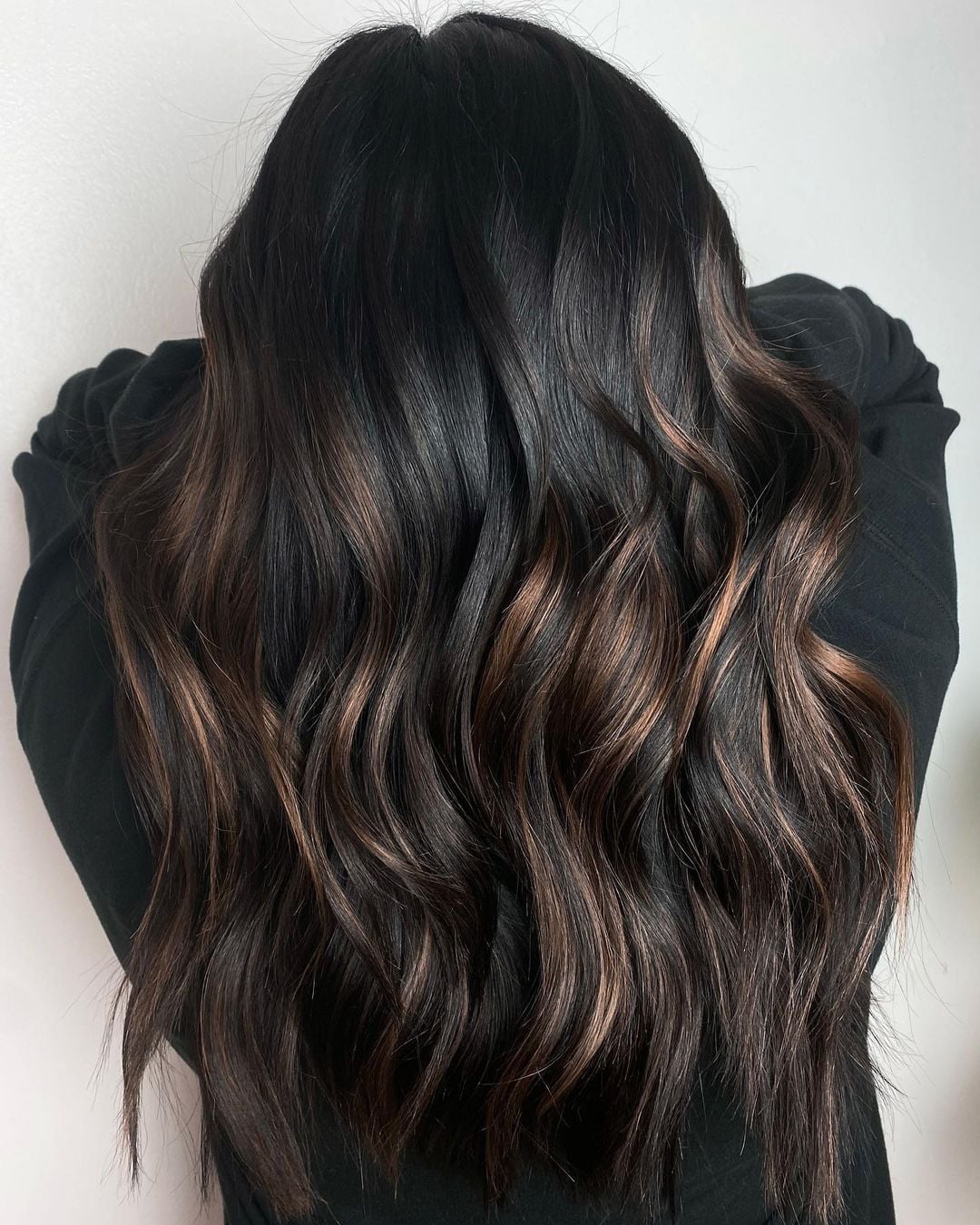
The design here relies on lighter brown balayage highlights placed to catch the eye as the hair moves, so the color does the work of adding depth. From the back, thick, wavy hair falls to the mid-back with a dark brown base that lets those lighter pieces stand out without shouting. This suits anyone with thick, wavy hair who wants movement without a drastic change, and the layered cut gives the waves room to breathe.
Ask your colorist for: mid-back balayage, lighter brown highlights, wavy blowout. A texturizing spray on dry hair will boost the wave pattern and keep the dimension visible throughout the day. It is a salon technique that reads as natural, but the upkeep is straightforward: a trim every eight to ten weeks keeps the ends healthy and the shape intact.
Shoulder Length Layers Caramel Blonde
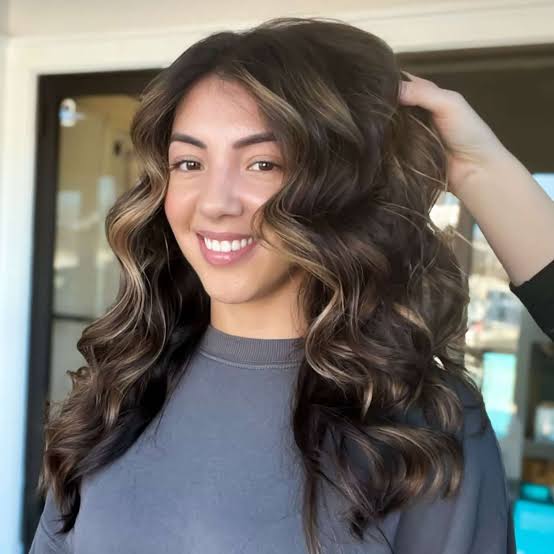
This shoulder-length cut layers caramel and blonde balayage over a dark brown base, with a side part that adds volume at the crown. The thick, wavy texture carries the blend well, but be warned: getting from dark brown to caramel blonde takes multiple sessions, so patience is part of the deal. Ask your colorist for: shoulder length balayage, caramel blonde tones, side part. If you are not ready to commit to the lightening process, skip this one and stick to a single-tone gloss instead.
Collarbone Waves Face Framing Highlights
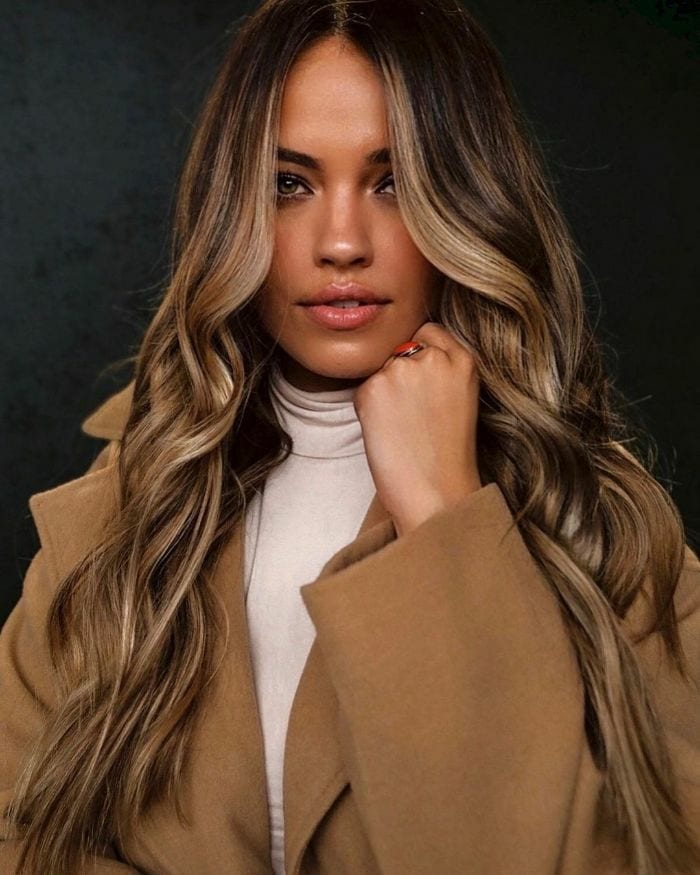
How often do those face-framing highlights need a refresh to stay bright against the dark brown base? Usually every eight to twelve weeks, depending on how fast your hair grows and how much contrast you want. This collarbone-length style pairs curtain bangs with lighter brown balayage, and the face-framing layers soften the line of a square or round jaw. Ask your colorist for: collarbone length balayage, face-framing highlights, curtain bangs. The middle part and loose waves give it a lived-in feel, and the ends will keep the wave pattern from falling flat by mid-afternoon.
Mid-Back Wavy Blowout Glossy Texture
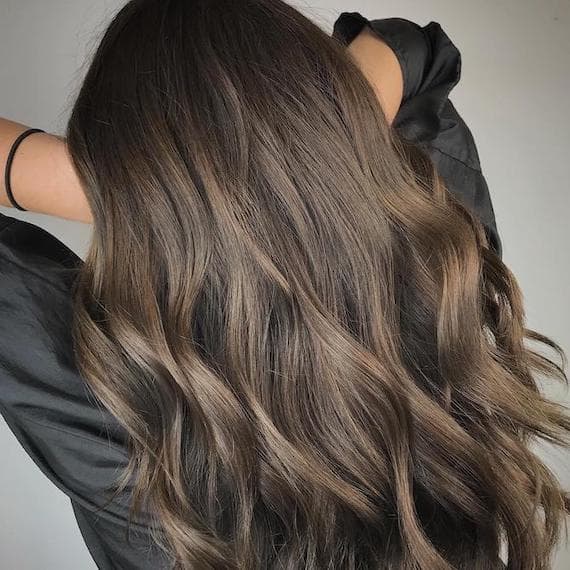
The glossy finish on this wavy blowout comes from a balayage technique that keeps the dark brown base rich while lighter brown highlights add depth through the mid-back length. Thick, wavy hair carries the style with a natural sheen that works for spring and autumn, when you want warmth without going full copper. Ask your colorist for: mid-back balayage, lighter brown highlights, wavy blowout. A heat protectant spray before blow-drying will keep the hair healthy and the shine intact, so the color looks polished and not faded.
The layers here are subtle, but they give the waves enough lift to avoid a heavy, flat look. It is a salon finish that requires a few minutes with a round brush. For those who prefer a lower-maintenance routine, air-drying with a wave cream can get you close, just with less gloss.
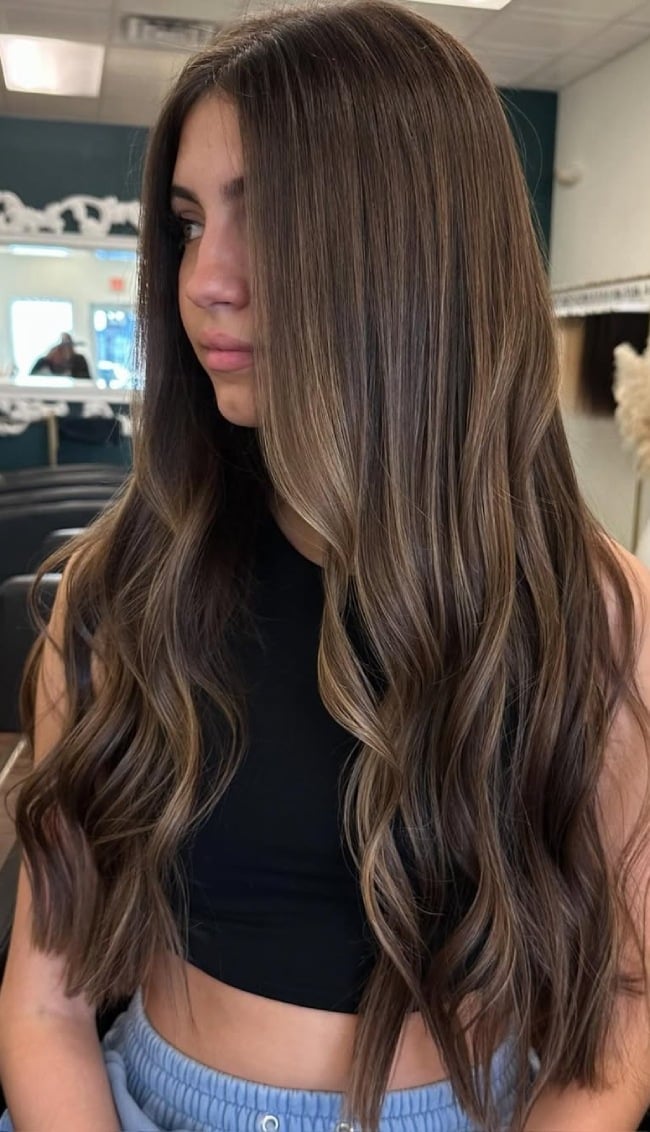
Mid-Back Layers Dimensional Balayage
Ever wonder how some balayage seems to have a life of its own in the light? This mid-back length relies on a dark brown base with lighter brown highlights painted through the layers, so the dimension shows up whether your hair is straight or styled in loose waves. The back view here makes it clear: the blend is seamless, with no harsh lines where the color starts.
Thick, wavy hair at this length benefits most from the movement the layers create. Ask your colorist for: mid-back balayage, seamless lighter brown blend, loose waves. A texturizing spray on dry hair helps define the wave pattern without weighing it down. The grow-out is soft enough that you can stretch salon visits to ten or twelve weeks.
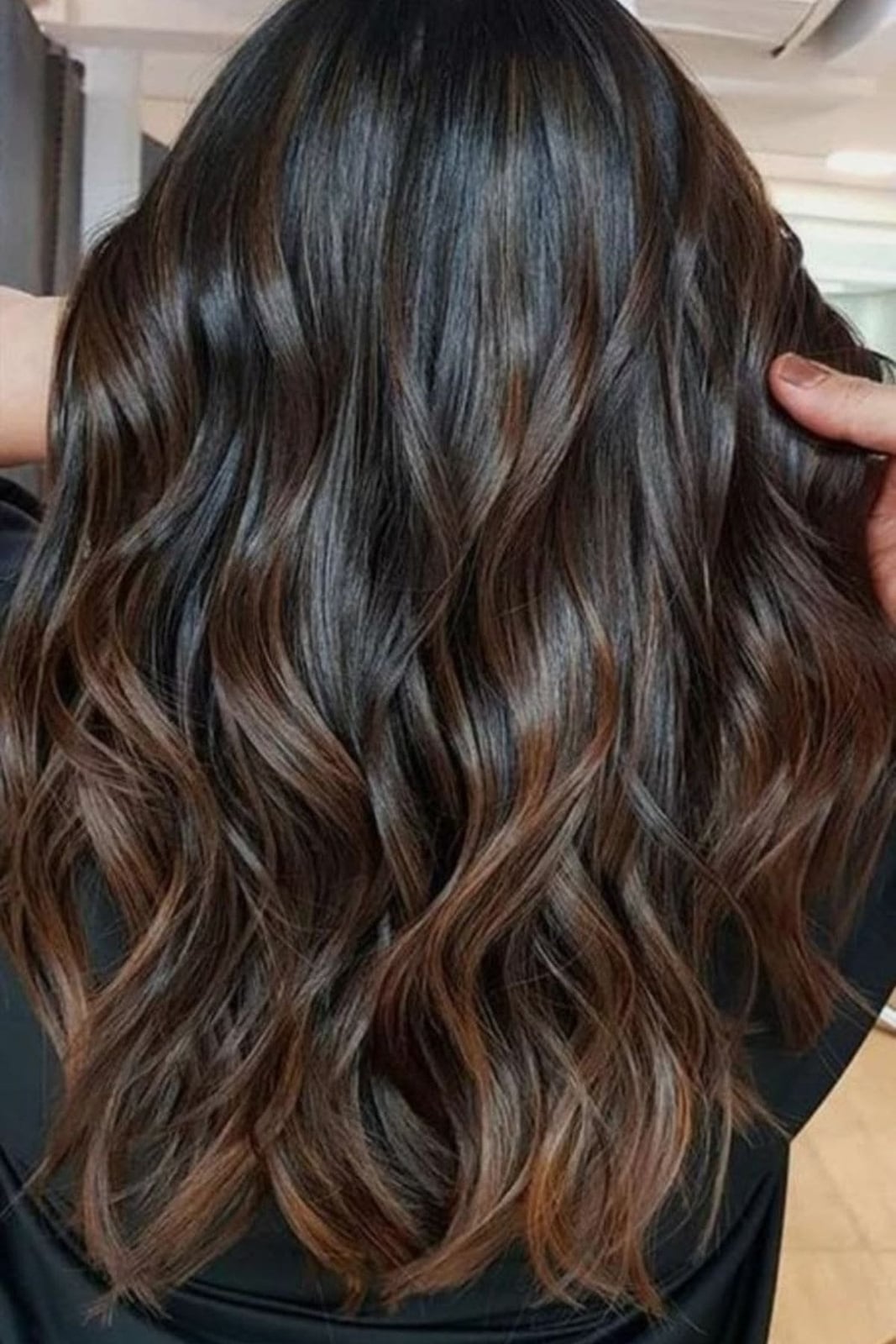
Mid-Back Waves Caramel Ribbons
The design is deliberate: sections of caramel ribbon balayage are painted onto a dark chocolate brown base, creating contrast that is visible but not random. The mid-back length and thick, wavy texture give the caramel strands room to spiral through the waves without getting lost. A middle parting keeps the color distribution even on both sides.
This warmth provides noticeable brightness without going full blonde. Ask your colorist for: mid-back balayage, caramel ribbons, dark chocolate base. To preserve the caramel tones, wash with cool water and use a color-safe shampoo. The darker base means roots grow in discreetly for about eight weeks before you need a refresh.
Mid-Back Blowout Seamless Transition With Curtain Bangs
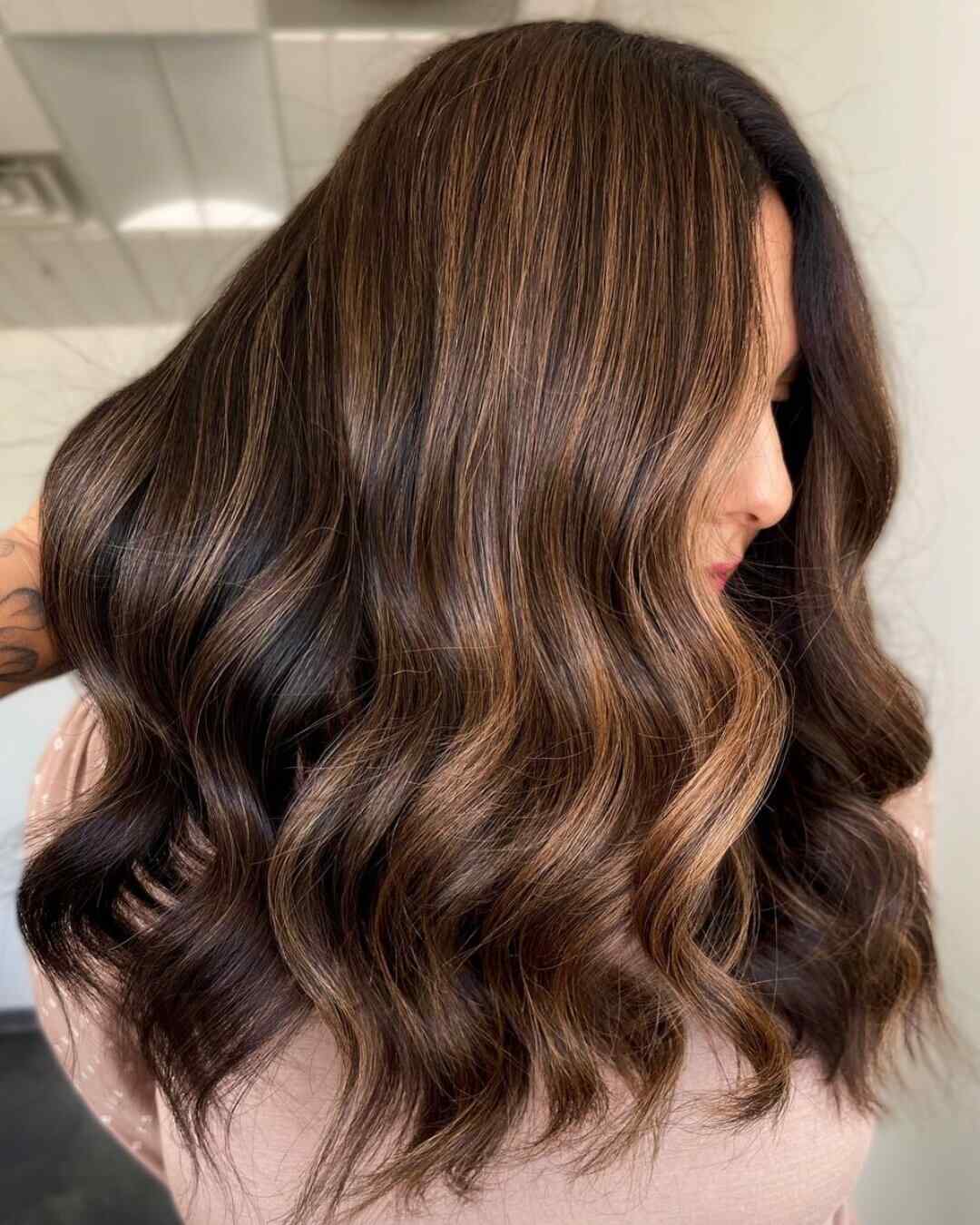
A seamless balayage transition depends on where the hand-painted highlights start, and here they begin a few inches from the root, allowing the deep brown base to stay rich near the scalp. The mid-back length is styled in a blowout that emphasizes the soft curtain bangs and the warm brown tones that emerge through the ends. A middle parting frames the face evenly. To keep the blowout smooth and glossy, use a boar bristle brush while drying. The curtain bangs will need a trim every six to eight weeks to maintain the shape, but the color itself fades gracefully without a harsh regrowth line.
Mid-Back Soft Waves Dimensional Look
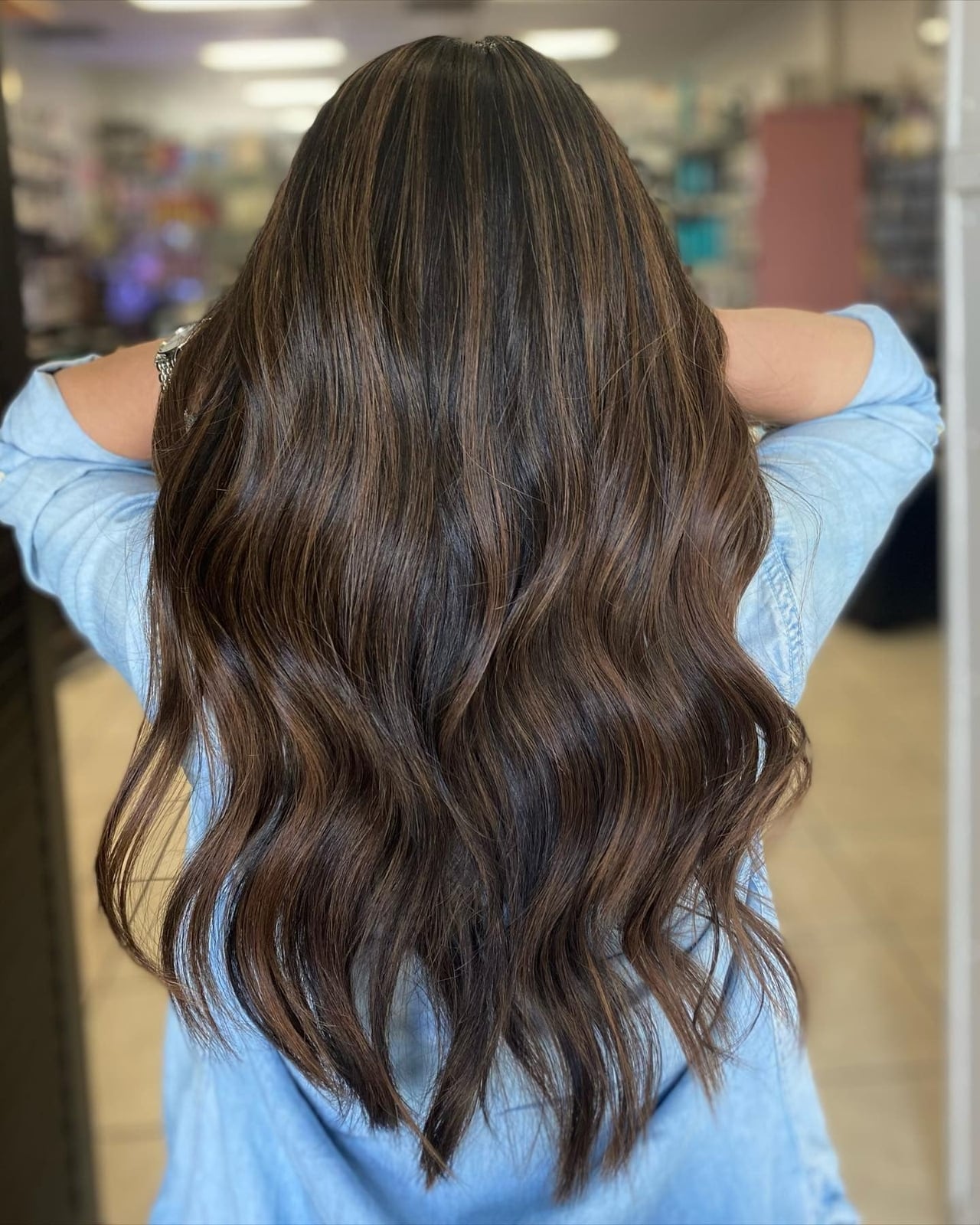
This dimensional balayage uses lighter brown strands woven through a dark brown base, with face-framing layers that catch the light differently at every angle. The mid-back length is styled in a voluminous blowout with gentle waves, creating a soft, natural-looking finish that doesn’t rely on heavy product. A middle parting keeps the face-framing layers balanced.
Oval and heart-shaped faces benefit most from the way these layers soften the jawline. Ask your colorist for: mid-back balayage, lighter brown strands, face-framing layers, soft waves. A texturizing spray applied to dry hair will enhance the wave pattern and help the dimensional color read more clearly. The blend grows out softly, so you can wait ten to twelve weeks between appointments.
Collarbone Waves Healthy Sheen
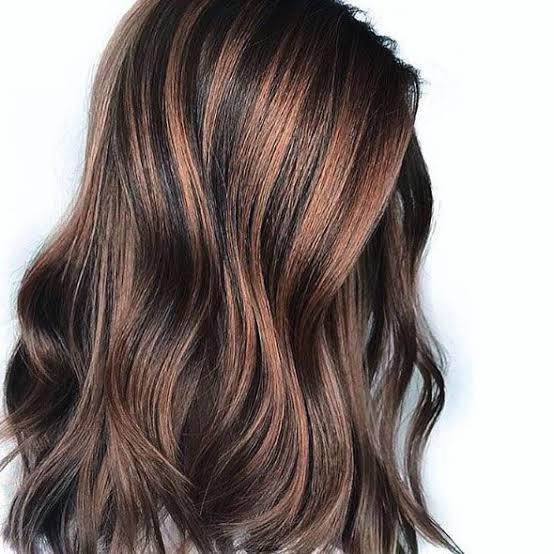
Compared to ash-based balayage, which can sometimes look flat on dark hair, this version uses warmer lighter brown highlights on a dark brown base to create a healthy, glossy sheen. The collarbone length keeps the weight manageable, and the loose waves with a middle parting add movement without requiring much styling effort. Ask your colorist for: collarbone length balayage, subtle lighter brown highlights, healthy sheen. A shine-enhancing finishing spray will boost the glossiness, and a trim every eight to ten weeks keeps the ends looking fresh. The middle part helps elongate rounder face shapes.
Mid-Back Loose Waves Natural Blend
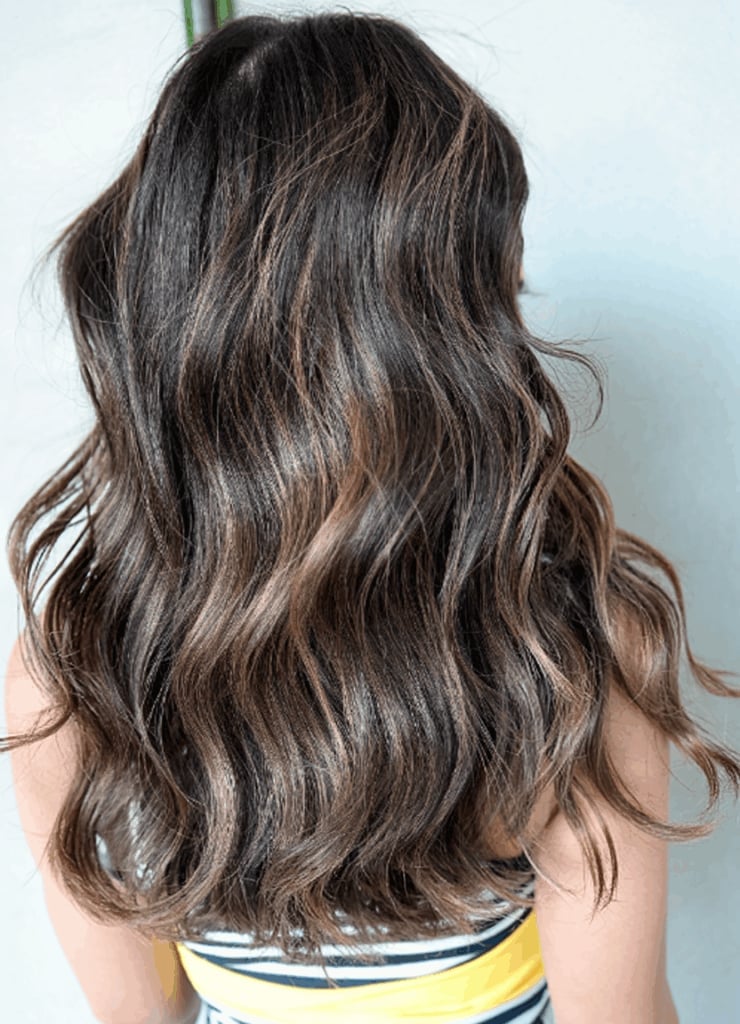
The artistry here is in the restraint: lighter brown pieces are painted sparingly through thick, wavy hair, so the blend reads as a shadow rather than a stripe. Starting from a dark brown base, the balayage is concentrated mid-length to ends, which keeps the root area untouched and the grow-out forgiving. This natural brown balayage approach suits anyone with mid-back length hair and a wavy texture who wants dimension without a high-maintenance commitment.
Ask your colorist for: mid-back balayage, subtle lighter brown highlights. The back view is where the payoff shows, since the color is most visible as the waves cascade. To keep the texture looking this loose, apply a wave-enhancing mousse and scrunch while air-drying. A trim every eight weeks keeps the ends healthy enough to hold the wave pattern.
Mid-Back Caramel Balayage Flowing Waves With Wavy Thick
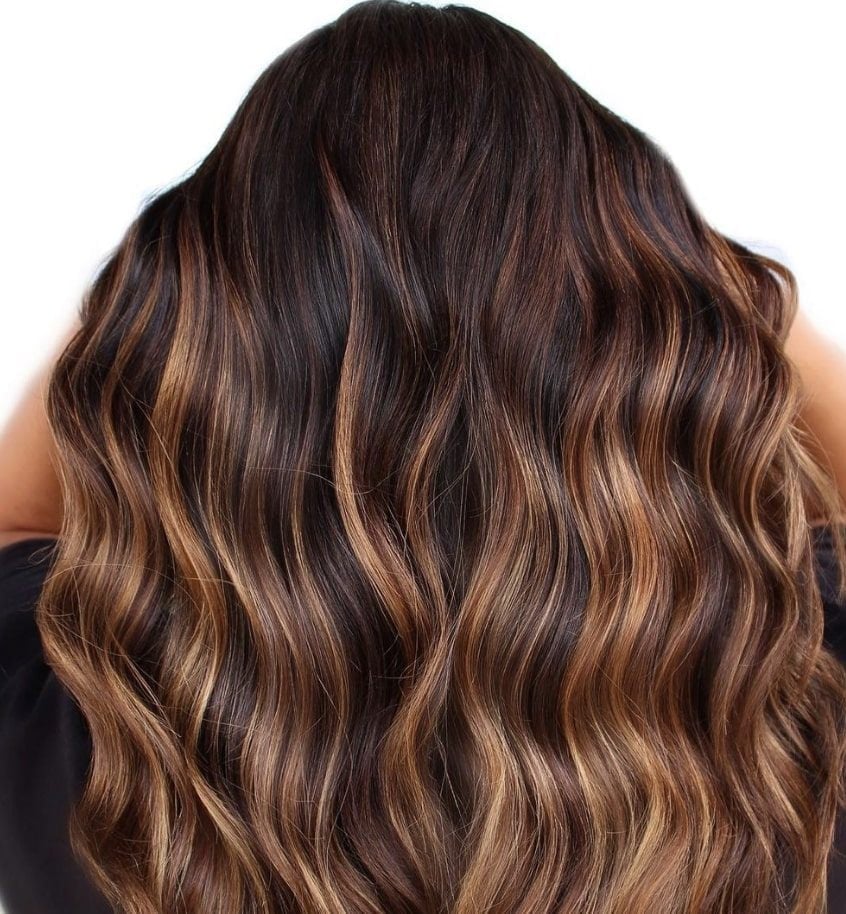
Wondering how to get caramel tones without looking like you raided a candy aisle? The trick is asking for balayage highlights that are painted to complement your dark brown base, not overpower it. On thick, wavy mid-back length hair, the caramel is woven through subtle layers so it catches the light as the waves move, creating a flowing finish that works for both daytime and evening settings.
Ask your colorist for: mid-back balayage, caramel tones, flowing waves. The middle part lets the color show evenly on both sides, which is why the back view looks so balanced. To preserve the wave pattern after washing, detangle with a wide-tooth comb while the hair is still wet. This caramel tone balayage needs a gloss appointment every ten to twelve weeks to keep the warmth from dulling.
Mid-Back Lived-In Look Subtle Balayage
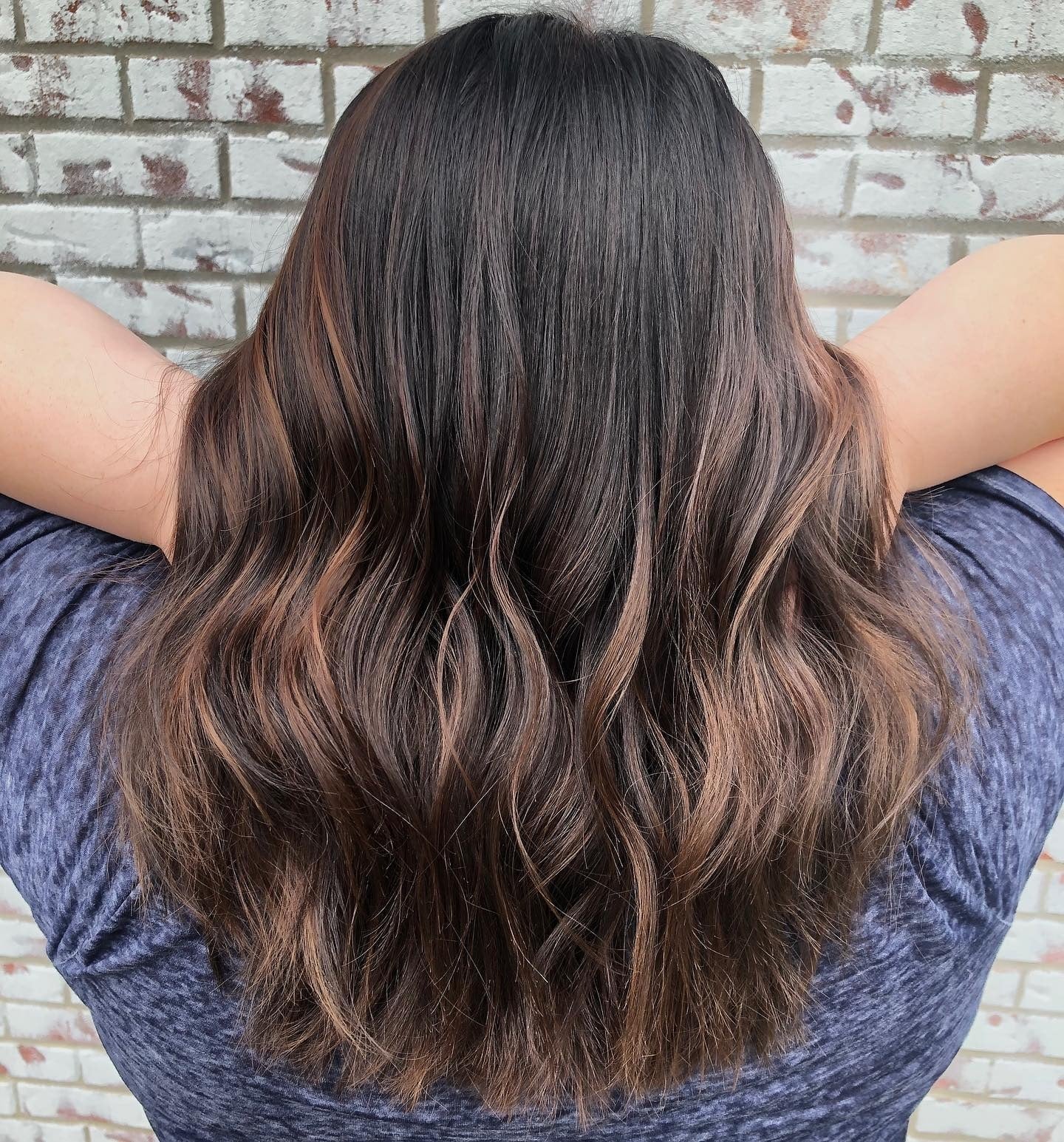
The lived-in effect comes from brown balayage highlights that are so closely matched to the dark brown base that they look like a natural shadow, not a deliberate color change. On thick, wavy hair cut to mid-back, the subtle blend sits mostly at the ends, which means the regrowth is barely noticeable for months. This is the low-maintenance option for dimension without needing a salon visit every six weeks.
Ask your colorist for: mid-back balayage, subtle brown highlights, natural waves. The middle part and loose styling let the color peek through the dense texture without looking heavy. To enhance the lived-in feel, spritz a texturizing spray on the lengths and scrunch gently. A trim every ten weeks keeps the ends from looking frazzled while the color grows out gracefully.
Mid-Back Ash Blonde Contrast Balayage
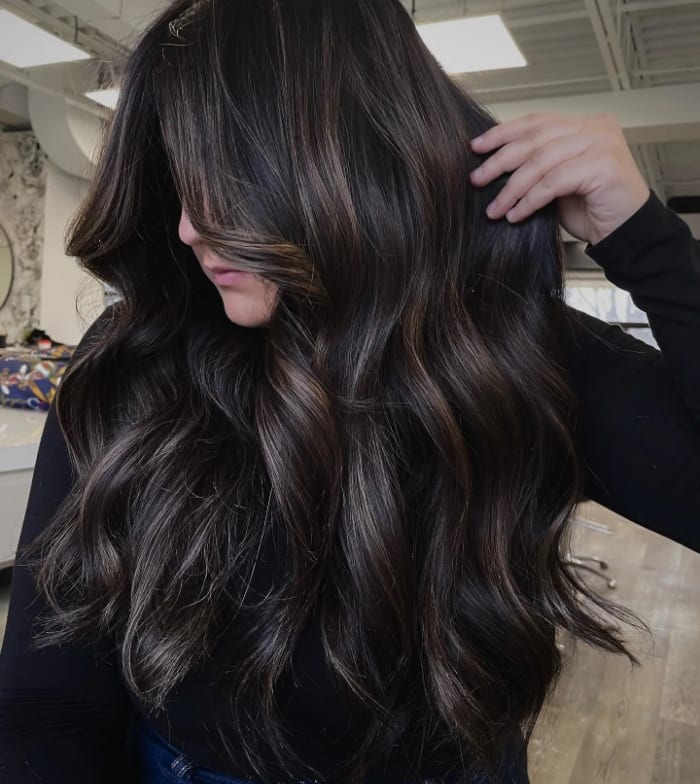
Skip the warm caramel for a season and try ash blonde instead: on a dark brown base, the cooler highlights create a striking contrast that feels tailored for the cooler months ahead. The light brown and ash blonde pieces are painted through thick, wavy mid-back length hair in loose waves, so the contrast softens rather than shouts. A middle parting keeps the front view balanced, letting the lighter pieces frame both sides evenly.
Ask your colorist for: mid-back balayage, ash blonde highlights, striking contrast. This is the kind of refresh that suits a fashion-forward setting or an everyday look that wants a bit more edge. Keep ash tones from turning brassy by using a purple shampoo once a week, and book a toning appointment every six to eight weeks to hold the cool finish.
Mid-Back Lived-In Color Transition
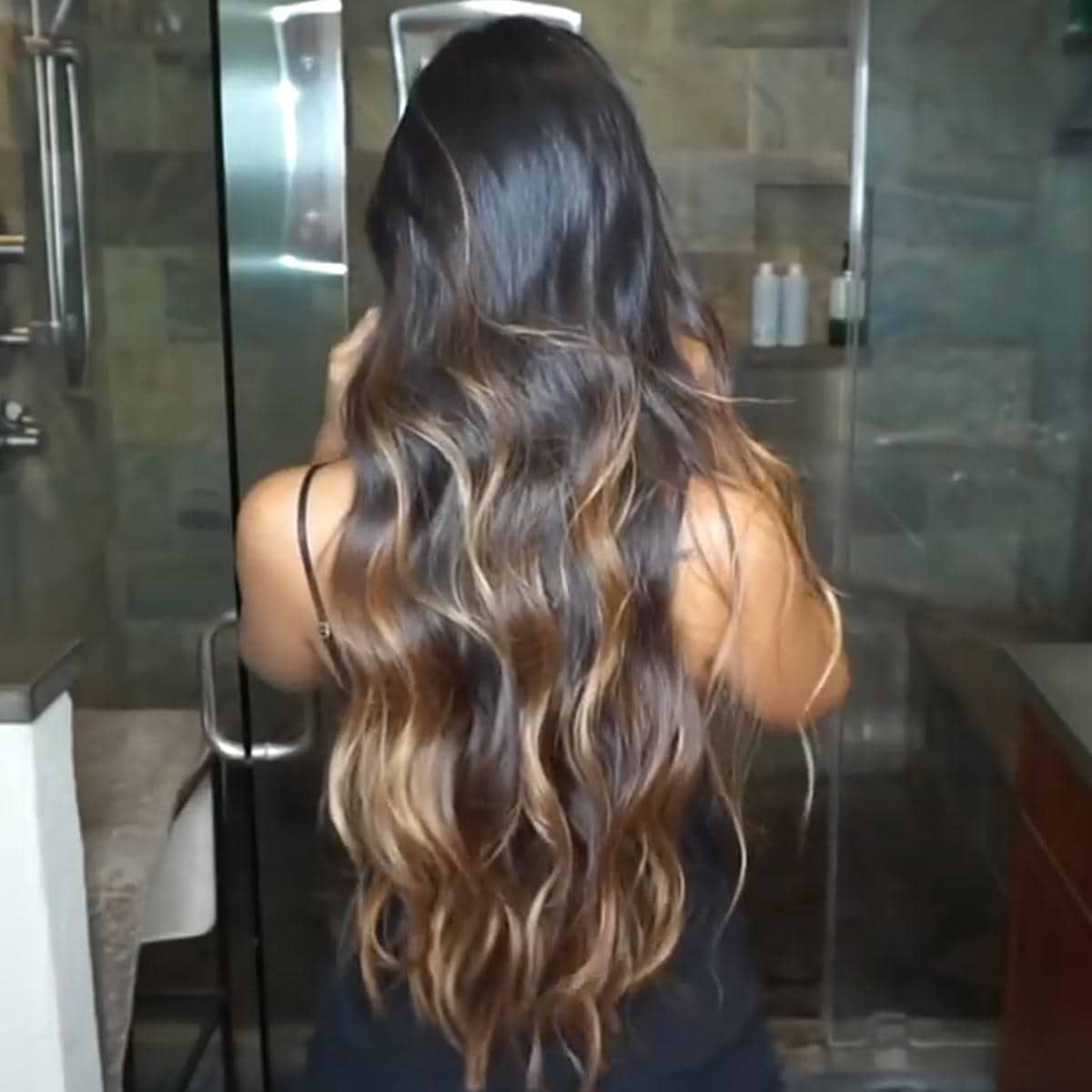
The color transitions from dark brown at the roots to lighter brown and blonde toward the ends, a gradient that looks like the hair simply grew up in the sun. On thick, wavy mid-back length hair, the loose waves show off the transition from every angle, with the blonde concentrated at the ends where it catches the most light. The drawback is that the lighter ends are more porous, so they can turn brassy if the toner is not refreshed regularly.
Ask your colorist for: mid-back balayage, brown blonde ends, lived-in effect. The root area stays untouched, which is why this lived-in style suits a low-maintenance routine. To keep the ends looking intentional, use a dry shampoo at the roots for volume and book a toning appointment every eight weeks. Anyone who hates frequent salon visits should ask for a slightly deeper blonde to stretch the time between glosses.
Collarbone Smooth Blowout Glossy Finish
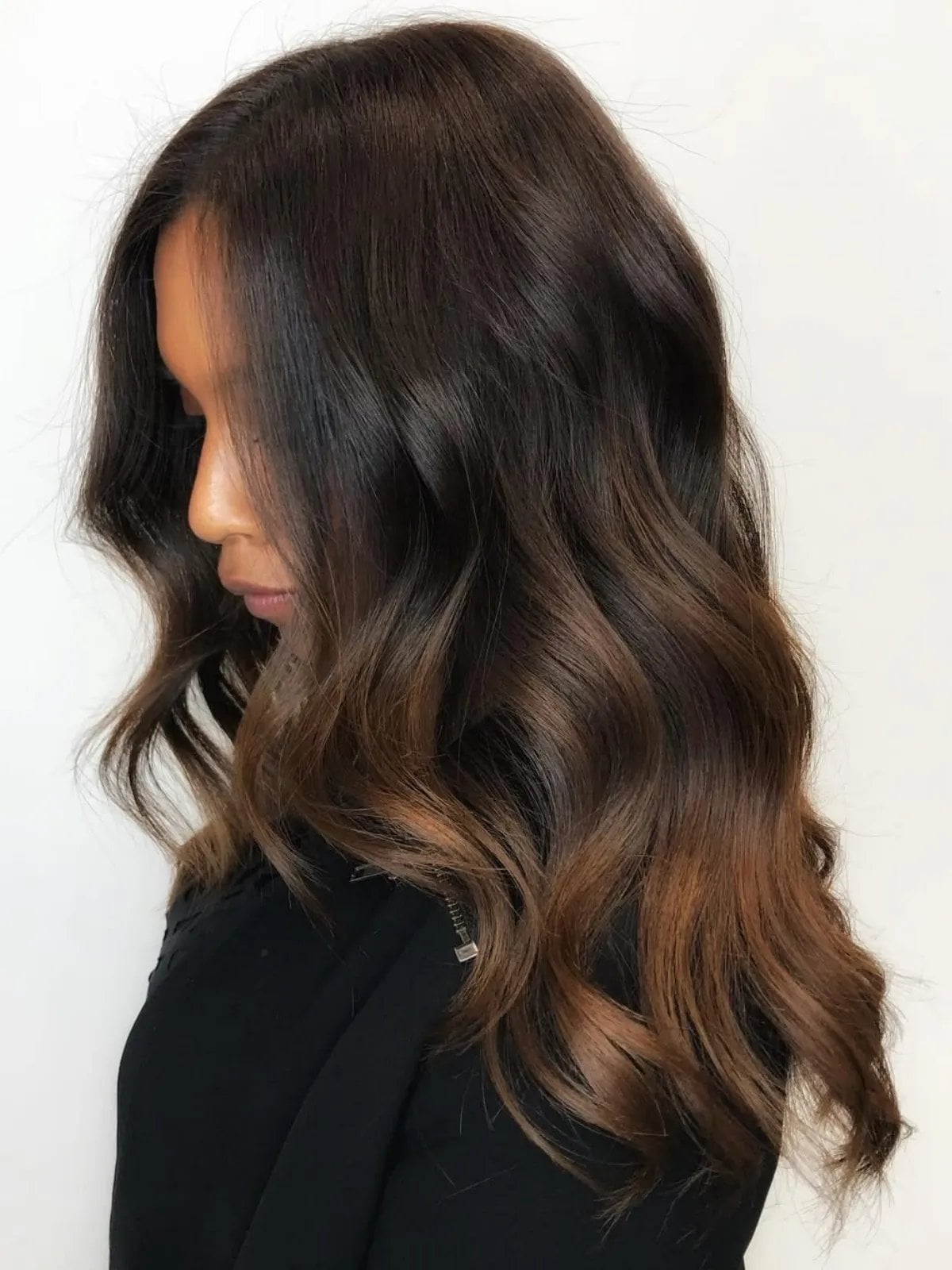
That mirror-like sheen on a collarbone cut is the payoff of a well-executed balayage paired with a smooth blowout. The dark brown base gets subtle lighter brown highlights, so the color has depth rather than looking flat. Thick, wavy hair starting at collarbone length takes the gloss best; the blowout smooths the cuticle and lets the dimension show. Ask your colorist for: collarbone length balayage, subtle lighter brown highlights, glossy blowout. Use a boar bristle brush during blow-drying to polish the surface and boost shine without product buildup.
Mid-Back Air Dried Natural Texture
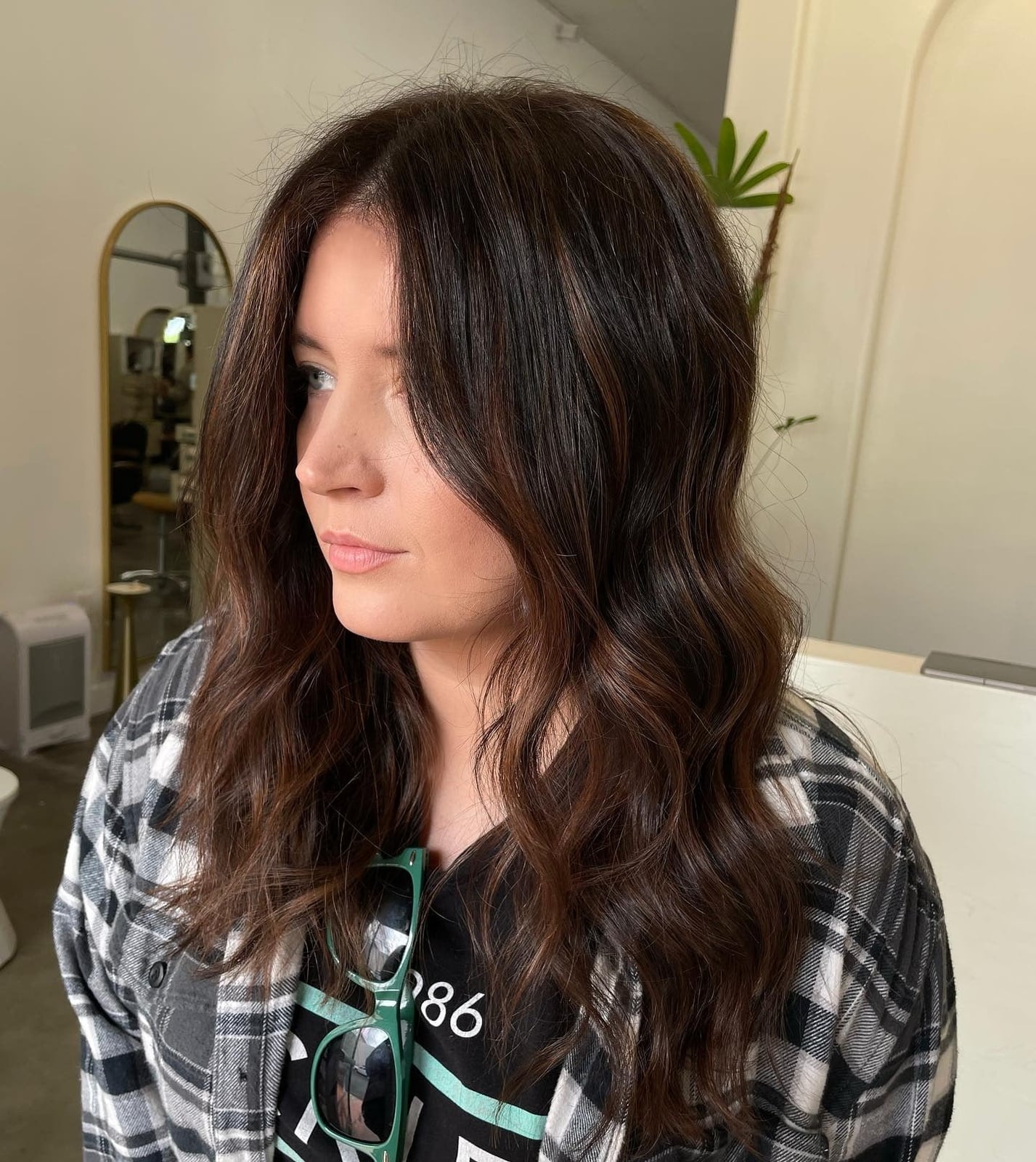
An air-dried finish with subtle balayage is a low-maintenance alternative to a polished blowout. The dark brown base carries woven lighter brown highlights through the ends, so the color looks lived-in. Thick, wavy hair at mid-back length handles the texture best; the middle parting lets the waves fall evenly on both sides.
Ask your colorist for: mid-back balayage, subtle brown highlights, air-dried waves. Apply a leave-in conditioner and gently scrunch after washing, then let it dry naturally. The waves settle differently each day, but the color transition stays soft enough that a toning appointment every ten to twelve weeks keeps the brown from pulling brassy.
Final Thoughts
For a subtle enhancement, choose balayage with minimal tonal difference; for more impact, opt for contrasting ash or caramel ribbons. Fine hair benefits from keeping the light pieces concentrated around the face, while thicker textures can carry a fuller, multi-tonal blend through the lengths.
- Maintain toning treatments every 6-8 weeks to keep lighter tones bright.
- Use color-safe shampoo and conditioner to preserve color vibrancy.
- Deep condition weekly to maintain the glossy finish of the balayage.
- Allow 6-12 weeks for a touch-up, depending on grow-out preference.
Dark brown balayage provides endless dimension.